
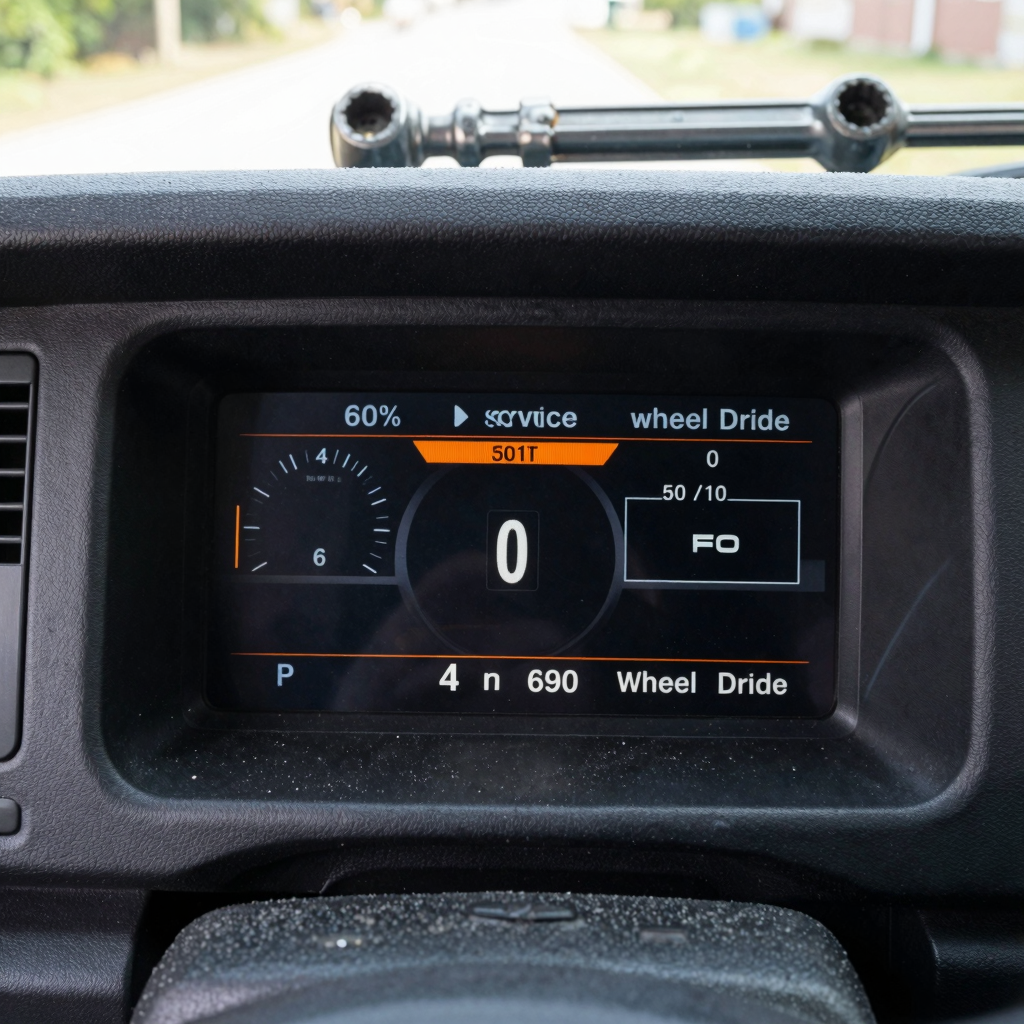
In today’s fast-paced business environment, the reliability of vehicles, particularly trucks, is paramount for various sectors including manufacturing, retail, and construction. One common alert that truck owners-and often operators in small businesses-encounter is the service 4 wheel drive message. This notification can signify critical issues that may affect not only the vehicle’s performance but also operational efficiency. For those in industries that rely heavily on logistics, like manufacturing and distribution, understanding the implications of such warnings is essential. A delayed response to maintenance needs can result in considerable downtime, affecting productivity and, consequently, bottom lines. This discourse will elucidate the importance of addressing these alerts promptly, the potential implications for business operations, and strategies to mitigate the risk associated with neglecting vehicle maintenance. Learn more about key economic trends impacting the trucking industry.
Common Reasons for ‘Service 4 Wheel Drive’ Message in Trucks
When a truck displays a ‘Service 4 Wheel Drive’ (4WD) message, it indicates that the vehicle’s four-wheel drive system requires attention. Here’s an ordered list of the most common reasons for this warning:
-
Low Transfer Case Fluid (35%)
Insufficient fluid levels in the transfer case can prevent the system from operating correctly, leading to potential overheating or damage. -
Faulty 4WD Actuator or Switch (25%)
A malfunctioning actuator can disrupt the engagement of the four-wheel drive system, causing the warning light to illuminate. -
Sensor Malfunctions (18%)
Issues with wheel speed or position sensors can cause incorrect readings, leading to the warning being triggered. -
Wiring Issues (12%)
Damaged or disconnected wiring harnesses can interfere with the operation of the 4WD system, resulting in the warning being activated. -
Front Axle Disconnect Problems (7%)
In trucks with part-time 4WD, problems with the front axle disconnect system can cause operational issues and trigger the warning light. -
Drivetrain Stress from Improper Use (3%)
Driving in 4WD on dry pavement for extended periods can lead to undue stress on drivetrain components, potentially activating the service message.
It’s crucial to address this warning promptly to prevent further damage to the four-wheel drive system. Regular maintenance, including fluid checks and sensor inspections, can mitigate these issues. If the warning persists, consulting a qualified technician is recommended.
For more information on maintaining your fleet’s heavy trucks, learn about the impact of economic trends and private fleet trends in trucking maintenance.
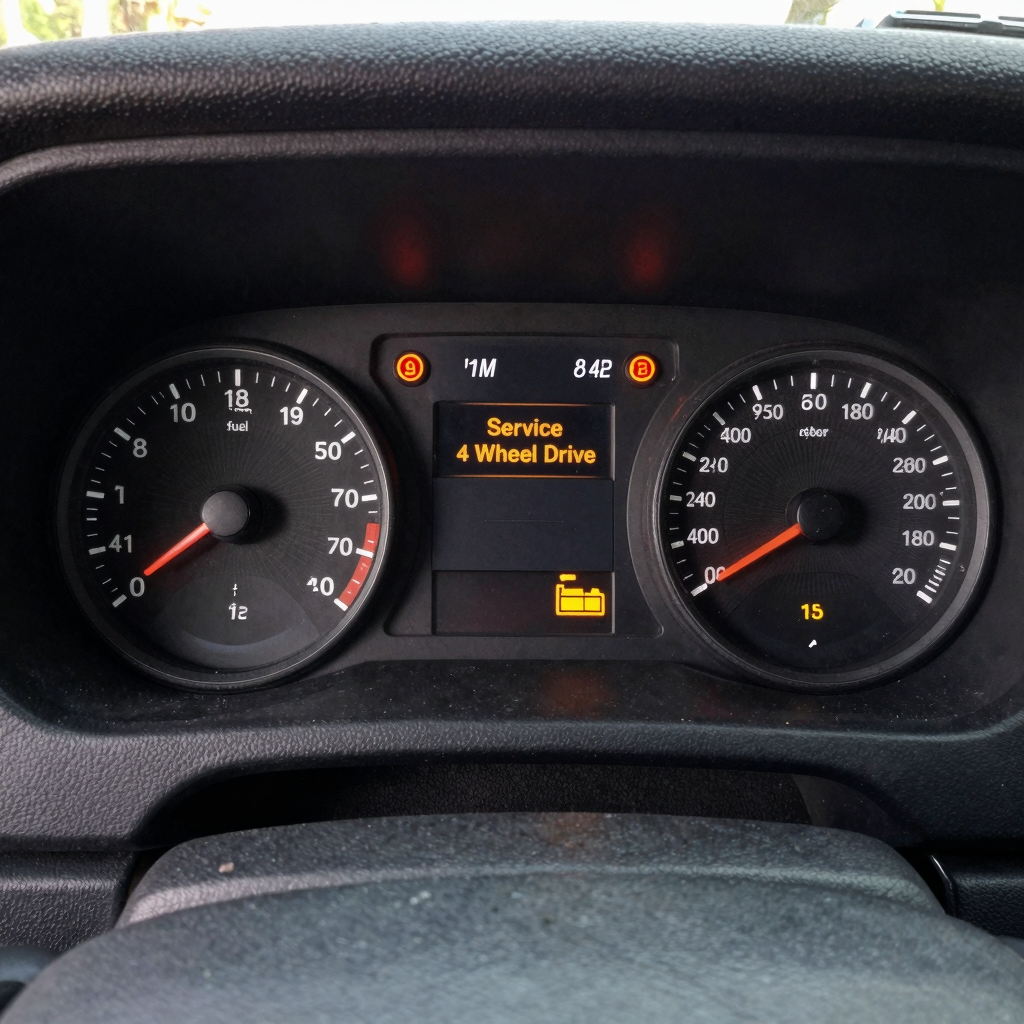
The Importance of Prompt Response to the ‘Service 4 Wheel Drive’ Warning
Addressing the ‘Service 4 Wheel Drive’ warning promptly is crucial for ensuring the reliability and safety of your vehicle, especially for businesses that depend heavily on transportation for their operations. Ignoring this warning can have serious consequences, impacting both operational efficiency and financial standing.
When the warning light activates, it indicates that there is a potential malfunction within the four-wheel drive system. This could stem from various issues, such as differential failure, electrical malfunctions, or insufficient lubrication. If the problem is not rectified quickly, it may lead to mechanical failures that can have far-reaching effects:
-
Mechanical Failure Risk: Continued operation with a faulty 4WD system may lead to irreversible damage to critical components, resulting in costly repairs and potentially lengthy downtime.
-
Increased Repair Costs: The longer a problem persists, the more extensive (and expensive) the repairs can become. Early intervention can often save companies significant amounts in repair costs and vehicle replacement.
-
Safety Risks: Ignoring operational warnings can create hazardous conditions for drivers and other road users. A malfunctioning four-wheel drive system can compromise vehicle control, especially on slippery or uneven terrain, which may lead to accidents, jeopardizing lives and property.
-
Legal and Compliance Issues: Businesses are responsible for ensuring their vehicles are in safe operating condition. Ignoring maintenance warnings can expose companies to legal liabilities in case of accidents caused by vehicle malfunction.
For businesses reliant on operational efficiency, it is imperative to prioritize vehicle maintenance. Establishing routine checks and promptly addressing any warnings, such as the ‘Service 4 Wheel Drive’ alert, can help maintain safety and preserve the performance of the fleet. By being proactive, companies can avoid the repercussions of neglecting essential vehicle maintenance. This approach not only secures the reliability of business operations but also protects the investment in the company’s fleet.
For more insights, you can read about the impact of 25% tariffs on heavy trucks and how to ensure fleet performance amidst changing regulations.
Understanding Truck Repair Costs for 4 Wheel Drive Systems
The complexities of 4 wheel drive (4WD) systems often lead to significantly higher repair costs compared to their two-wheel drive (2WD) counterparts. According to recent statistics from the American Transportation Research Institute, 4WD trucks experience an average annual maintenance cost of $18,000, while 2WD trucks average about $13,000. This represents a 34.6% increase in annual maintenance costs for 4WD systems. The higher costs are attributed to the intricate components involved, including transfer cases and front differentials.
Key Statistics
| Category | 4WD Trucks | 2WD Trucks | Notes |
|---|---|---|---|
| Average Annual Maintenance Cost | $18,000 | $13,000 | Based on recent operational data from fleet management reports |
| Average Per-Repair Cost | $2,150 | $1,680 | Reflects major service events costs |
| Percentage Increase in Costs (4WD vs 2WD) | +34.6% | – | Calculated from the total maintenance costs |
A report by TruckersReport also highlighted that 68% of 4WD truck owners spend over $15,000 annually on repairs. The most common issues include differential overheating and failures in the electronic control modules of the 4WD systems. Moreover, 4WD trucks have a 22% higher repair frequency compared to 2WD vehicles. Regular maintenance can reduce the likelihood of significant repairs by up to 30%.
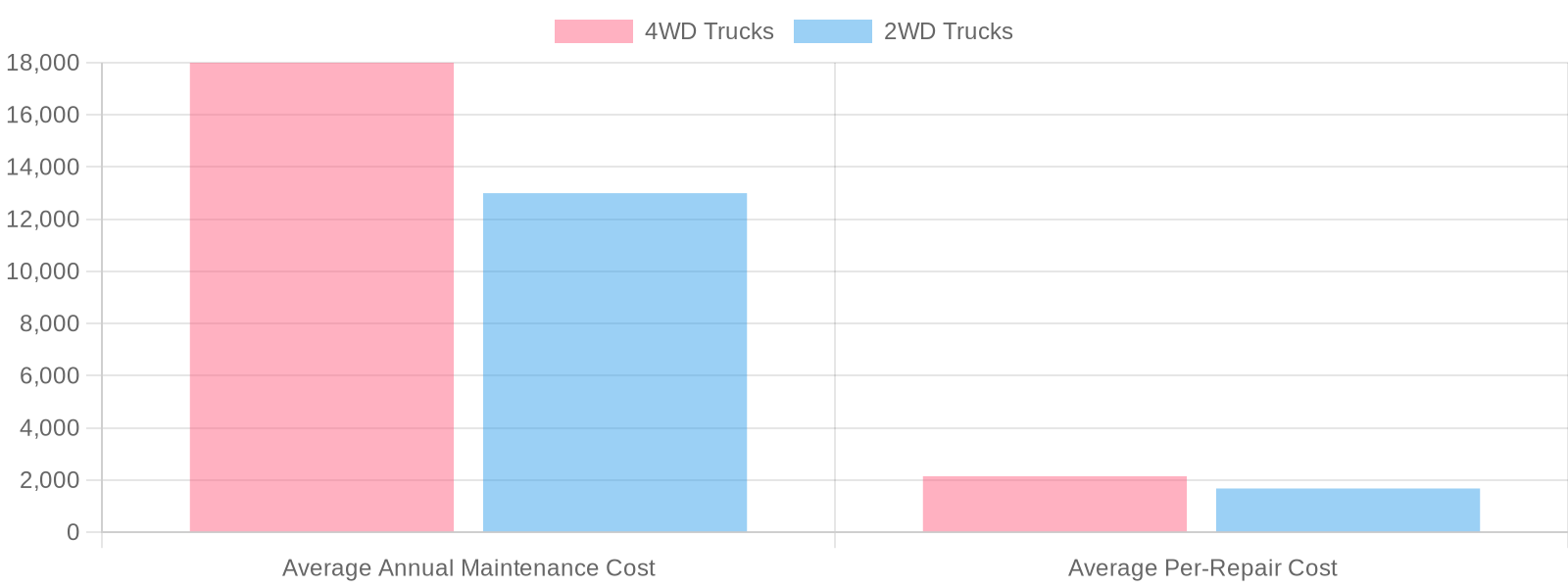
Maintenance costs for 4WD vs 2WD trucks
Conclusion
Neglecting maintenance on a 4 wheel drive system can lead to expedite repair needs and increased costs. It is essential for manufacturers and owners within heavy industries to allocate sufficient budgets for regular inspections and proactive maintenance to mitigate these risks. For further insights on the impacts of tariffs and maintenance strategies, learn more about economic trends impacting the trucking industry and our approaches to efficient fleet maintenance.
Comparison of 4 Wheel Drive Systems in Popular Truck Brands
This table summarizes the features, pros, and cons of 4 wheel drive (4WD) systems across various popular truck brands. The information is critical for understanding why warnings regarding the 4WD system may be more serious for certain brands, based on their technology and engagement mechanisms.
| Feature | Ford F-150 (4×4) | Chevrolet Silverado 1500 (4×4) | RAM 1500 (4×4) | Toyota Tundra (4×4) | Nissan Titan (4×4) |
|---|---|---|---|---|---|
| 4WD System Type | Intelligent 4×4 with selectable modes (Normal, Mud/Ruts, Snow, Sand, Rock) | Standard 4WD with electronic shift-on-the-fly and selectable modes (2WD, 4H, 4L) | Quadra-Trac I & II (Auto, Sport, Snow, Trail, Deep Snow/Mud) | Multi-Terrain Monitor with Terrain Select (Normal, Snow, Mud/Sand, Rock, Deep Snow/Mud) | Part-Time 4WD with manual engagement and low-range gear |
| System Engagement | Electronic switch on dash | Electronic switch on dash | Electronic switch on dash | Electronic switch on dash | Manual lever or switch |
| Low-Range Gear | Yes (with Rock mode) | Yes (in 4L mode) | Yes (available in Trail and Deep Snow/Mud modes) | Yes (in Rock mode) | Yes (manual engagement) |
| Differential Locking | Available on higher trims (e.g., FX4, Tremor) | Available on LTZ/High Country trims | Available on TRX and limited models | Available on Limited and Platinum trims | Not available |
| Towing Capacity (Max) | 14,000 lbs | 13,400 lbs | 12,600 lbs | 12,000 lbs | 12,000 lbs |
| Payload Capacity (Max) | 3,325 lbs | 2,380 lbs | 2,300 lbs | 1,950 lbs | 1,780 lbs |
| Off-Road Capability | High (especially with FX4/Tremor packages) | High (especially with ZR2 package) | Moderate to High (TRX excels off-road) | High (especially with Trail Special Edition) | Moderate (best for light off-roading) |
| Pros | Excellent towing/payload, advanced tech, strong off-road packages | Reliable, high towing capacity, rugged build, great ride quality | Smooth ride, luxurious interior, powerful engine options | Proven reliability, excellent fuel economy, strong resale value | Lower price point, solid durability, good towing for the cost |
| Cons | Higher repair costs, complex electronics can be prone to issues | Heavy steering at low speeds, some models have less refined ride | Less off-road focused than competitors, higher price | Slightly lower towing capacity compared to rivals | No locking differentials, no low-range option on all trims |
Note: All specifications are based on 2024-2025 model year data. Features may vary by trim level and configuration.
For more insights on the trucking industry and other related issues, check out our articles on economic trends impacting trucking and cross-border regulatory issues.
Diagnosing 4 Wheel Drive Issues
Diagnosing problems with a truck’s 4 wheel drive (4WD) system is crucial for ensuring optimal performance, especially in commercial applications where reliability is necessary. By following systematic steps, truck owners can identify potential issues and take appropriate actions to address them.
Step 1: Check the Indicator Lights
Begin by checking the 4WD indicator light on the dashboard. If this light is illuminated, it often signifies that there is a fault in the system. Leading issues can include faulty sensors that prevent the 4WD system from engaging properly.
Step 2: Use an OBD-II Scanner
Utilize an OBD-II scanner to retrieve diagnostic trouble codes (DTCs) related to the 4WD system. Common codes that may appear include:
- P0562: Low system voltage
- P0932: Hydraulic sensor circuit error
- P0602: PCM programming error
Understanding these codes can provide insight into specific faults affecting the system. For more guidance on DTCs, check out resources like CarMD’s tips on troubleshooting 4WD systems.
Step 3: Inspect Physical Components
Conduct a thorough examination of the vehicle’s physical components. Check:
- Vacuum lines and solenoids in the transfer case for leaks or blockages.
- Fluid levels and conditions in both the transfer case and front differential. Contaminated or low fluid can lead to system failures.
- Ensure that the 4WD selector switch and actuator are functioning correctly. Any unusual grinding noises or vibrations while engaging 4WD indicate potential mechanical problems.
Step 4: Consult Professionals if Necessary
If the problems persist after these checks, it’s advisable to consult a professional mechanic familiar with 4WD systems. They have access to specialized tools and technical support to diagnose complex issues accurately. For heavy-duty trucks, using specific manufacturer diagnostic software can reveal real-time data from various control modules, crucial for pinpointing elusive problems.
Following these steps will not only facilitate a quicker diagnosis of 4WD issues but help in maintaining the efficiency and safety of your truck. For more insights on the trucking industry, you may want to read about key economic trends impacting the trucking industry.
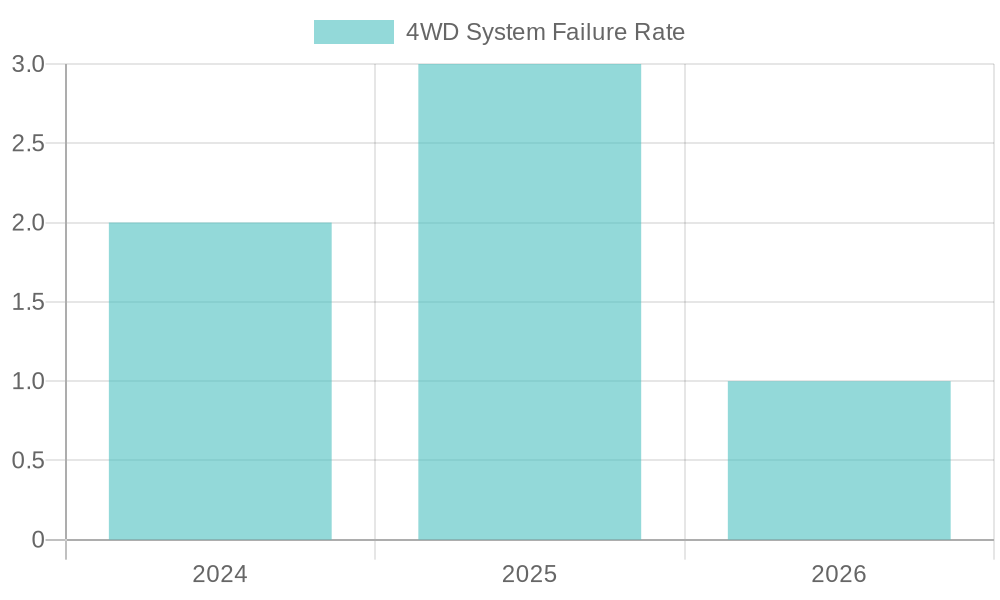
This chart illustrates the failure rates of 4 wheel drive systems across various truck models over the years 2024 to 2026. It highlights the increasing importance of monitoring these systems in order to ensure reliability and performance.
According to automotive engineer Sarah Thompson, “Regular maintenance of a four-wheel drive system isn’t just about preventing breakdowns; it’s about preserving the integrity of your vehicle’s entire drivetrain. Neglecting fluid changes or ignoring warning signs like unusual noises can lead to catastrophic failures, especially under heavy loads or off-road conditions. A consistent schedule ensures that critical components like the transfer case, differentials, and driveshafts remain properly lubricated and functional.” source
This quote emphasizes the critical nature of regular maintenance, particularly for businesses and individuals relying on heavy-duty vehicles that operate under various conditions. Failing to maintain your 4WD system not only affects the immediate performance of the vehicle but can also lead to significantly higher repair costs over time. Understanding the importance of routine checks can help in maximizing the longevity and efficiency of your fleet.
For further insights, you might want to learn more about the impacts of maintenance on trucking operations.
In conclusion, addressing the ‘Service 4 Wheel Drive’ warning is paramount for safeguarding your vehicle’s performance and longevity. Ignoring this critical alert can lead to severe damage, including drivetrain failures that could jeopardize safety and incur costly repairs. As discussed, a failure to act swiftly on this warning can escalate problems that require extensive repairs, ultimately affecting vehicle reliability and operation. Therefore, it is essential to have your vehicle inspected by a qualified technician immediately, ensuring you remain safe on the roads.
Additionally, investing in premium motorcycle fairings can significantly enhance your vehicle maintenance efforts. These high-quality fairings provide superior protection against environmental factors and road debris, reducing long-term maintenance costs and improving the vehicle’s aerodynamics. With their durability, premium fairings can lead to fewer repairs and replacements over time. For those interested in optimizing their vehicle maintenance strategies, consider exploring the offerings from Summit Fairings for high-quality options that align with your needs.