
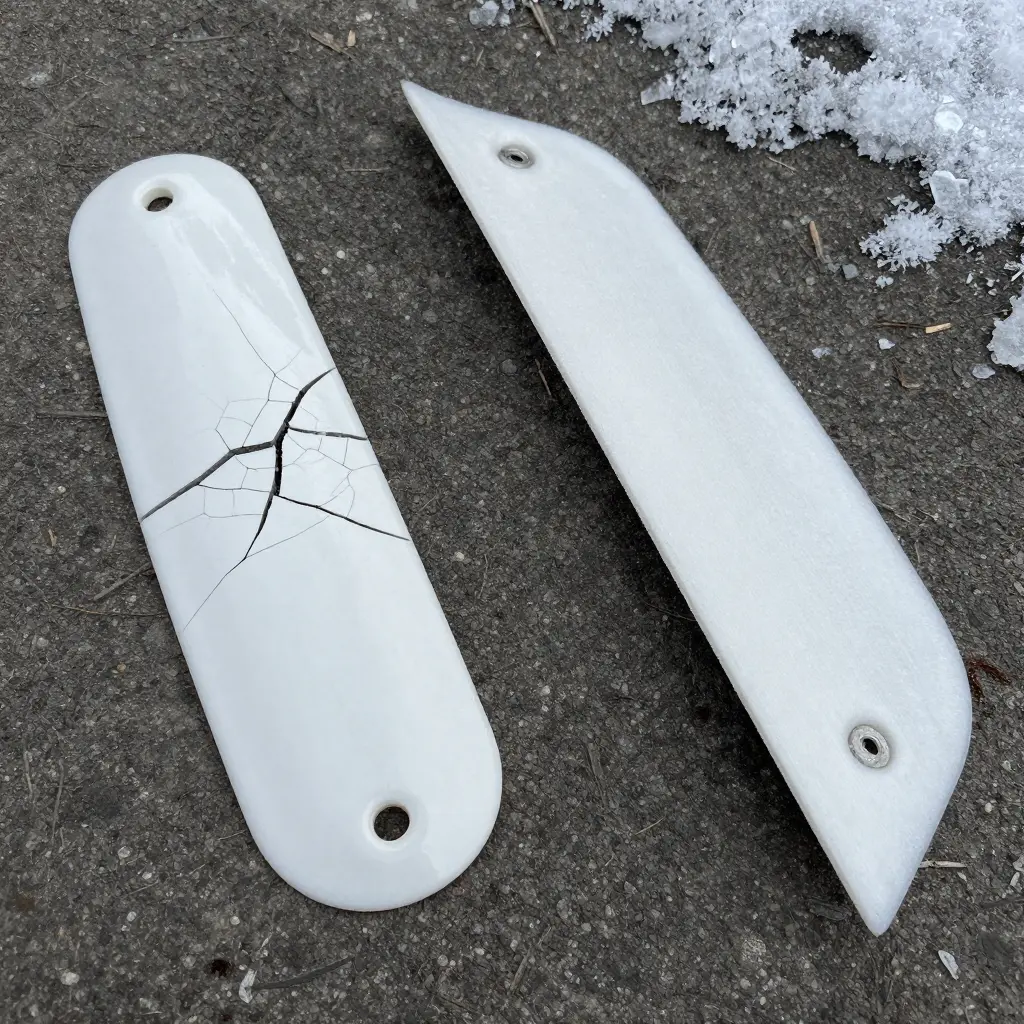
Why Fairing Kits in Cold Weather Are a Different Problem Than They Look
Riders, restoration shops, and kit suppliers keep running into the same pattern: when temperatures drop, molded plastic bodywork fails at its mounting tabs long before the panels themselves show damage. It is rarely a slow crack that spreads. It is a clean split at a screw hole, a tab snapped off a standoff, or a seam that lets go the first time a bolt is tightened in a cold garage.
A fiberglass fairing molded to the same shape, bolted to the same points, and torqued to the same spec tends to flex under that load instead of splitting. The laminate bends, the stress spreads across the panel, and the part usually survives the winter. That is why shop owners describe cracked ABS fairing tabs as a material problem rather than an installation problem.
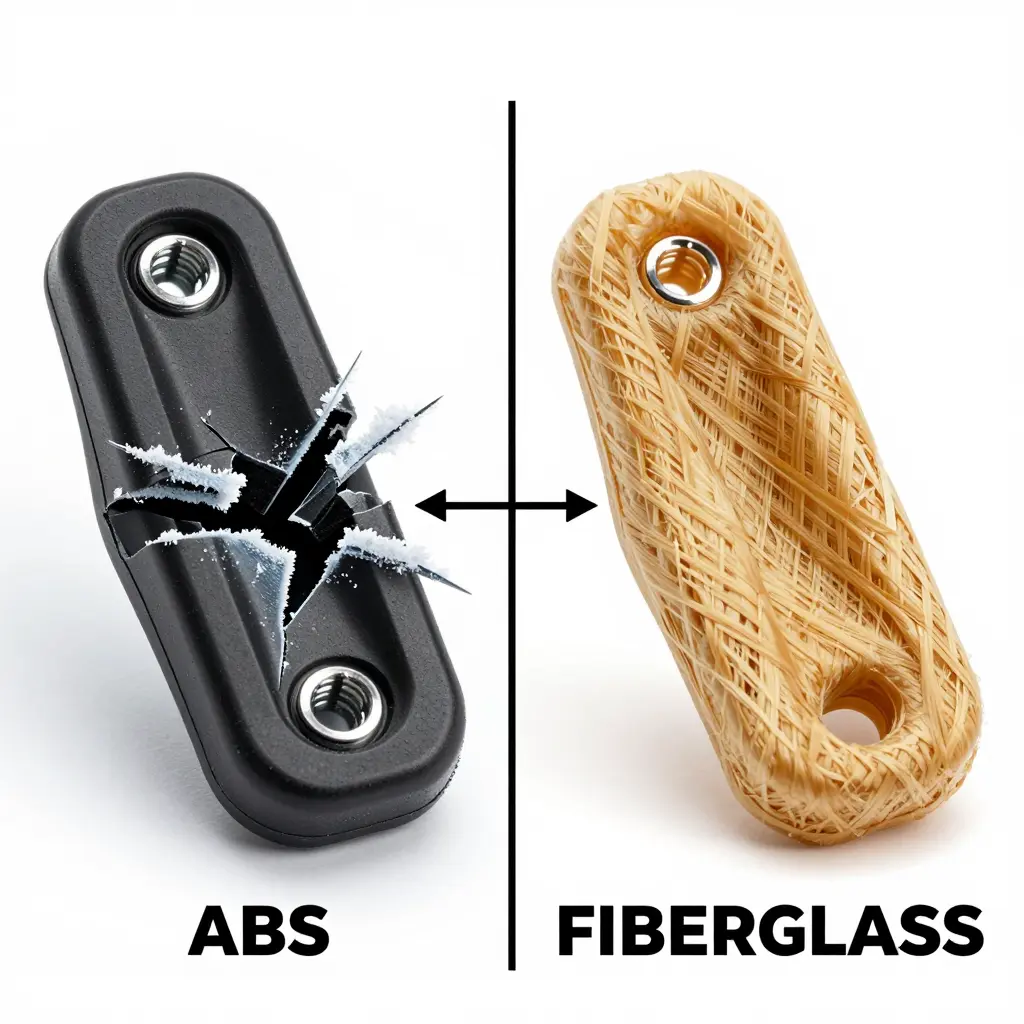
The Central Tension: Same Mount, Opposite Result
Two materials, identical geometry, identical fastening locations, and completely different outcomes once the thermometer falls.
How ABS and Fiberglass Compare
Across the cold-weather criteria that matter most, the two materials separate quickly.
| Criteria | ABS Fairings | Fiberglass Fairings |
|---|---|---|
| Material type | Injection-molded thermoplastic | Layered thermoset resin with glass fiber |
| Low-temp flexibility | Impact resistance falls sharply below ~32F (0C) | Retains more flex at low temperatures |
| Tab failure mode | Tabs snap off at mounting points | Tabs bend or crack at stress lines |
| Crack propagation | Cracks spread fast once started | Cracks grow slower, often localize |
| Repair approach | Solvent or plastic welding, plus patches | Epoxy or resin with glass cloth |
| Weight | Lighter per panel | Heavier per panel |
| Cold-weather performance | Prone to sudden tab cracking | More forgiving, flexes under stress |
Why Fiberglass Flexes Instead of Cracking in the Cold
The difference comes down to what each material is made of.
Fiberglass-reinforced plastic is a composite: a resin matrix holding many fine glass fibers. The resin alone is brittle, and bare glass fibers are hard to shape into a part. Bonded together, they form a material more useful than either one alone.
Layered Construction
Fiberglass is built up in overlapping layers of glass cloth, each soaked in resin and laid at a slightly different angle. When a mounting tab flexes, the load does not pile up on one small spot; it spreads across the laminated structure, the way a woven fabric takes a tug without tearing at a single thread. That spread is what gives fiberglass its cold-weather advantage.
The layered build lets fiberglass bend under load and spring back. In the cold, the glass fibers keep carrying tensile load even as the resin stiffens somewhat, so the part tolerates movement that would crack an unreinforced thermoplastic.
ABS Has No Reinforcement
ABS is a solid, uniform thermoplastic with no internal reinforcement, so a mounting tab is only as strong as the thin plastic at its root. As it cools, ABS stiffens and loses impact resistance, and stress concentrates at the sharpest inside corner. A knock that a warm panel would shrug off can snap the tab off.
That difference is why cracked ABS tabs show up every winter while fiberglass fairings keep their shape.
Where ABS Fairing Tabs Crack in Cold Weather
Cold weather is hard on ABS fairing kits, and damage almost always starts at the same few stress risers. Because ABS stiffens and loses impact resistance as temperatures fall, thin, narrow, or sharply angled tabs fail first. The list below covers the spots where tabs most often crack, so riders, manufacturers, and repair shops can catch a problem before it spreads into full-panel failure.
- Upper mounting tabs: Positioned where the fairing meets the frame or stay, these narrow tabs carry shear load through a thin cross-section. In the cold, that slim section becomes the first crack site, usually radiating outward from the bolt hole.
- Side bracket tangs: The small tabs bolted to side brackets are cantilevered and unsupported on one edge. Vibration plus a rigid, frozen material means they snap rather than flex, making them one of the most common failures on motorcycle fairing mounting tabs.
- Nose-cone tabs: The front cone absorbs wind pressure, stone strikes, and road grit. Its tabs are tiny and often undercut, concentrating stress exactly where cold ABS has the least give.
- Lower belly-pan tabs: Exposed to spray, road salt, and curb contact, these tabs are flexed every time the panel is removed for service. At freezing temperatures they crack instead of springing back.
- Headlight and instrument surround tabs: Tight tolerances and minimal wall thickness leave no room for thermal contraction, so these tabs split at the screw bosses on cold mornings.
- Mirror and turn-signal tabs: Lightweight yet load-bearing, they endure vibration at the end of a long lever arm, which makes them a frequent starting point for fairing tab cracking.
- Ram-air duct and vent bosses: Hollow bosses cool faster than the surrounding panel, creating differential shrinkage that pulls the boss away from the tab and opens a hairline fracture.
Riders can cut the risk by warming panels and using plastic-safe tools during winter removal. Manufacturers can move stress away from thin tabs with generous fillets, added ribs, and blended radii. For repair shops, the discipline is the same as maintenance planning in trucking: catch small cracks early and avoid replacing a whole panel later.
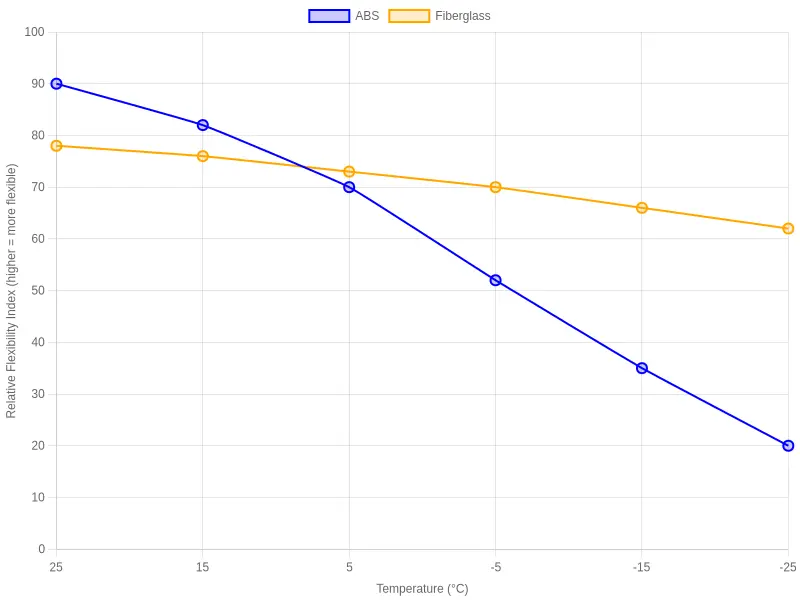
The chart plots a relative flexibility index from 25°C down to -25°C. ABS drops from 90 to 20, while fiberglass slides only from 78 to 62. ABS loses most of its give; fiberglass keeps enough to bend where ABS would crack.
Prevention and Repair Options for Cold-Weather Fairing Damage
Cold weather makes rigid ABS brittle, so the tabs that hold a fairing kit in place are often the first parts to fail. Most of these failures can be prevented, and the ones that still happen can usually be repaired without replacing the panel. The approach is the same whether you are bolting on a kit in a cold garage, refining a mounting design, or handling walk-in repair work: reduce stress on the tabs and add flexibility where movement is unavoidable.
Preventive Measures
Prevention is cheaper than repair. A few habits reduce the load on cold tabs:
- Warm the fairings before installation. Let panels sit in a heated space, or warm them gently with a heat gun on low, so the plastic is pliable rather than glassy. Cold ABS cracks under loads it would shrug off at room temperature.
- Use rubber or flexible washers at mounting points. These compress slightly and absorb vibration, letting the tab move with the panel instead of fighting it.
- Avoid over-torquing bolts in cold conditions. Tighten to the manufacturer’s spec and no further. In the cold, a “snug” bolt can already be past the point where the tab starts to stress.
- Choose reinforced or fiberglass options for high-flex areas. Where mounts are stressed or the panel flexes constantly, a reinforced design or a fiberglass panel distributes load better than a thin ABS tab.
For shops and fleet operators, it pays to fold this inspection into routine service. Tracking component wear and scheduling preventive work mirrors the maintenance strategies covered in fleet management best practices, and fairings are no exception.
Repairing Cracked ABS Tabs
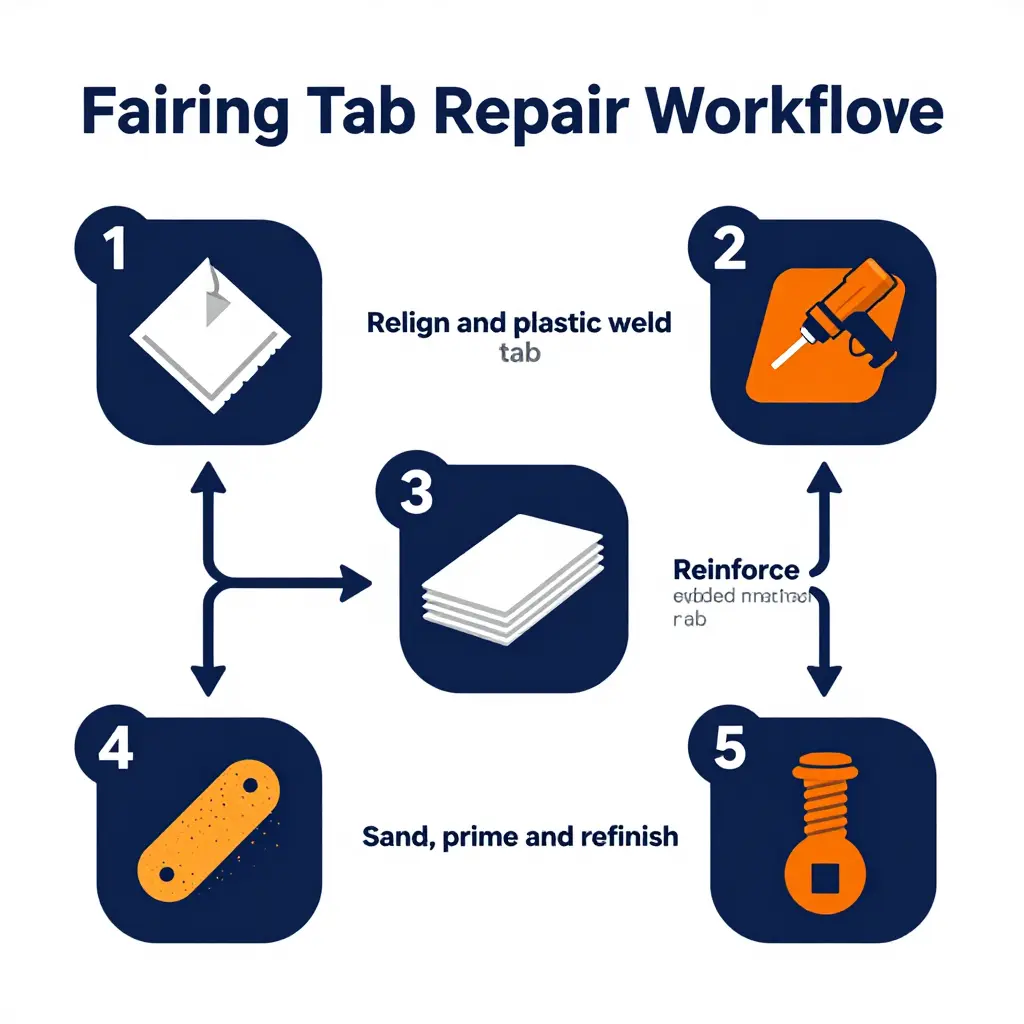
Once a tab has cracked, a fairing tab repair does not have to mean a new panel. The most durable fix is plastic welding: clean and bevel the break, then fuse the ABS with a heated welding rod of matching material. That restores a continuous bond instead of just gluing two surfaces together.
After welding, added material strengthens the joint. Common techniques:
- Adding a backing patch of ABS sheet behind the repaired tab to spread stress across a larger area.
- Building up the tab with extra material so it is thicker than the original weak point.
- Embedding a metal or fiberglass insert for mounts that see repeated flex.
Finish by sanding and refinishing so the repair blends in, then reinstall with the flexible washers and correct torque described above. A welded and reinforced tab can outlast the original.
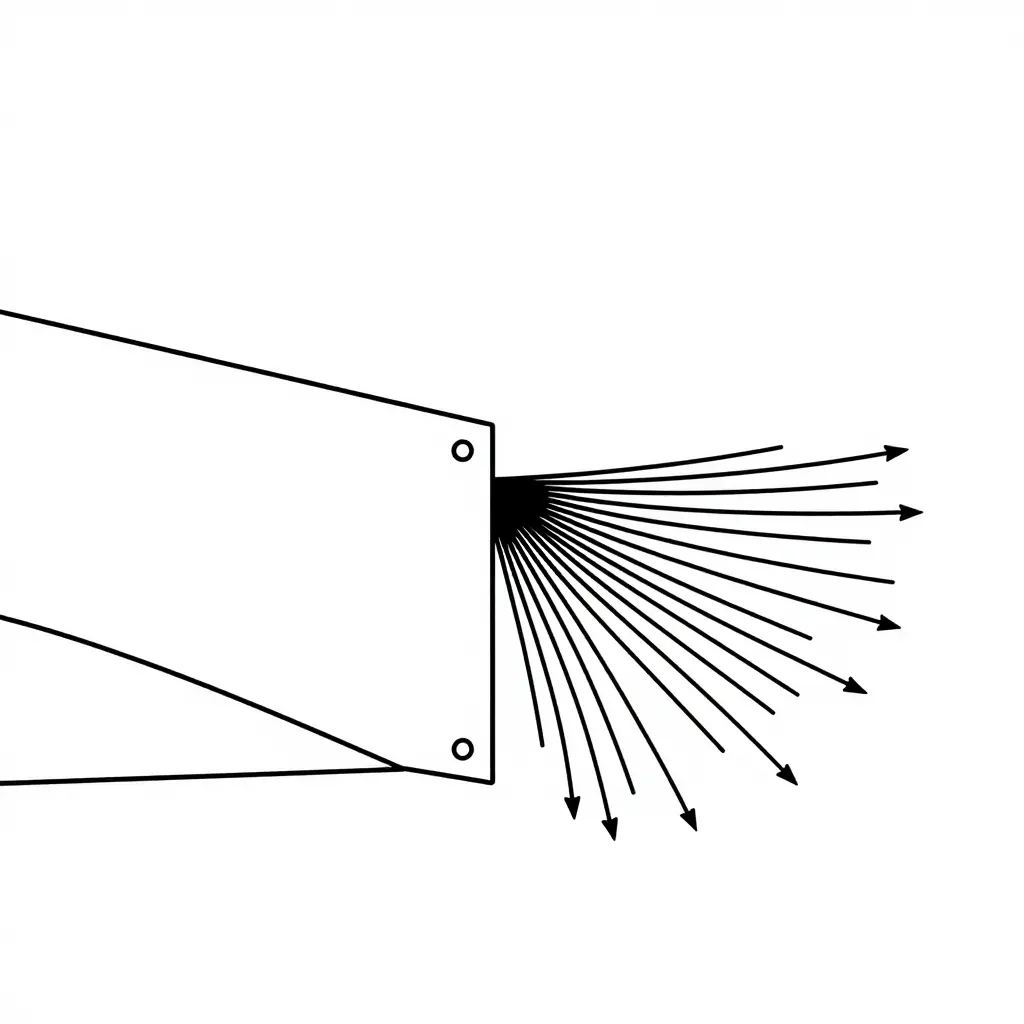
How to Read the Sequence
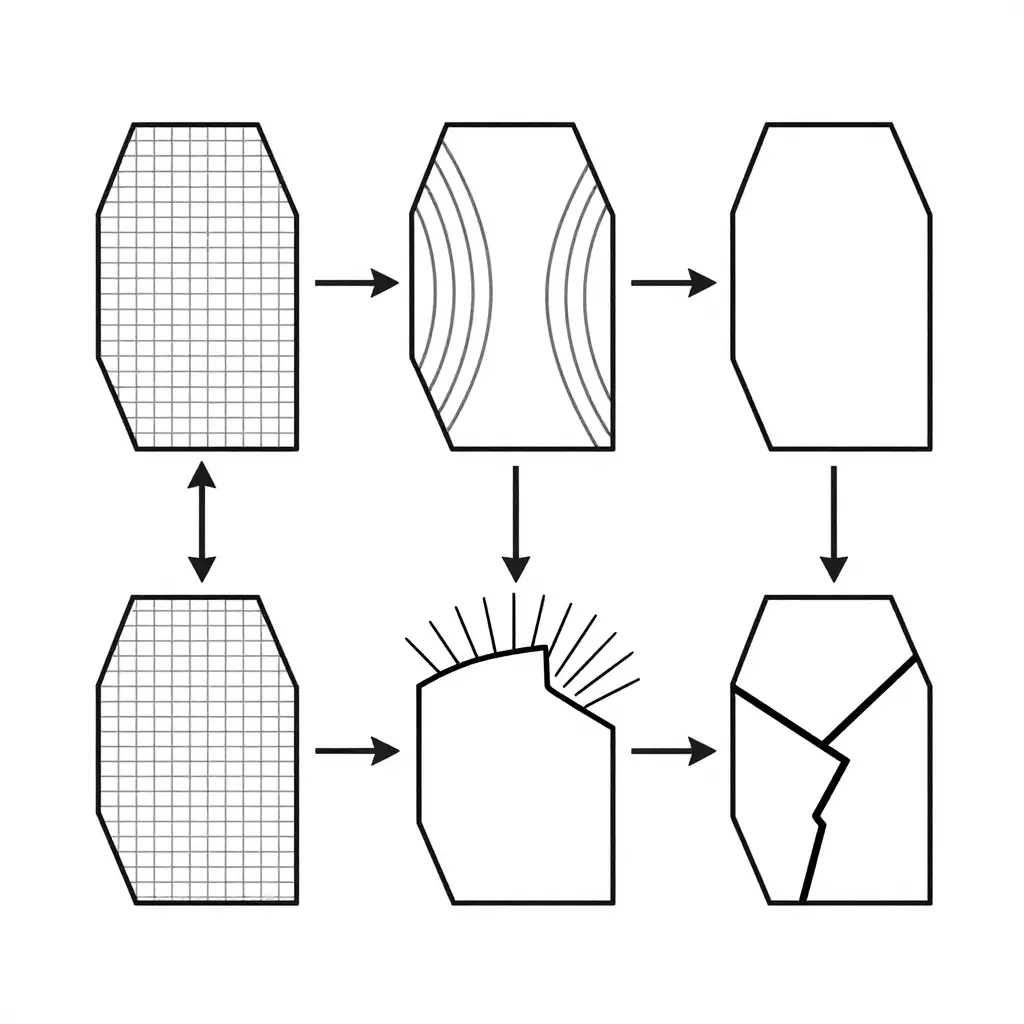
The schematic traces the failure path in four stages, left to right:
- Normal temperature: the fairing sits at ambient temperature, its panel geometry even and undisturbed.
- Cooling and contraction: as the temperature drops, the panel shrinks inward, and the converging lines show the material pulling toward its center.
- Stress concentration at the tab: the shrinking panel transfers load into the rigid mounting tab, where the stress lines bunch into a dense focal point.
- Crack formation: a jagged split opens at the tab junction, where the concentrated stress finally exceeded what the material could bear.
Frequently Asked Questions: Fairing Kits in Cold Weather
Cold weather raises recurring questions about fairing kit durability. These are the ones riders, repair shops, and manufacturers ask most.
Do ABS fairings always crack in cold weather?
No, but cold temperatures raise the risk sharply. As the thermometer drops, ABS loses the flexibility that lets it absorb vibration, and its impact resistance falls, so tabs and mounting points become far more likely to snap. Cracking usually happens when a stiff, cold panel is flexed during removal, installation, or a slow tip-over rather than during normal riding.
In the ABS vs fiberglass fairings debate, is fiberglass always the better cold-weather choice?
Fiberglass handles cold better in most cases, but “always better” oversimplifies it. Its longer fibers let it flex slightly before failing, and damage tends to stay local and repairable instead of shattering a whole panel. Fiberglass is still heavier and more labor-intensive to produce, so the right pick depends on your budget, riding style, and how often you strip the panels off.
How do I install fairing kits in winter without cracking them?
Warm the parts first by letting them sit in a heated space for several hours, so the plastic relaxes before you handle it. Finger-tighten fasteners in a crisscross pattern, and never force a tab that won’t seat; a gap usually signals an alignment problem rather than a strength one. Avoid bolting on cold, brittle panels outdoors, and use rubber grommets and plastic-safe fasteners to spread the stress.
Can cracked fairing tabs be repaired?
Yes, and a careful fix can outlast the original panel. For ABS, plastic welding or an ABS cement-and-mesh patch restores most of the tab’s strength; for fiberglass, epoxy with mat or cloth builds the tab back up. The key is to relieve stress around the repair and reinforce the area so the same tab doesn’t fail again next winter.
How do I choose the right material for a cold climate?
Match the material to how you ride and how much wrenching you do. If you pull fairings often or ride in deep cold, fiberglass or a hybrid kit usually endures better, though a well-braced ABS kit still works if you handle it gently and keep it warm during service. Flexible mounting hardware matters just as much, and keeping up with trends in trucking maintenance reinforces that smart mounts and timely inspections prevent most cold-weather tab failures.
Cold-Weather Material Comparison at a Glance
| Property | ABS | Fiberglass |
|---|---|---|
| Cold-weather flexibility | Low – turns brittle | Moderate – flexes before failing |
| Typical failure mode | Cracked tabs and mounting points | Localized cracks, often repairable |
| Weight | Light | Heavier |
| Repair method | Plastic welding or ABS cement | Epoxy with fiberglass mat |
| Best for | Warmer climates, gentle handling | Cold climates, frequent panel removal |