
Navigating the complexities of logistics and transportation law is crucial for manufacturing, distribution, and retail industries. Knowing when a truck can be legally placed out of service (OOS) not only ensures compliance but also optimizes operational efficiency. This guide outlines the various scenarios under which trucks can be legally OOS, encompassing mandatory rest breaks, overnight stops, mechanical repairs, and emergency situations. Each chapter dives into specific circumstances that affect your operations, providing a clear understanding of regulations and best practices to enhance your logistics management and ensure timely deliveries.
Timing the Pause: How Mandatory Rest Breaks Trigger Out-of-Service Status for Trucks
When a driver climbs into a cab and the highway stretches to the horizon, the journey feels boundless. Yet the rules of the road tighten around the act of stopping just as surely as they govern the miles between them. In the modern trucking industry, a pause is rarely a simple pause. It is a legally meaningful moment that can place a vehicle into out-of-service (OOS) status if the driver fails to observe the mandated breaks, or if the stop is made for a legitimate but improperly documented reason. Understanding when a truck can legitimately be positioned out of service begins with the core of the federal Hours of Service framework, a system designed not to trap drivers, but to standardize rest, reduce fatigue, and keep the road safer for everyone. The central thread in this tapestry is the 30-minute break that follows eight consecutive hours of driving. This rule, enforced by the Federal Motor Carrier Safety Administration (FMCSA) in the United States, is more than a suggestion; it is a checkpoint that can determine how long a truck remains legally parked and how long a carrier remains in compliance.
The regulation is precise. After a driver has spent eight consecutive hours behind the wheel, the clock demands a 30-minute break. This break must occur within that eight-hour window and, critically, it cannot be counted toward the 11-hour driving limit. In practical terms, the break is not a rest period you merely “tudge off the clock” to extend the day. It is a mandatory interruption that resets a portion of the driving clock and marks an OOS interval if compliance is not achieved. When the break is taken at a safe location—a highway rest area, a designated truck stop, or any other permitted site—the vehicle may be considered temporarily out of service for the duration of that break. The purpose is straightforward: prevent fatigue-related incidents by ensuring drivers have built-in, documented time away from the wheel.
The narrative around OOS status grows more complex once you look beyond the eight-hour limit. The FMCSA framework acknowledges additional, legitimate scenarios in which a truck can be placed OOS at a rest area. First among these is the overnight stop. If fatigue or schedule constraints require a driver to pause for the night, the truck can be positioned in a designated parking area within a rest zone for up to 24 hours without charge, so long as it is not used as a long-term or habitual sleeping arrangement. This is a pragmatic accommodation, recognizing that long-haul schedules sometimes demand overnight pauses in proximity to cargo, schedules, and dispatch windows. The critical condition here, as with other OOS scenarios, is proper use of designated spaces and compliance with local rules. A driver should ensure the vehicle is parked within zones marked for commercial vehicles and that staff at the rest area are aware of the status. Documentation, too, becomes essential when an overnight or extended stop is anticipated. A simple log entry, a diversion order, or a maintenance note can be valuable in demonstrating the purpose of the stop if questioned later.
Another legitimate OOS circumstance concerns maintenance or repairs. When a mechanical issue arises, the driver is entitled to park in a designated area within the rest zone and complete the necessary fixes. The emphasis is on safety and timeliness. Keep repair receipts, mechanic notes, and any diagnostic prints; these documents act as proof that the truck was not idling for convenience, but was immobilized for a repair that affects roadworthiness. The same approach applies to loading and unloading at a rest area. If the rest stop is used as a point of cargo handling, a delivery receipt, loading dock log, or equivalent documentation should accompany the stop. These records establish that the time spent in the OOS status serves an operational purpose and not a prolonged, unregulated stay.
Weather events and emergencies round out the conventional categories. Severe weather, road closures, or sudden breakdowns can necessitate a pause at a rest area. In such cases, documenting the event—police reports, tow receipts, or official advisories—helps to ground the OOS status in verifiable, non-arbitrary grounds. The rulebook is designed to be practical in the face of unpredictable conditions, not punitive. That is why the focus remains on legitimate cause, proper placement in designated zones, and subsequent movement once the task prompting the OOS has concluded.
The guidance on what not to do is as important as the rules themselves. The policy explicitly discourages “malicious parking”—using a rest area as a free night’s lodging or leveraging the space for extended, unreported stays. The system aims to ensure fair access to rest areas for all users. In addition, drivers should be mindful that local regulations can vary. Some regions, or countries with significant cross-border traffic, may impose stricter limits or specific conditions on where and how long a truck can remain in a rest area. While the example of Ruili, China is noted in policy discussions as a reminder that different jurisdictions treat long-term camping and RVs differently, the underlying message translates well: always respect designated zones and verify local rules when stopping. Beyond this, the myth of “time-related fines” as a direct penalty for resting at a rest area can be misleading. No separate on-ramp fine is typically charged simply for a rest, but patterns that trigger suspicion—extended, unexplained stays on a single route—can lead to scrutiny. The antidote is simple: carry clear documentation of your OOS status, be prepared to present it, and move to a legal parking spot once the rest or the required task ends.
In practice, a driver who plans to stay for a period longer than what is typically a short break should approach the rest area staff and register the OOS status. This step helps avoid confusion with staff and other motorists and provides a formal record for the day’s operations. Keeping copies of any documentation—receipts, repair orders, delivery slips, or even a simple store receipt—creates a portable, easily presented trail of justification should it be requested. The principle is straightforward: be transparent, keep records, and follow the posted signs and staff guidance. Never park in fire lanes, exits, or blind spots; these spaces are reserved for safety-critical functions and emergency access. And when the necessary work or the rest period ends, move promptly to a legal parking area. The goal is to maintain safety, compliance, and access for all users who depend on reliable, well-regulated rest stops along busy corridors.
For drivers and fleets alike, the practical takeaway is that a truck can be legally positioned out of service at a rest area for a legitimate, documented reason. The categories are clear: mandatory rest breaks, overnight stays within a designated area, maintenance or repairs, loading or unloading, and weather or emergencies. The common thread is documentation, designation, and timely movement back to regular service as soon as the underlying need has passed. The public-facing message in the industry remains consistent: rest areas are legitimate tools for managing fatigue, maintaining safety, and supporting efficient scheduling, provided they are used correctly and transparently. If you want to situate this within the broader context of trucking disruptions and policy evolution, you can explore how industry trends are shaping these practices. For a broader discussion on how these dynamics are playing out, see the piece on Key economic trends impacting the trucking industry.
As the road network continues to evolve—with changing dispatch patterns, new compliance technologies, and real-time data feeds—drivers increasingly rely on accurate rest rules to plan their routes, their stops, and their risk management strategies. The interplay between the eight-hour driving window, the mandatory 30-minute break, and the broader Hours of Service framework creates a rhythm that, when followed, makes the highway safer for drivers and other road users alike. It also anchors the practice of resting in a way that is predictable and auditable, which matters in a fleet environment where delays can cascade into missed deliveries and dispatch penalties. The OOS status, when supported by proper procedure and documentation, becomes a neutral tool for safety rather than a punitive label. The modern standard, then, is not that a truck is forever parked at a rest area; it is that the truck, moment by moment, is managed with an eye toward safety, efficiency, and accountability. For those who want a deeper dive into the regulatory structure that informs these decisions, the official Hours of Service guidance remains the anchor. The FMCSA outlines the precise rules and their interpretation, ensuring that the expectations for rest, breaks, and out-of-service periods are consistent across states and jurisdictions. See the official resource for the most current details and any exemptions that may apply to particular operations or regions.
External resource: For the official, detailed rules, consult the FMCSA Hours of Service page: https://www.fmcsa.dot.gov/regulations/hours-service
null
null
When Trucks Can Be Positioned Out of Service for Vehicle Maintenance or Repairs
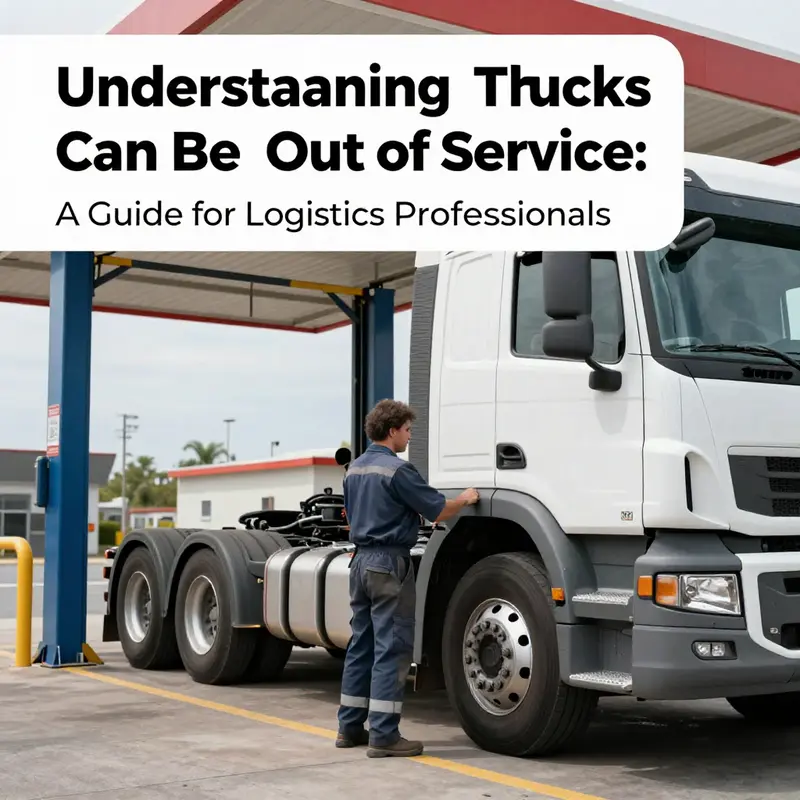
Trucks are more than machines that move goods; they are safety-critical systems that demand vigilance and disciplined procedures. When a fault or symptom raises safety concerns, the professional approach is to position the vehicle out of service in a controlled, compliant way that protects the driver, the cargo, other road users, and the carrier’s operating license.
The first priority is immediate safety. If a truck overheats, pull over to a safe location, avoid opening the radiator cap while the engine is hot, and document that the stop is for safety, not an accident. Other safety-critical faults such as cord or tread separation, spongy brakes, or a parking brake that won’t hold require swift action. Secure the vehicle with hazard lights and, if needed, warning devices at a safe distance, so repairs can proceed without creating a risk to others.
Out-of-service decisions are anchored in regulation and documented practice. The FMCSA recognizes that a vehicle found non-compliant may be placed out of service until the necessary repairs are completed and verified. Documentation such as repair receipts, mechanic notes, diagnostics, or a work order supports the legitimate OOS status and helps prevent disputes about duration or reason for the stop.
A practical scenario helps illustrate the process: if a truck overheats during a mountain climb, ease off, move to a designated area, let the engine cool, contact dispatch for nearby facilities, and arrange with a certified shop for diagnosis and repair. The truck re-enters service only after the repair is completed and safety checks pass, with a clear record of the work performed.
The maintenance focused OOS should be integrated with planning: pre-identified repair facilities, safe parking options, and a robust path to quick turnaround. The goal is to minimize downtime while preserving safety and compliance, not to penalize hard work. Drivers and fleets should stay transparent with authorities and staff at rest areas about the reason for the stop and ensure parking remains within designated zones for commercial vehicles.
For broader regulatory context, consult FMCSA Vehicle Maintenance Regulations, which provide the standards that govern maintenance-related OOS decisions and the steps required to resolve them.
null
null
Final thoughts
Understanding when trucks can be legally positioned out of service is essential for businesses in manufacturing, distribution, and logistics. Compliance with these conditions not only protects your company from penalties but also ensures that drivers operate under the safest conditions. By adhering to the outlined scenarios—including mandatory rest breaks, overnight stops, necessary repairs, and emergency situations—you can maintain a responsible logistics operation. Being informed about when the truck can be OOS enables better planning and ultimately results in a more efficient supply chain.