
Understanding the intricacies of Hours of Service (HOS) regulations is crucial for manufacturing, retail, construction, and small business owners involved in trucking operations. HOS ensures that drivers maintain proper rest periods while adhering to federal regulations designed to promote road safety. This guide will cohesively present the nuances of HOS regulations, the effects of Electronic Logging Devices (ELDs), daily and weekly driving limits, and best practices for compliance. Lastly, we will explore upcoming trends that may shape the future of HOS regulations, providing a thorough overview for logistics and supply chain stakeholders.
Riding the Clock: Mastering Hours of Service to Safeguard Drivers and Deliveries
The hours of service rules are more than a compliance checklist. They are a safety framework designed to sustain alertness, reduce fatigue, and lower the risk of crashes on the highway. For drivers and fleets alike, understanding HOS means translating regulatory language into day-to-day decisions that affect schedules, fuel efficiency, maintenance, and the bottom line. When a driver knows exactly how long they can operate, where to pause for rest, and how the weekly clock resets, they gain not just legal compliance but real practical clarity. The FMCSA sets the boundaries, but the real work happens in planning, anticipation, and the relentless attention to one’s own condition behind the wheel. This chapter traces the core elements of HOS, explains how they shape routes and rosters, and explores how modern tools—without naming any single product—can help a fleet stay compliant while keeping drivers safe, rested, and productive on the road. It is a narrative of clocks, not cages, a careful balance between operational needs and the human limit that every trucker understands from the seat of the cab.
At the core, hours of service are built to prevent fatigue-induced mistakes. A driver cannot drive more than eleven hours in a single shift after having at least ten consecutive hours off duty. This limit is not just a number; it is a signal that long stretches behind the wheel demand recovery lapses that restore vigilance. It means that every leg of a trip should be planned with reset points in mind. If a load arrives at a pivotal interchange late, the driver’s ability to press on must be weighed against the growing risk of diminished attention. The rule constrains the mindset of the day, encouraging proactive planning rather than rushed stretches that push a driver past their limit.
But the driving limit lives inside a larger rhythm. An on-duty period may not extend beyond fourteen consecutive hours in a 24-hour window. This twenty-four-hour rhythm forces a cadence that keeps the driver from falling into a creeping fatigue, even when the clock is ticking toward a tight delivery. The interplay between the eleven-hour driving cap and the fourteen-hour window is subtle but powerful. It means the day can be lengthy and demanding, yet there is a built-in check that protects against unrelenting, unsustainable effort. For example, a driver might begin a shift with a long urban haul, then switch to a more routine interstate segment, knowing that the clock will eventually require rest before the day ends. The binding constraint is not merely a rule; it is a design feature that keeps the driver alert when it matters most.
Timing the workday also hinges on the requirement for a short break within the driving period. Specifically, drivers must take a thirty-minute break during any eight-hour driving period. This break requirement is a practical anchor: it asks for a clear interruption when fatigue could be setting in, and it legitimizes rest as part of the job rather than an afterthought. In practice, this means that route planning must incorporate rest opportunities at logical points—industrial parks, rest areas, or at shipping yards where a driver can legally pause without derailing the schedule. It also creates a predictable structure that fleets can lean into. Rather than reacting to fatigue in the moment, drivers know the rule and plan for it in advance, selecting fuel stops and parking areas that allow for a genuine break. The thirty-minute pause serves a dual purpose: it protects the driver’s health and, by reducing the likelihood of an abrupt end to a shift due to fatigue, it helps ensure that deliveries stay on track.
Beyond the daily clock, HOS encompasses a weekly frame that recognizes cumulative fatigue over time. After a driver reaches sixty hours of driving in seven days or seventy hours in eight days, a full thirty-four consecutive hours off duty is required to reset the weekly clock. This restart is not merely administrative; it is a deliberate reset of mental and physical faculties. The thirty-four-hour period gives the body extended relief from the unique stresses of long-haul trucking. It is during these rest periods that meals, sleep, physical recovery, and the chance to rehydrate and de-stress align to restore readiness for the next week’s work. While the restart is a rule, it is also a practical invitation to plan weeks with deliberate boundaries between work blocks.
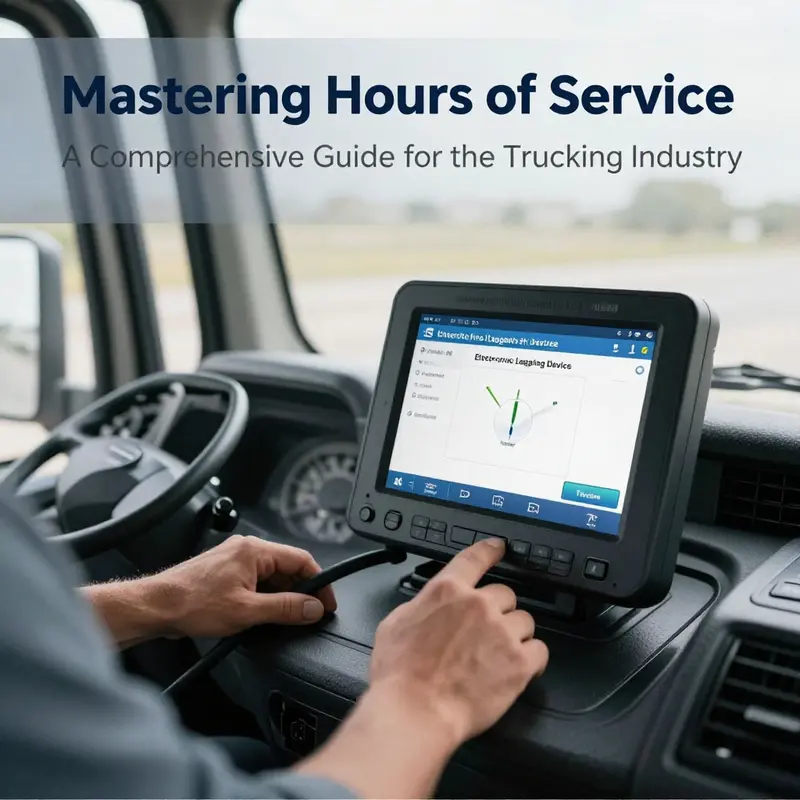
The modern layer added to HOS is electronic logging devices, or ELDs, which now record driving time, duty status, and location with high fidelity. ELDs reduce the margin for error and the potential for manipulation, turning what used to be a memory-based or manually documented process into an auditable trail in real time. For drivers, that means fewer disputes about what happened on a given shift and greater transparency about how the clock was managed. For fleets, it translates into precise visibility—drivers’ hours, upcoming breaks, and potential violations can be anticipated before they occur. The data from ELDs fuels smarter planning: routes that minimize backtracking, shifts that maintain safe hours, and rest windows that align with both customer expectations and regulatory requirements. The synchronization of human habits with machine-recorded data is transforming how hours of service are practiced on the ground.
Yet compliance is not a solo act. It requires a collaborative system that blends policy, planning, and practical execution. Fleet managers and drivers must talk in the same language about risk, rest, and readiness. The planning horizon expands beyond the next waypoint to the next day, or even the next week, as managers design rosters that honor the fourteen-hour cycle while accommodating delivery windows and customer demand. In this light, HOS becomes a discipline of anticipation: pre-plan rest stops, preselect routes with known parking options, and preface handoffs with clear communication so a new driver can pick up without breaking the clock. It is here that modern fleet management tools enter the story in a general, non-brand way. These tools help fleets plan routes, monitor hours in real time, and ensure that each driver’s schedule respects the evolving regulatory landscape. In a dynamic market, where demand can spike overnight and loads can reroute with a moment’s notice, the ability to see hours of service as a live signal rather than a fixed wall is a decisive advantage. The goal is not to chase the clock, but to choreograph it—so that safety is preserved and service levels are maintained.
All of this does not happen in isolation. The regulatory environment continually evolves, and carriers that operate across borders must stay alert to cross-border regulatory issues and differences in approach. For those who manage fleets that touch multiple jurisdictions, the challenge is not simply to apply a single rule but to translate several regulatory layers into a coherent daily practice. The importance of a centralized, up-to-date understanding of HOS cannot be overstated. When managers know the exact language of the rules and have a clear sense of how those rules apply to every leg of a trip, they can design schedules that maximize uptime without sacrificing safety. This is where the human element remains essential. No matter how sophisticated the tools become, the decision to stop for a break, to take a restart, or to adjust a route remains a driver’s judgment call guided by training, experience, and the objective of staying safe on the road. The best practices emerge not from rigid adherence alone but from disciplined flexibility, where the clock serves as a constraint that guides a thoughtful and deliberate approach to every mile.
In practice, understanding HOS means building routines that respect both the letter of the rule and the spirit of safe driving. It means planning several days ahead to ensure there are viable rest opportunities on each leg, selecting routes that avoid unnecessary detours just to stay within the eight-hour driving window, and acknowledging when fatigue is creeping in and choosing to rest early rather than risk a late-day breakdown. It also means recognizing the human cost of noncompliance: the increased risk of accidents, regulatory penalties, and the toll on a driver’s health and well-being. When drivers know they have the autonomy to make safe decisions without fear of punitive consequences, they are empowered to prioritize safety over speed, a balance that ultimately sustains both the individual and the business over time. The discussion of HOS is thus a conversation about stewardship—stewardship of the driver, the vehicle, and the traveling public.
To connect this more concretely with the everyday experience of trucking, consider the way hours of service shape rostering and route selection. A fleet manager may map out a week with built-in thirty-four-hour rest blocks for every driver slated to accumulate hours, then confirm that each block aligns with the destination’s open windows and the availability of parking or rest facilities. The plan is revised as road conditions, weather, or customer delays emerge, yet the underlying discipline remains intact: rest before fatigue, and plan around the clock rather than fighting against it. The driver may also coordinate with a partner or relay system, ensuring that at each handoff the clock remains within the limits and the new operator starts at a fresh point. This level of coordination, while technically demanding, pays dividends in reliability, safety, and peace of mind. It is a practical embodiment of the principle that compliance and performance are not at odds but rather mutually reinforcing when the hours are understood as a framework for smarter operation. In sum, HOS is not merely red tape; it is a safety philosophy that, when embraced, yields better schedules, healthier drivers, and more dependable service for customers. For those navigating cross-border journeys or shifting regulatory contours, the reminder to stay current—via official updates and reputable resources—becomes not a burden but a strategic advantage. See further details on cross-border regulatory issues via this resource cross-border regulatory issues. For official, always-current information, refer to FMCSA hours of service guidelines and updates as part of ongoing compliance work.
External resource: https://www.fmcsa.dot.gov/regulations/hours-of-service
null
null
Hours of Service Limits: How Daily Driving Caps and Weekly Rest Shape Safety, Scheduling, and the Road
Understanding Hours of Service in the trucking industry goes beyond memorizing a handful of numbers. It is a framework that translates into every dispatch, every rest stop, and every decision a driver makes on the road. HOS regulations, overseen by the Federal Motor Carrier Safety Administration, are designed with safety in mind: to limit fatigue, reduce crash risk, and ensure drivers have time to recover between shifts. For operators, the value of HOS isn’t simply compliance; it is a tool to balance reliability with human limits, to plan routes that keep drivers alert, and to design schedules that minimize the cost of downtime while protecting well-being. The rules are not static; they shift as enforcement practices evolve and as new data about fatigue risk emerges. In this context, electronic logging devices (ELDs) have become a central piece of the system, turning subjective recollection into objective data and turning planning into a real-time discipline. The practical effect is to convert a policy framework into a day-by-day operating rhythm that impacts everything from mile-per-day targets to the cadence of rest breaks.
HOS is anchored in two dimensions: the daily window within which driving must occur, and the weekly frame that governs ongoing cycles of work and rest. It is not simply a cap on hours; it is a safety architecture. When a driver approaches the daily limits, dispatchers and fleet managers must adjust expectations, reallocate loads, and, where needed, schedule more rest or alternate drivers. The result is a system that rewards advance planning, clear communication, and disciplined execution. The complexity arises not from the numbers alone, but from how those numbers interact with traffic, weather, unexpected delays, and the realities of long-haul logistics. This chapter examines those interactions in a way that helps drivers understand not just what the rules say, but why they matter for life on the highway and the bottom line of a fleet.
At the core of daily limits is the requirement that a driver may drive up to 11 hours after taking at least 10 consecutive hours off duty, and within a 14-hour on-duty period. In practice, that means the clock starts ticking the moment a driver begins any duty status that constitutes working time. After the 11th driving hour is reached, the driver must stop driving and be off the road, unless an exception applies, and the vehicle must not be operated further until the cycle resets. Equally important is the requirement for a break: a driver must take a 30-minute break during any period when eight hours of driving have elapsed on the current duty cycle. This break can be taken as a single 30-minute rest or as two 15-minute breaks, provided it occurs within the eight-hour driving window. The effect is a daily rhythm that may feel constraining when a late delivery or a traffic jam stretches the day, but it serves a critical purpose: it forces a pause, a moment of rest, and attention to fatigue.
These constraints shape how a typical day unfolds. A driver who starts early may be able to complete the maximum driving time with a single, well-timed 30-minute interlude, while a late start or heavy congestion may push the pace toward the limit, requiring careful repositioning of loads or a decision to swap drivers at a planned handoff. The interplay between the 11-hour driving limit and the 14-hour window can also encourage deliberate scheduling of non-driving tasks—loading, unloading, fueling, and paperwork—during periods when the vehicle is not allowed to move beyond the window. The result is more than a timer; it is a framework that aligns operational tempo with human rest cycles and road safety.
Weekly limits and the restart rule add another layer. The rules allow up to 60 hours of driving in seven days or 70 hours in eight days, depending on the carrier’s scheduling, with a mandatory 34-hour off-duty period to reset the clock when those thresholds are reached. The restart period is designed to prevent a creeping accumulation of fatigue across a longer span and to ensure that a fresh productivity cycle begins only after a substantial block of rest. In practice, fleets map weekly hours against customer demand, taking into account days off, holidays, and maintenance windows. When a driver nears a weekly ceiling, planners may schedule a rest period that aligns with a lighter load or a short non-driving assignment, preserving uptime while staying compliant. This weekly cadence also influences equipment utilization, as tractors and trailers must be cycled through service windows and rest periods in a way that minimizes downtime and avoids bottlenecks at distribution hubs.
For readers focused on the broader industry context, the evolving regulatory environment interacts with shifting economic and safety priorities. The rules push fleets toward more disciplined planning, which, in turn, interacts with regional freight patterns, driver pools, and the typical length of cross-border trips. The bottom line is that HOS regulations are not merely compliance checklists; they are constraints that drive smarter routing, more precise load planning, and a culture of safety that underpins reputations in a competitive market.
To connect the thread between the practical and the strategic, consider the wider business implications that people in the industry watch closely. A growing body of evidence highlights how hours-of-service discipline interacts with wages, retention, maintenance planning, and fuel efficiency. When drivers operate within a well-managed HOS framework, fatigue-related incidents decline, maintenance costs stabilize, and on-time performance improves. These gains ripple outward, affecting customer relationships, insurance costs, and the ability to attract new talent in a competitive job market. The influence of HOS, then, stretches beyond the cab and into fleet culture, workforce planning, and corporate reputation. And because regulations shift in response to enforcement data and safety research, a forward-looking approach—grounded in data, but flexible in practice—remains essential.
Intriguingly, readers may find it useful to explore how broader economic and regulatory trends interact with HOS in driving decisions at the fleet level. For a broader view of the factors shaping these patterns, see Key economic trends impacting the trucking industry. That reference points to a wider conversation about efficiency, capacity, and demand that informs how fleets allocate hours and assign drivers across markets. It is not a deviation from the core topic but a complement that helps translate rules into sustainable business strategy. As with all policy-driven practices, the goal is not to chase perfect compliance alone but to integrate safety with reliability and cost discipline in a way that survives the ebbs and flows of freight markets.
Finally, for readers seeking a concise summary of the official framework, the FMCSA provides the definitive resource on Hours of Service. It is a source of truth that governs every driver and every fleet, and it is updated to reflect new evidence and enforcement priorities. The path to mastery of HOS lies in reading, applying, and revisiting these rules as the job and the market evolve. The practical takeaway is simple: plan ahead, build rest into every route, and use data to stay ahead of the clock rather than chase it.
For the official rules, consult FMCSA’s Hours of Service Regulations: https://www.fmcsa.dot.gov/regulations/hours-service
Harmonizing Hours: Building a Resilient System for Managing Hours of Service in Trucking

In the modern trucking world, Hours of Service (HOS) is more than a regulatory checkbox. It is a living discipline that shapes daily operations, safety outcomes, and the financial health of a fleet. The purpose of HOS rules is clear: prevent driver fatigue, reduce the likelihood of fatigue-related incidents, and ensure that humans stay as alert as possible behind the wheel. But turning those rules into a practical, consistently applied system requires more than compliance mindsets; it requires a holistic approach that integrates technology, people, processes, and culture. When an operation brings these elements into harmony, hours are managed not as a burden but as a driver of predictability, reliability, and long-term well-being for drivers and the company alike. The path to that harmony begins with a clear understanding of the way work, rest, and restarts flow through a driver’s day, then translating that understanding into day-to-day routines that can withstand the irregularities of real-world trucking.
Technology sits at the heart of modern HOS management, not as a substitute for judgment but as an enabler of better decisions. Electronic logging devices (ELDs) have become the trusted backbone for recording driving time, duty status, and location with a level of accuracy that is hard to achieve through manual methods alone. The benefits extend beyond simple compliance: real-time visibility into driving patterns and duty cycles allows fleets to anticipate bottlenecks, reallocate loads before a violation appears, and protect drivers from unintended rule breaches. A well-implemented ELD strategy reduces the risk of human error and provides a reliable data stream for continuous improvement. Yet technology is only as good as the standards it supports and the people who use it. A sophisticated ELD setup without trained operators and disciplined processes can still yield gaps in compliance or misinterpretations of data. In other words, devices create the capability; disciplined execution creates the results.
Beyond the gadgets and dashboards, the most enduring HOS advantage comes from proactive scheduling. Traditional thinking frames scheduling as a compliance constraint—stop this much, drive that much. The better practice reframes it as a planning tool: how can dispatchers arrange loads, routes, and rest opportunities to stay within legal windows while delivering on time? The answer lies in integrating route planning with HOS tracking so that the system can propose feasible handoffs, predictable start times, and safe buffers for weather, traffic, or unforeseen delays. When schedules are built with real-time and historical data in mind, the 11-hour driving cap and the 14-hour workday become not obstacles but guardrails that guide efficient decisions rather than reactive firefighting. In this context, planning becomes a forecast of capability rather than a reaction to incidents, and drivers feel the difference in their day-to-day routines, with less fatigue and more consistency.
Communication weaves through every successful HOS program like a steady thread. Open channels between drivers and dispatchers enable timely adjustments in response to unexpected events. A driver encountering congestion, a minor mechanical issue, or a sudden detour can communicate early, allowing the team to adjust load placements, reroute, or shift drop-off timelines before a violation arises. A culture that rewards proactive reporting rather than punitive silence creates a safer operating environment. When drivers trust that their feedback will be heard and acted upon, they are more likely to plan their rest periods conscientiously and to log their hours accurately, which in turn strengthens the entire compliance cycle. The simplest habits—pre-shift check-ins, mid-shift status updates, and post-shift debriefs—accumulate into a robust, real-time picture of who is driving, who is resting, and where the operation is headed next.
Training is the bridge between policy and practice. It is not a one-and-done event but an ongoing program that keeps every member of the operation aligned with current rules, best practices, and the rationale behind them. Good training explains not only the letter of the HOS rules but the spirit: safety, alertness, and the welfare of the driver. The American Trucking Associations and other industry bodies emphasize that well-informed drivers voluntarily adhere more closely to regulations, reducing the likelihood of violations and improving overall fleet performance. An effective program includes new-hire onboarding that covers the basics of duty status, rest breaks, and restart requirements; seasoned drivers benefit from refreshers that highlight recent regulatory updates and common error patterns observed in-day-to-day logs. But training should extend beyond the cockpit of the truck. Dispatchers, fleet managers, and maintenance personnel all require an understanding of how HOS interacts with operations. A dispatcher who can read a driver’s current duty cycle and anticipate where a trip might push into a rest window is as valuable as a professional driver with impeccable hours. The best programs include simple decision aids, scenario-based exercises, and periodic audits to verify comprehension and adherence.
A thoughtful HOS approach also recognizes the human elements behind the numbers. Long-haul operations, in particular, demand attention to burnout and work-life balance. Some fleets adopt what is described in industry practice as a “double time” strategy—allowing extended off-duty periods within the week to recharge and reset. This approach is not a license to disregard scheduling discipline; rather, it is a deliberate trade-off that prioritizes sustained driver health and on-time performance over short-term utilization. Implementing such a strategy requires careful workload planning, route timing, and customer communication to ensure that extended rest periods do not cascade into service delays. When done well, the double-time approach can reduce fatigue, improve alertness on the road, and preserve driver retention. It is a reminder that HOS management is not just about ticking boxes but about designing work patterns that respect human limits while preserving operational momentum.
Regular audits form the backbone of continuous improvement in HOS management. Audits should not be seen as punitive checks but as learning opportunities that illuminate patterns of non-compliance and opportunities for process refinement. A robust audit program examines data integrity in ELD records, verifies that logs align with fuel receipts and maintenance events, and tests the organization’s ability to respond to discrepancies in real time. The objective is twofold: demonstrate due diligence should regulatory authorities arrive at inspections, and, more importantly, identify systemic weaknesses that, if corrected, would yield safer driving and smoother operations. Audits also incentivize a culture of accountability where drivers, dispatchers, and managers understand that accurate logs support fair treatment, efficient routing, and reduced fatigue risks. The result is a fleet that self-corrects before external audits do, creating a durable competitive advantage rooted in safety and reliability.
In talking about best practices, it is not enough to focus on systems alone. Leadership matters. Building a culture of safety requires visible commitment from leadership, clear expectations, and consistent consequences for non-compliance, balanced by recognition for adherence and improvements. When leaders communicate the value of rest, model it in their own practices, and allocate necessary resources for training and technology, the entire organization moves toward a common standard. The combined effect is a resilient operation where HOS management is not a legal obligation but a shared standard for safe, predictable, and efficient service.
For fleets operating across borders, the regulatory mosaic grows more complex. Different jurisdictions may have variations in enforcement emphasis, rest-break expectations, or restart requirements. In such cases, the organization benefits from a cross-border awareness program that keeps drivers and managers informed about the nuances of each region’s rules and the potential implications for routing and timing. A practical approach is to view cross-border compliance as a member of the preventive toolkit rather than a separate compliance track. The logistics of crossing into another jurisdiction can be anticipated in the planning stage, with rest opportunities and route options mapped to align with the most stringent rules encountered along the way. This perspective helps minimize surprises at border points and reduces the risk of inadvertent violations caused by unfamiliar regulations. For readers exploring these issues more deeply, see cross-border regulatory issues within trucking for nuanced considerations. cross-border regulatory issues.
In addition to these internal practices, fleets should integrate external resources to stay current. The FMCSA’s Hours of Service overview provides an authoritative baseline for understanding the fundamental limits and the evolving nature of the rules. The combination of solid internal policies and up-to-date external guidance creates a robust shield against violations while maintaining a clear path to continuous improvement. As the industry continues to evolve with changes in technology, driver demographics, and freight patterns, the ability to adapt—without sacrificing safety or efficiency—will define the most successful operators. The shift toward digital management tools does not lessen the importance of human judgment; it amplifies it, giving managers greater capacity to forecast, plan, and protect every driver who climbs behind the wheel.
The practical implication for day-to-day operations is straightforward: construct a living system where ELD data informs scheduling decisions, where real-time communication keeps rest opportunities intact, where training translates policy into behavior, and where audits reveal where the system can work more smoothly. Build this system piece by piece, starting with accurate data capture, layering in proactive scheduling, reinforcing with continuous education, and reinforcing through regular review. When drivers and managers share a common language about hours, fatigue, and safety, the road becomes safer, the fleet becomes more reliable, and the bottom line improves not just in the short term but over the long haul. The emphasis is not merely compliance for compliance’s sake; it is about cultivating a disciplined, safety-first operating model that can adapt to changing times while staying true to the core obligation to keep people safe on the road.
In sum, managing HOS effectively is a holistic discipline that blends technology, planning, communication, training, and culture into a single, sturdily engineered system. The best practices outlined here are not a rigid blueprint but a flexible framework that fleets can tailor to their size, regional footprint, and service commitments. By embracing a proactive, communicative, and data-informed approach, trucking operations can navigate the hours of service landscape with greater confidence and with an eye toward safer roads and more reliable service for customers. The result is not merely regulatory compliance but a sustainable, people-centered model of operation that respects drivers’ limits while delivering on the promises of modern logistics.
External resource: For the official rules and the most current updates, refer to the FMCSA Hours of Service overview at https://www.fmcsa.dot.gov/hos/overview.
Beyond the Clock: The Next Wave of Hours-of-Service Rules Shaping Safety, Schedules, and Sustainable Trucking
When operators in the trucking world think about Hours of Service (HOS), they often picture a rigid clock that must be followed to the minute. Yet the trajectory of HOS policy over the next decade is unlikely to be a mere extension of the current framework. Instead, it will blend real-time data, predictive insights, and smarter fatigue management with safety-driven flexibility. The aim is not to erode safety but to align rest, work, and travel with what science, technology, and a changing workforce require. In that sense, the conversation about HOS becoming more dynamic is less about loosening rules and more about making them smarter, more responsive to conditions, and better integrated with the realities of modern trucking. The core question becomes how to understand hours of service not as a static schedule, but as a living system that adapts to driver health, route complexity, and the evolving tools that fleets can deploy to manage risk and performance.
Central to this evolving landscape is the ongoing integration of Electronic Logging Devices (ELDs) and telematics. These technologies have already transformed compliance by recording driving time, duty status, and location with a level of precision never before possible. As data streams multiply—from vehicle performance metrics to fatigue indicators derived from driving patterns—regulators and industry practitioners are exploring how to use this information to support safer, more efficient operations. Rather than simply policing the clock, future systems may enable safer flexibility during periods of low risk, such as allowing adjusted driving windows in light of favorable conditions or, conversely, tightening constraints when fatigue indicators rise. This shift hinges on the quality and interoperability of data, the reliability of fatigue-risk models, and the ability of fleets to translate insight into disciplined scheduling practices that drivers can trust and maintain. The goal is not to coax more driving into the day but to ensure that every mile is earned with appropriate rest, minimized fatigue, and a clear view of cumulative work. In practice, this means that the HOS framework could tolerate a broader set of safe arrangements, provided they are underpinned by robust monitoring and safeguards. For readers seeking a broader understanding of the macro forces shaping trucking, the literature on key economic trends impacting the trucking industry offers a useful context for how policy and practice interact with market conditions. Key economic trends impacting the trucking industry: https://fritzke-truckinginc.com/key-economic-trends-impacting-the-trucking-industry/.
Final thoughts
Grasping the complexities of Hours of Service regulations is imperative for ensuring compliance, promoting safety, and enhancing operational efficiency in the trucking industry. By understanding both the existing frameworks and future directions influenced by technology and regulatory shifts, stakeholders can better navigate this essential aspect of logistics management. Proactively managing HOS ensures not only the wellbeing of drivers but also the optimization of your transportation operations, guaranteeing timely and secure deliveries.