
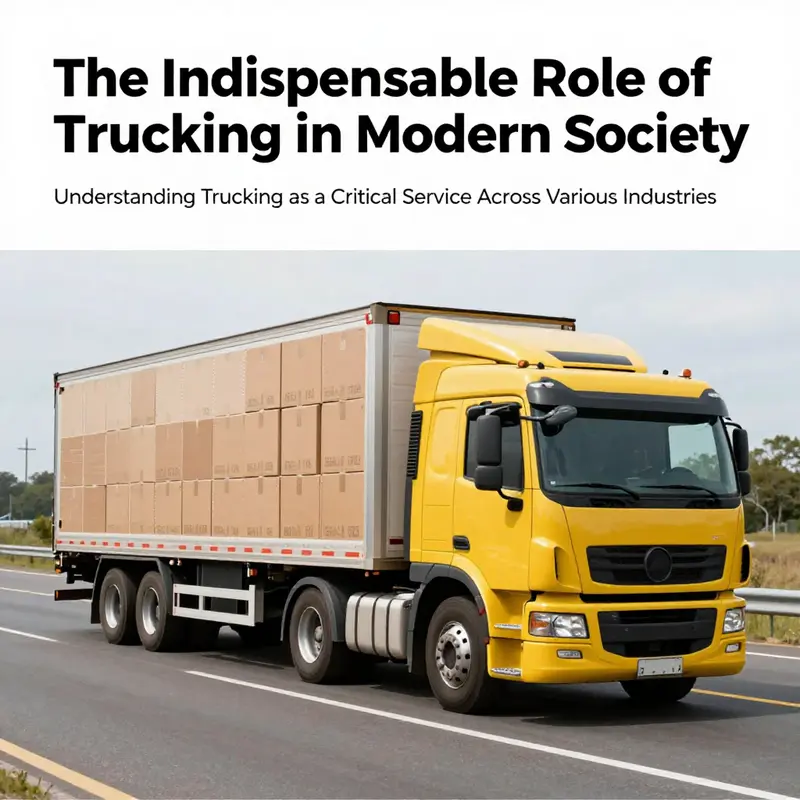
Trucking stands at the backbone of modern economies, ensuring the seamless flow of goods necessary for everyday life. As global commerce expands, the role of trucking as an essential service becomes increasingly critical, particularly in times of crisis. This article delves into how trucking maintains vital supply chains during emergencies, its significant economic impact on various sectors, and its strategic importance in national security. By examining these facets, readers gain insight into why trucking is fundamental for manufacturing, retail, and construction alike, emphasizing the interconnectedness of this industry with the broader economic landscape.
Moving Through Crises: Trucking, Essential Services, and the Quiet Backbone of Society
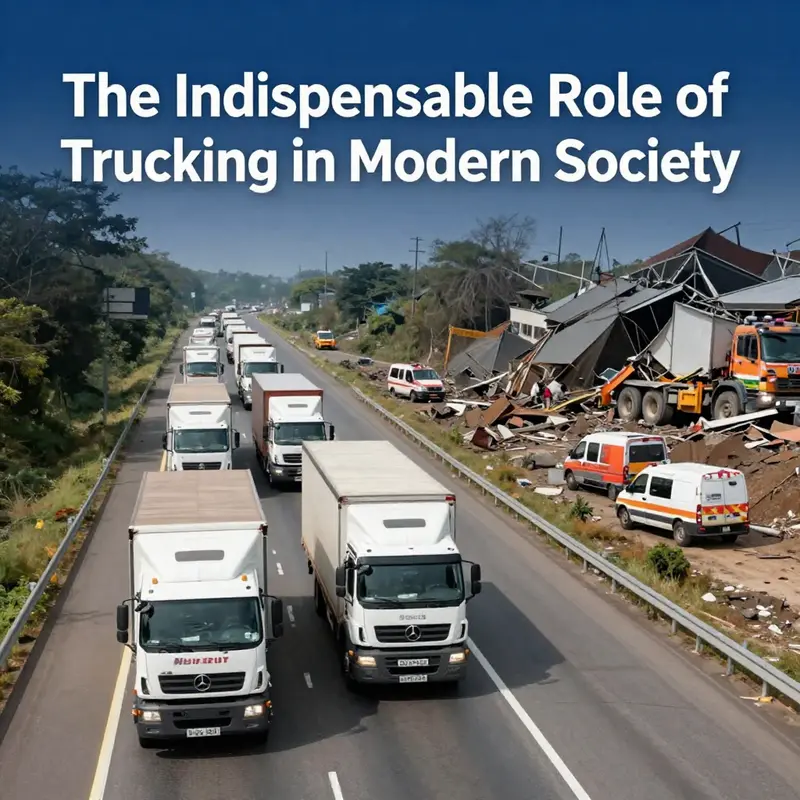
When a community looks to its shelves, its pharmacies, its fueling stations, and its hospitals, it often overlooks the ordinary, relentless work that makes daily life possible. Yet the trucking industry sits at the center of that quiet engine, an essential service whose reach extends far beyond the roadways. It is not merely a business activity but a public service that holds together the fragile lattice of modern life. The argument that trucking is an essential service is not a slogan but a recognition of how tightly a healthy society depends on freight networks functioning with reliability, speed, and resilience. In times of calm, trucking moves consumer goods, fuels commerce, and underpins the just-in-time systems many industries rely on. In moments of crisis, it becomes the difference between scarcity and access, between disrupted care and continued treatment, between panic and plan. The designation of trucking as a critical component of national infrastructure by authorities charged with safeguarding public welfare underscores a simple truth: economies and communities endure when goods continue to flow, and that flow is sustained by men and women who drive, inspect, load, unload, and manage fleets through long hours, challenging weather, and increasingly complex regulatory landscapes.
To grasp the full weight of trucking as essential, one must consider the systems, incentives, and risks that shape the everyday realities of trucking work. The supply chain is a sprawling, interconnected network, a mesh of manufacturing plants, distribution centers, warehouses, ports, rail hubs, and retail nodes. The truck is the flexible thread that can bridge gaps when other modes of transport falter. A factory may halt without just-in-time deliveries of raw materials; a hospital may face shortages without a steady cadence of supplies; a community’s ability to rebound from a disaster depends on trucks arriving with food, water, fuel, and medicines. The essential-service framing makes more sense when we examine how crises alter the calculus of supply, demand, and risk. During ordinary times, predictability and efficiency are prized. In emergencies, resilience—defined as the capacity to absorb shocks and recover quickly—becomes the paramount objective. Trucking, in that sense, is not just about moving freight; it is about preserving the social contract that promises access to essential needs even when conditions are dire.
Consider the setting of a public health crisis or a climate-induced disruption, where normal routines are upended, and the pace of life slows under stress. Food sits on shelves, but distribution can stall as drivers encounter road closures, shortages of parking, and stricter health protocols. Fuel remains a lifeblood for emergency response and daily operation alike, yet refineries and pipelines are compelled to coordinate with tanker fleets that must operate around the clock. Medicine, laboratory supplies, and protective equipment must reach facilities that treat the sick and protect the well. The transportation network is the invisible conduit that keeps these commitments alive. This is why the trucking industry is frequently categorized as critical infrastructure, not as an optional logistics activity but as a public service integral to health, safety, and economic stability. The designation by national authorities reflects a recognition that uninterrupted freight movement is as vital as hospitals and power grids when communities face adversity. It is a coupling of commerce and care, a convergence of market efficiency and public welfare that demands both strategic planning and practical execution from carriers, drivers, dispatchers, maintenance teams, and policymakers alike.
The COVID-19 pandemic laid bare the core dynamic that undergirds the essential-service claim. Across continents, societies experienced a sudden revaluation of truckers as essential workers—people who could not stay home without compromising access to goods and services that people rely on for health and survival. The reality of long-haul routes, irregular schedules, and risk exposure created a dual burden: keep goods moving while protecting the health of the workforce. The evidence from this period illustrates a paradox that often accompanies essential services. On one hand, the industry faced unprecedented demand for medical supplies, perishable foods, and protective equipment. On the other hand, drivers faced heightened exposure risk, fatigue from extended shifts, and logistical bottlenecks caused by health protocols, border restrictions, and quarantines. Yet despite these challenges, trucking demonstrated remarkable adaptability. Fleets restructured schedules, rerouted trajectories to avoid chokepoints, and layered in new safety protocols to minimize contact and reduce risk. The resilience of the freight network during the crisis was not merely a matter of luck; it was rooted in the practical capacity of trucking operations to bend without breaking under extraordinary pressure.
A telling dimension of this resilience arose in community-centered initiatives that leveraged trucking expertise in service to those most in need. While the specifics of brand names are beyond the scope of this analysis, the core idea remains clear: carriers and drivers stepped into roles that blended logistics with social responsibility. They reorganized routes to deliver essential items directly to vulnerable households, supported food distribution efforts in crisis zones, and coordinated through networks that translated cargo movements into social impact. These efforts highlighted more than efficiency; they revealed a social contract in action. When systems are strained, the ability to adjust, reallocate capacity, and prioritize critical items becomes a matter of accountability and care for the most at-risk populations. In this sense, the trucking enterprise is not only a market player but a public utility in the broad sense, one that contributes to public safety and welfare by maintaining consistent access to critical goods and services.
The broader economic implications of trucking’s essential role emerge most clearly when we step back from the day-to-day operations and observe how freight movement interacts with macroeconomic stability. Freight networks provide the connective tissue that allows production to scale, retailers to meet demand, and services to function. When fleets remain operational, hospitals maintain blood supply chains and pharmaceutical logistics; when fleets falter, gaps emerge across multiple sectors, amplifying economic volatility and undermining public confidence. In this context, trucking is not a luxury or a niche capability; it is a foundational element of modern economic resilience. Each mile driven, each load matched to a trailer, each maintenance check completed on time contributes to a broader stability that supports employment, consumer confidence, and sustainable growth. This perspective aligns with research that portrays freight networks as critical to the continuity of healthcare systems during emergencies, to the reliability of food distribution, and to the capacity of communities to respond to and recover from disruptive events. As global disruptions intensify—from climate events to geopolitical frictions—the reliability of freight networks becomes even more crucial. The value of trucking, then, is measured not only in freight value but in the steady hand it keeps on the wheel of everyday life when other systems strain under pressure.
Another layer of this conversation concerns the drivers themselves—the human component that renders trucking possible. The perception of drivers as essential workers rests on tangible realities: long hours, demanding schedules, and the cognitive load of navigation and compliance in a regulatory environment that grows more complex each year. These men and women are often the first line of continuity on the road, charged with meeting tight deadlines while ensuring safety and adherence to standards. Their work requires focus, discipline, and an ability to adapt to shifting conditions, from weather hazards to sudden route changes. The well-being of drivers, their access to rest, their health protections, and their capacity to maintain truck maintenance standards directly influence the reliability of the freight system. Any erosion in these conditions can ripple through the network, creating bottlenecks, delays, and heightened risk for the broader public. Acknowledging trucking as essential therefore implies a dual obligation: to safeguard the uninterrupted movement of goods and to invest in the people who make that movement possible. That investment encompasses not only competitive compensation and stable career paths but also access to training, predictable schedules, and health protections that keep drivers healthy and capable of delivering under pressure.
From a policy perspective, recognizing trucking as essential helps frame decisions about infrastructure investment, regulatory flexibility, and workforce support. It invites a long-term outlook that values reliable terminals, modernized supply chain technology, and cross-border coordination that mitigates delays. It also prompts questions about how to balance efficiency with resilience. For instance, a purely efficiency-forward approach might favor lean inventories and rapid replenishment. In crisis scenarios, however, a more resilient posture may require greater redundancy, larger contingency stocks, and more flexible routing capabilities. These considerations push operators and policymakers to rethink capacity planning, not as a temporary adjustment but as a strategic stance for future crises. The interplay between policy and practice matters because it can shift how quickly essential goods arrive at the point of need, how quickly hospitals receive critical supplies, and how effectively communities can rebound after a disruption. In this sense, trucking’s essential status is both a description of current practice and a directive for future improvement.
The story of trucking in crises also reveals the structural aspects of the industry that contribute to or undermine resilience. Private fleets—owned by manufacturers, retailers, or service providers—often enjoy deeper integration with their customers, enabling more coordinated replenishment cycles during emergencies. Public and contract carriers, by contrast, bring flexibility and scale to meet spikes in demand. Together, they form an ecosystem capable of absorbing shocks and redistributing capacity where it is most needed. Maintenance practices play a central role in this ecosystem. A fleet that prioritizes proactive maintenance reduces the risk of breakdowns that could interrupt critical deliveries at inopportune moments. Efficient maintenance programs, forged through investment and staff training, help ensure the fleet’s reliability when the weather is unforgiving, or when demand peaks unexpectedly. The human factors of fatigue management, route planning, and safety culture align with the broader objective of keeping essential services uninterrupted. When the industry speaks of resilience, it is speaking about more than hardware; it is speaking about processes, cultures, and governance that enable reliable performance under pressure.
The external pressures—regulatory changes, trade frictions, and evolving consumer expectations—also shape how trucking fulfills its essential role. Cross-border transportation, for instance, becomes a focal point in times of global disruption. Delays at border points can quickly cascade into shortages inland, while harmonization of standards across jurisdictions can streamline flows of goods and reduce unnecessary friction. The industry’s ability to coordinate with customs authorities, safety inspectors, and health and safety regulators contributes to a smoother supply of vital items. This coordination, in practice, depends on robust information systems, transparent reporting, and shared understandings of risk and priority. The more that stakeholders can predict and manage these processes, the less vulnerable the system becomes to shocks. As a result, the future of trucking in essential-service roles will likely hinge on investments in data integration, interoperable technologies, and collaborative governance models that reduce ill-timed delays and keep critical cargo moving.
For readers seeking a practical lens into how these dynamics manifest in the field, the following reflection helps connect theory to everyday decision-making. In crisis times, fleets must reallocate capacity with discipline. A regional supply hub may re-prioritize perishable goods over non-essentials, while routes to rural clinics may be given preference to ensure medications remain available where they are most needed. Dispatch centers that can rapidly reassign drivers and adjust load plans without compromising safety become valuable assets. This kind of nimble operation does not emerge from a single initiative; it requires an integrated approach that combines workforce management, fleet optimization, and contingency planning. Moreover, communities can support this system by fostering local resilience—ensuring that first responders, hospitals, and social services anticipate and coordinate with freight networks during emergencies. When communities understand the dependency on freight movement, they become partners in maintaining the flow of essential goods, rather than passive observers during a crisis.
In sum, trucking is an essential service because it embodies a concrete mechanism through which health, safety, and economic stability are preserved when the world changes abruptly. It is the one constant that connects production to consumption, hospital to patient, and government to citizen, delivering the supplies that sustain life and the resources that enable recovery. It is also a human enterprise, shaped by the drivers who navigate long miles under demanding conditions, the technicians who keep the equipment in service, and the planners who design routes and schedules that balance efficiency with resilience. The evidence of its essential nature is not limited to a single incident or a glittering statistic. It is found in the quiet, persistent reality of moving goods through the most uncertain of times, in the steadiness of routine when routine itself becomes a lifeline for others. This is trucking as essential service: not only a function of commerce but a foundational practice that supports care, order, and opportunity when crises test the limits of our social contract. For a deeper understanding of how trucking infrastructure sustains essential services during crises, see the authoritative research that explores these dynamics in the context of the COVID-19 era. The chapter’s discussion resonates with broader industry trends and policy considerations, including the ongoing evolution of the economic landscape that shapes how carriers plan for risk and invest in resilience. To gain a broader sense of these forces, readers can explore industry analyses that map economic trends and capacity planning across the trucking sector, which inform decisions about workforce development, capital expenditure, and strategic partnerships. For a concise synthesis of these evolving trends, readers may also consider exploring a broader overview of economic trucking trends. In addition, a deeper dive into cross-border regulatory issues and their impact on shipment integrity can illuminate how policy shapes practical outcomes on the ground. economic trucking trends offers a focused lens on the shifts in capacity, demand, and investment that underlie the resilience of freight networks in turbulent times.
To ground this discussion in research while maintaining a view toward practical application, consider the foundational analysis on how trucking supported essential services during the COVID-19 era, which highlights the drivers, fleets, and supply chains that carried essential goods through a period of exceptional strain. That body of work reinforces the central claim of this chapter: trucking is an essential service because its uninterrupted operation is inseparable from the health and safety of the public and the stability of the economy. It is the everyday duty of countless workers who endure long journeys, complex regulations, and high demands to keep groceries on shelves, medicines within reach, and energy flowing to households and institutions. In the face of future crises, the industry will continue to adapt—embracing new technologies, refining maintenance practices, and strengthening coordination with public agencies and communities—so that the supply of essential goods remains reliable when communities most need it. This is the enduring truth of trucking as essential service: a steadfast backbone that translates policy design into practical, real-world continuity for millions of people.
For readers seeking to engage with more granular evidence and case studies, the discussion above aligns with broader scholarly and policy analyses of how freight networks function under stress. A comprehensive examination of trucking in the era of COVID-19 offers a rigorous account of the operational adjustments, risk management strategies, and collaborative efforts that kept critical goods moving during a tumultuous period. To access that analysis, one can consult the peer-reviewed work available through accessible public repositories. It provides a nuanced understanding of the drivers’ essential status, the systemic adaptations that emerged, and the social impact of freight mobility during a public health crisis. The study underlines that essential-service status is not merely an abstract label but a practical imperative that informs workforce protection, infrastructure investment, and contingency planning across the freight ecosystem.
In closing, the essential-service framing of trucking reminds us that the road network is a reflection of a society’s preparedness and solidarity. When governments designate the sector as critical infrastructure, they acknowledge the dependency of daily life and emergency response on steady freight movement. When fleets and drivers commit to resilience in the face of uncertainty, they demonstrate a capability that extends well beyond commerce into the realm of public welfare. The interdependence of policy, industry, and community becomes visible in the steady cadence of deliveries that sustain hospitals, markets, and households. This is the enduring role of trucking in crises: not simply to move goods from point A to point B, but to maintain the flow of care, comfort, and opportunity that defines a functioning society. For readers who seek a broader frame of reference that connects these observations with ongoing industry developments, continuing exploration of the topic will reveal how the trucking sector is evolving in response to economic trends, regulatory shifts, and the constant imperative to serve as a dependable, adaptable, and responsible partner in times of need. The road ahead will require sustained attention to drivers’ welfare, maintenance reliability, and cross-sector collaboration—ensuring that trucking remains not only a driver of commerce but a pillar of resilience when the next challenge arrives. External resources that illuminate the COVID-19 era’s trucking dynamics can deepen this understanding and support informed discussion about policy and practice in the years ahead: https://www.ncbi.nlm.nih.gov/pmc/articles/PMC7685344/ .
Moving the Grid of Goods: The Economic Backbone and Unseen Resilience of Trucking as an Essential Service
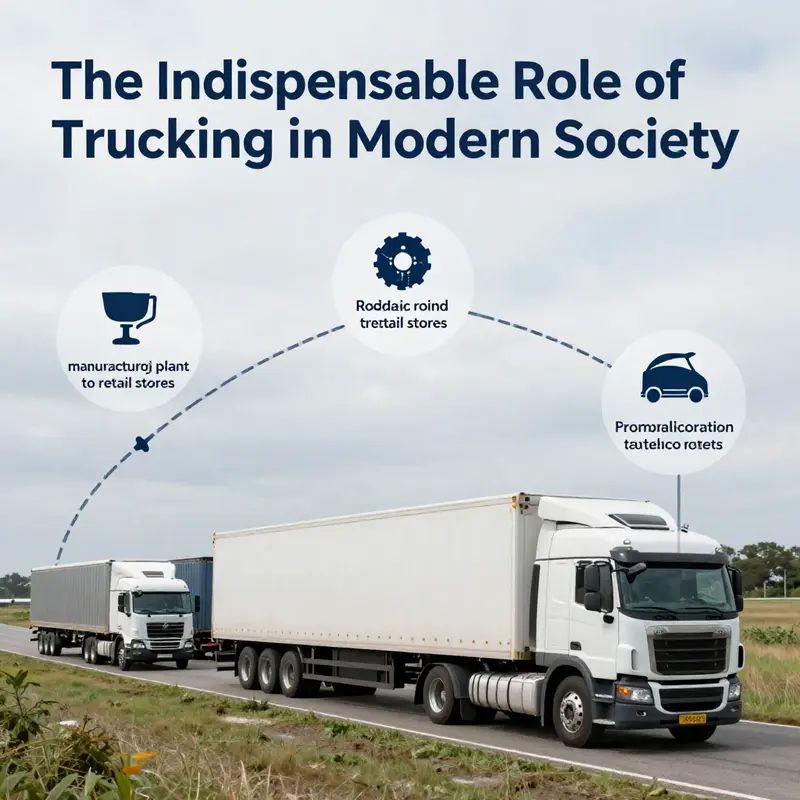
The truck that rumbles through dawn and delivers not just boxes but the rhythm of everyday life is more than a carrier of cargo. It is a moving thread that threads together farms and factories, clinics and classrooms, households and hospitals. In a world where almost every other mode of transportation can falter under pressure, trucking has proven time and again to be the dependable backbone of modern economies. The designation of commercial motor vehicle operations as part of a nation’s critical infrastructure during emergencies did more than acknowledge practical utility; it underscored a fundamental truth: a supply chain without reliable trucking is a chain of vulnerabilities. The broader public understands this most clearly in moments of disruption—a cold snap that halts rail service, a port congestion spell that ties up ships, or a manufacturing slowdown that leaves shelves bare. In those moments, trucking stands as the most immediate, most resilient conduit for keeping essential goods moving. It is not merely a service; it is an accelerant of continuity, a guarantor of access, and a dynamic engine of economic stability that quietly underwrites daily life and long-term growth alike.
The economic weight of trucking is substantial, and its influence extends far beyond the movement of a single shipment. The American Trucking Associations estimate that trucks move a dominant share of freight by volume—more than 70 percent in the United States. That statistic is more than quantitative bragging rights; it is a compact statement about how supply chains are structured and where value is created. When nearly three-quarters of freight flows on four wheels, the speed, efficiency, and reliability of trucking become a defining feature of market performance. This is especially evident in a just-in-time economy, where production lines and retail shelves depend on timely deliveries to maintain operational tempo. The truck becomes the last-mile link in a chain that stretches from raw materials to finished goods, from regional distributors to neighborhood stores, and from medical facilities to patients who rely on steady access to essential medicines and equipment. In this sense, trucking is not a single industry within the economy; it is the circulatory system that enables nearly every sector to function, adapt, and prosper.
To appreciate the full economic footprint of trucking, one should look beyond gross shipments and into how trucking influences productivity and market efficiency. The transportation and warehousing sector, of which trucking is a core component, contributes meaningfully to the nation’s GDP and supports a broad array of employment opportunities. Direct revenue from trucking activities—drivers, fleet operators, dispatchers, maintenance technicians, and logistics planners—forms a substantial share of regional economies. Yet, the indirect effects are equally important. When trucking logistics are well organized, manufacturers can synchronize production with demand, retailers can maintain adequate stock to meet consumer needs, and suppliers can manage inventories with lower risk of obsolescence. This network effect ripples outward, enabling SMEs to scale, enabling exporters to reach new markets, and enabling consumers to access a wider range of goods at competitive prices. The interconnectedness of these activities makes the trucking industry a powerful determinant of market efficiency and price stability across sectors.
Crises test the resilience of any economic system, and trucking has repeatedly demonstrated its capacity to hold the line. During public health crises, natural disasters, and periods of labor strain, trucks continue to operate even when other modes of transport are constrained. The capacity to reallocate assets rapidly—reassigning routes, rerouting shipments, and deploying additional capacity where it is most needed—helps prevent bottlenecks that could otherwise cascade through supply chains. This resilience is not accidental; it is built on a combination of regulatory recognition, the discipline of logistics practice, and the willingness of firms to invest in operations that can bend without breaking under pressure. In those moments, the trucking industry does more than deliver goods; it sustains public health by ensuring hospitals have medical supplies, groceries reach households, and energy remains accessible to communities that rely on steady fuel and power. The Essential Services designation by federal authorities is more than a label—it is a blueprint for prioritizing movement when the stakes are highest and the margins for error narrow.
Innovation is a steady companion to resilience in trucking. The industry has embraced a suite of technologies that lift efficiency, safety, and environmental performance without sacrificing reliability. Telematics systems provide real-time data on vehicle location, speed, fuel consumption, and maintenance needs, enabling fleets to optimize utilization and predict breakdowns before they disrupt service. Route optimization software translates vast streams of variables—weather, traffic, load priorities, legal constraints, and driver hours of service—into actionable plans that shave minutes off routes and reduce miles traveled in underused corridors. This not only accelerates delivery times but also reduces fuel usage and emissions, aligning economic performance with sustainability goals that governments and customers increasingly demand. In a broader sense, innovation in trucking is a case study in how data-driven management can transform a traditional industry into a lean, adaptive, and responsible backbone of the economy.
The job implications of trucking as an essential service extend beyond the miles logged by drivers. The sector supports millions of jobs directly and indirectly, spanning the roles of drivers, dispatchers, mechanics, logistics coordinators, and a range of administrative and support positions. For small and medium-sized enterprises, trucking is the critical access point that enables distribution of their products to a wider audience. When a local manufacturer needs timely delivery to retailers across a region, or when a startup requires reliable freight services to scale its operations, the trucking industry provides the connective tissue that makes growth feasible. The ripple effect of trucking jobs stretches into communities through wage income, business investment, and the cultivation of local supply chains. In many regions, the vitality of manufacturing and retail operates in direct proportion to the efficiency and reliability of the trucking sector, underscoring how deeply intertwined transportation is with broader economic vitality.
As one follows the chain from farm field to consumer shelf, the breadth of trucking’s impact becomes evident in a wider cross-section of sectors. Agriculture benefits from the transportation of perishable goods within time windows that preserve quality and minimize waste. Manufacturing relies on the steady movement of raw materials and end products to keep plants running and to prevent costly downtime. Retail benefits from predictable product availability, which supports consumer confidence and competitive pricing. Healthcare depends on on-time delivery of medicines, supplies, and specialized equipment, where delays can have real consequences for patient outcomes. In each arena, trucking is less of a neutral conduit and more of a performance lever that enables efficiency, responsiveness, and reliability. The cumulative effect is that the trucking industry, by anchoring the movement of goods, helps stabilize prices and sustain employment even in the face of demand volatility and external shocks.
Policy, governance, and the broader regulatory environment shape how trucking evolves to meet these demands. While the private sector innovates and optimizes, the public sector sets the stage for safety, efficiency, and resilience. The designation of trucking as critical infrastructure implies a deliberate prioritization of maintenance, capacity, and security during emergencies. It also anchors ongoing investments in roads, bridges, and intermodal interfaces that widen corridors and reduce transfer times. In a well-functioning ecosystem, this alignment between policy and practice accelerates progress toward more resilient logistics networks, ensuring that essential goods continue to flow even when other supply chain links are stressed. The synergy between public intent and private execution is central to understanding why trucking remains not only essential for daily commerce but foundational for economic continuity at scale.
An important facet of trucking’s economic role lies in the forward-looking dynamics of industry trends. The sector sits at the intersection of legacy transport practices and modern digital-enabled logistics. The move toward more sophisticated fleet management, the adoption of alternative-fuel options, and the expansion of cross-border freight operations all point to a future where trucking continues to contribute heavily to GDP and employment while becoming more efficient and sustainable. The ongoing investment in people, technology, and infrastructure signals that trucking will remain a critical enabler of economic activity, even as the macroeconomic environment shifts with inflationary pressures, trade policy developments, and evolving consumer demand patterns. It is in this space that the sector’s resilience and adaptability are most clearly tested and most clearly proven. The trucking industry’s ability to translate macroeconomic changes into reliable performance on the ground—through better scheduling, smarter routing, and more durable assets—speaks to a deeper truth: essential services are defined not only by what they deliver but by how consistently and intelligently they deliver it.
From a workforce development perspective, the lasting health of trucking as an essential service depends on continued investment in people. Training programs, certification pathways, and career development opportunities shape the pipeline of skilled labor that keeps fleets safe and efficient. When drivers, technicians, and logisticians feel invested in, turnover stabilizes and productivity climbs, reinforcing the reliability that customers expect. This is where the human element intersects with technology. The most advanced telematics and route-planning tools are only as good as the people who interpret and act on the data. Conversely, skilled workers benefit from the efficiencies that digital tools enable, freeing time for higher-value tasks such as strategic planning, maintenance, and customer service. In short, the health of trucking’s essential role rests on a virtuous cycle of technology adoption paired with meaningful investment in human capital. For organizations seeking to align growth with workforce development, this balance remains a central strategic priority, one that translates into smoother operations, higher service levels, and stronger regional economies.
Consider the broader economic narrative: when trucking operates at peak efficiency, it unlocks competitiveness for a wide range of industries. Exporters can reach global markets with minimal delay, regional manufacturers can test new products with shorter lead times, and retailers can match inventory to consumer appetite with greater precision. The flexibility that trucking provides—its capacity to adapt routes, scales, and schedules in response to shifting demand—creates a plural of options for businesses navigating uncertainty. This is essential in a world where supply chains must absorb shocks and still deliver. The trucking sector’s contribution to resilience, in other words, is not merely about keeping goods moving in calm times but about preserving the option value of supply chains when circumstances become unsettled. In this sense, trucking functions as a financial and logistical ballast, absorbing fluctuations in other components of the system and enabling smoother economic performance in the face of risk.
To make sense of these dynamics, it is useful to connect the micro-level details of operations with macro-level indicators. Industry data show that trucking, as a core component of the logistics spectrum, underpins a substantial portion of freight value and volume. This is true across regions and kinds of cargo—from nutritious produce and medical supplies to durable goods and industrial components. The stability provided by trucking translates into lower costs for manufacturers and retailers, which can then be passed on to consumers in the form of steadier pricing and reliable availability. For policymakers and business leaders alike, the implication is clear: investments that strengthen trucking capacity—whether through road improvements, streamlined cross-border processes, or investments in workforce development—are investments in economic resilience and growth potential. In this sense, the essential service designation carries not just symbolic weight but practical implications for how economies allocate resources in pursuit of long-run stability and productivity.
The narrative of trucking as an essential service also invites reflection on its evolving strategic importance in a globalized economy. Cross-border trade, regional supply networks, and rapid fulfillment models depend on predictable freight movements that are capable of bridging distances with efficiency. The industry’s ability to operate across jurisdictions, respect safety and environmental standards, and adapt to regulatory shifts will shape how competitive a region remains in a connected world. As geographic markets expand and consumer expectations intensify, trucking’s role as a facilitator of efficiency and reliability deepens. The sector’s innovations—whether in telematics-enabled visibility, route optimization, or the integration of alternative-fuel fleets—will likely become more essential as the economy diversifies its supply lines and seeks to mitigate risk related to climate events, labor shortages, or geopolitical disruptions.
In sum, trucking’s economic impact is not merely about moving freight from point A to point B. It is about enabling a broader economic logic in which efficiency, resilience, and value creation are deeply interwoven. The industry serves as a critical enabler of market continuity, a steadying force during disruption, and a platform for sustained investment in people and systems. Its essential status is reflected not only in the flows of goods but in the confidence it affords to firms planning for growth, to communities seeking stable employment, and to consumers who expect reliable access to the goods that sustain daily life. When viewed through this lens, trucking emerges as a foundational infrastructure—yet it is more than infrastructure. It is a living system that evolves with technology, policy, and market demands, continuously reconfiguring itself to keep the economy moving in ways that are predictable, scalable, and essentially human. For readers seeking a concrete sense of how these dynamics play out in real time, the discussion of key economic trends impacting the trucking industry provides a useful compass, and the deeper exploration of workforce investment—through practical programs and lived experiences—highlights the pathways through which this essential service remains robust, innovative, and future-facing. Investing in People in Trucking offers a glimpse into how a people-first approach can strengthen reliability and drive long-term value for fleets, shippers, and communities alike.
External reference: For a broader view of how freight mobility supports national resilience and economic continuity beyond the trucking sector, see the emphasis on freight mobility and national resilience in federal policy discussions and transportation analyses. https://www.transportation.gov/press-releases/2023/09/15/freight-mobility-and-national-resilience
null
null
Final thoughts
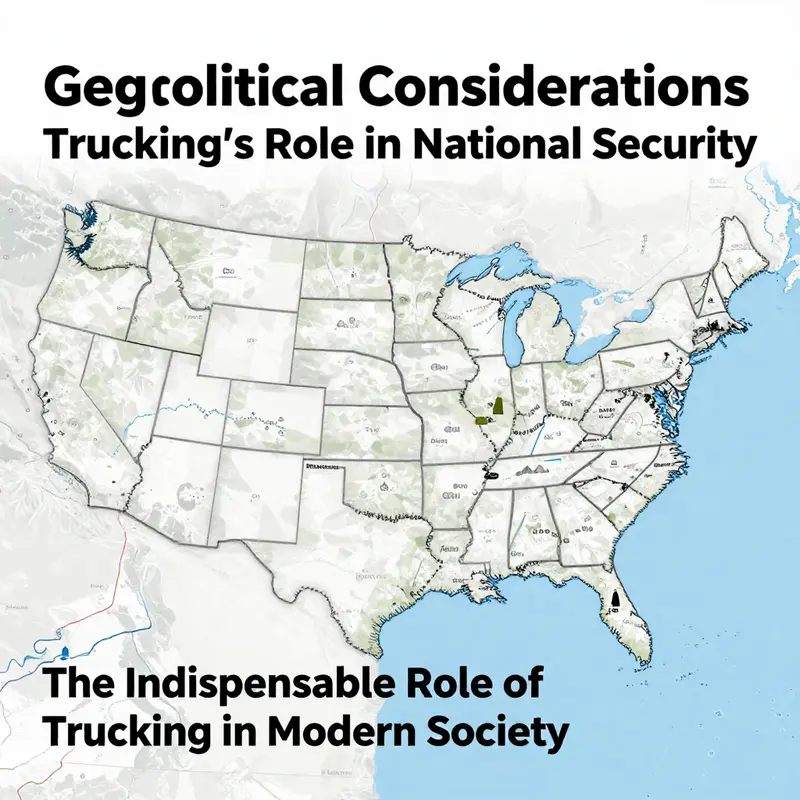
In conclusion, trucking is not just a mode of transport but a crucial element of national infrastructure impacting all economic sectors. Its ability to respond to crises, support economic growth, and enhance national security underscores its designation as an essential service. As businesses across manufacturing, retail, and other industries depend on trucking for their operational effectiveness, recognizing its value is imperative for the future. Ensuring the viability and strength of the trucking industry should be a collective priority as we advance into challenging times.