
As the logistics landscape evolves, trucking companies find themselves addressing increasingly complex transport needs, particularly in dealing with oversize or overweight loads. The ownership of pilot car services has emerged as a salient strategy for trucking firms aiming to enhance operational efficiency, ensure compliance with stringent regulations, and improve communication across various logistics channels. This article will delve into the multifaceted benefits of this ownership model, examining the regulatory compliance aspects, operational benefits, successful case studies, and the economic implications for businesses ranging from manufacturing to construction, providing a holistic view of its significance in the trucking industry.
Steering Compliance: The Legal Roadmap for Trucking Companies Owning a Pilot Car Service
A trucking company contemplating ownership of a pilot car service is entering a space where operational ambition must meet regulatory discipline. A pilot car is more than a lead vehicle or a safety flag—it is a critical component in moving oversize or overweight cargo through dynamic, often congested environments. The broader question is not whether such ownership is possible, but how a carrier can structure, govern, and operate a pilot car arm in a way that protects safety, preserves legal authority, and enhances efficiency. In practice, the answer is yes. A trucking company can own a pilot car service, and many large carriers have woven these escorts into their end-to-end logistics offerings. The payoff can be measurable: tighter scheduling, standardized safety practices, clearer communications with authorities, and a more predictable flow of time-sensitive freight. Yet the path to legitimate ownership is paved with regulatory guardrails designed to prevent conflicts of interest, ensure driver and vehicle standards, and allocate risk appropriately.
Central to the regulatory conversation is independence. The pilot car operation must function as a legally and operationally distinct entity from the freight carrier, even when both are owned by the same corporate umbrella. This separation helps prevent a perception, or the reality, of a self-serving safety regime where the same organization controls both the escort and the escorted load. Maintaining clear lines of responsibility is not merely bureaucratic; it is essential to ensure that safety decisions are made with the appropriate checks and balances. In practical terms, this means separate operating authority, distinct dispatch processes, and, often, separate insurance programs. The general idea is simple: the pilot car service should stand on its own two legs, with its own compliance framework, even if it shares facilities, branding, or administrative support with the parent carrier.
From a regulatory standpoint, the Federal Motor Carrier Safety Administration (FMCSA) sets the baseline expectations for any commercial vehicle operation in the United States. The FMCSA does not prohibit a motor carrier from owning a pilot car service, but every facet of the combined enterprise must align with federal regulations. This means driver qualification standards apply to anyone employed as a pilot car driver just as they would apply to drivers in the main fleet. It means hours-of-service rules govern the driving time of those escorts, ensuring they are rested and able to perform critical safety tasks without impairment. It means vehicle maintenance and inspection practices must be documented with the same rigor as the primary fleet. And it means the pilot car operation must introduce reliable recordkeeping that can be audited, just as the main carrier does. The overarching aim is straightforward: a coherent, documented, auditable safety ecosystem that spans both the carrier and the escort operation, avoiding gaps that could become cracks during an inspection or an incident.
An important part of compliance is licensing. If the pilot car service hires drivers, those individuals must hold appropriate licenses and endorsements for the type of escort work they perform. In many cases, escort drivers function as professional commercial drivers with CDL privileges, specialized endorsements, or state-specific qualifications for pilot vehicles. The exact licensing requirements can vary by jurisdiction, which means a pilot car program must be prepared to accommodate state-to-state differences in how escort operations are authorized, what equipment is required, and how escorts must communicate with traffic control, police, or highway authorities. The multiplicity of local rules is precisely why a well-designed program builds in local compliance expertise at the outset rather than trying to retrofit compliance after operations begin.
Operating authority is another critical pillar. The pilot car service typically must maintain its own operating authority, separate from the parent carrier, and secure any state registrations or permits required for escort vehicles. This is not just a legal formality. It solidifies the structural separation between the carrier’s freight operations and the escort operations, clarifying who bears responsibility for compliance decisions in a given jurisdiction or under a specific set of circumstances. States may impose distinct requirements on pilot vehicles, ranging from permit nuances to road-use restrictions and routing constraints. A thoughtful program anticipates these differences and builds routing and scheduling into the daily workflow so escorts are not improvising their way through complex jurisdictions.
Insurance and liability sit at the intersection of risk management and regulatory compliance. The escort operation typically carries its own liability coverage and must demonstrate adequate limits to cover potential damages, injuries, or delays arising from an escort incident. The parent trucking company cannot reliably rely on cross-collateralization, especially in scenarios where the pilot car contractor operates under a separate authority or other insurance provider. Clear contractual agreements between the trucking company and the pilot car service become essential. These agreements should define the scope of services, performance standards, indemnification clauses, and the allocation of risk in the event of an accident or damage during an escort. The goal is a predictable, financially manageable risk profile that aligns with the level of exposure inherent in moving oversize freight through populated areas, around bridges, or through tunnels.
The operational realities of owning a pilot car service also demand disciplined governance and rigorous safety culture. A well-run program builds safety into every decision—from the initial planning of a route to the final signs-off on a completed escort. Training plays a central role. Pilots must understand not only the technical aspects of their vehicle and equipment but also how to communicate with traffic, law enforcement, and the dispatch team. They need the ability to interpret weather and road conditions, anticipate congestion, and coordinate with the primary transport team to adjust schedules without compromising safety or customer commitments. The training framework should extend beyond initial onboarding to include ongoing refreshers, incident reviews, and scenario-based drills that reinforce best practices under pressure. Importantly, this safety culture cannot exist in a vacuum. It must be integrated with the parent carrier’s safety management system, aligning with the carrier’s HSE (health, safety, and environment) objectives and reporting protocols.
Compliance, safety, and operations converge most clearly when there is explicit governance of responsibilities. A practical way to achieve this is to construct a governance model that keeps the decision-making at arm’s length from the load being escorted. In the ideal arrangement, the pilot car team evaluates route risk, traffic conditions, and permit requirements independently and then hands off a prepared plan to the carrier operations team. This separation helps ensure the dispatcher’s decisions to accelerate or delay a shipment are not influenced by the escort’s own interests and that the escort’s compliance posture remains robust even under pressure to meet delivery deadlines. The communication flow resembles a handoff between independent but coordinated segments of a single enterprise. The aim is to maintain clear lines of responsibility so that a driver’s actions on the road reflect safety and compliance priorities, not operational shortcuts.
From a strategic perspective, owning a pilot car service offers tangible benefits beyond risk mitigation. It creates an opportunity to standardize best practices across the movement of out-of-gauge cargo, especially in complex environments like urban cores, river crossings, or restricted corridors where a failed escort can cause construction delays, traffic backups, and permit violations. A dedicated pilot car unit can implement uniform vehicle maintenance programs, standardized equipment lists, and consistent driver qualification procedures. The result is a more predictable escort capability, fewer delays caused by noncompliance, and a clearer line of communication between the logistics team, the customer, and the authorities. When a trucking company can promise a unified service experience—door-to-door, with a negotiable, transparent process for permits, escorts, and recovery plans—it strengthens its value proposition for clients hauling specialty freight.
It is also worth noting how external ecosystems can influence the decision to own a pilot car service. The regulatory landscape differs by state and by route, and border crossings add another layer of complexity. For organizations engaged in cross-border moves, the regulatory conversation expands to include border agencies, customs, and cross-jurisdictional safety standards. A well-structured pilot car operation can become a bridge between compliance systems, ensuring that oversize loads meet the more stringent requirements that often accompany cross-border or multi-state movements. There is a growing emphasis on harmonization of standards, but meaningful differences persist. This is where the internal discipline of the pilot car service—its own operating authority, its own driver qualifications, and its own insurance—becomes particularly valuable. It helps prevent an accidental drift into noncompliance that could disrupt a shipment or trigger penalties. For readers who want to explore how these cross-boundary dynamics are handled in practice, the topic of cross-border regulatory issues provides a useful frame of reference cross-border regulatory issues.
Ultimately, the decision to own a pilot car service rests on a clear understanding of the regulatory perimeter, the cost of compliance, and the strategic value of a more integrated, faster, safer, and more reliable transportation solution. In many scenarios, the benefits of vertical integration—tighter coordination, improved communication, and standardized safety practices—outweigh the added administrative burden. The key is to design the program with independence in mind from the start, treat the pilot car operation as a legally separate entity with its own authority, and build robust safety and insurance programs that withstand audits and inspections. A well-structured program will not only meet the FMCSA’s baseline expectations; it will also create a safer road environment for the public and a more resilient supply chain for customers who move oversized and overweight freight through a busy transportation network. The FMCSA’s regulations and guidance remain the compass for this journey, and carriers should engage with regulatory resources early and often as the program scales. For authoritative guidance on these matters, refer to the FMCSA Regulations at the official site.
In sum, ownership is feasible, and it can be advantageous, but success hinges on disciplined governance, clear separation of roles, and relentless attention to training, maintenance, and insurance. A pilot car service that operates as a legally distinct, well-regulated extension of a trucking company can deliver greater control over schedules, stronger safety outcomes, and enhanced service to clients moving complex cargo. This is not merely about adding another vehicle; it is about weaving safety, compliance, and operational excellence into the fabric of a modern, customer-focused logistics operation. The chapter ahead will continue to explore how these elements come together in real-world practice, and how carriers can navigate evolving regulatory expectations while sustaining the reliability that customers expect in a demanding trucking environment.
One Roof, One Route: Owning a Pilot Car Service to Elevate End-to-End Oversize Freight
The core question in any modern trucking operation seeking resilience is not only whether a pilot car service can exist within the company, but how tightly that service can be woven into every planning and execution step. Oversize and overweight shipments demand more than speed and accuracy; they require visibility, real-time decision making, and a disciplined safety culture that can adapt to changing road conditions, permit requirements, and urban constraints. When a trucking company owns and operates its own pilot car unit, it moves from a traditional outsourcing model to a tightly integrated ecosystem. That shift may sound incremental, yet it often redefines everything from scheduling discipline to risk management, from customer confidence to the long-term economics of a complex asset class. In essence, the pilot car is not just a service vehicle; it is a strategic node in the company’s end-to-end logistics network, and its value multiplies when it is treated as a core capability rather than a peripheral add-on.
To understand why ownership can matter, consider the unique demands of oversize freight. These loads traverse routes that demand precise choreography: escorts must coordinate with traffic, police or permitting authorities, and sometimes even with utility or project sites that require gatekeeping and staged access. The pilot car’s role is to establish what the main truck cannot do alone—clearance, warning, and corridor integrity. When the same company that plans the main haul also operates the escort vehicle, the line between planning and execution blurs in a productive way. Dispatchers, pilot car operators, and drivers share a single operating language, a unified set of procedures, and a common calendar. The result is not simply fewer handoffs; it is a real-time feedback loop in which the pilot car informs the route, and the route informs the pilot car. The efficiency gains become tangible as projects move from one testy stretch to the next, from a narrow urban corridor to a winding aggregate road, or from a provincial highway to a congested bridge approach.
Operational benefits emerge first in coordination and communication. When both elements of the transport—freight and escort—are in the same corporate family, the delays associated with coordinating third-party escorts shrink dramatically. The need to chase availability, confirm schedules, and reconcile calendars evaporates into a single plan that is updated in real time. This unity also supports standardization. Training, equipment checks, and safety protocols become uniform across both teams, which reduces the likelihood of misinterpretations that can lead to near-misses or actual incidents. The consequences extend beyond safety. With standardized processes, a carrier can reduce variability in performance, delivering more predictable transit times and tighter control over lead times that clients rely on for project planning. When a carrier can promise a more reliable window for delivery or permit approval, it creates a competitive advantage that is hard for external providers to imitate, especially for complex routes that require local knowledge.
The cost picture, naturally, invites careful scrutiny. Establishing an in-house pilot car service requires upfront investment—vehicles equipped for safety signaling, lighting, signage, and communications gear; specialized training for escort drivers; and ongoing maintenance and insurance costs. Yet this is not merely a line item on a budget; it is a lever that can alter long-run unit economics. Outsourcing pilot car services often means paying a premium for expertise, with invoices that rise during peak demand or when compliance becomes more stringent. An owned program, by contrast, can yield economies of scale. The company can deploy pilot resources with greater flexibility, aligning them to seasonal demand, fleet expansion, or the onboarding of new long-haul lanes. When the same dispatch and operations team schedules a large, out-of-gauge movement, the pilot car resource can be positioned alongside the main convoy, reducing idle time and smoothing utilization across the fleet. Over time, the cumulative savings on premium surcharges, repeated mobilizations, and duplicated administrative tasks can be substantial. The calculus also extends to risk management. A privately owned pilot car program allows for consolidated insurance coverage, standardized driver qualifications, and consistent maintenance regimes. These align with broader risk controls in the carrier’s safety program, a factor that can influence insurers’ pricing and the company’s overall risk posture.
Yet ownership is not a universal prescription. It is a strategic choice that hinges on how central oversize freight is to the company’s value proposition and how deeply the company wants to embed risk management and customer service into its core operations. For freight that is routinely out of gauge—think wind turbine components, large industrial components, or heavy construction equipment—the argument for vertical integration becomes more compelling. The pilot car becomes a trusted extension of the company’s brand of reliability. It signals to customers that the carrier will manage not only the main haul but the sensitive details of escorting and lane changes, with the same harmony that characterizes the rest of the logistics chain. In sectors where project timelines are tight and margins are sensitive, that kind of assurance translates into repeat business and higher-value contracts. The perceived value often shows up not just in a smoother transit but in the way the operation communicates with customers during every phase of the move. When a client learns that scheduling, route adjustments, and permitting are handled end to end within a single organization, confidence grows because there is less friction and fewer coordination gaps.
The integration strategies required to realize these benefits are as much about people and culture as they are about hardware or software. A unified logistics platform is ideal for tying together the main haul and the pilot car, offering real-time position tracking, shared checklists, and unified communications. The same system that shows where the tractor is on a map should also display where the escort vehicle is, what the current traffic conditions are, and which permits are active or pending. This kind of visibility reduces the chance of a single point of failure. It also enables proactive risk management; when weather or traffic conditions threaten the planned corridor, the system can propose alternative routes and automatically flag the necessary permit adjustments. The data generated by this integration becomes a feed for continuous improvement—lessons learned on one job can be codified into new standard operating procedures, which in turn shorten the lead time for future moves.
Shared training programs reinforce the cultural alignment that makes ownership worthwhile. The training toolkit for the main driver and the pilot car operator should overlap in crucial areas: understanding the specifics of oversize loads, negotiating turns with limited space, navigating low-clearance structures, and managing intersections with complex traffic patterns. Beyond technical know-how, soft skills matter—clear communication, calm decision making under pressure, and a shared language that reduces ambiguity in high-stakes moments. When both teams speak the same dialect of safety, the likelihood of miscommunication falls dramatically. This cultural cohesion also supports compliance with regulatory expectations. The regulatory environment around pilot cars emphasizes vehicle standards, driver qualifications, routing restrictions, and permit protocols. A company that owns both sides of the operation can implement a uniform safety and compliance framework that covers everything from maintenance schedules to incident response drills. In practice, that translates into fewer compliance gaps, smoother audits, and a more defensible safety record—the kind of credibility that clients seek when shipping sensitive or high-value commodities.
From a strategy standpoint, owning a pilot car service can function as a differentiator in markets where specialized freight is a growth engine. In industries such as energy, construction, and heavy manufacturing, the ability to offer end-to-end solutions often appeals to clients who want a single point of accountability. A carrier that can coordinate fleet movement, pilot escorting, traffic management, and regulatory compliance under one roof reduces the administrative overhead for the client and accelerates project timelines. That kind of value proposition depends on more than just a smooth ride from origin to destination; it rests on a track record of safety, reliability, and predictable performance. The reliability angle matters because oversize shipments are particularly susceptible to delays caused by weather events, road work, or evolving site access constraints. A company that can anticipate and adapt in real time, without the friction of inter-company handoffs, builds client trust in a way that is measurable in contract renewals and capacity commitments.
The practical steps to move toward ownership begin with a candid assessment of the demand profile. How frequently do oversize or overweight moves occur, and what are the typical routes, constraints, and permit requirements? What is the seasonal variability, and how often do routes change due to construction or closures? The answers guide whether to start with a dedicated pilot car unit or to fold escort duties into a small, multi-skilled squad that can scale with the core fleet. The next step is to craft a governance framework. This includes the standard operating procedures for escort operations, the criteria for vehicle readiness, and the thresholds for diverting traffic or pausing a move due to safety concerns. A practical governance model also addresses risk transfer and insurance alignment. The carrier should negotiate with its insurer to establish a program that reflects both the common risks of pilot escort operations and the shared accountability that comes with internalizing the service.
Technology, of course, plays a decisive role. Unified logistics software is not an optional luxury here; it is the backbone that makes the operation efficient and auditable. Real-time GPS, digital checklists, and secure messaging create a single thread that connects the load, the escort, and the road ahead. The software should support not only day-to-day routing but also post-mission analysis. Each escorted move should leave behind data that informs future planning: route performance, time deltas at critical junctions, and incidents or near-misses that warrant a change in SOPs. The feedback loop should be continuous, with quarterly reviews of performance metrics and annual refreshes of training material. In practice, this means that the pilot car is not isolated as a separate contractor but participates in the same periodic safety meetings, the same incident reviews, and the same improvement cycles as the main trucking operation.
To bring the concept into sharper focus, consider the practical weave of people, process, and platform. The people are the drivers who operate the big rigs and the escort specialists who watch out for lanes, clearances, and traffic gaps. The process is the exact choreography of moves—how an escort car positions itself relative to the main vehicle, how gaps are managed at intersections, and how changes in speed are communicated. The platform is the technology stack that binds the two together, providing visibility, compliance checks, and performance analytics. When these three elements align, the system becomes greater than the sum of its parts. The pilot car service reaches its full potential not merely by being present on the roster but by being woven into the fabric of operational planning and client communication.
The literature on industry trends reinforces the practical appeal of this integration. As the broader economic landscape shifts, and as freight moves toward more complex, value-added services, the appetite for integrated solutions grows. The ability to offer an end-to-end package can be decisive for clients juggling tight project schedules and multi-site operations. For decision-makers weighing the move to ownership, the decision rests on a balance between upfront investments and the incremental value captured through improved reliability, reduced outsourcing premiums, and stronger client partnerships. It is a calculus that favors those who see the pilot car not as a cost center but as a strategic asset that elevates trust, safety, and throughput.
For organizations exploring this path, a measured approach helps de-risk the transition. Start with an internal pilot program that tests the most common routes and loads, monitors performance and safety outcomes, and documents the end-to-end experience for customers. Use that data to refine the business case, update risk controls, and scale gradually with clear milestones. Throughout, maintain open dialogue with clients about how the integrated model enhances predictability and reduces total project risk. The payoff is not only in the concrete numbers of fuel efficiency or maintenance savings but in the qualitative gains—fewer interruptions, clearer communication, and the confidence that every mile of the journey is being managed with a single standard of excellence.
As the chapter closes on this examination, it is worth revisiting the central premise: owning a pilot car service can be a strong strategic choice for carriers whose core competence includes complex, compliance-heavy, and time-sensitive freight. It is not automatically the right choice for every fleet, but for those whose business model centers on heavy equipment, wind turbine components, or other out-of-gauge cargo, vertical integration offers a coherent path to tighter control, stronger customer trust, and more predictable operations. The decision should hinge on a disciplined assessment of demand, a clear governance and safety framework, and an investment plan that links capital, training, and technology in a single, integrated pipeline. When done well, this approach turns the pilot car from a routine support function into a core capability that sustains performance across the supply chain and reinforces the carrier’s reputation for safety and reliability.
For readers seeking further context on regulatory guidance and best practices in pilot car operations, the broader safety and compliance landscape is worth a closer look. See the federal guidance on pilot cars for hazmat transport to understand the formal expectations that accompany such operations. The combination of disciplined internal controls and external regulatory alignment helps ensure that ownership translates into durable performance gains rather than a compliance drift. As the industry continues to evolve, carriers that embrace this integrated model may find that the pilot car is not merely a vehicle following a load but a strategic lever shaping service quality, risk posture, and client value for years to come.
External resource for regulatory context: https://www.fmcsa.dot.gov/hazmat/pilot-cars
Internal link note: This chapter references evolving industry dynamics and is reinforced by broader market insights such as those found under the heading Key Economic Trends Impacting the Trucking Industry. For related discussions on how macro trends shape operational decisions in trucking, see Key Economic Trends Impacting the Trucking Industry.
Owning the Pilot Car: Why a Trucking Company Benefits from In-House Escort Services
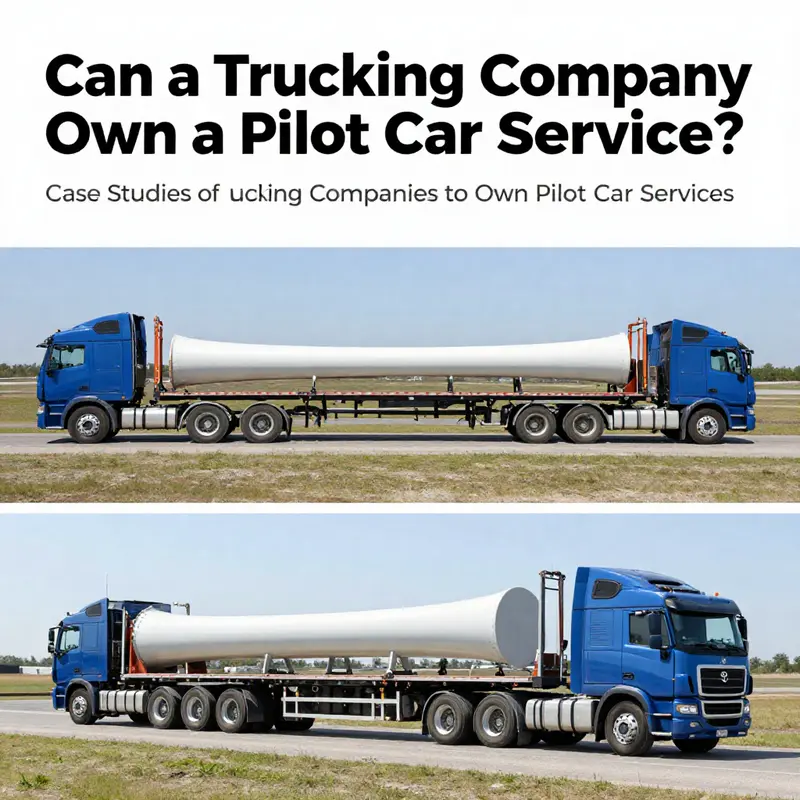
The question of whether a trucking company can own a pilot car service is not merely about ownership of a few escort vehicles. It is about weaving a safety-centric, regulation-savvy, and communication-forward operation into the fabric of a carrier’s core business. Pilot cars escort oversize and overweight loads, guiding them through narrow streets, over bridges with low clearances, and past complex urban chokepoints where a misstep can turn a routine move into a costly delay or, worse, a dangerous incident. When a carrier owns the pilot car function, that function becomes a strategic leverage point—one that aligns scheduling discipline, driver training, route planning, and regulatory compliance with the company’s broader service promises. The result is not just smoother deliveries; it is a tighter feedback loop between the main transport team and the escort crew, a loop that translates into fewer surprises on the road, faster response times, and more predictable outcomes for clients hauling out-of-gauge cargo like wind turbine components, industrial equipment, or construction machinery.
From this perspective, owning a pilot car service is less about a single asset and more about an integrated capability. A carrier that operates its own pilot fleet can standardize qualification requirements for drivers who staff the escort vehicles, harmonize maintenance standards across the fleet, and maintain consistent insurance and liability protocols. This consistency matters because the pilot car is the visible extension of the trucking company itself when the load is in motion. It communicates a level of control and professionalism to shippers and regulators alike. It also creates an opportunity to optimize the handoff between the lead truck and the escort vehicle, something that matters most when routes include urban cores, tunnels, bridges with variable heights, or geographies that impose seasonal restrictions. In short, ownership is a way to translate policy and process into practice on the road, with a direct impact on safety outcomes, service reliability, and customer satisfaction.
Industry examples illuminate how this works in the real world. Consider Bennett Transport, a North American heavy-haul specialist grounded in Canada. Bennett’s model centers the pilot car fleet as an integral component of its logistics operations, not as a peripheral service. Their teams manage demanding oversize and overweight shipments across the United States and Canada, where navigating tight turns, low-clearance bridges, and restricted roadways is the norm rather than the exception. The benefit of ownership here is not only operational fluidity but also consistency in how escort teams are trained and deployed. When staff are familiar with specific equipment and routing protocols, the likelihood of miscommunication drops, and the chance of delays caused by late escorts or misread routes declines accordingly. The result is smoother operations and fewer logistical hurdles that could otherwise create a bottleneck in the transit chain. The same principle surfaces in other market leaders. KLINE Transportation, another heavyweight in the U.S. heavy-haul landscape, has woven its pilot car service into its core operations. Their approach leans into technology and real-time coordination: pilot cars equipped with advanced communication systems and GPS tracking that keep the lead truck and escort vehicle in a tight, continuously updated loop. Real-time route adjustments can be made with confidence because the escort crew is fully integrated into the same information stream as the primary transport team. Emergencies, weather changes, or last-minute regulatory caveats can be managed with speed and clarity when the pilot car is part of the company’s centralized decision-making process. In this sense, the ownership model becomes a mechanism for rapid decision-making under high-risk conditions, where a few minutes saved in rerouting can reduce exposure to danger and the potential for costly delays.
The strategic advantages of this model go beyond the immediacy of a single shipment. When a trucking company controls both the main transport and the pilot support, the enterprise gains visibility into every edge of the operation—route feasibility, obstacle anticipation, and the timing of permits and escorts. It minimizes dependencies on third-party providers that may have varying standards or divergent routing priorities. It also reduces scheduling conflicts: the lead truck and the pilot car move as a single unit, which means the shipper experiences fewer handoffs, fewer missed windows, and fewer instances of a load waiting for an escort to arrive. This synchronization is particularly valuable in long-haul or cross-border deployments, where the complexity of approvals and coordination multiplies. The improved reliability translates into measurable customer benefits: on-time or earlier deliveries, fewer penalties, and heightened trust that the carrier can handle specialized freight end-to-end.
Of course, owning a pilot car fleet requires careful consideration of the operational reality. It is not a mere add-on; it is an extension of the carrier’s risk profile, compliance posture, and capital plan. Staffing becomes a core discipline. Pilot car drivers must meet specialized qualifications that go beyond standard professional driver licensing. They must understand how to communicate with the lead truck, how to interpret load diagrams, and how to manage safety buffers when a corridor narrows or a road presents unexpected constraints. Maintenance and fuel management for escort vehicles must align with the broader fleet’s standards, ensuring that every vehicle that might be deployed has a documented safety history, up-to-date insurance coverage, and a predictable maintenance cadence. The vehicles themselves need to be suited for the task—low-profile mirror lines, proper lighting packages, conspicuity equipment, and reliable braking and steering under variable load conditions. These are not trivial investments; they are the prerequisites that allow the owner to stand behind its promises of safety and reliability.
Incorporating a pilot car service also sharpens the carrier’s approach to routing and permit management. Aligning with traffic authorities and jurisdictional statutes is a constant requirement in heavy-haul movements. A company with its own escorts can develop a standardized set of routing protocols, pre-clearance checklists, and local variation guidelines that travel with shipments rather than being searched for in separate files. This consistency is especially valuable when routes traverse multiple regulatory regimes, where a single misinterpretation of a height restriction, a weight limit, or a bridge clearance can trigger a cascade of delays. The integrated model makes it easier to embed compliance checks into every phase of the operation and to train drivers and escorts against those checks with the same rigor used for the main driving team.
The decision to own a pilot car service also invites reflection on a few practical signals and strategic questions. What is the scale of oversize or out-of-gauge work the company regularly handles? Are long-distance routes and cross-border moves a recurring portion of the business? Are clients demanding tighter control over schedules and more consistent safety practices? How steep is the learning curve for standardizing the escort operation across multiple geographies? Answers to these questions will shape whether ownership yields a favorable return on investment. The payoff comes when a company can demonstrate that its escort operations contribute to higher delivery success rates, fewer incidents, and a more predictable scheduling envelope for clients who depend on specialized freight. In markets where heavy hauls form a meaningful share of activity, and where clients judge service quality by near-perfect coordination between the primary carrier and the support teams, the capital and operational expenditures of owning a pilot car fleet can be justified by the value of reliability itself.
A practical thread running through these considerations is the role of technology in enabling a tightly integrated operation. Real-time communication between the lead truck and the escort vehicle can be enhanced through GPS tracking, dynamic route updating, and shared digital manifests. The more the pilot car is embedded in the carrier’s digital ecosystem, the more seamless the coordination. That doesn’t mean technology substitutes for human judgment. It augments it, giving drivers and escorts a clearer picture of the path ahead and a more precise sense of timing, which is crucial when coordinating with traffic control, police escorts, or bridge authorities. In this light, the ownership model becomes not a burden of redundancy but a platform for continuous improvement—an ongoing alignment of people, processes, and tools toward safer and more efficient movement of heavy freight.
The broader industry context supports the case for ownership as well. While some fleets collaborate with third-party escort services to fulfill occasional needs, the most resilient players report benefits when the pilot car function is reconciled with the company’s safety program, maintenance standards, and risk management framework. The ability to deploy escorts with the same discipline used to manage the main fleet signals a disciplined, safety-first culture. It is this culture that ultimately informs client trust, reduces insurance friction, and sustains a carrier’s competitive position in a market where complex moves are the norm rather than the exception. For readers seeking deeper operational guidance that aligns with governance expectations and best practices, industry guidelines on pilot cars in heavy-haul operations offer a comprehensive baseline for safety, routing, and coordination. They provide a benchmark against which an owner-operated pilot car function can be measured and refined over time.
As the chapter closes its circle, a crucial thread remains: the decision to own is not a universal prescription but a strategic fit. It aligns with a carrier’s geography, load mix, and client expectations. It harmonizes with the company’s maintenance discipline, training programs, and risk controls. When these elements align, ownership becomes a continuous capability rather than a one-off asset. The escort crew is no longer a peripheral line item; it is a core capability that moves with the carrier’s brand promise and service model. And in markets where cross-border work, urban congestion, and infrastructure constraints are a constant, this capability translates into real, measurable advantages: fewer delays, clearer communication, and safer journeys that give clients confidence to entrust the most challenging moves to a carrier capable of managing the entire journey—from origin to destination—without interruption.
For readers considering how this model might fit their organization, the practical next step is to map the current workflow from dispatch to delivery, identifying where escort coordination sits and where the risks of handoffs are greatest. Then, ask whether bringing those escorts in-house could reduce those risks, streamline decision-making, and strengthen safety and regulatory compliance across the route network. If the answer is yes, the business case becomes clearer: ownership can transform a specialized capability into a durable source of value that reinforces reliability, safety, and client confidence across the full spectrum of heavy-haul operations.
For further context on how cross-border and multi-jurisdiction operations shape these decisions, see the related discussion on cross-border regulatory issues. cross-border regulatory issues.
External industry guidance also provides a broader frame for what constitutes best practice in pilot car operations. For a comprehensive set of guidelines used across the industry, consult the authoritative resource on pilot cars in heavy haul operations at the following external link: https://www.trucking.org/pilot-cars-in-heavy-haul-operations.
Owning the Escort: The Strategic Economics of In-House Pilot Car Services in Trucking
When a trucking company contemplates moving from outsourcing the escort function to owning and operating its own pilot car service, the decision is more than a matter of convenience. It is a strategic pivot that reframes how the business coordinates complex moves, protects safety, and delivers value to clients hauling oversized and overweight loads. The pilot car function, long seen as a specialized support activity, becomes a core component of the company’s logistics DNA when owned outright. In practical terms, this means tighter schedule control, more consistent safety practices, and a refined capability to interact with regulators, law enforcement, and the critical nodes of the transportation network. It also means a more predictable service for customers who depend on reliable transit times and clear communication during delicate moves, such as wind turbine components, industrial equipment, or other out-of-gauge cargo that tests the margins of urban streets, bridges, and tunnels. The question at heart is not simply whether a pilot car can be integrated into a trucking ecosystem, but how that integration reshapes cost structures, risk profiles, and the competitive proposition in a market where end-to-end visibility matters as much as the cargo itself.
The operational role of a pilot car is deceptively straightforward: it acts as a moving warning sign, guiding traffic and helping the main rig negotiate constrained corridors. Yet the real work happens in the coordination—pre-planning, route alignment with jurisdictional authorities, and real-time communication with the lead truck, the escort vehicle, and sometimes a second support vehicle. When a company owns this capability, it gains an opportunity to standardize the process across every heavy-haul movement. It can design a uniform set of protocols for routing, signaling, speed modulation, and incident response. It can implement a safety program that mirrors the company’s broader safety culture, linking pilot car performance to driver training, load securement, and incident avoidance. The benefit is not merely compliance; it is a tighter feedback loop that feeds back into scheduling accuracy, shrink-wrapping delays, and, ultimately, customer satisfaction.
From a financial perspective, the decision to own a pilot car service hinges on the trade-off between capital intensity and long-run cost of service. Outsourcing to third-party pilot cars introduces variable fees, dependence on a subset of qualified operators, and exposure to scheduling gaps when demand spikes or road constraints tighten. Owning the service shifts fixed costs and creates a vehicle for scale, particularly for operators whose core business includes heavy-haul and oversize freight. The initial capital outlay covers equipment – lights, signage, safety cones, communication devices, and the vehicles themselves – plus ongoing expenses for maintenance, insurance, and specialized training. But the upside is not just cost avoidance; it is the ability to internalize a critical risk-control function. When the pilot car operation sits inside the corporate shell, the company can apply standardized maintenance schedules, ensure consistent insurance coverage tailored to the unique exposures of escort work, and maintain a roster of certified drivers who meet the same qualification standards as the main fleet. This alignment reduces the chance of gaps between vehicle readiness and the demands of a tight schedule, a factor that can make or break a high-stakes move through densely populated urban cores or across multi-jurisdictional corridors.
The economics extend beyond the balance sheet. A vertically integrated pilot car service creates a data-rich interface between the fleet and escort operations. Telematics from the lead truck can be shared with the pilot vehicle to optimize pacing, traffic gap assessments, and route selection. Predictive routing becomes more viable when the escort team can feed back real-time observations about road conditions, bridge height clearances, or imminently changing restrictions. This data synergy improves not only the likelihood of on-time delivery but also the ability to anticipate and mitigate bottlenecks before they arise. In a market where customers increasingly demand transparency and proactive risk management, the capability to deliver dependable windows for oversize moves has a clear competitive advantage. The end result is a service package that can command premium pricing or, at minimum, defend margin in a competitive bidding environment where the cost of delays can far exceed the cost of better planning.
Cost discipline is a fundamental piece of this story. While there is an undeniable upfront and ongoing investment in personnel, training, and equipment, the long-run savings can accumulate in several levers. First, eliminating third-party fees reduces the assumed overhead that often gets folded into project pricing. Second, standardized training and certification reduce the likelihood of delays caused by driver error or miscommunication. Third, a tightly integrated operation supports faster decision-making; when the main transportation team and the escort team share a common dashboard of performance metrics, deviations are spotted and resolved sooner. And fourth, the fixed-cost anchor of an in-house pilot car fleet can be offset through utilization optimization. When a company runs multiple oversize moves within a regional window, shared resources can reduce idle time and maximize asset utilization. The mathematics of this optimization compound over time, especially for operators specializing in heavy-haul or project cargo where the escort function is not a mere afterthought but a planned, logistically critical phase of every move.
Of course, a rigorous cost-benefit analysis must also account for the regulatory scaffolding that governs escort operations. Oversize and overweight moves typically require permits, escort routes, and coordination with law enforcement and traffic authorities. Owning the pilot car operation means aligning internal controls with external expectations across several jurisdictions. It demands a clear ownership map for permitting, licensing, and compliance audits, so that every move is traceable from permit application through post-massage of data and invoicing. The compliance burden is not trivial. Operators must ensure that pilots possess the necessary credentials, that vehicles meet equipment standards, and that crews understand proper signaling, radio etiquette, and incident response protocols. In tight urban passage or through bridges with height and weight limits, the cost of a misstep can be measured in time, fines, route detours, or, in the worst case, public safety risks. An in-house pilot car program is, therefore, a serious commitment to safety and regulatory discipline, not merely a marketing hook or a convenience feature.
Another dimension concerns market dynamics and strategic positioning. Increasingly, logistics buyers demand end-to-end solutions, not a collection of discrete services stitched together after the bid is won. An internal pilot car service supports end-to-end visibility: customers see the entire chain from origin to destination and through the most sensitive legs of a route. This visibility helps reduce administrative back-and-forth, speeds up invoicing with consolidated charges, and improves reliability data that can be used for performance-based contracting. In markets where the pace of consolidation accelerates and the capacity of carriers to absorb large project cargo tightens, the ability to present a seamless, proprietary capability becomes a meaningful differentiator. Industry observers note that a growing share of large freight carriers has either acquired or established in-house pilot car functions in the past several years, signaling a broader industry shift toward internalized, controlled, and predictable service ecosystems. This trend aligns with general moves toward integrated logistics, where the same organization that plans the route also manages the exceptions, the safety guardrails, and the communications spine that carries the load safely to the finish line.
The decision to build an in-house pilot car team, however, is not a universal prescription. For some operators, especially smaller independent fleets or those with limited scale in heavy-haul, the capital and talent requirements may exceed the immediate business case. The costs of maintaining a fleet of escort vehicles, securing continuous training for drivers, and sustaining insurance coverage specialized to escort operations can be substantial. In these cases, a phased approach can be the most prudent path. A company might begin with a small, dedicated pilot team focused on its most frequent routes, testing the integration with the main fleet, refining standard operating procedures, and measuring key performance indicators such as on-time performance, incident rates, and route deviations. As confidence and volume grow, the operation can be scaled, with governance structures that ensure consistent application of safety standards and regulatory compliance across the network. A staged build helps ensure that the organization does not overextend financially while still capturing the long-term benefits of vertical integration.
The broader market context reinforces the logic of this approach. Market observers have documented a clear tilt toward integrated logistics solutions, driven by demand for reliability, real-time visibility, and predictable service levels. The economics of this shift are reinforced by research highlighting that a sizable portion of large carriers are adopting proprietary escort capabilities as part of their core offering. The synergy with other owned services—fleet maintenance, driver development, route optimization, and data analytics—creates a platform capable of delivering improved customer experiences and more resilient operations when the road environment grows uncertain. In an era in which regulatory scrutiny around load safety intensifies and operational risk management becomes a differentiator, owning the pilot car function can be a practical expression of a company’s commitment to safety, reliability, and accountability. Such a move does not guarantee success, but it aligns operational realities with strategic objectives in a way that outsourcing cannot fully replicate.
In this light, one can see a practical blueprint for making ownership work. Begin with a robust risk assessment that catalogs regulatory requirements, route complexities, and potential failure modes unique to escort operations. Build a business case that maps expected cost savings, reliability gains, and customer value against the investment and ongoing operating costs. Design a governance model that ties pilot car performance to broader safety and quality initiatives, with clear accountability for drivers, maintenance, and incident response. Develop standardized training that mirrors the main fleet’s safety culture, including modules on signaling, communication, hazard recognition, and emergency procedures. Invest in technology that harmonizes data streams from the lead truck, the escort, and any support vehicles, with dashboards that reveal real-time status, exceptions, and historical trends. Align the procurement and maintenance cycles of escort vehicles with the rest of the fleet so that spare capacity is available without disrupting the broader network. Finally, articulate the value proposition to customers in terms of end-to-end control, faster decision-making, and demonstrated safety performance—three pillars that translate into stronger bids and higher customer trust.
For readers exploring these dynamics, the discussion of economic trends impacting the trucking industry provides a broader lens on why this shift toward internalized escort capabilities is gaining momentum. See the detailed analysis in the resource on key economic trends impacting the trucking industry for a deeper dive into macro forces shaping capital intensity, labor costs, and regulatory pressures that influence capital allocation decisions in trucking organizations. Key economic trends impacting the trucking industry
As the industry continues to evolve, the balance between control and flexibility will define how aggressively a company expands its in-house pilot car capabilities. Some operators will find value by keeping pilot car duties closely integrated with their core fleet, maintaining a lean, highly trained escort team that can scale with demand. Others may pursue a more ambitious model, establishing a dedicated, stand-alone pilot car division that operates with its own governance and quality standards yet remains tightly coupled to the parent organization’s safety, maintenance, and performance metrics. Either way, the objective remains consistent: to deliver safer, more reliable, and more predictable moves for customers who rely on the careful choreography of a multi-vehicle transport. In an industry where time on the road is expensive and safety is non-negotiable, the strategic decision to own the pilot car service becomes a clear statement about how a company intends to compete—and how it plans to grow in a landscape defined by complexity, regulation, and rising customer expectations.
External Resource: For a broader, external perspective on industry trends and classification of risk and regulation that influence capital decisions in trucking, see the American Trucking Associations Industry Trends resource.
Final thoughts
In conclusion, the ownership of pilot car services by trucking companies facilitates a more controlled, efficient approach to transporting oversized loads. As highlighted throughout this article, regulatory compliance, operational integration, and economic benefits markedly improve through such ownership structures. By taking ownership of pilot car services, trucking companies can not only meet client demands more effectively but also position themselves as competitive players in an evolving logistics landscape, ensuring safety, efficiency, and customer satisfaction in all aspects of their operations.