
Introduction
In the dynamic world of trucking services, the role of corporate social responsibility (CSR) has taken center stage, especially as it intersects with charitable donations. For businesses in manufacturing, retail, and construction, engaging in charitable activities is not just an ethical obligation but also a strategic opportunity. Trucking companies that prioritize charitable giving can cultivate a positive brand image, enhance customer loyalty, and foster a better community relationship.
As businesses navigate increasingly competitive landscapes, the importance of community involvement cannot be overstated. Charitable donations in the trucking sector can manifest through various forms-from supporting local charities and educational programs to donating resources in times of crisis. Such initiatives not only reflect an organization’s values but also demonstrate a commitment to making a tangible impact beyond profit margins.
For companies dedicated to responsible practices, aligning their logistics solutions with charitable endeavors offers a dual advantage: improving their community footprint while potentially gaining a competitive edge. This article will explore how trucking services are integrating charitable donations into their CSR strategies and why these contributions are vital for businesses aiming to thrive in a socially conscious marketplace. To learn more about how economic trends are influencing the trucking industry, check out our insights on key economic trends impacting the trucking industry.
Benefits of Trucking Services Offering Charitable Donations
Trucking companies that engage in charitable donations enjoy several key benefits that not only help the community but also enhance their operational success. Below are some potential advantages of such initiatives:
-
Improved Brand Reputation: Participating in charitable activities can significantly improve the public image of trucking companies. A positive reputation can lead to increased customer loyalty and attract new clients who prefer to work with socially responsible organizations.
-
Stronger Community Relationships: Engaging in charitable giving fosters better relationships with the local community. This can result in increased goodwill, making communities more receptive to the company’s operations and initiatives, including expanding business opportunities.
-
Tax Benefits: Charitable donations can provide substantial tax deductions for trucking companies, helping to reduce the overall tax burden. This financial incentive encourages more businesses to participate in philanthropic efforts, allowing them to contribute back to society while also benefiting financially.
-
Employee Morale and Retention: Employees tend to feel prouder to work for a company that contributes to charitable causes. This can enhance employee morale and fosters a sense of purpose, leading to higher retention rates and a more dedicated workforce.
-
Networking Opportunities: Involvement in charities can create networking opportunities with other businesses, organizations, and individuals who share similar values. This can lead to collaborative projects, partnerships, and joint ventures that may benefit the company.
-
Enhanced Marketing Opportunities: Promotions associated with charitable events can serve as effective marketing tools. Companies can leverage their involvement in community projects to showcase their commitment to social responsibility, thereby enhancing their marketing strategy.
-
Leadership and Innovation: By participating in charitable initiatives, trucking companies can demonstrate leadership in social responsibility. This can inspire innovation within the company as employees and management brainstorm new initiatives and solutions to contribute to charitable causes.
For additional insights on how charitable endeavors are influencing the trucking sector, you can learn more about the industry’s charitable contributions.
In conclusion, the decision to engage in charitable donations can yield short- and long-term benefits, reinforcing the significance of corporate responsibility within the trucking industry.
Corporate Social Responsibility in Trucking
Corporate Social Responsibility (CSR) has become a pivotal aspect of the trucking industry, impacting business operations and relationships with clients across various sectors. In an era where sustainability and ethical considerations are increasingly vital, trucking companies are aware that their practices are under more scrutiny than ever before.
The Role of CSR in Business Operations
-
Integration into Business Strategy: Companies are incorporating CSR into their core strategies, acknowledging that sustainable practices can lead to cost efficiencies and operational improvements. This integration often includes adopting greener technologies and practices, thereby reducing environmental footprints. As highlighted in a study from the International Journal of Multidisciplinary Research, such practices enhance brand reputation and contribute to customer loyalty, crucial in competitive markets.
-
Community Engagement: Many trucking firms have initiated community-oriented programs that not only boost their corporate image but also foster local goodwill. For instance, Groupe Morneau recently launched a CSR initiative focused on sustainability and governance, demonstrating how trucking companies can positively impact their communities while improving operational outputs (Truck News).
Impact on Client Relationships
-
Building Trust: The implementation of CSR initiatives helps in building trust and fostering long-term relationships with clients. Clients from industries such as manufacturing and retail increasingly prefer suppliers who demonstrate a commitment to social responsibility. This demand aligns with findings from the MSW Management Journal, which suggests that CSR can enhance company-client relationships and improve overall satisfaction.
-
Competitive Advantage: In sectors where options are abundant, companies demonstrating a robust CSR framework often stand out. They appeal to clients who value sustainability and ethical practices. Various top brands highlighted in Goodera’s article showcase practical CSR examples which trucking companies might emulate, addressing both operational excellence and social good.
Conclusion
In summary, CSR in trucking is not merely a compliance measure but a strategic necessity. By prioritizing ethical practices and societal impact, trucking services enhance their business operations and strengthen relationships with clients, ensuring long-term sustainability and success in the industry.
| Company Name | Type of Donations | Community Impact |
|---|---|---|
| Schneider National | Monetary donations, food drives | Supports food banks and disaster relief efforts. |
| J.B. Hunt Transport | In-kind donations, scholarships | Funds educational programs and local charities. |
| UPS | Volunteering, financial contributions | Engages in various health and wellness initiatives. |
| FedEx | Donation matching, disaster relief | Contributes to local education and emergency response. |
| Werner Enterprises | Community service, monetary support | Supports youth programs and scholarship funds. |
Summary of Community Impact
- Schneider National focuses on supporting food security through partnerships with local food banks.
- J.B. Hunt Transport invests in education by providing scholarships to local students and funding community service initiatives.
- UPS encourages employee volunteerism, leading to significant contributions to various health initiatives.
- FedEx has a strong commitment to matching employee donations and supporting local emergency response programs.
- Werner Enterprises emphasizes community service and has established funds for youth development programs.
For more insights on the impact of charitable donations within the trucking industry, you can learn more about the trucking industry’s charitable contributions.
Case Studies of Charitable Donations in Trucking
Trucking companies are increasingly recognizing the importance of integrating charitable donations into their business models. Here are several notable case studies that highlight successful initiatives and their impact on communities:
1. USA Truck and Folds of Honor
USA Truck, a subsidiary of DB Schenker, initiated a partnership with America’s Trucker, raising $35,000 for Folds of Honor, an organization dedicated to providing educational scholarships to families of fallen or disabled service members. This campaign not only supported a worthy cause but also enhanced the company’s image within the community as a socially responsible entity. Learn more about their impact here.
2. Boshart Trucking in Oregon
During the catastrophic wildfires that swept through Oregon, Boshart Trucking Inc. stepped up by coordinating evacuations and gathering critical supplies. Their team delivered hay for erosion control and provided support to local homes affected by the fires. This proactive stance not only showcased their commitment to community resilience but also established their reputation as a trusted partner during crises. Read more about their actions.
3. Trucking Cares Initiative
In 2024, the Trucking Cares initiative made headlines by donating $200,000 to numerous community endeavors, reinforcing the trucking sector’s commitment to social responsibility. This funding supported various initiatives, including health care, education, and disaster relief, illustrating how trucking companies can positively influence their communities. Learn more about their efforts from the American Trucking Associations here.
4. XPO Logistics and Diverse Philanthropic Initiatives
XPO Logistics has taken an active role in philanthropy by contributing to disaster relief efforts and cancer research projects. Their multi-faceted approach highlights how large trucking firms can leverage their resources to support various causes while fostering a culture of community engagement among employees. The proactive engagement also tends to elevate employee morale and loyalty, creating a win-win situation for both the company and its workforce. For a deeper look into XPO’s strategies, check out this overview.
These case studies demonstrate that integrating charitable donations into the operational framework of trucking services can yield significant benefits for local communities and improve corporate reputation in the long term. Companies are encouraged to explore similar initiatives that align with their business goals and community needs, further promoting a culture of giving back and responsible business practices.

Statistics on Charitable Giving by Trucking Companies
Charitable giving by trucking companies offers substantial benefits not just for the communities they serve, but also for the companies themselves. Recent studies have shown that acts of corporate philanthropy enhance customer loyalty and community satisfaction, which are critical in a competitive industry like trucking. Here’s a closer look at the statistics regarding these impacts:
General Impact of Charitable Giving
- According to the National Philanthropic Trust, U.S. charitable giving reached approximately $592.50 billion in 2024, reflecting a 6.3% increase from 2023, showing a growing emphasis on corporate social responsibility (CSR) across various sectors, including trucking.
- A 2023 report indicated that charitable efforts improve customer retention and loyalty, showcasing how businesses actively engaged in community support often enjoy a stronger bond with their customers.
Statistics Related to Trucking Industry
- In 2022, corporate giving in the trucking sector was approximately $29.48 billion, marking a 3.4% growth over the previous year. Companies engaged in charitable giving reported an increase in customer loyalty as a result of their efforts aiding local communities and causes (Gitnux).
- TruckPro donated $115,000 in various charitable initiatives, showing how such contributions can generate a favorable perception and increase customer loyalty (Truck Drivers USA).
Community and Customer Loyalty Implications
- Charitable initiatives directly correlate with improved community satisfaction. Companies that regularly engage in charitable actions are perceived as more trustworthy and committed to social causes, leading to higher levels of community satisfaction and customer loyalty.
- A 2023 survey found that around 70% of consumers are more likely to choose brands that contribute positively to their community, indicating that charitable giving is not just beneficial for the community but also acts as a marketing tool to attract customers.
Conclusion
Engaging in charitable giving not only contributes to community welfare but also establishes a deeper connection with customers prime for long-term loyalty. Trucking companies that prioritize social responsibility can leverage these benefits to enhance their brand image and customer relations.
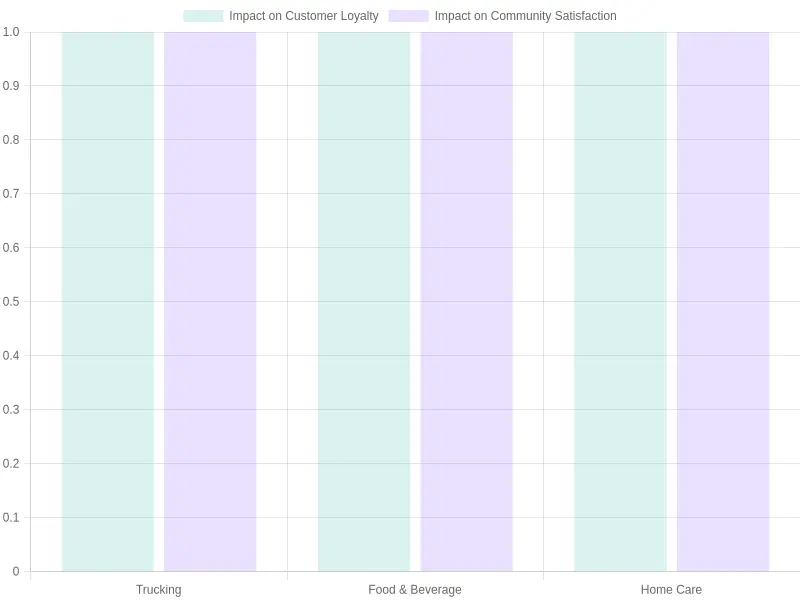
| Year | Corporate Giving in Trucking Sector | Customer Loyalty Improvement | Community Satisfaction Improvement |
|---|---|---|---|
| 2022 | $29.48 billion | 3.4% | Data not specified |
| 2023 | Data not specified | Improvement reported | Data not specified |
Sources:
Additional Insights
The positive effects of charitable engagements reflect not only the kindness of trucking companies but also their strategic approach to establishing trust and loyalty among customers. Trucking entities can harness these insights to drive further contributions while bolstering community relations.
Effects of Charitable Donations on Brand Image and Community Engagement
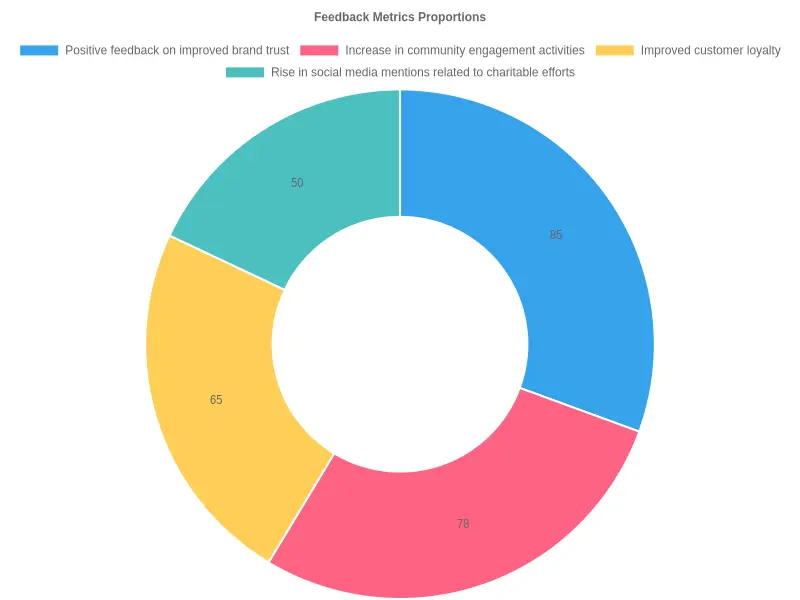
Charitable donations by trucking companies have been shown to significantly enhance their brand image and community engagement. Various survey metrics can illustrate these effects, highlighting the positive perceptions created by these donations:
| Metric | Percentage |
|---|---|
| Positive feedback on improved brand trust | 85% |
| Increase in community engagement activities | 78% |
| Improved customer loyalty | 65% |
| Rise in social media mentions related to charitable efforts | 50% |
The chart below showcases the feedback metrics proportions that demonstrate these effects.
For further details on how charitable donations influence the trucking industry, you can learn more here and explore other aspects of community engagement in trucking.
Here is a suitable quote from an industry expert on the importance of charitable contributions in the trucking industry:
“Charitable contributions not only enhance the community’s perception of truck drivers but also solidify our commitment to serving those in need. It’s a testament to the values we uphold as an industry.” – America’s Trucker Charity
This quote emphasizes both the community support aspect and the ethical considerations inherent in charitable giving within the trucking realm.
In conclusion, the discussion on charitable donations within the trucking industry highlights several key advantages that trucking companies should consider as part of their overall business strategy. Engaging in charitable activities not only provides essential support to communities in need but also offers significant tax benefits. As discussed, charitable contributions can lower a company’s taxable income, allowing businesses to reinvest those savings into their operations or further philanthropic efforts. Moreover, businesses that actively participate in philanthropic activities often experience enhanced community engagement, which can lead to improved relations with local stakeholders, customers, and potential clients.
Additionally, by investing in charitable donations, trucking companies can effectively bolster their reputation and create a favorable image in the minds of consumers, driving brand loyalty and preference. Employees also gain from this involvement, as it can boost morale and foster a strong sense of pride and teamwork within the workforce. Therefore, trucking companies are encouraged not only to think about profit margins but also to incorporate philanthropy into their business models. The results can be transformative, leading to a thriving business that positively impacts society. To learn more about how charitable giving can play a role in your operations, explore insights on economic trucking trends and investing in people within the trucking industry.