
In the commercial vehicle sector, particularly for enterprises that rely on trucks, the need for optimal vehicle performance is paramount. Manufacturing and distribution companies, retail businesses, construction firms, and small business owners with shipping requirements must prioritize maintenance to ensure operational efficiency. Utilizing high-quality truck service kits can offer substantial benefits, enhancing engine performance, extending vehicle lifespan, minimizing downtime, and improving reliability and safety. This article delves into how users of truck service kits can leverage these advantages to optimize their fleet and reduce costs, ultimately contributing to a more successful business operation.
Engine Performance as a Strategic Advantage: Keeping Trucks Powerful, Reliable, and Ready for the Road
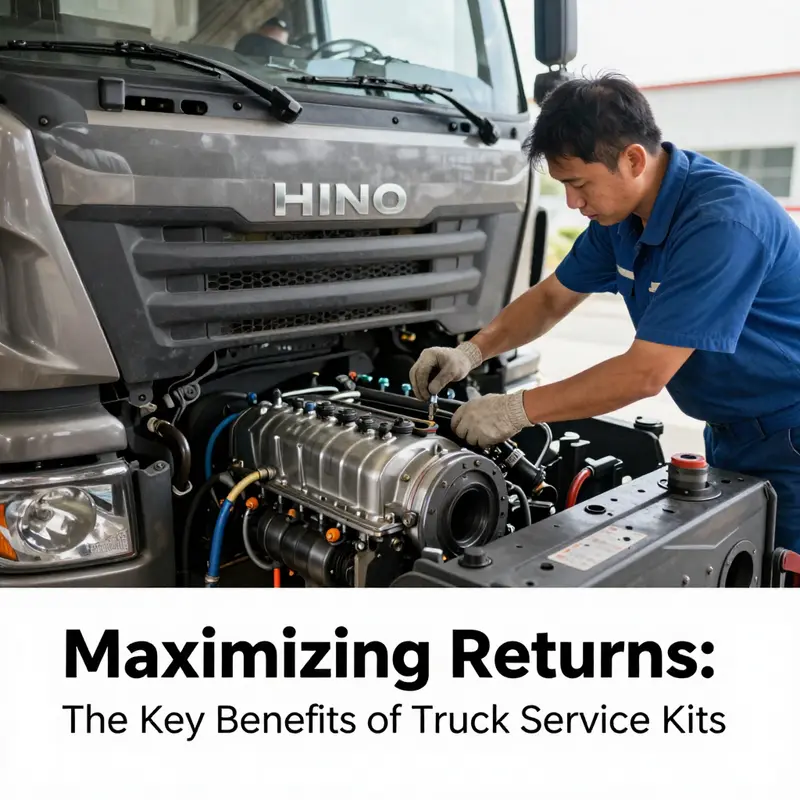
Engine performance is more than peak power figures or a single metric on a whiteboard. For operators who rely on trucks to move goods, service schedules, and the quality of maintenance work, engine performance translates into a tangible, day-to-day advantage. When a vehicle’s heart—its engine—operates at peak efficiency, the entire operation benefits. Power delivery stays smooth, acceleration remains predictable under load, and the engine’s appetite for fuel is tempered by clean operation and well-timed combustion. In the harsh realities of road, worksite, or urban corridors, this translates into fewer hiccups, less stress on drivers, and a more predictable timetable for loading and delivery. The practical value of improved engine performance emerges not just in the moment but in the sustained rhythm of a fleet’s daily life, where every mile counts and every minute of downtime costs money. The core lever here is routine maintenance that is thorough, timely, and aligned with engine design intent. A service program that emphasizes high-quality, model-appropriate service kits makes this possible. These kits bundle essential wear parts—gaskets, seals, oil and air filters, and other critical components—ensuring that the engine can maintain compression, keep proper oil pressure, and stay free of contaminants. Replacing these parts at the recommended intervals helps the engine operate as the manufacturers intended, preserving performance and reliability across varied workloads and seasonal demands. When maintenance is performed with care and precision, engines respond with steadier power curves, more immediate throttle response, and a reduced tendency toward performance dips as temperatures rise or loads increase. This is especially valuable for fleets that carry varying payloads, run through congested corridors, or operate in environments where uptime is the first currency of success. The outcome for users is clear: improved fuel economy, fewer unplanned repairs, and a more confident, less stressful driving experience. The relationship between maintenance quality and operating economics is not a vague correlation; it is a chain of cause and effect in which every well-timed part replacement strengthens the whole system, allowing drivers to extract every ounce of efficiency the engine can offer without compromising reliability. The result is a truck that feels steadier in its breathing, more responsive when it’s asked to accelerate from a standstill or climb a grade, and steadier in its emissions profile as the engine’s internal tolerances stay within design ranges. In practice, this means fleets can plan routes and schedules with greater confidence, knowing the vehicle will behave consistently under different duty cycles and environmental conditions. The improvement is not simply about speed or raw power; it is about sustaining the engine’s health so that it can deliver consistent performance over years of service. In this sense, engine performance becomes a strategic asset rather than a one-off target you chase during a quarterly maintenance window. It underpins the reliability that operators depend on to meet service commitments, keep customers satisfied, and maintain competitive standing in a tight market where margins hinge on uptime and efficient operations. Maintenance programs that prioritize quality parts and precise fitment are, in effect, an insurance policy against the cascading costs of neglect, misalignment with manufacturer guidelines, and the spares inventory chaos that can accompany ad hoc repairs. A well-executed service kit regimen makes labor more predictable and less prone to error, which further supports consistent performance outcomes across a fleet or a single operation. The ease of maintenance matters here as well. Service kits are pre-assembled and designed to fit specific engine platforms, reducing the likelihood that a mechanic will miss a part or misinstall a critical component. For the shop floor, that translates into faster turnarounds, fewer callbacks, and higher quality outcomes that drive long-term value. The practical benefits extend beyond the engine itself. When the engine breathes clean air, is well-lubricated, and sealed against leaks, ancillary systems—such as turbochargers, exhaust aftertreatment components, and cooling pathways—operate more predictably. That holistic health contributes to a cleaner emissions profile and steadier thermal management, both of which matter to fleets facing regulatory scrutiny and the need to manage operating costs across seasons and routes. For operators who must balance tight schedules with demanding workloads, the most meaningful advantage of improved engine performance is the reliability it confers. If a truck can maintain power and efficiency through a busy week, it reduces the risk of cascading delays, which in turn lowers the cost of late deliveries, overtime for drivers, or punitive penalties from customers. When a fleet adopts a maintenance approach that emphasizes genuine parts or high-standard equivalents, it preserves warranty coverage and protects the integrity of the engine’s design. This alignment with manufacturer guidelines gives operators greater assurance that the maintenance work will be recognized and supported if a warranty event occurs. It also ensures that the vehicle remains within the approved specifications that govern performance tolerances, reducing the chance of unintended consequences that could arise from makeshift repairs or incompatible parts. A well-respected maintenance philosophy recognizes that performance is a living metric: it evolves with miles traveled, workloads endured, and environmental challenges faced. The same philosophy extends to the mechanics and technicians who implement the work. When maintenance is standardized, the skill level required to achieve consistently good outcomes rises; technicians benefit from clear, repeatable procedures and part lists, while operators gain confidence in the reliability of the service. This synergy—between parts quality, procedural clarity, and skilled labor—creates a virtuous circle: better performance justifies adherence to maintenance schedules, predictable schedules justify investment in high-quality service kits, and that investment yields fewer surprises on the road. In turn, this strengthens the case for integrating maintenance into the broader discipline of fleet management. Maintenance becomes not a cost center but a driver of value, a way to protect the asset, and a contributor to safety and service continuity. Within this framework, the role of the service kit becomes central. It is not merely a shopping list; it is a carefully curated set of components chosen to meet the engine’s exacting requirements. The kit approach supports technicians, reduces downtime, and improves the consistency of service quality across vehicles and shifts. It also aligns with a broader trend in fleet operations toward modular, model-specific maintenance that can be scaled across a growing fleet. For operators managing private fleets, this is especially significant. Standardized kits enable centralized procurement, reduce inventory confusion, and support a uniform maintenance philosophy across locations. In private fleets where maintenance is managed in a controlled, centralized way, the predictability of parts availability translates into smoother operations and fewer disruptions to the workday. This sense of operational rhythm is reinforced by the practical reality that a well-serviced engine delivers not only efficiency but decreased variability in performance. Drivers experience fewer surprises on the road—no unexpected power drops, fewer torque gaps, and less abrupt throttle response changes when hills appear or heavy loads are pushed through the system. The mental load on the driver decreases as well, since the vehicle’s behavior becomes more intuitive and less reactive to minor wear or dirt. All of this reduces the likelihood of aggressive driving responses or fatigue-driven mistakes, which can impact safety and overall route performance. In the broader ecosystem of trucking operations, improved engine performance also aligns with sustainability goals. Cleaner combustion and efficient fuel use mean lower emissions per ton-mile and better compliance with evolving regulatory expectations. Fleet managers, who must balance cost control with environmental responsibility, may find that the long-run financial and reputational benefits of higher engine efficiency far exceed the upfront investment in quality service kits. The evidence of this value proposition shows up in multiple dimensions: smoother power delivery that keeps a vehicle engaged in its intended duty cycle, sustained engine life that defers costly overhauls, and reduced downtime that preserves a predictable schedule. The cumulative effect is a more resilient operation that can weather demand fluctuations, supply-chain disruptions, and the seasonal stresses that characterize the trucking business. For readers who want to connect these principles to real-world practice, consider the ways in which fleets are structuring maintenance around standardized service kits and model-specific components. In private fleets, for instance, standardized maintenance protocols are becoming a core competency, supporting cost containment, uptime, and performance consistency across a growing network of vehicles. This reflects a broader industry trend toward chevron-like alignment: clear expectations, repeatable processes, and measurable outcomes that tie directly to service quality and customer satisfaction. To learn more about how private fleets approach maintenance trends and the financial implications of standardized servicing, see the dedicated piece on Private Fleets Trends in Trucking Maintenance. The link provides context on how centralized maintenance programs translate into predictable costs and reliable performance across diverse job profiles. Private Fleets Trends in Trucking Maintenance. For practitioners seeking deeper technical context that informs these performance improvements, a comprehensive resource on engine specifications and industrial applications offers detailed insights into how components interact within diesel engines and why precise maintenance matters. External technical context: https://www.isuzu.com/en-us/trucks/technical-resources
Preserving Value: How Regular Truck Service Extends Lifespan and Cuts Costs
Preserving Value: How Regular Truck Service Extends Lifespan and Cuts Costs
Regular, well-executed service does more than fix problems; it preserves value. For users of truck service kits and scheduled maintenance programs, the most tangible benefit is the extension of vehicle lifespan. That extension is not an abstract marketing claim. It is the result of a series of small, precise interventions that stop minor wear from becoming major damage, maintain system efficiency, and preserve structural integrity. When a truck owner treats maintenance as an asset, the vehicle returns measurable benefits: lower total cost of ownership, fewer unscheduled outages, and stronger resale value.
A truck is a system of interdependent components. Bearings, seals, gaskets, filters, fluids and fasteners all work together under heavy loads and long hours. A failure in one area amplifies stress elsewhere. For example, a clogged oil filter raises engine operating temperatures and accelerates wear on piston rings and cylinder walls. A damaged seal allows contaminants to enter systems where precision tolerances matter. Replacing these wear parts on a planned schedule keeps operating parameters within design limits and prevents cascading failures. Users who adopt this preventative approach encounter fewer catastrophic repairs and see components reach or exceed expected service lives.
The immediate operational impacts are obvious. Engines that receive timely filter and fluid changes maintain combustion efficiency and lubrication quality. Transmissions with scheduled fluid exchanges and checks avoid overheating and premature gear wear. Braking systems that undergo routine inspections deliver consistent stopping power and protect rotors, pads, and hydraulic components. The result is a truck that performs predictably under load, consumes fuel more efficiently, and carries goods with less risk of interruption. For fleets, the aggregate effect is a steady reduction in per-mile operating cost.
Beyond mechanical longevity, proper servicing protects against environmental and structural decline. Cabin seals, door latches, and weatherproofing may seem minor, but their deterioration allows moisture and dust into sensitive areas. Over time this degrades electrical systems, corrodes metal, and damages interior components. Addressing these vulnerabilities during scheduled service preserves the driver environment and the vehicle’s electronics, which are increasingly critical to modern trucking operations. Trucks maintained this way retain both functionality and occupant safety far longer than those left to sporadic repairs.
Maintenance also allows operators to tune vehicles to their duty cycles. Medium-duty units used for frequent urban stops require different attention than long-haul tractors. Tire rotation schedules, alignment checks, and suspension inspections tailored to the vehicle’s mission prevent uneven wear and structural fatigue. Specialized bodies—flatbeds, refrigerated units, and vans—need targeted checks on tie-downs, seals, and mounting hardware to avoid service-induced failures. A maintenance program that recognizes these differences extends not only the chassis life but also the life of the bodywork and cargo-handling systems.
There is a financial logic to regular service that often surprises fleet managers. Investing in quality parts and routine labor reduces the likelihood of expensive emergent repairs that take a truck out of service for days or weeks. Unplanned downtime impacts revenue directly through interrupted deliveries and indirectly through driver idle time and rerouting expenses. Over time, the steady cost of scheduled maintenance tends to be far lower than the spike costs of emergency overhauls, tow fees, and temporary replacement units. That steady investment also smooths budgeting and makes fleet economics more predictable.
Safety and compliance also tie into lifespan. Trucks that are maintained to manufacturer-recommended intervals and service specifications are less likely to experience catastrophic failures that cause accidents. Brakes, steering, lighting, and suspension are safety-critical systems; when they are kept within spec, the risk to drivers and other road users is reduced. Furthermore, adherence to the recommended maintenance schedule keeps warranty coverage intact and aligns vehicles with regulatory inspection regimes, avoiding penalties and unexpected repair liabilities. For operators managing multiple units, standardized service records become a defensible form of due diligence in audits and claims.
Operational reliability is another dimension of lifespan. A well-maintained truck spends more hours on the road and fewer in the shop. This increases utilization rates and return on capital. Predictable maintenance intervals allow for planned downtime that can be scheduled around low-demand periods. That planning reduces the need for emergency rentals or dispatching backup vehicles, both of which erode margins. Higher reliability also supports customer commitments: deliveries arrive on time, contracts are fulfilled, and reputations for dependability are reinforced.
From a resale perspective, meticulous maintenance translates directly into value. Prospective buyers and remarketers look for service histories that show consistent attention to required maintenance items. A documented trail of parts replacements, fluid exchanges, and inspections demonstrates that the vehicle has been cared for and is less likely to conceal latent defects. Vehicles with comprehensive maintenance records command higher prices and sell more quickly, turning a disciplined maintenance program into a tangible financial return when units are retired or traded.
The human element should not be neglected. Drivers who operate reliably serviced trucks report fewer in-cab issues, better climate control, and reduced unexpected failures. That contributes to higher morale and lower turnover among drivers, which is a critical cost factor for fleets. When drivers trust the equipment, they can focus on safe, efficient operation rather than managing preventable breakdowns. In turn, this supports consistent service delivery and reduces indirect costs associated with recruitment and retraining.
Practical adoption of an effective maintenance strategy requires a few core practices. First, use components and kits that match the equipment’s engineering tolerances. Correct-fit parts minimize installation errors and ensure systems operate as designed. Second, follow a time- and mileage-based schedule that reflects operating conditions rather than relying on visual checks alone; certain wear processes accelerate under harsh loads and should be addressed proactively. Third, keep detailed records of all service actions; these records support warranty claims, resale value, and operational planning. Finally, train technicians and drivers to recognize early warning signs so minor issues are reported and resolved quickly.
For fleets considering the transition from reactive to proactive maintenance, the change can be incremental. Start by standardizing common tasks—filters, fluids, brake inspections—and tracking results. Use those early wins to justify expanded service programs that include more sophisticated diagnostics and targeted replacements. Over time, the data gathered from scheduled service cycles will guide more precise interventions, further extending component life and increasing predictability.
Longer vehicle lifespans are the sum of repeated correct choices. Each timely replacement, each inspection that catches a minor leak, each alignment that avoids uneven tire wear contributes. When users of truck service commit to that regimen, their trucks repay them not only with years of service but with lower operating costs, higher resale proceeds, and a safer, more predictable business operation. For operators seeking guidance on recommended service kits and specifications, consult the manufacturer’s published service documentation for model-specific details: https://www.hino.com/en-us/products/service-kits
For insights on how private fleets are shaping maintenance practices, see the discussion on private fleet trends in maintenance at https://fritzke-truckinginc.com/private-fleets-trends-in-trucking-maintenance/.
Keeping Trucks Rolling: How Smarter Service Cuts Downtime and Costs for Users
Reduced downtime and maintenance costs are not just operational goals; they are clear, measurable benefits that transform how users of truck service approach their work. For operators, drivers, and fleet managers, time off the road translates directly into lost revenue, disrupted schedules, and cascading logistics headaches. By rethinking maintenance as a strategic asset rather than a necessary interruption, businesses unlock predictable operating windows, fewer emergency repairs, and more efficient use of capital.
A first and vital shift is bringing service to the truck. Mobile and on-site maintenance removes travel time and scheduling friction. When a technician arrives at a job site or depot, inspections and routine work occur without forcing the truck into a shop bay and out of circulation for a full day. This approach reduces the hours and days trucks sit idle and allows small defects to be corrected immediately. Catching a leaking seal, a worn belt, or a clogged filter early prevents these issues from becoming breakdowns that require towing, parts sourcing, and extended repairs. For users, the cumulative effect is fewer unplanned stops and a steadier flow of productive hours.
Preventive maintenance is the next pillar. Regular, scheduled checks and part replacements keep systems operating within designed tolerances. Engine performance, cooling systems, brakes, and electrical systems all benefit from timely service. Replacing wear items on schedule minimizes the risk of catastrophic failure. That limits the need for emergency service calls and the high repair premiums that come with them. Over time, preventive maintenance reduces the total cost of ownership: parts are replaced while affordable, labor is predictable, and component failures that require expensive, labor-intensive interventions become rare.
Service kits tailored to specific truck models make preventive maintenance easier and more consistent. When mechanics have precisely the right gaskets, seals, filters, and fasteners on hand, the repair process is faster and less prone to mistakes. This reduces labor time and increases first-time-fix rates. High first-time-fix rates mean trucks return to service sooner and with greater confidence in their reliability. Users benefit from predictable repair windows and fewer repeat visits to resolve the same issue.
Leasing strategies amplify these operational efficiencies. Leasing shifts several maintenance burdens from the user to the lessor. Many leasing agreements include comprehensive maintenance packages that cover scheduled service and sometimes even emergency repairs. For users, this translates into more predictable operating expenses, freed-up capital, and simplified administrative load. Fleet managers can focus on routing and utilization instead of negotiating repair orders and chasing warranty claims. Cash flow advantages and tax treatments associated with leasing further reduce the total cost of fleet operations. For many contractors and small operators, leasing delivers improved fleet uptime and reduced financial stress compared with outright ownership.
Customized vehicles also play a critical role in downtime reduction. Trucks designed for specific applications—whether for construction, delivery, or service work—perform their tasks more efficiently and endure less stress. A vehicle built around its intended payload and operating conditions will experience lower wear rates on suspension, brakes, and drivetrain components. Better component selection and reinforced assemblies reduce the frequency of repairs. Users in specialized industries report significant productivity gains from fit-for-purpose configurations. The result is not only fewer breakdowns but also smoother operations that require less ad hoc maintenance.
Beyond these tangible changes, organizational practices matter. Centralized maintenance records and predictive analytics help teams plan service during low-demand windows. Telemetry and condition-based monitoring can highlight trends before they become failures. When data drives decisions, maintenance stops being reactive. Instead, teams schedule interventions during off-peak hours, coordinate parts and labor in advance, and minimize the truck downtime associated with repairs. For users, data-driven maintenance means fewer surprises and shorter service intervals that are timed for minimal operational impact.
The financial benefits of reduced downtime are multidimensional. Direct savings appear in lower repair bills, decreased towing costs, and fewer emergency labor premiums. Indirect savings come from improved utilization rates, fewer missed deliveries or project delays, and reduced penalties associated with late performance. For fleets working on tight margins, the compound effect of small uptime improvements can be decisive for profitability. Over a year, the same truck that spends fewer days in the shop can deliver significantly more revenue-generating miles.
Operational benefits are equally clear. Consistent uptime simplifies scheduling and improves customer service. Drivers are less likely to experience frustrating breakdowns that derail their day. Managers spend less time firefighting and more time optimizing routes and assignments. A reliable fleet enhances reputation, reduces customer churn, and supports long-term contracts that value timeliness and consistency.
Maintenance supply chains and logistics also influence downtime and cost outcomes. Local availability of parts and streamlined procurement reduce wait times for repairs. Service providers that maintain inventory of common components for specific truck families can dramatically cut repair lead times. This is why many users value service networks that combine mobile units with stocked parts vans. When a technician arrives with the correct parts in hand, repairs are immediate rather than contingent on next-day deliveries.
Training and workforce investment tie directly to maintenance efficiency. Well-trained technicians diagnose issues faster and execute repairs correctly the first time. Investing in training reduces misdiagnoses, prevents rework, and boosts safety. Users who prioritize technician skills and ongoing education see higher first-time-fix rates and lower overall downtime. These improvements compound as experienced technicians develop institutional knowledge about particular models and the operating environments they face.
Regulatory and warranty considerations also affect downtime costs. Aligning service practices with manufacturer guidelines preserves warranty coverage and prevents disputes that can delay repairs. Users that follow recommended intervals and use approved components avoid the administrative friction that accompanies off-spec maintenance. Consistent documentation and adherence to standards simplify warranty claims and keep repair timelines predictable.
For private fleets, trends in maintenance show a move toward integrated solutions that combine on-site service, predictive analytics, and strategic leasing. These approaches reflect a broader recognition: downtime reduction requires coordination across equipment design, parts availability, service delivery, and financial strategy. One practical resource that explores how private fleets manage maintenance and the operational choices they make is this article on private fleets trends in trucking maintenance. Embedding such lessons into a maintenance program yields measurable improvements in uptime and cost control.
Ultimately, the users’ benefits coalesce into a single outcome: trucks that spend more time working and less time waiting for service. The combination of on-site maintenance, preventive service kits, leasing options, purpose-built vehicles, data-driven scheduling, strong supply chains, and skilled technicians builds a resilient maintenance ecosystem. It reduces emergency repairs and labor spikes, streamlines administrative overhead, and optimizes cash flow. For operators aiming to maximize productivity and control costs, a strategic approach to maintenance is no longer optional. It is a competitive advantage that turns routine upkeep into sustained operational strength.
For a deeper look at industry research supporting on-site service and its impact on downtime and costs, see this analysis from an industry maintenance resource: https://www.fleetmaintenance.com/blog/on-site-service-reduces-downtime-and-costs
Dependable Trucks, Safer Roads: How Service Kits Deliver Reliability and Safety for Users

Dependable Trucks, Safer Roads: How Service Kits Deliver Reliability and Safety for Users
Truck service kits play a central role in keeping commercial vehicles dependable and safe. When users adopt a regular, parts-focused maintenance rhythm, they reduce the chance of sudden mechanical failures and improve operational consistency. A service kit bundles the wear items and seals that most commonly cause leaks, losses of compression, or degraded performance. Replacing those components on schedule prevents cascading damage and preserves the systems that keep trucks moving.
For drivers and fleet managers, reliability translates into measurable benefits. Fewer unexpected breakdowns mean fewer route interruptions and less time spent arranging tow trucks or emergency repairs. That reliability affects more than schedules: it lowers the stress on drivers, who can focus on safe operation rather than on the threat of imminent failure. It also protects cargo quality, since delays or roadside breakdowns can expose freight to temperature shifts or theft risk. In short, service kits turn routine maintenance into a proactive strategy that protects time, goods, and people.
Safety and reliability are tightly linked. A braking system, tire, or engine seal that fails without notice turns a scheduled stop into an emergency. Service kits help mitigate that risk by standardizing the replacement of components that wear gradually and often invisibly. Mechanics who follow a kit-based program can perform consistent inspections and swaps, catching parts with borderline wear before they cross the threshold into failure. With consistent parts selection and fitment, the chance of human error in choosing incompatible components drops. That consistency improves the predictability of system behavior on the road, which in turn reduces the risk of incidents stemming from equipment failure.
Beyond preventing outright breakdowns, scheduled kit-based maintenance improves vehicle handling and responsiveness. A well-serviced engine will respond predictably to throttle inputs. Properly sealed and lubricated systems let braking systems and steering perform as designed. When drivers know their vehicle will behave consistently, they make better tactical choices on the road. That steadiness matters most in adverse conditions—when weather, heavy loads, or complex urban traffic demand rapid, reliable reactions.
For operators managing multiple vehicles, the economic picture reinforces the safety case. Downtime is expensive. It interrupts delivery chains, reduces asset utilization, and often requires premium expenses for emergency repairs. When maintenance follows a kit-based schedule, repairs are generally planned and performed in controlled shop conditions. Planned work is cheaper and faster. Parts are sourced in bulk, service intervals are predictable, and maintenance teams can work with repeatable procedures. These efficiencies reduce per-vehicle maintenance costs and free teams to focus on preventive actions rather than reactive firefighting. The reduced cost of ownership allows owners to invest more in driver training, monitoring systems, and safety technologies—further reinforcing a culture of reliability.
Standardized service kits also support warranty and regulatory compliance. Using approved parts and documented service intervals helps maintain coverage under warranty programs. It also streamlines inspections for regulatory agencies by ensuring that critical components are replaced according to manufacturer or industry guidelines. This reduces the risk of fines or operational restrictions that arise from failed compliance checks. For fleets operating across regions with varying inspection regimes, that uniformity simplifies record-keeping and reduces the administrative work of proving compliance.
Ease of maintenance is another practical benefit with safety implications. Kits assembled for a specific engine or chassis reduce the time mechanics spend identifying and sourcing multiple parts. When service personnel have the right gaskets, seals, and filters on hand, they apply consistent torque settings and sealing procedures without improvisation. Reduced labor time in the shop lowers the chance of rushed or incomplete repairs. It also improves turnaround times for vehicles, keeping them in service longer and off the roadside. Better-maintained trucks stay within their designed performance envelopes, protecting both the vehicle and the people who operate it.
A less visible but powerful benefit is the mitigation of secondary damage. Small faults like a leaking seal can, if left unaddressed, contaminate other systems. Oil leaks may coat belts and hoses, accelerating their wear. A contaminated air intake can shorten the life of turbochargers and valves. Replacing primary wear parts before these secondary effects begin is cheaper and safer than repairing the compounded damage. Service kits focus attention on those primary parts and make their replacement routine. Preventing secondary damage preserves system integrity and reduces the probability of surprise failures that could present safety hazards on highways or city streets.
The human factor also plays into reliability. Drivers and mechanics trust systems that are consistently serviced with known parts. That trust influences behavior: drivers are less likely to push a vehicle beyond safe limits when they know components are fresh; mechanics are less likely to delay service when parts are readily available in a kit. That behavioral change reduces risky decisions and supports a safer operating environment. Over time, organizations that embed kit-based maintenance into their workflows see cultural shifts. Maintenance becomes scheduled and predictable, rather than ad-hoc and crisis-driven.
Logistics companies and owner-operators both benefit from the visibility that service kits enable. Routine servicing produces a clear record of what was replaced and when. Those records support predictive analytics; fleets can correlate part life with use patterns and refine service intervals accordingly. With better data, fleet managers can plan downtime, optimize route assignments, and budget maintenance more accurately. Predictive planning reduces the chance of vehicles being caught in high-risk situations without proper servicing.
Risk is not eliminated entirely, but it becomes manageable. Service kits reduce the range and frequency of probable failures. That reduction is particularly important where safety margins are narrow: heavy loads, high-speed highway travel, and urban routes with heavy pedestrian exposure. In those contexts, component failure can escalate into serious incidents. Regular replacement of critical wear items keeps systems within designed safety tolerances and reduces the probability of catastrophic failures.
Cost considerations tie directly to safety outcomes. Replacing a gasket or filter on schedule is cheap compared with the cost of an accident investigation, cargo loss, or a total engine rebuild. Those downstream costs rarely appear in a maintenance budget but they weigh heavily on a company’s bottom line and reputation. By making routine maintenance easier and more reliable, service kits act as a cost-avoidance tool that indirectly funds safer operations.
Finally, the broader supply chain feels the effects of reliable trucks. Consistent performance reduces missed pickup windows and late deliveries. Reliable trucks reduce the number of emergency shipments and expedited responses, which often increase traffic density and risk. When fleets commit to kit-based maintenance programs, they indirectly smooth logistics flows and reduce pressure on drivers and dispatchers to make unsafe choices to meet deadlines. This ripple effect shows how a seemingly simple maintenance decision can improve safety at an industry level.
For operators seeking to implement a kit-based maintenance program, the practical steps are straightforward. Standardize parts and intervals across compatible vehicle groups. Train technicians on the correct installation procedures and inspection points. Keep detailed service records and integrate them into fleet management software. Review failure data regularly to refine kit contents and service intervals. These actions create a repeatable, observable process that yields steady improvements in reliability and safety.
The combination of predictable parts replacement, improved inspection routines, and simplified logistics creates a safer on-road environment. Users who adopt this approach report fewer roadside emergencies, lower repair bills, and a clearer sense of control over their operations. In aggregate, those benefits reduce overall system risk and protect drivers, cargo, and the public.
For additional context on how regular vehicle maintenance influences safety and inspection standards, see guidance from the National Highway Traffic Safety Administration: https://www.nhtsa.gov/vehicle-safety/maintenance-and-inspection
Enhanced reliability is not an abstract goal. It is a practical outcome of consistent maintenance choices. Service kits make those choices easier to implement, measure, and sustain. The result is a safer fleet, fewer surprises on the road, and a stronger foundation for long-term operational success.
For insights on how maintenance trends play out across different fleet models and management approaches, explore Private fleets trends in trucking maintenance: https://fritzke-truckinginc.com/private-fleets-trends-in-trucking-maintenance/
Final thoughts
Investing in truck service kits goes beyond mere compliance and maintenance; it establishes a strategic approach to vehicle management. Companies across various industries can experience marked improvements in engine performance, vehicle durability, reduced downtime, and heightened reliability and safety. By ensuring that trucks are equipped with high-quality service components, businesses not only comply with manufacturer requirements but also enhance their operational efficiency, ultimately leading to cost savings and improved bottom lines. Prioritizing truck service kits is a vital step for any enterprise aiming to maximize the effectiveness of their fleet.