
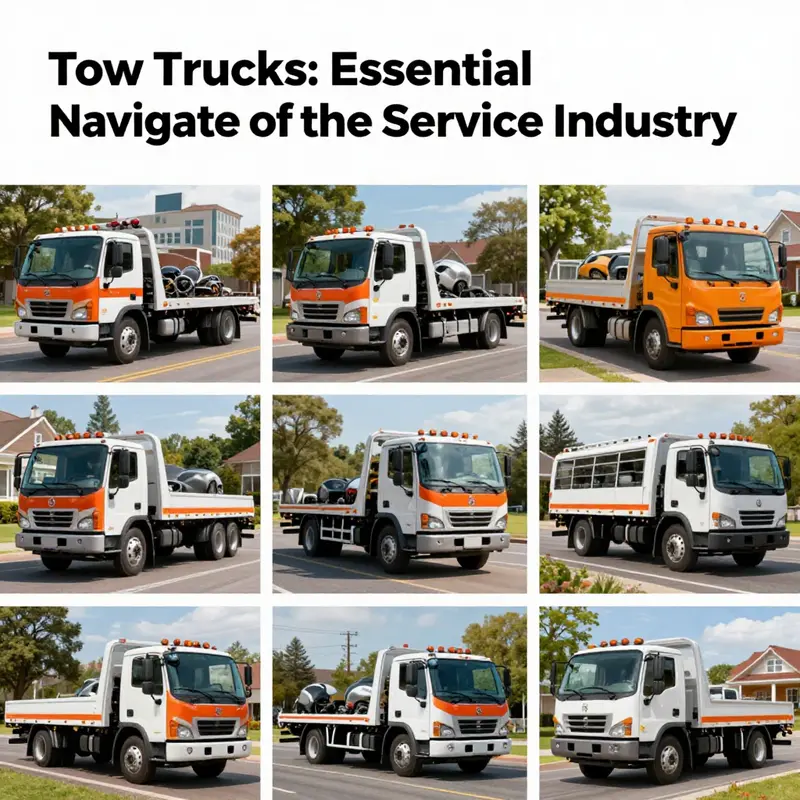
Tow trucks embody a crucial component of the service industry, providing necessary transportation and recovery solutions for both individuals and businesses. As reliance on quick and efficient recovery services increases, understanding the multifaceted role of tow trucks in the transportation service sector is vital. This article delves into the various dimensions of tow truck services, starting with their foundational role in the service industry, progressing through the technological advancements that enhance efficiency, and concluding with their significant economic impact. Each chapter is designed to illuminate how the specialization and services offered by tow trucks cater to the needs of manufacturing, retail, construction, and small business sectors.
Tow Trucks as Service Industry Stewards: Recovery, Logistics, and the Modern Road Network
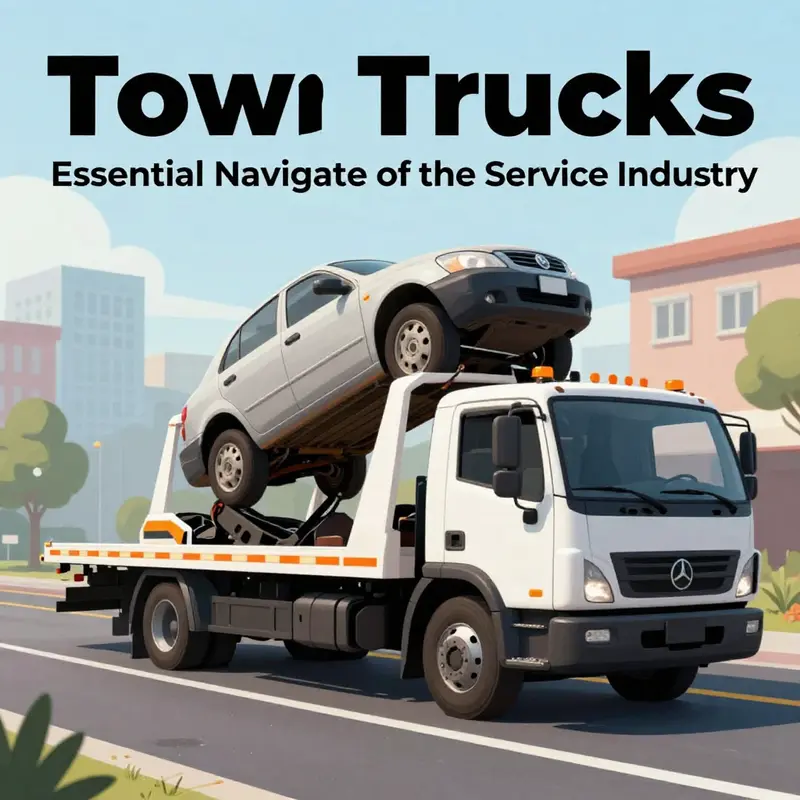
When we examine the fabric of the service economy, tow trucks emerge not as mere road assistance vehicles but as essential stewards of safety, efficiency, and continuity. They operate at a crossroads where transportation, public welfare, and commercial vitality meet. In the broad taxonomy of the service sector, tow truck operations are best understood as a specialized, high-stakes form of transportation services. They persistently translate moments of breakdown, collision, or immobilization into orderly outcomes: hazards cleared, lanes reopened, and the flow of traffic restored. This is not simply about moving a vehicle from point A to point B. It is about upholding predictable mobility, a cornerstone of modern economies that rely on just‑in‑time logistics, rapid response to incidents, and resilient infrastructure. In this sense, tow trucks are service industry workers in the truest sense: problem solvers who deploy expert equipment, trained personnel, and precise decision making to protect people, property, and productivity on crowded highways and sleepy rural roads alike. The argument that tow services belong to the service sector rests on more than tradition. It rests on a defined set of roles that align with the service industry’s core commitments: dynamic resource management, customer property protection, and operational efficiency. The transportation service subfield—where tow operations live—encompasses dispatching, scheduling, route optimization, and the logistical support that keeps goods and people moving. A tow operator in this framework is a coordinator, a safety professional, and a problem solver who must balance speed, care, and compliance in an environment governed by ever-changing traffic conditions, weather, and demand. The modern tow truck is thus less a single-purpose tool and more a mobile platform for a spectrum of service values: reliability, accessibility, and accountability. In many ways, the everyday act of towing a disabled vehicle mirrors the fundamental service industry objective: to reduce friction for customers. A breakdown can derail a business day, strand a family, or interrupt a supply chain. The tow operator’s response reduces that disruption. The service encounter may be brief, but its consequences are cumulative; it shapes perceived reliability, influences roadside safety, and informs the broader ecosystem of transportation, logistics, and emergency response. This is why the service classification holds across national and regional contexts. The National Committee for the Standardization of Scientific and Technological Terms in China defined transportation services to include not only freight dispatching and vehicle scheduling but also route optimization and logistics support. Within that framework, tow and recovery operations belong to the same family of services that are defined by their dynamic coordination, their attention to customer property, and their obligation to safeguard the flow of traffic. The alignment with public safety is not incidental. When a vehicle is disabled on a busy highway, every moment of delay compounds risk. Towing teams are trained to manage hazard zones, communicate with traffic management systems, and prioritize scene safety. They deploy safety equipment, coordinate with other responders, and implement procedures designed to minimize the chance of secondary incidents. In practice, this means a combination of skill, technology, and discipline. A tow truck is a mobile command post that integrates GPS tracking, real‑time monitoring, and communication with emergency services and traffic operations centers. These capabilities enable swift scene assessment, accurate damage assessment, and efficient resource allocation. A fleet manager can dispatch the right vehicle, with the appropriate equipment, to the right location, while the operator on the ground executes a careful sequence of actions to recover the vehicle without collateral damage. The emphasis on precise coordination is crucial when the incidents involve large commercial vehicles, multiple disabled units, or complex terrain. High‑capacity recoveries require specialized hardware, trained operators, and a well-rehearsed plan. In this context, the evolution of tow trucks toward multi‑functional road service units is a natural outcome of a service economy that prizes flexibility and resilience. Heavy‑duty specifications, such as 30‑ton wreckers or equivalent high‑capability configurations, are designed to handle highway incidents, rollover recoveries, and off‑road rescues where standard equipment would fall short. These configurations are not mere luxuries; they are critical to reducing road clearance times and restoring a stable traffic environment. The ability to reposition a vehicle precisely in a constrained space often hinges on a combination of lifting capacity, boom reach, and the operator’s spatial awareness. A 360° rotating boom can be indispensable when the recovery site is constrained by traffic, terrain, or surrounding obstacles. This is where the professional ethos of the service sector shines through: operators adapt to conditions, select the right approach, and execute with care to prevent further damage. The service industry, after all, is built on trust. Clients place their vehicles and, by extension, their livelihoods in the hands of professionals who are expected to deliver predictable, safe, and efficient outcomes. This trust is earned through a blend of ongoing training, rigorous safety protocols, and a consistent record of performance. Modern tow operations extend beyond the physical act of pulling a vehicle. They increasingly hinge on data and visibility. Real‑time tracking, digital job boards, and coordinated handoffs with other responders help ensure that a recovery is not just technically sound but also logistically smooth. A recovery may trigger subsequent steps in a broader process—arranging transport of a recovered vehicle to a shop, coordinating with insurance providers, or scheduling a follow‑up service appointment. The service dimension here is explicit: the tow operator is not simply a one‑off technician but part of a chain that sustains the customer’s mobility and peace of mind. The chain’s strength depends on standardization of practices, calibration of equipment, and adherence to safety norms. Safety and visibility are not afterthoughts; they are embedded in every operation. The inclusion of safety lighting, for instance, is a straightforward way to reduce risk for all road users. Even cost‑conscious fleets recognize the value of reliable lighting and reflective gear, because poor visibility can lead to secondary incidents that magnify costs and harm. In some markets, the market for used or reconditioned equipment is a practical way to maintain safety and reliability while controlling total cost of ownership. Reconditioned units—thoroughly inspected, refurbished, and updated to meet current safety standards—offer a viable option for maintaining service levels in a tight margin environment. The logic is simple: a carefully refurbished unit can deliver robust performance at a price point that makes service availability more sustainable for small and mid‑sized operators. This is a reminder that the service industry is relentless about balancing capability with cost efficiency. The equipment mix in tow operations is varied and purpose driven. Basic deployments focus on rapid response and safe vehicle attachment, but more sophisticated fleets must anticipate a wide spectrum of scenarios. Car carrier tow trucks extend the service’s reach by enabling the efficient transport of multiple vehicles in a single operation. Then there are the specialized tools that matter in particular contexts—high‑view lighting for night operations, wheel lifts that minimize ground disturbance, and heavy hooks and winches that can contend with an overturned or stuck vehicle. Across urban downtown corridors, rural highways, and peri‑urban industrial zones, the tow operator’s toolkit is tuned to the density and dynamics of the surrounding traffic. The service dimension therefore also includes the coordination with broader infrastructure networks. Tow services interface with traffic management centers, second‑tier responders, and, where relevant, industrial maintenance teams that rely on rapid, controlled access to impaired roadways. In times of disruption, these relationships matter. They allow responders to reduce incident duration, lower the risk of additional crashes, and return the system to normal function as quickly as possible. The life cycle of a tow operation thus reflects a layered ecosystem: on the ground, trained technicians and specialized vehicles; in the back office, dispatchers and schedulers who optimize routes and allocate resources; and in the public sphere, agencies and communities that depend on reliable transportation networks. In that sense, tow trucks are not isolated tools but integral components of a service‑driven transportation ecosystem. This perspective helps explain why policymakers and industry leaders alike treat tow services as vital infrastructure. They underpin commerce, enable emergency response, and support everyday travel. The practical impact is measurable: reduced downtime for commercial fleets, faster clearance of accident scenes, and more predictable commute times for everyday road users. These outcomes translate into economic resilience, a term that captures the capacity of communities and businesses to withstand disruptions without cascading costs. The service classification also has implications for training, regulation, and workforce development. If tow operations are part of the service industry, then the people performing these roles deserve recognition and support comparable to other frontline service workers. Training should emphasize not only mechanical skill but also customer communication, crisis management, and ethical decision making in high‑pressure environments. Safety standards should be embedded in every procedure, and performance metrics should reflect reliability, not just speed. The integration with technology continues to shape the service profile of tow operations. As fleets adopt more connected services, real‑time data becomes a backbone for decision making. Location data, asset health information, and incident timelines inform how resources are deployed and how clients are updated. In this way, the tow industry mirrors broader service trends that weave digital tools into every step of the customer experience. A future direction that remains widely discussed is the electrification of fleets and the adoption of alternative propulsion for service vehicles. While this chapter refrains from endorsing specific brands, it is worth noting that the transition toward electric or hybrid drivetrains can align with broader transportation sustainability goals, reduce operational costs over time, and appeal to customers who value environmentally responsible service providers. As the industry continues to evolve, one constant endures: the value of swift, safe, and transparent recovery operations. By restoring safety on the road, tow services perform a humane function that often goes unnoticed. Yet their influence extends beyond the immediate scene. They support the reliability of supply chains, the safety of road users, and the confidence of motorists who rely on a responsive service network when things go wrong. In that broader sense, tow trucks contribute to a service economy that is not just about delivering goods or moving people but about maintaining the continuity of everyday life. For operators seeking to align their practices with evolving standards and expectations, the path is clear: invest in professional development, uphold rigorous safety protocols, embrace intelligent dispatch and monitoring tools, and maintain a vehicle fleet capable of handling the widest possible array of scenarios. The success of this approach is evident in how tow firms adapt to the changing landscapes of transportation demand, emergency response, and infrastructure maintenance. It is not a static field, but a dynamic, essential service that supports the road networks we depend on every day. For readers who want a practical lens on these trends, one compelling entry point is the ongoing conversation about how technology and policy shape the service environment for moving people and goods. In that spirit, consider exploring how emerging electric vehicle strategies intersect with tow operations, and how fleets adapt to evolving regulatory and market pressures. The discussion is not abstract; it directly touches the daily realities of roadside assistance, commercial recovery, and the infrastructure that keeps communities connected. If you would like to see a contemporary example of how electric mobility considerations are informing service strategies in this space, you can read more at Harbinger electric trucks Canada market entry. Harbinger electric trucks Canada market entry. While the specific brand names and product lines are outside the scope of this chapter, the underlying idea is clear: service providers are increasingly considering how to integrate cleaner, smarter, and more capable vehicles into their repertoires to meet evolving expectations. Tow services thus stand at the intersection of public safety, customer service, and logistical performance. They embody a service mindset within a transportation framework, delivering not just rescue but also reassurance. Their work demonstrates how a well‑operated fleet can lower risk, shorten incident durations, and keep communities moving. The outcome is a more resilient road system—one that recognizes the critical role of professional recovery, safe handling, and clear communication in maintaining mobility under pressure. This resilience is what keeps the broader service economy robust, even when the weather is unforgiving, traffic is heavy, or a major incident interrupts the usual cadence of daily life. Understanding tow trucks as service industry protagonists helps us appreciate their value beyond the surface of roadside scenes. It reframes these operations as a vital infrastructure service—one that safeguards safety, facilitates commerce, and preserves the reliability that modern life depends upon. External resource: https://www.towtruck.com/
Tow Trucks in the Digital Age: The Tech-Driven Transformation of Vehicle Recovery
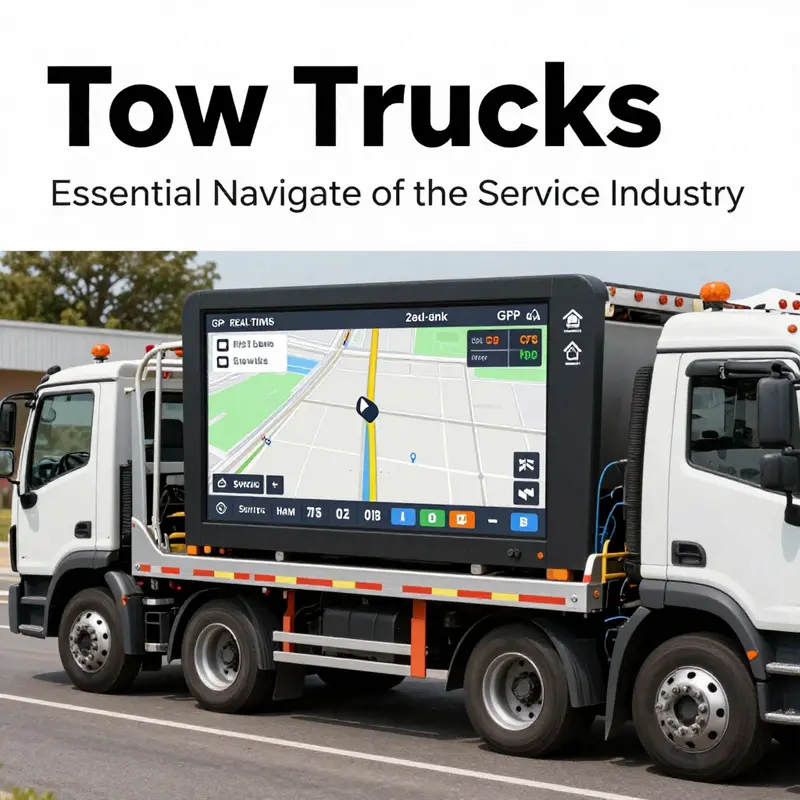
Tow trucks are often thought of as simple devices for moving a car from the roadside. In practice they function as mobile service hubs that blend mechanical expertise with real-time data, customer communication, and disciplined safety practices. This chapter examines how technology reshapes every layer of tow operations—from the hydraulic and wheel-lift systems that enable secure loading to intelligent dispatch, GPS routing, and telematics that optimize response times. It explains how fleets manage risk, maintain asset health, and coordinate with traffic management centers and emergency responders to minimize disruption and protect road users. It also explores how standards, training, and professional ethics sustain trust in a high-pressure service: a model where speed, care, and transparency meet the demands of modern mobility. Finally, it looks ahead to electrification, automation, and evolving service expectations, arguing that towing remains a core service function in the transport network when delivered with skill, empathy, and data-informed discipline.
The practical takeaway is that tow services are not mere logistics tasks but integrated service propositions: recovery, protection of property, and rapid return to the flow of traffic—enabled by a growing stack of tools, processes, and people working in concert.
Tow Trucks as Economic Linchpins: How Vehicle Recovery Sustains the Service Industry
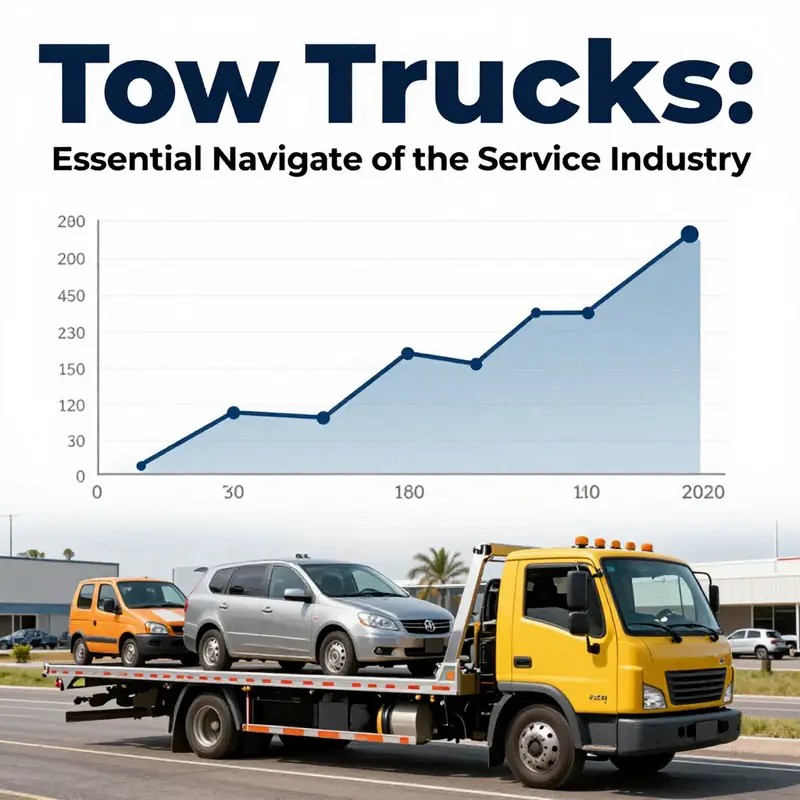
Tow trucks are more than roadside tools; they are active economic agents that keep transportation moving and commerce resilient. Operating at the intersection of logistics, public safety, and customer service, tow truck operations deliver measurable economic value across urban and rural regions. They restore mobility after breakdowns and collisions. They enable supply chains to recover quickly from disruptions. They reduce opportunity costs caused by congested roads. Because these services manage resources dynamically and solve urgent customer problems, tow truck operations fit squarely within the service industry and its broader economic ecosystem.
Growth in demand for towing and recovery points to a structural role in the service sector. Market analyses project steady expansion, reflecting rising vehicle ownership, longer and more complex road networks, and heightened expectations for rapid incident response. This growth drives investment in specialized equipment and technology. It also multiplies the need for trained personnel and robust dispatch systems. As a result, the tow truck market functions as a lever that amplifies demand for allied services such as vehicle repair, spare parts, insurance processing, and fleet maintenance. Those allied sectors, in turn, create jobs and generate revenue streams that reinforce local economies.
Tow truck services perform tasks that save tangible economic costs. Clearing accident scenes and removing disabled vehicles reduces congestion and limits fuel waste. It shortens delivery delays for freight and parcel operators. It lowers the exposure of drivers and passengers to secondary collisions and prolonged hazards. Municipalities and emergency services rely on prompt towing to restore normal traffic flow. Businesses rely on it to keep fleets operational. When time-sensitive shipments encounter disruptions, rapid recovery can prevent cascading losses that affect production schedules and retail availability. By ensuring continuity, tow trucks reduce both direct repair costs and broader economic losses tied to downtime.
The multiplier effect of towing services extends into insurance and financial systems. Insurers and claims adjusters coordinate with tow providers to document losses, move vehicles to repair facilities, and expedite settlements. Repair shops depend on steady referrals from tow companies and roadside assistance programs. Fleet managers factor recovery time and towing costs into total cost of ownership models. Ports and intermodal facilities use towing and recovery as part of their incident response plans to avoid terminal slowdowns. These linkages mean that investment in towing capability supports resilience across logistics networks and supply chains. That connection is part of a larger pattern where transportation-related services amplify each other. For a deeper look at those connected trends, see the analysis of key economic trends affecting trucking and logistics in the article on key economic trends impacting the trucking industry.
Tow operations also create diverse employment opportunities. Drivers and operators are the visible face of the service. Behind them are dispatchers who coordinate responses, mechanics who keep equipment safe and reliable, and administrators who handle billing, compliance, and customer relations. The sector encourages vocational training and certifications in vehicle recovery and heavy equipment operation. As technology becomes integrated into everyday workflows, new roles emerge in telematics, route optimization, and remote diagnostics. These roles increase workforce skill levels and improve labor market mobility. Regions with a dense transportation network often see towing firms become stable employers that support local communities through wages, taxes, and secondary spending.
Efficiency and safety standards in towing are outcomes of both market forces and regulation. Operators must meet equipment, licensing, and insurance requirements that ensure safe handling of vehicles and cargo. Compliance costs are real, but they also create a baseline of service quality that customers and municipalities expect. Contracts between public agencies and private tow firms formalize response times, pricing, and operational protocols. Those arrangements reduce uncertainty and speed recovery during incidents. Because municipal partnerships often include pre-approved vendors and standing agreements, private towing capacity becomes an extension of public emergency resources. That public-private interplay means investment decisions by private firms have public consequences, and vice versa.
Technology has reshaped how towing services deliver value. GPS tracking and real-time dispatch systems cut response times. Telematics provide remote diagnostics that help dispatchers assign the right equipment for each job. Route optimization reduces fuel use and idle time. Digital platforms offer transparent pricing and status updates to customers. Cameras and sensor systems improve scene safety and documentation, reducing disputes over liability and simplifying insurance claims. These capabilities increase productivity and lower per-incident costs. They also enable scaling: a well-managed towing firm can service a wider area without proportional increases in labor or equipment. That scalability strengthens the sector’s economic footprint.
Beyond routine operations, tow truck services are central to emergency management and disaster response. When severe weather damages infrastructure or causes large-scale accidents, towing capacity determines how quickly corridors can be reopened. Rapid vehicle recovery reduces secondary economic impacts, such as supply chain interruptions and lost business hours. Towing services may be integrated into regional emergency plans, with mutual aid agreements and staged resources. Investment in heavy-duty recovery units and trained crews allows regions to recover more rapidly from high-impact events. That resilience supports sectors that depend heavily on timely deliveries, including retail, health services, and manufacturing.
The capital intensity of tow operations influences local investment cycles. Operators must balance equipment costs against expected demand. Heavy-duty recovery rigs, winches, and specialized trailers represent significant upfront spending. At the same time, predictable demand encourages lenders and investors to support expansion. Leasing and financing models help firms modernize fleets while preserving cash flow. Strategic fleet renewal can also target improved fuel efficiency and lower maintenance costs. Investment decisions ripple through supply chains when firms purchase parts, hire service contractors, and subcontract specialized towing work. These purchasing patterns stimulate local suppliers and service businesses.
Regulatory and insurance frameworks shape pricing and service availability. Where licensing hurdles or administrative complexity increase, small operators may face barriers to entry. Conversely, clear procurement policies and transparent contracting open avenues for professional, compliant providers. Insurance reimbursements and roadside assistance networks influence pricing structures. In some markets, congestion pricing and parking enforcement create steady demand for removal services. Municipal parking authorities and traffic enforcement agencies often partner with tow firms under defined terms. Those arrangements provide a predictable revenue stream and incentivize consistent service standards.
The sector’s trajectory carries implications for sustainability and innovation. Electrification and alternative fuel options are entering the commercial vehicle market. Tow operators will evaluate these technologies for lifecycle costs and operational fit. Heavy recovery tasks demand high torque and power, so electrified solutions must meet rigorous performance benchmarks. Meanwhile, improvements in predictive maintenance and connected-vehicle data could reduce towing demand by preventing roadside failures. Even so, the need for rapid, safe recovery will remain. Advances in materials, remote assistance, and robotic handling may change how crews work, not whether they are needed. The industry will adapt by aligning investments with efficiency targets and regulatory incentives.
Tow truck services thus play a dual role: they provide immediate, visible help to stranded motorists while underpinning broader economic systems. From enabling uninterrupted freight movement to supporting municipal incident response, the tow sector reduces both direct and indirect costs of transportation disruption. It creates employment, fosters skills development, and supports suppliers and repair networks. It also contributes to public safety and resilience through contractual partnerships and emergency planning. Understanding this role clarifies why towing is not an isolated service niche. Instead, it is a core element of the service industry, integrated into commerce, logistics, and civic operations.
For a comprehensive market outlook and detailed analysis of industry trends, refer to the industry report on market size and growth projections provided by Grand View Research: https://www.grandviewresearch.com/industry-analysis/tow-truck-market.
Final thoughts
Tow trucks serve as a pivotal element of the service industry, contributing significantly to transportation efficiency and economic growth. Their application transcends simple vehicle recovery, integrating complex technological solutions and providing specialized services for various business sectors. As industries continue to evolve, the importance of tow trucks and their role in ensuring operational effectiveness and safety cannot be overstated. To harness the full potential of these services, industries must embrace ongoing innovations in towing technologies and evaluate their own logistical needs in partnership with tow service providers.