
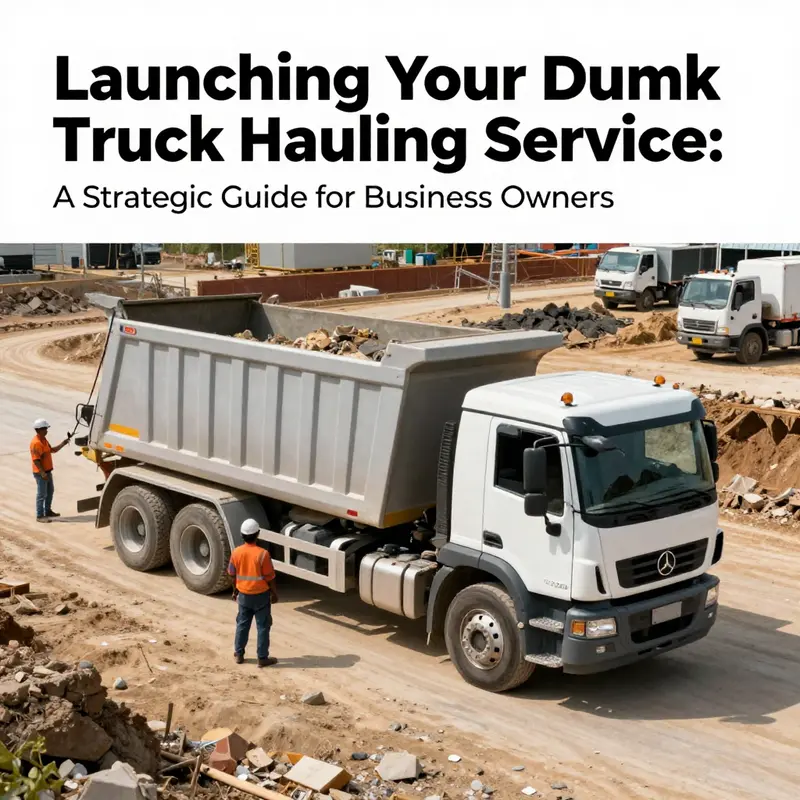
Starting a dump truck hauling service demands strategic foresight and a robust understanding of the industry. As manufacturing, retail, construction, and e-commerce businesses grow, so does the need for efficient transportation solutions. This guide will delve into the critical phases of establishing your hauling service—from conducting market research to creating a solid business plan and ensuring compliance by securing necessary funding and permits. Each chapter will provide actionable insights tailored to businesses looking to navigate this lucrative niche successfully.
null
null
Blueprint for Success: Crafting a Business Plan for Your Dump Truck Hauling Service
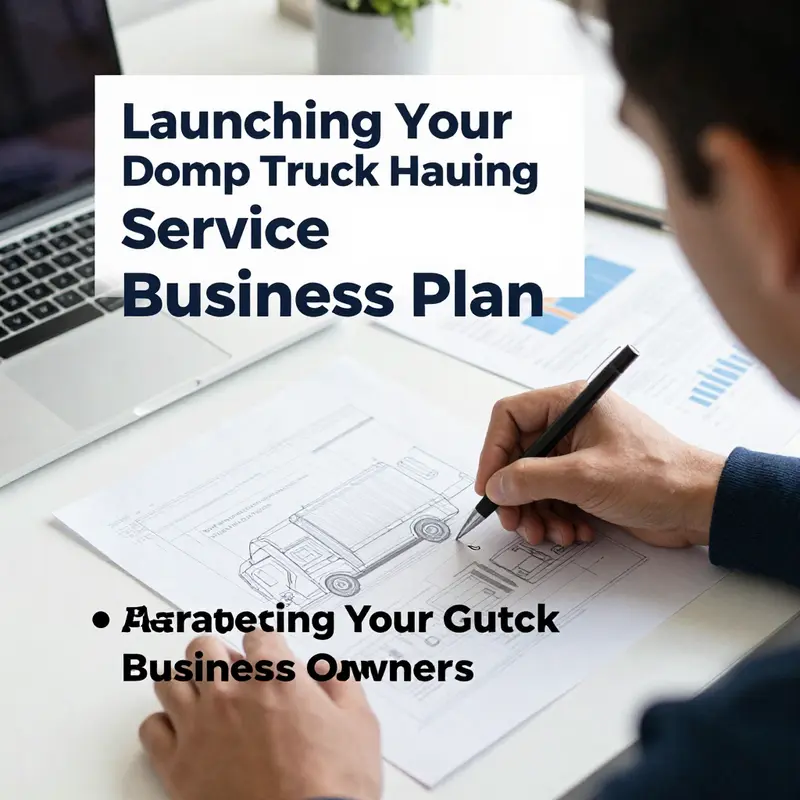
A clear, disciplined business plan is the single most practical tool for turning a dump truck hauling idea into a profitable operation. At its best, a plan is not a static document. It is a strategic map that aligns market opportunity, fleet capability, operational process, and financial discipline. For a hauling service, the plan must answer practical questions about the customers you will serve, the trucks you will run, the people who will operate them, the technology that will coordinate work, and the safety and regulatory guardrails that will protect your business and clients. Treat each element as part of one continuous system rather than as isolated checklists. The narrative that follows knits those parts together into a coherent blueprint you can adapt as your company grows.
Begin with a concise executive summary that states your mission, market focus, and the practical value you offer. Define the company in straight terms: the service area, the primary customer types, and the service promise. For example, a mission might emphasize reliability, transparent pricing, and environmentally conscious hauling. The executive summary should also include a snapshot of financial intent: start-up capital required, initial fleet size, and a three-year revenue and break-even estimate. Keep this summary no longer than one page. It will guide decisions when you are choosing trucks, hiring drivers, and negotiating with lenders.
Market analysis defines where you will compete and why you will win. Identify specific demand pockets in your service area: residential landscaping, light renovation debris removal, commercial construction, municipal projects, or aggregate and material delivery. Map major local construction projects, ongoing municipal maintenance programs, and seasonal landscaping cycles. Evaluate competitors by type: small owner-operators, medium-sized local fleets, and larger regional carriers. Note each competitor’s strengths and weaknesses. Do they undercut on price while sacrificing reliability? Do they offer same-day service but lack formal scheduling systems? These insights reveal where a focused service can create value.
Choose a niche that matches your capital and operational readiness. Light-duty work suits a modest fleet and lower capital; medium-duty contracts require reliable scheduling and a reputation for consistency; heavy-duty hauling needs larger investment in equipment and compliance systems. A focused niche also simplifies marketing, pricing, and operational design. For instance, concentrating on site cleanup and debris removal for small commercial contractors allows you to craft fixed-price packages, train crews for quick turnaround, and optimize smaller dump trucks for access to constrained sites.
Operational planning is where the business plan becomes tangible. Define the fleet composition in detail. Note the types and quantities of trucks you will operate in month one, six, and twelve. Specify whether you will lease or purchase, and the average age of vehicles you will accept if buying used. Include equipment specifics: bed types, tailgate configurations, tarp systems, and extra safety items such as backup alarms and cameras. List operational standards for each vehicle: load capacity, acceptable wear, and the required emissions or noise standards for the territories you will serve.
Maintenance cannot be an afterthought. Create a maintenance schedule with routine inspections, preventative service intervals, and a clear system for addressing defects. Include record-keeping requirements and who will be responsible for them. A disciplined maintenance plan reduces downtime and avoids costly compliance failures. Set aside a predictable percentage of revenue for parts and labor costs. If you will run heavy equipment on rough terrain, increase that reserve accordingly.
Personnel planning is equally critical. Hiring experienced, reliable drivers is a market differentiator. Define hiring criteria that cover licensing, driving history, drug-screening, and background checks. Describe your initial training program, which blends vehicle operation, customer service, safety protocols, and basic truck inspection routines. Consider investing in ongoing training and professional development. Retention is more cost-effective than constant hiring. Offer competitive pay, clear career paths, and recognition programs to retain operators and build fleet knowledge. For ideas on workforce investment and retention strategies, see this resource on Investing in people in trucking.
Technology and systems design are rarely visible to customers, but they shape outcomes. Decide early how you will schedule work, communicate with clients, and manage routing. Implement real-time GPS tracking so you can confirm arrival windows, measure route efficiency, and offer clients load visibility. Choose a scheduling system that supports clear quoting, automated confirmations, and driver dispatching. Mobile tools should let drivers accept jobs, document deliveries with photos, and capture customer signatures and feedback in the field. Integrate these tools with your billing system to speed invoicing and reduce disputes.
Pricing models must be transparent and defensible. Start by building a cost model that captures direct costs per job: fuel, driver time, truck wear, and permits or tolls. Add overhead: office staff, software subscriptions, insurance, and marketing. From that baseline, design a pricing menu—per-load rates for common routes, yardage or tonnage pricing for material deliveries, and hourly or flat-rate options for specific services. Offer bundled packages for repeat customers or contractors with regular needs. Transparent pricing reduces disputes and builds trust. Make your pricing easy to explain and straightforward to display in proposals.
Financial projections should be realistic and conservative. Itemize start-up costs such as vehicle acquisition, licensing, insurance, safety equipment, initial marketing, and any software development or subscription fees. Forecast monthly operating expenses for at least the first twelve months. Revenue projections should be based on assumed utilization rates for each truck in the fleet. Supply a break-even analysis and cash-flow projection showing how long it will take to cover fixed costs. Prepare scenarios—best case, expected case, and conservative case—to understand cash needs. Lenders and investors will look for realistic assumptions and a clear path to profitability.
Risk management belongs at the center of the plan. Outline your insurance strategy, including commercial auto coverage, general liability, cargo insurance, and workers’ compensation. Account for contractual risks with clients and subcontractors. Draft sample contract language for common services that sets expectations about load acceptance, wait time charges, and liability limitations. Build contingency plans for driver shortages, truck breakdowns, and spikes in fuel costs. Identify critical dependencies—such as a single large client or supplier—and propose mitigation measures like diversifying customers or creating reserve funds.
Regulatory compliance is non-negotiable. Detail the licenses and permits your operation requires. For vehicles operating across state lines, secure the appropriate federal operating authority. Specify driver licensing and endorsements and how your hiring process will verify compliance. Include routine audits of driver qualifications and vehicle documentation to prevent gaps. Keep a schedule for renewals and inspections, and assign a staff member responsibility for filings and communications with regulators. For clarity on federal motor carrier rules and authority requirements, consult the Federal Motor Carrier Safety Administration at https://www.fmcsa.dot.gov.
Operational efficiency grows from repeatable systems. Define standard operating procedures for job intake, dispatch, route planning, loading and unloading, and invoicing. Keep procedures practical and short, so drivers can quickly reference them. Use checklists to ensure consistency. Establish service level agreements for turnaround times and communication expectations with clients. Track key performance indicators such as on-time arrival rates, average job time, cost per ton or load, and customer satisfaction ratings. Review these metrics monthly and adjust operations where trends indicate drift.
Service diversification increases resilience. A plan that combines debris removal, material delivery, and site cleanup can smooth seasonal revenue volatility. Map how each service impacts fleet needs and staffing. Debris removal typically requires flexible scheduling and quick turnaround. Material delivery benefits from predictable routes and repeat customers. Site cleanup calls for labor coordination and close coordination with contractors. Each offering should have its own pricing model and operational checklist to keep quality consistent.
Partnerships accelerate growth and expand reach. Identify local contractors, landscape suppliers, and municipal procurement officers as prospective partners. Create a tiered outreach plan: initial contact, service trial, and a formalized partnership or preferred vendor agreement. Offer pilots or introductory pricing where appropriate, but maintain clear boundaries about rate structures outside pilot periods. Partnerships often bring steady volume, so include projected revenue from these relationships in your financial model once commitments are secured.
Brand and client experience should align with your operational promises. Present a consistent message across proposals, websites, and driver interactions. Train drivers and office staff on client communication to ensure the brand promise is delivered on every job. Solicit customer feedback and implement a system for responding to concerns promptly. A transparent rating and feedback loop will surface improvement opportunities and be a competitive advantage when prospective clients evaluate your reliability.
Human resources extend beyond hiring drivers. Define a staffing plan for dispatch, safety compliance, maintenance oversight, and administrative functions. Consider how you will manage payroll, benefits, and performance reviews. Create a simple performance framework so employees understand success metrics. Regular safety meetings and training keep teams aligned and reduce incidents. Incentivize behaviors that reduce costs, such as efficient routing and careful vehicle handling.
Sustainability and environmental responsibility increasingly influence client decisions. The business plan should include commitments to emissions standards, efficient routing to reduce fuel use, and proper handling of materials to avoid spills and fines. Regularly service hydraulic and fuel systems to prevent leaks and ensure compliance with environmental regulations. Consider future investments in advanced fuel or electric vehicles as part of a long-term capital plan, and build a timeline for those upgrades based on total cost of ownership analyses.
Capital strategy needs to match growth ambitions. Decide when to buy versus lease, and how to sequence fleet additions to match demand. Prepare a capital expenditure plan that ties vehicle acquisitions to revenue milestones. Explore diverse funding sources: bank loans, equipment financing, leasing, and, where appropriate, private investment. Ensure your plan includes a reserve for unexpected capital needs. Lenders will want to see realistic revenue forecasts, maintenance plans, and management experience in the plan.
Marketing converts planning into customers. Tailor marketing to your niche and local market. For contractor partnerships, prioritize direct outreach, face-to-face meetings, and references. For homeowner or small-business work, invest in local search advertising, a clear website, and online reviews. Use targeted promotions to introduce service bundles. Track the cost of customer acquisition and focus resources where return on investment is highest.
Implementation is a phased exercise. Plan the first ninety days around launching core services, hiring and training initial staff, and securing the first set of customers. Use a checklist for launch tasks: register the business, secure insurance, obtain required permits, acquire the first trucks, hire drivers, implement software tools, and run a pilot with select customers. In months four to twelve, focus on optimizing routes, refining pricing, and expanding partnerships. Monitor cash flow closely and adjust hiring or capital spending if utilization deviates from projections.
Finally, view the business plan as a living document. Schedule regular reviews to update forecasts, reassess risks, and refine operational processes. Use quarterly reviews to evaluate performance against the plan and make course corrections. Maintain a disciplined cadence of measurement and improvement. The strength of the plan lies not only in how well it anticipates the future, but in how quickly you adapt when reality shifts.
This blueprint ties market understanding to operational practice and financial rigor. It ensures every decision—from the trucks you buy to the training programs you offer—supports the same goals: reliability, profitability, and repeat business. With disciplined execution and continuous learning, a well-crafted business plan will guide a dump truck hauling service from first truck to a growing fleet that customers trust.
Funding the Fleet and Scoping Compliance: How to Secure Capital While Building a regulatory-Ready Dump Truck Hauling Service
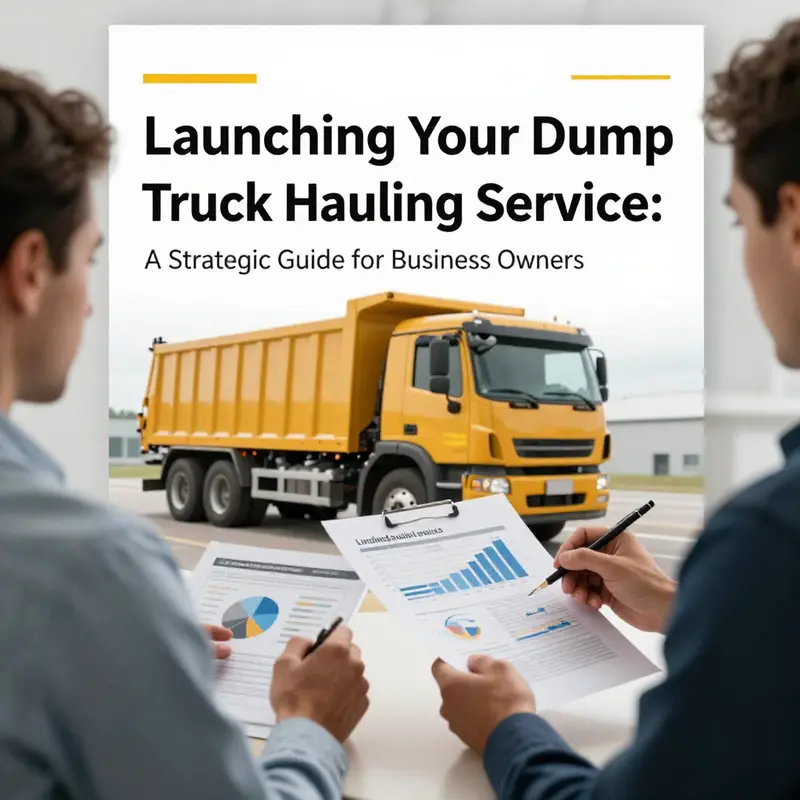
Securing funding and building compliance are not separate lanes on a road toward launching a dump truck hauling service. They are two interwoven foundations that determine how fast you move, how far you can go, and how reliably you can keep your operation on the road. A successful entrant does not merely accumulate trucks; it compiles a financial plan that proves to lenders you can service debt while a compliance program proves you can operate safely, legally, and efficiently day after day. When you approach these pillars as a single, coherent mission, you set a realistic trajectory from the first fleet unit to a growing regional footprint. This chapter walks you through the practical, integrated path of obtaining capital and meeting the regulatory standards that will support sustainable growth, long-term profitability, and a reputation for reliability among contractors, municipalities, and industrial clients alike.
The arc begins with funding not as a one-off purchase but as a living part of your business model. Equipment financing for dump trucks is a well-trodden path, but it is not a generic loan. Lenders in the transportation sector understand that trucks have a finite life, that maintenance costs accumulate, and that utilization drives revenue. A robust approach to funding starts with a precise, transparent business plan that translates counting pennies into credible projections. It frames the fleet not merely as assets but as generators of revenue: the number of hauls possible per week, the average payload, the typical distance, and the minimum billable rate required to cover operating costs and debt service. In practice, this means detailing your market niche, your target customers, and the exact mix of truck types you plan to deploy for light, medium, or heavy duty work. It means showing how the fleet will scale as demand increases and how you will adapt to seasonal cycles in construction, landscaping, or municipal projects. It also means presenting a maintenance and safety plan that convinces lenders you can prevent unplanned downtime and extend the useful life of each asset.
From the outset, you should build a precise cost model. The numbers matter, but how you present them matters just as much. Lenders want to see a realistic estimate of upfront costs—down payments, taxes, permitting, insurance, and registration—plus a funded reserve for ongoing maintenance. They want to understand ongoing costs: depreciation, insurance premiums, fuel, tires, parts, and driver wages. They also want to understand how you will manage cash flow during peak seasons and slower periods. A compelling model demonstrates that, with a reasonable debt service burden, your operating margins will be sufficient to cover all fixed and variable costs while still delivering a profit that justifies the risk of a loan or lease. The planning process should also reflect the degree of asset utilization you expect to achieve. If you plan a distributed fleet with a mix of light- and medium-duty trucks for construction sites and residential projects, your model should show utilization rates for each segment and the corresponding contribution to profit.
A critical element of the funding conversation is the distinction between buying and financing. Buying a truck outright is uncommon for a startup; most new operators lean toward some form of financing or leasing. Leasing can offer cash flow flexibility, tax advantages, and easier fleet modernization over time, while purchases may maximize equity and simplify maintenance management. Either path requires a clear assessment of residual values, maintenance responsibilities, and end-of-term options. When you compare options, weigh not just the monthly payment but the total cost of ownership, including maintenance obligations, tires, brake work, and potential downtime caused by repairs. A well-structured financing plan also accounts for the possibility of expansion. If you anticipate adding trucks within two to three years, your funding strategy should account for scalable credit lines, predictable underwriting criteria, and a streamlined process for approvals as you grow. In short, lenders want to know that as you scale, your access to capital remains reliable and manageable, not that you will be left scrambling for another loan at the last moment.
To position yourself for favorable terms, prepare a compelling package that speaks to risk management as much as to opportunity. This includes evaluating insurance needs and citing them clearly in your package. A dump truck hauling operation faces substantial liability, cargo, and workers compensation exposure. Lenders will scrutinize your coverage structure to ensure it reflects the scope of your operations, including the types of loads, the routes, and the geographic footprint. You should present a plan that addresses how you will meet or exceed regulatory requirements while keeping premiums predictable. A disciplined approach to risk management—documented through a formal safety program, incident reporting, driver training, vehicle maintenance records, and telematics data—reduces the perceived risk and improves your negotiating position. It also forms the backbone of your compliance narrative. Because the cash flow you project depends on uptime and reliability, you need to show that you have the people, technologies, and processes to prevent avoidable outages and to respond quickly when issues arise.
The second pillar, compliance, follows naturally from your funding narrative. Compliance is not a box to be checked after you acquire trucks; it is a continuous discipline that informs every decision from vehicle selection to routing, maintenance scheduling, and driver recruitment. The regulatory landscape for dump truck operations spans business licensing, driver credentials, vehicle registration, and the complex web of safety, environmental, and transport rules that vary by state and sector. Start by ensuring you have a valid business license and registrations for every jurisdiction where you will operate. If you plan to haul across state lines, you will need authority that permits operating as a motor carrier across borders. In many regions, a Commercial Driver’s License with the appropriate endorsements is non-negotiable; for dump trucks, Class B is a common baseline, but you must verify the specifics with your state’s licensing authority and the FMCSA guidelines. Then there is the USDOT number and MC authority for interstate operations. The USDOT number is the identifier for safety and compliance oversight, while MC authority is the license that entitles you to cross state lines with a truck and haul freight. Without these credentials, you risk fines, detentions, or worse—the loss of your ability to operate across jurisdictions.
Insurance is not only a cost but a cornerstone of compliance that lenders view as a protective measure that mitigates risk for all parties. You will need comprehensive commercial auto insurance to cover physical damage and liability for the vehicles themselves, cargo insurance to cover shipments, and workers’ compensation if you hire drivers. The exact coverage levels should be aligned with the nature of your contracts and your risk exposure. The process of obtaining insurance should begin well before your first truck hits the road. A well-documented safety and maintenance record can reduce premiums and improve coverage terms. It is prudent to allocate time to shop and compare policies, but you should also be mindful of the coverage gaps that sometimes arise when a new operator relies on bare minimums to reduce upfront costs. The result can be a premium that strains cash flow in the early months, undermining your ability to service debt once it comes due. Lenders appreciate a thorough, realistic insurance plan that demonstrates you know the costs and have a plan to manage them.
Beyond insurance, your compliance program should address environmental and safety standards. Emissions considerations, noise controls, and fuel efficiency are not only regulatory concerns; they influence operating costs and the life cycle of your fleet. Regular maintenance schedules and a formalized inspection routine reduce the risk of breakdowns, extend the life of tires and hydraulics, and keep the trucks roadworthy. A strategy for leak prevention, hydraulic system integrity, and leak-resistance is especially critical for heavy-duty operations where the consequences of a hydraulic failure can be severe. In practice, this means creating a maintenance log that tracks service intervals, part replacements, and inspections for every vehicle in your fleet. It also means implementing a chain of accountability so that drivers, maintenance staff, and management share a common understanding of safety expectations and reporting protocols.
When you bring funding and compliance together, you are creating a narrative that resonates with lenders and regulators alike. Your funding package becomes not merely a request for capital but a commitment to responsible stewardship of assets and the communities you serve. You demonstrate that your business model is built on predictable utilization, cautious budgeting, and a proactive safety culture. Demonstrating consistency in your approach to capital management, regulatory adherence, and operational discipline reduces perceived risk and increases the likelihood of favorable terms. In many cases, lenders will look for a partner who can deliver real-time insights into fleet performance, maintenance status, and trip-level data. The integration of technology into your operating model—telematics, real-time tracking, and mobile tools for drivers—can support this leadership position. For example, a client-facing platform that shows live progress on a load, transparent pricing, and clear communications with drivers can translate into smoother relationships with customers and faster underwriting decisions. The result is not just a loan approval but a foundation for future financing as your fleet grows and your contractual commitments become more complex.
In practical terms, the funding journey begins with gathering the right documents and framing them in a way that speaks to the realities of trucking finance. You will need your business license, tax identification number, and a detailed financial snapshot that includes projected income statements, balance sheets, and cash flow analyses for at least the first 12 to 24 months. If you have any existing equipment or ancillary assets, you should include a depreciation schedule and an asset list that clarifies how the new trucks will complement or replace current capacity. A well-prepared package should also include explicit operating metrics: anticipated utilization rates by truck type, average load size, typical trip durations, and a breakdown of fixed versus variable costs. These details are not merely descriptive; they become the quantitative proof that your business can support debt payments while maintaining healthy margins during peak cycles. The more precise and grounded your projections, the more confident lenders will be about your ability to manage growth without compromising safety or regulatory compliance.
One practical strategy is to secure a combination of funding sources. A primary loan or lease can cover the largest portion of the fleet, particularly for the backbone of heavy and medium-duty trucks. A secondary line of credit can provide working capital to bridge periods of uneven demand, enabling you to absorb price swings in fuel and parts without interrupting debt service. If you plan to acquire multiple trucks within a short window, you may also explore equipment-specific financing that aligns depreciation schedules with debt amortization. This approach can help preserve cash flow and simplify tax planning. When evaluating lenders, look beyond the interest rate to the total package: approval speed, the predictability of terms, the ease of documentation, and any value-added services such as guidance on regulatory compliance or access to risk management resources. Some lenders structure programs that align with trucking cycles, offering faster approvals for operators who can demonstrate a track record of safety and reliability in a relatively short operating history. While those programs can be highly advantageous, you should ensure you understand all covenants, prepayment penalties, and the consequences of missed payments. The goal is to secure capital with a clean set of expectations that you can meet even if demand fluctuates.
Ultimately, the path to funding for a dump truck hauling service is about credible forecasting, careful risk mitigation, and a compliance program that supports sustainable operation. It is about aligning your fleet plan with a financing structure that preserves liquidity and preserves your ability to invest in maintenance and upgrades as the business grows. It is about building a relationship with lenders who see you as a partner rather than a one-time borrower because they recognize the discipline embedded in your plan—the discipline to hire skilled drivers, to train them well, to monitor performance, and to adapt to regulatory changes with minimal disruption. If you can weave together a robust funding story with a practical, enforceable compliance plan, you will create a momentum that carries you from your first truck to a reliable, scalable service that contractors and municipalities can trust.
The broader ecosystem around funding and compliance reinforces this approach. As we think about cross-border opportunities or regional expansion, the regulatory landscape becomes even more central to your strategy. For operators contemplating work across state lines or into neighboring markets, the importance of understanding cross-border regulatory issues cannot be overstated. These considerations will shape not only your compliance program but also your financing choices and your long-term growth plan. To explore these regulatory considerations in depth, you can refer to specialized resources focused on cross-border compliance and licensing, for instance through focused industry discussions and official guidance. Cross-border regulatory considerations form a natural bridge to the next phase of growth as your fleet expands beyond a single jurisdiction. Cross-Border Regulatory Issues
In the end, the funding and compliance equation is not a static milestone but a dynamic capability. It is the capability to anticipate regulatory shifts, to adapt your fleet and maintenance practices, and to manage capital with the discipline that a growing hauling operation requires. When you treat compliance as a performance measure that is continuously optimized, you create a moat around your business, reducing the risk that regulatory changes, insurance costs, or unexpected downtime will erode your margins. And when you treat funding as a partner in growth, not a hurdle, you gain access to the tools and relationships that enable you to expand with confidence. The result is a startup that does not merely survive early cash constraints or regulatory hurdles but thrives by delivering consistent performance, transparent pricing, and reliable service to a demanding market. External resources can further illuminate these pathways and provide additional guidance on the availability of capital and regulatory expectations. For broader perspectives on financing and market dynamics in trucking, exploring reputable industry resources can be valuable. External resource: https://www.credibly.com
Final thoughts
Successfully launching a dump truck hauling service requires meticulous planning, in-depth market research, and compliance with industry regulations. By understanding your target market through research, crafting a detailed business plan, and ensuring you have the necessary funding and permits, you are laying a solid foundation for your business. Remember, as the demand for reliable transportation solutions grows in various sectors, your service can fill that important niche, positioning you for long-term success.