
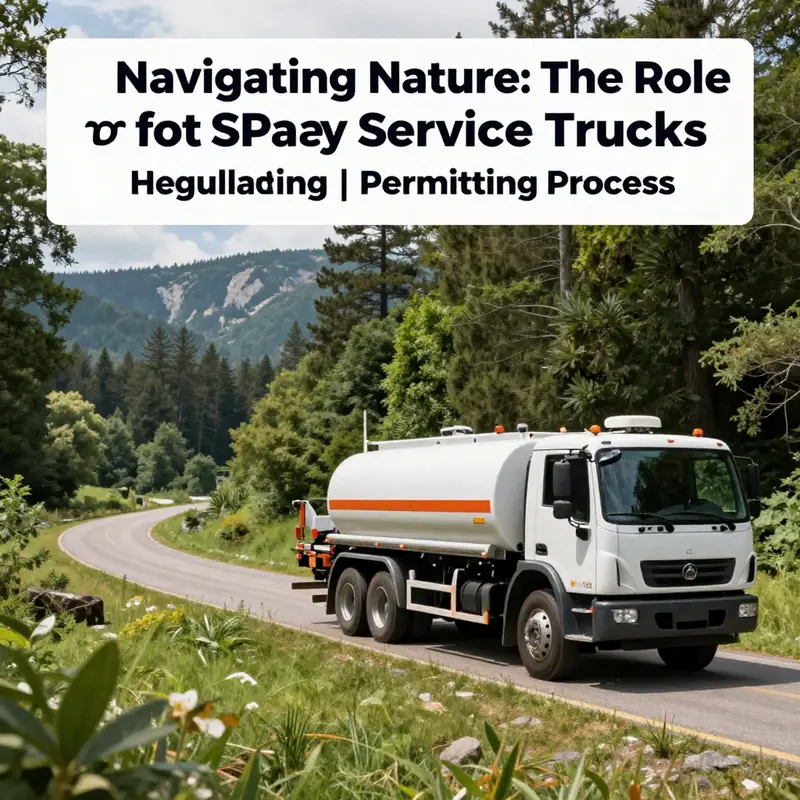
As manufacturing and distribution companies alongside retail and construction firms look to maintain infrastructure and landscape in national parks, the use of spray service trucks becomes essential. Known for their various applications, from fire prevention to irrigation, these specialized vehicles face strict regulations and environmental considerations when operating in protected areas. This article explores the regulatory landscape governing spray service trucks in national parks, examines their environmental impacts, and details the permitting process necessary for their operation, providing a comprehensive framework for businesses impacted by these mechanisms.
Sprayers at the Gate: Navigating Regulation, Ecology, and Access for Service Trucks in National Parks
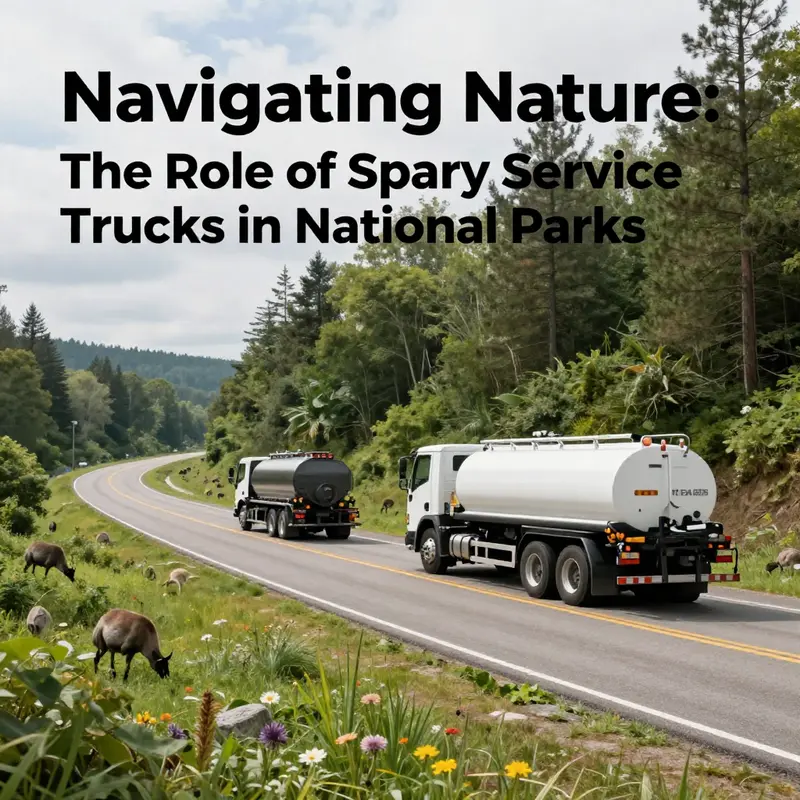
National parks occupy a delicate balance between accessibility and preservation. They are places where trucks, machines, and people converge with delicate ecosystems that can be sensitive to even routine maintenance activities. Spray service trucks, often known as sprinkler trucks or water trucks in the field, enter this balance only when there is a clear, justified need and a carefully designed framework to minimize environmental impact. In practice, these vehicles do not cruise freely through national parks as they might on an ordinary highway. Instead, they operate under a tightly regulated regime that requires permits, route designations, weather and timing constraints, and a disciplined adherence to environmental safeguards. The outcome of this regime is not merely about movement from point A to point B; it is about ensuring that essential park management operations do not become causes of unintended ecological disturbance or visitor safety concerns. To understand how this works, it helps to look at the kinds of tasks these trucks perform, the regulatory logic that governs them, and the practical realities of implementing such operations within places where conservation remains the top priority.
The most common rationales for deploying spray service trucks inside national parks revolve around dust suppression on park roads, landscape irrigation for ornamental plantings or restoration plantings, and fire prevention measures that rely on water to reduce fuel flammability when conditions pose elevated risk. Dust suppression is not a cosmetic concern here; it can shape air quality, visibility, and the health of nearby habitats. Excessive dust can deposit on vegetation, wash into water bodies, and alter soil chemistry over time. Irrigation, when used in park landscapes, supports the health of plant communities that have evolved in sometimes harsh climatic regimes. And water-based applications associated with fire prevention—whether for direct line-of-sight clearing around critical resources or for firefighter staging areas—require a controlled, predictable approach that minimizes unintended wetting or chemical drift into streams, wetlands, or nesting areas. These tasks are legitimate and sometimes operationally necessary, but they demand a structured governance framework that respects both the park’s mission and the public’s enjoyment of the space.
Regulatory control, in this context, begins with the National Park Service (NPS) mandate to protect wildlife, safeguard water quality, and conserve vegetation. The NPS does not publish a one-size-fits-all permit package publicly; rather, oversight is implemented through a combination of park-specific guidance, environmental management plans, and internal directives that shape practical, site-specific procedures. In many parks, the decision to allow spray operations hinges on a formal permitting process. This process typically requires an operations plan that details why spraying is necessary, where it will occur, how long it will take, and what substances will be used. Even when the materials are described in general terms as environmentally safer or low-toxicity formulations, the operator must demonstrate that there is no viable alternative that would achieve the management objective without introducing similar or greater ecological risk. The permitting framework also expects an explicit risk assessment, including potential effects on air and water quality, soils, pollinators, and non-target species. Importantly, it considers the cumulative impacts of repeated operations across seasons and multiple management activities happening within the same park.
The actual route through the park is rarely a free choice. Access is constrained by designated service roads, work zones, and sometimes temporarily closed sections of park during sensitive periods for wildlife or during peak visitation. The route design serves several purposes simultaneously: it reduces the footprint of the operation, concentrates disturbance to predictable areas, and protects habitat features that might be vulnerable to spray drift or soil compaction. The choice of route is not incidental; it is the product of careful site assessment that weighs proximity to streams, wetlands, and riparian zones, proximity to dens or nesting sites, and the potential for interference with hiking trails, viewpoints, and other visitor experiences. In practice, this means that spray trucks do not simply appear in the park and begin spraying. They appear only after a comprehensive plan is reviewed by park staff, sometimes with input from other federal or state agencies, and only after the plan meets stringent conditions designed to keep environmental and visitor safety risks as low as possible.
Time is another critical factor. Even with clean operational plans, the meteorological conditions at a park can dramatically influence the appropriateness of spraying. Wind speed and direction are given careful consideration to prevent drift onto non-target areas, including wildlife corridors and water bodies. Precipitation can dilute or wash away spray residues, complicating both effectiveness and environmental safeguards. Temperature and humidity levels can affect volatility and the degradation rate of spray substances, and therefore influence both efficacy and environmental persistence. Park managers may restrict operations to certain seasons or windows of the day when these conditions are most favorable for minimizing unintended consequences. In heavy-use scenic areas, operations may be scheduled during hours with lower visitation to reduce the likelihood of visitor exposure, or during maintenance-only periods when the park is transitioning between high-use seasons.
From the operator’s perspective, compliance involves more than merely obtaining a permit. It requires a robust set of procedures to prevent contamination and to minimize ecological footprints. Equipment cleaning protocols, spill response planning, and containment measures are essential components. The adjacency of a spray operation to watercourses invites sharp scrutiny, given the potential for runoff or drift to enter streams and lakes that provide habitat for fish and amphibians and that support downstream communities. Park staff will expect that spray materials be handled, loaded, stored, and disposed of in ways that prevent leaks, spills, and accidental mixing with stormwater. Buffers around water bodies may be required, as well as checks on soil compaction that could alter infiltration and surface runoff patterns. There may even be stipulations regarding how vehicles are cleaned to avoid cross-contamination of park soils and how equipment is decontaminated before leaving the work zone.
Public safety is not an afterthought in this calculus. Park operations, particularly those that involve spraying or water deployment, can introduce unfamiliar sounds, vibrations, or vehicle movements into places that people visit for quiet reflection, exploration, or wildlife watching. Consequently, the permit conditions often specify operational behavior that minimizes disturbances to visitors. This might include silent or low-gear operation in sensitive zones, the use of mufflers or shielding on pump equipment, and explicit constraints on where vehicles can travel during particular hours. Public-facing communications are also part of the process. Managers may require signage, temporary barriers, or ranger outreach to inform visitors of ongoing work and the precautionary measures in place. The overarching aim is not to surprise visitors but to integrate necessary maintenance into the park experience with as little disruption as possible and with clear acknowledgement that certain maintenance activities, while essential, must be conducted in ways that honor the integrity of the park’s ecosystems.
A central truth about spray operations in parks is that precise data and transparency are not always widely published. The National Park Service emphasizes protecting wildlife habitats and water quality, and it acknowledges that any spraying activity must be managed carefully to avoid contaminating sensitive areas. Yet the publicly available materials frequently describe guiding principles rather than exhaustive, park-specific instruction. Internal directives and environmental management plans often hold the operational details that permit officers and park superintendents rely on daily. Because of this, anyone researching or planning such operations should treat the available public information as a framework rather than a complete manual. Consult the park’s administrative office or the official park plan for the most accurate, up-to-date requirements. This nuance matters because each national park can tailor its own implementation details to protect its unique ecological units—the arc of a river corridor, the edge of a lake, or the alpine zone above treeline. The same general objective—protecting ecological integrity while acknowledging maintenance needs—will manifest in different requirements depending on local conditions and the park’s management priorities.
In broader terms, the question of whether spray service trucks can operate inside national parks is less about a simple yes-or-no determination and more about a communicative, precautionary process that aligns operational necessity with environmental stewardship and visitor experience. The ability to drive through a park—and to spray in a controlled, permitted manner—rests on the willingness of park authorities to translate ecological risk into practical constraints that can be observed and verified on the ground. It demands a shared language among operators, park staff, environmental scientists, and the visiting public about what is permissible, under what conditions, and for what purposes. When done well, this collaboration produces predictable outcomes: management actions that address dusty roads or water needs, while leaving trails, streams, and habitats themselves largely undisturbed.
The regulatory landscape connected to spray operations inside parks does not exist in a vacuum. It interacts with broader regulatory regimes governing trucking, environmental protection, and pesticide use. Within the United States, the National Park Service must contend with federal environmental statutes, state regulations, and local ordinances that collectively shape how, where, and when spraying may occur. The practical import of these layers is that a trucking operation designed to carry out a park spray task must account not only for park-level conditions but also for the rules that govern chemical use, water protection, and land management in adjacent jurisdictions and at the federal level. This broader regulatory context can complicate planning, increase the importance of early coordination, and elevate the value of having a well-documented permit package that anticipates potential questions or concerns. It also underscores a wider industry trend: as the focus on environmental exposure and sustainability intensifies, operations that might once have appeared routine now require more rigorous documentation, monitoring, and accountability.
For readers who think of the park as a barrier to routine maintenance, there is a practical takeaway: if a spray operation is necessary, doing it well means engaging early, designing with ecological foresight, and executing with a disciplined operational discipline. It means recognizing that the park’s purpose is to preserve a living landscape as it exists today—while also maintaining safe, accessible infrastructure for visitors and staff. The success of such operations depends on a shared understanding of the ecological sensitivities at stake and a willingness to codify that understanding into permits, routes, schedules, and procedural safeguards. In this light, the park is not an obstacle to be navigated but a living system that must be engaged with care. The truck’s passage through the park, then, becomes a microcosm of the broader project of stewardship: to balance the practical needs of park maintenance with the ethical and scientific obligations of protecting natural resources for current and future visitors.
The broader trucking industry context matters here too. The regulatory and operational challenges faced by spray service trucks inside national parks echo wider trends in the sector. Across the industry, operators increasingly confront rules that demand greater transparency and environmental accountability. Permits, route planning, and adherence to environmental safeguards are no longer afterthoughts but core elements of operational planning. The discussion around spray operations in parks can illuminate how operators manage risk, communicate with regulators, and align maintenance objectives with conservation imperatives. It also shows how the trucking workforce must adapt to a landscape where environmental literacy and ecological sensitivity are part of everyday practice, not exceptions reserved for special projects. In this sense, the lessons drawn from park-based spraying have relevance beyond any single park or jurisdiction, offering a template for how service trucks can function within the broader spectrum of public lands and protected spaces.
To connect these ideas to the wider discourse of the trucking world, consider the parallels between this highly curated, permit-driven approach and the ongoing conversations about regulatory adaptation in other parts of the industry. The tension between access and oversight—between moving goods and protecting sensitive environments—resonates with discussions on cross-border regulatory issues and the evolving landscape of compliance, safety, and sustainability. The broader narrative suggests that the most resilient operators are those who anticipate regulatory trajectories, invest in robust risk management, and cultivate transparent relationships with park authorities. They develop systems that not only satisfy current requirements but also anticipate the possibility of evolving standards, including more sophisticated monitoring, documentation, and verification practices. This forward-looking stance aligns with the broader aim of a trucking ecosystem that can responsibly serve essential public needs while maintaining the integrity of landscapes that communities value deeply.
As readers consider the practical implications for the next project or field operation, a few guiding principles emerge. First, any proposed park spray operation should begin with a clear articulation of necessity, supported by data and risk assessments that demonstrate environmental safeguards and a credible plan to minimize disturbance. Second, routes and timing must be planned with ecological sensitivity as a central criterion, not as an afterthought. Third, operators should embed prevention and response strategies for spills or drift, ensuring that staff are trained and equipped to respond quickly. Fourth, public communication should be integrated into the plan; visitors deserve to know what work is occurring and why it matters for park protection. Lastly, operators should stay attuned to the broader regulatory environment, recognizing that park-level decisions are nested within multi-layered governance structures that can shift with changing policy priorities and scientific understanding.
In this sense, the path through national parks for spray service trucks is less about conquest and more about stewardship. It is about aligning the need to maintain infrastructure and protect landscapes with a disciplined approach to environmental protection, public safety, and visitor experience. The end result—when regulations are followed, routes are chosen thoughtfully, and operations are conducted with transparency and care—is a demonstration of how human activity and natural systems can coexist in protected spaces. It is a reminder that even routine maintenance carries responsibilities that extend far beyond the immediate task, responsibilities that shape how future generations will experience, study, and appreciate these remarkable places. For those who manage fleets and schedules in the wider trucking world, the park context offers a vivid case study in how to translate ecological sensitivity into operational reality. It points toward a future in which the trucking industry, while never abandoned in its essential role, proceeds with a steadier hand, more precise planning, and a deeper respect for the ecosystems that sustain us all. The road through the park, when navigated with care, can become a shared pathway that respects both human needs and the quiet integrity of the wild places we strive to protect.
Spray Service Trucks and National Parks: Balancing Utility with Ecosystem Stewardship
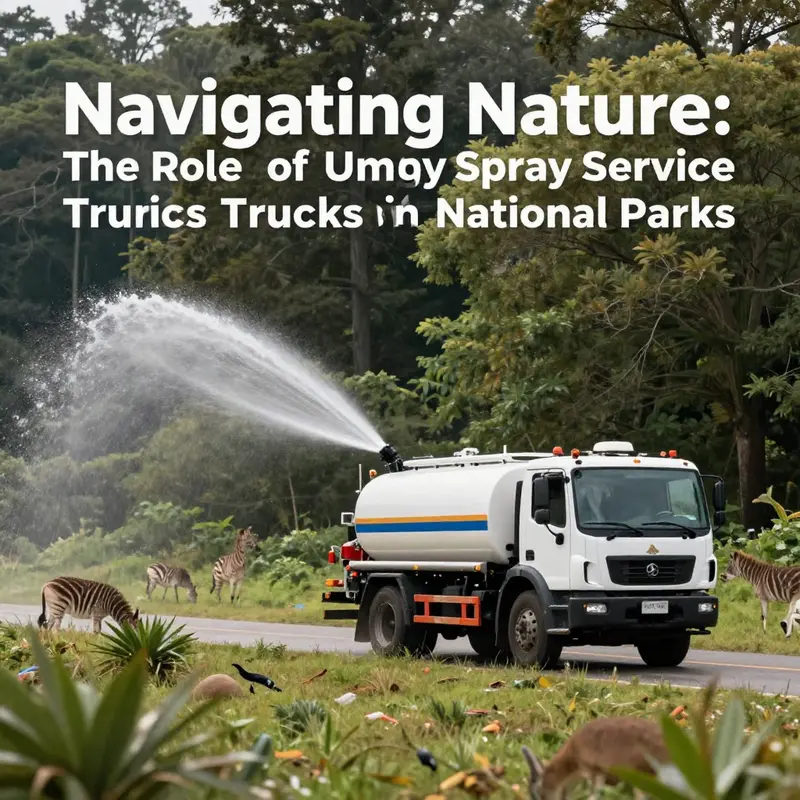
The sight of a spray service truck—the humble water carrier that travels road edges, parking lots, and maintenance yards—belongs to a specialized chapter of park management. These vehicles are not ordinary errands on a whim; they are calibrated tools used for dust control on paved or gravel park roads, irrigation of essential landscaping features, and strategic fire prevention measures. In national parks, where ecosystems operate with delicate rhythms and where water, soil, and air respond to human activity in sometimes invisible ways, the question of whether spray service trucks can traverse park landscapes invites a careful examination that blends practicality with precaution. The answer, in practice, is nuanced: such vehicles can operate within national parks, but only under a tightly regulated framework that prioritizes habitat health, water quality, and visitor experience. The road through this issue runs not only on paved lanes and maintenance schedules but through policy documents, ecological baselines, and the quiet, ongoing work of monitoring and adaptively managing resources.
In the United States, the National Park Service (NPS) has established guidelines designed to ensure that any vehicle entering a park—let alone a specialized vehicle performing spraying tasks—complies with a suite of requirements. Permits are not mere formalities but essential instruments that delineate where, when, and how such activities may occur. The process often begins with a permitting assessment that weighs the anticipated environmental footprint against park maintenance needs. The permit acts as a contract: it obligates the operation to adhere to designated routes, restrict times of day, and minimize impacts on sensitive wildlife, water bodies, and vegetation. In this sense, the question of access becomes a question of stewardship as much as logistics. The goal is to keep park visitors safe and to protect ecological processes from disruption, while also ensuring that critical infrastructure and landscape management do not stall.
The environmental calculus extends beyond the immediate act of spraying. Water is a central constraint in many national parks, particularly those set in arid or drought-prone regions. The demand for water—whether for dust suppression to improve road safety or for irrigation to maintain heritage trees, turf, or ornamental plantings—begins to intersect with broader water-management priorities. When a spray truck rolls onto a park road or into a central facility yard, its operation becomes a question of water source, quality, and downstream effects. The NPS and other park agencies increasingly encourage the use of recycled or harvested rainwater, a practice that reduces pressure on potable supplies and lowers the risk of introducing contaminants into sensitive aquatic systems. The choice of water source reflects an acute awareness of downstream ecosystems; even water that seems benign can carry nutrients, salts, or micro-constituents that, over time, alter soil chemistry or water quality in streams, wetlands, or permeable basins.
This is not a polemical debate about whether maintenance deserves attention in national parks. Rather, it is a discourse about how to achieve maintenance with precision and restraint. Dust suppression, for instance, reduces particulates that can affect air quality and soil deposition patterns near trails, visitor centers, and campground zones. In some locales, dust is more than an aesthetic nuisance; it can degrade visibility for visitors, contribute to health concerns for sensitive individuals, and alter the microhabitats that fringe roads and facilities. When performed responsibly, spraying can maintain accessibility and safety without compromising ecological integrity. When performed without containment or proper scheduling, it can complicate soil structure, water chemistry, and the behavior of local wildlife. The tension between utility and stewardship is not a failure of planning but a signal that ongoing adaptation is required.
The environmental impacts of spray service trucks are legible in both the positive and negative columns of the ledger. On the positive side, these vehicles enable park staff to sustain green spaces that offer shade, habitat for insect and bird life, and aesthetic and recreational value for visitors. Well-maintained landscapes can create microclimates that support native plant communities, reduce erosion along road shoulders, and preserve historical or community-serving plantings that contribute to the park’s cultural relevance. In drought conditions, careful irrigation managed through weather-responsive systems can help maintain the vigor of certain drought-tolerant species, reduce wildfire risk by maintaining defensible vegetation, and support monumental trees or critical landscape features that require human care to survive.
Yet the negative dimensions, when not properly managed, are real and acute. Water use itself is a form of ecological pressure. Even harvested or recycled sources must be weighed against broader water needs within a park’s watershed. In arid zones, every liters-per-day decision matters, and the governance rubric must ensure that irrigation or dust-control spraying does not become a substitute for more sustainable land management practices. Air pollution, driven by fuel consumption and engine emissions, compounds concerns about climate and air quality. The life cycle of a spray truck—fuel, maintenance, and eventual disposal—contributes to greenhouse gas emissions and local air particulates. This is especially relevant in parks located near urban or industrial corridors where particulate matter and ozone burdens already strain air quality indices.
Soil health and habitat integrity can also bear the burden of use. Heavy vehicle traffic along service routes can compact soil, disrupt the rooting zones of native grasses and understory flora, and alter the hydrology of small wetlands and seepage areas adjacent to facilities. The noise and vibrations associated with spray operations can affect wildlife behavior, particularly during sensitive periods such as breeding or migration. In ecosystems that depend on the subtle timing of water movement and nutrient cycling, even modest disturbances can cascade through the food web. There is also the matter of nutrient pollution: spray water, if it contains fertilizers, pesticides, or other chemical additives, can introduce excess phosphorus, nitrates, or trace compounds into streams or wetlands. These inputs can spur algal blooms, shift plant communities, or disrupt the delicate balance that preserves native species. Taken together, these potential consequences require a disciplined approach to operation, monitoring, and continuous improvement.
Against these potential harms stand a set of practical mitigation strategies that align with modern stewardship principles. One approach is to optimize water use by changing sources and technologies. Recycled rainwater or greywater capture systems can reduce the park’s demand on potable supplies and diminish the likelihood of introducing contaminants into sensitive water bodies. Smart irrigation systems, driven by soil moisture sensors, weather data, and plant-availability models, can adjust application rates in real time. This reduces waste and minimizes the chance of oversaturation in soils that drain into streams and wetlands. Scheduling operations during off-peak visitor hours can minimize disturbance to wildlife and reduce the risk of human-wildlife interactions that complicate spray activities. Even the timing of maintenance cycles can be aligned with wildlife calendars, ensuring that spraying does not coincide with critical life stages for vulnerable species.
The transition to cleaner, more efficient equipment is another pillar of mitigation. Parks are increasingly exploring electric or low-emission versions of spray trucks and auxiliary equipment. The move toward electric propulsion or hybrids reduces direct fuel burn and, by extension, local air pollution. It also aligns with broader park goals to demonstrate the practical feasibility of low-emission operations in protected landscapes. In some cases, fleets are reorganized to limit the total miles traveled within park boundaries by consolidating routes, using fixed service corridors, and deploying remote monitoring to avoid unnecessary traversals. These practices collectively reduce the environmental footprint of routine maintenance work while maintaining high standards for safety and visitor experience.
In addition to technological and operational changes, governance and planning processes play a central role. Permitting is not only about grant-or-deny decisions; it is an ongoing dialogue among park managers, ecologists, maintenance crews, and sometimes local communities. The permit review asks critical questions: What routes will be used? Are there sensitive habitats along these corridors? How will noise, light, and vibration be managed? What is the plan if weather changes or if a spill or leak occurs? How will we verify compliance and measure ecological indicators over time? The answers to these questions evolve with what is learned from monitoring programs, field studies, and routine inspections. The goal is to establish a dynamic framework in which spray operations can proceed when benefits exceed costs, and where adaptive management allows for tightening controls if negative impacts begin to emerge.
An essential element of this adaptive approach is the integration of cross-sector knowledge. This means combining maintenance needs with ecological science, hydrology, and public health considerations. It also means recognizing that park operations do not exist in isolation; they intersect with regional water management, land-use planning, and climate resilience efforts. The cross-border regulatory issues that often animate discussions about national and regional trucking operations provide a useful template for governance here. While the immediate context may be domestic, the logic—clear permit criteria, transparent monitoring, and a willingness to adjust practices based on evidence—translates across borders and disciplines. For readers who want to explore how similar regulatory frameworks operate in different jurisdictions, the topic of cross-border regulatory issues offers a useful comparative lens and can be explored further through related discussions in the broader trucking and compliance literature. cross-border-regulatory-issues.
The overall question remains: can spray service trucks drive through national parks? The answer is yes—but with caveats that emphasize environmental integrity and visitor protection. Park managers and maintenance crews must work within a carefully structured system that balances the practical need to keep roads passable, facilities functional, and landscapes healthy with the obligation to preserve ecological processes that give national parks their character. This balance is not a fixed point but a moving target that requires ongoing data collection, stakeholder input, and a readiness to revise standards as conditions shift—whether due to drought, urban pressure, climate change, or evolving scientific understanding of ecosystem responses. In this sense, the presence of spray service trucks in national parks becomes a lens through which we view the larger project of stewardship: how to make use of essential tools while honoring the living systems that are the core reason for the parks’ existence.
To illustrate how these principles play out in practice, consider the daily routine of a park maintenance team operating along a network of seasonal roads and service yards. The team begins with a planning meeting that situates current weather patterns, soil moisture data, and recent wildlife observations within the permit’s constraints. Inspectors verify that tanks are free of contaminants and that no runoff pathways could channel nutrients into streams during spraying events. On the ground, operators align their routes with established corridors designed to minimize soil disturbance and to keep vehicle weight off vulnerable soils. They use smart controllers that automatically adjust spray volumes in response to real-time weather data, soil conditions, and the proximity of sensitive plant communities. If a rainfall event interrupts planned operations, maintenance teams can postpone, reroute, or modify the spray plan to prevent runoff or compaction when soils are saturated. Such a disciplined approach demonstrates how technical systems, ecological knowledge, and regulatory oversight converge to make a seemingly simple act—watering a landscape—consistent with park values.
The human dimension of this work should not be overlooked. Park staff, visitors, and nearby communities all bear witness to how maintenance strategies are devised and implemented. Transparent communication about when and where spraying will take place helps maintain trust and reduces the potential for misunderstandings. Clear signage, posted schedules, and public-facing explanations of the environmental safeguards in place can transform a maintenance operation from a potential disruption into an opportunity for education. Visitors often appreciate that what they see is not reckless activity but a carefully calibrated intervention designed to sustain both infrastructure and habitat. Engaging with the public in this way also invites broader conversations about water use, fire risk, and landscape stewardship—topics that resonate widely as climate pressures intensify.
The environmental ledger, then, is not static. It grows and recalibrates with the park’s broader watershed dynamics, the weather patterns of a given season, and the evolving science of landscape management. Each spraying event becomes a live test of whether the mitigation measures in place—water-source choices, smart technologies, schedule planning, and fleet modernization—are delivering the intended benefits with acceptable ecological costs. The objective is not to eliminate all risks but to manage them through a combination of anticipation, precision, and accountability. In this model, spray service trucks can traverse park grounds in ways that are responsible, documented, and justifiable in terms of both safety and ecological health.
Maintaining this balance also means acknowledging the limits of what spray operations can achieve within a protected landscape. While they serve immediate needs—reducing dust, maintaining plant health near facilities, and supporting fire prevention strategies—they do not replace the broader suite of ecosystem management practices. For true resilience, spray operations must be integrated with habitat restoration efforts, invasive species control, water quality protection, and fire ecology programs. They should be viewed as one strand in a broader toolkit that park agencies deploy to protect resources while accommodating human use. In other words, permission to drive a spray truck through a park is conditional on a framework that ensures the activity is harmonized with ecological goals, not merely permitted because it is convenient.
As this conversation unfolds, it becomes clear that the central challenge is not merely about access but about responsible access. The question is reframed from a binary yes-or-no decision to a question of how to configure operations, governance, and monitoring so that they reinforce protected-area objectives. The practical takeaway for practitioners and policymakers is to invest in data-driven decision-making, to embrace technologies that minimize environmental footprints, and to maintain a posture of adaptive management that can respond to shifting ecological signals. The public dimension—transparency, accessibility, and education—needs to be woven into the procedural fabric of permitting and operation so that park users understand the rationale behind timing, routing, and water choices.
In conclusion, the pathway for spray service trucks through national parks is not a straight line but a guided corridor, bounded by ecological sensitivity and social responsibility. It requires the same thoughtful calibration that governs all park management activities: define the purpose clearly, assess the potential impacts with rigorous monitoring, implement best practices to mitigate harm, and remain open to adjusting strategies as knowledge and conditions evolve. When managed in this spirit, spraying—whether for dust suppression, irrigation, or fire prevention—can be a legitimate, carefully controlled aspect of park maintenance. It exemplifies how modern conservation practice navigates the tension between human needs and ecological integrity. The outcome is not a triumph of maintenance over nature or vice versa; it is a collaborative, iterative process in which tools like spray service trucks serve as means to sustain park values rather than undermine them.
External resource for broader context: For more on how protected areas guide water management and ecological safeguards, see the National Park Service Water Management resource. https://www.nps.gov/conservation/water-management.htm
Guardrails on the Green Frontier: Navigating Permits and Practices for Spray Service Trucks in National Parks
The idea that a spray service truck could traverse the quiet lanes of a national park sits at a tense intersection of utility and stewardship. These vehicles, which move water for dust suppression, landscape irrigation, or fire-prevention measures, are built for hard tasks in hard places. Yet parks exist to protect fragile ecosystems, safeguard wildlife, and preserve watershed integrity. The question, then, is not simply whether these trucks can pass through park boundaries, but how they can do so without compromising the very resources visitors come to experience. The answer lies in a carefully calibrated permitting regime that balances operational needs with the park’s mandate to conserve resources. In this chapter, we explore how such a regime could shape the practical realities of deploying spray service trucks in national parks, how the permitting process might unfold, and what this implies for the broader question of access and responsibility within protected landscapes.
At the core of the permitting conversation is a recognition that spray service trucks are multifunctional assets. They deliver water for dust control on unpaved park roads, support irrigation for landscaped areas within park facilities, and bolster fire-prevention capabilities during dry or wildfire-prone periods. Each use carries different environmental implications. Dust suppression emphasizes maintaining road safety and air quality, yet it can alter soil surface dynamics if over-applied. Irrigation often intersects with water quality and vegetation health, raising questions about runoff, nutrient loading, and potential impacts on sensitive plant communities. Fire prevention work, while protective, can involve fuel handling, chemical storage, and the temporary modification of landscapes to reduce hazard—each carrying its own spectrum of regulatory and safety concerns. The park service’s mission is to ensure that any spraying activity does not become a surrogate for broader ecological disturbance. That is the heart of the permitting framework: to ensure that necessity and precaution walk in tandem.
The regulatory landscape is nuanced. The National Park Service (NPS) operates under a suite of laws and policies designed to minimize ecological disruption while allowing essential park management activities. The initial research overview notes a broader regulatory push around permit fees and oversight, exemplified by proposals tied to drilling activities within national parks and the regulatory identifier known as a Regulatory Identification Number (RIN) 1024-AD78. Although the cited notice centers on drilling and non-federal oil and gas rights, its presence in the Federal Register signals a regulatory environment that increasingly scrutinizes any industrial activity within park boundaries. The inference that spray service trucks could fall under a category requiring greater regulatory scrutiny is plausible, particularly when their operation intersects with fuel storage, chemical application, or activities that pose environmental hazards. It is precisely this possibility that elevates the need for careful pre-approval and a transparent, auditable process.
In practical terms, the permit process would likely be anchored in several interconnected components. First, a park-specific plan would be mandatory, detailing when and where the vehicle would operate, the purpose of the spray, and the expected environmental footprint. This plan would not exist in a vacuum; it would reference air and water quality considerations, potential drift or runoff management, and the protection of wildlife. The plan would also outline contingency measures, such as spill response protocols and emergency shutoffs, should unexpected conditions arise. Second, the operation would demand an assessment of equipment and storage practices. Fuel storage must be secure and segregated from water sources; chemical storage would require proper containment, labeling, and compatibility measures to prevent hazardous interactions or accidental releases. Even tasks as seemingly straightforward as spraying water for dust control become more complex when the water source, transport container, and delivery mechanism are placed in proximity to streams, wetlands, or wildlife corridors. Third, safety and environmental training would be a baseline requirement for personnel. Operators would need credentialing that demonstrates proficiency in spill prevention, containment procedures, and proper handling of any additives or chemicals—if any are used at all. The training would extend to field practices that protect vegetation and soils, such as avoiding spraying during sensitive bird nesting periods or near riparian zones where run-off could degrade habitat.
The conceptual framework for permitting is not merely about approval versus denial. It is about constructing a layered approach that enables necessary park management while continually reducing risk. In many cases, the permit review would hinge on the specifics of how the vehicle is used. A vehicle employed strictly for water delivery to maintain road surfaces may trigger different requirements than one used for pest management, where biological effects and non-target impacts become central concerns. The more complex the operation, the more rigorous the permitting process tends to be, often requiring environmental impact assessments or components of an environmental management plan. In some parks, these analyses could be scaled to the magnitude of the risk; in others, a simpler set of standard operating procedures (SOPs) could suffice when the activities are limited in scope and duration. Either way, the guiding principle remains consistent: activities must be designed to prevent contamination of water resources, protect soils, minimize disturbance to wildlife, and avoid cumulative adverse effects on park ecosystems.
A natural corollary of this framework is the practical constraint on when and where spraying can occur. Designated routes and time windows are among the most common management tools used to limit ecosystem exposure. These constraints serve multiple purposes. They prevent the concentration of activity during periods when wildlife is most vulnerable or when soil moisture levels are at a critical point. They also facilitate coordination with other park operations, such as road maintenance, vegetation management, and visitor safety measures. The concept of time-bound operations links closely with the park’s broader duty to preserve natural quiet and reduce human-induced stress on wildlife during sensitive seasons. In short, the permit does not grant carte blanche to spray trucks inside the park; it creates a controlled, monitored framework that aligns operational needs with ecological protection.
The governance of such activity inevitably involves clarity around responsibilities and accountability. The permit would set expectations for upkeep and inspections of spray units, including contingency planning for fuel leaks, accidental chemical releases, or equipment failures. Routine inspections would verify that containment systems are intact, that fueling occurs away from watercourses, and that storage areas meet safety codes. Documentation requirements would track every spraying event, including the location, timing, materials used, quantities, and observed environmental responses. This level of record-keeping is not merely bureaucratic; it provides a traceable history that enables park managers to assess long-term ecological outcomes and refine practices based on empirical learning rather than repetition of the same mistakes.
The regulatory conversation also carries a prudent recognition of the need for transparent risk communication with the public. National parks are shared spaces where visitors, researchers, and local communities intersect. Permit holders would be expected to implement clear signage and notification protocols when spraying activities are underway, articulating the purpose of the operation, the expected duration, and any health or safety considerations. While the public’s access is important, the park’s integrity and visitor experience also depend on a well-communicated, precautionary approach that reduces surprises and helps maintain trust in the park management process. The public-facing aspect of permitting, including the publication of oversight details and post-operation reporting, contributes to a culture of accountability, where the goal is not to restrict access for its own sake but to ensure that access is responsibly managed.
From a policy perspective, one of the critical questions is whether spray service trucks should be treated as standard park maintenance equipment or as more specialized operational tools that require heightened regulatory control. This distinction matters because it shapes the requirements for fees, permits, and oversight. If a park categorizes these vehicles under routine maintenance, the permitting process may resemble established SOPs for road maintenance or landscape care within park facilities. If, however, the trucks are deployed in more ecologically sensitive contexts—such as near water bodies or within delicate vegetation buffers—the permit would likely demand more stringent conditions. The most prudent path is to maintain a flexible policy that can scale the level of review to the actual environmental risk posed by a given operation. In practice, this means the permitting process should start with a thorough description of the activity and a preliminary risk assessment, then expand to site-specific analyses only as needed. Such a staged approach reduces bureaucratic friction while preserving ecological safeguards.
An important element of the negotiation around permits is the expectation of coordination among agencies and stakeholders. National parks do not exist in isolation; they are embedded within broader land-use and environmental protection networks. Therefore, the permitting process often benefits from early consultation with park biologists, hydrologists, and safety personnel, along with input from local communities and adjacent land managers where relevant. In some cases, coordination may involve cross-border considerations if park boundaries intersect shared resources or migratory pathways, which is a practical reason to reference broader regulatory conversations such as cross-border regulatory issues. The existence of such coordination does not dilute the park’s autonomy; instead, it helps ensure that decisions reflect a holistic understanding of ecological integrity and regional resource management.
A critical thread running through all these considerations is the emerging emphasis on environmental stewardship as a core metric of approval. Even when the need for water delivery or maintenance work is clear, it must be weighed against potential harm to water quality, soil stability, vegetation health, and wildlife behavior. The regulatory calculus, then, is a balancing act: permit reviewers weigh operational necessity and efficiency against protective measures that minimize risk. In this sense, the permitting process becomes less about proving that spraying is essential and more about demonstrating that every possible precaution has been taken to minimize its ecological footprint. When this precautionary mindset is baked into the permit structure, spray service trucks can operate in national parks in a way that respects both human needs and the integrity of protected ecosystems.
For readers seeking a broader lens on how regulatory decisions intersect with trucking and infrastructure within parks and other federal lands, consider exploring related regulatory discussions that address cross-border issues and the broader regulatory landscape. Cross-border regulatory considerations can shape how equipment, materials, and personnel move across jurisdictions with different environmental standards, which in turn informs the design of permit processes and oversight mechanisms. See Cross-Border Regulatory Issues for a more expansive view of how these themes connect across borders and policy domains.
The practical upshot of this permitting logic is that spray service trucks, when used in national parks, operate within a framework of strings attached rather than a free pass. The framework is intentionally rigorous because the stakes are high: the protection of clean water, sensitive soils, rare plant communities, and wildlife habitats that visitors come to experience. The existence of such a framework should not be misconstrued as unnecessary rigidity. Rather, it represents a disciplined approach to ensure that essential park maintenance and safety activities do not become sources of ecological stress. It is about aligning practical operations with principled conservation, letting managers grant access when it can be shown that protection and performance can coexist.
Ultimately, the question of whether spray service trucks can drive through national parks is answered not by a simple yes or no, but by the quality and specificity of the regulatory pathways that govern their use. If a park can articulate a robust permit that includes a clear purpose, a defensible scope, a comprehensive risk assessment, and a well-defined set of environmental safeguards, then a spray service truck can operate in a way that respects both human needs and the park’s ecological mandate. And if those safeguards are continuously refined through monitoring, reporting, and adaptive management, the permit can remain a living document that evolves with new scientific insight and practical experience. In that sense, the permitting process becomes a mechanism for ongoing dialogue between maintenance practicality and ecological stewardship, a dialogue that keeps the green frontier habitable for all who explore it.
For readers who want to explore the regulatory dimension beyond the park context, the Federal Register document cited in the initial research results offers a window into how the federal agency landscape is evolving toward greater oversight of industrial activities within protected areas. While the document focuses on drilling and non-federal resource rights, its emphasis on robust permitting, risk assessment, and resource protection resonates with the broader themes of park management and operational accountability. External reference: https://www.federalregister.gov/documents/2024/05/22/2024-10932/proposal-for-additional-fees-and-permitting-requirements-for-drilling-in-national-parks
Final thoughts
The journey of understanding how spray service trucks navigate national parks, governed by regulations and environmental sustainability, informs us of their vital role in preserving these natural spaces. By adhering to permitting processes and minimizing environmental impact, businesses can operate responsibly, ensuring both operational efficiency and ecological integrity in our beloved national parks.