
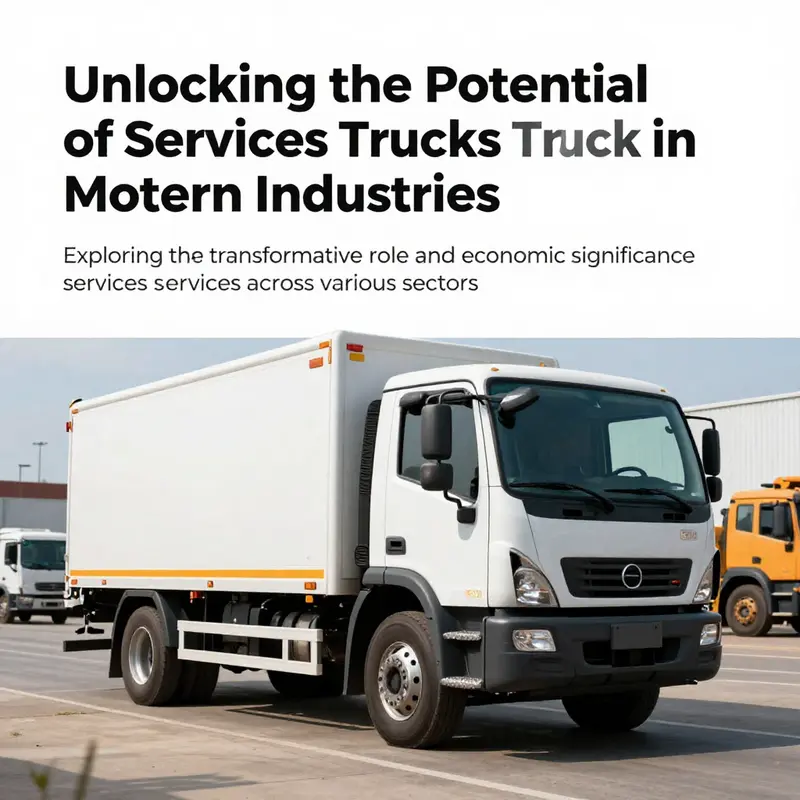
Services trucks play a pivotal role in enhancing operational efficiency across various industries including manufacturing, retail, construction, and small businesses. This article delves into the comprehensive functionality of these vehicles, highlighting their types, economic impact, technological advancements, and regulatory frameworks. Understanding services trucks is crucial for businesses aiming to leverage mobility for maintenance, delivery, and emergency services. Each chapter covers distinct aspects, from the diverse classifications of services trucks to the innovations shaping their operations today. By gaining insights into this niche, companies can bolster their logistical capabilities and meet evolving market demands.
Service on Wheels: Unpacking What a Services Truck Really Does in Modern Logistics
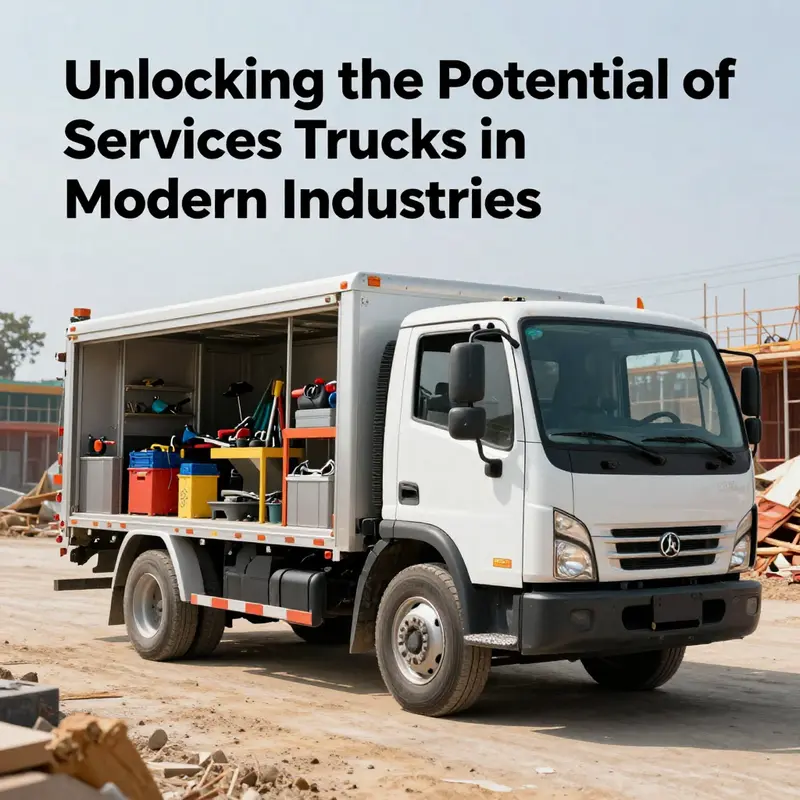
A services truck may evoke a dozen images, but the truth is simpler and more powerful than the label suggests. It is less a single job description and more a category of mobile capability. In the broadest sense, a services truck is any large vehicle carrying the tools, spare parts, or equipment needed to diagnose, repair, or support operations away from a central shop. The term is slippery, and readers may imagine a truck stop, or welfare and repair teams on call. The reality rests somewhere in between: a spectrum of purpose-built vehicles that extend capacity, reduce downtime, and knit far-flung operations into a reliable whole. To understand what a services truck does, we follow the thread through how modern fleets maintain uptime, deliver specialized services, and adapt to shifting economic and regulatory landscapes. It is a story about mobility as a core asset, not merely transport.
The most immediate picture of a services truck is the mobile repair unit. These are not showroom trucks but rugged working spaces designed to function in the field. A typical mobile service setup blends a compact workshop with the tools of a shop on wheels: a sturdy workbench, a compact crane or hoist, tool cabinets organized for quick access, and a power source that keeps everything running without starving the engine. Add diagnostic devices, spare parts shelves, and a climate-controlled cab for technicians, and you have a rolling solution that can shrink the distance between a breakdown and a fix. This is essential for fleets that rely on tight delivery windows or continuous production lines, where even a few hours of downtime can ripple into missed commitments and unhappy customers. In such contexts, the value of a services truck lies not in a single tool but in the ability to send a skilled technician with the right kit to the exact location where it is needed.
Yet the landscape of services trucks extends beyond field repair. Consider the utility sector, where service trucks function as mobile depots for line crews and maintenance teams. A single vehicle may carry hydraulic reels, leak detection equipment, splicing gear for cables, and a portable generator to power instruments in the field. In this setting, the truck is more than a conveyance; it is a temporary workspace that travels between sites, enabling technicians to perform precise, on-site tasks without waiting for a fixed facility to become available. The same logic applies to other industries, such as plumbing, HVAC, or telecommunications, where technicians must access hard-to-reach locations, read meters, and perform calibrations in real time. The result is a hybrid role for the vehicle: not only a transport but also a flexible extension of the service provider’s capabilities.
There is another dimension that deserves attention—the wrecker or recovery truck. These are specialized service vehicles whose purpose is to assist stranded drivers, recover damaged assets, or support repossession activities. The hydraulic systems that enable them to lift and move heavy loads, sometimes with innovative tie-downs and stabilization features, make them indispensable for roadside safety and rapid response. They illustrate a core principle of services trucks: the equipment on board is purpose-built to reduce risk and restore operability quickly. A breakdown is less an end point and more a temporary hurdle. The right truck shortens the repair cycle and preserves the utility of the asset involved, whether it is a personal vehicle or a commercial fleet staple.
Then there are the more niche yet increasingly common forms of service trucks, such as septic-tank trucks and flatbed delivery trucks. A septic-tank truck embodies a highly specialized service on wheels. It carries a large holding tank and a powerful pumping system, designed to remove waste and transport it safely. The design challenges here are substantial: sanitation, odor control, pumping efficiency, and adherence to environmental regulations all converge in a vehicle that must perform reliably over long stretches of highway and through variable municipal infrastructure. Similarly, a flatbed delivery truck is a flexible carrier for oversized or heavy cargo that cannot fit in an enclosed trailer. It often serves as a mobile workshop for construction crews, who need a platform to stage materials, secure unusual loads, or make quick on-site adjustments. These examples underline a key point: the diversity of service trucks is a direct reflection of the breadth of modern commerce. Each specialized truck carries a unique set of capabilities, but they share a common objective—keeping work moving where it is supposed to move and enabling a network of services to function without interruption.
The chapter on services trucks would be incomplete without acknowledging how the broader trucking ecosystem shapes and is shaped by these mobile service platforms. In today’s environment, fleets face tighter margins, more complex regulatory demands, and the imperative to maintain uptime in the face of variable demand. The concept of “service” expands beyond repair and maintenance. It includes preventive diagnostics, real-time data collection, and predictive planning. A services truck can be equipped with telematics, onboard diagnostics, and reporting tools that feed back into the fleet’s central maintenance program. The value proposition grows as these vehicles become not just fixers but data-enabled nodes in a larger system. This shift—toward integrated service provision—helps fleets reduce unnecessary trips to service centers, minimize idle time, and extend the productive life of core assets. The economics of trucking increasingly reward a well-orchestrated blend of mobility, capability, and timely, on-site expertise. For readers thinking about how market forces are reshaping the industry, the trend lines in economic trucking trends provide a useful frame for understanding why service trucks are evolving from optional add-ons to essential components of modern fleets.
A practical way to see this evolution is to imagine a typical freight operation transitioning from a traditional, shop-based maintenance model to a more fluid, on-site service model. The old approach rested on a fixed calendar of preventive maintenance visits and a reactionary stance to breakdowns. The new approach leverages the service truck as a moving maintenance center. Technicians arrive with tested redundancies, spare parts aligned with the fleet’s component mix, and the authority to perform repairs that would otherwise require a return to the depot. In many cases, this means more than just addressing the problem at hand. It can be about preventing cascading failures, diagnosing root causes on the road, and implementing solutions that minimize future risk. The intersection of mobility and maintenance makes the service truck a strategic asset. It turns the vehicle’s travel into productivity, and it translates the routine act of maintenance into a value-generating service for the entire operation.
This broader perspective is not without its challenges. The design and procurement of service trucks must consider total cost of ownership, including acquisition cost, fuel efficiency, maintenance of the truck itself, and the cost of the specialized tools it carries. The job is also increasingly data-driven. Fleet managers must decide when to deploy on-site service versus sending assets back to a central workshop. They must balance the need for a wide toolbox with the realities of space, weight, and fuel economy. The on-board power and climate systems add another layer of complexity, since technicians often work in varied weather and lighting conditions. Nevertheless, when a services truck is properly configured and dispatched, it becomes a force multiplier. It shortens supply chains, accelerates repairs, and keeps critical routes open, even in the face of unpredictable demand.
The interplay between service trucks and policy is also important. Cross-border and regulatory considerations can shape how these vehicles operate, what equipment they must carry, and how drivers are trained. In markets witnessing new infrastructure investments or shifting trade patterns, service trucks can adapt to support port operations, cross-border corridors, or urban utility networks. The ability to pivot—whether toward maintenance for electrical grids, water systems, or logistics corridors—helps fleets stay resilient as the macro environment changes. Readers who follow industry dynamics will recognize that service trucks are a microcosm of the larger logistics challenge: turning complexity into reliability, and risk into capability. The path forward for these vehicles lies in smarter design, better data integration, and a willingness to rethink maintenance as a continuous service rather than a one-off event.
For anyone constructing a narrative about what a services truck does, the core takeaway is straightforward: it is both a tool and a process enabler. It embodies flexibility, technical competence, and a proactive stance toward keeping goods moving and services delivered. It is not a single function but a portfolio of possibilities, each tuned to the needs of a fleet, a site, or a project. The next chapters will further explore how these vehicles integrate with broader trucking intelligence and with the critical tasks that keep modern supply chains robust. This integrated view helps explain why so many fleets view service trucks not as cost centers, but as strategic investments in reliability and growth.
Driven by Purpose: The Types of Service Trucks and What They Do in Modern Work
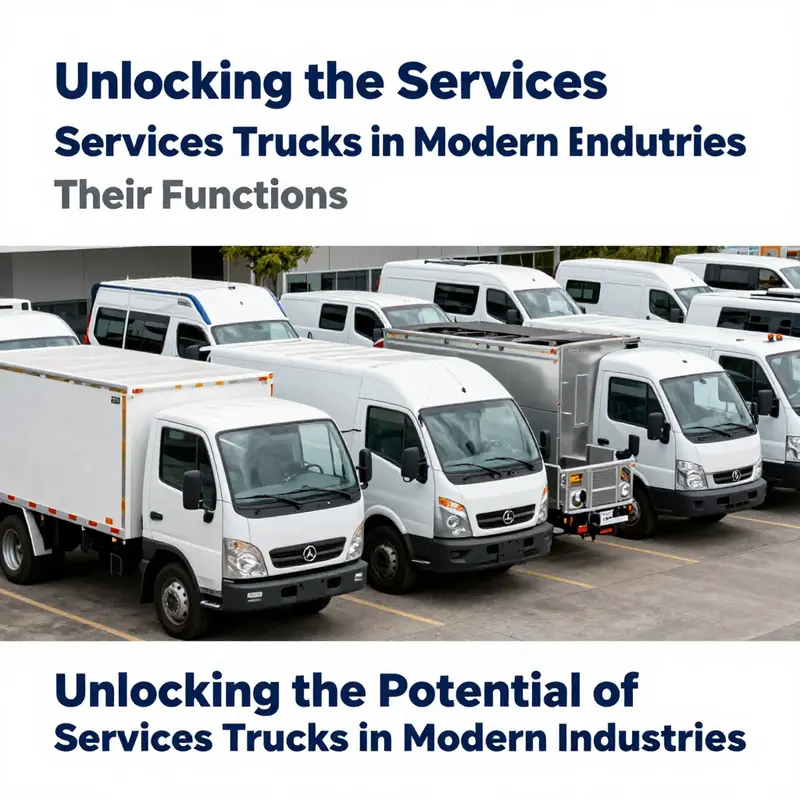
The phrase “services truck” often invites a double take, as if a single vehicle could serve every possible need. In practice, the term is better understood as a family of specialized vehicles, each designed to bring tools, parts, personnel, and power to a job site where the work unfolds. The utility of these trucks lies not in a singular function but in a carefully chosen configuration that matches a specific task, site condition, and safety standard. From electricians and plumbers who depend on weatherproof tool containment to crane-equipped crews that lift heavy components at height, service trucks are the mobile workshops that keep operations humming. They are the practical answer to a universal challenge: how to bring the right capabilities to the right place at the right time, without forcing work to pause for a broader fleet deployment. This chapter traces the landscape of service trucks by exploring their core purpose and then detailing the common types that populate utility lanes, construction zones, forests of infrastructure, and regional maintenance corridors. The aim is not to lock the reader into a rigid taxonomy but to illuminate how each vehicle’s design aligns with a task’s demands, including payload, protection, accessibility, and environmental factors. In doing so, it becomes clearer how fleets optimize uptime, safety, and cost through choice rather than chance. For fleet managers and field crews alike, this understanding translates into smarter purchases, better maintenance planning, and a more resilient service capacity. As industry pressures shift—ranging from supply chain volatility to regulatory compliance—the adaptability of service trucks becomes a strategic asset, enabling teams to respond quickly to outages, repairs, and expansions without sacrificing efficiency or safety. A thoughtful approach to service trucks also reveals how mobile worksites shape broader business models. A well-configured service truck can function as an on-site workshop, a temporary staging area, or a compact office, depending on the mission and the environment. That flexibility matters, especially in remote locations where access to permanent facilities is limited or where time-to-service is a critical performance metric. When sales pitches or marketing blur the distinction between types, the underlying reality emerges in the details: an enclosed box preserves sensitive equipment from weather and theft; a flatbed accommodates bulky materials that won’t fit in a standard cargo bay; a boom truck adds height and reach for installation and maintenance tasks that would be hazardous or impractical otherwise; a dump body expedites the disposal of excavated material or debris; a recovery or tow unit combines safety features with diagnostic capabilities that help prevent further damage on the roadside. Each configuration responds to a set of constraints, and the integrity of the operation depends on selecting the right tool for the job. The practical considerations begin with payload. Enclosed service vans, or box trucks, prioritize secure, climate-controlled environments that protect delicate instruments, calibrated tools, and electronic gear. They are favored by utility crews, electrical contractors, and IT field personnel who must maintain sensitive inventory even in adverse weather. The enclosed space supports organized shelving, weather seals, and sometimes climate control, which together reduce the risk of tool loss or equipment failure during transport. In contrast, flatbed service trucks emphasize flexibility and capacity. They shuttle large or irregularly shaped loads—heavy machinery, long beams, or sizeable panels—that would struggle to fit inside a box. The open bed makes securing awkward cargo straightforward, though it also introduces exposure to the elements. Operators mitigate risk with adjustable tie-downs, cranes, winches, and side rails customized to the load profile. The choice between these two archetypes often hinges on the balance between protection and accessibility: do the tools and components need to be shielded from rain and theft, or do they require rapid handling and the potential to load unwieldy items without disassembly? A third category, the boom truck, adds another layer of capability. Its hydraulic crane arm can lift and position heavy equipment, install components at height, or move materials that would demand multiple trips with smaller trucks. This type is indispensable in electrical work, telecommunications, and certain construction tasks where reaching elevated positions is routine. Boom trucks combine reach with stability, often employing outriggers and remote controls to ensure precise, controlled movements even in confined spaces. The fourth archetype—dump truck service vehicles—addresses the needs of earthmoving, landscaping, and waste management. In these contexts, the priority is rapid material handling and efficient unloading. The hydraulic dump bed tilts to discharge contents like sand, gravel, or mulch, allowing crews to stock sites quickly and move on to the next phase of a project. While it carries a heavier payload than a typical service van, it also demands heightened attention to weight distribution, graders’ warnings, and environmental considerations when loading and dumping near finished landscapes or public right-of-way. Recovery and tow service trucks complete the circle by supporting mobility itself. Roadside incidents, on-field mechanical failures, and fleet-related emergencies require vehicles that can stabilize, diagnose, and extract disabled units. These trucks are equipped with winches, towing gear, safety barriers, and sometimes diagnostic tools that aid in rapid assessment. Their importance grows when uptime is a revenue metric; a well-equipped tow unit can prevent long downtimes and expand service windows in 24/7 operations. A related and increasingly common evolution is the mobile repair and maintenance truck. In remote or high-demand environments—military logistics, mining sites, offshore rigs, or isolated power stations—these vans function as on-site workshops. They blend power generation, welding capabilities, integrated tool storage, and workbenches to execute field repairs that would otherwise require a return trip to a full service facility. The goal is to minimize back-and-forth travel while sustaining quality work, which is especially valuable when the worksite is distant or the downtime carries steep penalties. The final category—the specialty service trucks—covers vehicles designed for fluids or gases, such as water and chemical transport, refueling, or hazardous materials handling. These configurations require specialized tanks, pumps, and safety systems that meet stringent regulatory standards. The environmental and safety considerations here are nontrivial; such vehicles must control emissions, prevent leaks, and comply with transport directives designed to protect workers and the surrounding community. Across these types, the thread that binds them is a shared logic: the truck must be tailored to the task, not the other way around. The decision process begins with a careful assessment of the site, the nature of the work, and the crew requirements. How many technicians will be present? What tools and equipment must travel with them? Will weather exposure affect the cargo, or is climate control indispensable? What is the terrain of the job site and the access geometry to the location? How often will the vehicle be on the road versus stationary at a site, and what is the expected duty cycle? Then there is the broader ecosystem in which service trucks operate. Fleets increasingly favor modular platforms so that a base chassis can be adapted with different bodies and equipment as needs evolve. This approach supports long-term cost management, allowing operators to swap or upgrade components rather than purchasing entirely new rigs. The logistics of maintenance themselves—oil changes, tire wear, hydraulic fluid monitoring, calibration of tools, and battery health for on-board generators—play a crucial role in the lifecycle value of these vehicles. A disciplined maintenance regime reduces unplanned downtime and extends the usable life of the asset. In practice, the most effective service-truck strategy blends thorough task analysis with a disciplined fleet-management mindset. It means mapping work patterns to vehicle types, designing load plans that minimize labor and downtime, and ensuring safety protocols keep pace with the volume and variety of tasks. It also implies recognizing the value of data: how service histories, tool inventories, and repair cycles inform future procurement and scheduling decisions. A well-documented fleet can anticipate spares’ needs, plan preventive maintenance cycles, and align with regulatory requirements that govern vehicle safety, emissions, and material handling. The specific configurations discussed here are not rigid templates but options that teams can mix and match as projects demand. They emphasize the core principle that mobility, flexibility, and reliability are the pillars of an effective service operation. When teams consider these vehicles, they should also weigh the intangible benefits: faster response times, increased workforce morale, and a stronger reputation for dependable service. The literature and professional guidelines on the subject, such as industry guides published by national associations, reinforce the point that the right vehicle supports the right work in a way that listening to field crews cannot fully substitute. For readers who want to explore more formal classifications and use cases, the official guide from the national truck association offers a structured reference to service-truck types and applications, which can help align internal standards with industry best practices. As with any equipment decision, context matters most. A service truck is not a single solution but a curated set of options that, when chosen with care, create a mobile capability that extends the reach of a company’s services and sustains its reputation for reliability. It is this alignment—between task, vehicle, and crew—that makes the distinction between a utility vehicle and a true service truck so meaningful. Internal considerations, supplier conversations, and on-site testing all play parts in this choreography. The resulting fleet becomes more than a collection of moving boxes; it becomes a coherent extension of the organization’s operational backbone, capable of arriving prepared, performing with precision, and returning with the right data to inform the next job. For professionals grappling with the realities of fieldwork, the lesson is clear: invest in the right vehicle for the job, not just the most economical one at purchase. The upfront choice pays dividends in uptime, safety, and overall productivity. And as industries continue to evolve—with changing demand patterns, regulatory environments, and new maintenance paradigms—the service truck remains a fundamental instrument. It is a vehicle that travels with purpose, carrying the tools and expertise needed to keep infrastructure resilient and services uninterrupted. Internal link for further fleet context: Private Fleets Trends in Trucking Maintenance. External reference: for a formal framework on service-truck types and applications, see the American Trucking Associations guide. See https://www.trucking.org/resources/industry-guides/service-truck-types-and-applications.
The Mobile Backbone: How Service Trucks Fuel Growth Across Industries
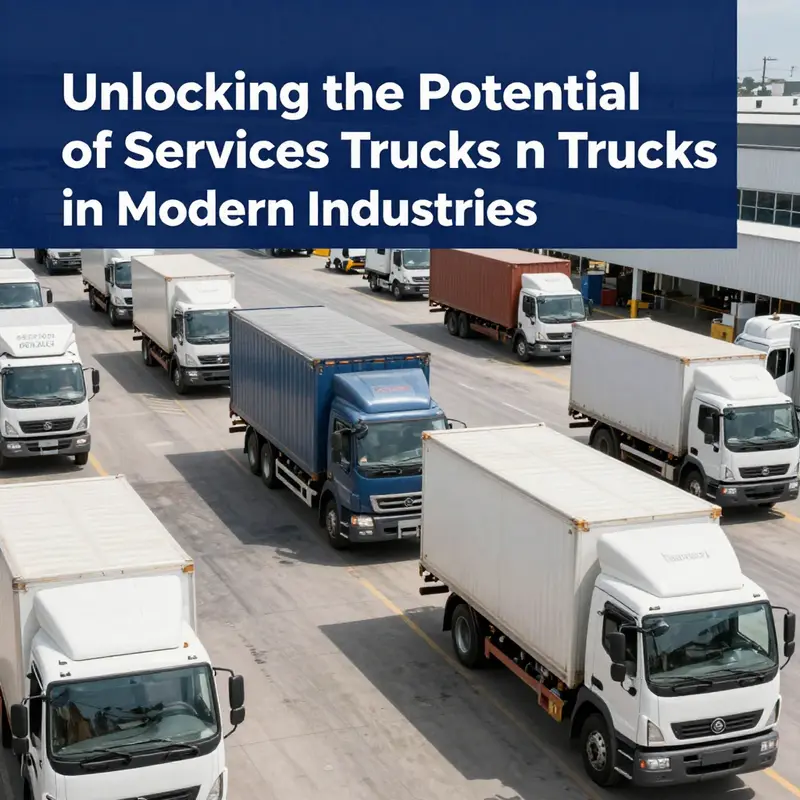
The term “service truck” may not appear in every industry glossary, but the vehicles it describes are among the most practical engines of everyday commerce. Seen as mobile workstations on wheels, these trucks blend transportation with on-site capability. They carry the tools, parts, and technicians needed to diagnose, repair, install, and maintain systems from factory floors to hospital wards. In practice, they are not just vehicles; they are a form of service delivery in motion, a kinetic layer that supports operational continuity. When we examine economic activity across sectors, service trucks emerge as a quiet but powerful catalyst that keeps production lines open, shelves stocked, and public services reliable. Their impact is felt not only in the speed of response but in the resilience they impart to complex supply chains. To fully grasp their economic importance, it helps to trace how these mobile service hubs operate within the rhythms of several major industries and why their presence translates into measurable economic gains.
In manufacturing, the logic of service trucks aligns with the push for uptime and efficiency. Factories demand consistent flows of raw materials, spare parts, and skilled technicians. A service truck acts as a portable module of capability, delivering precision tools and expertise directly to the line or to a nearby maintenance depot. When a machine shows the first signs of wear or a sensor indicates a looming fault, a mobile team can intervene quickly, reducing the risk of a costly, unscheduled shutdown. This capability feeds a broader economic argument: downtime is expensive. By shortening repair cycles and enabling just-in-time maintenance, service trucks help manufacturers keep production schedules intact, minimize waste, and protect output quality. The downstream effect is a steadier calendar of shipments and a more predictable demand signal for logistics partners, which, in turn, supports stable employment and investment in surrounding communities.
Retail, particularly at scale, relies on an evenly paced flow of inventories and a rapid response to store-level needs. Service trucks extend the reach of the distribution network beyond centralized warehouses. They carry the spare parts and repair expertise that prevent minor faults from becoming store outages. A service technician armed with the right toolkit can service refrigeration units, fix display hardware, or recalibrate lighting in a single visit, often without pulling items from the floor’s sales flow. This capability aligns with the principle of just-in-time inventory while also preserving the customer experience. When stores experience stockouts or incorrect pricing displays, service trucks can triage issues on the spot, shortening the cycle from problem identification to resolution. The economic logic is straightforward: when in-store issues are resolved quickly, stock turns improve, return rates decline, and shopper confidence remains intact, all of which contribute to higher sales velocity and better utilization of retail space.
Construction presents a different but equally compelling angle. Job sites are networks of moving parts, where timing, access, and discipline in delivery matter as much as the structural design itself. Service trucks function as on-site tool rooms that travel between sites with the day’s necessities: drills, welding equipment, safety gear, and the occasional large component that cannot wait for a separate delivery. In this environment, the trucks reduce wait times for critical materials and equipment, and they enable crews to maintain momentum even when manpower or custom parts are delayed. The momentum translates into shorter project cycles, fewer change orders, and improved contractor productivity. The economic resonance is tangible: faster project completion means earlier revenue recognition for developers and accelerates the creation of new jobs, all while sustaining the supply chain network that feeds construction activity from suppliers to subcontractors.
Healthcare adds another layer of necessity. Beyond patient-facing care, the logistics of medical supplies—vaccines, pharmaceuticals, sterile equipment, and life-saving devices—depend on meticulous, reliable transport. Service trucks answer this demand by ensuring that essential items reach clinics and hospitals in time, particularly during peak periods or public health emergencies. They also enable mobile care in community clinics and field-based health initiatives, expanding access to services and reducing regional disparities. The economic value here isn’t merely about keeping beds stocked; it’s about safeguarding public health, which in turn stabilizes labor markets and productivity across the broader economy. When healthcare facilities can depend on a responsive mobile service fleet, the cost of downtime in patient care drops, and communities experience improved health outcomes alongside steadier economic activity.
Utilities and municipal services illustrate how service trucks operate as critical infrastructure in their own right. Line crews, telecommunications technicians, and field engineers routinely rely on service trucks to carry both the heavy gear and the delicate tools required for maintenance tasks that keep essential services online. Whether restoring power after a storm, repairing a faulty network node, or performing routine inspections, the mobile service team reduces outage duration and accelerates recovery. The reliability of these fleets directly touches regional development. Communities with robust, well-supported service fleets enjoy fewer service interruptions, which supports business continuity, education, and public safety. In regions where service trucks are integrated with data-enabled routing, response times shrink further, turning a potentially disruptive event into a manageable inconvenience and preserving economic activity across sectors that hinge on consistent utility provisioning.
Across these industries, the broader economic lesson is clear: service trucks convert planning into action on the ground. They close the distance between the moment a fault is detected and the moment it is resolved. In a value chain that prizes speed, adaptability, and uptime, mobile service capability reduces the fragility of operations. Even when a supply constraint or a weather disruption arises, the presence of a capable service fleet cushions the impact. This is not simply a matter of moving tools from point A to point B; it is about delivering on-site expertise precisely when it is needed, in the right quantity, with the right equipment, and in a way that minimizes disruption to other processes. The economic effect of this capability is to stabilize production calendars, safeguard inventory levels, and maintain service quality across the system.
A closer look at the organizational implications reveals how service trucks influence workforce dynamics and the geographic distribution of opportunity. On one hand, these fleets create and sustain skilled technician roles that require specialized training. On the other hand, they reinforce local maintenance ecosystems through partnerships with regional service centers, parts suppliers, and vehicle fleets. The optimization of maintenance schedules, route planning, and inventory levels for on-site requirements supports regional job growth—especially in areas where light manufacturing, retail distribution, or healthcare networks are expanding. When a city sees a growing need for mobile service capability, it implicitly invites a broader cluster of economic activity: training programs, local dealerships, parts distribution hubs, and ancillary services that feed off the demand for reliable, mobile maintenance.
This is where internal industry insights intersect with policy and strategic planning. As private fleets expand their in-house maintenance and on-site service capabilities, the trend toward more self-sufficient logistics ecosystems gains momentum. For instance, the ongoing shift toward private fleets can be seen in the growing emphasis on fleet maintenance and readiness, a topic that has gained attention in industry discussions and analyses such as private fleets trends in trucking maintenance. This dynamic reshapes not just the operational model of individual companies, but the competitive landscape of the trucking and logistics sector as a whole. The ability to deploy service trucks efficiently—paired with data-driven routing, predictive maintenance, and a broader digital backbone—translates into lower total cost of ownership and higher service levels across the board. In practical terms, firms can allocate capital more strategically, tailor service responses to local demand, and maintain flexibility in the face of supply chain volatility. The result is a more resilient regional economy with better job stability, smoother procurement cycles, and greater capacity to absorb shocks.
Ultimately, the economic importance of service trucks lies in their function as a bridge between planning, execution, and outcomes. They encapsulate a philosophy of mobility as a service, where speed, precision, and reliability converge on route to better productivity and competitive advantage. They enable industries to move when conditions demand it, and they preserve continuity when conditions threaten to disrupt it. In the end, service trucks are not merely vehicles; they are an integral thread in the fabric of modern commerce, enabling firms to deliver value consistently, across time and geography. For policymakers and business leaders alike, recognizing this mobility-intensive dimension of logistics helps illuminate where investment, workforce training, and infrastructure upgrades can yield the greatest ripple effects across manufacturing, retail, construction, healthcare, and utilities. The story of these trucks is, at heart, the story of an economy that stays ahead by keeping its hands-on work mobile and its plans executable.
External reading can shed further light on the broader macro of truck logistics’s role in growth. See: Driving Economic Growth: The Vital Role of Truck Logistics. [External resource: https://www.linkedin.com/pulse/driving-economic-growth-vital-role-truck-logistics-alex-khurana-3p2b5/]
Beyond the Toolbox: How Service Trucks Become Data-Driven Service Hubs
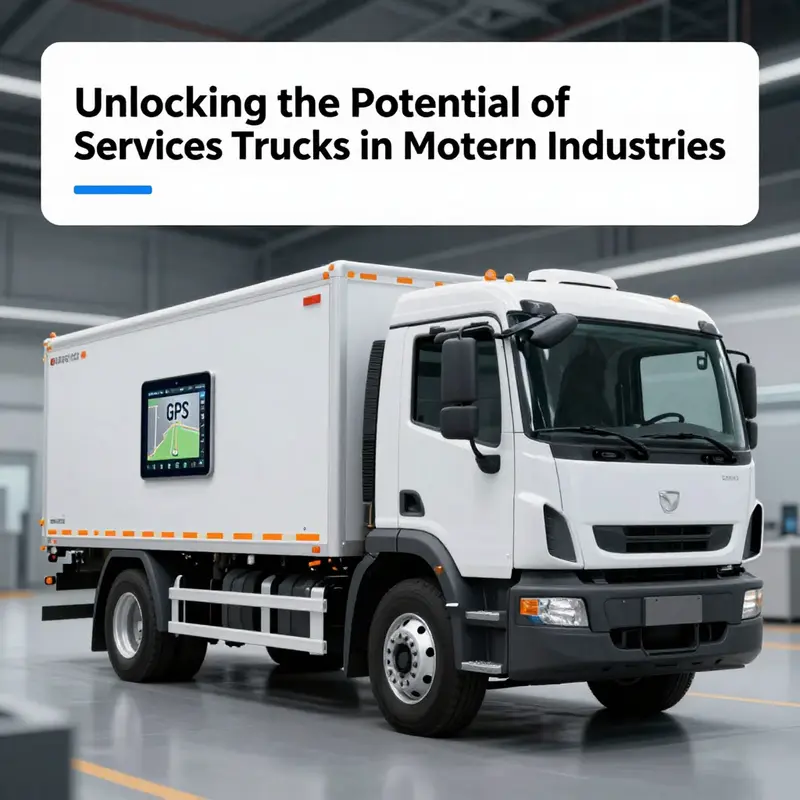
The service truck has long stood as a mobile workshop, a rolling extension of a technician’s toolbox. Today it is evolving into a data-driven service hub where maintenance, logistics, and on-site problem solving converge with sensors, connectivity, and intelligent design. When a vehicle is also a node in a larger system that includes inventory, tooling, and customer relationships, every service call becomes more predictable and faster to close.
Central to this transformation is telematics and real-time data capture. Vehicle tracking and status signals inform route planning that respects road conditions, customer time windows, and technician availability. Maintenance alerts delivered through connected systems help teams schedule preventive work in a way that minimizes downtime and avoids emergency repairs. A technician arrives with the right parts at the right moment, shortening the service cycle and reinforcing trust in a reliable field partner. Driver behavior monitoring adds a safety layer that supports coaching and reduces risk on busy job sites.
But the vehicle is only one piece of the ecosystem. The Internet of Things turns the service truck into a shared memory for the whole operation. IoT-enabled tools, diagnostic gear, and inventory can be tracked in near real time, enabling smarter stock management and faster issue isolation. Predictive maintenance on handheld devices and portable equipment helps teams anticipate failures before they occur, lowering the chance of a second visit and improving customer satisfaction.
Artificial intelligence and machine learning deepen these capabilities without replacing human judgment. AI can optimize routing, prioritize on-site tasks, and suggest the best timing for repairs based on historical patterns, current workload, and energy costs. Advanced driver assistance systems augment safety in the field, while automation features reduce manual steps during roadside diagnostics. The cumulative effect is a fleet that operates more smoothly, with fewer unplanned breaks and steadier performance under pressure.
Blockchain adds a practical layer of accountability and traceability. A ledger aligned with service events and part lineage creates an auditable trail that proves who performed which task, when, and with what materials. For customers, this transparency improves confidence that work was done correctly and with proper handling. For operators, it simplifies warranty management and regulatory compliance while reducing disputes across multiple suppliers and partners.
The environmental and energy efficiency dimension has moved from an ideal into a design constraint. Service fleets increasingly embrace hybrid and electric drivetrains, not only to meet policy goals but to reduce fuel use, idle time, and maintenance costs. Vehicle architecture is shifting toward modular interiors with swappable battery packs and standardized tool stations, enabling faster turnarounds and easier upgrades. Industry analyses point to a future where smarter power management and electrification enable longer uptime and lower emissions across field operations.
Finally, the service truck is becoming part of a broader network, connecting depots, routing centers, and customer sites. This network effect yields practical benefits: planners gain more accurate workload forecasts, technicians achieve better work-life balance, and customers receive faster, more transparent service with fewer surprises. As fleets adopt digital twins, remote diagnostics, and integrated logistics, the rolling workshop begins to resemble a lean, responsive service platform rather than a simple courier of parts.
The road ahead will blend incremental improvements with scalable architecture. The key is to balance reliability, safety, and energy efficiency while preserving the human-centric focus of field work. The service truck of tomorrow will be a modular, data-enabled platform that translates digital intelligence into real-world uptime and value.
Regulatory and Safety Standards for Service Trucks: Navigating Compliance in a Changing Fleet Landscape

The term service truck captures a broad class of work vehicles that ferry technicians, tools, and parts to job sites, or operate as mobile repair and maintenance hubs. This chapter treats service trucks as more than moving cargo; they are safety-critical extensions of utility and maintenance networks. In practice, fleets rely on these vehicles to support infrastructure—from power and water utilities to telecommunications and municipal services. That broad utility creates a layered regulatory reality. Standards arrive from multiple directions: international guidelines that set broad safety expectations, national or regional rules that govern equipment and operation on public roads, and industry-specific practices that address the peculiar risks of a given trade. The result is a safety net designed to prevent crashes, limit the spread of damage if a mishap occurs, and ensure that the people who operate, repair, and inspect these vehicles carry out their tasks without compromising public safety. The aim is not only compliance for its own sake but a framework that supports reliability, reduces downtime, and accelerates the adoption of cleaner, smarter technologies as fleets modernize.
On the international front, standards that touch service trucks often relate to the broader category of vehicle safety and energy systems. A notable example is the regulatory framework surrounding hydrogen storage in vehicles. Although UN GTR 13 focuses on test and performance requirements for compressed hydrogen storage systems, its influence extends into the energy transition narratives that many service fleets are pursuing. As fleets explore hydrogen or other alternative fuels to reduce emissions, they must demonstrate that their storage systems meet rigorous safety criteria. This crosswalk between energy safety and vehicle integrity helps ensure that new propulsion strategies do not compromise fundamental safety. The relevance of these international standards becomes even more apparent as the industry pushes toward decarbonization. Hydrogen-powered service trucks, if adopted, must pass through the same level of scrutiny that protects operators, other road users, and critical infrastructure alike. The upshot is a safety ecosystem that grows with technology, not one that lags behind it.
In the United States and many other markets, regulatory bodies translate broad safety principles into enforceable requirements that directly shape the day-to-day operations of service fleets. The Federal Motor Carrier Safety Administration, or the analogous national body in a given region, lays out rules covering vehicle equipment, driver qualifications, and operational procedures for commercial vehicles, including those used in service roles. The list of mandated safety features is straightforward in purpose: keep trucks visible, alert other road users to the vehicle’s presence, and ensure that tools and materials remain secure under typical road conditions. Common provisions include rear underrun protection devices to prevent smaller vehicles from sliding under the truck in a collision, lighting and warning systems to ensure visibility in all weather, fire extinguishers for on-site emergencies, and securement devices that keep ladders, hoses, spare parts, and heavy gear from shifting during transit. Additional requirements typically enforce proper signage, reflectivity, and weight classifications to prevent overloading, which can damage pavement, reduce braking effectiveness, and create unpredictable handling. Beyond equipment, drivers are expected to meet certain qualifications, with training that emphasizes safety practices, fatigue management, and hazard recognition. Together, these rules form a practical safety framework that translates the engineering of a service truck into safer field performance.
Beyond these road-side rules, the industrial sector offers a parallel stream of guidance that informs how these vehicles are designed, operated, and verified for safety in the field. ISO 3691-2:2023, which addresses safety requirements and verification methods for self-propelled industrial trucks, is particularly relevant for service fleets that bring automated reach or mechanically guided capabilities into yard or job-site environments. While ISO 3691-2 primarily targets industrial trucks used in warehouses or similar spaces, its emphasis on robust safety performance, operator training, and verification methods resonates with service contexts where heavy equipment is deployed in tight spaces, near pedestrians, or around other vehicles. The standard encourages a holistic approach: conducting risk assessments, validating safety features through repeatable tests, and maintaining documentation that supports ongoing compliance. The practical value for service fleets lies in a disciplined, auditable process that reduces the likelihood of operator error and mechanical fault. It also helps align in-house practices with a global safety language, which can be crucial for fleets operating across borders or integrating new vehicles into established maintenance programs. The impact extends beyond mere inspection checklists; it shapes how fleets plan maintenance cycles, how operators are retrained after system upgrades, and how vendors collaborate with fleet managers to deliver safer, more reliable machinery.
Within a fleet, the day-to-day implications of these standards are felt in how work is organized, trained, and audited. Compliance is not a one-time event but an ongoing practice that requires clear ownership, routine checks, and a culture that views safety as a prerequisite for productivity. The presence of robust legal and technical requirements makes risk assessment a central ongoing activity. Before a service truck hits the road or enters a customer site, a supervisor will cross-check a suite of elements: the integrity of protective guards and underrun devices, the visibility of rear and side lighting, the operability of warning beacons and audible alerts, the reliability of fire suppression provisions, and the security of tools and materials stowed on board. In yard operations, ISO-based practices encourage systematic verification that the vehicle can safely maneuver in tight quarters, with a thoughtful layout of loading and unloading zones, pedestrian pathways, and equipment interactions. In the field, the same priorities apply, with additional attention paid to dynamic risk factors such as weather, surface conditions, and the presence of nearby critical infrastructure. The layering of international norms, national rules, and industry-specific guidance creates a safety architecture that adapts as technologies evolve and as the work performed by service crews expands.
A key throughline is the transition toward cleaner, safer propulsion options and how standards respond to this evolution. Hydrogen and other alternative fuels promise reduced emissions but demand strict safety protocols. Companies exploring these paths must ensure the fuel storage, handling, and refueling processes comply with established safety tests and verification methods. In practice, this means not only verifying the fuel system itself but also ensuring that operators receive training that covers the unique hazards at the intersection of energy systems and mobile maintenance work. The result is a more resilient fleet that can perform essential maintenance tasks with less environmental impact while preserving the safety margins that communities expect from public-facing service operations. The regulatory lattice, from UN GTR 13 to national safety orders and ISO verification frameworks, thus acts as a living map that guides investment decisions, vehicle selection, and training programs. It helps fleets anticipate the kinds of changes that new technologies may require and provides the assurance that these changes do not erode the public safety guarantee that underpins service work.
For readers who want to explore the regulatory realities of cross-border service operations in more depth, a centralized discussion of cross-border regulatory issues clarifies how different jurisdictions align or diverge in their expectations. The topic matters for fleets that move service trucks across state or national borders, or that coordinate maintenance work in regions governed by different safety codes. A practical takeaway is that compliance efforts must be coordinated across the entire operation. Shared documentation, standardized inspection routines, and harmonized training modules help prevent misalignment when trucks cross borders or enter new markets. In this context, a single, coherent compliance program reduces complexity and improves response times when regulatory updates occur. This alignment becomes even more important as fleets adopt evolving propulsion technologies, where the energy system and risk controls may be governed by multiple layers of rules.
As the regulatory canvas expands, the chapter’s central message is clear: service trucks are not mere conveyances; they are safety-critical platforms that enable essential services while exposing the public to risk if not properly managed. The combination of international guidance, national regulations, and industry safety standards creates a comprehensive safety net that protects operators, motorists, and infrastructure. It also provides a pathway for fleets to modernize responsibly, adopting advanced tools and greener energy sources without compromising safety or reliability. The discipline that emerges from this layered framework supports both the steady operation of critical services and the broader transition toward cleaner, smarter mobility. For organizations, the work ahead is continuous improvement: investing in better training, rigorous verification, and robust vehicle design, all while staying adaptable to changing regulatory demands and evolving technology. The result is a fleet that can serve the public with confidence, day after day, mile after mile, across diverse environments and evolving energy landscapes.
For readers seeking a concrete resource to deepen their understanding of the standards discussed, a comprehensive international reference is available. External resource: ISO 3691-2 2023 Industrial trucks safety standards and verification methods. https://www.iso.org/standard/89573.html
Internal link example: In the broader landscape of regulatory alignment, companies often turn to the evolving conversations about cross-border regulatory issues when planning fleet expansions or maintenance hubs. See the detailed discussion here: Cross-Border Regulatory Issues.
Final thoughts
In summary, services trucks significantly enhance operational efficiency across manufacturing, retail, construction, and various small industries. Their diverse types serve critical functions tailored to industry needs, from mobile repairs to logistics management. Embracing technological innovations ensures that these vehicles continue to adapt and meet modern challenges. Additionally, adhering to regulatory and safety standards is essential for operational integrity and public trust. As businesses evolve, understanding the multifaceted capabilities of services trucks will position them competitively in an increasingly dynamic market.