
Operating a service utility truck for your business can involve a myriad of regulations, particularly concerning the U.S. Department of Transportation (DOT). Understanding whether your vehicle requires a DOT sticker is crucial to maintaining legal compliance and avoiding penalties. This comprehensive guide will take you through the essential considerations—from defining the DOT sticker’s requirements to understanding the differences between interstate and intrastate operations. Each chapter focuses on the vital aspects of DOT compliance, helping manufacturing companies, retail businesses, construction firms, and small business owners navigate these regulations effectively.
DOT Stickers, GVWR, and Your Service Fleet: A Practical Guide to USDOT Requirements
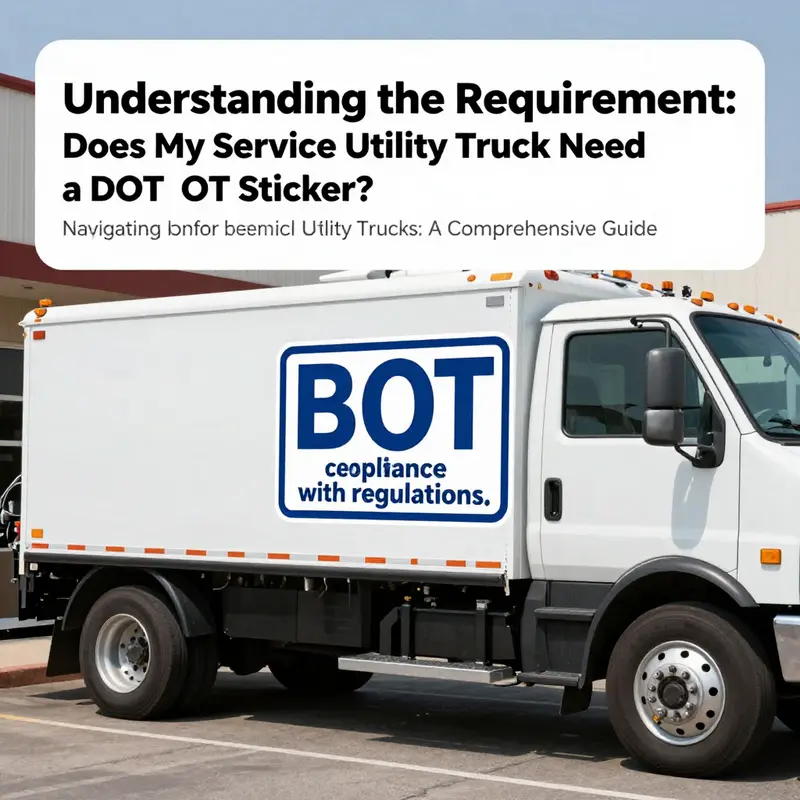
The question of whether a service utility truck needs a DOT sticker is governed by weight, use, and interstate movement. The central concept is the Gross Vehicle Weight Rating, or GVWR. If the GVWR is 10,001 pounds or more, the FMCSA considers the vehicle a commercial motor vehicle, or CMV, and a USDOT number is typically required to be displayed on the exterior of the vehicle. If the GVWR is 10,000 pounds or less, the CMV trigger may not apply, but state and local rules can still apply depending on how the vehicle is used and where it travels.
For many service fleets, trucks vary in weight and purpose. Some stay under the federal threshold while others carry heavy tools, parts, or equipment that push the vehicle over the line. Importantly, the GVWR, not the truck’s empty weight, determines federal regulatory status. When operations involve crossing state lines or engaging in interstate commerce, USDOT registration and the visible USDOT number typically come into play. If your routes stay local, there may be exemptions, but those exemptions are specific and can change with regulations, so it is prudent to verify.
The USDOT number serves as an official identifier that inspectors can use to pull safety records, insurance status, and compliance history. The sticker itself should be durable, weather-resistant, and placed in a highly visible location on the vehicle, commonly on the left front area or as required by applicable rules, ensuring it can be seen during roadside checks.
To comply, begin by confirming the vehicle’s GVWR from the manufacturer label. If the GVWR meets or exceeds 10,001 pounds, apply for a USDOT number with FMCSA and ensure the number is displayed on each CMV in a legible and durable form. Maintain records linking each USDOT number to specific trucks in your fleet, and verify that stickers remain legible as vehicles are maintained or replaced. If there is any doubt about a vehicle or route, consult FMCSA resources or a transportation compliance professional for the latest guidance.
Sticker, Safety, and State Lines: Navigating DOT Compliance for Your Service Utility Truck
When a service utility truck moves beyond the yard and into the realm of interstate commerce, the federal regulator’s gaze shifts from mere maintenance to a wider web of safety, accountability, and paperwork. The Department of Transportation, via the Federal Motor Carrier Safety Administration, oversees vehicles that meet specific criteria, with the gross vehicle weight rating (GVWR) of more than 10,001 pounds being a central threshold. The moment a truck crosses a state line or handles materials designated as hazardous, the vehicle typically enters the FMCSA’s regulatory orbit. Yet even trucks that mostly work within a single city or county can find themselves tangled in federal requirements if their operations touch the larger artery of interstate commerce through contracts, routes, or shared equipment. The visible symbol of this regulatory footprint is the USDOT number, displayed as a durable decal on the exterior of the vehicle. This sticker is not a marketing ornament; it is a regulatory identifier that signals the carrier’s status to enforcement and safety officials and serves as a quick reference for a vehicle’s compliance history during roadside checks, inspections, or audits. The practical takeaway is simple: if your service truck is used for business purposes and has any likelihood of crossing borders—whether you haul cable reels, install meters, or service infrastructure across state lines—the USDOT number is not optional. It is part of a framework designed to promote accountability, enable safety oversight, and streamline the management of road-based fleets. The sticker itself should be placed on the left side of the front of the truck, and if the driver’s door happens to be on the left, the sticker may be displayed on the right side instead. The goal is obvious, predictable identification that holds up to weather and the rigors of daily service work. Officially compliant decals are available from authorized providers and are designed to withstand stormy weather, sunlight, and the daily abrasion of road use. While it might be tempting to assume that local operations can avoid the sticker, the FMCSA’s rules are written to address the vehicle’s use and the scope of the business, not merely where the truck spends most of its time. In practice, a utility contractor who runs a crew to service lines, install equipment, or perform emergency repairs could quickly find that a state boundary, a multi-state contract, or even a temporary out-of-state assignment triggers full compliance. The current regulatory mood emphasizes proportionality and traceability: keep the USDOT number visible, keep it legible, and keep it current. The color of the sticker is secondary to the accuracy of the number and the validity of the registration documents it represents, yet the durability and readability of the decal matter in real-world conditions. For fleets that intend to expand or contract, the sticker becomes a live signal of regulatory readiness. The modern compliance landscape also underscores the role of proper documentation and electronic tools that record the vehicle’s status and hours. The FMCSA has long encouraged operators to pair the USDOT number with a robust set of records that reveal maintenance history, inspection results, and driving time. In this sense, the sticker is a doorway to a broader compliance system that blends physical identification with digital accountability. The spectrum of compliance is broad and ongoing, and it requires proactive patterns rather than reactive corrections. One cannot separate the sticker from the broader compliance framework. The sticker is a visible reminder that the vehicle is part of a regulated system with safety and accountability mechanisms designed to protect the motoring public, crew members, and the communities where the trucks operate. The presence of the USDOT number on the exterior serves not only as a reference for authorities but as part of a culture of compliance within a service operation. An operator who understands this context will appreciate that the sticker is not a one-time purchase but a component of an evolving compliance program. The program affects how drivers are trained, how records are kept, and how the fleet is managed on a day-to-day basis. Training is essential, not optional. Drivers should be familiar with the basic implications of USDOT numbers, know how to interpret a logbook or electronic log device, and understand the implications of driving hours when the truck carries a GVWR above the threshold. The rules extend to the vehicle itself: heavy-duty service trucks must be maintained to a standard that supports safe operation, not merely to avoid fines. Regular vehicle inspections—often annual, supplemented by pre-trip and post-trip checks—are a cornerstone of FMCSA safety culture. These inspections verify critical components, such as brakes, tires, lighting, and steering systems, and they create a documented baseline that can be referenced during audits. Recordkeeping is the other pillar. Beyond the visible sticker, fleets must retain accurate data about driving time, maintenance, and inspections. The modern drift toward electronic logging devices has made this process more precise and less prone to dispute. Since December 2017, ELDs have become the norm for most commercial vehicles subject to hours-of-service rules. The consequence for service utility trucks is that even when operations are predominantly local, crossing a state line or engaging in interstate commerce can necessitate ELD usage. The practical implication for fleet managers is that compliance cannot be relegated to a single department’s checklist; it must be woven into how the vehicle is scheduled, how trips are planned, and how records are stored and reviewed. A comprehensive approach includes periodic audits, driver training updates, and a disciplined cadence of recordkeeping reviews. The FMCSA site remains the best source for authoritative guidance, and it is wise to verify current requirements periodically because enforcement and technology are not static. For readers seeking a concise map of how these rules apply to service fleets, the guidance points to several core practices: confirm the GVWR threshold, verify interstate operations and the scope of business, secure and display a current USDOT number, and maintain a robust filing system for inspections and logs. The balance between local service and interstate obligations is a critical juncture. Some operators assume they are immune from federal oversight when their trucks rarely travel beyond city limits. Yet the FMCSA’s framework recognizes that a vehicle’s use, fleet contracts, and cross-border work can pull a truck into federal jurisdiction at any time. This is where the concept of cross-border regulatory issues becomes relevant. In practice, a service firm might operate in a single state but find that a client’s project requires collaboration with teams across the border. When that happens, compliance becomes more than a badge on the truck; it becomes a shared discipline across the organization. See the discussion on Cross-Border Regulatory Issues to understand how these dynamics influence sticker requirements, driver qualifications, and the deployment of electronic logging devices. Cross-Border Regulatory Issues. The bottom line for operators is straightforward: stay connected to official sources, maintain documentation that reflects the vehicle’s status and use, and build a governance framework that remains adaptable as rules evolve. The FMCSA’s resources, combined with the practical guidance of compliance experts, help fleets align day-to-day operations with federal expectations while minimizing downtime, fines, and confusion on the road. If you want a reliable starting point for ongoing compliance, the FMCSA site offers a central hub with vehicle registration and identification requirements that are directly tied to the sticker you display and the records you maintain. It is not enough to mount a sticker and forget it; the sticker is the outward sign of a larger, continuously managed system that protects drivers, the company, and the public. A well-managed compliance program converts this obligation into a competitive advantage—fewer delays at inspections, clearer driver expectations, and a safer, more reliable service fleet that earns trust through steady, responsible operation. For those who are building or refining a service operation, the imperative is clear: understand when the USDOT number and the sticker apply, implement the ELD and logging practices when required, and embed compliance into daily workflows rather than treating it as an annual checklist item. To stay aligned with evolving standards, keep a finger on the FMCSA pulse, consult official resources, and connect with experienced compliance teams that can translate federal language into practical, actionable steps for your specific fleet. For additional context on broader regulatory considerations that may affect your operations, you can explore related discussions on cross-border and cross-regional regulatory themes, while always anchoring decisions in current FMCSA guidance. External reference for authoritative guidance: https://www.fmcsa.dot.gov
When Interstate Travel Triggers Compliance: The USDOT Sticker Decision for Service Utility Trucks
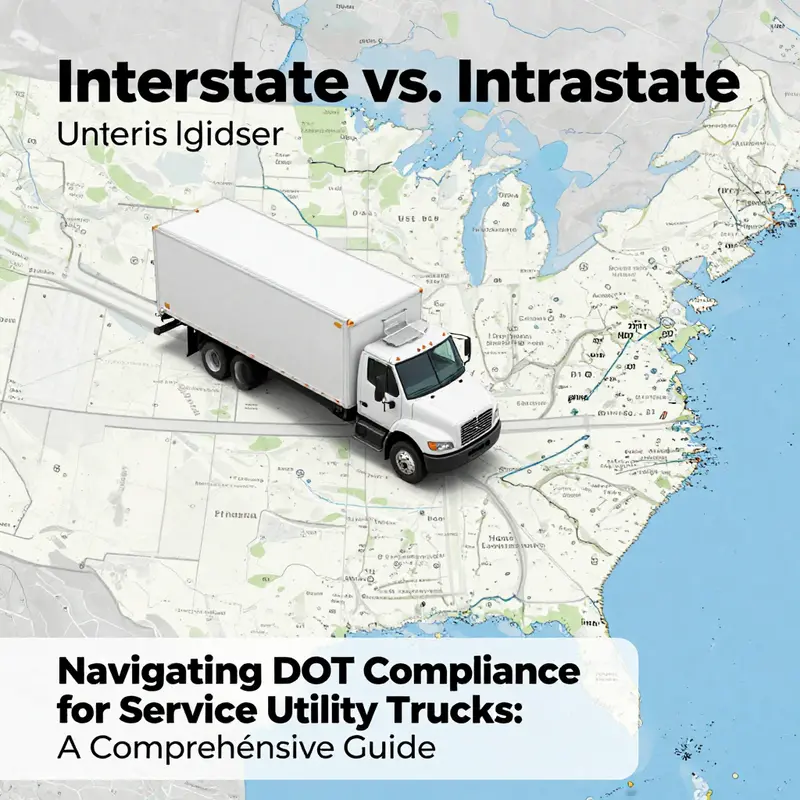
If you operate a service utility truck and you want to know whether a USDOT sticker is required, you’re not alone. Many fleet managers and small-business owners assume the sticker is only for big rigs or trucks that haul hazardous materials. In practice, the rule set is about where your truck travels and what it carries as part of a business. The decision isn’t simply about the vehicle’s size or its day-to-day job. It hinges on whether you transport goods or people across state lines in a commercial context, and on the vehicle’s weight rating. This distinction—interstate versus intrastate—has real consequences for compliance, and it can be surprisingly nuanced for trucks that are used primarily within a single state yet occasionally cross into neighboring jurisdictions for urgent service calls or project work. The core idea is to separate the jurisdictional basics from the practical realities you face on the road, so you can avoid unnecessary sticker requirements or, conversely, missed obligations that could lead to penalties or downtime for a busy crew.
At the heart of the matter is the general framework set by federal authorities for vehicles engaged in interstate commerce. If a truck operates across state lines and is used for commercial purposes, it is generally subject to federal rules that require a USDOT number to be displayed on the exterior of the vehicle. The USDOT number acts as a unique identifier that federal agencies can use to regulate and monitor safety, insurance, and compliance. The rule applies when a vehicle is involved in interstate commerce and meets specific criteria, most notably a gross vehicle weight rating (GVWR) of 10,001 pounds or more. The combination of crossing state lines and the WVWR threshold triggers the requirement for the decal, ensuring that enforcement authorities can quickly verify a company’s compliance status and safety record. The display itself is straightforward: a durable, clearly visible decal bearing the company’s USDOT number must be placed on the exterior of the vehicle—traditionally on the left side of the front of the truck, or on the right side if the driver’s door opens to the left. The design and durability are standard to withstand weather, road grime, and the daily wear of a service fleet.
The nuance, as many fleets discover, is that the sticker requirement is not a blanket rule for every utility truck. If your operation remains entirely within one state and never crosses state lines in the course of transporting goods or passengers for compensation, the federal mandate may not apply. In that intrastate scenario, state laws become the primary source of compliance. States have a variety of regulations, and some may impose their own marking or identification requirements for commercial vehicles that operate within their borders. A truck that never travels outside a single state could, in many cases, avoid federal USDOT sticker requirements altogether, but it is not automatically exempt from all markings or registrations. States may still require carrier registration, fleet identification, or other forms of proof of compliance with local safety standards. The key step is to verify the exact requirements with the state department of transportation or equivalent regulatory body in the jurisdiction where you operate most of the time. This approach minimizes the risk of unknowingly violating local rules, which can carry penalties and operational disruptions just as surely as a federal violation.
For a practical business decision, a simple question can guide the process: Does your truck routinely cross state lines while performing its service work? If the answer is yes, the odds are high that the federal USDOT markings and related regulatory obligations apply. If the answer is no, your focus should shift to understanding intrastate requirements and how they align with your business model. This doesn’t mean you should ignore safety and compliance; rather, it means you should tailor your processes to the jurisdiction that actually governs your operations. The federal standard exists to ensure a consistent baseline for vehicles that operate nationwide, especially those that cross state borders and engage in transportation of goods or passengers for compensation. It ensures that a fleet can be vetted and held to consistent safety and insurance levels, regardless of which state a vehicle originates from or travels through. When you do cross a border into another state, the sticker requirements can come back into play, and you may also encounter varying state-level mandates for things like insurance verification, permit displays, or fleet identification numbers.
It is also important to recognize that there are exceptions and special cases. Some vehicles, even if weight-heavy, might be exempt from specific markings if they are not used for hire or if they are used solely for private, non-commercial purposes. Other vehicles transporting certain types of goods may trigger additional rules, especially if hazardous materials are involved. The safety and regulatory landscape is designed to adapt to the diverse uses of utility fleets: from plumbing and electrical work to HVAC, landscaping, and general maintenance. The common thread across these scenarios is the need for a clear rationale about whether interstate commerce is part of the day-to-day mission. If any portion of your operation involves crossing state lines to deliver parts, equipment, or services for compensation, the channel to federal oversight opens wider, and the DOT sticker becomes part of the standard compliance kit.
To stay on the right side of the law while keeping your fleet efficient, engage in a disciplined review of your routes and operations. Start with the math: what is your GVWR? If your service truck is rated at 10,001 pounds or more, and you operate in interstate commerce, the sticker is typically part of the package. If you don’t routinely cross state lines but sometimes do, you should consult FMCSA guidance and your state authorities to determine whether temporary or situational markings are needed for those cross-border trips. The FMCSA’s Vehicle Registration and Identification requirements provide the authoritative baseline, but the on-the-ground decision often rests on the specifics of your operations and whether you are a for-hire carrier, private carrier, or contractor performing services for customers across state lines. The general rule is simple, but the practical application requires careful consideration of how you run your business on a daily basis.
For many readers, a useful way to anchor a decision is to integrate the broader macro trends that shape trucking, even when the immediate question is local compliance. Industry shifts in supply chains, the move toward more complex cross-border logistics, and evolving fleet technology all influence how fleets plan regulatory readiness. A broader awareness of these trends can help a maintenance manager decide how to allocate time and resources—whether to implement a uniform DOT marking across the fleet or to lean toward state-specific compliance programs for intrastate work. For those following industry dynamics closely, one can explore how core economic trends shape fleet strategy and compliance priorities in the trucking sector. See discussions on the path of key economic trends impacting the trucking industry for deeper context and strategic alignment with regulatory decisions. Key Economic Trends Impacting the Trucking Industry.
Beyond the binary choice of sticker versus no sticker, consider the practical steps of maintaining compliance. Even when a truck operates primarily within a single state, having a documented standard operating procedure for regulatory checks helps avoid last-minute scrambles when a job requires a cross-border run or when state inspectors review fleet paperwork during routine checks. Clear records of vehicle weight, registration status, insurance certificates, and the status of any required identifiers can streamline inspections and reduce downtime. Training drivers and dispatch staff to recognize when a trip might cross state lines—and what it implies for documentation—builds a resilient compliance culture. Your team should know where to find the FMCSA guidance, how to interpret the requirements for your GVWR category, and whom to contact if a gray area arises. The goal is not to create bureaucratic hurdles but to create predictable workflows that protect your business while ensuring safety on the road.
To keep the narrative grounded and practically useful, it’s valuable to anchor these considerations with authoritative references. The federal framework is anchored in transportation policy that oversees interstate highway operations and the movement of goods across state lines. While the specifics can shift with regulatory updates, the overarching principle remains stable: a vehicle that travels across state boundaries in a commercial context is more likely to be subject to USDOT numbering and display requirements. If your operation is evolving—perhaps you are expanding service areas, taking on more cross-border work, or upgrading to heavier utility equipment—revisit these thresholds and confirm that your current labeling and documentation align with the latest federal and state regulations. The USDOT number, the method of display, and the location on the vehicle are all part of a coherent system designed to simplify accountability and safety across a mobile workforce. For a broader understanding of related federal guidelines and to verify any updates, refer to the official transportation and highway administration resources. External reference: https://www.fhwa.dot.gov/.
More Than a Mark: Navigating DOT Identification for Your Service Utility Truck and What It Really Means for Compliance
When a service company rolls a utility truck out of the shop, the questions aren’t always about paint, tires, or tool inventory. Sometimes the most consequential question is the one that seems to haunt the vehicle’s exterior long after the toolbox is re-stacked: does this truck need a DOT identification sticker? The confusion is understandable. In everyday language, a “DOT sticker” sounds like a decorative badge you slap on for looks. In regulatory reality, it is a safety and compliance label that ties a vehicle to federal oversight, safety records, and cross-state or cross-border mobility. Getting this right isn’t about vanity; it’s about ensuring the truck can travel legally, safely, and predictably wherever the work takes it. The distinction between branding and identification is subtle but essential. Your fleet may bear a company logo and contact information on doors and panels, yet the government expects a separate, visible form of identification that can be read by inspectors and law enforcement during roadside checks or at loading docks. The practical upshot is simple: if your service truck operates in interstate commerce or crosses provincial or national lines, a robust approach to DOT identification isn’t optional—it’s mandatory, or at least strongly prudent, depending on your specific operations and jurisdiction.
To set a sound course, it helps to hold two ideas in your mind at once. First, the United States Department of Transportation’s safety framework centers on vehicles that move people or goods across state lines, or carry certain hazardous materials, regardless of the mission’s local flavor. Second, Canada’s provincial and federal authorities mirror that emphasis, but the processes and branding expectations can differ by province. The common core is regulatory visibility: the vehicle must carry an identifying marker that is durable, legible, and securely affixed so it can endure the rigors of daily service, weather, and road grime. The practical effect is that a service vehicle—whether a plumber’s truck, an electrician’s van, or a HVAC technician’s service body—likely has a direct regulatory obligation once it leaves the driveway and begins to roam beyond municipal boundaries. The question then becomes not whether you want a DOT label, but whether you need one, and if so, what kind of label, where to place it, and how to keep it compliant over time.
A good first step is to separate the terms in play. In the United States, the regulatory centerpiece is the USDOT number, issued by the Federal Motor Carrier Safety Administration (FMCSA). This number is unique to your business and is used to monitor safety records, inspections, and compliance history. The physical artifact isn’t always a government-issued sticker in the way a consumer might expect; sometimes it is a plainly readable decal or plate that displays the USDOT number clearly on the vehicle’s exterior. The key requirement is visibility and legibility to the inspectors who will encounter your fleet on the road or at facilities along the route. In practice, many operators opt for a durable vinyl decal that carries the USDOT number and is affixed to a conspicuous location on the vehicle’s front exterior. It’s a functional choice that aligns branding with accountability, but it’s important to recognize that the official government-issued requirement is the number itself and its placement for easy inspection, not a decorative product sold online.
On the Canadian side, the framework also hinges on identifying vehicles that conduct commercial activity across borders or within provinces. While the specifics vary by province, a recurring theme is clear: a blue decal or another formal marker may be required for certain commercial operators. In Alberta, for example, there is a requirement for a blue DOT sticker displayed on the vehicle’s window. The intent is parallel to the U.S. system: ensure that authorities can readily access a traceable identifier that links the vehicle to a compliant business, its safety history, and its operating scope. Whether you are operating only within city or regional limits or occasionally crossing into neighboring provinces or states, you should treat this identification as a non-negotiable element of fleet compliance. The stakes are real. A misstep—using a decorative sticker, or failing to display any identifying marker at all—can invite penalties, delay at inspections, or more consequential operational restrictions that disrupt schedules, service windows, and customer commitments.
With that foundational understanding, you can map a practical path forward. The first step is to verify your vehicle’s requirements. A CMV—the term used to describe commercial motor vehicles in regulatory language—usually includes trucks with a gross vehicle weight rating (GVWR) above 10,001 pounds or vehicles involved in transporting hazardous materials, passengers, or goods across state lines. If your service truck fits into that category, you are in the terrain where federal or provincial rules apply. Even if your daily work is local, the moment your work crosses a border or a state line, the rules kick in. The next step is to determine whether you already have a USDOT number. If not, you will need to apply for one through the FMCSA in the U.S. or through the corresponding Canadian authority in your region. The USDOT number is not just a number; it is a governance tie to your company’s safety performance, inspection history, and regulatory compliance. Once you have the USDOT number, you must display it in a way that is readily verifiable during an inspection. This is where the practical question of a “DOT sticker” becomes crisp: you may not be able to obtain a government-issued sticker in all cases, but you will be required to have a clearly visible display of the USDOT number on the vehicle.
A critical nuance to emphasize is the distinction between the official identification and what a fleet manager might reasonably purchase for branding. It is not appropriate to rely on random online sources to obtain an official DOT sticker. The government does not issue generic, consumer-grade stickers for regulatory compliance. In the United States, the regulated requirement centers on the USDOT number; in Canada, the process may involve a provincial authority issuing a blue decal or similar marker. The bottom line is to avoid decorative or non-compliant products, which can create false assurances and provoke penalties during roadside checks. The right approach blends regulatory accuracy with practical durability: a sturdy method for displaying the USDOT number or provincial equivalent that resists weather, fading, and cleaning solvents, and remains legible over the life of the vehicle’s service cycle.
Once you have your USDOT number or provincial marker, the placement matters. The conventional expectation in the U.S. is to place the identifying mark on the front exterior of the vehicle for maximum visibility—commonly on the windshield area or the door near the front, depending on the driver’s side and the vehicle’s configuration. If the front door is on the left, the left side of the front is typical; if the door is on the right, the right side becomes the default. This is not a vanity exercise. It is a compliance measure designed to allow quick verification during road checks, weigh stations, or facility entrances. The marker must be durable enough to withstand a range of conditions—rain, snow, heat, road debris—and must be kept clean and legible as the vehicle accrues mileage.
In addition to the placement, there is a broader caution about what not to do. It is entirely inappropriate to purchase decorative stickers or generic labels online with the belief that they satisfy regulatory requirements. Those products do not confer compliance and may trigger fines or vehicle out-of-service orders if discovered during an inspection. The responsible path is to work through the official channels for obtaining the USDOT number and to follow the regulations for display exactly as outlined by FMCSA or the equivalent Canadian authority. If you are uncertain, seek guidance from a compliance professional or a transportation regulatory office. The law may change, and keeping up-to-date with the latest rules is part of operating a professional fleet rather than an optional precaution.
An essential element of keeping this chapter cohesive with the broader article is recognizing the cross-border dimension. If your fleet operates across borders, or if you are considering expanding into another market, you will encounter regulatory overlays that require additional attention. The cross-border regulatory issues page provides a consolidated view of the complexities involved when operations cross into another country’s jurisdiction. It can serve as a practical bridge between your day-to-day fleet management and the larger governance landscape. For readers navigating cross-border considerations, you may wish to explore that resource as part of your ongoing compliance planning.
The broader point for any service operation is that the DOT identification requirement is less about a single sticker and more about a visible, traceable, regulatory linkage to your business. It signals accountability, safety, and due diligence. It also embeds your operation into a system that tracks inspections, incident history, and corrective actions. This is not merely about avoiding penalties; it is about creating a predictable operating environment for your drivers, customers, and partners. When a vehicle in your fleet has clear and compliant identification, other stakeholders—leasing agents, insurance providers, and clients who request greater transparency—gain confidence. The resulting clarity can streamline certain processes, from loading procedures to contract negotiations with municipal entities that require adherence to specific safety standards.
As you work through these steps, the conversation naturally knots back to practical day-to-day decisions. Your fleet’s managers will want to document the truck’s GVWR, confirm whether the vehicle crosses state or provincial lines regularly, and ensure that all drivers understand where the identifying marker should be displayed and how to maintain it. Training drivers and maintenance staff to keep the sticker clean, legible, and secure reduces the risk of non-compliance becoming a distraction during a busy workday. It also streamlines inspections, reducing the time a vehicle spends halted at a weigh station or entry point. The regulatory framework is not an obstacle to smooth operations; it is a structure that, when understood and implemented properly, supports reliability, safety, and professional credibility.
For readers seeking a concrete path through the regulatory landscape, consider the cross-border regulatory issues resource as a practical guide to align your domestic practices with potential international considerations. This is not about adding friction to your operations; it is about providing a transparent, consistent standard that keeps your trucks on the road and your crews focused on service quality. And if you ever question whether you should act now or wait for a change in rules, remember that many jurisdictions assess penalties not only on the presence of a marker but also on the maintenance of its visibility and integrity. A faded sticker or a missing number can trigger a citation, even if the truck otherwise operates safely and efficiently.
For those who want to anchor their understanding in official guidance, the Federal Motor Carrier Safety Administration (FMCSA) offers resources and updates that reflect current practice and enforcement priorities. Regular consultation of FMCSA materials helps fleet operators stay aligned with evolving standards and ensures that the DOT identification strategy remains robust across the life of the vehicle’s service cycle. In short, treating DOT identification as a living part of fleet management—subject to review, maintenance, and change as rules evolve—will serve your service operation far better than treating it as a one-time setup.
External resource: https://www.fmcsa.dot.gov
Internal link cue: For further context on how regulatory considerations intersect with cross-border operations, see the discussion on Cross-border regulatory issues.
Staying Visible and Compliant: A Practical Guide to DOT Stickers for Your Service Utility Truck
When you roll a service utility truck through town, the eyes on the road notice more than your logo or the equipment on the bed. They notice the tag that shines through rain, snow, or the glare of sun on a chrome bumper—the USDOT number displayed on a durable sticker kept exactly where federal rules require. The sticker is not just a branding element; it is a legal marker that ties your vehicle to a set of safety and accountability standards designed to keep commerce moving and people safe. For many operators, the moment you study the rulebook with a practical eye, the sticker becomes less about enforcement anxiety and more about clarity, predictability, and professionalism on a daily basis. The logic behind the requirement is straightforward yet sometimes misunderstood: if your truck participates in interstate commerce, or if it carries hazardous materials at any point in its operation, the federal government expects you to display a USDOT number on the exterior of the vehicle. The threshold is specific: a gross vehicle weight rating (GVWR) of 10,001 pounds or more, or the transport of hazardous materials. Those conditions trigger FMCSA oversight, and with oversight comes the obligation to show that your operation is registered, that your fleet policy is in place, and that the vehicle is visible to law enforcement and inspectors alike. The sticker itself is a visible, durable decal that carries your company’s USDOT number. It is meant to be read from the roadside with ease, even in low light, and to endure the elements. In practice, this means applying it to a clean surface, using a material that resists water and fading, and ensuring the number is legible without obstruction from dirt, mud, or equipment mounted on the panel. The requirement is not a branding exercise; it is a compliance measure intended to expedite safety checks, confirm operator legitimacy, and support traceability in the event of a roadside incident or a regulatory inquiry. If your fleet operates across state lines—even occasionally—the federal jurisdiction applies, and the sticker becomes the outward signal that your operation is properly registered and accountable across the borders of multiple states. The nuance matters. Local work like plumbing, electrical, HVAC, landscaping, or lawn care often involves vehicles that spend most of their time in municipal streets or within a single state. Yet, when those jobs bring a truck into another state or into interstate routes for emergencies or contracts, the federal requirement can apply. The practical takeaway is simple but sometimes overlooked: do not rely on memory or informal agreements about whether you “need” a USDOT number. Confirm the status with the FMCSA regulations and, if in doubt, speak with a transportation compliance expert who can interpret how your day-to-day routes intersect with federal rules. The act of placing the sticker in the correct location is as important as having the sticker itself. The standard placement calls for the USDOT number to be displayed on the left side of the front of the truck. If the driver’s door is on the left side, the sticker should be visible on that door side; if the door arrangement differs, the policy directs placement on the right side. The precise positioning is meant to standardize recognition by roadside authorities and to reduce the possibility of misinterpretation during quick inspections. In practice, this means more than merely sticking a label to a metal panel. It means choosing a sticker that is waterproof and UV-resistant, designed to withstand rain, road spray, and sun exposure without cracking or peeling. It means selecting a design and material that do not obscure other essential markings or the vehicle’s license plate, and it means applying the sticker at a time when the surface is dry and clean, so adhesion is secure and long-lasting. You will hear terms like reflective safety stickers in the regulatory language, emphasizing the need for visibility in dim conditions. The reflective property is not mere flair; it is a safety feature that improves recognition by other drivers and by responders in emergencies or poor weather. The federal standards governing such stickers are not optional; they are the baseline for FMCSA compliance. The focus, then, turns from the sticker as a badge to the comprehensive practice of compliant operation. That practice includes ensuring that the sticker is current and accurate, that the USDOT number corresponds exactly to what FMCSA records show, and that the vehicle remains in a condition that keeps the information legible. If the sticker ever becomes unreadable due to wear, fading, or damage, the responsible operator will replace it promptly to maintain compliance. Design approval is another layer of complexity that can arise in certain regulatory zones or under specific FMCSA guidelines. In some cases, there can be questions about the sticker’s design elements—how the number appears, the size of the characters, the color contrast, and the overall durability. While many operators purchase standard, compliant decals from authorized providers, some jurisdictions may require a design review before a sticker is approved for use on a vehicle operating in particular regulatory zones. The underlying motivation is safety and conformity—making sure every vehicle in a regulated fleet presents a consistent, legible mark that helps authorities verify registration without ambiguity. The practical anxiety about penalties, while real, is best approached with a proactive compliance mindset. The consequences of non-compliance range from significant fines to vehicle-operation restrictions, and in some cases, inspections that can disrupt routine services. Enforcement agencies may pull a non-compliant vehicle from operation or require corrective action at a cost in time and resources. Beyond fines and inspections, there is a broader risk: if a truck is perceived as non-compliant, that perception can impact a company’s ability to win contracts, maintain customer trust, or participate in compliance-sensitive tenders. A robust compliance posture, therefore, protects the crew, the public, and the company’s reputation. The guidance is not only about meeting a one-time obligation. It is about embedding safety and accountability into everyday operations. This means maintenance of the sticker as part of fleet hygiene—regular checks to ensure it remains clean, legible, and securely affixed; timely replacement in the event of peeling or fading; and periodic confirmation that the USDOT number matches the current FMCSA records. It also means awareness of changes in regulations that could affect sticker requirements or placement, and a readiness to adjust practices if updates occur. The broader ecosystem of compliance includes sources of information that help you navigate cross-border or intrastate issues. For a broader look at regulatory considerations that affect cross-border operations—and how those considerations interplay with sticker requirements—explore resources that discuss cross-border regulatory issues. This line of inquiry helps frame your DOT sticker choice as part of a larger compliance discipline, rather than as an isolated checkbox in a paperwork folder. In the end, the sticker’s value lies in its service: it is a practical, visible signal that your business operates within a recognized framework designed to keep roads safer and commerce transparent. It is a quiet partner in your daily logistics, a small but visible reminder that every mile driven under a USDOT number is a mile aligned with standards that other operators, inspectors, and customers rely upon. The world of trucking compliance is not merely about avoiding penalties; it is about creating a predictable environment where work can be scheduled, executed, and billed with confidence. It is about giving your crew a clear, objective reminder that safety and accountability are not add-ons but core duties of the service you provide. The sticker, while modest in size, plays a role in that larger system, and its proper use signals a commitment to professional practice that strengthens your fleet’s reliability for years to come. For those who want a grounded starting point, the FMCSA guidelines provide the official baseline for what must be displayed, where it must be placed, and how the materials should perform under a variety of conditions. External resource: https://www.fmcsa.dot.gov. For additional context on regulatory considerations that can intersect with sticker requirements, you can also consult related discussions on cross-border regulatory issues, such as the topic found at https://fritzke-truckinginc.com/cross-border-regulatory-issues/.
Final thoughts
Understanding whether your service utility truck requires a DOT sticker is essential for ensuring compliance with federal regulations. This guide has outlined the various aspects of DOT requirements, from the regulations impacting your operations to the procedures for acquiring the necessary sticker. By adhering to these guidelines, businesses in the manufacturing, retail, and construction sectors can navigate the complexities of compliance and minimize the risk of penalties. Make informed decisions about your fleet today to secure your operations for tomorrow.