

Service trucks are pivotal assets for various businesses, including those in manufacturing, distribution, retail, and construction. Understanding their value is essential for making informed investment decisions. This article delves into the multifaceted factors affecting service truck prices, current market prices, and the depreciation trends that influence long-term valuation. Each chapter provides core insights: the first chapter explores the key elements that determine service truck worth; the second presents a current market overview; the third offers a comparative analysis of different types of service trucks; finally, the fourth discusses depreciation over time, guiding businesses toward smart purchasing decisions.
What a Service Truck Is Worth: Reading Condition, Capability, and Market Signals Across a Dynamic Used-Vehicle Landscape
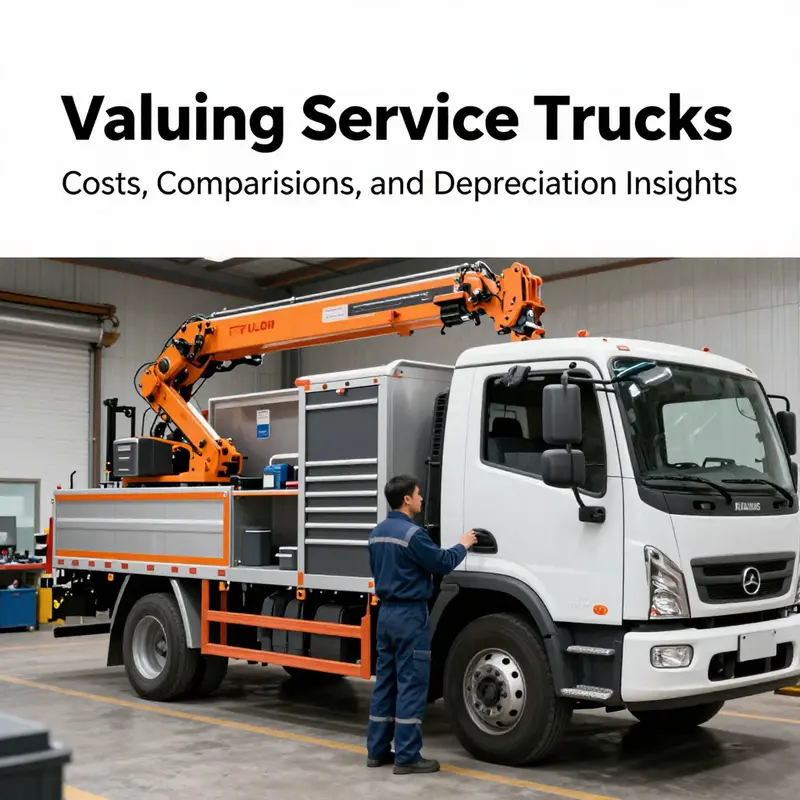
When someone asks how much a service truck is worth, the instinct is to pull a price from a shelf—an amount that feels like a fixed number. In practice, value is a moving target, shaped by how the machine serves its next operator as much as by how it performed under the previous owner. A service truck is a tool, a platform, and a logistics decision all at once. It can be a compact mobile workshop that turns a job site into a temporary shop, or a rugged chassis outfitted with a boom, crane, and heavy-duty tool storage that keeps a crew productive through long shifts and rough terrain. The worth of that asset hinges on a blend of adaptability, durability, and the market’s appetite for what the truck can do, and for how reliably it can do it over the next several years.
Adaptability is the first and most visible dial. The value of a service truck rises or falls with how readily it can be repurposed for different tasks or sites. A body type that supports quick reconfiguration—an enclosed body with modular storage, a workshop interior, or an adaptable mounting system for different toolsets—appeals to fleets that prize flexibility. In other cases, the market rewards a more focused setup that excels at a specific job—say, a platform designed to service heavy equipment on remote worksites. The price differential comes down to how many potential buyers can see themselves extracting value from the configuration. A ready-to-go mobile workshop tends to command more in a busy market where downtime matters and the operator seeks to minimize trip times back to a shop. On the other hand, a less specialized platform might attract buyers looking to scale the asset to their own needs, perhaps in a region with many small- or mid-sized fleets.
Condition, mileage, and the story the vehicle tells after years of use form the core of any fair valuation. A service truck is a study in tradeoffs: robust chassis and a well-kept drivetrain can push value up, while visible rust, frame concerns, or chronic mechanical noise drag it down. A well-preserved exterior often signals a broader discipline of upkeep, yet buyers know that appearance can mask hidden issues. The most durable gains in value come when the mechanical health aligns with the aesthetic presentation. For example, a truck that shows clean undercarriage footage, fresh fluids, solid tire wear, and an engine that purrs during idle will be valued higher than one with uneven oil consumption, leaks, or noisy hydraulics. The interplay between present condition and future reliability is what ultimately shapes price.
Rust and chassis wear deserve particular attention, because they speak to long-term maintenance implications. Surface blemishes may be cosmetic, but deep rust or corrosion can compromise structural integrity and the life of critical components. Buyers often discount heavily for frames with visible rust pockets or for bodies that show advanced corrosion, especially when the vehicle has a heavy service history in salty environments or on harsh job sites. The sheet metal might shine, but if the frame shows signs of stress or if suspension components are nearing the end of their service life, buyers will price in replacement or major repairs. This is not to say cosmetic improvements never help; they do, especially when paired with a solid mechanical baseline, but cosmetics alone rarely compensate for genuine mechanical risk.
Operating performance and viability are inseparable from the truck’s maintenance narrative. A service truck that has been kept in steady mechanical health through regular maintenance cycles typically preserves value better than one with inconsistent service logs. The maintenance history acts as a map of how the truck has aged under real work conditions. A documented series of oil changes, filter replacements, hydraulic system checks, and component upgrades provides confidence to a buyer that the vehicle can be trusted to perform without surprising downtime. Conversely, a patchwork of undocumented repairs or gaps in service history invites questions about reliability and total cost of ownership. In a 2026 buying guide, researchers emphasize that age, usage, engine type, and maintenance strategy are major determinants of ongoing upkeep costs—and, by extension, resale value. A vehicle with a transparent, complete service record often sells faster and closer to its fair market value because the buyer can forecast uptime and budget maintenance with more precision.
Appearance matters, but not in isolation. A clean interior, legible signage where applicable, and organized tool storage convey a disciplined maintenance culture. Buyers read appearance as a proxy for care: they assume that a tidy cab and well-arranged compartments reflect a fleet’s standard operating procedures and a habit of routine inspections. Cleanliness can shave days off the time a truck spends on the market, especially when a prospective buyer is evaluating multiple units. Yet appearance cannot compensate for real performance concerns. A truck that looks sharp but delivers uncertain horsepower, leaky hydraulics, or a rough brake pedal is unlikely to fetch a top-tier price. The best outcomes come from a holistic presentation: the vehicle looks good, operates smoothly, and carries a clean maintenance dossier that supports every claim about uptime and capability.
The broader market context adds its own layer of nuance. As fleets rationalize operations, they weigh the asset against other capital needs, depreciation schedules, and the total cost of ownership over the expected remaining life. A service truck with broad adaptability, strong maintenance records, and proven uptime can be a cornerstone asset for a growing fleet, one that reduces the need for frequent capital reinvestment and that sustains service capacity during peak periods. In markets where construction activity and maintenance backlogs teeth the demand for mobile service capabilities, premiums accrue for diesel powertrains with good fuel efficiency, robust hydraulic systems, and interiors designed for long shifts without frequent reconfiguration. In zones where competition is intense and buyers scrutinize every line item on a maintenance ledger, the value tends to hinge on the clarity and verifiability of the truck’s health narrative. This is where the vehicle’s history, its current condition, and its demonstrated reliability intersect to shape price with disciplined precision.
To anchor expectations in concrete terms, buyers and sellers often reference a broad range of comparable configurations and current listings. The published market spectrum for service trucks can span from lower-end, work-ready platforms that trade hands around the mid-teens to mid-20s of thousands of dollars, up to high-spec, highly equipped units that push well beyond the $40,000 mark. The exact position in that spectrum depends on factors already described: configuration depth, maintenance rigor, body condition, and the degree to which the equipment can genuinely reduce downtime for a service operation. It is easy to fall into the trap of assuming that a newer model or a higher specification automatically translates to a higher value. In truth, value is earned through demonstrated utility, a compelling maintenance narrative, and the absence of latent defects that would complicate ownership in the near term.
This is why a careful valuation process matters. A disciplined approach begins with collecting the essential identifiers: vehicle identification number, precise mileage, year of manufacture, and a complete inventory of installed capabilities and equipment. Then, one should perform a structured mechanical check—covering engine performance, transmission health, brake systems, suspension, steering, hydraulic lines, and the integrity of any hoisting or lifting mechanisms. It also helps to audit the electrical system and confirm the operability of ancillary devices like compressors, lighting, and climate control, if applicable. While this sounds thorough, it is precisely the level of scrutiny that customers expect when they consider a significant capital purchase. A clean, objective assessment facilitates transparent negotiations, and it reduces the likelihood of a stalled sale as buyers uncover surprises later in the process. If the seller can present a well-documented, fact-based appraisal that aligns with the observed condition and the anticipated utility, the path to agreement becomes smoother.
In practice, buyers frequently consult real-time listings and independent valuation tools to triangulate a fair price. The most reliable results come from cross-referencing a few comparable configurations, checking the reported maintenance history, and validating that the vehicle’s claimed capabilities align with observed performance on a test run. A prudent buyer also asks for a narrative that links the vehicle’s current state to its future service potential: what is the remaining expected life of the major components, what upcoming maintenance is prudent or required, and what training or compatibility considerations will the next operator face when using the truck in their environment? A well-prepared seller, in turn, presents a clear plan for transition: what baseline maintenance is up to date, what work might be needed before delivery, and what warranties or post-sale support can reasonably be offered if applicable.
For readers seeking practical steps to refine their valuation process, a careful checklist can be invaluable. Start with verifying the basics—VIN, mileage, age, and duty cycle. Next, inspect both the interior and exterior for wear indicators that might not be captured in simple odometer readings. Then, assemble the maintenance records, parts invoices, and any recent improvements. Finally, compare with current market offerings that share a similar configuration and duty profile. A truthful, comprehensive presentation helps buyers move from curiosity to a concrete offer, reducing back-and-forth negotiation time and heightening the likelihood of a fair sale. This approach aligns with ongoing industry insights about how maintenance histories and transparent condition reporting influence deal velocity and value realization.
Market realism also means acknowledging that there is no single golden number. Two trucks with seemingly similar hours and ages can diverge in value because one has a more versatile, user-friendly interior and a more robust, low-maintenance drivetrain, while the other has a narrow configuration with some deferred maintenance items. The smart buyer and the careful seller understand this distinction and price accordingly. They resist the temptation to assume that a recent model year or a glossy exterior alone guarantees top value. Instead, they build a narrative supported by detailed records, measured inspections, and a demonstrated track record of uptime. In the end, the worth of a service truck is not a fixed attribute on a spec sheet but a reflection of its capacity to support reliable service delivery today and for the years ahead.
External reference: https://www.nationalautovalue.com/vehicle-valuation-guide
Market Pulse and the Price of Progress: Gauging Today’s Service Truck Worth

The market for service trucks sits at an intersection of utility, durability, and evolving technology. For buyers and sellers alike, the question “how much is a service truck worth?” has never been a single answer, but a carefully read signal of multiple variables moving in concert. In early 2026, the landscape remains active, driven by steady demand for reliable, capably equipped commercial trucks and a growing appreciation for efficiency, maintenance history, and the ability to tailor a vehicle to a specific trades niche. Across the spectrum, values swing with every mile logged, every modification installed, and every patch of rust or renewed engine component that tells a longer story about a truck’s life in the field. The price you see today reflects more than a sticker price; it represents a balance of performance, reliability, and the anticipated costs of keeping the truck productive on the road.
At the core, the value of a service truck begins with the obvious inputs: make, model, year, mileage, and overall condition. A newer diesel-powered platform with a clean service history, up-to-date emissions components, and a well-maintained engine typically carries a premium. Diesel engines—when paired with modern aftertreatment and efficient transmissions—tend to deliver durable torque, better fuel economy in demanding service scenarios, and longer intervals between major rebuilds. These attributes contribute to resale value, because buyers weigh the long-term cost of operation as heavily as the sticker price. Conversely, trucks with high mileage, significant wear, or mechanical hesitation are priced to reflect their higher projected maintenance burden. In a market where repair costs can erode margins, buyers are quick to discount a truck that shows signs of deferred service, inconsistent maintenance, or spotty availability of replacement parts.
The body type and the level of specialization are equally decisive. A service truck is not a single silhouette; it is a family of configurations designed to tackle particular tasks. Some are essentially enclosed workstations on wheels, with organized tool storage, shelves, and mobile workshop capability. Others come equipped with hydraulics, cranes, or boom systems that enable on-site lift and repair work. There are also mobile tire service rigs, hydraulic lifts, and every variation in between. Each modification has a price footprint and a resale premium attached to it—provided the equipment works reliably and was installed with care. The more customized a truck is for a specific task, the more its value hinges on how well that customization has aged and how easy it is to adapt if the buyer’s needs shift. In other words, a superbly appointed mobile workshop can command a premium when its interior is thoughtfully laid out, its electrical and plumbing systems are sound, and it has been kept up with regular calibrations and inspections. But if the interior has become a maze of mismatched fittings or the crane is seized or partially disabled, the premium evaporates quickly.
Beyond the hardware, the engine and drive train define a large portion of the price ceiling. For buyers who need robust, dependable power for heavy-duty tasks, a drivetrain with high-torque, efficient power delivery, and a transmission calibrated to constant-tool usage will be favored. Market observers consistently note that newer platforms featuring refined diesel engines and smoother automatic transmissions tend to hold value better. The reason is straightforward: lower operating costs, reduced downtime, and improved on-road behavior translate into higher productivity. A truck that can complete a full shift with minimal repairs and predictable fuel consumption becomes less a rolling expense and more a strategic asset. The challenge for sellers is to document this performance story with service records, receipts for maintenance, and clear indications that critical components—such as the cooling system, turbochargers, and exhaust aftertreatment—have been kept in good order.
Another critical dimension is the age and condition of the truck’s components, including tires, braking systems, and the electrical network that powers a growing array of on-board tools and diagnostic interfaces. Tires are not merely about tread depth; they reflect load-bearing wear and the likelihood of needing replacement before the next busy season. Brakes that are fresh or recently serviced reduce the buyer’s risk, particularly for trucks performing repetitive, high-stress service calls. The electrical framework—the wiring harnesses, power distributors, and control units that orchestrate cranes, lifts, and tool storage—must be intact and up to date. In a market that prizes reliability, a well-documented maintenance history is often as valuable as the truck’s current mechanical condition. Buyers want to see a transparent record of routine service, parts replacements, and any major refurbishments. Without that narrative, even a mechanically sound truck can be perceived as a future unknown.
Speaking of unknowns, the logistics of moving, transporting, or towing a service truck to a buyer’s site can influence the perceived value. When a vehicle changes hands, costs related to delivery, transport insurance, and downtime can shift the negotiation dynamic. If the buyer is geographically distant, the total cost of getting the truck into service becomes a real factor in the price they’re willing to pay. This is not merely about distance; time plays a role too. Daytime hours expediency, traffic patterns, and the availability of skilled technicians who can perform a quick inspection or minor adjustments before a sale all factor into the final number. In markets where towing costs or mobilized service charges are elevated, sellers often price to account for these later-stage logistical realities, ensuring the buyer feels they are receiving a fair, ready-to-operate asset rather than a project awaiting the next big investment.
Market dynamics also influence how buyers assess risk and opportunity. The value proposition of a service truck is sometimes tied to macroeconomic conditions that affect fleet utilization, maintenance budgets, and capital expenditure cycles. When industry demand remains steady and replacement cycles are orderly, buyers tend to reward clean, well-equipped units with confident pricing. In periods of economic perturbation or tight credit, buyers may push for sharper concessions, focusing on the total cost of ownership over several years, including maintenance, insurance, fuel, and potential downtime. This is where a practical, step-by-step approach to pricing becomes essential. Rather than fixating on an aspirational sticker price, buyers and sellers should evaluate mileage relative to age, the severity of wear on key components, and the operability of the specialized equipment. A truck with comparatively low mileage and a proven maintenance routine can deliver a strong value proposition, while a similar-looking unit with uncertain service history may require a price adjustment reflective of the higher risk.
The pricing spectrum cited by industry participants—ranging from modestly priced options below a certain threshold to premium units that command a substantial premium—reflects both market segmentation and buyer intent. For practical framing, consider the value gaps that typically appear in the market: basic configurations with limited upgrades may attract price points under a modest ceiling, while highly equipped, late-model platforms with low mileage can exceed the upper bands of the market. Intermediate configurations—enclosed bodies, moderate tool storage, and standard lifting or towing capabilities—often land in the middle, where buyers have clear, actionable plans for integrating the truck into ongoing operations. The challenge for sellers is twofold: present a compelling story of readiness to work and provide verifiable data to back up the price. This means clean maintenance logs, verifiable mileage, and evidence of up-to-date safety and emissions compliance. When these elements align, a truck can attract disciplined offers that reflect its true utility and the confidence a buyer feels in its ongoing performance.
From a buyer’s perspective, valuing a service truck is as much about future productivity as about current condition. A buyer is weighing not only the equipment on the bed but also the ease with which it can be integrated into existing workflows, the vendor networks for parts and service, and the expected lifespan of major systems. In this calculation, a well-documented maintenance history is worth its weight in savings: a few hundred dollars in saved downtime can translate into thousands in annual productivity gains over a vehicle’s remaining life. Conversely, a truck with uncertain provenance may require a buffer in price to account for potential hidden costs. The result is a nuanced balance: buyers seek a predictable, near-term return on investment, while sellers earn a premium only when the vehicle’s documented performance aligns with its stated capability. The best outcomes arise when both parties share a clear picture of the truck’s value proposition—its reliability track record, its readiness to perform, and the confidence that the buyer will achieve a favorable total cost of ownership.
In this light, the pricing conversation is not a single moment in time but an ongoing dialogue that starts with a clear, factual presentation of the truck’s condition and ends with a mutually understood path to value realization. For those looking to place a service truck in the market, the most practical approach is to anchor the asking price in reality, backed by current market data and a transparent maintenance narrative. Tools that provide real-time valuation can be valuable, but they work best when complemented by an honest assessment of how the truck has performed in the field, its current reliability, and its readiness for the next job. A thoughtful pricing strategy also considers ancillary costs that affect value, such as the costs of arranging transport to the buyer, the potential expenses of decommissioning specialized equipment not needed by the next owner, and the availability of service networks and parts in the buyer’s region. These factors collectively shape the perceived value and influence the negotiation dynamics that determine the final sale price.
For those who want a more structured, real-world framework for evaluating and selling a box truck or service truck, consult a practical selling guide that consolidates market insights, pricing methods, and step-by-step actions. As markets evolve, the core principle remains the same: clarity, documentation, and a well-justified price that reflects both current condition and future performance. To broaden perspective on how broader economic and industry trends can influence truck values, readers may explore the ongoing discussion of economic trends shaping the trucking sector and how those trends ripple through asset valuations. Key Economic Trends Impacting the Trucking Industry.
In practice, buyers should perform a thorough on-site inspection with a checklist that covers engine health, hydraulic systems, electrical wiring, crane and lift integrity, tool-storage condition, and the integrity of the chassis and bodywork. Sellers can streamline the process by compiling a digital binder of maintenance records, repair invoices, and recent diagnostic reports. A well-prepared seller reduces doubt, accelerates the sale, and often achieves a higher final price because the buyer feels confident in the truck’s ongoing ability to perform. The market rewards transparency; it rewards a narrative that is as concrete as the wrench marks on a workbench.
As the chapter closes on today’s market snapshot, the takeaway is clear: service truck values are not fixed numbers but dynamic reflections of capability, reliability, and lifecycle economics. A high-value truck tells a continued story of productivity, not just a catalog of features. It is the vehicle that can be trusted to keep the business moving, with predictable maintenance costs and a clear path to return on investment. For owners planning a sale, the lesson is equally practical—invest in documentation, present the truck honestly, and price with an understanding of the full cost of ownership in the buyer’s location and operating conditions. When these elements align, the market’s signal becomes a resonant affirmation of value, even in a landscape where today’s configuration may become tomorrow’s legacy.
External resource: For a practical, step-by-step framework on selling a box or service truck, see a comprehensive selling guide that compiles market data and pricing strategies across the industry: https://www.autotrader.com/commercial/box-truck-selling-guide
Value in Motion: A Cohesive Look at What Different Service Trucks Are Really Worth

The worth of a service truck is not a single number scribbled on a price tag. It is a moving target shaped by a constellation of factors that interact with one another in ways that can surprise even seasoned buyers and sellers. The chassis class sets a broad range, but the body configuration, the level of customization, the operating life of the vehicle, and the history of maintenance all tilt the scales in subtle or dramatic directions. In practical terms, a service truck’s value is what someone is willing to pay for it today, given how it will perform tomorrow. That truth helps explain why two trucks that look similar on the surface can carry very different price tags, depending on the tasks they were built to accomplish and the loads they have carried along the way.
Looking across the market, the spectrum of what service trucks can cost begins with light-duty work trucks that resemble everyday pickups equipped with trade-ready bed systems and tool storage. These vehicles are common in the hands of electricians, plumbers, HVAC technicians, and landscapers who need a reliable platform for their tools and a modest payload. The new-vehicle price bands for these workhorses tend to land in a range that roughly mirrors their traditional consumer counterparts but with added utility and warranty coverage. When new, they typically start in the mid-thirty-thousand-dollar territory and can climb toward sixty-five thousand dollars with premium trims, enhanced bed configurations, and advanced safety packages. The used market, however, paints a different picture. In good condition and with relatively modest mileage, well-maintained light-duty service trucks commonly fetch a price in the mid-twenties to the mid-forties. The exact figure depends heavily on mileage, the condition of the bed and storage compartments, and whether there is a reliable, job-ready toolbox setup that can shave days off a technician’s start-time at a site.
Moving up a rung to medium-duty service trucks, buyers encounter vehicles designed for more demanding workloads. These are the trucks used for heavier site logistics, on-site maintenance fleets, and mid-sized mobile repair operations. They carry greater payloads and offer more robust chassis options, which translates into higher new-vehicle prices—often in the fifty-five to eighty-five thousand-dollar range, depending on specifications and the level of customization. On the used side, the same logic applies: a well-kept unit with a balanced service record and a practical toolbox layout can command roughly thirty-five to sixty-five thousand dollars. Depreciation in this segment tends to be steeper than in light-duty lines during the first five years, because maintenance costs and fuel economy begin to bite as miles accumulate. Yet the value proposition remains compelling for businesses seeking a durable workhorse that can operate daily in a mid-scale fleet without the costs of a larger, more specialized system.
The heavy-duty class marks a different chapter altogether. These are the work trucks that utility companies, large contractors, and municipal fleets rely on for continuous, high-load service. The new-vehicle price floor can push beyond ninety thousand dollars, and fully equipped configurations—such as those with cranes, lifts, or refrigeration modules—can exceed one hundred and fifty thousand dollars. In the used market, a reliable unit typically resides in the range of sixty to one hundred twenty thousand dollars, with the exact price reflecting engine size, transmission robustness, drivetrain condition, and the sophistication of the mounted equipment. The depreciation curve for heavy-duty service trucks is influenced not only by mileage but also by the expected lifespan of heavy components, the cost and availability of spare parts, and whether the vehicle has been operated in a fleet that pursued proactive maintenance rather than reactive repairs. For buyers, the key question in this tier is not only what the truck does today, but what it can sustain in a demanding operation for several more years.
Beyond the chassis, there is a whole universe of specialty or custom-body service trucks. Some trucks are essentially mobile workshops with bespoke interiors, generators, clean power systems, and integrated communications. Others are designed for niche tasks such as tire service on-site, IT field support, or disaster-response logistics. The price bands here are as varied as the jobs themselves. A basic mobile office van with standard workshop features may start in the vicinity of seventy thousand dollars, while fully customized mobile labs or disaster-response configurations can easily land in the range of one hundred fifty thousand to three hundred thousand dollars. In this segment, value is extremely tied to the specific mission, the reliability and capacity of the onboard systems, and the anticipated lifecycle of the specialized equipment. A unit that fulfills a scarce, time-critical need can hold value better than a standard configuration that lacks differentiating features. This is why the market often sees wide gaps in resale pricing for specialty bodies, even when the underlying chassis is relatively sound.
The heart of valuation remains the same, though: how a truck has been used, maintained, and upgraded. Age and miles matter, but they do not tell the whole story. A five-year-old heavy-duty truck with heavy use, many hours of operation, and a few high-ticket upgrades can be worth more than a newer unit with lighter usage but a spotty maintenance record. Conversely, a pristine three-year-old light-duty truck that has spent its life on gentle farm lanes and showroom floors can outperform a higher-mile unit that has endured tough site work. The overall condition, including the integrity of tool storage systems, hydraulic components, and any mounted equipment, is a decisive factor. Routine service history provides a narrative of care. A documented string of preventative maintenance, recent inspections, and verifiable repairs reduces perceived risk for buyers and can lift the resale value substantially. On the other hand, gaps in maintenance history, inconsistent service records, or signs of neglect—rust, worn hydraulic lines, or failing seals—can depress value quickly, even if the odometer reads modestly.
Another subtle but meaningful influence on value is the configuration of the truck body itself. Enclosed or partially enclosed cargo areas protect tools and equipment from the elements, extending the life of the investment and increasing resale appeal compared with open-bed setups. Integrated tool storage, climate control for sensitive electronics, and the presence of generator sets or power inverters can significantly affect perceived utility and, by extension, price. When a vehicle has specialized interiors tailored to a particular trade, the market for that unit expands or contracts with how universally usable those features are. A well-designed mobile workshop that offers a logical workflow, durable surfaces, and secure mounting points for heavy equipment can attract a premium from buyers who value efficiency and reliability on long jobs. Yet the same features can hinder resale if they cater to a narrow trade or if the interior becomes obsolete as tool configurations evolve. In short, customization is a double-edged sword: it can boost value for the right buyer, while reducing appeal for those who deal with broader tasks.
Market dynamics also play a decisive role. Current pricing is a function of supply, demand, and regional variation. In tight markets where fleets are modernizing and technicians are scarce, buyers may be more willing to pay a premium for ready-to-work units, especially those with robust warranties or after-sales support. Conversely, in markets with ample used inventory and slower demand, prices may flatten as dealers compete for attention with competitive financing and trade-in incentives. The most reliable way to gauge value is to consult real-time valuation and listing data. Reputable valuation sources, such as established automotive price guides, synthesize market trends, depreciation curves, and observed sale prices from thousands of data points. They provide a benchmark that helps buyers and sellers negotiate with greater confidence and transparency. Still, those general numbers must be filtered through the specifics of a given truck—the exact body type, the condition of specialized equipment, and the documented service history—before they become a binding offer.
For readers seeking a practical path through this landscape, the starting point is to align expectations with current market data while also conducting a grounded appraisal of the vehicle in question. Real-time listings on widely used marketplaces offer a direct glimpse into what buyers are actively bidding or paying today. These listings help confirm whether a given configuration or equipment package is generally valued higher or lower within its class. It is equally important to consult professional valuation tools that account for regional nuances, such as the availability of local service facilities, the cost of parts, and the typical lifespans of various components in a given climate or workload. In addition, maintaining up-to-date documentation—service records, maintenance invoices, and a complete equipment inventory—streamlines the negotiation process. Buyers often reward thorough record-keeping with a higher comfort level, translating into a stronger offer.
The interplay of these factors—class, condition, mileage, customization, and market context—means that a single truck can sit on a lot for weeks or fly off the shelf in days, depending on how its attributes align with buyer needs. A well-priced, well-maintained light-duty truck with popular utility features and clean maintenance history can attract buyers quickly, especially at times when technicians are in demand and fleets are refreshing their rolls. A mid-range medium-duty unit, thoughtfully equipped for job-site efficiency, can command a solid price if it arrives with a comprehensive work-to-life maintenance narrative and a robust set of on-board tools. For heavy-duty workhorses, buyers tend to weigh the long-term economics of operation more heavily. The higher upfront cost must be justified by durability, availability of replacement parts, fuel efficiency in the context of heavy loads, and the expected maintenance cycle. And for specialized mobile units, the buying decision hinges on whether the unit can immediately deliver the required capability with minimal additional investment, or if it offers a clear path to expand its function in the near term.
The takeaway, then, is not simply to chase the highest number or to assume that newer always means better. The true value rests in how well the truck’s configuration serves a buyer’s specific needs, how reliably it can perform those duties, and how efficiently it can be serviced and supported in the field. A pragmatic valuation considers both the near-term cost and the long-term return—the time saved on each job, the reduced risk of equipment failure, and the potential for cash flow improvements through fewer downtime incidents. This perspective aligns with the broader discipline of fleet management, where asset utilization and total cost of ownership take center stage. By anchoring a price discussion in concrete data about the vehicle’s class and configuration, with a clear accounting of its maintenance history and any specialized capabilities, buyers and sellers can engage in transparent negotiations that reflect true value rather than perceived status.
For those who want to place the discussion in a wider economic frame, it helps to consider how the trucking sector’s evolving dynamics influence value. The ongoing transformation toward more efficient, higher-service fleets, the push for better uptime, and the persistent tension between capital expenditure and operating expenditure all shape incentives to upgrade or refresh service trucks at different paces across industries. The decision to replace or upgrade a fleet piece often hinges on balance sheets as much as on the physical condition of the unit. In this sense, the value of a service truck is a function not only of mechanical integrity but also of its role within a broader strategy for throughput, reliability, and service quality. The more closely a vehicle’s capabilities map to a company’s core operations, the more it can be worth in practical terms, even if the sticker price on a similar new unit suggests otherwise.
To support the ongoing effort to price these assets accurately, readers are encouraged to consult authoritative sources that compile current market data. For context, the chapter draws on industry benchmarks and valuation trends published by recognized authorities in the field. And when evaluating a specific truck, it can be invaluable to cross-check these benchmarks against live listings and recent sales data. The objective is not to recite price lists but to develop a nuanced sense of market value that reflects both the broad categories discussed here and the particularities of a given unit. The result is a valuation that is robust, defensible, and tailored to the realities of the working world where service trucks perform the majority of daily tasks.
For those who want to deepen their understanding of how broader market conditions shape pricing and demand in trucking, a look at contemporary economic trucking trends can offer useful context. See the linked analysis here for a concise synthesis of how demand, supply, and investment cycles influence asset values in the sector: economic trucking trends.
External reference: serious, external benchmarks continue to guide buyers and sellers toward grounded expectations. For a comprehensive, formal valuation framework, see the 2026 Fleet Vehicle Valuation Report published by the major industry association. This resource aggregates data on depreciation patterns, residual values, and the relative worth of different body configurations across markets: https://www.ntea.com/research/2026-fleet-valuation-report
Depreciation in Motion: Tracing How a Service Truck Loses Value Across Its Lifecycle

When a shop or fleet owner asks, “How much is a service truck worth?” the answer doesn’t rest on a single sticker price. The value of a service truck sits at the intersection of what you paid, what you put into it, how hard it works, and how the market and regulations treat asset write-offs over time. In practical terms, depreciation explains why a nearly new service truck can still carry a substantial price tag for a buyer, while a five-year-old unit often sells at a relative discount even if it looks cosmetically sound. The journey from purchase to present value is shaped by many moving parts: the make and model, engine and drivetrain reliability, the configuration of the body—whether it’s an enclosed van, a boom-equipped chassis, or a mobile workshop that folds out into a full service bay—and, importantly, the level of usage and upkeep. A vehicle that left the showroom with a premium price will still drop in value as the miles add up and the wear accumulates, but the pace of that decline varies with how the truck is used and how its owner accounts for it on the books. In the Australian context, this accounting treatment is tightly linked to tax rules that govern how businesses recover the cost of their vehicles over time. The depreciation framework is not simply about reducing tax outlays; it is also a practical lens for budgeting replacement cycles, planning capital expenditures, and assessing the true cost of service capacity over the life of the asset. The value of a service truck, then, is not a fixed datum—it is a moving target influenced by usage patterns, maintenance discipline, and the policy environment that rewards or constrains how much of the investment can be recovered each year.
From the outset, the price you pay for a service truck in the market provides only the starting point. A truck with a robust history, low mileage, and a formidable toolset—think hydraulic cranes, heavy-duty storage systems, insulated interiors, and weather-sealed compartments—will enter the market at the higher end of the spectrum. A well-kept unit that has been used primarily for routine maintenance work may still fetch a fair price even as it accrues miles, while a model with chronic mechanical issues or a high degree of specialized equipment that is no longer in demand could see a sharper price erosion. The price range itself, as reported by recent listings, can swing from under $18,500 for older, basic configurations to above $39,900 for newer or highly equipped variants. This variability underlines a central point: the sticker price is only part of the story. The depreciation narrative—how the asset loses value over time—depends on how the truck is used, maintained, and financed over its working life.
Beyond market prices, the depreciation conversation in Australia introduces a concrete set of methods that businesses use to claim tax deductions for the decline in value of their vehicles. Two primary approaches stand out: the logbook method and the cents per kilometre method. The logbook method relies on the proportion of business use; the more your service truck is used for business tasks, the larger the depreciation deduction you can claim, so long as you keep meticulous records of when and how the vehicle is used. The essence of this approach is that the depreciation allowance aligns with actual usage, making the asset’s tax cost a function of its real role in day-to-day operations. The logbook method is especially advantageous for fleets where a service truck handles a mix of on-site repairs, mobile workshop duties, and perhaps occasional personal use. The requirement to maintain a detailed logbook—dates, odometer readings at the start and end of each business trip, and the purpose of each trip—anchors the process in traceable, auditable data. This is not a mere box-ticking exercise; it is a disciplined approach to asset accounting that translates into more accurate tax positioning and, potentially, faster return on capital if the business can demonstrate a higher reliance on the vehicle for revenue-generating work.
In contrast, the cents per kilometre method offers a simpler, more standardized way to capture depreciation and running costs in one combined deduction. As of the 2025–2026 financial year, the method uses a fixed rate of 68 cents per kilometre for up to 5,000 business kilometres driven in the year. The appeal here is straightforward: it reduces administrative burden. Instead of compiling a comprehensive ledger of all running expenses and allocating a portion to depreciation based on business use, a business traveller or small operator can apply the fixed rate to motor vehicle kilometres to cover both depreciation and running costs. However, this convenience comes with a trade-off: the method does not allow for separate claims on actual expenses such as fuel, maintenance, or insurance beyond the fixed per-kilometre amount. For a fleet that drives fewer than 5,000 business kilometres annually or that incurs unusually high maintenance costs, the cents per kilometre method may underrepresent the true cost of operating the vehicle over time. Conversely, for drivers who accumulate substantial business kilometres and can justify high running costs, the logbook method may reveal greater tax relief through accelerated depreciation in the business’s favor.
The strategic choice between these two pathways is not purely a tax trick; it is a planning decision that reverberates through capital budgeting, replacement cycles, and even fleet utilization policies. When a company anticipates heavy, predictable use of a service truck for the next several years, a logbook approach that yields higher depreciation aligned to business use may enhance cash flow and reduce the after-tax hurdle of replacing equipment that underpins critical service capacity. On the other hand, a small operation with steady but modest travel demands, perhaps serving a concentrated geographic area with predictable routes, might opt for the cents per kilometre method to minimize administrative overhead and achieve a transparent, easy-to-apply deduction that matches actual driving activity. The decision is rarely black and white; it rests on a careful assessment of mileage projections, maintenance costs, and the degree to which the truck’s business role can be measured with accuracy and predictability.
To navigate this landscape effectively, businesses often begin with the practical task of capturing vehicle usage and condition data. In a typical service-truck lifecycle, maintenance logs, service histories, and equipment inspections become as valuable as odometer readings. A well-maintained logbook does more than justify depreciation deductions; it also informs decisions about repair vs. replacement and the design of preventive maintenance programs that extend the asset’s useful life. The depreciation path may favor a more aggressive replacement schedule for a truck that shows accelerated wear in critical systems, or it may reward a well-kept vehicle with a longer runway for continued operation if it can sustain business capacity without compromising reliability. The ability to align depreciation with actual operating reality is the strategic edge that separates prudent asset management from a reactive, year-to-year budgeting scramble.
Market dynamics and policy signals further shape the depreciation story. As the broader trucking sector undergoes shifts—be it through evolving maintenance practices, the emergence of new mobility and service paradigms, or adjustments to regulatory and incentive frameworks—fleet owners recalibrate the expected life of service trucks and the pace at which they replace or upgrade equipment. The ongoing conversation about how to value and finance a service fleet inevitably touches on the same nerve: the balance between upfront investment and the tax-driven easing of that cost over time. In this sense, depreciation is not merely a technical accounting exercise; it is a disciplined approach to forecasting capacity, ensuring that service capability stays aligned with demand while preserving financial health. In practice, businesses learn to read the depreciation signals alongside other metrics—utilization rates, repair histories, and the evolving cost of new equipment—to determine when a truck’s operating value falls below the threshold that justifies a capex decision.
For readers seeking a wider lens on how these considerations interact with broader industry forces, the same sources that explore depreciation strategies also discuss the larger drivers of trucking economics. These analyses illuminate how fleet utilization patterns, maintenance outsourcing trends, and the capital intensity of service-capability investment intersect with market demand and regulatory developments. In other words, depreciation is a lens into both the asset itself and the environment in which it operates. The more accurately a business models its depreciation around real usage and anticipated replacement timings, the better it can plan for service continuity without surprises in tax treatment or cash flow.
Ultimately, the worth of a service truck at any given moment is the sum of its intrinsic condition, its configuration, and the economic framework that treats its decline as a solvable financial outcome. A fresh specification with an enclosure, a robust storage layout, or a mobile workshop that can unfold into a full service bay commands a higher initial price and, all else equal, a different depreciation trajectory than a compact, basic chassis. Yet the depreciation framework acts as a steady guide through the mess of variables, translating mileage, wear, and business use into a coherent tax and budgeting signal. If you want to anchor this discussion in policy guidance, the Australian Taxation Office provides the official framework that businesses rely on to compute these deductions and to determine eligibility for different methods. The practical upshot is clear: depreciation is less about chasing a single number than about understanding how daily use, maintenance discipline, and regulatory rules shape the true cost of owning and operating a service truck over time.
As you evaluate a vehicle’s current worth, consider how your own use pattern translates into depreciation expectations. A high-use truck in a busy service operation will accelerate wear but may also unlock more substantial depreciation relief under the logbook method, provided you maintain a rigorous usage record. A lightly used vehicle in a smaller operation may find the simplicity of the cents per kilometre method appealing, especially if the kilometres remain within the threshold. In either case, the critical steps are to establish realistic mileage projections, track actual usage with care, and align the chosen method with the business’s broader capital plan. This alignment ensures that the depreciation you claim accurately reflects how the truck serves your operations today and how it will contribute to capacity in the years ahead.
For those who want to dive deeper into the tax guidance and confirm current thresholds and rates, the official guidance is essential. It lays out the eligibility criteria, the documentation required, and the nuances of applying either method to different vehicle classes and business contexts. See the Australian Taxation Office resource for depreciation of assets under property, plant and equipment rules to verify the most up-to-date parameters and any jurisdictional updates that could affect your specific situation. In the meantime, the practical takeaway remains: the worth of a service truck is a dynamic figure shaped by how you use it, how you care for it, and how the policy environment rewards or accommodates its value recovery over time. As you plan your next purchase, replacement cycle, or fleet expansion, let depreciation be your compass—balancing market prices, operating needs, and tax optimization so that the truck you invest in remains a reliable backbone of service delivery for years to come.
Internal link reference: For an overview of how broader economic trends influence truck utilization and asset planning, see the discussion on key economic trends impacting the trucking industry. This context helps connect depreciation decisions to the larger market and policy forces shaping fleet strategies. https://fritzke-truckinginc.com/private-fleets-trends-in-trucking-maintenance/ (anchor: Key economic trends impacting the trucking industry).
External resource for official guidance: Australian Taxation Office depreciation guidance on assets. https://www.ato.gov.au/business/property-plant-and-equipment/depreciation-of-assets/
Final thoughts
Understanding the worth of a service truck is pivotal for businesses aiming to optimize their fleet investments. Factors such as make, model, condition, and market trends define this valuation. Key insights from current market prices and depreciation patterns will guide businesses in making strategic purchasing decisions, ensuring that investments align with operational needs and budget constraints. By assessing these comprehensive elements, companies can leverage their service trucks more effectively and maintain competitive advantages in their industries.