
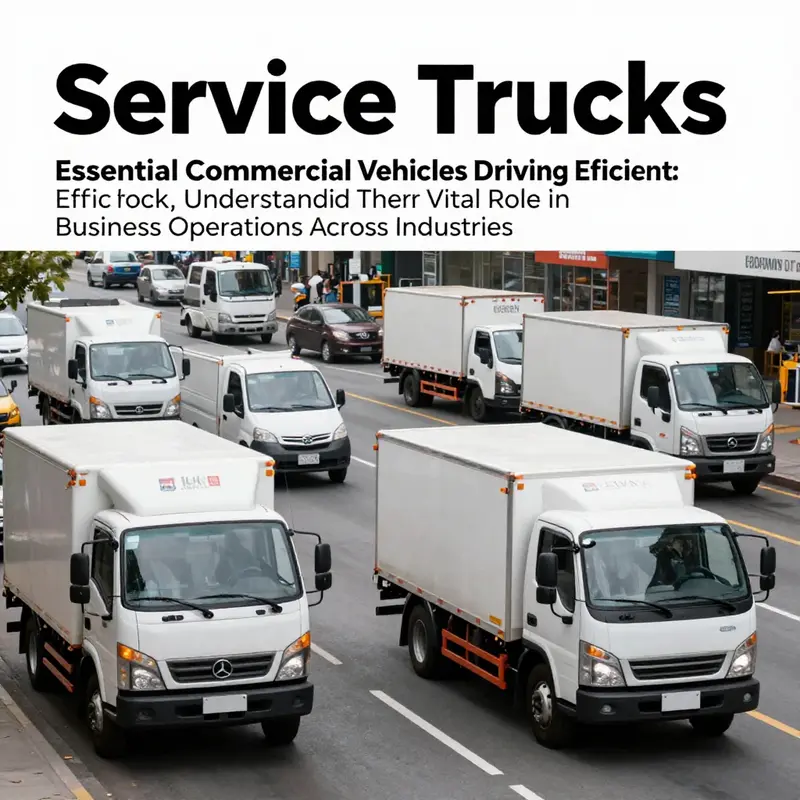
Service trucks serve as a backbone for various industries, providing essential support for maintenance and repair activities. Understanding the classification of these vehicles as commercial units is crucial for manufacturing, distribution, retail, construction, and small business operations. This article elucidates how service trucks integrate into the commercial vehicle category, their functional roles in businesses, regulatory standards affecting them, and the market trends impacting their use. Through a comprehensive examination, we aim to empower business leaders with the insights needed to leverage service trucks effectively.
Why Service Trucks Belong in the Commercial Vehicle Category
Defining the line between personal vehicles and commercial tools is simpler when you look at purpose. Service trucks exist to support business operations. They carry tools, parts, and technicians to a job site. They are configured for repeat work tasks. Those functional facts shape how regulators, insurers, and fleet managers classify them: as commercial vehicles.
A service truck’s core identity comes from its mission. Unlike a family sedan or a recreational pickup, a service truck is built and used to deliver a service. It might be a mobile repair shop, a utility crew’s work platform, a roadside assistance vehicle, or a mobile diagnostic unit. The equipment it carries—hoists, compressors, tool cabinets, ladders, and specialized electronics—changes the vehicle’s design and operating profile. That profile aligns with the established definition of commercial vehicles: vehicles designed and used to move goods, equipment, or people as part of a business.
Classification arises from more than semantics. Authorities turn to measurable factors: usage, payload, and gross vehicle weight (GVW). Commercial vehicle categories commonly distinguish themselves by GVW thresholds and payload capability. Vehicles built for sustained heavy-duty tasks tend to have GVWs far above typical passenger cars. They are engineered for durability and frequent high-load cycles. Service trucks used in utilities, telecom maintenance, construction, and emergency response need that durability. They are therefore grouped with other commercial vehicles for regulatory, tax, and safety reasons.
Regulatory systems vary by country, but consistent criteria repeat across jurisdictions. If a vehicle is registered to a business, if it bears signage for a commercial operation, or if its primary function is to carry equipment and personnel for hire, regulators tend to classify it as commercial. This is not purely theoretical. Registration classes, licensing rules, insurance rates, and inspection regimes are structured around this distinction. For example, higher GVW may trigger stricter brake and emissions inspections. Use for hire can impose hours-of-service or vehicle maintenance requirements. Those obligations reflect an underlying fact: service trucks operate in contexts where public safety, reliability, and accountability matter.
The practical implications of treating a service truck as a commercial vehicle are wide-ranging. Owners face different registration and licensing procedures. Insurance is priced based on risk exposures tied to industrial work and on-road time. Maintenance schedules often become more rigorous because commercial classification anticipates heavy and continuous use. Tax and accounting treatment can also change: commercial assets are eligible for business deductions and must be recorded on balance sheets differently than personal vehicles. These differences influence purchasing decisions and fleet planning.
Ambiguities arise at the edges. Light-duty pickups and vans that serve both family and business roles can create classification disputes. A pickup used occasionally by a contractor for personal errands but primarily transporting tools to jobs will usually be treated as commercial. Conversely, a personal truck with a tool box that rarely sees business duty might remain classified as a private vehicle. The determining factor is the primary use and intent, not simply the presence of tools or a bed cover.
Another gray area involves vehicle modifications. Adding specialized equipment can push a vehicle into a commercial category even if the base model is consumer-grade. A van fitted with shelves, a ladder rack, and a service crane is effectively a mobile workplace. Regulators and insurers evaluate such modifications when determining classification. In many regions, the legal framework requires disclosure of significant equipment changes for accurate registration and compliance.
From an industry perspective, service trucks form a significant segment of the commercial vehicle market. They are essential components of supply chains, infrastructure maintenance, and emergency services. Market data demonstrate the scale: millions of commercial vehicles are produced annually to meet service and freight needs. These vehicles are tailored to specific operational demands—weight distribution, suspension tuning, electrical capacity, and power take-off systems that ordinary passenger vehicles do not require. That technical specialization reinforces the rationale for commercial classification.
For fleet managers, the commercial designation affects procurement choices. Vehicles bought for service work must meet job-specific requirements while also satisfying regulatory demands. That leads to decisions about chassis class, GVW selection, body style, and the integration of service equipment. The true cost of ownership for a commercial service truck includes regulatory compliance, fuel use under heavy loads, scheduled maintenance, and downtime risk. Metrics used to evaluate these costs are those used across the commercial vehicle industry.
Safety regulations also follow the commercial label. Service trucks often operate at roadside, on job sites, or in confined urban spaces. That increases exposure to hazards for operators and the public. As a commercial vehicle, a service truck is subject to safety standards designed to mitigate those risks—lighting and conspicuity requirements, securement of loose cargo, and vehicle stability standards for lifting equipment. Compliance practices are routinely audited in many sectors; failure to meet standards may result in fines or operational restrictions.
Insurance markets treat service trucks differently than personal vehicles because of risk profiles. Commercial policies account for higher operating hours, payload-induced wear, and the liability associated with on-site operations. Coverage can include specialized provisions covering tools, equipment, and hired operators. This tailored protection is another reason service trucks align naturally with the commercial vehicle class.
Environmental and emissions rules are also tied to classification. Commercial fleets often face stricter emissions standards or reporting requirements than private vehicles. Where municipal ordinances or national regulations aim to reduce urban emissions, commercial fleets—including service trucks—may be targeted for retrofit programs or phased fuel transitions. Those policy levers reflect the outsized impact commercial fleets have on air quality and the built environment.
Operationally, thinking of service trucks as commercial assets changes how businesses approach maintenance and staffing. Preventive maintenance programs are more common among commercial operators because downtime costs money. Driver training and qualification standards are more likely to be formalized when the vehicle carries specialized machinery or operates in hazardous conditions. These operational habits improve reliability and safety, and they reflect the expectations placed on commercial vehicles by customers and regulators.
Finally, classifying service trucks as commercial vehicles has implications for innovation. Manufacturers and upfitters design bodies, powertrains, and telematics packages with commercial operators in mind. Those innovations aim to reduce lifecycle costs, increase uptime, and meet regulatory requirements. The feedback loop is clear: because service trucks are commercial by nature, technological investments flow toward commercial-grade solutions rather than consumer-level conveniences.
Throughout this discussion, the constant is purpose. When a vehicle is acquired, modified, and used to deliver services for a business, it behaves like a commercial vehicle. That behavior triggers a chain of consequences—legal, financial, operational, and technical—that align service trucks with the commercial vehicle definition used across the transportation sector.
For a grounded, technical overview of the commercial vehicle category and its standards, see the comprehensive resource at ScienceDirect: https://www.sciencedirect.com/topics/engineering/commercial-vehicles
For operators managing service fleets, tracking industry trends in maintenance and fleet management is valuable. Insights into maintenance practices for private and commercial fleets can inform replacement cycles and safety programs; one useful reference on that topic is this discussion of private fleets and maintenance trends: private fleets trends in trucking maintenance.
In short, a service truck’s design, use, and regulatory treatment squarely situate it within the commercial vehicle category. Recognizing that classification helps businesses plan acquisition, comply with law, manage risk, and invest in the right equipment for reliable, safe operations.
Mobilizing Maintenance: The On-Site Backbone of Commercial Service Operations
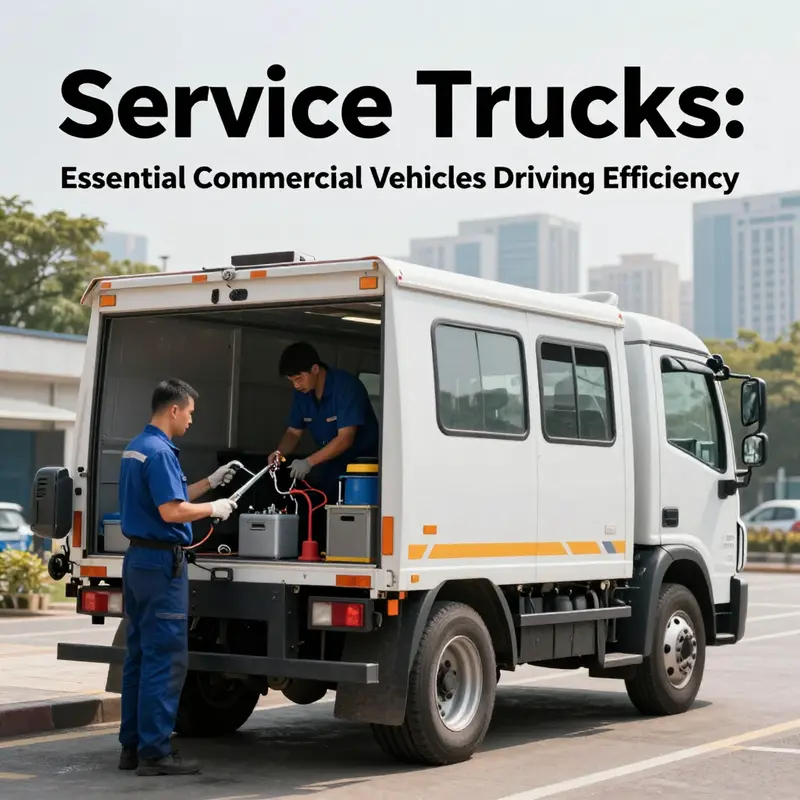
Across industries like rail, civil utilities, and mining, service trucks operate as mobile work platforms that bring the workshop to the job site. They are not merely transport vessels; they are independent, on-site work units designed to keep equipment running, assets up, and networks connected when time matters most. In industrial landscapes where outages, breakdowns, and installations can trigger cascading delays, these trucks function as a portable maintenance hub, a rolling extension of the shop floor. Their value lies less in the miles they cover and more in the tasks they enable at height, at depth, or under the most challenging conditions. A service truck carries the crew, the tools, the spare parts, and the know-how needed to diagnose, repair, and install with minimal interruption to the larger operation. When a utility line goes down miles from a repair depot or a rail switch needs immediate attention to prevent a service interruption, the service truck is the difference between a days-long outage and a one-day fix. This is why modern fleet strategies increasingly view these vehicles as essential assets in the commercial vehicle ecosystem, not as optional add-ons to the core fleet.
The physical design of service trucks reinforces their function. They typically feature a flat, open platform that ranges from roughly 16 to 24 feet in length. The open configuration creates a stable workspace at the job site, capable of staging tools, equipment, and personnel side by side with the work area. Side rails provide safety and organization; tie-down anchor points allow crews to secure heavy components and fragile parts alike, reducing the risk of movement during transport or operation. A built-in winch system is another staple, enabling heavy lifting and precise positioning without requiring an additional crane for every minor task. When the work involves heavier components or awkward placements, the option to add a crane expands the truck’s capability dramatically. The crane-fed capability alters project timelines by removing the need to coordinate a separate lifting contractor, a change that often translates into faster repairs, reduced downtime, and clearer accountability for on-site safety practices.
This combination of workspace, stabilization, and lifting power makes service trucks particularly well suited to industries where on-site work is the norm, not the exception. In rail maintenance, for example, crews must inspect ties, replace track components, and install signaling hardware in environments that are noisy, congested, and physically demanding. A mobile platform that can carry a technician and a full toolkit, plus a crane or winch to lift components into place, transforms a two-step process into a one-stop operation. In civil utilities, the on-site truck enables rapid response during outages. Transformers, poles, and switchgear can be moved, installed, and wired with a tightly coordinated crew, all from the back of a single vehicle. The mining sector also benefits, as on-site service trucks can deliver and install heavy equipment parts, replace hydraulic components, or set lubrication points on equipment that operates far from the nearest shop. In each case, the vehicle becomes a kinetic extension of the maintenance program, a rolling workshop that reduces downtime, accelerates project timelines, and supports continuous production or service delivery.
A key advantage of this mobile workshop is the integrated nature of the tools and personnel it carries. The truck is designed to transport both the workforce and the equipment needed for the job at hand. That means technicians arrive with their diagnostic devices, a supply of spare parts, and the right hand tools to complete tasks on the first visit. It also means crews can adapt on the fly to evolving site conditions. If a repair requires an extra set of hands or a different tool, the workflow can shift without the delays associated with returning to base or pulling parts from a distant warehouse. The result is a more predictable maintenance cadence and a model of reliability that supports downstream operations—from production lines to customer service commitments. In environments where even a brief pause can ripple into schedule slippage, the ability to mobilize a complete, ready-to-work crew on demand is not merely advantageous; it is essential.
Cranes integrated into service trucks further elevate the utility of these platforms. The crane enables precise handling of heavy components such as transformers, large motors, or structural parts that would otherwise require separate lifting equipment or contractors. By bringing lifting capability onto the same platform that carries the tools and personnel, the truck reduces logistics complexity and response times. It also improves safety by minimizing manual lifting and the associated risks. External handling can be error-prone and time-consuming, and it introduces coordination challenges among multiple vendors or teams. With a crane on the service truck, technicians can plan, lift, and install within a single workflow, maintaining control of safety practices and ensuring that each step aligns with on-site standards. Industry observers note that service trucks equipped with cranes are a strategic investment for companies seeking to boost productivity and maintain high reliability in demanding work environments. Though this approach demands careful maintenance of the lifting equipment and regular safety checks, the payoff in reduced downtime and improved job accuracy can be substantial.
The value of service trucks goes beyond the physical capabilities they provide. They embody a business philosophy about how maintenance and field service should operate in modern fleets. Rather than dispatching a crew after a breakdown or arranging multiple visits to a job site, a service truck enables proactive maintenance, rapid fault isolation, and on-site installation or repair. In both planned maintenance programs and emergency response scenarios, these vehicles function as the nucleus of field operations. As crews arrive with a portable workshop, they can perform routine tasks that previously required a trip to a shop, thereby shortening repair cycles and freeing up other resources for higher-priority work. This on-site efficiency translates into measurable improvements in fleet uptime, a central performance metric for companies that rely on complex, asset-intensive operations.
From a management perspective, the use of service trucks integrates with broader fleet strategies, especially those centered on asset reliability, operator training, and the efficient allocation of capital. The decision to deploy such vehicles involves balancing upfront costs—vehicle customization for on-site work, lifting capabilities, and specialized tool storage—with long-run savings in maintenance cycle times and reduced external dependencies. A well-planned service-truck fleet can lower the total cost of ownership by consolidating tasks, improving first-time fix rates, and enabling technicians to complete more work within a single shift. That optimization of field productivity also reverberates through planning and budgeting cycles, influencing how maintenance teams forecast parts inventories, schedule preventive maintenance, and coordinate with operations that demand a steady, uninterrupted flow of service.
An important thread running through these observations is the consistent alignment of service trucks with the commercial purposes they serve. Commercial vehicles are defined by their design and use for business activities, including the transportation of goods or people in service of enterprise objectives. Service trucks embody this definition through on-site service delivery, on-site repair, and mobile support functions that keep critical systems operating. They are not recreational or personal-use vehicles; their configuration, equipment, and workflows are purpose-built to enable business outcomes. In practice, this classification is reinforced by industry norms and maintenance philosophies that treat service trucks as integral components of the commercial vehicle ecosystem. The need for on-site mobility, reliability under demanding conditions, and the capacity to deliver specialized tasks in a single mobilized unit all support the argument that service trucks are part and parcel of professional fleets.
For fleet managers and operators, the ongoing challenge is to optimize the mix of capabilities on each truck to match the demands of the assets they serve. This requires thoughtful decisions about payload, platform length, safety features, crane rating, and the spectrum of tools carried on board. It also means planning for ongoing maintenance of the crane and winch systems, ensuring that the truck’s electrical and hydraulic components remain in peak condition, and training technicians not only to perform repairs but also to operate the lifting gear safely and efficiently. This holistic approach to on-site maintenance underscores a broader principle: service trucks are most valuable when they enable teams to perform high-quality work from the field, with minimal dependency on external resources. In that sense, their role is less about the vehicle itself and more about the operational model they enable—an on-site, ready-to-work framework that keeps critical infrastructure resilient and productive.
As the industrial landscape continues to evolve, the practicality of service trucks will be shaped by trends in electrification, automation, and the increasingly integrated nature of fleet management. The shift toward electric powertrains for commercial vehicles, and the parallel push for smarter tools and remote diagnostics, promise to further enhance on-site efficiency. A service truck of the future may carry a modular toolbox with digital inventories, real-time part availability data, and connected devices that guide technicians through repair sequences while maintaining robust safety logs. The core concept—bringing the workshop to the asset—will endure, but the means by which that workshop is powered, organized, and guided will become more sophisticated. The effect on maintenance schedules, downtime, and the overall reliability of service operations will likely be substantial, reinforcing the central point that service trucks are an indispensable link in the chain of commercial productivity.
For readers following the broader discourse on fleet operations and maintenance trends, consider exploring how these dynamics are shifting within private fleets and maintenance strategies. This perspective helps connect the practical realities described here with the strategic planning that governs large-scale maintenance programs. While the specifics of each industry may differ, the underlying principle remains the same: service trucks are designed to maximize field productivity, reduce downtime, and support a reliable, business-focused fleet. The chapter thus circles back to the central inquiry—yes, a service truck is a commercial vehicle—but with a nuanced understanding of how its on-site, mobile capabilities power the broader operations that define modern industry.
External resource for further reading on crane-enabled service trucks: Why You Need a Service Truck With a Crane | Top Manufacturers. This resource expands on the safety, productivity, and project-time benefits of equipping service trucks with cranes, underscoring why many fleets view this capability as a strategic necessity when aiming to accelerate on-site work and minimize exposure to external coordination risks.
Navigating the Rulebook: How Regulatory Standards Define Service Trucks as Commercial Vehicles
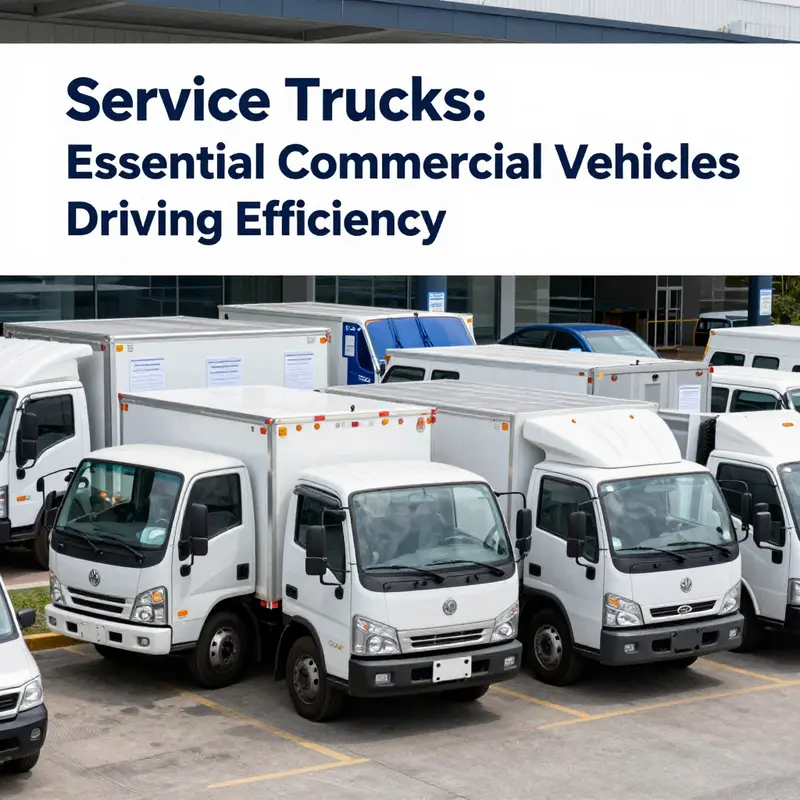
Regulatory standards shape how service trucks are designed, operated, and maintained. In the United States, the FMCSA and FMCSR provide the core framework for driver qualifications, hours of service, vehicle maintenance, and safety inspections. These rules influence what payload a service truck can carry, how tools are organized on the road, and how fleets schedule preventive maintenance to minimize on-site failures. In Europe and other regions, type-approval and emissions standards ensure that vehicles meet safety and environmental targets before they are permitted on the road, with cross-border rules encouraging harmonization to support international work. For service fleets, compliance translates into practical decisions about equipment, training, and budgeting for upgrades—balancing the need for reliability with the push toward cleaner powertrains and telematics-enabled operations. By treating service trucks as part of a regulated ecosystem, managers align operational efficiency with safety, worker protection, and environmental stewardship, while maintaining flexibility to adapt to changing standards and new technologies.
On the Move: Market Trends and Economic Impact of Service Trucks in the Commercial Vehicle Ecosystem
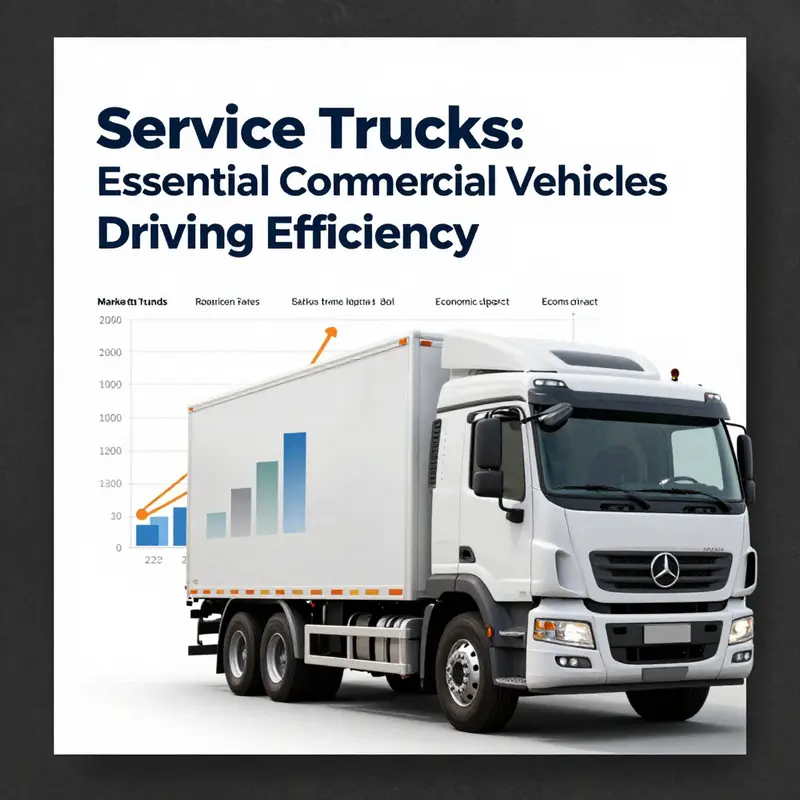
Service trucks sit at a practical crossroads of mobility, labor, and infrastructure. They are designed not for personal propulsion or leisure but to enable on-site maintenance, repair, and support services that keep larger systems—electric grids, communications networks, water and gas lines, construction projects, and fleet operations—functioning. By their very purpose, these vehicles are commercial, their value tied to business continuity, rapid response, and the ability to deploy skilled personnel with the right tools exactly where they are needed. The formal definitions that distinguish commercial vehicles from private ones hinge on use, duty cycle, and impact on commerce. When a truck routinely carries specialized equipment, technicians, and parts to service a utility, a telecom site, or a municipal facility, it transitions from a personal conveyance to a business asset. In this sense, service trucks inhabit the core of the commercial vehicle ecosystem, bridging field operations with the broader logistics and service delivery networks that modern economies rely on to operate smoothly. The implications of this status extend beyond classification: they influence fleet planning, regulatory compliance, financing decisions, and investments in technology that improve efficiency and reliability. The analytical logic is straightforward, yet its consequences are wide-ranging. If a vehicle is tasked with sustaining critical infrastructure or delivering time-sensitive on-site services as part of a business model, its ownership, operation, and cost structure should be evaluated through a commercial lens. This frame aligns with the broader ecosystem of commercial vehicles, where a spectrum of body styles—from utility vans to heavy-duty service rigs—serves different niches but shares a common objective: to move specialized capabilities to the point of need with speed and precision. Within this frame, service trucks become a particular focal point because their value is closely tied to uptime, response time, and the ability to execute complex tasks away from a depot. The market realities in this segment reflect the dual pressures of growing demand for reliable field services and the imperative to manage costs in a heavily regulated, data-rich environment. The longer-term trajectory is shaped by urbanization, the expansion of digital networks, and the push toward cleaner, smarter fleets. The global market for commercial vehicles, of which service trucks are a vital subset, has demonstrated sustained growth driven by these forces. In a historical snapshot, the broader commercial vehicle sector moved tens of millions of units annually, underscoring how deeply embedded these assets are in the flow of goods, services, and people. A widely cited data point from recent years notes a global market reaching upward of 24 million units sold each year in the late 2010s, a figure that underscores the scale and the strategic importance of commercial vehicles in supporting essential services. While passenger cars capture most attention in consumer markets, the service and utility segment has been expanding as networks—electric, telecommunications, and municipal services—become more complex and geographically dispersed. The demand for service trucks grows not only from the direct need for field technicians but also from the broader incentives to reduce downtime and improve service levels across critical infrastructures. The practical implication for fleet managers and business leaders is that these vehicles must be understood as tools that enable operational resilience. When a transformer station requires routine maintenance, a hospital needs emergency repairs, or a telecom node must be serviced to prevent outages, the service truck becomes the moving platform that translates plans into on-site outcomes. The shift toward connected and automated capabilities further reinforces their role. On-board telematics, real-time diagnostics, and route optimization tools allow every service mission to be tracked, measured, and refined. This integration of information technology with vehicle hardware is no longer a luxury but a central feature of modern service fleets. In regions where smart city initiatives and industrial automation are taking hold, the adoption of connected and even electrified service trucks is accelerating. The fuel and emissions profiles of these fleets matter in both cost and policy terms, especially in urban centers where air quality rules and congestion charges shape operational strategies. The electrification trend, while more pronounced for city-based, lighter-duty service vehicles, is expanding into heavier service trucks as battery technology improves and charging infrastructure matures. The environmental dimension is not simply about compliance with regulations; it also translates into cost management. Electric and hybrid configurations promise lower per-mile operating costs, particularly in urban routes with frequent start-stop cycles and predictable service stops. Over the life of a fleet, this can yield meaningful savings in fuel and maintenance, while also reducing the environmental footprint of essential services. These economic signals converge with macroeconomic dynamics. Service trucks, like other commercial assets, are subject to capital budgeting cycles that weigh upfront purchase costs against expected uptime, maintenance expenditures, and productivity gains. When a fleet manager evaluates a service truck purchase, they do not consider the vehicle in isolation. They weigh it against depot capacity, technician availability, and the reliability of supply chains that deliver tools, spare parts, and remote diagnostics. The ability to mobilize technicians quickly reduces downtime for critical infrastructure and supports higher service levels for customers who depend on uninterrupted operations. In this sense, service trucks contribute to a broader productive capacity by enabling a more responsive service model. The market effects extend into competition and labor dynamics as well. As service trucks become more capable, skilled technicians can be deployed more flexibly, allowing companies to optimize routing, scheduling, and on-site work sequencing. This has knock-on effects on workforce planning, training, and retention. The integration of robust fleet analytics—utilizing telematics, predictive maintenance data, and route optimization algorithms—helps translate field activity into measurable productivity gains. The economic narrative is one of leveraging assets to minimize downtime, improve service levels, and support the reliability of essential networks that modern communities rely on daily. In North America and Europe, where smart city initiatives and industrial automation are advancing, fleets are combining cleaner propulsion options with data-driven management to address both regulatory expectations and competitive pressures. The urban environment makes electrification more attractive, and urban service patterns often align with the capabilities of cleaner, quieter, and more compact electric or hybrid powertrains. Yet the transition remains nuanced. Heavier service applications that require extended range and high torque continue to rely on conventional propulsion for many applications, even as battery technologies improve. This reality pushes fleet operators toward a phased approach: electrify where the business case is strongest, defer or blend propulsion where the case is weaker, and invest in charging and energy management where grid capacity and timing align with service windows. Telematics and data-sharing platforms stand out as essential enablers, turning service trucks from mere conduits of tools into intelligent nodes within a larger network. Real-time tracking of vehicle status, parts inventory, and technician availability transforms field operations into a synchronized system. The ability to monitor fuel consumption, tire wear, engine health, and battery status not only reduces unexpected breakdowns but also informs predictive maintenance schedules. This reduces costly downtime and extends the useful life of both vehicles and their equipment. It is in this sense that service trucks contribute to productivity beyond the obvious function of carrying tools. They are mobile service centers that bring capability to the point of need, at the time of need. The economic impact of this capability is indirect but substantial: faster response times improve customer satisfaction, reduce revenue loss from outages, and create opportunities to consolidate work orders across a region. In practice, a service truck fleet can be a differentiator in competitive markets where downtime translates directly into lost service opportunities and customer trust. The supply chains that underpin these operations also benefit. When maintenance crews can reach remote sites quickly or respond to outages with minimal delay, the resilience of critical infrastructure improves. This resilience, in turn, supports broader economic activity by reducing the risk of service interruptions that ripple through industries and households. From a policy and planning perspective, the ascent of service trucks within the commercial vehicle category calls for integrated management that aligns capital investment with broader system objectives. Governments and regulators increasingly focus on emissions, safety, and interoperability standards that influence how these fleets are formed, operated, and maintained. This is not merely about compliance; it is about enabling efficient, reliable service delivery in a world that relies on continuous operation of essential networks. The cross-border and regional dimensions also matter. As networks expand and interconnect, the demand for standardized service capabilities grows, as does the need for fleets that can operate across jurisdictions with consistent maintenance practices and data interoperability. The market signals available to decision-makers emphasize that service trucks are not fringe assets; they are central to the maintenance and delivery of critical services. They support the uptime of utilities, telecommunications, and public services while enabling private enterprises to meet service-level commitments. In this sense, the economic impact of service trucks is not limited to their purchase price or fuel efficiency. It encompasses the entire chain of activity they enable—from on-site diagnostics and repairs to the scheduled maintenance that keeps systems resilient in the face of demand and disruption. For those seeking to anchor this discussion in broader market analysis, one can explore industry perspectives on trends in trucking and logistics, including the evolution of private fleets and maintenance strategies. A useful reference point is the synthesis of market dynamics and economic factors impacting the trucking industry, which provides context for how service trucks fit within the larger commercial vehicle landscape. To connect this chapter with related analyses and a broader business lens, readers may consult insights on one of the sector’s recurring themes: Key Economic Trends Impacting the Trucking Industry. This internal overview helps situate service trucks within a framework that emphasizes efficiency, reliability, and strategic asset management. Key Economic Trends Impacting the Trucking Industry. The discussion here also aligns with ongoing work on how intelligent transportation systems and electrification influence fleet performance, costs, and service delivery. As digital networks expand and urban infrastructures evolve, service trucks will continue to adapt, integrating more sophisticated sensing, communication, and energy solutions while remaining dedicated to the core mandate of getting skilled labor and the right equipment where it is needed, when it is needed. This adaptability is critical for maintaining the continuity of essential services in a changing world, and it reinforces the conclusion that service trucks are indeed commercial vehicles by design and by function. For a broader technical lens on the commercial vehicle landscape, researchers and practitioners can consult established overviews such as ScienceDirect’s topic on Commercial Vehicles, which synthesizes current thinking about how these assets are deployed, operated, and evolved in response to market and policy signals. External resource: https://www.sciencedirect.com/topics/engineering/commercial-vehicles
Final thoughts
In conclusion, service trucks are undeniably classified as commercial vehicles, integral to maintaining operational efficiencies across diverse industries. Their unique capabilities and regulatory compliance not only enhance business operations but also demonstrate their crucial economic role. By understanding the classification, functional roles, regulatory standards, and evolving market trends of service trucks, companies can strategically leverage these vehicles for improved efficiency and service delivery. This knowledge equips businesses to make informed decisions about investments in service truck operations.