
For manufacturing, distribution, retail, and construction firms, understanding the costs associated with servicing trucks is vital in maintaining operational efficiency. Routine maintenance ensures vehicle longevity, while quick repairs avert costly downtime. This article outlines the various aspects affecting service call costs, ranging from regular maintenance to complex repairs, shedding light on different truck types and crucial factors that influence pricing. By the end of this guide, readers will have a clearer understanding of how to budget for service calls, enabling strategic decision-making in fleet management.
Counting the Toll: How Truck Service Calls Shape Maintenance Costs, Downtime, and Fleet Budgets
When a truck requires service, the price tag attached to a service call is only part of the picture. The figure you see at intake—whether it is a simple oil change or a complex diagnostic of a propulsion system—does not capture the full economic reality. A service call is a gatekeeper to reliability, yet it also functions as a hinge on which fleet budgets swing between predictable expenses and costly downtime. The cost of a service call can swing dramatically based on several factors: the type of service, the location where the work is performed, the vehicle make and model, and whether the service is routine or an emergency. What begins as a routine maintenance event can quickly evolve into a network of associated costs, especially when the service requires specialized equipment, advanced diagnostics, or skilled technicians with access to limited parts inventories. To understand the financial dynamics, it helps to walk through the typical cost structure with a practical mindset that fleet managers and owner-operators regularly apply when planning maintenance budgets and predicting downtime costs.
At the core, basic maintenance services set the floor for what fleets should expect on their work orders. Routine tasks such as oil changes and filter replacements for heavy‑duty trucks remain essential, but they are not uniform in price. In many cases, a standard oil change with a full filter replacement can approach the mid-thousands per service event, especially for larger vehicles or models with specialized lubrication requirements and extended oil service intervals. A typical benchmark suggests around a thousand to a few thousand dollars per visit, with common practice landing near the $1,500 mark for standard heavy‑duty applications in busy fleets. The reason for the higher end of this spectrum, even for what seems routine, is twofold: labor intensity and the breadth of inspection that often accompanies a scheduled maintenance window. When technicians pull the hood and check drivetrain components, air brake systems, suspension tuning, and undercarriage wear, the labor clock starts sooner and runs longer. If the service includes comfort and safety inspections alongside lubrication, the bill can push higher still because qualified technicians are performing a broader set of procedures in one visit.
Diagnostics and inspections, the more cerebral counterpart to hands‑on maintenance, introduce another layer of variability. A comprehensive inspection that covers critical safety systems—brakes, suspension, tires, lights, and electronic controls—tends to fall in a more predictable range, yet it can still vary by the truck’s age, configuration, and the extent of the inspection. A single diagnostic visit often lands between two hundred and five hundred dollars, depending on the depth of testing and the equipment used. For fleets that insist on a meticulous health check, the cost may be modest relative to the value of preventing a roadside failure. Yet certain high‑cost failure points loom in the background: diesel particulate filters DPFs for Tier 4 or Euro VI engines, for example, can be a major expense if cleaning is necessary or a full replacement becomes unavoidable. DPF cleaning typically begins in the eight‑hundred to one‑thousand‑dollar range, a price that reflects specialized cleaning processes and the need to preserve emission system integrity. Full DPF replacement, when required, can exceed ten thousand dollars, a figure that reverberates through fleet budgeting as a potential outlier rather than a routine event. These numbers illustrate that even routine service can suddenly assume a high consequence when emission control components require attention, underscoring the importance of proactive maintenance and timely interventions.
The prospect of emergency roadside service introduces another dimension of cost, and it carries its own logic of urgency. Dispatch and labor charges in emergency scenarios are higher because the provider must respond rapidly, mobilize travel resources, and often arrange temporary constraints or detour planning to minimize downtime. Fees for dispatch and labor in such situations commonly range from three hundred to a thousand dollars before any parts are accounted for. The price can escalate quickly when a tow is necessary, when a rental vehicle is used to keep the driver moving, or when the breakdown occurs in a remote area where travel time is extended. In practice, the combination of emergency labor and towing can create a cascade of costs that dwarfs a routine maintenance bill, especially if downtime translates into missed deliveries or disrupted schedules for a regional or national fleet.
The composition of costs also shifts with the type of service provider and the truck’s eigencharacteristics. Fleet operators and long‑haul operators characterize a similar pattern: specialized services attract higher labor rates and more expensive parts because of the complexity of the systems involved and the relative scarcity of qualified technicians. High‑end imported models often command higher rates due to specialized tooling, proprietary diagnostics, and the limited availability of spare parts. Conversely, domestic or mass-produced models with widely available parts inventories can experience lower service costs and shorter downtime because parts are more readily sourced and technicians can access training and tools more readily. The tension between parts availability and labor efficiency often drives total service call cost. In practical terms, a fleet with a balanced mix of vehicle types may experience invoices that vary widely from one visit to the next, not because the shop is inflating prices, but because the underlying maintenance demands and repair pathways differ by model and configuration.
Beyond the mechanics of a single service call, fleets increasingly pursue preventive maintenance strategies to stabilize costs and reduce unscheduled downtime. Preventive maintenance schedules are designed to anticipate wear and to coordinate service windows with predictable parts replacements and inspections. In some cases, maintenance contracts bundle routine visits and pre‑season safety inspections as part of a fixed‑rate program rather than charging per visit. These arrangements help fleets convert fluctuating maintenance costs into a more predictable annual expense, which is especially valuable for budgeting across fluctuating freight demand throughout the year. For some fleets, annual maintenance plans can start in the low five‑thousands, scaling upward to ten thousand dollars or more depending on mileage, vehicle specification, and duty cycle. While the upfront commitment may appear higher, the downside risk of unexpected components failure, emergency calls, and lost revenue during downtime is often mitigated by the predictability and reliability gained from a formal plan.
The numbers above reveal a broader principle: the cost of a service call is a function of both the service envelope and the strategic choices that fleets make about maintenance governance. Fleet managers who emphasize preventive maintenance, proactive diagnostics, and early intervention tend to see lower total costs over the life of a vehicle. They aim to avoid drastic surprises such as sudden DPF replacements or emergency breakdowns on a highway corridor during peak transit hours. The tradeoffs, however, require careful budgeting, reliable data collection, and a network of trusted service providers who can deliver consistent results across a diverse fleet. The value of a well‑designed maintenance program is not only measured in dollars saved on parts and labor but also in the reduction of downtime during peak operations, which translates into on‑time deliveries and improved customer service. Even with fixed‑rate maintenance plans, fleets should track the true cost of ownership by comparing planned maintenance spend against unplanned downtime, towing, and lost revenue. When downtime is minimized, the per‑mile cost of maintenance tends to fall, and the reliability of the fleet rises in parallel with operator confidence.
For fleets that are moving toward standardized maintenance programs, a growing body of practice highlights the role of supplier partnerships in cost containment and reliability. The trend toward structured maintenance plans often involves close collaboration with certified service providers who can deliver consistent service quality, leverage standardized inspection checklists, and coordinate parts procurement to reduce lead times. This collaborative approach helps fleets shorten the service cycle, lower the risk of diagnostic ambiguity, and maintain consistent service experiences across multiple locations. In addition, fleets frequently leverage data feedback loops from service visits to inform ongoing maintenance priorities and to refine the timing of future services. Even when the per‑visit price is higher in a given month, the net effect can be cost savings over a multi‑visit horizon when breakdown risk and downtime are curtailed. For fleets seeking this stability, a practical tactic is to include a review of maintenance history and future plans in the contract negotiation, ensuring that the plan’s cadence aligns with the vehicle’s duty cycle and the fleet’s operating tempo.
The geographic dimension also colors service call economics. Urban centers with dense networks of service centers can offer shorter wait times and quicker parts access, translating into lower downtime and faster return‑to‑service after routine maintenance or minor repairs. Rural or remote locations may demand higher travel costs and longer labor windows due to limited technician availability, leading to higher per‑visit costs and longer downtime if a tow is required. The capacity of a service network in a given region can thus tilt the cost balance that a fleet negotiates when choosing maintenance arrangements and scheduling maintenance windows. As fleets optimize routes, maintenance windows, and on‑site service capture, they create a more resilient operating model that accommodates the realities of a highly variable trucking environment.
To translate these insights into actionable practice, fleets should start with a pragmatic budgeting approach anchored in two streams: predictable maintenance and contingency planning. Predictable maintenance is built from a disciplined preventive maintenance schedule, defined service packages, and fixed‑rate options when appropriate. Contingency planning covers emergencies, including a clear policy for roadside assistance and towing, a predefined set of acceptable substitutes for downtime, and a mechanism to quantify the opportunity costs of delayed shipments. The end result is a maintenance budget that reflects not only the price of a service call but also the costs that arise when a vehicle is offline during a busy season. This integrated view helps fleet executives communicate the economic rationale of maintenance to stakeholders, from operations managers to finance teams, and to align expectations with the broader goals of reliability and service level commitments.
For readers seeking further context on these cost dynamics, current industry data and trends offer a useful benchmark. The documented cost trends highlight that while routine maintenance remains a necessary expense, the real driver of cost volatility lies in diagnostics, emissions system interventions, and emergency responses. A broader industry analysis underscores that preventive maintenance and smart procurement practices can dampen the volatility of annual maintenance spend and reduce downtime exposure. This broader lens on maintenance economics reinforces the practical takeaway: a service call is not just a line item; it is a predictor of uptime, operational reliability, and the ability to meet service commitments in a demanding logistics landscape.
For fleets that want to explore these ideas in a structured way, consider the path of benchmarking against peers and aligning maintenance practices with the realities of your route and cargo mix. A well‑documented maintenance history, paired with a consistent service standard and a shared understanding of turnaround times, fosters a predictable maintenance ecosystem. The result is not merely a lower bill per visit but a more reliable fleet capable of delivering on tight schedules and maintaining high equipment availability. In the end, the measure of a service call is not only its price tag but its contribution to continuous operations, lower downtime, and the confidence that the fleet can keep its commitments on the road.
Internal link reference: For fleets increasingly adopting standardized maintenance programs, see private fleets trends in trucking maintenance. private fleets trends in trucking maintenance
External resource: For a broader industry perspective on maintenance cost trends and 2026 outlook, see FreightWaves industry report on truck maintenance cost trends 2026: https://www.freightwaves.com/industry-report/truck-maintenance-cost-trends-2026
Understanding Truck Service Calls: Costs, Drivers, and Budgeting for Reliability

When a truck falters on the road, a service call can arrive with a price tag that tests a fleet’s budgeting. The sticker shock, however, is not arbitrary; it reflects a constellation of variables that stretch beyond a single fix. The costs of truck service calls can range from a small emergency jump to a complex, around-the-clock recovery operation that tests a fleet’s budgeting and planning. Routine maintenance and inspections, often bundled with a contract or seasonal service, may fall into a predictable range, but the moment the issue involves an unfamiliar location, unusual hours, or sophisticated equipment, the invoice grows accordingly. For anyone responsible for keeping a fleet moving, understanding these components is not a luxury but a necessity. And the more you understand the forces behind the numbers, the better you are at forecasting downtime, scheduling preventive work, and steering conversations with service technicians toward efficiency and transparency.
Battery and jump-starts are common on the roadside. A straightforward jump can cost roughly 30 to 100 dollars, depending on travel time and regional labor rates. If the battery must be replaced, the bill can rise to 100 to 300 dollars or more for heavy‑duty units.
Beyond batteries, fuel delivery is another pricing stress test. Emergency refueling combines the fuel cost and a service fee; the total depends on how much fuel is needed and the truck’s location. Remote or hazardous locations raise the service fee and can extend arrival times.
When specialized help is needed, costs rise further. Mobile tire service can range from about 50 to 300 dollars, depending on tire size, brand, damage, and whether a repair suffices or a full replacement is required. On‑site service saves downtime but adds a premium.
Towing changes the math again. A base tow can start around 200 dollars; per‑mile charges often run 10 to 20 dollars per mile beyond the initial point. Heavy‑duty or multi‑axle configurations can push totals higher.
Emergency services and after‑hours support add a typical uplift of 10 to 20 percent because of urgency, risk, and rapid response needs. For fleets, it is essential to clarify after‑hours policies and plan contingencies for time‑sensitive deliveries.
Regional variations are real. Urban markets tend to have higher rates due to labor costs and vehicle density, while rural regions may offer lower base prices but longer wait times and greater travel costs. Downtime costs magnify these differences for a trucking operation.
Insurance and contracts can change the out‑of‑pocket picture. Some providers bundle roadside assistance into policies or maintenance programs, reducing or eliminating per‑incident charges and providing more predictable cash flow and uptime. A well‑structured plan can reduce volatility even if upfront costs are higher.
For budgeting, the best approach is to gather quotes from multiple providers, compare what each service includes, and consider the total impact on uptime for specific routes. Digital platforms can provide real-time availability and itemized quotes, making it easier to choose between mobile service and towing to a shop. Treat a service call as part of an overall maintenance strategy—from preventive care to emergency recovery—and align it with uptime targets and delivery windows.
To learn more about how maintenance strategies influence service calls in trucking, consider private fleets’ ongoing maintenance discussions. For readers seeking more on pricing dynamics, official provider portals and industry resources can offer regional insights and baseline quotes. In all cases, aim for a transparent cost breakdown that supports smarter budgeting and reliability.
The Toll of the Call: How Truck Class, Weight, and Distance Shape Service-Visit Costs
When a service call is needed for a truck, the immediate concern is often a single price. Yet the cost landscape is a layered metric, not a flat fee. The type of truck, its weight, the distance to the site, and the specific challenge at hand all help determine what a service call will actually cost. In many markets, including those that follow national guidance and regional pricing norms, the base price and the incremental charges form a spectrum that expands as trucks grow bigger, heavier, or more remote from the nearest service center. The result is a practical rule of thumb: smaller, lighter vehicles tend to be cheaper to assist, while heavy and ultra-heavy trucks can trigger substantial, sometimes surprising, bills. This mosaic reflects the practical realities of roadside assistance, towing operations, and on-site repairs where specialized equipment and labor time directly influence the final tally.
Consider the light end of the spectrum first. Light-duty trucks, such as small delivery vans and light pickups, are the easiest to tow and recover. The base service fee in this category sits roughly in the 500 to 1,000 RMB range. Why such a modest band? These vehicles usually fit standard tow trucks and standard handling procedures. They can be strapped, winched, and pulled with widely available equipment, and the crew can usually perform a basic assessment and service without needing unique, high-load tools. An example from a Guangdong scenario illustrates this: a two-ton delivery van would often incur a base fee near 600 RMB for a short-distance tow. The numbers align with the expectation that light-duty missions, while urgent, demand less specialized equipment and labor time than heavier counterparts. The per-kilometer component for light-duty calls generally sits in the neighborhood of 15 to 25 RMB, with most additional charges limited to exceptional circumstances rather than routine recovery. These figures underscore a key point for fleet managers and owner-operators: for legions of routine incidents, the cost ceiling is comfortably within reach, and predictable budgeting is feasible when the calls stay within light-duty parameters.
As trucks rise in size and weight, the pricing logic shifts. Medium-duty trucks, which include modestly sized freight units and larger utility vehicles, tend to carry base service fees in the 1,000 to 2,000 RMB range. The need for more capable towing gear—perhaps a medium-duty tow truck, a wider wheelbase placement, or heavier-duty winches—drives the higher baseline. It’s not merely the weight of the vehicle but the combined demands of maneuvering, stabilizing, and, in some cases, lifting heavy axles or transmissions. A practical example from Sichuan shows a 6-ton truck with a base rate around 1,500 RMB, with the potential for extra charges if the vehicle is loaded beyond its rated capacity. In this tier, the per-kilometer rate often climbs modestly, too, landing roughly in the 20 to 30 RMB range. Those modest shifts in the per-kilometer portion compound with any added time on the roadside, especially if tarps and cargo need to be moved or if the operator must manage road hazards or congested corridors.
The pricing logic grows more pronounced with heavy-duty trucks, those 8 tons and above. Here the base service fee typically begins around 2,000 RMB and can surpass 3,000 RMB depending on the region and the complexity of the operation. The equipment demands rise correspondingly: heavy-duty tow trucks, high-capacity winches, and flatbeds designed to lift substantial loads may be required, all of which translate into higher labor costs and longer on-site time. The geographic dimension matters once more; in some areas, the base rate for a heavy-duty scenario might reach into the mid- to upper-3,000 RMB range when the job demands advanced recovery techniques or complicated rigging. The per-kilometer component for heavy-duty calls generally tracks in the 22 to 25 RMB range, but this is not uniform across all locales. The bigger issue, though, is the weight profile, because the scale of the operation often triggers additional charges tied to the vehicle’s total weight, notably when the vehicle, loaded with cargo, exceeds 30 tons. In many invoices, you’ll see extra costs of 40 RMB per ton for weight beyond that 30-ton threshold, applied for the portion above the initial 30 tons.
For ultra-heavy or specialized trucks—think 15 tons and up, including container-haulers and semi-trailer configurations—the price architecture tends to sit well above the other tiers. The base service fee for these machines is rarely under 5,000 RMB, and in more complex situations, it can climb all the way toward 9,000 RMB. The rationale is clear: these operations require heavy-duty tow equipment, multi-axle coordination, and often a longer retrieval window when the job is off the beaten path. The per-kilometer rate, when applied beyond the initial 10 kilometers, typically lands in the 25 to 27 RMB range. The extra costs in this tier aren’t limited to distance. Overweight surcharges are a common feature when the vehicle’s total weight exceeds 30 tons, with additional fees that escalate at heftier increments, sometimes reaching as high as 40 RMB per ton for the excess. Time-based multipliers are also observed: night or weekend service can add 30 to 50 percent, and remote-area surcharges can double the price compared to urban zones where access and response times are more favorable. A representative scenario involving a 40-foot container truck in a remote region like Xinjiang might quote a base of around 6,000 RMB, then tack on 27 RMB for each kilometer beyond the initial 10, plus a substantial premium for night service in peak periods. The combination of distance, weight, and timing magnifies the total considerably, reminding operators that the most expensive service calls are not the ones that occur during ordinary, daylight hours in central areas but those that occur far from a service hub, at odd hours, and with significant payloads.
Together, these tiers sketch a pricing ladder that reflects both capability and risk. The base cost grows steeply as trucks require more specialized recovery assets, and the incremental costs accrue when the vehicle’s payload and operating conditions push beyond standard thresholds. It is not unusual for fleets to encounter a scenario where the base rate and per-kilometer charges are only the starting point, especially when weight, distance, or time-of-day factors multiply the final bill. In a broader sense, the landscape of service-call pricing reinforces a simple but important truth for anyone operating heavy transport: size matters, but context matters even more. A 10-ton regional delivery truck in a dense urban corridor may have a similar base call as a 6-ton truck in a rural setting if the operational constraints align, but the same 10-ton vehicle crossing a remote frontier with a cargo load can easily drift into a different cost territory because of the specialized equipment, longer on-site time, and constrained access.
Regional variability adds further texture to the pricing story. Coastal provinces, and metropolitan clusters, often exhibit higher base fees and per-kilometer rates due to denser traffic, greater labor costs, and the premium attached to rapid response in facilities that serve high-demand corridors. In contrast, inland provinces or less densely served regions may display lower base fees, although remote-area surcharges can occasionally erase the advantage when the job is physically distant from a service center or when difficult terrain complicates access. The upshot for fleet planners is clear: a single national figure is not a reliable budgeting tool. A realistic plan requires local quotes and a recognition that a single scenario can produce widely divergent outcomes depending on where it occurs and under what conditions the service is executed.
This is where the practical process of obtaining pricing becomes essential. Many operators find it necessary to solicit quotes from local service providers and, when possible, from manufacturers or authorized agents who can offer insight into the likely overheads involved in a given mission. The margin for error diminishes when a firm relies on generalities rather than precise, on-site assessment. In some markets, digital platforms and official gateways—the kinds of platforms designed to deliver transparent pricing and real-time estimates—become valuable tools for comparing scenarios. For instance, there are regional and national platforms that publish standard rates and permit online inquiries, which can help fleet managers anticipate costs for various truck classes and configurations. This isn’t just about meeting a price target; it’s about aligning maintenance and recovery strategies with overall fleet economics, ensuring that funds allocated to service calls do not disproportionately strain budgets during periods of peak activity or heavy payload schedules. To stay aligned with broader industry trends and evolving cost structures, many operators also keep a watchful eye on the larger economic currents shaping trucking costs—fuel prices, driver wages, demand spikes, and the availability of specialized recovery equipment—elements that can reverberate through service-call pricing over time. For readers seeking a broader perspective on these dynamics, the discussion in economic-trucking-trends offers a helpful lens into how these macro factors ripple into practical costs on the ground.
Beyond the numbers and the regional notes, there is a behavioral dimension to consider. The existence of a base fee coupled with per-kilometer charges creates incentives for planning and proactive maintenance. If a fleet manager knows the typical recovery cost profile of each vehicle class, there is a stronger push toward preemptive maintenance, route optimization, and load management, all of which can reduce surprise outages and the severity of a roadside incident. Regular service visits—bundled under service contracts that include inspections and professional maintenance guidance—offer a way to switch from a purely reactive model to a more proactive stance. In such arrangements, the provider may absorb some variability in exchange for consistent demand, while the fleet benefits from predictable scheduling and potentially lower per-visit costs over time. While this discussion centers on on-demand pricing, the longer-term budgeting implications matter for operators who want to smooth expenses and minimize the likelihood of abrupt, high-cost repairs during critical delivery windows. The practical calculus thus blends tariff structures with strategic maintenance planning, giving managers a fuller toolkit for navigating the next breakdown, the next tow, or the next on-site repair.
For anyone keeping score against the broader objective of understanding the cost of a service call for trucks, a few takeaways crystallize. First, larger and heavier trucks command higher base fees and steeper per-kilometer rates. Second, heavy payloads and operations that push beyond 30 tons trigger additional weight-based surcharges that can dramatically inflate the bill. Third, the time of day, season, and location—especially remote or mountainous regions—can magnify costs through night premiums and remote-area surcharges. Fourth, while there is regional variability, the general pattern is consistent: as complexity and distance rise, so does the price of the service call. Finally, precise quotes from local providers are essential to obtain an accurate view of the expected cost, since a single figure cannot capture the full range of contingencies a mission might present. To frame these costs within a larger context of fleet economics, it helps to connect with ongoing discussions in the industry about how macro trends are shaping trucking costs, as noted in economic-trucking-trends. This chapter aims to bridge the practical pricing facts with the strategic decisions that fleets must make to control overall operating costs while maintaining reliability and service levels across routes and seasons.
For readers who want to translate these insights into concrete budgeting and procurement actions, the next step is to engage with local providers, request written quotes for anticipated service scenarios, and consider whether a service-contract solution could offer long-term value by stabilizing maintenance and inspection costs as a complement to ad-hoc service calls. Real-world budgeting rarely hinges on a single figure; it hinges on understanding the structure of those figures, the conditions that trigger premium charges, and the ways in which regular maintenance can reduce the frequency and severity of emergencies. In the end, the cost of a truck service call is not only about today’s price tag but about the resilience and efficiency it enables across the fleet’s operations.
For a broader context on how these pricing patterns and market conditions intersect with industry trends, you can explore related discussions on the ongoing evolution of trucking economics in the resource cited above. This cross-reference helps connect the day-to-day experience of service calls with the larger economic forces shaping the trucking industry today.
External resource note: For the official pricing standards that underpin these regional and category-based charges, see the National Roadside Assistance Pricing Standards (2026). National Roadside Assistance Pricing Standards (2026).
Tow Costs Unveiled: How Distance, Vehicle Size, and Timing Drive Truck Service Call Prices
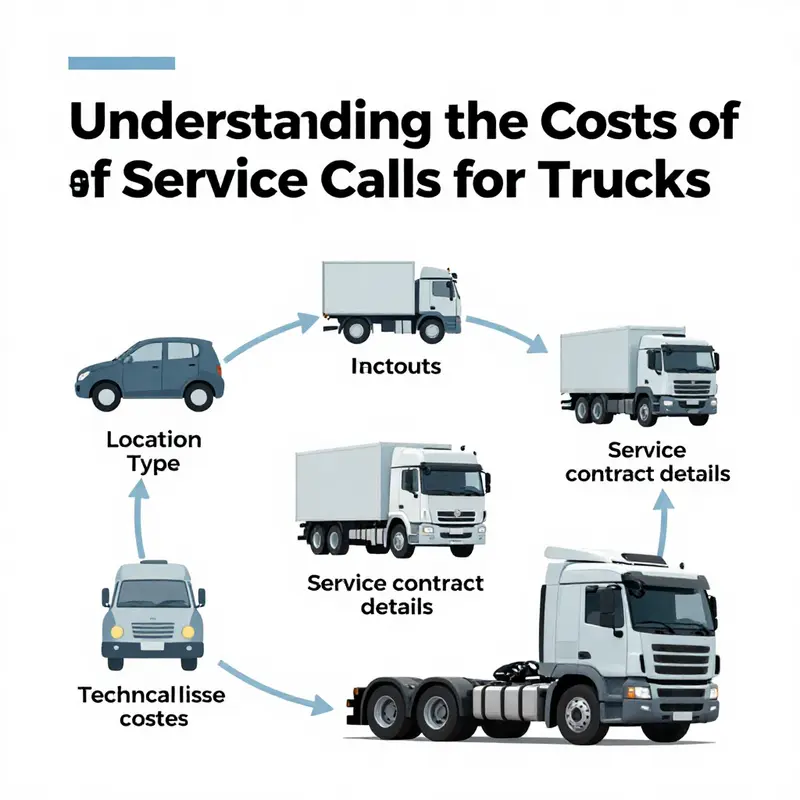
Cost conversations around a truck’s service call sit at the intersection of logistics practicality and market realities. A roadside hitch can feel sudden and expensive, yet behind every quote lies a calculator that weighs distance, machine size, urgency, terrain, and the provider’s operating realities. The numbers aren’t random; they are reflections of how much risk, time, and specialized equipment a job will demand. For fleets and independent operators alike, this chapter threads together the factors that consistently tilt a service call price—from the moment a dispatcher phones in the request to the moment the last bolt is secured and the truck rolls back onto the road. While routine maintenance and inspections can be straightforward to price, the true cost of a service call emerges when a truck is stranded, a driver needs immediate relief, and a technician must bring the right gear to the right place at the right time. In such moments, the price is not simply a line item but a reflection of a complex cost-reflective model that blends travel, risk, and resource needs. The guidance that follows helps fleets and lone operators anticipate, compare, and negotiate service calls with more confidence, whether their plan is to rely on a local shop, a national network, or a contract-based maintenance program. The core idea is simple: price is largely driven by the job’s complexity, not merely by the truck’s age or a fixed hourly wage. Yet the exact mix of factors can shift from call to call with surprising speed, especially in mixed fleets that operate across urban cores, remote highways, and busy rural corridors.\n\nDistance and location sit at the top of the list for a reason. In practical terms, travel time to the breakdown site translates directly into the fuel burn, the wear on equipment, and the armor of the crew’s schedule. Most providers start with a base fee that covers a defined radius—often somewhere around 10 to 30 kilometers—before applying additional charges for every kilometer beyond that threshold. The farther the truck is from the base, the more the travel cost climbs, sometimes dramatically so in remote or highway-locked stretches where travel time compounds with congestion and the need for specialized capture gear to reach the scene safely. Location also governs accessibility. A stranded truck on a busy interstate during peak traffic has a different risk profile than one in a quiet rural lot. In some regions, the terrain itself adds to the complexity: a steep or uneven shoulder, a snowbound back road, or a hillside pull requires extra caution and more personnel. Each of these realities is priced in through incremental travel fees and time-based surcharges, which means a simple tow can drift upward quickly if the truck’s position is awkward or dangerous.\n\nVehicle type and size are the second major axis of variation. A light commercial vehicle and a heavy-duty tractor-trailer do not just differ in weight; they demand different rescue strategies, different towing configurations, and often different equipment families. Large, heavy or specialized trucks require longer ramps, heavier winches, stronger chains, and more crew. They may need flatbeds or multi-axle dollies to stabilize the load and prevent further damage to the drivetrain or the cargo. The scale of the vehicle translates into a boatload of extra labor and logistics. In practical terms, a routine on-site diagnostic on a light truck can cost less than a full-on heavy-duty recovery demanding a crane-style rig or a full-size flatbed. The pricing logic follows that the more power, more space, and more risk a job consumes, the higher the price tag. Even routine calls can escalate when the truck’s configuration forces the technician to disassemble at the scene, drain fluids safely, or handle a heavy tire change in a compromised space.\n\nTime of service enters the equation as a third driver in a very tangible way. The clock matters because the hour is a proxy for the crew’s availability and the urgency that the situation demands. Nighttime, weekends, and holidays usually trigger a premium surcharge, typically in the realm of 30 to 50 percent above standard rates. That premium rewards the technician and the company for leaving home duties to meet the crisis on the road and for shouldering the higher risk associated with reduced visibility and less predictable working conditions. Urgency also interacts with the likelihood of improvisation on site. In some instances, a technician may need to improvise a temporary fix designed to keep the truck mobile until a proper repair bay is reached, a measure that can influence both the immediate cost and the downstream maintenance budget. Fleets that operate with dedicated on-call staff or contract-based maintenance often negotiate tiered response times to balance the need for speed with the realities of labor costs. The result is a dynamic where the clock isn’t just a timer but a predictor of resource allocation.\n\nRoad and terrain conditions weave in a more subtle, yet powerful, influence. A breakdown on a smooth highway offers different constraints than a rescue on a winding mountain pass or a snow-lashed rural lane. Highways are often the simplest environment in which to mobilize a rescue, but they carry their own hazards: highway tolls, lane closures, and the need to coordinate with traffic control in peak periods. Mountainous or rugged terrain demands heavier equipment, longer reach, and sometimes specialized personnel trained to work in remote or inclement weather. Poor weather itself—rain, snow, fog—can slow operations, degrade visibility, and demand more protective gear and backup technicians. Pricing must reflect the extra time, risk, and equipment required to complete the mission without compromising safety or cargo integrity.\n\nGeographic region rounds out the core considerations. Market dynamics show distinct regional pricing patterns. In major metropolitan areas with high labor costs, tight real estate, and dense demand, service calls can be noticeably more expensive than in inland or less developed regions. Coastal cities may also present higher costs due to fuel surcharges, higher insurance, and the premium for rapid response in congested environments. Operators with fleets spanning multiple regions discover that a single quote often masks a regional variance: what’s reasonable in a metro hub can become a cost outlier in a rural corridor. This geographic mosaic reinforces the necessity for transparent quotes and region-specific pricing guidance, rather than a one-size-fits-all tariff applied across the map.\n\nBeyond the core factors, fleets should consider a basket of additional services and fees that can subtly accumulate into the final bill. Transporting hazardous materials, for instance, may add a roughly 10 percent surcharge to the service charge because it triggers stricter handling protocols and extra certifications for the crew. Using specialized equipment like flatbeds or heavy-duty dollies adds line items for equipment rental and setup. Emergency repairs, if they are attempted at the roadside, can incur extended labor hours and replacement parts delivered under urgent conditions. On highways, a toll or permit fee sometimes appears as a modest share of the total; in other scenarios, it represents a non-trivial portion of the quote. Loading and unloading assistance, which is not always included in a simple service call, can also appear as a separate fee if the cargo requires careful handling or manual placement on or off the vehicle. Each of these add-ons reflects a decision about risk, safety, and the time value of the operator’s crew, and their presence or absence can swing the final price by a meaningful margin.\n\nMarket dynamics and service structure inject a further layer of nuance. Different providers price calls through varying lenses—some rely on aggressive base pricing to attract volume, others maintain higher rates in exchange for superior fleet management, faster response, and broader geographic coverage. If a driver has an insurance policy or a roadside assistance program, the out-of-pocket cost at the moment of service may shrink or vanish entirely, depending on the policy terms. Fleet-centric arrangements, like regular maintenance visits, can alter how customers perceive per-visit costs. For instance, service contracts that bundle preventive maintenance with safety inspections might include scheduled visits within the contract, reducing or redefining the price paid per call. In other words, a service contract can convert an unpredictable, ad-hoc charge into a predictable, budgeted line item. For fleets, the key is not merely to seek the lowest headline price but to understand what is included in coverage, response times, and the reliability of the on-site service. Those intangible benefits—availability, expertise, and speed—often translate into tangible cost savings by minimizing downtime and preventing escalation to more expensive repairs later in the vehicle’s life.\n\nTo translate all this into practical budgeting, most operators should approach pricing as a triadic problem: what is the base travel cost, what additional work is required on arrival, and what contingencies could push the job into a more expensive category? The base travel cost establishes a predictable floor, while the on-site work category captures the diagnostic, labor, and any necessary repair actions. Contingencies account for weather, access, or unforeseen complications. The ideal path is to obtain multiple quotes from local providers and, when possible, secure quotes that itemize travel, labor, equipment, and any surcharges. Even if one is satisfied with a preferred partner, having a comparative baseline helps negotiate when a call lands during off-hours or in a high-demand region. For fleets that do not want to micromanage every roadside event, maintenance contracts with reputable providers can deliver the comfort of predictable costs and planned service windows while still preserving the flexibility to respond to emergencies when they arise. The balance between fixed contracts and flexible on-demand calls often emerges as the most cost-effective approach for mixed fleets that operate across a spectrum of routes and payloads.\n\nWithin this framework, it helps to acknowledge a few concrete numbers to ground expectations. Routine maintenance or inspections, while not a “one-size-fits-all” category, typically fall in the ballpark of a few hundred dollars—roughly $100 to $300 for a standard inspection or minor service. More involved diagnostics, minor repairs on-site, or mid-range parts replacement can push a call into the several-hundred-dollar range. For more complex or multi-axle recoveries, or for jobs that require heavy equipment and multiple technicians, it is not uncommon for quotes to exceed $1,000, and often to approach or surpass several thousand dollars depending on the truck’s size, the cargo, and the terrain involved. These figures are not guarantees but reference points that illustrate how price sensitivity relates to the job’s scale and risk profile. Buyers should plan on a margin for escalation, particularly when the vehicle is in a remote location or requires a specialized rescue operation. Fleet planners who build maintenance contracts into their operating budgets may find that the per-call expense is offset by reductions in downtime, improved asset availability, and a more stable cash flow throughout the year. And for operators who want to stay ahead of ever-shifting market dynamics, the combination of real-time TElematics data, proactive maintenance planning, and a network of dependable providers becomes a powerful way to smooth out cost variability and improve predictability.\n\nFor fleets that want to explore the broader landscape, a useful point of reference lies in industry trends that underscore how maintenance and service costs are evolving for modern trucking operations. The narrative of ongoing maintenance trends—analytics-informed planning, preventive care, and more integrated service contracts—offers a lens through which to view individual quotes. In the broader ecosystem, there are insights about how private fleets are adapting to rising costs, shifting labor markets, and the need for more resilient maintenance strategies. For fleets that want to explore these ideas further, there is a useful body of reporting that highlights several of these themes, including how maintenance programs are evolving as part of fleet optimization and risk management. See for example the ongoing discussion around Private Fleets Trends in Trucking Maintenance. Private Fleets Trends in Trucking Maintenance.\n\nIn practice, the smartest approach to pricing a truck service call is to expect variability and to plan with flexibility. Fleet decision-makers should cultivate relationships with multiple providers, negotiate clear terms, and ensure that every quote is explicit about what is included and what could trigger extra charges. They should also weigh the value of a maintenance contract that bundles routine service with emergency coverage against the predictability of on-demand pricing. The human element remains essential—the reliability and availability of technicians, the speed of dispatch, and the transparency of communication all influence the perceived value just as much as the line items on a quote. A well-structured approach to pricing can transform a stressful breakdown into a manageable incident, with costs that align with the severity of the situation and the value of keeping the fleet on the road.\n\nAs you read and respond to quotes, keep in mind that a service call is, at its core, a coordinated response to an on-the-road problem. The price is a reflection of planning, risk, and the ability to mobilize the right tools at the right time. The more you know about the factors that drive cost—distance, vehicle size, timing, terrain, and regional economics—the better you will be at budgeting for maintenance, negotiating with providers, and ultimately keeping the wheels turning. To that end, when planning for future service calls, consider not only the immediate price but the longer-term implications of maintenance contracts, on-rollout availability, and the value of preventive care in reducing the frequency and severity of breakdowns. A well-managed approach makes a real difference, turning unpredictable road calls into predictable, manageable events that support a smoother, more resilient trucking operation. For external context on general towing considerations and cost structures, see a broader overview of towing practices and costs at https://en.wikipedia.org/wiki/Towing. This resource offers a general portrait of the kinds of factors that influence pricing in the towing and recovery space and helps readers situate truck service calls within a larger industry framework.
Final thoughts
Understanding service call costs for trucks is not merely about pricing; it encompasses strategic financial planning for businesses reliant on fleet operations. By comprehending the costs associated with both maintenance and repairs, companies can prepare more effectively, minimizing unexpected expenses and ensuring operational continuity. As you digest the insights provided in this article, consider implementing a proactive approach to fleet management that prioritizes routine inspections and leverages service contracts for cost savings.