
Starting a truck escort service fills a critical need for safe, compliant transportation of oversized or overweight loads. As industries such as construction, manufacturing, and logistics expand, the demand for trusted escorting partners grows. This guide provides a practical framework to establish your service—from regulatory foundations to day-to-day operations and client engagement. Each chapter equips you with actionable insights to navigate challenges and position your business for sustainable growth.
Steering Toward Safety and Profit: Building a Regulated, Resilient Truck Escort Service from the Ground Up
A truck escort service sits at the intersection of safety, regulation, and operational discipline. It is a niche that serves a vital role in moving oversized and overweight loads with the precision that big equipment, high value goods, and hazardous materials require. The purpose of this chapter is not to offer a quick checklist but to weave a narrative about how a contractor can grow into a trusted partner for shippers, carriers, and authorities. The core idea is to fuse rigorous compliance with practical field judgment, so your operation is not only lawful but capable of delivering dependable service even when the route is complex, the weather unforgiving, or the load unusually demanding. In this sense, starting a truck escort service is less about a few standout features and more about cultivating a culture of safety, reliability, and clear communication that can scale with your ambitions.
The market you enter shapes much of your early decisions. Oversize and overweight transports run the gamut from large construction machinery to wind turbine components, from city scale utility work to industrial plant relocations. Each category has its own risk profile, a different mix of permits, and a preferred method of escort. Your first steps are to inventory the types of cargo you want to support and the geographic footprint you intend to cover. This is not just a sales exercise but a risk management exercise. Understanding the cargo types helps you tailor your safety procedures, driver training, and equipment choices. It also helps you forecast insurance needs and the level of credentialing required for drivers and escorts. A thoughtful market assessment becomes the backbone of a credible business plan that can attract lenders, investors, and long term clients who rely on predictable performance and steady compliance.
The legal and regulatory framework is the spine of the operation. A truck escort service is a regulated business, and the way you structure and operate determines whether you can compete and whether you can grow without facing costly setbacks. At the core is the need to establish a legitimate business entity, obtain the right authority to operate across state lines, and secure insurance that reflects the risk profile of escort duties. In most jurisdictions this means forming a business entity such as an LLC or corporation, obtaining a motor carrier authority if you cross state lines, and ensuring you carry liability insurance that meets or exceeds typical industry standards. The specifics matter: you will likely need a USDOT number and an MC number if you transport goods across state lines. If your work touches hazardous materials or specialized permits, you will pursue endorsements and DOT permits aligned with those cargoes. The licensing landscape is layered, but once you position your company within the regulatory framework, you gain access to a wide array of contracts that a casual operator cannot pursue. You also gain credibility with clients who must meet stringent requirements to keep their own operations compliant.
A robust risk management program accompanies regulatory compliance. The typical client demands proof of reliable safety records, rigorous driver screening, and well documented operating procedures. Your insurance needs will include general liability, cargo coverage, and possibly workers compensation depending on how you staff the operation. The amount of coverage is not a luxury; it is a practical response to the reality that escort duties involve close interaction with moving heavy loads, and any lapse in procedures can have far reaching consequences. You will want to maintain a calm, methodical approach to safety that can be demonstrated through incident histories and training records. This is where a culture of continuous improvement becomes a differentiator. Build a system that records near misses, conducts root cause analyses, and implements corrective actions. Clients notice when a provider treats safety as a living practice rather than a one off audit item.
Equipment is more than a tool; it is a statement about your capability and your commitment to control risk. Escort vehicles must be suited to the loads you anticipate and clearly marked to communicate intent. A high clearance SUV, a pickup, or even a motorcycle can serve as the escort vehicle, but the choice hinges on load characteristics, road conditions, and coordination with the lead truck. Reliability is non negotiable; escort vehicles must be well maintained and equipped with robust safety gear such as reflective vests, cones, flares, flashlights, and first aid supplies. Communication devices are the lifeblood of the operation: two way radios, dependable mobile connectivity, and GPS or telematics that provide real time location data. The escort team also benefits from standardized signaling techniques so both the escort and the main truck can respond to changing circumstances in a predictable way.
Operational procedures are the backbone of consistency. A well designed operation reduces risk and improves on time performance. Route planning is more than picking the shortest path. It involves evaluating road restrictions, permit requirements, weight limits, overhead clearances, and traffic patterns. You should build a process that harmonizes route planning with permit coordination, so you obtain the necessary approvals ahead of time rather than scrambling under pressure. Training is another pillar. Drivers who serve as escorts must be proficient in emergency response, traffic control basics, and cargo handling fundamentals. They should be comfortable with signaling techniques, understanding pilot vehicles and the role of each team member during a move. You will want to implement pre trip, in transit, and post trip checklists that cover every step from vehicle readiness to route confirmation and post mission reporting. This is how you build a reputation for reliability.
The client relationship rests on clear communication and dependable execution. Your target market may include construction firms moving large machinery, wind energy companies transporting turbine components, industrial suppliers relocating heavy equipment, and utility outfits moving transformers or poles. To reach these clients you should present a professional, compliant image. A well crafted website that communicates your licensing status, safety certifications, and track record can set you apart from less prepared competitors. Networking matters too. Trade shows, industry events, and informal introductions within the logistics community can connect you with decision makers who need consistent escort services. A practical approach is to position yourself as a partner who can handle the complexity of oversized loads, not just a ride along service. That means offering enhanced support, such as flexible scheduling, 24 7 emergency response, and the ability to coordinate closely with the shipper, the carrier, and the authorities as a single point of contact.
Technology is the force multiplier that lets a small operator scale to larger contracts without losing control. Dispatch and scheduling systems, real time tracking, and client portals transform how you manage workload and communicate with clients. You do not need cutting edge bells and whistles to start, but you should invest in a scalable platform that can grow with your business. The goal is to have a flow that begins with a clear inquiry, proceeds to a confirmed plan with route and permits, and ends with a precise execution that is documented and auditable. Data becomes your friend when you start analyzing performance metrics. You can track response times, route efficiency, incident rates, and client feedback. Over time you can translate those measurements into refinements in training and process design that lift safety margins and customer satisfaction alike. The modern escort operation treats data as a safety asset and a competitive differentiator rather than as a backdrop for daily work.
As you build the narrative of your operation, consider the value of a well designed SOP portfolio. The most resilient escorts maintain clear procedures for every phase of a move: pre trip readiness, load securement checks, escort vehicle positioning, communication protocols with the lead truck and with authorities, contingency plans for detours or road closures, and post trip reporting that captures lessons learned. A documented process reduces the cognitive load on drivers and escorts, enabling them to perform with steadiness even in harsh conditions. It also makes onboarding faster and more consistent. A strong SOP culture translates into repeatable outcomes, which is exactly what large clients demand when they entrust you with their most challenging moves.
In this landscape there is also strategic value in thinking about cross border and multi jurisdiction work. If your ambition includes interstate or cross border operations, you can benefit from a deeper understanding of the regulatory nuances that apply when crossing provincial or state lines. The interplay between federal and local rules, the requirement to obtain permits in multiple jurisdictions, and the need to maintain records that satisfy varied authorities are all factors that shape how you price, staff, and schedule moves. For a deeper look at cross border regulatory issues, see the guide on cross-border regulatory issues. This resource can anchor your planning and help you avoid common pitfalls when expanding your reach beyond a single region.
The ultimate test of readiness is a clean safety and compliance record. Your reputation rests on reliability, and reliability rests on two pillars: people and processes. Start with background checks and drug testing for drivers; ensure you perform periodic reviews of driving records; enforce a zero tolerance policy for impairment; and maintain a robust incident response plan. Your clients will look for a clean safety history and a transparent feedback loop. Encourage clients to share experiences and use that input to calibrate your practices. The 24 7 availability you offer is not just a selling point; it is a safety discipline. In the event of an emergency, a swift, coordinated, and well-communicated response can be the difference between a controlled situation and a costly incident. This approach to safety and reputation is not marketing fluff; it is the essence of a service that can endure in a demanding industry where stakes are high and margins can be thin.
In sum, starting a truck escort service is a journey from compliance driven startup to trusted logistics partner. It requires disciplined market insight, a robust regulatory footing, a carefully designed set of operating procedures, capable equipment and people, and a technology enabled workflow that scales. It also demands a commitment to safety that your clients can see in every interaction, from the first inquiry to the last mile. When you align these elements, you build more than a business; you build resilience into the operations that move the most challenging cargo through the most complex routes. The path is exacting, but the payoff is steady, professional collaborations with shippers who rely on precision and timeliness as much as on safety. As the industry evolves, the operators who thrive will be those who integrate compliance, planning, and performance into a single, auditable discipline that speaks to risk management and to service quality alike.
External resources and ongoing learning are essential. For official guidance on compliance and safety standards, consult the FMCSA site at https://www.fmcsa.dot.gov. This resource anchors your internal practices in current federal rules and provides a reliable reference point as you expand your operations beyond initial boundaries and into more intricate regulatory landscapes.
The Legal Roadmap to a Truck Escort Startup: Licenses, Permits, and Safe Collaboration on the Open Road

Launching a truck escort service is as much about precise compliance as it is about strong driving. The road to a reputable, safe operation begins long before any escort vehicle leaves the yard. It starts with understanding that regulation is not a hurdle to be cleared but a framework that protects people, property, and the integrity of every haul. When you set out to build a business around safety escorts for oversized or overweight loads, you enter a landscape where local, national, and in some markets supranational rules converge. The result is a disciplined ecosystem built on clear authority, documented procedures, and constant communication with regulators, clients, and the men and women who share the highway with you. This chapter unpacks how to translate that regulatory complexity into a practical, defensible startup plan that can grow with your company while staying compliant and credible on every route.\n\nIn many regions, the legal question is not simply is this allowed but rather what precise conditions make it allowed, and who must be involved to make it legitimate. In the European Union you will encounter a tapestry of rules that can vary by member state, with common threads that emphasize public safety, efficient traffic management, and standardized operator qualifications. Some jurisdictions require the escort function to be organized or even executed by public authorities for certain high risk or exceptionally large transports. In others, private escort companies can operate under national or regional permissions, provided they meet defined standards for vehicle specifications, operator training, communications, and procedural compliance. Across the Atlantic, the United States presents a parallel, if differently structured, regulatory environment. There the journey involves business formation, the pursuit of an MC number for interstate authority if crossing state lines, and driver credentialing that aligns with federal and state hours of service regulations, insurance requirements, and safety compliance programs. The common denominator is a commitment to risk management and transparency. A successful truck escort service treats compliance as a core capability, not an afterthought.\n\nOne of the first decisions you will make is how to position your business legally. This means choosing an entity type—an LLC, corporation, or sole proprietorship—based on risk, tax considerations, and ownership structure. The entity choice also informs how you secure licenses, insurance, and corporate governance. Regardless of structure, the path to legitimacy will hinge on obtaining the right combination of permits, endorsements, and authority to operate across the jurisdictions you plan to serve. In the United States, this typically includes registering with the state, obtaining a Commercial Driver’s License with appropriate endorsements for the escort drivers, and securing FMCSA authority, commonly referred to as an MC Number, if you anticipate cross-border or cross-state movements. In Europe, the emphasis shifts toward national and, where applicable, EU-wide guidance on escort qualifications, vehicle specifications, and coordination with authorities for route planning and traffic management. The details differ, but the principle remains the same: your people and assets must meet the standard that regulators expect of any operation that channels traffic on public highways with special loads.\n\nThe foundations are not only about getting a few permits; they encompass a broader compliance culture. Start with a robust picture of who will operate on your behalf. Driver selection becomes a governance issue as well as a safety one. You need clear criteria for background checks, training credentials, and ongoing performance monitoring. A clean safety record doesn’t just protect your insurance premium; it builds trust with clients who may be transporting critical or high-value cargo. The process begins with personnel. In many jurisdictions, escort personnel are required to demonstrate competency in emergency response, traffic control, signaling techniques, and hazard awareness. Some systems expect formal certification programs and periodic refreshers to ensure that skills remain current with evolving regulations and best practices. A practical approach is to document a training ladder that maps to your operational reality: a baseline program for all escorts, enhanced modules for high-risk routes or specialized cargos, and periodic requalification to maintain credential validity. This is where the dialogue with authorities and clients becomes a collaboration rather than a one-sided audit. When a client sees that your team meets rigorous standards, the risk transfer they seek—whether through insurance coverage, performance guarantees, or permissible route planning—becomes tangible.\n\nEquipment specification follows closely behind. Escort vehicles should be conspicuously marked and equipped to meet the expectations of regulators and the roads you travel. The typical composition includes a clearly identifiable escort vehicle, which can be a high-clearance SUV, a pickup, or a motorcycle, depending on the load type and road environment. The vehicle needs robust safety gear: reflective vests, cones, flares, and reliable lighting to operate effectively in low visibility conditions or along shoulder work. A dependable communications infrastructure is non-negotiable. Two-way radios, GPS tracking, and a mobile app-based coordination system that feeds real-time status to the escorted truck, dispatch, and authorities reduce the potential for miscommunication and errors. In this area, logistics technology becomes as important as vehicle performance. The equipment list you commit to should be codified into standard operating procedures so that every job begins with a consistent, auditable setup. Insurers will want to see that you follow a checklist approach here, which in turn supports your claims about reliability and accountability.\n\nThe procedural backbone is the third pillar of compliance. It is one thing to possess permits and training; it is another to operate with standardized routines that withstand scrutiny under incident reviews or audits. A strong set of procedures starts with meticulous route planning. Escort drivers should validate the route in advance using mapping tools designed for heavy-haul operations. This planning must account for road restrictions, weight limits, clearance constraints, temporary traffic restrictions, and any permits that may be required for the corridor you intend to traverse. It is wise to establish a permit coordination process that anticipates the need for local or state permissions before a journey begins. In some areas, permits must be issued in a specific time window or require coordination with multiple agencies. A proactive approach reduces last-minute delays and demonstrates to clients and regulators that you operate with discipline and foresight.\n\nCommunication is the thread that ties everything together. The best guard against unsafe outcomes is clarity. A well-documented chain of command, clearly defined signaling protocols, and a system of real-time updates to the main driver and to authorities on the route create a shared operating picture. Consider a pre-trip briefing that covers hazard identification, contingency options, and a go/no-go decision framework. During the trip, maintain a cadence of check-ins and timely reporting of deviations from the plan. Post-trip documentation should capture deviations, equipment performance, and any regulatory notes, as well as client feedback. This documentation becomes the record that underpins your ongoing improvements and, crucially, your defense in any claim or regulatory inquiry. In many markets, regulators expect foresight and accountability; the more your procedures demonstrate proactive risk management, the more credible your operation becomes to clients who depend on you for every mile of a sensitive transport.\n\nInsurance forms another essential component of the legal equation. These products do not simply protect your balance sheet; they signal to clients that you acknowledge risk and are prepared to assume responsibility. A baseline liability policy often with a million-dollar limit in trucking contexts is common, but you will also want cargo insurance and policy coverage for the escort vehicles themselves. Depending on the cargo and the route, you may need specialized insurance coverage for exception handling, on-road incidents, or related liabilities that arise from traffic control activities. Discussing these coverages with a broker who understands heavy-haul operations helps you tailor a package that meets client expectations and regulatory demands. Insurance requirements often influence the minimum standards you set for driver qualifications and equipment maintenance; the two elements reinforce each other so that your risk profile remains aligned with what regulators and clients require.\n\nAs you weave together these elements, a critical concept emerges: compliance is a live capability, not a static checklist. Your business should operate with a governance clock that tracks regulatory changes, permit expiring dates, training renewals, and vehicle maintenance cycles. A dedicated compliance calendar, internal audits, and a document retention policy help ensure you stay current and defensible. The very act of maintaining a proactive compliance posture sends a signal to clients that you are a responsible partner that minimizes their risk, which in turn supports price competitiveness and longer-term contracts. In markets where public authorities coordinate closely with private escort operators, a reputational edge often translates into faster permit approvals and smoother route access. This is not about gaming the system but about building a cooperative operating model that respects public safety while enabling efficient, timely transport of critical, complex loads.\n\nThe regulatory narrative is not static. It evolves with technology, traffic patterns, and broader safety objectives. In the European context, align your practices with EU transport safety goals and learn how national authorities implement them in practice. The European Commission’s Transport portal is a resource worth consulting as you align your compliance program with evolving standards across member states. For a deeper look into cross-border considerations and how they affect your planning and operations, see cross-border regulatory issues. This link helps illuminate how different jurisdictions mesh with a private escort business model and what to anticipate as you scale beyond a single state or country. The underlying message is clear: regulate deliberately, partner with authorities transparently, and cultivate a culture where safety, legality, and operational excellence are inseparable.\n\nAs you build your first physical footprint—your office, your vehicles, your teams—remember that the legal journey is continuous. You will not only need to satisfy current requirements but also anticipate how changes in street use, permit regimes, and enforcement priorities can ripple through your plan. A strong opening position is to establish clear internal ownership of compliance, with documented processes, verifiable credentials, and evidence-based performance metrics. You can then translate this foundation into more predictable project delivery, smoother client onboarding, and a more resilient business model that can weather regulatory shifts without losing momentum. In practice, that means regular training refreshers for your staff, systematic reviews of route planning tools and permit databases, and ongoing liaison with transportation authorities to remain aligned with their expectations. When regulators know you are serious about safety and accountability, the path to accelerated approvals and fewer impediments becomes a real competitive advantage.\n\nIn closing, the legal framework for starting a truck escort service is not a cage but a map. The map shows where you can operate, which gates you must pass through, and how you can plan with confidence rather than improvise in the moment. Your mission is to translate regulatory requirements into reliable, repeatable, and auditable operations that deliver safety and efficiency for every escort assignment. By anchoring your business in well-defined licenses, permits, personnel standards, vehicle specifications, procedures, and insurance, you set a foundation that not only satisfies regulators but also earns the trust of clients and the public. The journey from regulatory uncertainty to a reputable, scalable service hinges on disciplined governance, proactive risk management, and the unwavering commitment to safety as the core value of every mile you escort. For readers who want a deeper dive into the cross-border dimension of these questions, there is a broader conversation about regulatory issues that can illuminate how to approach growth across borders in a way that remains compliant and responsible. And for those who seek to connect with broader industry considerations, the EU transport landscape provides a framework you can adapt to many markets. The road ahead is long, but with a solid legal roadmap, your truck escort startup can reach every destination with confidence, credibility, and safety as its compass. Authoritative guidance on European transport regulations is available at the European Commission’s Transport portal https://ec.europa.eu/transport/.
Synchronizing Safety: The Operational Blueprint of a Truck Escort Service
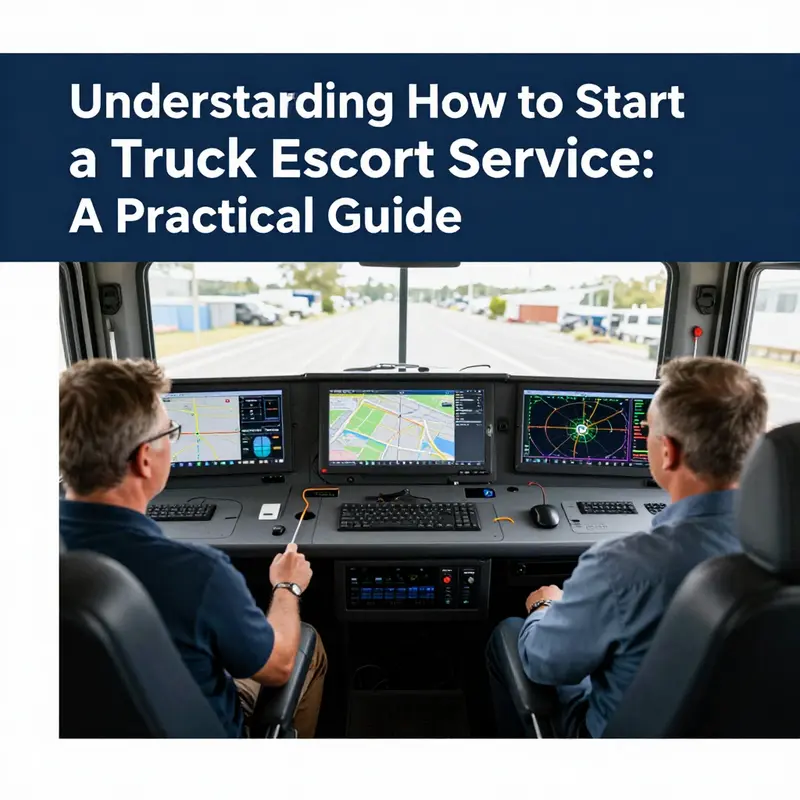
A truck escort service exists at the intersection of precise judgment, disciplined execution, and unwavering accountability. The chapter that follows is not merely a manual of steps but a narrative about how a team translates regulatory requirements into a lived, day-to-day practice that keeps roads safer while ensuring oversized and overweight loads move with as little disruption as possible. In the best firms, operations are not a collection of checklists but a culture that threads safety, communication, and reliability through every decision. This is how a responsible escort operation earns the trust of clients, regulators, and the traveling public, even when the road opens complexities like tight curb cuts, bridge constraints, or weather that tests even the most seasoned crew. The backbone of this approach is a tightly woven set of procedures that align speed, signaling, route awareness, and human judgment into a single, coherent rhythm. It starts with synchronization and communication, the subtle art of moving in tandem with the lead vehicle while maintaining a steady tempo that prevents abrupt changes in speed that could cascade into a safety incident. The escort driver and the lead vehicle must inhabit the same mental lane, sharing not just radios but moments of anticipation. On a straight stretch, the pace may be measured, but on a long, rolling pass through a corridor of trees or a valley fog, the requirement becomes even more exacting. The escort team must read clues in the truck’s mirrors, hear the engine’s cadence, and feel the wind as if it were a single instrument playing in harmony. Effective communication is not a perk; it is the difference between a well-executed movement and a near miss. Dispatch systems and two-way radios create a backbone of real-time coordination, enabling the escort crew to respond to small changes in the escorted vehicle’s handling, such as a slight drag on acceleration or a moment of hesitation as a vehicle negotiates a tight turn. In practice, operators train to regulate speed differences that prevent sudden braking or acceleration, which can cause the following vehicle to surge or lose control. This requires a deliberate discipline to lead with calm, anticipate with vigilance, and adapt with precision. The synchrony described here extends beyond the moment of moving along a corridor. It becomes a habit that shapes how routes are chosen and how crews prepare for the unique demands of each assignment. Route planning, for instance, is more than choosing the shortest path; it is an exercise in forecasting how traffic patterns, road geometry, and permit conditions will interact with an oversized load’s profile. Pre-trip briefings become the ritual through which the team locks in the plan, confirms the required permits, and assigns responsibilities so no role is left uncertain. The moment a route is selected, flags and indicators take on their role like instruments on a symphony. Flagging procedures on two-lane highways are a critical element of safety, and they require more than the right materials. They demand consistent, practiced behavior that communicates intent clearly to oncoming traffic and to the escorted driver. The escort vehicle carries the responsibility of guiding others through the path, and the marking, the cones, the reflective materials, and the signaling devices must be deployed with discipline. This is not a visual flourish but a procedural necessity that reduces the odds of misinterpretation by drivers who are frequently unfamiliar with a slow, heavy, or unusually wide vehicle moving through a corridor that demands patience. Hazard monitoring is the second pillar of operational procedure. The escort operator must scan ahead and behind, forming a moving safety perimeter around the payload. Hazards come in many disguises: a sharp curve that tightens without warning, a low-clearance structure that sits just above the highway, or a narrow bridge whose approach requires exacting positioning. The operator’s vigilance is not passive; it is active risk management. Route surveillance becomes a living task that blends formal planning with the flexibility to adjust in real time. Coordination with authorities becomes a shared responsibility rather than a one-off permit check. When a route involves municipal or state segments, the escort service may need the cooperation of traffic control personnel, especially if lane closures or pilot car operations are required. This collaborative practice reduces delays and protects the route’s integrity under fluctuating traffic conditions. Staffing and training are the human core of operational procedures. The team composition typically includes an lead escort, a rear escort, and a contingency driver who stands ready to substitute if fatigue or a mechanical issue arises. Training extends far beyond driving skills. It encompasses emergency response, hazard recognition, traffic control signaling techniques, and the use of the signaling devices demanded by the route. Proper equipment quality is non-negotiable, and the team must carry signage that makes the escort’s purpose immediately clear to motorists. In addition to cones and flags, emergency equipment like flashlights and first aid kits are essential, and every member should be proficient with the vehicle’s communication systems and the dispatching app that keeps the operation connected to the central office. The equipment table is a living document in every responsible operation. Escort vehicles should be visibly marked and capable of performing their safety functions, whether they are high-clearance SUVs, pickup trucks, or motorcycles, depending on the load type. The vehicles must be maintained to high standards, with a focus on braking performance, visibility, and the reliability of signaling devices. The human and material elements converge in a shared aim: to create a predictable, controlled environment around a load that by its nature challenges ordinary traffic flow. The governance of compliance and standards threads these practices into the legal fabric that governs the transportation of oversized cargo. The escort service is operating within a landscape of federal and state rules designed to protect public safety while enabling commerce. At the federal level, operators need FMCSA authority and proper licensing, including the MC number for cross-state movement and appropriate endorsements for the driver pool. This is not a mere formality; it anchors the operation within a framework that auditors and clients expect to be respected. In parallel, state-level considerations can introduce additional permit requirements, vehicle standards, and sometimes distinct escort manuals. A mature operation keeps a living library of these standards and ensures that every new assignment begins with a quick, precise compliance check. The NYS escort manual, for example, provides a model for duties and responsibilities that can inform broader practice. Yet manuals are not the only source of truth. The practical implementation of compliant procedures rests on the daily discipline of the crew. The combination of standard operating procedures and rigorous training helps ensure that the safe passage of a load is predictable even when the environment is not. In the field, this translates to a culture where background checks on drivers are routine, where safety records are diligently tracked, and where client feedback becomes a potent tool for continuous improvement. A service that treats safety as a selling point, rather than a cost, sets itself apart by building trust with clients who rely on consistent performance. A 24/7 availability mindset, offered as part of an emergency support package, reinforces reliability when unexpected challenges arise. The integration of technology completes the operational circle. Dispatch software, GPS tracking, and real-time communication enable the crew to monitor movement, adjust in real time, and inform the client about progress with accuracy. Clients can often book services through mobile apps, view live updates, and receive notifications when delays occur. This transparent delivery of information not only improves customer satisfaction but also reduces the likelihood of miscommunication that could compromise safety. Metrics become the language through which a service measures itself. Response times, time spent in traffic, incident frequency, and route efficiency all feed into dashboards that inform training, route planning, and equipment investment. The most successful operations extract learnings from every assignment, documenting what worked and what did not, and then normalize those improvements into updated procedures. There is a recognition here that no single route is identical and no load is perfectly predictable. The prudent operator models flexibility into the standardized procedures, allowing for controlled deviations when necessary and documenting those deviations so audit trails remain intact. In practice, this means that after an assignment, a brief debrief is conducted to capture observations about signal timing, hazard appearance, and the reliability of communication networks. It is these small, deliberate refinements that accumulate into a robust operational discipline. The end result is not merely compliance or a good safety record. It is the ability to move a load through a challenging landscape with minimal disruption, in a way that leaves the public with a sense of confidence rather than anxiety. A mature escort operation preserves its reputation by balancing every stakeholder’s needs: the client’s schedule, the escort team’s safety, the public’s peace of mind, and the regulatory environment’s expectations. This balance is achieved through a blend of skilled personnel, reliable equipment, and disciplined processes. The relationship between procedures and performance is not a casual one. It is the foundation upon which sustainable growth is built. Clients will gravitate toward operators who demonstrate consistent reliability, especially when they know an escort service can adapt to changing circumstances without compromising safety. Conversely, lax practices or sloppy communication invite risk, delays, and a breakdown of trust. In the long run, the operational blueprint is both a shield and a compass: it defends against mistakes and points the way toward more efficient, predictable movement of oversized loads. The interplay between rigorous procedure and practical judgment is the essence of professional capability in this field. For operators seeking to strengthen their position, the path is not to chase novelty but to deepen discipline: to rehearse the basics until they become instinctive, to invest in the right tools and the right people, and to cultivate a culture in which every member understands that the road is a shared responsibility. When this is achieved, the escort service does more than move a load from point A to point B; it becomes a trusted partner in a complex logistics chain, delivering safety, punctuality, and confidence in equal measure. For readers who want to explore the regulatory dimension further, consider the broader landscape of Cross-Border Regulatory Issues in trucking, which can influence route selection, permitting, and compliance strategies across state lines. Cross-Border Regulatory Issues offers a perspective on how interstate and cross-border considerations shape day-to-day decisions and strategic planning for escort operations. In addition to these practical steps, operators should keep an eye on evolving guidelines and emerging technologies that promise to further streamline escorts, from smarter route optimization to safer signaling devices. The fusion of human expertise and reliable systems remains the heart of an operational blueprint that can scale with demand while maintaining the integrity of road safety. As the industry evolves, the steady rhythm of synchronized speed, clear signals, proactive hazard monitoring, and disciplined staffing will continue to anchor professional truck escort services. These elements, when thoughtfully integrated, yield not only compliant operations but also enduring trust—a foundation upon which businesses can grow and communities can ride with greater assurance. For those who want a deeper dive into formal standards and training expectations, the New York State approach offers a concrete reference point that educators and practitioners may model in broader contexts. For more on escort standards, see the official resource linked in the reference. External resource: https://www.dot.ny.gov/divisions/operations/escort-manual
null
null
Final thoughts
Establishing a truck escort service requires a clear understanding of operational, legal, and marketing aspects. By following the outlined steps, you can position your business as a trusted partner for industries that require dependable escorting solutions. Emphasizing regulatory compliance, operational efficiency, and strong client relationships will drive growth and long-term success in a growing transportation market.