
Selling trucking services requires a nuanced understanding of diverse customer needs across various industries. For manufacturing, retail, construction, and small businesses, establishing a solid foundation of trust and offering unique value can significantly enhance sales potential. Each chapter of this guide delves deeply into how to navigate these complexities by understanding customer requirements, developing a clear value proposition, building lasting relationships, leveraging multi-channel marketing, and offering tailored solutions and incentives. By adhering to these principles, you can position your trucking services as indispensable to your clients’ logistics and supply chain operations.
Listening to the Load: How Understanding Customer Needs Drives Profitable Trucking Sales

Understanding customer needs in trucking sales is not a nice-to-have skill; it is the engine that powers every successful proposal, negotiation, and long-term partnership. In a market where customers face rising operating costs and tighter schedules, buyers are looking for more than a ride from point A to point B. They want a partner who understands their operations, anticipates disruptions, and consistently lowers total ownership costs. The most effective sales conversations begin with listening—careful, patient, and empathetic listening that uncovers both stated requirements and the hidden pressures that drive decision-making. This approach aligns with the current market reality: customers increasingly demand cost efficiency, timely service, and clarity about the total cost of ownership. A 2024 industry analysis highlights that buyers expect greater transparency, real-time tracking, and proactive communication as standard expectations, not add-ons. They also seek value-added services such as inventory management, customs clearance support, and flexible scheduling. These demands reflect a broader shift from transactional transport to holistic supply chain partnerships, where a carrier is seen as a strategic ally rather than a one-off service provider. In practice, this means shaping conversations that move beyond price and delivery windows toward a shared view of how transportation fits into the customer’s business goals and risk profile.
To translate needs into a compelling value proposition, sales conversations must start with questions that invite customers to articulate both their obvious pain points and their latent concerns. Open-ended prompts help reveal the full context: what are your biggest pain points in managing freight delivery timelines? How do you currently handle unexpected delays or route changes? What metrics matter most when you evaluate carrier performance? These questions do more than collect data; they signal a partner’s willingness to listen and adapt. They also uncover latent needs that may not be explicitly stated but have a strong impact on operational efficiency. For instance, a shipper may not say they struggle with driver turnover, yet schedules that are unpredictable or last-minute changes can be a hidden source of cost and risk. Similarly, a company might privately wrestle with high fuel costs and suboptimal routing, issues that a technologically empowered carrier could address through optimization and visibility.
The customer’s behavioral patterns and the operational context provide another layer of insight. Consider a carrier serving a perishable goods distributor: this client will demand not only precise temperature control but also aggressive scheduling during peak retail seasons. A different client—an e-commerce business, for example—prioritizes predictability and scalability, needing a partner who can absorb volume fluctuations and provide rapid ramp-up or ramp-downs. Recognizing these patterns helps sales teams tailor their messages and packages. It also guides the design of service levels that align with the customer’s calendar, geography, and risk tolerance. Observing how a customer communicates during the initial engagement—the cadence of updates they expect, the channels they prefer, the speed at which they want answers—provides clues about the level of proactive service they will value.
Digital tools amplify the ability to understand and serve customers. Modern CRM systems and advanced logistics platforms collect continuous data on shipment history, performance metrics, and customer feedback. This data supports predictive insights and enables a shift from reactive problem-solving to proactive service. Rather than simply reacting to a delay, a data-informed carrier can anticipate bottlenecks, propose alternative routes, and communicate contingencies well before disruption occurs. The real win comes when customers feel seen and understood through timely updates, transparent documentation, and consistent performance. In this sense, technology not only improves efficiency; it also reinforces trust—the currency of ongoing growth in trucking services.
A strong understanding of client needs also requires a clear and differentiated value proposition. Once you know what matters most to the customer, you can articulate how your strengths translate into measurable outcomes. For many clients, reliability and on-time delivery are non-negotiable. For others, specialized expertise—such as refrigerated transport, hazardous materials handling, or oversized cargo coordination—offers a critical risk reduction and a competitive edge. Technology and tracking capabilities can turn visibility into a tangible advantage, while cost-effectiveness can emerge from smart routing, consolidation opportunities, and capacity management that reduce empty miles. Importantly, a compelling value proposition is not a static claim; it is a living statement that evolves with the client’s changing needs and the market’s dynamics. It should articulate not just what you do, but how your approach reduces risk, improves cash flow, and enables the customer to meet broader strategic goals.
As you convert needs into value, you also build trust through consistent action. This means more than meeting delivery windows; it means delivering on the micro-commitments that matter to the customer. Proactive communication during transit, transparent documentation, and rapid problem resolution all signal that you are attentive and reliable. In practice, this can translate into expedites on paperwork when schedules tighten, proactive route adjustments in response to weather or regulatory changes, and clear post-visit debriefs that summarize performance and learnings. The literature on customer-centric service emphasizes that trust is earned through reliable execution over time, not through a single standout shipment. A carrier who regularly checks in, shares performance dashboards, and follows through on commitments builds a durable relationship that outlasts price negotiations and quarterly price changes.
For teams selling trucking services, the challenge is to keep the customer’s needs front and center while navigating a competitive market. One practical approach is to map customer journeys from inquiry to post-delivery, identifying the moments where transparency and proactive support have the biggest impact. This mapping helps you design service packages around distinct customer archetypes—standard, expedited, or specialized—each with aligned service levels and pricing that reflect the total value delivered. It also supports the development of flexible incentives, such as loyalty programs, referral bonuses, or preferential booking, that reward ongoing collaboration and make the partnership economically advantageous for both sides. The goal is not merely to win a contract but to cultivate a relationship that scales with the customer’s long-term ambitions and demands.
The interplay between understanding needs and communicating value becomes especially evident when you connect it to broader market shifts. To anchor this approach in current realities, consider the broader trend toward cost transparency and end-to-end visibility. Buyers increasingly expect that a carrier will not only deliver goods but also contribute to inventory management, customs support, and scheduling flexibility. Emphasizing these capabilities in your conversations—and backing them with actionable data from your operations—helps demonstrate how you can reduce the customer’s total cost of ownership. For deeper insights into how these market shifts are shaping buyer expectations, see the Key Economic Trends Impacting the Trucking Industry. This resource can provide context on pricing dynamics, capacity constraints, and the evolving importance of visibility in value propositions.
In sum, understanding customer needs in trucking sales is about listening with purpose, identifying both stated and latent requirements, recognizing behavioral patterns within different industries, and translating that understanding into a compelling, measurable value proposition. It is a discipline that combines empathy with data, curiosity with structure, and reliability with adaptability. When you align your capabilities with what customers actually prioritize—cost efficiency, timeliness, transparency, and holistic support—you position yourself not as a vendor but as a strategic partner whose success is inseparable from the customer’s success. As one industry observer puts it, the best trucking service isn’t defined by how fast it delivers, but by how well it understands what the customer really needs to succeed.
Internal link: For a broader view of how market dynamics shape customer expectations, explore the article on Key Economic Trends Impacting the Trucking Industry. Key Economic Trends Impacting the Trucking Industry.
External reading: For a broader industry perspective on customer needs in trucking, see Understanding Customer Needs in the Trucking Industry. https://www.logisticsmanagement.com/article/understanding-customer-needs-in-the-trucking-industry
From Promise to Proof: Crafting a Value Proposition That Accelerates Trucking Sales

A trucking company’s value proposition is not a tagline but a clear narrative that translates what you do into tangible outcomes for the client. In a market crowded with options, it is the precise articulation of how your services solve real problems, reduce risk, and add measurable value that compels a buyer to choose you over a competitor. A compelling proposition begins with listening before speaking, but it must move quickly from listening to a concrete map of benefits. When clients see in your language the assurance that their delivery windows will be met, their cargo will arrive intact, and their supply chain will stay predictable, they stop comparing features and start imagining the relief your partnership offers. The best propositions are specific enough to be believable and broad enough to cover the variability of customers’ needs, from perishable goods to oversized loads, while staying anchored in outcomes rather than abstract capabilities.
The core of a strong value proposition lies in four interlocking outcomes: reliability, speed, cost-efficiency, and specialized capability. Reliability must transcend occasional on-time promises and become a track record of consistent performance under varying conditions. Speed is not just faster transit but shorter cycle times for end-to-end flows, reduced dwell times at facilities, and acceleration of administrative processes such as documentation and delivery confirmations. Cost-efficiency is about more than lower rates; it encompasses routing intelligence, fuel optimization, asset utilization, and the ability to offer flexible pricing models tied to actual service levels. Specialized capability refers to the unique competence you bring to niche cargo—temperature-controlled transport, hazardous materials handling, oversized or awkward payloads—and the accompanying systems that reduce risk and protect product integrity. Presenting these outcomes together helps a client see how your service fits into their broader operational goals, not merely how you move a freight from A to B.
Crafting the proposition starts with a precise understanding of the client’s pain points. Engage in discovery that uncover not only the obvious constraints—distance, timing, budget—but the hidden frictions that erode supply chain performance. Ask about seasonal peaks, port or cross-border bottlenecks, and the typical ripple effects when a shipment is delayed or documentation is incomplete. When you translate those pains into quantified outcomes, your proposition becomes a value map rather than a promise. For example, instead of saying you offer “reliable on-time delivery,” frame it as “a track record of 98 percent on-time performance across peak seasons, with proactive alerts and contingency planning that reduce missed SLAs to a fraction of a percent.” The specificity matters because it gives the buyer confidence that the statement reflects reality and will endure under pressure. Industry dynamics often shape these expectations, and referencing current trends can strengthen credibility; consider the shifts summarized under economic trucking trends when framing risk and resilience in your offering.
The mechanism by which you deliver these outcomes is equally important. A value proposition should connect the dots between assets, processes, and client impact. For reliability, emphasize your maintenance discipline, modern fleet standards, and preventive checks that minimize breakdowns. For speed, highlight routing intelligence, real-time location data, and streamlined handoffs that shorten the time from pickup to final delivery. For cost-efficiency, illuminate optimization algorithms, fuel-management practices, and the ability to tailor service levels to each customer’s criticality. For specialized capability, detail the technical competencies, regulatory knowledge, and safety protocols that keep sensitive cargo compliant and secure. When you describe the mechanism in a way that a non-expert can visualize, you transform abstract features into concrete benefits. This is where the value proposition becomes actionable and defensible, not merely aspirational.
Credibility is the currency of trust in a field where small failures can cascade into large costs. Evidence—testimonials, case studies, and verifiable performance metrics—anchors your claims in reality. The most persuasive propositions incorporate proof points that demonstrate your capacity to deliver. A succinct set of benchmarks, such as on-time delivery rates, average issue resolution times, or failure prevention rates for specific cargo types, gives buyers a framework to evaluate you against their own metrics. Testimonials from clients who faced similar constraints—or better yet, anonymized case studies that reveal the before-and-after impact of your service—offer social proof that resonates in decision conversations. As demonstrated in the broader sales dynamics observed across successful trucking teams, exceeding expectations—whether by expediting paperwork, streamlining intake, or providing proactive risk alerts—creates durable loyalty and strengthens your market positioning. The proposition thus functions not only as a selling tool but as a commitment you underline with consistent, observable performance.
A powerful value proposition also reflects flexibility without losing clarity. Customers differ in what they value most: some seek rock-solid reliability with predictable costs; others prize speed and visibility for just-in-time demands; some need specialized handling that minimizes waste or spoilage. Your proposition should accommodate these variations by offering a spectrum of service configurations—standard, expedited, and specialized—while preserving a coherent core message. This is where customization becomes a strategic advantage rather than a costly customization trap. When you present options that align with distinct client segments, you reinforce the perception that you truly understand their sector and their operational tempo. The ability to say, in effect, “we protect your margins with transparent pricing and scalable capacity, whether you’re shipping generic goods or high-value, time-sensitive cargo,” is a compelling differentiator in a crowded marketplace.
In communicating this proposition, language matters. The narrative should be customer-centric, translating your capabilities into outcomes that improve the client’s bottom line. Translate your features into business terms: reduced carrying costs through efficient routing, minimized stockouts via reliable delivery windows, faster cash flow from predictable invoicing and timely documentation, and lower spoilage or damage rates in sensitive shipments. The best propositions avoid jargon and instead speak in the client’s language—operational metrics they already care about. It’s not enough to claim you offer real-time tracking; show how it reduces disputes, clarifies accountability, and shortens the time from incident to resolution. In this sense, the proposition becomes a language of value—one that sales conversations can echo back to procurement teams, fleet managers, and supply chain executives with confidence.
Another strategic dimension is the link between your value proposition and the client’s broader business narrative. The buyer is not selecting a carrier in isolation but choosing a partner who complements their strategy, supports their growth, and reinforces their own value proposition to their customers. If the client is pushing to shorten lead times, your emphasis on fast transit, rapid documentation, and reliable handoffs can harmonize with their customer commitments. If they emphasize sustainability, you can foreground efficient routing, reduced idle time, and modern, well-maintained equipment that lowers emissions. By aligning your proposition with the client’s strategic priorities, you create a shared language of success and a basis for a long-term relationship rather than a one-off transaction. This alignment also informs your marketing and sales channels. Your website, proposals, and conversations should consistently reflect the same core outcomes and evidence, with tailored emphasis that mirrors the client segment’s priorities. For those seeking a broader industry context, industry trends offer a lens you can cite to explain why these outcomes matter now and into the future; see the discussion on economic trucking trends for additional perspective.
To see how this translates into practice, consider the following approach when you craft your proposition statement. Start with a client-centered sentence that names their principal challenge in their own terms. Then, add a short, outcome-focused claim that connects the challenge to your service configuration. Finish with a credibility pillar, a single proof point, and a forward-looking assurance about partnership continuity. For example: “When supply chains buckle under tight lead times and uncertain delays, we provide reliable, transparent, and flexible transport that delivers on-time performance, minimizes cargo risk, and scales with demand, backed by real-time tracking and proactive communication.” This kind of statement is compact enough to guide conversations but rich enough to anchor proposals, presentations, and written content across channels. It’s not a mere promise; it is a proven pathway from problem to measurable improvement, continually supported by data and client feedback.
Ultimately, a strong value proposition is not a fixed slogan but a living framework. It must adapt to evolving customer needs, shifts in the regulatory environment, and the emergence of new technologies that reshape how goods move. It should be tested with real customers, refined through feedback, and reinforced by the evidence you collect in day-to-day operations. As you iterate, your proposition becomes more precise about who you help, how you help, and why your method is distinct. The result is not just a clearer sales message but a more compelling value proposition that informs product development, pricing strategy, service design, and client onboarding. In a market where buyers increasingly weigh total cost of ownership and service reliability, your ability to articulate a credible, evidence-backed value proposition is the most powerful differentiator you can develop. And as you refine your language and demonstrate consistent outcomes, you’ll find that prospects move from considering alternatives to seeking collaborations that align with their own performance metrics and strategic ambitions.
For further reading on market context and trends that inform value-based positioning, explore industry insights such as economic trucking trends, which illuminate the macro forces shaping client expectations and carrier capabilities. See also external guidance on shipper resources to understand how public guidance frames best practices in documentation, compliance, and reliability as you build a persuasive value story for trucking services: https://www.transportation.gov/businesses/shipper-resources
The Trust Engine: Building Durable Partnerships in Trucking Service Sales

Trust is the engine that powers every successful trucking service sale. In a field built on schedules, margins, and compliance, customers are not simply buying a transport leg from point A to point B. they are buying peace of mind: the assurance that their goods will arrive on time, intact, and with clear visibility along the way. When you frame your offering around reliability, empathy, and proactive problem solving, price becomes only one signal in a spectrum of value. The most durable sales outcomes come from relationships that endure beyond a single shipment. They are forged when you demonstrate that you understand the client’s real challenges, that you can meet them where they are, and that you will stand beside them through inevitable operational twists. In practice, trust is not a marketing line; it is a daily discipline rooted in consistent performance, transparent communication, and tailored, value-added support.
The first pillar is consistent performance and reliability. This is where the narrative of trust begins and ends. A fleet’s reputation for punctuality and predictable service creates a reservoir of credibility that marketing messages alone cannot build. Consider a situation many road managers recognize: a client arrives to settle the final payment for a vehicle without any sales pitch or introductory talk because the service has already spoken for itself through steady deliveries, predictable routing, and minimal disruption. It is a powerful reminder that trust is earned by doing what you say you will do, time and again, with verifiable outcomes. When reliability is the baseline, requesting business becomes less about persuading a customer and more about confirming a proven track record. This doesn’t mean resting on past successes. It means letting performance data, on-time metrics, and clear performance dashboards do the talking so conversations stay focused on the client’s evolving needs rather than excuses.
Transparent communication compounds that trust. The most effective carriers don’t merely report status; they provide a clear map of potential contingencies and how they will be addressed. In practice, this means proactive updates during delays, straightforward discussion of cost implications, and honest timelines when plans shift. A noted industry example—described in general terms without naming specific brands—illustrates a deeper, relational form of service. A large, high-volume fleet aligned with a major manufacturer built what some call an “emotional service” model. The promise wasn’t only that the vehicle performed well, but that every service touchpoint reassured the fleet manager under real-world pressure. When the manager visited the service station, the guarantee was clear: services are covered within a very high kilometer threshold, provided no human damage occurs. Rapid responses, professional on-site support, and a track record of keeping the fleet operational under stress transformed a transactional purchase into a strategic partnership. The takeaway is straightforward: customers stay with you not just because you move boxes, but because you move them with confidence, supported by an explicit safety net and swift, human reassurance when problems arise.
The third pillar—personalized engagement and value-added support—seals the relationship. The sale becomes a long-term collaboration when you position yourself as a trusted advisor rather than a one-off vendor. That means using customer relationship management as a living, breathing tool rather than a data dump. A complete view of each client’s history, preferences, and feedback informs every touchpoint, from routing recommendations to scheduling and after-action reviews. Personalization also invites you to offer flexible, client-centered solutions: customized packages that accommodate standard timelines, expedited needs, or specialized capabilities. It is the difference between a copyable service and a bespoke partnership. Small acts matter too: timely follow-ups, well-organized presentations, and thoughtful courtesy can convert a routine interaction into enduring credibility. The aim is to become part of the client’s daily problem-solving toolkit, not just a vendor they call when their standard service is insufficient.
High-trust relationships also demand consistency in how you stay connected. Trust flourishes where there is regular, meaningful communication, even in quiet seasons between shipments. Routine business reviews, feedback sessions, and data-driven optimization discussions demonstrate that you are attentive to the client’s evolving priorities, not merely reactive to the next load. A disciplined cadence—monthly check-ins, quarterly performance summaries, and annual value assessments—helps align expectations, surface risks early, and co-create opportunities to reduce costs or improve service levels. In this sense, selling trucking services becomes a cycle of joint value creation: you propose improvements, the client validates them with measurable outcomes, and both parties recalibrate to chase new benchmarks together.
To connect strategy with practical decision-making, it helps to anchor the relationship in a broader market context. Understanding how economic trends shape demand, capacity, and pricing allows you to tailor incentives and service options that resonate with specific buyers. For readers looking to deepen this context, consider reviewing the Key Economic Trends Impacting the Trucking Industry. This broader lens informs how you position flexible commitments, capacity guarantees, and cost-tracking transparency in a way that aligns with a client’s realities rather than a generic sales pitch. The idea is to translate market knowledge into actionable guarantees and options that feel tailored rather than universal.
In addition to these core pillars, the care you bring to the client journey—especially during the onboarding phase—counts. A smooth onboarding reduces early friction and accelerates trust-building momentum. Clear documentation, transparent pricing, and straightforward service level agreements set expectations from day one. During ramp-up, you can pair a client with a dedicated operations liaison who can translate their business objectives into operational steps: preferred lanes, blackout times, alert thresholds, and preferred communication channels. The combination of clarity, accessibility, and hands-on support signals that you exist to prevent problems, not merely to react to them. This proactive posture is often what keeps customers from re-evaluating options every quarter, even when new suppliers enter the market with aggressive pricing.
Of course, tangible metrics matter in addition to soft signals. When you can show that your reliability translates into reduced stockouts, fewer detention fees at docks, and more predictable cash flows for the client, you strengthen the case for continued partnership. Metrics should be simple, widely understood, and tied directly to the client’s business goals. Dashboards that illustrate on-time performance, average dwell times, and visibility scores offer a shared language for both teams. In a market that moves quickly, a clear, data-backed narrative about value reinforces trust and reduces perceived risk. More importantly, it invites clients to co-create the next stage of collaboration. A client who sees you as a source of practical, data-informed improvements is more likely to engage in long-range planning, joint process refinement, and even referrals to peers facing similar challenges.
As you weave these threads together, an important practical step is to integrate credible success stories without oversharing sensitive details. The most persuasive case is not a hard sell but a clear demonstration of how trust translated into measurable gains for a real client. Sharing anonymized outcomes—such as improved on-time rates, smoother onboarding, or reduced logistics friction—helps prospective buyers visualize their own possibilities. While testimonials can be powerful, the credibility you gain from your ongoing behavior and decision-making discipline often matters more than any quote. The objective is to normalize excellence as a standard operating condition. When a client experiences a consistent, trustworthy operating rhythm, they begin to perceive you as an essential part of their business continuity, not merely a supplier of a service.
In closing, the art of selling trucking services, at its best, resembles building a long-term partnership rather than closing a deal. Trust is not a one-time achievement but a recurrent practice: consistent performance, transparent and proactive communication, and personalized, value-added support. The result is a relationship anchored in certainty, with fewer questions about value and more confidence in the path forward. The client’s needs are continually mapped to your capabilities, and your capabilities are continually refined to meet those needs. That mutual alignment turns incremental wins into durable growth and transforms casual buyers into loyal partners who view your company as an indispensable part of their supply chain resilience. For continued context on how macro trends shape the buying environment, you can explore the related economic insights linked above. And for readers seeking further perspectives on trust in trucking, an external resource synthesizes industry experience into a compelling case for trust as foundational to long-term success: https://www.truckinginfo.com/truck-repair-and-maintenance/why-trust-is-the-foundation-of-success-in-trucking-services.
From Click to Cargo: Crafting a Seamless Multi-Channel Marketing Engine for Trucking Services
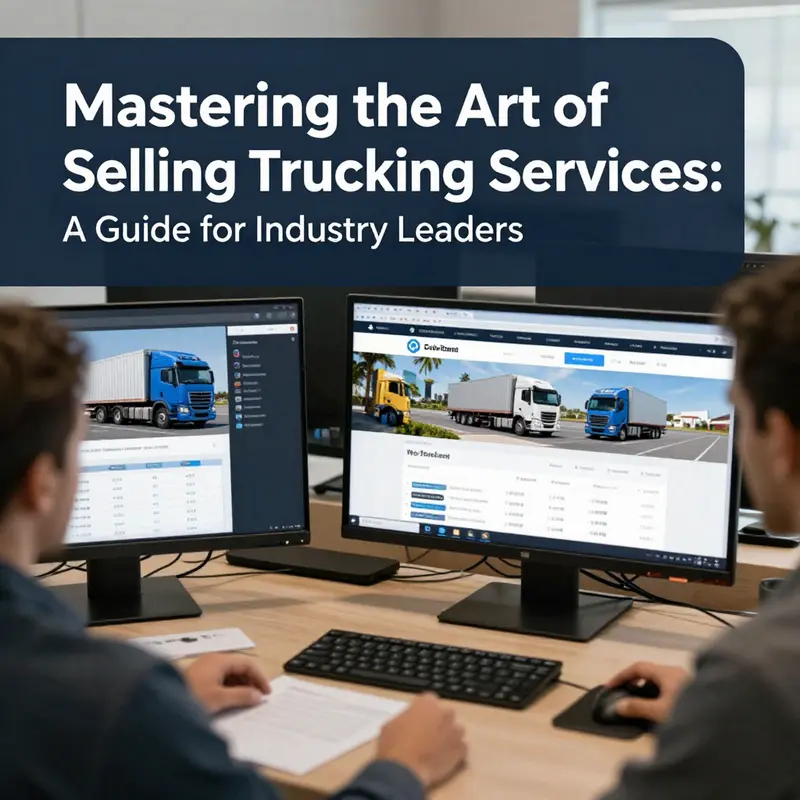
In a market where fleets compete for attention and shipments move through complex networks, a well designed multi channel marketing engine turns scattered touchpoints into a coherent customer journey. The goal is to attract the right buyers and convert them into reliable partners who value consistency as well as capability.
Start by understanding how customers search for trucking services. Some look for quick quotes on a website, others respond to a professional post on social media, and some prefer a personal call after a trade show. Map these expectations to the channels, and design simple, fast experiences for each path. The website should offer transparent service descriptions and a fast quote tool, social channels should build credibility with timely updates, and a dedicated outreach process should translate online interest into tailored proposals.
A strong value proposition travels across every channel. Reliability and on time delivery are non negotiable, but the way you present these benefits depends on the audience. On the website, highlight trackable transit times and a clear guarantee. In sales meetings, demonstrate routing discipline and detention avoidance. In social and paid media, emphasize rapid responses and proactive communication. Include capability details such as refrigerated or oversize cargo so the message reaches the right client immediately.
Trust grows with action. Complement testimonials with proactive communication during transit. If a delay occurs, share a clear plan and an updated ETA rather than ad hoc notes. An extraordinary service moment, like expediting necessary paperwork or re routing to save time, reinforces the idea of a long term partnership rather than a one off transaction.
Operational alignment makes the difference. Data should flow across marketing, sales, and operations. The quote tool on the website feeds the sales queue, while the dispatch team can validate feasibility and provide precise timelines. A unified process ensures a client who starts with a digital inquiry moves smoothly to a live conversation and a concrete proposal.
A culture of continuous improvement closes the loop. Track metrics such as inquiry conversion rates, quote acceptance speed, and post sale satisfaction. Use the insights to refine channel mix, messaging, and service packages. When a campaign attracts the right clients with predictable needs, the lifetime value of a partnership increases and retention improves.
Taken together, a true multi channel marketing engine helps trucking services win more qualified inquiries, shorten sales cycles, and build durable partnerships. It is not about adding noise across channels, but about coordinating experiences so every touchpoint reinforces a single credible promise: reliable, transparent, and responsive freight service.
Flexible Pricing, Tailored Packages, and Incentives: A Strategic Compass for Selling Trucking Services

In a market where capacity shifts with seasons and regional infrastructure stress reveals itself in delays, selling trucking services requires more than a sharp price point. It calls for a disciplined approach to pricing that is flexible without being unpredictable, combined with incentives that reward reliability and collaboration. When a carrier can align value with a customer’s constraints—delivery windows, cargo type, and budget—the sale becomes a partnership rather than a transaction. This chapter explores how flexible pricing models and well-crafted incentives can help your team stand out, win more business, and cultivate long-term relationships in a notoriously competitive field. The core idea is simple: price and promise should mirror each other. If a client faces variable demand, your pricing should reflect that reality; if a client needs reliability and visibility, your incentives should underscore your commitment to that outcome. That alignment is what turns interest into ongoing contracts and, over time, into steady revenue streams.
Pricing flexibility is not the same as slashing rates. It begins with a precise understanding of a client’s needs—distance, cargo characteristics, required transit times, and risk tolerances. In practice, this means moving beyond a single quote to a structured package that can be scaled up or down as conditions change. A robust pricing framework might combine tiered rates based on volume commitments, with surcharges or discounts tied to service levels, on-time performance, and visibility. For example, a standard lane could carry a baseline price, while an expedited option commands a premium with guaranteed transit times and higher priority in dispatch. A specialized lane—such as refrigerated or hazardous materials—might require premium pricing but can be offset with long-term contracts or volume guarantees. The value for the customer is clarity and predictability: a price that maps to a defined service envelope, not a vague estimate after a phone call.
Within that framework, dynamic elements help teams respond to real-world volatility. Seasonal spikes in demand, fuel price movements, or regulatory changes can be absorbed through carefully designed pricing levers rather than abrupt rate shocks. This is where flexible pricing shines: it provides a mechanism to manage risk for both sides. For instance, a scalable capacity option could reserve capacity at a predictable rate for a fixed term, with the ability to scale up during peak periods and scale back when volumes drop. In turn, customers gain assurance that their shipments won’t be delayed due to capacity constraints, while the carrier protects margins by balancing utilization and risk. The key is to present these options as a single, cohesive value proposition rather than a menu of disjointed add-ons. When customers see a bundled solution that clearly links price to outcomes—timeliness, visibility, and cargo integrity—the conversation becomes less about a price tag and more about a shared success plan.
The way you package and price your services communicates a lot about your business culture. It signals whether you are prepared to invest in long-term relationships or simply to chase short-term gains. This is why a channel-agnostic approach to pricing matters. Your teams should be able to present the same value proposition across multiple channels: a consultative call with a logistics manager, a formal written proposal, or a digital quote delivered through an online portal. The presentation matters as much as the numbers. When pricing reads as transparent and rational, customers feel empowered to compare options confidently, which reduces negotiation fatigue and speeds decision-making. Transparent pricing also supports trust, a critical currency in logistics where delay costs can cascade through the supply chain. When customers can see the logic—the correlation between service level, risk, and price—your credibility rises, and that credibility is a powerful substitute for price pressure.
Incentives are the practical accelerants that convert interest into action and nurture loyalty over time. Volume discounts at predictable thresholds reward customers who commit to steady volumes, while onboarding incentives help new clients experience the value of your service without friction. Performance-based rewards, tied to on-time delivery, accurate documentation, and proactive communication, reinforce the behaviors you want to scale across your organization. Referral programs convert satisfied customers into advocates, amplifying your reach with minimal cost. Rather than a single incentive, a thoughtful mix aligns incentives with customer goals and your operational capabilities. For instance, a customer who commits to a quarterly volume could receive a bundled package that combines price stability with reduced lead times for urgent shipments. Another client, approaching a cross-border expansion, could benefit from a loyalty tier that guarantees priority access to capacity during regulatory peaks. The strategic benefit is twofold: you improve retention by delivering ongoing value, and you increase win rates with prospective clients who see a clear path to better pricing as their business grows.
Crucially, incentives must be credible and sustainable. Overly generous discounts without correspondingly stronger margins create a treadmill that erodes profitability. Instead, tie incentives to measurable outcomes and operational improvements. Track performance against clear SLAs and publish regular updates to clients. When customers see that incentives are earned through real results, trust deepens and the relationship becomes more durable. The most effective incentive programs are those that reward joint outcomes rather than unilateral gains. For example, a mix of volume-based pricing, service-level bonuses for maintenance of on-time metrics, and referral rewards that unlock after a client has seamlessly integrated your processes into their supply chain turns a transactional sale into a collaborative journey.
From a marketing perspective, presenting flexible pricing and incentives requires a coherent narrative across touchpoints. Your online presence, sales conversations, and proposals should consistently emphasize how price and incentives translate into reduced risk, improved predictability, and measurable value. The conversation should begin with listening—what keeps the client awake at night?—followed by a diagnostic that maps their constraints to your pricing levers. This approach helps you avoid cookie-cutter pitches and instead offer a tailored plan that resonates with the buyer’s realities. In practical terms, this means equipping your sales team with playbooks that articulate the impact of each pricing option on total cost of ownership and service quality. It also means ensuring that your marketing materials clearly connect pricing to outcomes such as on-time performance, real-time visibility, and seamless documentation workflows. When the buyer experiences a transparent, outcome-driven price story, price becomes a secondary consideration to value.
To deepen the strategic foundation behind these practices, consider how market dynamics shape pricing decisions. Ongoing discussions about economic and industry trends highlight the need for adaptability in freight pricing. These conversations reinforce the idea that pricing should reflect not only costs but also forecasted capacity availability and risk-sharing opportunities. For a broader lens on how market conditions influence pricing and incentives in trucking, many practitioners look to industry analyses that synthesize shifting demand, capacity, and regulatory influences. See the broader discussion on economic trucking trends for context and perspective, which can help frame conversations with clients and calibrate pricing strategies to reflect current and anticipated conditions. economic trucking trends
Of course, every client is different, and the best pricing and incentives plan is one that adapts to the nuances of each relationship. A younger client entering a new market may value onboarding incentives and flexible trial arrangements that reduce early risk and showcase reliability. A larger, established customer with steady volumes may prioritize price stability and volume discounts that protect margins while delivering predictable costs. In both cases, the underlying principle remains constant: you win not by chasing every last dollar in the short term, but by delivering measurable value and cultivating trust over time. That trust is reinforced by proactive communication—instant updates when schedules shift, transparent explanations of any delay, and clear guidance on how changes will affect pricing and service levels. When customers experience reliability and transparency as a habit, they are more likely to accept flexible pricing as a fair exchange for consistent performance.
The chapter’s practical implication is straightforward. Build a pricing architecture that is explicit about how value is created, and couple it with incentives that reinforce the behaviors you want from both sides. Use volume designs, service-level tiers, and capacity commitments to give clients options, and anchor those options with incentives that are meaningful, attainable, and aligned with your operational realities. Then tell a compelling story about how these choices translate into reduced risk, improved supply-chain resilience, and tangible cost savings over time. If your team can deliver that narrative with confidence, the sale becomes a collaborative journey rather than a one-off transaction, and your trucking services become part of the customer’s competitive advantage rather than a line item to be negotiated away at renewal.
External resource: Bloomberg analysis on flexible pricing and incentives drive growth in trucking market
Final thoughts
The success of selling trucking services hinges on understanding and responding to the distinct needs of various industries. By actively listening to clients, clearly articulating unique value propositions, maintaining trust through strong relationships, employing diverse marketing strategies, and offering flexible solutions, companies can significantly enhance their market position. Embracing these strategies leads to not only increased sales but also long-term client relationships built on trust and reliability, ultimately driving sustainable growth within the trucking industry.