
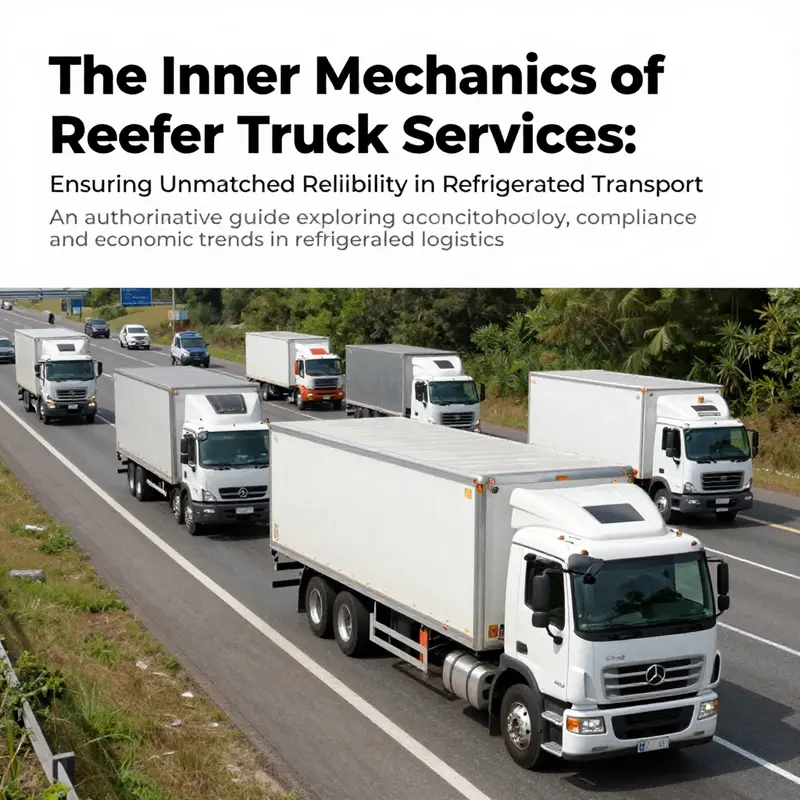
Reefer truck services play a crucial role in the transport of temperature-sensitive goods, ensuring product integrity across industries. Understanding how these specialized refrigerated transport solutions function is vital for manufacturing, distribution, and retail sectors, among others. As we explore the fundamentals of reefer operations, delve into advanced temperature control technologies, and uncover compliance regulations, you will gain insights into the operational efficiencies that define this sector. Moreover, exploring the economic impacts and market trends will shed light on future developments, providing a comprehensive overview of how reefer truck services work and their importance in today’s supply chain.
Preserving Freshness on the Move: Inside the Mechanics of Reefer Trucking
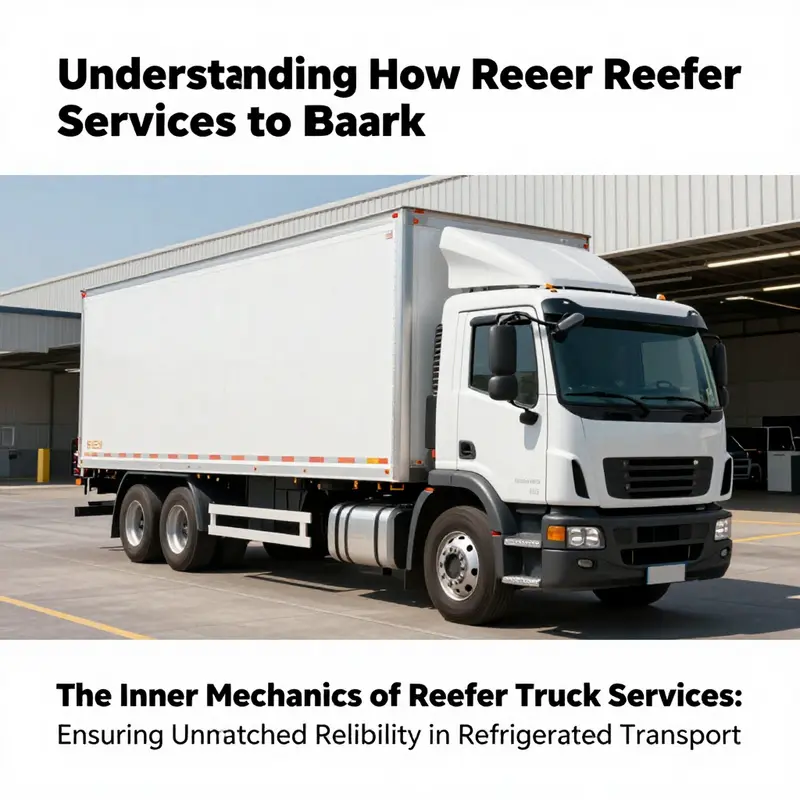
Reefer truck services function as the moving heart of the cold chain, a specialized form of transportation designed to keep temperature-sensitive goods within a precise band from origin to destination. In a world where small deviations can ruin perishable foods, spoil valuable pharmaceuticals, or compromise the safety of vaccines, these vehicles are more than trucks with a cooler strapped on. They are compact, mobile laboratories governed by physics, powered by sophisticated refrigeration, and guided by data streams that translate into real-world reliability. The work begins with the selection of the right platform for the job. Most reefer fleets rely on refrigerated units mounted on heavy-duty frames, typically five tons or larger, capable of carrying substantial loads at stable temperatures. The vehicle choice is driven not just by payload but by insulation quality and the ability to sustain a controlled environment over urban hopscotch or long-haul corridors. Behind the outer shell lies a layer of high-density polyurethane foam, tucked between robust inner and outer panels. This insulation forms a seamless, well-sealed enclosure that minimizes heat transfer and limits moisture intrusion. The result is a container that behaves like a well-insulated room on wheels, where the goal is to keep external weather, engine heat, and door actions from perturbing the internal climate. The refrigeration unit itself is the other half of the equation. In traditional configurations, the compressor and condenser are driven by the truck’s diesel engine, delivering reliable cooling power as the vehicle moves. Yet a growing number of newer units rely on electric power, drawing energy from a battery bank or from plug-in connections at stops or warehouses. This hybrid approach enables continuous cooling even when the main engine is idling, a crucial capability for urban delivery cycles or extended layovers at loading docks. The refrigeration system is not a blunt thermostat; it is a precision instrument designed to hold dates and temperatures in lockstep with the cargo’s needs. Modern units can be tuned to maintain a broad spectrum of temperatures—from deep freeze at minus twenty-five degrees Celsius to cool storage around four degrees Celsius. The right setting depends on cargo type, packaging, and the potential for physical or chemical changes within the product. Dairy products, fresh produce, frozen meats, and life-saving medications each demand a distinct regime, and the best reefer operations tailor their climate profiles to these requirements with precision. It is not enough to set a target temperature; the system must respond to fluctuations in ambient conditions, door openings, or minor shifts in load. That is where digital controls and real-time monitoring come into play. Today’s reefer units are equipped with telematics dashboards that continuously log internal temperature, humidity, and other environmental metrics. These data points flow to cloud-based platforms accessible by fleet managers, dispatchers, and shippers who rely on them to verify compliance with critical standards such as HACCP and GDP. When any parameter drifts beyond the approved band, automated alerts trigger immediate action, whether that means extending a cooling cycle, rerouting to a closer facility, or dispatching a mechanical check to verify the refrigeration unit’s health. The end-to-end process is a blend of thermal science and operations management, where physics governs the moment-to-moment stability of the environment and software governs the governance of quality across the supply chain. Consider a typical urban reefer operation, where a 5-ton unit backs into a loading dock. The vehicle’s rear or side doors provide convenient access for rapid loading and unloading, a necessity for high-turnover routes. Yet the same design that supports quick transfers can constrain maneuverability in tight city streets, thanks to a larger turning radius. Even so, the insulation’s resilience often proves decisive; it minimizes temperature excursions during brief door openings and reduces the additional energy needed to re-stabilize the cabin after access is complete. In such settings, the priority is to preserve product integrity while maintaining service levels that keep shelves stocked and customers satisfied. The essence of reefer technology is the creation of a controlled microclimate inside a mobile container. The core functionality hinges on a refrigeration cycle that compresses, condenses, expands, and evaporates refrigerant, extracting heat from the cargo space and transferring it to the surroundings. The system must respond to changing loads and dynamic routes, punishing environments, and batch-specific requirements. This is why the temperature range and stability limits matter as much as the unit’s nominal cooling capacity. A well-designed reefer unit is not simply a cooling device; it is a climate-regulation system that also manages humidity and, in some configurations, airflow patterns within the cargo area. The interplay of temperature control and humidity is especially important for perishables that can suffer quality degradation from moisture fluctuations or condensation. The ability to monitor and log humidity helps maintain product quality and supports regulatory expectations, particularly in medical and food industries that require meticulous traceability. Speaking of compliance, the value proposition of reefer trucking extends beyond temperature control. Real-time monitoring creates an auditable trail of performance data that regulators and customers alike can rely on. In regions with stringent safety and quality standards, the continuous feed of temperature logs, door events, and vehicle status translates into a documented history of environmental control. This not only reduces the risk of recalls or product withdrawals but also strengthens trust with partners who demand verifiable evidence of proper handling. It is easy to overlook the human element in these operations, but trained drivers play a central role in safeguarding cargo. They are the hands-on guardians who manage loading sequences, secure packaging, and door handling with a respect for the cargo’s sensitivity. They also participate in emergency responses and escalating issues when conditions deviate from plan. For businesses that rely on cold chain logistics, partnering with a reputable reefer truck service offers a holistic package: well-maintained fleets, experienced drivers who understand the nuances of sensitive cargo, and round-the-clock support during transit. Such partnerships often include customized solutions that align with the supply chain’s strategic needs. They may include temperature-specific routing to reduce exposure risk on long legs, expedited delivery options to maintain product quality when time is critical, and integration with supply chain management software that provides a unified view of inventory and transport status. The integration of software tools with refrigerated transport is increasingly common, enabling smoother coordination between manufacturers, distributors, and retailers. This digital thread helps balancing demand, production, and logistics in a way that minimizes waste and improves service levels. In the broader ecosystem of cold chain logistics, these practices sit alongside overarching standards and guidelines. Industry bodies and international organizations offer best practices that inform every movement of goods through the cold chain, from packaging to transport to final-mile handling. For more detailed technical guidance and standards, see the ISO standard on cold chain logistics: https://www.iso.org/standard/78317.html. Within the practical sphere of operations, reefer trucking also intersects with regulatory realities that shape how and where goods move. When shipments cross borders, operators must navigate cross-border regulatory issues that influence documentation, driver qualifications, and inspection regimes. A robust reefer operation accounts for these realities by building compliance into routing, scheduling, and cargo handling procedures. It is not just about avoiding penalties; it is about ensuring that temperature-sensitive products arrive in usable condition, no matter the point of origin or destination. The value of temperature-controlled transport becomes most evident in a landscape where demand pressures and supply disruptions are routine. Shippers needing reliable delivery windows, consistent product quality, and transparent audit trails lean on reefer services to deliver outcomes that would be difficult to achieve with ambient-temperature transportation. This is why the modern reefer fleet emphasizes both the physics of cooling and the analytics that demonstrate ongoing compliance. Maintenance and continuous improvement drive performance just as much as the refrigeration cycle itself. Fleets invest in preventative maintenance, rigorous driver training, and proactive device diagnostics to catch issues before they become failures on the road. The result is a service that not only preserves product integrity but also reduces waste, protects brand value, and strengthens the reliability of the broader supply chain network. As cold chain requirements evolve—with faster delivery horizons, higher regulatory expectations, and innovations in energy efficiency—the profile of reefer trucking will continue to expand. Operators are increasingly adopting eco-friendly power options, optimizing insulation to shrink energy use, and layering sensors that deliver deeper visibility into product conditions. These advances enable smarter routing, reduced emissions, and better overall control of the environmental conditions that matter most. In the end, reefer truck services are a synthesis of engineering, data, and logistics discipline. They translate complex physical processes into reliable, traceable outcomes that keep food safe, medicines effective, and chemicals stable across vast geographies. The next chapter will explore how these services interface with broader supply chain strategies, including the implications of external pressures like regulatory shifts, market trends, and the push toward smarter, more energy-conscious transportation networks.
Cold Chain in Motion: How Temperature Control Mechanisms and Smart Technologies Drive Reefer Truck Reliability
Keeping It Cold and Certified: The Quiet Architecture of Reefer Truck Services
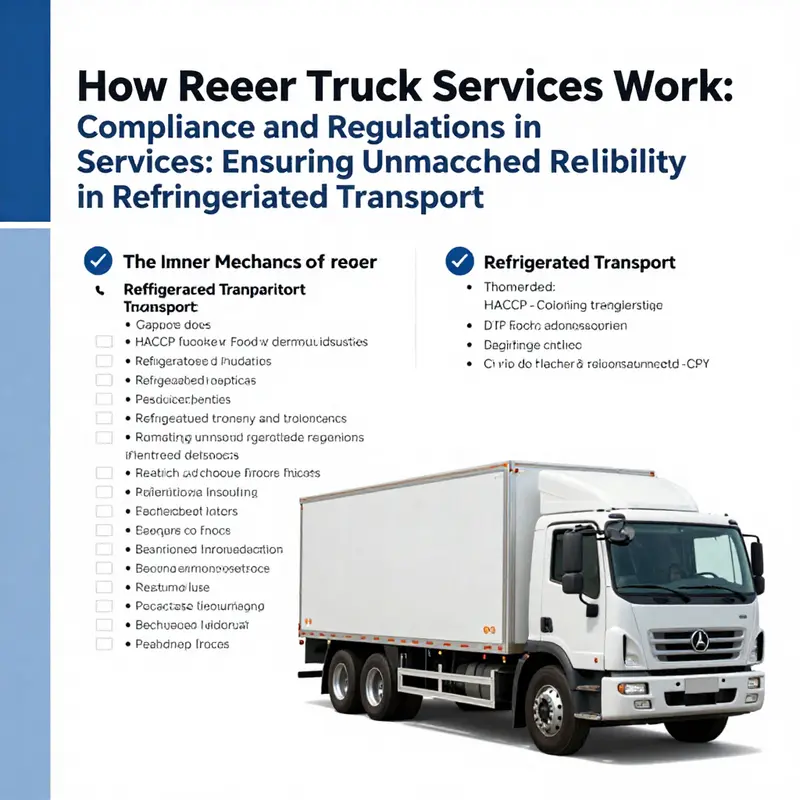
Temperature-controlled commerce rests on a meticulously engineered balance of physics, technology, and governance. Reefer truck services are not merely about keeping cargo at a fixed number on a thermometer; they are a living framework that safeguards perishable goods, preserves their value, and ensures regulatory compliance from pickup to delivery. At first glance, a refrigerated trailer looks like a standard trucking workhorse, yet inside its sealed shell lies a sophisticated ecosystem designed to manage heat transfer, humidity, vibrations, and power demands in real time. The core concept is straightforward: minimize heat gain and remove heat as needed, so that sensitive items—whether fresh produce, dairy, frozen meals, life-saving vaccines, or delicate pharmaceuticals—remain within precise temperature bands throughout transit. The practical reality, however, is far more complex. Each shipment travels through a web of environments, from sunlit docks to stainless-steel cold rooms, crowded urban streets, and sometimes remote rural routes. Consistency under these shifting conditions requires robust insulation, reliable cooling equipment, and a fabric of software and people that can respond to deviations almost as they occur. This is where compliance becomes inseparable from day-to-day operation. Temperature integrity is not simply a logistical nicety; it is a regulatory imperative that shapes how fleets are designed, monitored, and managed. The consequences of lapses are not only spoilage or degraded efficacy; they can trigger audits, recalls, and penalties that reverberate through the supply chain. As such, the truth about reefer services is less about a single piece of technology and more about a coordinated system that integrates hardware, software, and human expertise to keep goods in the right condition, at the right place, and under the right standards.
In the hardware core, reefer trailers employ high-density insulation—often a polyurethane foam sandwiched between inner and outer panels—to create a near-impervious barrier against heat influx. The enclosure must be seamless and well-sealed, because even small air gaps can become pathways for temperature drift. The refrigeration unit itself is the heartbeat of the system. In traditional models, it is powered by the truck’s diesel engine, but newer, increasingly common electric or hybrid variants decouple cooling from propulsion, enabling cooling even when the main engine is off. This separation matters for delivery schedules, idle emissions, and energy efficiency. For drivers and fleets, the everyday experience of this architecture is a blend of reliability and visibility. Modern reefer units are not black boxes; they are integrated with digital controls that display real-time measurements of internal temperature, humidity, and sometimes oxygen or carbon dioxide levels. The data is not confined to the cab. It is logged and often accessible remotely through cloud-based platforms, offering fleet managers and shippers a window into conditions across the entire journey. In regulated industries, this visibility translates into auditable evidence that critical thresholds were met, or that timely action was taken when conditions drifted from set parameters.
The technological layer extends beyond mere readouts. A typical reefer fleet operates with GPS tracking, remote temperature alerts, and dashboards that aggregate data from multiple units. If a container door opens during a stop, or if ambient conditions shift due to a malfunctioning compressor, automated alerts trigger a cascade of responses. The driver may be prompted to verify seals and re-close doors, while a back-office system dispatches maintenance signals or reroutes the load if needed. The objective is not only to detect excursions but to prevent them. Predictive maintenance has become a central pillar in many fleets. By analyzing patterns in compressor performance, refrigerant pressures, and power draws, fleets can schedule proactive service before a breakdown disrupts a critical shipment. This proactive stance reduces the risk of refrigeration failure in peak periods and minimizes the chance of spoilage or reduced potency of temperature-sensitive cargo. In a broader sense, the technology creates a continuous feedback loop: data collection informs preventive actions, which then improve the reliability of future voyages. Within this loop lies one of the most important features of reefer transport—traceability. Every mile, every temperature reading, and every adjustment is part of a verifiable history. When a shipment comes under inspection, regulators or customers can request a temperature profile that substantiates that the product remained within specification from origin to destination. This capability is what distinguishes modern reefer services from older, more manual approaches.
Yet the reliability of temperature control is inseparable from the regulatory environment. In the food sector, compliance with the Food Safety Modernization Act (FSMA) underscores the necessity of proper handling and transport conditions for perishable items. In the pharmaceutical arena, adherence to Good Distribution Practices (GDP) and the broader oversight of agencies such as the U.S. FDA and the European Medicines Agency (EMA) demands validated monitoring systems and documented proof of proper storage and transit conditions. Compliance is not a paper exercise; it is the operational standard by which companies prove that their processes are scientifically sound and that product integrity is maintained throughout the supply chain. This is why data loggers and real-time monitoring are not optional add-ons but essential components of the reefer package. They provide the objective records needed during audits and inspections and they enable the shipper to demonstrate ongoing adherence to prescribed temperatures, humidity ranges, and other critical environmental conditions.
The operational implications of these requirements ripple through every layer of the fleet’s workflow. Integration of technology is not just about adding gadgets; it is about achieving a level of accountability that aligns with public health priorities and quality expectations. In practice, a reefer unit becomes part of a larger, electronically linked system. Telematics collect performance data, which is then reviewed against standards and regulatory thresholds. If a unit reports an out-of-range reading, protocols guide a rapid corrective action: the driver checks seals, confirms door closures, and, if necessary, powers a temporary bypass while a field service technician is en route. The platform can also alert a dispatcher, who may adjust the route to prioritize a higher-risk shipment or to schedule a preventive maintenance visit in anticipation of a demand surge. In this way, technology serves not just as a monitoring tool but as a decision-support system that translates raw telemetry into actionable steps that preserve safety and compliance.
There is also a human dimension to these systems that is easy to overlook. Labor and environmental regulations shape how reefer fleets operate day to day. Drivers must be trained to handle temperature-sensitive cargo and to follow emergency protocols if they encounter a cargo compromise. This training extends beyond the cab to include understanding how to respond to door breaches, unit alarms, or unexpected stops in extreme weather. The fleet itself must also meet emissions standards and energy efficiency benchmarks. In an era when environmental stewardship is increasingly tied to regulatory compliance, operators are turning to eco-friendly refrigerants and fuel-efficient engines as part of a broader push to reduce the environmental footprint of cold-chain logistics. The convergence of operational excellence, regulatory discipline, and environmental responsibility is what ultimately sustains the credibility of reefer services in markets that demand stringent quality controls.
Within this ecosystem, the concept of traceability embodies the convergence of compliance and daily practice. Temperature data, GPS logs, maintenance records, and shipment handoffs create a chain that regulators and customers can trace from farm or factory to final consumer or patient. Digital records not only facilitate audits but also enable more nuanced logistics planning. With complete visibility into where a shipment has been and how it has been controlled, supply chains can optimize routes to minimize time in transit, reduce risk of excursions, and respond quickly to market pressures or safety concerns. In this sense, compliance is not a constraint but a driver of reliability and efficiency. It reassures traders, retailers, and healthcare providers that products arrive in the specified condition, at the expected time, and with a documented history that stands up to scrutiny.
For readers exploring the regulatory landscape further, the topic of cross-border regulatory issues often adds another layer of complexity. In practice, international shipments must align with the refrigeration and documentation standards of multiple jurisdictions, and the ability to provide a consistent temperature profile across borders hinges on interoperable data systems and standardized procedures. This is where the procurement of robust, interoperable data platforms becomes a strategic differentiator: not only do they support compliance in one market, they enable consistent performance as cargo moves through different regulatory regimes. See discussions on cross-border regulatory issues for an in-depth look at how temperature controls, documentation, and data sharing adapt to the realities of international transport. https://fritzke-truckinginc.com/cross-border-regulatory-issues/
Ultimately, reefer truck services are a symphony of insulation, refrigeration, telemetry, and disciplined operations. The chapters that describe their inner workings—how a cooling unit is selected, how interior environments are maintained within tight tolerances, and how real-time data informs rapid responses—are not merely technical explanations. They illuminate how trust is built into every mile of the cold chain. As the industry continues to evolve, with advances in sensor accuracy, predictive maintenance analytics, and even more rigorous regulatory expectations, the backbone remains the same: a well-insulated, well-coordinated system designed to keep the cold chain intact, protect public health, and deliver assurance to manufacturers and consumers alike. For practitioners, the takeaway is clear. Investments in reliable hardware, disciplined data capture, and ongoing training are not optional luxuries; they are foundational requirements for operating in a modern, compliant reefer ecosystem. For researchers and policymakers, the object lesson is how tightly regulated, technologically supported transport can enable safer, more efficient food and pharmaceutical supply chains without sacrificing the practical realities of day-to-day logistics. And for readers curious about the governance side, the FDA’s FSMA framework and related regulatory guidance provide a compass for what good practice looks like in a world where temperature is a trusted variable rather than a fleeting concern. External resource: FDA Food Safety Modernization Act (FSMA) guidance can be found here: https://www.fda.gov/food/food-safety-modernization-act-fsma
Keeping the Cold Chain Alive: The Hidden Mechanics Behind Reefer Truck Services
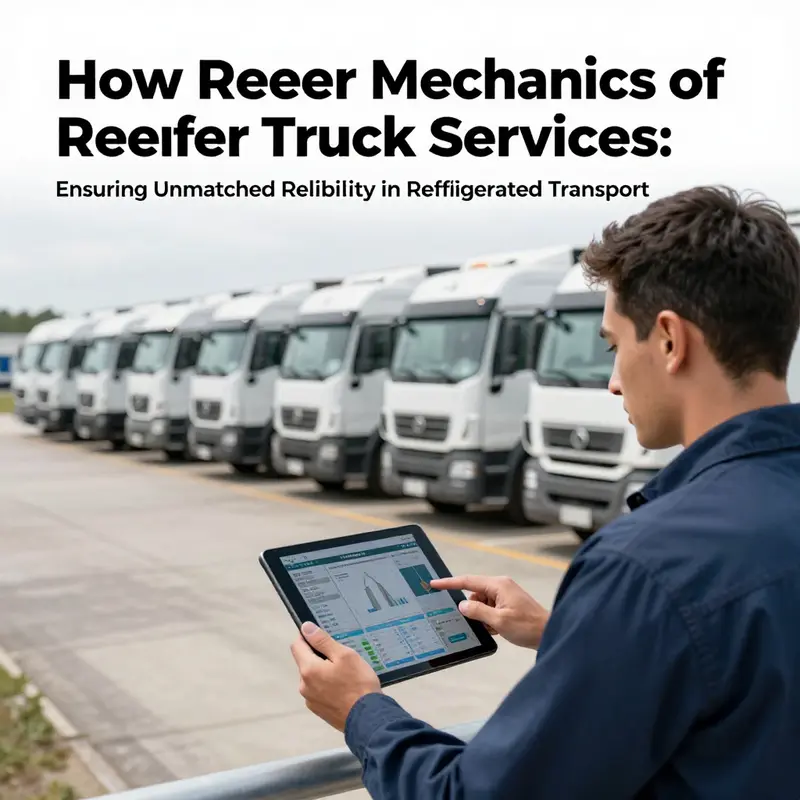
Every fleet transporting temperature-sensitive goods has a quiet mission: keep cargo at its precise temperature from pickup to delivery. Reefer truck services form the backbone of modern cold chains, protecting food, vaccines, and sensitive chemicals. The orchestration relies on sturdy vehicle design, reliable refrigeration, and smart data systems that translate road conditions into a steady, monitored environment. The journey starts with the choice of trailer, but the real work happens when the system is engineered to resist heat, respond to change, and communicate the load state to a dispatcher who can react in real time.
At the core is the trailer itself. The vehicle is typically a medium- to heavy-duty unit sized to fit the cargo profile, often five tons or more, built to endure long hours on the road without compromising temperature stability. The walls are lined with high-density polyurethane foam, between inner and outer panels to form a tight shell. Insulation is the frontline defense against heat ingress, reducing heat transfer and slowing ambient drift into the refrigerated space. Where insulation ends, the refrigeration system begins. The unit may be powered by the truck’s diesel engine in traditional configurations, or run on electric power in newer variants, ensuring cooling continues even when the main engine is idling. The power architecture matters as much as cooling capacity because any lapse translates into excursions, possible cargo damage, and regulatory risk.
Modern reefers add digital controls and real-time monitoring. Onboard sensors log internal temperature, humidity, air flow, and door status, with data streamed to cloud platforms that aggregate multiple trailers and routes into a single actionable picture. This visibility supports regulatory expectations such as HACCP and GDP, demonstrating compliance through a verifiable temperature history. When a parameter drifts toward a threshold, the system can trigger automatic alerts. Dispatch can reallocate resources, adjust routes, or take corrective action, all while recording deviations for traceability. The software layer acts as a digital nervous system that translates the realities of a moving cold room into data-driven decisions.
In urban, multi-stop deliveries, a typical 5-ton reefer must balance efficient loading and unloading with traffic, narrow streets, and frequent door openings. Rear and side doors offer flexible access, but each opening is a moment when heat can enter. Modern systems mitigate this with rapid temperature recovery and scheduling that minimizes door-open durations during peak times, preserving a tight temperature envelope while maximizing uptime and minimizing fuel use.
Beyond single-temperature control, innovations enable mixed-load shipments. Multi-temperature reefers, or zoned systems, allow different compartments to maintain distinct ranges within the same trailer. A single trip can carry frozen items in one zone, chilled items in another, and ambient items in a separate segment, without cross-contamination. The benefits include better cargo utilization, fewer trips, and better responsiveness to demand, reducing spoilage risks and waste.
The operational heartbeat is hardware joined to software. IoT sensors feed continuous status updates to centralized platforms. Predictive analytics forecast wear, anticipate failures, and schedule maintenance before disruptions. This proactive approach reduces downtime, extends asset life, and preserves load integrity. A technician might be dispatched for preventive service after a set period on the road, or a battery health check scheduled ahead of idle periods, all guided by data rather than reactive maintenance alone. The result is higher on-time delivery and lower spoilage costs that strengthen overall margins.
Beyond the shop floor, route planning also centers on temperature. Routes are sequenced by weather, traffic, and dwell times at destinations to minimize exposure. When strict timing is needed, the system prioritizes paths with the least heat exposure during loading and delays, shaping the calendar around the physics of the cold chain. The modern reefer operates as a nervous system that processes environmental data, converts it to actionable steps, and maintains a continuous feedback loop with drivers, dispatchers, and customers.
Electrification is an emerging thread that couples resilience with sustainability. Electric reefers reduce local emissions and can improve energy efficiency through regenerative or optimized cooling cycles. The transition is gradual and contingent on regional infrastructure, but it signals a shift toward quieter, cleaner operations in urban settings. As fleets test electrified solutions, industry analyses show how brands are evolving maintenance practices for new propulsion and cooling architectures. For readers curious about how this trend unfolds in different markets, recent discussions highlight examples in various regions and the implications for cold-chain logistics.
The broader picture is an integrated system delivering reliability across a complex process. The reefer trailer is where thermal containment, mechanical reliability, and digital oversight converge. Insulation maintains the baseline, the refrigeration unit enforces it with steady energy input, and the data ecosystem watches over the chain—alerting, auditing, and enabling corrective action with precision. This triad underpins regulatory compliance and customer trust, supporting end-to-end visibility and traceability that customers increasingly require.
In practice, operators balance refrigeration performance, insulation quality, sensor calibration, and delivery timing. They also manage personnel, maintenance budgets, and capital expenditure for newer technologies such as multi-temperature zones and electric drive systems. The most successful reefers treat temperature management as a discipline—taught, measured, and refined. They invest in data infrastructure, train drivers to understand door openings and cargo handling, and build relationships with customers who value consistent cold-chain performance. The payoff is preserved product quality, reduced waste, steady cash flows, and stronger competitive positioning in an industry where a single spoilage event can be costly.
As this chapter shows, reefer truck services are a quiet orchestration: a chassis built for resilience, a refrigeration system designed for reliability, and a digital framework tuned to anticipate and respond to deviations before they cascade into failures. The cold chain is not just about keeping things cold; it is about keeping a promise to customers that what leaves the dock arrives in a condition that preserves safety, quality, and value.
Chilled Miles: How Reefer Truck Services Preserve Quality, Cut Waste, and Shape the Cold-Chain Economy
Reefer truck services sit at the crossroads of reliability and sensitivity. They move products that cannot afford a moment of heat or an unfriendly humidity level—from leafy greens and dairy to vaccines and certain pharmaceuticals—and do so in a way that preserves quality from the moment the goods leave the loading dock until they reach a consumer. The backbone of this operation is not a single clever device but a carefully balanced system: a vehicle engineered for temperature stability, driven by precision refrigeration, and augmented by digital tools that turn a rolling container into a data-rich, compliant, and highly visible part of the supply chain. When you understand how these elements fit together, the importance of reefer trucks goes beyond keeping perishables cold; it reveals how the entire economy leans on predictable, traceable, and timely cold storage during transit. This coherence between hardware and software, and between physical movement and digital oversight, is what makes reefer transport both technically demanding and economically consequential.
From the outset, the practitioner selects a refrigerated vehicle sized to suit the cargo and the route. In many fleets, the workhorse is a 5-ton unit or larger, chosen for its capacity to carry high volumes without compromising thermal stability. The vehicle is typically a single integrated unit, a sealed enclosure built with high-density polyurethane foam insulation wedged between inner and outer panels. This design minimizes heat transfer and breathes efficiency into the journey, ensuring that the interior temperature remains within tight tolerances even as ambient conditions shift along suburban lanes or through cross-border corridors. The insulation’s reputation rests not only on its ability to keep heat out but also on its contribution to energy economy. A well-sealed, dense barrier reduces the load on the refrigeration unit, translating into lower fuel use and less wear on the system over time. The result is a transit profile that looks deceptively simple from the outside but is deeply engineered to resist the insults of weather, loading dock variance, and door openings en route.
The refrigeration unit itself is the other half of the equation. Conventional models draw power from the truck’s diesel engine, providing a reliable, on-demand cooling capability that travels with the load. Yet the industry is steadily embracing electric power and hybrid configurations, especially on newer configurations where emissions and noise considerations matter. In practice, this means the unit can continue cooling even when the main engine is idling or shut down, a feature that is crucial for meeting strict delivery windows and for managing electrical demand when the truck sits at a dock for loading or unloading. This kind of redundancy is not a luxury but a necessity for ensuring that sensitive cargo—such as dairy products requiring strict cold chain integrity or vaccines that demand a narrow temperature range—stays within spec regardless of external conditions. The interplay between propulsion and refrigeration is where efficiency is born; a well-matched system avoids overcooling, minimizes energy consumption, and preserves the cargo’s integrity.
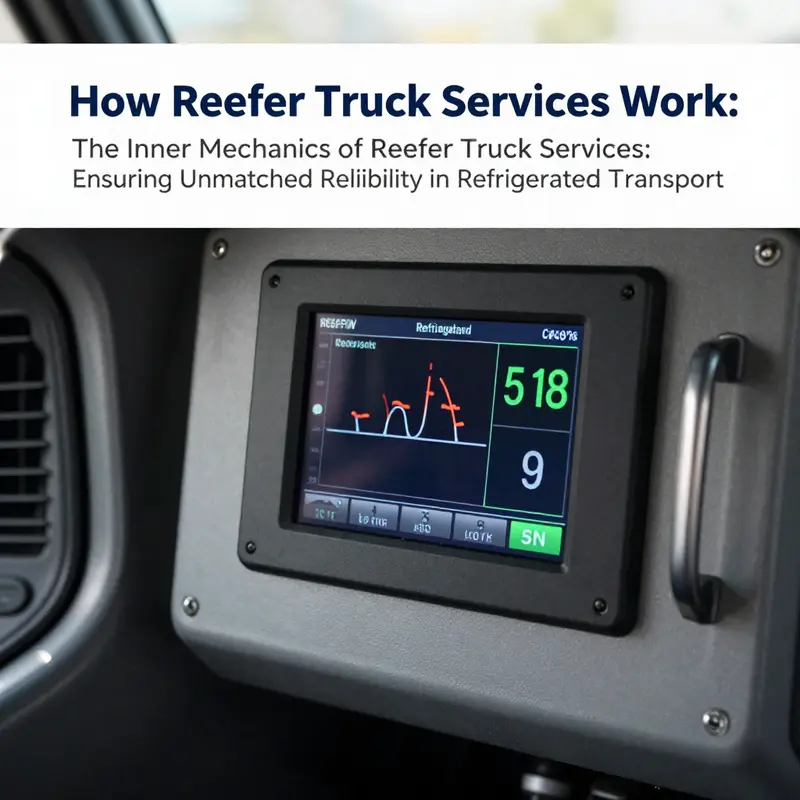
Inside the cab, the technology story extends beyond wheels and engines. Modern reefer trucks are outfitted with digital controls and real-time monitoring systems that continuously log internal temperature, humidity, and other critical environmental variables. These readings feed into cloud-based platforms visible to fleet operators, dispatchers, and sometimes even shippers themselves. The value here lies in traceability: a digital ledger that not only proves compliance with standards such as HACCP and GDP but also provides a proactive dashboard for action. If a deviation occurs—a door left ajar, a coolant valve drifting from target, or a rapid ambient temperature spike—the system emits alerts. An operator can respond immediately, adjusting routes, dispatching a nearby unit to the issue, or initiating corrective cooling cycles. This capability transforms what used to be a reactive process into a proactive one, where a potential problem is flagged before it becomes a fault in the product.
The practical logistics of loading and unloading, particularly in urban environments, illustrate how design choices influence performance. A typical 5-ton reefer configured for city deliveries may feature rear or side access doors that speed up handling, reduce dwell time at docks, and help drivers manage tight schedules. Yet its larger footprint and turning radius can pose challenges in dense downtown cores or narrow alleys. Here again the insulation backbone proves its worth: even with tighter gaps to negotiate, the interior maintains its temperature because the carrier’s envelope remains a stable, low-heat environment during every stop. The choice between ultra-tight insulation and maneuverability is not a trade-off in quality but a balance in capability. The cargo—whether fresh produce, frozen items, dairy, or life-saving pharmaceuticals—relies on a stable climate through every leg of the journey, and the vehicle’s physical design must support both efficient access and uncompromised control.
Equipment and monitoring are only part of the story. The data that flow from every trip offer a new lens on efficiency and safety. Real-time telemetry, coupled with historical logs, creates a rich narrative about how a shipment traveled: the exact temperatures at pick-up, how long the doors stayed closed during transit, the number of dock door openings, and any excursions beyond policy thresholds. This data is more than regulatory compliance; it informs route planning and performance optimization. With precise telemetry, fleets can anticipate thermal load changes on long hauls, count on motorized or auxiliary power units to modulate cooling during peak heat, and calibrate refrigeration cycles to minimize energy use while guaranteeing product safety. It is this synthesis of mechanical reliability and data-driven management that separates reliable reefer transport from legacy cold-chain practices and explains why the economics of perishable logistics are increasingly data-driven.
From an economic perspective, reefer truck services deliver tangible value that ripples through the entire supply chain. Waste reduction is perhaps the most immediate benefit. Temperature excursions can render perishable goods unsellable, but the combination of robust insulation, dependable cooling, and precise monitoring minimizes the odds of spoilage. The impact compounds as shelf life is preserved for longer windows, enabling distributors to plan more accurate stock rotation and retailers to manage promotions with less risk of waste. Beyond spoilage, the reliability of temperature-controlled transport underpins customer satisfaction. Retailers and consumers expect consistent quality, and accuracy in delivery temperature is part of the trust signal that keeps shoppers returning. In this sense, reefer service performance directly influences brand reputation and loyalty, which in a competitive marketplace translates into predictable demand and more stable revenue streams for producers and distributors alike.
Operational efficiency is the other side of the coin. The digital controls and monitoring tools enable proactive management of deviations, as noted earlier, but they also unlock route optimization. Fleet managers can analyze a constellation of trips—from start to finish—to identify patterns in temperature stability, dwell times, and energy use. With insights drawn from data, they can optimize loading sequences, schedule more precise maintenance, and select routes that minimize exposure to extreme heat or cold. The downstream financial benefits can be substantial: reduced fuel consumption, lower maintenance costs, and fewer penalties tied to regulatory breaches or product recalls. In other words, the economics of refrigerated transport are increasingly about squeezing efficiency from every mile while preserving the hard-won confidence that temperature-sensitive products require. The broader industry context—how trucking economics evolve in response to digital tools and tighter compliance demands—adds another layer to this story. For a broader view of the economic forces shaping trucking, see the discussion on economic-trucking-trends.
Market dynamics now towering over the physical layer reflect not just the growth of cold storage but the expansion of global trade and consumer expectations. The world is moving more perishable goods across longer distances than ever before, and the rise of e-commerce has intensified the need for rapid, reliable, and traceable delivery of temperature-controlled goods. In this context, the global cold chain market is projected to grow at a robust pace through the next decade, driven by innovations in refrigeration technology, investments in cold storage infrastructure, and a growing appetite for temperature-controlled logistics in emerging markets. Alongside this growth, sustainability has become a central criterion. Manufacturers and carriers are increasingly evaluating energy efficiency and environmental impact, pushing the adoption of energy-efficient reefer units, hybrid configurations, and units powered by alternative fuels where feasible. These shifts are not fashion statements but strategic responses to cost pressures, regulatory expectations, and the imperative to minimize the carbon footprint of the supply chain. The convergence of hardware excellence, digital intelligence, and market demand creates a favorable trajectory for reefer truck services, making them a crucial, enduring pillar of a resilient logistics framework.
In sum, reefer truck services function by tightly integrating insulation-driven thermal stability with reliable refrigeration and intelligent monitoring. This integration protects product integrity from pickup to delivery, enables rigorous regulatory compliance, and supports a host of economic advantages—from waste reduction and longer shelf life to enhanced customer trust and route-level efficiency. The ongoing evolution of refrigeration technology, data analytics, and sustainable practices signals not only a stronger cold chain but a more resilient, transparent, and cost-aware logistics ecosystem. For a deeper dive into the technical standards that shape these systems and their performance in the field, see the external reference at Fleet Owner’s Reefer Truck Standards and Performance Analysis. The interplay of hardware design, digital oversight, and market forces ensures that reefer transport remains a dynamic and essential component of modern commerce.
Final thoughts
Through this exploration of how reefer truck services work—from the basics of refrigerated transport to the advanced technologies ensuring compliance—the importance of these services in safeguarding the quality of temperature-sensitive goods is clear. As market trends evolve and compliance regulations tighten, reefer trucks will continue to be integral to supply chain efficiency and reliability. Organizations willing to invest in these specialized logistics should be poised for success, reinforcing their standing in competitive industries.