

As the demand for dump truck services increases within various industries, understanding how to effectively charge for such services becomes essential for manufacturing, retail, and construction companies alike. This article explores the complexities of pricing in the dump truck service sector, offering insights into different pricing models, the factors influencing charges, regional price variations, and strategies for calculating costs. Each chapter delves into critical components that together provide a holistic understanding of how businesses can best determine the appropriate fees for dump truck services, ensuring they meet both operational needs and market expectations.
Pricing on the Move: Crafting Durable, Flexible Rates for Dump Truck Service

Pricing a dump truck service is rarely a single, static decision. It is a living calculation that blends equipment capability, time, distance, material type, and risk into a price that sustains profit while remaining attractive to customers. The market presents a spectrum of models, and the way you choose to price will influence both your day-to-day workload and your longer-term growth. In many regions, the simplest way to start is to think in terms of what customers understand best: per load or per hour. Yet the nuance lies in where you place the lever that makes sense for your fleet and the kind of jobs you chase. A common starting point in the field is to price by the hour, with a steady cadence that covers not only the time behind the wheel but also the time spent loading, maneuvering, and dumping material. A typical hourly rate sits in the mid to upper range for the industry, around seventy-five dollars per hour, but almost everywhere you travel there is a pragmatic minimum—three or four hours—so a job that takes less than that bandwidth still yields meaningful revenue. This approach recognizes that even when a site looks straightforward, the real costs accrue quickly: get in, move payloads, ground conditions, traffic delays, and the offsite removal or placement of material at a designated dump site, which often involves regulatory or site-specific dump fees. The hourly model mirrors how the service is actually performed: the truck, the driver, the time on site, and the complexity of the work all add up. When a customer asks for a precise quote, you can illustrate the calculus behind the hourly rate by identifying the elements that drive time: the weight and volume of material, the sequence of loading and unloading, the need to backfill or grade at the destination, and the potential for delays caused by site access or weather. Yet for builders, landscapers, and homeowners seeking predictability, a per-load pricing framework can be easier to grasp and compare. In this model, you might quote something like a flat rate per load, plus a discrete dump fee if the disposal location imposes one. A common reference point in practice is a base figure around one hundred twenty-five dollars per load, with additional charges for heavier or larger volumes and for incurring dump or disposal costs. For smaller jobs, a minimum fee still applies, often around ninety dollars, to ensure the operation covers the core costs of mobilizing the truck and the crew. These figures are not universal. They shift with geography, market demand, and the type of material being hauled. A full load on a larger dump truck—one designed for construction contracts—tawns into higher territory, where the total per-load price can vary from two hundred dollars to three hundred dollars or more depending on region and access routes. When you combine these elements, you begin to see why a robust pricing strategy must blend both models. The hourly approach protects you when the job has an unpredictable duration, or when site work involves significant time on the ground for loading, compaction, or grading. The per-load method matters when the job is straightforward in volume but variable in distance, or when customers value the simplicity of a single line item that fits into their budgets. In practice, many operators blend the two: a baseline hourly rate to cover labor and equipment usage, plus a per-load charge or dumping fee that accounts for material handling and disposal. This hybrid approach is often the most resilient, enabling price adjustments as the job mix shifts. It is also essential to consider the distance and mileage factor. Long hauls increase fuel consumption, engine hours, and the vehicle’s wear and tear, all of which must be priced into the final quote. The farther the journey, the more you need to reflect driver time and fuel burn, alongside the opportunity cost of not taking another job in the interim. In this sense, the geography of a route matters as much as the soil you are moving. The type and size of the dump truck itself is a major driver of price. A smaller pickup-based dump service will generally be cheaper than a large, heavy-duty tri-axle configuration used on mid- to large-scale projects. The larger the truck and the heavier the payload, the more you must recover through higher rates or longer minimums to cover depreciation, maintenance, tires, and increased fuel consumption. This is where the upfront cost of equipment becomes part of the pricing conversation. For anyone contemplating fleet expansion or upgrades, it is worth understanding the market dynamics of new machines and how they enter the price fabric. A recent industry snapshot shows a newly designed heavy-duty unit with substantial loading capacity priced around sixty thousand dollars for a small fleet, dropping slightly when orders surpass five units. While this example comes from new equipment markets, the principle remains the same: investment in the fleet translates into higher annual depreciation and maintenance obligations that must be recovered through pricing over time. Recognizing depreciation and maintenance is not an abstract exercise. It translates into predictable, line-item costs on every quote. When you price, you should allocate a portion of the rate to cover wear and tear, scheduled maintenance, tires, and unexpected repairs. This ensures you are not absorbing the cost of a breakdown in a single job or letting routine maintenance fall through the cracks because a quote looked favorable in the moment. The value of this discipline becomes evident when you step back from the numbers and consider the customer’s perspective. A fixed per-load price delivers predictability, which many clients appreciate for budgeting purposes. When you couple that with transparent dump fees, total cost becomes easier to compare across bidders, helping you win bids that align with your capacity while avoiding underpricing for complex, multi-load, or long-distance tasks. Yet the pricing decision cannot exist in a vacuum. It must reflect broader market realities and the specific demands of the local environment. The most stable footing often comes from a dynamic approach: use a baseline rate, apply a per-load multiplier for larger or heavier jobs, and incorporate a distance surcharge when the haul crosses defined mile thresholds. At this point, the conversation moves from abstract models to actionable quoting strategies. When you engage a potential customer, you begin with the core questions: How much material is there to haul? What type of material is it—soil, gravel, asphalt, demolished concrete, or perhaps mixed debris? Are there any obstacles on either end, such as restricted access, low overhangs, or a need to operate within a narrow window of time? Is there a disposal site with a specific dumping requirement? Each of these details adds a layer of complexity to the job and, correspondingly, to the price. A practical approach is to gather a minimum viable data set for a quote: the volume or weight of material, the distance from origin to dump site, the type of material, the truck size in your fleet, and any site-specific constraints. With that, you can compute a preliminary price using your chosen model and then refine it as more job-specific factors emerge. The pricing conversation, in turn, should address risk and contingencies. Unexpected weight restrictions on a site, for example, may require more passes or alternative staging plans, and these contingencies deserve to be factored in. Some operators include a contingency line in their quotes, expressed as a percentage of the total or as a separate line item for unexpected site conditions. This reduces disputes later and keeps the project on track financially. It is worth noting that when you align your pricing with your fleet’s realities, your numbers must also reflect the capital costs of new equipment and the ongoing costs of maintaining it. The decision to invest in a newer model, or to expand your fleet, is not merely about uptime; it shapes your cost structure for years to come. In this sense, pricing becomes a strategic instrument. It is not enough to chase volume or to undercut the competition in pursuit of market share. The true objective is to sustain reliable service, cover all fixed and variable costs, and preserve margin in a business where the equipment is a central, expensive asset. That is why many operators consider both the short-term project economics and the longer-term fleet strategy when setting rates. For those who want a frame of reference that blends market insight with practical guidance, staying connected to the broader industry context can be valuable. As the industry experiences shifts in demand, costs, and logistics patterns, practical pricing adapts. For readers who want to explore these macro trends, one can consult industry analyses that discuss economic trajectories affecting trucking and transport services, which can help refine pricing models in response to broader market forces. A useful touchpoint for understanding how broader trends influence pricing is to consider the continuous evolution of trucking economics and related supply chains. This awareness helps you calibrate your rates to reflect not only the day-to-day costs but also the longer-term shifts in fuel, labor, and equipment markets. For those who want a concise, real-world frame of reference, the combination of hourly rates, per-load pricing, and distance surcharges provides a balanced toolkit to address a wide range of job types, from residential landscaping projects to large-scale construction sites. The blend allows you to protect your margins on time-intensive tasks while preserving the simplicity and predictability that customers value on straightforward load-and-go projects. In keeping with these considerations, you may also find it fruitful to review how other operators describe their pricing philosophy and to benchmark against the local norm. If you are considering expanding your fleet or upgrading equipment, the upfront cost of new machines is a decisive factor that inevitably shapes long-term pricing. The market’s current signals suggest a sustainable path—invest in the capacity you need to handle peak workloads, but balance that with the pace at which demand returns in your region. This kind of disciplined growth helps ensure that your pricing remains robust, even when market cycles turn. Internal alignment inside your business is equally important. Your rate card should reflect both the practicalities of your operations and the expectations of your customers. Clear, transparent pricing reduces friction in negotiations and fosters trust with clients who want to understand exactly what they are paying for. If your aim is to build a dependable, scalable service, your pricing should be as consistent as possible across similar job types, while still allowing for regional variations and the occasional exception when a site presents unusual challenges. In short, the most effective pricing strategy for a dump truck service is not a single formula but a framework that accommodates a spectrum of job types, market conditions, and fleet configurations. It blends hourly work with per-load charges, accounts for distance and dump fees, and embeds depreciation and maintenance into every quote. It listens to the local market through ongoing benchmarking, and it remains flexible enough to adjust as equipment and fuel costs shift. By adopting a practical, data-informed approach, you can set rates that are fair to clients and sustainable for your business, while avoiding the drift into underpricing or overpricing that can undermine profitability. For those who want to tie this framework to live market intelligence, one practical step is to look at the broader economic context of trucking trends and how they ripple into service pricing. See how industry analyses frame the market and consider how shifts in demand might prompt you to reprice existing work or reconfigure how you package your services. Keeping pace with such trends is not a distraction; it is an essential part of maintaining a resilient, competitive price posture. If you want additional context and a real-world discussion that mirrors the considerations described here, you can explore a community discussion that addresses what to charge for a dump truck in practice. External resource: https://www.lawncareforum.com/threads/what-to-charge-for-you-dumptruck.132865
From Loads to Miles: Navigating the Real Factors that Decide Dump Truck Service Fees
On a dusty site where a dump truck works across a rough landscape, the question of cost is not a single number but a balance of practical factors. The price paid and the earnings of the driver depend on a set of realities that stretch from engine torque to site access and traffic patterns. This chapter breaks down how a service fee forms in the real world. The same truck that moves debris or gravel also carries the variables that determine the final cost when miles are long, loads heavy, or terrain is challenging. In practice pricing dump truck work rests on three intertwined threads: the operational model that governs how a job is billed, the true costs of moving material, and the market and geography that set the baseline for what clients are willing to pay at the moment.
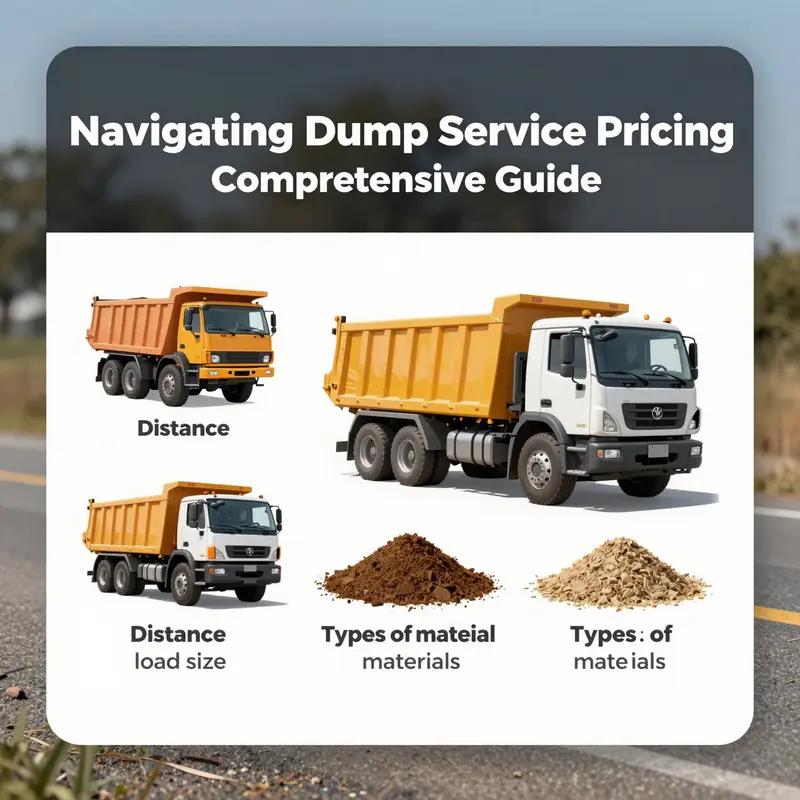
Pricing models run along three rails: per load, hourly, and per mile. Each has its own logic and fits different job realities. Per load pricing is common for bulk transport in construction and mining contexts. It aligns with the natural unit of work the volume hauled, so clients know upfront what a full or partial load costs based on the truck capacity and material type. In practice a minimum fee often serves as the baseline that covers mobilization and site setup. Many guides show a tiered approach: a modest minimum to cover the driver time and fuel to the site, followed by increments that reflect the portion of the load delivered. For example a guide might propose a 90 dollar minimum and then scale the price for quarter, half, three quarters, and full loads, with full loads on larger trucks ranging from two hundred to three hundred dollars or more depending on the region. Exact figures differ by market equipment and material type. The important concept is that the client and operator speak the same unit language the load so there is a predictable benchmark from which to negotiate.
Hourly rates offer a different clarity when time on site becomes a major cost driver. Jobs that require significant loading and unloading time, spot by spot material placement, or complex site maneuvers push the pace of the clock. In such cases an hourly charge can capture labor and downtime that a per load model might misrepresent. Hourly pricing also allows for contingencies delays caused by weather site constraints or unloading difficulties without forcing a renegotiation of the base price mid project. For operators hourly rates must embed the marginal costs of idle time fuel burn and any need to bring extra crew or equipment to the site. For clients an hourly approach can be reassuring when the scope is uncertain the site is congested or the job requires deliberate precise placement rather than bulk dumping.
Distance and the mileage factor are the third axis of pricing. Long haul or out of area jobs bring fuel and driver time as explicit cost elements. The longer the journey the more fuel wear and opportunity cost accumulate, and the price must reflect that. Geography matters a lot. In dense urban markets congestion parking restrictions and the need for extra personnel to navigate tight spaces can push rates higher. In remote regions logistics costs rise in different ways recovery from rough terrain longer wait times and the need to stage additional equipment or supplies. In these cases the base load price may be modest but the overall bill grows with distance and complexity. The practical takeaway is that the client context distance and route condition feed into the final charge. Operators tailor pricing to reflect not just truck capacity but real world travel embedded in delivering that capacity.
The other half of the pricing equation lies in the equipment itself. Size and configuration determine payload and the efficiency of the operation. A smaller pickup based dump service can offer lower upfront costs and quicker mobilization making it appealing for small projects or sites with restricted access. Larger heavier duty tri axle configurations bring greater payloads and longer reach across challenging sites but demand more skilled operation more maintenance and more space to maneuver. Side dump trucks can place material with precision and reduce the need for repositioning a factor that translates into time savings and a higher rate that clients will accept when the work benefits from that efficiency. Conversely articulated or tandem axle trucks which handle heavier payloads and more complex maneuvering justify higher fees due to their greater capacity and the expertise required to deploy them safely and efficiently.
Fuel consumption sits near the core of operating costs and pricing. Fuel is not a fixed line item; it fluctuates with engine speed during unloading the distribution of the cargo and the load center of gravity. Data show energy demand during unloading can vary when the load is biased toward front or back of the platform rather than centered. Those nuances can add meaningful cost over the course of a job especially when the unloading phase dominates time on site. While there is no universal rate for fuel use during unloading the savvy operators factor this expense into their rates in a way that remains transparent to clients often by incorporating a fuel surcharge or by adjusting the per mile or per load price to reflect fuel price volatility. The practical effect is that even with a seemingly straightforward per load price the underlying fuel exposure is a real cost that informs the final quote.
Time windows and environmental realities also exert pressure on pricing. Jobs run during off peak hours nights weekends or holidays almost always carry a premium to compensate for overtime pay safety requirements and the added wear on equipment under harsher operating conditions. Weather events including rain that makes surfaces slick or freeze that slows loader operations can escalate the cost through longer cycle times increased fuel burn and greater risk management. When a job requires recovery or crane services to move a vehicle into position or to remove obstacles those ancillary services are typically charged as separate line items sometimes per incident. Clients who want predictability should discuss these contingencies upfront while operators should build a buffer into the quote to cover them when realistic possibilities exist.
Beyond the immediate feed of fuel and time the level of infrastructure and scope of the project influence the price. Specialized configurations as mentioned might command higher fees because they deliver efficiency advantages or enable work that a standard configuration cannot perform safely. The overheads associated with complex equipment maintenance insurance licensing and the need for skilled operators are rolled into the service charge. Operators must also reflect the realities of the operating environment an off road capable truck can work more places but demands specialized tires suspension and training a vehicle limited to paved roads cannot access every site which constrains opportunities and affects pricing in markets with challenging terrain or limited access. The overarching point is simple but crucial the price is a buffer that covers not just the moment’s pipeline of work but the entire lifetime cost of delivering that service across the project timeline.
Operational clarity matters in practice. The easiest way to navigate pricing is to break the work into a concise set of variables clients can understand: the size of the load the distance between origin and destination the type and handling requirements for the material and any special site considerations. When clients provide precise job details the material volume pickup and drop off points access constraints and whether the operation will require repeated trips or a single shuttle operators can translate those inputs into a more accurate and competitive quote. It is also essential to recognize that a fair price must cover both the immediate costs and the longer term risks and investments maintenance cycles tire wear potential downtime and the cost of compliance with regulatory and safety standards. In practice the most reliable pricing approach combines the predictability of per load or per mile quotes with the adaptability of hourly rates for shorter more complex segments. This hybrid mindset often yields the best balance for both parties a fixed cost for the bulk work and a transparent hourly adjustment for the unpredictable layers.
The chapter’s guiding thread is that charges for dump truck services are not arbitrary they reflect a real ecosystem of inputs. The type and size of the truck the soil or aggregate being moved the exact route and its challenges and the time spent on site all converge in the final bill. This is why precise early communication matters. Clients should be prepared with the project material type anticipated volume and distance. Operators should be candid about the variables that can shift the price from weather to site access to fuel price movements. The negotiation space exists indeed but it is most productive when anchored in a shared data informed understanding of what drives cost on both sides. For further context on how broader economic dynamics are shaping pricing in trucking and transport sectors consider the discussion of key economic trends impacting the industry. This link provides a broader frame for how the market environment interplays with individual job quotes and long term pricing strategies reinforcing the notion that dump truck charges must be both competitive and contemplate the macro shift in costs and demand.
In closing the practice of pricing dump truck services is a disciplined multi layered craft. It blends the quantitative with the qualitative load size distance and material type meet with machine efficiency operator skill and market temperament. The most effective pricing strategy is the one that communicates clearly anchors expectations with transparent cost components and remains flexible enough to reflect the realities on the ground. As with other sectors of logistics and transportation the goal is not simply to win the job on price but to secure a sustainable operation that delivers reliable service predictable costs for clients and fair compensation for the work performed. For those who want to benchmark more broadly, industry data and trends continue to evolve and the most reliable sources offer ongoing rate trends and cost analyses that reflect the current market. External resources such as industry associations provide valuable benchmarks to refine pricing models and keep them aligned with broader shifts in the trucking world. https://www.trucking.org/
Pricing on the Ground: Reading Regional Variations in Dump Truck Service Rates

Pricing for dump truck service never rests on a single number or a single formula. It moves with the rhythm of the places where work happens, the size and type of the load, the distance to haul, and the regulatory and economic environment that governs every mile. What feels like a straightforward price in one city can look very different in a neighboring region, even if the job description seems similar at first glance. The differences emerge not from a single cause, but from an ecosystem of influences that shape both the cost of delivering earth and waste and the value that customers place on timely, reliable service. When you try to determine what to charge, you must read the regional market as you would read a map: by noting the terrain of demand, the availability of equipment, the constraints of regulation, and the evolving expectations around sustainability and safety. In practice, that means recognizing that the same dump truck with the same operator can yield a markedly different price tag depending on where the job is located, how far it must travel, and what needs to be moved and disposed of along the way. The core factors are straightforward enough: job type, load size, distance, and the specific service provider, but the way those factors combine and the premium placed on certain attributes is what creates real variation across regions. A practical way to frame this is to think about pricing as a portfolio decision rather than a single price. Operators balance their fixed costs—depreciation on the truck, insurance, maintenance, and licensing—with variable costs such as fuel and the time spent on site. They also contend with a market that values speed, reliability, and compliance as much as the physical act of moving material from one point to another. In this sense, regional pricing reflects not only the costs of moving material, but also the costs of controlling risk in a given environment and the willingness of customers to pay for reduced time on site, fewer trips, and fewer headaches on disposal and regulatory compliance. The regional picture begins with the most observable input: the format of pricing. Some operators quote by the load, a method that seems intuitive and simple: you pay for a defined volume of material moved. A common pattern is a minimum fee that acts as a floor to cover the trip, setup, and basic mobilization. In many markets, the minimum can be around ninety dollars, a threshold that ensures the provider is worth deploying even on very small jobs. From there, pricing scales with load size: charges for a quarter-load, a half-load, three-quarters, and a full load. In practice, full-load prices for larger dump trucks often fall in the range of two hundred to three hundred dollars or more, depending on local conditions. These numbers are not universal; they reflect market structure, demand pressures, and the relative cost of service in different regions. For jobs where the truck is required to stay at the site for an extended period—such as during loading or unloading timing windows—the hourly rate becomes a more natural metric. Hourly charges can vary widely and tend to be higher in markets with tight labor markets, high living costs, or elevated on-site safety requirements. In metropolitan areas with ongoing infrastructure work, hourly rates between one hundred and one hundred fifty dollars are not unusual. In more rural or less dense regions, hourly charges may be lower, in the seventy to ninety dollar range, reflecting lower labor costs and slightly different risk profiles. Distance and mileage add another layer of nuance. When the job involves a long haul—whether due to scoping a remote worksite or moving material from a remote borrow pit to a distant disposal site—fuel costs and crew time become more pronounced. In such cases, operators commonly add mileage surcharges or adjust the per-mile component of the price. The farther the trip, the greater the exposure to fuel price volatility and road time, and the more the price climbs. The type and size of the dump truck also matter. Small, pickup-based dump services are typically cheaper than the larger, heavier-duty tri-axle configurations used on construction sites. The capacity, traction, and maneuverability of the truck influence both the cost of operation and the efficiency of the job. A contractor with a small truck can win price-sensitive work but may be at a disadvantage on larger, volumetric projects that require multiple trips or the stability and compliance profile of a bigger asset. Beyond the mechanical and logistical factors, regional pricing is heavily shaped by local economic conditions. In areas experiencing rapid growth and robust construction activity, demand for dump truck capacity rises, tightening the supply of available trucks and drivers. That imbalance pushes rates upward. The same logic applies in markets with heavy infrastructure investments, where project schedules compress and the premium for on-time delivery and reliable access to sites increases. Conversely, in regions where construction activity lags and available fleets outstrip demand, pricing tends to verge downward. Yet even in quieter markets, a provider can command higher charges if the job demands specialized expertise, strict safety regimes, or rapid mobilization to minimize downtime for the customer. Availability and accessibility also play a critical role. Regions with sparse service coverage or limited trucking options may experience longer wait times, higher minimum hours, or a blending of pricing models that leans toward on-site time rather than per-load charges. A customer may be willing to pay a higher rate in exchange for a faster timeline, fewer trips, or more precise disposal and material handling. The regulatory environment enters the pricing conversation in a consequential way. Local emissions regulations, vehicle standards, and compliance requirements translate into higher operating costs for fleets. In places with stringent rules, operators may need newer equipment, more frequent maintenance, additional certifications for drivers, and stricter recordkeeping. These costs translate into higher quotes for customers, even for seemingly simple jobs. The price signals of regulation often ride alongside sustainability trends. The market shows growing interest in electric or hybrid dump trucks, which may carry a premium. These vehicles typically demand higher upfront investment and more complex maintenance, but they can deliver longer-term savings on fuel and potential incentives or favorable regulatory treatment. In markets where sustainable practices have become a differentiator, the price premium for these options can range from about ten to thirty percent, depending on the regional mix of customers and the composition of the fleet. The environmental and social dimensions of pricing are thus not just ethical considerations; they are economic signals about what customers are willing to pay to meet project requirements and corporate sustainability goals. When operators price regionally, they also bundle in site-specific costs. Site access issues, such as limited turning radii, soft ground, or restricted hours of operation due to local noise ordinances, can alter the price calculus. A site that requires additional safety measures, specialized traffic control, or extra labor for material segregation and stockpiling will push the price up. Materials themselves influence price as well. The same volume of loose dirt may be charged differently than rock, gravel, or fill material because of weight, disposal costs, and the need for different handling or processing at the disposal site. The original framework of pricing—load-based, hourly, or distance-based—remains, yet the regional overlay reshapes the expected price in practical terms. A market with high construction activity and scarce equipment will tend toward higher per-load caps and higher hourly rates, while a market with abundant equipment and moderate demand can offer more aggressive, value-driven pricing. To translate this into guidance for someone trying to set a price or bid for a dump truck job, begin with a clear picture of the region’s market dynamics and regulatory burden. Gather data on typical hourly rates and per-load charges from multiple nearby providers, and note how much variation exists around a central tendency. Factor in your truck size and operating pattern. If you regularly run a smaller, lighter truck with a quick turnaround, you may price toward the lower end of the range or use a more aggressive per-load structure to win volumes. If you are operating a larger fleet or a specialized truck with higher maintenance and insurance costs, you will likely price at the upper end, while actively seeking efficiency gains to justify the premium. The customer’s perspective matters as well. Local buyers consider not only the sticker price but the value of reliability, speed, and predictable disposal outcomes. A bid that reduces wait times, minimizes site disruption, or guarantees on-time disposal can justify a higher price in markets where customers view time as a critical resource. The regional lens can also help explain why quotes for similar jobs can vary widely from one municipality to the next. Even two projects that appear parallel on a map can be governed by different permit regimes, labor costs, and disposal fees. For readers trying to anchor pricing in reality, a practical strategy is to use a combination of pricing models and to tailor the mix to the region. A per-load price can work for straightforward, repeatable jobs with consistent volumes and distances. An hourly component makes sense for complex jobs that involve site work, loading time, and waiting. A distance surcharge or a combination that includes a fuel factor helps account for volatility in fuel prices and the extra time spent traveling. When possible, add transparent line items for disposal fees, permit costs, and any site-specific requirements. This keeps the customer informed and reduces the likelihood of disputes after the job begins. Amplifying this approach is the notion that markets are dynamic, not static. The regional variation in charges reflects ongoing shifts in demand, technology, and policy. To stay current, consult market intelligence that aggregates real-time provider data and analyzes regional trends. One useful starting point is industry reports that synthesize pricing data across regions and map the drivers of change. For a broader view of the forces shaping prices, see the overview of key economic trends impacting the trucking industry. key-economic-trends-impacting-the-trucking-industry. This broader context helps explain why a price that seems high today can be perfectly justified tomorrow when a major project arrives, when fuel prices spike, or when regulatory costs rise. In addition to the macro view, local benchmarks—what you can charge in your market for a given load and distance—remain indispensable. The real art lies in blending these benchmarks with a clear picture of job-specific costs and the value you bring to the customer. The regional pattern is a map, not a rulebook. It helps you set expectations and structure bids so you remain competitive without eroding margins. And it invites ongoing refinement. As new data emerge—whether from shifting construction pipelines, regulatory updates, or the introduction of cleaner fleets—pricing strategies should adapt. The best providers are those who weave regional intelligence, fleet performance, and customer service into a cohesive pricing philosophy. They price not only for today’s job but with an eye toward tomorrow’s opportunities, balancing volume with profitability and ensuring that the equipment is available when customers need it most. In this sense, regional variation is a feature, not a flaw. It acknowledges that dump truck service is a localized service, deeply connected to the place where it is delivered. This is why a one-size-fits-all quote rarely yields the best outcomes for either party. Instead, the strongest pricing approach recognizes and embraces regional differences, uses data to inform bids, and remains flexible enough to accommodate the inevitable changes that accompany construction cycles, regulatory shifts, and the evolving emphasis on sustainable operations. For readers who want to anchor these ideas in concrete numbers, the emphasis should be on the region’s drivers: what drives demand, what it costs to operate, and how customers weigh the value of speed, reliability, and compliant disposal. Those are the levers that move prices in any market and, more importantly, the levers that differentiate a competent, resilient provider from a price-taker. External resources offer additional validation and context. A reliable market study highlights how regional dynamics, material mix, and regulatory costs interact to shape the typical pricing envelope for dump truck services. External link: Grand View Research provides a Market Analysis on the Dump Truck Service Market that can help frame these regional differences within a broader industry trajectory. https://www.grandviewresearch.com/industry-analysis/dump-truck-service-market
Pricing the Haul: A Practical, Profit-Sensitive Approach to Dump Truck Rates

Pricing the haul is more than plugging numbers into a calculator. It is a discipline that sits at the crossroads of asset management, labor costs, fuel markets, and the expectations of customers who want reliable service. When a loader and a driver roll onto a site, the price tag that follows should reflect not only the momentary effort required to move material but also the longer arc of ownership, maintenance, and market demand. In practice, this means building a pricing framework that captures two essential kinds of costs, and then layering on market realities and transparent terms that build trust with clients. The framework begins with holding cost and operating cost, two components that together form the bedrock of any fair, sustainable rate for a dump truck service. Holding cost accounts for the fixed expenses that accompany ownership of the equipment, while operating cost tracks the variable outlays tied to each mile driven and each hour of work. Both categories demand careful attention because they directly affect profitability and competitiveness in a sector where price pressure can come from many directions, including regional competition, job-site conditions, and shifting fuel prices. In a realistic pricing exercise, it helps to imagine a typical machine, such as a medium-size dump truck, and then scale the numbers up or down depending on truck size, age, and the specifics of the job. A thoughtful approach starts by acknowledging that the cost structure is not uniform. The same truck can cost more to operate in one region than in another, thanks to differences in wages, insurance premiums, and regulatory costs. And even with identical equipment, the terrain and distance of a job can tilt the economics toward one pricing strategy or another. A practical way to proceed is to quantify the two primary cost buckets and then translate them into an hourly rate that can be adjusted with market-facing factors as needed. The hourly cost, in this view, is the sum of holding cost and operating cost per hour of use. Holding cost reflects the long-term investment in the asset: depreciation, insurance, finance charges, and storage when the truck is idle. The depreciation portion acknowledges that the truck loses value as it ages and as mileage accumulates. Insurance shields the business from liabilities that accompany hauling and site activities. Finance charges recognize any loan payments tied to the purchase or lease of the equipment. Storage costs cover the time when the truck sits in a yard or depot, waiting for the next assignment. When these fixed expenses are allocated over expected annual operating hours, they yield a holding cost per hour that can be substantial, especially for a larger or newer vehicle. Consider the archetype of a 15 cubic meter dump truck. A detailed study of annual ownership expenses divided by a typical annual operating hour count demonstrates how this holding portion can become a meaningful contributor to the hourly price. The exact numbers vary, but the principle is clear: the asset must earn back its fixed costs through productive use, or the business bears the burden of time and money wasted simply by owning the machine. Operating cost, by contrast, tracks the day-to-day expenditures that rise and fall with activity. Fuel consumption is the largest variable, and it scales with load weight, haul distance, and engine efficiency. Lubricants and routine oil changes are steady reminders that engines and moving parts need regular attention to stay reliable. Tire wear reflects the reality that every mile wears a tire and every job tests the wear threshold. Routine maintenance includes inspections, minor repairs, and servicing that prevent unexpected downtime. A high-demand workhorse used in heavy industry can have maintenance demands that are far more pronounced than lighter, municipal haul work. For example, a heavy-duty truck employed at mining sites may require substantial upkeep and specialized servicing, which in turn drives the hourly operating cost higher. These patterns are not abstract. They translate into practical pricing decisions that keep a fleet solvent while maintaining service quality. The strategic move is to sum the holding and operating costs to obtain a total hourly cost, then apply a market-aligned markup that covers overhead and profit. If the math yields a total hourly cost of, say, one hundred twenty dollars, a price range in the neighborhood of one hundred fifty to one hundred eighty dollars per hour is not unusual in many markets. Room for adjustment exists, of course, and this is where local conditions and demand come into play. Market rates are not invented in a vacuum; they arise from careful competitive benchmarking, an understanding of labor costs, and awareness of the job site realities that shape efficiency and safety. A common practice is to start with a base hourly rate that reflects the two cost components, and then layer in surcharges or adjustments for distance, material type, and site conditions. For instance, longer hauls may justify a fuel surcharge to reflect the extra fuel burn and vehicle wear, while heavy, dense materials might demand higher load-related rates because the truck operates at or near capacity more often. When a customer asks for a quote on a well-defined task, a fixed-price approach can provide clarity and certainty. A fixed-price quote can be built from the hourly cost model but anchored in the known scope of work: the expected load volume, pickup and drop-off locations, and the time window. The client gains price transparency, and the contractor reduces the chance of miscommunication or scope creep that can erode margins. That said, a fixed-price quote should still be tethered to a realistic assessment of risk. If the job site presents unusual obstacles — uneven terrain, restricted access, or required off-hours work — the scope can become more expensive to fulfill, and that possibility should be anticipated in the estimate. An important practical insight follows from the service provider perspective: costs alone do not determine price. The market, the job’s urgency, and the client’s risk tolerance all influence the final rate. Local market rates provide a reality check: in some regions, the going price for standard loads and typical distances may resemble the baseline hourly cost plus a modest markup; in other markets, fierce competition or high operating costs may push quotes higher or, conversely, require more aggressive pricing to win business. In shaping a pricing strategy, it helps to anchor decisions in a transparent framework the client can follow. A clear breakdown of costs—base hourly rate, fuel surcharge, and any overtime or special-condition fees—builds trust and reduces the back-and-forth over charges after the job. Openness also lowers the risk of disputes. Clients appreciate knowing how the price is built, especially when the scope is straightforward. Conversely, if the job introduces complexity, presenting a well-reasoned range allows both sides to manage expectations. The conversation should extend beyond pure numbers. It is worthwhile to discuss the value delivered: reliability, timeliness, adherence to safety standards, and the ability to navigate challenging sites. These qualitative factors often justify investment, particularly for customers who rely on timely material movement to meet project deadlines. The pricing conversation is enriched when it is grounded in ongoing market awareness and disciplined financial modeling. As discussions about pricing unfold, it is useful to consider the broader economic context driving trucking costs. The trucking industry does not exist in a vacuum; it responds to shifts in fuel prices, wage trends, and regulatory changes. An awareness of these trends helps a service provider adjust pricing prudently and sustain margins without eroding customer confidence. In this regard, the broader discourse about market conditions and economic dynamics is not merely background noise. It informs both the what and the how of pricing. For a deeper sense of how macro forces interact with trucking costs, readers can explore discussions of key economic trends impacting the trucking industry, which offer a structured way to interpret changes in operating costs and demand. key economic trends impacting the trucking industry. The point is not to chase every fluctuation, but to anticipate patterns and adjust pricing in a measured, transparent manner. A well-designed pricing model also benefits from disciplined data collection. Tracking actual hours worked, material types moved, and real fuel consumption creates a feedback loop that sharpens estimates over time. When dispatchers and operators log details about each job, a company learns how much time is typically wasted in loading, how far the truck actually travels, and how often maintenance is needed beyond routine service schedules. These insights feed into more accurate hour-by-hour numbers and, as a result, more reliable quotes for future clients. The operational reality is that no two jobs are identical. A round-trip haul with a light load and smooth access may be priced differently from a long, heavy haul that requires multiple site visits or special equipment handling. The beauty of a robust pricing framework is its adaptability. A well-constructed hourly rate can be complemented with per-load pricing structures when the job market or the client’s preferences lean toward fixed-cost budgeting. A tiered approach to loading — such as minimum fee, quarter load, half load, three-quarters load, and full load — can map neatly onto regional expectations and the physical realities of truck capacity. This tiered structure captures the nonlinearity of costs at different work levels. A minimum fee guarantees coverage for core expenses even when a job is small or trivial, while incremental load pricing aligns price with value delivered as more material is moved. The exact thresholds vary by region and truck type, but the logic remains consistent: the more the truck moves material, the more its costs are distributed over the work performed, and the more value the client receives in a single consolidated service. Transparency, again, is essential. Clients should be able to see how a per-load price translates to the hourly rate when the job requires more time on site, more material handling, or longer travel. That visibility reduces friction and helps both sides navigate a multi-faceted project. In sum, pricing a dump truck service is about balancing fixed investment with variable activity, and then aligning that balance with market realities. It requires careful accounting for depreciation, insurance, finance charges, and storage on the one hand, and fuel, maintenance, tires, lubricants, and routine servicing on the other. It demands a practical approach to quoting, whether through hourly rates or fixed-price arrangements tied to well-scoped jobs. It invites attention to regional price norms, labor costs, and site conditions, while also offering clear, transparent pricing to customers. And it remains a dynamic practice, one that should evolve as costs shift and market conditions change. The guiding principle is simple: price with foresight, quote with clarity, and back both with data from real-world operations. The goal is not to win every job on price alone but to deliver reliable, compliant service that protects margins and sustains long-term relationships with customers who value predictable, professional material movement. For professionals who commit to this disciplined approach, the figures become not a mystifying secret but a transparent map that explains how the price was derived and why it is fair for both sides. External knowledge and ongoing observation of market conditions help maintain that balance. For readers seeking a deeper analytical foundation, the literature on total hourly cost calculations for dump trucks provides a rigorous methodological example that informs practice while remaining adaptable to different equipment and local conditions. A useful reference illustrates how a detailed cost model for a 15m3 dump truck translates ownership and operating costs into an hourly figure, which then informs pricing decisions. This approach, paired with disciplined field data, yields pricing that is both credible and sustainable. To close, remember that the aim is not only to cover costs but to deliver value through dependable service, predictable quotes, and transparent communication with clients. The empowered contractor or fleet manager who embraces this framework can navigate the complexities of dump truck pricing with confidence, and can adapt quickly as costs shift and opportunities arise. For further mathematical grounding, see the external study that outlines an example calculation of the total hourly cost for a 15m3 dump truck, which provides a concrete reference point for the numbers discussed here. https://www.researchgate.net/publication/379647444ExampleofCalculationoftheTotalHourlyCostofa15m3Dump_Truck
Final thoughts
In summary, the charges for dump truck services are influenced by numerous factors including pricing models, regional considerations, and specific client requirements. By grasping the nuances of these variables, businesses in manufacturing, retail, and construction can better navigate the pricing landscape. Tailoring quotes based on an informed understanding of these elements not only improves operational efficiency but also enhances customer satisfaction. Understanding how to charge correctly for dump truck services is key to maintaining competitive advantage and ensuring sustainable growth in today’s marketplace.