
Service truck drivers play a crucial role in various sectors, bridging logistics and operational efficiency. As they ensure timely deliveries and essential services, understanding how much they earn can significantly impact strategic decisions for Manufacturing & Distribution Companies, Retail & E-Commerce Businesses, Construction & Heavy Industry Firms, and Small Business Owners. This article explores the average earnings of service truck drivers, factors affecting their salaries, and the nuances of pay differentiation based on location, service type, experience, and work conditions. Whether you are considering hiring or budgeting for transport services, this guide offers valuable insights to help you make informed decisions.
Steady Wages on the Move: How Much Service Truck Drivers Make and What Fuels the Differences
Service truck driving sits at a practical crossroads between mobility and steady employment. It is a job built on reliability, with fleets and customers depending on timely maintenance, emergency response, and routine service to keep infrastructure humming. The pay landscape for this broad field reflects that variability. Across the country, the latest data show a wide spectrum of earnings, with some drivers earning in the mid six figures only under specialized conditions, while many others fall into more modest, but still solid, annual ranges. Two robust snapshots illustrate the picture clearly. First, weekly earnings published by Indeed for service truck driving jobs hover around the mid-$1,700s, which translates to roughly $90,000 a year if the year runs with typical consistency. Second, other analyses based on massive pools of postings suggest a national annual average that sits lower, around the high $70,000s to the low $80,000s, with weekly pay in the $1,700 range as a parallel benchmark. Both sets of figures align in showing that this is not a field of pure volatility but a profession with a meaningful, stable core. Yet the numbers also reveal that actual take-home pay is not a single fixed sum. It grows or contracts with role type, employer, and the conditions surrounding each shift.
To understand why, it helps to map the pay landscape onto the realities drivers face on the ground. The simplest truth is that pay scales hinge on who you work for, where you work, and what you do. A driver performing routine service for a local utility or a mid-sized maintenance contractor may find wages that keep pace with district norms. A driver tasked with hazardous materials transport, long-haul routes, or emergency response duties may see a premium that reflects added risk, training, and time away from home. These dynamics create a ladder of earnings, where entry-level positions provide a solid base, and advanced capabilities or niche assignments propel compensation into a higher orbit.
Consider the baseline: entry-level salaries for service truck driving can start in the range of roughly $47,000 per year. That figure is a practical starting point for those who are new to the road, and it typically includes the expectation that payroll will rise with tenure, additional endorsements, and broader experience. As experience accumulates, earners often move into more specialized tasks or climb into larger operations that recruit for multi-state coverage, emergency readiness, or complex maintenance programs. In those pathways, six-figure potential is not an anomaly for the truly specialized or the highly experienced, though it remains the exception rather than the rule in the broader workforce.
The pay you actually see on a weekly or annual basis is not only a mirror of the job title but of the job’s daily rhythms. Shift differentials often play a substantial role. Night shifts, weekend coverage, and extended hours can yield meaningful overtime or additional per-hour compensation that lifts weekly take-home pay beyond the baseline. In many regions and with many employers, the opportunity to pick up overtime is not just a fringe benefit but a built-in component of the compensation package. For drivers who can handle longer stretches or more demanding schedules, the multiplication effect of overtime can be substantial over the course of a year.
Beyond hours, the nature of the service itself matters. A driver assigned to routine service and repair for a municipal utility, a mid-sized service fleet, or a private maintenance contractor will likely see pay anchored in local market norms, with occasional bumps for seniority or guaranteed overtime. In contrast, roles that require handling specialized equipment, performing hazardous-materials transport with proper endorsements, or delivering to hard-to-reach sites—such as remote industrial facilities or critical infrastructure projects—bring added value to the driver’s skill set. These roles often feature higher pay to reflect the additional training, safety compliance, and risk management involved. The same logic applies to routes that demand long-haul travel or multi-state coverage: the time away from home and the complexity of logistics contribute to higher compensation, even if the base hourly rate is similar to shorter, local routes.
Another axis shaping earnings is geography. Markets with higher living costs or tighter competition for skilled drivers tend to push wages upward, while areas with a larger labor pool and slower demand may offer more modest packages. The geographic footprint of a driver’s role—whether primarily urban, rural, coastal, or inland—also affects the mix of compensation, including bonuses, stipends for lodging, or per diem arrangements. Importantly, pay data from Indeed and similar aggregators reflect a broad national picture, but regional variations can be substantial. A driver who travels across several states and services multiple clients may see a pay profile that differs markedly from someone working a steady shop‑floor schedule in a single locale.
Certifications and experience are the other levers that raise or flatten a driver’s compensation. A commercial driver’s license is the essential credential, but additional endorsements, such as hazmat or tanker qualifications, can meaningfully increase earning potential. Employers understand the value of a driver who can safely handle hazardous materials, or who can operate specialized equipment safely, and they compensate accordingly. Experience also compounds value: seasoned drivers who have demonstrated safety records, reliability, and the ability to troubleshoot equipment under pressure are more likely to be assigned high-responsibility tasks, route assignments, and premium schedules. The combination of experience, endorsements, and a proven safety history is a potent recipe for higher pay and more stable employment patterns over time.
It is also important to distinguish pay from overall compensation. Salary or hourly wages are only part of the picture. Benefit packages—health insurance, retirement contributions, paid time off, and training programs—play a crucial role in the overall value proposition of a job. Some employers may offer sign-on bonuses, relocation stipends, or guaranteed overtime, all of which can tilt the true compensation upward in the first year or two on the job. When a driver is evaluating offers, they should weigh the full package: wage rates, overtime availability, benefits, retirement options, and the potential for upward mobility within the company. The most attractive roles are often those that blend a solid wage with predictable hours, strong safety culture, and opportunities for professional growth.
As this picture emerges, a few practical takeaways become clear for someone weighing service truck driving as a career. First, pay is not a single destination but a spectrum. It starts with a base rate, then climbs with specialization, endorsements, and the breadth of responsibilities you can safely take on. Second, the path to higher pay is usually built on a concrete combination of training and demonstrated competency. The more you can show you can handle hazardous materials safely, operate specialty equipment, and manage complex maintenance tasks across diverse sites, the more you will be rewarded with better assignments and premium pay. Third, the job’s location and employer matter as much as the work itself. A role with steady demand, strong safety practices, and a robust support structure can deliver reliable wages plus overtime and benefits, whereas a role with sporadic demand or weak scheduling discipline can leave earnings more variable.
From a planning perspective, the data offer an instructive range. The mid-point realities suggest a solid baseline in the upper $70,000s to low $80,000s annually for many service truck drivers who stay within a typical, local-to-regional scope and who capitalize on available overtime and benefits. For those who migrate into more specialized areas or accept longer routes, the ceiling expands, with earnings that can push past six figures in rare cases where the work demands are high, the hours are plentiful, and the endorsements match the job’s risk profile. The weekly view often hovers near the mid‑$1,700s, with modest variation depending on the factors described above. This is a portrait of a career that pays with cadence: not flashy at every turn, but increasingly rewarding for drivers who commit to building skills, expanding their scope, and embracing the logistics challenges that come with servicing America’s essential infrastructure.
For readers who want a broader sense of how wages in trucking respond to larger economic forces, a helpful pathway is to consider the current discussions of economic trends shaping the industry. See the discussion on key economic trends impacting the trucking industry to understand how shifts in demand, regulation, and technology influence pay scales across roles and regions. These trends help explain why some markets tighten and pay rises occur, while others remain steady or even dip if demand softens. In parallel, the raw salary snapshots you see on job boards are continually updated as fleets adjust to new constraints, from maintenance costs to compliance requirements and labor market conditions.
Taken together, the data and trends illuminate a pragmatic view of earnings in service truck driving. The field rewards reliability, safety, and versatility. A driver who builds a portfolio of endorsements, maintains an excellent safety record, and embraces the full range of service tasks—maintenance, repair, emergency response, and routine logistics—will find a stable career with meaningful upside. The base pay provides a solid floor, but the real lift comes from strategic skill development and the willingness to take on higher-impact assignments. For job seekers, that means thinking about where to specialize, which endorsements to pursue, and how to position themselves for shifts and routes that maximize both hours and value. For current drivers, it points to a continuous path of growth, where each new credential or experience expands the horizon of what they can earn and where they can work.
External resource for further context: Indeed’s salary data for truck drivers provides a broad national view of compensation ranges and can be a useful benchmarking tool as you compare offers or plan a career trajectory.
External resource: https://www.indeed.com/career/truck-driver/salaries
Wages on the Road: How Company, Location, and Specialization Shape Service Truck Driver Pay
When people ask how much service truck drivers make, they often expect a single number. In reality, pay is a spectrum shaped by where you work, who you work for, and what you actually haul. The most visible starting point comes from broad salary surveys and job postings that feed into widely cited averages. For instance, data aggregated from hundreds of thousands of postings over the past three years show an average weekly earnings figure around 1,736 dollars, which translates to roughly 90,000 dollars a year for someone working a full year. That figure, however, is a snapshot of a diverse landscape where compensation shifts with every mile traveled, every shift worked, and every skill earned along the way. In practice, the same route can pay decades apart depending on the employer, the region, and the job’s specialty. The picture becomes clearer when we walk through the factors that push service truck driver earnings up or down, and when we weigh the tradeoffs between potential pay and the realities of the job on the ground.
The most immediate levers are the company and the location. Large national carriers tend to offer more predictable pay scales, structured benefits, and clearer paths to advancement. They often provide steadier hours and more formalized overtime opportunities, which can translate into reliable annual earnings for many drivers. In contrast, smaller regional firms may present more flexible schedules and quicker access to bonuses or bonuses tied to performance, but with compensation that can vary more from month to month and year to year. The union status of a company also matters: unionized shops frequently deliver higher wages and more comprehensive benefits compared with non-union shops, although that dynamic can depend on regional labor markets and the specific collective bargaining agreements in place.
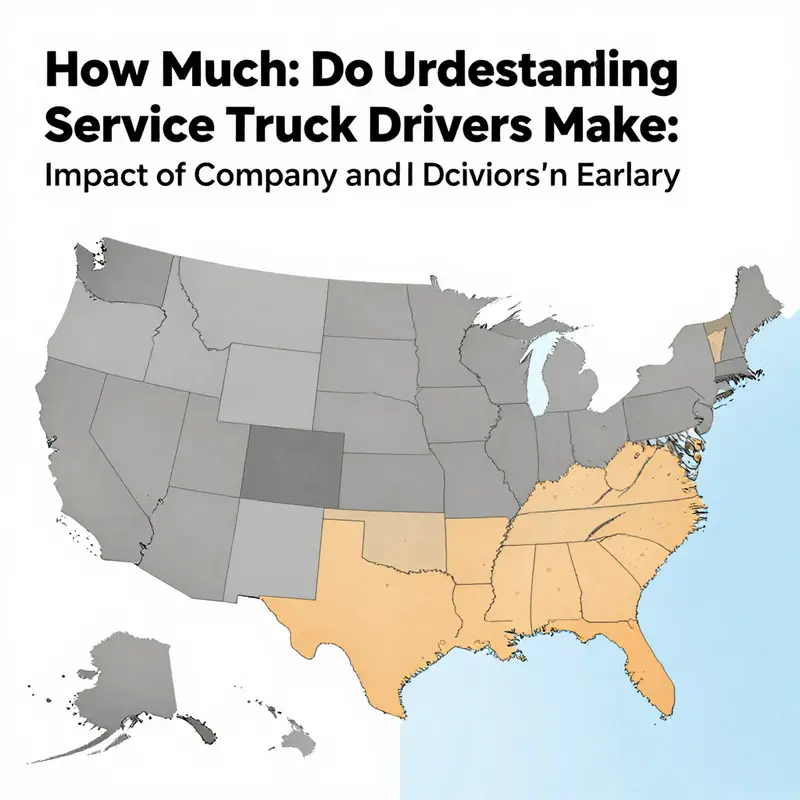
Geography matters just as much as the employer type. The median national salary for service truck drivers typically sits within a broad band, commonly described as roughly forty-five to sixty thousand dollars per year. Yet this median is not a ceiling, and it shifts with where you live and work. In high-cost urban environments where the cost of living is steep, earnings commonly rise above seventy thousand dollars per year to attract and retain workers who can meet the intensified job demands. Conversely, in rural or lower-cost regions, the same job can net closer to forty thousand dollars annually, especially if the work volume and route density are lower. These regional differentials reflect not only living costs but also demand for on-site services, infrastructure maintenance, and emergency response capabilities. When combined with the value of overtime and shift differentials, the difference between earning in Manhattan or San Francisco versus a midwestern town can be substantial.
Beyond the region and company, the way you are paid can dramatically reshape your total compensation. Some service truck positions compensate based on the volume of work performed—miles driven, deliveries completed, or jobs dispatched. Others pay by the hour or by the time clock, and a growing portion of the industry blends these methods to balance incentives with safety and reliability. The data suggests a trade-off: pay-for-volume models can, on average, drive higher gross earnings in theory, but they can also correlate with a higher risk of safety lapses or rushed work. When the pace of work is tied to output rather than time spent, drivers may skip careful checks to meet quotas, which is a cost that ultimately falls on the employer as well as the driver. In contrast, hourly or time-based structures tend to reward consistent, safer, and more sustainable work habits, and they often come with more predictable benefits and overtime eligibility. The choice between these structures is not only about pay per se, but about the kind of work environment a driver wants and what kind of safety culture the company maintains.
Experience and credentials also push earnings higher. A driver who has logged more years behind the wheel, who holds advanced certifications, or who can manage specialized loads—such as hazardous materials or oversized equipment—often earns more. The liability and responsibility associated with specialized or high-risk cargo are reflected in compensation, especially when combined with longer or more complex routes. For example, a hazmat endorsement can unlock opportunities for better paying routes and duties, while a CDL with extra endorsements can keep a driver in demand even as the industry undergoes changes in technology and regulations. On the ground, seasoned drivers tend to command better wage scales and more favorable shift patterns, including time-and-a-half or double-time pay for weekend or overnight work, which can boost annual totals beyond the base pay.
Taken together, the data illustrate a layered reality. The same service truck job can deliver markedly different earnings depending on the employer, the region, and the specific responsibilities of the role. In the period covered by the latest surveys, regional differences have ranged from the mid-40s to the low-60s in many markets, with top earners pushing beyond the strip of seventy thousand dollars in high-demand or high-cost areas. Figures reported by major salary aggregators stress that median pay tends to cluster in the middle of this range, while outliers reflect the most demanding roles or the most favorable compensation structures. When you factor in overtime, night shifts, weekend differential pay, and benefits, the effective annual compensation can differ even more from the core base rate.
This landscape aligns with a broader economic narrative about driving work today. The trucking industry remains essential infrastructure, yet it is also subject to shifting labor markets, regulatory changes, and technological disruption. The same forces that push wages higher in certain regions or with certain employers also pressure firms to balance safety, efficiency, and cost. The result is a dynamic where top pay exists, but access to that pay is highly contingent on where you work, what you haul, and how your role is structured. For drivers contemplating a job offer or a career move, the task is not simply to compare headline salaries but to weigh total compensation and career trajectory. Are you looking for a stable schedule and a robust benefits package? Or are you pursuing higher gross earnings through high-volume, high-pressure routes, with the tradeoff of greater risk and less predictable hours? These questions shape the pay you can realistically expect and the kind of professional you will become on the road.
To situate these personal calculations within a broader context, consider the economic currents that underlie the numbers. The pay that services truck drivers receive sits at the intersection of demand for timely maintenance, emergency response readiness, and the ongoing need to move goods across increasingly complex networks. The distribution of demand across urban and rural settings, the push for safer, more efficient fleets, and the persistence of regulatory requirements all influence how much a driver can earn and how earnings are structured week to week. The ongoing conversation about compensation also intersects with safety culture and training investment; a company that prioritizes safety and continuous development can offer higher pay over time by reducing risk and improving reliability.
As you assess what a given job means in dollars, it helps to anchor your expectations in credible benchmarks while recognizing the limits of single-number averages. The figures from Indeed, which synthesize a broad swath of postings, provide a useful baseline. They capture what many employers are currently offering to attract drivers in diverse markets. Yet the same data set should be interpreted alongside official occupational wage statistics that illuminate how pay is distributed across states and metropolitan areas. The U.S. Bureau of Labor Statistics, for example, reports mean wages for truck drivers that reflect national averages and region-specific variations that may not fully appear in job-posting aggregates. This dual lens — market postings and government wage data — offers the most robust frame for understanding earnings at a given moment.
Within this frame, a practical heuristic emerges for prospective drivers. If your aim is higher base pay and steady hours, seek opportunities with established carriers in markets where demand for routine maintenance and on-call services remains strong. If you crave greater pay potential and you don’t mind the volatility of peak periods or more complex duties, look for specialized roles or regions with strong volumes and dynamic work cycles. Regardless of choice, it pays to evaluate total compensation: base salary or hourly wage, overtime eligibility, shift differentials, bonuses tied to performance or safety, health and retirement benefits, and the cost of living in the area where you would be based. The math of pay goes beyond the weekly or annual figure; it includes the security of benefits, the predictability of schedules, and the professional growth opportunities you can build alongside the work.
For readers seeking a broader perspective on how these market forces are evolving, the discussion of economic trends in the trucking sector provides useful context. See the analysis of key economic trends impacting the trucking industry for deeper insight into why compensation patterns are shifting and how employers are recalibrating pay structures to attract and retain talent in a competitive labor market. Key Economic Trends Impacting the Trucking Industry.
Of course, anyone evaluating a pay packet should also consult authoritative wage data. The U.S. Bureau of Labor Statistics maintains a comprehensive, standardized view of earnings that can help illuminate where a given job sits within the national and regional landscape. While the precise numbers change with the year and the market, the trend is clear: mean wages for truck drivers sit at a level that reflects a mix of urban demand, regional supply, and the growing emphasis on safety and efficiency. Access to this data is provided through the official occupational wage database, which offers a reliable baseline for comparison across states and metropolitan areas. For those who want to drill into the numbers, the BLS data table provides the official context for these earnings patterns. External reference: https://www.bls.gov/oes/current/oes537031.htm.
In practice, then, the question of how much service truck drivers make cannot be answered with a single line item. It requires looking at who pays the bills for your paycheck and where those bills are drawn from. Pay is a function of structure and place, of the load you carry and the hours you invest, and of the benefits you value as part of the overall compensation. It is the sum of base pay, overtime, shift differentials, bonuses, and the often overlooked but essential protection of health and retirement plans. It is, in short, a job that can deliver stability and security for some, while offering the potential for higher earnings for others who are positioned to capitalize on the right combination of employer, region, and specialization.
null
null
Steady Roads, Rising Wages: How Experience, Certifications, and Route Type Shape Service Truck Driver Pay

Service truck driving sits at an intersection of reliability and risk, where earnings reflect not just the miles logged but the mix of duties performed, the markets served, and the credentials carried. In the United States, the conversation about how much service truck drivers earn often centers on a few headline numbers. Indeed, data drawn from hundreds of thousands of job postings over multiple years suggested a weekly average of about $1,736, which translates to roughly $90,000 a year in a typical 52‑week cycle. But the real pay picture is more nuanced. The same body of data highlights that compensation can vary dramatically by company, location, and the type of service performed. Top-paying outfits and specialized roles pull in far more, while entry‑level positions or generic routes settle at the lower end. In other words, the headline figure hides both high ceilings and wide floors, depending on how a driver earns their keep.
For context, the broader landscape of service transport salaries sits against a national backdrop. The chapter’s detailed results show an average annual income near $74,000 for service truck drivers, aligning with the idea that service roles—often involving maintenance, utility work, or emergency response—tend to reward a mix of experience and skill with steadier, sometimes higher, compensation than the all‑truck‑driver average. This is a useful reminder that the specialization within service trucking matters a lot. It’s not simply the number of miles or the hours that determine pay, but the combination of experience, certifications, and the particular service niche in which a driver operates.
Experience matters in a very tangible way. Novice drivers typically start at modest levels, where the job is mostly about learning the routes, safety protocols, and the rhythms of on‑call work. As drivers accumulate hours—especially on routes that demand extended time away from home or navigating difficult terrain—their earning potential tends to rise. Reliability becomes a currency of its own: a driver who minimizes downtime, adheres to safety standards, and completes high‑stakes tasks with minimal supervision is more likely to be entrusted with demanding assignments. Those assignments often include longer hauls, complex maintenance work, and deployments to regions with higher demand or stricter regulatory environments. In such scenarios, the pay premium isn’t just about more miles; it’s about the added responsibility and the time away from home that the job requires.
Certifications are another clear lever for earnings. A driver who holds credentials for operating specialized vehicles—whether reefers, tankers, or hazmat carriers—enters a market with greater demand. These endorsements signal the ability to handle sensitive or potentially hazardous cargo safely, which many employers value enough to justify premium wages. The financial upside can be complemented by the job flexibility that often accompanies these roles: specialized work can open doors to maintenance contracts, emergency response deployments, or utility service calls in regions where such expertise is scarce. Moreover, experienced drivers with spotless safety records frequently encounter retention bonuses, performance incentives, or loyalty pay that can push total compensation higher than base wages alone.
The spectrum of pay also reflects the particular type of service a driver handles. Routine field maintenance, roadside assistance, or distribution support may offer solid wages, but roles tied to long‑haul, offshore or remote utility projects, or seasonal surge work tend to yield higher earnings. Long hauls can bring extended periods away from home, which, in turn, are often offset by higher per‑mile rates, shift differentials, or overtime opportunities. In contrast, local routes with steady days but fewer overtime opportunities may deliver a more predictable, yet comparatively lower, income. The result is a layered income story: you can start with a solid base and, with the right mix of route type and hours, climb into premium pay bands.
The relationship between pay and company location is equally important. Urban and industrial hubs with high demand for maintenance and logistics services can offer more frequent overtime and higher per‑hour rates, while regions with tighter labor markets can push wages higher through competition for skilled drivers. However, cost of living and commuting realities must be weighed; what looks like a high gross wage in dollars per hour may translate to different real value after housing, taxes, and daily expenses are considered. A driver might see the same nominal rate in two states but experience a different lifestyle outcome due to regional living costs. This is why salary snapshots are most meaningful when they’re paired with a driver’s personal situation and career goals—whether the aim is rapid advancement, regional specialization, or long‑term stability.
Within this tapestry, several signals point to a trajectory of rising pay for capable service truck drivers. The data show substantial gaps between entry‑level earnings and those earned by veterans who bring corroborated safety records, broad certifications, and hard‑won experience on challenging assignments. The highest earners often combine several attributes: extensive miles on long‑haul or hazardous cargo routes, a suite of endorsements, and a track record that makes them indispensable for mission‑critical work. In this sense, the route to higher pay resembles a career ladder more than a single leap, with each rung based on demonstrated competence, reliability, and the ability to manage risk in dynamic field conditions.
Those who are exploring the best path to meaningful increases in earnings should consider how to align skill development with the needs of the market. Certifications don’t merely unlock more job postings; they expand what kinds of work a driver can perform, including maintenance‑intensive roles or emergency response duties that may carry premium pay. Training in safety protocols and incident response matters, too. Employers increasingly tie compensation to safety performance, and a driver who preserves a spotless safety record can tap into bonuses that supplement base wages. In this sense, robust records and continuous upskilling become tangible financial assets, not just professional credentials.
From a career planning perspective, the pay story for service truck drivers is best understood as a function of three intertwined factors: experience, certification, and the specific service context. Experience builds confidence, reduces the risk premium a company must pay to deploy a driver on complex tasks, and creates a track record that justifies higher rates. Certifications expand the set of tasks a driver can perform, often opening doors to more lucrative assignments. The service context—the type of work, the urgency, the cargo, and the route discipline—determines how much those two levers can translate into real income on a year‑to‑year basis. When combined with shift differentials and overtime opportunities, these factors can produce earnings that outpace broader truck‑driver averages, especially for those who commit to long‑term specialization and geographic mobility.
For readers weighing whether service truck driving could be a financially viable path, a pragmatic lens is helpful. Compare the national figure for all full‑time truck drivers to the service‑specialist numbers. The national baseline—often cited around the low to mid‑$40,000s—reflects a wide field of roles, including some lower‑margin or local work. Service transport, by contrast, tends to skew higher because it captures work that requires additional skills, regulatory compliance, or risk management. In the mid‑career range, service drivers frequently report earnings well above the national average for all truck drivers, sometimes eclipsing six figures when long‑haul assignments, specialized freight contracts, and retention incentives align. This is not a guarantee, but it is a pattern observed across well‑developed markets and reputable employers.
As you expand your view beyond the numbers, it’s useful to tie these pay dynamics to the broader economic currents shaping the trucking industry. The chapter on key economic trends impacting the trucking industry delves into how demand, infrastructure investment, and regulatory shifts influence driver demand and compensation levels. This broader context helps explain why certain regions and niches offer stronger earning potential at any given time. Key economic trends impacting the trucking industry
In sum, the money in service truck driving is real but not uniform. Your earnings hinge on how quickly you stack experience, how eagerly you pursue valuable certifications, and how adept you are at aligning with high‑needs service niches and regions. Entry‑level roles exist and provide a solid starting point, but the compelling upside belongs to those who invest in certifiable skills and route expertise. For many drivers, that investment pays off through higher base pay, meaningful overtime opportunities, and bonuses tied to reliability and safety. And as the industry continues to evolve—with electrification on the horizon, shifting demand for maintenance services, and ongoing labor market tightness—those who remain adaptable stand to capture meaningful gains in both earnings and professional growth.
External reference: https://www.indeed.com/salaries/truck-driver-service-transport-salary
Shifts That Pay: How Overtime and Night Premiums Elevate Service Truck Driver Earnings
Service truck drivers sit at an intersection of skilled trade and essential service. They don’t just haul cargo from one depot to another; they perform maintenance, repairs, and specialized tasks on the go, often in environments that demand both hands and problem solving. What they earn, therefore, isn’t simply a product of miles driven but a complex mix of base pay, shift differentials, overtime, and the particular demands of their work. On a national level, the broader data show an average weekly earnings figure around one thousand seven hundred dollars, which translates to roughly ninety thousand dollars a year for a full-time schedule. But those numbers can be flattening the truth: service truck driving rewards training, certification, and the willingness to work nontraditional hours in demanding settings. The result is a compensation landscape where a driver with the right mix of skills and schedule can surpass the standard lines of many other trades, while entry-level work in less demanding markets may hover closer to the lower end of the scale. To understand how shift differentials and overtime shape these earnings, it helps to think in layers: base pay, premium hours, and the extra hours that accumulate when emergencies, outages, or remote site services stretch a week beyond the 40-hour line. The base pay for service truck drivers typically runs from about twenty to forty dollars per hour, depending on the industry, region, and the exact nature of the work. In entry-level roles, the hourly rate often lands near the lower end of that range, while experienced technicians—especially those handling hazardous materials, high-voltage systems, or specialized maintenance in remote locations—can push well above fifty dollars per hour. When these rates are applied to a typical 40-hour workweek, the weekly base pay for many drivers sits between eight hundred and one thousand six hundred dollars, a broad spread that already hints at why some workers in this field can approach or exceed the six-figure mark annually if overtime and premium hours are also in play. Beyond the base wage, the real leverage comes from shift differentials and overtime pay, which can transform a solid but ordinary paycheck into a significantly larger weekly take-home. Shift differentials arise because service truck work often requires night shifts, weekends, or extended on-call periods. Night premiums commonly add one to three dollars per hour to the base rate, while weekend or holiday premiums frequently range from two to five dollars per hour. In some workplaces, extended or particularly demanding shifts can trigger even higher premiums, or in rare cases, double-time coverage for holidays. Think of a driver earning thirty dollars per hour as their base, then adding a three-dollar night differential: that overnight rate becomes thirty-three dollars per hour. Multiply that across a week with several night slots, and the difference in weekly earnings is material—enough to tilt a modest income into a more robust one, especially for someone who regularly works nights and weekends. Overtime is another key variable shaped by the same federal rules that govern much of the labor market. The Fair Labor Standards Act requires time-and-a-half pay for hours worked over forty in a workweek for non-exempt employees. If a driver earns thirty dollars an hour, overtime pay would be thirty-nine? Correction: time-and-a-half means thirty dollars plus fifty percent, which is forty-five dollars per overtime hour. With a fifty-hour week, for instance, base pay at thirty dollars would be one thousand five hundred dollars plus overtime of five hours at forty-five dollars each, adding two hundred twenty-five dollars to the week’s total and pushing annual earnings meaningfully higher. The arithmetic is simple, yet the impact is outsized in practice because service truck drivers frequently encounter emergencies, outages, or remote access challenges that extend their weeks. The combination of a strong base rate, disciplined overtime, and reliable night or weekend premiums can produce weekly earnings that surpass what a straight forty-hour week would suggest. Location and employer factors further color the picture. Regional demand heavily influences the base rate offered by employers, with higher-paying pockets reported in certain metropolitan and energy-adjacent markets. For example, some regions report weekly earnings in the neighborhood of two thousand dollars or more for truck drivers performing specialized tasks on top of shift pay and overtime. In cities or states where the energy infrastructure is critical and continuous operation is required, employers may offer higher pay scales to attract and retain technicians who can respond quickly to outages or urgent maintenance needs. In practice, top-paying firms and government-related contracting entities are more likely to present compensation packages that include substantial overtime opportunities, hazard pay where appropriate, and robust shift differentials. It’s not unusual for a driver with extensive experience, a clean safety record, and relevant certifications to surpass one hundred thousand dollars annually when the job includes regular overtime, premium hours, and task-specific bonuses or allowances. Still, those figures exist on the higher end of the spectrum; many workers in the field will find that their earnings cluster around the lower to mid-range of the scale, with base pay and modest overtime forming the core of their annual income. The variance is not simply about how many hours are worked. The nature of the service matters: roles that require hazardous materials handling, high-risk repair work, or operations in remote or hazardous environments often pay more, on the strength of the skill set required and the additional safety training that accompanies it. A service truck driver might be maintaining critical infrastructure, responding to outages, or performing mobile maintenance for utility or telecom networks. Each of these tasks carries its own risk-reward calculus, which translates to pay. Experience itself compounds the effect. A CDL with a hazmat endorsement, a clean driving record, and a track record of safe operation can unlock higher base rates and more overtime opportunities. Employers frequently favor such credentials because they reduce risk and expand the scope of what the driver can handle, enabling them to tackle more complex jobs that save clients time and reduce downtime. The financial math, therefore, is not merely about counting hours but about valuing the mix of skills the driver brings to the table. In the real world, this means wages reflect both routine and specialized capacity. Reporting data show that the average weekly wage for service-oriented truck roles tends to be higher than the broad base for general trucking when shift premiums and overtime are included. It’s a reminder that the job’s stability and pay are uneven features tied to the specific context of the work. For readers who want a practical lens on this, consider the way industry data contextualizes earnings. Regional leaders may report weekly wages around two thousand dollars, underscoring the premium nature of certain markets and the cadence of demand for ready-to-deploy technicians. By comparison, other locales offer strong opportunities but with a different mix of hours, premiums, and overtime potential. The key takeaway is that service truck driving can deliver robust earnings relative to many baseline trades, but the actual pay depends on the interplay of the factors above: the type of service, shift structure, overtime availability, location, and the driver’s credentials. For readers exploring the career path, there is value in pursuing training and certification that expand the scope of eligible jobs and open doors to high-demand, high-pay scenarios. A forward-looking view also recognizes that industry-level trends—such as shifting demands for maintenance of aging infrastructure, the rise of energy and utilities projects, and evolving regulatory requirements—will continue to shape pay scales and scheduling practices. Those who stay adaptable and invest in their own professional development—such as pursuing targeted certificates or endorsements that broaden the types of tasks they can perform—are often the ones who fare best in a market that rewards reliability, safety, and technical proficiency. For readers who want to explore how the workforce is evolving, a deeper look at investing in people in trucking can offer perspective on how employers are rethinking training, retention, and compensation to meet the demands of 24/7 service delivery. Investing in People in Trucking provides context on how companies are aligning pay with skill development and the critical needs of the industry. As you map your own earning potential, keep in mind that the dollars on the paycheck are the result of a broader system that values availability, safety, and the ability to respond when urgency requires mobility. When you combine the base wage, shift differentials, overtime, and the strategic advantages of credentials, you get a more complete picture of why service truck drivers can command strong incomes even within a field that looks, at first glance, like a straightforward hourly job. For a broader market snapshot, consult external salary data from established job platforms to see how pay varies across regions and companies. External resource: https://www.indeed.com/salaries/truck-driver-salary
Final thoughts
The earnings of service truck drivers are influenced by numerous factors ranging from the type of service they provide to their level of experience and certifications. Understanding this multifaceted income landscape can aid companies in strategic hiring and budget allocation, ensuring they engage the right talent for their logistics needs. By considering the specific dynamics of pay that apply to service truck drivers, businesses can make informed decisions that not only enhance operational efficiency but also foster a positive working environment for drivers.