
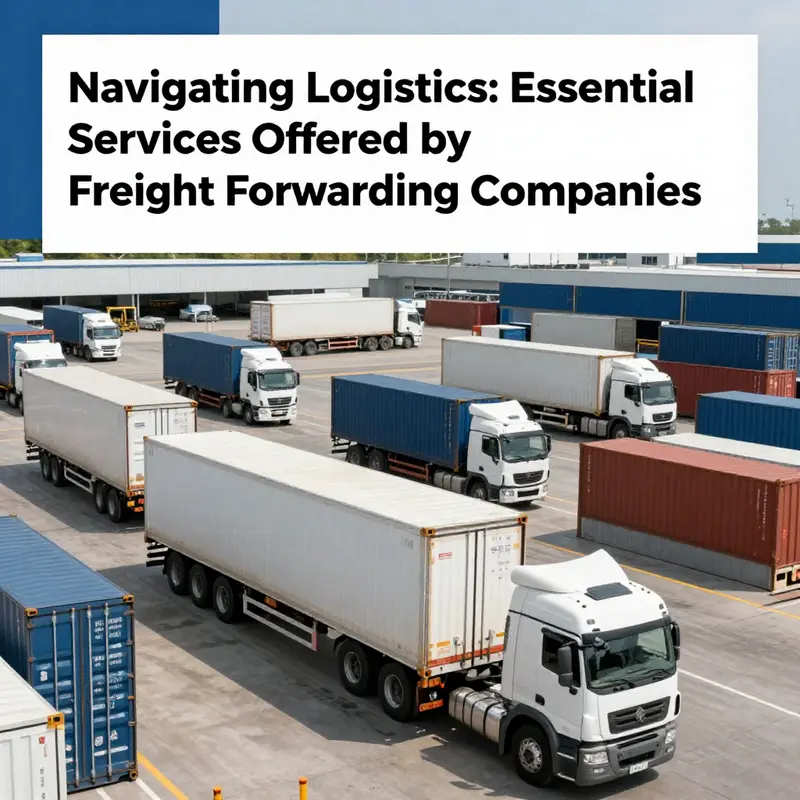
Understanding the intricate web of logistics that support modern manufacturing, retail, and distribution processes is crucial for businesses aiming to thrive in competitive markets. Freight forwarding companies play a pivotal role in this ecosystem by offering a diverse spectrum of services that simplify the complexities of global trade. From managing ocean and air freight to ensuring compliance with customs regulations, their expertise is indispensable. This article explores key offerings of freight forwarding companies, particularly the integral role of trucking in their services and the essential function of customs clearance and compliance, giving businesses a comprehensive overview of how these services can streamline operations and enhance efficiency.
From Port to Doorstep: How Freight Forwarders Turn Multimodal Strategy into Seamless Trucking and End-to-End Shipments
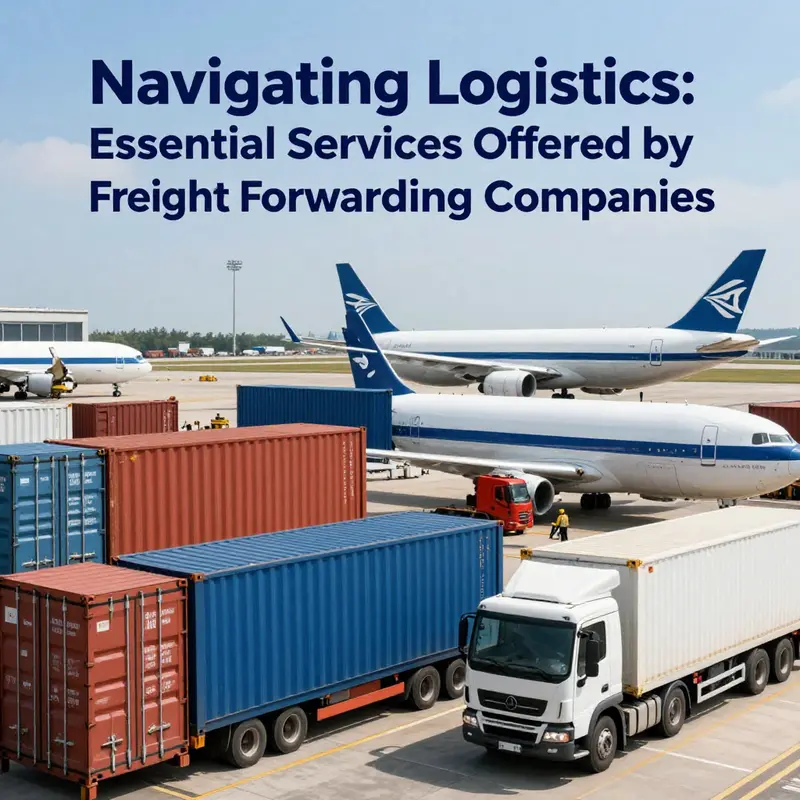
Freight forwarding is often mistaken for a simple booking task, a line item on a spreadsheet that secures a seat for cargo on a ship or a plane. In reality, it is a full-spectrum discipline that orchestrates a supply chain across borders, modes, and time zones. At its core, a freight forwarder designs a route that marries speed with cost efficiency, reliability with compliance, and visibility with control. Within that design, trucking emerges as the indispensable connective tissue. It is the last mile that translates the promise of a coordinated multimodal plan into tangible delivery at the doorstep, or the first mile that pulls goods from a manufacturer to a port or airport for the long haul ahead. The value of trucking within freight forwarding is not merely operational; it is strategic. It anchors the whole chain to the ground, ensuring that the abstract promises of planning and documentation become real, trackable movement that meets customer expectations and business timelines.
To understand how freight forwarders leverage trucking, it helps to picture a multimodal transport management approach. This approach treats sea, air, rail, and road as a single, integrated system rather than isolated channels. Each mode has its own cost structure, schedule constraints, and regulatory requirements. The forwarder’s skill lies in weaving these threads into a seamless tapestry: selecting the right container routing for long-haul legs, choosing air or expedited options when speed is paramount, and staging inland legs where costs and reliability align. Trucking is the domestic spine of that tapestry. It carries goods from origin shippers to seaports or airports, and then returns to the distribution network from the other end. It is the practical channel where strategy meets execution, where planned routes become real-life transit, and where delays or bottlenecks are most felt by customers.
This is especially clear when looking at cross-border shipments, where customs, documentation, and regulatory compliance intersect with transportation. In a typical scenario, a manufacturer in one country produces goods that must travel across border controls, through warehouses, and into a retailer’s network in another country. Ocean freight or air freight might handle the long, fuel-intensive leg, but trucking handles the inland haul and the final mile. The origin truck move pulls cargo from the production site to a port, rail terminal, or airport, while the destination trucking leg delivers to a distribution center or the final recipient. Each leg of the journey requires careful coordination, accurate data, and timely handoffs between partners. The forwarder’s role is to anticipate potential disruptions, coordinate with carriers across multiple modes, and maintain a single point of accountability for the customer despite the complexity of the network.
A critical aspect of this coordination is the ability to consolidate shipments and optimize capacity. Freight forwarders with high volumes can negotiate access to space on carriers, whether in ocean containers, air pallets, or road transport networks. This leverage enables cost advantages for customers, particularly small and medium-sized businesses that would otherwise struggle to secure economical rates for individual shipments. Consolidation plays a pivotal role here: smaller shipments—often grouped into less-than-container-load or LCL—are aggregated into more economical loads. Trucks are essential to this process because they can collect multiple smaller consignments from different suppliers or warehouses and bring them to a common consolidation point. From there, the forwarder arranges the longer-haul movement and, upon arrival, redistributes the cargo via inbound trucking to final destinations. The net effect is that a single shipment might flow through several hubs, yet the customer experiences consistent service, predictable costs, and transparent progress.
Within the trucking component, there is a constant emphasis on reliability and predictability. Real-time visibility platforms are now a standard feature of modern freight forwarding. They provide continuous updates on shipment status, location, and estimated arrival times. This visibility is not a luxury; it is a practical tool for risk management and exception handling. When a truck is delayed at a border crossing, for example, the forwarder can re-route other legs to preserve overall schedule, issue proactive notices to customers, and adjust downstream plans. Visibility tools also enable better inventory management for shippers, who must synchronize inbound shipments with production schedules and sales forecasts. In this sense, trucking becomes not just a transportation function but a critical data stream that informs broader supply chain decisions.
Packaging and labeling are another area where trucking and forwarding services intersect with the broader objective of safe, compliant, and timely delivery. Forwarders advise on packaging standards that minimize damage during rough handling in intermodal transfers and long drayage runs. They also ensure labeling aligns with destination country requirements, including language considerations, regulatory marks, and product identifiers that facilitate customs processing and warehousing. Proper packaging reduces the likelihood of returns or claims, while correct labeling accelerates customs clearance and improves inventory accuracy upon receipt. The practical impact is a smoother flow through ports, warehouses, and final-mile networks, which in turn sustains customer satisfaction and protects the reputation of the shipper.
Customs clearance and compliance occupy a central place in the forwarder’s remit. International shipments must comply with the rules of origin, valuation, duties, taxes, and import/export declarations that differ from one jurisdiction to another. A freight forwarder brings regulatory expertise to bear so that paperwork is accurate, timing is predictable, and risk of detention or penalties is minimized. This is especially important when shipments traverse multiple regulatory environments or austere checkpoints where mistakes can cause costly delays. The forwarder coordinates with customs brokers, when appropriate, and ensures that documents such as commercial invoices, packing lists, certificates of origin, and other required attestations are complete and consistent across legs of the journey. In practice, this means a shipment moves through documentation checks in tandem with physical handoffs—reductions in dwell time both at the border and in the warehouse that translate into more reliable delivery windows for customers.
Warehousing and distribution services extend the reach of trucking beyond mere transport. Forwarders can select or operate strategically located warehouses to hold inventory as needed, staging orders for pick-and-pack operations, or performing value-added services such as light assembly, kitting, or repackaging. Inventory management systems linked to the freight network enable better control over stock levels, batch tracking, and order fulfillment cycles. From a customer’s perspective, warehousing reduces the pressure to keep large capital tied up in stock in multiple locations while enabling faster responses to market demand. In this sense, the forwarder’s warehouse becomes a hub that supports omnichannel fulfillment, aligning e-commerce, retail, and wholesale operations with real-time visibility and accurate stock information. The trucking network then serves as the precise mechanism that moves goods from these hubs to trucks on the road, ensuring that each pallet or parcel travels efficiently to its next stop.
The choice of a freight forwarder is rarely about size alone. Large global networks offer scale, vast carrier relationships, and sophisticated technology ecosystems that can deliver highly cost-effective, end-to-end solutions for complex, multi-country shipments. Yet smaller forwarders often distinguish themselves through flexibility, closer customer interaction, and faster adaptation to specific needs. SMBs in e-commerce, for example, may prioritize integrated trucking with customs support and real-time tracking over broad geographic reach. The decision hinges on how well the forwarder’s capabilities align with the client’s supply chain profile: the number of SKUs, the cadence of orders, the tolerance for transit time variability, and the need for agile last-mile options in multiple markets. Integrated trucking, in this view, is not a peripheral service but a core capability that shapes the entire service proposition.
A practical benefit of this integrated approach is the ability to optimize routing and mode selection for cost efficiency and service reliability. For instance, a shipment from a manufacturing hub in one country to a consumer market in another may begin with ocean freight for the bulk of the journey, switch to rail for internal repositioning, and finally rely on trucking for inland legs and last-mile delivery. The forwarder’s route design considers not only distance and time but also port dwell times, seasonal capacity, and the availability of reliable trucking partners in origin and destination regions. In markets where trucking capacity is tight or where regulatory friction is higher, the forwarder might emphasize earlier hand-offs to reduce risk while preserving overall transit times. This is where the forwarder’s local knowledge, supplier network, and operational discipline prove decisive in maintaining a smooth flow.
The digitization of freight forwarding amplifies the value of trucking within the broader system. Digital platforms connect shippers, forwarders, carriers, warehouses, and drivers in a shared, real-time data environment. This connectivity allows for proactive exception management, dynamic rerouting, and more accurate customer communications. For small and mid-sized businesses, real-time visibility reduces the operational friction of cross-border shipments and multichannel fulfillment. Instead of waiting for sporadic updates, customers can monitor progress, anticipate arrival windows, and adjust downstream plans accordingly. At the same time, forwarders gain the ability to optimize network performance by analyzing historical transit data, identifying recurring bottlenecks, and negotiating smarter terms with trucking companies and other carriers. The result is a more resilient supply chain that can absorb disruption, recover quickly, and sustain service levels even in the face of volatility in fuel prices, driver availability, or regulatory changes.
The decision-making framework for SMBs often centers on what the forwarder can deliver beyond transportation. Real value arises when a forwarder offers tailored advice on packaging standards, cargo handling, routing optimization, and regulatory navigation that is specific to the products and markets involved. The ability to tailor a solution—whether the destination is a high-volume consumer market with strict labeling requirements or a niche market with particular import rules—distinguishes effective forwarders from commodity brokers. In practice, this means ensuring that the mode mix supports not only cost targets but also lead times, service levels, and risk tolerance. For e-commerce businesses especially, these capabilities translate into reliable delivery windows, predictable costs, and a consistent customer experience across channels. As customers increasingly expect speed and convenience, the forwarder’s ability to deliver integrated trucking within a transparent, end-to-end service becomes a strategic asset rather than a mere logistical convenience.
Navigating cross-border regulatory issues is a shared responsibility between shippers and forwarders, and it requires ongoing vigilance. The forwarder’s team keeps pace with changing rules, tariff structures, and border controls that affect how goods move between regions. They coordinate with customs authorities, prepare documentation, and monitor compliance across multiple jurisdictions. This continuous regulatory stewardship helps reduce risk and improve predictability for customers who export or import regularly across borders. For a deeper look into the regulatory landscape that forwarders must navigate, see Cross-Border Regulatory Issues. The chapter on regulatory environments is essential reading for anyone seeking to understand how front-end planning translates into smooth execution at the border and beyond.
In short, trucking is not a standalone service; it is a critical enabler of the freight forwarder’s promise: to simplify international movement, manage risk, and deliver goods to customers with speed, clarity, and confidence. By coordinating inland transport, ensuring compliant documentation, supporting warehousing and distribution, and providing end-to-end visibility, forwarders transform a complex sequence of steps into a single, accountable journey. The most successful partnerships with forwarders come from aligning expectations around service levels, data transparency, and the degree of integration required to meet unique business requirements. For small businesses venturing into new markets, this alignment can unlock access to more favorable rates, faster transit times, and the resilience needed to compete in a volatile global marketplace. And for larger operations, the same alignment enables scale without sacrificing the precision needed to keep multiple regional networks synchronized and responsive to customer demand.
As the logistics landscape continues to evolve—with continued emphasis on sustainability, technology-enabled efficiency, and the growing importance of last-mile reliability—trucking within the freight forwarding framework will remain a central pillar. It will adapt to new fuel and vehicle technologies, expand capacity through better coordination with drivers and fleets, and integrate even more tightly with supply chain planning and customer-facing tools. The result is a more agile, data-driven, end-to-end logistics capability that helps businesses move goods across borders with fewer delays, lower costs, and greater assurance that the journey from origin to destination will meet both the practical needs of daily operations and the strategic goals that drive growth. For readers seeking practical takeaways, the emphasis should be on how to evaluate a forwarder’s trucking integration, the sophistication of their visibility tools, and the degree to which their packaging, customs, and warehousing services align with a company’s end-to-end fulfillment strategy. When these elements converge, freight forwarding becomes not simply a service but a strategicconnector that sustains momentum in a global supply chain that is increasingly complex, interconnected, and customer-centric. For further reading on the regulatory landscape and practical implications of cross-border transport, a helpful resource is linked above under Cross-Border Regulatory Issues, which offers grounded insights into how policy and practice intersect across borders.
External resource for further context on freight forwarding and industry practices: https://www.iata.org/en/about/whatwedo/freight/
Trucking as the Steady Pulse of Global Freight Forwarding: From Last-Mile Promise to Multimodal Precision
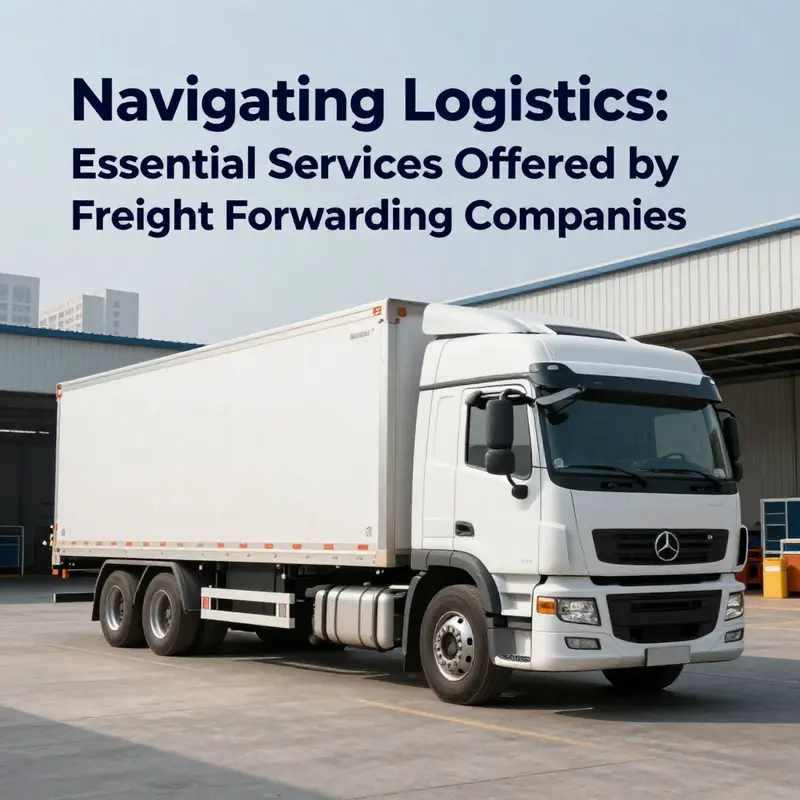
Trucking sits at the core of freight forwarding not as a mere step in a schedule but as the steady pulse that keeps the entire logistics organism alive. When a shipment moves across oceans or through air corridors, the journey is not complete until the goods arrive at their final point of consumption. In that sense, trucking is more than a mode of transport; it is the connective tissue that binds planning to outcomes, promises to performance, and plans to actual delivery. Freight forwarders orchestrate a complex symphony of moving parts, and the truck is often the instrument that translates strategic intent into tangible results. The role of trucking, thus, deserves attention not as a peripheral consideration but as a central mechanism in the efficiency, reliability, and adaptability that modern supply chains demand.
The centerpiece of trucking within freight forwarding is last-mile delivery. This term is frequently cited in logistics discourse because it crystallizes a truth: the end of the journey matters as much as the origin. For retailers, manufacturers, and especially consumers with escalating expectations, the window of time between dispatch and doorstep delivery has become a primary determinant of satisfaction. The vehicle that carries the product into a city, a neighborhood, or a home must do so with predictable timing, careful handling, and visible progress along the way. In practice, forwarders view trucking as the bridge that turns global scale into local relevance. Ocean or air freight can move mountains of product between continents, yet trucking translates that cross-border momentum into a precise, on-time arrival. This last mile is where planning meets real-world constraints—the road network, traffic patterns, weather, local regulations, and the realities of urban logistics.
The narrative of last-mile delivery is especially acute in the age of e-commerce. Customer expectations are shaped by the immediacy of digital marketplaces, and speed has become a competitive differentiator. Shipping options like same-day or next-day delivery translate into a demanding operational pattern for forwarders: condensed transit windows, rapid handoffs, and relentless tracking. Trucking is at the center of this demand, enabling door-to-door service that feels seamless to the end user while absorbing the complexity of cross-border checks, warehousing turnarounds, and cross-dock operations at distribution hubs. In a pragmatic sense, the road network is where silent efficiencies emerge. When a forwarder can coordinate pickup times with manufacturers, allocate compliant drivers, and sequence deliveries to reduce dwell time at a facility, the result is a smoother customer experience and a more resilient supply chain.
The geography of trucking also reveals how deeply connected the global network has become. Consider how a forwarder with proximity to major manufacturing hubs and strategic gateways can offer integrated road transport solutions that minimize handling delays and accelerate customs clearance. Proximity matters not simply for speed but for visibility and predictability. When goods are positioned to move quickly from a plant to a port or airport and then onward to a regional distribution center, the cycle shortens dramatically. This is particularly relevant for regions with dense manufacturing ecosystems and high volumes of cross-border trade. What looks like a straightforward journey on a map often hides a complex choreography of pickup windows, detention-imposed delays, and multi-party handoffs. Trucking, by serving as the consistent cadence across these moves, provides a dependable rhythm that makes the entire multimodal operation credible and controllable.
Robust inland transportation is the lifeblood of multimodal networks. Trucking forms a critical relay between international gateways and inland nodes such as warehouses, manufacturing zones, or retail centers. In practice, this means that the truck is not just the origin or destination carrier but a flexible, adaptive link that can accommodate evolving routing needs. The forwarder can re-sequence legs, consolidate loads from multiple origins, and adjust to last-minute changes driven by port congestion or customs priorities. Inland transportation brings a level of responsiveness that is hard to replicate with a single-mode solution. It enables closer alignment with inventory positioning, which in turn reduces the risk of stockouts or excessive dwell time at downstream facilities. The result is a resilient supply chain profile that can respond to demand volatility without sacrificing reliability.
Across regions and markets, trucking supports cross-border consolidation—a concept that sounds straightforward but requires intricate operational discipline. The essence of cross-border consolidation is to group smaller shipments into a single coordinated movement that travels through customs efficiently and emerges onto the other side with minimized delays. This is a practical way to unlock economies of scale for small and mid-sized shipments that would otherwise file under less-than-container-loads or fragmented shipments. By using trucking to gather goods from multiple sources, forwarders can optimize container utilization and reduce unit costs for origin groups, all while maintaining clear end-to-end visibility. The consolidation process also stabilizes transit times by creating predictable pickup windows and smoother transfers at cross-border points, where regulatory checks and documentation can otherwise introduce unpredictable delays.
For small and medium-sized enterprises, trucking embodies flexibility and scalability that are essential in a dynamic market. SMEs often operate with limited internal logistics capacity, and they face the double pressure of keeping costs manageable while meeting customer expectations for reliable, fast delivery. In this context, trucking-enabled services such as less-than-container-load (LCL) handling become a strategic enabler. LCL allows SMEs to participate in global trade without tying up capital in full container loads. A well-coordinated trucking network can collect several LCL shipments, transport them as a single unit to a consolidation point, and then onward to the destination. The value here is not merely cost avoidance; it is the ability to offer a door-to-door experience that is cost-competitive and operationally practical. The forwarder absorbs the complexity of coordinating disparate shipments, handling the paperwork, and ensuring that each piece remains compliant with destination requirements, all while the customer experiences a streamlined, end-to-end service.
This capacity to tailor service models around the needs of diverse shippers—whether large multinationals or nimble start-ups—reflects a broader theme in modern freight forwarding: the move from volume-centric scale to value-centric agility. The most successful forwarders are those that can pair a broad, global network with precise, local execution. Trucking underpins that dual capability by offering the granularity needed to service urban deliveries, industrial zones, and remote markets alike. It is this adaptability that gives freight forwarding its practical edge in real-world operations: the ability to re-route around congestion, to decant goods at a regional hub, or to switch from a direct truck leg to a multi-stop route with minimal disruption to the overall schedule.
A critical element of trucking’s contribution is visibility. Real-time tracking has evolved from a luxury to a baseline expectation. Customers want not only a route but a continuous line of sight into pickup times, dwell periods, and ETA updates. The forwarder leverages digital tools to monitor the truck’s progress, capture status events, and alert stakeholders to divergences before they become problems. This continuous feedback loop is not only about information sharing; it is about proactive operational management. If a truck encounters an unexpected delay at a border crossing, the system can automatically adjust downstream plans, reallocate capacity, or trigger alternative routing. The outcome is a more resilient schedule that keeps the chain moving, even when the road ahead looks uncertain.
The interplay between trucking and customs compliance is intricate and essential. While ocean and air legs will still require sophisticated documentation and duties handling, the trucking segment often shoulders the practical realities of getting goods through the initial and final regulatory checkpoints. Trucking teams coordinate with customs brokers to ensure that declarations, valuation, and origin documentation are consistent with the destination country’s requirements. They also prepare for potential inspections and prepare contingency plans to minimize hold times. In such a setting, the road becomes a moving surface for compliance workflows—an area where skilled coordination can shave days off the total transit time and minimize the risk of expensive delays.
The sustainability footprint of freight forwarding is another dimension where trucking matters. While the broader discourse around logistics increasingly emphasizes greener options, trucks remain indispensable for certain legs of the journey. Forwarders are investing in more efficient vehicle fleets, better maintenance practices, and data-driven routing to reduce fuel consumption and emissions. They are also exploring alternative powertrains and new forms of operational discipline, such as optimizing lane densities, consolidating shipments, and leveraging urban delivery hubs to minimize empty miles. In this ongoing evolution, trucking serves as the practical proving ground for greener logistics, where incremental improvements in routing, loading efficiency, and maintenance translate into measurable environmental and cost benefits.
For forwarders who operate across vast geographies, truck networks are also a natural conduit for information flow. They help translate macro-level planning into micro-level execution. A forecast of demand in a given region can be translated into a scheduled set of pickup windows, driver assignments, and delivery routes that align with local conditions. In this sense, trucking is not merely about moving goods; it is about converting data insights into reliable, observable actions on the ground. It is where predictive analytics meet tangible outcomes, and where the forwarder proves its value by turning theory into dependable, day-to-day performance.
The human dimension of trucking should not be overlooked. The workforce behind the wheel and in the support roles is central to the reliability of the forwarding operation. Training, compliance, safety, and driver welfare are all integral to sustaining an ecosystem that can respond to disruptions—whether it is a port backlog, a weather event, or a regulatory change. The most effective forwarding houses treat their trucking networks as living systems that require ongoing investment in people, processes, and technology. When a forwarder invests in skilled drivers, robust maintenance programs, and a culture of continuous improvement, the entire chain gains in dependability and speed. In other words, trucking is a people-centric, technology-enabled discipline that thrives on disciplined execution and a shared commitment to service quality.
The regional texture of trucking networks further illuminates why this mode remains indispensable in freight forwarding. In densely populated economies, the road system is the quickest, most practical way to reach a broad set of end-users, while in expansive geographies, trucking forms the backbone for reaching inland markets with efficiency. The cross-border dimension adds additional layers of complexity, but it also creates opportunities for more dynamic routing and better use of multimodal capacity. In practice, a competent forwarder will map regional corridors that balance speed and cost, optimize for congestion patterns, and align with local road regulations. The result is a logistics plan that preserves reliability across the entire journey—from origin pickup to final delivery—without sacrificing the ability to pivot when external conditions demand flexibility.
The strategic value of trucking within freight forwarding, therefore, lies in its capacity to deliver a consistent, visible, and adaptable flow of goods. It is the channel through which complex, multi-leg itineraries become manageable experiences for customers. It is where the forwarder demonstrates the capacity to couple large-scale supply chain design with minute-by-minute execution. And it is where the practical realities of road transport meet the aspirational goals of global trade: speed, reliability, cost efficiency, and sustainable growth for businesses of every size. In this sense, trucking embodies the practical genius of freight forwarding—the knack for turning global networks into reliable, local outcomes that keep the world’s shelves stocked and markets moving.
For readers looking to explore the intersection of trucking with broader economic trends, one can consider the evolving context of the industry’s economics and workforce dynamics. The linked discussion on economic trucking trends offers additional perspective on how fluctuations in fuel prices, labor costs, and infrastructure investment shape day-to-day planning and long-term strategy for forwarders and shippers alike. economic-trucking-trends
Ultimately, the most compelling argument for recognizing trucking as the core of freight forwarding is simple: without the reliable, visible, and flexible mobility that trucking provides, the most sophisticated multimodal plans would wither in the face of disruptions. The road is where complexity is mustered into execution, where brokers, carriers, warehouse operators, and customs professionals align their efforts toward one common aim—delivering the right goods, to the right place, at the right time. When this alignment holds, the entire supply chain becomes not a ledger of shipments but a dynamic, responsive system capable of supporting modern commerce with speed, clarity, and confidence. The chapter on trucking in the freight forwarding landscape thus closes with a recognition that the journey from plant floor to consumer door is not a straight line but a carefully choreographed expedition that hinges on the steering core of road transport. It is this core that keeps global trade moving with consistency, even as the surrounding environment shifts beneath it, and it is why trucking remains the essential muscle behind every successful forwarding operation.
External perspective on the topic, which further contextualizes the role of trucking within broader supply-chain dynamics, can be found in industry discussions that trace how ground transport adapts to new patterns of demand and regulation. For a deeper dive into the strategic implications of trucking in global supply chains, see the Freightos blog on trucking in global supply chains: Freightos blog on trucking in global supply chains.
The Gatekeeper of Global Trade: Customs Clearance and Compliance in Freight Forwarding and Trucking
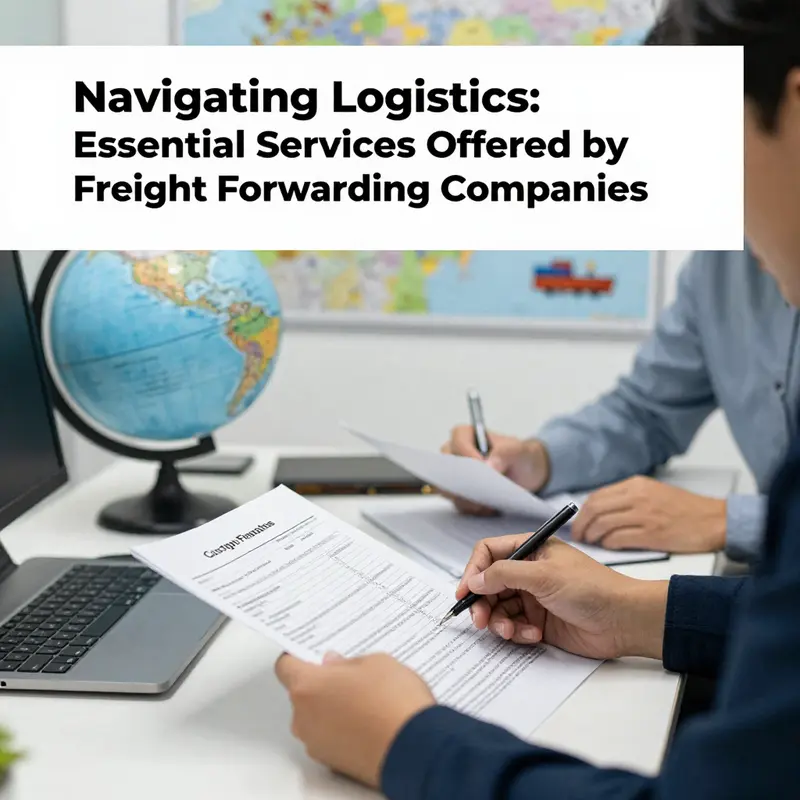
Customs clearance is more than a checkbox at the edge of a shipment. It is the gate through which goods pass from one economy to another, and for freight forwarders it is a discipline that blends jurisdiction, jurisdictional nuance, and operational precision into a predictable flow. In the broader arc of freight forwarding, which encompasses ocean and air carriage, inland trucking, warehousing, and end to end visibility, customs clearance and compliance form the spine that holds the entire system upright. When a shipper entrusts cargo to a forwarder, they are not merely hiring someone to book space on a vessel or load a trailer. They are enlisting a partner who must translate the language of tariffs, origin rules, and regulatory thresholds into a practical, executable plan that keeps goods moving, costs controlled, and timelines intact. The forwarder acts as translator, advocate, and conductor, ensuring that every document, every classification, and every payment aligns with the laws of multiple jurisdictions, often simultaneously. The stakes are high: misclassification can provoke delays that ripple through the supply chain, result in penalties that erode margins, or trigger seizures that halt the entire shipment in customs custody. In this sense, customs clearance is not a back room function but a strategic capability that determines reliability, cost, and speed for global trade. It binds the technical world of tariffs and tariff codes to the granular realities of a truck idling at a border, a warehouse receiving a shipment in the dead of night, or a shipment stuck in port due to an incomplete declaration. The work of a freight forwarder in this domain begins long before the first border is crossed. It starts with a deep, methodical understanding of the goods themselves: their value, their material composition, their origin, their end use, and the regulatory status of both the product and the country of destination. This knowledge must be translated into a precise declaration that captures the essence of the shipment while remaining adaptable to the evolving landscape of trade rules. Every shipment is a small narrative told through data—weight, quantity, unit of measure, HS classification, country of origin, value for duty, and the intended use. If any element is inaccurate or incomplete, the narrative falters and a logjam forms at the border. The forwarder’s role is to ensure that the declaration tells the correct story, not a plausible one. The process is iterative and meticulous, requiring a blend of experience, access to up to date regulatory information, and robust data controls. The initial step in customs clearance is accurate declaration of goods. This is not merely a bureaucratic requirement; it is the foundation upon which all subsequent steps rest. The declaration must reflect the true nature of the goods, including a truthful description, the correct harmonized system code, the correct country of origin, and the negotiated value that will be used to calculate duties and taxes. The incorrect use of a tariff classification, whether by mistake or from vendor data that is out of date, can dramatically alter duties and taxes and trigger audits. To guard against such missteps, forwarders deploy comprehensive classification practices, often supported by centralized classification databases and ongoing training to keep pace with updates to tariff schedules. The next crucial stage is thorough document checking. A precise commercial invoice, a well organized packing list, an accurate bill of lading, and, when applicable, certificates of origin and origin statements, form the backbone of import and export compliance. Each document must dovetail with the declared goods and the actual shipment path. Minor inconsistencies—such as a discrepancy between the declared consignee and the actual recipient, or a mismatch between the declared value and the valuation on the commercial invoice—can cascade into delays, requiring documents to be amended, refiled, or, in worst cases, leading to a shipment being held for further investigation. This is where the forwarder’s data management systems prove essential. Modern compliance management hinges on data integrity, real-time validation, and a proactive posture. Electronic data interchange, automated document checks, and rule-based screening help to catch inconsistencies before they become problems. The importance of being proactive cannot be overstated. When customs authorities see a forwarder exercise rigorous pre submission checks, they interpret it as a signal that the shipment will pass smoothly, which translates into a faster release. On the other hand, last minute amendments or missing documents can trigger delay penalties and demurrage costs, and in some cases can lead to a shipment being held for inspection or seizure. The payment of duties and taxes is another pivotal moment in the clearance journey. Duties are not fixed charges; they are the result of the tariff classification, origin, valuation, and the applicable preferential programs. Forwarders must ensure that duties and taxes are calculated accurately and paid promptly to avoid release delays. The mechanics of payment may involve a complex web of tariff lines, duty rates, VAT, GST, excises, and other levies, depending on the country and the product. They must also comply with export controls and sanctions regimes that govern which goods can move, to whom, and under what conditions. This is where the compliance program becomes a living system that continuously monitors policy changes, sanctions lists, and trade restrictions. The forwarder’s obligation extends beyond a single shipment; it includes sustaining a wide net of vigilance to ensure that neither the goods nor the parties involved become entangled in a prohibited trade scenario. The physical inspection or examination by customs authorities is a stage where paperwork meets reality. Inspections can be routine or targeted, and they may be random or driven by risk assessment models. When inspections occur, they test the accuracy of the declared content, the declared value, and the proper adherence to regulatory requirements. An inspection can delay a shipment, but it can also provide an opportunity to demonstrate due diligence and transparency. The final cargo release follows resolution of any issues identified during inspection and the completion of all payments. This moment, while seemingly procedural, represents the culmination of a careful alignment of data, documents, and duties. For the shipper, it marks the transition from regulatory compliance to commercial delivery. For the forwarder, it confirms that the risk controls embedded throughout the process functioned as intended. The story of clearance is not only about regulatory mechanics but about risk management and trust. Compliance management systems are the backbone of this trust. They provide the framework for staying current with evolving trade policies, sanctions, and country-specific rules. They enable proactive screening of counterparties, destinations, and products, reducing the likelihood of audits or penalties. They also support the efficient use of technology to ensure that information flows from origin to destination in a timely, accurate, and auditable manner. A robust system uses rules, automation, and human oversight in a complementary way. Rules codify known requirements and standard operating procedures for each shipment class, while automation flags exceptions and routes them to human review. Human oversight remains essential because not all regulatory changes can be captured by automated checks alone; certain nuances require interpretive judgment. The best forwarders invest in continuous training for staff, frequent updates to compliance playbooks, and partnerships with trusted customs agents and authorities. This is how a forwarder transmits assurance to clients: by showing, through records and performance, that every shipment has been prepared with discipline and foresight. The practical benefits of this discipline extend to the trucking leg of the journey. Inland transportation often carries the most visible risk of delay, not because trucks are inherently unreliable, but because trucks are the final leg through which goods pass before delivery. A delay in customs clearance can back-propagate to the point of origin, clogging trucks at depots, increasing dwell times at border crossings, and reducing the predictability of delivery windows. Conversely, a well managed clearance process can expedite the border crossing, reduce detention and demurrage charges, and improve the reliability of last mile delivery. In the context of trucking, clearance compliance becomes a shared responsibility among shippers, forwarders, carriers, and border authorities. The forwarder coordinates the process, but success depends on accurate data from manufacturers and suppliers, timely document submission by exporters, and, where relevant, the proper classification of goods under local and international schemes. The interplay between trucking and customs is clearest in cross-border flows where border controls, vehicle check points, and clearance lanes can impose additional constraints on lead times. The forwarder’s intelligence about border processing, peak periods, and the practical realities of a given route informs decisions about trucking schedules, route planning, and contingency planning. In this sense, customs compliance is not a static set of rules but a dynamic competency that informs strategy across the entire logistics chain. The capacity to navigate this dynamic environment rests on a culture of transparency and continuous improvement. Freight forwarders who invest in visibility tools, data analytics, and collaborative platforms can align expectations with clients and with the broader network of suppliers, carriers, and customs brokers. This alignment is what makes a shipment’s journey traceable and predictable. Clients gain confidence when they see real-time updates on the status of documentation, the progress of a declaration, and the moment when goods clear customs and enter the next stage of inland distribution. Real-time visibility is not a luxury but a necessity in modern trade, where delay costs accumulate quickly and customer expectations demand speed and accuracy. The human element should not be overlooked. Behind every document and procedure are specialists who understand the subtle differences between export controls and export licensing, or between a preferential origin claim and a general origin statement. These specialists bring judgment honed through years of experience, supported by digital tools that maintain a rigorous audit trail. They are the custodians of compliance, continually evaluating risk, testing assumptions, and communicating clearly with clients about what is required, what might change, and what is at stake if the rules are not followed. In a landscape where sanctions and trade restrictions can swiftly reconfigure the rules of engagement, forwarders must stay ahead by investing in up-to-date knowledge, robust screening processes, and relationships with competent customs brokers. They must also educate clients about the implications of their choices, from the selection of suppliers and the origin of components to the packaging and labeling standards that facilitate smooth clearance. Packaging and labeling, though often perceived as a supporting activity, tie directly into compliance. Proper labeling informs the correct handling instructions, the classification, and the destination requirements. A mislabel can create confusion at the border, lead to misrouting, or provoke an unnecessary inspection. The broader lesson here is that compliance is a shared journey across the entire supply chain, not a single department’s responsibility. The forwarder’s job is to coordinate that journey, align it with the shipper’s business objectives, and ensure that the cargo moves with as little friction as possible through the maze of borders and regulations. The end result is not merely the movement of goods but the preservation of value—avoiding penalties, preserving lead times, and sustaining a reputation for reliability. In practice, this translates into a series of predictable outcomes: faster release times, reduced total landed cost through accurate duty calculations, and greater confidence from customers who rely on timely delivery. The broader economic impact of strong customs clearance capability is notable as well. Efficiency in clearance reduces dwell times at ports and border posts, which in turn lowers congestion and improves the throughput of international trade ecosystems. For manufacturers and exporters, this translates into more stable production schedules and more reliable demand planning. For importers, it means a smoother onboarding of components critical to production. For the forwarder, it reinforces the legitimacy of the business model as a trusted intermediary that can manage risk across multiple jurisdictions. To maintain this level of capability, forwarders must keep a close eye on the evolving policy environment, including trade facilitation measures, digital clearance initiatives, and evolving data protection and privacy requirements that govern how shipment data is stored and transmitted. The most effective customs clearance programs integrate human expertise with advanced technology to deliver consistent results. They rely on a suite of tools that enable end-to-end visibility, proactive risk assessment, and automated compliance checks, all anchored by a trained team that can interpret anomalies and respond with speed. In the end, the chapter on customs clearance and compliance in freight forwarding and trucking is a chapter about trust. It is about the confidence that a shipper places in a partner to navigate the jurisdictional maze with integrity, efficiency, and transparency. It is about the forwarder’s ability to translate regulatory complexity into smooth, cost effective movement that respects the intricate textures of origin and destination. It is about the everyday discipline of data accuracy, document discipline, and proactive communication, which together sustain reliable delivery schedules and preserve the value of goods as they traverse the globe. For readers seeking practical guidance beyond high level principles, the literature from leading industry resources emphasizes the necessity of clear documentation, timely filings, and proactive communication with customs authorities. These sources stress the need for a well designed compliance framework—one that accommodates ongoing policy changes, screening against sanctions lists, and a robust data governance program. They remind us that in a world of constant regulatory shifts, the most resilient freight forwarders are those who embed compliance into every facet of operations and treat it as a core differentiator rather than a compliance overhead. The journey through customs clearance is not a one time compliance exercise but a continuous cycle of validation, learning, and adaptation that keeps shipments moving and markets connected. The trucking component of this journey gains strength from that continuous cycle. Trucking is the visible tap on the corridor of global trade, and its reliability is only as strong as the clearance that precedes it and the documentation that accompanies it. When a forwarder earns the trust of clients through meticulous clearance performance, trucking routes become more predictable, and the chain of custody becomes clearer. The net effect is a supply chain that is more resilient to disruption, more responsive to demand, and better positioned to compete in an interconnected economy where speed and accuracy determine success. For professionals and organizations seeking to deepen their understanding of customs clearance best practices, one can consult industry guides that offer structured insights into the mechanics of declaration, classification, valuation, and release. While every jurisdiction has its own specifics, the underlying principles—accurate data, complete documentation, timely payments, and proactive risk management—are universal. In practice, these principles translate into concrete actions: rigorous supplier onboarding that captures precise product data, ongoing classification training for staff, digitalization of invoices and certificates, automated checks for regulatory changes, and a culture that prioritizes clear, proactive communication with customs authorities and with clients. This integrated approach is the hallmark of modern freight forwarding. A well designed customs clearance program positions a forwarder as a trusted partner who can safeguard margins, protect timelines, and sustain cross border commerce even in the face of regulatory complexity. It is the quiet engine that makes possible the seamless movement of goods by sea, by air, and by road, and it is the reason why trucking, when viewed through the lens of a complete forwarding service, remains a core strength of end to end supply chain solutions. To close with a note on practical engagement, freight forwarders frequently emphasize that compliance is an ongoing partnership. They work with shippers to maintain up to date product data, verify origin claims, and continually audit internal processes for accuracy. Clients, in turn, benefit from the transparency and speed that come from this partnership. The shared aim is to minimize the risk of disruption at the border while ensuring that goods arrive where they are needed, when they are needed, and at the expected cost. For readers who want to explore further practical context on related regulatory issues that affect cross border trucking and freight operations, a useful resource discusses cross border regulatory issues in depth and can be accessed for additional perspectives. This is a reminder that customs clearance is a living discipline, constantly informed by policy, technology, and the practical needs of global commerce. External resources that illuminate the mechanics of clearance and the evolving landscape of customs practices can complement the in house knowledge of freight forwarders and their clients. One such external guide provides a structured overview of customs clearance essentials and is worth consulting for those who want a detailed, policy oriented framing of the subject: https://www.dhl.com/global-en/home/express/services/customs-clearance.html
Final thoughts
Freight forwarding companies are critical partners in the global supply chain, facilitating movement across borders through a variety of specialized services. By understanding the comprehensive range of offerings they provide—especially the essential trucking component and customs clearance—businesses can make informed decisions that enhance operational efficiency and compliance. As manufacturers, retailers, and small business owners navigate their logistics needs, leveraging the expertise of freight forwarders can not only reduce complexities but also contribute to a streamlined, effective distribution strategy.