
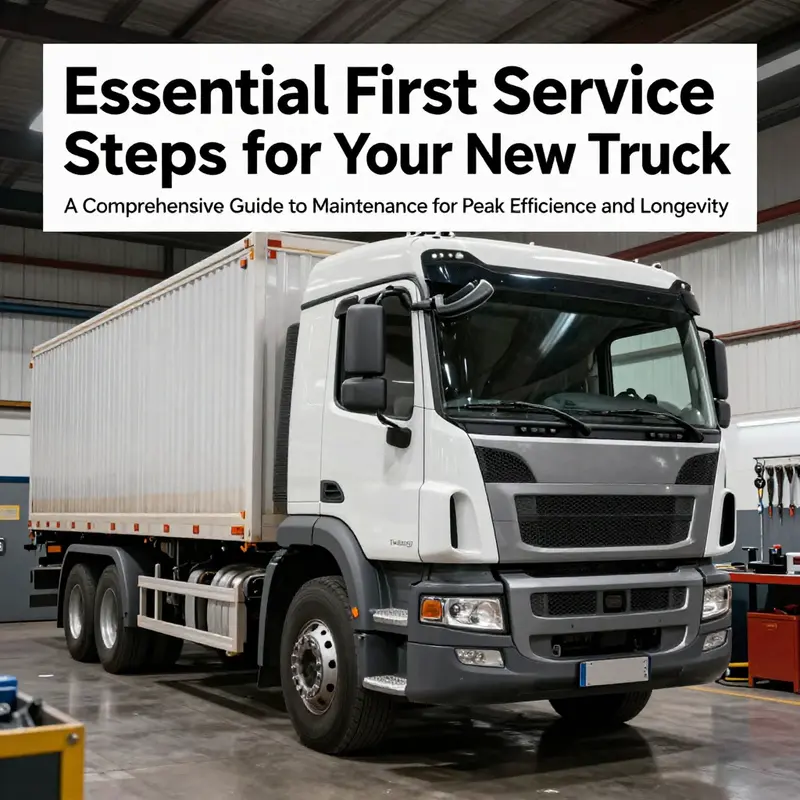
Maintaining a new truck is critical to ensuring long-term reliability and performance, particularly for manufacturing, distribution, retail, construction, and small business sectors. The first service is not merely an option but a vital step that establishes the foundation for your vehicle’s lifespan. This service typically includes an oil change, re-tightening of bolts, comprehensive inspections, a critical road test, and a review of warranty information. Each chapter will delve into these elements, illustrating their importance in maintaining the operational efficiency of your truck from day one.
First Service Oil and Filter: Why the Initial Change Matters for a New Truck’s Longevity
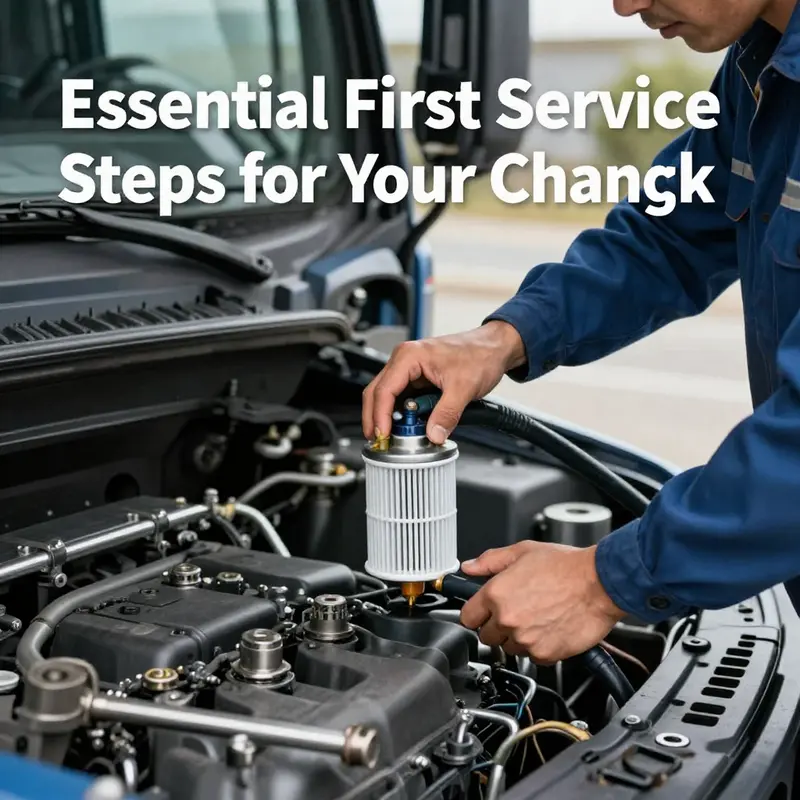
Why the first oil and filter change is non-negotiable for new trucks
When a new truck leaves the factory, its engine parts are still bedding in. Tiny metal particles and machining residue are produced as surfaces seat under load. These microscopic contaminants circulate in the oil during the break-in period. The first service replaces the oil and the oil filter to remove that early run-in debris. This single action does more than refresh lubrication. It resets a clean baseline for ongoing protection, helping prevent accelerated wear and early component fatigue.
Manufacturers typically recommend the first oil and filter change within the truck’s first 500 to 1,000 miles. That window captures the period when the greatest amount of particulate shedding happens. Changing both the oil and filter together removes trapped contaminants and any sludge that may have formed. It also ensures the new oil is unburdened and able to do its job—lubricating, cooling, cleaning, and protecting the engine’s moving parts.
Beyond cleanliness, the initial oil change also validates that the correct oil type was in the engine from the start. Modern engines can be sensitive to viscosity and additive packages. A technician confirms the oil weight and specification match the manufacturer’s recommendation. They will document the service and note any deviations. For fleets, that documentation is important for warranty records and maintenance histories.
The oil filter plays an equally critical role. During break-in, the filter can rapidly collect the majority of particles produced. A clogged or saturated filter cannot protect the oil system effectively. Replacing the filter restores full flow and filtration efficiency. Technicians often inspect the old filter during service to gauge how much debris accumulated. That inspection can reveal early manufacturing residue or unexpected contamination, prompting deeper checks if needed.
This first service is also an opportunity to check for leaks and confirm seals and gaskets are seating properly. After the initial run-in, some fasteners and fittings can settle. A technician will verify there are no signs of oil seepage around the oil pan, valve cover, filter housing, and related seals. Finding and fixing small leaks early prevents larger problems and reduces the chance of oil loss under operation.
A single, well-executed oil and filter change at this early stage yields multiple long-term benefits. It slows wear by removing abrasive particles. It stabilizes oil chemistry by starting with a fresh charge. It reduces the risk of early engine faults that could lead to costly repairs. It also gives drivers and fleet managers confidence that the vehicle left its break-in safely.
It is common for the first service to include several complementary inspections tied to the oil and filter change. Technicians check fluid levels and conditions—coolant, transmission fluid, power steering fluid, and brake fluid. They inspect belts and hoses for any signs of stress or rubbing. A close look at the undercarriage, drain plugs, and fasteners ensures nothing loosened during the initial operation. These checks matter because vibration and thermal cycling in early miles can reveal weaknesses in connections or fasteners.
During the first service, a road test is often performed after the oil and filter change. The test confirms the engine runs smoothly with the fresh oil and filter installed. It helps detect unusual noises, irregular oil pressure, or drivability issues. The technician uses this opportunity to monitor oil pressure and temperature behavior under load. Any anomaly discovered during the road test gets addressed before the truck returns to regular duty.
For fleet operations, consistency matters. Establishing a standard procedure for the initial oil and filter change makes subsequent maintenance predictable. Keeping clear records of oil brand, viscosity, filter model, mileage at service, and technician notes creates a useful paper trail. That trail supports warranty claims and helps spot patterns early if similar issues recur across units. It also guides interval planning—some fleets opt to shorten the first oil interval slightly for heavy-duty applications or severe duty cycles.
Drivers and operators should be made aware of what was done during the first service. A brief explanation of the oil type used, the next scheduled oil change, and any observations from the technician builds trust. When drivers understand why the early change is important, they are more likely to report unusual noises or fluid smells promptly. This feedback loop aids preventive maintenance and reduces downtime.
Environmental and disposal considerations are part of the process. Proper handling and recycling of used oil and filters is mandatory in most jurisdictions. Authorized facilities follow regulations for draining and disposing of contaminants. For fleet managers, confirming that the service provider follows these practices protects against fines and aligns with corporate sustainability goals.
Some manufacturers recommend replacing additional filters during the first service, depending on model and operating conditions. Fuel filters and air intake filters sometimes get inspected and, if necessary, replaced. In dusty or extreme environments, a new air filter ensures the engine breathes cleanly from the start. When additional filters are changed, the same rationale applies: remove early contaminants and establish a clean filtration baseline.
Finally, the first oil and filter change plays a role in warranty compliance. Many warranties require that initial maintenance tasks occur within specified intervals and be documented. Skipping the recommended first service can complicate future warranty claims if a related failure occurs. Performing the service at an authorized facility or following the manufacturer’s guidance avoids that risk.
A professional, attentive first oil and filter change sets the tone for a truck’s maintenance culture. It protects the engine, clarifies responsibilities, and begins a maintenance record that matters over the truck’s life. For practical guidance on what technicians typically cover during the first service, consult a detailed checklist to ensure nothing is missed, especially for trucks used in demanding or unique operations.
For a practical checklist and typical first-service items, see this external reference: https://www.motor1.com/news/378690/truck-first-service-checklist/.
For fleet managers interested in broader maintenance trends and how initial service practices fit into fleet strategies, consider reviewing insights on private fleet maintenance approaches in this article: Private fleets trends in trucking maintenance.
Torque as the Quiet Anchor: The First Service and the Promise of a New Truck
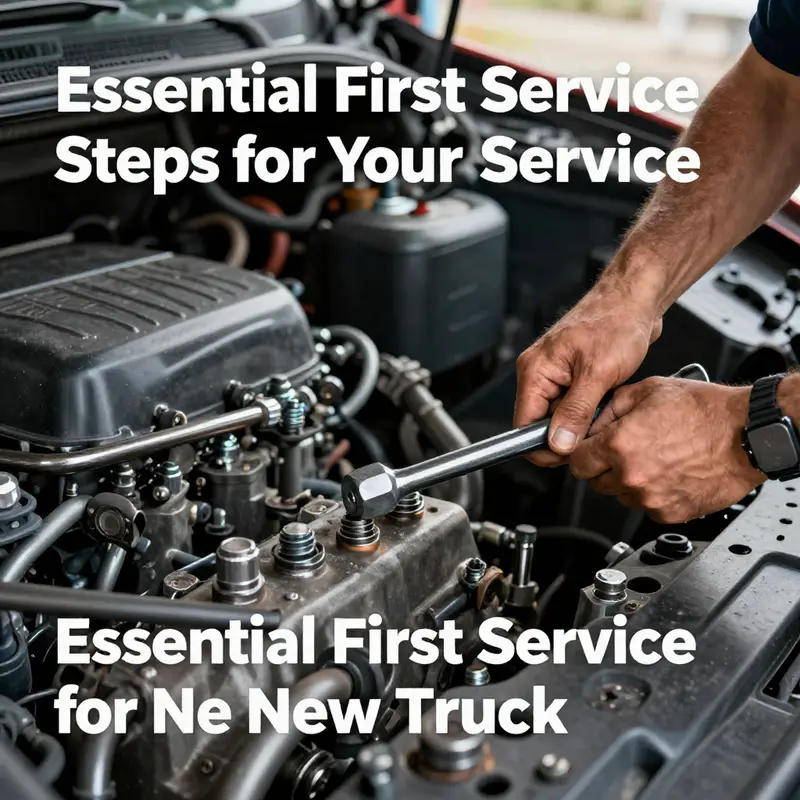
First service torque is more than tightening bolts; it’s a calibration moment that anchors the vehicle’s reliability. In the quiet workshop, technicians follow a precise sequence to secure critical joints, from engine fasteners to wheel studs, ensuring the clamp force is consistent as the engine heats and cools.
Breakaway torque is explained in manuals as a way to account for settling and creep; the first service rechecks these values so that the final torque matches the design after parts have seated.
Engine cylinder head bolts, which often use multi-step sequences or torque-to-yield designs, illustrate why re-torque matters: improper tension can compromise sealing and compression.
Wheel lug nuts sit alongside, because correct torque preserves wheel seating and steering feel across a range of loads.
The first service is thus not merely maintenance; it’s a quality gate that protects against leaks, vibrations, and unexpected downtime.
Technicians rely on calibrated torque wrenches, torque-angle devices, and manufacturer specifications to guide each step, not because the numbers are arbitrary, but because they model material behavior under heat and stress.
When the re-torque and verification are done, the truck emerges with joints that will perform predictably as miles accumulate.
Fleet managers benefit too, because a well-executed first service reduces the risk of warranty issues and costly follow-ups.
For owners seeking deeper confidence, consult the official torque specs from the vehicle maker and keep a record of the first-service settings as part of the truck’s maintenance history.
Setting the Standard: The First-Service Comprehensive Inspection That Protects a New Truck
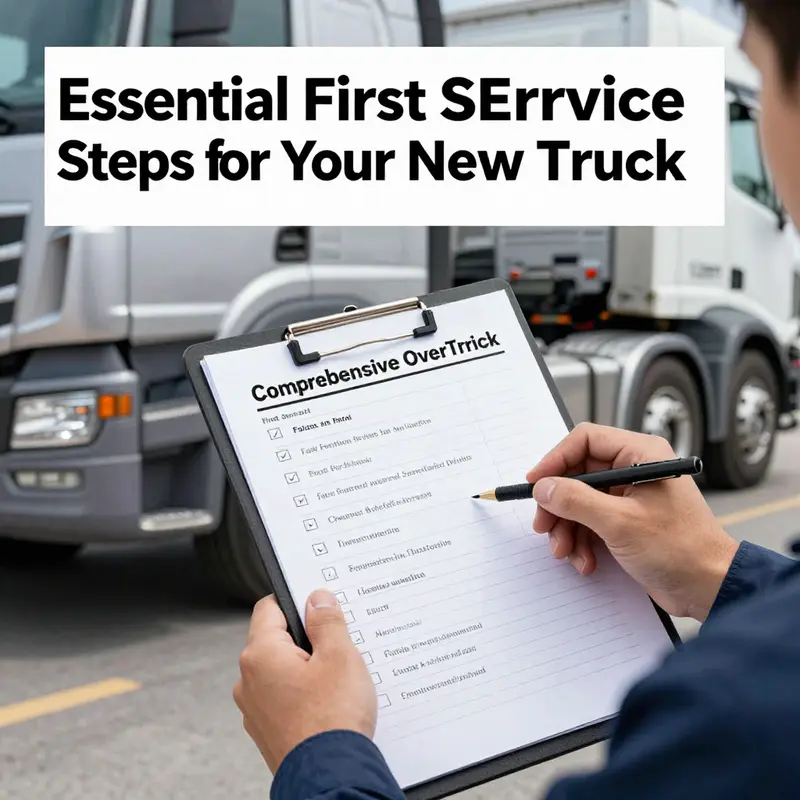
Core systems checked during the first-service inspection
The first full inspection after delivery sets the maintenance standard for a new truck. Dealers and fleet shops schedule this service early in the vehicle’s life, often within the manufacturer’s recommended break-in miles. The goal is simple: confirm that the truck left the factory intact, catch any early issues, and establish a baseline for future care. That baseline protects safety, limits early downtime, and reduces the risk of small faults becoming costly repairs.
Technicians begin with systems that are most likely to show early wear or assembly residue. Engine oil and the oil filter are inspected and often changed to remove microscopic metal particles from the break-in process. This step safeguards bearings and moving parts and helps engines reach optimal performance more quickly. While the oil is checked, technicians also verify related seals and gaskets for leaks and secure oil filter fittings.
Braking components receive careful attention. Brake pads, rotors, calipers, and hydraulic lines undergo visual and hands-on checks. Brake fluid condition and level are tested to confirm proper boiling point and absence of moisture contamination. Fasteners that secure brake assemblies and related hardware are checked and retorqued to specification. These checks reduce the chance of uneven wear and ensure braking systems deliver consistent stopping power under load.
Tires and wheel assembly checks are both visual and measured. Tires are inspected for sidewall damage, irregular tread wear, and proper seating on rims. Inflation is adjusted to the manufacturer’s pressure specifications for the anticipated load. Wheel nuts and studs are inspected and torqued correctly to prevent loosening that can occur after initial road hours. Early alignment verification helps prevent uneven tire wear and protects fuel economy.
Fluid top-offs and condition checks extend beyond oil. Coolant levels and concentration are verified to protect the engine cooling system. Transmission and differential fluids are checked where accessible and corrected when needed. Power steering and windshield washer reservoirs are confirmed full and free of contamination. Verifying fluid condition at this stage removes uncertainty about lubricant health and confirms that no shipping or assembly mishaps occurred.
Electrical and lighting systems are tested systematically. Headlights, brake lights, turn signals, marker lights, and instrument illumination are all inspected. Battery terminals and connections are cleaned and tightened if necessary. Technicians scan the electrical system visually and with diagnostic tools to find loose connectors or wires that may have been stressed during transport. Early resolution of electrical quirks prevents intermittent faults when the truck is in service.
Suspension and steering are examined as an integrated unit. Shock absorbers, springs, control arms, tie rods, and ball joints receive a hands-on assessment for signs of damage or early wear. Mounting points and bushings are checked and fasteners retorqued. Steering play is measured and adjusted if necessary. By checking these systems early, shops limit the risk of handling issues or unusual vibrations that can degrade driver confidence and cargo security.
Exhaust and underbody integrity are confirmed through a close inspection. Technicians look for leaks, loose hangers, or signs of contact with chassis elements. Proper mounting and clearance are verified to prevent premature hanger fatigue or exhaust system failure. Attention to exhaust routing and mounting prevents noise, emissions issues, and damage to other underbody components during normal operation.
Onboard diagnostics are scanned for stored codes and pending issues. The vehicle’s computer can flag sensors or electronic systems that drift out of tolerance. An early OBD check catches calibration issues and ensures emissions systems, fuel delivery, and engine management are functioning as intended. This electronic snapshot becomes part of the vehicle’s maintenance record and helps technicians interpret any future alerts.
A controlled road test ties the inspection together. Technicians drive the truck under conditions similar to real use. They listen for unusual noises, feel for vibration, assess steering behavior, and test braking performance. The road test confirms that repairs, adjustments, and re-torquing have solved problems observed during the static inspection. It also simulates operating conditions that reveal issues not obvious in the shop.
Documentation and communication are essential outputs of the inspection. Findings are recorded in the service history. Defects, recommended follow-ups, and warranty-related items are clearly noted. Technicians explain key items to drivers or fleet managers and confirm next service intervals. This dialogue ensures the inspection supports not just one truck, but an effective maintenance program across a fleet.
For private and fleet operators, a disciplined first-service inspection delivers measurable benefits. It reduces unexpected roadside failures and informs scheduling for preventive maintenance. Fleet managers who prioritize this inspection see better uptime and better lifecycle cost control by preventing small issues from growing. For a deeper look at how fleet priorities shape maintenance practices, see the discussion on private fleets trends in trucking maintenance.
When an inspection is completed correctly, it does more than pass a truck to the next driver. It establishes a documented condition baseline. That baseline guides warranty claims, validates installation work, and informs future service priorities. The first-service inspection bridges factory assembly and real-world operation. It protects investment, promotes safety, and builds the operational confidence needed for demanding duty cycles. For a practical checklist that aligns with these inspection steps, consult this first-service resource: https://www.fleetowner.com/truck-maintenance/first-service-checklist-new-truck
Road Testing as the Gatekeeper of Reliability: What Happens During the First Service on a New Truck
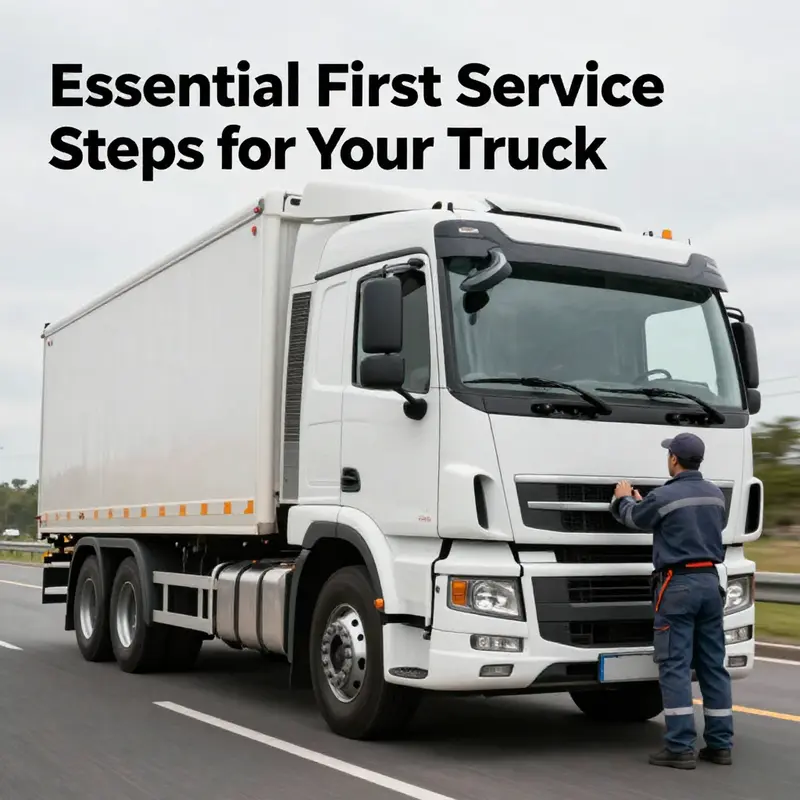
The first service on a new truck is more than a checklist of tasks. It is a carefully choreographed transition from factory precision to field reliability. The road test sits at the heart of that transition, a live, real-world evaluation that validates what static checks can only hint at. After the engine has learned its initial rhythms through break-in miles and after the technician has re-tightened fasteners and rechecked critical systems, the road test becomes the moment where everything is supposed to prove itself under real load, on real roads, with real drivers behind the wheel. In this sense, the road test is the gatekeeper of reliability, the moment when engineering intentions are shown to be workable in daily operation rather than only in a lab or on a test stand.
The sequence leading up to the road test matters as well. An oil and filter change clears away any metal particles or debris from the manufacturing and assembly process, ensuring the engine begins its life with clean bearings and piston surfaces. Tightening of bolts and fasteners follows the initial break-in period, because the engine, transmission, and chassis endure considerable vibration and stress as components settle in. A comprehensive inspection then follows, touching every system in the truck—from brakes and steering to suspension, tires, lights, and fluid levels. These steps prepare the vehicle for the test drive, which is the true verdict of the first service. The driver’s report, the technician’s observations, and the data collected from the instruments come together in a way that static checks alone cannot achieve.
On the road, the first challenge is to verify the essentials. Braking takes center stage: there should be no leakage in the brake fluid reservoir, the pads must seat correctly, and the pedal should feel firm with the right amount of free play. Any drag, vibration, or uneven response can signal a subtle issue that would otherwise manifest as a roadside inconvenience or, worse, a safety concern once the truck carries its typical workloads. Steering must be aligned, with no pulls that would indicate a misalignment, a binding joint, or a suspension irregularity that could steer the vehicle off its intended path under heavy braking or hurried maneuvers. The suspension, tested over both smooth pavement and imperfect surfaces, reveals the integrity of components that handle the weight transfer from acceleration to braking. If the road test uncovers a roughness or a clunk that wasn’t apparent in static checks, technicians track it back to a possible loose mount, a worn bushing, or a marginal component that needs tightening or replacement before it can become a fault under load.
Drivetrain behavior earns close attention as well. Shifts should be smooth, with no unexpected changes in torque delivery or hesitation during gear engagement. In a new truck, where components are still learning their positions in the broad spectrum of operating temperatures and load conditions, a quiet, predictable behavior during shifts is a reassuring sign. The road test also serves to confirm that tires are correctly inflated and show uniform wear across axles, because tire pressure imbalances or tread inconsistencies can skew handling and test results. Even seemingly small factors—like a slight vibration at certain speeds or a difference in ride feel between highway and city sections—are clues. They point technicians toward hidden issues that could escalate into more significant problems if left unaddressed during the first service.
Beyond the mechanical, the road test is also a check of electronic systems and the vehicle’s cognitive map of itself. Instrument clusters must display accurate information, warning lights should illuminate appropriately, and safety systems such as ABS and stability control should engage when needed and disengage gracefully when conditions allow. This is especially important in modern trucks where electronic control units coordinate braking, traction, and power delivery. The first service thus doubles as a software sanity check, ensuring that the truck’s “brain” is aligned with the human operator’s expectations and with the physical state of the machine.
The value of this test goes beyond the immediate satisfaction of a clean bill of health. It is a proactive defense against costly downtime. A well-executed road test catches defects before the truck enters daily service, reducing the risk of unexpected repairs on the road and protecting the long-term integrity of critical systems. It also reinforces safety, a factor that cannot be overstated in commercial operations where reliability directly translates into on-time deliveries and predictable fuel efficiency. In this light, the first service is not a one-off ritual but a foundation stone for the truck’s entire life cycle.
As fleets increasingly recognize the strategic role of maintenance in uptime and total cost of ownership, the first service takes on a broader significance. The road test becomes a data point for future decisions—how a vehicle behaves under specific loads, at particular speeds, and across the routes it is likely to run. It also invites a cooperative dialogue between technician and driver. The driver’s feedback about seat comfort, control layout, vibrations that aren’t purely mechanical, and even subtle shifts in steering feel can influence future checks and adjustments. This is where the human element complements the mechanical one, turning a successful first service into a reliable baseline for months and years of operation.
In practical terms, the road test also informs maintenance strategy for the fleet. When a truck returns from the test with all systems within spec, technicians can proceed with confidence to map out the maintenance schedule that follows the manufacturer’s recommendations while tailoring it to real-world usage patterns. If any issue surfaces during the test, it becomes a targeted intervention instead of a generic fix, which saves time and resources while preserving safety and performance. This approach is particularly valuable for fleets that operate under tight margins, because it aligns safety, reliability, and cost efficiency in a single, focused process. The road test, then, serves as a practical bridge between factory engineering and road-ready performance, translating theoretical design into everyday reliability.
For readers who are curious about how road testing fits into broader safety and regulatory perspectives, it is worth noting how such practices align with national standards and guidelines. The road test is an essential verification step that mirrors the intent of broader safety programs, ensuring that vehicles perform reliably under normal operating conditions and in the events that matter most—the moments of high workload, emergency braking, or sudden steering inputs. This emphasis on real-world verification echoes official safety resources that discuss vehicle performance and testing procedures, underscoring that the first service is as much about assurance as it is about routine maintenance. For professionals and operators, the road test reinforces confidence not only in the truck itself but in the maintenance ecosystem that keeps fleets productive and compliant.
The conversation around maintenance is evolving, and many operators are also looking to industry trends that shape how maintenance is planned and executed. One timely thread is the increasing emphasis on data-driven maintenance and the sharing of insights from private fleets, where day-to-day learnings from road tests feed into larger maintenance strategies. This approach helps ensure that the first service truly becomes a reliable baseline rather than a checklist with limited predictive value. For readers who want to explore these trends further, the ongoing dialogue within private fleets’ maintenance practices offers a practical lens on how first-service road testing translates into sustained performance: private fleets trends in trucking maintenance.
Ultimately, the road test in the first service embodies a simple truth: a truck that performs reliably on day one grows into a dependable workhorse on day 365 and beyond. It confirms that the initial break-in miles, the meticulous tightening of fasteners, and the comprehensive checkup have paid off. It demonstrates that the vehicle’s core systems—from brakes and steering to the drivetrain and electronics—are ready for the rigors of demanding operations. And it reassures drivers and fleet managers that the truck will not only meet the demands of daily routes but also contribute to safer roads, lower downtime, and a more predictable maintenance cycle. The first service, crowned by a thorough road test, is where engineering intent becomes operational certainty, and where the promise of a new truck begins to prove itself in the conditions that matter most to the business and to road safety.
External reference for further context on vehicle safety standards and testing procedures can be found here: https://www.nhtsa.gov/vehicle-safety.
Guardrails for the Break-In: Reading the Owner’s Manual and Warranty Before the First Service on a New Truck
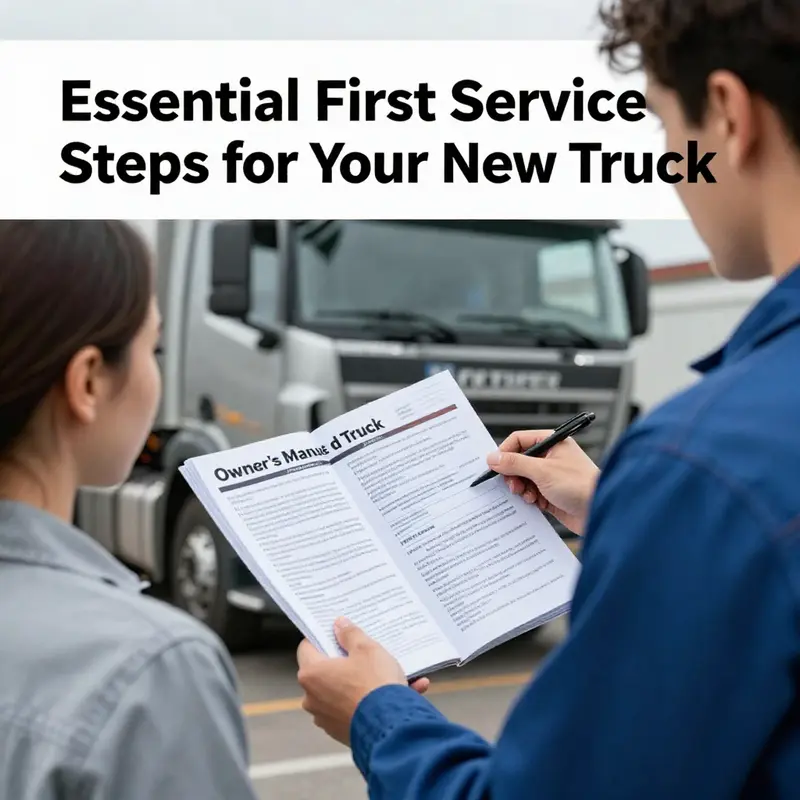
The first service on a new truck is often framed as a routine maintenance pass, a handful of checks tossed into a single appointment. Yet the most consequential part of that visit is not the sequence of tasks at hand, but the conversation you have with the manual in front of you and the warranty terms that shape every decision you make about care and coverage. The moment you bring a freshly built vehicle to the shop, you are entering a contract with the manufacturer—one written in the pages of the Owner’s Manual and the fine print of the warranty. The first service is the point where those documents stop being abstract and start guiding how you operate, how you care for the truck, and how you protect the investment you’ve made in a machine designed to work hard over many years.
To begin with, the Owner’s Manual sets the rhythm of care. It spells out maintenance intervals for critical systems, specifies the fluids and parts that meet the manufacturer’s standards, and outlines the expected life cycle of routine checks. The gap between the first few hundred miles and the many thousands to come is a delicate break-in period for a new powertrain. The manual translates that delicate period into actionable steps: when to change the engine oil, which filter should accompany that change, what torque values matter most on the engine and chassis fasteners after the vibrations of the break-in begin to settle, and which fatigue and wear items deserve closer inspection because they’re most affected by the early miles. By reviewing these guidelines ahead of the appointment, you’re not simply preparing for a service; you’re aligning your approach to maintenance with the vehicle’s design intent. You’re choosing to respect the engineered cadence that keeps the engine quiet, the cooling system stable, and the bearings properly seated as the truck learns its job.
The first service is a proving ground for that cadence. In practice, technicians follow the manual to verify that the break-in period hasn’t triggered any early concerns and that the maintenance plan remains on track. The oil change, typically recommended within the first 500 to 1,000 miles, is the most explicit step in removing any metal shavings or contaminants that can accumulate during assembly and break-in. But beyond the immediate task, the service plan captures a broader philosophy: check and re-check. A thorough tightening of bolts and fasteners echoes the logic of the manual’s specification for enduring reliability. The heavy vibration of a new engine and the rougher seas that come with early use can loosen components, and the manual’s guidance on critical torque specs and re-tightening intervals provides a safety net against such issues. This is not merely maintenance for the sake of form; it is a targeted exercise in preserving alignment, integrity, and performance as the truck settles into its routine operations.
At a deeper level, the manual is a gateway to understanding warranty terms. Warranty coverage is not an abstract promise; it is a set of conditions that must be met to qualify for repairs or replacements under the manufacturer’s guarantee. The first service often triggers a review of these terms, clarifying what is required to keep the warranty valid. The manual usually describes service intervals, the use of approved fluids and parts, and the process for documenting and proving that maintenance was performed according to the manufacturer’s standards. For a new truck owner, this documentation becomes a cornerstone of future support. If a problem arises later, the path to a warranty claim—whether it concerns the engine, transmission, or a critical drivetrain component—begins with a clean, organized maintenance history that shows adherence to the recommended schedule.
A practical approach during the first service is to come prepared with two core questions, anchored in the manual: What exactly does the manufacturer require for the next round of routine maintenance, and what are the specific warranty terms that apply to my truck’s configuration and use? Asking these questions directly helps ensure that the service aligns with the vehicle’s design goals and that the shop’s work counts toward warranty coverage. It also helps you understand which tasks are optional or recommended beyond the basic maintenance plan. The nuance matters. Some maintenance items can be deferred within a recommended window without compromising warranty status, while others are critical to preserve coverage. Knowing where you stand on those distinctions prevents miscommunications and avoids the awkward moment when a veteran technician points out a necessary service that you did not anticipate or document properly.
This is where the owner’s responsibility and the technician’s expertise intersect. The manual’s guidance is not a static checklist; it is a living framework that you and the service team interpret together in the context of current operating conditions, climate, cargo type, and the truck’s duty cycle. For instance, if your operation emphasizes high-stress start-stop conditions, the manual may highlight more frequent inspections of the braking system, tires, and fluids. The first service then becomes less about a single-day event and more about establishing a track record that demonstrates consistent adherence to prescribed care. It also means that the owner should actively participate in the conversation about how the truck will be used, because that usage profile directly feeds into the maintenance plan. In short, the manual teaches you what to expect; your experience in the shop teaches you how to interpret and apply those expectations in real life.
A robust first-service dialogue also includes a candid review of the warranty’s boundaries. This review often reveals important practical details: what kinds of wear are considered normal versus defect-related, which conditions could void coverage, and how service at authorized facilities supports warranty validity. The workshop staff can help you interpret these terms in the context of your fleet’s operations, a point where the internal knowledge of maintenance trends and regulatory expectations proves valuable. For fleets that operate under tight schedules or variable loads, this guidance becomes a blueprint for sound risk management. It translates the language of policy into concrete steps you can implement—through scheduling, record-keeping, and routine checks—that protect both uptime and the long-term value of the truck.
If you are navigating the first service with your own truck or as part of a small fleet, consider using the insights from broader industry discussions on maintenance trends as a backdrop for your own decision-making. The ability to frame questions about maintenance intervals, service quality, and warranty terms within a larger context helps ensure you aren’t missing any subtle but important expectations that could influence fault diagnosis or coverage decisions. For instance, a careful reader of private fleets trends in trucking maintenance notes how fleets increasingly emphasize proactive maintenance and data-driven decisions. That lens can guide how you approach the first service—treating it not as a one-off event but as the starting point of a disciplined maintenance program. You can explore more on that topic in the related discussion here: Private Fleets Trends in Trucking Maintenance.
As you look toward the actual appointment, keep a copy of the Owner’s Manual handy and reference the warranty terms during the visit. Ask your technician to show you the sections relevant to the current service and to explain any terms that seem open to interpretation. Request a written summary of what was inspected, what was confirmed, and what, if anything, needs adjustment to stay within warranty guidelines. A simple, well-documented record not only supports future service needs but also helps when you consider resale or transfer of ownership. The goal is not to create a wall of paperwork, but to cultivate a transparent record that speaks to a steady, attentive care routine—an asset that appreciates with time as the truck earns its reputation for reliability.
For readers seeking a grounded, official resource, the manufacturer’s own guidance remains the most authoritative. The formal instructions on how to use the Owner’s Manual and Warranty Information during your first service, including scheduling, coverage terms, and ensuring warranty durability, are captured in the manufacturer’s official guide. Although the exact wording can vary by make and model, the underlying principle is universal: the first service should be the point where knowledge meets execution, where your questions translate into precise, documented actions that protect both the truck’s performance and its promise of reliability. You can consult the official guide for further details here: https://www.ford.com/owners/manuals/ (Ford Vehicle Warranty and Maintenance Guide).
In the end, the first service is less about ticking boxes and more about embracing a shared obligation. The owner commits to following the prescribed maintenance path, preserving the integrity of the warranty, and maintaining a complete service history. The technician commits to guiding the owner through the manual’s expectations and ensuring that every action aligns with the vehicle’s design and warranty requirements. When done well, the first service sets a tone of careful stewardship that carries forward through the truck’s life on the road, turning a break-in into a steady milestones of reliability, efficiency, and peace of mind.
Final thoughts
The first service on your new truck is a pivotal moment that sets the stage for a resilient operational life. By conducting an oil change, tightening essential bolts, performing a comprehensive inspection, undertaking a critical road test, and reviewing the owner’s manual, you are investing in the vehicle’s long-term efficiency and reliability. These practices not only protect your investment but also ensure that your truck is well-prepared to meet the rigorous demands of your business operations.