
In the realm of logistics and transportation, maintaining truck performance is crucial for operational efficiency. Manufacturing and distribution companies, retail businesses, and the construction industry face unique challenges that necessitate quick access to reliable maintenance services for their heavy-duty vehicles. As the demand for timely deliveries grows, having seamless access to maintenance services at truck stops becomes essential. This article unveils practical strategies for finding maintenance services that ensure your fleet remains operational. From leveraging navigation apps designed for the modern traveler to tapping into specialized truck service platforms, collaborating with fleet companies, and connecting with authorized dealerships, each chapter outlines how you can secure maintenance solutions tailored to your unique business needs.
Pinpointing Reliable Truck-Stop Maintenance with Navigation Tools
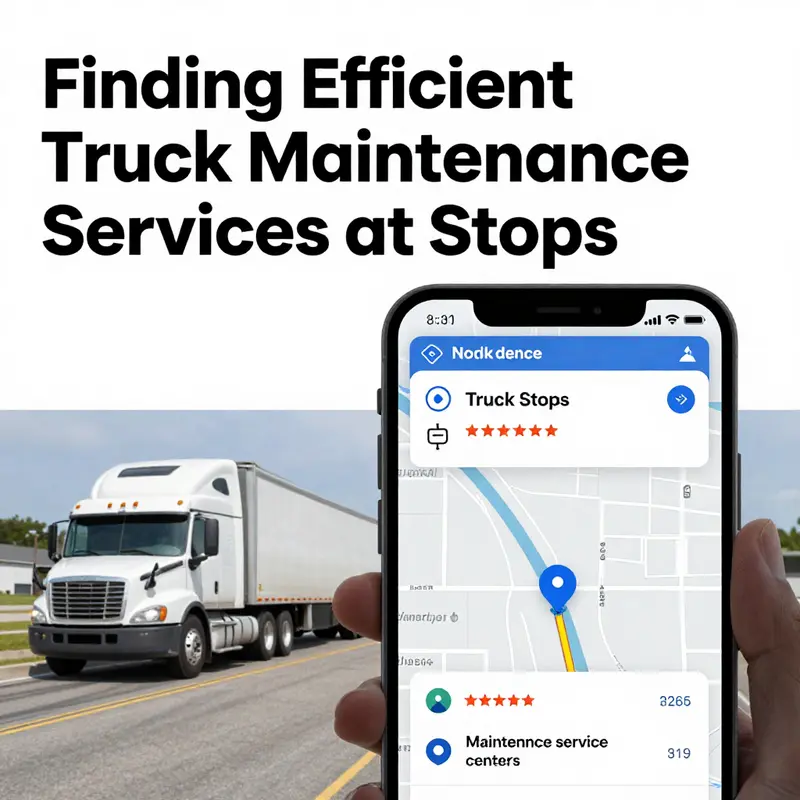
Finding trusted maintenance at truck stops starts with the map on your phone. A navigation tool can do more than show a route. It is a live directory, a timing device, and a pre-screening service rolled into one. Use it deliberately and you can shorten downtime, avoid unsuitable facilities, and arrive where your rig can be serviced quickly. This chapter explains how to search smart, what filters matter, and how to confirm a truck stop’s ability to handle heavy-duty work before you roll in.
Begin by using the app’s search or nearby function. Enter clear, specific keywords such as truck repair, heavy-duty service, or diesel maintenance. Broad terms give many results, including consumer garages that lack the tools to service a heavy rig. Precise terms narrow results to facilities that list services for commercial vehicles. The map will return addresses, hours, and contact numbers. It often shows photos uploaded by other drivers and star ratings. These clues help you decide which stops to call or head toward.
Next, apply filters to refine results. Look for filters that let you choose service type. A good filter will surface facilities that list tire service, engine diagnostics, or heavy-axle repair. Use distance and hours filters to prioritize stops open now and within a manageable detour. For longer hauls, filter by amenities too—parking capacity, overnight stays, and secure lots matter when work requires time. If the app supports user reviews or recent updates, sort results by recency to avoid outdated listings.
Some navigation tools include dedicated listings for chain truck stops. These entries often show in-platform details about the services offered on-site. Chain-operated stops usually maintain consistent equipment and staffing levels. If you see a chain listing, check the service details to confirm the presence of heavy-duty bays, lifts, or diesel technicians. Chain stops sometimes show real-time information about bay availability and wait times. That helps you choose a stop where repairs will start promptly.
Specialized truck navigation platforms deserve a spot in your toolkit. These services focus on commercial trucking needs and integrate vehicle clearance rules, weight restrictions, and truck-friendly routing. They highlight repair shops and truck stops known to handle large rigs. They may also include appointment booking and verified availability. When an emergency arises, these platforms cut through consumer listings to show only shops that service heavy vehicles.
User reviews matter more than star averages. Scan recent reviews for specific mentions of heavy-duty work. Look for comments about the competence of technicians, parts availability, and turnaround time on major repairs. Pay attention to photos showing equipment, repair bays, and parking lots. A well-lit bay with heavy lifts and a stocked parts shelf is a better bet than a cramped garage with no truck parking.
Real-time data is a major advantage of navigation tools. Traffic delays, road closures, and temporary business hours affect whether a stop is reachable. Keep location services enabled to receive live updates and suggested detours. If an app offers push alerts for traffic or business status changes, use them. Real-time reporting from other drivers can warn you if a shop is closed or overrun with work.
Always verify before arriving. A quick call to the listed phone number can confirm whether the shop handles your specific repair. Ask whether they work on your truck’s make and model, whether they have required parts in stock, and how soon they can start. Confirm parking arrangements for long rigs, and check whether they can perform roadside service if you can’t bring the truck into the bay. If you have fleet support, notify your dispatcher so they can coordinate a tow or parts delivery.
When you contact the shop, use a checklist. Provide the truck model, trailer type, and a concise description of the problem. Ask if the facility charges diagnostic fees and whether those fees are waived when work is performed. Clarify payment methods and whether they accept fleet accounts. Request an estimated time for the first available slot. If you need immediate assistance, ask about towing partners or mobile repair units.
Navigation tools can help you plan routes that avoid low clearances and narrow lanes. Use truck-specific routing to prevent being directed onto roads unsuitable for large vehicles. When a stop is located within a complex industrial area, check satellite view or street-level images to confirm truck access points. Look for clear signs of truck-friendly approach lanes and separate entry for service vehicles.
Parking capacity is a non-negotiable factor. A repair shop that cannot accommodate your rig wastes both time and fuel. Look for listings that mention dedicated truck parking, overnight lots, or fenced storage. If the app does not state parking availability, user photos or recent reviews often note whether the lot can hold long wheelbases. If you will be detained overnight, confirm security features.
Emergency roadside assistance listings are crucial when you cannot reach a truck stop. Many navigation platforms include entries for mobile service providers who perform jump starts, tire changes, and temporary fixes on site. These entries often list response time estimates and service areas. If you rely on a fleet program, check whether your fleet’s contract includes mobile response and whether that provider appears on the map.
In border regions or unfamiliar territories, language and local practices matter. Navigation apps may show local business names in the native language. Use location pins and photos to match entries with on-the-ground signage. If you operate internationally, keep a list of common repair terms in the local language to use when calling. Drivers in online groups often share nearby service recommendations in local languages, making translation easier.
Photos and street-level imagery are underused but valuable. A satellite view shows yard shape and parking lanes. Street-level images verify signage and entrance width. Recent photos are best. Some apps allow users to upload photos showing bays, machinery, and lot layout. These images tell you whether a facility suits heavy rigs and whether the approach is safe for towing.
When time is limited, prioritize a few criteria to choose a stop quickly. Check whether the shop lists heavy-duty services. Confirm opening hours and distance. Read the last two or three reviews for mentions of wait times and parts availability. Call and ask one or two clarifying questions. This triage reduces the risk of a long detour.
For fleets and regular routes, maintain your own mapped list of preferred stops. Save frequently used facilities as favorites within your navigation tool. Include notes about the best entry gate, phone extension for dispatch, and any quirks from past visits. Over time, your saved list becomes a verified network you can trust. If you manage vehicles, share this list with drivers so everyone benefits from accumulated experience.
Use reviews and maps in combination with industry platforms and community networks. Drivers often report reliable shops and rescue services in community chats. Those first-hand tips help when a navigation listing lacks detail. If your fleet has a maintenance partner program, cross-reference that partner with the app’s listing to find nearby approved shops.
Before relying on a stop for major repairs, verify part sourcing and warranty handling. Some shops carry a broad parts inventory. Others may need to order components, extending downtime. If a repair will likely involve parts, ask whether the shop can obtain genuine parts quickly. If you work for a larger operator, coordinate with your procurement or parts team to arrange deliveries.
Practice basic on-the-spot checks when you arrive. Inspect the lot for proper lighting and safety signage. Look at the repair bays to gauge equipment quality. Ask to see the technician’s service area when feasible. A reputable shop will welcome questions and be transparent about capabilities.
Use the navigation tool’s bookmarking and sharing features to alert your fleet or coworkers. Send a location pin and a short note about the expected service and wait time. This simple step keeps operations informed and reduces duplicate dispatches.
Finally, document every service experience. After repairs, note the actual downtime, parts used, and the quality of workmanship in your saved listing or fleet log. Over time, these notes create a living database of reliable stops along your routes. That database will reduce stress and improve route planning.
For quick reference, one reliable mapping search to try is: https://www.google.com/maps/search/truck+repair+near+me
How Service Platforms Turn Truck Stops into Reliable Maintenance Hubs
How service platforms turn truck stops into reliable maintenance hubs
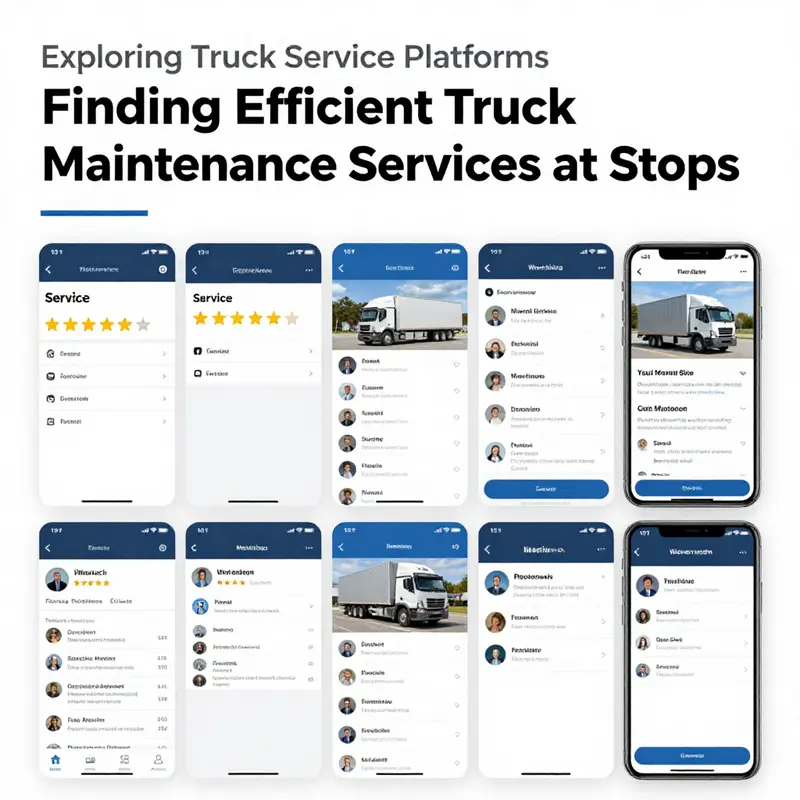
Finding dependable maintenance at truck stops has shifted from luck to a process. Service platforms now consolidate location data, technician availability, parts inventories, and scheduling tools in one place. For drivers and fleet managers, that means fewer unexpected delays and faster decisions on where to stop for repair or routine work. This chapter explains what these platforms do, how they connect with truck stops, and practical ways to use them so maintenance becomes predictable rather than risky.
Platforms act as operational layers that sit between truck stops and road users. They gather standardized profiles for many facilities: hours of operation, service specialties, labor rates, parts stock, and real-time technician availability. These profiles let you filter by what matters: emergency response, heavy-duty engine work, brake service, or tire replacement. By presenting verified information, platforms reduce the guesswork drivers once relied on when pulling off a highway and asking around.
One essential capability is scheduling. Rather than arriving and waiting for an open bay, drivers can reserve a time slot. This prevents bottlenecks at busy stops and helps shops plan labor and parts. Scheduling ties into parts ordering too. When a platform shows a booking, it can prompt the shop to confirm part availability or to place an order ahead of the appointment. That coordination shortens service times and reduces repeat trips caused by missing components.
Diagnostics integration is another step forward. Many platforms accept diagnostic data from telematics units or mobile diagnostic tools. When a driver requests service, the truck’s fault codes and basic telemetry can be shared with the shop before arrival. That lets technicians prepare tooling and parts. It also helps shops assess whether a mobile repair will suffice or if the truck must enter a service bay. For drivers, this means less time spent idling and clearer expectations about repair scope.
Parts management on these platforms benefits both sides. Shops list common part numbers and lead times. Fleets can see whether a facility stocks brand or aftermarket components and whether those parts meet their own warranty or policy rules. For owner-operators unfamiliar with local suppliers, this transparency helps them avoid low-quality replacements and hidden costs. Platforms often offer notifications when a critical part becomes available at a nearby stop, enabling proactive routing decisions.
Mobile repair and rescue services are better coordinated through platforms. When a truck is stranded, the platform routes the closest certified mobile technician, shares location coordinates, and provides an estimated time of arrival. For long-haul drivers, this reduces the time spent waiting on the shoulder. Fleet managers can track incidents and dispatch alternative drivers if a tow will be needed. Integrating roadside capabilities with fixed-location shops creates a networked service ecosystem, rather than disconnected pockets of help.
Electrification and new energy services are altering the service landscape at truck stops. Modern platforms include both on-board and off-board electrification data. That information covers available charging infrastructure, power capacity, and whether the stop supports overnight charging for batteries. For hybrid or electric trucks, platforms can show compatible charging protocols and estimate charge times. This data allows drivers to plan stops that align with route timing and payload constraints.
Charging and electrification also create new revenue lines for truck stop operators. Platforms surface pricing models and scheduling options for charging bays. They show whether a stop uses reservation systems for high-capacity chargers and whether operators offer integrated maintenance packages tied to charging sessions. For operators, platforms help manage demand, reduce congestion at chargers, and improve throughput for both charging and mechanical services.
Trust and verification remain central. Platforms use multiple verification layers: user reviews, shop-supplied certifications, and sometimes third-party audits. Drivers should look for recent feedback about service quality, turnaround times, and post-repair reliability. Fleet managers can set preferred lists of shops that meet company standards and route drivers only to those facilities. This reduces the variability that comes from ad hoc choices.
Community-sourced insights still matter. Drivers share real-world experiences that data and certifications may miss. Platforms often host forums or link to driver groups where issues like technician competence, parts authenticity, and pricing transparency are discussed. Those insights serve as informal checks on platform listings. They also help new drivers learn local service norms and avoid shops with recurrent complaints.
Operational features that matter in selection include 24-hour availability, heavy-lift capabilities, and towing coordination. A competent platform flags shops that can handle full axle lifts, hydraulic system repairs, or complex transmission work. It also highlights shops that partner with trusted towing companies. For routes that cross multiple jurisdictions, platforms can indicate cross-border paperwork assistance and multilingual staff availability.
Integration with fleet systems is a major efficiency gain. Platforms that expose APIs let fleet management software push work orders and pull job status updates. This integration creates an automated backbone for maintenance workflows: automated alerts for upcoming service windows, centralized billing, and consolidated repair history across multiple stops. For large operators, this reduces administrative friction and improves visibility into truck readiness.
Security and data privacy deserve attention. Platforms handle vehicle and location data. Fleets must verify how that information is stored and shared. Access control is crucial: who can view repair histories, telematics data, and route patterns? Clear policies on data retention and strict authentication limit the risk of exposing operational intel.
Practical steps for drivers and managers make platform use immediate and effective. First, use filters to narrow options by service type, hours, and verified response time. Second, check recent reviews and response patterns rather than relying on an overall rating. Third, when booking, upload diagnostic codes or a brief description of symptoms so technicians can prepare. Fourth, confirm parts and price estimates at booking and request a written scope of work. Finally, save preferred shops and document repair notes to build a searchable history.
For operators at truck stops, joining a platform raises visibility. They should maintain up-to-date profiles, publish realistic service windows, and invest in fast communication channels. Providing transparent labor rates, clear warranty terms, and accurate parts lists earns higher rankings. Shops that adopt electronic job cards and accept digital payments improve throughput and driver satisfaction.
Platforms also enable new business models. Some stops offer subscription maintenance plans for fleets, bundled with priority booking and discounted parts. Others run dynamic pricing for off-peak service windows, or pair charging sessions with scheduled maintenance to maximize downtime use. These options help fleets reduce long-term costs and help stops stabilize revenue streams across variable traffic patterns.
Finally, when choosing a platform, evaluate coverage and currency of data. The best platforms update listings continuously and verify changes with on-site checks. They also support multiple search methods: by location, by service capability, and by emergency response time. Combining mapping, diagnostic integration, and scheduling into a single workflow produces the fastest path to repair and the least disruption to operations.
For fleets wanting deeper perspective on maintenance trends, industry coverage on evolving fleet practices and maintenance strategies provides useful context. See this discussion of private fleet maintenance trends for broader operational insights: private-fleets-trends-in-trucking-maintenance.
For technical coverage on how platforms are expanding their service offerings and incorporating electrification, consult the platforms’ service pages at: https://www.trucker.com/services
Allied Wheels on the Highway: Building Fleet Partnerships to Secure Maintenance at Truck Stops
External reference: https://www.truenorthfleetservices.com/news/strategic-partnership-enhances-fleet-reliability-at-africa-truck-stop
On the Road to OEM-Approved Service: Navigating Authorized Dealerships at Truck Stops
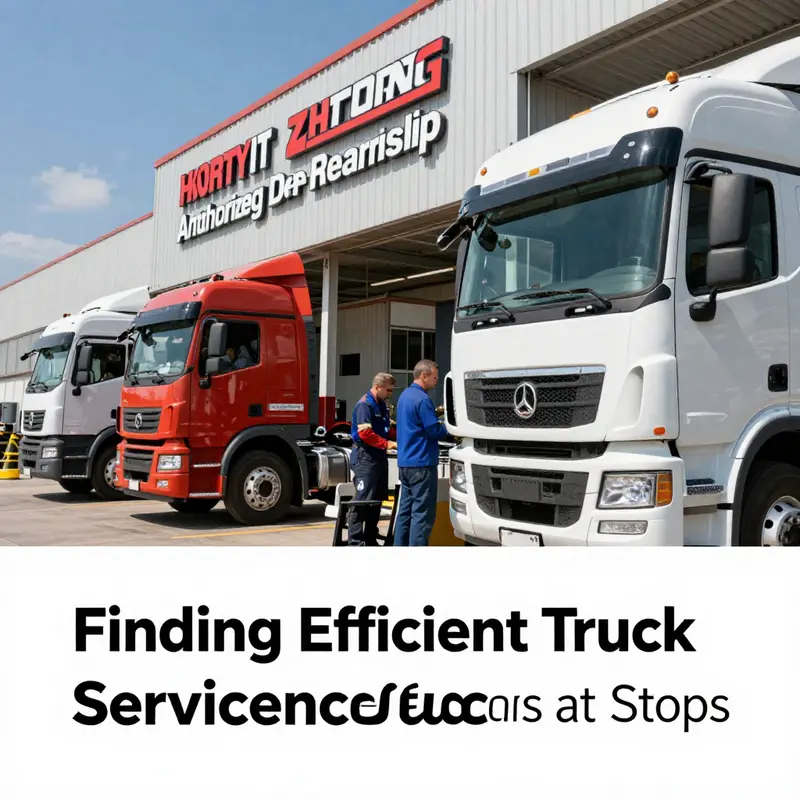
When a long haul stretches into the night and a truck’s heartbeat—its engine, brakes, and intricate systems—begins to show signs of fatigue, the instinctive move is to find reliable hands that can work with care and precision. The goal is not merely a quick fix but a maintenance path that preserves performance, safety, and warranty terms. In this rhythm of mileage and miles, there’s a quiet but essential distinction: maintenance done at an authorized dealership or OEM-certified network offers access to genuine parts, technicians trained to interpret the latest diagnostic data, and alignment with the manufacturer’s service standards. At truck stops along busy corridors, this distinction translates into practical choices. Rather than settling for the first roadside mechanic who happens to be nearby, drivers who aim for OEM-approved service tap into a system designed to keep trucks moving with consistent quality, even as conditions on the road change with every sunrise.
To begin this journey, it helps to anchor the search in authoritative sources that reliably map authorized service networks. One reliable route is the official channels that manufacturers provide. These channels are designed to help you locate service points by location and service capability. A dealer locator embedded within a manufacturer’s site will typically allow you to filter by city, highway corridor, or even the type of maintenance you need—from routine diagnostics to more complex engine work. The strength of this approach lies in its commitment to parts compatibility and documented service history. When a technician consults the OEM’s latest diagnostic software and cross-references vehicle data with factory-approved routines, the resulting work aligns with warranty requirements and best-practice procedures. This is not about showroom polish; it’s about ensuring that the repair or service you receive is built to the same specifications as the truck left the factory with, which matters for long-term reliability and resale value.
Another dependable method draws on navigation tools that many drivers already use to navigate their routes. Modern map apps do more than plot a point on a map; they host a live database of service centers near you, often with user reviews, hours, and contact details. When you search for terms like “authorized truck repair” or “OEM-approved service center” and combine them with your current location or your destination, you’re tapping into a knowledge base that grows with driver feedback and operator partnerships. The value here is practical: you can quickly gauge proximity, verify whether the center can handle your brand’s requirements, and compare preliminary information before you pick up the phone. The caveat, of course, is that data can lag or reflect outdated staffing changes. A quick call to confirm hours or on-site capabilities can save a lot of time, especially when you’re facing a tight schedule.
Truck stops themselves are often a bridge to authorized services. Many large facilities partner with certified repair shops that can dispatch technicians to the lot or coordinate nearby workshops with on-site capabilities. The front desk or service coordinator at a major stop can be a gatekeeper to trusted options. They maintain relationships with technicians who understand the OEM’s diagnostic workflows and the use of genuine parts. If you’re stranded with a fault code or a braking concern, asking the staff about any affiliated authorized dealerships nearby can yield a vetted, time-efficient path to repair. This approach also helps when you’re new to a route or traveling through a region where service networks are smaller. It’s not merely about who has a stall in a shop but about who has the know-how to address the exact issue using manufacturer-approved procedures.
Beyond the official locator tools and on-site coordination, fleet management platforms play a growing role in steering drivers toward authorized facilities. For many operators, a centralized service network is a core capability: the platform can route service requests to vetted repair stations, confirm appointment times, and track service histories across multiple vehicles. This system is particularly valuable for drivers who move through hubs with high service demand or who are responsible for maintaining a large roster of assets. In practice, the platform helps ensure repairs occur at facilities that can perform OEM-level diagnostics, source genuine parts, and document the work in a way that fits the fleet’s warranty and maintenance policies. For solo drivers or small fleets, even a simplified version of this capability can be accessed via broader logistics or fleet-management tools, turning a potentially chaotic roadside situation into a scheduled maintenance scenario rather than a one-off fix.
Insurance and roadside assistance programs add another layer of support that can steer a driver toward authorized dealerships. Some insurers offer road rescue or repair coordination as part of their coverage. When such services are invoked, the objective is not only to get the vehicle off the road but to ensure the repair aligns with warranty terms and the manufacturer’s quality standards. In practice, this means the roadside partner will arrange transport to an approved service point or arrange an on-site repair with technicians who can perform OEM-compliant work. The advantage is twofold: you protect the vehicle’s warranty conditions, and you reduce the risk of substandard long-term performance caused by non-OEM repair practices. For drivers who travel under warranty or near-expiration windows, using insurer-backed repair arrangements can provide a reassuring layer of accountability and traceability for the service history.
In real-world terms, the workflow often looks like a series of deliberate, incremental steps rather than a single decisive moment. Imagine you’ve rolled into a region with a heavy traffic mix and the truck’s diagnostic light flickers to life. First, you verify the vehicle’s ID and service history, either via a driver’s portal or a printed record. Then you check an official dealer locator to identify authorized centers within a reasonable distance. If time allows, you cross-check the information in a navigation app, looking for centers that have dedicated facilities for heavy-duty maintenance and a track record of working with the same OEM equipment. A quick phone call to confirm that they can handle your specific model and the current service request will often reveal practical constraints, such as the need for a particular technician’s expertise or the availability of a certain OEM-part in stock. At that point, you can decide whether to drive to the center, wait for a mobile technician to reach the truck, or arrange a tow to the nearest authorized facility. Each choice has consequences for uptime, cost, and the integrity of the repair, and the decision tends to be anchored in a blend of official guidance and real-time field information.
One resource that consistently proves useful for long-haul drivers is an established reference work that compiles service stations across a broad network. While such directories can be accessed through the web, they function best when treated as a starting point rather than a final word. They are most valuable when used in conjunction with official dealer locators and live contact with stop staff. This layered approach reduces the risk of pulling into a shop that cannot service your exact model or that cannot guarantee OEM-standard parts and procedures. The goal is to align the maintenance event with the manufacturer’s engineering expectations for your truck, which means you preserve diagnostic integrity and the long-term reliability of critical components.
In practical terms, you’ll often find that a well-planned approach to authorized service begins with a straightforward online search, followed by a phone check, then a quick confirmation with the truck-stop team. When you arrive, the experience should feel less like a random repair and more like engagement with a system designed to protect the vehicle’s design intent and warranty framework. If you’re new to a route or operating in a region with limited service stations, carrying a digital copy of your vehicle’s service booklet, VIN details, and the OEM’s recommended maintenance intervals can expedite the diagnostic conversation and ensure the correct parts are requested. A driver who can articulate the issue in terms of symptoms, codes, and current operating conditions makes it easier for the service team to pinpoint the most appropriate OEM-guided repair path. This preparedness significantly reduces the risk of misdiagnosis or unnecessary replacement of components that still have life left in them.
The persistence of this approach—prioritizing OEM-aligned service—has a broader payoff beyond a single repair. It helps preserve the vehicle’s overall performance profile, including fuel efficiency, braking response, engine cooling, and suspension integrity. It also supports the driver’s safety by ensuring that critical systems have been tested and validated according to manufacturer standards. In an industry where downtime translates directly into costs, the balance between speed and quality is often best achieved when maintenance decisions are anchored in authorized networks rather than ad hoc fixes. The more consistently you follow this path, the more predictable your maintenance outcomes become, and the easier it is to budget for both routine service and unexpected repairs along the road.
For drivers who want a concise, dependable starting point, one widely used resource is a national truck service station directory maintained by a major industry platform. The directory brings together locations, service capabilities, and contact details in a single, driver-friendly format. Using this directory in conjunction with the OEM dealer locator and the real-time data from navigation apps creates a robust decision framework. It helps you assess proximity, service scope, and the likelihood of OEM-compliant work, all while allowing you to compare options quickly. The key is to treat this information as a network rather than a single shop. By triangulating data from multiple reputable sources, you can reduce the uncertainty that often accompanies maintenance decisions while on the move.
In the end, the choice to rely on authorized dealerships at truck stops is a commitment to quality, safety, and continuity. It’s a decision that reflects a broader philosophy of maintenance as an ongoing investment, not a one-off fix. When the road stretches and the hours grow long, knowing where to turn for OEM-compliant diagnostics and repairs becomes as essential as the fuel in the tank. This approach doesn’t just keep trucks rolling; it preserves the trust between the operator, the vehicle, and the road itself. And while it requires a bit of planning and the discipline to verify options in real time, the payoff is tangible: fewer unexpected breakdowns, clearer maintenance records, and a smoother ride through the next stretch of highway.
As you build your routine, consider integrating a trusted online directory into your standard pre-trip planning. A small habit now can save minutes or hours later, when a quick check can determine whether a center near your route can deliver OEM-aligned service or whether a detour to a neighboring hub is warranted. To access a well-regarded industry directory that consolidates service locations on a national scale, explore the resource linked here: Truck Home – National Truck Service Station Directory. This resource is not a substitute for direct confirmation from an OEM dealer locator, but it provides a practical, centralized reference that complements official channels and on-site staff guidance.
For real-time access to authorized dealerships near your current location, visit: https://www.freightliner.com/dealer-locator
Final thoughts
Ensuring your trucks are well-maintained keeps your business running smoothly. By employing navigation apps, utilizing truck service platforms, collaborating with fleet companies, and engaging with authorized dealerships, you can streamline the process of maintaining your fleet. As operational demands increase, the ability to locate reliable maintenance services efficiently becomes paramount for meeting customer expectations and maintaining a competitive advantage. Embrace these strategies to safeguard your logistics operations and ensure that your vehicles remain in peak condition.