
The transmission system is crucial for any Chevy truck’s performance, impacting everything from fuel efficiency to overall driving safety. Understanding the costs involved in servicing this important component is essential, particularly for those in manufacturing, distribution, retail, and construction industries, where the reliability of vehicles is paramount. This article breaks down the various elements of Chevy truck transmission services, focusing on maintenance costs, types of transmissions, influencing factors, cost comparisons with other brands, and budgeting tips—providing essential insights for business owners looking to keep their fleets in peak condition.
Understanding the Essential Costs Behind Chevy Truck Transmission Maintenance

Maintaining the transmission of a Chevy truck is a vital aspect of ensuring the vehicle’s longevity and reliable performance. The transmission system, responsible for transferring power from the engine to the wheels, requires routine care to avoid costly repairs. While the headline figure that many truck owners first encounter is the price of a major transmission overhaul, basic maintenance carries its own set of costs and considerations that significantly influence the overall value and operational lifespan of the vehicle.
At the heart of transmission maintenance is the fluid change—an often straightforward yet essential task that involves draining the old fluid, replacing the transmission filter if applicable, and refilling the system with fresh, manufacturer-recommended fluid. This process for most Chevrolet trucks, including popular models like the Silverado 1500 and 2500, typically falls within a price range of $100 to $200. The variation depends on multiple factors such as model year, the complexity of the transmission system, and the type of fluid used—whether conventional or synthetic. Synthetic fluids generally command a higher price but provide enhanced performance and longer service life, which translates to better protection for transmission components.
Labor charges also influence the final cost of basic maintenance. Dealership service centers often charge more due to their specialized training, use of genuine OEM parts, and dealership overhead. In contrast, independent automotive repair shops may offer competitive pricing, sometimes saving owners a notable amount without sacrificing quality. Location plays a key role too, as labor rates vary widely between urban centers and rural areas. Understanding this pricing tier helps truck owners make informed decisions about where to entrust their vehicle’s critical drivetrain systems.
When a transmission filter replacement is necessary, the cost typically adds an extra $20 to $50 to the service bill. Not all Chevy truck transmissions employ an external filter; some rely on a screen integrated inside the valve body or pan. For those models with an accessible transmission filter, replacing it is a crucial step that helps trap and remove debris that, if left unchecked, can cause gradual internal wear and failure. Regular filter replacement during fluid changes promotes optimal transmission performance and extends the interval before a complete overhaul becomes essential.
These preventative maintenance measures are recommended roughly every 30,000 to 60,000 miles for most Chevrolet trucks, but there is some nuance depending on transmission technology. Vehicles equipped with Continuously Variable Transmissions (CVTs), which are increasingly common in newer GM models such as the Chevrolet Equinox and Colorado, follow different service intervals and fluid specifications. CVT systems often require specialized fluids designed explicitly for their belt-and-pulley configurations, and these fluids may have longer service lives. Consequently, the cost of servicing a CVT-equipped Chevy truck transmission might stay within a similar range but will involve particular fluids and sometimes more precise servicing techniques.
Regular transmission maintenance is more than just a routine expense; it is an investment in the prevention of more severe, high-cost repairs. Ignoring basic upkeep can lead to malfunctions such as solenoid failures, slipping gears, or overheating—all issues that, when untreated, escalate repair costs dramatically. For instance, repairing a solenoid or fixing minor leaks could push costs into the $500 to $2,000 territory. Major repairs involving core components like the transmission pump or torque converter can be even more expensive, potentially requiring thousands of dollars and extensive labor.
To accurately budget for transmission maintenance, Chevy truck owners should refer to their vehicle’s owner’s manual, which provides manufacturer recommended service schedules and fluid types. Additionally, consulting certified technicians or dealership service departments using the vehicle’s VIN (Vehicle Identification Number) ensures that the maintenance performed corresponds exactly to the specific transmission model installed in the truck. This tailored approach avoids the pitfalls of under- or over-servicing and ensures that the right parts and fluids are used every time.
Beyond consulting experts and manuals, leveraging reputable online resources can provide valuable insights into the expected costs and help truck owners compare prices in their region. Platforms dedicated to automotive repair estimates break down typical expenses and explain the differences based on brand, model, and geography. For those managing fleets or private commercial trucks, staying abreast of evolving maintenance trends can also help optimize service schedules and cost management, aligning with broader trucking industry developments.
By committing to scheduled transmission fluid changes and inspections, owners of Chevy trucks can maintain smooth operation and protect their investment. While spending between $100 and $200 on routine service might seem modest compared to major repair bills, it plays a critical role in avoiding those higher costs. Considering the transmission’s complexity and the specialized care it requires, this basic maintenance is an economical and essential practice.
For further detailed cost estimates and tailored advice on maintaining your Chevy truck transmission, resources such as RepairPal offer comprehensive guidance specific to Chevrolet models and regional pricing variations. These help ensure truck owners are well informed when budgeting for maintenance and selecting service providers.
More about factors shaping fleet maintenance decisions and industry trends can be explored through insights on private fleet maintenance trends.
(Source: RepairPal – Transmission Maintenance Cost Estimates)
Riding the Gears: How Chevy Truck Transmission Types Shape Service Costs
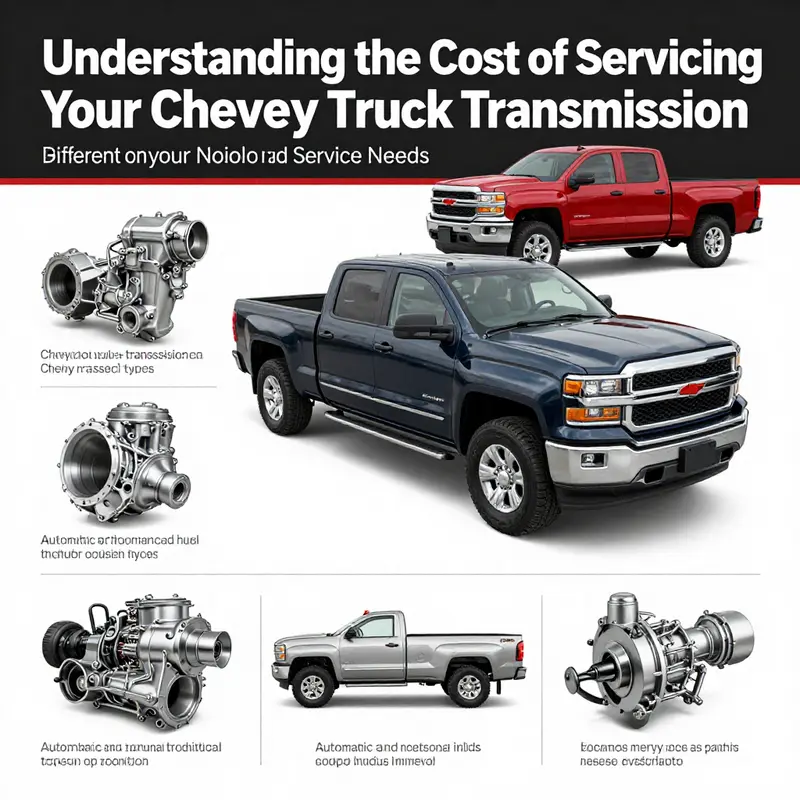
Transmissions are the hidden engine of a Chevy truck’s reliability. They transfer power, modulate torque, and, when they work well, disappear from your radar. But the cost to service them is not a single number. It shifts with the model, the year, the kind of transmission, and the depth of the service required. A basic transmission fluid change for Chevy trucks typically falls in a practical range—roughly one hundred to a little over two hundred fifty dollars. That price usually covers draining the old fluid, swapping a filter when applicable, and refilling with the correct specification for your drivetrain. Yet this is just the starting point. If a leak is present, or a solenoid is failing, or there is deeper internal wear, prices climb quickly. In such cases, bills can push toward five hundred dollars, and, for more serious repairs, two thousand dollars or more is not unusual. Major component work, like a transmission pump or torque converter replacement, can stretch the cost well beyond that. It is precisely this spectrum—simple fluid service versus extensive repair—that makes a precise estimate so reliant on the individual vehicle details. For a figure that truly reflects your truck, it helps to pull the VIN and consult a certified mechanic or dealership. VIN-based estimates are often more reliable than generic ranges, because they account for the exact transmission type and the service history your truck carries. In many regions, online platforms can also be used to obtain location-specific estimates, giving you a baseline to negotiate with repair shops.
Understanding how a Chevy truck’s transmission is built—and how that construction affects service needs—begins with differentiating the older manual configurations from the more modern automatics. Manuals, long a staple in older Chevy trucks, come in three-speed, four-speed, and five-speed variants. The three-speed is simple and inherently reliable, but it isn’t efficient by today’s standards. The four-speed offers a bit more versatility, while the five-speed—with an overdrive gear—significantly reduces engine RPM at highway speeds. That added efficiency improves long-haul comfort and fuel economy, but it also means more moving parts to tune during service. By contrast, today’s automatic transmissions in Chevrolet trucks such as newer light- and heavy-duty models emphasize a blend of hydraulic systems and electronic controls. The spectrum now commonly includes six-, eight-, and even ten-speed automatics. Each step up in speed and complexity brings smoother shifts, better towing capability, and improved efficiency, but it also introduces more electronics that demand regular diagnostic checks and software updates when needed. The shift to sophisticated automatics has multiplied service touchpoints: fluid condition, filter integrity, valve body operation, solenoid health, cooling performance, and the software that governs shifting logic. In short, a basic fluid change remains the backbone of routine maintenance, yet the full maintenance load expands as you move into higher-speed automatics, where electronic control units and the transmission control module (TCM) play larger roles in daily operation.
Service needs track closely with how a truck is used. A vehicle that spends its life light-duty around town will typically require fewer high-stress interventions than one that regularly tows heavy loads or ventures off-road. Heavy towing or off-road use pushes transmission temperatures higher and accelerates wear, demanding more frequent inspections and, in some cases, premium fluid specifications to maintain cooling efficiency. The aim is to keep the fluid clean, cool, and within spec, and to verify the health of the seals, filters, and solenoids that regulate pressure and timing inside the unit. Regular inspections help catch problems before they become costly failures. When issues arise—slipping gears, delayed engagement, harsh or erratic shifts, or overheating—the driver often notices clues that the system is under stress. Modern diagnostics can read fault codes from the Transmission Control Module, guiding technicians toward culprits such as solenoid failures or sensor faults, and identifying whether the problem stems from external leakage or internal mechanical wear. Keeping up with diagnostic checks is as important as routine maintenance.
Another practical consideration is fluid choice and change intervals. The fluid required by the manufacturer is not a guess. It is a specification that aligns with the internal design and tolerances of the transmission. Using the right fluid helps preserve clutch surfaces, maintains proper hydraulic pressure, and ensures reliable lubrication across temperature ranges. For automatic transmissions, the recommended specification must be matched, and the service interval should reflect usage patterns and climate conditions. When owners consult manuals or dealer guidance, they are advised to follow the manufacturer’s timing for changes and to verify whether any regional or usage-based updates apply. If the vehicle sees frequent heavy-duty service, owners might consider more frequent checks and, in some cases, premium fluids that offer higher thermal stability and better wear resistance. Although brands and labels can vary, the core principle remains constant: use the spec that your transmission was designed to use, and schedule changes before the fluid begins to degrade or break down.
Cost is the other constant in the transmission conversation, and it hinges on several factors beyond the basic service. The model year and whether the truck uses a manual or an automatic transmission shape your price ceiling. The more automated and electronically controlled the transmission is, the more complex the job becomes, with additional labor time and diagnostic steps factored in. Leaks, damaged seals, or a suspected failure of the transmission pump or torque converter drive up costs quickly because they require disassembly and careful component replacement. Even within the same model line, two trucks can arrive with very different service bills depending on maintenance history and current condition. A leak repair, for instance, may require not just seal replacement but also the source identification that often involves pressure testing, dye, or other inspection methods. In contrast, a routine fluid change with a filter swap, if applicable, can be completed with minimal downtime and cost, provided there are no hidden issues. For those planning upgrades or modifications, it is essential to consider how changes will influence the cooling load and overall transmission longevity. In those cases, a professional assessment ensures compatibility and proper installation, which is crucial when adding higher-performance components that place extra demands on the system.
With this landscape in mind, a practical approach to budgeting becomes clear. Begin with the modest end of the spectrum: a fluid change at the lower end of the typical range, ensuring you’re using the correct specification and replacing any applicable filter. If problems emerge or driving demands are high, anticipate possible inspections, seal replacements, or sensor work that could push the bill higher. If the situation compounds into a more serious repair—such as addressing an internal fault, replacing a solenoid, or repairing an overheated or slipping transmission—the price can rise significantly. In such moments, having a VIN-based estimate from a trusted technician or dealership helps pin down the precise scope and cost. It is also reasonable to compare quotes from nearby shops or to use reputable online estimators to establish a realistic baseline before committing to a repair plan.
For owners who plan modifications or who rely on their Chevy truck for demanding work, discussing future intentions with a technician is wise. Upgrades such as performance-constrained shift kits or torque-converter enhancements, when paired with proper cooling, can improve response and towing stability. Yet any upgrade must be installed by a professional who understands the interdependencies of the transmission, cooling, and engine management. The maintenance philosophy that emerges from this view is straightforward: proactive care, aligned with the vehicle’s design intent and usage profile, minimizes downtime and extends the life of the transmission. It makes sense to integrate maintenance planning with broader fleet or personal budgeting strategies, especially for heavy users who rely on predictability to keep operations on track. For those who manage fleets or multiple-truck operations, evolving maintenance trends and cost pressures—such as labor rates, parts availability, and regional pricing—can be examined through industry discussions and data sources. For instance, readers who want to understand broader maintenance trends in trucking, including how they influence decisions about transmission service, can consult the evolving perspectives found in industry coverage such as private fleets trends in trucking maintenance.
In closing, whether you own a classic Chevy with a manual gearbox or a modern Chevy truck with a high-tech automatic, recognizing the transmission type and its specific service needs is essential. A well-maintained transmission translates to smoother operation, more dependable performance, and longer vehicle life. Regular fluid checks, timely filter replacements, and careful attention to the signs of trouble remain the best defense against costly downtime. And while the exact price tag for any given service will depend on your model, its usage, and your local market, understanding the general framework helps you prepare for a realistic estimate and a clear path to reliable operation. For further context on how these specifications fit into the broader lifecycle of a modern truck, the official transmission specifications from the manufacturer provide a comprehensive reference point: see the detailed transmission specifications for Chevy trucks. External resource: https://www.chevrolet.com/trucks/silverado-1500/specifications/transmission
Beyond the Tag: How the Factors Shape What You Pay to Service a Chevy Truck Transmission
When you start asking how much it costs to service a Chevy truck transmission, you quickly learn that price is not a single number. The sticker you see at the shop is the tip of a broader iceberg of decisions, conditions, and labor realities that together determine the final bill. A basic transmission service, typically understood as draining the old fluid, replacing the filter if applicable, and refilling with the correct type, usually falls in a modest range. In most cases, that basic service will land somewhere around a hundred to two hundred fifty dollars. That range reflects a standard procedure performed on a routine maintenance cycle, performed by technicians who know the nuances of automatic and manual transmissions in Chevy trucks and who can source the right fluid and filter for the job. Yet the word basic is important here, because this figure can disappear quickly once the service expands beyond the fundamentals. If a customer notices a leak, discovers a corrupted seal, or demands diagnostic work to identify the source of shifting irregularities, the cost ladder rises with equal alacrity as the complexity of the task increases. In fact, when more extensive work is necessary, the financial stakes move into a broader territory, with total costs often ranging from five hundred dollars to two thousand dollars or more. The range can widen substantially if the repair requires replacing components such as a transmission pump or torque converter, or if the work involves interior transmission repairs that require careful disassembly and meticulous reassembly. The size of that swing points to a simple truth: price is a function of scope as much as it is of time, tools, and expertise. The most accurate estimates come only after a technician has evaluated the vehicle, diagnosed the issue, and forecasted what must be done to restore reliable operation. A Chevy truck, with its own model specificities and transmission design, showcases this dynamic in a particularly practical way. The vehicle is more than a powertrain with a single axis of maintenance; it is a system, and each era, each model, and each transmission family has its own quirks. As a result, the same work described in one garage may cost noticeably more or less in another, depending on the particular transmission type and the historical maintenance patterns of the model in question. A careful owner learns not to depend on a single price tag but to prepare for a range and to seek a precise diagnosis before deciding on a course of action. The very first variable to acknowledge is the model and year of the Chevy truck. Different model generations adopted different transmission architectures, some familiar to the shop staff, others requiring more specialized expertise or unique replacement parts. This matters because the parts supply chain for older, harder to source units can push prices up, not because the service itself is more labor intensive, but because the components across the repair need to be sourced or cross referenced to ensure compatibility. An older model may also be more prone to certain failure modes that appear with greater frequency over time, which creates a scenario where an ostensibly simple task could reveal an underlying condition that demands more time, more diagnostic steps, and hence a higher bill. The second influential factor is the type of transmission. Automatic transmissions, with their hydraulic circuits, electronically controlled solenoids, and increasingly complex control modules, typically require more specialized handling than manual units. The service protocols vary; the automatic systems may need sensor checks, valve body assessments, or adjustments to shift timing. Manual transmissions, while often perceived as simpler, can involve careful synchronization checks and precise clutch adjustments. The cost implication here is not simply the kind of fluid used, but the depth of the service plan the technician must map out. If you are dealing with a transmission that has been slipping, shifting roughly, or showing warning codes, the diagnostic phase becomes a substantial part of the work. The extent of damage or required repairs constitutes the third major dial on the price meter. A straightforward fluid change with a new filter is one thing; full flushes with proprietary adapters and systems for diagnosing internal wear are another. If the issue is leakage or seal failure, the leak’s location will influence the cost of parts and the time needed to perform the repair. If the problem lies deeper, such as a worn pump, a faulty torque converter, or damaged bands, the costs climb quickly. In such cases, the shop may present a staged plan, addressing the most urgent symptoms first and then proposing a longer term remediation. The more elaborate the repair plan, the larger the portion of the bill that is devoted to parts, followed by labor, and sometimes by a diagnostic surcharge that covers test drives and system verification after the work is complete. Labor rates themselves are a fourth determinant, and they are geographically variable. Regions with a higher cost of living or a concentration of specialty shops will typically see higher hourly rates. The shop’s reputation and the technician’s experience also matter. A shop known for meticulous transmission work may charge more, but that premium can be worth it if it reduces the risk of a misstep during a rebuild or reassembly. It is worth noting that the variability in labor rates can be abrupt; a small-town shop might offer lower hourly costs but have longer turnaround times, while a high-end facility could impose higher hourly rates with shorter wait times and potentially more thorough post service checks. The fifth factor concerns recurring problems tied to specific Chevy models or transmission families. Some models have documented patterns of failure that can make preventative preventative maintenance feel prudent and economically sensible. If a pattern exists, a shop might recommend more frequent fluid changes, early solenoid tests, or preventive valve body inspections, all of which carry cumulative costs over time. These recurring issues are not just about one bad day in the shop; they reflect design quirks and factory tolerances that reappear across mileages and years. The sixth determinant is the use of premium components or specialized parts. If a truck is used in high demand settings—towing heavy loads, frequent stop-and-go operation, or performance-oriented driving—the technician might opt for higher grade fluid, reinforced filters, and components designed for tougher duty cycles. This choice raises the bill, but it can also extend the life of the transmission and improve reliability, potentially reducing the chance of a future, more expensive failure. The seventh factor concerns the installation or repair complexity. A straightforward fluid change and filter replacement is one thing; replacing a faulty solenoid pack, repairing valve bodies, or performing a careful reassembly after a partial or full transmission overhaul raises both the time and skill required. Proper installation matters because an improper rebuild can create new issues, generate additional costs, and jeopardize the reliability of the truck. In practice, these factors interact. A newer automatic transmission in a higher labor rate region might still come in under a rebuild because the parts are readily available and the service is routine. An older manual transmission in a rural shop could carry a surprisingly modest charge for a simple bleed and fill, yet a complex leak in the same system in a different setting could push costs higher than expected. To avoid surprises, rely on a reputable mechanic and address issues as soon as they appear. Having your vehicle identified by VIN allows the shop to pull the correct service manual references, parts lists, and any recall or service bulletin notes that might affect the recommended approach. This not only improves accuracy but also minimizes the chance of paying for unnecessary components or duplicating work that has already been completed. For readers seeking a broader sense of how maintenance costs evolve in the trucking world, it helps to consider industry trends that shape pricing at the fleet level. See the discussion on private fleets trends in trucking maintenance for a practical perspective on how upkeep costs are managed in real operating environments. Private Fleets Trends in Trucking Maintenance. It is also useful to consult authoritative analyses that explore common transmission challenges; such sources acknowledge that Chevy transmissions have a variety of failure modes across generations, which reinforces the point that a precise quote should come only after careful diagnosis. For readers who want a concrete reference to the common challenges discussed in the context of Chevy transmissions, an external resource offers a candid overview of typical failure patterns and why they persist across models. External resource: Chevy transmission problems and why they occur are explored in depth here: https://www.autoblog.com/2026/01/21/chevy-transmission-problems/. The practical takeaway is clear: price is a function of diagnosis, scope, and the specific operating context of the truck. A careful owner works with a trusted shop, uses VIN specifics to ground the estimate, and remains aware that the cheapest quote may not deliver long term reliability. By understanding the factors at play, a Chevy truck owner can navigate the price landscape with greater confidence, ensuring that the service chosen not only fits the budget but also preserves performance and peace of mind on the road.
Estimating Chevy Truck Transmission Service Costs: What to Expect Across Models

Pricing for Chevy truck transmission service varies with model, year, transmission type, and the service path chosen. A typical fluid change with pan gasket inspection and filter replacement can range from about $150 to $350, while more extensive work such as leak repairs, valve body attention, or a partial rebuild can push costs well into the mid-hundreds or higher. Modern vehicles with electronic controls or hybrid components tend to require longer diagnostic time and specialized parts, which can raise the bill further. The best approach is to obtain a detailed estimate that specifies parts, labor hours, and the exact service steps, then compare quotes from a dealership and a trusted independent shop. For budgeting, consider preventive maintenance to reduce the likelihood of major failures and consult RepairPal or similar industry benchmarks for context on typical ranges by model and region.
Planning and Saving: A Practical Budget Guide for Chevy Truck Transmission Service
Budgeting for transmission service on a Chevy truck requires more than scoping a single repair invoice. The transmission is a complex system affected by load, driving habits, and maintenance history. That means costs can arrive as a predictable routine expense or as a sudden, large bill. Framing your budget around both regular preventative maintenance and potential repairs gives you a realistic financial plan and reduces the chance that a transmission issue becomes a financial emergency.
Start by separating expenses into two streams: routine maintenance and contingency repairs. Routine maintenance includes fluid checks, fluid and filter changes, and inspections. Contingency repairs cover leaks, electronic component failures, solenoid replacements, rebuilds, or full replacements. A basic fluid change for many Chevrolet trucks typically falls in the low hundreds of dollars. Use that as your baseline maintenance cost and plan to schedule it on the manufacturer-recommended interval or sooner if you do heavy towing or frequent stop-and-go driving.
Next, calculate an emergency cushion for repairs. Transmission problems that go beyond a fluid change can escalate quickly. Minor fixes such as a solenoid replacement or addressing an external leak often cost several hundred to a couple of thousand dollars. Serious internal damage, a rebuilt unit, or a complete replacement can move that figure into the mid-thousands. Build a contingency fund equaling a percentage of your truck’s value or a flat amount—commonly between $1,500 and $3,500 for major repairs—so you can cover surprises without derailing other expenses.
Consider your truck’s usage pattern when setting that cushion. If you tow regularly, haul heavy loads, or drive in hot climates, transmissions face added stress. In those cases, increase your contingency target. Installing an auxiliary transmission cooler is a cost-effective step to extend transmission life under load. The initial expense for the cooler and installation pays dividends by lowering the probability of overheating-related failures and reducing long-term repair costs.
Routine checks help control both immediate spending and the need for larger repairs. Regularly inspect fluid level and condition; a low or burnt-smelling fluid often signals trouble before symptoms worsen. Schedule fluid and filter changes at the intervals recommended for your model and adjust frequency upward if you operate under severe conditions. Small investments in maintenance can reduce the likelihood of an expensive rebuild.
When planning for service, prioritize shops that provide clear estimates and warranties. Independent repair shops often offer competitive pricing and personalized attention, while dealerships may charge more but can provide factory-level diagnostics and parts. Get multiple quotes for any repair beyond routine maintenance. Comparing two to three shops gives perspective on fair pricing and prevents overpaying. Ask each shop for an itemized estimate that lists parts, labor hours, and any warranty terms. Transparent estimates are easier to compare and reduce surprise charges when you pick up the truck.
Understand the difference between repair options. In many cases, a shop might present choices such as replacing a solenoid, repairing a leak, rebuilding the transmission, or installing a remanufactured unit. Each option varies in cost and expected lifespan. A targeted repair can resolve the immediate problem affordably but may be less comprehensive than a rebuild. Rebuilds or remanufactured transmissions cost more up-front but often include extended warranties and can be the more economical choice when multiple internal components show wear.
Warranty status should factor into your budget. If the truck still sits under the original warranty or an extended service contract, you may have coverage for some repairs. Verify the terms carefully—some warranties exclude wear from towing or aftermarket modifications. If your vehicle isn’t covered, document all maintenance and repairs. A thorough service record can support warranty claims and increase resale value.
Shop around for parts and labor but beware of the lowest bid when it seems too good to be true. Extremely low quotes may use lower-quality parts or cut corners in labor. Conversely, the highest estimate doesn’t always guarantee the best outcome. Look for shops that explain their diagnostic process, use proper OEM or equivalent parts, and stand behind their work with a warranty. Ask for references or read reviews focused on long-term reliability and service follow-up.
Factor in downtime and alternative transportation costs. Major transmission work can take days or more, depending on parts availability and repair complexity. If you rely on your truck for work or daily driving, include rental or ride costs in your budget for the repair period. Some shops offer loaner vehicles or expedited scheduling for an extra fee—determine if this is worth the cost to you.
Plan for preventive upgrades when they align with your use case. If you tow frequently, installing an auxiliary cooler and ensuring your transmission’s cooling circuit is in good shape can lower long-term repair probability. These preventative upgrades have upfront costs but are typically far less than the cost of a major transmission failure. Factor such upgrades into your maintenance budget as proactive steps that save money over time.
Keep an emergency action plan. Know where to take your truck and who to call if you suspect transmission trouble. Early detection of symptoms—such as delayed shifts, grinding noises, or gear slippage—can prevent minor issues from escalating. If you notice warning signs, avoid heavy towing and have the vehicle inspected promptly. Swift action can keep repair costs down and preserve your contingency fund.
Finally, treat budgeting as a dynamic process. Revisit your maintenance schedule, review repair estimates annually, and adjust your contingency target based on actual service needs and the truck’s age. If you accumulate several small repairs in a short span, consider shifting from small fixes to a comprehensive rebuild strategy. Regularly updating your financial plan helps ensure you are prepared for both routine service and unexpected repairs without jeopardizing other financial goals.
For fleet owners and operators, a structured maintenance plan pays added dividends. Standardized service intervals, centralized record keeping, and consistent vendor relationships reduce per-vehicle costs and improve uptime. If you manage a private fleet, consult resources on maintenance trends and fleet upkeep to align your budgeting approach with best practices. For a practical perspective on fleet maintenance strategies, review this discussion of private fleet trends in trucking maintenance: private fleets trends in trucking maintenance.
If you want deeper technical context on known transmission issues common to certain Chevrolet models and factors that influence failure—such as heat buildup and cooler sizing—refer to authoritative industry analysis. A detailed discussion of these common problems can help you prioritize upgrades and inspections before a failure occurs: https://www.caranddriver.com/gm/chevy-transmission-problems
Final thoughts
Understanding transmission servicing costs for Chevy trucks is indispensable for businesses relying on these vehicles for daily operations. With insights into basic maintenance costs, types of transmissions, influencing factors, and budgeting tips, business owners can make informed decisions that enhance the longevity and performance of their fleet. Regular maintenance not only ensures operational efficiency but also protects your investment by minimizing unexpected repair costs.