

Exploring a Promising Career Path in Trucking Freight/Courier Services
As the demand for logistics and transportation services continues to surge, trucking freight/courier services stand out as a viable career path offering numerous opportunities. With the rise of e-commerce and globalization, the need for reliable freight and courier services has never been more critical. This burgeoning sector not only provides a wide range of job openings but also showcases an impressive potential for growth and advancement within the industry.
Positioned at the heart of global trade, trucking professionals play pivotal roles in ensuring timely delivery of goods-from small parcels to bulk freight-across vast distances. Moreover, the ongoing technological advancements in transportation logistics, such as automated tracking systems and electric truck innovations, signal a transformative future in trucking. Companies are continuously seeking skilled personnel to adapt to these changes, making this career path attractive to those with an adventurous spirit and a desire for a dynamic work environment.
In this article, we will explore the myriad of opportunities within trucking freight and courier services, weighing the pros and cons of a career in this essential industry. To better understand the evolving landscape, it’s also beneficial to consider current trends in trucking freight markets and how they impact opportunities for aspiring professionals.
Are you ready to take the wheel and steer your career towards a rewarding future? Join us as we delve deeper into this thriving field!
Career Opportunities in Trucking
The trucking and courier services industry offers a variety of rewarding career paths that cater to different skill sets and interests. Key roles in this industry include:
-
Truck Drivers
-
Responsible for transporting goods across various distances. They must possess a commercial driver’s license (CDL) and have excellent navigation skills.
-
Types include long-haul truck drivers, regional drivers, and local delivery drivers.
-
Trucking is projected to remain a high-demand sector, with an expected shortage of about 174,000 drivers by 2026.
-
For detailed trends and projections in trucking employment, refer to the American Trucking Association’s latest report.
-
Logistics Coordinators
-
Play a crucial role in managing the supply chain, scheduling shipments, and optimizing routes. They need strong analytical skills and proficiency in logistics software.
-
This role is essential as companies increasingly rely on efficient supply chain management to reduce costs and enhance service delivery.
-
Logistics coordinators frequently collaborate with drivers and shipping companies to smooth operations.
-
Dispatchers
-
Serve as the communication link between drivers and the office. They schedule delivery pickups, track shipments, and solve any issues that arise during transport.
-
Successful dispatchers possess excellent problem-solving skills and work efficiently under pressure.
-
The demand for skilled dispatchers continues to grow as technology advances streamline freight operations.
The Evolving Landscape of Trucking
As the trucking industry evolves, opportunities will also expand into roles focusing on autonomous vehicles and data analytics. Employers seek talent in areas such as:
- Systems Operations
- Data Analysis
- Technical Support in Logistics
Given these dynamic trends, pursuing a career in trucking or courier services offers both stability and opportunities for growth as new technologies reshape the sector. For more insights on the broader economic trends impacting trucking, visit economic trends.
In conclusion, the trucking industry presents diverse career paths with the potential for professional development, making it a viable option for those seeking stability and growth in their careers.
Employment Statistics in Trucking Freight/Courier Services
In evaluating whether trucking freight and courier services is a viable career path, it’s crucial to consider employment statistics that reflect average salaries, job growth rates, and educational requirements in the industry. Here’s a detailed table comparing these employment statistics:
| Role | Average Salary (Monthly) | Job Growth Rate (2023) | Education Requirements |
|---|---|---|---|
| Truck Driver | 7,641元 | 8.5% | High School Diploma or Vocational Training |
| Courier | 6,043元 | 8.5% | High School Diploma |
| Freight Forwarding Agent | 9,400元 | 8.5% | Associate Degree or Certificate |
| Logistics Project Manager | 10,000-12,000元 | Increasing | Bachelor’s Degree |
References:
- For further insights into how these trends affect business decisions, check out key economic trends impacting the trucking industry.
- Discover more about the logistics sector’s development through investing in people in trucking.
An engaging image depicting a typical day in the life of a truck driver, featuring long-haul trucking on an open highway, interactions with customers during unloading, and scenes of loading freight at a warehouse. The image captures the essence and atmosphere of the trucking lifestyle.
The trucking industry plays a vital role in the logistics and supply chain sectors, yet individuals pursuing careers in trucking freight and courier services face numerous challenges that can significantly impact their professional lives and mental well-being.
Long Hours and Fatigue
One of the primary challenges is the demand for long hours of driving. According to a report by the Australian Trucking Association, extended periods on the road lead to physical and mental fatigue, increasing the risk of accidents. With a driver shortage persisting in the U.S. trucking industry, many are pressured into working longer than recommended, exacerbating fatigue and detrimental health effects. A staggering portion of truck drivers report that irregular schedules leave them with limited rest opportunities, creating an environment of stress and anxiety.
Regulatory Compliance
Regulatory compliance can also be a significant burden. Truck drivers must adhere to strict laws regarding hours-of-service, which dictate how long they can drive without a break. Non-compliance can lead to hefty fines and penalties, causing anxiety among drivers about maintaining adherence while under pressure to meet delivery deadlines. A study by the National Institute for Occupational Safety and Health (NIOSH) reveals that such regulatory pressures can contribute to heightened occupational stress, affecting both mental health and on-the-road safety.
Vehicle Maintenance Demands
Vehicle maintenance presents another layer of stress for truck drivers. The necessity to regularly check and service their vehicles not only impacts operational efficiency but also leaves drivers with anxiety regarding potential breakdowns. Constant concerns about mechanical failures are compounded by the responsibility of being responsible for the freight they carry and the need to deliver it on time.
Emotional and Psychological Impact
The cumulative effect of these challenges can lead to severe emotional and psychological consequences. The isolation felt during long hauls, coupled with the stress of regulatory compliance and vehicle maintenance, creates an environment ripe for anxiety, depression, and burnout. According to an analysis from Logity Dispatch, poor mental health directly correlates with decreased focus, impaired decision-making, and increased risk of accidents within the trucking profession.
In conclusion, while a career in trucking freight and courier services is pivotal and rewarding, it is critical to remain aware of the numerous challenges that drivers face. Addressing these issues is essential not only for the well-being of the drivers but also for the safety and efficiency of the entire industry. Companies must implement supportive measures and promote mental health awareness to ensure long-term success in this demanding field.
Is Trucking Freight/Courier Services a Good Career Path?
The trucking industry provides an essential service in the logistics and transportation sectors, facilitating the movement of goods across vast distances. As a career path, it offers numerous opportunities for upward mobility, competitive wages, and stability. According to Mazen Danaf, a Senior Economist at Uber Freight, “Despite ongoing pressures in the U.S. trucking market-such as thin margins, unclear tariff policies, and economic uncertainty-growing cross-border freight demand between the U.S. and Mexico is emerging as a critical stabilizing force.” This highlights the industry’s resilience and potential for growth despite challenges.
For those considering a career in trucking, it is vital to understand the various roles available, from long-haul truck drivers to logistics managers. Each role plays a significant part in the supply chain, providing a variety of career pathways that suit different skill sets and interests.
Additionally, the economic aspects of trucking are noteworthy. According to current trends in trucking freight markets, the demand for trucking services remains robust as e-commerce continues to thrive, and manufacturers seek efficient delivery solutions. As such, professionals in this field can expect good job security and the opportunity to be part of an evolving industry.
In summary, the trucking industry not only supports the economy but also offers fulfilling career options for those willing to adapt and grow within it. With expert insights affirming its viability, it’s an excellent field for potential job seekers.
Essential Skills Required for Success in Trucking Freight and Courier Services
To thrive in the trucking freight and courier services industry, specific skills are crucial for ensuring efficiency and customer satisfaction. Here are the essential skills necessary for a successful career in this dynamic field:
-
Navigation Skills: Proficiency in navigation is vital for drivers. This includes understanding how to use GPS systems and maps effectively to find the quickest routes while avoiding obstacles such as construction zones and traffic jams. For further insights on the importance of navigation skills, you can read more here.
-
Time Management: Effective time management is essential for meeting delivery deadlines and schedules. Drivers must prioritize their tasks and manage their time efficiently to maximize productivity and maintain customer satisfaction. Whether making use of apps or simple planning tools, mastering this skill is key to success.
-
Customer Service: The ability to interact positively with customers is crucial in the freight and courier industry. Drivers often represent the company, making it important to handle inquiries, complaints, and deliveries with professionalism and courtesy. Building strong customer relationships can lead to repeat business and referrals.
-
Attention to Detail: From ensuring accurate deliveries to maintaining compliance with safety regulations, attention to detail protects both the driver and the company from potential mistakes that could result in costly consequences.
-
Safety Awareness: Understanding safety protocols and regulations is of utmost importance. Drivers should be trained in defensive driving techniques, maintaining vehicle safety standards, and adhering to industry regulations to prevent accidents and legal issues.
-
Problem-Solving Skills: The ability to think on one’s feet and address unexpected challenges-like route changes or vehicle breakdowns-is essential. Drivers must be quick and creative problem solvers to handle whatever the road throws at them.
-
Technical Proficiency: Many modern trucks are equipped with sophisticated technology. Familiarity with these systems for vehicle diagnostics, route optimization, and communication aids drivers in performing their jobs more effectively. This also includes using applications for tracking and management of deliveries.
-
Physical and Mental Endurance: Long hours on the road can be taxing, so maintaining both physical stamina and mental resilience is essential. This involves proper health management and rest to ensure that drivers can perform their duties effectively while staying safe.
Acquiring these skills can significantly impact a driver’s career and the efficiency of their operations. For more resources on optimizing your skills in trucking, consider exploring our insights on key economic trends impacting the trucking industry and investing in people in trucking.

Job Growth Trends in Trucking Freight/Courier Services
Understanding the job growth trends in the trucking freight and courier services industry is essential for professionals considering this career path. Over the past decade, this sector has shown a dynamic pattern of growth, reflecting both positive trends and challenges posed by economic fluctuations, such as the impact of the COVID-19 pandemic.
Here’s a detailed chart showcasing annual job growth rates in the trucking freight and courier services industry from 2013 to 2023:
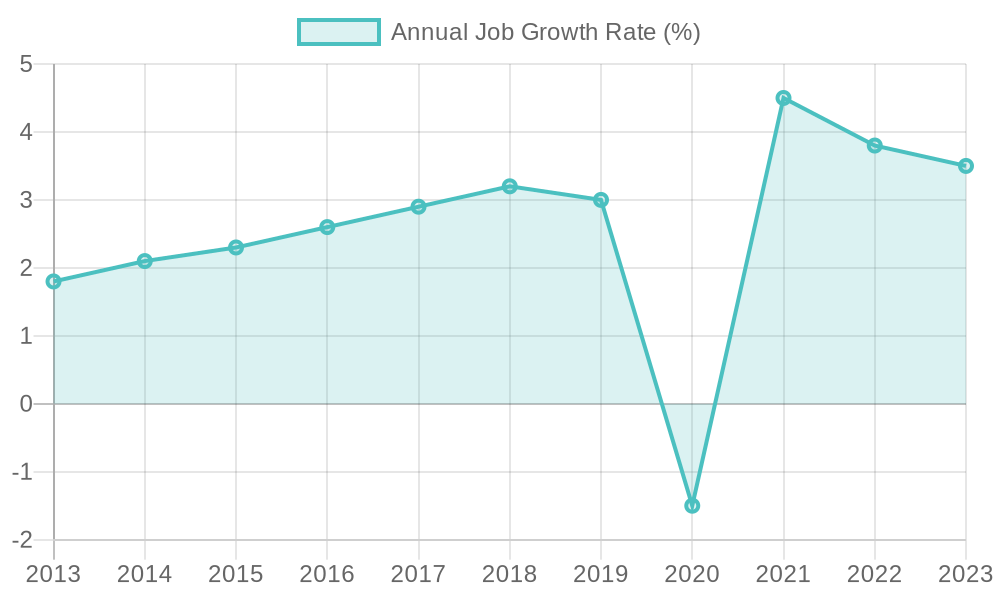
Annual Job Growth Rate (%)
| Year | Annual Job Growth Rate (%) |
|---|---|
| 2013 | 1.8 |
| 2014 | 2.1 |
| 2015 | 2.3 |
| 2016 | 2.6 |
| 2017 | 2.9 |
| 2018 | 3.2 |
| 2019 | 3.0 |
| 2020 | -1.5 |
| 2021 | 4.5 |
| 2022 | 3.8 |
| 2023 | 3.5 |
Note: Data reflects annual changes in employment within the trucking, freight, and courier services sector (NAICS 484), based on U.S. Bureau of Labor Statistics and industry reports from 2013-2023. The sharp decline in 2020 corresponds to pandemic-related disruptions; recovery began in 2021 with strong growth driven by e-commerce expansion.
This trend indicates that while the industry faced setbacks, particularly during the pandemic, the long-term outlook remains positive due to sustained demand for goods transportation, especially with the continual rise in e-commerce activities. For more detailed insights on how economic trends impact the trucking industry, you can learn more here.
In conclusion, pursuing a career in trucking freight and courier services presents a pragmatic and rewarding opportunity for individuals considering their future. Key takeaways from our discussion highlight the diverse roles available within this sector, ranging from truck drivers to logistics coordinators. The demand for efficient shipping solutions continues to rise, driven by the growth of e-commerce and global trade, making this career path not only relevant but essential.
Moreover, advancements in technology, such as the increasing interest in electric trucks, indicate a vibrant future for the industry. For instance, businesses that adapt to emerging trends and innovate in their operations can thrive amidst competition and economic fluctuations. The benefits of working in trucking include job stability, competitive pay, and the satisfaction of contributing to the economy by facilitating the movement of goods.
As you weigh your career options, consider the trucking freight and courier services sector as a viable choice that offers both growth and fulfillment. Learn more about current trends in trucking freight markets and explore how these developments could shape your professional journey.
In conclusion, pursuing a career in trucking freight and courier services can be a highly rewarding path for individuals looking for job stability, lucrative earnings, and personal fulfillment. With increasing demand in the logistics sector, it’s a prime time to consider this field. Truck drivers enjoy unique benefits, including flexible schedules and diverse opportunities across various industries. If you’re ready to take the next step in your trucking career, visit Summit Fairings to learn how we can support your needs with top-quality products and services. Take action now!