
Understanding truck access to service roads is essential for manufacturing, distribution, retail, construction, and small business sectors. Service roads serve as vital access routes for trucks delivering goods or supporting operations near busy highways. However, the feasibility of using these roads relies heavily on a combination of regulatory considerations, the type and suitability of trucks, and their impact on delivery efficiency. This article delves into each aspect, equipping business owners with the insights needed to navigate the complexities surrounding the use of service roads for truck operations.
Access Points and Emission Targets: Navigating California’s Service Roads Under a Zero-Emission Truck Future
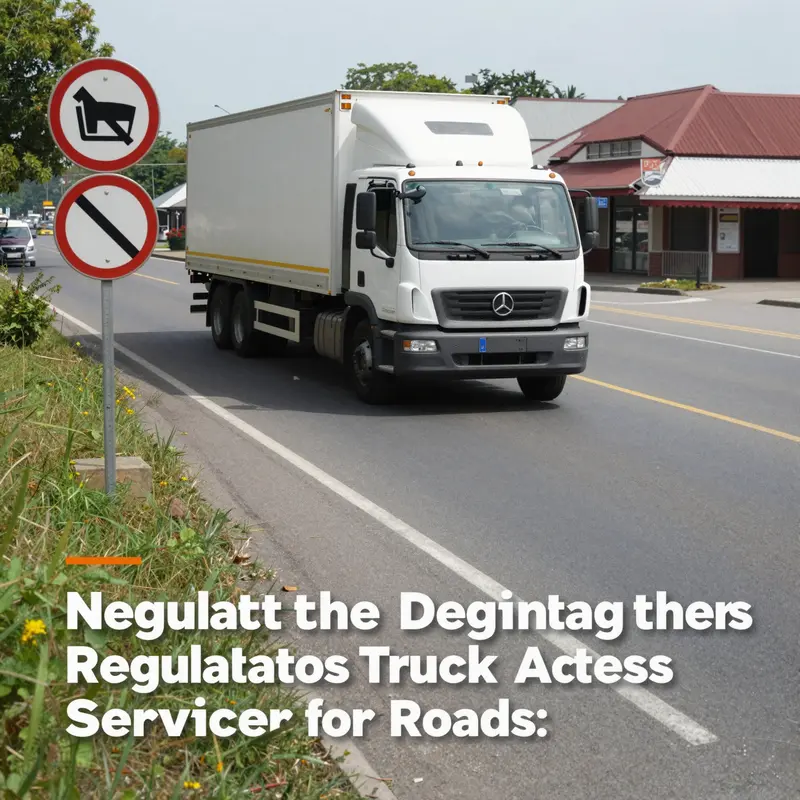
Service roads—often tucked between the shoulder and the main carriageways, or lined along commercial corridors and utility corridors—are more than mere access paths. They function as practical arteries that keep neighborhoods serviced, facilities maintained, and last-mile deliveries moving without forcing every operation onto a crowded primary highway. For fleets, these roads can offer predictable routes for maintenance work, utility servicing, and short-haul deliveries that require closer access to properties and infrastructure. Yet the very utility of service roads for trucks is inseparable from the regulatory and economic framework that surrounds them. In California, where policy aims to transform the trucking sector toward zero-emission operation, service roads become a stage where design, compliance, and long-range planning converge. The question of whether trucks may use service roads does not hinge on a blanket yes or no. It rests on a layered assessment of local road design, vehicle specifications, and the evolving state mandate landscape that governs all medium- and heavy-duty vehicles, including the smaller, less conspicuous routes that service roads represent. To understand this, one must trace how the broad rules apply to the particularities of service-road segments, and how the industry is adapting to a future where emissions, performance, and reliability are interlinked priorities.
California’s regulatory architecture for trucks is built on a blend of mandates, incentives, and staged milestones designed to steer fleets toward zero-emission operations while maintaining reliability and safety on every road. The central thrust of this architecture is the Zero-Emission Vehicle (ZEV) mandate administered by the California Air Resources Board (CARB). The mandate targets the expansion of sales and deployment of medium- and heavy-duty zero-emission trucks, with a phased approach that began a few years ago and is set to culminate in a full phase-out of new internal combustion engine (ICE) trucks by 2036. This trajectory does not exempt service roads from the rulebook; rather, it embeds service-road operations within an overarching requirement to plan, invest, and convert to ZEV or alternative-fuel technologies as fleets modernize. The practical implication is clear: whether a service road can be used by a given class of truck depends not only on local signage, lane width, or weight restrictions, but also on whether the vehicle type in question is approved for operation in a given environment and whether the operator’s fleet is positioned to meet the timing and technology expectations embedded in CARB’s rules.
A key instrument within CARB’s broader strategy is the Advanced Clean Trucks (ACT) rule. ACT sets progressively increasing ZEV sales mandates for manufacturers, with the expectation that fleets will transition in step with those mandates. For operators, this means that the available equipment on any given service road in California may change more quickly than one might anticipate. The rule does not automatically grant or deny access to a road; instead, it creates a planning horizon that shapes procurement, maintenance, and scheduling. Fleet leaders must anticipate the pace of electrification, the availability of appropriate charging or alternative-fuel infrastructure along freight corridors, and the compatibility of service-road segments with the performance profiles of new trucks. The ACT framework thus acts as a catalyst for change that ripples through routine operations—every time a fleet evaluates a maintenance route, a delivery window, or a service call that depends on access to a specific service road.
Incentives and infrastructure investments are not mere afterthoughts in this picture. California’s climate investments program and related funding streams explicitly target the expansion of charging networks along freight corridors. These projects often intersect with service-road corridors, creating opportunities for fleets to plan for charging during routine service visits or maintenance cycles without sacrificing service levels. The alignment of charging infrastructure with freight routes, including those that feed into service roads, is more than a convenience; it is a structural enabler of continued access to these roads as fleets transition to ZEVs. Operators are therefore wise to view service-road access planning as an element of a broader infrastructure strategy that links road design, charging availability, and maintenance scheduling in a seamless operational loop.
As of 2023, CARB’s dialogue with the trucking industry produced a meaningful compromise that clarified the path toward compliance while offering necessary stability. The compromise aligned California’s rules with the U.S. Environmental Protection Agency’s (EPA) more lenient 2027 NOx emission standards, providing at least four years of lead time and three years of regulatory stability. For fleets managing service-road operations, this means they can plan more reliably for interim configurations—recognizing that the road network itself will continue to accommodate evolving vehicle technologies. This flexibility does not diminish the long-term intent of a zero-emission future; rather, it furnishes operators with a breathing space to make capital decisions, stagger vehicle retirements, and stagger the introduction of new truck types while keeping service-road access secure and compliant.
The long view is unambiguous. While immediate, site-specific constraints such as lane width, surface condition, drainage, and signage continue to determine whether a particular service-road segment can accommodate a larger or heavier truck, the trajectory toward zero-emission trucks will increasingly color every operational decision. The shift is not just about emissions; it is about the reliability of operations, the cost of fuel and maintenance, and the resilience of supply chains that rely on timely servicing of facilities and critical infrastructure. For service roads used by maintenance crews, delivery drivers, and utility specialists, the question of eligibility becomes a matter of compatibility: can the vehicle’s dimensions, electric system, and charging profile be accommodated by the road in the context of a given work window, traffic pattern, and environmental condition? The answer, more often than not, requires a disciplined approach to route planning and a careful assessment of road characteristics.
Beyond the regulatory texts, the practical realities of service roads must be acknowledged. Some segments are narrower, with tighter cross-sections and limited turning radii. Some carry weight restrictions or seasonal load limitations that constrain the deployment of heavy-duty equipment. Surface conditions may vary with the season, affecting braking distance, acceleration, and stability—factors of particular importance for electric trucks with instant torque and regenerative braking characteristics. Roadway grade, vertical alignment, and the proximity of utilities or street furniture can influence both safety and access feasibility. Operators therefore need reliable, up-to-date information on local restrictions, permit requirements, and any planned maintenance programs that might temporarily close or reroute service-road access. This is where the integration of regulatory guidance with practical field knowledge becomes essential. A well-informed fleet can avoid the risk of noncompliance, reduced service reliability, or unsafe operating conditions by selecting routes that align with the current vehicle technology, road design, and the jurisdiction’s enforcement posture.
The story of service roads in California’s regulatory landscape is also a story about resilience and adaptability. As electrification progresses, charging infrastructure will become a more critical determinant of whether a service road can sustain a given level of commercial activity. The need for fast-charging options at or near maintenance hubs, along arterial service corridors, and at key property interfaces will shape both capital planning and daily operations. A fleet that understands where charging is available along its service-road network can reduce downtime and increase utilization, especially for routes that include long maintenance calls or multiple deliveries within a single shift. The conceptual leap is modest: service roads, when properly equipped and properly policed, become not just corridors for access but strategic nodes in a broader, electrified logistics and maintenance ecosystem.
Of course, every driver and operator must remain mindful of the fundamental condition of the road itself. The regulatory expectations are only one component. Safety depends on appropriate speed controls, adherence to posted weight limits, and careful vehicle configuration for the particular lane width and shoulder conditions of a given segment. The design of service roads can sometimes lag behind the pace of fleet modernization, particularly in areas where funding for road widening, resurfacing, or structural reinforcement is limited or stretched across competing priorities. In those contexts, the decision to utilize a service road for a given truck class may hinge on a careful risk assessment that weighs the benefit of shorter access against the possibility of congestion, reduced maneuvering space, or limited turning opportunities. Operators who embrace a disciplined approach to route selection—one that marries local restrictions with the anticipated performance profile of the chosen vehicle—will be better positioned to maintain service levels while navigating the transition to zero-emission technologies.
The practical import of these considerations is not theoretical. It translates into concrete planning actions: escalation procedures for temporary closures; pre-shift checks of road surface and shoulder conditions; collaboration with local agencies to understand upcoming maintenance or lane restrictions; and the alignment of vehicle procurement with the pacing of electrification and charging infrastructure deployment. The service-road question, therefore, becomes a recurring element of fleet strategy rather than a single regulatory waypoint. Fleet managers who embed service-road assessment into their standard operating procedures can maintain continuity of service, minimize the risk of regulatory noncompliance, and create a smoother transition path for their drivers as vehicle technologies evolve.
In reflecting on the wider context, it is useful to connect these propulsion and pavement dynamics to the broader macro trends shaping the trucking industry. How do these shifts influence investment decisions, labor planning, and the overall health of supply chains that rely on steady maintenance and utility work? The answer lies in recognizing service roads as microcosms of the transition: they reveal how policy, technology, and infrastructure converge to determine not only whether a truck may traverse a particular strip of pavement, but how efficiently it can do so while respecting safety, reliability, and cost considerations. For readers seeking to explore the broader economic and policy signals that inform these decisions, the chapter on Key Economic Trends Impacting the Trucking Industry provides a useful synthesis of how market dynamics interact with regulatory timelines and capital expenditure planning.
As this discussion arrives at its practical core, several guiding principles emerge for operators contemplating service-road use under current and future rules. First, treat service roads as part of an integrated route network rather than as isolated workspaces. Second, build a formal compliance and risk assessment routine that captures local restrictions, road condition data, and vehicle specifications in a single planning framework. Third, align fleet modernization with infrastructure readiness, acknowledging that charging or alternative-fuel options along these corridors are a necessary condition for sustained operation. Fourth, stay attuned to regulatory signals—CARB’s ACT rule and the broader ZEV mandate—that will gradually reshape the availability of equipment and the feasibility of certain routes. Finally, maintain proactive engagement with local jurisdictions, road authorities, and utility stakeholders to anticipate changes in access, sign requirements, or maintenance schedules that could influence service-road operations.
These principles are not an abstract ideal. They translate into practical outcomes: less downtime due to unplanned road restrictions, more predictable maintenance scheduling, and a clearer path to capitalizing on incentives tied to infrastructure development. They also offer a framework for new entrants into the California market who are evaluating whether to deploy trucks on service roads in the first place. The case for service-road operation grows stronger as fleets accelerate electrification and charging infrastructure becomes more widely available along freight corridors. Conversely, the case for caution becomes stronger where road geometry, payload requirements, or local ordinances create persistent barriers to safe and efficient operation. In both scenarios, the service road remains a critical determinant of how a fleet can meet its service commitments while remaining compliant with a regulatory regime designed to reduce emissions, improve air quality, and advance a more sustainable trucking industry.
In closing, the service road question in California is not a simple matter of access. It is a lens through which to view the intersection of regulatory ambition, road design realities, and the operational discipline required to keep fleets moving in a changing world. As electrification accelerates and the state’s ZEV pathways mature, those who succeed will be the ones who translate policy into practical routing decisions, invest in the infrastructure that makes service-road access viable, and maintain an adaptive mindset that keeps pace with both the letter and spirit of the regulations. The chapters that follow will further illuminate how broader regulatory and market dynamics interact with specific operational choices, offering readers a cohesive map of where service roads fit in the evolving landscape of modern trucking.
External resource: California’s Advanced Clean Trucks Rule and related CARB guidance can be found at https://ww2.arb.ca.gov/ghg/act-rule.
null
null
Paths on the Edge: How Service Road Access Rewrites Urban Truck Deliveries and Efficiency
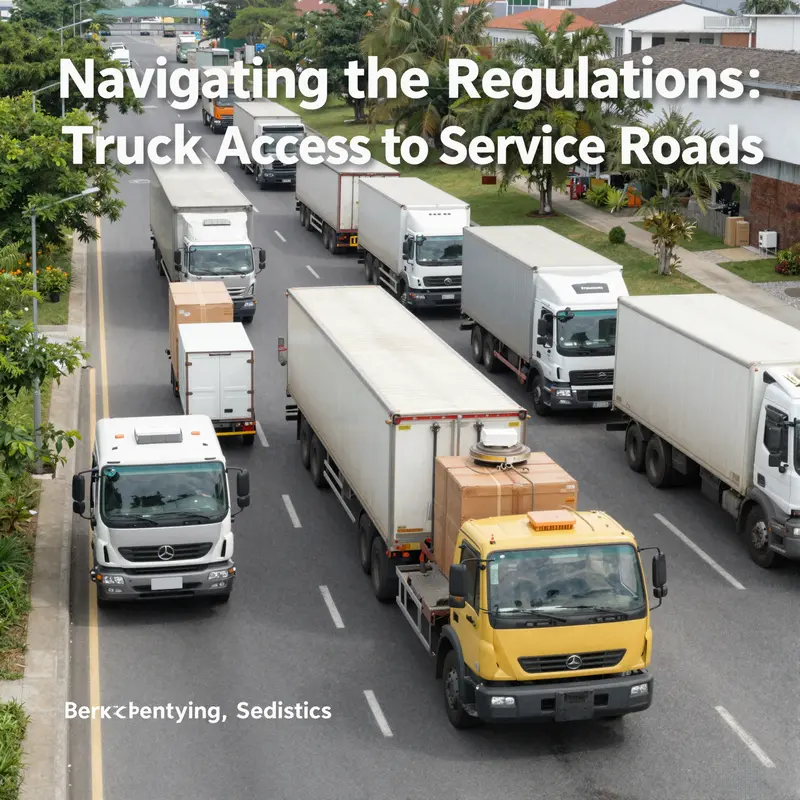
Access to service roads, often overlooked in the rush of urban freight planning, quietly shapes the tempo of every delivery route. The question “can trucks use service roads?” is rarely answered with a simple yes or no. It hinges on a web of local regulations, road design, and the practical realities of city streets. Yet, when service roads are well designed and properly regulated, they become more than corridors of convenience. They turn into strategic arteries that connect supply points with customers while bypassing gridlock on the main drags. The research landscape surrounding urban freight safety, efficiency, and sustainability increasingly treats service road access as a meaningful component of last-mile performance. It is a thread that runs through the urban fabric, linking infrastructure design to delivery reliability, fuel consumption, and environmental impact, and it deserves a closer, more holistic examination within any chapter on how trucks navigate modern cities. In this chapter, we explore how the availability and quality of service road access influence delivery efficiency for trucks, the metrics that quantify this influence, and the practical steps planners and operators can take to maximize benefits while safeguarding safety and regulatory compliance. The investigation begins with the core premise: access is not a mere convenience but a fundamental attribute of an urban freight system. When service roads connect directly to industrial yards, commercial facilities, and residential zones—often hugging the shoulders of freeways or major arterials—trucks can shed time-consuming encounters with through traffic and curbside uncertainty. The degree to which this potential is realized, however, depends on more than whether a service road exists. It rests on how service roads are designed to handle the loads, turning movements, and operational rhythms of modern delivery fleets, and on whether the surrounding regulatory framework grants them the right to function as reliable complements to the main carriageways. In practice, the ability of trucks to use service roads emerges from a careful balance among access rights, legal constraints, physical geometry, and day-to-day management practices that keep curb lanes orderly and loading zones accessible. Across many jurisdictions, service roads are already essential for utility work, maintenance, and vendor deliveries. In California, for instance, utility firms rely on service roads to support line work and street lighting repairs, with delivery trucks and flatbeds threading from maintenance yards to work sites along these side paths. This real-world utility underscores a critical insight: service road access enjoys broad utility, but its actual use by trucks is governed by precise local rules. Those rules may cap vehicle size or weight, or impose restrictions during peak hours, while also accounting for the structural capacity of the road and the safety of adjacent pedestrians and property owners. The result is a mosaic of permissions and prohibitions that can shift with a city’s growth, a neighborhood’s character, or the emergence of new traffic patterns. The first major hinge in this discourse is the accessibility of the final 30 feet of a delivery route—the moment when a vehicle must align with curbside, load, and unload zones, and when the chance of double-parking or street obstruction is highest. The UF-MEP framework—Urban Freight Mobility Energy Productivity—provides a useful lens for thinking about this hinge. It reframes delivery efficiency not merely as travel time savings on a highway or main street but as the energy and time economics embedded in how effectively last-foot, last-yard access is negotiated. UF-MEP draws attention to micro-mactors—geometry, curb space allocation, signage clarity, curb ramp design, and loading zone turnover—that determine how readily a truck can transition from through movement to precise, queue-free unloading. In studies that adopt UF-MEP, the final meters of the route wield outsized influence on energy productivity. A modest improvement in access—more direct entry to a loading dock, clearer signage that avoids circling and wrong-way detours, or swifter curbside clearance—can produce measurable gains in delivery speed and fuel efficiency over the course of a workday. The idea may seem intuitive, yet documenting it requires granular observation: the number of missed turns, the time spent searching for a legal loading zone, the frequency of encroachment by parked vehicles, and the cumulative effect of these small frictions on an urban fleet. In urban environments, the reality of poor access is that vehicles become tethered to the busier arteries. A truck that cannot reach a service road access point may be forced to traverse congested downtown streets to reach a loading zone, even if a parallel service corridor is available only a short distance away. The consequences extend beyond time loss. Increased travel time compounds fuel burn, accelerates driver fatigue, and elevates the probability of conflicts with other road users. In a tightly regulated urban setting, this can also escalate risk exposure for pedestrians, cyclists, and workers in dynamic curbside environments. Conversely, when access is well designed, service roads offer a bypass for heavy traffic, a smoother approach to docks and curbside, and a more predictable rhythm for loading operations. Delivery tasks—whether routine parcel drop-offs or larger equipment moves—benefit from predictable waiting times, which in turn stabilize dispatch reliability and route planning. The practical impact of improved access is not merely about speed. It reframes the entire delivery workflow, enabling operators to allocate dwell time more efficiently, reduce dwell-on-street penalties, and minimize the need for double-parking or blocking traffic while waiting for a loading zone. This creates a virtuous circle: better access leads to faster turnarounds, which reduces idling and emissions, which in turn supports broader urban sustainability objectives. The literature also emphasizes the social and spatial equity aspects of service road access. When certain neighborhoods lack adequate loading zones or when curbside policies are flexed only in areas of high commercial density, delivery performance can become uneven. Businesses in well-equipped districts enjoy smoother service, while smaller operators or hard-to-serve pockets of the city face longer routes and higher costs. As urban planning and freight policies strive for more equitable accessibility, the strategic value of service roads grows. In this regard, the conversation shifts from “do trucks have permission to use service roads?” to “how can service roads be integrated into a city’s broader freight strategy to ensure consistent, safe, and efficient access for diverse fleets?” The improvement initiatives highlighted in recent research offer actionable paths. One clear direction is the establishment of dedicated delivery lanes adjacent to service roads. These lanes act as a controlled staging area for drop-offs, reducing conflicts with general traffic and enabling more stable loading sequences. Another initiative focuses on signage clarity and uniform curb rules. Effective signage reduces the time drivers spend deciphering where to stop, which curb cutouts permit loading, and which times permit unloading. Sharper, more legible signage translates into faster route completion and lower risk of traffic violations or penalties. A third lever is curbside management—the coordinated use of curb spaces, loading zone turnovers, and enforcement that discourages double-parking. When curb management is optimized, a service road can host a predictable pattern of activity that aligns with dock operations, city street cleaning schedules, and local business hours. The value of this approach becomes evident when one considers the granular tasks that define a typical urban delivery cycle. For a mid-size fleet, a day might include 40 to 60 stop events along a dense corridor. The sequence of stops, the dwell times at each, and the buffering required to accommodate on-street loading all contribute to a cumulative time cost. In this context, the micro-architecture of service road access—the turning radii into yards, the width of the service road, the presence of vertical clearance for certain vehicle types, and the compatibility of the road with articulated or double-trailer configurations—becomes a central determinant of overall efficiency. It is not enough to know that a service road exists; the road must be able to function as a reliable link in a delivery chain. The design considerations, in turn, feed back into urban planning. The integration of service road access into logistics strategies requires cross-disciplinary collaboration among traffic engineers, urban planners, freight planners, and municipal operators. When a city contemplates corridor design, it can explicitly factor in the needs of urban freight by modeling the effect of service road access on peak-hour travel times, route reliability, and curbside throughput. The environmental dimension is inseparable from the efficiency narrative. Reduced travel time and smoother deliveries translate into lower emissions, especially when idling is minimized and fuel economy is improved. In the broader sustainability literature, these dynamics gain importance as urban centers pursue aggressive targets to reduce transport-related emissions. Service road access, when optimized, becomes a small but meaningful lever to move the needle on urban air quality and climate performance. The research results converge on a simple, practical takeaway: better access to service roads is a powerful, low-cost means to improve last-mile performance, but only when it aligns with robust regulatory frameworks and thoughtful road design. The operation of service roads for trucks must be anchored in an understanding of legal constraints—weight limits, vehicle size restrictions, or time-based prohibitions—and in the physical realities of the road itself. A service road that is legally accessible but physically unsuitable for certain vehicle configurations—due to sharp curves, inadequate turning radii, or insufficient clearance—can still hinder efficiency and raise safety concerns. The urban freight equation, therefore, balances rights with realities, permissions with constraints. The path to maximizing efficiency through service road access also invites a broader reflection on how urban freight fits into city life. If urban planning treats deliveries as ancillary activities, the service road advantage may be underutilized. If, however, freight considerations are embedded in zoning, curbside management, and transportation demand management strategies, service road access can become a central asset in the city’s mobility portfolio. An integrated approach can harmonize the needs of residents, businesses, and freight operators—ensuring that service roads remain accessible without compromising safety or neighborhood quality of life. The discussion thus returns to the essential question of adaptation: as cities evolve, so too must the rules, the physical infrastructure, and the management practices that govern service road use. Adaptation requires ongoing data collection, performance monitoring, and a willingness to recalibrate space in response to changing freight patterns. It invites the adoption of metrics that capture not just travel times but the energy costs of last-foot operations, the reliability of curbside access, and the frequency of loading zone conflicts. In this sense, the UF-MEP framework offers a compact vocabulary for policymakers and operators alike. It translates the complexity of urban freight into a measurable construct that can guide investments and operational choices. It also highlights the limited but critical window in which access improvements yield outsized returns—in the final 30 feet, where the vehicle interacts with the curb and the dock. The growing recognition of service road access as a legitimate element of urban freight strategy has already begun to inform practice. Some cities are experimenting with modest but targeted changes—clearer access points to service roads, better alignment of signage with dock locations, and the introduction of dedicated loading zones that minimize cross-traffic disruption. These changes, though incremental, can compound over time to yield meaningful gains in efficiency and resilience. As with any infrastructure decision, there is a need for caution and context. Service roads are not a universal solution; their suitability depends on the specific urban fabric, the mix of land uses, and the existing traffic environment. In some places, service roads may be narrow and overburdened with conflicting uses, making them ill-suited for heavy or high-volume freight activity. In other locales, service roads are robust, well-lit, and designed with multimodal access in mind, making them ideal for routine truck movements. The challenge for operators and planners is to identify where the benefits clearly outweigh the costs and to implement the design and policy adjustments that unlock those benefits while ensuring safety and neighborly harmony. In practical terms, this means that truck operators should actively verify local regulations and road conditions before using any service road. It also means that city agencies should maintain transparent, up-to-date information about which roads are designated for service use, any weight or dimension restrictions, and the hours during which loading activity is permitted. A coordinated approach to information sharing—through digital maps, real-time signage, and clear enforcement policies—helps prevent missteps, fines, and route disruptions. The synthesis of these ideas yields a practical, forward-looking perspective: service road access can be a lever for delivery efficiency when it is designed with freight in mind, regulated with clarity, and managed with disciplined curbside coordination. This perspective aligns with the broader arc of urban freight research, which continues to emphasize the importance of integrating infrastructure planning with logistics performance. As cities wrestle with growing delivery volumes, tighter traffic conditions, and the constant need to reduce emissions, service roads emerge not as peripheral conveniences but as central instruments in the toolkit for smarter, faster, and cleaner urban mobility. The discussion thus circles back to the central implication: access quality matters. It matters not only for the speed of a single delivery but for the reliability of a fleet operating in a dense urban environment. It matters for the energy it saves over long shifts and for the resilience it contributes to supply chains that must endure peak demand, weather disruptions, and shifting regulatory landscapes. It matters for the broader narrative of urban sustainability, where every efficient turn at a curbside reduces waste and protects air quality. The research findings reinforce this message in concrete terms. They suggest that a city that prioritizes service road access in its freight planning can expect tangible gains in delivery efficiency, reduced fuel consumption, and improved operator productivity. They also remind stakeholders that these gains depend on a careful, context-sensitive approach that honors safety, accessibility, and the rights of other road users. For readers who want to connect the macro trends with tangible practice, consider how these insights translate into day-to-day decisions in fleets and dispatch rooms. A dispatcher can design routes that probe the availability of service roads for specific corridors, weigh the time and fuel savings of bypassing main streets, and adjust schedules to align with curbside loading patterns. A planner can map service road assets onto urban freight corridors, model the expected reductions in congestion, and test different curbside policies to identify the configurations that deliver the highest UF-MEP scores. A driver can benefit from clearer signage and predictable curb rules, reducing the cognitive load during complex urban maneuvers and improving safety for everyone on the street. The overarching narrative is that service road access, when harnessed thoughtfully, can bring about a smoother, more sustainable rhythm to urban freight. It is not a panacea, but it is a practical lever that deserves a seat at the table in both daily operations and long-term planning. In this sense, the chapter invites readers to think about service roads not as marginal infrastructure but as critical links in the chain that binds urban logistics to urban life. And as urban centers continue to grapple with the twin challenges of efficiency and resilience, the capacity to move goods through well-designed service road systems may become as important as the capacity to move people. The continued exploration of this topic promises to yield deeper insights into how cities can balance the needs of commerce with those of neighborhoods, all while keeping the air cleaner, the streets safer, and the deliveries dependable. For researchers, practitioners, and policymakers alike, the path forward is to operationalize service road access into a set of replicable best practices that can be adapted to different city scales and layouts. The result could be a future where trucks routinely use service roads to optimize routes, reduce energy consumption, and support more predictable, efficient, and sustainable urban freight systems. This vision depends on disciplined, data-informed decision-making and a willingness to design streets not just for today’s traffic but for the evolving demands of tomorrow’s deliveries. As the literature on last-mile logistics continues to evolve, the role of service roads will likely become more pronounced. The imperative is clear: understand the precise conditions under which service roads can be used by trucks, invest in design features that enhance access, and align regulatory and curbside practices to support safe, efficient, and reliable delivery operations. In the end, the question of can trucks use service roads resolves into a broader inquiry about how cities want to move goods and people together. The answer is not a universal yes or no; it is a nuanced, location-specific decision that depends on careful planning, continuous monitoring, and a shared commitment to the efficient and responsible flow of urban life. For those who seek a concise synthesis of the practical implications, the UF-MEP lens remains a powerful tool. It reminds us that the most meaningful gains in urban freight efficiency often arise not from sweeping changes, but from targeted improvements to access geometry, curbside management, and the clarity of the rules that govern when, where, and how loading can occur. That is the heart of moving service roads from the periphery to the core of urban freight strategy. As cities continue to grow and freight patterns shift with the economy, the paths along the edge—the service roads—may well become the quiet workhorses of urban trucking, delivering not only goods but also measurable improvements in time, energy, and environmental performance. Internal link note: for a broader view on how market conditions shape trucking operations and could influence decisions about service road use, see economic-trucking-trends. External reference: UF-MEP and related urban freight research framework can be explored in the Sustainability article linked here for a deeper dive into last-mile delivery efficiency metrics: https://www.mdpi.com/2306-5729/8/4/123
Final thoughts
In conclusion, understanding the intricate relationship between service roads, regulatory frameworks, truck suitability, and delivery efficiency is crucial for businesses engaged in manufacturing, retail, construction, and the shipping sector. As each industry faces unique challenges and opportunities related to access roads, comprehensive awareness can empower operators to optimize their logistics strategies. Businesses must remain proactive, continually analyzing local regulations and adapting their fleets for the best possible service. Efficient logistics is key to maintaining competitiveness in today’s market landscape.