
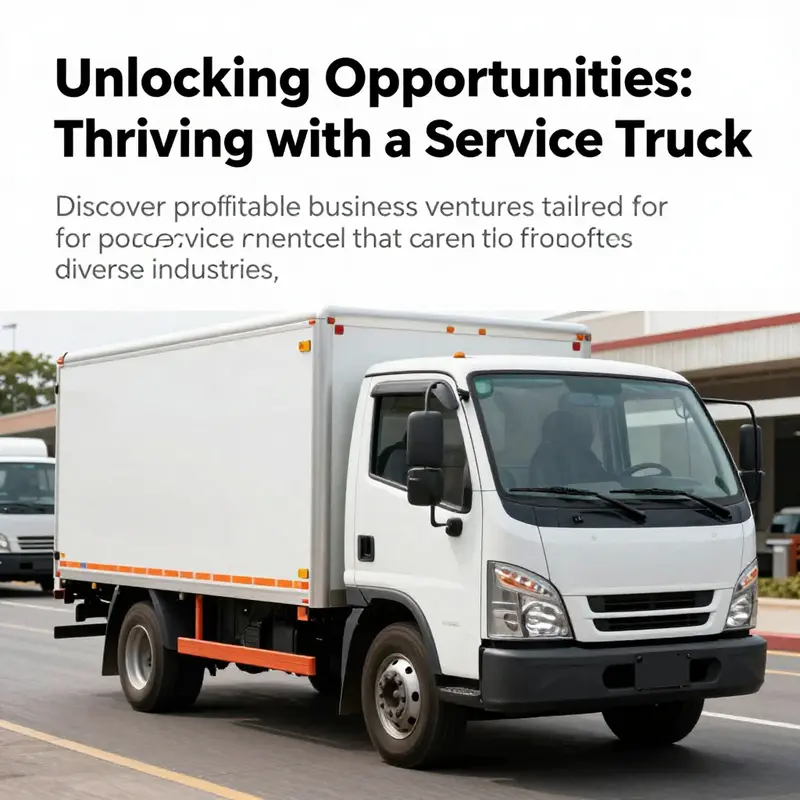
A service truck offers unmatched versatility, enabling entrepreneurs to tap into a wide array of lucrative business opportunities. From mobile repair to specialty retail, the mobility and storage capacity of service trucks can transform your professional ambitions into reality. This article delves into how manufacturing and distribution companies, retail and e-commerce businesses, and construction firms can leverage mobile services to meet local demands effectively. Each chapter presents a unique business model that utilizes the service truck’s capabilities, ensuring you find the ideal fit for your skills and market needs.
Rolling Workshops on Wheels: Turning a Service Truck into a Profitable On-Site Repair Engine
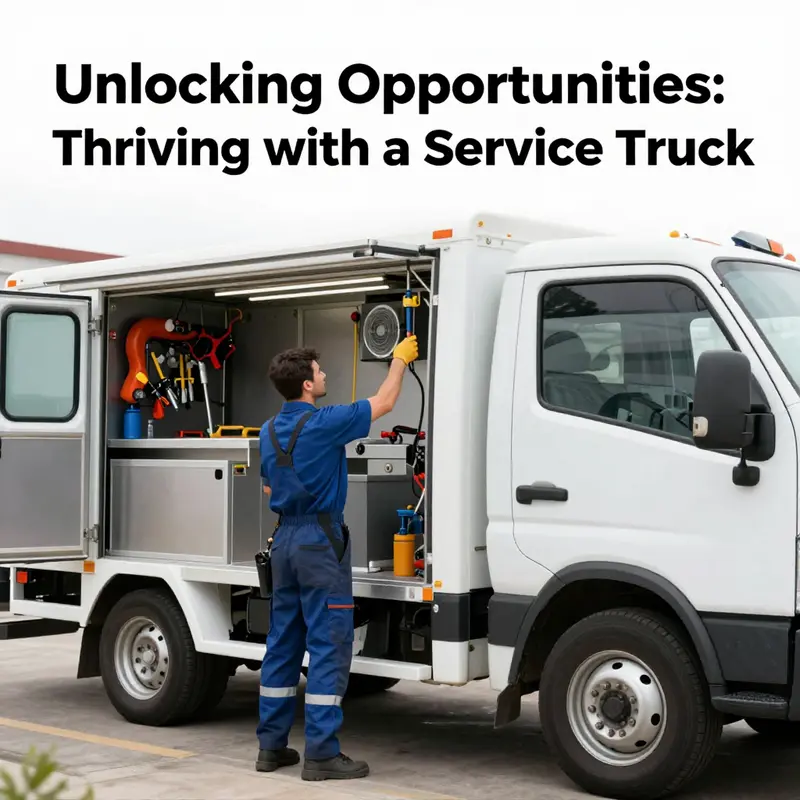
A service truck, in its simplest form, is a travel-ready workshop. But when you design it as a mobile repair and maintenance platform, it becomes something more powerful: a moving facility that reduces downtime, shortens lead times, and converts on-site visits into recurring revenue. The core idea is straightforward—bring the labor, tools, and parts to the customer rather than forcing them to transport equipment to a fixed shop. The payoff is measured in time saved for clients, increased job throughput for you, and a predictable stream of service calls that builds both cash flow and reputation. For operators who want to solve real, everyday problems for fleets, contractors, and facilities at their doorsteps, a well-equipped service truck can be the primary asset behind a scalable business model.
The heart of this approach lies in the design and functionality of the vehicle. A mobile maintenance truck must function as a fully equipped mobile workshop. It should accommodate a compact yet capable combination of air compressors, hydraulic jacks, diagnostic tools, and robust storage for parts and specialty equipment. The aim is to allow a single technician to perform a broad spectrum of tasks—from tire repair and lubrication services to more involved mechanical repairs and equipment lifting—without requiring a return to a fixed shop. In rugged environments or remote job sites, a 4×4 chassis can transform what would otherwise be a challenging assignment into a feasible one, enabling access to mines, remote construction zones, and rural facilities where downtime translates directly into lost productivity. Weaving mobility with real capability turns the truck into a portable capital asset rather than a mere transport vehicle, and that distinction matters when you’re pricing work, forecasting labor needs, and planning capacity.
What makes this model compelling goes beyond the kit of tools. It rests on the ability to offer on-site service with speed and reliability. Fleet operators, mining outfits, and construction crews dread downtime because even brief outages compound costs. When you can diagnose a problem on site, replace a failed component, or perform routine maintenance at the customer’s location, you eliminate the transport risk and the wait time. You also create a service relationship that is inherently sticky: customers tend to sign long-term maintenance contracts when a trusted mobile partner is just a phone call away. This is where the business case tightens. Recurrent service work becomes the backbone of your cash flow, while one-off repairs still command premium pricing due to the convenience factor. A well-branded, professionally staffed operation can cultivate a mix of recurring maintenance agreements and selective, high-margin repair jobs that fit the client’s uptime needs.
The portfolio of on-site capabilities is worth emphasizing, not because it is exotic, but because it aligns with what customers actually pay for. Tire repair and lubrication keep engines and machinery rolling; diagnostic work finds root causes before they escalate; minor and major mechanical repairs address failures before they trigger costly downtime. In many industries, equipment cannot wait for a workshop appointment. A mobile unit, properly stocked and organized, can swing into a site, confirm a problem, perform essential repairs, and schedule follow-ups if needed. The workflow is not a single-pipe process but a loop: arrive with the right tools, execute the fix or service, document what was done, provide a clear maintenance plan, and arrange for future visits or a standing service window. The equipment lift and handling capability, when integrated safely, enhances your ability to service heavier components or awkward installations without returning to base. The practical outcome is straightforward—less back-and-forth, faster resolutions, and a higher percentage of completed jobs on the first visit.
From an economics perspective, the investment in a mobile maintenance truck is matched by the breadth of its applications. The market for mobile repair services spans fleets, mining and civil projects, agricultural operations, and industrial facilities that require urgent on-site attention. The vehicles are designed with modular interiors that can be customized to the operator’s specialty. This customization is more than cosmetic; it shapes workflow efficiency. A technician can align drawer configurations, tool racks, and work surfaces with the typical repair sequence, shaving minutes off each job. In practice, this means you can complete more tasks per day and thereby improve your utilization rate, a critical variable in margins for mobile service businesses. The cost side benefits from a careful procurement strategy. Market data shows competitive pricing for mobile maintenance platforms, with options that can be sourced from cost-efficient manufacturing regions. While the upfront price tag may appear steep, the long-run savings—reduced shop overhead, minimized downtime for customers, and cross-selling opportunities across a diversified service mix—can deliver favorable returns over a short to mid-term horizon.
The procurement and customization journey is a key determinant of both capability and profitability. Buyers frequently consider sourcing from established suppliers who can provide turnkey configurations or customizable layouts tailored to specific operational needs. A crucial trade-off in this phase is between pre-built configurations and bespoke interiors. Pre-built setups save time and reduce risk, but bespoke interiors can optimize every square foot for a given service mix and client sector. Whether you prioritize tire repair kits, hydraulic tooling, electrical diagnostic equipment, or a robust storage system for long-tail parts, the layout should enable a seamless sequential workflow. The ability to tailor a truck’s interior is a major win for capital efficiency and service quality. Suppliers often offer modular components that can be swapped as the business grows, allowing you to reallocate space for additional storage, a larger crane or lift, or extra battery capacity for extended field work. The value here is not merely in the equipment on hand but in how quickly you can deploy a new service capability without a full vehicle rebuild.
If you’re evaluating procurement options, begin with a clear blueprint of your service scope and the pain points you want to resolve for customers. Then map the internal workflow from arrival to departure: checklists for safety and compliance, a parts-in-hand inventory plan, and a process for documenting work orders and recommendations. This disciplined approach helps you price work accurately and avoid scope creep. It also positions you to present a compelling value proposition to potential customers: a predictable maintenance cadence, preferred pricing for ongoing contracts, and the assurance that a technician can handle both routine servicing and more complex repairs on site. In industry discussions, mobile service vehicles are increasingly described as on-site hubs that extend the capabilities of traditional workshops, a narrative that resonates with managers juggling multiple jobs and tight schedules. You are not simply providing a service; you are delivering uptime and reliability in a package that travels.
To keep the operation humming, branding and a digital booking system play essential roles. A professional appearance reinforces trust and signals that the truck is more than a shop-on-wheels—it is a reliable partner. A user-friendly booking interface, real-time scheduling, and clear work-order visibility help convert inquiries into scheduled visits and recurring commitments. The scheduling layer is what gives you the predictability to manage capacity and cash flow, so invest in a lightweight, mobile-friendly system that integrates invoicing and service notes. When customers can see availability, track progress, and receive maintenance recommendations, the value exchange becomes more concrete and sustainable. For operators who want broader market visibility, aligning with industry insights and market data that track mobile service trends can provide a strategic edge. In this light, industry sources and professional associations often highlight the benefits of mobility, the importance of rapid on-site response, and the growing demand for flexible, field-based maintenance solutions.
As you plan to enter or expand in this space, consider the strategic steps that translate capability into revenue. Start by identifying a service gap in your area—perhaps after-hours HVAC maintenance, emergency plumbing plug-and-play service, or on-site electrical inspections for small businesses. Then customize your truck with the essential tools, branding, and a digital booking system that communicates reliability and speed. Build a practical pricing model that rewards repeat business with maintenance plans while preserving the premium value of urgent repairs. Forge partnerships with fleet managers, construction firms, and facilities teams who need dependable service partners to minimize downtime. These relationships are not built on one-off repairs; they are built on consistent, predictable performance and transparent communication.
In the broader landscape, this mobile repair and maintenance channel stands out as one of the most robust business models for service trucks. The reason is simple: it aligns with how modern operations think about uptime, efficiency, and total cost of ownership. When a technician can deliver a high-quality service at the customer’s location, the value proposition scales with demand rather than with fixed shop capacity. The approach also offers resilience—because you are not tied to a single shop location, your service footprint can expand into new markets with modest incremental investment. That adaptability makes it a compelling choice for entrepreneurs who want to leverage mobility as a strategic asset rather than simply a logistical convenience. For readers seeking further market data and startup guidance, the SBA’s Mobile Business Toolkit provides a solid framework to validate ideas and plan the early steps of launch. External research notes that on-site services remain attractive due to their retention potential and recurring revenue streams, especially when paired with a strong branding and a convenient, trustworthy customer experience. For those curious about the mobile detailing trend and its growth trajectory, see industry data from the Car Care Council, which highlights how premium mobile detailing and related on-site luxury services are expanding in urban markets. External resource: https://www.carecouncil.org/reports/mobile-detailing-trends-2025.
Internal link to related industry insights can help you ground your plan in real-world trends. See how fleets are adopting maintenance philosophies and how mobile service strategies fit within broader trucking and maintenance ecosystems at this reference: Private Fleets Trends in Trucking Maintenance. This resource can inform you about where demand is strongest, how customers think about service level agreements, and what kind of capacity planning and branding tend to resonate with fleet customers. By aligning your service truck offering with proven market dynamics, you can position yourself not as a one-off contractor but as a trusted, on-call maintenance partner who keeps operations moving. The practical upshot is clear: invest in the right vehicle, tailor the interior to your service mix, establish a compelling digital booking and invoicing workflow, and pursue a few high-value contracts that can anchor recurring revenue while you scale.
null
null
From Crisis to Continuity: The Mobile Command Center Model for Emergency Response and Utility Support
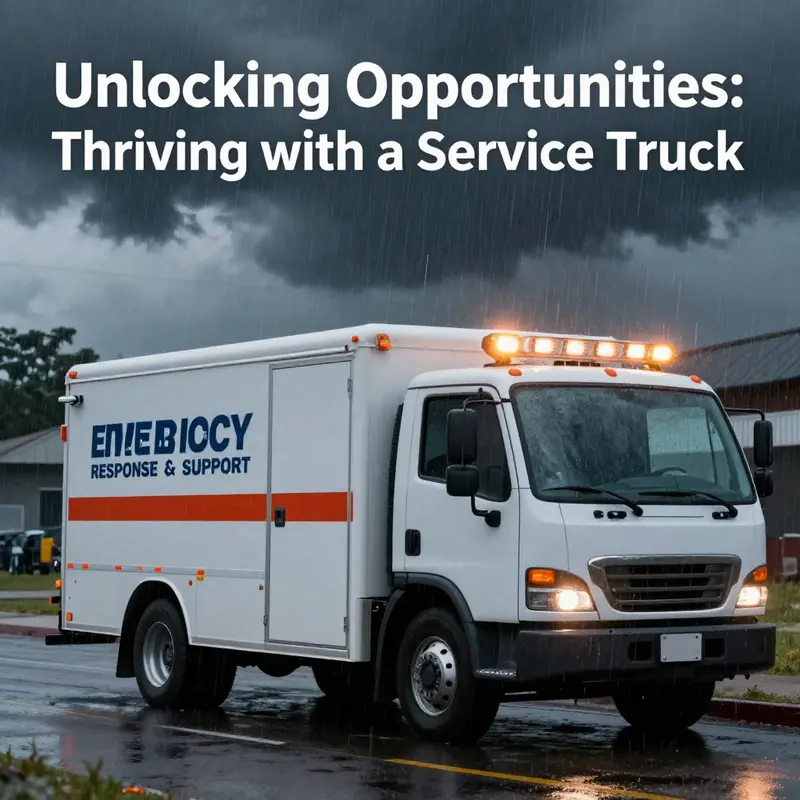
Emergency events test the resilience of communities and the reliability of infrastructure. In those high-pressure moments, a service truck can transcend its role as a simple vehicle and become a mobile command center—an on-site hub that unites people, equipment, and expertise to restore services quickly. This isn’t merely a business trick; it’s a public service that reduces downtime, minimizes damage, and brings a sense of order to chaos. When you design a service truck for emergency response and utility support, you’re choosing a platform that prioritizes readiness, adaptability, and rapid deployment. You’re betting on a model where speed is as valuable as precision, and where the right tools and systems live in a carefully organized space that can be accessed in seconds rather than minutes. The truck transforms from a cargo carrier into a field workshop, capable of carrying bulky components such as cables, pipes, and bulky hardware, while also hosting crews who need immediate access to diagnostics, spares, and power. In practice, this approach resonates with the realities of modern infrastructure work, where outages, storm damage, or urgent maintenance can cascade into broader disruptions if not handled promptly. The core strength of a service truck in this context lies in its mobility and its ability to deliver a broad mix of capabilities to the job site, not just labor but the essential equipment and temporary systems that keep a project moving forward. A well-equipped truck becomes a one-stop solution that minimizes the need for multiple trips to a shop or warehouse, preserving precious time when every minute counts. The design philosophy behind these vehicles emphasizes resilience. A reinforced frame supports heavy loads and rough terrain, while integrated toolboxes, crane arms, and hydraulic lifts enable crews to lift, install, and adjust without external help. On-board power systems, lighting, and climate control ensure that crews can operate safely and efficiently under challenging conditions. Storage is modular and labeled, so technicians can locate specialized parts and tools in seconds, a factor that directly correlates with faster response times and higher first-time fix rates. The integration of advanced telemetry and inventory management helps teams monitor stock levels, track tool usage, and reduce waste. In emergency scenarios, where weather, darkness, and noise can complicate work, these features translate into less downtime, fewer trips, and more predictable outcomes. This is the practical reason municipalities, utility companies, and construction firms increasingly seek out service trucks that can assume the role of a mobile field office. The vehicle’s versatility supports a wide spectrum of missions—from rapid lockouts and on-site generator rentals to temporary lighting setups and quick-turnaround repairs. The approach is not about replacing skilled crews but about empowering them to perform more efficiently when the stakes are high. A critical aspect of this model is the ability to respond to urgent needs after hours or during peak demand, when traditional service channels are overwhelmed. The urgency of restoring power, water, or communications is not merely a comfort issue; it’s a public safety and economic stability concern. When a service truck is prepared to deploy at short notice, it elevates the entire supply chain—from first responders and utility operators to the residents they serve. The economic logic follows naturally: faster restoration translates into lower downtime costs, fewer customer complaints, and more predictable service levels that city planners and utility boards can rely on. The branding and positioning of such a business should emphasize reliability, speed, and the breadth of capabilities offered. A customer looks at a mobile command center not just as a contractor but as a trusted partner who can provide both equipment and expertise in a single, accountable package. The value proposition blends on-site logistics with technical proficiency. Customers know that with a single call, they can secure a crew, a generator, temporary lighting, and the necessary tools to complete a project without disruption to other operations. This integrated delivery approach also opens doors to long-term contracts and preferred vendor arrangements, where the reliability of the mobile unit becomes a differentiator in competitive bidding environments. As you consider the operational reality, it’s important to acknowledge both the advantages and the boundaries of the model. The on-site, on-demand capabilities are powerful, but they demand disciplined project management and rigorous maintenance. The hydraulic systems, cranes, and reinforced structures require regular inspection, calibration, and potential downtime for repairs. A service truck that is not properly maintained risks becoming a liability rather than a lifeline, especially in storm-chasing or disaster-response scenarios. You’ll need a maintenance schedule, a preventive program, and qualified technicians who understand the unique constraints of field operations. Safety protocols must be embedded into every facet of the operation, from vehicle operation to the handling of energized equipment. Operators should be trained in hazard assessment, proper lockout-tagout procedures, and safe lifting practices. In addition, you’ll want robust insurance coverage and a contract framework that accounts for the high-risk nature of emergency response work. The financial structure should reflect the variability of demand while maintaining a baseline level of readiness. This means pre-positioning essential stock, securing flexible scheduling, and building capacity for surge operations. The fiscal discipline also extends to procurement, where bulk purchasing of common components and standardized tools reduces downtime and streamlines deployments. For communities, the benefit is tangible: a certified, mobile team that can be dispatched quickly, equipped with the right gear, and ready to stabilize a situation while longer-term repairs are planned. The business owner, in turn, gains a scalable platform that can expand into allied services such as temporary power rental, de-energization and re-energization services, or even a rapid-response support line for after-hours outages. The synergy with other service truck opportunities is not incidental. A well-maintained mobile unit can cross-sell into on-site repair services, offering a broader value proposition that anchors customer relationships and supports recurring revenue across multiple lanes of demand. In this sense, the emergency response and utility support model complements the broader landscape of on-demand mobility discussed in relation to service trucks. It leverages the same core strengths—mobility, storage capacity, professional appearance—and elevates them into a mission-critical service. The strategic pivot is less about creating a new business and more about expanding the scope of what a service truck can do when every hour matters. When constructing a go-to-market plan, begin by mapping the likely demand corridors: municipalities with aging infrastructure, utility firms undergoing upgrades, and construction projects requiring rapid setup and teardown. Build relationships with local emergency management offices, utility project managers, and contract civil works vendors. Develop a compelling SLA that specifies response times, maximum downtime, and the geographic coverage you can realistically maintain. Your marketing should emphasize speed without sacrificing safety, and it should showcase the truck as a visible symbol of readiness—an asset that communities can rely on during their most vulnerable moments. As a practical matter, consider the kind of onboarding you’ll offer. Will you provide after-hours dispatch, a dedicated technician roster, or a 24/7 hotline for urgent requests? Will you supply portable power, temporary lighting, and on-site communication setups as standard inclusions, or as modular add-ons? These questions shape not only the customer experience but also the revenue model and the operational discipline that sustains it over time. This approach aligns with broader industry trends toward decentralized, on-site capability that reduces response times and improves service continuity. It also opens pathways to collaborations with other service lines, such as mobile repair or equipment rental, allowing a single truck to support multiple revenue streams under a unified brand. For readers seeking a deeper dive into the technical standards that govern these platforms, consult the in-depth analysis of flatbed service truck standards and performance available here: https://www.industryservicevehicles.com/flatbed-service-truck-standards-analysis. And for a sense of how this model fits into the evolving trucking ecosystem, consider the broader industry perspectives discussed in private fleets trends in trucking maintenance. This framing helps anchor your plan in real-world practice and demonstrates the value of a mobile command center that can serve as both a lifeline and a business engine in times of need.
From Service Truck to Mobile Cafe: Designing and Operating a Food and Beverage Truck
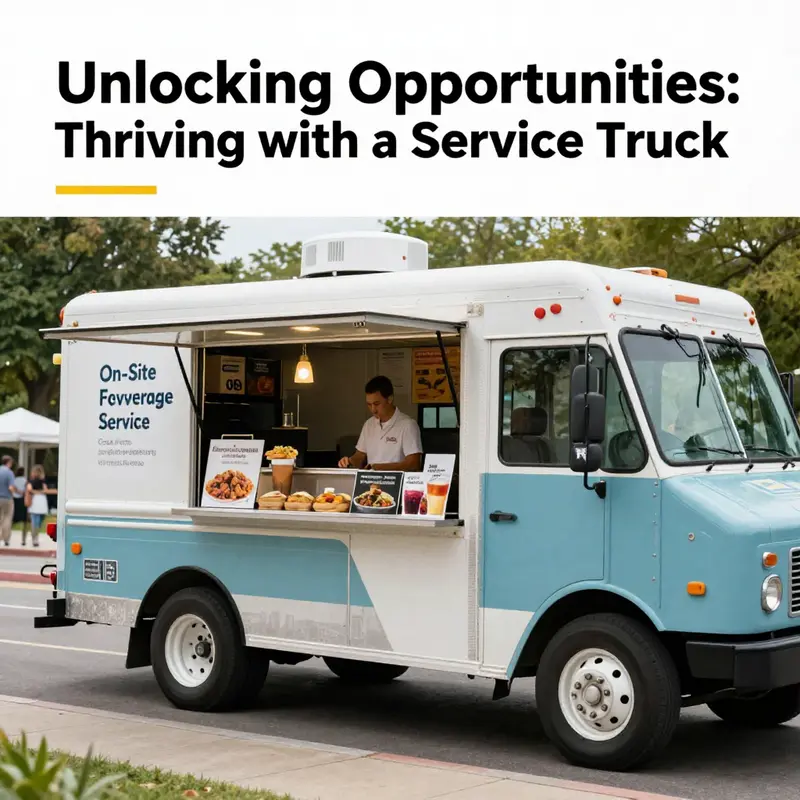
A service truck can be more than a work vehicle; in the right hands it becomes a compact, fully functional mobile kitchen that brings fresh drinks and meals directly to where people gather. The appeal is clear: speed, consistency, and a memorable brand experience without leaving the event, campus, or office park. The path from a standard service vehicle to a trusted on site cafe is paved with careful design choices, disciplined operations, and a clear understanding of the unique demands of mobile food service. The truck must function as both kitchen and storefront, a moving hub that can handle real time preparation, service, and sanitation while withstanding the pressures of outdoor environments and variable schedules. It is not merely about adding a coffee machine into a box; it is about engineering a purpose built micro kitchen that respects food safety, optimizes workflow, and communicates quality at a glance through branding and hospitality. Beyond the physical fit, there is the matter of compliance and containment. On site food operations exist at the intersection of culinary standards and mobile logistics. Permits, health inspections, and proper sanitation practices are not luxuries; they are the foundation that supports trust and repeat business. Most operators establish a commissary agreement, using a licensed kitchen space for storage, warewashing, and occasional pre prep. This arrangement helps meet health department expectations while reducing the need to duplicate extensive equipment in the mobile unit. A well planned food safety program covers everything from handwashing protocols and surface sanitization to proper cooling procedures and allergen controls. It also includes an effective inventory system that minimizes waste and ensures ingredients remain fresh during peak event windows. Operational discipline matters as much as equipment. A mobile unit thrives when it can scale up or down quickly, depending on the event or client. Clear standard operating procedures and a simple, reliable digital booking system empower staff to maintain consistency across shifts, locations, and weather conditions. Quality in a mobile kitchen extends to the menu itself. A compact, efficient menu often travels best when it emphasizes items that travel well, reheat nicely, and present well under a serve friendly counter. Hot beverages can anchor a business model in office parks or morning events, while cold drinks and small, freshly prepared bites broaden appeal at festivals or campus settings. Menu design should consider service speed as a competitive advantage; items with shorter assembly times reduce queues and improve the customer experience. The equipment inside the truck should align with these menu choices, ensuring reliable performance during busy periods. Operators routinely choose a mix of beverages and light fare that can be prepared from scratch on site with minimal waste and maximum consistency. The result is a brand promise built around freshness, speed, and reliability—qualities customers notice and remember long after the event ends. A well conceived menu also serves as a flexible platform for seasonal adjustments and event specific offerings, enabling the owner to tailor the experience to the audience without overhauling the trucks configuration. Branding, digital touchpoints, and guest experience complete the circle. The service truck becomes a moving storefront, so every interaction should reinforce a clear, welcoming impression. Visual branding on the exterior communicates what is inside and attracts attention from a distance. Inside, a clean, orderly space with a calm workflow radiates professionalism. Efficient payment options, including contactless transactions and pre orders via a mobile app or web form, shorten wait times and improve satisfaction. A thoughtful guest experience extends to customer engagement: friendly service, visible preparation, and the ability to customize orders in small ways create moments of delight that encourage repeat visits. The operator who succeeds in this space treats the truck not as a one off vendor but as a portable cafe or catering partner that can be trusted to deliver on schedule. This trust is reinforced by a predictable schedule, visible health standards, and a track record of consistent quality. At scale, the truck can expand into a small fleet with shared branding and a unified operating system, offering a broader service range to larger clients such as corporate campuses or multi event promoters. An understanding of market dynamics remains essential. Mobile food and beverage operations thrive where there is high foot traffic, steady event calendars, and organizations willing to outsource hospitality for efficiency and experience. Office parks, university campuses, outdoor festivals, and neighborhood markets represent ongoing opportunities. The economics favor ventures with disciplined cost structures and repeatable service models. Food and beverage on wheels has to balance the cost of equipment, permitting, insurance, and staff with price points that reflect value. Premium beverages, made to order options, and specialty offerings can command higher margins, especially when paired with memorable branding and reliable service delivery. The operator should map out peak windows, such as morning coffee rushes or lunch hours, and align staffing accordingly. Efficient route planning and event scouting help maximize utilization of the truck, ensuring it isnt parked idle when demand exists elsewhere. This strategic approach allows a single truck to generate recurring revenue, while a small fleet can significantly expand market reach. From a broader perspective, the mobile food and beverage model stands as a practical illustration of how a service truck can diversify revenue streams without committing to permanent storefronts. It illustrates the broader principle of turning mobility into a competitive advantage. A service vehicle that is well-branded, well-equipped, and well-managed can become a reliable source of both revenue and brand exposure. The logistics mindset—planning routes, aligning inventory with demand, and maintaining strict safety standards—translates well to other on site service opportunities described in related chapters. See the broader discussion on key economic trends impacting the trucking industry for additional context and strategic alignment with mobile service opportunities.
Mobile Specialty Pop-Up Stores: Turning a Service Truck into a Niche Retail Powerhouse
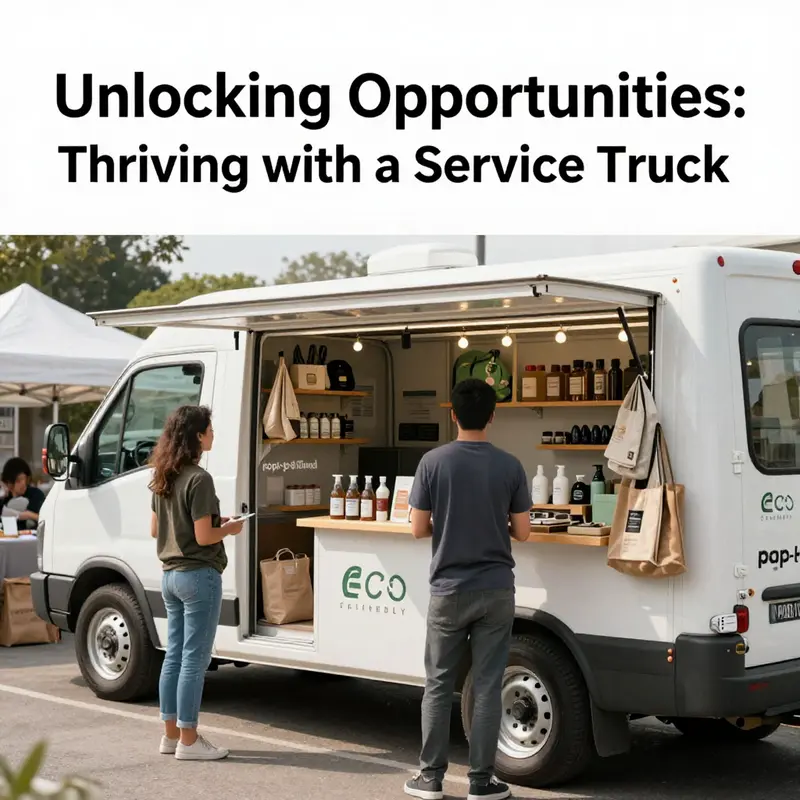
A service truck can be far more than a tool carrier and a roadside helper. When you fuse the discipline of a specialty retail store with the dynamism of a pop-up, the vehicle becomes a mobile showroom, workshop, and sales floor all in one. This hybrid model takes the central idea of a standard mobile unit and pushes it toward a focused category—one that demands deep knowledge, carefully curated products, and a service ethos that convinces customers they are getting more than a transaction. In practice, this approach asks you to design not just a truck, but a compact retail experience that can park in office parks, nearby industrial zones, or crowded event spaces and instantly communicate expertise, availability, and value. The result is a flexible storefront that travels to where customers are, instead of waiting for them to come to you. The concept aligns with broader retail shifts that favor experiential, on-demand buying and the active demonstration of utility, and it is particularly well suited to service-minded trades that can couple product sales with on-site consultation, installation, or customization.
Specialty stores are defined by depth rather than breadth. They focus intensely on a particular category, offering a narrow, well-curated selection and substantial know-how that informs every customer interaction. In a mobile format, that depth translates into interactive displays, live demonstrations, and a deliberately crafted product ecosystem. The truck becomes a learning environment as much as a storefront: customers can see a high-quality setup in action, understand how components fit together, and leave with a clear sense of what a professional installation, upgrade, or service entails. This is where the service truck earns a premium. It is not just a place to buy a widget; it is a place to gain certainty about complex solutions, with the assurance that you can call on the mobile specialist for follow-up help, after-sales service, and timely maintenance.
The pop-up dimension adds urgency and discovery to the equation. Pop-ups thrive on innovation, limited-time availability, and strategic placement in high-traffic settings. When integrated with a service truck, a pop-up becomes a temporary, highly branded showroom that travels between campuses, events, or business parks. It can run with a lean crew and a modular setup that changes with the season or the trend cycle. A smartly designed mobile pop-up can showcase best-in-class configurations, offer on-site assessments, and execute quick installations or demonstrations, all within hours of arrival. The combination thus shifts the consumer behavior paradigm from “search and compare” to “experience and decide on the spot.” A key advantage is the ability to test new product lines or service bundles in live markets with minimal risk, while maintaining the credibility and authority of a dedicated specialty provider.
The practical blueprint for such a venture centers on three pillars: a focused product or service scope, a layout that maximizes customer touchpoints, and a compliant, scalable operating model. From a product perspective, select a niche where customers highly value expertise and on-site execution. For instance, a mobile unit offering smart-home convenience devices can pair premium lighting controls, security modules, and climate sensors with on-site consultations and simple install packages. The sweet spot lies in products that are easy to demonstrate, reasonably priced to upgrade, and capable of integration with broader systems. Customer confidence grows when the truck can perform a live assessment, show a modular plan, and immediately wire the path from recommendation to installation. The display should be deliberately curated—every item chosen for demonstrability, compatibility, and the ability to be carried, stored, and installed with minimal disruption to the customer’s space.
The on-site experience matters as much as the product. A well-designed mobile showroom invites customers to touch, test, and visualize outcomes. The vehicle layout matters: secure storage for inventory and tools, a compact demo wall or table, and a service counter where consultations become formal proposals. Power needs, lighting, and security are not afterthoughts; they shape both the customer perception and the operational efficiency. Thoughtful branding reinforces credibility, with clear signage that communicates specialization, service scope, and after-sales support. In this model, the service truck is also a learning lab where customers receive guidance on how to maximize the value of their purchase, why certain configurations matter, and what ongoing maintenance will entail. A helpful byproduct is higher average order value when customers perceive a comprehensive, turnkey solution rather than a simple commodity sale.
A critical enabler is the ability to navigate permits, licensing, and the regulatory landscape while preserving the brand promise of reliability and professionalism. The research landscape notes policy environments that actively encourage the exploration of brand specialty stores, recognizing the potential for retail spaces to diversify consumption scenarios and revitalize local commerce. Treat the truck as a portable retail footprint that can be deployed with appropriate permits for temporary retail activity, outdoor vending when needed, and safe on-site demonstrations. Align your operational model with local constraints and industry best practices to avoid friction at the point of sale. This is not about skirting compliance; it is about weaving compliance into the customer journey so that every interaction mirrors competence and trust.
Marketing a mobile specialty pop-up requires precision in targeting and timing. Build a schedule that places your unit where your ideal customers congregate: corporate campus clusters, housing developments under construction, tech parks, and trade-show corridors during peak seasons. The ephemeral nature of pop-ups creates scarcity and curiosity, particularly when you couple a limited-time installation offer with a complimentary assessment. In practice, you might run a sequence where a customer books a 90-minute on-site evaluation, receives a tailored product bundle, and completes the purchase with a same-day install window. The immediacy of service and the visual impact of a well-executed demonstration reinforce the value proposition and convert curiosity into revenue. The mobile format also enables a fluid geographic reach, expanding footprint opportunities without the overhead of permanent storefronts.
From a revenue perspective, the model blends product sales with service-based revenue. The product line becomes a vehicle for trust-building, while the on-site aspect of the service truck sustains repeat business through scheduled maintenance, upgrades, or system optimization. Inventory management becomes a balance between showcasing a meaningful range and maintaining shipping and restocking efficiency for a mobile operation. Price strategy can reflect the premium of convenience and on-site expertise, with bundles that pair product kits with installation or configuration services. The on-site engagement often unlocks upsell opportunities that are less attainable through a traditional storefront, particularly when customers experience the tangible benefits of a fully integrated solution in their own space.
For practitioners ready to embark on this path, a practical blueprint is to begin with a pilot in a single niche, refine the physical setup, and then scale the concept to adjacent markets. The pilot should test not only the product mix but also the service cadence, booking flow, and capacity to perform on-site installations or demonstrations with a lean crew. The digital backbone is essential: a booking system that synchronizes with on-site scheduling, inventory visibility, and post-visit support. Branding must project authority, with a professional exterior and a coherent interior message that reinforces the specialty focus. The payoff is a mobile, credible, and repeatable model that can turn a service truck into a portable specialty store and a trusted advisor—where goods find people rather than people endlessly searching for goods.
Internal link for practical guidance and scalable frameworks can be found in the Mobile Retail guide on SBA.gov, which offers actionable steps for launching and growing a mobile storefront Mobile Retail guide on SBA.gov. For a broader exploration of the dynamics behind pop-up concepts and the experiential shift in retail, see the scholarly synthesis on mobile and pop-up retail forms. This external resource highlights how temporary storefronts shape consumer engagement and purchase behavior in ways that complement traditional channels. As consumer expectations tilt toward immediacy, personalization, and experiential shopping, the mobile specialty pop-up store emerges as a robust pathway for service trucks seeking higher-margin, differentiated offerings. A relevant scholarly overview can be found at Cambridge, which analyzes why pop-up retail matters and how it reshapes the retail landscape. https://www.cambridge.org/core/journals/retail-and-consumer-research/article/pop-up-retail-what-is-it-and-why-does-it-matter/4A8B6D7E5F2C8B8D5F8C8A7B6D5C4E3F
Final thoughts
Utilizing a service truck opens up numerous business avenues, from mobile repairs to food services, each with its unique advantages and market demand. Identifying the right business model hinges on understanding local needs, leveraging your skills, and seizing the opportunities this versatile vehicle affords. Whether you cater to businesses, residential clients, or adventurous consumers, a service truck represents a savvy investment with potential for success.