
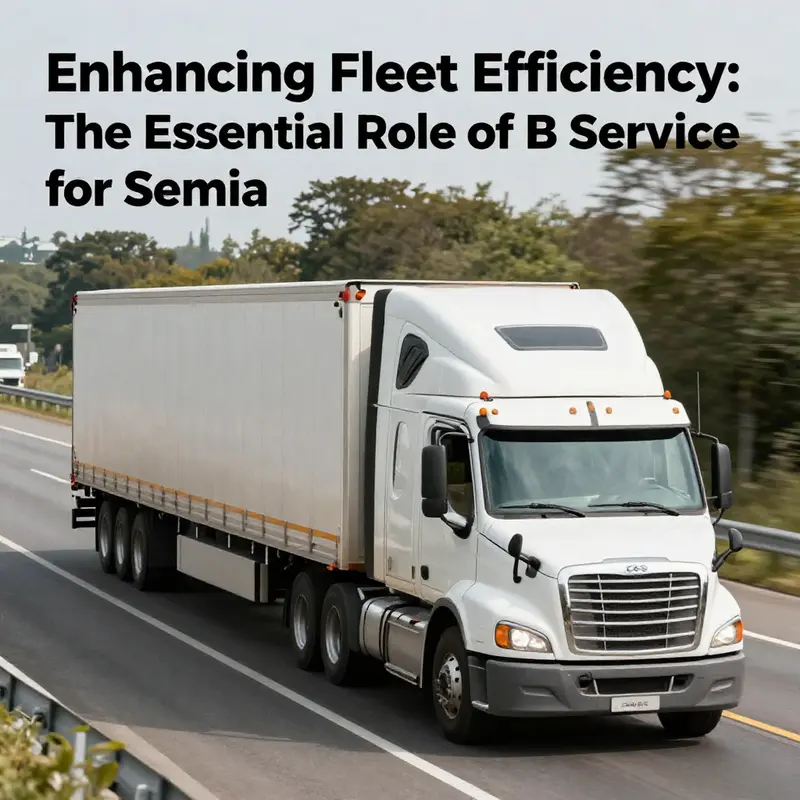
Maintaining a semi-truck is a multifaceted task crucial for ensuring safety, reliability, and efficiency on the road. Among the various maintenance options, the B service stands out as a pivotal point within a truck’s maintenance schedule. Designed to provide a comprehensive evaluation and servicing of key components, this level of maintenance is essential for businesses that rely on these vehicles for operational success. This article explores the intricacies of B service, emphasizing its importance, outlining a detailed checklist, and providing a comparative analysis with other service levels, ultimately guiding manufacturing, retail, construction, and shipping businesses toward better fleet management.
B Service Demystified: The Quiet Guard Keeping Semi Trucks Safe, Reliable, and On the Road
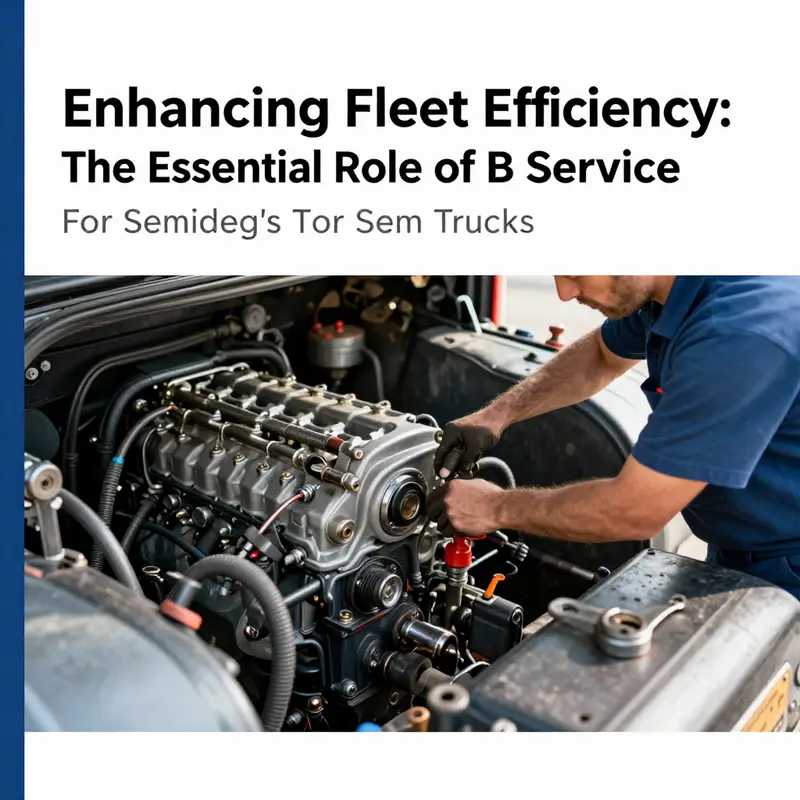
Maintenance programs in heavy trucking are more than checklists; they are a language that preserves safety, uptime, and the long-term value of a fleet. Among the tiered frameworks, the B service sits in a sweet spot that matters as much as any other routine but is often overlooked in conversations dominated by dramatic repairs or major overhauls. It is a mid level maintenance procedure that goes beyond a basic visual inspection without stepping into the expenses and downtime of a full engine or brake overhaul. For operators who move freight across long corridors and through varying climates, the B service represents a disciplined habit that translates into fewer breakdowns, less emergency downtime, and predictable maintenance costs. The concept is widely recognized across the industry, with manufacturers and maintenance providers using a standardized approach to determine what gets checked, refreshed, or replaced at specific intervals. The goal, always, is safety, reliability, and efficiency on the road, where even a small, well-timed maintenance action can prevent a costly failure miles away from the nearest service bay.
At its core, the B service is a proactive tune up that builds on what the A service starts and keeps components singing along as the truck racks up miles. The A service typically focuses on basic checks and alignment, while the B service adds depth and nuance to the inspection, confirming that fluids remain at optimal levels, filters perform their job, and wear items are still within acceptable tolerances. The exact scope, of course, varies by OEM and by operator policy, but the B service commonly includes a more thorough pass across the drivetrain, brake system, cooling circuit, and chassis components. The ship’s hull analogy is apt: you tend to the hull, rudder, and rigging at B service time so the voyage can proceed with confidence, even when the seas turn rough. For fleets that operate under tight schedules, this level of preventive care ensures the truck spends less time on the shoulder and more time hauling goods to market.
The rhythm of B service is time and mileage driven, but the practical application is more nuanced. Many manufacturers specify intervals in the range of roughly 15,000 to 20,000 miles, or about every six months, depending on operating conditions and duty cycles. In urban stop and go service, or in climates with extreme temperatures, the interval can drift—shorter in harsh conditions or longer in milder, steady use. The idea is simple: after a prescribed amount of wear and exposure, the vehicle benefits from a more intensive check to catch problems before they become symptoms. This is where the B service earns its keep, turning minor uncertainties into confirmed readings and, in some cases, into preventive replacements before failure signs appear. The philosophy aligns with the broader aim of preventative maintenance, which is an investment that yields reliability, rather than a cost that only shows up in the form of a breakdown ticket.
What actually happens during a B service reads as a carefully choreographed sequence rather than a single task. The engine oil and filter are typically replaced to restore proper lubrication and to reduce engine wear. Oil life is a guardrail against viscosity breakdown, and a clean filter ensures contaminants do not circulate through the sump where engine bearings live. The air filter is inspected or replaced to maintain clean intake air, which directly influences combustion efficiency and engine performance. Fluid levels—coolant, transmission fluid, brake fluid, and differential fluid—are checked and topped or replaced as needed. The cooling system, a critical lifeline for high-mileage operation, is assessed for leaks, hose integrity, and proper coolant concentration. Belts and hoses are examined for cracks or looseness, because a brittle belt or harden hose can cascade into belts slipping or engine cooling failures in the middle of a long haul.
Brakes deserve special attention in a B service. The inspection goes beyond a cursory look at pads and rotors. It commonly includes measuring pad thickness, rotor condition, and brake line integrity. The goal is to confirm that the braking system still offers full, reliable performance and to catch any wear that might compromise stopping power in an emergency. Tires are another critical focus; tread depth and pressure are checked, and damage or uneven wear patterns are noted. Tires are a truck’s contact with the road, and poor tread or improper inflation affects handling, braking, and fuel economy. A thorough lights and electrical check is standard too. All exterior lights, turn signals, and warning indicators should illuminate as designed, because lighting is a basic safety feature that enables visibility and communicates intent to other road users. In addition, the suspension and steering systems are examined for wear, looseness, or misalignment in components such as tie rods, ball joints, and control arms. A general visual inspection rounds out the service by looking for leaks, loose fasteners, or signs of corrosion and chassis damage. The aim is not to fix everything in one pass but to flag issues that merit closer attention during the next service cycle while ensuring nothing critical has been overlooked.
All told, the B service embodies a philosophy of proactivity. It seeks to preserve the reliability of the core systems that a truck relies on every day—the engine, the drivetrain, the brake system, the tires, the alignment, and the electrical backbone. In practice, this means the technician is not just performing a series of tasks; they are confirming that the truck is fit for continued operation within its planned route and duty cycle. When fleets emphasize disciplined adherence to B service intervals, they typically see fewer unscheduled downtimes, less deviation from a planned maintenance calendar, and smoother operations across the fleet. The cost of performing a B service, in most cases, is offset by the savings from avoiding a roadside breakdown or a more expensive repair caused by neglecting minor wear. It is a classic example of paying for prevention rather than paying later for cure.
The B service also plays a critical role in meeting safety and regulatory expectations. Vehicle operators know that sustaining a high level of mechanical health reduces the risk of unsafe conditions that could trigger inspection failures or DOT-related penalties. The inspection details—brakes, tires, lights, and structural integrity—are not arbitrary; they map directly to road safety standards and to the assurance that a heavy vehicle can handle its tasks with predictable performance. In an environment where a single vehicle can carry a fraction of a freight load that can influence a supply chain, the reliability afforded by such routine maintenance contributes to a broader system of efficiency and predictability. The B service, thus, sits at the intersection of practical maintenance and policy compliance, reinforcing the idea that good maintenance is part of responsible fleet management rather than a cost center to be minimized.
From the perspective of fleet operators who manage multiple vehicles, the scheduling and documentation associated with B service are as important as the hands-on work performed in the shop. Modern fleets rely on maintenance management systems to track intervals, record readings, and trigger upcoming service alerts. These systems turn maintenance from an ad hoc activity into a steady rhythm that aligns with other operational priorities. Technicians document measurements, replacements, and any anomalies, creating a traceable history for each vehicle. When a driver reports an unusual sound or feel—a subtle vibration in the steering wheel or a change in brake response—the recorded data from the most recent B service becomes a baseline for diagnosis. This continuity of data makes it easier to distinguish a temporary fluctuation from a progressive wear pattern, guiding decisions about parts replacement, further inspection, or a plan for overhaul.
To illustrate the practical value of B service, consider the everyday realities of a long-haul operation. A truck that receives timely oil and filter changes, clean air filters, and verified fluid levels is less likely to experience accelerated engine wear, clogged fuel or air pathways, or cooling system overheating on a hot stretch of highway. The same principle applies to the brake system; early detection of pad wear or rotor scoring means attention before the service brakes begin to fade under load, which can happen while climbing a grade with a heavy trailer in tow. Tire health, too, matters greatly for fuel efficiency and cornering stability, while a well-adjusted steering system reduces the effort needed by the driver and contributes to a safer, more comfortable ride over hundreds or thousands of miles. The cumulative effect of these factors is not simply a smoother operation; it is a more resilient vehicle that can weather the demands of a demanding schedule while preserving value through miles driven and time in service.
For readers seeking a broader context, the chapter on B service in the standard maintenance framework resonates with what private fleets are observing across the industry. These operators are increasingly sharing insights about maintenance trends, including how disciplined B level checks influence uptime and total cost of ownership. Such perspectives are explored in depth in industry conversations and reflective analyses, illustrating how a well-timed B service fits into a larger strategy of equipment reliability and workforce efficiency. For readers interested in these broader fleet maintenance trends, see Private Fleets Trends in Trucking Maintenance. The page offers a practical lens on how midrange maintenance practices translate into real-world outcomes across different operating environments. Private Fleets Trends in Trucking Maintenance
In practice, the steps of a B service are not a rigid recipe but a balanced set of checks that need to be interpreted in light of the truck’s duty cycle, age, and the operating environment. A seasoned technician will weigh the data collected, consider manufacturer recommendations, and apply professional judgment about what to adjust immediately versus what to monitor. This approach acknowledges that there is no one-size-fits-all sheet in maintenance, but there is a widely shared understanding that timely, data-informed intervention is the most reliable path to sustaining performance. As a result, B service becomes less about ticking boxes and more about sustaining momentum—ensuring the truck continues to perform at its best, mile after mile, season after season.
For readers who want to connect the maintenance philosophy with practical, hands-on guidance, remember that the manufacturer manuals provide the definitive procedures and intervals for each model and configuration. While the general tasks outlined here reflect common practice, the exact steps and service windows are best confirmed with the official documentation for the particular make and model being operated. This emphasis on manufacturer guidance helps ensure that a B service remains aligned with engineering intent, which is essential when vehicles operate in demanding conditions or under specialized duty cycles. The underlying principle is consistent: use the B service as a structured, proactive checkpoint to preserve performance, safety, and value over time.
External references that offer deeper technical specifics include the official maintenance manuals published by the hardware manufacturers. These documents provide model-specific instructions, torque values, fluid specifications, and diagnostic checks that engineers rely on during a B service. Accessing the official manuals ensures that the maintenance work aligns with tested standards and engineering expectations, reducing the risk of over- or under-serving a vehicle. For a reliable manufacturer-specific reference, consult the official maintenance manual linked here: Official maintenance manual.
B Service Unpacked: The Bridge Between Readiness and Reliability for Semi Trucks
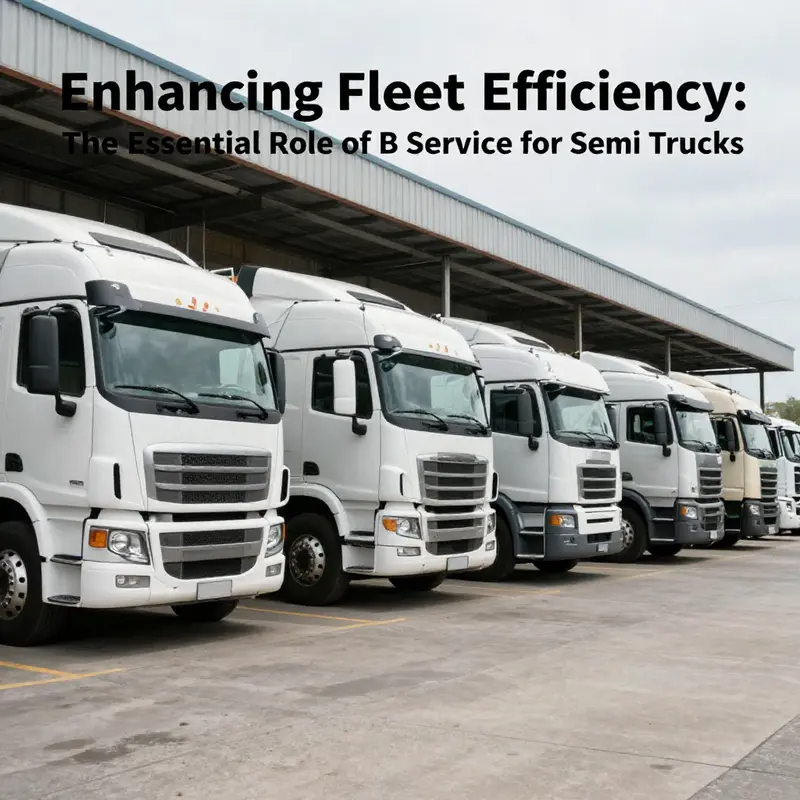
A well-timed B service sits at the heart of a fleet’s preventive maintenance plan. It is not a luxury, but a practical necessity that keeps semi trucks safer, more reliable, and cheaper to operate over the long haul. In many fleets, maintenance schedules include A, B, C, and D service intervals—from quick checks to major overhauls. The B service is the point where routine care becomes a more thorough diagnostic without becoming a full midlife rebuild. It helps operators catch developing problems before they become costly, roadside emergencies. When a driver notes that a truck is due for its B service, the signal is not just a service bay appointment, but a carefully planned checkpoint in the vehicle’s life and reliability strategy.
The core of B service is comprehensiveness without overreach. It expands beyond an A service while stopping short of a C or D overhaul. In practice, the B service consolidates checks and replacements across several critical systems. It foregrounds safety, efficiency, and reliability, recognizing that most expensive failures begin with small wear that compounds over time. The aim is to preserve performance and prevent cascading problems that could derail a long haul.
Fluid management is a central feature. The engine oil and filter are replaced, and a thorough inspection covers transmission fluid, differential fluid, and coolant. This is more than a routine oil change; it is a calibration moment that confirms fluids remain within specification for viscosity, temperature ranges, and contaminants. Dirty oil or degraded transmission fluid can degrade performance and invite damage. The B service also extends to filters beyond oil and coolant: air filters help engine efficiency and fuel economy; fuel filters protect injectors and the fuel rail from contaminants.
Inspection expands to brakes, tires, electrical, and the undercarriage. Brakes are a focal point: worn pads or rotor wear can compromise stopping power on grades and heavy loads. A B service includes a careful inspection of brake hardware, lines, and seals, with replacements or adjustments as needed. Tire health remains a priority: pressure, tread depth, and signs of wear prevent blowouts and loss of traction. The electrical system is checked for lights, connections, corroded terminals, and fuses. The undercarriage is examined for leaks, loose fasteners, or wear in suspension components. Proper suspension and steering condition affects handling and tire wear, especially on mixed routes.
Part of B service is a methodical diagnostic mindset. Technicians connect clues from different symptoms, so a driver may report poor fuel economy while a visible leak appears elsewhere. The B service reconciles observations with measurements and tests, helping identify timing deviations, blockages, or wear that could grow into costly repairs if ignored.
Planning and operating impact: B service minimizes unscheduled downtime by catching issues early while preserving delivery commitments. The cadence depends on usage, mileage, routes, climate, and loading. In high demand operations, B service may occur more frequently; in steady duty cycles, intervals may extend. A predictable maintenance window supports labor planning, parts inventory, and downtime management. A well executed B service turns maintenance from reactive repair into proactive risk management.
Guidelines and culture: Aligning with manufacturer recommendations and industry standards is common practice. Fleets use standardized checklists, torque specs, and service interval thresholds to keep work consistent. The B service creates a data thread that informs scheduling and replacement decisions and can support transparency with customers and regulators.
Driver and technician collaboration: The B service offers a chance for drivers to understand the vehicle’s health and for technicians to learn an individual truck’s operating profile. This collaboration, especially in mixed climate operation, helps protect components exposed to heat, cold, rain, and road salt. The result is steadier performance, better fuel economy, and lower risk of unexpected roadside events tied to preventable issues.
Conclusion: The B service sits between immediate needs and long term health. It bridges the day to day with the life of the fleet, aligning with safety, efficiency, and total cost of ownership. When fleets maintain this discipline across trucks and locations, the maintenance data becomes a valuable asset for forecasting parts, scheduling, and capital planning.
B Service Unpacked: The Essential Midpoint of Semi-Truck Maintenance

A B service sits at a pivotal point in the life of a semi truck. It is not the dramatic overhaul of a C or D service, yet it is more comprehensive than a routine A inspection. For fleet operators, drivers, and technicians alike, the B service represents a disciplined checkpoint that keeps the vehicle proving ground ready between major overhauls. It is the midcourse correction that preserves uptime, safety, and efficiency in a life spent on long hauls, shifting weather, and ever-changing road conditions. The concept rests on a simple idea: you sustain performance by checking the critical systems before wear mounts into costly failures. The B service is not a single task, but a coordinated sequence of checks and adjustments whose goal is to prevent small issues from becoming big breakdowns. In the framework of a typical A, B, C, D maintenance ladder, B sits after the baseline inspection and before the more invasive work of later services. It is a practical compromise between time, cost, and risk, and it is where many fleets anchor their reliability strategy. The exact scope can vary by fleet, by engine design, and by manufacturer guidelines, but the general intent remains clear. Between major overhauls, the B service acts as a steadying influence, preserving engine health, brake integrity, tire life, and the overall harmony of the powertrain and chassis. The results show up not only in reduced downtime but also in safer operation and better fuel efficiency. The planned cadence of B services aligns with mileage intervals and time-based reminders, which means a truck that travels long distances can stay in step with its maintenance plan rather than drift into unplanned repairs. In practical terms, this means a well-executed B service translates to fewer surprises on the highway and a stronger return on investment for the fleet. It also empowers drivers by giving them a transparent process they can trust, with predictable checks that reassure them that the truck will perform as expected across hundreds of miles of demanding duty. The macro goal is safety and reliability, but the micro details matter just as much. A B service typically expands beyond the bare minimum of an A service to include a thorough review of the most wear-prone systems. The engine, transmission, differentials, brakes, tires, electrical systems, and suspension are all examined with a practical eye toward wear patterns and environmental exposure. The technician does not simply confirm that fluids are at the right level. The checks are active, involving measurements, measurements of clearances, and assessments of condition. This approach is rooted in decades of field experience, where the difference between a minor service and a major breakdown is often a handful of indicators caught early. The result is a service that feels as much like a preventive surgery as a routine maintenance event, a careful curation of attention toward the parts that see the most stress in extended operations. The first element in this careful approach is fluid management. Engine oil is not just a level; it carries the fingerprints of the engine’s life. The technician checks the oil for level, color, and viscosity compatibility with the current operating conditions. An oil that looks unusually dark or thick can indicate fuel dilution, inadequate filtration, or high wear in the piston rings and valve guides. The coolant is examined for proper concentration, corrosion inhibitors, and signs of leakage. Coolant health matters because it sustains the engine under severe load and extreme temperatures. The transmission fluid and the differential fluid follow a similar logic: level, contamination, and condition. Contaminants in these fluids can indicate worn seals, slipping clutches, or internal wear that could escalate if left unchecked. Brake fluid, too, receives attention during a B service. Moisture content in hydraulic fluids reduces braking effectiveness and can lead to fade in hot weather or on long downhill slopes. Checking moisture content helps preempt a safety issue before it affects stopping distance. Fluid checks, however, are only the beginning. Filters are a natural companion to fluids in a well-tuned system. Air filters keep the intake clean, protecting the charge air and the engine from dust that can accumulate in dusty routes or high-profile job sites. Fuel filters are essential for maintaining clean fuel delivery, especially in harsh climates or dusty environments where particulates can enter the system. In the B service, a decision is often made about whether to replace these filters or to leave them in service based on observed condition, time, and manufacturer guidance. The filter changes contribute directly to engine efficiency, combustion stability, and long-term reliability. The braking system is a centerpiece of the B service. It is not enough to peek at a set of pads; the inspection must assess pad thickness, rotor and drum condition, and the overall health of the hydraulic and air brake systems. Worn linings, scoring on rotors, cracks in drums, and misaligned components can impair stopping power. The air system, including reservoirs, lines, and pressure regulators, is tested for leaks and for proper air pressure at all points in the system. Slack adjusters are checked and adjusted to manufacturer specifications, ensuring the brake application is even and predictable. The ABS system is examined for proper function, and wheel speed sensors are validated to prevent false alerts or missed faults. The suspension and steering components receive equal scrutiny because a smooth ride and precise steering are the foundation of safety. Shock absorbers are checked for leaks and wear, while leaf springs are inspected for cracks or misalignment. U-bolts and mounting hardware are tightened and checked for corrosion. Steering components — tie rods, kingpins, ball joints — are inspected for play and wear, with any looseness corrected to preserve steering precision. Wheel bearings are listened to for unusual noises and checked for heat or excessive play; if needed, they are repacked or replaced. The tire program in a B service is not solely about tread depth, though that is critical. Tread depth is measured across all axles, with attention to even wear patterns that hint at alignment or suspension issues. The casing is inspected for sidewall damage that could lead to blowouts under load. Inflation pressure is verified against the vehicle’s load and road conditions, and if equipped, TPMS readings are cross-checked with the recommended pressure. Retread readiness is considered, because a durable casing can yield significant cost savings when refurbished correctly. The electrical and lighting systems are checked comprehensively to ensure visibility and signaling integrity. Lights and indicators are tested in all operating modes, including daytime running lights and hazard signals. Wiring harnesses are screened for signs of chafing or damage, and the battery and alternator are evaluated for performance. The electrical health is a practical safety check because electrical faults are a common source of roadside failures and can affect critical functions like braking and steering if not properly managed. Engine and drivetrain checks in a B service focus on keeping the heart of the truck in rhythm with the rest of the machine. The air filter is inspected for cleanliness, particularly after dusty missions or back-to-back long runs. Belts and hoses are checked for cracks, glazing, or signs of aging, as these can fail at the least convenient moment. The timing system is reviewed to ensure correct tension and alignment, with emphasis on chains in heavy-duty engines where wear can accelerate under load. The exhaust system is examined for leaks and secure mounting, because exhaust integrity is both a performance issue and a safety one in terms of emissions and heat management. A newer emphasis in 2026 adds an ergonomic and safety compliance dimension. The B service increasingly includes checks that relate to operator safety and human factors. Mounting steps, handholds, and grip strength are assessed to ensure safe access and egress from the cab and service platforms. Ladders and handrails are inspected for secure mounting and compliance with current guidelines. The cab interior is scrutinized for seat belt function, mirror integrity, and the reliability of emergency exits. These ergonomic and safety considerations reflect a growing recognition that the best maintenance program is not only about machinery but also about the humans who operate and service it every day. A well-executed B service combines these mechanical and human factors into a single, repeatable process. Documentation is essential. Every finding, replacement, and adjustment must be logged in the vehicle maintenance history. When a defect is observed, it is flagged for immediate action. A signed-off checklist confirms that the work has been completed and that the truck is safe and ready for service. In practice, fleets lean on digital maintenance platforms to manage B service intervals, reminders, and record-keeping. The practical value of this approach lies in the predictability it provides. When a truck reaches its next milestone, the system prompts technicians to perform the checks that keep the fleet moving. The internal reference framework carried by many operators emphasizes that a B service is not a one-off event but a disciplined habit, a steady cadence that sustains uptime and reduces the total cost of ownership. For readers looking to deepen their understanding of maintenance schedules and best practices, one practical route is to explore industry discussions on fleet maintenance trends and how they shape midcycle service routines. Private fleets trends in trucking maintenance. This link points toward a broader view of how operators balance cost, reliability, and safety in real world conditions. Private fleets trends in trucking maintenance. The takeaway is simple: a well-structured B service is the practical backbone of a dependable freight operation. It is the point at which routine upkeep becomes a strategic asset rather than a recurring expense. By cleaving to a consistent, comprehensive, and safety-forward checklist, fleets protect their equipment from wear patterns that escalate into failures, reduce the likelihood of on-road breakdowns, and preserve driver confidence in the machine they rely on every day. This is not an abstract ideal but a grounded practice that translates into steadier schedules, fewer dispatch delays, and a clear link between maintenance discipline and operational performance. Importantly, the B service remains adaptable. It can be tuned to reflect engine design, climate influence, and the specific demands of the routes served. Fleets that tailor the service to their realities—protecting the core systems, ensuring robust safety features, and maintaining the human factors that keep drivers safe and productive—will continue to reap the benefits in uptime and safety. In this sense, the B service is less a rigid protocol and more a living conversation among machines, people, and processes. It asks not only what to check, but when to check it and how to respond if something is amiss. What matters most is that it is carried out with consistency, documented with care, and executed by competent hands guided by manufacturer guidelines and field-tested wisdom. The result is a semi truck that remains resilient under pressure, a vehicle that earns trust with every mile, and a system of maintenance that supports sustainable, profitable operations in a landscape where reliability is as valuable as payload capacity. External reference: Fleet Maintenance Checklist Master Guide: Class A, B, C & D. https://www.scribd.com/document/587293125/Fleet-Maintenance-Checklist-Master-Guide-Class-A-B-C-D
The B Service Blueprint: How a Midcycle Check Keeps Semi Trucks Safe, Reliable, and Cost-Efficient

In the cadence of a modern trucking operation, the B service sits at the crossroads between routine-use and long-term resilience. It is not the dramatic overhaul of a C or D service, nor is it the light touch of an A service. Instead, the B service acts as a midcycle, methodical check that translates the wear and demands of thousands of miles into proactive maintenance choices. For fleet managers and drivers alike, this is the moment when the engine’s quiet whispers and the chassis’s subtle signs are translated into actions that keep a semi truck on the road, safe to operate, and economical to run. The value of this midlevel service becomes clear only when you view maintenance as a system rather than a handful of isolated tasks. Each component that is inspected during a B service has its own narrative: oil and filters that keep the heart of the truck clean, brakes that guard stopping power, tires that connect the vehicle to the road, and a thousand small connections that turn a machine into a dependable partner. When these elements are checked with consistency, a fleet not only reduces downtime but also elevates the predictability of maintenance costs and the reliability of deliveries. The goal is to prevent the surprise failure before it occurs, to catch wear before it becomes a safety risk, and to document what has been looked at so that future service decisions are informed rather than reactive.
The core of a B service, as practiced in many fleets, rests on a clearly defined but flexible set of inspection and maintenance activities. It often begins with fluid management: a check of engine oil and filter, transmission fluid, differential fluid, and coolant. The level and quality of these fluids tell a story about the truck’s operating history and its future needs. Fresh oil is not just about engine cleanliness; it reduces friction, preserves tolerances, and can extend the life of key components under heavy loads and long-haul duty cycles. Transmission and differential fluids, when deteriorated, can lead to shifting issues or thermal stress that compounds wear over time. Coolant, with its corrosion inhibitors and anti-freeze properties, protects the cooling system from scale buildup and overheating that would otherwise degrade performance. A B service typically includes changing these fluids or at least topping them up to the recommended levels, followed by replacing the filters that work in concert with the fluids: air filters to keep intake clean, fuel filters to protect the injectors and combustion process, and sometimes cab air filters to maintain the driver’s environment.
But the B service reaches beyond the fluids and filters. Brake inspection and maintenance form a central pillar of the midcycle check. Brakes in heavy trucks endure tough duty—dense wear on pads and shoes, rotor or drum wear, and the possibility of glazing from heavy braking in mountainous terrain or urban delivery cycles. A comprehensive B service looks for wear patterns, checks for proper clearances, and verifies the operation of the anti-lock braking system, which is essential to maintaining control under emergency or adverse conditions. If a wear pattern is detected, technicians determine whether a simple adjustment suffices or if a component warrants replacement before it becomes a safety liability. In the same breath, tire inspection remains a constant companion to safety. Tire pressure, tread depth, sidewall integrity, and alignment all influence braking performance, fuel efficiency, and ride comfort. Correct pressures optimize footprint and heat dissipation, while uneven wear can reveal alignment issues, worn suspension components, or a need for balancing.
Electrically, the lights and electrical systems receive their due attention during a B service. A thorough test covers headlights, taillights, brake lights, and turn signals, with attention to wiring integrity and secure connections. In the modern truck, where electronics govern engine management, transmission performance, and telematics, a robust electrical check becomes a guard against intermittent faults that can cause sensor misreads, limp modes, or inaccurate data used by maintenance planning tools. Suspension and steering are equally critical. The B service scrutinizes bushings, ball joints, tie rods, and the overall geometry of the chassis. Any looseness or unusual play can translate into poor handling, degraded ride quality, and accelerated wear on tires and driveline components. A well-executed B service also includes a general visual inspection of the chassis, undercarriage, and exterior for leaks, loose parts, or signs of corrosion. This outward scan is not just about catching obvious damage; it is about recognizing patterns that may hint at progressive wear, such as a small drip that could indicate a cooling system hose failure, or a mounting that has begun to fatigue under heavy loads.
The B service, in its essence, is a structured, practical approach to maintenance that acknowledges the realities of fleet operations. It is more than a checklist; it is a disciplined routine that translates miles into actionable insights. The exact scope can vary from one fleet to another, and even among OEMs and service providers, there is no universal, one-size-fits-all definition. However, the shared principle is clear: the B service sits between the essentials of an A check and the more demanding interventions of a C or D service, acting as a safeguard against creeping wear and an early warning system for emerging issues. In this sense, it functions as a safety net that protects both the vehicle and the business that depends on it. For operators, the practical payoff is straightforward. Regular B service intervals help maintain engine efficiency, extend component life, and reduce the risk of unexpected breakdowns during peak delivery windows. The cost of performing a midcycle check is often outweighed by the avoided downtime, the spared labor costs of emergency repairs, and the smoother operation of the fleet across peak seasons and changing routes. The math becomes particularly favorable when maintenance data is harnessed through telematics and centralized maintenance management systems. Real-time monitoring of oil quality, filter life, brake wear, and tire conditions can inform a technician about when to book the next B service or whether a quick proactive replacement is warranted. When fleets pair hands-on checks with data-driven scheduling, they move from a reactive maintenance philosophy to a proactive one, where the vehicle’s health is continuously assessed against the demands placed upon it by routes, loads, and weather.
The variation in practice across fleets is not a weakness but a reflection of different operating profiles. A regional carrier with consistent miles and predictable routes will align its B service timing with a known cycle of wear and part life. A regional-to-long-haul operator with diverse terrain and fluctuating loads may adopt a more dynamic approach, using data and condition-based maintenance to adjust B service timing. In either case, the objective remains the same: to maintain braking efficiency, fuel economy, and ride stability while preventing small problems from escalating into costly repairs. This is where the role of technicians becomes central. Skilled technicians bring an understanding of how a truck’s systems interact under real-world conditions. They interpret fluid analysis results, assess wear patterns, and verify that components are within serviceable limits. They also ensure that replacements and adjustments comply with manufacturer specifications and the operator’s maintenance policy. Proper lubrication, torqueing to prescribed specs, and correct reassembly practices are not afterthoughts; they are integral to the success of a B service. The process also emphasizes environmental and safety considerations. Fluid disposal, filter recycling, and the proper handling of worn parts are part of the service’s footprint, reflecting broader regulatory and environmental responsibilities that fleets increasingly embrace.
Documentation is another quiet but vital aspect of the B service. Each inspection item becomes part of a vehicle’s service history, creating a durable record that supports warranty claims, resale value, and regulatory compliance. When a truck leaves the shop, the driver and dispatcher should receive a concise report that highlights what was checked, what was found, and what actions were taken or recommended. This transparency builds trust within the operation and enables the next technician or maintenance manager to pick up where the prior one left off. In practice, the maintenance record becomes a living document, a thread that connects miles of operation to the underlying health of the machine. It is not merely paperwork; it is the basis for strategic decisions about part replacement cycles, scheduling alignment with peak demand, and budgeting for future capex. For drivers, the B service also carries significance beyond the mechanical. A well-executed midcycle check reduces the likelihood of late-night breakdowns, keeps the truck within regulated maintenance windows, and supports a safer, more predictable driving experience. When a truck runs smoothly, drivers can focus on delivering goods, maintaining schedules, and managing fatigue—factors that ultimately contribute to safety and efficiency on the road.
Despite its name, the B service is not a passive ritual. It requires active engagement from the maintenance team and the operator’s leadership. It invites questions about the spacing of service intervals, the selection of fluids and filters, and the thresholds at which parts should be replaced rather than serviced. In brands and fleets where A, B, C, and D are used as a ladder of service intensity, the B rung offers a critical balance. It asks for enough attention to catch the creeping wear that mileage alone cannot reveal, yet it avoids venturing into the more disruptive and expensive repairs that a C or D service can entail. This balance matters because a well-implemented B service sustains uptime while protecting the vehicle from compounding wear that would otherwise erode its performance and safety margins over time. For readers who want to connect this discussion to practical decisions, consider the human and organizational elements behind B service. Fleet policy must articulate who is responsible for scheduling, who approves replacements, and how technicians communicate findings back to the operation. A robust policy also includes clear criteria for when a B service should be escalated to a C or D service, ensuring that the decision-making process is timely and data-driven rather than reactive. In this way, the B service becomes not just a maintenance activity but a core habit of disciplined fleet management.
As you reflect on what a B service means for a semi truck, it helps to situate it within the broader arc of maintenance planning. The interval between A and C services represents the spectrum of care that keeps a vehicle viable across years of heavy use. The B service emphasizes consistency and attentiveness—the midcourse correction that preserves engine health, braking reliability, tire integrity, and electrical stability. For anyone responsible for keeping a fleet roadworthy, the B service is a reminder that high performance in trucking is not about single heroic repairs but about steady, informed stewardship of a complex machine. It is about translating the day-to-day realities of a highway economy into a regular, repeatable practice that yields safety, reliability, and value over time. If you are studying maintenance schedules in depth, the B service’s role becomes a natural anchor point—an achievable, tangible step that supports longer-term goals without overwhelming the operation with overzealous or overengineered interventions. For those who want to explore how midcycle maintenance evolves in response to changing fleet dynamics, there is meaningful insight to be found in industry discussions about private fleet maintenance trends and how fleet leaders balance cost, reliability, and safety while scaling up or adapting to new regulation or market conditions. Private Fleets Trends in Trucking Maintenance
Ultimately, understanding the B service is about recognizing how maintenance is a form of risk management. It is the practice of identifying wear before it becomes a failure, of validating that the vehicle can perform reliably across demanding routes, and of maintaining the driver’s confidence in the machine they rely on every day. It is also about how a fleet thinks about cost—not just the cost of parts and labor in the shop, but the broader cost of downtime, missed deliveries, and the fatigue that can accompany an unexpected breakdown. When this midcycle check is executed with discipline and supported by data and policy, it serves as a critical instrument in sustaining uptime, safety, and efficiency across a heavy-haul operation. The B service, then, is less about a fixed list of tasks and more about a philosophy: that keeping a semi truck healthy enough to meet today’s demands requires regular, thoughtful attention to the systems that keep it moving, and that doing so in a structured way yields dependable performance for miles to come. This is the simple truth at the heart of the B service: it resolves the tension between immediate needs and long-term reliability by creating a predictable rhythm for inspection, adjustment, and renewal. As fleets continue to navigate a landscape of evolving technology, labor supply, and regulatory expectations, the B service will remain a foundational element of how semi trucks stay safe, efficient, and on the road where they belong. For readers evaluating maintenance programs, it is worth asking whether the B service in their operation emphasizes not just what is checked, but how often, how decisions are documented, and how the results are integrated into ongoing planning and budgeting. In those evaluative moments, the B service reveals itself not as a single procedure, but as a sound approach to keeping a complex machine trustworthy under pressure, mile after mile, season after season.
External reference: volvotrucks.com
Final thoughts
Regular B service maintenance for semi trucks is not just a routine but a strategic necessity that ensures the longevity and performance of the vehicle fleet. As businesses navigate the complexities of logistics, the challenges of safety compliance, and the demands of efficiency, understanding the role of these services becomes increasingly significant. Equipped with a detailed checklist and an awareness of the benefits in comparison to other service levels, companies can make informed decisions that contribute to smoother operations and enhanced profitability.