
The complex landscape of semi-truck maintenance is essential for ensuring reliability and safety in commercial operations. Among various service terminologies, the concept of ‘B service’ on semi-trucks stands out but lacks a standard definition across the industry. This article aims to demystify ‘B service’ by exploring its absence of a universal interpretation, comparing it with similar maintenance practices, and highlighting the necessity of adhering to manufacturer guidelines. Each chapter will add layers of understanding, providing actionable insights for manufacturing, distribution, retail, construction, e-commerce, and small shipping business owners.
Decoding B Service on a Semi Truck: Why There’s No Universal Standard and How Fleets Translate It into Maintenance
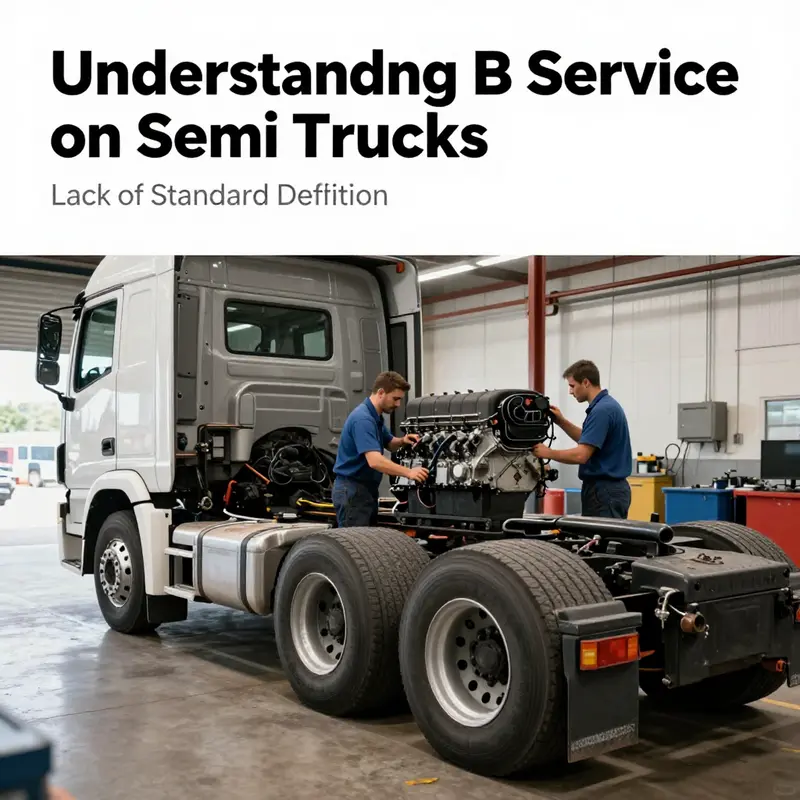
When people talk about a B Service for a semi truck, they are often tapping into a familiar-sounding maintenance concept without realizing the term carries no universal standard. Across the trucking world, terms like Service A, Service B, and Service C appear in internal schedules, fleet manuals, and maintenance portals. Yet there is no single, globally mandated definition that applies to every truck, every operator, and every repair shop. That absence of a universal standard means that a B Service can look very different depending on who is using the term, what kind of equipment is in service, and the specific demands of a given operation. Understanding this nuance is essential for drivers, technicians, fleet managers, and even the small business owner who keeps a regional fleet rolling. It also helps explain why conversations about maintenance can quickly become confusing if participants compare notes without first agreeing on the exact tasks and inspection criteria attached to a B designation.
Driver shifts, regulatory expectations, and the wear pattern of modern powertrains all shape how maintenance is scheduled and labeled. In many fleets, preventive maintenance follows a tiered approach, with Service A representing a baseline level of checks and replacements and Service B representing a mid-cycle or mid-interval servicing. But even this commonly adopted blueprint is contingent on internal policy rather than a universal rule. For some operators, Service B might be a mid-morizon oil change, a filter replacement, and a routine brake inspection. For others, the same label could signal a more comprehensive set of checks that closely resembles what another fleet would call Service A, or even a light inspection reserved for a different cycle altogether. Those discrepancies aren’t just academic; they affect downtime, labor costs, spare parts planning, and the safety of the vehicle on long hauls or city deliveries.
One of the core reasons the term lacks standardization is the absence of a central governing body that prescribes maintenance intervals across the entire heavy-truck ecosystem. Heavy-duty manufacturers issue service manuals and recommended maintenance timelines for their own engines, transmissions, and braking systems, but those guidelines are often adapted by fleets to fit their duty cycles and regional operating conditions. A two- or three-pump oil change interval might be anchored in the engine’s design and oil specification, yet the decision to perform that change as part of a Service B can hinge on the fleet’s tolerance for downtime and the cost of roadside risk. Add the variables of different truck ages, varying trailer configurations, and the diverse climates trucks operate in, and the logic behind a B Service becomes highly contextual rather than universal. In this sense, the B Service is a flexible label, a signpost that points to a set of procedures defined by a particular maintenance plan rather than a fixed, cross-industry checklist.
The practical implication is that every driver should approach the term with a clear, document-backed definition. Before a shift begins, the maintenance manual or the fleet’s service schedule should be the primary reference. This is not merely an administrative precaution. When a technician reads a vehicle’s maintenance history, they need to know, for instance, whether a brake inspection is included in Service B or saved for a later Service C. If a driver is handed a checklist titled “B Service” without a corresponding scope, critical items could be missed or redundant checks could be performed, both of which carry cost and safety implications. The best practice is to equate the term with a defined set of actions in the fleet’s own glossary, much as a mechanic would interpret a city’s traffic ordinance in the language of the local traffic code rather than in generic terms.
In many fleets, a B Service is positioned between the routine, more frequent checks of daily operations and the more invasive work that requires longer downtime. It commonly includes fluid level verification, brake system inspection, air and fuel filter assessment, tire condition and tread depth checks, and basic electrical system diagnostics. But even these components can vary. Some operators may include a detailed air brake test, a cooling-system drain-and-refill, or a transmission service in B, while others reserve those tasks for a subsequent interval. What remains consistent is the intent: to catch developing issues before they escalate into breakdowns or safety concerns. The underlying philosophy aligns with preventive maintenance—address small problems in a timely way to prevent large, unexpected costs later. Yet the specific tasks, their sequence, and their thresholds are defined by the fleet’s internal standards rather than a universal code.
This variability can be explained by the realities of fleet operation. A regional carrier with a high-prequency service model and newer equipment may optimize downtime by consolidating tasks into fewer, more comprehensive mid-cycle checks. A long-haul operator with older tractors and heavier utilization may rely on more aggressive maintenance windows to maximize uptime and reliability, even if that means more frequent mid-cycle interventions. Equipment type also matters. Different engines, axles, brake configurations, and cooling systems have unique service needs that can influence whether a B Service includes an oil change, a filter replacement, an inspection of bearings, or a breathable air system check. The lack of standardization is not a flaw; it is a practical response to a diverse operating landscape where one size rarely fits all.
For drivers and technicians, the key is to remove ambiguity through clear communication. The simple move of aligning terminology with the fleet’s documented schedule can prevent misinterpretation. A driver should know not just that a B Service is due, but exactly which tasks are included, what inspection criteria are used, and how the results determine the next maintenance window. The maintenance manual should spell out the tasks, the recommended intervals, the acceptance criteria, and the required records. In environments where multiple vendors or service providers touch the vehicle, a common reference point—what the B Service includes in this specific fleet—keeps everyone on the same page. Clear, written definitions support safety compliance, reduce the risk of missed maintenance, and help maintain predictable maintenance costs.
A useful way to think about B Service is as a negotiable milestone rather than a fixed script. It is a midpoint in a planned life cycle. Some fleets treat it as the point at which the vehicle’s more complex systems are re-evaluated; others use it as a practical checkpoint for routine wear items. Either approach hinges on internal policy and the early detection of wear and opportunity for preventive action. The broader industry will always struggle with a single universal standard because different operators measure risk, downtime, and cost through their own lenses. Yet the industry also benefits from shared best practices. Trade associations and manufacturers publish guidelines that support consistent maintenance planning, even as individual fleets tailor those guidelines to their machines and routes. For example, the American Trucking Associations endorses preventive maintenance programs that emphasize regular inspection, proactive replacement of critical components, and proper record-keeping. While those guidelines provide a robust framework, they do not dictate a universal B Service checklist. They do, however, offer a valuable benchmark for fleets seeking to harmonize their internal standards with recognized best practices.
For readers navigating this topic, a practical takeaway is to treat B Service as a label whose meaning lives in the fleet manual. If you are a driver moving between fleets, a quick orientation session with the maintenance supervisor can prevent confusion. If you are a maintenance supervisor, ensure that every technician and driver receives the same version of the service schedule—complete with task lists, inspection criteria, and documentation requirements. This alignment supports safer operation, better uptime, and more predictable maintenance costs. When the term appears in discussion, ask: What does B Service include in this operation? Where does this fit in the overall maintenance plan? How often is it performed given the truck’s age and duty cycle? These questions transform a vague label into a precise, actionable plan.
To connect the concept to real-world practice, consider the broader trend of maintenance in private fleets, where internal schedules often reflect both the fleet’s operating reality and the vendor ecosystem. The ongoing evolution of maintenance practices in private fleets demonstrates how flexible labeling can coexist with rigorous standards. For readers interested in seeing how fleets adapt maintenance strategies to changing conditions, a closer look at Private Fleets Trends in Trucking Maintenance provides a concrete example of how labels like B Service are operationalized in day-to-day decision-making. Private Fleets Trends in Trucking Maintenance.
As a closing thought, the absence of a universal B Service definition is not a loophole but a reminder of the complexity of maintaining a modern, diverse fleet. It places responsibility on the operators to define and communicate their maintenance expectations clearly. It also invites drivers and technicians to become partners in safeguarding safety and reliability through precise, documented processes. Readers who want a broader framework for understanding preventive maintenance can consult industry guidelines that emphasize regular inspection, timely replacement of critical components, and consistent record-keeping. The aim is simple: maintain the truck in a state where uptime is predictable, safety is uncompromised, and costs are managed. External resources from industry associations offer expanded context and can serve as a reference while fleets shape their own internal standards. External resource: https://www.trucking.org/
B Service Demystified: What It Means for Semi-Truck Maintenance, Uptime, and Fleet Safety
Maintenance practices for semi trucks sit at the intersection of safety, reliability, and cost control. Among the maintenance concepts that fleets discuss, the term B Service often triggers questions. There is no universal, industry-wide definition for a B Service that applies to every make and model, every route, or every fleet. Instead, B Service typically functions as part of an internal maintenance plan. It is a scheduled, more comprehensive check than the routine oil and filter changes that many drivers perform at regular intervals. Depending on who writes the plan—whether the truck’s manufacturer, the fleet, or an outside maintenance partner—B Service is defined with a distinct set of tasks and a particular mileage window. In practice, you may see rhythm like oil changes every 5,000 miles, a basic A Service every 15,000 miles, and a more thorough B Service around the 15,000 to 25,000-mile range, though exact figures shift with vehicle design, operating conditions, and regional requirements. The essential idea remains consistent: B Service is a deeper, more systemic check intended to catch developing issues before they become failures, while supporting safe and efficient operation over the longer haul. This chapter weaves that core concept into a cohesive understanding of what a B Service looks like in the field, why it matters, and how it connects to broader fleet maintenance goals. To the driver and the technician alike, B Service embodies the shift from reactive fixes to proactive stewardship of the vehicle’s most critical systems.
A central element of B Service is the engine evaluation. The engine is the heart of a semi truck, and its health has a direct bearing on reliability, fuel economy, and downtime costs. In a well-structured B Service, technicians go beyond a surface-level oil change. They inspect the engine block for cracks or leaks that could indicate metal fatigue, gasket failure, or cooling system problems. They verify crankshafts and camshafts for signs of wear or imbalance, looking for play or unusual noises that could presage bearing trouble or timing irregularities. The timing system—belts or chains and their tensioners—receives careful scrutiny because a failure here can lead to expensive, time-consuming repair work. Ensuring timing components are properly tensioned and free from damage helps prevent misfires, reduced power, and unexpected shutdowns on the road. These checks are not intended to be punitive; they are designed to preserve engine life, protect fuel efficiency, and minimize the risk of unplanned downtime that disrupts schedules and erodes margins.
Equally important in a B Service is the review of the suspension system. The ride quality and the ability to maintain tire contact with the road are fundamental for safety and for predictable handling across a wide range of highway conditions. Technicians examine shock absorbers for fluid leaks and signs of reduced damping capability. Worn shocks can magnify bounce, increase driver fatigue, and accelerate tire wear on pothole-ridden routes. Leaf springs receive a thorough inspection for broken leaves, misalignment, corrosion, and proper stacking. Any misalignment or damaged leaf could alter axle height and lead to uneven tire wear or steering instability. The goal is not to condemn components but to identify wear patterns early and plan replacements or alignments before performance is compromised.
Tire health often rises to the top of B Service priorities because tires are the vehicle’s only contact with the road. In many fleets, B Service includes a targeted tire assessment: tread depth checks, inflation verification, and rotation schedules aligned with the vehicle’s operating pattern. Special tire configurations, such as Super Single Tyres 385 in regional or vocational fleets, bring their own considerations. These tires can offer reduced rolling resistance and weight savings but may show different wear characteristics and tread life compared with conventional duals. As a result, technicians adjust inspection frequencies and rotation plans to reflect how these tires behave under mixed-service conditions—highway miles for long hauls mixed with urban or mountainous operation. Regular rotation and precise inflation management help maximize the performance window of such tires and prevent premature failures that could create roadside downtime or hazardous handling conditions.
Beyond the mechanical checks, B Service acts as a bridge to the broader discipline of fleet maintenance management. Fleets that adhere to a strict B Service schedule, reinforced by real-time monitoring tools, telematics, and robust logbooks, typically achieve better uptime, tighter safety compliance, and more predictable maintenance costs. Real-time data from onboard sensors can flag elements trending toward failure—rising oil temperatures, unusual vibration patterns, or tire pressures drifting away from targets. The maintenance team translates these signals into actionable interventions during the B Service window or as part of a planned replacement cycle. This data-driven discipline helps fleet managers sequence work to minimize downtime, assign the right technician skills to each task, and balance capital expenditures with operating expenses. In practice, B Service becomes a carefully choreographed routine that aligns engine care, chassis health, and tire stewardship with regulatory expectations and the company’s service level commitments.
The schedule and scope of B Service are not universal constants. They ebb and flow with the truck’s design, the climate, the terrain, and the duty cycle. A highway-based, long-haul tractor-trailer might see longer intervals between B Service checks but more frequent engine and oil system evaluations due to high heat and sustained loads. A regional or vocational unit that handles mixed terrain and stop-and-go operation could face more frequent inspections and a broader set of checks to account for abrupt loading cycles and frequent braking. Severe service environments—extreme temperatures, heavy payloads, or constant idling—tend to shorten the planned intervals and expand the list of items reviewed during B Service. Even manufacturer recommendations come into play; the same model may have a different recommended B Service window when operated under certain conditions. In other words, B Service is not a one-size-fits-all event; it is a calibration point that each fleet adjusts to match its operating realities.
The practical implementation of B Service also rests on the people who drive and service the truck. A well-trained technician can interpret subtle signs—a slight oil sheen on a gasket surface, a faint metallic scent during a warm-up, or a barely perceptible change in a vehicle’s feel through the steering wheel—and translate them into proactive actions during the service. Equally important is driver participation. A driver who records fine-grained pre-trip and post-trip observations and reports anomalies promptly contributes to a much more reliable B Service outcome. This collaboration helps ensure that the service window captures actual conditions rather than a snapshot that misses evolving issues. For fleets aiming to optimize maintenance outcomes, combining structured B Service procedures with disciplined record-keeping and driver feedback creates a feedback loop that keeps the vehicle healthier longer and reduces the chance of unexpected failures on the road.
For operators who study maintenance patterns across the industry, the concept of B Service frequently intersects with broader fleet trends. Reading about how private fleets approach maintenance can offer useful context for a shop floor decision. In that vein, many operators find value in following evolving maintenance trends and adapting B Service protocols to reflect lessons learned from other fleets. See the ongoing discussions around Private Fleets Trends in Trucking Maintenance for practical perspectives on how different operators manage schedules, parts availability, and technician staffing. This ongoing dialogue helps fleets tune their B Service programs to achieve the right balance between preventive care and cost control, a balance that directly affects uptime and driver satisfaction. Private Fleets Trends in Trucking Maintenance
The chapter of B Service you apply in your fleet should, ideally, feel like a natural extension of the manufacturer’s guidance and your organization’s safety culture. It is not about chasing a perfect, one-size-fits-all checklist but about designing a maintenance rhythm that catches problems early while keeping trucks on the road where they perform best. The checklist in SAC’s authoritative maintenance reference provides a benchmark for what constitutes a thorough service without being prescriptive about every circumstance. It emphasizes a holistic approach—oil and filter changes, system inspections, and condition-based assessments—so technicians and managers can tailor their B Service to the specifics of their equipment and operations. You can explore a widely respected framework in industry literature here: SAC B Service Checklist.
In practice, the B Service mindset translates into tangible outcomes. Reduced downtime stems from catching wear early rather than reacting to failures after they occur. Better fuel economy can result from timely engine tuning and proper tire inflation paired with alignment checks. Safer handling and smoother rides come from a disciplined evaluation of suspension components and tire health that prevents unexpected tire degradation or compromised braking performance. When fleets implement B Service as part of a comprehensive preventive maintenance strategy, they create a virtuous cycle: early issue detection, targeted repairs, longer component life, and more predictable maintenance budgeting. The human elements—clear maintenance records, diligent technician work, and proactive driver feedback—make the difference between a sporadic care routine and a disciplined, safety-focused program that supports reliable, efficient operation across a fleet’s entire linehaul or regional network.
In closing, a B Service is best understood not as a rigid checklist but as a dynamic, context-dependent investment in the truck’s health. It is the essential bridge between routine care and proactive stewardship, designed to keep heavy vehicles performing at their best while keeping teams safe and schedules on track. When fleets embrace this approach and adapt it to their specific equipment, duty cycles, and operating environments, B Service becomes a core pillar of modern trucking, aligning maintenance with performance and uptime with profitability.
Decoding Service A and Service B: What a ‘B Service’ Really Means for Semi Trucks
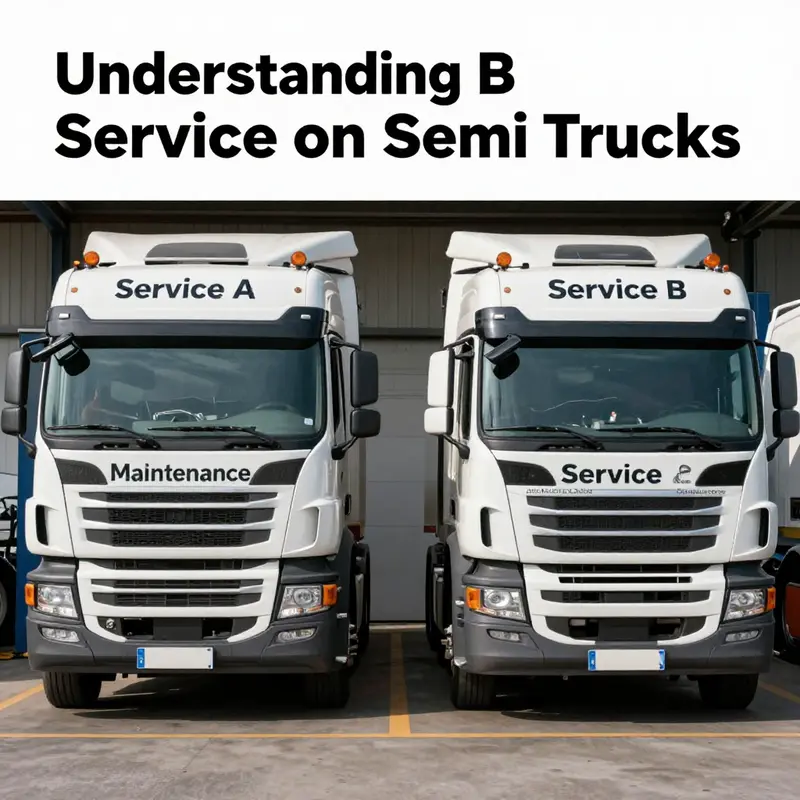
When someone talks about a maintenance schedule for a semi truck, the phrase Service A and Service B often pops up with a conversational certainty that isn’t matched by a universal standard. In the trucking world, these terms are more likely to reflect a fleet’s internal planning than a fixed industry definition. The result can be confusing for drivers, shop technicians, and fleet managers who must align on what gets checked, replaced, or adjusted at each visit. The reality is that there is no globally accepted blueprint for what a B service entails in heavy-duty trucking, and any discussion of a B service should begin with a careful check of the specific fleet’s maintenance manual or the manufacturer’s guidance that underpins that fleet’s operating plan. This is a reminder that, in practice, Service A and Service B operate like two tiers of planned upkeep, with Service B generally signaling a broader, deeper, or more comprehensive round of checks than Service A. Yet even this broad distinction is not standardized across manufacturers or companies. Some fleets reserve Service A for routine replenishment and safety checks, while Service B combines those tasks with more extensive inspections that probe for wear and potential failures before they become outages. Others may reverse that order, keeping the same general intent but swapping the exact tasks around to fit a vehicle’s age, duty cycle, and service history. Because of this variability, a B service for a semi truck is less about a fixed menu and more about a documented expectation that the truck will receive a defined set of checks and replacements, framed by the fleet’s operating realities. A helpful way to frame the conversation is to think of Service A as the baseline maintenance that keeps the truck reliable day to day. It often includes essential fluid changes, air and fuel filters, lubrication points, and a core inspection of safety-critical systems. Service B, then, tends to broaden that baseline to incorporate more in-depth scrutiny: wear and tear on brakes, tires, steering linkages, driveline components, and suspension; checks on air systems for leaks and proper pressure; a more thorough electrical and lighting inspection; and, in older or higher-mileage equipment, attention to cooling systems, transmission wear, and engine accessory drive components. It is important to stress, however, that this two-tier concept is not a universal standard. Two fleets with the same equipment might diverge in what they call A or B and in the exact tasks each service comprises. This divergence can be especially noticeable when a fleet has a mixed mix of powered units—diesel semis and electrified tractors—and aims to tailor maintenance to the precise needs of each powertrain. The point is not to force a rigid interpretation, but to understand that the B service label functions as a signal: a prompt to review the maintenance plan, confirm the scope with the technician, and ensure documentation aligns with the fleet’s risk management and compliance goals. In practical terms, drivers and shop staff should approach a B service by first locating the maintenance schedule that applies to their vehicle, then comparing the stated tasks with what is actually performed at the shop. If a form lists oil changes and filter replacements under A, and a separate B list includes brake system inspection, driveline wear checks, and a more exhaustive electrical test, the two lists together describe the fuller lifecycle care the fleet intends to deliver. Yet even this clarity can be elusive unless the fleet has built its schedule around hard metrics—miles driven, hours in service, or a combination of both—and tied those metrics to a robust preventive maintenance program. The mileage and duty cycle of a semi truck heavily dictate when to place the A or B label on a service event. A typical guideline in many fleets is that preventive maintenance intervals cluster around milestones like every 50,000 miles, with more frequent servicing in heavy or mixed-use operations. But, again, there is no universal rule; the exact cadence is set by what the fleet has learned from experience, the specific components in use, and the vehicle’s maintenance history. The lack of standardization also means that Service B can be used to address a particular risk or a known issue before it becomes a failure. For example, if a truck has a history of brake wear or tire wear patterns that exceed normal expectations for its type of operation, a B service might emphasize those areas to prevent an unexpected downtime event. Maintenance planning software and fleet management practices have grown to accommodate this kind of nuance. The most effective programs connect the tasks in Service B to risk-based inspection routines, ensuring that each critical subsystem receives a deeper look at the appropriate interval. In this sense, Service B acts less like a fixed recipe and more like a governance mechanism—a way to codify what a fleet considers an elevated level of oversight and proactive care. The discussion also needs to address the evolving landscape of powertrains in semi trucks. As electrification appears in more fleets, the maintenance questions shift. Electric drivetrains reduce certain mechanical wear items but introduce new areas of focus, such as high-voltage safety protocols, battery cooling and thermal management, and electric motor inspections. Fleets that have adopted internal Service A and Service B frameworks often adjust the scope of each service to reflect these new priorities, weaving in high-voltage system checks, battery health diagnostics, and software/firmware updates where appropriate. This evolution reinforces a key point: the B service does not exist in a vacuum. It lives inside a broader maintenance philosophy that aims to balance reliability, uptime, safety, and total cost of ownership. The practical takeaway for drivers is to cultivate a habit of reading the maintenance plan as a living document. If a shop hands back a work order that lists items under Service B that you believe were already addressed months ago, that discrepancy should trigger a discussion with the fleet manager or maintenance supervisor. Documentation matters because it is how fleets measure performance, track trend data, and identify recurring issues that hint at systemic problems—like a particular component showing accelerated wear in a specific model, or a pattern of moisture ingress affecting electrical connectors in certain environmental conditions. In this context, an internal resource such as private fleets trends in trucking maintenance can offer a window into how real-world operators are interpreting and applying maintenance categories, including Service A and Service B, in diverse operating environments. The bottom line is that a B service, when encountered, should prompt a conversation about scope, frequency, and the rationale behind the chosen tasks. It is not a confession of failing to meet a universal standard, but a signal that a fleet has expanded or deepened its maintenance program to guard against the higher costs of downtime and unscheduled repairs. For drivers and technicians, the expectation should be clarity, consistency, and a shared understanding that the work performed under Service B is intended to extend reliability and enhance safety. That shared understanding fosters trust and reduces the friction that can arise when different teams interpret maintenance terms in different ways. It also makes it possible to plan ahead more effectively, allocate the right resources, and communicate honestly about the trade-offs involved in keeping a heavy truck on the road. As the industry continues to push toward more diversified powertrains and smarter maintenance ecosystems, the concept of Service A versus Service B will likely continue to evolve. What does not change is the need for a coherent maintenance philosophy that translates into actionable tasks, transparent documentation, and predictable outcomes for uptime and safety. In that sense, the inquiry about a B service on a semi truck is less about conforming to a fixed label and more about ensuring that the right checks happen at the right time, guided by the vehicle’s duty cycle and the fleet’s risk management strategy. The practical implications extend beyond the shop floor. A well-structured A/B framework helps with budgeting, warranty considerations, and driver confidence. It supports meaningful conversations with service providers who must interpret the fleet’s expectations and translate them into precise work orders. It also helps fleet owners understand how maintenance costs scale with vehicle age, workload, and environmental conditions, enabling better total cost of ownership calculations and more predictable depreciation curves. The road to clarity here is paved by documentation, collaborative planning, and a shared commitment to uptime and safety. External resource: https://www.tesla.com/trucks
Decoding the B Service Myth: How Manufacturer Guidelines Define Maintenance for Semi-Trucks
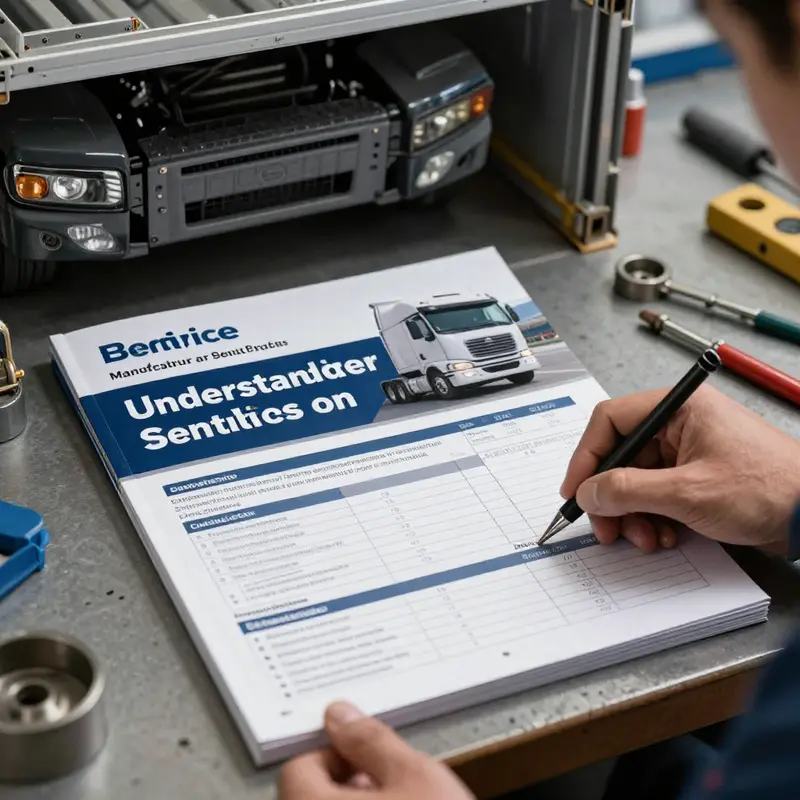
The phrase “B service” often travels with the cargo of assumptions in semi-truck fleets, but it is not a universally defined maintenance step across the industry. In many shops and fleet manuals, maintenance tasks are labeled A and B, or they’re described by a schedule like 50,000 miles or six months. Yet most fleets treat these labels as internal shorthand rather than a standardized, external standard. This ambiguity can tempt operators to view a B service as a single, codified checklist. In reality, what matters far more than the label is understanding what the manufacturer intends for the engine, transmission, suspension, and ancillary systems to receive at each milestone. When we peel back the label, the real throughline becomes clear: maintenance that follows the maker’s guidance protects safety, performance, and the total cost of ownership over the vehicle’s life on the road. The larger article’s aim—unpacking what a B service means for a semi-truck—rests on that clarity. The truth is that a precise definition exists only within the context of a vehicle’s official service manual and the fleet’s own maintenance guidelines. Any external shorthand that purports to be universal arrives without the specificity required to safeguard critical systems during the rigors of heavy-duty operation. The result is a practical reminder: if you operate a semi-truck and you encounter a “B service” in your paperwork, treat it as a cue to consult the exact manufacturer intervals and the fleet’s maintenance plan rather than assuming a fixed set of tasks. This approach keeps your maintenance synchronized with the engineering intent behind every fastener torque, every lubrication interval, and every inspection checkpoint.
What follows is a guided reflection on why manufacturer guidelines matter so deeply in trucking maintenance and how a fleet can translate those directives into reliable, cost-effective service practices without being trapped by a label that lacks universal meaning. The core of sound maintenance is predictability—knowing that critical components will receive the right attention at the right time, regardless of what a particular fleet or service shop calls the task. When drivers and technicians center their decisions on the manufacturer’s torque figures, lubrication intervals, and inspection procedures, the vehicle’s performance remains aligned with the design goals that shaped its engineering. This alignment is essential for engines and powertrains that endure extreme thermal and mechanical loads, and it extends to the supporting systems that carry heavy weights and stabilize the vehicle on unpredictable road surfaces. The industry does not survive on guesswork; it thrives on precisely calibrated maintenance that mirrors the engineering intent of the hardware.
At the heart of the maintenance equation is the engine’s most stressed ensemble. Critical components such as the cylinder heads, engine blocks, crankshafts, and camshafts are designed to withstand repeated cycles of heat, pressure, and fatigue. The manufacturer’s torque specifications for fasteners, the prescribed lubrication intervals, and the recommended inspection cadence are not arbitrary; they are the product of engineering analyses, real-world testing, and stringent safety standards. When a technician adheres to these guidelines, the likelihood of premature wear, misalignment, or sudden failure drops dramatically. Conversely, deviations—whether through skipped lubricants, altered torque, or out-of-sequence inspections—can cascade into reduced performance, higher fuel consumption, or, in the worst case, a roadside failure. The consequences of such misalignment extend beyond the vehicle itself. They ripple through downtime costs, driver availability, and the reliability that customers expect when a semi-truck is deployed to move goods across long distances. The lesson here is straightforward: the B service label does not substitute for the maker’s instructions. It is the manufacturer’s guidance that should govern the cadence and scope of maintenance.
The suspension system—another pillar of safety and reliability—relies just as much on precise procedures as the engine does. Shock absorbers, leaf springs, bushings, and mounting hardware are engineered to carry heavy payloads, absorb road irregularities, and maintain proper axle alignment. The same rigid discipline applies: installation must follow exact tolerances, alignment checks must occur at specific intervals, and periodic inspections must verify wear limits and fastener integrity. A suspension failure may not be catastrophic in the same instant as an engine failure, but its consequences are immediate and visible in handling, traction, and tire wear. When maintenance deviates from the maker’s protocol, warranties can be voided and the risk of accidents increases—an unacceptable trade-off in a system whose components operate under high stress for long hours. These realities underscore why mechanical fidelity to the manufacturer’s procedures is not merely a technical preference; it is a safety imperative with real economic implications for fleets, drivers, and the communities that share the road.
Financial implications naturally accompany technical diligence. Strict adherence to manufacturer instructions protects the investment represented by a mature, high-mileage vehicle. It reduces the likelihood of unexpected major repairs, lowers downtime, and preserves fuel efficiency—an economically meaningful trio for any carrier. The cost of noncompliance is often invisible at the time of maintenance: wasted labor hours, hurried or improvised fixes, and the potential for cascading wear in adjacent components. In the long run, the fleet that follows the engineering-guided maintenance plan tends to experience steadier maintenance expenses, higher uptime, and more predictable cash flow. The same logic applies to warranty considerations. When a vehicle is maintained in line with the official service intervals and procedures, it strengthens the validity of warranty claims and minimizes disputes over coverage. While every fleet must balance budgets and operational realities, the north star remains consistent: the manufacturer’s instructions are designed to guard against heavy-use wear patterns and to maximize reliability across the vehicle’s service life.
To understand the practical translation of this guidance, technicians and fleet managers routinely consult official technical documentation from the major engine and drivetrain manufacturers. While the specific manuals are not public-facing in every detail, the general principle is clear: service intervals, lubrication regimes, torque sequences, and inspection criteria are established through exhaustive testing and field validation. These documents demonstrate that the critical maintenance parameters are not merely suggestions but parameters that preserve engine life, turbocharger health, fuel economy, and emission compliance. For those who want to dive deeper into the engineering foundations behind these intervals, the engineering guidelines published by leading engine manufacturers offer a comprehensive resource base. They outline how service tasks are tiered, how wear-related checks are scheduled, and how environmental and operating conditions factor into maintenance planning. This is where the external link to engineering guidelines serves as a practical anchor for readers seeking a robust technical reference beyond fleet-level practices.
Within fleets, a bridge between the universal manufacturer guidance and on-the-ground maintenance reality is often formed through internal best practices. A well-run maintenance program will harmonize the official intervals with the fleet’s operating profile, payload patterns, route structures, and regional maintenance capabilities. In many cases, fleets use a two-tier approach: a standard service interval that aligns with the manufacturer’s most critical checks, and a supplementary cycle that addresses site-specific wear patterns or operating conditions. The aim is not to enforce a rigid, one-size-fits-all routine but to build a disciplined framework where every truck receives the necessary attention at the correct times. Within this framework, a seemingly simple label such as B service becomes meaningful only if it maps clearly to the manufacturer’s requirements and to the fleet’s documented maintenance plan. When both elements are aligned, the result is consistency across the fleet, improved predictability for maintenance scheduling, and a clearer understanding of what maintenance work is due and why.
For readers who want a practical touchstone as they navigate this topic, one accessible route is to engage with industry materials that discuss maintenance trends in private fleets and how those practices are evolving with new regulations and technologies. A concise overview of those trends can be found in the following resource, which offers insights into how private fleets are adapting their maintenance strategies in light of cost pressures and performance expectations: private fleets trends in trucking maintenance. This resource sits alongside the broader guidance provided by manufacturer documentation and fleet-level policy, illustrating how theory translates into everyday action on the shop floor and in the field. While that reference helps illuminate the practical side of maintenance decision-making, the broader takeaway remains constant: do not rely on a label to define your service; rely on the manufacturer’s guidance and the fleet’s documented plan to determine the exact sequence, scope, and timing of maintenance tasks.
In the end, the term B service may persist in some shops and manuals as a convenient shorthand. Yet the most durable, defensible approach to semi-truck maintenance is to anchor every service to the manufacturer’s engineered specifications. This ensures that critical engine components, the suspension system, and the broader drivetrain are treated with the precision they demand. It also preserves safety and performance while protecting the fleet’s financial health. The maintenance schedule then becomes a living contract between engineering intent, the technician’s expertise, and the vehicle’s operational reality. As the industry continues to evolve with new technologies and evolving regulatory demands, the core principle remains unchanged: do not substitute a label for the science of maintenance. Follow the maker’s instructions, and translate those instructions through your fleet’s documented procedures to keep every mile as efficient, safe, and reliable as the design intended.
External resources can deepen this understanding. For a thorough technical deep dive, consult the engineering guidelines published by leading engine manufacturers, which articulate service intervals, torque specs, and inspection criteria in a field-tested framework. engineering guidelines from leading engine manufacturers
null

null
Final thoughts
The dynamic nature of semi-truck maintenance requires a nuanced understanding of various service terminologies, notably ‘B service.’ While the absence of a standard definition may initially create confusion, it underscores the importance of aligning maintenance practices with manufacturer guidelines and industry standards. For manufacturers, distributors, retailers, construction firms, and small business owners, understanding these concepts not only enhances operational efficiency but also contributes to the longevity and reliability of their fleets. Prioritizing continued education on maintenance will assure an optimal performance, reduce downtime, and protect business investments.