
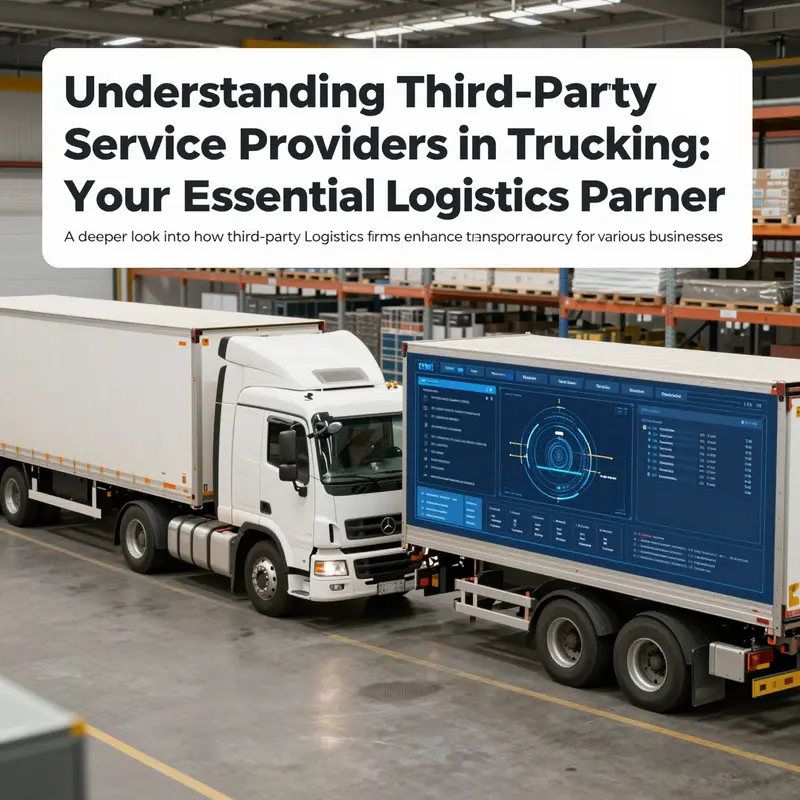
The need for efficient transportation and logistics has never been more critical than in today’s competitive market. As manufacturing & distribution companies, retail and e-commerce businesses, construction firms, and small businesses with shipping needs grapple with the complexities of supply chain management, the role of a third-party service provider (3PL) in trucking takes center stage. These specialized providers facilitate the logistics process, acting as indispensable intermediaries that streamline operations and optimize costs in the transportation landscape. This article will guide you through the core definition and role of 3PLs in trucking, their operational functions, their economic impact, and emerging trends that may redefine their landscape in the future.
null
null
The Orchestration Engine: Operational Functions of a Third-Party Service Provider in Trucking
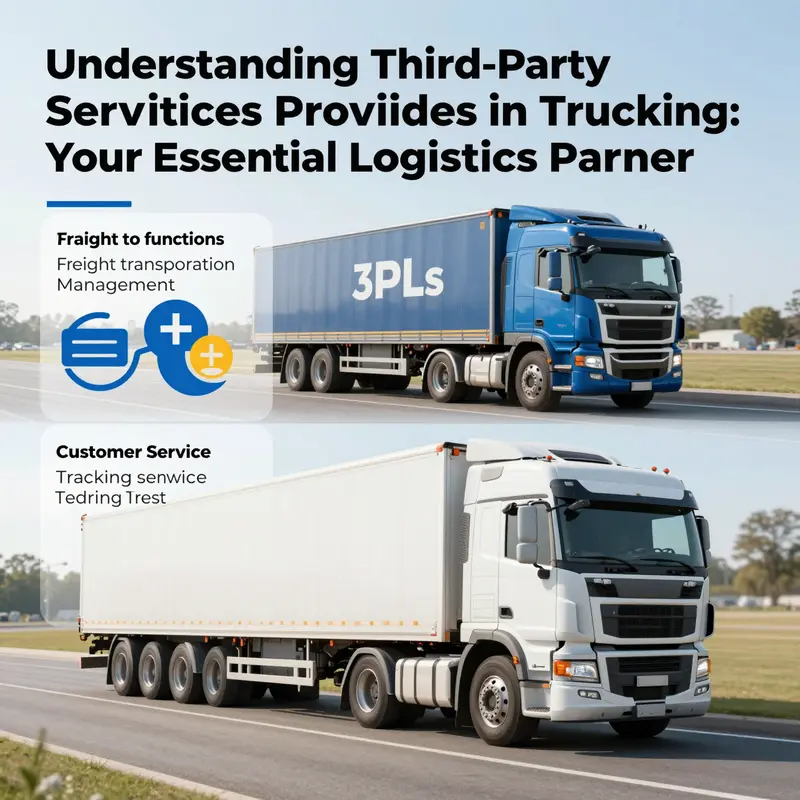
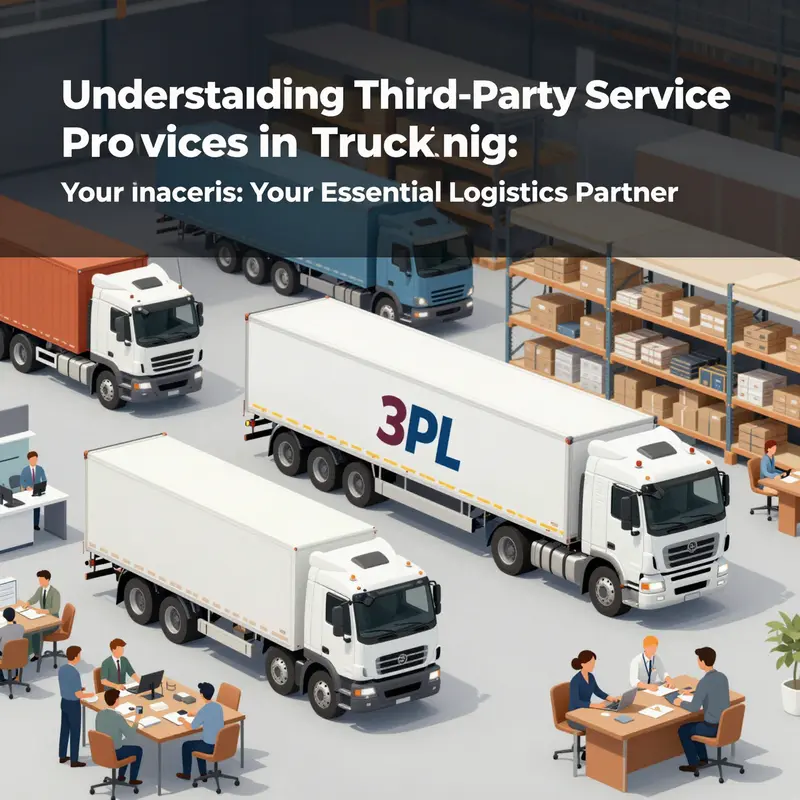
A third-party service provider in trucking functions as the quiet, steady conductor of a much larger supply chain orchestra. It is not the fleet owner, nor the driver behind the wheel, yet it wields immense influence over how goods move from origin to destination. In many ways, the ordained skill of a 3PL lies in turning complexity into clarity. It translates the raw potential of a network of carriers, warehouses, and digital tools into a coordinated flow of freight. For shippers, this means fewer handoffs, more predictable timelines, and a sharper focus on the core business. For carriers, it means steadier volumes, stronger load planning, and access to a broader pool of opportunities. The orchestration is precise, but it rests on a foundation of flexibility, data, and a deep understanding of how value is created at every touchpoint along the route, from dock to doorstep and back again through reverse logistics when needed.
At the heart of the 3PL value proposition is transportation management, a term that sounds straightforward but carries a spectrum of responsibilities. The core activity is planning, execution, and optimization of freight movements. A 3PL builds a transportation plan by evaluating multiple carriers, including owner-operators and established fleets, and then negotiates rates and service levels that align with a shipper’s priorities. This is more than price discovery; it is a disciplined process that balances asset availability, driver hours and compliance, fuel costs, and the customer’s required delivery windows. The best providers anticipate disruptions—the weather shifts, port backlogs, or sudden surges in demand—and adjust routes, carriers, and timing to preserve reliability. They bring a structured discipline to hours-of-service compliance, ensuring that drivers operate within legal limits while maintaining service quality. In this sense, the 3PL becomes a governance layer that translates policy into practice, protecting both the shipper and the carrier from missteps that could ripple into delays or penalties.
Beyond the plan, there is the art of carrier selection and negotiation. A robust 3PL carries a diversified network of partners, each with distinct strengths—regional strengths in one lane, reliability in another, or capacity at peak times. Selecting the right mix of carriers involves evaluating on-time performance, safety records, capacity commitments, and the ability to adapt to last-minute changes. The negotiation of rates is not merely a price exercise; it is a conversation about service level, equipment quality, and the cost of risk. A seasoned 3PL understands how to align incentives so that carriers invest in performance, while shippers reap the benefits of stable pricing and reliable service. The result is a dynamic ecosystem where capacity is matched to demand not by chance but by deliberate, data-informed choices.
Operational efficiency hinges on visibility. Real-time tracking and proactive communication keep everyone aligned as freight traverses the miles and overcomes potential hurdles. Modern 3PLs deploy technology platforms that integrate data from telematics, warehouse systems, and carrier manifests into a single, transparent view. This visibility is not an end in itself but a driver of smarter decisions. With live updates, a dispatcher can re-route a late pickup, a warehouse team can anticipate inbound arrivals for faster receiving, and a customer service interface can provide accurate ETAs to shippers and their customers. The same systems feed analytics that illuminate patterns—seasonal demand spikes, chronic bottlenecks in specific corridors, or recurring exceptions that erode margin. The insight is actionable, turning information into actions that optimize asset utilization, reduce dwell time, and improve service levels across the supply chain.
Freight consolidation and optimization form a second pillar of operational excellence. A 3PL looks across multiple clients’ shipments in a given lane and identifies opportunities to consolidate smaller loads into full truckloads or to optimize less-than-truckload movements. This reduces empty miles, lowers unit costs, and improves asset utilization. The result is a leaner, greener footprint that translates into tangible savings for shippers while maintaining or even improving service quality. Yet consolidation is not a one-size-fits-all solution. It requires careful balance between speed and efficiency, because the best cost picture might still be risky if it increases the risk of delivery delays. A skilled 3PL manages these trade-offs with a careful eye on service-level agreements, lane-specific transit times, and the variability inherent in different product types, from temperature-sensitive goods to high-value electronics.
Warehousing and distribution extend the connective tissue of the supply chain beyond transport. Many 3PLs offer inbound receiving, inventory management, picking, packing, and staging for shipment. They operate distribution centers that support just-in-time delivery and cross-docking operations, enabling shippers to synchronize production with demand. In this component of the operation, the emphasis shifts from moving goods to preparing them for efficient downstream handling. Inventory accuracy, order accuracy, and speed to ship become the metrics that determine customer satisfaction. When a 3PL integrates with a shipper’s ERP and a warehouse management system, data flows seamlessly from order entry to fulfillment, creating end-to-end visibility that was once possible only with tightly integrated internal systems. The challenge here is to manage complexity without creating rigidity. The best providers design flexible processes that can accommodate a sudden product launch, a change in packaging, or a last-minute shift in distribution parameters, all while preserving traceability and control.
Order fulfillment and reverse logistics complete the loop of value creation. A 3PL’s responsibility often extends to coordinating order processing, picking, packing, and timely delivery to the customer. But the reverse flow—the handling of returns, refurbishment, recycling, or disposal—demands equal rigor. Efficient reverse logistics can salvage value from returns, recycle materials where viable, and minimize waste. This is an area where the intelligence of data becomes especially important. Returned items require condition assessment, disposition options, and consistent communication with all stakeholders. A robust 3PL handles the labyrinth of return authorizations, restocking fees, and redeployment of recovered goods in a way that preserves cash flow and customer trust. The ability to manage returns with the same discipline as forward logistics often differentiates a provider in markets crowded with options.
Technology integration sits at the core of these functional capabilities. A 3PL’s technology stack is the glue that binds planning, execution, and visibility. Modern platforms deliver web-based portals and mobile interfaces that clients can access to monitor shipments, manage exceptions, or approve routing changes. Crucially, these systems integrate with a shipper’s ERP and WMS, creating a cohesive data universe across multiple partners and geographies. The result is not merely a digital convenience but an operational advantage: rapid data exchange, fewer manual handoffs, and faster, more reliable decision-making. Data governance becomes essential here, ensuring data accuracy, standardization, and security across disparate systems. The best operators treat data as an asset—an enabler of proactive service, precise pricing, and continuous improvement rather than a byproduct of activity.
Customs brokerage and compliance expand the scope of a 3PL into the realm of international trade. For shipments crossing borders, a 3PL assumes responsibility for the regulatory paperwork, tariff classifications, and clearance steps that keep goods moving through customs with minimal delay. This facet of operation requires specialized knowledge of import and export controls, trade terminology, and the ever-changing posture of regulatory regimes. By managing these requirements, a 3PL reduces the risk of hold-ups at the border and helps clients navigate complex regulatory landscapes. It is a clear reminder that the value of third-party logistics extends beyond the physical movement of freight to the governance of legal and operational risk across an entire supply chain.
Claims management and customer service complete the service topology. When things go wrong—damages, losses, or delays—a 3PL acts as the central point of contact for the client and the carrier. Efficient claims processes, accompanied by timely communication and scoping of liability, protect margins and preserve customer relationships. Service quality becomes a function of how effectively a provider resolves issues, communicates updates, and closes the loop with documented evidence and follow-up actions. The capacity to manage exceptions gracefully often determines the difference between a positive customer experience and a frustration-driven churn, especially for shippers operating in high-demand markets or in industries with strict service-level expectations.
All these functions converge to deliver a compelling value proposition: shippers reduce logistics overhead, gain access to specialized expertise, and benefit from advanced technology without owning or maintaining assets. The 3PL becomes an intermediary that translates a fragmented landscape of carriers, warehouses, and regulations into a coherent, efficient, and scalable operation. This asset-light model is particularly powerful in markets characterized by volatility and rapid change. The ability to scale capacity up or down without the capital expense of owning additional trucks, or the risk of underutilized fleets, offers a form of flexibility that is essential in today’s dynamic freight environment. Yet this model also demands disciplined governance, rigorous performance metrics, and a network mindset that recognizes how each party’s actions affect the whole. It is not enough to have good tech and a broad carrier roster; the true value emerges from the capacity to weave multiple threads into a single, resilient fabric.
In practical terms, a well-run 3PL knows that the most reliable service emerges from the alignment of process, people, and technology. Operations are not merely a sequence of tasks but a continuous feedback loop where performance data informs routing decisions, where carrier performance informs pricing, and where customer expectations shape the design of warehousing and distribution strategies. The best providers establish clear service levels, codify escalation paths for exceptions, and maintain tight governance over data quality and security. They invest in the relationships that keep carriers engaged and compliant, and they cultivate a culture of accountability that translates into measurable outcomes—on-time delivery, accurate invoicing, minimal damage, and a smooth returns cycle.
For readers evaluating what a third-party service provider in trucking actually does, the picture is neither simple nor static. It is a function of the network, the technology, and the discipline with which a company orchestrates disparate components into a seamless flow. It is about turning complexity—multiple carriers, shifting lanes, varying regulatory demands, and a gamut of customer requirements—into predictable performance. It is about enabling shippers to focus on product development, marketing, and growth, while leaving the heavy lifting of logistics to seasoned professionals who know how to optimize the path of least resistance without compromising reliability. When we trace the lifecycle of a shipment from pick-up to delivery and back through reverse logistics if needed, the 3PL emerges as the operational backbone of modern trucking, a partner whose emphasis on coordination, optimization, and compliance ensures that freight reaches its destination in a way that makes sense financially and operationally.
To gain a more focused view on how cross-border considerations shape this orchestration, see the discussion on cross-border regulatory issues in trucking. This deeper dive explains how customs brokerage, documentation accuracy, and regulatory compliance are integrated into the daily flow of a 3PL’s operations, illustrating how international moves hinge on the same disciplined approach that governs domestic lanes. cross-border regulatory issues in trucking.
As the freight landscape continues to evolve—with digital platforms maturing, data sharing becoming more secure and standardized, and automation seeping into hubs and warehouses—the operational scope of the 3PL will continue to expand. The strongest providers will not simply coordinate shipments; they will anticipate disruptions, quantify risk, and continuously re-engineer processes to extract more value from every mile. For readers who want to connect these operational insights to broader industry trends, look to the wider body of work and the guidance offered by leading industry organizations, which emphasize that the 3PL is now an indispensable element of efficient supply chain management and a strategic enabler of business resilience in the years ahead. External resources can illuminate how this role is evolving and how best-in-class firms are investing in people, technology, and analytics to stay ahead of capacity constraints, rate volatility, and regulatory changes. For those seeking a foundational, rigorous overview of third-party logistics, the American Trucking Associations offer a comprehensive guide that details the scope, benefits, and considerations of working with 3PLs. This external reference can be a practical companion as you translate theory into practice in your organization.
External resource: Guide to Third-Party Logistics (3PL) — https://www.trucking.org/3pl-guide
Economic Gravity: How Third-Party Service Providers Reshape Trucking and the Modern Supply Chain
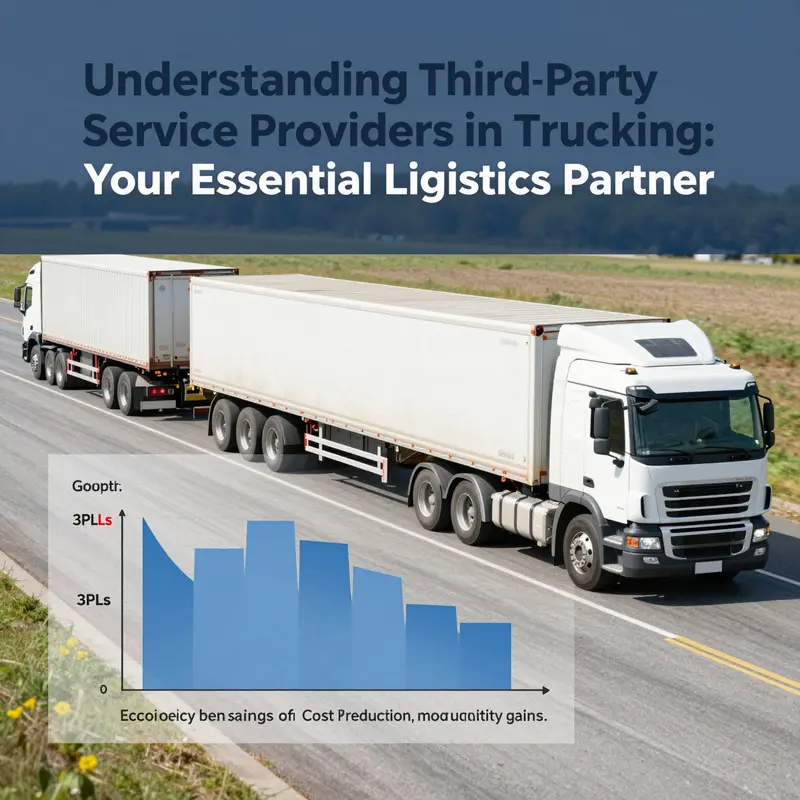
In the trucking universe, a third-party service provider acts not as a carrier but as a conductor. A 3PL orchestrates the movement of goods across a sprawling network of shippers and carriers, aligning routes, rates, and schedules so freight moves with precision and predictability. The chapter that follows does not dwell on the mechanics of a single shipment alone, but instead traces the broader economic gravity that 3PLs exert on the entire ecosystem. They are the connective tissue between the decision to ship and the arrival at the destination, and their influence stretches from the balance sheets of small manufacturers to the competitive dynamics of multinational logistics networks. At their core, 3PLs do not own the trucks; they own the ability to connect capacity with demand, transform information into execution, and convert uncertainty into reliability. This is not merely a matter of convenience. It is a shift in how costs, risks, capital, and opportunities are distributed across the supply chain. The economic logic of outsourcing transportation is about converting heavy fixed costs into flexible operational leverage.
To appreciate the full scope of that leverage, it helps to start with the simplest premise: private fleets, with their vehicles, drivers, maintenance bays, and administrative overhead, represent a substantial fixed commitment. A company that owns and operates its own fleet bears expenses long after a shipment has left the dock—vehicle depreciation, insurance premiums, regulatory compliance, driver salaries, maintenance cycles, and the capital tied up in idle assets. There is strategic value in owning capacity, particularly for firms with predictable volumes and tight control requirements. But in a market pulsing with demand volatility, seasonality, and the pressure to turn assets into cash flow, outsourcing transportation through a 3PL often translates into lower operating leverage. A 3PL assumes much of the variability and risk that would otherwise accrue to the shipper, substituting it with a service-oriented fee structure that maps more cleanly to actual usage. This shift matters because it changes the very economics of scale. A small or mid-sized shipper can access a broad carrier network, sophisticated routing, and real-time visibility without the capital commitment required for a private fleet. The economics of scale come not from owning more trucks, but from coordinating a larger, more efficient system of movements through a shared platform.
Within that framework, 3PLs operate as both planners and problem solvers. They design transportation management solutions that optimize routes, consolidate loads, and minimize empty miles—the scourge of traditional trucking that erodes margins and complicates capacity planning. Load consolidation, for example, turns several smaller shipments into a single full truckload, increasing truck utilization and reducing per-shipment costs. In an industry where asset utilization is a core profitability driver, even modest improvements in routing efficiency or load mix can compound into meaningful savings across thousands of shipments. The result is a shift in cost structure from high fixed costs to lower fixed costs and higher variable costs that scale with demand. This transformation is especially advantageous for companies that lack large in-house fleets but must maintain reliable delivery timelines to stay competitive.
Beyond cost structures, 3PLs reshape risk profiles in tangible ways. When tracking and regulatory compliance become more complex—cross-border shipments, varying state or provincial requirements, or evolving environmental rules—a 3PL’s compliance machinery can shield shippers from missteps that invite penalties, delays, or added charges. The paperwork alone—bills of lading, customs documentation, regulatory forms—can overwhelm smaller teams. A 3PL brings a dedicated capacity for documentation, auditing, and regulatory alignment, turning compliance from a potential liability into a managed service. That protection is not merely administrative; it influences cash flow, insurance costs, and the speed with which shipments move through hubs and borders. In a period of heightened scrutiny and scrutiny-led risk management, this dimension is as valuable as any asset on a balance sheet.
Technology lies at the heart of the economic value proposition offered by 3PLs. AI-driven route optimization, real-time tracking via IoT devices, and even blockchain-enabled transparency for cross-border freight transform the practical limits of what can be achieved with traditional logistics approaches. The promise is not simply faster deliveries; it is more predictable deliveries. When a 3PL can anticipate traffic bottlenecks, weather disruptions, or carrier capacity gaps, it can reconfigure a network in seconds or minutes, not hours or days. That agility translates into better service levels for shippers and more consistent utilization for carriers, which, in turn, improves bid competitiveness and capacity prices. In practice, the technology stack used by 3PLs reduces unnecessary miles and accelerates decision-making cycles, turning data into action in near real time. The effect is a positive feedback loop: greater visibility reduces delays, which lowers fuel consumption, which reduces costs, which makes the network more competitive. The savings are not theoretical; industry studies and practitioner reports point to significant overall logistics-cost reductions—often cited in the neighborhood of substantial percent improvements when 3PLs aggressively optimize routes, consolidate loads, and manage capacity across markets.
The macroeconomic implications of this shift extend well beyond individual shipments. The global logistics market has grown into a sizable economic sector, driven in large part by the outsourcing trend. In 2024, the market was valued at around $1.29 trillion, reflecting how pervasive outsourcing and sophisticated logistics networks have become in supporting global trade, e-commerce, and just-in-time manufacturing. This expansion is not uniform across regions; policy and infrastructure investments continually reshape where the efficiency gains are most accessible. In large economies, the growth of 3PLs has correlated with the emergence of more integrated multimodal networks, allowing goods to move through rail, road, air, and waterways with reduced total transportation costs. Multimodal capabilities are especially critical for cross-border freight, where delays at borders compound the cost of supply chain frictions. In major trade nodes, governments have pursued strategies to develop logistics hubs and to promote multimodal corridors, a policy environment that further amplifies the advantages of working with 3PLs.
If the macro picture is a chorus of efficiency, the micro-level effects are equally meaningful. 3PLs enable small and medium-sized enterprises to participate more fully in global markets. Historically, firms without in-house logistics expertise could struggle to negotiate rate cards, arrange carrier capacity, and ensure on-time delivery. The 3PL model levels the playing field by offering access to a broad carrier network, sophisticated information systems, and professional analytics that were once the exclusive domain of large shippers. The result is a more competitive landscape where SMEs can compete on service quality and reliability rather than on purchasing power alone. From the shipper’s perspective, this translates into predictable transit times, more accurate cost forecasts, and the flexibility to adjust transportation commitments as demand shifts. From the carrier’s perspective, it creates a stable demand signal that supports capacity planning and investment in fleet optimization. In a sense, the 3PL network converts episodic freight demand into a continuous stream of workable capacity and service performance, smoothing volatility that would otherwise ripple through production schedules and customer promises.
The labor market responds to these shifts as well. As the industry leans more on data analytics, IT integration, and customer service excellence, new roles emerge that emphasize coordination, risk management, and end-to-end visibility. The U.S. Bureau of Labor Statistics highlights rising employment and wages in transportation and logistics sectors, underscoring how the shift toward third-party logistics has become intertwined with broader productivity and labor-market dynamics. This expansion is not just about more jobs; it is about higher-skill work in analytics, information systems, and client-facing operations. In practical terms, companies embracing 3PLs often find that the cost of specialized labor to manage complex logistics is more efficiently allocated when spread across a larger, multi-client platform rather than borne by a single shipper. That is a crucial element of the economic argument: the ability to monetize expertise across a portfolio of shipments and customers, rather than bearing a bespoke cost for every new contract.
The impact on channel partners—carriers and drivers—further illustrates the broader reach of 3PLs. Carriers gain access to a more stable load board and more predictable demand patterns, allowing better fleet planning and utilization. Drivers benefit from clearer schedules and safer, well-managed workloads. The structural flexibility created by 3PLs helps reduce the incidence of empty miles—an enduring inefficiency in trucking—by matching available capacity with precise demand. The effect is a chain reaction: improved utilization lowers per-mile costs, which helps carriers maintain margins even as fuel and maintenance expenses wax and wane with market cycles. In a mature market, the most effective 3PLs become a hub of best practices—standardized processes, shared data standards, and continuous improvement routines that elevate service levels across many customers and geographies.
A key dimension of the economic story lies in cross-border freight and the transparency that modern platforms can deliver. Multinational supply chains increasingly rely on blockchain-enabled traceability to verify shipments, reduce fraud, and streamline customs-related workflows. While the practical deployment of blockchain across every cross-border shipment remains an evolving frontier, the trajectory is clear: more secure, auditable, and verifiable flows of information reinforce trust among participants and accelerate regulatory clearance. The ability to present a single, auditable trail of shipment events—origin, handoff, transfer, inspection, and final delivery—helps shrink delay-induced costs and improves performance metrics. For shippers moving goods across continents, this translates into lower risk premiums, faster revenue recognition, and more predictable working capital cycles. The economic gravity of 3PLs, then, is not just about moving freight; it is about moving information with a degree of integrity that unlocks new efficiencies across the entire chain.
Within this evolving landscape, the concept and practice of third-party logistics have matured since their rise in the 1990s. They are no longer seen as a marginal option for outsized shippers with sprawling networks; they are a standard mechanism through which modern supply chains operate. The claim is not simply that 3PLs are convenient, but that they are a strategic asset—one that can tilt the cost curve, enhance resilience, and enable scale without the heavy capital commitments that once anchored growth. The economic logic supports a broader adoption across industries and geographies, especially as e-commerce and global trade intensify competition and demand for reliable, timely delivery. The result is a trucking ecosystem where the value created by third-party providers is distributed across a wider set of participants: shippers gain cost predictability and service reliability; carriers achieve better capacity utilization and risk management; and the broader economy benefits from a more efficient, responsive logistics spine that underpins commerce.
For readers seeking a compact glimpse into the forces shaping this environment, consider the idea that the growth of 3PLs is a response to the tension between ownership and access to capacity, between fixed commitments and flexible operations, and between predictable demand and sudden disruption. The answer is a networked approach that rewards the clever alignment of routes, loads, and information. When a shipper leverages a 3PL’s network, data infrastructure, and carrier partnerships, the result is not simply a single improved shipment but a cascade of efficiency gains that propagate through the supply chain. The impact on margins, cash flow, and competitive positioning can be material, especially for companies that face volatile demand or constrained capital. And as markets continue to evolve—with evolving trade policies, digital interoperability standards, and intensified competition—the role of third-party providers is likely to become even more central to trucking’s economic architecture. For those who want to explore the broader economic forces at play, a focus on the connected, data-driven trends behind the trucking industry reveals the lasting, strategic value of outsourcing transportation to specialized providers.
As you move through the wider discussion of this article, you can examine how the industry’s ongoing transformation aligns with broader economic indicators and sector-specific trends. For example, to understand how these dynamics interact with the larger economy and labor markets, the following resource offers a focused look at employment and wage patterns in transportation and logistics—a reminder that the economics of trucking does not exist in isolation but is part of a living, breathing labor ecosystem. External resource: https://www.bls.gov/opub/ted/2023/quarterly-employment-and-wages-report-january-march-2023.htm
For readers seeking additional context on the driving forces behind these shifts, a concise exploration of the underlying economic trends in the trucking sector can be found here: key economic trends impacting the trucking industry.
Riding the Next Wave: How Emerging Trends Redefine 3PLs in Trucking

The trucking landscape is at a turning point, and third-party service providers are the navigators guiding shippers through it. No longer merely intermediaries who line up a truck and a driver, modern 3PLs are evolving into tech-enabled partners that orchestrate end-to-end movement, visibility, and value across the entire supply chain. This shift is driven by a convergence of powerful forces that push 3PLs from traditional freight coordination into roles that resemble integrated logistics platforms. At the core of this transformation is technology, but the changes run deeper. They touch operating models, service offerings, and even how value is measured and priced. Understanding these trends helps explain why the 3PL footprint in trucking is expanding—and why shippers, carriers, and even regulators are paying closer attention to what a 3PL can and should do in a complex, dynamic market.
Advanced technology integration stands at the center of today’s change. Artificial intelligence, the Internet of Things, and blockchain are no longer speculative capabilities; they are practical tools that reframe what a 3PL can deliver. AI accelerates and refines routing decisions in real time. By continuously assessing traffic patterns, weather disruptions, carrier capacity, and service constraints, AI enables routing that is not only faster but more fuel-efficient. Industry observations point to meaningful gains in efficiency, with studies suggesting routing optimization can improve performance by a meaningful margin—up to about forty percent in some scenarios when AI is used to continuously recalibrate plans as conditions change. The implication is not simply cost savings; it is resiliency. When a late load or a sudden capacity shift occurs, AI-informed decisions can reconfigure networks swiftly, reducing missed deliveries and the ripple effects that cascade through the supply chain.
IoT devices embedded in shipments, trailers, and trucks create a continuous stream of data about location, temperature, humidity, shock, and other conditions. Real-time visibility changes the conversation from “where is my freight?” to “what is happening right now, and what should we be prepared for next?” Proactive issue resolution becomes possible. A 3PL can flag a temperature excursion before it causes spoilage, reroute cargo away from congestion, or alert a carrier to mechanical risks before a breakdown occurs. This level of insight is not just a service enhancement; it is a capability that reduces risk, protects high-value or sensitive goods, and improves customer trust. Blockchain adds another layer by offering a secure, immutable record of the chain of custody. For high-value or regulated shipments, this can be a differentiator, as all parties can verify documentation, timestamps, and handoffs with confidence. The cumulative effect of these technologies is a transition from reactive management to proactive, data-driven orchestration. The 3PL moves from simply coordinating trucks to orchestrating an intelligent, end-to-end network that adapts in real time to preserve service levels.
Yet technology cannot stand alone. It must be embedded in an expanded and integrated service model. Modern 3PLs are broadening their portfolios to provide more than transportation management. They increasingly offer warehousing, inventory planning and control, order fulfillment, value-added services, and even customs brokerage. The physical network remains essential, but the connective tissue—digital platforms, integration with warehouse management systems, and cross-functional processes—binds the entire operation into a cohesive ecosystem. For shippers, this means outsourcing not just the act of moving goods but the orchestration of a complex, multi-location supply chain. For carriers, it means access to more predictable volumes, better utilization of capacity, and a clearer picture of how their assets move within a larger network. The result is a shift in expectations: partners that can deliver end-to-end service, with clear visibility, transparent pricing, and the agility to adapt as business realities shift.
The digital freight marketplace phenomenon is a force to be reckoned with, even as 3PLs differentiate themselves in a different way than pure digital brokers do. These marketplaces use algorithms to match shippers with available capacity almost instantaneously. They promise speed, flexibility, and often cost advantages driven by dynamic market pricing. The challenge for traditional 3PLs is not to imitate these platforms but to integrate their own digital strengths—proprietary routing engines, carrier networks, and value-added services—into a seamless experience that combines the best of human judgment with machine speed. A mature 3PL strategy embraces on-demand capacity, but it also layers in stability, governance, and service quality that digital-only platforms may struggle to sustain at scale. The best practitioners are those who can offer instant visibility, robust risk mitigation, and consistent performance while maintaining the nuanced relationships that ensure reliable carrier performance over time. The resulting hybrid model presents a compelling value proposition: access to flexible capacity backed by the discipline of a governed network and a long-term service guarantee.
Environmental responsibility has become a strategic differentiator, not merely a compliance checkbox. Green logistics is no longer a boutique capability; it is increasingly embedded in core business decisions. Route optimization that minimizes miles and idle time directly translates into lower emissions and cost savings. Forward-thinking 3PLs are investing in forecasting tools that model emissions across scenarios, enabling clients to align transportation choices with corporate sustainability goals. The move toward alternative-fuel fleets—electric, hydrogen, or other low-emission technologies—complements this by expanding the palette of viable options for moving goods. Carbon footprint tracking tools, once a niche feature, are now standard in reputable service offerings. In a market where customers evaluate supply chain partners on environmental metrics as well as price and reliability, sustainability becomes a strategic differentiator that can influence long-run contracts and capacity commitments.
Data analytics and visibility complete the triad of technology-enabled transformation. Data is no longer a byproduct of operations; it is a strategic asset. 3PLs that can collect, harmonize, and analyze data from across the freight network gain insights that translate into tangible improvements: bottleneck identification, demand forecasting, service level optimization, and proactive risk management. Real-time shipment visibility supports finer-grained performance management, allowing teams to pinpoint delays, reassign resources, and communicate accurate ETA updates to customers. Predictive analytics extend this capability into future planning, enabling more reliable capacity planning and inventory positioning. In practice, this means 3PLs can offer clients not only a transport solution but a data-driven, continuously improving supply chain program. The ability to anticipate disruptions, quantify the impact of potential alternatives, and present clear scenarios empowers decision-makers to trade off speed, cost, reliability, and sustainability with a level of confidence that was not possible a few years ago.
Matching these capabilities with a strategic operating model is what differentiates a technology-enabled 3PL from a traditional broker. The future 3PL is a partner that co-designs supply chain solutions with the shipper, rather than simply executing requests. It requires governance and transparency, so clients understand pricing, service levels, and the assumptions behind optimization decisions. It requires investment in talent who can interpret data, translate it into actionable steps, and maintain the human elements of relationships and accountability that technology alone cannot replace. In this sense, the evolution is not a race toward automation at the expense of people; it is a convergence where human expertise and machine intelligence reinforce one another to deliver more reliable, efficient, and sustainable logistics.
For organizations seeking practical grounding in these shifts, it is helpful to consider how broader economic and regulatory trends influence trucking. The capacity to manage volatility, comply with evolving cross-border requirements, and adapt to shifting demand will depend on how effectively a 3PL can leverage technology, expand its services, and embed sustainability into its core processes. The interplay between fleet utilization, pricing resilience, and service quality becomes a lens through which to evaluate a partner’s fit for the long term. In this light, a 3PL’s value proposition extends beyond movement of goods to the optimization of entire supply chains, including inventory placement, warehousing, and even packaging or labeling as needed. When a company seeks to outsource logistics, it is not just purchasing transportation capacity; it is acquiring a capability that can be tuned to changing business priorities and market conditions, a capability that can scale with growth and adapt to disruption.
The trajectory is clear: the future of 3PLs in trucking is one of integration, intelligence, and impact. The provider becomes a sophisticated, tech-enabled partner capable of managing complex, end-to-end supply chains with high levels of visibility, efficiency, and sustainability. The degree of success a 3PL achieves will hinge on how effectively it blends advanced analytics with practical execution, how well its technology is embedded into the client’s workflows, and how reliably it can maintain service standards as alternative models compete for capacity and attention. In that sense, the specification of what a 3PL is evolves as the market evolves—not into a more mysterious or opaque middleman, but into a more capable, transparent, and trusted ally that helps shippers navigate uncertainty, capture opportunities, and drive more resilient performance across the entire logistics ecosystem. For readers who want to explore the broader economic drivers behind these trends, a concise overview of key economic trends impacting the trucking industry can be found here: Key economic trends impacting the trucking industry.
External reference for further reading on technology-driven 3PL trends: https://www.supplychaindive.com/news/3pl-trends-technology-ai-iot/2026/03/
Final thoughts
The role of third-party service providers in trucking is pivotal in enhancing the efficiency, reliability, and scalability of logistics operations for businesses across various sectors. As companies continue to face challenges in supply chain management, leveraging the expertise of a 3PL can significantly improve their logistics processes. By understanding the functions, economic impact, and future trends associated with 3PLs, companies can make informed decisions that not only streamline their operations but also bolster their competitive edge in the market. As we advance into an era marked by rapid technological advancements, embracing the services of a 3PL will be crucial for businesses aiming for optimization and growth in their logistics strategies.