
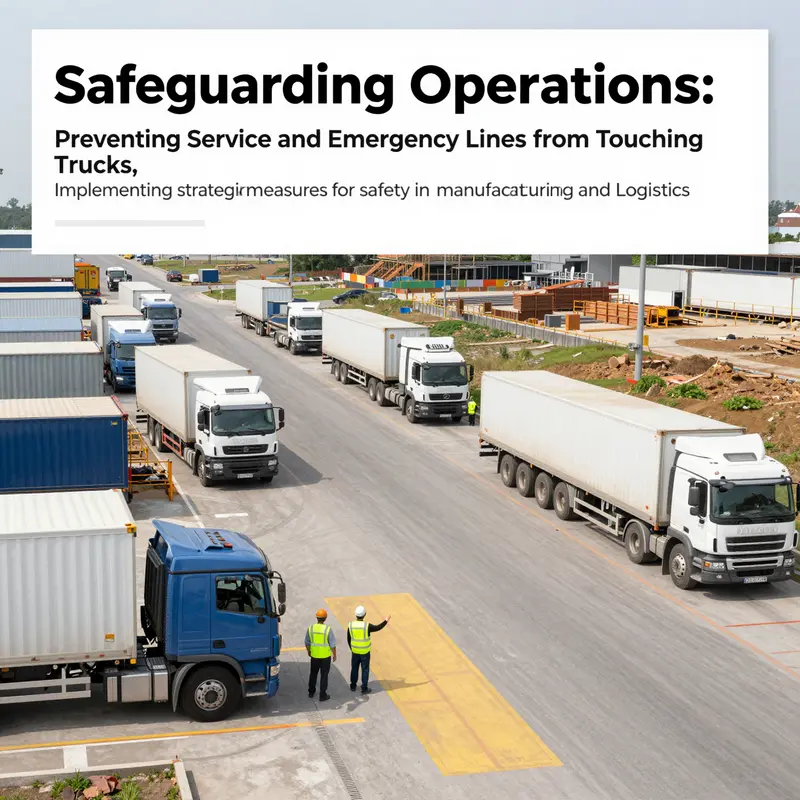
In an environment where heavy machinery and complex logistics intersect, ensuring the safety of both personnel and equipment is paramount. Whether in manufacturing, distribution, retail, or construction, the risk posed by service and emergency lines brushing against trucks is a critical concern that can lead to severe operational hazards, costly damages, and potential injuries. This article delves into effective techniques to maintain a safe distance between these lines and trucks, through physical barriers, proper handling, thorough pre-work inspections, and diligent emergency line management. Each chapter provides a comprehensive understanding on how to implement these protocols effectively, fostering a culture of safety and efficiency in your operations.
Guarded Corridors: Physical Barriers, Zoning, and the Discipline of Keeping Service and Emergency Lines Off a Truck
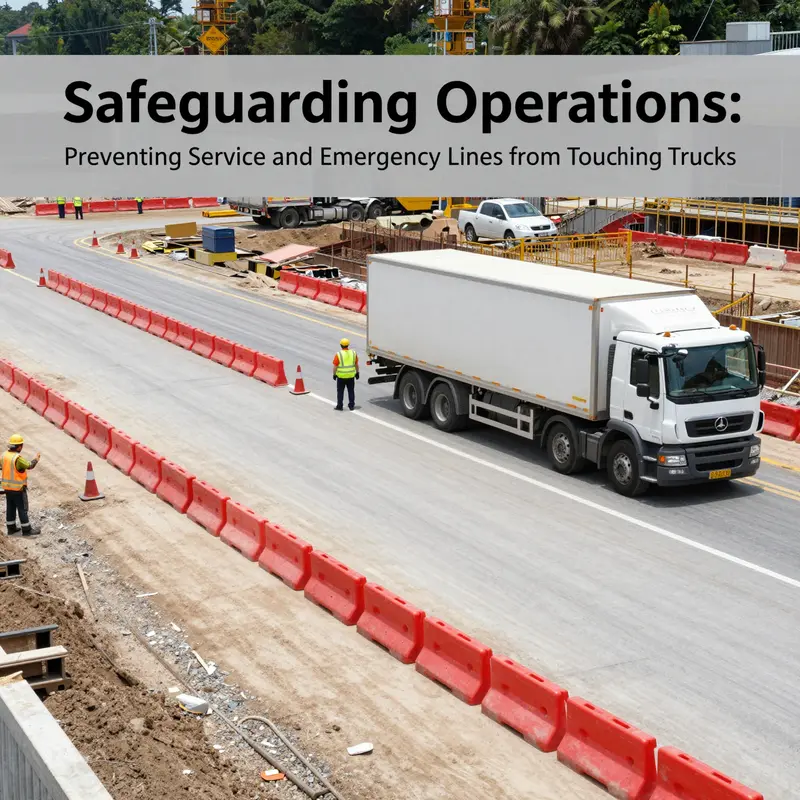
In the choreography of service work around a truck, the most powerful safeguard is not a complex machine but a simple, well-planned spatial discipline. Physical barriers and careful zoning create a mental and physical map that keeps service hoses, electrical cables, and emergency lines from becoming unintended hazards as a vehicle moves through a bay or along a service corridor. The goal is not merely to avoid damage to lines but to ensure rapid response in emergencies, to protect the integrity of high-pressure or sensitive systems, and to minimize the chance of slips, trips, or entanglements that could escalate into costly downtime. A well-implemented zoning approach operates like a quiet, constant guardrail—a set of boundaries that personnel and drivers internalize and respect without constant reminders. When this discipline is woven into daily practice, it reduces the likelihood of contact between a truck and lines and, equally important, it reinforces a culture of safety that extends beyond any single task or shift.
The practical core of physical barriers lies in creating a buffer zone around the vehicle that is both visible and usable. Visual cues matter as much as physical ones. Painted lines, brightly colored signs, and clearly marked pathways communicate expectations before personnel even speak. But the most effective systems combine these cues with tangible barriers that can be seen and touched: fixed structures that define the space, temporary measures that can be deployed when the work demands shift, and intelligent layout planning that anticipates how trucks will approach and depart from the work area. Fixed barriers—such as steel posts embedded in the ground or low concrete ridges—offer a durable perimeter that resists accidental intrusion. Temporary barriers, including collapsible gates or cones, provide the flexibility needed in busy maintenance bays where workloads and vehicle movements change from hour to hour. Visual barriers—like high-contrast lines and conspicuous signage—serve as constant reminders of the boundary, guiding drivers and technicians to keep their attention where it belongs. Collectively, these elements form a layered system that supports safe operations without slowing the workflow to a crawl.
A critical design consideration is ensuring that barriers do not impede emergency access. In urban settings, where every second counts, the balance between restricting access and preserving rapid response must be struck with care. Barriers should be robust enough to prevent inadvertent contact with lines yet unobtrusive enough to allow swift entry and exit for emergency vehicles and responders. This often means creating wide, clearly marked ingress and egress points and selecting barrier materials and configurations that can be quickly moved or bypassed if an incident arises. The design philosophy is pragmatic: plan for the worst, but operate as if normalcy will continue. In practical terms, this translates into barrier systems that can be opened or removed with a minimal set of tools or a quick procedural step, while still providing a high degree of protection during routine operations. Maintenance teams and safety officers collaborate to test these functions regularly, ensuring that a barrier that once stood firm can still be deployed or cleared efficiently when circumstances require.
The taxonomy of barriers reflects diverse needs and environments. Fixed barriers like steel posts and reinforced walls establish enduring boundaries that do not rely on human memory or daily discipline alone. They convey permanence and conviction, signaling that the space is not casual. Temporary barriers, on the other hand, rise and retreat with the day’s tasks. They support the realities of varied job sites, enabling quick reconfiguration when maintenance demands shift or when a truck must park in a different orientation. Visual barriers—painted zones, reflective tape, and conspicuous signage—work constantly, even when physical barriers are absent. They remind crews to keep lines clear, to respect the buffer, and to anticipate the truck’s path. Effective zoning also accounts for the dimensions and weight of the trucks that operate in the space. It asks about turning radius, clearance undercarriage, torque requirements, and the potential for hoses and cables to snag on underbody features. The aim is not to create an obstacle course but to shape a predictable, safe flow of movement that technicians and drivers can rely on.
From a regulatory and safety perspective, the philosophy of barriers and zoning aligns with broader standards that emphasize separation of vehicle routes from work zones. Compliance is not merely about ticking boxes; it is about designing spaces that accommodate unexpected events. Barriers must withstand environmental stressors—wind, rain, ice, heat—and remain effective after impacts or vibrations. Regular maintenance of barriers is essential: posts should be checked for looseness, rails inspected for cracks, and visual markings refreshed so they remain legible across shifts and weather conditions. A bay that loses its visual clarity or shows signs of barrier fatigue invites complacency, and complacency is the seed of accident. The maintenance plan, therefore, treats barrier integrity as a living component of safety, scheduled with the same rigor as tire changes or hydraulic system checks.
Operational practice around these barriers requires a disciplined routine that integrates planning, observation, and clear communication. Before any service procedure begins, a quick, but thorough, walkthrough confirms the truck’s planned position, the location of all service and emergency lines, and the status of any temporary barriers in place for that day. This pre-work inspection acts as a mental model of risk, a moment to confirm that nothing has shifted—hoses not kinked, cables not lying across the truck’s anticipated path, and a clear route for the driver to back out without displacing lines. In practice, this means technicians may mark a vehicle’s position with chalk or tape during the planning phase and then remove those markers once the truck has settled into its berth. If lines must cross near the truck’s wheel hubs or undercarriage, extra attention is given to securing them with appropriate clips or straps and routing them away from potential pinch points.
A complementary practice is the deliberate use of spotters during critical movements. When a truck is being repositioned for wheel service, alignment checks, or accessory installation, a trained spotter serves as the extra set of eyes for the driver. The spotter’s role is not to micromanage the vehicle’s motion but to monitor the space around the truck, ensuring lines do not dip into the vehicle’s path, and that any temporary barriers remain in place without impeding essential access. The communication between driver and spotter must be precise and unambiguous. Simple, standardized signals or radio communications expedite responses when line management requires a sudden adjustment. This human element, layered atop physical barriers, provides a dynamic safeguard that can adapt to changing conditions while maintaining a calm, orderly workflow.
In line with practical safety, the handling of lines themselves deserves equal emphasis. Full attention is given to how hoses, cables, and emergency lines are treated when not in use. After a task is completed, lines should be secured promptly in designated storage areas or clipped back to their mounts. They must not be allowed to dangle, drag, or lie across the vehicle’s expected path. When lines must traverse the space to reach a service point, they are laid out in a manner that minimizes their exposure to traffic, with clear loops and secure tie-offs that prevent movement during truck operations. A simple, yet often overlooked, measure is to keep line reels off the ground when possible and to elevate or anchor lines to fixed points where feasible. The aim is to reduce the chance that a line is run over, snagged, or subjected to heat, pressure, or abrasion that could compromise its integrity.
Beyond the mechanical and procedural, the culture of safety around barriers and zoning hinges on ongoing training and awareness. Staff at all levels should internalize that keeping lines clear of a truck is not a one-off task but a continuous responsibility. Training programs should incorporate scenario-based drills where drivers and technicians rehearse moving a truck within a barrier-conscious space, communicating with spotters, and verifying that all lines are secure before moving again. These drills reinforce a shared mental model, helping to align behavior with policy when fatigue or time pressure sets in. As training evolves, teams increasingly draw on broader industry insights about maintenance, safety culture, and operational efficiency. For example, private fleets trends in trucking maintenance underscore how disciplined line management meshed with proactive barrier design can reduce downtime and extend equipment life. private fleets trends in trucking maintenance
All these measures must sit within a coherent system of accessibility and accountability. Accessibility means that any component of the barrier system can be inspected, tested, and adjusted with minimal disruption to ongoing work. This implies thoughtful placement of electrical panels, hydraulic lines, and safety shutoffs so they are not trapped behind a barrier or rendered inaccessible during emergencies. Accountability means clear ownership of roles—who is responsible for maintaining barrier integrity, who conducts the pre-work inspection, and who authorizes the deployment or removal of temporary barriers when the work scope changes. Documented checklists, routine audits, and post-incident reviews all reinforce the message that barriers and zoning are essential, not optional, parts of the safety toolkit. In the broader arc of infrastructure design, that ethos translates into spaces that are not merely compliant but resilient, capable of guiding people and equipment safely through complex tasks.
From a design standpoint, barriers and zoning are most effective when they are integrated from the earliest planning stages of a project or site layout. Even modest facilities benefit from a thoughtful approach to how service corridors intersect with vehicle lanes. The planning process asks hard questions: Where should a service bay sit relative to primary traffic flows? How can we minimize the potential overlap between urgent emergency lanes and routine maintenance paths? Where do we place storage for lines so that they are both accessible and protected from vehicle movement? And how can we ensure that the barrier system remains functional after severe weather or a minor collision? Answering these questions requires collaboration among safety officers, facility designers, fleet managers, and frontline workers. The payoff is a space where incidents are less likely to occur, where emergency response remains unhindered, and where maintenance tasks proceed with greater speed and fewer unintended interruptions.
In the end, the discipline of keeping service and emergency lines from touching a truck rests on a simple but powerful triad: deliberate physical barriers, thoughtful zoning, and a culture of proactive, informed practice. The physical barrier is the mirror of intention—it says, in metal and paint, that some space around the vehicle must be kept free of lines and equipment. Zoning translates that intention into a measurable, enforceable boundary that staff and drivers can reference. The cultural practice—the training, the spotter protocols, the routine inspections—turns intention into action, ensuring that the boundary is respected even when urgency is high or distractions are many. When these elements work in concert, they create a safer, more efficient environment where trucks can be serviced, emergencies can be managed swiftly, and lines remain as they should be: separate, secure, and out of the way.
For those seeking broader guidance on barrier design and incident response in transportation contexts, consider resources that frame the relation between vehicle access and emergency readiness. The U.S. Department of Transportation offers guidance on emergency response vehicle access, which complements the practical, site-specific measures described here. Access to such standards helps ensure that local practices align with national expectations for safety and responsiveness in critical moments: https://www.transportation.gov/basics/emergency-response-vehicle-access
Lines Kept Clear: A Cohesive Approach to Prevent Service and Emergency Lines from Contact with the Truck
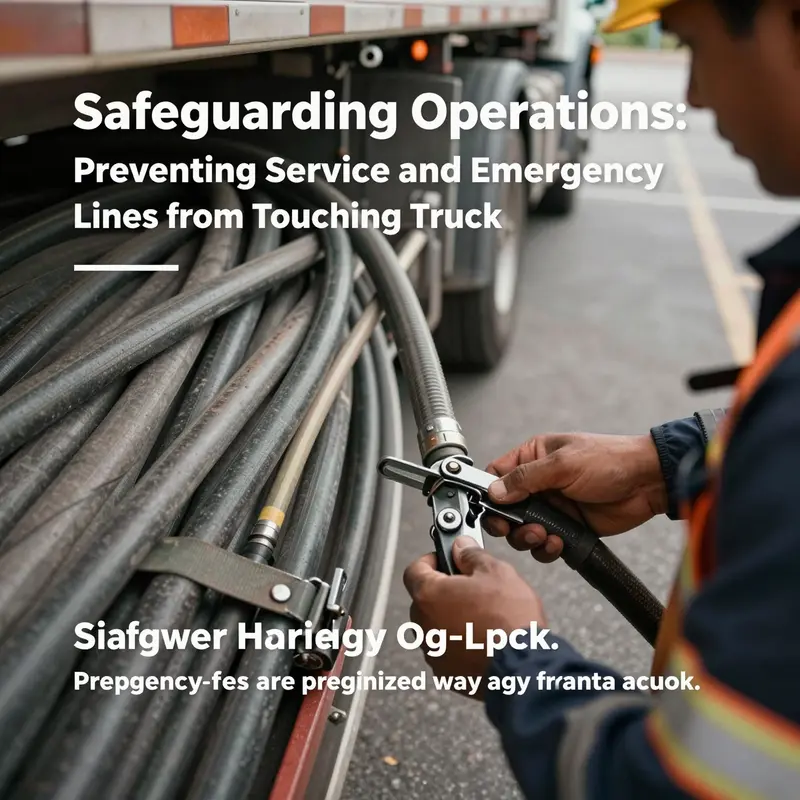
In the world of heavy equipment and fast-moving maintenance, the most overlooked danger wears a routine face: lines that should stay where they belong, yet can drift into the truck’s path. Service hoses, electrical leads, cooling lines, and emergency conduits all carry functions that keep the machine alive and safe, but when mismanaged, they become hazards. A truck that moves, a hose that twists, a cable that sags, and suddenly a minor servicing task turns into a potential catastrophe. The aim of this chapter is not to narrate a dramatic incident, but to weave practical, procedural, and perceptual elements that keep service and emergency lines from touching the truck. It is a chapter about discipline in space, rhythm in workflow, and vigilance in every routine work that fleets perform day after day. When these elements align, the vehicle and its service life extend in tandem, preserving safety as a shared responsibility rather than a brittle sequence of luck and chance.
Physical separation forms the foundation of safe operation. The work zone around a stationary truck must read as a living boundary, not a suggestion. Visual cues matter. Cones, barriers, and tape establish a buffer zone that communicates clearly to everyone at the site where the vehicle ends and the lines begin. The buffer is not a cosmetic measure; it is a deliberate, visible safeguard that reduces the likelihood of lines crossing paths with tires, wheels, or the undercarriage. In practice, this means designating entry points for personnel and equipment that sidestep the truck’s swing clearance. It means aligning the service bay layout so hoses and cables are routed away from the truck’s anticipated movement arc, not merely tucked out of sight. A well-marked buffer also assists new staff and temporary workers who may be unfamiliar with the operation. They learn quickly that the buffer zone is not optional; it is as essential as any wrench or diagnostic tool.
But the barrier alone does not guarantee safety. How lines are handled, stored, and re-routed is equally consequential. When technicians finish a connection or detach a line, the habit must be to secure it immediately. Clips, straps, and designated storage points are not merely for convenience; they are part of a safety system that prevents lines from trailing, snagging, or dragging across the ground where they can be crushed by the truck’s tires or vehicle movement. The practice of keeping lines in a controlled, elevated, or coiled state when not in use reduces the chance of accidental contact. In addition, lines should never be allowed to lie in the truck’s anticipated path or undercarriage. The simplest rule—if it can be caught by a tire, it should be secured out of the vehicle’s path—goes a long way toward preventing contact that could lead to leaks, electrical faults, or trip hazards for the crew.
Preparation for work begins well before the truck meets the bay floor. A thorough pre-work inspection is a composite of situational awareness and meticulous checklists. The operator and the crew walk the area together, monitoring not just the truck’s position but the entire envelope of operating space. They confirm that hoses and cables are free of the wheels’ rotation radius and that no line is positioned under doors, steps, or other structural elements that could trap or sever them. This step is particularly critical in maintenance operations such as wheel changes or tire service, where the truck’s movement is constrained by the work being performed. The inspection also serves as a reminder to verify that the truck’s power source remains isolated as appropriate and that any energy storage components in the service area are addressed per the relevant safety plan. The goal is to keep the vehicle stationary and the lines static in a way that leaves no ambiguity about where each element belongs during the operation.
Communication is the thread that binds physical safeguards into a reliable system. The use of spotters and clear signals cannot be overstated. When a truck is maneuvered into a service position, a designated spotter helps prevent line contact by guiding the driver with precise instructions. The spotter’s role is not to micromanage the movement but to provide a constant, two-way channel of information. The driver communicates decisions to move, stop, or adjust, while the spotter communicates potential line hazards, confirms the clearance zones, and ensures that the path remains free of lines. This collaboration reduces the cognitive load on the driver and creates redundancy: if the line tension changes or a hose shifts, the spotter has a moment to intervene before contact occurs. In practice, the best teams integrate spotters into their standard operating procedures and train them with real-world scenarios that emphasize line separation, personal safety, and calm, decisive action under pressure.
The human element extends beyond the driver’s cab to include universal safety practices. Adherence to established safety guidelines is essential, and it should be framed as a shared culture rather than a checklist the crew merely checks off. In many maintenance operations, the personnel wear appropriate protective gear, including gloves and masks when relevant to the job or the environment. These standards are designed to mitigate not just physical injury but also the risk of contamination or cross-contact in sensitive tasks, such as interior cab work. In addition to personal protective equipment, crews must remain mindful of the environment. Dry, clean conditions are safer for handling lines than wet, muddy, or cluttered settings where a hose can slip, a cable can snag, or a connector can be misaligned. Protective enclosures should be used for any lines that could be exposed to the elements, and waterproof connectors help keep a high standard of integrity when work is performed outdoors or in damp bays. The emphasis on careful management of lines, combined with disciplined PPE and environmental control, builds a robust safety ecosystem rather than relying on fleeting attention.
Emergency line management introduces a different cadence to the same core principle: keep lines out of harm’s way until they’re needed. In the event of an emergency, such as a fluid leak or an urgent need for rapid evacuation, pre-positioned emergency lines must remain distant from the truck path. The moment an emergency response unfolds, teams should deploy only what is necessary and keep the rest of the lines secured and out of the debris area. This ensure that no line becomes a tripping hazard or a source of additional leaks while responders are working. The aim is to maintain a calm, methodical approach even when time is critical. The pre-planned stowage and rapid deployment capabilities of emergency lines reflect a broader principle of risk management: anticipate, separate, and prepare. In practice, this means rehearsing emergency procedures so that line management does not become a secondary concern during a crisis.
Training and ongoing awareness are the glue that holds all of these elements together. Regular, hands-on training reinforces the behaviors that prevent contact between lines and the truck. It is not enough to educate staff once; the realities of daily operations require refreshers, simulations, and real-world drills. Effective training emphasizes the rationale behind each barrier, the correct way to secure lines, and the steps to follow if a line appears in the vehicle’s path. The training should be inclusive, addressing the realities of multi-person teams, rotating shifts, and the variability of equipment and weather. By embedding safety as a constant topic in toolbox talks and briefings, fleets cultivate a culture where line hygiene becomes second nature, not an afterthought.
The chapter’s guidance on line handling inevitably intersects with the broader electrical safety landscape. The interplay of service lines and power lines adds a layer of complexity that demands careful attention to energy sources, isolation procedures, and diagnostic routines. When high-voltage lines are involved or near the operation, the imperative becomes even more stark: stay inside the vehicle if it remains energized. This rule is grounded in the physics of electrical shock pathways. A vehicle in contact with a live line can energize the chassis, creating a danger zone that sweeps through metal work surfaces, tools, and personnel who approach. The safest action is to communicate clearly, keep observers at a safe distance, and contact the utility workers to de-escalate the situation. If evacuation becomes unavoidable, the recommended method is to jump clear without touching the truck and the ground simultaneously. The purpose of this technique, sometimes described as single-foot hopping, is to prevent a continuous electrical path through the body. It is a stark reminder that electrical safety is not abstract theory but a set of life-preserving actions that must be learned and rehearsed.
Routine maintenance, even when it seems mundane, has its own specific line-management logic. Exposed conductors demand immediate attention. Covering them with insulating tape or heat-shrink tubing is a fundamental safeguard. If parts are severely damaged and internal wires are exposed, the operating procedure is to cut away the damaged section and reconnect with secure, insulated methods such as wire connectors, terminal lugs, or soldering, followed by a robust insulation strategy. In all cases, working conditions should be dry and clean. Insulated gloves and tools rated for electrical work are mandatory when contact with live components is possible. Where water or moisture is present, waterproof connectors and protective enclosures must be deployed to maintain system integrity and reduce the chance of short circuits or corrosion. A critical detail often overlooked is the risk of galvanic corrosion when different metals meet. To prevent this, never connect copper and aluminum conductors directly. A proper transition connector should be used to avert corrosion and ensure a reliable, long-lived connection. The emphasis on these details is not pedantry; it is the difference between a repair that lasts and one that fails in a subsequent storm or a future maintenance window.
All of these practices gain force when anchored in respect for standards and authority. The guidelines drawn from established safety standards, including those from national codes and oversight bodies, provide a framework that transcends any single employer’s culture. They offer a common language for training, inspection, and emergency response. While the specifics of each organization’s operation may vary, the core principles—clear zones, secure lines, trained personnel, and a disciplined approach to energy sources—remain constant. In practice, this means translating standards into daily behavior: pre-work checks that cover line positions; post-work confirmations that all lines are secured; and explicit, repeatable procedures for spur of the moment tasks that could otherwise lead to contact with the truck. It also means auditing performance and learning from near-misses, so the system becomes more resilient over time.
To connect these practices with a broader perspective, consider how private fleets are increasingly reporting on maintenance trends and safety outcomes. For readers seeking broader context on how fleets harmonize maintenance programs with safety expectations, a relevant window into industry trends can be explored in the discussion of private fleets’ maintenance approaches. See private-fleets-trends-in-trucking-maintenance for a practical view of how daily routines evolve when safety is embedded in the maintenance culture, how workflows are designed to minimize risk, and how data-driven feedback loops reinforce disciplined line management. This is not a detour from safety fundamentals; it is a reflection of how modern operations translate robust protocols into repeatable, scalable practices that protect both people and equipment. The linkage is not incidental. It signals that the best practices around keeping service and emergency lines clear are most effective when they are part of a comprehensive, continuously improving system.
In closing, the discipline of keeping service and emergency lines away from the truck rests on a simple, powerful premise: safety is a product of intentional design, explicit roles, and practiced routines. The physical setup—barriers and zoning—works in concert with how lines are managed and stored, with thorough pre-work inspections that anticipate hazards, and with communication that unites driver, spotter, and technician in a shared mission. The human factors—training, adherence to guidelines, and awareness of environmental conditions—are what convert a good plan into safe practice. The electrical dimension, while sometimes daunting, becomes navigable when crews respect the rules about staying inside a live vehicle, when necessary, and when they train to execute emergency actions with precision and care. The maintenance discipline, including proper handling of exposed conductors and the use of insulating materials and transition connectors, ensures that lines remain reliable and safe. The result is a work environment where lines stay where they belong, where the truck remains free from avoidable interference, and where every member of the team understands that safety is not a checklist but a shared commitment.
External resource: For authoritative electrical safety standards and detailed guidance on safe handling of power lines and worker protection, consult OSHA’s Electrical Safety Standards at https://www.osha.gov/electrical.
Buffer Zone in Practice: A Thorough Pre-Work Inspection to Keep Service and Emergency Lines Safe from the Truck During Maintenance
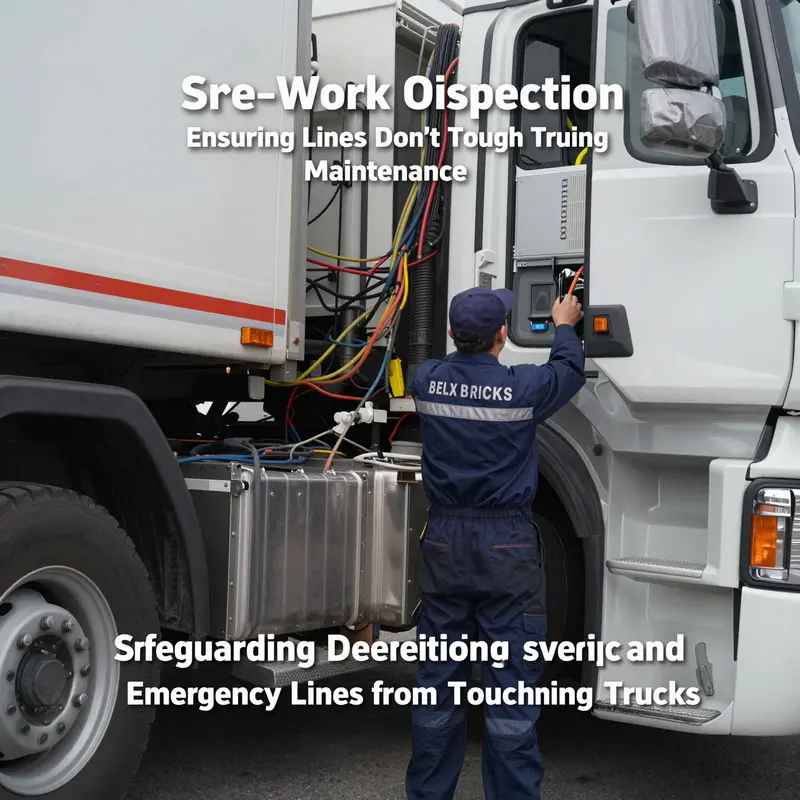
A truck sits in the bay, a maze of hoses, cables, and emergency lines spread around it like the spokes of a wheel. The image is familiar in maintenance yards where high-pressure systems, hot surfaces, and rotating components demand respect and discipline. The chapter you’re about to read treats pre-work inspection not as a ceremonial ritual but as a practical, dynamic safeguard. It is the first line of defense against a simple, often overlooked risk: lines touching the truck as it is moved, serviced, or positioned for repair. When maintenance procedures are performed without a clear, physical, and procedural buffer, the consequences can range from minor frays and leaks to dramatic safety hazards that endanger technicians and disrupt operations. A deliberate pre-work inspection—conducted with a calm, patient thoroughness—transforms a potential point of contact into a safeguarded distance, a corridor of safety that keeps service and emergency lines out of harm’s way.
At its core, the pre-work inspection embodies a philosophy of separation. It recognizes that a truck is a complex machine with moving parts, electrical circuits, hydraulics, and pneumatic systems that can become unstable when lines are tugged, snagged, or heated by nearby components. The inspection does not merely check for clear space; it confirms that every line is properly secured, routed, and stored before any technician touches the vehicle, before any jack or hoist is engaged, and before wheel or drum service begins. In this way, the inspection becomes less a checklist and more a continuous habit—one that technicians carry from one task to the next as a default mode of operation. The result is steady work, fewer interruptions, and a lower likelihood of a line coming into contact with a wheel, a rotating drum, or a hot surface during service.
The practical realities of a maintenance bay demand that a buffer zone be physically visible and legally enforceable. Cones, portable barriers, and floor markings create a working envelope that prevents unauthorized crossing into the truck’s path. This is not mere gaze protection; it is a defined system that reduces the chance of accidental contact. In busy yards, where multiple teams may be working around the same vehicle, the buffer zone serves as a clearinghouse for responsibility. If a line drifts toward a moving part or if a rack of tools shifts and encroaches on the truck’s wheel path, the buffer zone provides a natural prompt to pause and re-route, rather than forcing a rushed, last-minute decision. The role of the zone is to remind everyone that maintenance work depends on spatial order as much as on the skill of the technician. A simple barrier becomes a critical control that supports safe execution of the task at hand.
When we discuss the lines themselves—hydraulic hoses, electrical cables, and pneumatic connections—clearly the goal is not to ban all lines from the bay but to manage their movement so they do not meet the truck in vulnerable places. A core practice is proper handling: never allow hoses or cables to drag on the ground, and always secure them when they are not actively in use. Clips, straps, and designated storage racks are not mere conveniences; they are essential safety devices that prevent lines from being pulled, pinched, or crushed by the truck’s tires or by other equipment. During pre-work inspection, technicians walk the entire length of the truck, tracing each line’s path to verify that it has a safe, unobstructed route. They look for lines that cross the truck’s anticipated wheel paths, any tangle with the undercarriage, or lines perched near hot surfaces or exhaust emissions. The goal is not to micro-manage every movement, but to confirm that nothing in the immediate vicinity of the truck could be inadvertently drawn into action by normal maintenance operations.
A simple, highly effective tool for achieving this separation is the manual inspection trolley. This is a compact, hand-operated platform that technicians can use to lift and hold components, or to prop up lines so they remain clear of moving parts while checks are performed. By placing lines on the trolley, a worker creates a deliberate vertical and horizontal separation. The lines are elevated, organized, and out of reach of the wheels and the drum drive. The trolley’s presence also makes it easier to re-route lines if the technician needs to reposition the truck during the inspection. It is the practical embodiment of the buffer zone—an assistive device that translates risk awareness into actionable control. The trolley helps to prevent a line from being forgotten as maintenance tasks begin; it is a constant reminder that lines must be treated with the same care and attention as the engine and the drum itself.
The importance of securing and sealing lines becomes especially evident in environments that introduce moisture or other contaminants. Moisture can compromise the integrity of connections, leaks can escalate quickly in systems under pressure, and degraded seals can become a point of failure that sabotages a repair or creates safety hazards. Pre-work inspection therefore includes a targeted check of each line’s seal, connections, and routing. Technicians verify that seals are intact and that moisture has not infiltrated joints or fittings. In some settings, specially rated seals or quick-disconnect fittings are used to ensure that lines can be separated cleanly and quickly when the truck is moved and that there is no residual moisture or debris in the connection points. While this may seem like a minor detail, the consequence of an overlooked seal can be a leak that is difficult to trace, a line that becomes misrouted during maintenance, or a contamination event that requires rework and introduces further risk to personnel.
The discussion of lines and seals is particularly relevant for heavy-duty trucks with demanding operating roles. Consider concrete mixer trucks, often deployed on construction sites and in mining operations, where a rotating drum is integral to the vehicle’s function. The drum’s rotation, the drum’s drive system, and the fluid lines that feed, drain, or cool components all create a complex environment where even a small misstep can lead to a disagreement between the line’s course and the truck’s movement. In these scenarios, a thorough pre-work inspection is even more critical. Technicians must consider not only the immediate bay but also the vehicle’s typical operating conditions—where the truck will be parked, how the drum may be cycled, and where the undercarriage and wheel wells could come into contact with lines during maintenance. The emphasis remains on prevention: route lines away from the drum’s axis, away from exhaust heat, and away from any area where the vehicle’s weight could press the line against a sharp edge or a harsh surface. The goal is a clean, unambiguous separation that persists from the moment the technician approaches the vehicle to the moment the truck leaves the bay.
The practical, day-to-day application of pre-work inspection benefits from an integrated approach that combines physical barriers, disciplined line management, and clear communication. A spotter plays a crucial role when a truck is moved into position for service, such as wheel alignment or tire changes. The spotter stands in a location that keeps the path clear of lines and equipment and maintains continuous, precise communication with the driver. A simple phrase or agreed-upon signal can prevent a single dangerous move from becoming a larger incident. The spotter’s guidance helps ensure that the vehicle’s path does not intersect with the lines or with any temporary supports or tools that might shift during movement. This human element—the exchange of information at critical moments—bridges the gap between the written protocols and real-world execution. It is not an optional layer; it is a fundamental safety practice that acknowledges the dynamic complexity of a maintenance environment.
Incorporating a broader safety context, the pre-work inspection aligns with established safety guidelines that emphasize careful handling of the cab, hands, and personal protective equipment. After a truck is brought into a service bay, staff should be mindful of maintaining a safe distance from others, tapping into basic hygiene measures, and using appropriate protective gear. While these guidelines may vary by manufacturer or facility, the underlying principle remains consistent: prevention of contact and contamination is achieved through thoughtful sequencing of tasks, proper PPE, and a clear, respectful distance between people, lines, and moving parts. The narrative here is not about compliance for compliance’s sake. It is about the discipline that allows teams to work quickly, efficiently, and without compromising safety. When technicians adopt this mindset, the bay becomes a controlled, orderly space where lines and trucks share the same working environment with minimized risk.
Experience in a busy shop reinforces a simple truth: the most effective maintenance routines are those that anticipate contact before it happens. A thorough pre-work inspection is a proactive habit that reduces the need for reactive corrections mid-task. It catches potential trouble long before it becomes a problem—before a line is snagged, before a joint is stressed, before a wheel is nudged toward a hose, and before a conduit is pinched by a tool cart. The psychological advantage is substantial as well. Technicians who operate with this level of awareness report less frustration during the day, fewer interruptions, and more time to focus on the quality of the repair at hand. When the crew agrees to treat the buffer zone as an essential, living part of the work process, it ceases to be a theoretical safety layer and becomes a practical, reliable standard. The result is a safer bay where service and emergency lines can be relied upon to remain clear of the truck they support.
For organizations seeking to connect this chapter to broader trends, consider the growing emphasis on maintenance practices within private fleets. The adoption of structured maintenance programs, routine safety briefings, and standardized tool and line management protocols reflects a wider recognition that preventive discipline reduces downtime and extends equipment life. This alignment with industry trends is not coincidental; it is the natural outcome of teams that have learned to value clarity, communication, and spatial organization as part of their core routine. The emphasis on pre-work inspection in particular demonstrates that attention to detail at the outset yields dividends later in the repair process. When a company documents and reinforces these practices, it builds a culture where every technician understands the tangible link between careful preparation and reliable, efficient operation. For readers who want to explore related discussions, this is a point of connection: Private fleets trends in trucking maintenance.
As the inspection proceeds, the technician’s eye moves from line to line, from barrier to barrier, and from the trolley to the drum, ensuring that nothing jeopardizes the operation. The process is iterative rather than linear; it involves constant verification and, when necessary, quick adjustment. The buffer zone is not a static boundary but a dynamic safety margin that expands and contracts with the vehicle’s position and the task at hand. In practice, this means that every step—parking, securing lines, placing barriers, engaging the spotter, and confirming the truck’s alignment with the bay—must be considered, re-evaluated, and confirmed again before any maintenance action begins. This iterative mindset supports a state of readiness in which the crew can proceed with confidence, knowing that contact risks have been actively eliminated or mitigated.
Finally, the pre-work inspection serves as a bridge to the broader maintenance workflow. It connects the planning stage with the hands-on execution and, crucially, protects the truck’s integrity and the crew’s safety during the entire process. It is a reminder that maintenance success rests not only on the technician’s skill at the tool or the clarity of the schematic but also on the disciplined management of space and lines. The buffer zone, the trolley, the barrier, the spotter, and the routine of inspection together form a coherent approach to a problem that is both physical and procedural. When embraced as part of the daily routine, this approach reduces risk, improves efficiency, and supports a safer, more reliable fleet operation. For readers seeking broader perspective, the same principles apply across heavy-duty contexts and can inform training, standard operating procedures, and everyday practice alike. The result is a maintenance culture that respects lines and trucks as two elements of a shared system, forever mindful of the moment when safety and performance align.
External resource for deeper technical context: https://www.sinotruk.com/technical-resources/ckd-truck-explained. This reference offers technical standards, properties, and practical applications related to CKD trucks, providing a broader technical backdrop to the considerations discussed in this chapter.
Guarded Pathways: The Integrated Discipline of Keeping Service and Emergency Lines Clear of Truck Movement
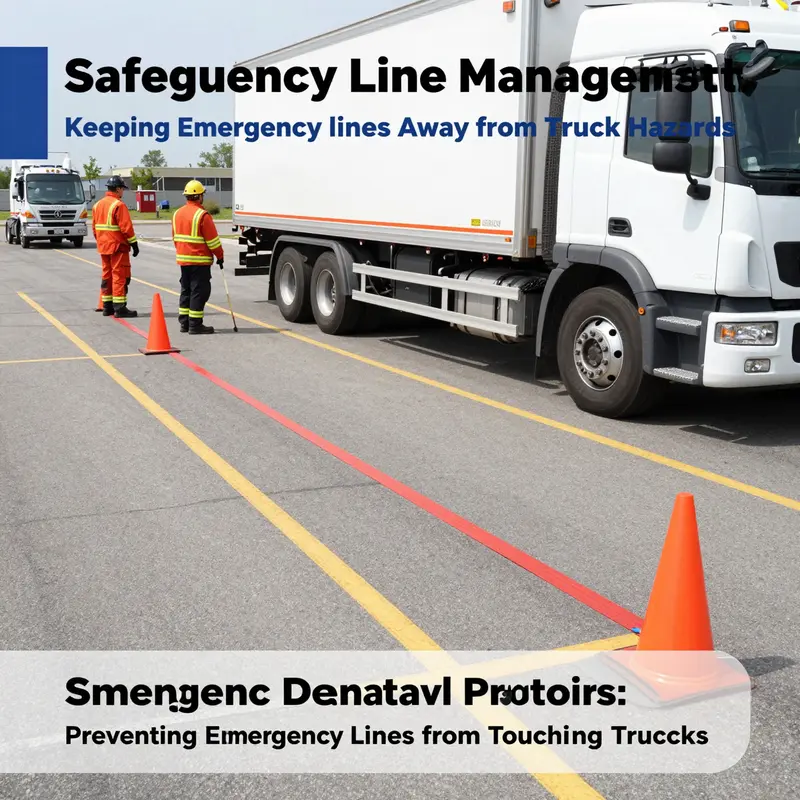
On a site where the rhythm of machinery and the hum of engines fill the air, a truck is often the pivot around which many tasks rotate. Maintenance bays, routinely busy with wheel work, hydraulic tests, and routine inspections, become a fragile stage where service lines and emergency lines can intersect with high-stakes movement. When a hose, a cable, or a pressurized line drifts into the wheel path or along the undercarriage, the risk is not merely a minor snag or a nuisance. It is the potential for leaks, equipment damage, lost time, or a sudden emergency that compounds danger for every worker nearby. In this environment, the objective is not simply to keep lines intact but to orchestrate a culture of deliberate spacing and controlled workflow. The discipline of keeping service and emergency lines away from truck hazards rests on a blend of planning, physical protection, procedural rigor, and continuous vigilance. It is an approach that acknowledges the complexity of site operations while insisting on clear boundaries, unwavering attention, and disciplined teamwork.
The first principle is clear, deliberate site planning. Before any work begins, the layout of the bay, the routes available for trucks, and the locations of all service lines must be mapped with precision. This is more than a drawing on a plan; it is a real-time guardrail for the day’s activities. Utility locating services should be engaged to identify underground lines, and the results should be translated into visible cues on the ground. Color coding is a familiar standard: red for electric, yellow for gas, blue for water. These colors become a shared language on the floor, a quick visual reminder that certain zones carry heightened risk. The practice mirrors the broader safety ethos found in established guidelines and acts as a preventative shield against inadvertent strikes. When drivers and technicians know the exact path of critical lines, they move with confidence instead of uncertainty, and that confidence reduces the chances that a line will be stepped on, clipped, or dragged into the truck’s trajectory.
Physical barriers play a central role in translating planning into tangible safety. Barriers are not merely decorative features; they are physical deterrents that maintain the spatial integrity of high-risk zones. Consider reinforced bollards at vehicle entry points or near utility vaults, fencing that delineates no-go corridors, and clearly marked buffers around lines that run close to truck routes. The aim is to create a zone that is visually obvious and mechanically resistant to intrusions. Barriers work best when their placement is informed by actual operations. They should neither impede the normal movement of trucks nor create unintended bottlenecks that tempt workers to bypass them. A well-integrated barrier system supports both safety and efficiency, enabling crews to work with a clear understanding of where lines end and wheel paths begin. In practice, this means teams plan ingress and egress routes with the same care given to a vehicle’s alignment in a maintenance bay. The result is a smoother flow that keeps lines out of harm’s way without compromising speed or productivity.
Equally essential is how lines are handled when they are not actively in use. Proper handling means securing hoses, cables, and emergency lines with clips, straps, or designated storage areas. Lines should never be left to drape into the truck’s path or to drag across the ground, where they can be run over, pulled taut, or damaged by debris. This is a small change with outsized effects. A line that is neatly coiled and stowed reduces the risk of friction-induced wear, minimizes the chance of accidental contact, and simplifies quick tasks when technicians need to re-establish a connection later. The habit of careful handling also communicates a broader message to the crew: lines deserve respect because they carry critical services and, in the case of emergency lines, they may be life-sustaining. When lines are managed with restraint and discipline, maintenance proceeds with fewer interruptions and with less time lost to untangling or rerouting.
Pre-work inspections anchor the entire sequence in a mindset of prevention. Before any tool touches a wheel or a nut is turned, a thorough sweep of the area around the truck should be conducted. The goal is to ensure that lines are clear of the vehicle’s path, wheels, and undercarriage, and that there are no obstructions that could snag or damage the lines during maneuvering. This step is not a single check but a routine, repeatable process that becomes a part of the day’s safety culture. It demands a trained eye that understands both the truck’s movement envelope and the flexibility of the lines themselves. Any deviation—an untied knot, a frayed wrap, a protruding fitting—triggers a corrective action before the work begins. In addition to the visual check, there should be a quick, standardized communication loop among team members. A spotter can confirm that the intended lift, alignment, or wheel removal will proceed with the lines fully out of the way, and the driver should acknowledge the plan before movement begins. This proactive coordination reduces the need for last-minute adjustments, which are often the moments when contact occurs.
Communication emerges as a quiet but powerful discipline that binds planning, protection, and performance. When trucks are moved into position for tasks such as wheel alignment or tire changes, the presence of a dedicated spotter—someone whose sole focus is the safe positioning of the vehicle—transforms a potentially risky operation into a coordinated sequence. The spotter’s role is to watch the lines, anticipate where a hose or a cable might cross a wheel arc, and alert the driver with precise, unambiguous instructions. Clear communication also involves maintaining a shared language about the bay layout, the status of lines, and the timing of each action. A well-communicated plan minimizes ambiguity and reduces the chance that a line will be caught or pulled during a maneuver. The practice echoes broader safety protocols where teams operate with explicit authorization and verification, ensuring that every action near critical infrastructure is intentional and measured. The result is not only safer work but also smoother workflow, as miscommunications that cause delays become rarities rather than routine hazards.
A further layer of safety rests in adherence to established safety guidelines and PPE practices. While the specifics can vary by manufacturer and site, the core principle remains consistent: protect workers and preserve critical infrastructure through disciplined behavior. In maintenance bays across industries, workers often use gloves, eye protection, and, when appropriate, masks and other PPE to manage exposure and contamination risks. For lines that could carry hazardous substances, additional precautions—such as grounding measures to prevent static discharge or spill containment strategies—form part of the protective fabric of the operation. The aim is not to overburden crews with unnecessary procedures but to align routine actions with a standard of care that minimizes risk and supports rapid response if an incident occurs. It is easy to view these precautions as overhead, but they are the practical expression of a philosophy in which every worker understands that a small, deliberate action can prevent a catastrophic event. In the broader context of site safety, this mindset connects daily tasks to the long-term reliability of the equipment and the well-being of everyone on site. The emphasis on careful line handling, systematic PPE use, and a culture that spots danger before it becomes damage is a central thread that ties maintenance excellence to operator safety.
When emergencies do arise, the management of emergency lines requires special deliberate action. In many sites, emergency lines—such as those carrying water for fire suppression or critical service feeds—must be positioned with extra caution and with a readiness to re-route or deploy only when necessary. The guiding idea is to keep these lines at a safe distance from the truck’s path, while ensuring they can be accessed promptly if the situation demands it. Pre-positioning and, when possible, remote staging of emergency lines can prevent interference during rapid response. This approach reduces the risk of line ruptures, marring of fittings, or unintended disconnections exactly when a quick and coordinated action is needed. It also reinforces the ethos that emergencies deserve a different tempo: lines should be available for immediate use yet not obstruct operations during normal maintenance. In practice, this means designating secure storage and retrieval points, using dedicated trolleys or reels, and coordinating with the driver and the safety officer so that deployment occurs in a controlled and predictable manner. It is a balance between accessibility and protection, a balance that is critical when every second counts in an emergency.
The human element of training and awareness cannot be understated. Regular training sessions for all personnel—drivers, technicians, supervisors, and line managers—build a shared understanding of line locations, the importance of keeping them clear of truck paths, and the correct procedures for securing and handling lines. Training should be reinforced with clear signage, pre-shift briefings, and a formal permit-to-work system. The permit system acts as a formal gatekeeper, ensuring that any activity near an emergency or service line has explicit authorization and verification. Such a framework helps prevent casual deviations in routine and fosters a team-wide commitment to safety. When workers know that activities near critical lines require a documented, reviewed plan, the likelihood of last-minute, improvised actions drops dramatically. The result is a more predictable, safer work environment, where crews can focus on the technical tasks at hand without constant improvisation to avoid line contact.
Maintenance of the infrastructure that supports these practices is a continual responsibility. Continuous monitoring ensures that the integrity of the line pathways remains intact between projects and that shifting ground, vegetation growth, or unauthorized access do not erode the safeguards that keep trucks from contacting lines. Regular inspections should be scheduled to identify creeping threats, such as ground movement that could trap or stress lines, or encroaching plant growth that could obscure visibility and complicate inspections. Any issues detected must be reported and addressed before they escalate into incidents. This ongoing oversight complements the upfront planning and physical protections, creating a system that adapts to changing site conditions and maintenance demands. It also strengthens accountability; when teams know that lines will be checked routinely, they are more mindful during every maneuver, every tie, and every re-routing decision.
In weaving together planning, barriers, handling practices, pre-work checks, communication, PPE, training, emergency line management, and ongoing monitoring, the chapter of keeping service and emergency lines away from truck hazards becomes a living, dynamic discipline. It is not a single protocol but a cohesive operating philosophy that treats lines as essential infrastructure worth protecting and as critical safeguards for the people who work around them. The approach demands attention to detail, a willingness to pause for a moment to confirm a plan, and a culture in which every crew member understands that the smallest delay or misstep in line management can ripple into a much larger set of problems. Yet when these habits are embedded, operations become more predictable, maintenance tasks unfold with fewer interruptions, and the risk of line-related incidents declines substantially. Over time, this translates into smoother project throughput, reduced downtime, and a safer, more reliable working environment for everyone on site.
For readers seeking a broader view of how these ideas translate into real-world practice, the concept of line protection aligns with trends in maintenance-focused fleets and the evolving norms around field safety. See the discussion of Private Fleets Trends in Trucking Maintenance for a deeper look at how consistent line handling and disciplined workflows are adopted across multiple sites and teams. Private Fleets Trends in Trucking Maintenance.
As these practices become standard, the relationship between trucks, lines, and people shifts from one of cautious improvisation to a managed system of protections and predictability. The goal is not to complicate work but to clarify it: to map lines, to control movement, to secure equipment, and to always plan for the unexpected with a readiness that comes from training and experience. When teams adopt this integrated approach, they protect the critical services that keep the facility operational and the lives of workers who rely on those services each day. It is the convergence of planning, protection, and people—the quiet, disciplined effort that makes safety a natural byproduct of good workmanship. For authorities and managers, this is the practical expression of a safety culture that recognizes the weight of every line and the responsibility that comes with moving a truck near it. In the end, guarded pathways are not a restriction but a strategic advantage, enabling faster, safer maintenance and emergency response without compromising the line assets that sustain essential services.
External reference and further guidance: OSHA Standards on Emergency Lines Management. https://www.osha.gov/standards/codesofregulations/29CFR1926/subpartQ
Final thoughts
The effective management of service and emergency lines in relation to trucks cannot be overstated; it is a critical component of an organization’s safety and operational protocols. By implementing physical barriers, ensuring proper handling of lines, conducting thorough pre-work inspections, and managing emergency responses, companies can significantly reduce the risks of accidents and enhance productivity. Fostering a culture of safety will not only protect the workforce but also maintain the integrity of the equipment involved in these essential operations.