
Navigating the complexities of towing an F-450 service truck is crucial for companies in manufacturing, construction, and retail that rely on efficient transport solutions. The Ford F-450 is engineered for heavy-duty workloads, making it a popular choice among businesses that need reliability and performance. This guide will elucidate vital considerations, from understanding towing capacities to preparing your vehicle and ensuring safe practices. Each chapter will build on the previous one, providing a comprehensive overview that aims to empower professionals within industries that depend on effective logistical strategies.
Mastering Heavy-Duty Mechanics: Unraveling the Towing Capacity and Safety Considerations of the F450 Service Truck
The Ford F450 service truck stands as an icon of heavy-duty performance and reliability, engineered to handle some of the most demanding towing and hauling tasks available in today’s market. Understanding its towing capacity in detail not only underscores the impressive mechanical design behind the truck but also reinforces the emphasis on safety and precision when undertaking towing operations. With a robust chassis, reinforced suspension, and a powerful engine, the F450 service truck has been refined over generations to offer increased stability and high tow-load performance. This chapter provides an in-depth look into the mechanics of towing an F450, the importance of adhering to manufacturer specifications, and practical guidelines that ensure safe operation when dealing with heavy loads.
At the heart of a safe and efficient towing process lies an acute awareness of the vehicle’s inherent design characteristics and loading limits. Every configuration of the F450 has been calibrated for specific towing and hauling requirements. For instance, the 2008 Ford Super Duty F450 exemplifies an evolution in design, featuring a state-of-the-art 6.4L diesel engine coupled with an advanced chassis that directly contributes to its outstanding towing capacity. Based on its configuration – whether a traditional rear-wheel drive or a more robust 4×4 system – the factory-rated towing capacity can exceed 18,000 pounds. However, these numbers only serve as guidelines; some F450 models, especially those with aftermarket modifications, may boast capacities that surpass factory ratings. Such modifications are only recommended when performed by certified engineers who give due consideration to safety and structural integrity.
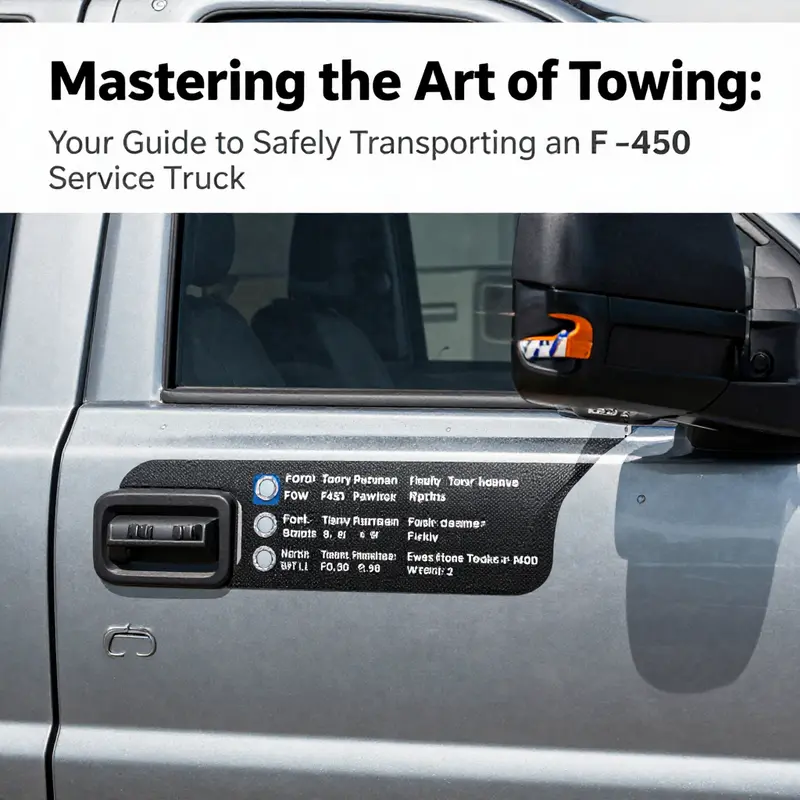
It is essential, therefore, to begin every towing operation by consulting the owner’s manual or the vehicle’s placard, typically found on the driver’s side door jamb. This step is indispensable because the towing capacity can vary depending on the specific configuration and any subsequent modifications. Adherence to manufacturer guidelines is not just a legal requirement but is also a matter of personal safety. Recognizing that each F450 is built to deliver peak performance under defined conditions helps operators avoid the pitfalls of overloading, which can lead to brake failure, compromised steering, or even catastrophic mechanical breakdown.
Beyond verifying the vehicle’s towing capacity, selecting the correct towing equipment plays a crucial role in maintaining safety and operational efficiency. Many experts recommend that for heavy loads a fifth-wheel or a gooseneck hitch is preferable over a traditional bumper pull trailer hitch. This recommendation stems from the fact that both fifth-wheel and gooseneck hitches offer improved weight distribution and stability—a critical factor when managing loads that push the boundaries of the truck’s structural limits. Inaccurate or substandard tow equipment can unintentionally shift weight distribution during transit, causing undue stress on the vehicle’s suspension and braking systems. The outcome can not only damage the truck but also compromise the safety of highways and byways.
Before setting off on any long-haul journey, operators should perform a comprehensive pre-towing inspection. Such an inspection includes a thorough check of all braking systems, tire conditions, transmission fluid levels, and the overall health of the cooling system. It is wise to ensure that each component—from the front brakes that often bear the brunt of mileage-induced wear to the crucial suspension and steering assemblies—has been maintained diligently. Neglecting these critical checkpoints may result in unexpected mishaps at high speeds, especially during maneuvers that require impeccable vehicular response times.
Operators should also keep in mind that towing such a heavy-duty vehicle is not merely about coupling a trailer to a hitch. It is an intricate process that demands an understanding of how weight distribution, vehicle dynamics, and external factors like road conditions all contribute to a safe towing experience. For instance, the additional stress placed on the F450’s drivetrain while towing can lead to faster-than-usual wear if appropriate maintenance is overlooked. This ties into the broader issue of ensuring that advanced maintenance practices are followed, which has become increasingly highlighted within the industry. For further insights into cutting-edge maintenance and best practices that can extend the lifespan and performance of service trucks, consider exploring the detailed discussions on advanced maintenance practices relevant to service trucks available in recent industry reports, such as those found in articles discussing private fleets and trends in trucking maintenance.
Equally important in this equation is the skill and attentiveness required during the towing process. It is not uncommon for even the most robust vehicles to be vulnerable if the towing operator engages in abrupt maneuvers. Safe towing involves smooth acceleration and deceleration, careful steering adjustments, and a proactive awareness of the vehicle’s response to road conditions. Operators are encouraged to maintain a generous following distance, particularly on highways where sudden stops can occur. Utilizing turn signals well in advance helps alert surrounding vehicles of impending maneuvers, contributing to the overall rhythm of traffic and safety. Moreover, monitoring the temperature gauge and brake performance during prolonged journeys is essential. Any sign of overheating or unusual brake behavior should prompt immediate action to prevent a potentially serious incident.
Historically, trucks like the F450 have been engineered with a focus on durability and reliability. Engineers have refined the suspension and braking systems after years of research and practical testing under varied conditions. The evolution from earlier models to later ones, such as the 2008 edition, marks significant improvements in handling, weight management, and overall stress distribution during towing operations. This evolutionary process in truck design is a testament to the industry’s commitment to maximizing both performance and safety. In many ways, understanding the intricacies of an F450’s towing capacity offers a window into the broader landscape of modern automotive engineering, where each component is designed to work in harmony with the rest, ensuring that the truck not only performs as expected but also endures the rigors of heavy-duty tasks.
One must also consider the operational environment in which the F450 is expected to perform. The variables on the road—from hills and curves to changes in road texture and weather variations—impose additional challenges that can affect towing performance. Maintaining stability under these fluctuating conditions is a primary concern for operators who must adjust their driving style to match the demands placed by the environment. For instance, when towing uphill or navigating sharp bends, the weight shift in the trailer can affect the truck’s balance unless the towing setup has been carefully configured to account for these shifts. In these contexts, it is crucial to understand that every element—from the hitch type chosen to the load distribution on the trailer—plays an integral role in ensuring that the vehicle behaves predictably and safely under stress.
In addition to the physical aspects of towing, a mindful approach to operational planning is recommended. Before embarking on any towing challenge, it is advisable to develop a comprehensive plan that includes not only the route but also contingency strategies for unexpected events. This planning might include identifying safe stopping points along the way, ensuring that spare parts and tools are readily available in case of mechanical issues, and arranging for support in remote or less densely populated areas. It is wise to schedule regular check-ups of the vehicle’s mechanical systems during extended trips. Operators who incorporate these practices reduce the risk of encountering a failure mid-journey.
Furthermore, integrating modern technology into towing operations can yield significant benefits. Advances in vehicle diagnostics, GPS tracking, and real-time monitoring allow operators to track performance metrics and receive alerts if any component appears to be under stress. These technological advancements enable a proactive response to emerging issues, further bolstering the safety profile of the towing process. With the advent of telematics and onboard diagnostics, any deviation from normal operating conditions—such as unusual brake temperature fluctuations or engine performance anomalies—can be detected early, allowing for timely intervention. These innovations reflect a broader shift in the industry, where technology is leveraged to bridge the gap between traditional mechanics and modern safety protocols.
No discussion on towing an F450 service truck would be complete without addressing the importance of professional assistance for the heaviest of loads. In scenarios where the F450 itself needs to be towed by another vehicle, meticulous care must be taken to ensure that the vehicle performing the tow is not only rated for such a task but also is equipped with specialized equipment, such as a tow dolly or flatbed trailer. This is especially critical if the F450 features a 4×4 drivetrain, where improper towing techniques can lead to irreversible damage to the drivetrain or other engine components. In these cases, enlisting the help of towing professionals with deep expertise in towing heavy-duty vehicles becomes invaluable. Their training equips them with the skills and equipment necessary to prevent common pitfalls, like transmission damage or brake system failures, that can be perilous when handled improperly.
An often underestimated aspect of towing is the regulatory and legal landscape surrounding heavy-duty towing operations. Operators must be cognizant not only of the manufacturer’s guidelines but also any state or federal regulations pertaining to towing capacities and road safety standards. These regulatory frameworks are put in place to protect all road users and ensure that vehicles like the F450 operate within safe and tested parameters. Familiarizing oneself with these guidelines, often available through official government or industry bodies, reinforces the diligence required to operate such a powerful machine responsibly. This awareness also ties into a broader understanding of how economic and regulatory trends impact daily operations in the trucking industry, affecting everything from equipment choices to maintenance schedules.
Perhaps one of the most intricate aspects of towing an F450 is the balance between performance optimization and the fundamentals of mechanical safety. Each journey, regardless of its scale, requires a calculated approach that factors in vehicle dynamics, environmental conditions, and the quality of the towing equipment. When the F450 is loaded with a significant trailer or heavy equipment, the stress on every part of the vehicle multiplies. It becomes imperative to adopt smooth and conservative driving techniques. Sudden stops or rapid accelerations might not seem dramatic in a passenger vehicle, but in a heavy-duty environment, such forces can quickly lead to mechanical overloading or even accidents.
To ensure a consistently safe towing experience, it is critical to perform periodic maintenance and inspections rather than waiting for a part to show signs of wear. Components like brakes, tires, and suspension elements should be inspected frequently, especially before embarking on long-distance towing operations. The maintenance regimen should be detailed and systematic, accounting for the specific resources that each heavy-duty application demands. Whether it is a routine tire pressure check or a more in-depth review of the cooling system and transmission fluids, the small details add up to create a layer of safety that can often be the difference between a successful heavy haul and a costly mechanical failure.
In the context of the larger transportation industry, the F450’s towing capacity is a significant benchmark. The truck’s design not only represents decades of mechanical evolution but also serves as a benchmark for best practices in heavy-duty towing and safety protocols. As technological advancements continue to influence every facet of automotive design and operation, ongoing education and adaptation remain pivotal for those tasked with operating, maintaining, and towing these formidable machines. Not only does this advance individual responsibility in terms of vehicle safety, but it also contributes to broader industry trends that emphasize efficiency, sustainability, and the responsible management of transportation assets.
The journey of understanding an F450’s towing capacity reveals a layered narrative that combines robust engineering, vigilant maintenance practices, and an operational mindset that prioritizes safety on every mile of travel. By acknowledging the critical factors—from proper hitch selection to diligent pre-tow inspections and the benefits drawn from modern onboard diagnostics—operators can harness the full potential of the F450 while avoiding the pitfalls associated with heavy towing. Indeed, these practices are not mere recommendations but essential steps ingrained in the successful operation of heavy-duty service vehicles.
Ultimately, the conversation around towing is as much about respecting the power and capabilities of a machine as it is about engaging with the technical specifics outlined by manufacturers like Ford. Operators who take the time to acquaint themselves with all dimensions of the F450’s performance, from its impressive engine capacity to the nuances of corrective maintenance, are better prepared to manage the demands of heavy-duty towing. With the continued evolution of design and safety technologies, the future of towing promises even more refined methods and enhanced reliability.
For those seeking a deeper dive into the technical and maintenance aspects of heavy-duty trucks, including advances in predictability and performance optimization, further reading on emerging trends in maintenance and fleet management can provide valuable insights. In this regard, detailed discussions on private fleet trends and trucking maintenance have proven essential for modern operators.
For additional authoritative specifications and manufacturer guidelines on the 2008 Ford F450 towing capacities and configurations, please refer to the official Ford resource at https://www.ford.com/vehicles/trucks/super-duty/f-450/.
Mastering the Art of Towing: Essential Equipment and Techniques for Your Ford F450 Service Truck
When it comes to towing a Ford F450 service truck, there is an art and science that demands not only the proper equipment but also a deep understanding of the techniques that safeguard both your vehicle and those on the road. The Ford F450 is a heavy-duty pickup built for intense work, and while its robust construction gives it an edge in towing and hauling, it also means that towing it requires careful planning and strict adherence to safety protocols. In this chapter, we explore in detail the equipment and techniques that are critical to successfully and safely towing an F450, while also discussing pre-towing checks, safety strategies, and some practical advice on when to enlist professional help.
The first element to consider before you even hook up the tow is understanding the inherent specifications of your F450. Each F450 has a configuration that affects its towing capacity, often exceeding 18,000 pounds depending on factors such as its engine type, drivetrain, and axle ratio. It is of paramount importance to consult the owner’s manual or the placard inside the driver’s side door jamb to confirm the specific towing capacity of your truck. This initial step is a guiding beacon in the decision-making process, providing a clear boundary that should never be crossed. Exceeding the rated capacity can subject the vehicle to undue strain, lead to brake malfunction, or even put lives at risk during an emergency.
When you decide that towing your F450 is necessary—whether it’s being towed or it is doing the towing—a selection of the right equipment becomes the next vital consideration. Among the options available, a flatbed trailer stands out as the premium choice. The flatbed method allows all four wheels of the service truck to be completely off the ground. This is specifically advantageous for models equipped with a four-wheel drive system, as it protects the drivetrain from the wear and tear that an on-road towing setup might inflict. Aside from preserving mechanical integrity, the flatbed method distributes weight evenly, thereby reducing the risk of tire blowouts and ensuring that the truck’s suspension is not unduly stressed on long journeys.
In scenarios where a flatbed trailer is impractical, a tow bar—often referred to as a dolly—can provide a temporary solution. This equipment is particularly suited to emergency situations or short-distance moves. The tow bar is designed to lift the front wheels off the ground, allowing the rear wheels to maintain road contact. However, using a tow bar comes with stringent guidelines. The F450 must be in a configuration that supports such towing, most notably in two-wheel drive mode for part-time four-wheel drive models. It is imperative that the tow bar is securely attached to designated towing points, usually on the front bumper or other manufacturer-specified points. Under no circumstance should the rear bumper or frame rails be used as a towing point, as this could lead to structural weaknesses or catastrophic damage. Moreover, the equipment you select must be capable of handling the curb weight of an F450, which typically exceeds 6,000 pounds. The hitch, safety chains, and towing ball must be matched correctly to ensure that all components operate in unison under the stresses imposed by towing.
Another tool in the towing toolkit is the tow rope, though it should only be used in dire circumstances. Tow ropes are intended for very short distances at low speeds—generally under 15 mph—and only when the truck is in neutral and the parking brake is completely disengaged. The inherent risk with tow ropes is that they offer minimal control over the towed vehicle, especially when dealing with an automatic transmission that might inadvertently engage power, leading to potential transmission damage. Thus, while a tow rope may seem convenient in a tight spot, it is often best to rely on more robust equipment and not to treat tow ropes as a go-to solution.
Prior to hitching up your F450 for towing, a thorough pre-towing checklist is essential. This checklist acts as both a final assurance and an opportunity to catch potential issues before they escalate into serious problems on the road. Start by scrutinizing the tire pressure and tread depth on both the service truck and the tow vehicle. Tire conditions play a significant role in overall stability and the ability to manage sudden maneuvers or unexpected road hazards. Remember, underinflated or worn-out tires can lead to overheating or even blowouts, especially when additional weight is applied.
Beyond the tires, ensure that both the braking systems and suspension components are in peak condition. The effective operation of the brakes is non-negotiable, as heavy trucks require considerable stopping power to safely manage the momentum built up during towing. Pay special attention to the front brakes, particularly in high-mileage vehicles that might be due for maintenance. Confirm that the cooling system and transmission fluid are at their recommended levels, since towing imposes extra strains on these systems and overheating can result in serious mechanical failure. The importance of preventative maintenance cannot be overstated here. The investment in regular checks not only extends the life of your truck but also enhances safety during towing operations.
While embarking on a towing journey, it is important to observe disciplined driving techniques that further mitigate the risks inherent in moving a heavy load. Smooth acceleration, steady speeds, and gentle braking are the cornerstones of safe towing practices. Sudden changes in speed or direction can unsettle the towed vehicle, potentially leading to jackknifing or loss of control. Furthermore, maintaining a safe following distance is critical. When towing, the stopping distance is significantly increased, and tailgating can seriously shorten your reaction time. The use of hazard lights during such operations helps signal other drivers of the situation, fostering an environment of caution on busy highways or urban areas.
Another consideration is the power and braking capability of the tow vehicle itself, particularly when the F450 is the one being transported. It is not enough to focus solely on the truck being towed; the towing vehicle must also be robust enough to handle the combined load. This is especially true in scenarios where long distances or mountainous terrain is involved. In such cases, it might be prudent to partner with professional towing services that specialize in heavy-duty truck transport. Professional services are often equipped with specialized flatbed trailers that take extra care in positioning and securing the service truck. They also possess the technical knowledge required to navigate challenging routes and account for variables that an everyday driver might overlook.
Experience shows that investing in quality tow equipment pays dividends in the long run. For instance, advanced towing systems come with smart integration features that can monitor tire pressure, vehicle tilt, and other critical parameters during transit. By keeping an eye on these factors, drivers can adjust their approach in real time, mitigating potential hazards before they escalate. Moreover, a well-maintained towing setup can reduce wear and tear on both the service truck and the tow vehicle, ultimately reducing the likelihood of encountering mechanical issues when it is needed most. In today’s environment, where every minute counts, this level of preventive care underscores the essential nature of investing in high-quality towing equipment.
The technical specifications for towing an F450 relate closely to the broader theme of responsibility in vehicle management. The choices made in tow equipment and towing techniques are reflections of a commitment to safety—not just for the driver and the vehicle operator, but for everyone on the road. This is exemplified in practices such as using proper hitch connections and avoiding redundant or unsafe procedures like using the rear bumper for towing. Safety, infrastructure longevity, and overall vehicle integrity go hand in hand when the right methods are applied. At times, this may also mean foregoing a DIY approach in favor of professional expertise. In fact, many transport specialists emphasize that consulting the detailed guidelines in your truck’s owner manual or even discussing options with certified service personnel can provide insights that are not immediately obvious from a casual read-through of online articles. For those interested in innovative approaches to vehicle management and maintenance, exploring trends in professional maintenance practices, such as those discussed in articles on investing in people in trucking, can offer valuable perspectives.
Driving at the intersection of technology and traditional mechanics, towing a heavy truck like the F450 calls for refinements in technique and the adoption of best practices that might differ from conventional towing experiences. Exceptional towing is about harmonizing the elements of physics, mechanics, and human judgment. It is about anticipating shifts in momentum, understanding the dynamics of heavy vehicles, and carefully planning each move along the journey. The challenges stack up when encountering steep grades, narrow passages, or inclement weather conditions. In these circumstances, increased caution is the norm, and the driver must adjust speed, path, and sometimes even the entire towing strategy to accommodate reduced traction and visibility.
Throughout the towing process, constant vigilance is required. The journey does not end the moment the equipment is attached and the engine starts roaring. Continuous observation of instrument panels, such as the temperature gauge and brake wear indicators, is essential to detecting early signs of potential strain. If the engine begins to overheat or if the brakes show signs of fading, it is imperative to pull over safely and reassess the situation. These real-time adjustments are part of an ongoing dialogue between the driver and the machine—a dialogue that, when respected, can prevent accidents and extend the life of both the service truck and the towing apparatus.
It is also worth mentioning that proper training and preparation can make all the difference when faced with the rigors of towing a heavy vehicle. Many experienced operators recommend that drivers undergo specialized training sessions that address the unique challenges of towing heavy-duty trucks like the F450. Such training focuses on practical applications, from mastering the physical act of coupling and decoupling towing equipment to understanding the mechanical feedback from the vehicle. The result is a heightened sense of awareness and confidence that translates directly into safer towing practices. This kind of proactive skill development is central to the maintenance of high safety standards in both professional and personal towing activities.
The methodology behind safe towing is underpinned by thorough pre-trip inspections and systematic maintenance. Drivers should routinely inspect the towing equipment for signs of wear, verifying that bolts, chains, and connection points are in optimal condition. This attention to detail not only prevents equipment failures but also instills confidence when navigating through challenging terrains. Additionally, seating too high a load on the tow bar, or misaligning the hitch, can lead to dangerous conditions such as swaying or tipping. Even small errors in setup can quickly escalate into major issues once the towing vehicle is in motion. Consistent adherence to manufacturer guidelines and regular maintenance checks are therefore indispensable for mitigating these risks.
Navigating the complexities of towing an F450 service truck is as much about mindset as it is about mechanical preparation. The act of towing, particularly with a vehicle as robust and substantial as the F450, requires a blend of technical know-how, constant awareness, and a respect for the forces at play. Every component, from the flatbed trailer to the tow bar or emergency tow rope, has a role in the overall process. By ensuring that each piece of equipment is correctly rated and properly maintained, drivers can avoid scenarios that may lead to mechanical failure or jeopardize road safety. This careful planning and methodical approach exemplify the broader commitment to risk management that defines much of modern heavy-duty towing operations.
For those who consistently operate in environments where heavy-duty towing is a regular part of the duty cycle, partnering with professional services can be an invaluable asset. Expert towing companies come armed with specialized equipment and vast experience in managing unexpected challenges. They can offer insights into advanced towing techniques, such as dynamic weight distribution and the optimal routing for hazardous conditions. Such expertise is especially beneficial when local regulations or unusual geographic features complicate the towing process. To further enhance your understanding of these challenges, you might also explore the official resources provided by vehicle manufacturers. One particularly useful external source is the Ford F450 Towing Guide – Official Ford Service Manual, which offers detailed, model-specific instructions and safety protocols.
In conclusion, towing an F450 service truck safely and efficiently is not a simple task that can be undertaken without sufficient preparation and understanding. It requires a careful balance between equipment selection, meticulous pre-towing inspections, and disciplined driving practices. Whether you are opting for a flatbed trailer for complete drivetrain protection or a tow bar for an emergency transfer, the critical factor is ensuring that every component is compatible with the substantial demands of the F450’s weight and configuration. By embracing these established techniques and continuously investing in skill development—as well as adhering to manufacturer guidelines—you can forge a pathway that marries safety and efficiency, ultimately enhancing the longevity and reliability of your heavy-duty service truck. This comprehensive approach not only protects the integrity of your vehicle but also contributes to safer roadways for all who share them.
Ensuring Safe Towing: Mastering the Preparation and Execution for Your F450 Service Truck
Towing a heavy-duty F450 service truck is not simply about hooking up a trailer and pulling away – it is a comprehensive process that demands attention to detail, thorough maintenance, and a steadfast commitment to safety. For operators and vehicle owners alike, understanding every facet of the preparation process is essential in order to avoid potential dangers and costly damage. In this chapter, we explore the critical steps needed to ensure that your service truck is ready and capable of towing, while meticulously following manufacturer guidelines and legal regulations.
Before you set off on the road, the first and most important task is to verify the towing capacity of your F450 service truck. The towing capacity is determined by a variety of factors, including engineering design, the vehicle’s weight distribution, and the specific configuration of the engine, drivetrain, axle ratio, and suspension components. Operators are strongly encouraged to refer to the owner’s manual or the placard located on the driver’s side door jamb. These sources provide the factory-rated towing capacity – a number that must never be exceeded if safety is to be maintained. Even if modifications have been made which appear to offer an increase in towing capacity, these enhancements must also be assessed by professionals trained in heavy-duty vehicle engineering. Relying on proper documentation and established guidelines ensures that no matter how the truck is equipped, it remains within safe operational limits.
Preparation begins long before the engine is started. Ensuring that every system of the F450 service truck is in optimal condition is paramount. The condition of the brakes, tires, fluids, and suspension systems all have direct implications for towing safety. Start with a meticulous inspection of the truck’s mechanical components. Check the engine oil, transmission fluid, and coolant levels to ensure that they meet the recommended specifications. Minor deficiencies can lead to overheating or mechanical failure when the truck is under the added stress of towing heavy loads. In the same spirit, a review of tire pressure and tread depth is necessary. Worn or underinflated tires not only diminish traction but also compromise the stability of the vehicle during transit. For those planning on towing for extended durations, a proactive check of the brake system is crucial. With heavy loads, the brakes are required to perform reliably under more strenuous conditions, and even slight deterioration in braking performance could lead to dangerous consequences.
Once the basic mechanical checks have been completed, attention must turn to the truck’s towing equipment and the selection of an appropriate hitch system. The choice of hitch plays a significant role in establishing the stability of the vehicle during maneuvering. For an F450 service truck, a hitch rated to support not only the truck’s weight but also the forces generated during acceleration and braking is essential. While a bumper pull trailer hitch might appear convenient, it is often recommended to opt for a fifth-wheel or gooseneck hitch. These specialized hitches offer superior weight distribution and improved stability, which translate to fewer risks of sway or jack-knifing during sudden maneuvers.
In addition to the hitch, the truck’s towing configuration may include a flatbed trailer or a tow dolly, depending on whether the truck is being towed or is being used to pull an additional load. If your service truck is set to be towed by another vehicle, it is imperative to ensure that the towing vehicle itself meets the required capacity to handle the weight of the truck. When towing the F450 on a flatbed or using a tow dolly, the drivetrain should be disengaged to prevent any undue strain. This typically involves removing the front wheels or ensuring that the truck is securely supported so that the drivetrain is not inadvertently engaged during transport. A well-secured truck not only minimizes risk of damage but also contributes to consistent handling throughout the journey.
The legal parameters surrounding towing can be complex and vary from one region to another. It is the responsibility of the operator to acquaint themselves with local and national laws regarding towing regulations. Many jurisdictions impose strict rules on the types of equipment that must be used when towing, such as the requirement for trailer lights, brake controllers, and specific hitch ratings. Failure to comply with these regulations can lead not only to fines and penalties but also to increased risk on the road. Investigating and understanding these legal requirements is non-negotiable. By doing so, the operator can safeguard against improper load distribution, which is one of the most common causes of accidents in heavy-haul towing.
Once the legal and equipment considerations are fully addressed, conducting an exhaustive pre-trip inspection becomes the next critical task. The pre-trip inspection is a holistic review of both the F450 service truck and the towing setup. Begin by examining all connections, ensuring that bolts, pins, and connectors are secure and free of any sign of wear. It is advisable to inspect not only the hitch and ball but also the wiring harnesses for the trailer lights, as proper illumination is crucial for safety during night-time or low-visibility conditions. A meticulous review of the trailer’s tires, brakes, and supporting structures is essential as well. This routine serves to identify any issues that may have developed since the last maintenance check and to prevent any component from failing while on the road. Securely fastening any loose items within the truck’s cab or bed further contributes to a safe operating environment, as unsecured cargo may become hazardous during sudden stops or in the event of a collision.
A critical aspect of ensuring safety during towing lies in understanding and monitoring the total combined weight of the vehicle, trailer, and any cargo. Overloading is a serious safety hazard that can result in compromised braking performance, loss of control, or even structural damage to the truck. It is important to calculate this combined load and verify that it falls within the operational range specified by both the truck’s manufacturer and the towing equipment. In situations that call for heavier loads, professional assistance may be required to both confirm accurate weight distribution and ensure that the towing setup meets all required safety standards. Keeping an eye on weight limits is not merely a recommendation – it is a fundamental safety measure ingrained in every aspect of heavy-duty towing.
Driving with a heavy trailer attached demands a heightened level of caution and adaptive driving strategies. The dynamics of towing change significantly compared to normal driving. Maneuvers such as turning, braking, and accelerating must be executed gradually to avoid sudden shifts in momentum. It is advisable to maintain a larger following distance than typically recommended for standard vehicle operation. This increased buffer zone provides additional time for the operator to react should an unexpected situation arise. Turning signals should be activated well in advance, and extra care must be taken when navigating corners or entering curved roadways. The combination of proactive driving and constant vigilance greatly reduces the risks associated with high-speed towing.
Long journeys amplify the challenges of towing a heavy F450 service truck. Operators should plan rest stops during extended trips, not only to alleviate fatigue but also to allow for periodic checks on the truck and trailer systems. Regularly checking tire pressure, inspecting the temperature gauges, and evaluating the performance of the brake system can prevent minor issues from escalating into major hazards. In adverse weather conditions, such as high winds or heavy rain, it becomes even more important to frequently assess the stability of the trailer. Conditions may change rapidly, and a momentary lapse in vigilance can lead to compromised control over the entire towing setup. By incorporating scheduled stops into the journey, operators can take a moment to ensure that every aspect of the truck and its equipment is functioning as it should.
Maintenance plays a significant role in the effectiveness and safety of heavy-duty towing. Modern trucking trends emphasize the importance of routine checks and upkeep of not only the mechanical parts but also the electronic systems that govern vehicle performance. Whether it is ensuring that transmission fluids are at optimal levels or that the electronic stability control systems are responsive, an attention to detail can translate into a safer towing experience. For those interested in staying updated on the latest in maintenance practices, insights into trends in trucking maintenance offer valuable information that can help mitigate common issues. Visitors who wish to learn more about these practices can explore emerging developments in this field, for instance, by reading about recent discussions on private fleet maintenance trends.
In addition to the internal checks and maintenance routines, selecting and using proper towing equipment cannot be overstated. The performance of a towing system is only as dependable as the weakest component. Every piece of equipment – from the hitch itself to the trailer’s wiring harness – must be carefully selected and verified for its load-bearing capacity. Specialized towing equipment, such as brake controllers and weight distribution systems, serve not only to ease the strain during towing but also to provide a layer of protection in case of an emergency. In situations where the F450 service truck is to be moved on a flatbed trailer, the proper alignment and use of wheel chocks and tie-down straps ensure that the truck remains static and secure throughout transit.
Even when all mechanical, legal, and equipment-based considerations are thoroughly managed, driver behavior remains a determinative factor in ensuring a safe towing experience. The operator’s responsibility extends beyond the initial preparation phase and into the actual journey. Smooth, deliberate driving reduces the chance of sudden jolts that could unsettle the trailer or compromise the stability of the hitch. Furthermore, the operator must remain alert to the changing dynamics induced by environmental factors. Road conditions, weather influences, and traffic patterns all play a role in the overall safety of the trip, and the driver’s ability to adapt accordingly serves as the final line of defense against potential mishaps.
Training and experience are fundamental assets for those who frequently tow heavy-duty service trucks like the F450. Taking the time to familiarize oneself with proper towing techniques and practicing safe driving strategies under controlled conditions can build confidence and competence. Many operators benefit from professional training courses that simulate real-world conditions and provide hands-on experience with emergency procedures. By investing in education and regular practice, drivers can ensure that they are better prepared to handle unexpected situations, ranging from sudden equipment failures to adverse road conditions.
Integrating all of these steps into a coherent pre-towing regimen fortifies the entire process, ensuring that the F450 service truck is not only ready for the journey but also primed for a safe and efficient operation throughout its course. The journey begins with an in-depth understanding of the truck’s capabilities and extends to a granular inspection of every mechanical element, all culminating in a driving approach that is as cautious as it is informed. The operator’s engagement at every level – from mechanical upkeep and legal compliance down to the minutiae of hitch connections – is pivotal in minimizing risk.
Furthermore, the mental preparedness that accompanies thorough physical checks cannot be underestimated. Confidence comes from knowing that each element of the truck’s towing system has been scrutinized and verified. This not only fosters a safer journey but also enhances operational efficiency during long hauls. Many seasoned operators mention that the habits formed during the preparation phase – such as conducting routine checks and implementing scheduled stops – instill a sense of discipline that permeates every aspect of the towing process. Such discipline is particularly important when conditions are less than ideal, or when unforeseen challenges demand quick, decisive action.
In a landscape where heavy-duty trucking is continually evolving, staying informed about the latest insights on equipment maintenance, regulatory updates, and on-road best practices is paramount. Advances in technology have introduced new systems that monitor tire pressure, fluid levels, and even driver inputs to provide real-time feedback on the health of the vehicle. These innovations, when integrated into traditional towing practices, can serve as additional layers of safety. The industry is increasingly focused on leveraging data to predict when maintenance is needed before a failure occurs—a shift that resonates strongly with the proactive approach required for safely towing an F450 service truck.
By understanding the intricate balance between mechanical excellence and regulatory compliance, operators can navigate the multifaceted challenges of towing heavy-duty vehicles with greater assurance. Every safety tip, every equipment check, and every cautious maneuver employed while towing is designed to protect not only the vehicle but also the lives of those on board and those sharing the road. The commitment to safety manifests at every level of the process – from the initial checks in the garage to the careful steering on a busy highway.
The cumulative effect of every precaution taken is a more secure and reliable towing operation. This deliberate approach is what ultimately defines a successful towing experience for the F450 service truck. In the sphere of heavy-duty transportation, where the stakes are invariably high, every small step taken during the preparation phase is an investment in overall safety. To further explore how the advancements in maintenance and management practices can reshape the industry, one might delve into recent discussions surrounding emerging trucking maintenance trends, which offer insights into how continuous improvements can enhance not just vehicle longevity but also operational safety.
In closing, the pathway to safe towing is paved with diligence, careful planning, and a relentless pursuit of best practices. It is a process that, when executed with precision, transforms the daunting task of towing a heavy-duty truck into a controlled and manageable operation. As emphasized throughout this narrative, every facet – from verifying towing capacity and using the proper hitch to instituting thorough pre-trip inspections and adopting safe driving practices – is integral to ensuring that the F450 service truck can be towed efficiently and without incident. For operators committed to these principles, the journey is transformed into an exercise in operational excellence. For more detailed guidelines and safety recommendations, refer to the NHTSA Trailer Towing Safety Guidelines which offers comprehensive insights into safe towing practices.
Mastering the Art of Safely Towing Your F-450 Service Truck: Essential Practices and Professional Insights
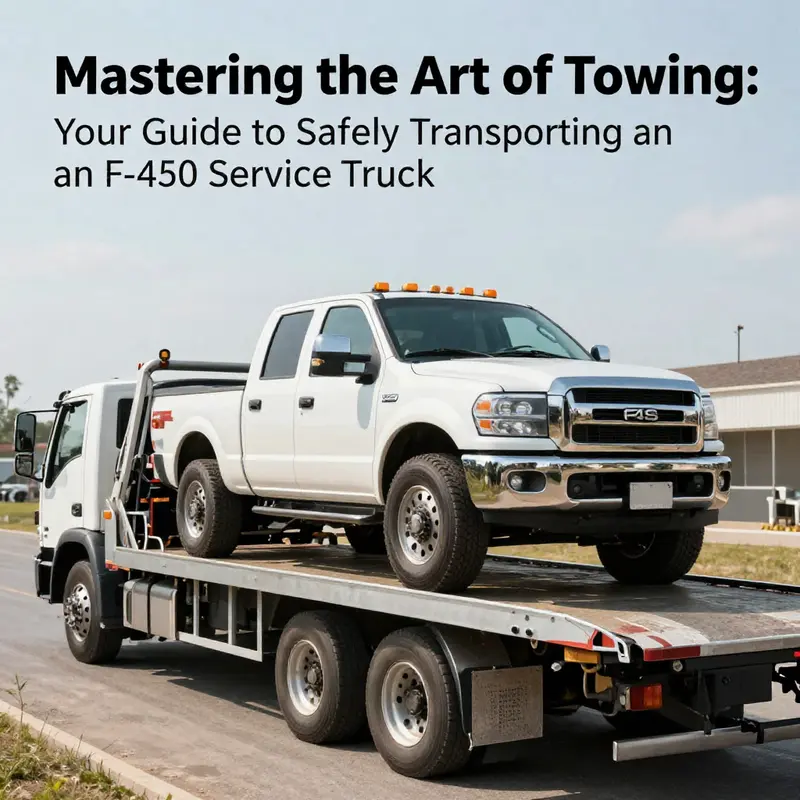
Towing an F-450 service truck is not merely a routine task; it is a sophisticated operation that requires careful planning, thorough inspections, and a deep understanding of your vehicle’s heavy-duty capabilities. In this comprehensive narrative, we explore how to tow an F-450 service truck safely by blending meticulous pre-towing preparations with proven safety practices and professional guidance. With its impressive factory-rated towing capacity, which under certain configurations can approach or exceed 18,000 pounds, the F-450 demands a respect for its engineering limits and a disciplined approach for any tow. Understanding that the F-450 is built for substantial hauling tasks means that every move, from equipment selection to the technique of towing, must be executed prudently to guarantee safety on the road.
Before even planning to tow an F-450, it is essential to verify the vehicle’s specifications as found in the owner’s manual or on the vehicle’s placard. This step is critical because the towing limits listed by the manufacturer are specifically calculated based on the truck’s unique setup; factors such as the engine type, drivetrain configuration, and axle ratio all play a part in determining the maximum safe towing weight. In some cases, modifications or specialized equipment may alter these numbers in practice, but such changes must only be made with rigorous professional oversight and adherence to engineering standards. Overlooking these fundamental checks could lead to tire blowouts, brake failures, or even complete loss of control while towing.
One of the essential aspects of towing an F-450 service truck involves using the proper tow equipment. Given the robust build of the truck and its impressive capacity, having a reliable hitch is non-negotiable. For loads of this magnitude, a weight-distributing hitch often proves to be a more effective option than a bumper pull trailer hitch. The weight-distributing hitch plays a crucial role by evenly balancing the stresses on both the towing vehicle and the towed truck. This balance not only safeguards the tow but also enhances overall stability and control. In many instances, additional equipment such as a fifth-wheel or a gooseneck hitch is recommended, given their superior capability to manage heavy loads and distribute weight more effectively. Choosing the right tow equipment can be the determining factor between a secure trip and a potential mishap.
Equally important is the rigorous pre-towing inspection of the F-450 itself. Prior to setting off, drivers should conduct a comprehensive check that scrutinizes every critical aspect of the truck’s operation. Start by verifying that the braking system is fully functional; both the primary and trailer brakes should be capable of handling the weight they are tasked with. A detailed check of the tire condition is also crucial. Tires should be inspected not only for adequate tread depth and proper inflation pressures but also for any signs of uneven wear or damage that might compromise safety during towing. Additionally, the condition of the transmission fluid, the overall health of the cooling system, and even the integrity of the suspension must be confirmed. Such inspections might seem detail-oriented, but neglecting any one of these factors could compromise the entire towing operation.
Once the mechanical assessments are complete, the focus shifts to the fine details of safe towing practices. Even when the truck and tow equipment are in prime condition, the human factor remains paramount. Drivers need to exercise a heightened level of caution by avoiding abrupt maneuvers such as sudden acceleration or hard braking. A gradual build-up of speed and a steady, consistent pace can go a long way in maintaining vehicle control. When navigating turns, it is advisable to signal well in advance and allow extra room for maneuvering, especially given the extended length and weight of the tow. Maintaining a generous following distance from the vehicle ahead is another critical factor, as this extra buffer time can be lifesaving in preventing collisions should any unexpected event occur.
Weight distribution is a central tenet of safe towing that deserves special attention. When a heavy trailer is involved, ensuring that its load is distributed evenly is crucial for stability. An unbalanced load can lead to dangerous sways and potential jackknifing, putting both the towing vehicle and other road users at risk. Utilizing a weight-distributing hitch can mitigate these hazards by balancing the load across the tow vehicle’s axles, which results in more responsive steering and consistent brake performance. Such precision in weight management not only enhances safety but also prolongs the longevity of critical components like the suspension and tires.
Regular maintenance of your F-450 service truck is critical not only for everyday performance but also for the specific demands of towing. Timely inspections of the suspension system can reveal worn or damaged parts that might otherwise lead to failure under the strain of heavy loads. Brake systems, too, require diligent monitoring—especially after extensive use or high-mileage periods—to ensure they perform reliably when needed the most. Tire inspections should become a regular part of your maintenance routine, as issues like low tire pressure or compromised tread can quickly escalate in severity during long hauls. By staying on top of routine maintenance, operators can address minor issues before they develop into major safety concerns. For a deeper look into maintenance trends and best practices in the trucking industry, exploring insights on private fleet maintenance can offer additional information and practical tips from industry-leading analysis.
In circumstances where towing becomes more complicated—such as when transporting specialized equipment or navigating challenging weather conditions—the guidance of professional experts becomes invaluable. Professional towing services and certified technicians offer a level of expertise that can bridge the gap between basic safety and advanced operational readiness. Their assessment of the towing setup can result in tailored recommendations that include modifications like enhanced cooling systems or the installation of heavy-duty axles. Beyond these technical adjustments, professionals can offer critical advice on adhering to local towing regulations, which might vary from one jurisdiction to another. Their insights into loading techniques and troubleshooting potential issues can transform what might be an overwhelming process into a manageable and safe operation.
The importance of consulting professionals is particularly relevant when the F-450 service truck itself is the subject of the tow. In such scenarios, the risks are inherently higher due to the weight and mechanical complexity of the vehicle. Towing a truck of this magnitude requires that the tow vehicle possesses a capacity far exceeding normal limits. In many cases, it is advisable to employ methods such as a tow dolly or even a flatbed trailer. These approaches avoid placing undue stress on the truck’s drivetrain, especially for models equipped with a 4×4 system. The extra precautions taken when towing the F-450 as the towed vehicle contribute significantly to reducing the risks of drivetrain damage, brake failure, or suspension problems.
Operational safety during towing extends beyond mechanical checks and professional guidance; it also involves an attentive approach to driving. Monitoring the temperature gauges, particularly for the engine and transmission, is a critical practice during long hauls. Overheating is a common challenge when towing heavy loads, and a proactive stance involving real-time monitoring can avert catastrophic failures. Likewise, paying attention to the performance of brake systems during descent or extended driving periods is essential, as consistent braking is necessary to maintain control. The integration of these practices ensures that the operation remains within safe parameters even as conditions evolve on the road.
The role of proper planning in the towing process cannot be understated. Every trip involving the towing of an F-450 service truck should begin with a detailed operational plan. This plan must account for variables such as the total weight of the load, the specific dynamics of the hitch system being used, and the road conditions expected during the trip. Preparing for contingencies, such as alternate routes or potential mechanical issues, is not mere over-caution; it is a prudent strategy that can make the difference between a safe journey and a hazardous situation. By planning meticulously, operators position themselves to respond effectively to both routine challenges and unexpected events.
In addition to technical preparedness, the psychological aspect of towing heavy vehicles plays a vital role. Towing a high-capacity truck like the F-450 demands a calm, focused mindset. The weight and complexity of the operation mean that the driver must remain vigilant, continuously assessing both vehicle performance and road conditions. This level of mindfulness is not simply about adhering to safety protocols; it is about fostering a deeper connection with the vehicle and the task at hand. Through experience and training, drivers can develop an intuitive grasp of how their vehicle responds under various conditions—insights that are invaluable when making split-second decisions on the road.
For those who transport heavy loads on a regular basis, it might seem that the process of towing is entirely within one’s expertise. However, the risks associated with heavy towing, especially when dealing with vehicles like the F-450, are such that even experienced operators benefit from periodic professional reviews. Routine consultations with certified technicians and professional towing services can serve as a form of preventive maintenance in its own right. These experts can uncover subtle issues that might not be apparent during standard inspections, thereby preempting potential hazards. In many instances, what might be dismissed as a minor irregularity could be symptomatic of an underlying issue that requires immediate attention.
The journey of towing an F-450 service truck is thus a multifaceted endeavor that integrates advanced engineering, diligent maintenance, and the wisdom of seasoned professionals. It is a complex interplay of mechanical prowess and human judgment, where every component must work in harmony to ensure a secure transit. From verifying towing capacities to ensuring proper weight distribution, and from using the right tow equipment to embracing safe driving practices, every element plays a role in a successful operation. For those who find themselves facing challenging towing scenarios, embracing professional assistance can not only secure the physical aspects of the tow but also provide peace of mind,
knowing that experts are available to navigate the intricacies of heavy-duty towing. In an industry where margins for error are razor-thin, the decision to consult professionals is both a pragmatic and wise investment.
When preparing for your next heavy-duty towing operation, remember that the F-450 service truck is a machine that requires respect and care. It is built to perform under extreme conditions, but only when managed correctly. Whether you are towing the truck itself or using it as part of a larger configuration, the principles remain the same: rigorously check towing limits, use equipment that meets the demands, maintain your vehicle with discipline, and never hesitate to seek professional insights when faced with the unexpected. Through these practices, you build not only a safe towing environment but also a legacy of reliability and efficiency in heavy-duty operations.
In closing, the task of towing an F-450 service truck necessitates a balanced approach that blends technical acumen with careful execution. It is an exercise in maintaining strict adherence to safety protocols while also embracing the evolving insights provided by technological advancements and expert recommendations. Most importantly, it is a task that rewards thorough preparation with the assurance of a safe journey, regardless of the challenges that may arise along the way. For detailed technical guidelines and official vehicle-specific recommendations, refer to the comprehensive instructions available in the Ford F-450 Owner’s Manual. This resource offers authoritative insights that complement the practical advice provided here, ensuring that every step of your towing process is well-informed and securely executed.
Final thoughts
Successfully towing an F-450 service truck requires careful consideration of its specifications, proper equipment, and adherence to safety practices. This guide provides a comprehensive understanding of the essential steps and preparations needed for effective towing. By employing expert tips and techniques, businesses can ensure their heavy-duty transport needs are met without compromising safety or performance. Armed with this knowledge, you can confidently approach towing tasks, ensuring that operations remain seamless and efficient.