
In the dynamic landscape of global logistics, postal services play a crucial role in ensuring timely deliveries and efficient operations. An essential element in this logistics framework is the budget allocated to vehicle rentals, particularly trucks, which are instrumental in the transportation of mail and packages. Understanding how postal services strategize their truck rental budgets can provide valuable insights for businesses in various sectors including manufacturing, retail, and construction. This article delves into the operational needs of postal services, analyzing the financial aspects of truck rentals, the logistics planning strategies, the influence of rental agreements on budgets, and the future trends shaping rental practices. Each chapter aims to illuminate the intricacies of budgeting for truck rentals in postal services, offering actionable insights for stakeholders across industries.
Rented Wheels, Regulated Efficiency: Mapping Truck Rentals into the Postal Service Budget
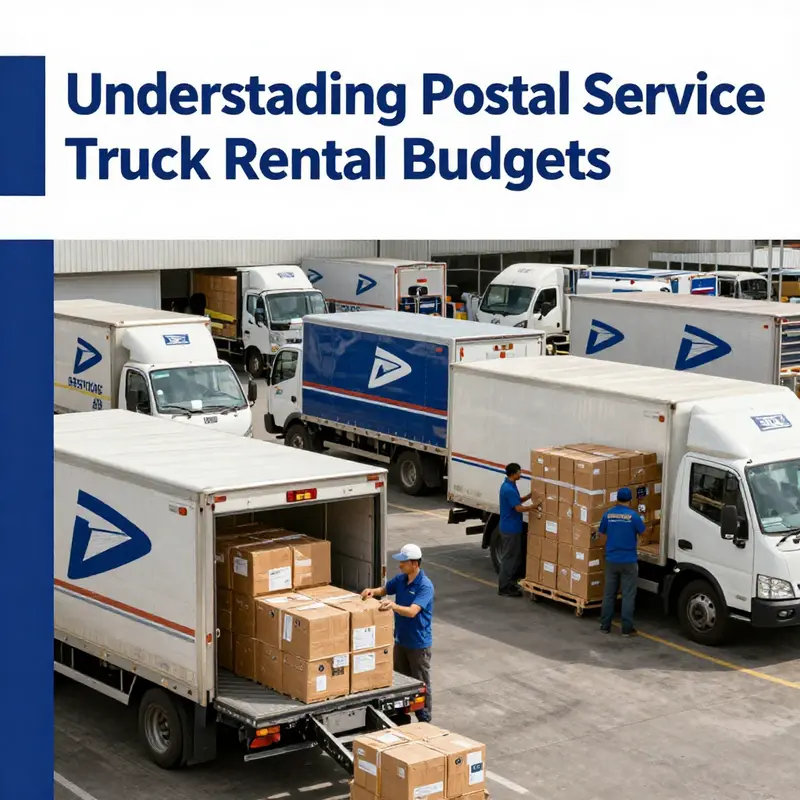
Fleets are the living backbone of mail and package delivery, and the way a postal service budgets its vehicle needs reveals a lot about its operational philosophy. Across borders, nations balance ownership with rental capacity to maintain reliability, absorb peak demand, and keep a lid on costs. A concrete illustration comes from a public inquiry by a national postal group that shows rental of transport vehicles for a mail distribution center is not an afterthought but an integrated line item in the operational budget. The inquiry cites extra trips between a central hub and county-level cities, with a projected 655 trips through the end of a specified period and a rental expense of roughly 496 300 yuan excluding tax. The rental costs are settled based on actual usage, underscoring a budgeting approach that treats vehicle rental as a variable, demand-driven expense rather than a fixed outlay. This example, while anchored in one national context, highlights a broader truth: shipping and mail networks rely on rented capacity to complement owned assets and to preserve schedule integrity when volumes swing. It is a reminder that a well-managed budget for truck rentals is not merely about keeping a fleet on the road; it is about preserving service levels in a field where time windows, route constraints, and unforeseeable surges in volume can test even the most carefully planned schedules.
In the United States, the postal system faces a parallel set of challenges and opportunities. The long arc of modernization is being traced through a deliberate emphasis on efficiency and disciplined cost management across the transportation portfolio. Central to this effort is fleet modernization, a strategy not limited to replacing aging vehicles but extending to smarter deployment of the entire transportation network. By rethinking how fleets are used, the service aims to reduce fuel consumption, lower maintenance costs, and improve reliability for customers who expect dependable delivery windows. The modernization effort naturally touches truck rentals, because rentals can fill gaps created by aging owned fleets or irregular demand patterns. When owned assets are undergoing lifecycle transitions or when peak periods threaten capacity, rentals become a vital form of flexible capacity. The upshot is a more agile network where the balance between owned and rented assets is tuned to minimize total cost per mile while sustaining service standards.
A benchmark moment in the USPS context is the formal introduction of service standards changes that took effect on February 9, 2026. These changes are not cosmetic tweaks; they are designed to streamline operations through smarter route planning, enhanced scheduling, and tighter resource allocation. In practical terms, this means more precise alignment of vehicle deployment with real-time needs, shorter dwell times, and reduced idle capacity on routes that run with consistent demand. Such shifts naturally have downstream implications for how rental strategies are framed. If a route can be served with a predictable, well-managed cycle, rental reliance may diminish. Conversely, for corridors characterized by volatility or for facilities whose throughput spikes during certain days or seasons, rental vehicles offer a safe hedge against missed deliveries and missed SLAs. The broader objective is clear: use every tool at hand—modernized fleets, refined service standards, and a flexible mix of transportation options—to drive efficiency, cost containment, and improved customer experience.
Ground transportation network management emerges as a focal point in this transition. Agencies are actively exploring new methods to orchestrate the movement of goods across the network. Options being considered include partnerships with third-party carriers and the expanded use of rental vehicles during peak delivery times or in regions where volumes are highly variable. This approach rests on a triad of assessment criteria: cost, performance, and service quality. Rentals, in particular, offer a buffer that can be deployed without long-term commitment or capital expenditure. They enable the network to adapt to seasonal peaks or unforeseen disruptions while maintaining reliability for customers who rely on predictable delivery windows. The decisions are not made in a vacuum; they are rooted in careful cost-benefit analyses that weigh the expense of rental usage against the potential penalties and customer dissatisfaction that can arise from late or incomplete deliveries.
Despite the clear logic of renting as a buffer, the public record on the precise truck rental budget for the current fiscal year remains guarded. The sensitivity is understandable: fleets, procurement strategies, and the mix between owned and rented capacity are strategic levers that influence both cost structure and service quality. Transparently disclosing every detail of a rental budget could complicate negotiations with supply partners and expose the agency to external market dynamics. Nonetheless, the overarching narrative remains intact. Rental capacity is not an optional add-on but a strategic instrument used to stabilize service levels, manage capacity constraints, and absorb episodic demand without triggering permanent capital outlays. In this light, the discussion of truck rentals sits squarely within broader themes of fleet optimization, lifecycle planning, and the prudent allocation of scarce resources in a public service framework that must serve diverse communities with equal reliability.
The discourse around rental budgeting also invites readers to consider the broader implications for how a postal network evolves in tandem with trends in the trucking industry. Modern fleets are no longer merely a set of sturdy vehicles; they are data-enabled assets that support smarter scheduling, route optimization, and energy efficiency. As the industry experiences shifts such as changes in fuel costs, regulatory environments, and labor dynamics, rental strategies become more adaptive. A flexible approach to capacity allows the postal service to respond to external pressures—seasonal spikes, weather events, or sudden surges in parcel volumes—without sacrificing core performance metrics. In turn, this flexibility can catalyze improvements in on-time performance and delivery reliability, which are critical to maintaining customer trust in a period when expectations for speed and transparency remain high.
The internal dialogue surrounding this topic is informed by a broader literature on freight and logistics. Industry analyses emphasize how fleet modernization and network optimization must work in concert with procurement strategies and performance metrics. Efficient route planning, when paired with a judicious mix of owned and rental assets, can reduce total logistics costs and improve carbon efficiency. For readers who want to connect these threads to a wider set of industry insights, one useful portal is the discussion of key economic trends shaping the trucking sector. That body of work offers context for how budget decisions around truck rentals fit into longer-term capital planning, labor supply considerations, and the evolving economics of freight movement. Key Economic Trends Impacting the Trucking Industry
Ultimately, the story of truck rental budgets within a postal service is a story about resilience and deliberate adaptability. The network must absorb varying levels of demand while keeping maintenance, fuel, insurance, and depreciation in check. Rental capacity provides a prudent reserve, one that can be deployed to safeguard route integrity when ownership-only plans would impose expensive replacement cycles or overly tight schedules. It is also a reminder that modernization does not equal replacement of all assets with new ones. Rather, it is a balanced, data-informed reallocation of assets—clouded in the technical details of scheduling, maintenance planning, and procurement processes—that yields a more reliable, cost-conscious delivery system.
Where the narrative becomes particularly instructive is in recognizing how budgeting for truck rentals intersects with policy goals and operational realities. A postal service cannot pretend that demand is constant or that external shocks will not occur. Instead, it designs a budgeting framework that recognizes volatility as a normal operating condition. The rental component is thus not a budgetary afterthought but a controlled mechanism to preserve service standards without compromising financial stewardship. As the network continues to evolve, the lines between asset ownership and rental usage will blur further, with rental decisions increasingly informed by real-time data on route performance, vehicle utilization, and predictive maintenance indicators. In the end, the objective remains straightforward: deliver the mail and packages on time, with predictable costs, and in a way that is sustainable over the long haul. The chapter you have read captures a snapshot of that ongoing balancing act, a balance that is likely to shape the budgeting conversations around truck rentals for years to come.
For readers seeking a window into official updates that codify these kinds of fleet and procurement decisions, the Postal Pro platform remains a primary source. It consolidates policy changes, performance guidelines, and procurement notices into a centralized channel, helping to translate the strategic intent of the modernization effort into actionable steps on the ground. External references and official updates are essential for grounding these discussions in current practice and for understanding how rental usage, as a budgeting decision, plays into the broader mission of reliable service delivery. External resource: USPS PostalPro updates (https://www.usps.com/PostalPro).
Budgeting the Wheels of Parcel Delivery: A Deep Dive into Truck Rentals in Postal Services
Across national and regional postal networks, the decision to rent delivery trucks sits at the intersection of operations, budgeting, and service reliability. Fleets do not exist in a vacuum; they are the movable backbone of a service that must move precise quantities of mail and parcels with predictability. To understand why truck rentals matter in the budgeting process, it helps to see the logic as a continuous thread that ties asset management, cost measurement, and service geography into a single, coherent plan. In many postal organizations, rentals are not an exception but a deliberate instrument used to align capacity with demand across time and space. This is especially true for routes that require extra trips during peak periods or for hub-and-spoke networks that demand flexible reach to county-level areas. The practical evidence of this approach surfaces in public inquiries and budget line items from major postal groups. For instance, a branch of a large postal group recently publicized a transportation-vehicle rental inquiry tied to its mail distribution center. The plan estimates a fixed number of trips through the end of the year and a rental cost that is explicitly described as excluding tax and settled according to actual usage. The structure of that entry reflects a broader budgeting convention: rentals bookend the fleet with a variable charge depending on activity, rather than locking the organization into a fixed asset with high stationary cost. In short, truck rental is a standard, budgeted line item that adapts to the realities of daily mail movement and seasonal flux.
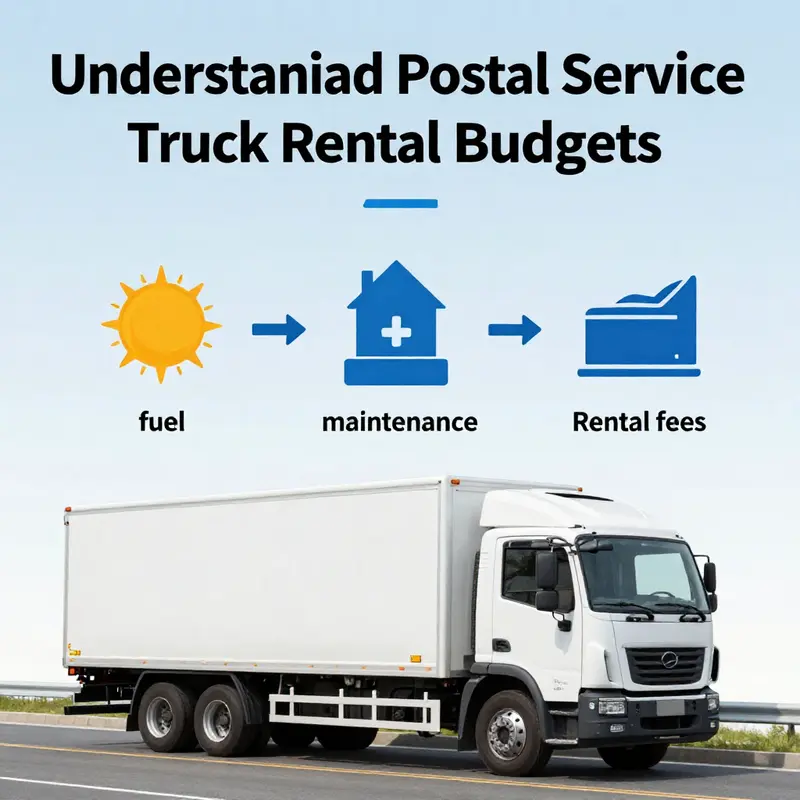
To translate the operational purpose of these rentals into a coherent budgeting framework, many postal services rely on a cost model that breaks down what it costs to deliver. The central concept is the Average Total Cost (ATC). ATC captures the full spectrum of costs associated with running a delivery service: fuel and energy, maintenance, labor, depreciation, and the capital outlay required to acquire or lease vehicles. When calculated across the relevant delivery activity, ATC tells managers how much, on average, each delivery or each mile adds to the bottom line. This metric is not simply a raw expense tally; it is a planning tool that informs decisions about fleet size, vehicle type, and the extent to which rental arrangements should be used to meet service obligations. The ATC framework supports budgeting in a way that can be benchmarked against international standards and best practices, offering a transparent view of where money goes as service goals evolve.
The budgeting discipline around truck rentals extends beyond the numbers. It embraces the realities of network design, where central hubs and outlying delivery points must stay connected without sacrificing reliability. The operational logic of renting becomes especially clear when one considers the need for extra trips between a central hub and county-level cities. In such contexts, rentals enable the system to scale capacity quickly in response to demand without long lead times or heavy capital commitment. The timing of these rentals often aligns with anticipated traffic surges, seasonal peaks, or special distribution programs. The cost is not merely the price of the vehicle rental; it includes the orchestration costs—the scheduling of trips, the coordination with drivers, and the integration of rental periods with the broader fleet plan. This integration is why rental costs are settled based on actual usage. It is a practical acknowledgment that the marginal cost of an additional trip should reflect the real resource consumption, not a flat, pre-specified amount that might distort incentives or understate true capacity needs.
Within this budgeting logic, a standardized methodology emerges that helps postal services compare performance over time and across regions. The Universal Postal Union (UPU) has published a report on the measurement and allocation of delivery costs within postal services. This document provides a benchmark and a common language for how delivery costs—such as those associated with rented transport—are identified, allocated, and scrutinized. The emphasis on measurement and allocation in the UPB framework is not merely academic. It influences how budgets are constructed, how fleet decisions are justified to boards, and how performance targets are set for service reliability and cost containment. The report helps ensure that the inputs to the ATC model—fuel prices, maintenance cycles, driver wages, depreciation, and rental terms—are treated consistently across jurisdictions, so that comparisons and policy decisions have a solid evidentiary base. For readers seeking a formal, standardized approach to this topic, the UPB reference offers a rigorous methodology that teams can adapt to local contexts while maintaining international comparability.
In practice, the cost calculus of truck rentals for postal services is a negotiation between predictability and flexibility. Rental contracts are crafted to lock in predictable costs during certain periods while preserving the ability to scale up or down as demand dictates. The decision to rent instead of own is rarely about one factor alone. It balances the marginal cost of a rental versus the amortized cost of ownership, the risk profile of the route network, and the expected utilization of the vehicle fleet. If a route requires regular extra trips between a central hub and multiple county-level locations, a rental agreement can provide near-term capacity with manageable exposure to maintenance and resale risk—costs that can otherwise complicate a long-term fleet investment. Moreover, the nature of postal work means that the mix of vehicle types matters: larger trucks for bulk mail movement, smaller vans for last-mile routes, and specialized units for time-sensitive or temperature-controlled shipments. Each vehicle type carries its own cost structure, and each rental decision must be harmonized with others through the ATC lens. When cost per mile or per delivery is compared across vehicle types, managers gain insight into where leasing or renting provides the greatest value—especially when learning how certain routes are subject to congestion, fuel price volatility, and maintenance variance.
The budgeting conversation is further enriched by a view of external cost pressures and internal efficiency opportunities. External trends in the trucking and logistics sector—fuel prices, driver labor market dynamics, and maintenance cost trajectories—shape rental strategies in meaningful ways. A growing body of industry analysis points to a period of shifting demand and supply dynamics for trucking services. In this environment, postal services can neither ignore economic signals nor assume that historical patterns will persist unchanged. The internal dialogue often centers on whether to lock in rental capacity with long-term contracts or to deploy shorter commitments that allow the organization to re-balance the fleet as needs evolve. The trade-offs are not abstract: longer rental terms reduce exposure to sudden price spikes, while shorter terms preserve agility to adopt newer vehicle technologies or adjust to changes in parcel volume. The budget thus becomes a living instrument, updated with usage data and service requirements, rather than a static forecast that becomes obsolete within a few months.
To illustrate how these factors play out in a concrete budgeting scenario, consider the practicalities of a planned rental for a distribution center tasked with expanding reach to county-level cities. The project might specify a finite set of trips, to be completed within a defined period, with a cost that accrues as usage occurs. The financial architecture would record the rental as a variable operating expense, tied to actual trip counts and distance traveled, while the underlying asset classification would reflect the expected service life and depreciation profile of the rental fleet. In effect, the budget would translate operational needs into a cost curve that shows how each extra trip contributes to ATC. Managers would scrutinize this curve to determine whether the marginal cost of adding another rental-truck unit remains within the acceptable threshold for cost-per-delivery targets and service-level agreements. This approach makes the budgeting process transparent and auditable, enabling performance reviews that link the cost of rented capacity to measurable service outcomes such as on-time delivery rates, route reliability, and customer satisfaction.
The broader strategic arc is clear: as postal services pursue efficiency and resilience, rental decisions become part of a portfolio management mindset. Fleets are not forever; they are temporary enablers of steadier service levels and geographic expansion. The cost model must accommodate both the stability needed for predictable daily operations and the flexibility required to respond to fluctuations in demand. In this sense, truck rentals serve as both a tactical hedge against volatility and a strategic instrument for optimizing the postal network’s reach. The budgeting exercise thus evolves into a disciplined, data-informed practice where ATC, rental terms, and service objectives are calibrated together. The result is not merely a numeric budget but a plan that aligns fleet behavior with the overarching mission of timely, universal postal service.
For readers who want a sense of how broader industry dynamics feed into these budgeting choices, consider the ongoing discourse around economic trends in trucking. A growing body of analysis highlights how costs are shifting across the sector, influencing how organizations allocate capital toward fleet assets and rental arrangements. See the discussion on economic trucking trends for additional context on the pressures and opportunities that shape rental budgeting in logistics networks. economic trucking trends
As the chapter closes on this thread of thought, it is worth noting that the UPB framework anchors the practice in a formal, comparative context. By standardizing how delivery costs are measured and allocated, postal services can compare performance across regions, seasons, and operational models. This standardization does not replace local nuance; it clarifies the questions that budgeting must answer. How many trips does the network require this quarter? What is the marginal cost of a rental vehicle per mile or per delivery? How does fuel price volatility affect the ATC curve for rental versus owned assets? Answering these questions with disciplined measurement supports decisions that keep postal services reliable and financially sustainable.
External reference for a standardized framework: https://www.upu.int/en/Postal-Services/Universal-Postal-Union/Documents/2023/UPU%20Report%20on%20Delivery%20Costs.pdf
Fleet on the Balance Sheet: Budgeting Truck Rentals in Postal Logistics
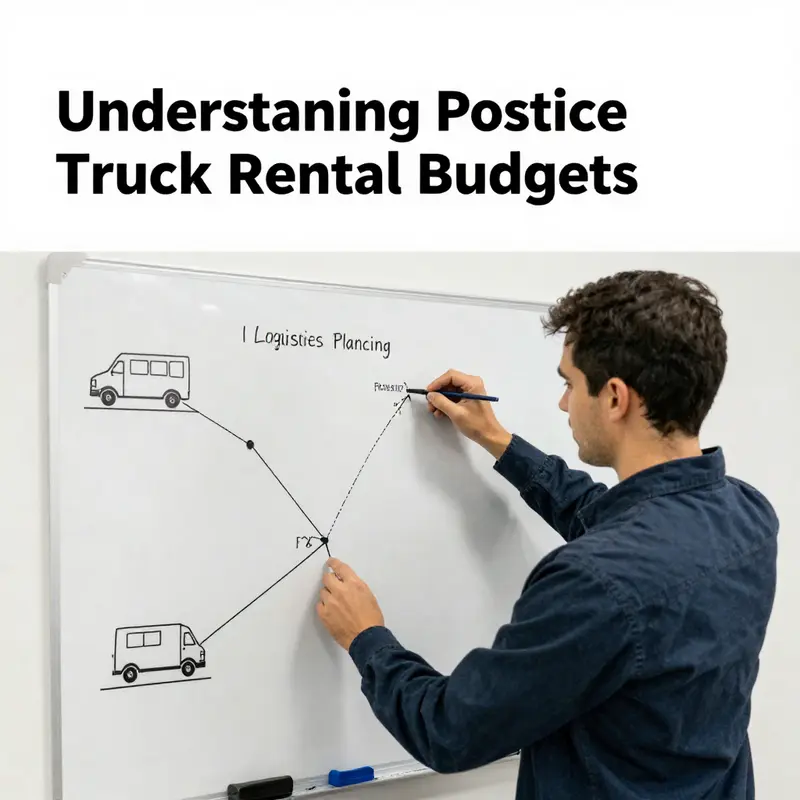
Across national borders and regional hubs, the running of a postal network hinges on a delicate balance between asset ownership and flexible resourcing. The chapter you’re about to read takes the larger question of budgeting for truck rentals as a window into how postal services organize their fleets, forecast demand, and allocate capital. In some systems, renting trucks is a routine line item in the logistics budget, a pragmatic tool to cover peaks, gaps, or strategic gaps in capacity. In others, the emphasis is on owning and maintaining a core fleet within a framework that prioritizes long-term cost control and uniform service standards. The differences matter not just for accountants, but for operations managers, policy makers, and the users who depend on reliable mail and parcel delivery in ever-changing conditions. The core idea is straightforward: budgeting for truck rentals is ultimately about aligning capacity with demand while navigating capital costs, maintenance obligations, and service commitments that cannot be easily abstracted from day-to-day delivery performance.
A concrete example from the global stage helps illuminate how these budgeting choices unfold in practice. In one large postal network, a public inquiry related to the rental of transport vehicles for a mail distribution center highlighted a discernible reliance on rental arrangements to support extra trips between the central hub and county-level cities. The plan estimated 655 trips through the end of 2026, with a rental cost of roughly 496,300 RMB, excluding tax, to be settled based on actual usage. This illustration demonstrates that, for at least some postal operators abroad, truck rental is a budgeted, scheduled line item designed to deliver flexibility without sacrificing control over service routes. It shows how rental decisions can be integrated into a formal operational budget and how usage-based settlements help keep public spending aligned with real transport activity. Such budgeting recognizes that capacity needs do not always align with the predictable cadence of a fixed asset fleet, and it embraces a model where the marginal cost of additional trips is measured and accountable rather than treated as a sunk, unrecoverable expense.
By contrast, the budgetary approach taken by the United States Postal Service (USPS) highlights a different philosophy, one that emphasizes long-run cost management and a level of operational continuity that arises from owning and maintaining a dedicated fleet. The USPS has traditionally relied on its own vehicles to deliver mail and packages, an approach that supports consistent service standards and a high degree of control over maintenance, standards, and route execution. This model minimizes the complexity of fleet procurement and utilization risk associated with third-party leasing. However, it is not a hard rule that never bends. There are occasions when the USPS—faced with peak shipping seasons, temporary route expansions, or backlog in vehicle maintenance—engages private carriers or arranges short-term vehicle leases under specific contracts. In such cases, these arrangements are treated as supplements to the core fleet strategy rather than as the backbone of the logistics budget. The official narrative in USPS documentation emphasizes that these are exception-based measures, designed to ramp capacity quickly without compromising the integrity of the long-term fleet plan.
The practical implications of these approaches ripple through the budgeting process in several ways. In a system that treats trucks as a rented resource, the annual plan incorporates a forecast of trip counts, rates, and durations, with actual usage tracked to true costs. This model enables responsiveness to demand fluctuations, seasonal surges, and changes in route topology without triggering large, capital-intensive investments. It also introduces a different set of risk controls, centered on contract management, vendor performance, and compliance with regulatory frameworks governing public procurement and vehicle operations. When the rental function is a standard line item, the organization can calibrate its budgets to reflect both historical patterns and anticipated shocks, such as new distribution centers or altered last-mile configurations. The decision to rent is both a financial and an operational judgment about how quickly capacity can be brought online and scaled back, how predictable that capacity is, and how closely it can be aligned with service-level commitments.
In a fleet-ownership world, the budgeting mindset shifts toward depreciation, maintenance reserves, fuel efficiency programs, insurance, and the long-term cost of servicing heavy assets. The cost of capital, the residual value of vehicles after their useful life, and the timing of procurement all play central roles. This model underscores the need for robust forecasting of demand and a strong governance framework to prevent underinvestment or overcommitment. It also highlights the strategic importance of maintenance backlog management: if a system cannot sustain the fleet’s reliability due to equipment wear or parts shortages, the temptation to rent temporarily may arise not as a preferred strategy but as a necessity. In other words, owning a fleet creates a stable baseline for planning, while rental arrangements act as a strategic hedge against disruptions that threaten to derail service levels or escalate operating costs.
A further layer comes into view when we consider the broader evolution of transport strategies in public logistics. The budgeting conversation now frequently intersects with electrification, data-driven route optimization, and the integration of multimodal networks. The costs and benefits of adding electric or alternative-fuel trucks to a mixed fleet influence long-horizon capital plans, maintenance regimes, and even the decision to rent additional capacity during periods of uncertainty. These considerations are not isolated; they flow through the procurement pipeline, where the balance between owned assets and rental capacity is recalibrated in light of new technologies, tariff regimes, and government incentives. In the discourse on external pressures and internal capacity, one can often observe how agencies weigh the predictable with the flexible. The result is a dynamic budgeting environment where the flexibility of rental arrangements coexists with the discipline of asset ownership, and where each procurement decision is measured against service reliability, total cost of ownership, and the ability to respond nimbly to demand shifts.
Within this context, it is worth acknowledging the role of industry-specific knowledge and the practical realities that shaped these budgeting choices. In some markets, private fleets and outsourced carriers play a critical role in smoothing seasonal peaks or covering maintenance gaps, as discussed in trends surrounding trucking maintenance. Such literature underscores that rental or contract-based solutions can be a prudent complement to a core owned fleet when the objective is to maintain service continuity without overextending capital budgets. This perspective is consistent with the broad lesson from postal logistics: reliable delivery hinges on a dependable mix of capacity, governance, and cost control. The decision to rent, and the cadence of rental usage, reflect a calculated response to forecast uncertainty, service commitments, and the overarching objective of delivering mail and parcels promptly and securely.
As readers consider how these budgeting strategies translate into practice, it helps to view them through the lens of governance, risk, and flexibility. The governance piece involves the framework by which decisions are made, including how rental agreements are sourced, how they are monitored for performance, and how they integrate with the annual financial statements. The risk dimension centers on exposure to price volatility, contract termination costs, and the potential for misalignment between rented capacity and actual demand. The flexibility aspect is perhaps the most visible benefit: rental arrangements can be scaled up or down with relative speed, enabling an organization to respond to surges in volume or to temporary route extensions that would be unprofitable if supported solely by owned assets. When combined with a disciplined approach to asset management, fleet maintenance planning, and performance analytics, budgeted truck rentals can meaningfully reduce the risk of service gaps while preserving the strategic objective of cost containment.
For readers seeking a deeper, official perspective on how one large postal network manages its fleet, the most authoritative resource is publicly available, annual data that detail fleet operations and procurement practices. While the specifics vary, the underlying principle remains: budgeting for truck rentals is not a peripheral line item but a core component of maintaining reliable coverage, especially when demand signals fluctuate or when the pace of service expansion outpaces capital spending. In the long run, the best practice is to maintain a transparent, data-driven budget that can be adjusted as volume forecasts evolve and as new technologies reshape the economics of transport.
External resource: https://about.usps.com/publications/annual-report-2023.pdf
Internal resource for further perspective on operational strategy and fleet utilization: private fleets trends in trucking maintenance. This linked resource offers a lens on how organizations balance private fleet usage with strategic outsourcing to cover demand variability while maintaining governance and cost discipline.
For readers exploring the broader environment of trucking and logistics budgeting, other industry insights discuss how macroeconomic trends, fuel prices, and regulatory changes influence fleet planning and capital allocations. These considerations shape not only whether rentals are seen as a necessary contingency, but also how they are priced within the overall logistics budget and how they align with broader goals such as sustainability, reliability, and efficiency. In sum, budgeting for truck rentals within postal logistics is a microcosm of modern public-facing transport stewardship: a constant negotiation among capability, cost, and confidence in service delivery, conducted within a framework that values agility as a means of safeguarding the integrity of daily operations.
Rent, Routes, and Budgets: How Truck Leasing Shapes Postal Logistics Spending
Across postal networks the movement of mail and parcels depends on a sprawling fleet that must stay flexible as demand shifts. In many systems, trucks are not merely assets owned outright; they are often leased vehicles that ride the edge between capital expenditure and operating expense. In budget documents, rental costs for these vehicles appear alongside fuel, maintenance, insurance, and route planning, forming a predictable line item that can adjust with usage. In practice, this means that when a distribution center contemplates a new extra trip or a seasonal surge, the decision to rent a vehicle is tied directly to the expected cost and the anticipated service benefit. The budgeting logic becomes more dynamic: you pay for the miles and hours you use, not the full depreciation of a gear you may not need year-round. This approach allows postal operators to scale capacity without heavy upfront investment, while still maintaining a capable fleet that can respond to peaks in demand or disruptions in the supply chain.
One concrete illustration appears in the public inquiries of a major national postal group in China. At its Jingzhou branch, the organization sought contractor transport vehicles specifically for additional trips between a central hub and county-level cities. The project framed a fixed horizon of trips through December 31, 2026, tallying up to 655 extra trips and estimating a rental cost of about 496,300 RMB before tax. The payment would be settled according to actual usage, a straightforward structure that underscores the operational logic: rental is budgeted, but carefully tied to real-world activity. This case is not a rare anomaly; it reflects a practical reality in which fleet flexibility supports service coverage without forcing a monolithic fleet expansion. When a hub must extend service into more rural corridors or temporarily expand last-mile capacity, renting a vehicle becomes an efficient option to preserve service levels without overbroad capital commitments. The numbers might vary by country and market, but the principle holds: rental trucks anchor a budget line that can flex with the map of routes and the rhythms of the day-to-day schedule.
Within the United States, the budgeting story around postal fleets has evolved in a notable way. The United States Postal Service has increasingly structured its truck and facility rental arrangements to push down direct rental rates while transferring additional responsibilities to lessees. In practice, this means the organization can lower immediate property costs and improve financial flexibility, even as it cedes maintenance, utilities, and some operational duties to the entities that actually operate the spaces and vehicles. The shift does not come without trade-offs. For providers that manage leased facilities or fleets, upkeep becomes a recurring obligation that can eat into margins if demand forecasts miss the mark. Service quality can become sensitive to the performance and discipline of lessees, particularly when maintenance windows or energy usage diverge from expected norms. A 2025 LinkedIn post by Corey Selenski notes that this leasing model is part of USPS’s broader effort to streamline operations in the face of declining mail volume and growing delivery demands. The social-post snapshot underscores a broader trend toward capital-light logistics in which the public operator seeks to preserve core service levels while wringing efficiency from the contract structure rather than from a larger owned fleet alone. The practical lesson for any postal budget is clear: rent agreements can help with cash flow and flexibility, but they demand rigorous cost-tracking, clear maintenance covenants, and solid performance metrics to avoid creeping expenses that undermine reliability.
This tension sits at the heart of modern postal budgeting. When rental agreements are well designed, they become valves in a complex budget engine: they release cash tied up in capital while keeping capacity available to match demand. The operator can defer or reduce capital outlays for fleet replacement and instead lean on a stream of services billed on usage. In theory, this improves liquidity and resilience during revenue downturns; in practice, it tightens the leash on the service model because the lessee’s performance criticality crests as usage grows or ebbs. The result is a more nimble financial posture that can absorb shocks in peak periods, brand-new route expansions, or temporary surges caused by seasonal shopping spikes. But the other side of the coin is real: if maintenance obligations drift or if energy costs rise, those variabilities can destabilize a once-stable budget line. For postal operators, the challenge is to calibrate lease terms—price per mile, hours of operation, maintenance covenants, and renewal schedules—so that the savings from lower nominal rents are not eaten by hidden costs or service compromises. The broader accounting message is that lease accounting must be tightly integrated with the route planning and service-level agreements, ensuring that the cost of flexibility remains within the acceptable boundaries of the performance mandate.
There is a larger industry context that informs these budgeting choices. The trucking sector has been navigating a string of economic signals—from freight demand cycles to capital-market conditions and regulatory shifts—that shape how fleets expand or contract. The idea of paying for transport capacity on a use basis aligns with a broader trend toward flexible capacity management. As the industry analyzes countercyclical demand, operators seek contracts that align with real activity rather than carrying fixed, idle assets. From the perspective of postal logistics, that translates into a budgeting philosophy where extra trips and cross-region shuttle runs become both a service imperative and a cost-control tool. The currency of this approach is transparency: every rental decision should reveal the correlation between service goals and cost drivers, with actual usage serving as the ultimate arbiter of price. In that light, budget planners must monitor utilization rates, maintenance expenditure, and energy efficiency across leased fleets, because the ratio of usage to rent is the axis on which the value of outsourcing hinges. The internal discussion around these dynamics often draws on analyses that emphasize how economic trends affect trucking and logistics, including shifts in demand, fuel prices, and capital availability. Key economic trends impacting the trucking industry serves as a useful contextual frame for those who want to anchor postal budgeting in a wider market rhythm while keeping the internal specifics of a mail network in view.
Beyond the hedged dollars and the ledger entries, rental arrangements for postal fleets intersect with policy, regulation, and cross-border movement. A budget that assumes a certain level of rented trucks for hump-time distribution must also cope with regulatory changes, tariff environments, and the realities of port throughput and cross-border corridors. When prices move due to tariffs or supplier shifts, the cost profile of a rental fleet can change quickly. This is not merely a números game; it is a study in risk management and operational continuity. A well-structured lease will include contingencies that mitigate price volatility, such as caps on annual rent adjustments, maintenance holdbacks, or service-level guarantees tied to performance metrics. In the end, the postal operator is balancing speed, reliability, and cost: rental vehicles enable rapid scale, but the price paid for this flexibility must be justified by dependable service delivery and predictable cash flows. The result is a budget that can adapt to the uneven cadence of parcel volumes and the seasonal peaks that characterize modern mail and package networks, while still maintaining a discipline of cost control across the entire logistics chain.
External resource: USPS PostalPro – Fact Sheets & Presentations. https://about.usps.com/production/postalpro/fact-sheets-presentations.htm
Renting the Road: How Truck Leases Shape Budgeting in the Modern Postal Fleet
Across the vast web of logistics that underpins modern mail and parcel delivery, fleets are the quiet backbone. They move a daily mix of letters, parcels, and time-sensitive items through urban arteries and rural outposts. The practice of renting trucks, rather than owning the entire fleet outright, has moved from a niche option to a mainstream budgeting choice for many large postal and courier organizations. It is not simply a matter of procurement; it is a disciplined approach to capacity planning in a world where demand can swing with holidays, weather, and shifting consumer expectations. In this context, rental trucks become a flexible tool for balancing service levels with the realities of cost control. A large postal operator’s regional branch recently outlined this approach in a public inquiry into the rental of transport vehicles for its mail distribution center. The inquiry signals not only a need for additional trips—655 in planned activity through the end of 2026—but also a recognition that rental costs, approximately 496,300 RMB before tax, will be settled based on actual usage. This is a telling example of how truck rental is embedded into operational budgets, not treated as a separate line item or a luxury add-on. It reveals a broader shift: logistics planners are increasingly treating rental fleets as an on-demand resource, deployed exactly where and when it is needed, and priced as a variable expense that scales with workload.
The move from ownership to rental in postal logistics reflects a fundamental change in how organizations think about capital expenditure and risk management. Owning a fleet requires capital outlays, depreciation, insurance, and ongoing maintenance commitments that can become rigid as demand moves up and down. Leasing or renting, by contrast, converts a fixed cost into a more flexible operating expense. It enables the fleet size to expand during peaks—holiday seasons, promotional periods, or surges in e-commerce volume—and contract during lulls. The practical implication is straightforward: postal operations can maintain service continuity without the burden of idle assets or the risk of over-investment in equipment that may sit idle for stretches of time. This budgeting philosophy aligns with broader trends across the logistics sector, where organizations increasingly favor scalable, on-demand access to transportation capacity.
Market dynamics further reinforce this preference. A recent global analysis of Truck Rental and Leasing Services shows a market valued at about $7.33 billion in 2025, with a projected compound annual growth rate of 7.83 percent starting in 2026. For postal services facing tightening budgets and potential rate pressures, these numbers are more than abstract figures. They signal a maturing supply ecosystem that can deliver flexible vehicle access without tying up capital in fixed assets. Leased fleets can be adjusted to match workload fluctuations, supporting seasonal campaigns, new routes, or changes in delivery patterns without the long lead times and financial commitments associated with purchasing. The same market trend implies that rental providers are increasingly able to offer adaptable terms, including short- or medium-term contracts, maintenance-inclusive packages, and options for electrified or low-emission vehicles as fleets modernize.
Technology has become a critical amplifier of the budgeting advantages of truck rentals. Real-time data analytics feed fleet management with actionable insights about routes, loads, and vehicle health. For postal networks, the payoff is multi-layered: improved route optimization reduces fuel burn, tighter maintenance windows prevent unexpected downtime, and the ability to forecast demand with higher fidelity allows procurement and budgeting teams to tune fleet usage more precisely. Telematics platforms enable a shift from reactive to proactive maintenance, which can extend asset life and stabilize maintenance costs across the contract period. In practice, this means that the rental decision is no longer only about price per kilometer or per day, but about the value of reliability, predictability, and efficiency that a data-driven approach can deliver. In a system where timely delivery is a public service obligation, the ability to guarantee service levels while keeping costs in line with actual usage becomes a decisive competitive edge.
Sustainability considerations increasingly color budgeting decisions as well. The uptake of electric and low-emission truck leasing options is growing, driven by a combination of policy signals, corporate responsibility, and the cost dynamics of fuel and maintenance. For postal networks operating across densely populated corridors and fragile urban environments, electrified or hybrid leases offer the promise of lower total cost of ownership over the life of the contract, especially when combined with favorable charging or depot arrangements. The environmental dividend can be subtle at first—the incremental capital incentives, the quieter operation in city centers, and the potential for fewer emissions-related maintenance events—but it becomes meaningful as operations scale and as external costs to traditional fuels rise. In this way, sustainability does not merely check a box; it becomes a strategic lever in budgeting, shaping the mix of vehicles leased, the timing of renewals, and the balance between new technology and legacy assets.
Ultimately, the budgeting framework for postal truck rentals rests on an economy of scope. Planners must anticipate not only predictable annual workloads but also the possibility of sudden changes in service requirements. The central challenge is to translate a fluctuating demand profile into a leasing strategy that preserves service levels while avoiding waste. Scenario analysis, scenario-based budgeting, and flexible contract terms often accompany the decision to rent rather than buy. When the inquiry into vehicle rentals reveals a plan for hundreds of trips over a multiyear horizon, it signals a disciplined approach to capacity management: define the expected workload, price the usage, and adapt with the minimum viable commitment. The rental model thus serves as a bridge between long-range strategic planning and day-to-day operational agility. It allows the postal network to respond to demand spikes without incurring the sunk costs associated with a permanently oversized fleet, while still providing the reliability and consistency required for dependable mail distribution.
A broader factor shaping these decisions is the exposure to external costs and policy shifts that can ripple through budgeting. Economic conditions, tariff regimes, and trade policies can alter the price of heavy trucks and associated components. In some contexts, these externalities become part of the cost calculus that procurement and finance teams weigh when they negotiate rental terms or consider alternative arrangements. For instance, industry observers point to tariff considerations as a potential driver of short-term price volatility for heavy trucks. Analysts emphasize that such policy levers can influence both the upfront price of equipment and the ongoing cost profile of leases. That reality reinforces the value of flexible rental terms and the ability to adjust fleet composition quickly as economic signals evolve. Engaging with suppliers on a transparent, usage-based model helps ensure that cost trajectories remain aligned with actual demand rather than with speculative capacity commitments.
Beyond numbers and policy, the human element remains central. The operational discipline required to manage rented fleets—tracking utilization, aligning maintenance windows with route schedules, and coordinating with other modes of transport—demands a mature data culture. A rental approach works best when a postal network treats fleet management as an integrated function, linked to routing optimization, depot planning, and workforce scheduling. When a center plans its trips through 2026 and beyond, or when new routes between hubs and county-level communities emerge, the budgeting process must accommodate both the forecast and the reality of execution. In such environments, the ability to transfer capacity rapidly—from peak to off-peak periods or from one route to another—depends on robust information flows and clear governance around contract terms and performance metrics.
As the sector continues to experiment with and refine these practices, one must also consider the knowledge economy that surrounds the field. The recent body of research on digital innovation in shipping and postal services underscores how a future-oriented budgeting approach hinges on data, risk-sharing contracts, and sustainability. It is not a sterile algebra of costs but a living framework that must respond to shifts in demand, technology, and policy. For readers seeking a broader, strategic synthesis of these developments, literature from leading advisory firms highlights how digital transformation is redefining asset utilization, budgeting discipline, and service quality across transportation sectors. This body of work helps explain why rental fleets are not merely a tactical choice but a strategic instrument for maintaining essential connectivity in a changing world. For a deeper view on these broader shifts, see the external resource that surveys how digital innovation is transforming shipping and postal services and shaping budgeting and fleet management across the industry: https://www2.deloitte.com/us/en/insights/focus/industries/transportation-and-logistics/future-of-shipping.html.
Within this evolving landscape, a single data point from a regional branch illustrates the practical logic of budgeting for leased capacity. The inquiry targets a defined distribution center, with a finite estimate of trips and a transparent, usage-based cost structure. The plan anticipates 655 trips over the period ending December 31, 2026, and a projected rental cost of roughly 496,300 RMB, exclusive of tax, with settlement tied to actual use. This level of specificity demonstrates how a postal network translates broad market forces and technological capabilities into concrete budgeting actions. It moves the discussion from abstract trends to a practical, implementable approach that other fleets can study and adapt. The essence is clear: renting trucks is not a ceremonial expense; it is a deliberate, data-informed mechanism for aligning capacity with service obligations and financial prudence.
For readers who want to explore related industry themes, one useful perspective comes from industry analysis that considers how tariff changes can affect heavy-truck economics and the cascading effects on lease pricing, depreciation, and maintenance planning. In practice, managers can incorporate such considerations into their contractual negotiations by building in price adjustment clauses, market-based indices, or escalator provisions that reflect real-world costs. The broader message remains consistent: the future of postal logistics will be defined by disciplined budgeting, supported by technology that turns data into actionable savings, and by a growing range of sustainable, flexible vehicle options that help maintain reliability without sacrificing fiscal responsibility. The rental model thus stands at the intersection of service quality, financial stewardship, and environmental responsibility, offering a pathway for postal networks to stay resilient as volumes and expectations continue to rise.
Final thoughts
Understanding the intricacies of how postal services budget for truck rentals is essential for stakeholders in multiple industries. The operational needs driving these rentals, coupled with detailed cost analysis and strategic logistics planning, highlight the essential role that rental agreements play in shaping postal service budgets. As trends toward sustainability grow, postal services are likely to evolve in their rental strategies, embracing greener technologies and innovative practices. This article serves as a crucial resource for companies aiming to enhance their logistics operations and make informed budgeting decisions concerning truck rentals.