
When a truck displays a ‘Service 4WD’ message, it signals that the four-wheel drive system may have detected an issue needing professional attention. This warning is crucial not only for driving safety but also to ensure operational efficiency, particularly for manufacturing, distribution, and construction businesses that rely on these trucks for logistics. The following chapters will delve into the implications of this warning for truck performance, the diagnostic steps to uncover underlying issues, associated safety concerns, and actionable steps to take when faced with such an alert. This comprehensive understanding will empower fleet managers and small business owners to proactively address potential 4WD failures, ensuring continuity in their driving operations.
Understanding the Service 4WD Alert: Causes, Risks, and Immediate Actions
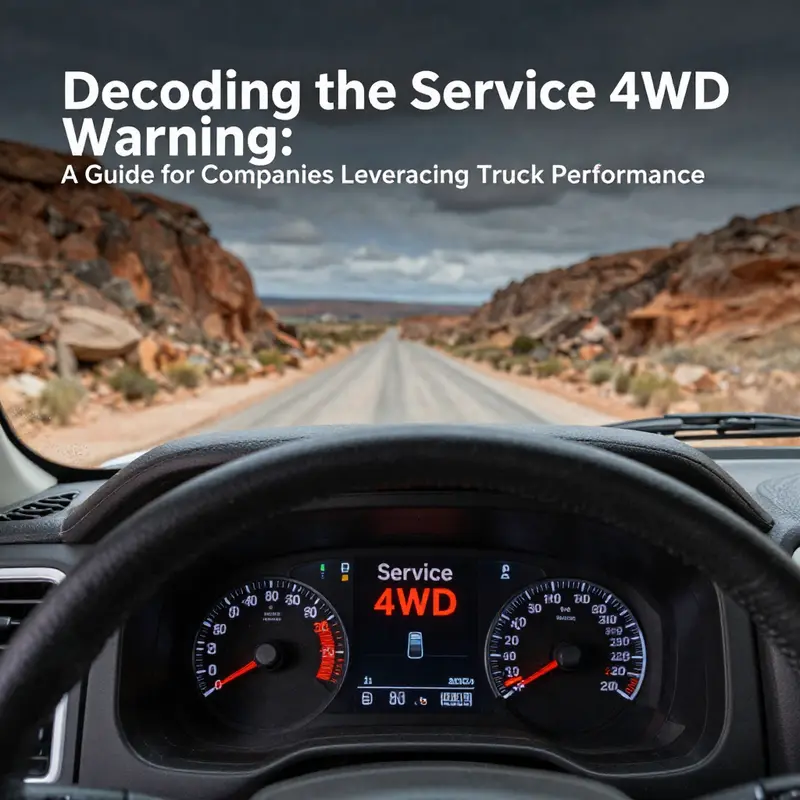
When the Service 4WD light illuminates on a truck’s dashboard, it is the vehicle’s electronic control unit telling you that the four‑wheel‑drive system has detected a fault. This warning is not a generic drivetrain alert; it specifically indicates a problem in the sensors, actuators, wiring, or mechanical components that manage torque distribution between the front and rear axles. The 4WD system relies on wheel‑speed sensors, a transfer‑case control module, front and rear differentials, and various electronic links to the engine and stability‑control computers. If any of these elements send inconsistent data or fail to operate, the control logic will either limit torque to a single axle or disengage 4WD altogether to protect the drivetrain and maintain vehicle stability.
Typical triggers include a malfunctioning wheel‑speed sensor, a damaged harness or connector, a stuck actuator in the transfer case, or software communication errors. Electrical glitches can cause intermittent fault codes, while mechanical wear—such as worn gears in the transfer case or play in U‑joints—may also set off the alert. Because the system’s self‑diagnostic routine cannot pinpoint a single “culprit” without a scan tool, the warning serves as a prompt for a thorough inspection rather than an indication that you can continue driving safely without concern.
From a safety perspective, the loss of balanced torque distribution reduces traction on slippery or uneven surfaces, affecting braking, steering feel, and throttle response. The immediate best practice is to slow down, find a safe place to stop, and avoid aggressive maneuvers. Consult the owner’s manual for any model‑specific recommendations, but generally you should plan to have the vehicle diagnosed as soon as possible. A professional technician will use a 4WD‑specific scan tool to read stored trouble codes, then inspect the transfer case, differentials, sensors, and wiring for physical damage or wear. Repairs may range from a simple sensor replacement or connector cleaning to a more extensive overhaul of the transfer‑case gears or actuator mechanisms.
For fleet operators, the Service 4WD alert is a data point that can be integrated into preventive‑maintenance schedules, helping to minimize unexpected downtime and control repair costs. Treat the warning as an early‑warning signal: address it promptly, rely on qualified diagnostics, and you’ll preserve both the safety and longevity of the vehicle’s drivetrain.
Cracking the 4WD Warning: A Practical Guide to Diagnosing Service 4WD and Its Hidden Causes
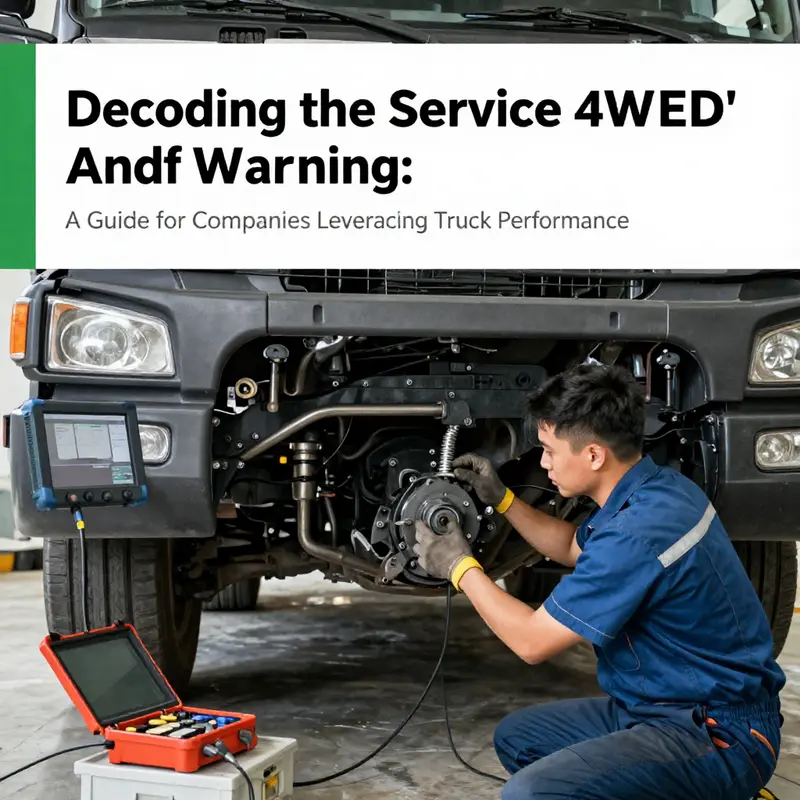
When the truck’s dashboard throws a Service 4WD warning, it is signaling more than a simple fault light. It means the vehicle’s four-wheel drive system has detected conditions that threaten its ability to reliably transfer power to all wheels under demanding conditions. The warning is not a single failure but a catchall that can spring from a range of sensors, circuits, or mechanical components. Behind the scenes, an onboard diagnostic system or ECU checks the health of the 4WD family of parts—the transfer case, wheel speed sensors, front and rear axle modules, and the control circuitry that coordinates engagement and disengagement. When a discrepancy appears, the system flags it and defaults to safe operation, often leaving the truck running in two-wheel drive while still warning you that something in the four-wheel drive chain might be at fault. This is not just a nuisance alert; it is a signal that the traction and stability systems could be compromised in certain conditions, such as wet, snowy, or uneven terrain where 4WD is meant to help you stay planted rather than spin out or slip. Understanding what triggers the warning and how to approach it helps to avoid unnecessary repairs and, more importantly, keeps you safe on the road or trail.
The core idea behind the Service 4WD warning is fault detection. The system continually monitors data from a network of sensors and actuators, looking for data that looks off or out of spec. A wheel speed sensor that misreads a front wheel’s rotation, a transfer case position sensor that reports an impossible combination of engagement and speed, or a PLC-level fault in the 4WD control circuit can all trigger an alert. In some designs, interrupting signals between the sensors and the ECU or a hiccup in the software that runs the 4WD logic can also light the warning. What seems like a single light on the dash is, in truth, a symptom of a broken chain that links sensing, signaling, and actuation.
The range of possible causes is broad, yet it naturally clusters into a few practical categories. Sensor malfunctions are among the most common culprits. Wheel speed sensors in particular can degrade with wear, contamination, or wiring damage, returning data that no longer lines up with the actual wheel motion. A transfer case position sensor, which tells the system whether the case is in two-wheel, high-range upshift, or low-range engagement, can drift or fail, producing data that the ECU interprets as a fault. Fluid levels in the transfer case or differentials matter too. Low lubricant or degraded oil can alter pressure or temperature readings, which in turn can provoke the 4WD warning because the system detects a condition that could harm the engagement mechanism or gears.
Electrical integrity matters as well. The 4WD control circuit is a delicate web of grounds, power rails, connectors, and weather-exposed wiring that can suffer corrosion, water intrusion, or chafing in rough environments. A loose connector or a corroded ground can create intermittent or persistent signals that confuse the control module. That is why a visual inspection of harnesses and connectors is often a surprisingly productive first step, even before digging into codes with a scan tool. Then there are the mechanical wear and tear items. Driveshaft joints, universal joints, and couplings can wear or become unbalanced, particularly in trucks that frequently carry heavy payloads or operate in off-road conditions. Worn joints can introduce vibration, misalignment, or slip between the commanded and actual motion of the driveline, and the ECU can interpret that as a fault condition.
Some faults are specific to the hardware architecture of a given 4WD system. A power transfer unit, or PTU, actuator, which controls the engagement of front-wheel drive in many permanent 4WD configurations, is a frequent source of trouble. In certain designs, the PTU actuator uses a shift mechanism or fork to engage or disengage the front driveshaft. If the actuator sticks, wears out its internal components, or the shift fork binding occurs, it can produce a mismatch between the driver’s request and the actual drivetrain state. The resulting discrepancy may trigger a persistent Service 4WD warning, even if the vehicle seems to drive normally in two-wheel drive. This is a case where field data from owners reinforces what technicians see in the shop: the warning light is not a guarantee that you cannot drive, but it is a guarantee that the fault needs investigation before you rely on the system in demanding conditions.
On some platforms, misoperation is a real risk. If a driver engages four-wheel drive in conditions where the surface is dry and smooth—where the additional mechanical load has little to gain—the system can interpret the result as a fault or misalignment, especially if the vehicle experiences unusual vibrations or shifts in torque distribution. Software glitches or sporadic communication errors between the 4WD control module and other vehicle systems can also set off the warning. In short, the light reveals that the 4WD system is no longer behaving as intended, and the safe response is to treat it seriously rather than to assume it is a minor nuisance because the truck still moves.
The practical upshot is that you should not ignore the warning, even if the vehicle continues to operate in two-wheel drive. Traction control, stability programs, and anti-slip logic are tightly integrated with 4WD control. A fault might not immediately disable the system, but it can compromise traction when it matters most, such as during a sudden turn on slick pavement or when climbing a snowy grade. The prudent path is a careful diagnosis using a tool that can read 4WD–specific trouble codes and a structured diagnostic approach that starts with basic checks and progresses to targeted testing of sensors and actuators.
A technician will typically begin with a scan of the 4WD subsystem to retrieve trouble codes stored in the ECU. These codes, while not a precise map of the fault, point the diagnostic work toward the most likely culprits. From there, the technician will verify fluid levels and the condition of lubricants in the transfer case and differentials, inspect the wiring harnesses for signs of wear or water intrusion, and test sensor outputs with a multimeter or an oscilloscope. If a sensor is found defective, replacement often resolves the light and restores proper engagement behavior. If a fluid problem is found, a simple top-off or more involved service like a transfer case service may be required. If a mechanical wear item is the root cause, such as a worn driveshaft joint or a failing shift mechanism, repairs may range from a sensor replacement to a more involved driveline rebuild.
As the diagnostic process unfolds, the importance of both data and inspection becomes clear. A clean, well-documented history helps technicians track intermittent faults that do not present themselves during a single test drive. This is where the maintenance mindset of fleets and owners becomes valuable. Regular inspection of driveline components, timely fluid changes, and careful attention to sensor health can prevent a Service 4WD warning from turning into a more costly failure. For fleets that manage a large number of vehicles, the maintenance trajectory matters just as much as the diagnostic outcome. The broader practice focuses on early fault detection, consistent service intervals, and a culture of reporting and addressing anomalies before they escalate into safety risks or downtime. A practical takeaway for anyone who drives an older or work-oriented truck is to embrace a proactive approach to 4WD health, combining routine checks with a readiness to investigate when the warning appears.
In the field, a common pattern emerges: a failure in the PTU actuator or the shift fork in the transfer mechanism can keep the system from properly engaging four-wheel drive, yet the vehicle may still feel normal in two-wheel drive. This paradox—normal operation in 2WD paired with a persistent warning—underscores why a diagnosis anchored in objective codes and measured tests is essential. It is not enough to assume that the light is harmless or to rely on the belief that the system will self-correct after a battery reset. While a reset might clear transient glitches, persistent faults will typically reappear, and the truth emerges only after a thorough check of sensors, electronics, and mechanical interfaces. In addition, a misconfiguration in the 4WD switch or a fault in the control module can mimic sensor faults, leading to a chase of ghost codes that waste time and money unless a structured diagnostic approach is followed. This is why professional technicians rely on a combination of scan data, live sensor readings, and a planned sequence of tests to deliver a definitive answer.
For readers who want to dive deeper into the real-world repair landscape, there is a wealth of practical, experience-based discussion online. In many cases, owners share verified fixes that have stood up to the test of miles and challenging terrain. These insights often center on the replacement of the shift fork assembly within the PTU or related transfer case components, along with careful verification of the engagement hydraulics or actuators. The value of such field data is in its confirmatory power: when a pattern repeats across multiple vehicles and scenarios, it points toward a robust repair strategy rather than a one-off fix. While the exact components vary by design, the underlying principle remains the same: the 4WD warning is best addressed by verifying data, inspecting mechanical interfaces, and replacing failed elements with attention to correct torque, alignment, and lubrication.
To connect this concept back to broader fleet maintenance practices, consider how private fleets manage 4WD reliability. The emphasis is on preventive checks that align with the warning’s meaning. Regularly scheduled inspections of the drive train, careful monitoring of fluid levels and quality, and proactive attention to sensor health can significantly reduce the likelihood of unexpected downtimes. This approach is echoed in maintenance-focused discussions that highlight the value of consistent, data-driven upkeep over reactive repairs. If you are part of a fleet or an owner-operator who wants to anchor your process in proven practice, you may find it valuable to explore maintenance-focused resources that summarize fleet trends and best practices for keeping driveline systems trustworthy under load. See this discussion in the context of broader maintenance trends: private fleets trends in trucking maintenance.
For readers seeking real-world diagnostic detail beyond general guidance, field anecdotes remain informative. A widely followed owner forum presents a recurring theme: the PTU or similar front-drive engagement components can fail in a way that lights the 4WD warning while still enabling 2WD operation. In many threads, owners document the symptom pattern, share photos of the failure points, and post step-by-step guides for disassembly and repair, sometimes including a replacement of the shift fork or related actuator. While these anecdotes are not a substitute for professional service, they provide valuable context for what a technician may encounter and how to prepare for a visit. These discussions can help you communicate clearly with a mechanic, using the same diagnostic language that technicians expect. For a broad view of the kind of field experience that underpins these guides, you can consult the collective knowledge shared by forum members here: https://www.jeepforum.com/forums/svc-4wd-troubleshooting-and-repairs.18276/
When you encounter a Service 4WD warning, the practical path is to treat it with respect and pursue a structured diagnostic approach. First, confirm that basic, non-electrical issues are not the root cause: ensure tire pressures are correct, verify that all tires are the same size and condition, and consider whether a simple system restart via battery reset has any lasting effect. If the warning persists after these checks, it is time for a professional diagnosis that uses a 4WD-specific scan with a capable tool to read codes and live data. In many cases, the fix involves a targeted part replacement or an adjustment of the engagement mechanism, followed by a thorough test drive to confirm that the system engages and disengages smoothly and reliably under simulated load and real-world conditions. The aim is not to chase a symptom but to restore the 4WD system to a state where it can deliver intended traction and stability when you need it most. The safety implications are real, and the cost of ignoring the warning can be higher than the price of a careful inspection and timely repair. The chapter that follows will build on this foundation by examining how repair approaches vary across different driveline architectures and how ongoing maintenance protocols can reduce the odds of future warnings while keeping your fleet productive and resilient in the face of challenging road conditions.
Beyond the Bright Light: Navigating Safety Risks and Real-World Implications When a Truck Says ‘Service 4WD’
When a truck’s dashboard flashes a warning that reads Service 4WD, the immediate impulse may be to press on and pretend the message isn’t there. Yet the warning is the vehicle’s early alarm, a signal that the four‑wheel drive system has detected a fault serious enough to require attention. The moment this light appears, the truck has already moved from a routine maintenance item into the realm of safety-critical hardware. Understanding what this warning means, why it appears, and how to respond becomes essential not just for the vehicle’s longevity but for the driver’s control in diverse conditions. The four‑wheel drive arrangement in most modern trucks is not a single, simple mechanism; it is a network of components that must coordinate perfectly to transfer torque to the wheels, adjust traction, and maintain stability across a wide range of surfaces. The transfer case, the front and rear axle disconnects, the wheel speed sensors, and the control module together form a complex system that can operate smoothly in normal conditions, or alert you to a fault when data from even one tiny sensor is compromised. The warning is a reminder that the system has self‑diagnosed a problem, and it is urging a diagnosis before conditions grow riskier. In practice, what this means for most drivers is that the vehicle may still run in two‑wheel drive mode, but the 4WD capability you rely on in rain, snow, mud, or uneven terrain may be impaired or unavailable. The stakes are not merely about an extra feature; they are about maintaining traction, steering feel, and predictable handling when it counts most. The pathology behind a Service 4WD message often begins with data that seems trivial at first—a wheel speed sensor reporting an unusual reading, a faulty signal that misleads the 4WD control circuit, or a momentary software hiccup that interrupts communication between the 4WD module and the engine or body control modules. Each scenario is a potential route to gradual degradation in the system’s performance. What starts as an intermittent blip may harden into a persistent fault if ignored, leading to a scenario where the vehicle can suddenly fail to engage 4WD when the road surfaces demand traction, or where 4WD disengages at a critical moment and leaves the driver with only two wheels driving. The crucial point is not that 4WD will magically fail when you least expect it, but that the safety margin provided by the system can fade without warning, especially on slick surfaces or grades where the torque distribution matters as much as the power output. In this context, the warning becomes a practical call to action rather than a mere inconvenience. The latest generation of diagnostics relies on a robust exchange of data across the vehicle’s networks. A small sensor, perhaps a wheel speed sensor near a wheel that has seen faster wear or damage, can feed erroneous information into the system. If the 4WD control module interprets that data as a mismatch between front and rear wheels, it may lock out certain 4WD functions to protect itself from damage or to prevent unsafe torque distribution. A fault might also reside in the wiring that carries signals from sensors to the control module or in the software that interprets those signals. In some cases, the problem is mechanical—a bearing that’s worn in the transfer case, a damaged actuator that connects or disconnects a drive shaft, or a failing weld in a key linkage that translates driver intent into 4WD action. The range of possibilities underscores why this is not a one‑line repair issue; it is a diagnostic puzzle that requires a trained eye and the right tools. The practical implication for drivers is straightforward: a vehicle that displays Service 4WD should not be assumed as fully operational in all weather or terrain conditions until a professional confirms the health of the system. Even if the truck is drivable in two‑wheel mode, the absence of 4WD may become a liability at the moment you encounter snow, slush, ice, or mud. Traction control and stability control systems are designed to work in concert with the brakes and steering, and losing one facet of that trio can push a vehicle onto a precarious edge. The risk is not just spinning tires or getting stuck—it is a loss of predictable handling. If you have ever drifted through a corner on a slick grade or struggled to regain control after a sudden wheel slip, you know how a compromised 4WD system can transform a routine drive into a moment of elevated danger. This is why safety guidance around the Service 4WD warning emphasizes prompt assessment rather than prolonged optimism. When multiple warning lights illuminate—say, Check Engine plus Service 4WD—the situation becomes more serious still, because it points to a possible shared sensor fault or a communication fault that cascades across the vehicle’s several control modules. A miscommunication on the CAN bus or a failing gateway between the engine control unit and the 4WD system can create a domino effect. In such cases, the fault is not isolated to a single sensor or a single mechanical component; it becomes a system‑wide reliability concern. The consequence is not merely an inconvenient fault code; it can translate into unexpected stalling, reduced power delivery, or complete system shutdown while the vehicle is in motion. It is in these moments that the prudent choice is to stop somewhere safe, rather than push onward to reach a destination only to discover the problem more acutely when the weather turns worse or the road surface becomes unpredictable. In the conversation about risk, the human factor is essential. A driver who notices the Service 4WD light should treat the message as a safety alert rather than an optional feature indicator. The immediate steps are practical and straightforward: slow down, reduce speed to a safe level, and plan a route to a service facility where a technician can perform a full diagnostic check. If the truck is on a highway or in traffic, gradually decelerate and move to the shoulder or a safe pull‑off, ensuring you maintain as much control as possible while remaining mindful of surrounding traffic. There is value in not waiting for a worst‑case scenario to unfold. The diagnostic process will typically involve a thorough scan with a tool capable of reading 4WD‑specific trouble codes. Unlike a general engine code, a 4WD code carries detailed data about the transfer case position sensors, the 4WD actuator, the front and rear axle disconnects, and relevant communication lines. The technician will review the diagnostic trouble codes, inspect sensor wiring for signs of wear or corrosion, and may perform functional tests on the transfer case and disconnect mechanism to verify whether the actuator is responding as designed. The emphasis is on precision rather than guesswork. When a professional is involved, it is not merely about fixing a single failed component. It is about ensuring the entire chain of events—sensors, wiring, control software, and mechanical linkages—operates in harmony. In many trucks, the 4WD system is designed to protect itself from damage by limiting torque transfer when a fault is detected. This protective cognitive layer, built into the software, helps prevent the driver from forcing the system to operate under unsafe conditions. Yet this conservative stance can manifest as a temporary loss of 4WD capability even when the underlying problem is only partial—a sensor that occasionally misreports data, a connector that has loosened, or a short in a circuit that only appears under certain temperature or vibration conditions. The outcome is that you may experience a reduced driving envelope until the fault is resolved. For fleets and individual owners alike, the best safeguard is proactive maintenance. Regular checks of the electrical harnesses, connectors, and sensor housings, along with timely fluid changes for the transfer case, can help prevent minor irritants from evolving into a Service 4WD event. Keeping the system clean and dry, avoiding exposure to salt and road grime that accelerate corrosion, and ensuring that the operator’s manual recommendations for 4WD usage are followed can contribute to longer, more predictable performance. In this light, the warning becomes part of a larger conversation about maintenance discipline. It shifts the focus from reactive fixes to proactive care, a mindset that is especially important for those who operate in demanding settings or rely on 4WD for stable, reliable performance in adverse conditions. Within the broader frame of maintenance, industry and fleet practices increasingly recognize the value of preventive care. Private fleets and owner‑operators alike are tracking maintenance trends to minimize downtime and reduce the likelihood that a Service 4WD warning interrupts a critical delivery or long‑haul schedule. For fleets that manage multiple vehicles, the cost of a sudden 4WD fault can ripple through dispatch, maintenance planning, and customer commitments. Keeping a lid on risk means investing in routine diagnostics, sensor inspections, and software updates, as well as ensuring technicians have access to the right diagnostic tools and reference materials. It also means educating drivers to recognize the difference between a temporary, non‑harmful alert and a genuine, persistent fault that requires professional attention. When drivers are equipped with clear guidance on stopping safely, reporting the fault promptly, and avoiding aggressive driving in the meantime, the likelihood of an escalating issue decreases. The conversation about safety also intersects with the realities of weather and road surfaces. In regions with heavy snow, ice, or inconsistent traction, 4WD is a critical safety feature. If that feature is unavailable when needed due to a fault, the vehicle’s handling and braking dynamics can become more challenging to manage. Even in modern trucks, where traction control and electronic stability systems work alongside 4WD, losing a functional 4WD pathway can shift control from predictable to precarious. The prudent response is to err on the side of caution, plan ahead, and treat the warning as a signal to verify, not to traverse more miles in uncertain conditions. The guidance embedded in service manuals and manufacturer support channels reinforces this approach. A professional will rely on model‑specific procedures to diagnose and repair Service 4WD faults, taking into account the particular transfer case architecture, axle configurations, and the software update history of the vehicle. In trying to translate this into practical action for drivers, it helps to keep in mind that the diagnosis may involve more than replacing a failed sensor. It could require reprogramming the control module, reseating a connector with a marginal contact, or addressing wear in a mechanical component that is difficult to observe without disassembly. The breadth of potential causes is precisely why the diagnostic process should be performed by a qualified technician with access to a comprehensive service manual for your specific truck model. For readers seeking a more comprehensive perspective on how maintenance strategies align with reliability in trucking, a closer look at industry maintenance trends can be instructive. See the discussion on Private Fleets Trends in Trucking Maintenance for context on how disciplined maintenance practices correlate with lower risk of in‑service alerts and higher uptime. Private Fleets Trends in Trucking Maintenance. While this chapter has focused on safety implications, the underlying message is clear: consistent, proactive care of 4WD components helps keep the system reliable when you need it most. It is also worth acknowledging that official service manuals and manufacturer resources are the most reliable anchors for diagnosing and treating 4WD faults. When the time comes to engage tools and technicians, you will benefit from consulting model‑specific guidance that details the exact sequence of tests, the expected electrical readings, and the component replacement procedures. In the meantime, drivers can play a constructive role by observing tire condition and inflation, payload balance, and load distribution, all of which influence how well traction control can compensate in marginal conditions. The 4WD system is most effective when every part functions as designed and when the vehicle’s operators understand the limits of what the system can do. The light on the dash is a reminder to pause, to verify, and to proceed with care. It is not a verdict that the truck is unusable, but a call to restore the partnership between driver and machine through professional diagnosis and timely maintenance. To close the loop between warning and safety, consider the broader context of how drivers and fleets manage risk. The modern truck operates within a network of sensors, software, and mechanical linkages engineered to reduce the chance of loss of control. When one part falters, the entire interplay can degrade, exposing the driver to avoidable hazards. By treating the Service 4WD warning as a legitimate safety signal, staying disciplined about diagnostics, and leaning on professional expertise, you preserve not only the vehicle’s capabilities but the safety of the driver and other road users. External resource: For reliable, up‑to‑date procedures and model‑specific troubleshooting guidance, consult official service manuals and manufacturer resources. A helpful reference is the Toyota Service Manual, which provides detailed procedures and specifications for diagnosing 4WD related issues. https://www.toyotacenter.com/vehicle-service-repair/manuals/
Listening to the Dashboard: What a Service 4WD Warning Means for Your Truck, Your Traction, and Your Safety

When a truck’s dashboard lights up with a Service 4WD warning, a driver should not shrug it off as a minor nuisance. This is not a routine check engine light moment. It is a signal from the vehicle’s brain that the four wheel drive system has detected a fault that could affect how power is sent to the front and rear axles. The four wheel drive system is a complex network of mechanical parts and electronic controls that share information with other vehicle systems through a web of sensors and controllers. The onboard diagnostic system, known to technicians as the OBD II, monitors those parts for anomalies and then translates them into a message the driver can read. In many trucks, you may still be able to drive in two wheel drive mode, but the moment the warning appears, you are stepping into a scenario that jeopardizes traction, stability, and overall performance, especially when the weather turns nasty or the terrain demands grip and control. Understanding what triggers the warning, what it implies for maintenance, and how to respond can mean the difference between a quick fix and a costly, safety compromising failure on the road or in off road environments.
The Service 4WD message is not a one size fits all alert. It does not reveal a single clear fault in every case. Instead, it opens a door into a diagnostic space where multiple possibilities exist. At the core, the 4WD system is designed to power all wheels to maximize traction on slippery surfaces or challenging terrain. It uses a transfer case to distribute torque between the front and rear driveshafts, and it relies on sensors and actuators to engage or disengage the front axle, monitor wheel speed, and control the distribution of power. When something in that chain fails, the system may still allow limited operation in two wheel drive, but the safety margin tied to full 4WD capability is diminished. This is why the warning has to be treated seriously and investigated promptly. An extended delay can transform a manageable fault into a chain reaction that harms the drivetrain and, in the worst case, endangers the occupants.
A practical way to think about the Service 4WD alert is to picture the 4WD system as a living, data-driven relay team. Wheel speed sensors feed information to the control module, the transfer case and front axle actuators respond to digital commands, and the software in the control module reconciles data from multiple sources to determine whether the front and rear wheels should be driven together or separately. When a sensor gives erroneous data, or when an electrical fault blocks a honest conversation between the components, the control module might decide that 4WD is not reliable enough to engage. The result is a warning and a system that can default to 2WD, preserving basic drivability while signaling that a checkup is needed. This is an important nuance: the vehicle remains drivable, but the capability that often saves you in slick conditions is compromised until the fault is diagnosed and repaired.
One of the most common pit falls is assuming that a single bad sensor is the culprit. While a faulty wheel speed sensor is indeed a frequent driver of false positives, a Service 4WD warning can also be sparked by a broader electrical issue in the 4WD control circuit. A loose ground, corroded connector, or damaged wire harness can create intermittent signals that confuse the computer. Electrical problems do not always scream obvious symptoms like a blown fuse. Sometimes the issue hides in the wiring path, particularly in regions exposed to vibration, road spray, or extreme temperatures. The complexity of modern trucks means that software glitches or miscommunication between modules can also light up the warning. A control module that loses synchronization with a sensor or actuator can trigger a fault code even when the mechanical parts are performing within spec. It is the interplay of sensors, software, and actuation that makes diagnosing Service 4WD both an art and a science—and precisely why a professional scan tool that reads 4WD specific trouble codes is essential.
The research into why drivers see this warning points toward a pattern of causes that range from the simple to the sophisticated. A low fluid level in the transfer case or differentials can create torque irregularities that the system interprets as a fault. Worn or damaged driveshafts or constant velocity joints can introduce abnormal vibrations or misalignment signals that the 4WD control logic interprets as unsafe engagement conditions. In older systems, problems with vacuum lines used to engage the front axle can cause sluggish or incomplete engagement, and that partial engagement may be flagged by the control module as a fault. The selector switch, a button or knob that tells the vehicle which drivetrain mode to use, can also wear out or fail, sending incorrect commands to the 4WD controller. And then there are the electronic angles: the front axle engagement mechanism, the actuator motors, the wheel speed sensors themselves, and the communication bus that carries data between the module and other vehicle computers. Each fault code has a story behind it, and a skilled technician reads those stories in the codes and in the physical state of the driveline to decide the next step.
What makes a Service 4WD warning especially challenging is that its presence does not always point to one easily fixable part. It can be a symptom of a small, inexpensive issue that can be corrected with a quick repair or a signal of a larger problem that demands more thorough attention. For example, if a wheel speed sensor is intermittently failing under certain temperatures or rain, the fix might be a connector clean and reseated or a sensor replacement. If the issue is more mechanical, such as a worn pinion bearing in the transfer case, the repair could involve dismantling a portion of the drivetrain, replacing seals, and reassembling with precise tolerances. The best path is a diagnostic assessment that combines a live scan with a visual inspection. A technician will typically read fault codes, examine the data streams from the wheel speed sensors and the transfer case controls, and physically inspect components like the driveshafts, CV joints, and the front axle disconnect mechanism if present in the model.
This is where the driver’s role intersects with the technician’s expertise. A key step is to stop driving as soon as it is safe to do so. Continuing to drive with a malfunctioning 4WD system can worsen the problem, potentially causing damage to the transfer case, the driveshafts, or differential components. After pulling over, consulting the owner’s manual is a prudent move. The manual often contains model specific guidance on what the Service 4WD message means in the context of that truck. Some manuals even offer a staged set of steps before a service visit, such as avoiding 4WD engagement and looking for obvious signs of fluid leaks, but most guidance emphasizes seeking professional diagnostic support rather than attempting a DIY fix that involves electronics or drivetrain components.
A diagnostic visit typically involves a few essential actions. A technician will connect a diagnostic scan tool and retrieve fault codes specific to the 4WD system. Those codes narrow the search to likely culprits but rarely confirm the fix by themselves. The next steps include verifying fluid levels in the transfer case and differentials, inspecting the condition of driveshafts and CV joints, and visually checking electrical connectors for corrosion or looseness. In engines and trucks where the 4WD system uses vacuum lines, those lines are checked for cracks, leaks, or disconnections. In electronically controlled systems, the technicians will also verify that the control module is communicating properly with the various actuators that lock or unlock the front axle and distribute torque. The goal is to determine whether the problem is mechanical, electrical, or software related, and to identify the safest and most effective repair plan.
For fleets that rely on trucks to perform in demanding conditions, proactive maintenance of the 4WD system is not optional. It becomes part of the operating plan. Regular fluid checks and changes for the transfer case and differentials help prevent friction and heat buildup that can lead to wear. Visual inspections of the driveshafts, U joints, and CV joints help detect wear before it becomes a failure mode during a critical job. The control electronics deserve equal attention. Battery health, sensor calibration, and module software updates can have meaningful effects on system reliability. The reality is that neglecting the 4WD system not only increases the likelihood of a breakdown but also undermines safety by reducing traction when it is most needed. A driver who understands this is more likely to catch issues early and schedule preventive maintenance rather than waiting for a breakdown to occur on a remote job site or a remote stretch of highway.
If you are operating in conditions that demand maximum traction—mud, snow, ice, or rugged terrain—the stakes are even higher. The decision to engage 4WD should be taken with a clear understanding that the system is healthy. A Service 4WD warning in such scenarios is a warning not to push the vehicle into an unstable operating mode. The practical advice for drivers is simple and direct: do not engage 4WD until the fault has been diagnosed and cleared. The cost of a rushed repair is often greater than a measured, professional diagnosis. The calm, methodical approach—pull over safely, consult the manual, avoid 4WD use, and book a professional inspection—minimizes risk and protects the drivetrain from further damage.
The broader automotive media and maintenance communities have repeatedly highlighted the importance of maintenance in the longevity of 4WD systems. In a recent recap of maintenance best practices for rugged duty trucks, industry coverage emphasizes that ignoring 4WD system upkeep is a common pathway to unexpected failure in off road environments. The takeaway is not just about fixing a fault; it is about preventing faults through disciplined care. For fleets and individual drivers alike, this means scheduling regular inspections of the 4WD components and treating any Service 4WD warning as a prompt to verify the health of the entire driveline. This approach meshes with a larger philosophy of proactive maintenance that is increasingly shaping how trucking operations allocate resources and plan downtime.
For readers who want to explore these maintenance themes from a broader fleet perspective, there is a growing emphasis on private fleets trends in trucking maintenance. This angle notes that small to mid sized fleets that maintain a robust preventive maintenance schedule often enjoy lower breakdown rates and steadier on time performance. See more at private fleets trends in trucking maintenance. The practical upshot is that a disciplined maintenance routine, rather than a reactive fix, is what keeps a truck performing reliably through the many miles and diverse conditions that modern trucking demands. Keeping the 4WD system in good health is a core component of that strategy, and it is a reminder that technology and maintenance are inseparable partners in staying safe on the road.
As you plan your next service visit, remember the outcomes of a thorough diagnostic are not simply about clearing a code. A careful inspection also reveals whether the fault is an isolated sensor issue, a wiring problem, or a deeper mechanical wear that will require component service or replacement. It is not unusual for a 4WD fault to be corrected with a straightforward sensor or connector repair and a software reset. Yet there are times when the fault reveals an imminent wear item that would have failed soon if not addressed. In those moments, the technician’s role shifts from repair technician to preventive maintenance advisor, guiding the owner toward a plan that protects the drivetrain, preserves safety, and minimizes downtime. The ultimate goal is a truck that continues to deliver safety and performance across all driving conditions while avoiding the surprises that can derail a mission-critical operation.
External insights into 4WD maintenance reinforce the practical takeaways. For drivers looking to deepen their understanding of how to approach 4WD maintenance, a widely cited resource outlines practical steps and cautions that align with the experiences above. While the details vary with model and year, the core message remains consistent: treat the Service 4WD warning as a valid alarm, address it promptly, and rely on a trained technician to diagnose and repair using appropriate diagnostic tools. External resources emphasize the value of preventive care and the discipline of routine checks as the most reliable path to long term reliability. For those seeking additional context on maintenance practices, see the following external resource: https://www.motortrend.com/cars/4wd-maintenance-tips-2026/.
In sum, a Service 4WD warning is a meaningful diagnostic signal rather than a simple nuisance. It invites a thoughtful response that blends immediate safety considerations with a careful diagnostic process. By stopping safely, consulting the manual, avoiding 4WD engagement until a diagnosis is complete, and scheduling a professional inspection, drivers can protect the drivetrain and ensure that the truck remains capable when traction matters most. The scenario is a reminder that modern trucking relies on a delicate balance between mechanical reliability and electronic intelligence, and that maintaining that balance is a responsibility shared by drivers, technicians, and fleet managers alike. For readers who want to explore a broader maintenance conversation tied to real world fleet operations, see the private fleets trends in trucking maintenance article linked earlier. Staying ahead of trouble in the 4WD system is not just about keeping wheels turning; it is about safeguarding the people, cargo, and routes that depend on dependable, controllable traction every mile of the way.
Final thoughts
Addressing the ‘Service 4WD’ warning in trucks is not merely a matter of maintenance—it is essential for the safety, performance, and efficiency of logistics operations. By understanding the implications, diagnosing issues effectively, recognizing safety concerns, and following systematic steps when faced with the alert, businesses can mitigate risks and ensure reliable operations. Companies that prioritize swift responses to these warnings not only enhance the safety of their fleet but also solidify their reputation in the industry as responsible and proactive.