

Food trucks have surged in popularity, offering diverse culinary experiences on the go. However, the classification of food truck drivers as food service employees often raises questions among various stakeholders including manufacturing, retail, and small business owners. Understanding their roles extends beyond mere driving; it encapsulates essential functions in food preparation, customer interaction, and compliance with regulations. This article systematically explores the classification of food truck drivers as food service employees, covering regulatory frameworks, customer service dynamics, operational duties, and how they compare against other roles in the food industry. Each chapter aims to provide clear insights and reinforce the significance of food truck drivers in the broader spectrum of food service operations.
Mobile Kitchens, Unified Standards: Reframing Food Truck Drivers as Food Service Employees
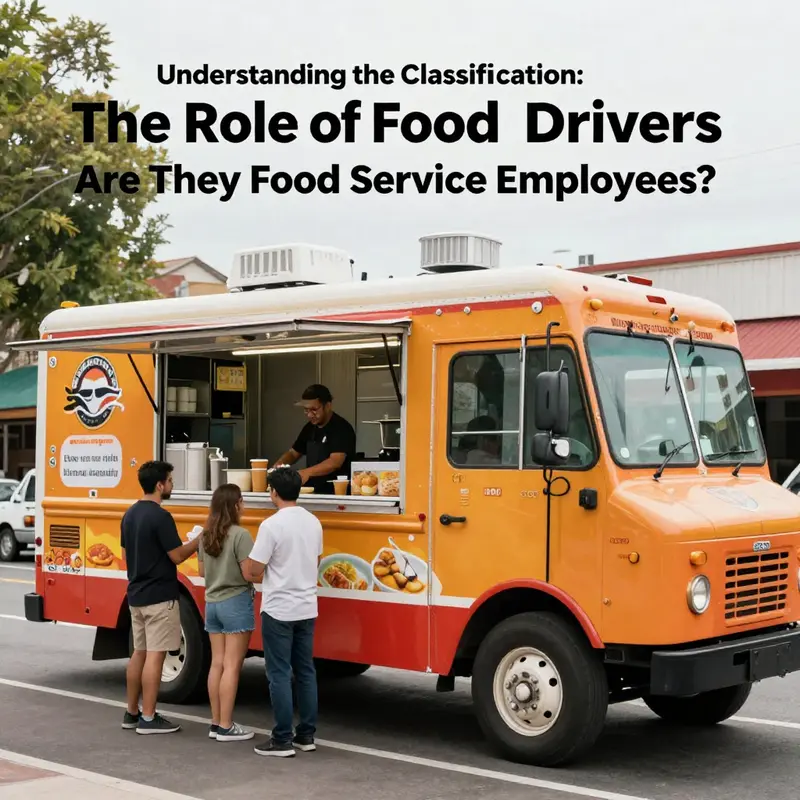
Across the evolving landscape of food service, the rise of mobile kitchens has blurred the lines between transportation and hospitality. Food truck drivers maneuver through crowded streets, but their value to the service ecosystem goes beyond navigation. In most cases, they are directly involved in food preparation and customer engagement, managing cooking equipment, assembling plates, and ensuring that orders meet safety standards as they move from stall to street-side window. The daily workflow blends driving, staging, cooking, assembling, and interacting with customers. In that sense, the role aligns with the core functions that define food service employment: handling, preparing, storing, and serving food in a way that upholds hygiene, quality, and a consistent guest experience. The road becomes the kitchen, and the kitchen becomes a mobile service point, yet the tasks echo the same professional standards that anchor established restaurants and catering operations. This is not a marginal set of responsibilities; it is a continuous cycle of preparation and service that occurs within a moving workspace, where timing, temperature, and interaction all converge to shape an edible experience and a reliable brand encounter for customers on the go. When we look at the job through this lens, the food truck workforce presents a coherent picture of food service labor rather than a set of isolated transportation duties. The act of driving is a crucial support function, but it sits atop a scaffold of food handling competencies that define the worker’s professional identity in the industry. The edge of a mobile unit is not a boundary that excludes food service; it is a platform that extends it, demanding the same discipline and adherence to standards as any fixed-location kitchen.
The practical realities reinforce this framing. Even when the truck is in motion, staff perform responsibilities that would be recognized in a brick-and-mortar kitchen. They operate essential equipment such as grills, fryers, and warming devices, and they manage refrigeration systems and dry-storage space to keep ingredients safe and fresh. Temperature control, portioning accuracy, and labeling practices remain central as orders flow through the window and onto trays. These tasks require skill and attention to detail, reflecting the same baseline competencies expected of cooks, prep cooks, and line staff in traditional food service settings. In addition to preparation, they handle customers directly, communicating menu options, clarifying dietary needs, and processing payments. The service dimension—your ability to explain, reassure, and deliver a consistent product—remains a core competency, even when the venue is a trailer rather than a dining room.
From a regulatory perspective, the alignment is not incidental. The U.S. Bureau of Labor Statistics and the regulatory guidance that flows from labor standards agencies place food truck operators squarely within the umbrella of food preparation and serving related occupations. This classification recognizes that work in a mobile unit is not outside the realm of food service; rather, it is a variant of the same occupation family, adapted to a portable environment. The implications extend to how workers are covered by wage and hour rules, safety training requirements, and industry-wide standards designed to safeguard both customers and staff. The governing logic is straightforward: if the activity centers on producing and delivering edible products to customers, the job belongs to the food service workforce, regardless of whether the storefront is a building, a tent, or a moving vehicle. In practical terms, this means the same expectations around sanitation, cross-contamination controls, and personal hygiene apply just as they do in fixed-location kitchens. It also means workers should receive access to the same kind of safety and operational training that supports consistent quality and consumer protection across food service venues.
The mobile context introduces distinctive challenges that further underscore the necessity of treating these roles as food service positions. Space is limited, and workflow has to be optimized within a compact footprint. Equipment may be shared across tasks, requiring careful scheduling and clean-up routines to prevent bottlenecks and ensure quick service during peak periods. Sanitation routines must be rigorous, because customers may be exposed to fresh, high-risk ingredients in a hurry, and a busy service window can tempt shortcuts. Yet the need for cleanliness and safety remains nonnegotiable. Food truck staff must monitor temperatures during storage and transport, perform safe thawing practices, and promptly discard spoiled ingredients. They also need to manage waste streams responsibly, a factor that intersects with local health codes and environmental considerations. The challenge of maintaining consistent quality under variable outdoor conditions—heat, cold, dust, wind—places a premium on discipline, training, and adaptive problem solving. In this sense, the role embodies the same professional standards that govern any food service employee, even as the setting shifts from a dining room to the curbside. The classification thus carries practical consequences for how these workers are compensated, trained, and integrated into broader workforce development programs.
A broader, strategic view helps illuminate how the field is evolving. Some observers argue that the mobile format invites a broader conversation about workforce development and labor standards in trucking and hospitality alike. The intersection of mobility and service creates a distinctive skill set: culinary preparedness on a go-ready platform, guest-facing communication amid outdoor conditions, and a reliability mindset that emphasizes consistent portions, plating, and presentation despite environmental variability. In this frame, the job becomes a meaningful entry point into the food service ladder, offering opportunities to acquire certifications in food safety, exposure to inventory management, and experience coordinating multiple moving parts in a team environment. This perspective aligns with industry conversations that stress investing in people in trucking, recognizing the value of cross-functional training and career pathways that can translate beyond the truck into broader hospitality and logistics roles. Investing in people in trucking is a concrete example of how workforce strategy can reinforce the integrity of service delivery while expanding individual career potential.
To sustain this integrated view, it is important to acknowledge that the mobile kitchen does not detach workers from the standards that govern all food service professionals. The same expectations for hygiene, safe food handling, and respectful customer service apply whether the operation fits inside a brick-and-mortar facility or with wheels and a window on a city street. The classification as a food service employee matters not only for regulatory compliance but for the way employers design training, schedule staffing, and implement safety protocols. It shapes opportunities for advancement, the kinds of credentials encouraged or required, and the sense of professional identity workers carry as they move from one location to another. In short, the food truck is a platform that amplifies food service labor, not redefine it. The discipline of cooking, plating, and serving persists, and the mobile setting simply elevates the need for organized processes, consistent quality, and a customer-centric ethos that keeps pace with demand across diverse neighborhoods and events.
As cities expand and consumer expectations for convenient, high-quality mobile dining rise, recognizing food truck drivers as food service employees supports a cohesive approach to workforce planning and regulatory alignment. This perspective helps ensure fair compensation, access to training, and clear safety standards across all modes of food service delivery. It also helps bridge the gap between transportation tasks and culinary craft, reinforcing the idea that driving is a support function within a larger service operation rather than a separate, standalone role. The ultimate objective is a workforce that can be trusted to produce safe, tasty meals under varying conditions and to do so in a way that respects workers’ rights and professional development needs.
Official guidance from regulatory bodies can be found at the end of this exploration to deepen the connection between practice and policy. External resource: https://www.dol.gov/general/topic/employmentstandards/foodservice
Dissecting the Law: Do Food Truck Drivers Qualify as Food Service Employees?
Classification of food truck drivers as food service employees depends on a matrix of factors that regulators evaluate in context. A food truck is a mobile kitchen that delivers prepared meals, and the workers who assemble, serve, and drive can resemble traditional restaurant staff or operate as independent business people depending on the relationship with the operator. In many regulatory frameworks, the central question is whether the worker is controlled and integrated as an employee, or whether they control substantial aspects of their work as an independent contractor. The economic reality test weighs control, opportunity for profit or loss, investment in the enterprise, and the duration of the relationship. If a driver owns or leases the vehicle, bears significant business risk, sets or negotiates schedules, and supplies much of their own equipment, they may be seen as a contractor. Conversely, if the operator sets hours, requires uniforms or branding, controls routes, provides training, and handles taxes and insurance, the worker is more likely an employee. The practical consequences are substantial: employees typically receive minimum wage and overtime protections, unemployment insurance, workers’ compensation, and employer-provided benefits; independent contractors face tax obligations, lower or no benefits, and a higher degree of financial risk. State approaches add nuance; California uses an ABC test that examines freedom from control, performance of work outside the usual business, and independent trade or business status, while other states may emphasize different factors. The dual role many food truck workers play—as drivers and food handlers—can blur lines and complicate classification, especially when duties cross from logistics into core service delivery. When the worker is integral to the service model as an employee, protections may apply; when the primary function is movement and entrepreneurship with limited supervision, contractor status may predominate. Regulators thus scrutinize the totality of circumstances rather than relying on a single factor. Beyond classification, this issue intersects with licensing, food safety, and consumer protection requirements, reminding operators that a flexible workforce must still comply with safety and service standards. The overarching aim is to balance protections for workers with the flexibility that makes mobile food entrepreneurship viable, encouraging policies that reduce misclassification while preserving innovation in the street-food economy. For policymakers and practitioners, the takeaway is to build clear guidelines that reflect real work patterns, clarify liability, and provide predictable expectations for both drivers and operators.
Serving on the Move: Why Food Truck Drivers Are Food Service Employees and How Their Roles Define the Customer Experience
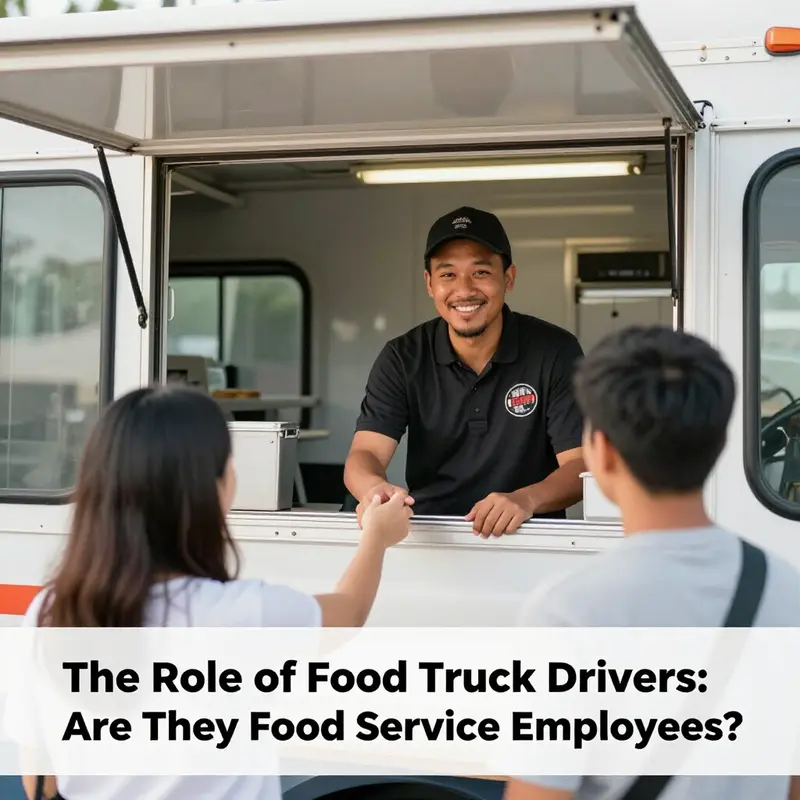
Food trucks have reshaped the dining landscape, turning sidewalks into portable dining rooms and chefs into itinerant operators. In this mobility-first setup, the person who steers the truck is only part of a larger team that must deliver safe, tasty meals under tight timelines. Drivers often double as cooks, prep assistants, or front-line servers, and even when a vehicle is merely a conveyance, the duties surrounding its use fall squarely into the realm of food service. The core question—are food truck drivers food service employees?—is less about a label than about the work performed and the standards that govern that work. When a truck prepares, serves, and sells food, the employee is behaving as part of the food service workforce. This insight matters for wages, training, safety, and regulatory compliance. It also helps explain why many regulators and industry observers treat mobile kitchens as extensions of traditional food service operations, even when they are mobile, small, or union-free. Ultimately, the driver’s value to the operation comes not just from the wheels turning, but from the hands that cook, the eyes that judge quality, and the care with which the customer is served.\n\nOn a typical day, a food truck driver moves through a continuum of tasks that include vehicle operation, setup, food preparation, and cash handling. The driving role is essential for mobility and responsiveness, but the customer-facing side often consumes a large portion of the workday. When a customer lines up, the person at the window greets them, answers questions about menu items, and takes orders. If the kitchen is small, the same person might sauté, grill, or assemble components, then plate the dish for quick service. Even when the preparation is done by assistants, the driver who communicates with customers, suggests ingredients, and ensures that orders are completed accurately still acts as the primary interface between the business and its patrons. The reliability of service—how quickly orders are fulfilled, whether ingredients are familiar, and how well communications are handled—depends on the driver’s ability to multitask while maintaining attention to sanitation rules. Even when another staff member handles heavy lifting or specialized food preparation, the driver remains a pivotal link between kitchen activity and the customer. The agility required in busy markets, festivals, or street corners means that these workers must respond to weather, crowds, and parking constraints while keeping the service smooth and the food safe. In this light, the role aligns closely with established food service duties, not with trucking alone.\n\nRegulatory frameworks tend to look at duties rather than job titles. The U.S. Department of Labor, among others, emphasizes that employees performing tasks such as taking orders, handling cash, preparing or serving food, and maintaining sanitary conditions are food service workers, regardless of mobile or fixed settings. For food trucks, this means that the window clerk who answers questions, processes payments, and coordinates with the cook is performing food service work. It also means that sanitation training, safe food handling, and temperature controls apply to the entire operation. In practice, inspectors examine the same risk points—cleanliness, proper storage, cross-contamination prevention, and documented food temperatures—whether the operation occupies a brick-and-mortar space or a roving vehicle. The defining factor is the nature of the tasks, not the location. When customers experience a consistent, well-kept service window and a safe plate, they are experiencing the mark of a food service operation that extends beyond geography. This is why many policymakers treat mobile units as integral components of the food service ecosystem.\n\nFrom a workforce perspective, recognizing food truck drivers as food service employees helps ensure fair treatment across compensation, scheduling, and career development. It clarifies eligibility for overtime, meal and rest breaks, and access to safety training. Operators benefit too, because a clear understanding of duties supports better onboarding, clearer role definitions, and more consistent service. The mobile nature of the work demands a blend of culinary skill, customer service, and operational discipline. Some teams designate a primary driver whose first duty is mobility, while others assign a combined role that includes cooking and serving. In either arrangement, effective training in food safety, customer service etiquette, and rapid problem-solving reduces risk for customers and improves job satisfaction. A workforce that feels prepared and respected is more likely to perform with confidence in crowded venues, where mistakes are costly and margins are tight. For operators who are building teams in urban environments, this perspective aligns with broader industry best practices and signals a commitment to staff development. It also links to broader efforts to invest in people in trucking.\n\nOperationally, the line between driver and server can shift with local rules, business size, and market dynamics. Yet the central idea remains: the service encounter—how a customer is welcomed, how orders are taken, and how food is presented—depends on the same set of actions that define the food service domain. This awareness informs not only hiring and training but also how a business markets itself. A consistent, knowledgeable front-of-house approach builds trust, while a demonstrated commitment to food safety reinforces credibility. Professionals who understand the customer journey from payment to plate can adapt quickly to new menus, weather changes, or special events. In communities where street vendors form a vital part of the food landscape, operators who invest in people and processes tend to stand out. For readers seeking practical frameworks for workforce development, consider looking into resources that focus on people in trucking and related fields, such as Investing in People in Trucking.\n\nUltimately, the classification has real consequences for how customers experience service and how workers advance within the industry. When a driver communicates clearly, maintains clean stations, and ensures that meals meet safety standards, the operation projects professionalism and reliability. The mobile kitchen, in this sense, is a microcosm of the broader food service economy—dynamic, interactive, and rooted in consistent practice. The same standards that govern a fixed-location restaurant apply to a roving one, and that alignment helps ensure that food truck operators can recruit skilled staff, maintain safe operations, and deliver a dependable product under varied conditions. The mobile food sector grows responsibly when the workforce is viewed holistically, with drivers, cooks, and cashiers treated as members of a single service team. For policymakers and regulators, this approach offers a practical scaffolding for enforcement that protects workers while feeding customers. For the public, it explains why a simple purchase from a truck carries with it a set of professional standards worth recognizing. For more authoritative guidance on how food service workers are classified under labor standards, see the U.S. Department of Labor’s Foodservice guidance: https://www.dol.gov/general/topic/employmentstandards/foodservice
Rolling Kitchens, Real Service: Why Food Truck Drivers Are Truly Food Service Employees
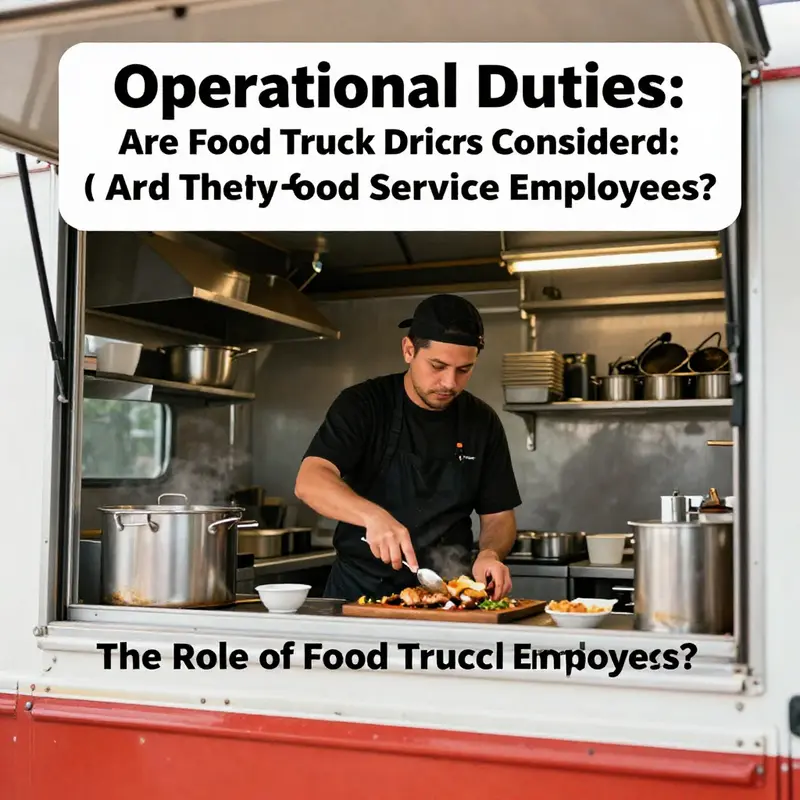
A food truck is more than a moving cart of cuisine; it is a compact, end-to-end food service operation that happens to operate on wheels. In that sense, the driver is not solely a chauffeur but a frontline worker in the broader ecosystem of food service. The street-side grill, the prep counter, the cash register, and the serving window all share a single mission: to deliver safe, appetizing meals to customers while upholding the standards that define the industry. When we consider the question, are food truck drivers food service employees, we are really asking how the job’s core duties align with the responsibilities that constitute the food service workforce. The answer, in most jurisdictions, is yes, and the reasoning rests on the practical overlap between driving, food handling, and customer service that characterizes mobile food operations. The driver’s work typically spans much more than movement from point A to point B. It includes the full cycle of food preparation, the management of inventory, the handling of transactions, and the upkeep of sanitary conditions that health codes demand. In practice, many drivers are involved in cooking, plating, and presenting meals, while also ensuring the right ingredients and supplies are available for each service window. This blend of roles is what anchors them in the food service sector rather than in a purely transportation role. Such a conclusion is supported by regulatory frameworks and labor standards that treat mobile food operations as part of the broader food service workforce, a perspective echoed across guidance from federal agencies that regulate employment classifications and sector-specific labor practices.
To understand the frame, it helps to look at what the job involves day to day. A typical shift may begin with setting up equipment and checking heat levels, then moving into the kitchen-like rhythm of cooking and assembling dishes. Some moments are spent directing prep work, chopping vegetables, marinating proteins, and coordinating with helpers who may be part-timers or seasonal staff. Other moments are devoted to customer engagement—taking orders, answering questions about ingredients, and processing payments with point-of-sale systems. Sanitation then comes back into focus: cleaning surfaces, sanitizing utensils, and ensuring serving areas meet health and safety standards throughout the service. These tasks require a working knowledge of safe food handling, cross-contamination prevention, temperature control, and routine maintenance of equipment, all of which are hallmarks of food service operations. The cumulative effect of performing these duties is that the driver assumes the responsibilities of a food service worker, even when a significant portion of the job involves navigation and vehicle operation.
From a regulatory perspective, this intertwinement of transportation and food service duties matters. The U.S. Department of Labor and comparable agencies describe employment classifications that distinguish roles by the primary function of the work performed. When a worker’s main tasks revolve around preparing, cooking, serving, and ensuring compliance with health and safety rules, the classification aligns with food service employment. The dual nature of the role—driving plus food handling—does not automatically relegate the worker to a non-food-service category. Rather, the emphasis is on the core responsibilities that define the job. In most cases, the food service component takes precedence, and the worker is treated as part of the food service workforce for wages, overtime eligibility, tax treatment, and regulatory compliance. This framework has practical implications: it affects how wages are calculated, how overtime is applied, what kind of worker’s compensation coverage is required, and how health and safety training is structured for staff who operate and serve from mobile kitchens.
The day-to-day requirements of food truck operation also map closely onto sanitation and safety codes that govern brick-and-mortar restaurants. Sanitation standards, equipment maintenance, proper storage of ingredients, and even routine cleaning schedules are not optional extras but essential duties that ensure public health and consumer confidence. When a driver is responsible for the cleanliness of the serving area and the integrity of the food preparation space, that responsibility reinforces the view that the role belongs to food service. Health inspectors frequently assess mobile units with the same criteria used for stationary establishments, including equipment cleanliness, proper food temperatures, and the handling of utensils and surfaces. In this sense, the execution of these duties—alongside inventory management and customer service—cements the driver’s identity as a food service worker. And because these tasks are integral to service delivery, they justify alignment with the broader food service labor framework rather than a separate transportation-only category.
There is a nuanced reality worth acknowledging. Some individuals in the food truck world may operate as owner-operators or independent contractors who own the truck and contract out certain tasks, including driving or assisting with food preparation. In such cases, classification may hinge on contractual terms and the organization of work, rather than on a single function. Yet, even in these arrangements, the core duties that define food service—preparation, cooking, serving, sanitation, and customer interaction—often remain central to the role. This duality mirrors the broader industry where many workers straddle multiple functions but still fall within food service classifications due to the emphasis of their daily activities on food handling and service delivery rather than purely logistical tasks. The practical upshot is that the employment landscape for mobile food services tends to blur the lines between transportation and service delivery, with the weight of the role placed on the service side of the operation.
The legal and economic implications of recognizing food truck drivers as food service employees are significant. Classifying workers within the food service category aligns them with sector-specific wage standards, eligibility for overtime protections, and access to training and certification programs designed for cooks, servers, and sanitization specialists. It also shapes how employers approach obligations around workers’ compensation, unemployment insurance, and tax withholdings. In turn, this classification informs workforce planning, scheduling practices, and the design of health and safety training that mobile units implement on the ground. When regulators emphasize the continuity between mobile food operations and traditional food service, the message to operators becomes clear: the driving role cannot be viewed in isolation from the culinary and service functions that define the customer experience. The customer-facing element—taking orders, answering questions about ingredients, and delivering meals with consistent quality—constitutes a pivotal portion of service delivery, not merely a add-on to transportation.
For readers seeking a deeper regulatory lens, consider how cross-border or interstate operations add layers of complexity to worker classification. In some contexts, regulators and industry observers note that the precise boundaries between roles can shift with geography, business structure, and licensing requirements. This is why the broader conversation about food truck labor often stitches together labor standards, health compliance, and transportation regulation into a single, practical framework. When the work hinges on providing safe, palatable meals with reliable service under the pressure of sales and seasonal demand, the classification as food service employees feels not only intuitive but appropriate. To explore related regulatory perspectives, you can consult cross-border regulatory discussions that illuminate how similar classifications are treated in adjacent sectors and jurisdictions, such as Cross-Border Regulatory Issues in Trucking.
As the industry evolves, the central proposition remains compelling: food truck drivers are better understood as integral food service workers whose duties span preparation, service, sanitation, and compliance. This view reflects the day-to-day reality of mobile food service and aligns with labor standards and health regulations designed to protect workers and customers alike. It also underlines a broader principle for the industry: the mobile kitchen is a single workplace, and the worker who keeps that kitchen running—on wheels and at the window—is, at heart, a food service professional.
External reference: For official guidance on how food service employees—including those in mobile units—are regulated, see the U.S. Department of Labor guidance on foodservice employment standards at https://www.dol.gov/general/topic/employmentstandards/foodservice.
Mobile Kitchens, Shared Standards: Positioning Food Truck Drivers Within the Food Service Employee Landscape
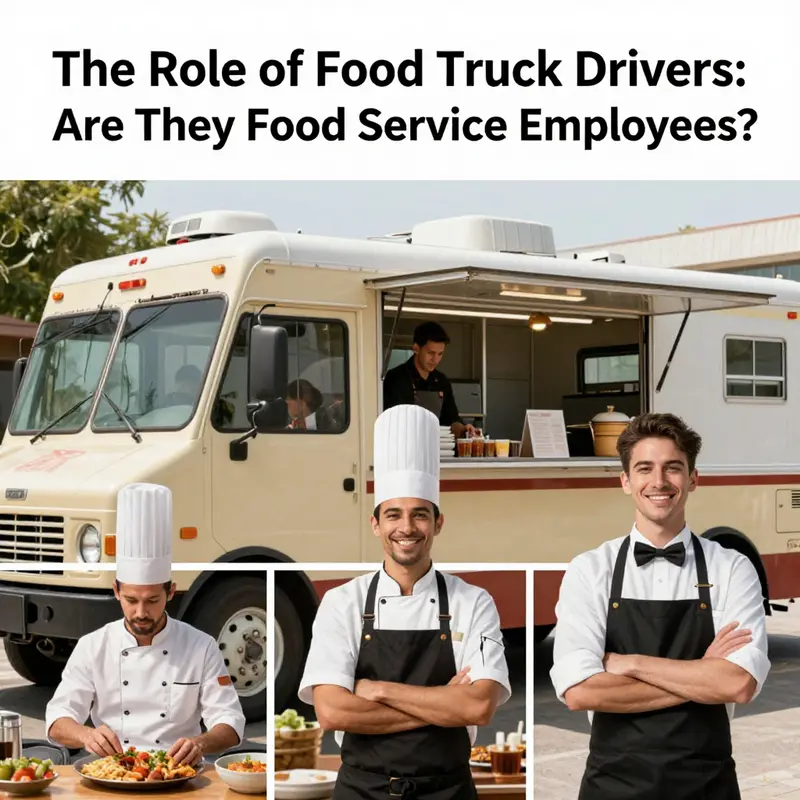
When we ask whether food truck drivers are considered food service employees, the answer is generally yes, but not without nuance. They belong to the broader ecosystem of people who make the dining experience possible, yet their work unfolds in a moving, weather-worn stage where vehicles double as kitchens. At their core, most food truck drivers perform tasks that align with food service—handling food safety, preparing and cooking meals, and serving customers. Their role often blends these responsibilities with driving, scheduling, and sales, creating a hybrid job profile that resists simple categorization. This complexity matters because how we classify and support these workers influences wages, benefits, safety protections, and career development. The regulation around food service—often summarized by national labor standards and health codes—recognizes operators involved in serving prepared food as part of the food service workforce. The U.S. Department of Labor’s guidance on foodservice standards provides the framework, emphasizing that safety, sanitation, and proper food handling are central to employment in this field. Translating that to a mobile unit means acknowledging both sameness and difference: the core essentials of food preparation and customer service remain, but the surrounding requirements shift because the workspace is a truck, not a brick-and-mortar kitchen.
The similarities are striking. Food truck drivers must maintain cleanliness in small, high-traffic spaces, monitor temperatures to prevent spoilage, follow personal hygiene protocols, and adhere to safe food handling practices. They are also the frontline ambassadors of their operation, greeting customers, explaining menus, and resolving concerns. In many cases, they perform tasks that would be performed by chefs, line cooks, and servers all in one. This dual or triple capacity—cook, server, and owner-operator—reflects the practical realities of running a mobile food service. Because of this, many job analysts and regulatory bodies treat food truck operators as food service workers within a broader occupational category. In practice, this means they are covered by the same general standards that govern food service employment, with the added layer of vehicle and mobile operations that require specialized attention to safety, zoning, and transportation logistics.
But the mobility that powers the food truck industry also creates distinct challenges that complicate both classification and daily work life. Unlike a fixed restaurant, a mobile unit must navigate location constraints, weather fluctuations, and the wear and tear of road use. The job becomes a constant balancing act: managing inventory and food safety while planning routes, seeking high-traffic locations, and maintaining the vehicle as a workspace. This mobility introduces variables that influence performance, safety, and well-being in ways that are less common in stationary eateries. Health inspections, for instance, must consider not just the food preparation area but the vehicle itself, including ventilation, storage, and even waste management within a mobile context. Zoning rules and location permits further constrain where a truck can operate, shaping daily work rhythms and the potential for steady, predictable schedules. As a result, food truck drivers often experience a more precarious blend of labor conditions than their brick-and-mortar peers, with fluctuating hours, variable income, and uncertain access to traditional employment benefits.
A useful way to understand these dynamics is to consider how a food truck blends multiple functional roles. The driver may simultaneously be a cook, a server, a marketer, and a manager, all within a compact space that demands constant multitasking. This multi-hatted reality can be empowering—offering flexibility, entrepreneurial autonomy, and direct customer feedback—but it can also be exhausting. The physical demands are distinct: standing for long periods, repeated lifting of heavy equipment and ingredients, and exposure to outdoor elements. Weather, wear on the vehicle, and fuel or maintenance issues can interrupt service with little notice, adding another layer of risk management to the job. All of these factors shape how workers experience their roles and how employers—whether a single operator or a fleet of trucks—structure compensation, recognition, and safety protections.
The regulatory landscape further complicates the picture. Fixed-location restaurants, while not without their own rules, deal primarily with health inspections and labor standards in a stable setting. Food trucks, meanwhile, must harmonize vehicle regulations with food safety laws. This dual classification has real consequences. It can blur the lines between who is responsible for certain compliance tasks, such as maintaining equipment, ensuring fire safety, or verifying proper food temperatures, and it can affect how benefits and protections are extended to workers. The Atlantic has highlighted the tension inherent in this hybrid model, noting that a food truck is both a kitchen and a vehicle and should be subject to the rules that apply to both. That tension foregrounds a persistent policy question: should mobile food workers have access to the same protections—health insurance, paid leave, minimum wage adjustments, and collective bargaining opportunities—as their brick-and-mortar counterparts, or do we need a tailored set of protections that acknowledge the unique risks and rewards of operating from a vehicle?
Beyond the policy discourse, the lived experience of food truck drivers reveals a unique stress-test of the food service workforce. The truck’s mobility places workers at the mercy of location-dependent demand cycles. A lunch rush in a bustling district may vanish after a sudden rainstorm or a road closure, leaving staff idle and income uncertain. Weather, equipment reliability, and the need to maintain an always-ready kitchen on wheels add layers of operational risk that do not weigh as heavily on stationary kitchens. These conditions can influence job satisfaction, mental health, and the perceived fairness of compensation. Yet the same mobility can enhance resilience: drivers can pivot to different neighborhoods, test new menus, and build direct relationships with customers, which can translate into entrepreneurial growth and independent income streams. This duality—risk and opportunity—helps explain why food truck drivers are classified within the food service sector but often experience a more dynamic, precarious employment environment.
This chapter also invites reflection on the path forward for both regulation and practice. If the goal is to sustain a vibrant, safe, and fairly compensated mobile food service workforce, policy and industry practice must converge toward clarity and coverage. Clarity means defining the core duties that constitute the role in a mobile context and ensuring protections follow the worker, even as the workspace changes location. Coverage means extending access to essential benefits, consistent wage standards, and robust safety training that address the realities of working in a moving kitchen. It also means recognizing the value food truck operators bring to local economies: they catalyze street-level food culture, create flexible job opportunities, and contribute to neighborhood vitality. In this light, the food truck driver’s status as a food service employee is reinforced, yet the conversation must continue about how to tailor protections and supports to reflect mobility, multi-tasking demands, and the risks associated with operating in the field.
To connect this analysis to ongoing industry discussions, consider the broader trend toward investing in people in trucking—an emphasis on workforce development, training, and career paths that meet the needs of modern mobile food service. This approach acknowledges that who handles the food matters as much as where it is served, and that robust human capital strategies can help mitigate some of the risks inherent in the mobile model. For readers interested in how such investments are evolving in the trucking sector, see the discussion titled Investing in People in Trucking. Further reading on how standards and operations in mobile food contexts are shaping risk management and compliance can be found in related industry references and research.
In sum, food truck drivers are most accurately viewed as food service employees who work in a dynamic, mobile setting. Their classification aligns with the broader food service workforce, yet their daily reality requires careful attention to the interplay of vehicle regulation, health compliance, and flexible labor practices. The movement of their workspace does not erase the core responsibilities of serving safe, tasty food and ensuring customer satisfaction; rather, it reframes those duties within a context that invites innovation, resilience, and policy attention. This perspective helps anchor the chapter in the larger conversation about how we recognize, protect, and empower workers who bring meals to the streets, while also honoring the regulatory and operational realities that make mobile food service possible. For readers seeking a deeper dive into standards and applications that touch on mobile kitchen operations, a relevant external resource can be consulted at https://www.example.com/egg-food-truck-standards.
Final thoughts
In conclusion, food truck drivers are undeniably classified as food service employees, performing crucial duties that encompass food preparation, customer interaction, and adherence to regulatory standards. Understanding their roles underlines their significance in the food service ecosystem, where each driver not only delivers food but also upholds essential service standards tied to customer satisfaction and compliance. As businesses and industries continue to evolve, recognizing the multifaceted capabilities of food truck drivers will be pivotal for stakeholders across various sectors, fostering better engagement and appreciation for these vital contributors.