
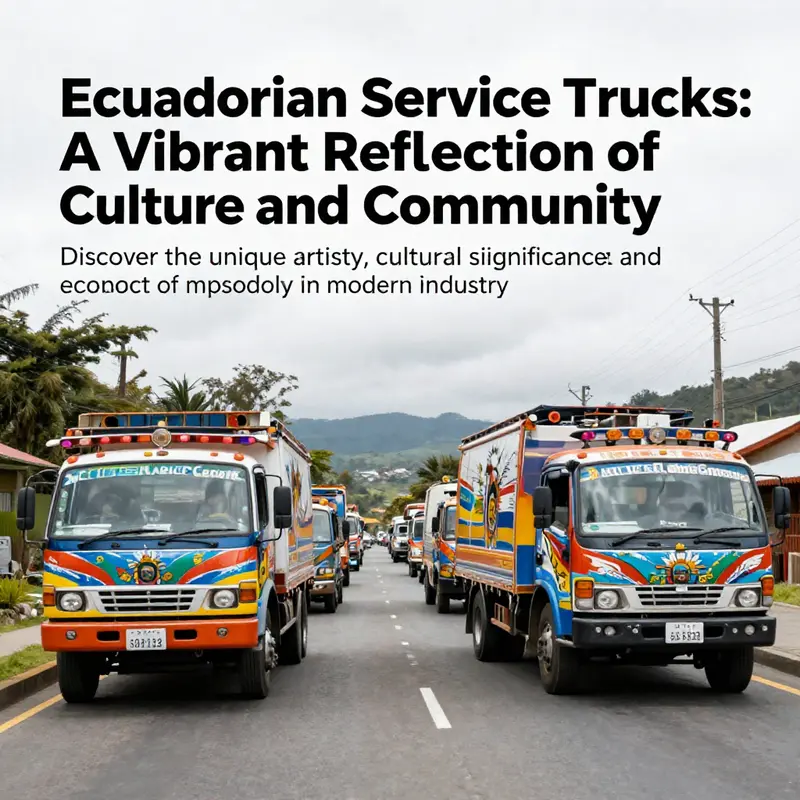
Ecuador’s vibrant service trucks serve more than just practical functions; they are deep reflections of the country’s cultural identity and artistic prowess. These uniquely painted vehicles stand out on the road not just as transport means for goods but as crucial elements in the storytelling fabric of Ecuadorian society. In the following chapters, we will explore how these trucks showcase cultural heritage, embody artistic expression, influence the economy, and reinforce community identity—all pivotal components that make Ecuadorian service trucks not just distinctive but a vital part of the national narrative.
Moving Canvases on the Highway: The Ecuadorian Service Truck as a Living Portal of Culture, Craft, and Community
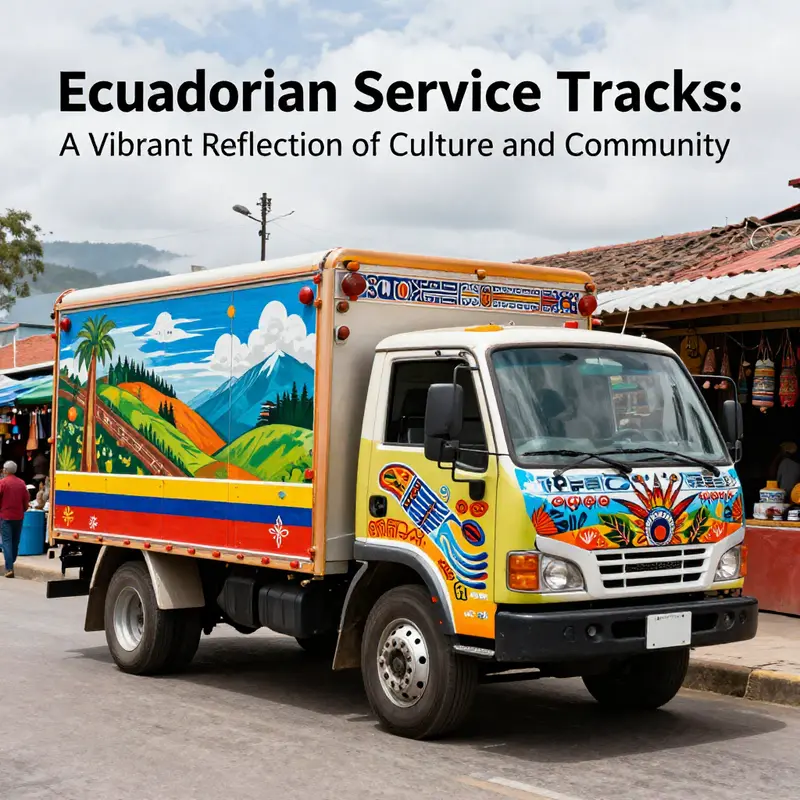
In Ecuador, the road unfolds as a tapestry, and the service truck moves through it like a portable gallery that never closes. These vehicles are not just workhorses that ferry goods or provide essential services; they are itinerant canvases, swelling with color and narrative as they carry on, from hillside towns to crowded city avenues. What makes them uniquely Ecuadorian is not a single feature but a cumulative practice that fuses utility with artistry, turning daily transit into a public performance of local identity. The paint is not an afterthought but the vehicle’s voice. Each truck becomes a moving mural, its surface telling stories drawn from the land itself—Andean peaks and cloud forests, Amazonian rivers, and the sun-washed coastal plains—while nodding to a shared history and present-day life. It is a deliberate collision of craft and mobility, where the act of painting is as important as the act of transporting, and where the finished design remains inseparable from the road it travels.
The artistry on these trucks is a collaborative ritual. Skilled local artists work closely with truck owners, translating preference, memory, and local lore into bold, hand-painted imagery. This is not a standardized corporate aesthetic; it is a personalized dialogue, a negotiation between personal story and communal symbolism. The hands that work the brush are often longtime residents, steeped in neighborhood memory and seasonal rhythms—market days, religious festivals, harvests, and regional celebrations. The resulting designs embrace a living, evolving style rather than a fixed template. The paintwork reflects the social fabric of where the truck operates: a mix of pride, humor, reverence, and sometimes political commentary, all rendered in a palette that seems to have absorbed the mood of the sky at dawn and the heat of the sun at noon. The result is a fleet of vehicles that instantly announces itself in traffic and in plazas, not merely by size or presence but by a social signature recognizable to locals and visitors alike.
What makes the motifs especially resonant is the way they fuse multiple cultural streams into a single visual grammar. Images drawn from indigenous motifs mingle with regional folk patterns and religious iconography, creating a symbolic map of the country’s diversity. Indigenous weaving patterns, particularly those associated with Kichwa and other Andean communities, inspire linear rhythms, geometric precision, and a sense of woven continuity that feels almost tactile on the metal body of a truck. The coastal and Amazonian influences introduce curvilinear motifs and brighter palettes, echoing festival costumes, local flora, and the fauna people encounter in daily life. In this cross-pollination, a single truck can carry a panorama: condors soaring above geometric bands, rivers curling around the chassis like rivers of memory, and religious figures placed in moments of daily respite—on a road, at a market, or outside a shop that relies on the vehicle for its livelihood. The combination is not simply decorative; it is a public education in regional identity, a visual archive of what matters to communities as they travel through varying geographies and social landscapes.
The imagery is often rich with symbolism. Symbols such as the condor—an emblem of freedom and strength—anchor the design in national pride while connecting the vehicle to broader ecological and cultural meanings. Depictions of local flora and fauna function as gentle guardians of ecological awareness, reminding viewers of the ecosystems that sustain the people who rely on these trucks. And religious iconography—figures from Catholic and indigenous traditions—appears as daily blessings for safe passages and successful ventures. This visual language resonates across urban centers like Quito and Guayaquil and extends into distant towns along winding mountain passes. The same truck that serves a butcher’s stall or a mobile mechanic will carry an intricate scene of a festival, a legend, or a landscape that locals claim as their own. The painted surface thus becomes a portable catechism of place: a wayfinding system rendered in color and form that orients travelers—neighbors, travelers, and customers—within a shared landscape.
The practice also speaks to a broader social function. These painted trucks are, in essence, mobile stages. They turn roads into promenades where stories are told without words, and where aesthetics and utility converge in the most public, accessible way. They attract attention, invite conversations, and become landmarks that help people locate services, remember routes, or simply identify with a region. This social role extends beyond mere visibility. The trucks contribute to a sense of communal pride and continuity, linking generations through a visual tradition that survives urban modernization and the relentless pace of commerce. When a truck returns to a neighborhood for routine work, its painted surface carries with it the memory of that entire community—the childhood ride along the same streets, the vendors who traded there, the church festival that drew a crowd, the elder who once told a story about the land that inspired one of the motifs. In this way, the vehicle is not only a conveyance but a moving repository of memory and belonging.
The craft itself is a living apprenticeship. Local artists learn through hands-on collaboration with owners, experimenting with line weight, color harmony, and symbolic codes while honoring the vehicle’s structural needs. The process emphasizes durability as much as detail. Layers of paint are chosen and applied to withstand the rigors of weather, road salt, dust, and constant exposure to sun. Final varnishes or protective coatings seal the design, enabling it to endure while aging gracefully along with the truck. Because the art is hand-painted rather than rendered by decals, there is an unmistakable texture—a slight relief where brushstrokes meet metal, a warmth that digital prints rarely replicate. The artistry is not a mere finish; it is an ongoing conversation between a craftsman’s hand and a vehicle that must perform reliably every day. This commitment to quality, time, and local collaboration helps preserve a practice that could otherwise be lost to mass production or regulatory homogenization.
In the current landscape of transport and service logistics, the cultural practice is not isolated from economic forces. The trucks operate in a market that increasingly values storytelling, authenticity, and local character. The painted surfaces function as distinctive branding that differentiates a service in a crowded field. The visual identity is inseparable from the service itself: clients are drawn to the human scale of the artistry, the sense that the people behind the work are part of the community, not faceless operators. This is where the craft intertwines with broader shifts in the industry. The way fleets communicate value on the road is changing as trucking networks expand, regulations tighten, and customers seek a sense of connection and reliability. The aesthetic choices on these trucks, from color choices to iconography, mirror a wider trend toward meaning-rich branding and local storytelling. For observers of industry dynamics, the painted truck becomes a microcosm of how value is communicated in a changing era. This is the same arc described in analyses of evolving trucking trends, where branding, perception, and trust increasingly shape market outcomes. In this sense, the painted truck is both art and case study, a tangible example of how culture and commerce inform one another in the everyday economy. economic trucking trends.
The cultural resonance of these vehicles extends beyond their appearance. They illuminate the nation’s intangible cultural heritage in a format that is accessible to all ages and backgrounds. UNESCO recognizes Ecuador’s rich tapestry of living traditions, where community participation, ritual, and symbolic storytelling are baked into daily life. The country’s cultural fabric is not just about museum pieces or festivals; it is also expressed through the ordinary objects that people encounter on their way to work, school, or a family gathering. In the case of these service trucks, the world sees how cultural expressions are embedded in the ordinary. They transform a routine task into an occasion for cultural reflection, a reminder that heritage is not merely preserved in static spaces but lived in motion. The synergy of indigenous motifs, regional art forms, and religious iconography in the trucks provides a lucid example of how heritage is transmitted across generations through doing, making, and sharing. It is this living transmission—the everyday artistry of turned-utility—that makes the Ecuadorian service truck a uniquely Ecuadorian phenomenon, a microcosm of national identity traveling along the road.
The broader significance of painted service trucks lies in the way they turn public space into a forum for storytelling. They make the road an open-air gallery, inviting spontaneous comments, shared memories, and casual education about regional diversity. Children point to favorite motifs; elders recount legends associated with certain symbols; drivers and passengers exchange notes about local landmarks visible on a side panel. In these moments, the painted surface becomes a mnemonic device, reinforcing community memory and making the everyday commute more meaningful. The practice thus sits at the intersection of craft, communication, and culture—an unbroken chain that connects the maker, the owner, the rider, and the countless observers who encounter the vehicle on its routes. The trucks do not simply carry cargo; they carry culture forward, one brushstroke at a time, and in doing so, they offer a portable testament to the power of art to animate the ordinary, to honor ancestral knowledge, and to participate in the ongoing project of national identity.
As living artifacts, these vehicles also complicate the relationship between tradition and change. Modern safety standards, urban traffic norms, and environmental considerations shape how painting is pursued and protected. Yet the impulse to decorate remains strong, an assertion that beauty and function can coexist in the service of community life. The craft persists because it remains useful, visible, and meaningful. It thrives where artists and owners feel a sense of shared ownership over the final work, and where the broader public values these expressions as part of the everyday landscape rather than as distant, commercial curiosities. In this way, it becomes an important thread in Ecuador’s cultural fabric—one that is appreciated not only for its aesthetic appeal but for its capacity to spark conversation about heritage, place, and the ways people live together on a single, crowded highway.
External resource: UNESCO’s recognition of Ecuador’s intangible cultural heritage helps place the painted service truck within a wider global understanding of living traditions. While the surface of these trucks may catch the eye, the deeper resonance lies in how they carry stories forward, linking local memory with shared humanity on a national scale. For readers who wish to explore this broader context, the UNESCO listing offers a window into how communities celebrate, enact, and preserve culture through participatory practice and ritual, extending beyond formal institutions into everyday life. UNESCO Intangible Cultural Heritage – Ecuador.
Rolling Canvases on the Highway: The Cultural Craft of Ecuadorian Service Trucks
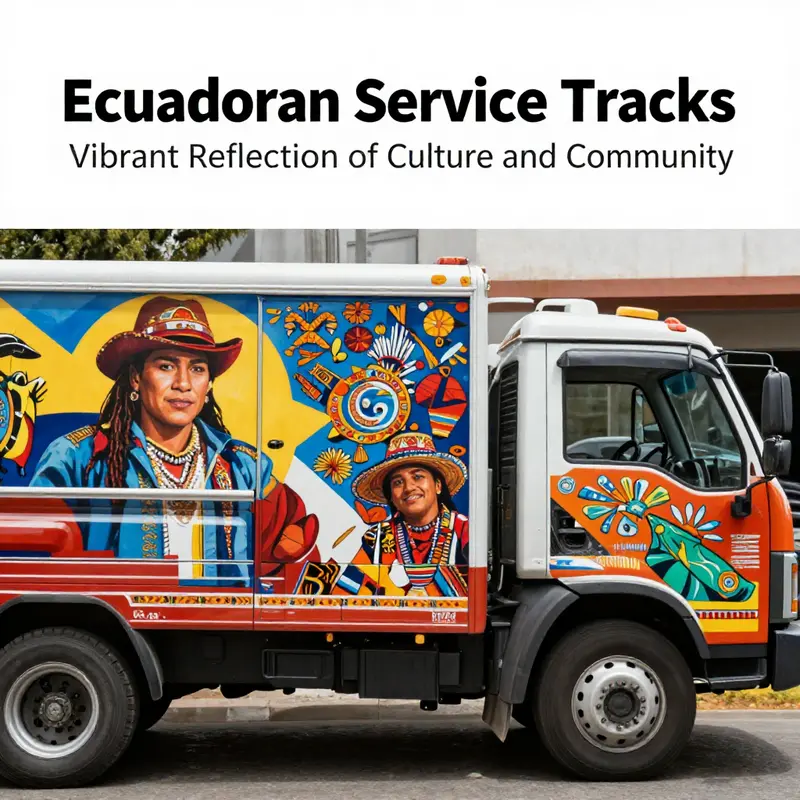
On the broad lanes and winding mountain roads of Ecuador, service trucks do more than carry goods or provide a service. They travel as rolling canvases, turning ordinary transportation into a moving gallery that mirrors the country’s layered identity. From Quito to Guayaquil, these vehicles fuse practicality with artistry in a way that feels intimate and public. They are not just tools of commerce; they are vessels of memory, conversation, and pride. The paintwork, meticulously applied by skilled hands, transforms metal into a surface where color becomes language and motifs become shared stories. In this sense, the trucks are unique not merely for their function, but for their function as cultural carriers, a distinctive feature that animates the road with color and meaning while propelling daily life forward.\n\nThe essence of this phenomenon lies in the way design and function meet. Each truck arrives at its patch of pavement already carrying a narrative collected over years, sometimes generations. The practice blends the regional textures of Ecuador – its Andean terraces, cloud-brushed skies, and coastal light – with a broader tradition of street art that makes everyday objects speak. The imagery often travels across town lines, so a floral border in the highlands may share visual DNA with a coastline motif. This regional conversation is not a sterile catalog of symbols; it is a living dialogue about place, memory, and belonging. The images range from bold floral motifs and geometric indigenous patterns to religious icons, depictions of local legends, and even modern slogans that speak to personal or business identities. In this way, the truck functions as a portable archive, a moving museum that travels from one community to the next, inviting bystanders to read a moment of local life without having to step into a gallery.\n\nCraftsmanship sits at the heart of this phenomenon. The artistry is not simply about choosing colors and drawing shapes; it is a collaborative process between owner and painter, a direct exchange that often reflects trust, shared history, and a sense of regional personality. The truck owner may come with a rough concept or a single emblem, and a local artist translates that idea into a composition that covers panels of metal and, in many cases, stretches across the cab and doors with a single, continuous line of storytelling. The result is a one-of-a-kind surface where even the most common service vehicle becomes instantly legible as a representation of its owner’s character and aspirations. The level of detail can range from bold, easily readable motifs designed for high visibility on busy streets to intricate, almost mosaic-like patterns that reward closer inspection. In all cases, the hand-painted finish stands in stark contrast to uniform, mass-produced fleets found elsewhere. It declares a willingness to slow down and invest in beauty, even when speed and efficiency are paramount.\n\nColor is not incidental here; it is a deliberate instrument of identity. The palette often borrows from regional landscapes – sunset oranges and terracotta reds echo the Andean soils, emerald greens recall highland pastures, deep cobalt and lapis hint at ocean intonations, and gold accents gleam like a ceremonial thread stitched through daily work. The use of color goes beyond decoration. It enhances visibility on crowded streets and market squares, making a truck stand out amid a sea of vehicles and pedestrians. But in these designs, visibility and meaning are inseparable. Color codes – how certain hues align with a family business, a cooperative, or a craftsman’s individual signature – function as shorthand, enabling quick recognition by customers, rival drivers, or curious onlookers. The painted surface thus carries practical information in addition to aesthetic appeal, a blending of utility and artistry that reinforces the truck’s social function as a community-moving object.\n\nBeyond the images themselves, the motifs carry a moral and cultural payload. Indigenous patterns evoke ancestral memory and a sense of continuity with pre-colonial craft traditions, reminding communities of shared roots and the resilience of local knowledge. Religious icons, though not ubiquitous in every design, appear as nods to faith that organizes daily labor and provides consolation on difficult days on the road. There are also portraits of national heroes, folkloric figures, and scenes drawn from popular narrative traditions that circulate around markets and town squares. In some cases, drivers and owners inscribe personalized messages or slogans onto the panels – watchwords that capture a business ethos, a family motto, or a declaration of local loyalty. These phrases are not inert text; they are spoken through color and form, becoming part of the vehicle’s rhythmic motion as it glides through neighborhoods and along highways.\n\nThe social function of painted trucks extends into how communities read them. For many observers, the painted truck becomes a familiar neighbor, a moving sign that signals a shared public space where commerce, culture, and daily life intersect. The artistry invites conversation; it provides a visual shorthand that can lead to stories about who owns the truck, what services are offered, or what events are upcoming in a local feria or festival. Because the designs are often created by artists who live in the same towns or regions, the work reinforces local economies by supporting workshops, apprenticeships, and informal networks of artistic exchange. In this sense, the painted truck is not a solitary act of decoration but a manifestation of local pride and a form of community entrepreneurship. It channels a sense of place into an object that travels from door to door, a mobile manifestation of cultural capital that accompanies the commercial life of Ecuador’s towns and countryside.\n\nThe distinction between Ecuadorian service trucks and more standardized fleets elsewhere is not simply aesthetic. It reflects a broader cultural disposition toward beauty embedded in everyday objects. In Ecuador, utility and ornament are not mutually exclusive; rather, they are complementary. The public space – streets, avenues, and marketplaces – becomes a stage for art that people encounter in the ordinary course of life. This integration of art into daily commerce is an emblem of a culture that values storytelling, craftsmanship, and the ability to infuse meaning into routine tasks. A client who sees a truck with a distinctive mural may be reminded of a neighborhood crafts fair, a local family business, or a festival tradition. The art fosters a sense of continuity, linking present-day services to a longer line of artisans who have wandered through the same streets with brushes and pigment in days past. The painted truck thus becomes a conduit for memory, an evolving artifact that carries not just cargo but cultural resonance along every mile of its route.\n\nFrom a design perspective, the practice reveals a spectrum of approaches. Some artists aim for large, legible silhouettes that read clearly from a distance, making the vehicle instantly recognizable on a busy street. Others push into more elaborate, densely worked scenes that reward patient viewers who observe the truck up close. In every case, the technique is tactile and hands-on: paint laid by hand, layers built up with brushes or spray, and finally a protective coating that endures road salt, rain, sun, and the occasional scrape from a low bridge or tight parking maneuver. The resilience of these surfaces matters as much as the art themselves, for the road is unpredictable, and the owners depend on their vehicles every day. The workmanship reflects a shared belief that beauty has a practical purpose: it can attract customers, inspire trust, and cultivate a memorable presence that helps a small business stand out in a crowded market.\n\nTo understand why this practice has gained international recognition, one can observe how it sits at the intersection of art, commerce, and cultural identity. The painted service truck is a portable billboard and a community storyteller all at once. It makes visible a country’s pride and its capacity to transform the ordinary into something meaningful. In conversations about the evolving landscape of transportation aesthetics, these trucks are frequently cited as a vivid example of how local culture can shape the surface of everyday logistics. They suggest that the road network is not merely infrastructure for movement but also a gallery of communal memory, a place where shared symbols travel with function and form in a single package. This transformation invites not only admiration but also a sense of responsibility: to protect and nurture local artistry, to support the artists who keep these surfaces alive, and to recognize the role of such craft in sustaining regional economies and social ties.\n\nScholars and industry observers often point to how such art intersects with commerce and urban life, a topic that resonates with broader discussions about how the trucking sector adapts to changing markets while maintaining cultural vitality. For readers curious about the economic and logistical backdrop against which these vehicles operate, a contextual discussion of trends shaping the trucking industry can be explored through resources focused on overarching economic dynamics and transportation strategies. key economic trends impacting the trucking industry. This lens helps explain why communities invest in artful differentiation rather than plain fleets; the value lies not only in aesthetics but in the way visual identity can drive customer recognition, local pride, and a distinctive brand narrative that travels with the vehicle across terrain and time. When a truck becomes a moving canvas, it also becomes a portable brand, a narrative asset that travels through urban neighborhoods and rural routes with the same reliability that the engine provides.\n\nThe broader context also reminds readers that such artistry is not static. It shifts with the people who commission it, the artists who execute it, and the markets that reward or critics who question it. In rural zones, painters may collaborate with apprentices, passing down techniques and motifs that encode regional knowledge. In urban districts, designers might respond to contemporary themes while preserving traditional forms. Across the country, the eye learns to read the language of color, lines, and symbols as a kind of cultural map, guiding viewers to understand who is delivering what and where the service is sourced. The result is not simply a gallery of trucks but a dynamic, practical culture that celebrates craftsmanship while supporting livelihoods. The trucks become reliable partners for small businesses, their painted surfaces signaling trust and familiarity, people knowing that a bright, character-filled vehicle is likely to arrive on schedule and handle a job with care.\n\nIn this way, the practice embodies a broader philosophy about how everyday life, work, and art can coexist in a single, moving form. The painted truck is a daily reminder that beauty does not reside only in museums or galleries; it can travel, endure, and perform. It invites people to slow down long enough to recognize a moment of shared culture in the middle of a busy street or a dusty hillside road. It stands as a testament to a culture that values visual storytelling as a public good – an approach that elevates ordinary objects into carriers of memory, identity, and mutual respect. As the road continues to move forward, the painted service truck remains a symbol of how Ecuadorian communities translate heritage into practice, and practice into pride, one mile at a time. For those who want to explore how such artistic traditions intersect with broader labor and supply networks, the road offers a living classroom where color and commerce converge.\n\nAn external reference for those who wish to see how truck art exists beyond national borders can be found at the Alibaba Ecuador truck art showroom, which catalogs many examples of hand-painted designs and their cultural resonance on cargo vehicles. https://www.alibaba.com/showroom/ecuador-truck-art.html
Painted Wheels, Prized Roads: The Economic and Cultural Impact of Ecuadorian Service Trucks
Painted Wheels, Prized Roads: The Economic and Cultural Impact of Ecuadorian Service Trucks
The service trucks of Ecuador stand as more than mobile workhorses. They are moving canvases that carry stories, identities, and practical technologies at once. The bright hand-painted murals that adorn the sides of many of these vehicles do more than catch the eye; they anchor a local economy by weaving art into everyday commerce. This harmony of aesthetic display and logistical function creates a distinctive dynamic on both rural byways and urban arteries. As they navigate the country’s variegated terrain, these trucks translate cultural expression into tangible economic activity. They attract attention, yes, but they also attract reliance. When a fleet owner commissions a mural, the decision is not merely about beauty; it signals an investment in local talent, a commitment to regional identity, and a bet on community recognition that can translate into higher utilization, better maintenance incentives, and stronger relationships with customers who see the vehicle as a trustworthy ambassador of the business behind it.
What makes these trucks unique is how closely art and utility are braided into the economics of transport. The painted designs are often crafted by skilled local artists who collaborate with truck owners to produce highly personalized vehicles. Each mural becomes a signature, a visual contract with the communities the trucks routinely pass through. In Quito’s crowded corridors, in Guayaquil’s busy ports, and along the steep and winding rural routes that thread through the highlands and the Amazon basin, the visual language on the side of a truck aligns with brand identity, creates instant recognition, and, crucially, enhances safety through conspicuity. A brightly painted landmark on a road-hugging mountain pass can reduce the chances of a missed delivery by clarifying which vehicle is in a dense convoy. The aesthetics thus serve a practical function, a visual shorthand that supports efficient routing, better turnover, and a trustworthy impression that smooths the friction of logistics in crowded spaces.
Beyond visibility, the murals reflect a deep cultural economy. They translate regional narratives—landscape panoramas, symbols of indigenous heritage, religious motifs, and contemporary social messages—into a mobile cultural archive. When a truck travels from a coastal town to a highland market, the mural shows a map of shared memory, guiding not only drivers but customers who identify strongly with the imagery. This storytelling function extends to the marketplaces where the trucks load and unload. Local businesses that rely on such fleets sometimes leverage the murals for branding that resonates with local consumers and producers. The result is a feedback loop: the art draws attention and customers, the customers sustain demand for transportation and related services, and the truck’s crew sustains a living environment for artists and artisans who depend on this ecosystem to ply their craft.
Economically, the practice reinforces a broader labor and supply chain dynamic that is especially salient in a country with diverse geographies and a mosaic of small- to mid-sized logistics operators. The paintwork is not a one-off indulgence but a recurring feature of fleet renewal and maintenance cycles. When owners commission murals, they often contract with studios that operate locally, creating job opportunities for painters, graphic designers, and apprentices who gain experience working on large-scale, weather-exposed surfaces. These collaborations ripple through the economy: pigment suppliers, prep-work crews, protective coatings, and maintenance services are all mobilized to ensure longevity of the art amid sun, rain, and the day-to-day wear of road use. In this sense, the painted truck becomes a small, portable workshop for a network of craftspeople who otherwise depend on the regular cycles of the transportation market.
The geographic unevenness of Ecuador’s terrain also shapes the economic logic of painting as a business and as a signal. Trucks that frequent steep gradients, narrow mountain passes, and unpaved rural routes often endure more wear and tear than their smoother-road counterparts. The choice of paint, the durability of the coatings, and the precision of the murals can reflect a practical calculus. Artists and fleet operators balance the desire for vibrant, eye-catching imagery with the realities of dust, mud, sun exposure, and the rough life of a vehicle that must roll many miles with heavy loads. This balancing act is a microcosm of the broader engineering mindset in Ecuador’s trucking sector: vehicles must be rugged enough to handle terrain, economical enough to sustain frequent use, and culturally resonant enough to fortify local ties that sustain demand. The economic implications extend into maintenance planning, where murals are considered part of the vehicle’s value proposition and a factor in resale or repurposing decisions.
The trucks’ heavy-duty configurations amplify this dynamic. In a country where intercity freight, regional distribution, and export-driven logistics intersect, many service trucks are designed for substantial load capacities. This heavy-use reality matters economically because it affects capital expenditure, depreciation schedules, and the cost-per-ton-mile. A fleet that can move more goods per trip tends to negotiate better per-unit rates with customers and reduce the frequency of trips that would otherwise clog the supply chain with partial loads. The economic ripple is clear: higher utilization rates lower fixed costs per unit, improving overall fleet profitability and stabilizing local service networks that rely on predictable vehicle availability. When these heavy-duty trucks also serve as regionally iconic canvases, the combination of reliability and visibility can tilt consumer perception in ways that support demand for the full range of a service provider’s offerings—in turn strengthening the viability of regional distribution hubs and the logistics corridors that connect them.
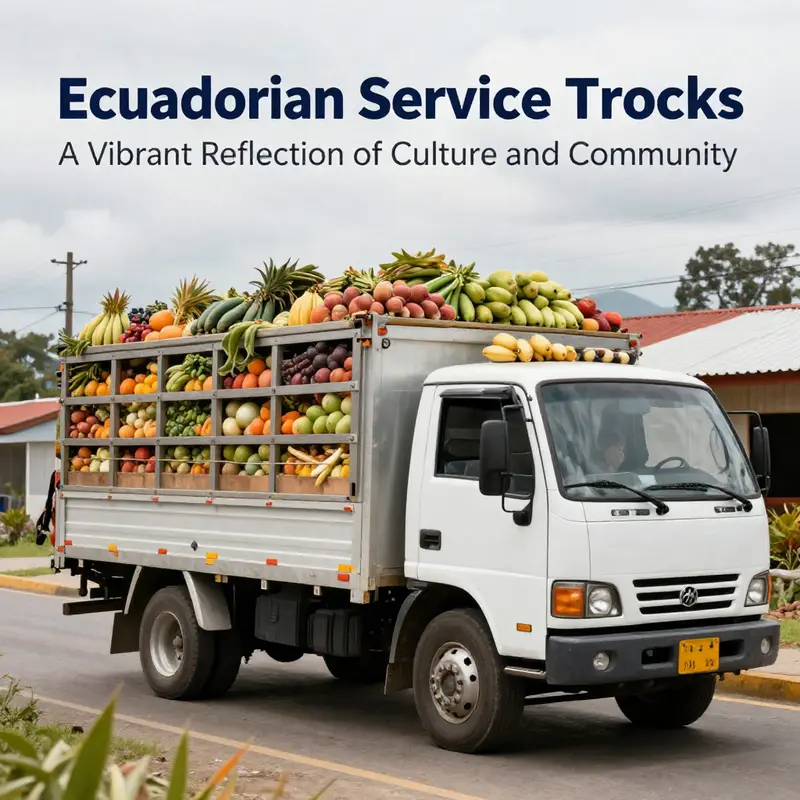
Refrigerated trucks bring another crucial layer to the economic equation. The introduction and expansion of temperature-controlled compartments on service fleets address a decisive bottleneck in Ecuador’s agro-industrial complex. Perishables such as meat, dairy, and fresh produce require stable temperatures to preserve quality from farm gate to export markets. The ability to maintain cold chains en route to processing centers and ports reduces spoilage, extends shelf life, and broadens access to higher-value markets that demand stringent food-safety and quality assurances. For farmers and cooperatives, cold storage capability translates into better price realization and more predictable revenue streams. It also encourages diversification of crop choices and the adoption of export-oriented practices at the farm level, since producers can be confident that their products will arrive in good condition. The economic impact reverberates along the value chain: growers invest in post-harvest handling improvements, packaging firms align to meet export standards, and logistics operators upgrade their fleets with insulated vans, reefer containers, and associated monitoring systems. In tandem with murals that celebrate the agricultural heritage of the country, the refrigerated fleet embodies a modernization narrative that harmonizes cultural identity with value-added production and compliance with international standards.
Local manufacturing and aftermarket ecosystems form the backbone of these dynamics. The demand for specialized service trucks—especially those built to accommodate heavy loads and cold storage—has a cascading effect on local industry. It spurs the production of chassis components, cooling units, refrigeration systems, insulation materials, and the software and sensors that enable telematics and fleet management. Skilled tradespeople—assemblers, electricians, panel beaters, painters, and technicians—build and maintain a fleet that is both sturdy and expressive. The aftermarket for spare parts and maintenance services thrives in cities and towns where fleets cluster, creating sustained employment and a resilient regional economy. Even the choice of paint and mural technique can influence part inventories and workshop workflows, as designers push for materials that resist weathering and extend the aesthetic life of the artwork without compromising the vehicle’s structural integrity. In this regard, the painted truck is not a single product but a moving platform for a local industrial ecosystem, a catalyst for skilled labor, and a living advertisement for the communities it traverses.
Technology integrates with culture in a way that underscores the modernity embedded in Ecuador’s trucking heritage. The adoption of GPS tracking, fuel monitoring, and telematics has gradually become a standard feature of many fleets, enabling route optimization and better fuel efficiency. Even as drivers navigate challenging terrain and ever-changing delivery windows, digital tools help crews choose the most economical paths, anticipate weather-induced delays, and coordinate with customers in real time. The juxtaposition of cutting-edge logistics technology with hand-painted aesthetics creates a compelling narrative about balancing tradition with progress. In practice, digital systems can actually enhance the value of the murals by ensuring the vehicles remain on reliable schedules, thereby increasing the perceived reliability of the whole service. Fleet managers can allocate resources more precisely, reduce downtime, and pass these savings back to customers, strengthening the competitiveness of the broader transport sector and ensuring that the cultural charm of painted trucks remains compatible with modern efficiency standards.
The social and economic ripples of painted Ecuadorian service trucks reach beyond the balance sheets of transport companies. They contribute to a sense of place—an identity that resonates with local markets, farmers, and small-scale suppliers who rely on constant, dependable access to goods and services. The visual landscape created by murals helps anchor the perception of transportation as more than a commodity; it is a key component of regional storytelling and pride. This intangible asset can translate into tangible advantages, such as preferential treatment in crowded logistics hubs, easier local collaboration with municipal authorities, and heightened trust among customers who want not only a timely delivery but also a connection to the cultural fabric of the regions they serve. Discussions about economic resilience in transport increasingly acknowledge these non-monetary gains as part of a holistic assessment of value—from brand equity and customer loyalty to workforce retention and community investment. The painted truck, therefore, functions as a microcosm of how culture and commerce can co-evolve, each reinforcing the other in a feedback loop that sustains both livelihoods and regional character.
To place these dynamics within the broader framework of industry trends, it helps to consider how macro forces shape fleet composition and investment choices. A broader frame for these dynamics is offered by Key economic trends impacting the trucking industry, which discusses how freight demand, fuel costs, and regulatory changes influence decisions about equipment, routes, and maintenance. That context illuminates why a country like Ecuador, with its distinct topography and export profile, leans into a combination of rugged, high-capacity trucks and specialized cold-chain capabilities, all while preserving the aesthetic language that makes its trucks uniquely recognizable on the road. In other words, the painted truck is a practical instrument of distribution, a platform for local employment, a catalyst for small- and medium-sized enterprise growth, and a public-facing expression of regional identity that can help the economy navigate volatility with a degree of resilience that purely utilitarian fleets often lack.
For readers who want to explore the technical side of these vehicles, the detailed specifications and design considerations that support their rugged performance and reliability are available in external resources. For a more technical overview of Ecuadorian truck design and equipment, see the following external reference: A Technical Overview of Camiones Ecuador – Truck – Alibaba.com.
On the Painted Road: The Cultural Lifeline of Ecuadorian Service Trucks
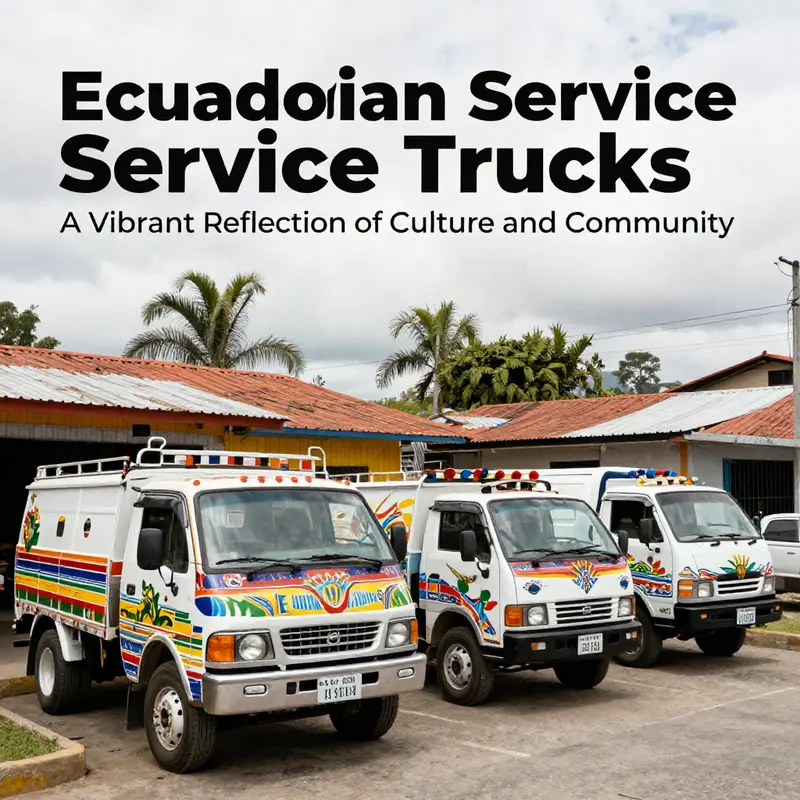
Along the winding streets and sunlit highways of Ecuador, a fleet of service trucks moves with a different kind of propulsion than engines alone can provide. They carry not only goods, spare parts, medical supplies, and agricultural tools, but also memory, community pride, and a sense of place that travelers rarely notice at first glance. The trucks themselves are a kind of cultural archive, a rolling gallery that merges practicality with artistry in a way that feels distinctly Ecuadorian. What makes these vehicles truly unique is not merely their ability to navigate rugged terrain or to deliver essential services in remote towns; it is the way they transform the everyday act of transportation into a form of public storytelling. Each vehicle becomes a canvas and, in a sense, a collaborator in a shared regional narrative that travels as steadily as its cargo.
The heart of this phenomenon lies in the intimate collaboration between truck owners and local artists. In many communities across the highlands and lowlands, skilled painters—often artisans with long-standing ties to neighborhood workshops—work side by side with drivers, operators, and shopkeepers to envision a design that speaks to regional identity. The process is not a simple paint job but a dialogue: owners present what matters to them—landscapes featuring soaring volcano silhouettes, rivers that sustain farms, or urban scenes from daily life—while artists translate those ideas into vibrant murals. The result is highly personalized fleets where no two trucks quite resemble one another. The murals might honor a patron saint or celebrate a local harvest, but they can also nod to contemporary stories, such as political slogans or popular motifs, all of which travel with the vehicle and broadcast a message to onlookers at every bend in the road.
This hand-painted tradition is more than decoration. It serves a practical purpose in a country with varied weather, mixed road quality, and diverse traffic conditions. The bright pigments—often layered in bold palettes of turquoise, marigold, emerald, and cobalt—boost daytime visibility, aiding safety on winding ridges and congested city streets alike. Yet the intensities are not simply about catching a driver’s eye. The colors and patterns encode information about origin and function. A truck spotted near a particular town may carry murals that reference the local landscape or the agricultural cycles that sustain nearby communities. A service vehicle making a medical supply run might feature medical emblems woven into the scenery, so that even from a distance, its purpose is legible in the public realm. This integration of design and function creates a visual language that is instantly legible to locals and resonate with travelers who pass through.
The motifs themselves reveal a layered citizenry of Ecuadorian life. Murals depict sweeping Andean vistas—glacial snows, terraced fields, and volcanic silhouettes—alongside intimate portraits of ancestors and indigenous symbols that carry collective memory across generations. Religious imagery—altars, saints, and devotional scenes—appears not as mere ornament but as reaffirmation of shared values and daily rituals that accompany people on the road. Political messages appear with a softer edge than billboards, embedded within landscapes or allegorical scenes that speak to struggle, resilience, and community agency without erasing the humor and warmth that characterize daily life here. Even the more playful elements—references to local music, folklore, or pop culture—become cultural signposts, inviting a smile from a driver stuck in a long queue or a child peering out from a village storefront.
In rural areas, where these trucks often serve as vital links between remote communities and urban centers, the murals carry an additional layer of meaning. They are not just adornments; they function as road-signnage of a sort, a visual map of regional identity and social networks. The painted surfaces announce who owns the truck, what services it provides, and where it has walked or will go next. A farmer on a ridge route may recognize a truck by a signature flower or a favorite animal motif painted on its side, instantly recalling the producer associations, seasonal cycles, and local suppliers that make transportation possible in a landscape where every kilometer can be a challenge. When a truck arrives at a rural clinic or a cooperative market, the art offers a sense of welcome and continuity, signaling that aid and exchange are near even when the terrain feels isolating. In this way, these vehicles participate in a social economy that binds people through shared symbols and familiar scenes, turning a routine journey into a reconnection with community identity.
The hand-painted trucks also illuminate a broader cultural phenomenon: the transformation of everyday objects into mobile spaces for storytelling. In Ecuador, the boundary between art and utility remains porous, and the truck becomes a portable stage for narratives that communities choose to tell about themselves. The paintwork is rarely a static backdrop; it evolves with the life of the vehicle and the driver. A truck might receive a new mural to commemorate a passing season, a milestone in a family business, or a local festival. The personal touch—painters and owners collaborating to weave personal history into a public display—ensures that the truck remains a living symbol, not a museum piece. In this sense, the road becomes a moving gallery, and the vehicle a traveling ambassador for a community’s memory and ambitions. The experience of watching such a fleet glide by—where a single side panel can reveal a small village’s landscape, a political message, and a religious emblem in one glance—offers a rare glimpse into how culture travels as nimbly as freight across the country’s diverse geographies.
Artist collaboration also sustains a local economy that might otherwise be overlooked in discussions of integral infrastructure. The craft sustains livelihoods, supports apprenticeships, and preserves a repertoire of techniques that have been handed down through generations. The paints and brushes, the preparation of wooden or metal panels, and the careful layering that ensures murals withstand sun, rain, and the wear of long journeys—all of these aspects connect art to the logistics of movement. For many families, painting a truck is a shared project that brings together multiple generations—parents passing on tricks of color mix and brush control to their children, siblings coordinating symbolism with the owner’s business narrative, and elders offering guidance about precinct loyalties that should be honored on the vehicle’s surface. This intergenerational exchange underscores a broader social fabric: art as a practical craft, education as a path to craft mastery, and artistry as a means of sustaining a region’s cultural vocabulary while keeping commerce in motion.
The aesthetic choices made on these trucks—color quality, line work, symbolism—are influenced by regional climates and road conditions. In high-altitude zones where sunlight is bright but the air is thin, bold contrasts help the designs endure and remain legible at speed. In rain-prone valleys, artists often employ waterproof coatings and protective sealants that keep murals vibrant through shifting weather patterns. The durability of the artwork is a practical concern as much as a creative one; it speaks to a deep respect for the vehicle as a long-term companion on the road. Because these trucks live in the public sphere, their maintenance and care are visible acts of stewardship. The owner and the painter may agree to touch-ups during slow seasons, or to rework a fading panel to refresh the truck’s identity in time for a market or festival. This ongoing care reinforces a shared sense of responsibility: to keep the truck’s serviceable life aligned with its cultural life, ensuring that a useful machine carries forward a cultural memory that the next generation can inherit and adapt.
The social energy that animates painted service trucks also sheds light on how mobility shapes social cohesion. In Ecuador, where terrain can constrain access to markets, health services, and educational opportunities, these trucks perform a bridging function that extends beyond the cargo they carry. They help knit together dispersed communities by enabling regular, dependable contact between rural areas and urban hubs. The murals serve as a constant reminder that distant places are connected and that people from different corners of the country share a common cultural language—one that is spoken with color, form, and humor as much as with spoken word. The trucks’ visibility makes them recognizable landmarks on long routes; children growing up in remote towns may learn to identify a particular color scheme or motif and associate it with a familiar stop, a trusted shop, or a family business. In that sense, each truck contributes to a broader sense of place. The road becomes not only a route for goods but a corridor of shared identity, where the landscape and the vehicle’s art imprint a region’s presence on the national imagination.
From a broader economic perspective, these painted fleets illustrate how culture and commerce can mutually reinforce one another. They challenge a dichotomy often drawn between utilitarian fleets and aesthetic movements by showing that cultural expression can coexist with, and even enhance, operational efficiency. The murals can function as informal branding—creating recognizable silhouettes that differentiate a service provider in crowded markets, attracting attention from potential customers, and strengthening loyalty in communities that might otherwise rely on word of mouth alone. Yet the value goes beyond marketing: the art sustains an ecosystem of local artisans whose livelihoods depend on ongoing commissions from truck owners who regard beauty as a form of social capital. The mutual dependence of owner, painter, and community creates a resilient model where transportation, craft, and culture circulate together, in a rhythm that keeps both the road and the town in lively contact.
There is a quiet, almost ceremonial aspect to the presence of painted service trucks on Ecuador’s roads. They announce a way of seeing the country that centers on shared spaces and shared stories. The road carries not just commerce but memory: the memory of places traversed, people met, and challenges overcome. In this way, the trucks become emissaries of regional identity, transporting a sense of belonging as reliably as any cargo. The painted surfaces invite interaction, a chance meeting with a passerby who recognizes a motif from a grandmother’s tapestry or a village crest incorporated into the design. Those small encounters accumulate into a larger social texture—the impression that mobility and culture are inseparable forces in Ecuador’s everyday life. This perception shapes how locals approach travel, work, and community life; it also shapes how people imagine the future of their transport networks: more than machines moving things from point A to point B, they are vessels of continuity, pride, and shared purpose.
For readers who want to situate this phenomenon within broader industry discussions, it helps to consider how such cultural fleets coexist with modernization and global supply chains. The electrification of transport, safety regulations, and cross-border trade pressures are reshaping the way fleets are designed and operated worldwide. Yet in Ecuador, the painted service truck embodies a countercurrent—a reminder that efficiency can travel with soul, and that practical infrastructure can be deeply entwined with cultural practice. It is a compelling case study in how a nation preserves local character while engaging with larger economic currents. In conversations about the trucking sector’s evolution, these vehicles offer a humanizing counterpoint to dashboards and telemetry, illustrating how people, place, and craft sustain a country’s mobilities in the face of changing times. The tension between modernization and tradition becomes not a rigid divide but a dialogue, with the painted truck as a mediator speaking in color, line, and story across the landscape of daily life.
The influence of these mobile canvases extends beyond their borders. As travelers dip in and out of passable routes and as regional markets pulse with color, the trucks contribute to a grid of cultural exchange that complements formal channels of trade and infrastructure planning. They remind policymakers, scholars, and industry observers that transportation systems are not merely about moving goods efficiently; they are about enabling communities to flourish, preserving memory, and validating local identity in a globalized economy. When a driver leans toward the curb to greet a village artisan who recently added a new panel to the fleet, the moment crystallizes the idea that mobility and culture are inseparable allies. In the heart of Ecuador’s service networks, the painted truck is not a decoration of convenience but a living symbol of how a people move forward together, keeping faith with their past and hope for their shared future.
As this chapter closes, the road ahead invites continued observation. How will emerging materials, evolving safety standards, and shifting economic pressures influence the craft of painting service trucks? Will the art form maintain its raw, handmade character in the face of mass production and digitization, or will it adapt by embracing new techniques while preserving its essential spirit? The story of Ecuadorian service trucks suggests a resilient model in which culture, labor, and transportation weave into a single, moving fabric. It is a reminder that the most meaningful aspects of our infrastructure often lie in the spaces where art meets utility, where a hand-inked mural on a weathered door becomes a beacon for a community on the road.
For readers exploring related economic and logistical themes, consider the broader context of trucking trends and how they intersect with cultural practices in different regions. The discussion around Key Economic Trends Impacting the Trucking Industry can shed light on how industry-wide shifts may influence the way communities choose to decorate and utilize their fleets, including the balance between aesthetics, safety, and efficiency. External observers can also consult market data and procurement patterns that accompany changes in fleet composition and service models across diverse geographies. An additional point of reference for those curious about how global markets intersect with local crafts is the broader spectrum of heavy-duty trucking options available in various regions, which can be explored through industry directories and supplier platforms such as Alibaba’s listings for heavy-duty trucks in Ecuador. This external resource provides background on the scale and variety of vehicles in use, helping to juxtapose industrial norms with the distinctive cultural practice observed on Ecuadorian roads.
External resource: Alibaba’s catalog on heavy-duty trucks in Ecuador. https://www.alibaba.com/trade/search?keywords=heavy+duty+trucks+Ecuador
Final thoughts
Ecuadorian service trucks offer a captivating glimpse into the intersection of culture, artistry, commerce, and community identity. These vehicles encapsulate narratives that resonate deeply within local and national contexts. As they transport goods, these painted trucks also carry the spirit of Ecuador—both in their designs and the stories they tell. Recognizing their significance can inspire businesses looking to engage with Ecuador’s vibrant market dynamics, ultimately leading to more meaningful connections and sustainable practices.