
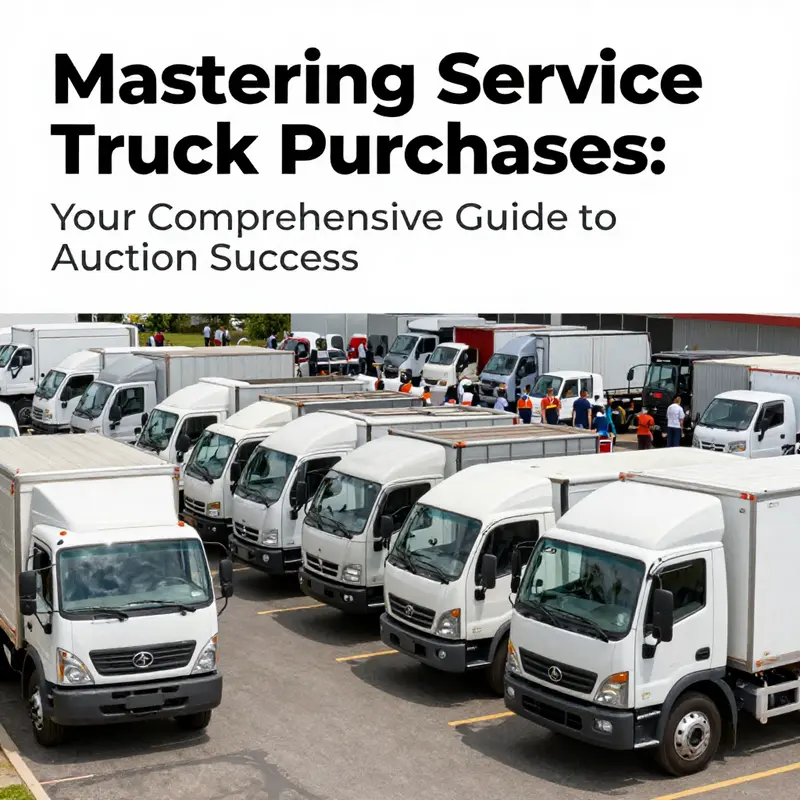
Acquiring service trucks through auctions can present a significant opportunity for businesses in manufacturing, retail, construction, and logistics. Understanding the nuances of the auction process is essential for making informed purchasing decisions that align with your operational needs. This guide delineates a comprehensive roadmap—from researching reputable auction platforms to finalizing your purchase—supporting small business owners and large firms alike. Each chapter will empower you with knowledge to navigate this critical buying experience, ensuring that your investment in service trucks is both strategic and rewarding.
Buying Service Trucks at Auction: A Practical Guide to Value
Buying service trucks at auction can be a cost-effective way to expand a fleet. The key is preparation, disciplined bidding, and a clear post-sale plan that turns an auction win into reliable service.
Start by defining your actual needs: chassis type, wheelbase, payload, and storage for tools and equipment. Consider how the truck will be used daily, weather conditions, and typical travel distances to avoid chasing flashy features that don’t add real value.
Research the auction platform and asset condition. Look for listings with clear photos, maintenance records, and independent condition reports. When possible, obtain a pre-purchase inspection and verify odometer accuracy, tire wear, brakes, and signs of prior damage. Use these findings to build a conservative price target that includes transport, taxes, and potential reconditioning.
Understand the bidding process. Pre-register, provide identification, and be aware of buyer’s premiums and payment timelines. Set a maximum bid based on documented condition and a realistic cost of ownership. Stay disciplined and avoid emotional bidding.
If you win, arrange prompt payment and transfer of title, then plan the vehicle’s path to readiness: transport, basic servicing, and a checklist for initial maintenance. A well-documented maintenance history and a practical post-sale plan can help you realize the asset’s value over its useful life.
Riding the Bidding Curve: A Cohesive Path Through Service-Truck Auctions
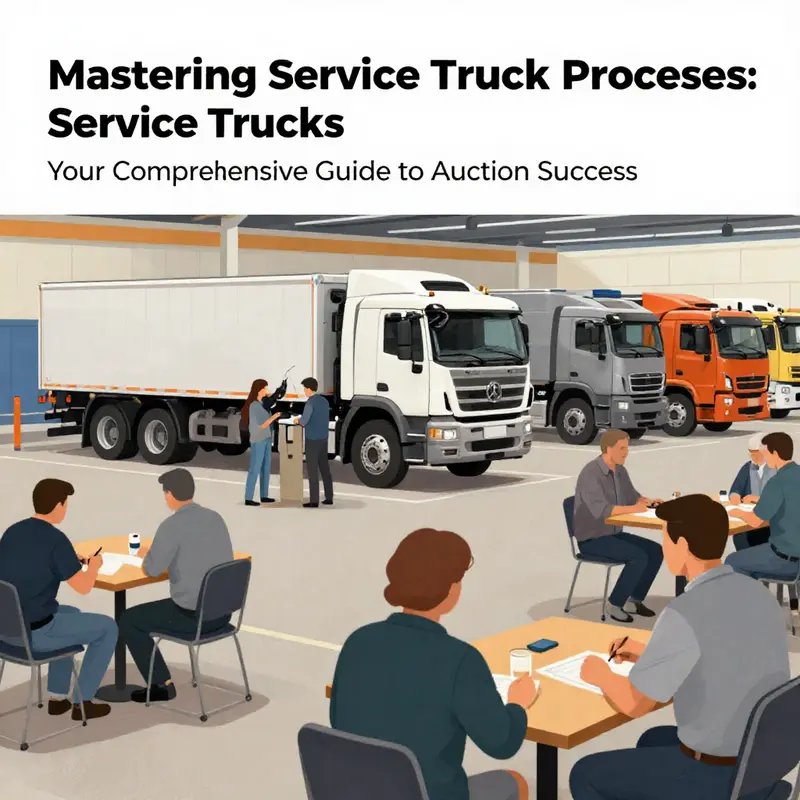
When a fleet manager looks at the prospect of adding service trucks through auction, the mind often gravitates toward the thrill of a competitive bid. Yet the real work happens long before the gavel falls. A successful purchase is less about luck and more about disciplined preparation, thorough inspection, and a calm, strategic approach to bidding. In the auction hall of options, service trucks move quickly from listed asset to potentially redone workhorses, so the buyer’s job is to translate detailed listings and transparent data into a realistic valuation. The process unfolds in two broad rhythms: the pre-auction phase, when every item is catalogued and scrutinized, and the live or online bidding phase, where plans are tested against the moment’s marketplace reality. Understanding these rhythms is the first lesson in turning an auction into a reliable acquisition, not a gamble.\n\nPreparation begins with a clear vision of what your operation actually needs. A service truck is more than a chassis and an engine; it is a mobile workshop, a nexus of tools, hydraulics, and reliability. Start by identifying reputable platforms that specialize in commercial or service vehicles and that publish detailed listings. Look for platforms that emphasize vehicle history, comprehensive specifications, photos, and, if possible, independent inspection reports. A robust preparation habit means assembling a short list of candidates that fit your core requirements: payload capacity, crane or lifting equipment if needed, wheelbase and turning radius suitable for your yard and routes, and, importantly, anticipated maintenance costs. The right platform will also publish the essential terms of sale, such as deposits, buyer’s premiums, and the applicable tax or registration considerations. While brand names may come to mind, the essence is platform reliability, transparent reporting, and consistent post-sale support. It helps to map out your budget in advance, including a cushion for reconditioning or minor repairs that every used vehicle often requires. Having these guardrails in place turns the auction into a disciplined exercise rather than a hopeful sprint.\n\nThe pre-auction phase is the backbone of a confident bid. Listings surface weeks before a live event or an online session, delivering vital details about model year, mileage, service history, and any known issues. A well-maintained record keeps you out of the danger zone—vehicles with vague histories or incomplete documentation. For most buyers, the listing also sketches the start price and the expected bidding ranges, along with the required documentation to participate. A crucial element is the vehicle’s history report and any maintenance notes that reveal recurring problems or prompt-for-repair patterns. You want to identify silent costs early, such as potential transmission work, brake-system refurbishments, or tire replacements that will affect total cost of ownership. In this calm, data-rich phase, you should also verify the auction rules that apply to your region and your status as a bidder. Some platforms require a refundable security deposit to qualify for bidding, while others impose buyer’s premiums that add a meaningful layer to the final price. Knowing these details keeps you from miscalculating the total investment once the auction begins. Where possible, supplement the catalog with video inspections or third-party assessments. These insights often reveal the vehicle’s true condition in ways a static photo gallery cannot. The pre-auction window, then, is a testbed for your judgments—who you are as a buyer, what you value, and how deeply you are willing to commit to this particular asset.\n\nThe inspection process itself is a disciplined ritual. Before you ever click a bid, you want a clear, repeatable checklist that moves beyond a glance at the odometer. A service truck’s readiness hinges on core mechanical elements: the engine’s health and startup behavior, cooling and exhaust integrity, the clutch and transmission’s responsiveness, the brake system’s reliability, and the integrity of the chassis and suspension for rugged duty. If the truck features specialized equipment—lifts, cranes, compartments, or hydraulic systems—each should be tested for operation, leakage, and control. Tire condition matters in both safety and cost analyses, since uneven wear or bald patches can foretell expensive alignment or replacement needs. Don’t overlook electronics and wiring, especially for fleet vehicles that rely on diagnostic tools and monitoring devices. In the best-case scenario, a video inspection or a live video walkaround offers a rich, transparent view of the vehicle’s current state. Any signs of rust, frame damage, fluid leaks, or inconsistent maintenance history deserve careful accounting. If you can arrange an in-person visit, bring a trusted technician or a knowledgeable colleague who can interpret the truck’s signals with you. If travel isn’t feasible, a credible third-party inspection report can fill substantial gaps, but you should weigh its conclusions against your own risk tolerance and budget. The goal is to reduce uncertainty to a manageable level, not to chase a perfect example of a truck that may never exist in the marketplace.\n\nAs the bid begins, the actual bidding strategy emerges as a disciplined practice. Registration and verification are prerequisites; a refundable deposit is often required to qualify for bidding, and buyer’s premiums add to the final price. Your plan should be anchored in a maximum valuation that already accounts for anticipated reconditioning, potential warranty options (when available), and after-sale logistics such as title transfer and transportation to your facility. The most effective bidders resist the impulse to chase emotional wins and adhere to the price discipline you established in advance. Some buyers prefer establishing early momentum to set the pace, especially when competing for high-demand units; others lean toward a late-bid strategy, intending to outlast competitors in the auction’s closing moments. Either approach can work, but only if it aligns with your pre-committed ceiling. Remember that the auction’s pace can intensify as the end nears, and that a single bid can trigger a cascade among others who fear losing a desirable asset. That is where a well-defined limit becomes your most powerful tool, enabling you to walk away when the numbers exceed your declared threshold.\n\nBeyond the mechanical and financial considerations, the auction experience creates a web of practical support that you should leverage. The auction house often provides verification services, documentation assistance, and help with title transfer and transport arrangements. These services can streamline a process that otherwise might erode your timeline or complicate compliance. The winning bid alone does not mark the end of the journey; it marks the transition to securing title, coordinating transport, and registering the vehicle for use in your operation. Depending on jurisdiction, title transfers can involve specific forms, lien releases, or additional steps to ensure clean ownership. A responsible buyer does not assume that the line between purchase and operation is seamless. Instead, it is prudent to establish a post-sale checklist that covers title documentation, registration with the appropriate authorities, proof of insurance, and a feasible delivery plan that minimizes downtime for your fleet. This is where a robust relationship with the auction house pays dividends, because staff can guide you through the paperwork and coordinate logistics, from warehouse-to-worksite to minimize disruption.\n\nThe competitive landscape at auctions also requires an awareness of regional rules, especially for public or government sales. In some markets, bidders may need to participate in person or submit written bids in advance, and the rules can shift between jurisdictions. If your operation stretches across borders or involves cross-border regulatory considerations, you want to be extra meticulous about compliance and documentation. The calm, informed buyer remains the one who checks every box—the listing details, the inspection results, the deposit requirements, and the post-sale services—before stepping into the bidding arena. In this light, auctions are not a risky leap but a structured route to acquiring a vehicle that fits a fleet’s needs and a budget’s constraints. When data aligns with intuition, when inspection confirms the vehicle’s viability, and when the logistics plan is in place, a bid becomes a calculated move rather than a roll of the dice. For those who want to understand broader market dynamics while preparing, a good guiding resource is the broader context of trucking industry trends, which can illuminate where depreciation curves and maintenance costs are heading in the coming years. Key economic trends impacting the trucking industry can offer a useful frame for deciding how aggressively to bid on a service truck that will underpin critical operations rather than gather dust in a yard.\n\nIn the end, a successful service-truck purchase at auction hinges on synthesis: the synthesis of reliable data, disciplined financial planning, honest inspections, and a practical approach to post-sale obligations. You learn to read the listing as a contract with reality, to treat the pre-auction phase as a test of your reconnaissance work, and to treat the bidding moment as a controlled exercise in time and value. The vehicle you win should arrive with a clear path to integration into your operations, with maintenance plans mapped out, spare parts identified, and a realistic forecast for uptime. The whole journey—preparation, inspection, bidding, and after-sale logistics—becomes a cohesive workflow designed to deliver not just a suitable asset, but a reliable and efficient component of your service capability. When viewed through that lens, auction procurement transforms from a speculative risk into a calculated investment in capacity, reliability, and the ability to meet customers’ deadlines with fewer stoppages. And as the market shifts, the disciplined bidder who combines data, due diligence, and practical logistics will remain poised to seize desirable opportunities while safeguarding cash flow and operational continuity.\n\nExternal resource: Manheim – How Vehicles Are Prepared for Auction. https://www.manheim.com/vehicle-auctions/vehicle-preparation
The Pre-Auction Lens: Thorough Inspection as Your Best Bet in Service-Truck Auctions
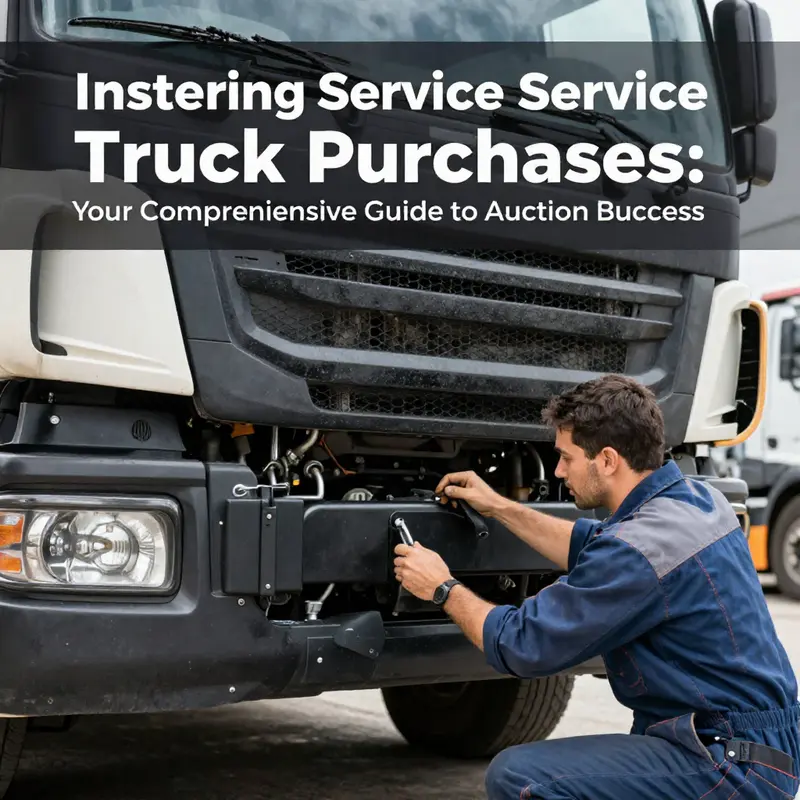
When you buy service trucks at auction, the most cost-effective way to protect your capital is to start with a rigorous, disciplined inspection before you place a bid. Listings and photos can tell a story, but they rarely reveal the full truth about wear, damage, or hidden maintenance quirks. A structured, methodical inspection acts as a preflight check for a potential asset, turning what could be a risky gamble into a calculated purchase. The aim is not to find a vehicle that looks perfect, but to identify the one whose condition aligns with its value, its intended use, and your tolerance for future upkeep. A thoughtful pre-auction inspection also smooths the bidding process, because you enter the room or the online arena with concrete data, a realistic assessment of remaining life, and a firm ceiling in mind that respects your budget and your operation’s needs. This is the quiet discipline that separates smart buyers from those who chase headlines or star ratings on a glossy listing page.
The backbone of a sound inspection rests on several overlapping layers. Start with documentation; move through the visual and mechanical realities you can observe; then verify functional capabilities that matter to a service operation. Each layer reduces the mystery that accompanies auction purchases and increases your negotiating clarity when the bid clock starts. The distinction between a well-documented truck and a poorly documented one often translates directly into total cost of ownership. Documents can reveal patterns you might miss in a quick glance: recurring mechanical issues, gaps in service history, or title concerns that complicate ownership. Before you even reach the vehicle, you should demand access to service logs, maintenance records, accident reports, and title status. This is not about collecting paperwork for the sake of form; it is about building a narrative of reliability or risk that informs your maximum bid and the strategies you will deploy during the auction.
Beyond the paperwork, a careful visual appraisal helps you read the truck’s history through its physical condition. On the exterior, look for telltale signs of past bodywork, mismatched paint, or rust that might indicate more serious structural issues. Dents and rust can mask frame or suspension problems that escalate under heavy use. Check tires with an expert eye: tread depth and wear patterns can reveal how the truck was operated and whether the tires have been appropriately rotated or replaced. Uneven tread wear might signal alignment problems or suspension defects. While tire condition is not a sole determinant of value, it does affect safety, fuel efficiency, and uptime. Windows and lights deserve attention as well; cracked glass or failing lights can be more than cosmetic hurdles, potentially complicating regulatory compliance or even inspection in certain jurisdictions. The aim is not to chase perfection, but to form a practical picture of what it will take to bring the truck into service without catastrophic surprises.
Toward the mechanical core, engines and transmissions offer the most consequential clues about long-term reliability. Begin by examining the engine bay for oil leaks, cracked hoses, and frayed belts. A started engine can reveal noises, rough idle, or smoke that would otherwise surface only after the vehicle warms up. Listen for knocks or ticking that persist after the engine reaches operating temperature. These sounds can be early indicators of valve or bearing wear, and chasing them later can be costly. When you test transmission behavior, shift smoothly through gears and assess for hesitations, slips, or vibrations. If the vehicle has an automatic transmission, note any delayed engagement or harsh downshifts; for manuals, check clutch engagement and the transmission’s responsiveness during the shift. Suspension components deserve equal attention, especially shocks and struts. A soft, bouncing ride or clunking noises during a road test can point to worn bushings, damaged control arms, or deteriorated mounts. A stable steering feel with minimal play is essential, because excessive steering looseness translates into margins of error during actual work, which, in turn, affects safety and efficiency on the road or job site.
The undercarriage deserves a careful, unhurried glance. A lift or a pit, if available, provides a vantage point to inspect frame rails, cross members, and drivetrain mounts for corrosion, cracks, or signs of past repairs. In service trucks, the front and rear frames experience stress from heavy tools, hydraulic lifts, and ladders. Any welds that look suspicious or fatigue cracks around joints should raise a red flag. This part of the inspection is not about cosmetic appeal but about the structural integrity that determines how long the truck will keep working without costly downtime. You should also check brake lines, calipers, and wheel cylinders for leaks or wear. Brake performance is critical not only for safety but for the vehicle’s ability to perform its intended tasks in a timely fashion. While you may not be able to perform a full endurance test in the auction hall, a thorough pre-auction inspection equips you to plan a post-purchase field test and a realistic maintenance budget.
Functionality testing is the bridge between inspection and operation. If the auction allows a road test or a demonstration, take advantage of it. During a road test, evaluate acceleration, braking response, steering accuracy, and overall handling. Listen for unusual sounds that appear only under load, such as ribbed whines from wheel wells or drivetrain vibrations that intensify with speed. For service trucks equipped with specialized equipment, verify the operation of hydraulic lifts, tool storages, work lights, and any onboard diagnostic systems. In many cases these systems are the difference between a truck that merely drives and a truck that delivers reliable service every day. If a live demonstration isn’t possible, request video inspections that show the equipment in operation. The more you can observe in action, the better your understanding of potential maintenance triggers and the likelihood of downtime that could disrupt a busy service schedule.
As with any major asset purchase, compliance and safety standards are non-negotiable. The vehicle must meet current safety requirements and emission standards where applicable. Review the truck’s safety features and confirm that crucial elements such as seat belts, airbags, lighting, and reflectors are functional. Check for compliance with local and national regulations that govern commercial vehicles and their equipment. This becomes especially important if the truck will operate across borders or in regions with stringent inspection regimes. If the inspection uncovers uncertain areas, documenting them clearly supports negotiations or post-auction clarifications with the seller. In some cases, buyers bring a certified inspector to the process, which can reveal hidden issues beyond what a lay observer would notice. A professional assessment helps us avoid emotional decisions and keep the bid aligned with a rational cost of ownership.
The value of a disciplined inspection extends beyond the immediate purchase. It informs the pricing model you will apply during the auction. You will want to quantify potential repair costs, downtime, and the impact on resale value. For instance, if the inspection reveals a healthier engine and solid frame but tires that are near their end, you can adjust your bid to reflect the pending tire replacement cost rather than overestimating the asset’s current value based on cosmetic appeal. It also helps you calibrate how much risk you are willing to shoulder. If major components show ambiguity or imminent need for attention, you may decide to walk away instead of chasing a price that does not leave you room for repairs, logistics, and regulatory compliance. The goal is a bid that protects your operation’s uptime and budget, not a ticket to a surprise expense that erodes profit margins.
For buyers who want additional assurance, consider engaging a neutral inspector with experience in service trucks. A professional can provide a detailed assessment report that complements your own observations and creates a robust record for your finance team or partners. Their expertise often uncovers issues that are invisible to the untrained eye, such as hidden corrosion in structural members, subtle transmission wear, or electrical system quirks that require software updates. If you choose to rely on a third party, ensure their scope of work aligns with the vehicle’s intended use and that you obtain a written estimate of any recommended work, along with timing and cost. This level of due diligence is an investment that pays back when the winning bid is followed by a smooth handover and recipient-ready vehicle for the road or the shop floor.
As you translate inspection findings into a buying plan, a practical step is to reference relevant industry discussions and maintenance trends that mirror the realities of your own fleet. A deeper look at maintenance discipline and strategic upkeep for larger operators is explored in the article on Private Fleets Trends in Trucking Maintenance. This resource helps you connect the inspection outcomes to a broader perspective on how professional fleets manage upkeep, set maintenance windows, and plan for capital expenditures. Such context helps you set a rational ceiling for bids, grounded in the operational realities you will face after purchase. When you prepare to bid, document every finding with photos and clear notes tied to specific components, then translate those notes into a pre-approved budget and a maximum bid. The pre-auction moment is when the story you have assembled becomes your negotiation leverage, and the clarity you bring to the process reduces the chance of overpaying for a vehicle whose most significant value lies in what you can extract from it after it returns to service.
To anchor your approach further with external guidance, consult authoritative safety and inspection standards from national regulators. Official resources from the Federal Motor Carrier Safety Administration and related agencies provide the baseline expectations for commercial vehicles and help you verify that the vehicle meets current safety and environmental requirements. For formal guidelines, consult external resources such as the FMCSA’s official pages: https://www.fmcsa.dot.gov. This external reference complements your in-house diligence and the auction house’s disclosures, giving you a well-rounded view of how a service truck should perform under normal operating conditions and what a compliant, road-ready unit should look like in practice.
Sealing the Gavel: Mastering Registration, Bonds, and Bidding for Service Trucks at Auction
Entering the world of service truck auctions demands more than a willingness to bid; it requires a disciplined approach to registration, funds readiness, and a clear bidding mindset. The journey begins with selecting a credible platform that specializes in commercial vehicles and that provides transparent listings, detailed vehicle history, and easy access to inspection information. In practice, prospective buyers should look for platforms that publish model year, mileage, condition notes, and documentation weeks in advance, followed by a structured bidding phase that can be conducted in person or online. The best auction experiences hinge on a seller and an exchange that maintain audit trails and enforce fair play. Once a platform is identified, you move into the registration phase, which is designed to verify identity and ensure that bidders have the financial capacity to complete a purchase. The typical workflow starts with creating an account, verifying ownership of that account, and linking a payment method that can support the required bid bond. In many markets the bid bond acts as a security that confirms your seriousness and protects the seller from nonperforming bidders. The exact amount varies by platform and jurisdiction, but in a well documented example the bond is set at a specific sum that bidders must place before they can participate. Regardless of the exact figure, the principle remains constant: the bond signals intent and helps standardize bidding behavior. As you prepare to register, it is useful to have a plan for how you will manage deposits and follow up payments. Some platforms allow refundable deposits, while others apply the bond toward the final purchase price if you win. Either way, the funds must be readily accessible and verifiable through the platform s payment system. In many cases the registration experience forces bidders to verify their identity and to complete a simple due diligence checklist. This often includes confirming a valid business or tax registration status, providing contact information for the bidding entity, and agreeing to the terms of sale. It is essential to understand that the ability to bid hinges on a successful deposit and the capacity to meet subsequent payment obligations under the sale terms. The post registration phase also highlights the importance of understanding the bidding process itself. Bidders can participate in a live auction or a timed online session, depending on the platform and the asset. The auction rules typically specify starting bids, minimum increments, and the maximum allowed time for placing bids. Keeping your bidding within a pre determined budget is critical; emotional bidding tends to drive prices beyond practical value. A well disciplined bidder sets a maximum valuation for each asset and executes bids only up to that ceiling. This is where the value of preparation becomes evident. Before bidding begins, take time to review the vehicle details in depth. This can include the engine condition, transmission status, brake system integrity, suspension wear, tire condition, and the odometer reading. Where available, third party inspection reports or video inspections provide an additional layer of transparency. If you have the chance to arrange an in person or remote inspection, pay attention to the engine start up, idle quality, and any unusual noises. Check for chassis rust or structural concerns that could indicate hidden wear or past accidents. A thorough inspection helps you refine the numbers you carry into the bidding phase and minimizes the risk of overpaying for a fixer upper. The bid process itself is a delicate balance of timing and strategy. Some bidders prefer to establish early dominance by placing initial aggressive bids that signal confidence and deter others. Others choose a later strategy, waiting until the final moments to outbid competitors who hesitated or paused at previous price levels. Regardless of approach, it is vital to stay anchored to a pre determined maximum price. A sharp bidding strategy also involves understanding the platform s fee structure. Many auctions add a software service fee and a comprehensive service fee, each with its own percentage of the final sale price. For example, software service fees may range from a fraction of a percent to a few percent, while comprehensive service fees typically fall within a broader band. In practice these ancillary costs can push the total purchase price higher than the hammer price, so they must be incorporated into your valuation model before you place the first bid. When a bid is successful, the transaction moves quickly into the payment and transfer phase. The winning bidder is typically required to sign a sales contract immediately and arrange payment of the remaining balance within a defined window, often within 24 to 72 hours. The auction house or platform usually coordinates or assists with post sale tasks such as title transfer, registration, and transportation. It is essential to confirm the exact expectations with the auction house to avoid any miscommunication that could jeopardize the move from winning bid to ownership. In many jurisdictions the title transfer is contingent on full payment and the completion of any documentation required by the relevant motor vehicle authority. If you are purchasing in a cross border context, consider the additional regulatory steps that may apply. Import duty, export controls, and local registration requirements can add layers of complexity that slow down or complicate the process. These realities underscore the value of working with an auction partner that communicates clearly about what is included in the sale and what is required after the sale to get you onto the road. The landscape of service truck availability and pricing rarely sits in a vacuum. Market conditions, balance sheets of fleets, and maintenance needs all shape how aggressively a buyer should bid. To stay ahead, buyers should monitor broader market signals and industry shifts that influence demand and asset quality. For those who want to connect the dots between auction dynamics and industrywide trends, the broader field of economic trucking trends offers useful context. See a concise overview of these dynamics linked here economic-trucking-trends. Such perspectives help buyers calibrate their expectations around price volatility and asset availability, ensuring bids that reflect both the asset s intrinsic value and the current market rhythm. Of course no journey through auction buying would be complete without practical guidance on the mechanics of payment after the sale. In the example auction where the bid bond has been posted, the final purchase price is not the end of the cost; additional fees will apply. A typical breakdown includes a software service fee and a comprehensive service fee, each calculated as a percentage of the sale price. The combined effect of these charges can alter the total landed cost by a meaningful margin, especially on higher ticket assets. It is wise to budget for these fees alongside the hammer price so that the financial plan remains aligned with your procurement objectives. When payment is due, most platforms require you to settle through the same digital channel used for the bid bond, though offline options may be available if the online system experiences a temporary outage. In any case, ensure that you receive a formal payment receipt and a clear itinerary for vehicle pickup, transport arrangements, and title processing. The logistics of moving a service truck from auction location to your yard can be more complex than the bidding itself. Transport quotes, road taxes, and any necessary permits must be factored into the overall project timeline and cost. This is another area where the platform or auction house can provide guidance, particularly for buyers new to cross border shipments or local regulatory requirements. The most robust experiences come from auction houses that maintain open channels of communication and offer post sale support, from document handling to transport coordination. As you read the details of a given listing, consider how much support you will need to complete the purchase smoothly. If you are new to auctions, you may want to contact the auction house directly to clarify the rules, confirm deposit eligibility, and learn about any preferred inspection windows. The goal is to enter the bidding room with confidence, a precise plan, and a realistic sense of value for the asset you seek. And while it is tempting to treat auctions as a purely financial exercise, the practical realities of vehicle compliance and maintenance must also inform your decisions. Inspecting the asset, understanding the terms, and aligning your bids with your operational needs create a stronger foundation for a successful purchase that will translate into reliable service on the road. For those navigating the broader trucking ecosystem, the current market environment often signals where opportunities lie for acquiring service trucks through auction channels. A thoughtful buyer will combine technical diligence with market intelligence, allowing a bid that reflects both asset quality and strategic fit within a fleet plan. If you want further context on how these market forces translate into practical procurement decisions, consider exploring related industry insights linked earlier. External resource: https://www.taobao.com
Closing the Deal: Navigating Payment, Paperwork, and Pickup After Winning Service Trucks at Auction
When the gavel falls and the lot is yours, the work of turning a gleaming bid into a road-ready truck begins in earnest. Winning at auction is a milestone, but it is only the opening chapter of a more intricate process that blends financial precision, regulatory compliance, and practical logistics. The sequence that follows is not just about money changing hands; it is about transferring ownership, safeguarding value, and aligning every moving part so the vehicle can be put to work with minimal downtime. The journey from hammer to highway is a chain of carefully executed steps that demand discipline, clear timelines, and a realistic view of what is included and what remains the buyer’s responsibility. This is the moment to shift from bidding strategy to execution strategy, from wishful thinking about the truck’s condition to a concrete plan for payment, paperwork, and pickup that stands up under audit and across borders if needed.
The first imperative after the closing moment is payment, the fulcrum that proves the buyer’s commitment and unlocks the transfer process. In most auctions, the balance of the purchase price and any applicable fees must be settled within a defined window. This is not merely a formality; it is a required condition for moving the sale from “pending” to “completed.” The standard lineup of charges often includes the final balance, a commission or platform service fee, and, depending on the platform, a software service fee or other administrative charges. The exact amounts and timing can vary, but a five-business-day window is a common benchmark in many auctions that manage high volumes of commercial vehicles. Online payment through the auction portal is typical, leveraging secure methods that preserve an auditable record of the transaction. Failing to meet the payment deadline can carry serious consequences, including forfeiture of the deposit and the risk that the vehicle is offered again to other bidders. It may even trigger a reauction, complicating logistics and eroding the buyer’s certainty about delivery timelines.
With the financial side under control, the buyer must pivot to the administrative steps that solidify ownership and set the stage for legal transfer. Vehicle registration transfer, or title transfer, becomes the central administrative task. The buyer is almost always responsible for guiding this process, which means coordinating with the appropriate motor vehicle authority and ensuring that all required documentation is in hand. The costs associated with registration, taxes, and transfer fees are typically borne by the buyer as well, and the precise requirements can vary by jurisdiction. In some auctions, documentation requirements are spelled out in the sale notice or the platform’s terms. The buyer may be asked to present proof of identity, a proof of address, and other forms of verification designed to prevent fraud and to ensure the transfer can be completed without undue delay. It is important to read the notice closely and to prepare a complete packet of documents well in advance. The seller and the auction house may not guarantee that title transfer will occur automatically, particularly if there are outstanding liens, inconsistent records, or regulatory constraints. In such cases, the buyer bears the responsibility to navigate any impediments and to provide any additional information that a motor vehicle department might require. This is not a reflection on the auction house; it is a reminder that ownership transfer is a legal act whose success depends on accurate paperwork and compliance with local rules.
Beyond the basic transfer, some transactions may require an additional piece of the puzzle: an offering deposit or a performance bond. While not universal, this extra layer can appear when the seller or the platform wants an added assurance that the buyer will follow through with the postauction obligations. The amount, if applicable, can be modest, but the timing is critical. The buyer might be required to submit this deposit within a short window after the auction’s close—sometimes within a few business days. Failure to comply with this condition can result in the forfeiture of all funds already paid, including the initial deposit. The risk is acute enough to warrant careful budgeting before bidding, so the buyer does not confront a penalties-driven scenario that could erode the margin of the acquisition.
As the financial and administrative steps align, attention turns to the practical matter of vehicle collection. Most auctions operate on an “as-is” basis, with limited or no warranty covering post-sale conditions. This reality underscores the importance of preauction due diligence—the inspection that informs bid sizing and the buyer’s assessment of risk. Once the funds are confirmed and the documents processed, the pickup or delivery becomes the focal point. The vehicle will be released from the auction facility to the buyer or an appointed transporter, depending on the arrangement. Before loading, a final physical check is prudent. Look for mismatches between the lot description and the actual vehicle, confirm odometer readings against the listing, and verify key mechanical components if possible. Since the vehicle is being moved into service, any remaining mechanical concerns should be addressed through genuine, transparent channels and, if necessary, negotiated adjustments in the post-sale agreement.
A successful completion also hinges on a clear, organized handoff of paperwork. The title, bill of sale, and any transfer forms must be exchanged and filed according to the jurisdiction’s requirements. This documentation is what legitimizes the buyer’s ownership and constitutes the backbone of the vehicle’s legal status on the road. It is not unusual for buyers to encounter subtle hoops—such as proof of identity checks or additional tax filings—during the transfer process. Patience and meticulous recordkeeping can prevent delays that would otherwise extend the time before the truck can contribute to the fleet. The seller and auction house typically do not guarantee seamless transfer in every case, which is why the buyer’s proactive engagement with the local authorities and the platform is essential.
As you move through these steps, a practical perspective helps keep the process grounded. It is wise to maintain a running checklist, ticking off payments, deposit requirements, documentation submissions, and pickup appointments. This approach reduces the cognitive load during the critical days after the auction and guards against missed deadlines that can complicate the transfer. Additionally, consider the broader market context that influences the value and reliability of a post-auction purchase. For a broader market context, see the overview of economic trends impacting the trucking industry. This link provides a macro view that complements the specifics of your transaction, helping you gauge whether a given service truck represents solid value in today’s climate. https://fritzke-truckinginc.com/key-economic-trends-impacting-the-trucking-industry/
The postauction workflow is a balancing act between speed and accuracy. You are racing against the clock to complete the legal steps while ensuring every document is correct and every fee properly accounted for. It is tempting to rush, especially if the market is active and inventory is moving quickly, but a cautious, thorough approach reduces the odds of downstream headaches. In practice, this means double-checking the balance due against the auction invoice, reconciling it with any platform invoices, and confirming the exact due dates in writing. It also means verifying that the vehicle’s registration details you submit align with the vehicle’s actual identification numbers, frame and engine numbers, and any plates or regulatory identifiers that will accompany it into service. In all of these tasks, the goal is to produce a clean, auditable trail from the moment the hammer falls to the moment the truck is ready for the next toll booth, loading dock, or long highway stretch.
For buyers who operate across borders, the process can become more complex, requiring additional compliance checks, tax considerations, and cross-border transport arrangements. The principle remains the same: act promptly, document meticulously, and verify every element before the truck leaves the auction site. A disciplined approach to the post-sale phase protects both the buyer’s capital and the vehicle’s performance over its service life. It also creates a foundation for smoother renewals and repeat purchases, since buyers who manage their post-sale obligations well generate better audit trails and more predictable timelines for future acquisitions.
As a closing note, the path from winning bid to road-ready asset is a test of organizational discipline as much as financial acumen. The steps—timely payment of the balance and fees, rigorous administrative work for transfer, any required deposits or bonds, and a careful pickup with a final inspection—form a cohesive sequence that turns a successful auction moment into a tangible asset. The experience is enriched by maintaining open lines of communication with the auction house and by leveraging the expertise of professionals who understand the nuances of commercial vehicle transfers. With a clear plan and disciplined execution, the investor who wins a service truck at auction can realize a swift, compliant transition from bid to fleet work, minimizing downtime and maximizing return on investment. For additional context on auction procedures and market dynamics, you can consult the Taobao Auction Platform for public asset auctions and related guidelines. https://www.taobao.com
Final thoughts
Successfully navigating the auction landscape for service trucks requires a well-planned approach, integrating thorough research, meticulous inspections, and strategic bidding techniques. Each chapter in this guide provides a building block towards gaining confidence in the auction process. By equipping yourself with these insights, you can enhance your purchasing power, ensure your selections meet operational demands, and ultimately secure the best value for your investment in service trucks.