

In today’s competitive landscape, where the integrity of high-value cargo is paramount, understanding white glove service in trucking is essential for manufacturing and distribution companies, retail and e-commerce businesses, construction firms, and small business owners. This highly personalized delivery option goes beyond conventional logistics, emphasizing meticulous care and specialized handling of delicate and valuable items. By delving into the key features of white glove service, its undeniable benefits for high-value cargo, and the technological advancements enhancing this service, stakeholders will gain a holistic perspective on how to safeguard their shipments and maintain business integrity. Each chapter will amplify your understanding of this pivotal service offering beyond mere transportation, equipping your organization with the insights needed to make informed shipping decisions.
The Precision of Care: White Glove Trucking as a Premium, Purpose-Driven Service
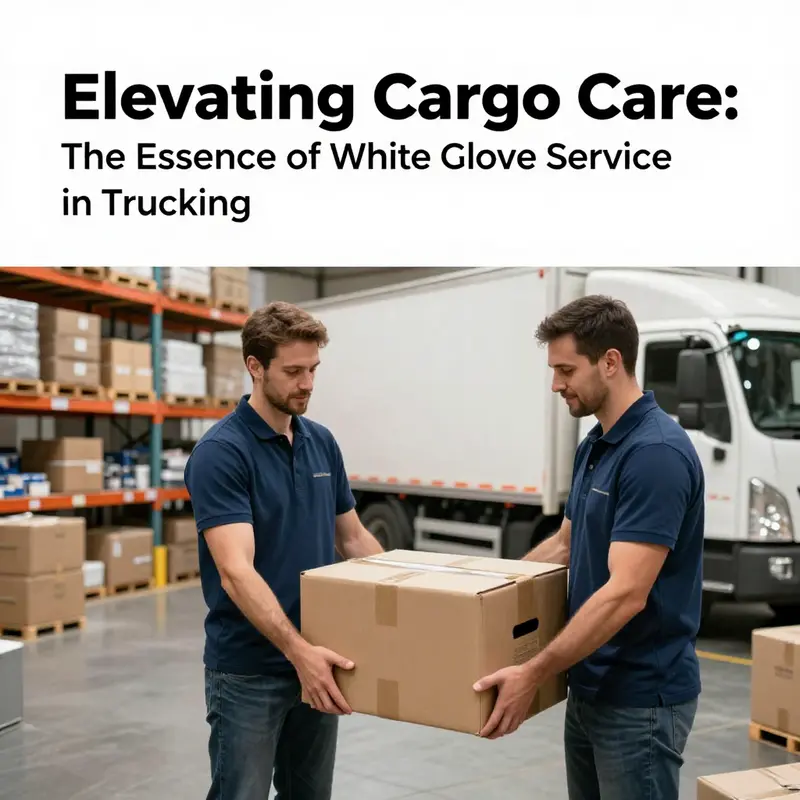
White glove trucking represents a premium, purpose-built approach to transporting high-value, fragile, or time-sensitive cargo. It combines specialized handling, on-site setup, scheduled delivery, and proactive communication to protect assets and reduce risk. Premium carriers design packaging, use climate-controlled environments, and employ trained professionals who can install, calibrate, and configure equipment at the destination. The service emphasizes coordination, transparency, and accountability from pickup to installation, turning shipping into a trusted, outcome-focused partnership. By aligning people, processes, and technology, white glove logistics deliver reliability, efficiency, and peace of mind for shippers and receivers alike.
Elevated Care on the Move: How White Glove Trucking Redefines High-Value Cargo Delivery

White glove service in trucking for high-value cargo reframes what it means to move goods from one place to another. It is not a single act of transport but a carefully choreographed sequence of care, precision, and communication. When a shipper hands off a delicate or expensive item, the expectation is not merely that it arrives on time, but that it arrives in the exact condition it left. In industries where a dent, a scratch, or a misalignment can translate into thousands, even millions, of dollars in losses or reputational harm, premium freight delivery becomes a strategic asset. The narrative of white glove trucking is built on meticulous preparation, specialized handling, and a relentless focus on the client’s needs. It is a service that elevates freight from a logistical step to a carefully managed experience, where every touchpoint reinforces trust between the shipper, the carrier, and the recipient. The overall topic—what white glove service is in trucking—finds its meaning in the blend of craft, process, and partnership that distinguishes premium delivery from ordinary freight movement.
At the core of this distinction is a shift in mindset. Traditional trucking emphasizes speed, cost, and schedule adherence. White glove service adds layers of safeguards, personal attention, and specialized competencies. Highly valued cargo such as fine art, luxury furniture, bespoke medical equipment, high-precision machinery, and sophisticated electronics demand more than a standard forklift and curbside drop. The care envelope expands to address packaging, environmental controls, installation, and the choreography of a delivery that respects the spaces and routines of people’s lives and businesses. In this sense, white glove trucking is not an additive service; it is a redefining of what responsible, customer-centered logistics looks like in practice.
Consider the arc of a premium delivery as it unfolds from pickup to final placement. It begins with professional assessment and packaging. Items destined for premium handling often require custom crates, shock-absorbing materials, and climate controls that prevent degradation during transit. The packaging speaks to a philosophy of foresight: it anticipates the worst-case conditions encountered en route and the best-case scenario at the destination. Trained personnel—crews that understand not only how to lift heavy loads but how to protect surfaces, calibrate delicate equipment, and minimize vibration—handle each step with a respect for the item’s value. This is not merely about avoiding damage, though that remains central. It is about preserving a narrative of care that travels with the shipment.
Inside delivery is a defining feature. The driver or a specialized agent will bring the goods into the client’s building, navigate tight stairwells or restricted access points, and position the item with exacting precision. For many high-value shipments, this means delivering to a specific room, placing furniture in a designated spot, or positioning a piece of equipment so it is ready for immediate use. In some cases, the service extends to unpacking, removing packaging debris, and even performing initial setup or calibration. The value to the recipient is measurable in time saved, disruption minimized, and the confidence that the installation has been executed by professionals who understand the instrument’s requirements and the client’s expectations.
The installation or assembly component—when included—often demands technical expertise. Large appliances, sophisticated medical devices, or precision machinery may require alignment with existing systems, compliance checks, or software configuration. White glove teams bring the expertise to complete these tasks within the delivery window, eliminating the need for the customer to coordinate multiple service providers. This integrated approach reduces friction and accelerates the path from receipt to productive use. The result is a seamless transition from order to operation, a critical factor for customers whose uptime, accuracy, and performance hinge on immediate readiness.
Scheduling is more than a date and time. It is a commitment to the recipient’s calendar and a promise of preparedness. Deliveries are often arranged in advance, with windows that align with the client’s availability and access constraints. When the item arrives, the team is ready with the right tools, protective coverings, and a clean working environment. This level of coordination reflects a broader philosophy: premium service is built on respect for the client’s time and space, and it requires a proactive stance rather than reactive problem-solving. The heightened communication that accompanies white glove trucking—from real-time progress updates to post-delivery confirmation—further reinforces the sense of partnership.
Professional handling is the backbone of trust. Trained personnel are not just physically capable; they are educated in the special considerations that high-value cargo demands. They know how to manage weight distribution to avoid floor damage, how to lift without compromising delicate enclosures, and how to respond to contingencies with composure. They wear appropriate protective gear, use specialized tools, and follow standardized procedures designed to minimize risk. The discipline of handling is a quiet, persistent characteristic of white glove service, a discipline that reinforces confidence in the shipment’s journey. When a client sees the staff’s poised, careful approach, the perception of risk shifts from a looming threat to a managed process, which in turn strengthens the client’s loyalty and willingness to engage in future premium engagements.
From an asset-protection standpoint, white glove service is a visible investment in risk management. It signals to stakeholders that the shipper’s goods will be treated with the utmost care, and that the transportation partner has robust protocols for safeguarding both physical damage and loss. The packaging, the handling, the inside delivery, and the meticulous handover at the destination all contribute to a chain of custody that supports liability protection and insurance considerations. Carriers that invest in this service become reputationally safer to engage, particularly for brands where the cost of error is not merely financial but strategic. The implications ripple outward: higher confidence among retailers, galleries, design houses, hospitals, and manufacturers who require dependable, repeatable outcomes in complex supply chains.
This heightened service level translates into a distinct customer experience. Door-to-door delivery for white glove shipments is an emblem of the hands-on commitment that premium markets demand. The recipient is not left to navigate a warehouse dock and a curbside handoff; instead, they receive a guided, personalized handoff that supports decision-making and final installation. Unpacking and assembly reduce the friction of configuring new acquisitions, whether consumer-ready or facility-ready. In many cases, the service extends to post-delivery touches, such as placing the item in its final location, verifying operational readiness, and providing basic demonstrations or instructions for use. The cumulative effect is a level of client satisfaction that becomes a differentiator in crowded markets where cost competition is intense and service expectations are rising.
The impact on brand reputation is also significant. Businesses that consistently deliver with care and precision cultivate a narrative of reliability and luxury. They transform the logistics function from a cost center into a strategic capability that supports product launches, showroom experiences, and high-stakes procurement. In this sense, white glove service functions as a guardian of value, ensuring that the goods a client has invested in arrive not only intact but primed to fulfill their intended purpose. This is especially relevant when the shipment is a key element of a broader customer experience, such as a design installation, an executive office setup, or a medical deployment that depends on timely readiness.
For organizations evaluating whether to adopt white glove offerings, the economic logic becomes clear. Premium services carry higher margins, but they also deliver substantial risk mitigation, reduced disruption, and enhanced customer loyalty. The costs associated with specialized packaging, trained personnel, and coordinated scheduling are offset by the incremental value clients place on certainty and care. In an era when supply chains are shaped by volatility and complexity, the decision to deploy white glove capabilities is both prudent and forward-looking. It signals to partners and customers that the organization is serious about protecting asset values, maintaining operational continuity, and delivering a consistently high-quality experience.
The link between premium service and operational excellence is not incidental. It rests on a disciplined, practice-driven approach to every phase of the shipment. From the moment the cargo is picked up to the moment it is placed in the client’s environment, there is a continuous loop of feedback and refinement. Packaging evolves with learnings from past shipments; handling protocols are updated in response to evolving cargo types; and communication channels are enhanced to keep stakeholders informed without overloading them with noise. The result is a service model that evolves along with client needs, contributing to a durable competitive advantage for carriers that invest in white glove capabilities.
This chapter’s examination aligns with the broader movement toward premium logistics, where value is defined not just by the piece of cargo but by the quality of the journey it takes. It is about a service ecology that recognizes the interdependence of preparation, execution, and post-delivery support. The client’s experience—felt in the ease of scheduling, the confidence in protected handling, the clarity of updates, and the satisfaction of a precise, impeccable placement—becomes the metric by which success is judged. In other words, white glove trucking reframes the delivery moment as a strategic touchpoint, a moment of truth where a shipment’s value is validated and reinforced through practiced care and professional excellence.
For those seeking greater context on how these industry dynamics are shifting the business landscape, the conversation intersects with broader economic trends and strategic investments in people and processes. Key economic trends impacting the trucking industry shape the rationale for premium services, and understanding them helps explain why more shippers are choosing a white glove approach for high-value cargo. Key economic trends impacting the trucking industry offer a lens through which to view the growing demand for risk-controlled, customer-centric delivery.
As the market continues to evolve, white glove service in trucking will likely continue to expand beyond the classic high-value categories. The same principles of specialized handling, precise execution, and elevated customer experience can apply to complex logistics challenges across industries. The progression from curbside drop to door-to-door service, from basic delivery to installation and calibration, represents a maturation of the freight ecosystem. In this maturation, the operational discipline—packaging standards, crew training, scheduling rigor, and transparent communication—becomes the backbone that allows premium cargo to move with predictability. This is the essence of the white glove promise: a commitment that the journey is as carefully managed as the destination, and a guarantee that the asset’s value is protected in every moment of transit.
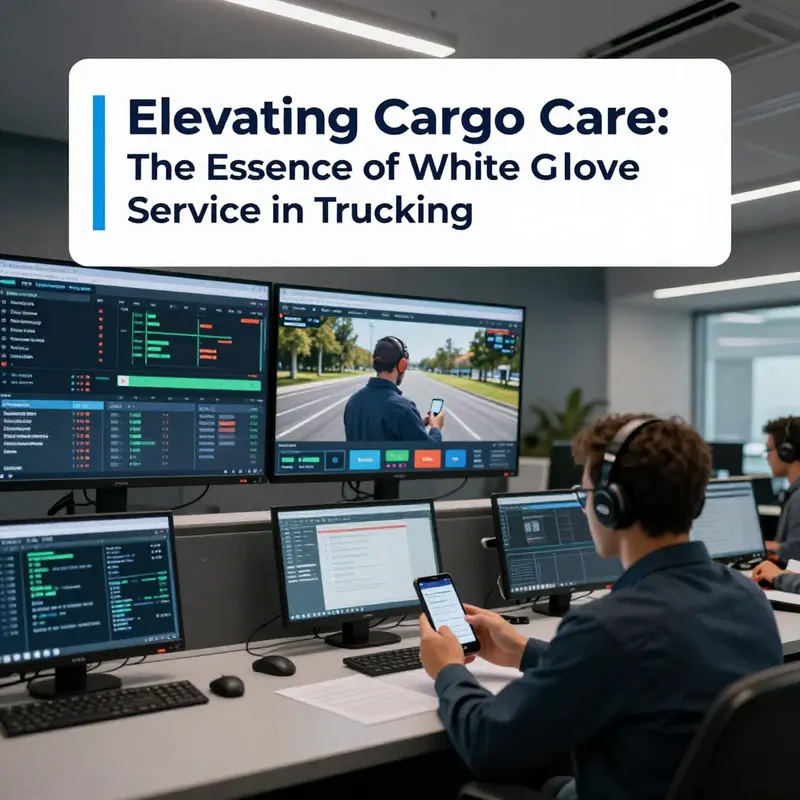
From a practical perspective, implementing white glove service requires thoughtful investment and clear governance. Carriers must develop standardized packaging protocols, invest in specialized equipment and training, and establish collaboration models with clients that anticipate needs and preempt possible disruptions. The role of technology in this ecosystem—real-time tracking, secure handoffs, and integrated installation checklists—cannot be overstated. Yet technology alone cannot substitute for the human elements of trust, discretion, and tactile expertise that characterize high-value handling. The best providers blend sophisticated tools with their craftsmen’s know-how, delivering a service that is both reproducible and bespoke.
As the industry watches the trajectory of premium logistics, the external literature reinforces the view that white glove services are shaping a new normal for high-value shipments. They are increasingly seen not as optional add-ons but as essential components of a resilient supply chain. The future suggests an even tighter integration of packaging science, environmental controls, and on-site logistics capabilities, all designed to minimize risk while maximizing the speed and clarity of the delivery experience. This integrated approach stands firmly at the intersection of care, capability, and credibility, a trifecta that underpins successful premium freight programs in a diverse range of markets.
External perspective can be found in industry analyses that highlight how white glove logistics is evolving as a premium segment within freight forwarding. These insights underscore the strategic value of investing in controlled handling environments, specialist teams, and continuous process improvements that translate into measurable outcomes for clients and carriers alike. For readers seeking a broader external lens on the future of premium freight forwarding, consider exploring industry perspectives on white glove logistics and its trajectory toward greater sophistication and reliability. https://www.logisticsview.com/white-glove-logistics-the-future-of-premium-freight-forwarding
null
null
Final thoughts
Understanding white glove service in trucking is not merely about enhanced delivery; it represents a strategic advantage for businesses handling high-value cargo. By integrating specialized services that ensure meticulous care, tailored handling, and sophisticated technology, companies position themselves to mitigate risks associated with transporting precious items. As you consider your logistics strategies, remember that embracing white glove service can lead to lasting partnerships, increased customer satisfaction, and reinforced brand trust, all of which are crucial in today’s market.