

Understanding the Hours of Service (HOS) regulations in trucking is crucial for companies reliant on logistics—including manufacturing, retail, and construction sectors. These regulations, set forth by the Federal Motor Carrier Safety Administration (FMCSA), govern the work hours of truck drivers to minimize fatigue-related accidents and ensure safety on the roads. This article will delve into the intricacies of HOS regulations, addressing their impact on driver safety, the challenges of compliance for trucking companies, and anticipated future trends in the industry. Each chapter will contribute to a comprehensive understanding of how HOS regulations affect your shipping operations and allow you to navigate these rules effectively.
Rest, Rhythm, and Regulation: How Hours of Service Shapes Safety, Scheduling, and Strategy in U.S. Trucking
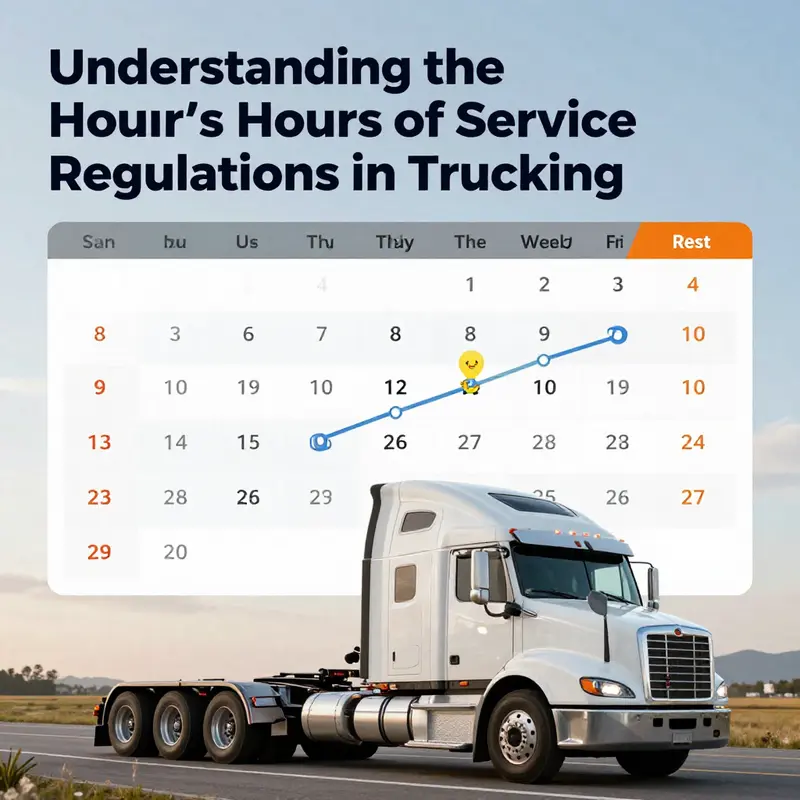
The Hours of Service regulations are a living framework that translates sleep science, road risk, and daily logistics into a practical operating rhythm for the trucking industry. At their core, HOS rules guard against fatigue, a leading predictor of serious crashes in the transportation sector. But to understand their impact fully, one must see how the clock, the road, and the driver’s body interact across a shift, a week, and a shipment that you might think of as a simple point A to point B. The rhythm of work and rest that HOS codifies governs not only how long a driver can be behind the wheel, but also how a fleet owner or a dispatcher designs routes, allocates loads, negotiates delivery windows, and manages risk across the network of highways, ports, and yards where the economy moves every day.
The most visible element of HOS is the daily limit on driving time. A driver may drive up to 11 hours in a day, but only after accumulating ten consecutive hours off duty. This constraint creates a clear, if demanding, ceiling on daily productivity. It pushes carriers to plan multiple shifts, staggered schedules, and relay-style handoffs so that parcels and loads keep moving without forcing drivers into fatigue-driven improvisation. The rule is not merely a cap; it is a discipline device that nudges planning toward reliability rather than heroic one-off pushes. When a driver stops for the night or takes a mandated rest break, it is not only a break from the wheel but a reset of the physiological clock. The 11-hour limit, in tandem with the 14-hour driving window that begins the moment any work-related duty starts, means the clock starts ticking the moment cargo is loaded, paperwork is started, or the engine rolls. In practice, this encourages a culture of pre-emptive rest scheduling: a dispatcher might book an early morning appointment and then coordinate a few hours of driving in the late afternoon, embedding a buffer that accounts for traffic, weather, or a roadside delay that would otherwise squeeze the driver past the daily limit.
Beyond daily driving, HOS imposes weekly and multi-day cycle constraints. Carriers choose either a seven-day or an eight-day cycle, deciding whether drivers may accumulate up to 60 hours (seven-day) or 70 hours (eight-day) before a restart is required. The restart, while seemingly an interruption, is designed with sleep science in mind. The 34-hour restart must include two periods of nighttime hours—typically between 1 a.m. and 5 a.m.—to align more closely with the body’s circadian rhythms. This design acknowledges that restorative sleep can be more effective when it occurs during the hours the body is accustomed to sleeping, and it makes the restart both a practical reset and a strategic permit for fleets to reallocate long-haul routes and multi-day shipments without compromising safety. In conversation with drivers and planners, the restart becomes a planning node—an anchor around which schedules are built for the next leg of a journey, whether that leg is crossing a state line, entering a congested urban corridor, or calling at a port facility where timing is critical to a chain of custody.
The sleeper berth provision adds a layer of practical flexibility that is often overlooked in high-level summaries. The requirement that the 10 hours off duty can be split into two segments, one of which must be at least seven consecutive hours and the other at least two hours, enables drivers to blend rest with on-the-road logistics. It is especially valuable for drivers who are traversing long distances, where a single unbroken block of off-duty time may clash with delivery windows or with the availability of a parking space, a rest area, or a consignee that expects a precise arrival. This flexibility supports a more sustainable driving pattern, reducing the number of occasions where drivers feel compelled to push through fatigue to meet a deadline. In practice, the sleeper berth provision can mean a late-night rest stop followed by a two-hour segment that coincides with a brief layover or a change in crew, letting the second shift pick up where the first left off without violating the ten-hour minimum.
Recordkeeping is the silent backbone of HOS compliance. Modern fleets rely on electronic logging devices (ELDs) that automatically track driving time, vehicle movement, and duty status. The data stream from ELDs provides a verifiable ledger that aligns with the regulator’s expectations while offering a treasure trove of insights for fleets seeking operational efficiency. For compliance officers, the ELD is a real-time monitor; for drivers, it is a transparent partner that reduces disputes and ambiguities about who drove when and for how long. Beyond enforcement, this data can be mined to optimize routes, reduce detours, and lower the risk of unplanned downtime. A well-tuned scheduling system uses the 11-hour cap not as a blunt throttle but as a constraint that nudges towards reliability, smoother handoffs, and predictable service levels.
The interplay between regulation and the science of sleep is not abstract. The rule updates that FMCSA has implemented over the years reflect an ongoing conversation among researchers, industry stakeholders, and safety advocates about how best to preserve alertness and reduce fatigue-related incidents. This is not a static legal landscape; it is a dynamic field where empirical findings about sleep duration, circadian biology, and driver behavior influence amendments and pilot programs. For a fleet operating in today’s environment, staying current means a disciplined review of rule changes, understanding how new interpretations might affect shift design, and adjusting planning tools to ensure that compliance does not become a bottleneck to service quality. The goal remains constant: protect drivers from fatigue, protect the public on the nation’s roads, and preserve the integrity of the supply chain by maintaining dependable, safe operation.
In practice, the hours-of-service framework also interacts with broader market conditions and logistical realities. The trucking sector is deeply interconnected with the tempo of freight demand, the capacity of the highway network, and the constraints of intermodal hubs and ports. Consider the pressure of maintaining a reliable schedule when a truck must arrive at a port entry window that is tightly coordinated with terminal operations, or when a cross-border shipment must align with border clearance times and agricultural or manufacturing cycles. These scenarios underscore why a robust understanding of HOS is not a matter of ticking boxes but a strategic competency. A dispatcher who grasps the daily 11-hour limit, the 34-hour restart nuance, and the sleeper-berth flex can design routes that maximize available driving time while ensuring every driver has access to restorative rest. They can also build buffers into deadlines, anticipate potential delays, and deploy contingency plans that keep deliveries on track without compromising safety. In environments where demand volatility is high, this ability to blend compliance with strategic scheduling provides a competitive edge and reduces the risk associated with fatigue-related outages.
The connective tissue that binds the regulation to everyday practice includes the way drivers and carriers adapt to changing conditions. Weather events, traffic patterns, and infrastructure constraints all shape how the HOS rules are translated into real-world outcomes. A driver may begin a trip with a clear plan to finish within an 11-hour window, only to encounter a stretch of heavy congestion that elongates the journey. In that moment, the sleeper-berth provision and rest-break requirements can be the difference between a driver arriving safely and a fatigue-lue wait that could ripple through a supply chain. Fleet managers, meanwhile, must translate the same rules into practical workflows: how to sequence loads to minimize unproductive time, how to communicate new rest opportunities to drivers on the road, and how to leverage the restart periods to align with planned maintenance windows or permitted yard spaces. The human factor remains central. Safety does not come as a byproduct of rules alone; it emerges when drivers, dispatchers, and maintenance teams operate within a shared, well-understood framework that respects the body’s needs and the road’s demands.
As this chapter moves toward a broader view of how HOS shapes the industry, it is fitting to acknowledge the links between regulation, infrastructure, and the freight ecosystem. The routing choices that fleets make, the capacity at key hubs, and the resilience of supply chains all hinge, in part, on how well the hours-of-service rules are understood and enacted. For instance, when ports and inland terminals expand capacity or adjust operating hours, the scheduling calculus for long-haul drivers shifts. The consequences of such changes ripple through the chain of custody and can influence the feasibility of meeting tight delivery windows. See the discussion on how port expansion interacts with supply chains in Montreal, for example, where the regional logistics network can respond to policy and infrastructure changes in ways that alter the timing of shipments and the distribution of loads. The Montreal Port Expansion Impact on Supply Chains serves as a reminder that regulatory frameworks and physical infrastructure are part of the same operating system. The result is a trucking landscape that rewards meticulous planning, fatigue-aware scheduling, and the prudent use of rest as a strategic resource rather than a mere compliance obligation.
In contemplating the broader arc of the HOS rules, one can see a path toward safer roads without sacrificing the efficiency that customers expect. The balance achieved by requiring a period of rest, with the option to split the off-duty time, acknowledges the realities of long-haul trucking while preserving the imperative of alertness. The integration of automatic timekeeping through ELDs enhances accountability and offers a smoother feedback loop for carriers seeking to optimize routes and reduce idle time. It is not an abdication of discipline to embrace this measured approach; it is an invitation to reframe how work and rest coexist on America’s highways. When a driver knows that the next eight hours include both driving and a rest break, there is room to maneuver around traffic, weather, and loading delays without crossing the line into fatigue-driven risk. Likewise, the 34-hour restart reframes downtime as a strategic pause, enabling fleets to align with both regulatory expectations and the natural rhythms of human physiology.
For readers who want to dig deeper into the regulatory text and stay abreast of updates, the FMCSA maintains a comprehensive resource that braids policy with practical guidance. The official Hours of Service regulations provide the authoritative current rules, along with notes on exemptions, waivers, and evolving interpretations. Keeping pace with this body of law supports not only compliance but also the responsible stewardship of the driving workforce and the customers who rely on timely, safe delivery. To explore the latest rule set and any recent changes, visit the FMCSA Hours of Service page: https://www.fmcsa.dot.gov/regulations/hours-service. For practitioners looking to situate these rules within a broader research-informed context, the connection to ongoing studies of sleep science, driver behavior, and operational analytics remains essential, reminding us that the road is not just a line on a map but a living system that requires thoughtful, evidence-based management.
Riding the Clock: How Hours of Service Rules Shape Truck Driver Safety

Fatigue is not a lapse in attention; it is a physiological limit that, when pushed, erodes decision-making, reaction time, and situational awareness. Hours of Service (HOS) regulations are the trucking industry’s attempt to translate that limit into a defensible, enforceable rhythm for work and rest. They are not a simple restriction on time but a framework that invites carriers, drivers, and regulators to manage risk in real time across long, variable routes, shifting demand, and a workforce whose health and safety depend on sustainable schedules. The core structure—an operating window, a required rest period, a weekly hour cap, and periodic resets—seeks to balance the need to keep goods moving with the equally essential need to protect the driver. In practice, that balance unfolds as a daily negotiation between clock and road, where the rules determine when a driver may be behind the wheel and how much time must be spent away from it. The intent is clear: to limit fatigue before it erodes perception, slows reaction, or dulls vigilance at highway speeds. Yet the real-world impact of these rules on safety is complex, and the evidence that regulatory changes consistently reduce crashes has remained uneven over time.
At the heart of HOS is the 14-hour driving window. The clock starts not when a driver completes a shift, but when any work-related duty begins—driving, loading, unloading, waiting for cargo, or performing paperwork. Within this window, the driver can log up to 11 hours of driving. Time spent on non-driving duties—picking up paperwork, waiting for dispatch, fueling, or securing a trailer—counts toward the same 14-hour limit. This design reflects the reality that fatigue is not simply a function of time spent in the seat; the entire spectrum of duty contributes to the physiological and cognitive load a driver carries. By defining a day in terms of work-related engagement rather than a pure driving total, the rules acknowledge that distraction, strategic planning, and operational delays also deplete alertness and should be accounted for in risk management.
Following the driving period, rest becomes mandatory. After completing 11 hours of driving within the 14-hour window, drivers must take at least 10 consecutive hours off duty before beginning another driving shift. This off-duty block is not a mere break; it is a reset of the driver’s alertness reserve, offering the body a chance to recover from the cumulative strain of long hours, irregular sleep, and the sensory demands of the road. The emphasis on a solid rest period aligns with sleep science, which shows that genuine recovery requires sustained, restorative sleep in a stable schedule. Carriers and drivers alike must plan to ensure that the rest period is protected from intrusions and that the off-duty time translates into meaningful recuperation rather than fragmented, underslept hours.
The weekly dimension introduces yet another constraint: either 60 hours of driving over seven days or 70 hours over eight days, depending on the carrier’s chosen cycle. Once these limits are reached, a driver must take a 34-hour restart before returning to work. This restart is designed to fragment fatigue accumulation further by creating a longer break that includes two nighttime periods, specifically between 1 a.m. and 5 a.m. The idea is that sleep during these hours aligns with circadian biology, producing a more restorative effect than daytime rest. In practice, the restart has been a focal point for debate. Advocates argue that it forces meaningful downtime and reduces fatigue carrying into the next cycle. Critics contend that fixed restart patterns can complicate trip planning, disrupt customer service, and create pressure to cluster rest during windows that may not be convenient for continuity of service. Over time, the restart requirement has been refined, revised, or suspended in response to concerns about unintended consequences, illustrating how policy must adapt to the realities of modern supply chains and driver workflows.
The record of compliance is another pillar of HOS. Traditionally, drivers maintained logs—paper records or electronic equivalents—to document duty status and driving time. The shift from paper logs to electronic logging devices (ELDs) has been a watershed in enforcement and safety culture. ELDs automate the tracking of driving time, vehicle movement, and duty status, reducing the scope for manual misreporting and enabling real-time monitoring by carriers and regulators. The technology promises more consistent compliance, easier audits, and clearer accountability. Yet the effectiveness of ELDs depends on a broader ecosystem: robust enforcement, accurate data interpretation, and a workplace culture that values safety over expedience. When ELDs meet stiff supervisory oversight and a proactive safety program, they can enable better fatigue management and safer routings. When enforcement is lax, or when drivers feel pressured to stretch hours despite the data, even precise devices cannot fully deliver the intended safety gains.
Evidence on the safety impact of HOS is nuanced. A 2023 study examining the effects of the 2013 revisions found no statistically significant decrease in fatigue-related crashes after the changes, challenging the expectation that tighter driving limits would directly translate into safer roads. The study’s implications extend beyond the headline result. They suggest that fatigue-related risk is multidimensional: driver health, route schedules, rest quality, and the social and economic pressures that shape daily decisions all interact with the regulatory framework. One notable element of the 2013 reforms—the requirement for two consecutive nighttime periods during a restart—was controversial in practice. Concerns about unintended negative effects on motorist safety and on operational efficiency led to a suspension of that particular restart feature in some contexts, underscoring the tension between strict rulemaking and responsive policy design. These findings do not erase the value of HOS; instead, they highlight that safety gains may require an integrated approach that combines regulation with improved sleep health, better scheduling, and a culture of safety within fleets.
Beyond the empirical results, enforcement remains a central theme in the HOS story. State Department of Transportation officers frequently enforce HOS during routine roadside checks or at weigh stations. Nevertheless, many drivers have historically found ways to work around the rules, particularly when paper logbooks are involved. The transition to ELDs has reduced some of these vulnerabilities, but it has not eliminated concerns about whether the system is used as intended. Enforcement is also constrained by resource limitations, varying state practices, and the sheer complexity of the trucking network, where drivers juggle dispatch demands, tight delivery windows, and the reality of imperfect information about traffic, weather, and port or railyard congestion. As a result, the conversation around HOS has increasingly centered on not just the letter of the law but the ethos of safe operations: schedules that allow real rest, routes that reduce risk, and a work environment that supports health, fatigue management, and well-being.
In recent years, the federal regulatory landscape has evolved from a purely prescriptive stance toward a more investigatory, health-conscious posture. The Department of Transportation has signaled continued interest in evaluating how HOS affects driver health and safety, recognizing the broader implications for driver recruitment and retention and for the reliability of the supply chain. A 2004 court decision invalidated earlier revisions due to insufficient health impact analysis, underscoring the need for comprehensive evaluation when policy intersects with public health. Against this backdrop, the current regulatory dialogue emphasizes evidence-based reforms, thoughtful risk management, and a nuanced appreciation of how fatigue, circadian rhythms, social isolation, and job control influence driver safety. The debate is not about eliminating rules but about refining them to better harmonize safety with the realities of modern trucking, including the stress of tight schedules, irregular sleep patterns, and the persistent driver shortage that shapes both compliance and performance.
The dialogue around Hours of Service is deeply intertwined with cross-border operations and the broader regulatory environment. Policy discussions in the United States increasingly consider how HOS interacts with rest standards for drivers who travel near borders, who operate in multi-jurisdictional contexts, or who move between different regulatory regimes. For readers interested in how these issues play out across borders, a focused overview is available at Cross-border regulatory issues. As policy makers and industry stakeholders weigh changes, the central aim remains constant: safeguard drivers and the public while preserving the efficiency needed to keep commerce moving. See also ongoing analyses and updates in the Federal Register’s proposed rule on Hours of Service for Commercial Driver Vehicle and Truck Drivers. The proposal reflects an iterative process where empirical findings, trucker health data, and practical scheduling challenges inform adjustments designed to reduce fatigue without sacrificing reliability.
What this means for day-to-day trucking is that HOS is less a rigid timetable and more a risk management tool. It asks carriers to design schedules that align with driver biology, not merely to comply with a clock. It invites investment in supportive practices—sleep education, fatigue risk assessments, and health promotion programs that address sleep apnea, caffeine use, and sleep environments. It encourages fleets to rethink routes and dispatch patterns so that rest opportunities are realistic and protective rather than punitive. It also places a premium on data integrity; when hours are tracked accurately, fleets can spot patterns, identify chronic fatigue signals, and intervene before fatigue translates into unsafe behavior on the highway. In this sense, HOS is as much about culture as it is about clocks, about empowerment through information as much as enforcement through regulation. The ongoing policy discussions, informed by science and practice, strive to create a safer road where drivers are supported to arrive alert, rested, and ready for the next leg.
External links and further reading provide a gateway to the evolving regulatory picture. For a detailed regulatory update, see the Federal Register HOS Proposed Rule: https://www.federalregister.gov/documents/2026/02/11/2026-02891/hours-of-service-for-commercial-driver-vehicle-and-truck-drivers-proposed-rule.
Balancing the Clock: Navigating Fatigue Safety, Compliance, and Efficiency in Hours-of-Service Regulations
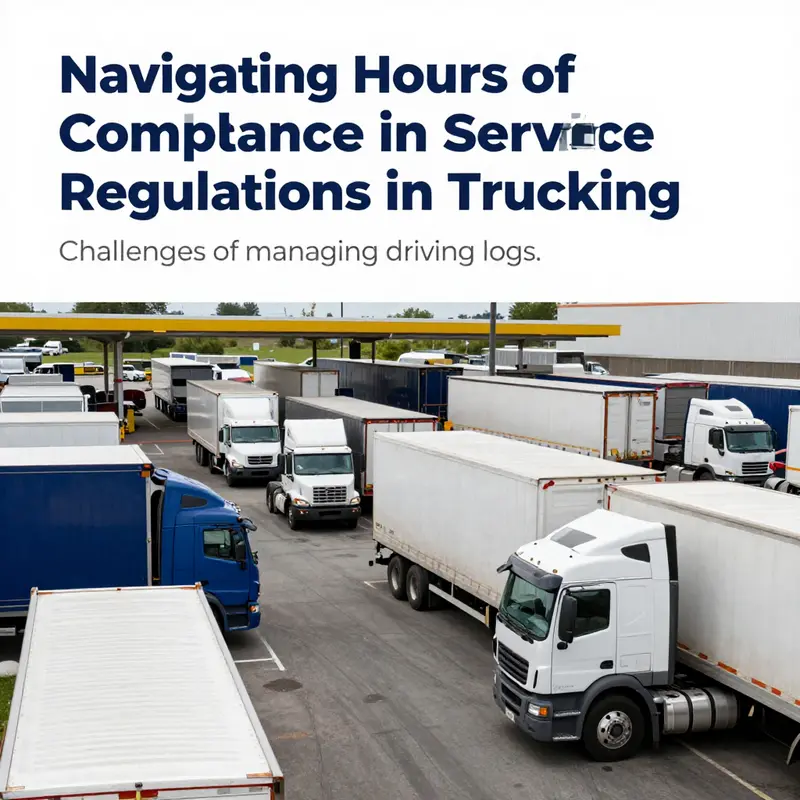
The hum of the highway and the steady thud of tires become more than background noise when the clock is ticking against the Hours of Service rules. These regulations, rooted in safety science, are designed to curb fatigue and keep drivers alert by structuring when a CMV operator can drive, when they must rest, and how many hours count toward a week’s workload. They are not merely bureaucratic hurdles; they are a framework that shapes planning, scheduling, and daily decisions across the industry. To understand the practical realities of HOS, one must move beyond the numbers to see how they interact with weather, traffic, and customer expectations, and how carriers build cultures and processes that respect both safety and service levels.
At the core, HOS creates a rhythm—an enforced cadence that assigns time to action and time to recovery. The 14-hour driving window starts when a driver engages in any work-related duty, not just when the vehicle rolls. Within that window, driving is limited to 11 hours. The rest of the time in that window is reserved for non-driving activities like loading, paperwork, fueling, or waiting for a delivery. The implication is straightforward but often surprising: a late loading delay can cut into driving time, forcing a driver to choose between extending the shift to complete a run or pausing to reset the clock. This nuance is not about rigidity for its own sake; it is about safeguarding alertness and reducing the risk that fatigue erodes judgment behind the wheel.
The required 10-hour off-duty period after the driving span provides a built-in opportunity for restorative sleep, meals, and personal time. Yet even this rest phase interacts with circadian biology in nuanced ways. The 34-hour restart rule—designed to periodically reset the weekly or 8-day clock—adds another layer of complexity. To qualify as a restart, the off-duty period must be 34 consecutive hours and include two nighttime periods between 1 a.m. and 5 a.m. These provisions acknowledge a growing body of sleep science that suggests a nighttime window is more restorative for alertness. It is not simply about getting eight hours; it is about aligning rest with natural rhythms as much as possible, given the realities of freight cycles, customer windows, and driver preferences.
Then there is the weekly limit, a two-faced constraint that speaks to long-term fatigue risk and the business need for predictability. Carriers can operate within a 60-hour driving limit on a 7-day cycle or a 70-hour limit on an 8-day cycle, depending on the carrier’s chosen schedule. Once the cap is reached, a full 34-hour restart is required before additional driving can resume. This policy acknowledges that sustained driving across multiple days without sufficient rest is unsafe, but it also compels fleet managers to rethink routes, loads, and handoffs. The restart is a flexible tool, yet it requires foresight and accurate data to avoid orphaned loads or stranded equipment.
The practical challenges of abiding by these rules are compounded by variability in the real world. Traffic congestion, incidents of adverse weather, and unforeseen delivery delays can erode the time available within the driving window. A highway bottleneck on a planned leg may force a carrier to switch to a pre-planned alternative route or to accept a later delivery window, both of which influence how the rest policy plays out in practice. The shift from paper logbooks to Electronic Logging Devices has been widely hailed as a step forward for accuracy and safety, but it also introduces new lessons. Drivers and dispatchers must become proficient with the technology, ensuring that all activities—driving, loading, unloading, maintenance, and waiting—are correctly reflected in the duty status. Misentries, misunderstandings of the device prompts, or miscommunication about when a task began can lead to subtle violations that accumulate over time. Training becomes the core of compliance, translating rules into a shared language across the fleet.
The human element is central to the compliance challenge. A driver’s day is a mosaic of decisions made under pressure: a late pickup, a long line at a shipper, a weather system moving in, a dispatcher’s urgency to keep a tight window. In this environment, the best compliance programs do more than enforce rules; they cultivate a culture where safety and reliability are nonnegotiable. This culture emerges through clear expectations, consistent coaching, and the alignment of performance metrics with safety outcomes. It means empowering drivers to communicate when a plan is no longer feasible without penalty, and giving dispatchers the tools to adjust routes, loads, and schedules without compromising safety. The integration of real-time traffic and weather data into routing systems is not a luxury; it is an essential capability. It allows planners to foresee potential HOS constraints, re-seat a stop, or swap a late delivery for an earlier one when the clock is tight. The result is a more resilient operation that adapts in real time while preserving the integrity of the rest requirements.
Real-world compliance also relies on practical scheduling strategies. Proactive trip planning is foundational. Planners who model multiple contingencies—late pickups, weather delays, and port congestion—are better positioned to maintain service without creeping into HOS violations. This planning is not about padding margins; it is about understanding the probabilistic nature of the road and building buffers into the schedule. It often means choosing routes that align with rest opportunities, such as overnight driving where feasible and advantageous to circadian alignment, or scheduling mandatory breaks at times that do not collide with peak congestion. The 30-minute break requirement after eight consecutive hours of driving, though formally a short pause, becomes a critical test of a driver’s ability to maintain vigilance during sprint legs. When a route demands back-to-back legs, appetite for risk must be balanced against the rest rule. Communication between drivers and dispatch becomes a form of safety-critical coordination, not just a status update.
Technology is not a mere enforcement mechanism; it is a decision-support system. ELDs provide a baseline integrity check, but the real value lies in how fleets synthesize data into actionable insight. Dashboards that highlight remaining driving hours, expected rest opportunities, and regulatory resets help prevent cliff-edge violations where a driver is forced to violate a limit to stay on schedule. In practice, effective use of ELDs goes hand in hand with driver training that emphasizes how to interpret the data, respond to emerging constraints, and communicate early when a schedule cannot be met safely. The best programs also incorporate route optimization tools that factor in HOS constraints and objective functions such as minimizing total hours on duty or maximizing on-time performance. These tools are not about gaming the system; they are about aligning operational decisions with safety constraints so that customer commitments can be met without compromising driver well-being.
The literature on HOS emphasizes that compliance is as much about organizational design as it is about individual behavior. A fleet that prioritizes safety builds an environment where drivers understand the rationale behind the rules and see them as protective rather than punitive. Training modules that demystify the 34-hour restart, the 11-hour driving limit, and the 14-hour window illuminate how each element contributes to alertness and safety on the road. When this understanding is paired with clear, consistent policies—such as a standard operating procedure for dealing with delay-induced HOS impact—drivers and dispatchers can navigate disruptions with fewer violations and less stress. It is also worth noting that, while the regulatory framework is set at the federal level, practical adaptation often happens at the company level. Carriers may implement staggered rest windows, choose cycles that better fit their typical load profiles, or invest in driver coaching that emphasizes the importance of listening to personal fatigue cues and knowing when to pause.
For readers who want to explore the broader economic and regulatory context that shapes these rules, one can consider how market forces influence compliance decisions. The interplay between demand for rapid deliveries and the necessity of safe operation creates a tension that is resolved not through recklessness but through smarter planning, better data, and a culture that values safety as a competitive advantage. Readers curious about how broader market forces influence these regulatory environments can explore discussions around key economic trends impacting the trucking industry. See the official hours-of-service regulations for the most current guidance.
Riding the Fatigue Frontier: The Next Generation of Hours of Service Regulations in Trucking

Fatigue research has long established that alertness is not a simple function of hours slept, but of circadian alignment, sleep quality, and the interplay between driving demands and recovery opportunities. In the coming years, advanced telematics and electronic logging devices (ELDs) will do more than simply record when a vehicle moves or when a driver changes duty status. They will become the nervous system of a fatigue-aware regulatory framework. Real-time data streams could inform moment-to-moment decisions about whether a driver should continue a leg of a trip, take an immediate rest stop, or adjust a schedule to dampen fatigue risk. Rather than seeing the 11 hours of drive within a 14-hour window as an immutable rule, future rules could translate fatigue risk into actionable guidance. This would allow drivers and dispatchers to respond to fatigue signals in near real time, shaping work-rest patterns that keep alertness high without undermining productivity. The promise is a more humane, more precise approach to managing risk that still honors the essential purpose of HOS: preventing fatigue-related crashes and protecting drivers’ health over the course of a career on the road.
Embedded in this vision is a respect for the data that fleets already collect and the analytics that can transform it. A driver who spends two weeks on a consistent schedule in a stable route might demonstrate lower fatigue risk than a driver juggling irregular shifts across multiple time zones. With robust data integrity and privacy safeguards, regulators could calibrate guidelines to recognize these patterns while preserving accountability. The goal is not to reward laxity but to reward predictable, safe behavior. In practice, this could mean more nuanced rest provisions, such as rest opportunities aligned with circadian lows or smart rest windows that account for sleep debt and prior duty cycles. Such shifts would require collaboration among regulators, carriers of all sizes, drivers, safety researchers, and technology providers to ensure that the new rules are transparent, enforceable, and scientifically sound.
To contextualize this evolution, it helps to anchor the discussion in how industry and policy stakeholders view risk today. The FMCSA’s longstanding objective—reducing fatigue-related crashes—remains the touchstone. Yet the tools available to achieve that objective are changing. On the one hand, dynamic scheduling enabled by real-time data could allow a driver to keep moving when fatigue risk is low and pause when risk rises, within a safety-first framework. On the other hand, there is concern about the privacy and security implications of continuous monitoring. The drafting of future HOS policy will need to address these concerns with robust data governance standards, clear limits on how data can be used, and rigorous safeguards against misuse. Importantly, any move toward more adaptive scheduling must preserve a universal baseline of rest and recuperation, ensuring that fatigue mitigation remains accessible to all drivers regardless of fleet size or route geography.
Within this evolving landscape, a simple but powerful idea is often overlooked: measurement must be paired with action. It is not enough to collect fatigue-related metrics; the regulations must translate those metrics into practical, enforceable requirements that support safer driving. This means bridging the gap between data science and regulatory language so that the rules are interpretable by drivers, dispatchers, and inspectors alike. It also means building a culture in which drivers feel supported when fatigue signals arise, rather than perceived as a risk to be hidden. The cultural dimension is critical. If fatigue management is viewed as a shared responsibility—between the driver, the carrier, and the regulator—then the system becomes more resilient. In this light, the industry’s attention to well-being—sleep health, mental health, and work-life balance—will increasingly shape how HOS policies are written and implemented.
A broader trend that informs this trajectory is the ongoing reconfiguration of the trucking ecosystem around technology-enabled efficiency. The rapid growth of e-commerce and just-in-time deliveries has normalized shorter cycles, more frequent trips, and higher variability in trip lengths. Planners are already experimenting with flexible delivery windows, network optimization, and advanced forecasting to smooth demand surges. In such a context, static limits can feel out of step with operational realities. Yet the answer is not to abandon guardrails; it is to modernize them. Contemporary HOS thinking may embrace modular rest provisions, where the basic ceiling on drive time remains a safety anchor, but the permissible patterns of rest and restart become adaptive, guided by fatigue indicators, then validated by performance outcomes over time. This approach aligns well with a broader regulatory philosophy that favors outcome-based safety metrics over prescriptive schedules alone.
The conversation about modernization cannot ignore the potential of autonomous technologies, such as platooning and higher levels of driver assistance, to alter fatigue risk profiles. Platooning, which links multiple trucks to travel with coordinated acceleration and braking, can improve fuel efficiency and reduce the cognitive load on the lead driver by compressing driving tasks into more manageable segments. If supported by credible fatigue risk management, platooning could influence how we define driving duty, rest requirements, and restart relief. However, this potential is not a license for lax oversight. Any shift toward technology-enabled efficiency must be matched with rigorous performance data and independent safety validation. The core challenge is to keep the human operator at the center of regulation while acknowledging that technology can change the way fatigue manifests on the road. In other words, policy should preserve driver autonomy and protect well-being without inhibiting beneficial innovations that could reduce fatigue exposure.
To connect this forward-looking stance with the bigger picture, consider the broader economic and labor dynamics shaping trucking today. The industry faces talent shortages, rising costs, and divergent regional needs that complicate a one-size-fits-all rule. A modern HOS framework must be protective but also practical, allowing carriers to tailor schedules to capacity constraints and regional traffic patterns while maintaining consistent safety outcomes. This balance will require ongoing analytics, pilot programs, and a willingness to iterate based on results. It also invites a collaborative approach: regulators can create testing grounds and performance benchmarks, while carriers contribute real-world data that refines the rules over time. This iterative loop is essential if HOS is to stay relevant as a tool for safety, not a bureaucratic obstacle to efficiency.
Finally, any credible forecast for HOS must address the regulatory ecosystem’s transparency and legitimacy. When drivers, operators, and inspectors understand the intent behind a rule and see the evidence that supports it, compliance becomes more natural. The next generation of HOS will likely emphasize clarity, predictability, and fairness. It will lean on independent safety research and credible fatigue science to validate changes and ensure that the complexity of technology does not outpace human comprehension. The aim is to create a system where fatigue risk is continuously managed through clear expectations, measurable outcomes, and opportunities for feedback from the roadside and the studio alike. In this sense, future HOS policy is as much about collaborative governance as it is about clock-based limits.
As policymakers map the road forward, a practical touchstone will be how these regulations connect with broader industry narratives. The shift toward data-driven, fatigue-aware scheduling sits at the intersection of safety, efficiency, and worker well-being. It invites stakeholders to rethink how hours are defined, how rest is structured, and how accountability is demonstrated. The result could be a more resilient trucking universe where drivers experience less fatigue, fleets operate with greater predictability, and freight moves with a steadier rhythm. This is not a distant ideal but a plausible path that merges sleep science with smart policy, guided by robust data, transparent governance, and a steadfast commitment to safety on every mile of road. For those following the macro-trends shaping trucking, this prospective evolution of HOS is a natural extension of a sector that continually recalibrates itself to new technological and economic realities. This is a moment where science, policy, and practice converge to redefine what it means to drive legally, safely, and efficiently in a modern logistics landscape.
This evolving framework is not developed in isolation. It sits alongside broader shifts in the economy, labor markets, and regional trade patterns. For a broader view of how macroeconomic trends are shaping trucking, see the discussion around Key Economic Trends Impacting the Trucking Industry. As the dialogue advances, stakeholders will test ideas, refine rules, and set benchmarks that encourage safer driving while still enabling the dynamic supply chains that undergird modern commerce. The regulatory path ahead will depend on credible evidence, collaborative problem-solving, and a shared conviction that safety and efficiency are not enemies but complementary aims. The FMCSA and other regulators will continue to gather sleep and fatigue data, test new models in controlled environments, and publish findings that help translate fatigue risk into practical rest strategies rather than abstract mandates. The horizon promises not a single reform but a continuum of improvements that keep pace with the industry’s evolution.
For readers seeking the most current regulatory framework, the official source remains the FMCSA. The department’s pages and regulatory notices provide the authoritative baseline for any changes to HOS, including how future pilots and demonstrations are structured and evaluated. As this chapter notes, the road to modernization will be collaborative, evidence-based, and oriented toward outcomes that keep drivers safe, rested, and productive on every shift. The journey from rigid time-based limits to fatigue-aware, data-informed scheduling will be gradual, with safeguards, pilot tests, and continuous learning embedded along the way. The result could be a more humane, more resilient, and more efficient trucking system that reflects both the science of sleep and the practical realities of moving goods in a fast-changing world. Official regulatory guidance will continue to evolve, and stakeholders will watch closely as fatigue science translates into policy that protects lives while supporting a vibrant logistics economy.
External reference: For the latest official guidance, see the FMCSA’s Hours of Service regulations at https://www.fmcsa.dot.gov/regulations/hours-service.
Final thoughts
Navigating HOS regulations is essential for businesses that rely on trucking for logistics. A firm understanding of these standards not only promotes safety but enhances operational efficiency. As the industry evolves with technology and ongoing research, staying informed about HOS regulations will help your business mitigate risks and streamline shipping operations. This ongoing commitment to safety and compliance is not just a regulatory necessity but a cornerstone of sustainable business practices.