
Experiencing the ‘Service Traction Control and Stabilitrak’ message in your truck can be alarming, especially for businesses reliant on transport. Understanding this notification is crucial, as it relates to the vehicle’s traction control and electronic stability control systems—two key safety features. Both systems work to enhance vehicle stability, particularly on slippery surfaces, and their failure can pose significant risks. This article will guide you through the essentials of these systems, outline common issues that trigger the warning, and provide actionable steps to diagnose and resolve problems, plus insights into preventive measures. Each chapter is designed to give manufacturing, retail, construction, and small business owners the knowledge they need to maintain their vehicles effectively and ensure safety on the road.
Why That Service Traction Control and Stabilitrak Message Appears: A Practical Guide to TCS and ESC in Real-World Driving
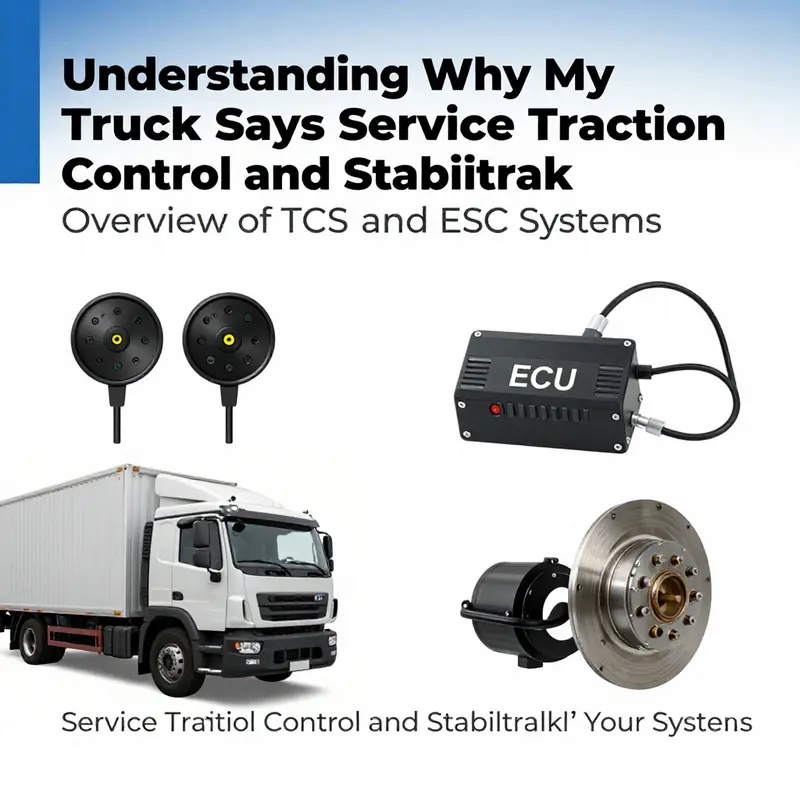
When a driver first sees the message Service Traction Control and Stabilitrak illuminate the dashboard, a moment of caution usually follows. The warning is not just a nuisance; it signals that one or more of the truck’s safety nets—the traction control system and the electronic stability control system—have detected a fault or an irregularity. In plain terms, your truck is telling you that the computer believes the roads are asking for help and that the safety systems designed to assist you under slippery or abrupt maneuvers may be compromised. This is not a cue to panic, but it is a cue to respect the warning. The traction control system, or TCS, is primarily concerned with keeping the drive wheels from spinning when you press the accelerator on slick surfaces. It works in the background, trimming power or gently applying braking force to the slipping wheels. StabiliTrak, the brand name used by some manufacturers for the broader electronic stability control system, watches more than wheel spin. It tracks steering input, the vehicle’s actual path, yaw, and lateral acceleration to determine if the truck is following the intended line. If the data show a drift toward understeer or oversteer, StabiliTrak can intervene by braking individual wheels and, if necessary, reducing engine power. When both systems operate in harmony, they keep the truck steady through corners, around slick patches, and during emergency moves. When the warning flashes, however, the software behind those actions has detected something abnormal enough to warrant a safety flag. The path from warning to repair starts with understanding what those systems are doing and why they might fail.
To appreciate the warning, it helps to imagine how TCS and StabiliTrak interact during one of the most common driving challenges: a sudden acceleration on a wet or icy surface. As soon as you lift or press the throttle, the wheels may begin to spin if grip is limited. TCS responds by reducing engine power or by applying brakes to the spinning wheel. This keeps the torque available to the wheels with better traction and reduces the chance that the truck will fishtail or skid out of control. StabiliTrak enters the field when the truck begins to rotate in an unintended way. It reads the steering angle against the actual path and, if needed, applies brakes to specific wheels and sometimes reduces power to help the vehicle head in the direction you intend. Taken together, these systems provide a safety margin without requiring you to consciously micromanage torque and brake balance on every slippery stretch. That is why a warning about their service matters: it often points to an issue that could affect steering, braking, or both, especially when road conditions worsen.
The most common culprits behind the warning are components that feed crucial data to the system’s brain. A wheel speed sensor is the workhorse in this setup. It provides the speed of each wheel, data the control module uses to judge whether one wheel is slipping. Dirt, corrosion, or a damaged wiring harness can degrade the sensor’s signal. A faulty steering angle sensor or yaw rate sensor can distort the system’s sense of the vehicle’s intended path. The ABS (anti-lock braking system) module or the broader stability control module can suffer internal faults that ripple through the entire safety network. Even a loose connection or a pinched wire in the sensor circuits can create enough variance to trigger a fault alert. Electrical issues, including a weak battery or a fluctuating voltage supply, are also common contributors. In some cases, a temporary glitch—perhaps after driving through deep water or traversing a mud field—can set the warning even when the system returns to normal shortly afterward. The key point is this: the warning is a signal that data quality or a critical component has fallen out of spec and needs verification.
Driving with the warning present is not illegal or instantly fatal, but it is a clear risk. The safety nets that help you stay on course in adverse conditions may not function as designed. If you are facing snow, rain, ice, or a rapidly evolving emergency maneuver, you lose part of the safety margin that the truck relies on. The prudent response is to treat the message as a signal to assess the situation rather than press forward as if nothing happened. The decision to continue driving should depend on conditions, traffic, and the severity of the fault codes read by a professional technician. If you are alone on a remote stretch or facing heavy traffic on a slick highway, you should slow down, smooth out steering and throttle inputs, and prepare to pull over safely if the vehicle begins to feel unstable or if you notice any unusual handling. Do not assume you can outpace the problem by driving more cautiously; the root cause may still be present in the electrical or sensor networks that feed the system.
The next sensible step is to diagnose the issue with an appropriate diagnostic tool. An OBD2 scanner can retrieve fault codes stored in the vehicle’s computer. Many codes are manufacturer-specific and require access to the system’s technical data to interpret accurately. A common, yet general, example code often associated with wheel sensor faults is one that signals an issue with wheel speed data. It is important not to rely on a generic scanner alone, because the GM-specific or brand-specific stability control codes sometimes require a code reader that can access the specialized module responsible for StabiliTrak and TCS. After the codes are read, a trained technician will inspect the wheel speed sensors and their wiring, check for signs of physical damage, and test the sensors’ response with a multimeter and oscilloscope. They will also examine the ABS/ESC control module for any fault indicators and test the system’s communication pathways. In some cases, a software update or reinitialization may be performed if data glitches appear to have caused a transient fault. If a wheel speed sensor is found dirty or slightly misaligned, cleaning or re-seating it might restore proper function. In other cases, a damaged sensor or damaged wiring harness will require replacement to restore data integrity to the system. A failure in the steering angle sensor or yaw rate sensor can be more involved, because these sensors are often located in the steering column or connected to the yaw rate subsystem. Replacing them is not uncommon, but it is a process that demands careful calibration so the system properly understands the driver’s intent and the vehicle’s actual movement.
Another layer of consideration is that the fault may be intermittent. A loose connector or exposed wiring can conduct enough signal integrity to trigger the warning sporadically, especially as the truck rides over rough pavement or through temperature cycles. In such cases, the fix may be simple and inexpensive, such as reseating a connector or replacing a frayed wire. Conversely, a failed ABS/ESC control module can be more expensive and would necessitate a replacement module and a reprogramming step. It is essential to approach the repair with a route that prioritizes safety and reliability. The longer the system remains in a degraded state, the greater the chance that driving conditions or road hazards could outpace the driver’s ability to compensate manually. Beyond the mechanical and electrical facets, consider also a possible impact on other vehicle systems. A low battery voltage can cause the system to interpret a fault in sensors that otherwise function perfectly. In such scenarios, a simple battery check or charging system test could eliminate a spurious warning.
For fleets and individual drivers alike, the diagnostic results often guide the next actions. If a single wheel speed sensor is confirmed faulty, replacement tends to resolve the issue. If the problem is traced to a more central component like the ABS/ESC control unit, the repair may involve more extensive replacement and re-calibration. If the fault originates in wiring, repairing the harness or connectors can restore signal integrity without replacing major components. In all cases, the aim is to restore full data fidelity to the system so TCS and StabiliTrak can respond correctly when you need them most. As a precaution, many technicians will clear the fault codes after repairing and then re-test the vehicle to ensure the warning does not reappear. It is not unusual for the message to reappear briefly if the fault is not fully resolved or if a new issue appears after the repair. A thoughtful approach to diagnosis—one that confirms sensor health, connection integrity, and module function—reduces the risk of recurrent warnings and helps ensure the safety systems perform as designed during rain, snow, or sudden maneuvering.
That journey from warning to repair is also about safety culture within fleets. When a truck signals a problem with its traction and stability systems, it raises questions about maintenance routines, sensor cleanliness, and the reliability of electrical systems in harsh environments. Proactive maintenance—regular checks of wheel speed sensors for dirt and damage, inspection of wiring harnesses, and ensuring the battery and charging system are stable—can prevent many triggers before they become mission-critical issues. Fleet operators may implement service intervals that include a quick diagnostic screen to catch sensor degradation early, plus a protocol that requires addressing any ESC or ABS-related codes within a defined window. The human factor matters too; trained drivers who recognize the warning as more than a mere light and who understand the basic principles of TCS and StabiliTrak can cooperate with technicians to simplify the diagnosis process. They can provide valuable feedback about when the warning first appeared, the driving conditions at that moment, and any weather or road surface factors that may have contributed to the fault signal.
This topic also intersects with the broader landscape fleets navigate as the trucking industry evolves. The way safety systems influence risk management, maintenance budgets, and vehicle availability is increasingly shaped by economic pressures and the push toward more sophisticated vehicle technology. When a fleet weighs maintenance costs against uptime and safety, understanding the mechanics behind the warning helps in making informed decisions about investments in sensors, modules, or software updates. It is not just about keeping trucks on the road; it is about preserving driver confidence and reducing the likelihood of an incident that could affect insurance, liability, or operating permits. For fleets and drivers alike, awareness that these warning signs often point to a solvable problem is empowering. It moves the discussion from fear of a breakdown to a plan of action, guided by professional diagnostics and manufacturer guidance.
In the meantime, the practical takeaway for any driver who encounters the Service Traction Control and Stabilitrak message is to treat the warning with respect. Do not ignore it, and do not assume it will vanish on its own. Check for other warning lights, plan a safe stop, and arrange a diagnostic check as soon as feasible. If road conditions are poor, reduce speed and maintain smooth inputs to avoid pushing the systems beyond their compromised state. The goal is to ensure that when conditions demand the most from TCS and StabiliTrak, those systems will be ready to act. As you weigh the options for service and repair, you can also consider the broader industry context—how maintenance strategies and the adoption of advanced safety technologies interact with the economic forces shaping modern trucking. For readers curious about how these dynamics play into fleet resilience and risk management, a deeper look at the sector’s trends can be illuminating: key economic trends impacting the trucking industry.
For those seeking authoritative, manufacturer-level detail on how StabiliTrak operates and why the warning may appear, consult the official documentation that explains the system’s goals, sensors, and safety logic. This resource provides a clear picture of the design intent behind stability control and traction management, and it underscores why the warning should prompt a careful, guided response rather than a quick reset. External resources can be especially helpful when preparing to discuss the issue with a qualified technician or when updating maintenance plans across a fleet. As a final reminder, remember that while these systems are powerful safety allies, they are not infallible. They depend on reliable data from sensors and wiring, and they rely on your adherence to safe driving practices and timely maintenance to stay effective across the truck’s service life.
External resource: GM stability control documentation
When the Truck Says Service Traction Control and Stability: How Sensor Faults Quietly Undermine Your Vehicle’s Grip
The moment you see a warning that reads something like “Service Traction Control and Stability,” a subtle alarm goes off in the vehicle’s brain. The truck isn’t telling you the suspension is broken or that a light bulb burned out; it is signaling that the data feeding its safety nets—traction control and the stability system—has become unreliable. You may still drive, but the warning pulls you into a precautionary lane where caution replaces confidence. In this moment, a lot about your vehicle’s behavior hinges on the health of its sensors and the integrity of its electrical architecture. The systems in question constantly sample how fast each wheel is turning, how the steering wheel is being asked to point the nose, how the vehicle is actually rotating or sliding, and whether any wheel is losing grip. If the data stream looks suspect, the onboard computer may switch to a fail‑safe mode, dimming or disabling traction control and the electronic stability system to prevent unpredictable responses. Understanding what triggers that message—and what to do next—helps you keep control rather than park the truck with the lights still blinking on the dash.
At the core, traction control and stability control are guardians of grip. Traction control fights wheel spin when you power out of a slick corner or accelerate on snow and ice. It does this by trimming engine output and, when needed, applying brakes to the slipping wheel. Stability, or the stability control system, takes a broader view. It watches whether your steering input matches the vehicle’s actual path. If the rear end starts to break away (oversteer) or the front end wants to push wide (understeer), the system intervenes by selectively braking individual wheels and modulating engine torque to steer you back toward the intended line. In GM‑specific literature, this stabilization function is often referenced as a bundled electronic stability control feature, but the principle remains the same: the vehicle uses sensors to decide when to act and when to wait until conditions improve. When a fault is detected, the ECU may opt to disable the safety networks, not because the truck is unsafe at that moment, but because it cannot rely on faulty data to protect you.
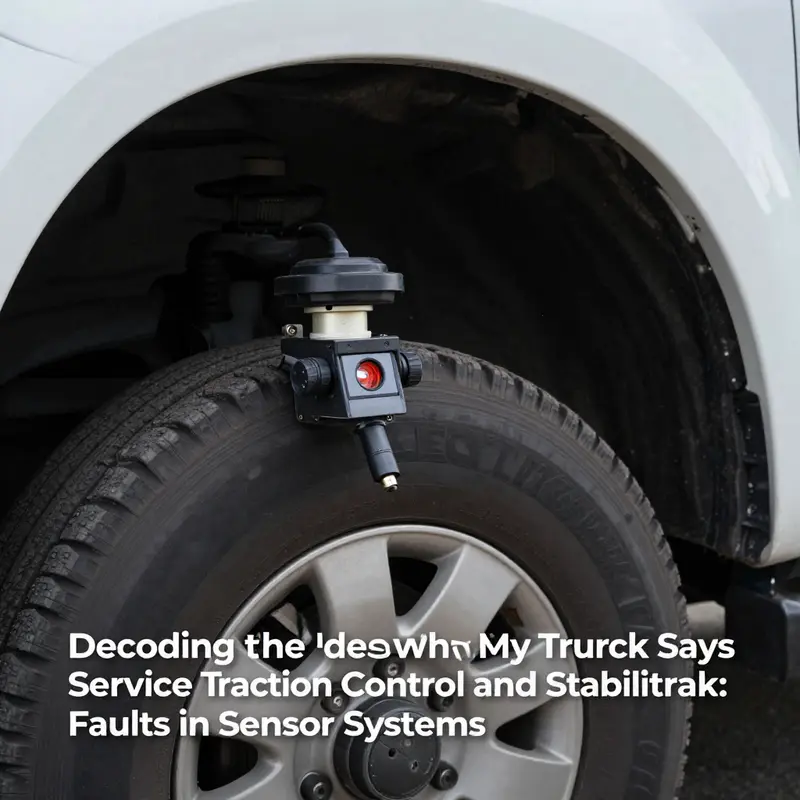
The reasons behind the warning are legible once you know where the signals come from. The wheel speed sensors are the most common culprits. They sit at each wheel and feed the ECU real‑time information about how fast a wheel is turning. Dirt, corrosion, or a damaged connector can distort the signal enough for the system to misread grip. A single contaminated sensor can cascade into a broader fault diagnosis, prompting the light to come on even if the rest of the chassis is behaving normally. Steering angle sensors, which gauge the driver’s intended direction, play a crucial role as well. If they become misaligned or fail—something that can happen after steering column work or even after a battery disconnect—the system may misinterpret the vehicle’s actual movement. Then there is the yaw rate sensor, the device that senses rotation around the vehicle’s vertical axis. Moisture, vibration, or exposure in areas prone to water intrusion can degrade its readings, leading the stability control to believe the truck is further off its intended path than it truly is. These sensors do not act in isolation; they feed an ABS module and a central control unit that together orchestrate everything from tire‑to‑tire braking to engine torque reduction.
Electrical health is another quiet adversary. Low battery voltage or a failing alternator can drop sensor performance just enough to spark a fault code. A damaged harness or loose connection in the sensor circuits can produce intermittent signals that the ECU treats as a fault. In some cases, a vehicle that has just crossed through deep water or mud emerges with momentary glitches, a reminder that sensor circuits are not immune to environmental effects. The net effect is that the warning appears, the systems go into safe mode, and you are left with the basic drivetrain and braking functions while the advanced safety nets sit out of service. While the truck can still be driven under normal conditions, the absence of traction and stability interventions can become a real risk when road conditions deteriorate or when sudden maneuvers become necessary.
Diagnosing the root cause is a process, not a single fix. The first step is checking if the warning is accompanied by other lights—an ABS light, a brake warning light, or other diagnostic indicators. If multiple lights glow, the probability that the issue involves the hub of safety systems rises, and a more thorough diagnostic is warranted. The practical next move is to retrieve diagnostic trouble codes (DTCs) with an OBD‑II scanner. These codes don’t just tell you that something is wrong; they point to the subsystem that is failing or misbehaving. A code like C0015 is often cited in discussions of wheel speed sensor faults, but there are many codes that can illuminate the path to the problem: a dirty probe, a corroded connector, or a sensor that has drifted out of calibration. The technician will review the codes in context, inspect the suspected sensor or wheel hub wiring, and test the sensor signal with a multimeter or oscilloscope. This is where the story moves from diagnosis to remedy.
What follows depends on what the data reveal. A sensor that is simply dirty or a sensor with a loose connection can often be repaired by cleaning and reseating the connector and reattaching the harness. In some cases, a sensor may need recalibration to restore proper alignment with the measured parameter. More stubborn faults—such as a degraded wheel speed sensor or a faulty steering angle sensor—usually require replacement. When a sensor is replaced, the system must be recalibrated and reprogrammed to re‑establish the correct baseline. It is not unusual for a small misalignment or a marginal reading to trigger recurrent warnings after a temporary fix was attempted, which is why a thorough test drive after repair is essential to confirm that the fault is truly resolved. In the workshop, technicians also verify the integrity of the ABS module and the related wiring harnesses, because a single compromised component can echo through the entire safety network and tempt a misdiagnosis based on a single symptom.
A practical note for drivers who want to stay out of the repair shop: while it is tempting to reset the warning light, resetting without addressing the underlying fault is a poor shortcut. The system has likely detected a problem that could return or worsen under riskier driving conditions. Instead, commit to a diagnostic visit, particularly if the message persists after a brief clean or if the warning reappears after a road test. If you operate in a fleet where vehicles routinely traverse unfamiliar terrain or weather, consider preventive measures that keep sensor signals clean and reliable. Regular maintenance that minimizes dirt buildup around wheel housings, sensor probes, and connectors can reduce false alarms. In private fleets, maintenance strategies increasingly emphasize sensor cleanliness and wiring integrity to prevent these warnings, ensuring that safety features stay available when they are needed most. This approach is not just about avoiding downtime; it is about preserving the protective logic that helps a driver respond to slippery roads, unexpected steering inputs, or sudden changes in traction, especially during winter or in regions with variable weather.
From a broader perspective, the diagnostic journey is anchored in the manufacturer’s official guidance and diagnostic tools. OEM service literature emphasizes checking the entire sensor family—wheel speed sensors, steering angle sensors, yaw rate sensors—and the ABS control modules that interpret their data. The guidance also reminds technicians to inspect the electrical system for voltage issues and to test sensor outputs under load conditions. While the exact steps can vary by model year and chassis, the underlying principle remains constant: stability control and traction control rely on precise, timely data. Any weak link in that data chain can trigger a fail‑safe response, which may feel like a temporary loss of a familiar safety feature at a moment you rely on it most. In practice, a careful diagnostic session often reveals that the fault has been intermittent—manifesting as a momentary warning during a rough road crossing or after a water‑soaked drive—only to return later if a deeper issue remains unresolved. The remedy then becomes a targeted repair rather than a broad, costly replacement program.
For readers who want a deeper, documented reference on how manufacturers address these concerns, official GM documentation and vehicle service bulletins provide the detailed scenarios, tests, and remedies technicians use to pinpoint failures within the sensor network and the control modules. This is not a consumer shopping guide; it is the technical backbone that informs a correct, durable repair. Understanding that this warning signals a data reliability problem rather than a direct mechanical doom helps set the right expectations. It also communicates why driving with the warning engaged in bad weather or on slick surfaces is inadvisable. The safest course is to treat the message with seriousness, schedule a diagnostic, and proceed with a repair plan grounded in sensor health, electrical integrity, and correct system recalibration. In short, the warning is not a nuisance, but a guardrail alert from a complex safety system whose job is to keep your steering input aligned with the vehicle’s actual motion.
External resources and OEM guidance can offer additional confirmation and steps for repair. For GM‑specific guidance, see GM Vehicle Service Bulletins, which outline the recommended procedures for traction control and stability control faults, sensor testing, and the proper sequence for diagnosis and repair. This ensures that the fix aligns with the vehicle’s intended safety behavior and preserves the integrity of the electronic stability control system as designed by the manufacturer.
When Your Truck Displays “Service Traction Control and Stabilitrak”: Practical Diagnosis and Next Steps
Immediate actions and practical diagnosis
If your truck flashes the message “Service Traction Control and Stabilitrak,” the vehicle is telling you its electronic stability and traction systems are not fully available. That does not always mean a catastrophic failure, but it does demand prompt attention. These systems monitor wheel speed, steering angle, and vehicle yaw to prevent wheel spin and loss of control. When they detect an error, they shut down or limit their functions and set a diagnostic trouble code in the control unit. You can still drive in calm conditions, but the margin for safety in rain, snow, or during sudden maneuvers is reduced. Treat the warning as a safety priority, not a convenience light.
Start with the simplest, fastest checks. First, verify the battery and charging system. Low battery voltage or a failing alternator can create erratic readings and disable safety electronics. If the truck struggles to start, or lights dim while idling, have the battery tested. A firm battery and stable charging voltage often resolve transient faults.
Next, confirm system settings. Many trucks have a stability or traction control disable switch. That button is sometimes pressed by accident, or a short press can trigger a different function than you expect. Press and hold the stability control button where applicable, then watch the dash to see if the message clears. If the light goes out and stays out, monitor it for a few drives to ensure the fix is permanent.
If basic checks don’t clear the message, inspect the obvious sensors. Wheel speed sensors are the most common cause of traction and Stabilitrak warnings. These sensors sit near the wheel hubs and read a reluctor ring or toothed tone ring. Dirt, corrosion, or a damaged ring can cause wildly fluctuating speeds or no signal at all. Visually examine each sensor and the tone ring for heavy rust, missing teeth, or accumulation of grime. Carefully clean sensors with a soft brush and safe cleaner; avoid hammering or bending the sensor. If a sensor looks broken or cleaning does not help, the sensor or the tone ring may require replacement.
Look for wiring and connector issues. Brake and stability sensors rely on small gauge wires and sealed connectors. Road debris, salt, or rubbing against suspension parts can chafe insulation. Pull the wheel well liner back if possible and inspect the harnesses for exposed wires, tight bends, or poor connectors. A loose or corroded connection at the sensor or at a control module will often produce intermittent faults that set multiple codes.
Water and mud intrusion can cause temporary faults. Driving through deep water, heavy mud, or a high-pressure wash that forces water into an ABS or traction control connector can trigger the warning. If the message appears right after such exposure, let the truck dry, then restart. If the message returns, the system likely sustained moisture-related damage or corrosion and should be examined by a technician.
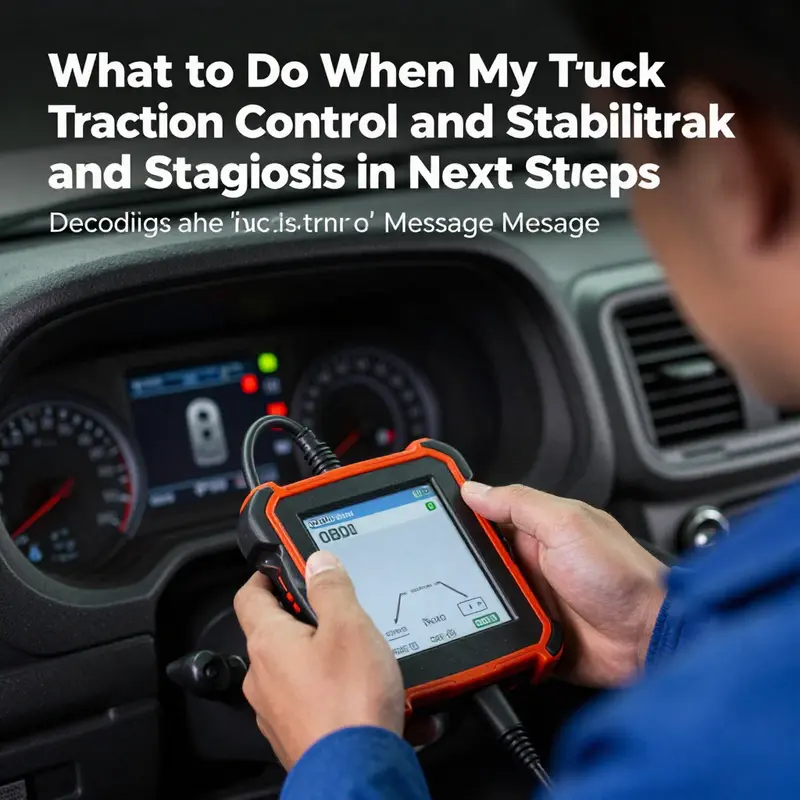
Use diagnostic codes to focus repairs. An OBD-II scanner that reads ABS and traction control modules provides the fastest path to a precise fix. Codes like C0015 indicate a wheel speed sensor issue, while codes tied to steering angle or yaw rate sensors point to calibration or sensor failure. Write down all codes and freeze-frame data if available. These data points give a clear starting place for a trained technician and save diagnostic time and cost.
Avoid taking shortcuts. Clearing the message with a scan tool without addressing the underlying fault can leave you driving with disabled safety functions. Likewise, repeatedly disconnecting and reconnecting the battery to reset the ECU can mask intermittent wiring problems and delay a proper repair. If the cause is uncertain, schedule a diagnostic appointment rather than guessing repairs.
When to call for professional help depends on your skill level and tools. If you have a good scanner, basic mechanical skill, and clear visual evidence of a bad sensor or damaged wiring, you may replace a wheel speed sensor yourself. If the wiring damage is extensive, the module requires bench testing, or the codes indicate internal ABS or control module faults, seek a certified technician. Modern vehicles often require module programming and sensor calibration after replacement. A specialist with the correct diagnostic equipment can perform these tasks safely and reliably.
Understand the repair scope and likely costs. Replacing a single wheel speed sensor is generally quick and modest in cost, often resolving the issue on the spot. Repairing wiring or replacing a damaged tone ring can take more time. Module replacement and programming are the costliest repairs. Request a written estimate that lists parts, labor, and any required calibrations. Ask the technician to clear codes only after confirming the repair. Keep records of codes and repairs in case the fault recurs.
Practice safe driving until the issue is resolved. Avoid highways in bad weather, fast lane changes, and heavy braking maneuvers that would normally rely on stability control. Increase following distance and reduce speed in wet or icy conditions. If the truck exhibits unusual behavior—pulling to one side, braking anomalies, or erratic ABS activity—stop driving and arrange a tow.
Communicate clearly with the shop. When you bring the truck in, describe any recent events that preceded the warning. Mention water crossings, new tires or wheels, recent brake work, or a dead battery. These clues often point to the cause. Provide the technician with the recorded trouble codes if you pulled them yourself. Ask what tests they will run and whether programming tools are necessary. Confirm the warranty on parts and labor.
Think about preventive measures to reduce future occurrences. Keep wheel housings and sensor areas clean, especially after driving in salty or muddy conditions. Inspect wiring during routine maintenance. Replace worn battery and charging components before they fail. If you operate in areas prone to water crossings, consider protective measures for exposed connectors.
For fleet operators and maintenance planners, track repeat occurrences and repair histories. Patterns in sensor failures, connector corrosion, or module replacements can indicate a design vulnerability or recurring environmental exposure. Fleet maintenance trends are a useful reference for shaping preventive programs. For insights into maintenance strategies for commercial vehicles, review trends in trucking maintenance.
Finally, use reputable references when troubleshooting. Manufacturer service information and technical service bulletins often describe known issues and approved repair procedures. Independent, authoritative articles can also offer practical steps and diagnostics. If you want a step-by-step guide and a clear description of what to do when traction control or stability lights appear, consult this external resource for further reading: https://www.motor.com/repair-and-maintenance/what-to-do-when-traction-control-light-comes-on
Addressing a “Service Traction Control and Stabilitrak” message involves a logical progression: verify power and settings, inspect visible sensors and wiring, read diagnostic codes, and then repair or replace the faulty parts. Treat the light as a real safety concern, and act quickly. A calm, methodical approach will get your truck back to full safety and save time and money compared with guesswork or delayed repairs.
When ‘Service Traction Control and Stabilitrak’ Appears: Why It Matters and What to Do Next

What the warning really means
When your truck displays Service Traction Control and Stabilitrak, it is not a minor notification. This message signals that the vehicle’s electronic stability control and traction management systems have detected a fault. Those systems work together to keep the truck predictable during acceleration, turns, and emergency maneuvers. Without them, the truck will not intervene as it should when a wheel slips, when the vehicle begins to yaw, or when one corner loses traction. You may still be able to drive, but you will be doing so without a key safety net.
Stabilitrak and traction control rely on a handful of sensors and an electronic control unit. Wheel speed sensors report each wheel’s rotation. A steering angle sensor reports where the driver intends to go. A yaw rate sensor measures the truck’s rotation around its vertical axis. The control unit compares these inputs. If the inputs disagree with the driver’s actions or expected motion, the system applies brakes to selected wheels and trims engine torque. That action corrects slides and prevents spins. When the system cannot trust its inputs or cannot activate the brakes and engine control, it will disable itself and present the warning.
The causes behind that warning range from simple and temporary to complex and potentially expensive. The most common failure is a damaged or failing wheel speed sensor. These sensors sit close to wheels and exposed drivetrain components. They can corrode, become contaminated with debris, or fail outright. Wiring and connectors leading to the sensors are vulnerable too. A chafed wire or a corroded connector will create intermittent signals and confuse the control unit. Low battery voltage or poor charging systems can also generate false errors. Electronic modules and ABS pumps sometimes fail, and software glitches can lock the system into a fault state after exposure to water or heavy road grime.
How you respond to the message matters. First, do not ignore it. The truck will drive, but the margin for error is smaller. Avoid driving on wet, icy, or loose surfaces until you resolve the issue. Avoid sudden evasive maneuvers. If you notice other warning lights—ABS, airbag, or brake system lights—assume the problem affects the vehicle’s broader safety network. That requires immediate attention.
A useful first step is a simple visual inspection. Look for obvious damage near the wheels. Check tire condition and pressure; a very low tire can confuse systems that monitor wheel behavior. Inspect visible wiring and connectors for corrosion, breaks, or rodents’ damage. If you recently drove through deep water or heavy mud, the fault can be temporary. Let the truck dry, then restart it to see whether the message clears. A temporary reset may clear the light, but recurrent illumination means an underlying issue remains.
Diagnostic scanning is the only reliable way to pinpoint the problem. An OBD2 scanner that reads ABS and chassis codes will reveal specific trouble codes. Codes identify the faulty circuit—wheel speed sensor at left rear, steering angle sensor miscalibration, or module communication error. If you have access to a scanner, record the codes and freeze-frame data. If you do not, take the truck to a qualified technician as soon as possible. Professional shops use advanced scan tools and guided diagnostics to test sensor outputs, check wiring continuity, and evaluate module health.
Beyond identifying the faulty part, the scan helps avoid needless replacement. Replacing a sensor without checking the wiring often returns the truck with the same warning. Technicians will test sensor voltages and resistance, use an oscilloscope to analyze signal waveforms, and inspect connectors under load. If the wiring is intact, they will test the ABS hydraulic unit and perform module communication checks. Software updates and calibrations may correct faults caused by corrupted control module data. In some cases, reprogramming the control unit or calibrating the steering angle sensor clears the message and restores full functionality.
Safety, cost, and liability are practical concerns that push prompt repair. Without traction control and stability intervention, the truck is more likely to spin or slide during sudden lane changes. This increases the chance of property damage, injury, or worse. Insurance claims and liability assessments after an accident may consider whether a driver knew about active safety system warnings. Repairing the system protects both driver safety and legal exposure.
Repair costs vary. A single wheel speed sensor is inexpensive to replace, and labor is moderate. Wiring repairs increase labor and cost. Module replacements and ABS pump repairs are costly. Diagnostic time also adds to expense, but it is necessary. Many fleets prioritize preventive maintenance to avoid unexpected downtime. If you manage trucks professionally, track sensor wear, wiring harness inspections, and battery health to reduce the likelihood of these warnings. For fleets, this issue ties directly into maintenance planning and budget decisions. For a discussion of maintenance trends and how proactive service reduces downtime, review trends in trucking maintenance.
If you are driving when the warning appears, use calm judgment. Pull off to a safe location when practical. Confirm the parking brake engages and the vehicle is stable before inspecting. If the truck is unstable or steering feels abnormal, call for a professional tow. Driving a heavy vehicle without active stability intervention places everyone at risk, especially when transporting cargo that shifts weight.
After repair, technicians will usually clear the trouble codes and perform a test drive to verify the fix. A clean scan and normal operation confirm resolution. After repairs, keep an eye on the warning lights during the first few drives and after heavy weather. If the message returns, ask the mechanic for a deeper diagnostic. Persistent faults often point to intermittent wiring problems or rare module issues.
Long-term prevention focuses on keeping sensors and wiring clean and dry, maintaining battery and charging systems, and scheduling software updates when recommended. If you often drive in water, mud, or salt, increase inspection frequency. Corrosion is a slow enemy; connectors that worked a year ago may fail now. Brake fluid level checks and brake system maintenance also contribute, because low fluid or degraded components can affect ABS hydraulic function.
One final point concerns modern vehicle networks. Traction control and stability systems do not operate in isolation. They share data with ABS, powertrain, and even airbag modules. A fault in one networked module can propagate warnings across the dashboard. That is why diagnostics are essential. Clearing the lamp without reading codes risks masking a deeper problem.
Addressing the warning promptly restores safety systems and protects the truck’s reliability. It prevents small failures from becoming major repairs and reduces the chance of an accident caused by compromised stability control. Use diagnostic tools or a qualified technician to read the codes, trace wiring, and test sensors. Avoid hazardous driving conditions until repairs are complete. For maintenance-minded operators, incorporate regular inspections that focus on sensor health and electrical integrity. For more on how fleets are handling maintenance challenges and investing in preventive care, see trends in trucking maintenance: https://fritzke-truckinginc.com/private-fleets-trends-in-trucking-maintenance/
For official technical information on how vehicle stability systems operate and why the systems matter, consult the vehicle maker’s published guidance: https://www.gm.com/vehicles/safety/stabilitrak
Practical Preventive Maintenance to Keep Service Traction Control and StabiliTrak Warnings Away
Understanding why your truck displays a ‘Service Traction Control’ or ‘Service StabiliTrak’ message starts with recognizing that these warnings are the vehicle telling you it can no longer manage wheel slip and directional stability reliably. These systems use multiple sensors and electronic modules to compare what you want the truck to do with what the truck is actually doing. When a mismatch or fault appears, the vehicle disables these safety features and alerts you. Preventive maintenance reduces the odds of that happening, and it helps you catch small issues before they turn into a safety problem.
A maintenance-first approach begins with the electrical basics. Low battery voltage, corroded terminals, and poor ground connections can cause intermittent faults that trip stability systems. Check the battery and charging system regularly. Ensure battery terminals are clean and tight. Replace the battery when capacity drops below manufacturer recommendations. Keep the alternator belt tensioned and inspect it for cracks. A simple voltage check can reveal weak charging that will otherwise lead to erratic sensor readings and warning messages.
Sensors are the next focal point. Wheel speed sensors, steering angle sensors, and yaw rate sensors supply the data the traction and stability systems need. Wheel speed sensors are most often the source of problems. Dirt, rust, or magnetized debris on the tone ring can confuse readings. During routine service, inspect tone rings and sensor heads for contamination and physical damage. Clean gently with a soft brush and brake cleaner if needed. Avoid hammering sensors into place. If you remove a sensor, handle it carefully; the sensing element is delicate and misalignment will create errors.
Steering angle sensors sometimes lose calibration after alignment work or suspension repairs. If you have new tires, carry out a wheel alignment, or hit a large pothole, have the steering angle sensor checked. If your truck owner manual recommends a calibration procedure, follow it or ask your technician to perform it. Simple calibration keeps the stability system accurately aligned with your steering input, which prevents false warnings.
Tires and alignment have a direct role. Uneven tread wear or inconsistent diameter between tires affects wheel speed calculations. Keep tire pressures at recommended values and rotate tires at scheduled intervals. Measure tread depth and replace tires before wear becomes uneven. Have a proper alignment performed at least once a year, and sooner if you notice steering pull or vibration. Alignment problems not only create tire wear but can also trigger stability control alerts by altering the expected wheel speed and steering geometry relationships.
Fuses and connectors are easy to overlook. A single blown fuse for the ABS or stability system will produce a service message. Inspect the fuse box and replace blown fuses with the correct amperage rating. Check connectors at sensor harnesses and at electronic control modules. Corrosion or a loose clip can create intermittent faults that are hard to track down. Use dielectric grease on connector pins when reassembling to slow corrosion and keep connections reliable.
Wiring and harness routing matter. On trucks, harnesses often run near heat sources, suspension components, and underbody exposure. Look for chafed insulation, rodent damage, and pinched wires. Repair damaged sections with proper splices and heat-shrink tubing. Avoid using tape-only repairs in areas exposed to water or road debris. Good harness routing and secure clips reduce the chance of a wire short or open circuit that will disable sensors.
Environmental exposure requires special attention. Driving through deep water, heavy mud, or snow laden with road salt can temporarily upset sensors or permanently damage tone rings and connectors. After extreme exposure, inspect sensor areas, clean them, and dry connectors. If you routinely work off-road or in muddy conditions, add a quick sensor check to your post-trip routine. Catching contamination early prevents corrosion from forming and prevents false warnings later.
Keep software current. Modern trucks rely on software logic in their control modules. Periodic updates from the manufacturer can fix bugs that cause erroneous warnings. Check your owner resources or talk to your dealer about available updates. A software update is often a low-cost step that can resolve intermittent system behavior when hardware checks show nothing wrong.
Use diagnostic tools early. An OBD2 scanner that reads ABS and stability system codes can reveal faults long before a technician does. If a warning appears, capture codes as soon as possible. Intermittent issues may clear after a restart, but many modules store freeze-frame data and code history. Document the codes and any conditions when the light came on, like sudden weather changes, hard braking, or off-road driving. This information shortens diagnostic time and reduces repair costs.
Avoid quick resets without repair. Clearing a warning light will not fix the root cause. It may temporarily silence the message, but problems that disabled the stability system can return. Persistent or recurring faults require component testing and replacement when necessary. Do not rely on reset as a long-term fix. If you must drive, do so cautiously and avoid conditions where traction or stability control would be critical.
Plan a schedule for preventive checks. At minimum, include battery and charging checks every 12 months, tire rotations and pressure checks every 6, and a visual sensor and harness inspection every oil change. If your truck is part of a fleet, formalize these checkpoints into a maintenance schedule. Fleet managers benefit from tracking recurring sensor failures or connector corrosion to identify systemic problems. For a practical discussion of fleet maintenance practices, see trends in trucking maintenance for private fleets.
When to call a professional: if the light stays on after basic checks, if multiple warning lights appear, or if you notice handling changes, seek professional diagnosis. A technician will use a factory-level scanner to read specific diagnostic trouble codes. They can test wheel speed signals with an oscilloscope, check module communications on the vehicle bus, and perform steering angle sensor re-calibration. Good diagnostics separate a simple sensor replacement from a more complex module or wiring repair.
Keep a log of repairs and occurrences. Recording when the warning first appeared, the codes found, repairs performed, and whether the message returned helps identify intermittent faults. Shops and technicians appreciate this history, and it improves the odds of a correct first-time repair. For owners who service their own trucks, a log reduces repeated troubleshooting steps and saves time.
Finally, prioritize safety. These warnings mean a core safety feature is offline. Avoid driving in wet, icy, or heavy-traffic conditions until the system is restored. Reduced traction and stability control capability increases the risk of loss of control during sudden maneuvers.
If you want the manufacturer’s specific explanation of stability system warnings, the official support page explains triggers and recommended actions in detail. For reference, see the manufacturer’s support article on the Service StabiliTrak warning light: https://www.gm.com/support/vehicle-service-troubleshooting/service-stabilitrak-warning-light-explained
Final thoughts
The ‘Service Traction Control and Stabilitrak’ warning is not merely a nuisance—it’s a critical indicator of potential safety issues that demand prompt attention. For businesses that depend on trucks for their operations, understanding the implications of these systems alongside proactive maintenance measures is vital for road safety. By recognizing the symptoms, diagnosing problems, and implementing proper preventive maintenance, you contribute not only to the safety of your fleet but also to the efficiency and reliability of your operations. Stay informed and keep your vehicles in peak condition for the roads ahead.