
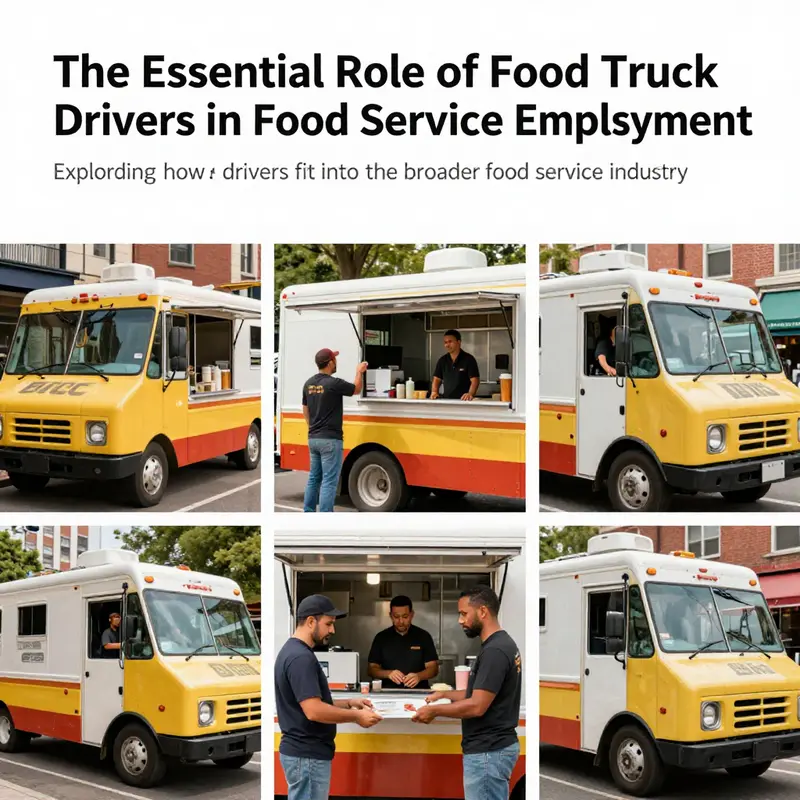
Food truck drivers play a pivotal role in the food service industry, often overlooked in discussions about food logistics and delivery. As we delve into their responsibilities, legal definitions, operational roles, and economic contributions, it becomes clear that these individuals are not just drivers but essential employees providing a necessary service that bridges preparation, transportation, and serving of food in diverse environments. This comprehensive overview will help stakeholders across various sectors understand the significance of food truck drivers as food service employees and their impact on the industry as a whole.
Behind the Counter and Behind the Wheel: Why Food Truck Drivers Are Food Service Employees
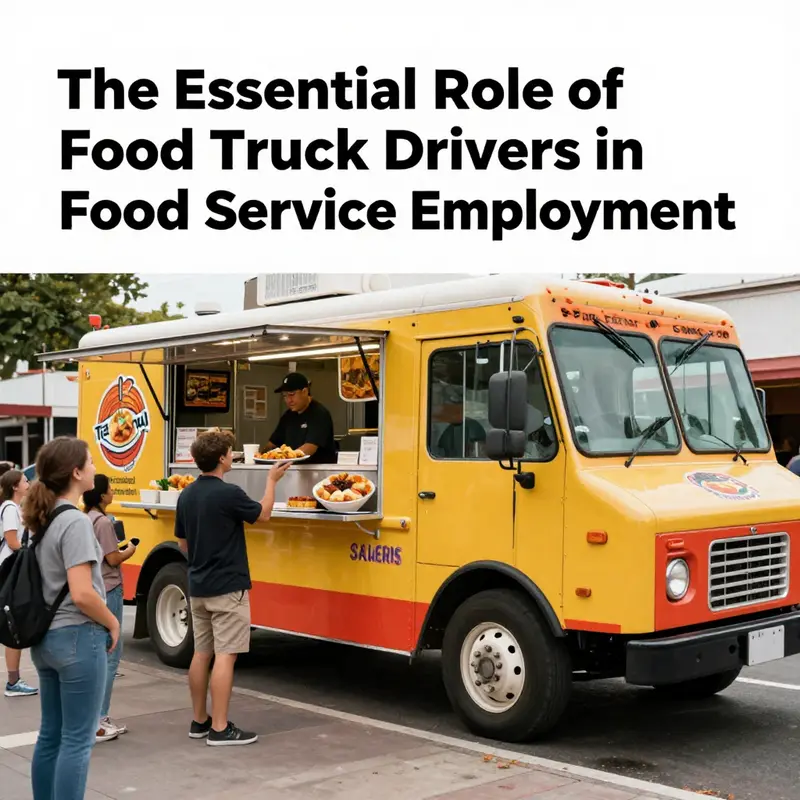
A food truck driver wears many hats. They are pilot, cook, server, inspector, inventory manager, marketer, and sometimes the face of a small culinary brand. That variety matters. It also explains why a food truck driver is correctly classified as a food service employee. This chapter ties the practical tasks of the role to how the industry and regulators see it. It also shows how that classification affects daily work, training, and career pathways.
At its simplest, a food service employee works with food, food equipment, utensils, or food-contact surfaces. A driver who loads, transports, prepares, serves, or otherwise handles food fits that description. The legal and operational definitions—used by employers, inspectors, and courts—look at what a person actually does, not only their job title. When a driver touches unpackaged food, operates cooking equipment, or cleans and sanitizes surfaces in the truck, they are performing food service duties.
This reality shapes the job in concrete ways. First, food safety is central. Drivers must manage temperatures, avoid cross-contamination, and follow local health codes. They monitor refrigeration and insulated storage during transport. They use thermometers before service. They clean work surfaces and utensils. Many jurisdictions require food handler certificates for anyone involved in preparation or service. Compliance is not optional; it is part of daily workflow.
Second, the driver’s responsibilities often extend into food preparation. In many operations, the person who drives also cooks. Menus designed for a small footprint require skill and speed. Drivers set up cooking stations, operate grills, and plate orders quickly. They balance speed with consistency. A single mistake can compromise safety or reputation. That dual role, of mobility and production, places drivers squarely within the food service workforce.
Third, the driver manages inventory and supply chains at the micro level. They track ingredient usage, estimate demand for events, and replenish stock between shifts. Perishable inventory demands close attention. Poor forecasting results in waste or shortages. When drivers plan routes they also think about when and where they can restock. That logistical thinking is integral to food service operations, where timing and freshness matter.
Customer interaction is another defining element. A food truck driver is often the public-facing staff member. They take orders, describe menu items, handle payments, and respond to complaints. This front-line role connects culinary work to sales and marketing. Service quality directly influences repeat customers and word-of-mouth. Drivers need soft skills as much as technical competence.
The physical and spatial design of the truck informs how well a driver can do their job. Efficient layouts enable safe workflows. Proper placement of grills, fryers, refrigeration units, and sinks reduces cross-traffic and lowers contamination risk. Ventilation, waste disposal, and non-slip flooring matter for both safety and regulatory compliance. The driver’s role includes maintaining that environment and ensuring it remains sanitary and functional.
Market flexibility also characterizes the work. Food trucks can move to where customers gather. They can test neighborhoods and menus with little overhead. That mobility makes the driver a strategic asset. Drivers adapt menus to local tastes and craft service models for different contexts—festivals, office lunch hours, or late-night streets. Success requires on-the-fly adjustments and a keen sense of demand signals.
From a workforce perspective, the job presents both opportunities and challenges. Many drivers find the work rewarding and entrepreneurial. They gain culinary autonomy and direct customer feedback. At the same time, the job is physically demanding and irregular. Long hours, weather exposure, and tight service windows are common. These trade-offs shape retention, compensation models, and the skills employers value.
Training and professional development are central to turning informal experience into reliable performance. Food trucks often operate with lean staff, so cross-training is essential. Drivers learn food safety, sanitation, basic culinary techniques, customer service, and mechanical basics for the truck. Employers that invest in training reduce risk, improve consistency, and increase worker satisfaction. There is a clear parallel with other transport professions where training and certification improve outcomes and career mobility; similar investments pay off in food truck operations as well. For a closer look at workforce investments in transport and logistics, see this piece on investing in people in trucking.
Regulatory implications follow from classification. Because drivers act as food handlers, they are subject to health inspections and must meet food safety regulations. They may need business permits, mobile food vendor licenses, and vehicle inspections. Insurance requirements cover both transport and food service liabilities. Employers must account for these obligations when assigning duties and designing job descriptions. Misclassification—or ignoring the service component—creates legal and safety risks.
The role also intersects with public health and emergency planning. Food trucks often serve during events, disaster relief, or community gatherings. Drivers trained in safe handling and mobile service protocols become valuable in these contexts. Their ability to maintain food safety while operating in non-traditional environments underscores their classification as food service employees.
Compensation and benefits reflect the hybrid nature of the work. Wages vary widely by market, skill level, and employer. Some drivers earn hourly pay with tips. Others work as owner-operators who collect revenue after expenses. Benefits and career paths depend on the workplace. Larger catering companies or food service providers may offer structured pay, benefits, and advancement. Smaller independent operators often provide more autonomy but fewer formal benefits. These distinctions matter for workforce planning and for prospective employees weighing stability against independence.
Safety on the road and in the truck is a combined concern. Drivers must follow traffic and vehicle safety rules while also protecting food safety. That means securing equipment, managing refrigeration during transit, and ensuring the truck is safe to operate under service conditions. Proper maintenance reduces breakdowns that can spoil food or interrupt service. Preventive maintenance and clear procedures for dealing with mechanical issues are part of the job description, just as sanitation protocols are.
Technology and process improvements influence the role as well. Point-of-sale systems, temperature sensors, and inventory apps help drivers manage their tasks more efficiently. Some operators use route-planning tools to optimize stops and restocking. These tools turn the driver into a data-informed operator who can maximize sales and minimize waste. Adopting technology also raises the skill floor, requiring basic digital literacy from drivers.
Beyond the immediate job, classification affects identity and long-term careers. When drivers are recognized as food service employees, they gain access to training, benefits, and protections associated with the industry. That recognition supports career ladders—moving from driver to head cook, manager, or multi-unit operator. It also encourages standards that improve food safety and customer experience across the sector.
The practical overlap between driving and food service work also shapes how managers recruit and retain staff. Employers seek candidates with multitasking ability, reliability, and customer focus. They look for practical culinary skills, an understanding of food safety, and the stamina to work long, intense shifts. Good employers create roles that set clear expectations and provide the tools workers need: well-designed trucks, proper sanitation supplies, adequate refrigeration, and opportunities for rest and recovery.
Finally, the food truck driver’s classification speaks to the broader economics of mobile food. Mobile vendors reduce barriers to entry for culinary entrepreneurs. Drivers help test concepts and generate cash flow for expansion. Recognizing drivers as food service employees helps formalize the sector. It encourages investment in training, equipment, and safety systems. That formalization supports a sustainable, professionalized mobile food ecosystem that benefits workers and customers alike.
Together, these points make the classification clear and practical. A food truck driver does more than move a vehicle. They prepare and serve food, maintain safe environments, manage supplies, and engage customers. Those activities align squarely with the duties of food service employees. Acknowledging that role has consequences for regulation, training, compensation, and workplace design. It also honors the reality that mobile food operations rely on people who can blend culinary skill with transportation and service. For more on how work culture and career prospects appear in similar roles, see employee reviews and experiences here: https://www.indeed.com/cmp/Gordon-Food-Service/reviews?campaignId=38469&source=jobcard
On the Road to the Open Kitchen: Navigating Whether a Food Truck Driver Is a Food Service Employee
When a food truck rolls into a downtown square or a busy festival lot, the scene often feels like a seamless blend of street food theater and mobile logistics. There are cooks flipping patties, cashiers taking orders, and drivers steering through tight corners with a stack of insulated bags and cooler boxes in tow. In the public eye, this mix appears as a single enterprise—a small, bustling kitchen on wheels. Yet behind that surface, a crucial question lingers for workers, employers, and regulators alike: is the person who drives the truck a food service employee, or is the role better understood as part of transportation or logistics? The answer is not a simple label, but a nuanced determination that hinges on duties, responsibilities, and how the work intersects with the core activities that define food service. This chapter moves through that nuance, drawing on legal definitions, practical realities of daily work, and the shifting landscape of labor classifications that affect tens of thousands of mobile food operations across the country and beyond.
From the outset, the lay of the land is shaped by two distinct but related concepts: the legal definition of a “food service employee” and the functional reality of what a food truck driver actually does. The term “food service employee” typically comes from labor regulations that categorize workers by the kind of work they perform within the food service industry. In many jurisdictions, these workers are those who directly participate in preparing, handling, distributing, or serving food within a food service operation—from a full-service restaurant kitchen to a pop-up stall. It is a broad category designed to capture the workforce that ensures meals reach customers in a timely, safe, and sanitary manner. The question then becomes whether a food truck driver’s day-to-day tasks square with those duties, or whether their primary function remains transportation—moving food, equipment, and personnel from point A to point B with an emphasis on logistical efficiency rather than culinary production or customer service at the point of sale.
To frame the issue with legal clarity, it helps to examine a widely cited legal resource that directly addresses terminology used in the food truck ecosystem. According to the definitions offered by Law Insider, the label of a “food truck operator” refers to the person who owns, manages, or controls the operation of a food truck. This definition recognizes ownership and overall control as central to the operator role. However, it does not implicitly say that the driver—who is often a separate employee or contractor—falls squarely under the umbrella of “food service employee.” In other words, the operator and the driver can be distinct individuals with overlapping duties, and their classification may diverge based on the actual tasks performed by the driver.
Where the rubber meets the road is in the day-to-day duties that accompany the role. A food truck driver’s primary responsibility, historically, is transportation: ensuring the vehicle is roadworthy, maintaining proper chain-of-custody for perishable items, and delivering food and equipment to the service site while preserving safety and quality. In a narrow view, this aligns more closely with transportation or logistics work than with the core activities of food preparation and direct customer service that courts and regulators often associate with food service employment. Yet the lines blur quickly in practice. A driver may routinely unload crates of ingredients, verify the quality and temperature of perishables, set up portable cooking surfaces, or even operate basic food preparation at the stall during a rush. In many small and medium-sized mobile operations, drivers are asked to do more than just drive. They may help with stocking, ordering, on-site assembly, or even sales in the window when the team is short-handed. When this happens, the role becomes more deeply intertwined with food service functions.
The U.S. Department of Labor, which plays a central role in defining employment classifications for workers under federal law, emphasizes that the term “food service employee” generally refers to individuals who directly participate in food preparation, distribution, or customer service within a dining setting. A standard restaurant kitchen is a classic example used to illustrate the scope of this category. The question then becomes whether a food truck driver’s involvement in food handling or direct customer interaction crosses the line from transportation into the realm of food service. If the driver’s duties are strictly logistical—driving the truck, loading and unloading the vehicle, and ensuring timely delivery with minimal contact with the food product at the point of sale—their classification is more likely to align with transportation or logistics personnel. If, however, the driver plays a meaningful role in on-site food handling, cooling and storage checks, or direct customer service at the point of sale, the classification becomes less clear and more likely to be interpreted as partially within the food service sphere.
Emphatically, the central factor is not the title on a job posting but the substance of the work performed. This is consistent with practical regulatory thinking: job titles can be misleading if they obscure the actual duties. In many regulatory and court decisions, a worker’s status hinges on who controls the essential tasks and who performs the critical functions of the role. If the driver is responsible for maintaining cold chain integrity, monitoring food safety at the point of preparation or service, or actively participating in the assembly and service of meals, those elements tilt the classification toward the food service spectrum. Conversely, if the driver’s responsibilities are limited to moving goods efficiently from one location to another while leaving food preparation and customer interaction to other team members, the role aligns more closely with the transportation side of the industry.
One practical implication of this distinction is the scope of labor protections and benefits that apply to the worker. Food service employees often enjoy wage protections, overtime rules under the Fair Labor Standards Act (FLSA), meal and rest break provisions where applicable, and sometimes eligibility for tipped-wool rules when a role includes significant customer service. Transportation and logistics workers, by contrast, are frequently classified as non-exempt or exempt based on their duties and salary arrangements, but the key point remains that their primary classification tends toward the transportation sector. When a driver takes on additional food service duties, employers must be mindful of how those duties affect overtime eligibility, wage calculations, and any applicable state or municipal labor regulations. In this sense, classification is not a mere formality; it shapes pay scales, scheduling, and even safety standards.
Another layer of complexity arises from the broader regulatory context and the evolving nature of work arrangements in the gig economy. Food truck operations often operate with a lean staff model, especially at peak events. In such settings, job duties tend to overlap, and individuals wear multiple hats. A driver may be an employee of a food truck company or an independent contractor, depending on how the business structures its relationships and contracts. Some operators rely on independent contractor models to maintain flexibility, reduce payroll overhead, and adapt to fluctuating demand. Others insist on employee status to ensure consistent compliance with safety standards, labor laws, and benefits. This tension is not unique to mobile food; it reflects a wider shift in how work is organized in the modern service economy. The classification questions become a matter of risk and compliance, as misclassification can invite penalties from labor departments, back pay obligations, and reputational costs for the business.
From a practical standpoint, a nuanced approach to the driver’s role can help align operations with regulatory expectations while preserving the agility that makes food trucks appealing. If a driver is mainly responsible for transporting food and equipment, with strict boundaries that prevent involvement in food preparation or customer service, employers should maintain a clear, written job description that emphasizes transportation duties and the non-involvement in food handling. If the operation uses a hybrid model where the driver also assists with on-site setup, quality checks, or small-scale service activities, the employer should document these partial duties carefully. A good practice is to map duties to a formal classification framework that distinguishes core responsibilities from auxiliary tasks. This helps mitigate misclassification risks and provides a transparent basis for wage-and-hour calculations, which can become especially important during peak seasons or large events when hours accumulate quickly.
The practical realities of food safety and quality add another dimension to the conversation. Food safety regulations require traceability, temperature control, sanitation, and proper handling of food products. In a mobile setting, the line between transportation and food handling can blur when a driver directly participates in these safety-sensitive tasks. For example, a driver who verifies the temperature of perishable ingredients during loading, ensures that cold storage units maintain required temperatures during transit, or participates in on-site food protection practices is engaging in functions that are central to food service. In such cases, even if the driver’s primary job is to deliver, the involvement in critical food safety processes makes a compelling case for including the worker within the broader food service labor category for regulatory and safety considerations.
State laws can further complicate the landscape. Some states have adopted labor regulations that explicitly address mobile food operations and post-assembly worker classifications, while others rely on more general standards for employee vs. independent contractor status. In these contexts, a driver’s status could hinge on rather specific criteria, such as control over work schedules, the extent of direction and instruction from the operator, the degree of integration with the food-service team, and the presence or absence of a permanent, ongoing role in the business. In practice, operators who rely on a mixed model often find it prudent to conduct a periodic internal review of job duties and to consult with labor law counsel to ensure continued compliance as their business evolves.
The research materials summarized here emphasize a crucial takeaway: there is no universal label that automatically places every food truck driver into the same employment category. The classification is best understood as a spectrum. At one end sits the driver whose role is strictly transportation, with minimal interaction with food systems or customer service. At the other end sits the driver who actively participates in food handling, safety checks, or in-shop service tasks, thereby merging transportation with food service duties. Most real-world scenarios fall somewhere along that spectrum, requiring careful analysis of duties rather than reliance on a job title or a single task description. This nuanced view aligns with the broader labor landscape, where classification is increasingly situation-specific rather than uniformly defined by industry stereotype.
The implications for internal operations are practical and measurable. For operators, documenting the actual duties performed by drivers creates a transparent basis for wage policies, scheduling practices, and safety training. It also informs decisions about who should be classified as an employee versus an independent contractor and how to structure benefits, if any. For workers, clarity about classification affects expectations for pay, eligibility for overtime, and access to certain protections. The delicate balance is to preserve the flexibility that makes a mobile business viable while ensuring that workers receive fair and legally compliant treatment aligned with their actual duties.
To bring a concrete sense of the regulatory landscape, consider a framework that recognizes the operator as the central actor in the food truck ecosystem, but treats the driver’s classification as contingent on duties. The operator, who owns or controls the truck, is responsible for ensuring that the business complies with safety, health, and labor standards. The driver, while essential to delivering the service, may or may not be immersed in food service activities based on the specific tasks assigned. The best practice is to document who performs what and to adjust classifications if the scope of work expands or contracts over time. This approach helps avoid the friction that arises from shifting duties and ensures that both compliance and operational efficiency are preserved.
One can reflect on the broader implications by considering how labor definitions interact with customer expectations and the brand image of a mobile food business. A company that relies on a straightforward transportation model may emphasize efficiency, reliability, and quick turnover. A company that blends food preparation and service with delivery functions may highlight flexibility, on-site hospitality, and quality control as part of its value proposition. In both cases, the clarity of job roles matters not only for legal compliance but also for performance management, training, and customer experience. When a driver is viewed as part of the food service team through duties that involve food handling and customer interaction, teams often benefit from cross-training that elevates service quality and food safety outcomes. When the driver remains a transportation-focused role, emphasis can shift toward logistics optimization, route planning, and vehicle maintenance. Either path can be successful, but each demands an explicit understanding of who does what and why it matters.
For readers who want to dive deeper into how these definitions are applied in practice, regulatory bodies and legal resources offer detailed guidance on the nuanced distinctions between employee and contractor status in mobile food operations. The Law Insider definition cited earlier provides one lens for understanding the terminology in play, while the U.S. Department of Labor framework offers a broader context for how employment relationships are evaluated in the service sector. These sources together highlight the essential principle that the classification should reflect actual duties and the employer’s control over the work, not just the title assigned to a worker. In the end, the road to the open kitchen is navigated most effectively when businesses keep the focus on duties, safety, and the fair treatment of workers, while regulators emphasize compliance with clear, task-based criteria rather than relying on labels alone.
In this sense, the question—Is a food truck driver a food service employee?—has a layered, context-dependent answer. If the driver’s tasks are limited to moving the vehicle, loading and unloading, and ensuring timely delivery, without involvement in food preparation or direct customer service, the classification is more likely to align with transportation roles. If the driver also hands ingredients, monitors temperatures, assists with cooking, or serves customers, the line blurs into the food service domain, and the driver’s status becomes more ambiguous and potentially shared across categories. The most prudent approach is to document exact duties, align them with regulatory expectations, and periodically review classifications as operations scale or shift. In short, the open kitchen on wheels is not defined by a single label but by the real work that happens in every shift, every event, and every city where the truck operates.
For operators who want a practical anchor, a brief cross-reference to regulatory and industry considerations can help. See the discussion of cross-border regulatory issues as food trucks navigate varying standards across jurisdictions and events. Cross-border regulatory issues.
External reference: for a juridical framing of terminology in the food truck context, see Law Insider’s entry on food truck operator. https://www.lawinsider.com/dictionary/food-truck-operator
Beyond the Wheel: The Operational Role of Food Truck Drivers as Food Service Employees
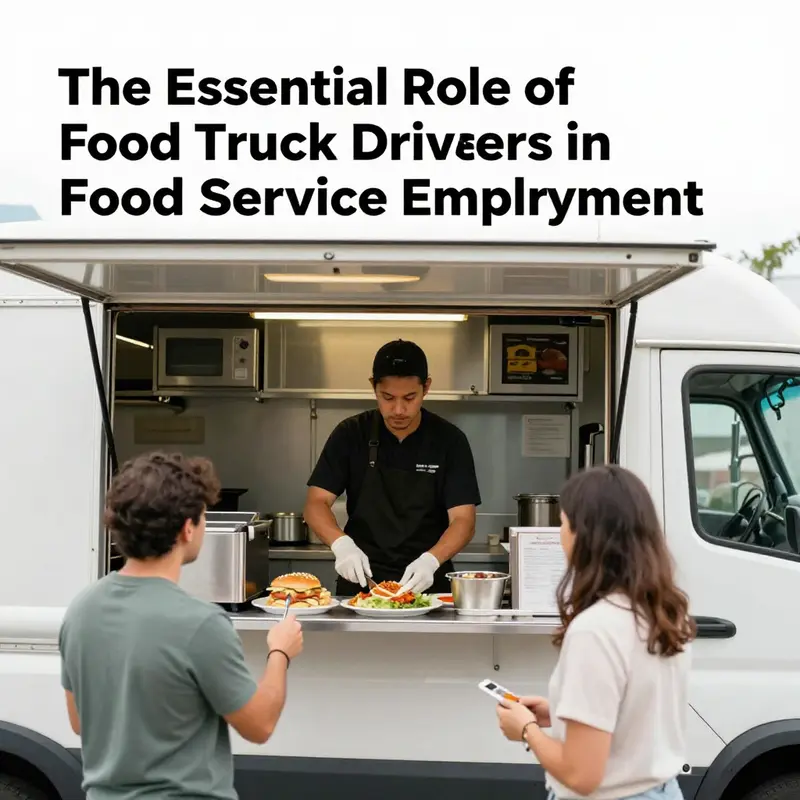
Operational Responsibilities of Food Truck Drivers in Food Service
A food truck driver is far more than a person behind a steering wheel. In a mobile food business, the driver often functions as a frontline food service employee. Their responsibilities span logistics, food safety, customer interaction, and on-the-spot decision-making. Each task they perform affects food quality, regulatory compliance, and the customer experience. This chapter weaves those duties into a single operational narrative, showing how driving, serving, and managing a mobile kitchen combine into one essential role.
Transporting the truck to the right place at the right time is the first visible duty. Drivers plan routes to reach high-traffic locations while meeting scheduled events. Good route planning reduces fuel use, shortens service windows, and prevents late arrivals. Drivers also obey traffic and parking rules to avoid fines or forced relocations. Those interruptions directly harm sales and reputation, so anticipating restrictions matters. Regular vehicle checks before each shift are part of this transport responsibility. Drivers inspect brakes, lights, tires, and refrigeration systems. They watch for warning signs in the engine and pay attention to onboard gauges. This proactive maintenance prevents breakdowns that could spoil food, delay service, or risk safety.
Inventory management begins before ingredients are loaded and continues through service. Drivers monitor stock levels and rotate supplies to use the oldest items first. They follow specific storage rules during transit, keeping perishable items at controlled temperatures. Ice chests, insulated containers, and powered refrigerators need constant monitoring. Drivers log temperatures and note any deviations immediately. When inventory runs low, drivers communicate with suppliers or owners to arrange restocks. That purchasing role can expand to include receiving deliveries, checking invoices, and verifying that products meet order specifications. Each of these small actions helps maintain consistent menu quality and prevents waste.
Setting up and breaking down at each location is another area where drivers take the lead. They arrive early to position the truck properly, deploy awnings or signage, and assemble serving stations. Depending on the truck layout, drivers may set up power connections to external generators or shore power. They ensure grills, fryers, warming cabinets, and refrigeration units power up safely. A neat and organized workspace reduces service times and lowers the risk of accidents. At the end of service, drivers follow a consistent breakdown routine. They clean surfaces, secure equipment, stow loose items, and confirm that waste has been contained for proper disposal. Breaking down efficiently keeps the truck ready for the next event and reduces the time between services.
Health and safety compliance underpins every operational decision. Food safety rules govern handling, cooking, and storage. Drivers must understand cross-contamination risks and implement controls. They use separate utensils and containers for raw and cooked foods. Food contact surfaces are cleaned and sanitized regularly. Drivers monitor cooking temperatures and hold hot and cold food at safe levels. They keep detailed logs when required by local health departments. Compliance also extends to personal hygiene. Drivers wash hands regularly, wear appropriate clothing, and use gloves as needed. They know when to remove themselves from food handling, for example, if they have an illness that could spread to customers.
Many local authorities require specific permits and inspections for mobile food businesses. Drivers often act as the primary contact during inspections. They present temperature logs, cleaning schedules, and maintenance records. A driver’s knowledge of these documents streamlines inspections and prevents violations. Familiarity with local codes also helps drivers choose compliant parking locations. They avoid spots that could attract complaints or lead to citations, protecting both immediate revenue and long-term operating rights.
Customer service is increasingly part of the driver role. In smaller teams, drivers take orders, prepare simple items, and handle payments. That front-line interaction shapes the brand and builds repeat business. Drivers must communicate menu options clearly and manage expectations on wait times. They handle complaints with calmness and an eye toward resolution. A polite exchange can turn a slow day into a loyal customer. When the truck is busy, drivers coordinate with other team members, calling out orders and ensuring timely handoffs. Their ability to multitask under pressure determines throughput during peak hours.
Operational success requires adaptability. Weather, crowds, supply disruptions, and equipment failures are common challenges. Drivers make real-time decisions: rerouting to avoid roadblocks, shifting menus when an ingredient runs out, or moving service to a sheltered location during rain. Quick, informed choices reduce downtime and preserve food quality. Drivers also track sales trends and relay that information to owners or managers. Knowing which items sell well at particular events helps shape restocking plans and future menus. That feedback loop connects the on-the-ground realities to broader business strategy.
Communication skills are essential. Drivers liaise with suppliers, event coordinators, venue managers, and health inspectors. They coordinate arrival times, delivery windows, and setup requirements. Clear, timely communication reduces misunderstandings and speeds problem resolution. For example, informing a supplier of a delayed arrival avoids missed deliveries or perishable spoilage. Professional communication also builds valuable relationships that can open new regular spots or improve vendor terms.
Record keeping and basic administration are part of the job. Drivers may manage sales records, cash handling, and end-of-day reconciliation. They maintain logs for temperature checks, cleaning routines, and maintenance tasks. Accurate records support compliance and help diagnose issues when something goes wrong. These administrative duties demand attention to detail and discipline, because sloppy records can lead to regulatory trouble or financial losses.
Safety beyond food handling includes public and workplace safety. Drivers secure aisles and service windows to prevent slips or falls. They ensure propane tanks, fuel lines, and electrical connections meet safety standards. Fire suppression equipment must be in place and accessible. Drivers check for tripping hazards and maintain a clear customer flow to avoid crowding. Keeping staff trained in emergency procedures reduces risk and preserves a safe environment for customers and employees.
Training and continuous improvement often fall within a driver’s remit. Experienced drivers mentor new team members on routes, setup routines, and health-code best practices. They pass on tacit knowledge, such as which parking locations are reliably high-traffic. Many operators invest in training because it reduces mistakes and increases efficiency. For companies focused on operational excellence, investing in people pays off in reliability and reputation. Where relevant, industry trends in maintenance and fleet care inform a driver’s practices and priorities. For drivers managing vehicle health and uptime, following broader maintenance thinking helps keep a mobile kitchen operational and safe. For a deeper look at maintenance trends in similar mobile operations, see this discussion of private fleets and maintenance strategies: trucking maintenance trends.
A food truck driver’s role also intersects with the legal classification of staff. Because they handle unpackaged food, food-contact surfaces, and food equipment, drivers are typically categorized as food service employees. This status carries legal obligations like food safety training and adherence to workplace health standards. It also makes them eligible for many labor protections and benefits available to food service workers. Understanding this status helps drivers, owners, and regulators align expectations about training, oversight, and workplace responsibilities.
Operational excellence in a food truck is visible in small routines. Drivers who check temperature logs twice per shift prevent spoilage. Those who secure signage and position the truck for optimal access boost sales. Drivers who run consistent cleaning routines avoid inspection failures. Each disciplined habit compounds into reliability over time. Consistent operations also reduce stress for the rest of the team and keep the business nimble in the face of unforeseen disruptions.
Finally, the driver’s role influences the brand directly. The way a driver greets customers, handles orders, and manages wait times becomes part of the customer’s memory. A reliable driver cultivates trust, and trust builds loyal customers. In competitive markets, reputation often separates successful trucks from the rest. For mobile food operations, that reputation begins with the person who brings the truck, sets up service, and stands at the window.
Drivers are integral to every link in the mobile food chain. They blend logistical skill, food safety discipline, customer service, and basic administration. Their decisions affect food quality, public safety, and regulatory compliance. Far from being solely vehicle operators, food truck drivers act as full food service employees. Their operational competence sustains the business day after day, event after event.
For practical guidelines on safe food handling and preparation that drivers should integrate into daily practice, consult the U.S. Department of Agriculture’s Food Safety and Inspection Service: https://www.fsis.usda.gov/food-safety/safe-food-handling-and-preparation
Steering the Service Chain: Why Food Truck Drivers Are Food Service Employees and What It Means for the Industry
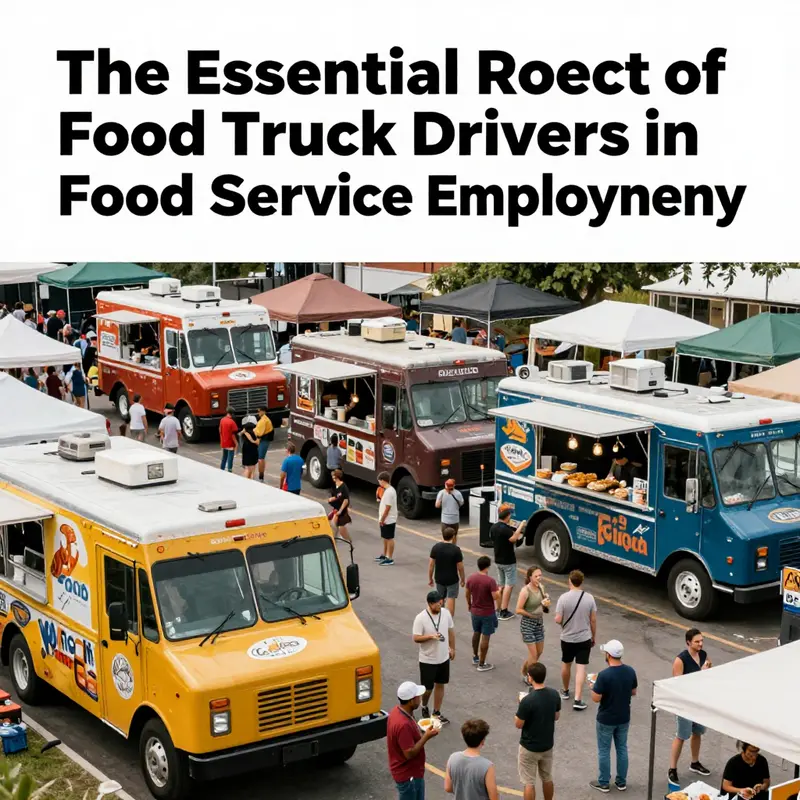
The question of whether a food truck driver is a food service employee may seem technical on the surface, but it sits at a crossroads of labor law, industry practice, and the everyday functioning of mobile food service. When the public thinks of a food truck, they picture food sizzling behind a small window, orders shouted over the clatter of grills, and the driver who wheels the truck into a new neighborhood to serve a hungry line of customers. Yet the job description that defines who handles the food, who maintains the equipment, and who interacts with guests is broader than a single title or paycheck. In this landscape, official classifications matter because they shape wages, benefits, safety training, and even the longer arc of career pathways within the service economy. A concise definition offered by reputable industry sources frames a food truck employee as someone who works with unpackaged food, food equipment or utensils, or food contact surfaces in a food truck, and who operates or drives the vehicle as part of the food service process. Read in that light, the person who drives the truck is not merely a courier but a crucial member of the food service team, whose responsibilities extend from the road to the dining window and back again to the preparation space for the next order. This framing aligns with how the broader food service sector conceptualizes its workforce: not only cooks and servers but anyone who participates in the life cycle of food from storage and transport to presentation and service. The practical implications are real: job classifications influence who is eligible for benefits and workers compensation, who is entitled to overtime, who is bound by safety protocols, and who participates in training that keeps food safe and customers satisfied. In many jurisdictions, the act of driving a food truck while handling food and interacting with customers creates a continuum of duties that blurs the line between transportation and food service, reinforcing the view that food truck drivers are integral to the food service workforce rather than a separate, purely logistics role. This is not a pedantic distinction; it affects how operators recruit and retain staff, how they design schedules to ensure both timely delivery and consistent service quality, and how they plan for disruptions that might otherwise undermine the customer experience. The practical consequence is that legitimacy of classification becomes a question of operational reality as much as regulatory text. When a driver assists with food handling, cleans a surface touched by guests, or trains new team members on safe food handling practices, the job description expands beyond moving a vehicle to embody the full cycle of food service operation. The result is a workforce that is more resilient and cohesive, capable of delivering the experience customers expect from mobile dining concepts while maintaining the safety and quality standards that undergird the industry as a whole. The research materials outlining the economic footprint of food truck drivers reinforce this perspective by highlighting the central role of drivers in meeting rising demand for fast, reliable, and customizable food delivery. In today’s market, consumers expect not only speed but accuracy in orders and a willingness to accommodate special requests. This has elevated the driver’s role from raw transportation to a hybrid position that combines logistics with front-of-house service. The driver becomes part of the customer-facing team, negotiating the pace of a busy service, ensuring that perishables travel safely, and upholding food safety practices during every leg of a route. The market impact of this transformation is not theoretical. It is evidenced by the broader trend of increasing demand for delivery and the corresponding strategic shifts among operators to safeguard supply chains, even when that means rethinking how they staff and deploy their mobile fleets. A key driver of this shift is the pronounced driver shortage that has become a bottleneck for the food service industry at large. Food service operations—whether in brick-and-mandarin form or on wheels—depend on dependable, qualified drivers to move perishable items between supplier, kitchen, and customer in a timely fashion. When roughly seven in ten shipments in the United States traverse by truck, as contemporary data suggests, the availability of capable drivers becomes a constraint that reverberates through every link in the chain. The restaurant that cannot receive a steady stream of ingredients faces the risk of stockouts, menu limitations, and reduced customer satisfaction. In a food truck setting, where inventory turns are rapid and menus often hinge on fresh produce and ready-to-serve items, the role of the driver is especially prominent. Even a minor delay can cascade into a missed service window, a compromised dish, or a rushed service that erodes the guest experience. This reality helps explain why the classification conversation is not merely academic. It is a practical matter tied to the daily operations that define how well a mobile food business can perform under pressure and how robust its margins can be in the face of a lean labor market. The economic literature on driver shortages highlights a cascade of consequences that touch the core economics of food service. When qualified drivers are scarce, transportation costs rise as operators compete for available capacity, often leading to higher prices for perishable goods or tighter menu choices to minimize waste. Delays in delivery can cause stockouts, forcing operators to substitute ingredients or rely on prepped items that may not align with customer expectations. The result is a delicate balancing act: operators must manage inventory prudently while maintaining flexibility in sourcing and menu design. For many food truck operators, this balancing act is rendered even more complex by the mobile nature of the business. A truck lacks the fixed storage and on-site prep facilities of a traditional restaurant, so the driver’s role becomes entwined with logistics planning, food safety, and customer service in a compact, dynamic operational environment. In this sense, the classification of the driver as a food service employee is not just a label; it is a recognition of the integrated skill set required to deliver consistent service under variable conditions. The research results emphasize how demand for delivery and the need for reliable, timely service have intensified as consumers adopt a preference for quick, customized meals and seamless ordering experiences. This trend has created a feedback loop: customers expect greater speed and accuracy, operators respond by refining routes and training, and drivers become more central to service quality. The driver shortage then magnifies existing vulnerability in the supply chain. As the research points out, a significant portion of freight is moved by trucking, and when the talent pool narrows, the entire chain experiences higher carrying costs, longer lead times, and increased spoilage. The consequences are not abstract. They translate into more frequent stockouts for mobile vendors, greater waste due to spoilage or overproduction to hedge against uncertain deliveries, and, in some cases, a reduction in the diversity of offerings that customers have come to associate with the vibrant street food scene. The way chains respond to these pressures sheds light on the economics of food service in the age of mobile dining. Large national chains, facing similar logistics constraints, have pursued strategic diversification of their supply chains. They form partnerships with third-party logistics providers or invest in alternative distribution models that reduce their exposure to in-house trucking limitations. While these strategies can improve resilience and provide scale advantages, they do not come without costs. The trade-offs often include a loss of direct control over timing and quality, potential increases in per-unit logistics costs, and a need to recalibrate vendor relationships and payment terms. Yet such measures are sometimes the only viable path to maintain service levels and protect customer satisfaction in the face of a tightening labor market. For food truck operators, the implications are nuanced. A compact business with a small crew must decide whether to hire more drivers, train on-site, or partner with broader logistics networks that may not be tailored to the mobile schedule and local regulations of street vending. The decision ultimately hinges on how the operator frames the driver’s role: as a transportation asset with limited food handling duties or as a frontline member of the food service team whose interaction with guests, attention to safety, and quick decision-making contribute directly to the dining experience. The integration of these responsibilities has important implications for workforce development and policy. If the driver is recognized as a food service employee, then the business model must accommodate appropriate compensation, benefits, and safety training that reflect the responsibilities attached to food handling, customer contact, and compliance with health regulations. The alternative—treating drivers as separate from the core food service team—can lead to gaps in knowledge about food safety, inconsistent service quality, and a less cohesive guest experience. To avoid misalignment, operators are increasingly adopting cross-training and standardized operating procedures that blur traditional role boundaries in a constructive way. This approach benefits both the worker and the customer: staff feel supported by a clear path to skill development, and customers receive a consistent, high-quality service experience regardless of which vehicle they encounter in a given week. The broader trend toward cross-functional staffing also dovetails with the ongoing evolution of logistics and distribution in the food sector. The rise of e-commerce and the development of last-mile distribution centers promise scalable solutions that can reduce reliance on long-haul trucking and improve delivery reliability. In the long run, these developments may reshape the economic landscape of food distribution, particularly for mobile and semi-mobile vendors whose operations hinge on precise timing and efficient handling of perishables. For the workforce, this potential shift underscores the importance of investing in people who can adapt to a changing distribution environment. It highlights the value of training that emphasizes not just driving skills but also safe food handling, customer service, and quick problem solving under the pressure of real-time service. Industry observers increasingly point to the need for a workforce strategy that recognizes the intertwined nature of transportation and food service duties in mobile operations. This recognition, in turn, has practical implications for how operators recruit and retain staff. A driver who understands food safety protocols, understands how to rotate stock and manage cold chain conditions, and can engage with customers in a professional manner is more valuable than a driver who can only navigate a route. This is why the conversation about whether a food truck driver is a food service employee is not a debate about a label, but a question about aligning responsibilities with policy, training, and compensation that reflect the totality of the job. The industry’s evolving perspective is reflected in the growing emphasis on workforce development, which is central to sustaining the mobile dining ecosystem amid labor shortages. In this context, the internal economy of the food truck sector—its ability to recruit, train, and retain capable personnel—becomes a strategic asset. Operators who invest in people, provide continuous training, and create a flexible yet well-defined workflow stand a better chance of delivering consistent customer satisfaction and maintaining safe, compliant operations. This is precisely where the internal link to the broader trucking and logistics discourse becomes valuable for readers seeking a deeper understanding of industry dynamics. For example, there is a growing emphasis on investing in people in trucking, which reflects the recognition that skilled drivers are a critical resource in a tight labor market. See https://fritzke-truckinginc.com/investing-in-people-in-trucking/ for perspectives on how workforce development can strengthen the entire supply chain. The treatment of food truck drivers as integral members of the food service workforce also interacts with policy considerations at local and national levels. Jurisdiction-specific rules around employee classification, wage standards, and safety training can shape how operators structure their teams and how workers understand their career prospects. In many places, policymakers are looking at practical, evidence-based approaches to ensure that workers who handle food in mobile settings receive appropriate protections, without stifling innovation in this dynamic segment of the service economy. The bottom line is that the classification question reflects an operational truth: a food truck is not a standalone food stall but a mobile extension of a food service operation that must be managed like any other frontline service environment. The driver, therefore, operates at the intersection of logistics and service delivery, performing duties that secure food safety, sustain momentum during peak periods, and engage customers in a way that reflects the standards and ethos of the broader food service industry. This integrated perspective helps explain why a food truck driver is best understood as a food service employee in practical terms, even as the job title and compensation structure may vary across operators and jurisdictions. It matters because it aligns expectations, training, and career development with the realities of mobile service, ensuring that the focus remains on safe, timely, and satisfying meals delivered with a customer-centered approach. As the industry continues to adapt to supply chain pressures and evolving consumer demands, the driver’s role will likely continue to expand in scope and importance. The sector’s ability to attract and retain talent will hinge on recognizing the full spectrum of duties involved in mobile service and on offering pathways that support skill growth, fair compensation, and the safety standards that protect both workers and diners. In the end, the road to a robust, resilient food service ecosystem passes through the lanes and alleys where the food truck travels, where drivers navigate not just streets but the complex needs of customers, operations, and compliance. External reading on the truck driver shortage and its impact on the food supply chain offers a broader view of these issues and supports the argument that recognizing drivers as essential participants in food service is more than a semantic choice; it is a practical strategy for sustaining a critical segment of the industry. For further reading on how driver shortages influence the food supply chain, see https://www.brookings.edu/research/the-truck-driver-shortage-and-its-impact-on-the-food-supply-chain/.
Final thoughts
The role of food truck drivers transcends mere transportation; these employees embody a vital segment of the food service industry, ensuring that meals are prepared, transported, and served in a timely and safe manner. Through legal recognition, operational duties, and significant economic contributions, food truck drivers serve as an essential link in the food service supply chain. Understanding their role can provide manufacturing, retail, and small business sectors with valuable insights into logistics and service delivery in this rapidly evolving industry.