

Service lines in trucks have proven to be indispensable assets across multiple sectors, including manufacturing, retail, construction, and logistics. Their design allows companies to provide on-site maintenance and repairs, which streamlines operations, meets urgent demands, and reinforces client relationships. By diving into the specifics of enhanced productivity, increased customer satisfaction, and cost efficiency, organizations can better understand the transformative power of service lines in trucks and how they can leverage these units for sustained success.
On the Road to Reliability: Enhanced Productivity through the On-Board Service Line
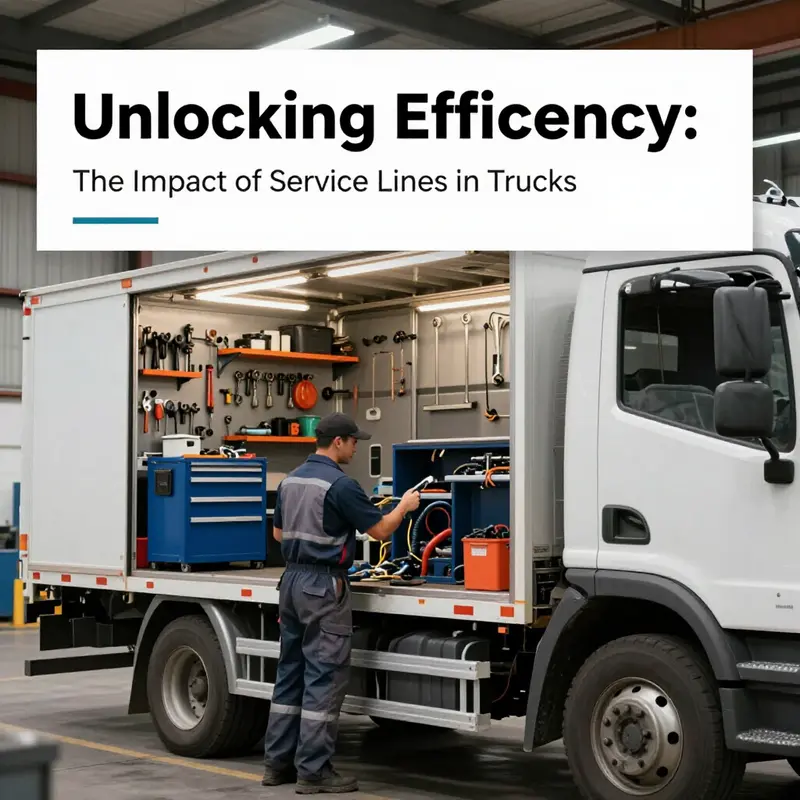
In the rhythm of freight networks and last-mile delivery, uptime is more than a metric; it is the backbone of reliability and customer trust. The service line embedded in a truck functions as a mobile workshop that travels with the fleet, transforming what might feel like ad hoc maintenance into a deliberate, integrated discipline. This chapter explores how that mobile workshop translates into measurable productivity gains, how it reshapes the relationship between technicians, parts, and routes, and why the on-board service line is not a luxury but a strategic asset in modern trucking operations. The discussion moves beyond the obvious image of a toolbox strapped to a chassis and toward a disciplined system that standardizes procedures, accelerates decision making, and tightens the feedback loop between field data and fleet strategy. As the American Trucking Associations emphasize, structured maintenance and service protocols do more than keep wheels turning; they reinforce safety, compliance, and long-term cost efficiency, all of which contribute to higher productivity in real-world conditions.
The central promise of a service line on a truck is straightforward: reduce the time a vehicle spends out of service while preserving or improving the quality of work performed. In practice, this means that a technician arrives at a breakdown, a routine inspection, or a scheduled maintenance event with the right mix of diagnostic tools, spare parts, and know-how to complete the job on the first visit. When all the essential elements are on board, a repair that might normally require multiple trips to a parts depot, a separate shop, or a tow can be accomplished on site. This is not merely about speed; it is about removing the friction that commonly slows maintenance in the field. The service line is, in essence, a compact, high-velocity operating system that integrates several critical functions: diagnostics, repair, inventory management, and coordination with the broader vehicle maintenance lifecycle.
From a productivity standpoint, the most immediate impact is the shortening of the mean time to repair, or MTTR. When a technician carries diagnostic scanners, test equipment, and a curated inventory of critical components, the diagnostic process becomes part of the job rather than a staged sequence that requires a return to a central shop. Real-time data collection supports better decisions on site, allowing technicians to differentiate between a minor issue that can be cleared with a quick replacement and a more complex diagnosis that requires scheduling and long-lead parts. The ability to test a repair immediately after installation closes the loop that often leaves a vehicle in a disabled state for hours or even days. If a service line is well stocked and well organized, the technician can validate fixes with live data, ensuring that the problem is genuinely resolved before the vehicle resumes service. In many fleets, this approach directly translates into fewer reschedulings, smoother handoffs to dispatch, and a better alignment between maintenance events and the daily calendar of routes.
The nature of on-site work evolves when a service line is integrated with standardized procedures and data-driven workflows. Standardization does not just mean following a checklist; it means codifying the most efficient sequence of steps for common fault modes and routine maintenance tasks. Technicians gain the confidence that their on-site actions align with best practices, and fleet managers gain visibility into how those practices map onto the broader maintenance calendar. Real-time data tracking that is integrated with digital service line systems enables managers to monitor performance indicators such as parts usage, time spent on site, and the frequency of on-site interventions. The result is a feedback-rich loop: field data informs stocking decisions, predictive maintenance targets, and even route planning. This is a shift from reactive maintenance to proactive care, where early detection and timely intervention prevent disruptions to service. The integration of standardized procedures with real-time data allows fleets to maintain higher service levels without expanding the ecosystem of subcontractors or external shops.
A crucial element of productivity is the ability to anticipate issues before they become failures. Predictive maintenance, once a distant ideal in the fleet world, becomes practical when a service line is linked to sensors, diagnostic history, and a centralized maintenance platform. When digital service line systems gather data from vehicle health monitoring, oil chemistry, tire pressures, brake wear, and other critical indicators, technicians can plan interventions that prevent unexpected breakdowns. This predictive rhythm reduces the occurrence of urgent repairs, which are the most disruptive to schedules and the most costly to operators. The value is not simply in preventing a single breakdown but in preserving the continuity of service across dozens or hundreds of daily miles. A well-timed on-site service call can head off a cascading failure that would otherwise trigger work stoppages, dispatch rerouting, and overtime costs. In effect, predictive maintenance turns the service line into a preventative discipline rather than a last-minute fix-it mechanism.
The reliability that comes from on-site care also propagates through the customer experience. When a fleet can promise rapid response, on-site resolution, and transparent communication about the status of repairs, customer confidence follows. In sectors where uptime is tied to delivery windows, maintaining continuity of service translates directly into on-time performance and customer satisfaction. The capacity to address issues remotely and on location reduces the friction of downtime for clients who rely on vehicles to keep their operations moving. This alignment of technical capability with customer expectations is not incidental; it is an explicit strategy that many fleets embrace to differentiate themselves in competitive markets.
An important facet of the service line’s productivity contribution is the consolidation of the maintenance ecosystem around the truck. The mobile unit often carries a curated inventory designed around the most common failure modes in a given operation. The goal is not to become a full-service repair shop on wheels but to deliver a targeted, high-probability set of interventions that minimize the need for subsequent visits. The implications for total cost of ownership are significant. First, the reduced downtime means more vehicle-hours available for revenue-generating service, whether that is freight movement, last-mile delivery, or client-site availability for critical tasks. Second, the on-board parts management is typically more efficient than centralized warehouses in terms of stock rotation and breakage risk, because it is tuned to the specific needs of the routes and vehicles the fleet is actually running. Third, the close coupling of diagnostic data with inventory decisions improves parts planning and procurement cycles, lowering the likelihood of carrying obsolete or rarely used items. Together, these factors contribute to meaningful reductions in operating costs over the long term.
The practical implications of this integrated approach extend into the realm of route optimization and dispatch. When a vehicle is out of service, the ripple effects can touch the entire schedule, forcing reroutes, missed time windows, and increased detention costs for drivers and clients. A service line that can resolve issues rapidly reduces the likelihood of cascading schedule changes. It also enables more precise forecasting of when and where maintenance will occur, which in turn informs maintenance windows that fit naturally between routes. The value is not just about fixing a problem; it is about preserving the integrity of the fleet timetable and sustaining a high level of service consistency. In this way, the service line acts as a strategic lever for both reliability and efficiency, enabling a more predictable and resilient operating model across the fleet.
The broader industry context reinforces the case for service lines in trucking operations. In practice, fleets that adopt a mobile maintenance model often report improvements in workforce productivity. Technicians are able to switch quickly from one site to another, leveraging the same diagnostic framework and toolset, which reduces training fragmentation and accelerates skill development. The standardized, on-vehicle workflow supports consistency in repair quality regardless of the technician’s location. When maintenance is performed with a uniform set of procedures and data capture, the organization can more easily compare performance across regions, routes, and customer segments. This comparability is essential for benchmarking, performance reviews, and continuous improvement initiatives. In short, the service line on a truck does not just amplify the capacity to fix things; it amplifies the capacity to learn from every repair and every route, then translate those lessons into improved processes, better parts planning, and more reliable service.
The practical importance of this approach is particularly evident in industries that rely on strict reliability and rapid response. Freight transportation and delivery services are especially sensitive to vehicle uptime because every hour a truck remains idle translates into revenue loss and reduced customer satisfaction. Modern logistics operators understand that uptime is a production metric, not merely a maintenance concern. The service line is the instrument through which uptime becomes a repeatable, scalable practice. It turns maintenance from a halt into a continuation of the workflow. It converts a potential break in the chain into a beat in a well-timed cadence. When a fleet views maintenance as a strategic, data-informed activity rather than a series of ad hoc repairs, it moves toward a leaner, more resilient operating model.
The strategic value of a mobile service line also intersects with regulatory and safety considerations. A well-structured service line helps ensure compliance with federal regulations by implementing standardized inspections and documenting maintenance events with traceable data. The ATA highlights how a formalized approach to fleet management supports safety and regulatory adherence while also reducing long-term operating costs. In practice, on-board diagnostic capabilities, service history logs, and standardized inspection checklists embedded in the mobile unit create an auditable trail that can be reviewed during audits or compliance reviews. This traceability reduces the risk of penalties and helps build a culture of accountability within the maintenance function. In an industry where regulatory compliance can be as consequential as route efficiency, the on-board service line provides a clear advantage by embedding best practices into daily operations rather than relying on sporadic compliance efforts.
A final dimension worth noting is the human element behind the service line. The technicians who operate these mobile units bring a blend of diagnostic acumen, practical hands-on skill, and situational judgment developed through field experience. The service line does not replace these professionals; it equips them with a more effective toolkit and a broader view of maintenance as part of an integrated fleet strategy. As fleets invest in people, they also invest in processes that make the most of technicians’ expertise. The combination of well-trained personnel, standardized procedures, and a data-enabled workflow creates a virtuous circle: technicians gain confidence and efficiency, fleet management gains visibility and control, and customers experience fewer interruptions and faster problem resolution. This triad is at the heart of the productivity gains associated with the service line in a truck.
In sum, the service line in a truck is more than a conveyance of spare parts or a mobile shop; it is a deliberate, data-enabled operating system designed to shrink downtime, accelerate repairs, and harmonize maintenance with the demands of modern logistics. It aligns the field, the workshop, and the warehouse into a single, responsive ecosystem. It turns on-site maintenance into a strategic capability that sustains revenue, protects asset value, and elevates customer confidence. For fleets seeking to understand why a service line matters, the best answer is not a single KPI but a narrative of continuity: fewer breakdowns, faster fixes, more predictable schedules, and a higher level of service that clients can rely on in the most demanding circumstances. That is the practical essence of enhanced productivity through the on-board service line, a development that is reshaping how trucks are maintained and how fleets compete.
For fleets considering the shift toward more mobile maintenance, the body of evidence points toward a clear conclusion. The combination of on-board diagnostics, a curated inventory, standardized procedures, and real-time data integration turns every service call into a contributing factor to overall fleet efficiency. It creates a resilient operating model that remains productive even as routes become more complex, deliveries become tighter, and expectations for reliability rise. In a world where every mile counts, the service line on a truck is a deliberate investment in uptime, efficiency, and the trust that keeps customers coming back. The broader industry context supports this approach, echoing the rationale for broader adoption across different fleet types and service profiles. As one industry resource notes, a comprehensive service line strategy not only yields productivity gains but also reinforces safety and regulatory alignment, creating a sustainable path for long-term profitability. For readers who want a closer look at how private fleets are navigating maintenance trends as they adopt more on-site service capabilities, consider this study of industry practices and peer outcomes: Private fleets trends in trucking maintenance.
External reference:
For a broader policy and industry-wide context, see the American Trucking Associations fleet management resources: https://www.trucking.org/resources/industry-resources/fleet-management/
null

null
Cost Efficiency in Motion: How a Mobile Service Line Transforms Downtime into Profit
A service line in a truck is more than a vehicle filled with tools; it is a node of operational resilience, a moving workshop that converts potential downtime into productive cycles. When a breakdown sidesteps a production line, the true cost is not only the immediate repair bill but the ripple effect of idle equipment, missed commitments, and shaken customer confidence. A mobile service unit reframes downtime from an inevitability into a controllable cost, a shift in how businesses plan maintenance, allocate resources, and present reliability to clients. The core accomplishment of a service line is not simply the ability to fix things on site; it is the orchestration of speed, expertise, access to parts, and the discipline of preventive care that keeps the entire operation moving. This is cost efficiency that travels with the truck, arrives where the job exists, and reduces the friction between problem and solution. And when that friction is reduced, the math of maintenance begins to favor the service provider and the client alike, creating a virtuous loop where faster repairs reduce total life-cycle costs and improve the predictability that customers rely on for budgeting and planning.
A central driver of this efficiency is the consolidation of three essential capabilities into a single mobile platform: immediate access to the right tools, the know-how to diagnose and solve problems on the spot, and the logistical discipline to minimize time spent searching for parts or arranging follow-up work. Each element, by itself, offers value. Put together, they produce a compound effect: faster service, fewer trips, and less lost time. Technicians arrive ready to work; they bypass trips to remote warehouses; and they carry a curated inventory designed to address the most common faults in critical systems. The result is a service line that converts a potentially disruptive event into a controlled, repeatable process. In practice, that translates to higher asset uptime, more reliable delivery schedules, and a level of service that clients come to expect rather than merely hope for. In this sense, cost efficiency becomes not a single metric but a system of performance that reveals itself in a steady cadence of on-site diagnostics, rapid repairs, and sustained preventive care.
To understand how this efficiency emerges, it helps to look at the mechanics of the mobile unit itself and the routines that keep it performing at a high level. A service line truck is not just a chassis with drawers; it is a compact, purpose-built workspace where information, parts, and people converge. The truck carries an integrated set of tools tailored to the most common maintenance and repair tasks in the field. It houses diagnostic devices, metric measurement tools, a range of fasteners, hoses, seals, and replacement components, and it has a secure, organized space where technicians can locate the exact part needed within moments rather than hours. Importantly, the inventory is not random; it is curated for the fleet or the client group it serves. This curation reduces waste, prevents overstock, and eliminates the costly delays that occur when technicians must wait for a specific part to be delivered from a distant warehouse. By aligning parts availability with the most frequent service demands, the mobile line becomes a lean, responsive extension of the customer’s own maintenance functions.
A critical dimension of cost efficiency in the field is the maintenance and performance of core vehicle systems, with the cooling and heating loop serving as a telling case study. In heavy fleets, the coolant system is the quiet backbone of reliability. When the coolant loop fails, the risk is not merely an overheat warning; it is the potential for engine damage, reduced performance, and an unexpected roadside event that requires towing and secondary transport—a costly combination of downtime and expense. Regular inspections before and after long trips act as a frontline defense against such failures. Detecting leaks, bulges, or brittle hoses can prevent temperature excursions that stress seals, degrade lubricants, and accelerate wear on a wide range of components. This type of vigilance is exactly the sort of proactive practice that the service line enables. Because the truck is already on site, the technician can perform a quick, thorough scan, verify coolant levels, observe hoses for signs of aging, and check the integrity of the core and related connections. If issues are detected, the repair can be completed in hours, not days, and the client avoids the risk of a fault becoming a larger, more expensive problem later in a schedule-driven operation.
This emphasis on preventive care is reinforced by the use of OEM-specified coolant and maintenance protocols. The choice of coolant, like the decision to adhere to the manufacturer’s recommended maintenance intervals, matters for long-term reliability and cost efficiency. Coolant chemistry and compatibility with hoses, clamps, and the engine block influence heat transfer efficiency, corrosion protection, and the lifespan of critical components. When a service line operates with the correct coolant specifications, it supports stable operating temperatures, reduces the likelihood of overheating, and minimizes thermal stress on engine internals. Those factors accumulate into a lower total cost of ownership. The upshot is simple but powerful: investing in the right fluids and following manufacturer guidelines on replacement intervals reduces the risk of unplanned outages and the heavy costs that follow them. This is not merely about compliance; it is about sustaining a predictable performance envelope that business operations can rely on.
The cost savings multiply when one considers the time savings associated with a mobile unit. In many operations, the cost of downtime dwarfs the direct cost of repair, particularly when downtime cascades into missed production slots, late deliveries, or idle equipment that still accrues depreciation. The service line’s on-site capability compresses the repair window, converting what might be a half-day event into a one- to two-hour intervention in many cases. The technicians use standardized workflows to diagnose, isolate, and fix issues quickly, while keeping the client’s site safe and compliant with relevant regulations. The speed is not an accident but the payoff of disciplined preparation: the truck arrives with the right tools, the team is trained in efficient fault isolation, and the parts system is aligned to the forecasted needs of the fleet. The result is a measurable reduction in downtime, which translates directly into lower operational costs and higher revenue capture for the client. In this sense, the service line is a capital-efficient asset. It avoids the need for large, centralized repair operations that require expensive overhead and complex logistics to return equipment to service. Instead, it creates a portable, scalable solution that can be deployed in response to demand, scale with the client’s needs, and support a broader strategy of asset uptime management.
The broader economic impact of such lines is notable as well. When fleets adopt mobile service units, they often see a shift in maintenance planning from reactive to proactive, enabling more predictable budgets. This predictability is hugely valuable for private fleets and larger operators alike, as it allows finance teams to forecast maintenance cost per mile or per hour of operation with greater confidence. The on-site capability also changes the conversation with customers. Clients begin to see maintenance as a service that travels with the equipment, rather than something that requires separating the asset from its daily work. This perception builds trust and fosters long-term relationships, as customers experience a tangible sense of reliability, responsiveness, and accountability. In the day-to-day reality of operations, such trust translates into steadier demand, improved renewal rates, and a competitive advantage in markets where uptime is a critical differentiator.
To illustrate how this translates into practical outcomes, consider the pathway from a reported fault to a repaired, back-to-work asset. The process begins with the on-site assessment, where the technician confirms the symptom, checks basic indicators, and uses diagnostic equipment to triage the issue. If the fault is a simple fix, the repair occurs on the spot, and the customer returns to work within a single shift. If more extensive work is necessary, the technician coordinates with the back-office scheduling team to arrange for follow-up support, while keeping the client informed about the expected timeline. Even in cases that require parts not carried on the initial visit, the service line dramatically shortens the waiting period. Instead of a separate trip to a warehouse, the technician can source the part from a nearby supplier or a regional distribution center with minimal disruption to the customer’s schedule. The takeaway is clear: the value of the service line lies not only in the immediate repair but in the entire chain of events that reduces total repair time and preserves the asset’s uptime profile.
Beyond the mechanical and logistical advantages, the economic case for mobile service lines rests on the disciplined management of preventive maintenance programs. Regular inspections, particularly for systems that influence engine temperature and thermal stability, are most effective when conducted as part of a structured maintenance plan. The on-site nature of the service line makes it easier to integrate such inspections into routine work windows, rather than treating them as disruptive add-ons. Clients can schedule preventive checks during planned downtime or at intervals that align with field use patterns. In practice, this means fewer unscheduled repairs and more stable maintenance costs. The proactive approach also extends the life of the vehicle and its equipment. By catching wear before it becomes catastrophic, the line helps preserve the value of the fleet, reduces capital expenditure on replacements, and extends the time between major overhauls. The cumulative effect is a durable improvement in return on investment for the fleet, a sense of confidence in operations, and a reputation for reliability that can itself become a market differentiator.
The interdependence of equipment health, service line readiness, and customer perception is subtle but vital. The mobile unit depends on a backbone of disciplined maintenance to stay ready for the next job: it requires routine checks of its own cooling system, electrical systems, and hydraulic lines; it requires a reliable power supply and generators that can sustain diagnostic equipment in remote sites; and it requires a secure, organized inventory that keeps essential parts on hand without becoming a burden. When these conditions are met, the service line becomes a reliable extension of the client’s maintenance ecosystem. The client benefits from a predictable maintenance cadence, reduced capital risk, and a service experience that reinforces confidence across every engagement. In turn, the service provider benefits from higher utilization of the mobile fleet, a more stable revenue stream, and a clearer path to profitability that grows with the scale of operations and the complexity of client needs.
For practitioners and leaders seeking to deepen this efficiency, there is value in looking at industry practices and trends that inform maintenance strategies. A practical takeaway is to treat the service line as a strategic asset, not merely a mobile shop. This means aligning its routes with maintenance schedules, the seasonal demand for repairs, and the geographic distribution of the client base. It means investing in staff training that emphasizes rapid fault isolation, safe on-site work practices, and meticulous documentation that supports seamless follow-up and transparent invoicing. It also means building a feedback loop that analyzes downtime, repair times, and repeat failure patterns. When such data are captured and analyzed, they reveal opportunities to adjust both the service line’s inventory and its route planning to further compress downtime and drive down costs.
The math of cost efficiency in this framework is straightforward in its logic but profound in its implications. Reducing downtime directly lowers the opportunity cost of asset inactivity. Improving repair speed lowers labor costs per job and increases the number of billable tasks that can be completed within a given time window. Optimizing parts availability reduces excavation of time and accelerates repair cycles. Each improvement compounds as maintenance practices become more routine and reliable. In aggregate, these improvements translate into better asset utilization, stronger customer satisfaction, and enhanced profitability. The service line becomes a vehicle for continuous improvement, a mobile discipline that travels with the fleet and keeps the maintenance program on track with the pace of operations. It is in this dynamic that cost efficiency is most fully realized: not as a one-off savings on a single repair, but as a sustained pattern of performance that lowers the long-run cost of keeping equipment productive.
The narrative, of course, must be grounded in the realities of field operations. A service line does not erase the need for strategic planning, a robust supply network, or the discipline of predictive maintenance. It does, however, redefine what is possible within those constraints. It makes on-site knowledge a key asset, reduces the latency between detection and remediation, and elevates the status of maintenance from a cost center into a value driver. In sectors where equipment age, usage intensity, and remote locations compound downtime risks, the mobile service unit can be the difference between a missed deadline and a delivered commitment. It can turn a high-cost contingency into a routine operational capability. It can transform maintenance from a reactive expense into a steady contributor to reliability and growth.
In closing, the cost efficiency delivered by a service line in a truck grows from a simple premise: proximity matters. When the right people, parts, and procedures are brought to the job site, the consequences of failures are contained, and the pace of work is restored. The result is not just a cheaper repair; it is a faster, smoother, and more predictable path back to productivity for the client, and a more efficient, scalable business model for the service provider. This is the practical embodiment of the broader article’s question: what does a service line accomplish? It accomplishes more than quick fixes. It creates a reliable, repeatable, and scalable mechanism for maintaining the health of critical operations in a world where uptime is a form of performance. It embodies a principle that is as enduring as it is pragmatic: that cost efficiency in maintenance is achieved not by luck or chance, but by thoughtful design, disciplined practice, and the disciplined execution of a mobile, on-site capability that travels where it is needed most.
For readers seeking a closer look at maintenance practices shaping private fleets and the economics of field service, there is value in exploring current industry perspectives on maintenance trends and fleet management. See the broader discussion on private fleets trends in trucking maintenance for additional context and practical considerations that align with the service line approach described here. Private Fleets Trends in Trucking Maintenance.
External resources that illuminate the engineering side of on-board systems reinforce the practical points made above. For readers who want to dive into the specifics of heater and coolant system specifications and application guidelines, an external technical reference provides deeper detail about how proper coolant management supports reliability in heavy-duty operations. External resource: https://www.volvotrucks.com/en/support/technical-information/inside-volvo-truck-heater-key-features-material-standards-and-application-guidelines
Final thoughts
Service lines in trucks are not just mobile units; they encapsulate the essence of proactive service delivery in today’s fast-moving industries. By enhancing productivity, boosting customer satisfaction, and achieving significant cost efficiencies, these service trucks empower businesses to meet the demands of their clientele and maintain a competitive edge. Organizations that adopt this innovative approach are better positioned to navigate challenges and maximize operations effectively.