
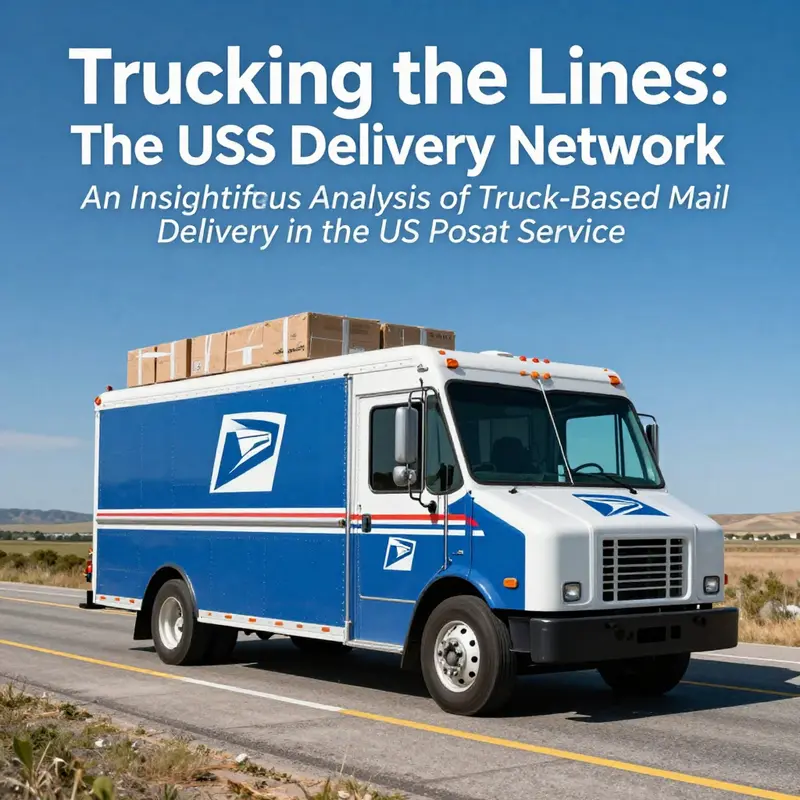
The United States Postal Service (USPS) plays a crucial role in the daily lives of millions, utilizing an extensive network to deliver mail and packages across the nation. One of the fundamental components of this network is the reliance on trucks for mail transportation, which primarily facilitates regional and national deliveries. This article explores the extent to which the USPS employs trucks in its operations, investigating their role in regional deliveries, the logistics behind the national shipping network, and the technological innovations that enhance the efficiency of truck-based mail delivery. In examining these pivotal aspects, we aim to provide a comprehensive understanding tailored for manufacturing, distribution, and retail companies, as well as e-commerce businesses and small business owners with shipping needs.
Ground Power: How Trucks Keep USPS Mail Moving Across Regions
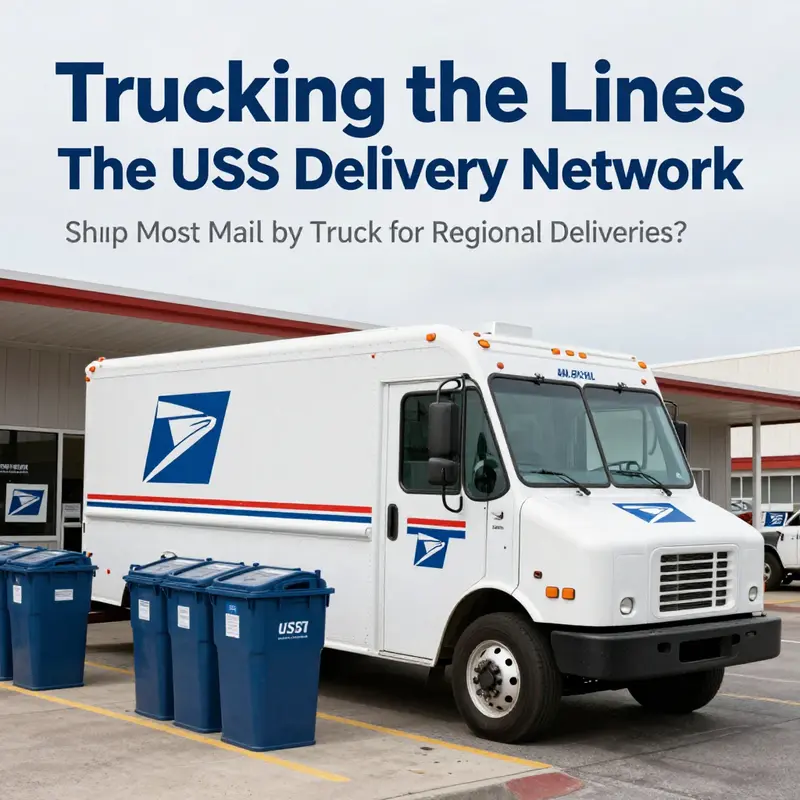
The question of whether the United States Postal Service ships most of its mail by truck is not just about modes of transport; it is a window into how a vast, geography-spanning network stays reliable and affordable. Across the country, the overwhelming majority of mail and small parcels travels by ground, weaving through a system of processing centers, regional hubs, and local post offices. This is not to claim there is no air movement or no longer a place for long-haul shipping in the mix. Instead, it is to recognize that for the bulk of daily activity—non-urgent, moderately large, and time-tolerant shipments—the truck is the backbone that holds the network steady. The regional structure is designed around ground movement: mail enters a central sorting facility, moves to a regional distribution center, and then travels outward on trucks toward local facilities and, ultimately, the customers’ doorsteps. The scale of this operation is immense, and its logic is pragmatic. Trucks distinguish the system by balancing speed, cost, and geographic reach in ways that air transport cannot match for the day-to-day cadence of letters and packages at a national level.
To understand why trucks dominate regional delivery, it helps to visualize the journey a mail piece undertakes. A single item begins its path at a processing facility where automated sortation and manual checks route it toward a regional corridor. From there, it is loaded onto a fleet of vehicles that traverse the region’s network, carrying large volumes to distribution points that feed the neighborhood routes. In dense urban areas, these trucks deliver along routes where efficiency is defined by proximity, traffic patterns, and predictable handoffs to postal carriers who perform the last mile on foot or by small vehicles. In more sparsely populated regions, the same principle applies, but the routes stretch farther between stops, and the scheduling pivots on maintaining steady throughput rather than squeezing every minute of a city block. The math behind this system is straightforward yet powerful: moving bulk mail by ground reduces the number of separate hops a piece must make and minimizes the need for aircraft capacity, which is a scarce resource with higher fixed costs. When you look at volumes across a calendar year, the ground network preserves bandwidth for the faster, time-sensitive flows that do ride on air or other expedited pathways.
Industry observers and logistical planners often point to the regional network as the keystone of USPS efficiency. The design favors a hub-and-spoke approach where regional processing centers act as nodes that consolidate, sort, and redistribute mail to nearby offices. The trucks that operate within this framework are chosen for their versatility and reliability, able to handle a mix of letters, large envelopes, and parcels while navigating a wide range of road types and weather conditions. This versatility matters because mail and packages face a broad spectrum of delivery expectations. Some customers anticipate quick, predictable arrival times; others are more flexible. The regional truck network accommodates both by emphasizing a steady, predictable cadence of movement. The cost structure of ground transport—fuel, labor, maintenance, and vehicle depreciation—tends to favor volume and route optimization. When mail volume is high, the per-item cost of moving mail by truck drops, and the system can absorb fluctuations in demand without sacrificing service quality.
A closer look at the operational logic reveals why ground transport remains the default for regional flows. The United States spans thousands of miles with communities that vary drastically in population density and infrastructure. Building a transport plan around trucks aligns with this reality. Trains and ships handle bulk intermodal movement where geography justifies them, while planes step in for long-haul, high-priority shipments. But the majority of daily regional movement benefits from the ability of trucks to pick up from central facilities and deliver to local offices with a level of precision that air routes cannot guarantee. Trucks also excel at flexibility. They can adjust to last-minute route changes, road closures, or weather disturbances by rerouting efficiently within the same general network. In practical terms, the regional truck system keeps the post office connected to neighborhoods, enabling carriers to route last-mile duties in ways that minimize backtracking and maximize coverage in each run.
This emphasis on ground movement is reinforced by the structure of the regional network itself. Mail leaving a central sorting facility is typically assigned to a truck that will serve a defined geographic segment. The efficiency comes not from a single enormous truckload but from many coordinated trips that, together, move the same quantity of mail toward every corner of a region. It is a system built for scale and reliability rather than for dramatic speed in isolated segments. The trucks become the circulating arteries of a vast organism, pulsing mail toward post offices and then outward to doors. In this arrangement, the last mile is harmonized with the broader network. Carriers responsible for local routes can synchronize with the arrival times of incoming hubs, reducing idle time, and enabling more precise daily delivery windows. The integration across levels—the processing centers, the regional hubs, and the local routes—depends on the dependable cadence of ground transport.
To appreciate the broader significance of this design, consider the economic and logistical incentives at play. Ground transportation is intrinsically tied to route density and service-area geography. In densely populated urban cores, a truck can deliver dozens, sometimes hundreds, of pieces in a few miles of road, maximizing the utility of each trip. In rural zones, longer routes increase the value of a single truck’s reach, since each mile covered serves multiple stops along the way. Air transport, while essential for some time-sensitive shipments and for bridging long distances quickly, incurs higher operating costs, runway access constraints, and variable load factors. These factors make air movement less practical for the bulk of regional mail that prefers predictable timing and lower per-item cost. The regional ground network, by contrast, delivers a predictable rhythm that underpins customer expectations for reliable service and postal accountability. When the majority of mail moves in this manner, the system can forecast capacity, allocate resources, and maintain service standards even as volumes fluctuate due to seasonal peaks or shifting consumer behaviors.
Industry assessments note a recurrent theme: the regional ground network is designed around high-volume corridors where efficiency compounds. The approach reduces the number of times a single item must be transferred between major nodes and limits the reliance on more expensive, time-consuming modes for routine shipments. The geographic spread of the United States, with its vast rural expanses interspersed with dense urban centers, makes ground movement a natural fit for the majority of mail traffic. The network’s effectiveness rests on a carefully tuned balance of vehicle capacity, route length, dwell times at hubs, and the cadence with which facilities can sort, load, and dispatch. In a sense, the trucks do not merely transport mail; they orchestrate a rhythm that keeps the wheels of a national service turning—the rhythm that citizens rely on for communication, commerce, and connection.
Within this framework, the specific regional dynamics matter. Some regions experience tight delivery windows that demand careful scheduling and a high degree of coordination with local post offices. Others benefit from more straightforward routes where travel times remain stable across seasons. In every scenario, the trucks serve as the conduit between centralized processing and the intimate, ground-level contact that makes daily delivery possible. The regional model’s strength lies in its adaptability: it can scale up during peak seasons, absorb changes in volume, and adjust to evolving patterns in mail composition. The volume that travels by ground is not a simple aggregate figure; it is a tapestry of regional routes, each with its own pace and character, woven together to sustain a nationwide service that remains accessible and dependable for millions of households and businesses.
Detours and variability are inevitable in a nationwide delivery system. Weather, traffic, and road conditions can affect a single route, yet the overall network is designed to absorb such disturbances without compromising overall performance. This resilience stems from two practical truths: a robust fleet of vehicles and a diversified routing strategy. Vehicles are deployed across regions to ensure that even when one corridor experiences disruption, adjacent corridors can compensate. The result is a system that, by design, prioritizes continuity over absolute speed on any given leg. Customers may not see the mechanics of these choices, but the outcomes are tangible: stable transit times, predictable delivery windows, and the reassurance of steady postal service in most neighborhoods. It is the everyday reliability of ground-based regional movement that, more than any single innovation, underwrites the public value of a universal service that treats every address as a customer and every parcel as a piece of the national fabric.
From a policy and planning perspective, the predominance of ground transport in regional mail flows invites a nuanced appreciation of how the network evolves. Investments in fleet modernization, route optimization, and maintenance—all aimed at reducing downtime and extending vehicle life—directly influence the efficiency and cost structure of regional delivery. While the national system benefits from the economies of scale achievable through centralized sorting and interhub transfers, the true test of performance lies in the reliability of the last leg: the moment a carrier takes a route from a distribution point to a customer’s residence or business. In most cases, that last leg is a short drive on a familiar corridor, where the driver’s familiarity with the route, the vehicle’s reliability, and the predictability of daily volumes converge to produce dependable service. The daily work of millions of mail pieces rests on this relatively simple physical truth: moving by truck is both practical and economical for the bulk of regional activity, and the system has adapted around that premise for decades.
Readers seeking a deeper sense of how these transportation decisions intersect with broader industry forces can explore analyses of key economic trends impacting the trucking industry, which illuminate how road freight shapes distribution networks, including the USPS. key economic trends impacting the trucking industry. This anchor helps situate the USPS approach within a larger context where freight economics, labor dynamics, and infrastructure investments influence how much mail can be moved efficiently on land and what it means for public services that depend on predictable, nationwide coverage. The USPS’s reliance on ground networks is not a relic but a deliberate alignment with the country’s geography and demand patterns. It is through this alignment that the service maintains its universal reach while managing costs and ensuring that, even for non-urgent shipments, the network remains robust enough to fulfill its core mission: to knit the nation together one street, one neighborhood, and one delivery route at a time.
For readers who want to corroborate the practicality of this approach with official program specifics, it is worth consulting the official guidance on ground-based shipping options and their role in the USPS network. Public-facing summaries emphasize the broad principle that ground transportation remains the primary means of movement for many categories of mail and parcels across regions, underscoring the system’s cost-effectiveness and coverage advantages. While the details of service levels and exact routing are managed internally and vary by region, the overarching narrative remains constant: trucks carry the bulk of regional mail, enabling a scalable, resilient distribution framework that supports daily life across the United States.
In sum, the regional backbone of the USPS is built on ground movement that connects processing centers to communities with reliable cadence and broad reach. The network thrives on the predictable behavior of large-volume flows and the practicality of moving mail through a series of well-managed hubs, each feeding the next leg toward local delivery. The result is a system that can meet the demands of a diverse country, balancing speed, cost, and coverage. It is not that air or other modes are unnecessary, but rather that for the majority of regional mail traffic, trucks offer the most coherent, sustainable path from sorting to doorstep. The next time a resident or business checks the mail, it is likely the work of a ground-based network that makes the daily act of receipt possible, illustrating how a nation’s mail system remains anchored in the steady, dependable rhythm of trucks moving mail from hand to hand across miles and time zones. And as the country continues to evolve—from shifting urban patterns to changing freight economics—the USPS regional model, rooted in ground transport, will adapt while staying true to its core promise: to keep mail moving, everywhere, every day.
External resource for further reading: For more details, see the official Parcel Select FAQ, which outlines the ground-based options and processes that support regional mail movement: https://www.usps.com/business/parcel-select.htm.
The Highway Backbone: Trucks Fuel the USPS’s National Delivery Network
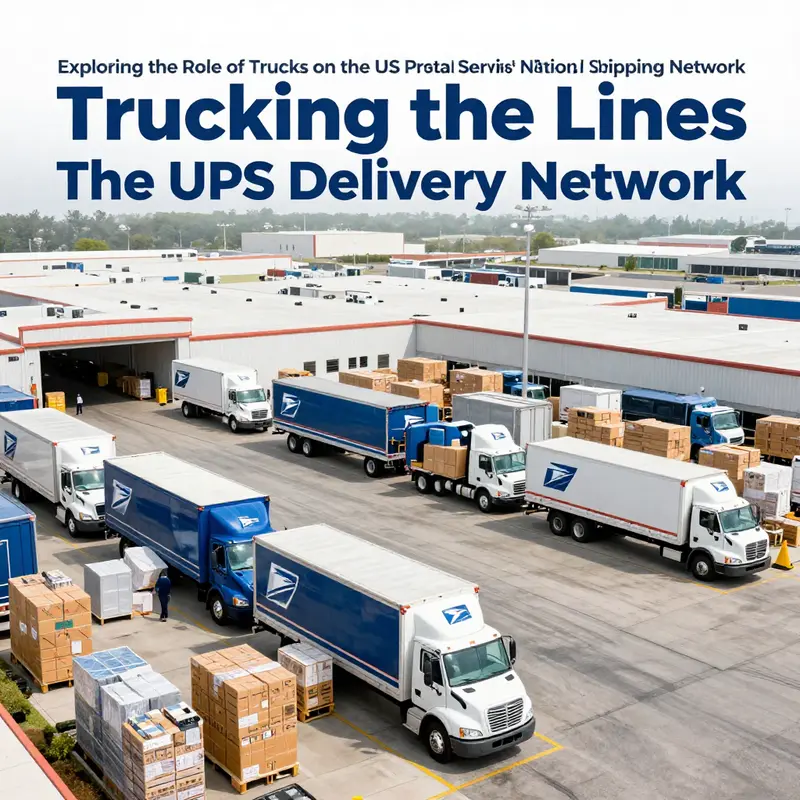
The United States Postal Service relies on a vast, intricate web of road transport that makes daily mail and package delivery possible from sea to shining sea. Across thousands of miles of highways and countless local streets, trucks carry the mail from central processing centers to regional hubs and, finally, to neighborhoods and businesses. In the broad sweep of the American logistics landscape, trucks are not merely one option among several for the USPS; they are the backbone of the system, the workhorse that translates a universal federal service obligation into concrete, visible outcomes for millions of households every day. When one steps back to see the whole operation, the road network reveals how a fleet of dependable vehicles, disciplined routing, and steady operational discipline combine to create a delivery cadence that remains six or seven days a week for much of the year, regardless of weather or holiday surges. This chapter traces how that backbone has evolved under a deliberate modernization program, what the changes mean for service reliability, and how the USPS envisions its road-based network in a country where e-commerce continues to rewrite the speed and predictability expectations of every customer.
From the earliest days of the republic, trucks have been the practical link between an inland processing facility and a family mailbox or a storefront. The USPS’s current operating model rests on a carefully staged sequence: mail is collected and sorted at central facilities, moved across long hauls between processing centers, consolidated into regional distributions, and finally delivered directly along local routes. The trucks used in this system range from standard delivery vehicles to vans and more specialized, longer-life delivery units. The tone of the operation is pragmatic: capably moving letters and parcels through a network that spans tens of thousands of square miles, with a focus on reliability, affordability, and universal service. In that sense, the “Delivering for America” initiative, launched in 2021, did not introduce a new miracle vehicle or a single, dramatic technology. Instead, it set in motion a comprehensive redesign of routes, a modernization of the fleet, and a consolidation of operations into larger, aggregated delivery units that could service more efficiently from a smaller footprint of staffed facilities.
The modernization program is ambitious in both scale and intent. It aims to upgrade the transportation backbone in two parallel tracks: optimizing how the network moves mail and packages across the country, and modernizing the physical assets that carry that load. Route redesign means that itineraries are not just shorter in distance but smarter in sequence. Mail moves more predictably when routes are designed to minimize backtracking and to align with processing center releases or concentrated delivery windows. The new generation of vehicles—built for higher reliability, lower maintenance costs, and better fuel efficiency—helps shrink the cost-per-delivery and reduces the drag on the system when demand spikes. Cutting-edge fleet management helps planners anticipate maintenance needs, schedule replacements strategically, and coordinate the daily ebb and flow of miles driven. The net effect, at least in the eyes of operators and customers alike, is a system that can absorb the seasonal pressures of holidays and the persistent rise of e-commerce parcel volume without surrendering reliability.
Central to this transformation is the idea of greater operational aggregation. Instead of a sprawling proliferation of small, semi-distinct routes, the USPS is consolidating into larger delivery units that bring together the functions of sorting, staging, and last-mile delivery into more cohesive blocks of work. The intent is not to reduce the number of hands on the mail or to shrink service, but to streamline the handoffs across the network in a way that reduces idle time, lowers miles per delivery, and creates more consistent delivery windows for customers. A core belief behind this strategy is straightforward: when the network moves in a more integrated fashion, it can respond more quickly to disruptions, optimize shifting demand, and maintain universal service even as parcel volumes rise with online shopping.
A practical manifestation of the route and fleet redesign is the construction of new processing facilities and the reorganization of how transportation legs are paired with the needs of local post offices. Processing centers become more than mail sorting machines; they become nodes in a carefully choreographed system of movement. The idea is to shorten the path from a mail stream’s origin to its final mile by ensuring that the right trucks, leaving at the right times, are lined up to receive the right bags of mail and packages. The end-to-end flow—P&DCs (processing and distribution centers) feeding NDCs (network distribution centers) and local post offices—depends on a truck fleet that can cover the last-mile leg with consistency. This is the essence of a road-based network designed to deliver six or seven days a week, with an unbroken emphasis on predictable service times, even as the nature of demand evolves toward more time-sensitive parcel delivery.
In this long-standing relationship between the post and the road, the USPS has not abandoned rail or air. Those modes continue to play roles in moving bulk mail or long-haul freight across the country, but the last mile—the portion of the journey that most visibly affects customers—rests on trucks. The advantage is practical: trucks bring mail directly to a doorstep, or at least to a curbside post office, with flexible routing that can respond to changes in traffic, weather, or local delivery requirements. The urban grid and the rural byways alike depend on a fleet that can reach broadly, quickly, and safely. The modern delivery truck is a modular instrument in this system, built to handle the rigors of daily use, with features that suit both dense urban corridors and sparse rural routes. Its role is to translate a nationwide mailing system into a local reality every morning and afternoon.
The USPS’s emphasis on fleet modernization is not purely about ships and miles—it is also about the economics of service. Fleet upgrades are designed to reduce maintenance hazards and increase uptime. When a vehicle spends less time in the shop and more time on the road, the entire network benefits. A more reliable fleet translates into tighter delivery windows, fewer missed deliveries, and less need for route backtracking. The trend toward newer, more efficient vehicles also carries a practical environmental advantage. The road-systems backbone, after all, consumes a sizeable portion of the agency’s operating costs in fuel and maintenance. A fleet that uses fuel more efficiently, emits fewer pollutants per mile, and requires less frequent major work contributes directly to the DFA’s broader goals of sustainability and long-term financial stability. The chain reaction is clear: improved efficiency in transit fuels better service, which strengthens the universal service obligation and helps USPS compete in a retail landscape increasingly dominated by speed and convenience.
The practical challenge in moving toward a more aggregated and optimized truck network is not just the mechanical act of swapping out old vehicles for new ones. It includes labor, maintenance capacity, and the rhythm of rural service where fixed routes must be carefully balanced with flexible urban schedules. The agency must maintain the ability to deliver to every street corner, including remote or underserved communities, while simultaneously handling the surge of packages that arrives as e-commerce continues to grow. This balancing act requires careful workforce planning—training new drivers, supporting veteran teams, and aligning labor agreements with the pace of route redesign and facility consolidation. It also involves maintenance strategies that anticipate component wear and tear, predict failures before they happen, and ensure that the fleet’s uptime remains high even when external conditions complicate the journey. The human element—drivers, sorters, clerks, and technicians—remains essential to the success of the road-based backbone. The DFA framework recognizes the need to invest in people as much as in machines, reflecting a broader view of transportation performance that is inseparable from the quality of the workforce behind it.
Another dimension of the modernization story is how customers experience the system from their windows and mailboxes. While the physical flow of mail is most visible on a highway when a delivery truck rounds a corner, the digital experience sits behind the scenes, guiding expectations and shaping perceptions of reliability. A digital tracking and notification framework, while not the same thing as a traditional route map, provides a way for customers to anticipate when a letter or parcel will arrive and where it is in the journey. This information, though instrumental for service transparency, also reinforces the importance of the road network as a dependable conduit. The trucks’ punctuality, route efficiency, and consistent loading across days all feed into the customer experience, reinforcing trust in a government service that remains universal in scope even as the volume of mail and packages evolves. The integration of data, route design, and vehicle technology becomes the modern equivalent of the old timetables and horse-drawn wagons—only, in this case, the timetable is dynamic, data-driven, and oriented toward a two-way dialogue with the customer.
For readers who want a concise synthesis of what shapes the USPS’s trucking backbone, it helps to think in terms of three interlocking priorities. First, route optimization that reduces unnecessary miles and harmonizes delivery windows with processing releases. Second, fleet modernization that improves reliability, reduces maintenance costs, and tightens the environmental footprint. Third, network consolidation that creates larger, more capable delivery units capable of absorbing demand shocks and sustaining universal service. Put simply, trucks are not just carriers of mail; they are the operating system that makes the whole national delivery network function with speed, predictability, and a commitment to every household and business across the country. The Delivering for America initiative embodies this triad of goals, articulating a clear path toward a future-ready postal system that can meet the evolving expectations of customers while honoring the enduring responsibilities of public service.
The economic and operational environment in which this backbone operates is worth noting as well. In recent years, the trucking sector has faced torsions from macroeconomic cycles, fuel price volatility, and shifts in freight demand that have tested even the most carefully designed networks. The USPS’s response—revising routes, consolidating facilities, and investing in a more capable fleet—reflects a broader recognition that resilience comes from design as much as from force of will. It is not merely about having more trucks on the road; it is about having the right trucks in the right places at the right times, aligned with a process that moves mail with a minimum of friction and a maximum of reliability. Industry observers and analysts often emphasize that macroeconomic forces shape transportation networks across all sectors. For readers who want to situate the USPS strategy within broader trends, consider how the trucking sector is adapting to shifting demand, new efficiency benchmarks, and an evolving mix of freight types. Key economic trends impacting the trucking industry offers an accessible synthesis of these forces, illustrating how drivers, fleets, and logistics planners must adjust to a landscape where fuel costs, driver availability, and capital expenditure cycles influence every mile. This framing helps illuminate why the USPS’s road-centric approach matters beyond mail alone, touching on the way public institutions align with private sector dynamics to deliver essential services.
The narrative of the USPS’s road-based network is not a simple ledger of better buses and brighter headlights. It is a story of disciplined, incremental improvement aimed at preserving universal service in a country as diverse as its geography. Rural routes require careful prioritization; urban corridors demand capacity, safety, and predictable dwell times; suburban and exurban areas test the synergy between local post offices and the regional hub structure. Each of these environments demands a vehicle specification and a routing philosophy that acknowledges constraints while maximizing reliability. The modern fleet, therefore, becomes a looping system where data informs routes, which in turn inform maintenance cycles. When a truck leaves a facility with a full load, it is the culmination of a coordinated plan that has already integrated forecasts of mail volume, expected parcel influx, staffing levels, and even potential weather-related detours. The result is a rhythm that, while intricate, is designed to feel straightforward to the customer: mail that arrives when promised, in decent condition, and with a clarity that makes a complicated logistical dance appear unfailingly simple from the porch or the office door.
Of course, the scale of this operation invites scrutiny. How much of the mail moves by road, and how much by other modes? How persistent is the commitment to universal service in a marketplace that increasingly prizes speed and convenience? The answer, grounded in the DFA’s framework and the practical reality of a continental geography, is nuanced. A substantial share of the national mail and a growing share of parcels ride on trucks because last-mile delivery is, in many respects, the most efficient, flexible, and cost-effective way to reach customers across streets and driveways. Rail can perform bulk movement between major corridors or processing nodes, but the final mile—the last leg that puts mail into a mailbox or a parcel on a doorstep—remains dominated by road transport. The USPS recognizes that for a system designed to deliver to every address, the road is not an optional path; it is the core of the experience that customers expect when they mail a letter or order a package. The modernization program acknowledges this reality and builds on it by making the road network smarter, cleaner, and more capable of delivering on the promise of universal service in an era of rapid change.
In weaving together these threads—the route redesign, the fleet upgrade, the consolidation of operations, and the broader strategic aspirations—the USPS’s trucking backbone emerges as a coherent, forward-looking system rather than a static infrastructure. It is a system that seeks to reduce wasteful miles, raise service reliability, and adapt to a world in which e-commerce continues to intensify demand for timely, predictable deliveries. It is also a system that must balance modernization with equity, ensuring that even the most geographically challenging communities remain within arm’s reach of dependable postal service. The language of the DFA—modernization, consolidation, efficiency, and reliability—captures this intent, while the lived experience of customers, post offices, and delivery drivers reveals the human and technical dimensions of that work. The road, with its surface imperfections and weather-related impediments, becomes less a metaphor for challenge and more a platform for public service readiness. In this way, the highway backbone is more than a logistics mechanism; it is a political and social instrument that underwrites the government’s guarantee of universal access to communications and commerce.
The ongoing evolution of the USPS’s road-based network does not pretend the path is effortless. It acknowledges the friction inherent in a national system that must accommodate constant volatility in mail volume, a shifting parcel mix, aging fleet assets, and the realities of labor markets. Yet the core message remains clear: by redesigning routes, investing in a capable and modern fleet, and consolidating delivery operations into larger, more efficient units, the USPS aims to deliver faster, more predictable service at a lower cost per item. The highway backbone thus becomes a strategic asset, not merely a means of transport. It is the public infrastructure that supports daily life, stimulates commerce, and reinforces the social contract that a democratic country may rely on a reliable postal system even as the economy around it evolves. In that sense, the road is a public good, and the trucks are a daily demonstration of the practical ingenuity that sustains it.
As with any large-scale public network, the future will hinge on the ability to balance innovation with reliability. The Delivering for America initiative gives the USPS a framework to pursue this balance through careful planning, capital investment, and disciplined execution. The road ahead will likely bring more digital integration, more data-driven routing, and an incremental shift toward more sustainable, efficient fleets. Yet even as new technologies arrive, the fundamental truth remains: the road is the essential conduit for bringing mail and packages to every corner of the country. The trucks are the visible face of that commitment, carrying not only envelopes and parcels but also the confidence that a nationwide service can operate with consistency and fairness. This is the essential story of the USPS’s national network in the age of instant communication and instant commerce—a story written on highways, reset with every route, and renewed through the steady, patient work of people who drive, sort, and deliver with a shared goal: to keep America connected through the most practical, enduring form of transportation there is.
External Reference for Further Context: For more on the broader initiative and its official framework, see the USPS Delivering for America initiative page.
External source: https://about.usps.com/strategic-planning/delivering-for-america/
Driven on the Road: Why USPS Mail Is Carried by Trucks and What New Tech Could Change It
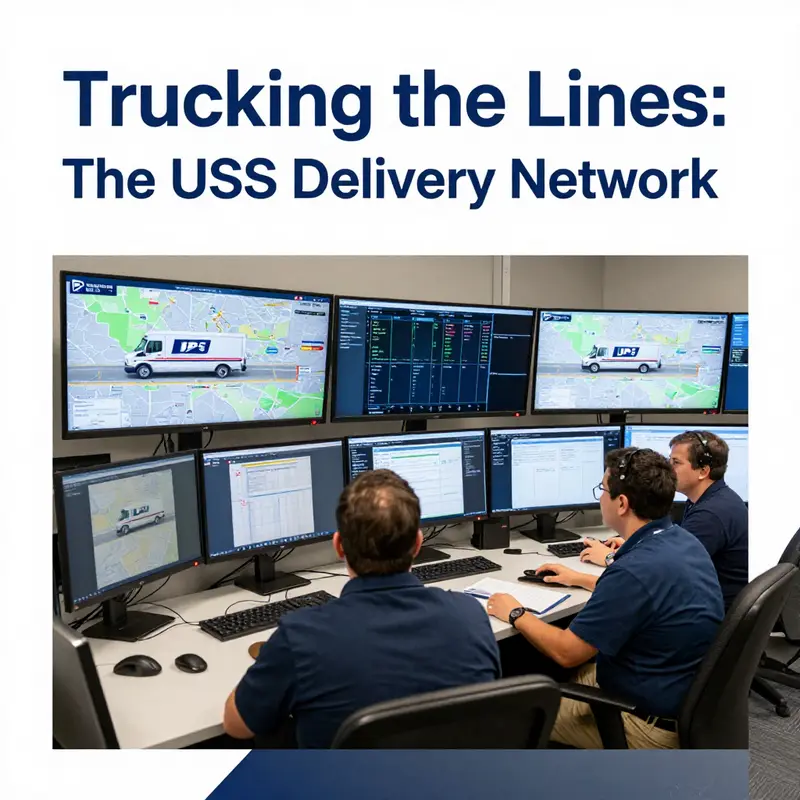
The question of whether the United States Postal Service ships most of its mail by truck is a story about a national network built for reach, speed, and reliability. Across cities and rural corridors, mail moves from sorting facilities to local post offices on road vehicles designed to endure daily use and to meet tight schedules. In this system, road transport is not merely one leg of a journey; it is the spine that supports last-mile delivery, regional transfers, and the cadence of daily mail flow. The scale is vast, but the logic is straightforward: move the mail from hub to street using a vehicle suited to the terrain and the density of the neighborhood.
The USPS fleet is a blend of standard delivery vans, traditional city delivery trucks, and specialized units tuned for durability and daily duty cycles. Each vehicle is part of an optimized choreography that balances cargo, fuel efficiency, maintenance, and driver availability. In practice, the movement of mail from a central facility to a local route depends on a sequence of repeatable legs that favor ground transportation, minimize handling, and reduce dwell time. Urban corridors and suburban grids reward the flexibility of road routes and the ability to reach clustered residential blocks without lengthy transfers.
Electrification sits at the center of modernization. The initiative aims to cut the environmental footprint while preserving service levels, not by replacing a single propulsion system, but by rethinking energy use, charging logistics, and maintenance planning across a large, distributed fleet. Procurement efforts, electrified testing programs, and the design of charging at depots all illustrate a careful, staged transition rather than a rush to a parallel system. The practical realities—supply constraints, maintenance intervals, and depot infrastructure—shape the pace of rollout, often turning promises into measured, incremental improvements.
Autonomous technologies have entered the conversation as a set of tools to augment routing, not supplant it. Early trials of autonomous long-haul trucks demonstrated potential for certain legs of the journey, especially in predictable corridors, but highlighted the need for robust safety, security, and regulatory alignment. By the mid-2020s, USPS and its partners were testing complementary autonomous options—robotic last-mile delivery at campuses and drone-enabled logistics—to relieve bottlenecks and expand reach in underserved areas. The takeaway remains that automation can raise efficiency and safety without displacing human workers across the entire network.
Digital tools round out the modernization story. Previews of incoming mail and real-time status updates improve customer visibility and help planners balance workloads, predict delays, and fine-tune routes. The road-based backbone remains the core because it offers explicit benefits in local service, neighborhood reach, and the ability to adapt quickly to traffic conditions, weather, and demand surges.
In short, the USPS is a road-first organization because road transport best aligns with universal service goals in a country of varied geography. Electrification, autonomous capabilities, and smarter digital coordination are not substitutes for trucks; they are a family of enhancements designed to make the road backbone cleaner, smarter, and more resilient. The practical equilibrium is straightforward: trucks will continue to carry the nation’s mail, but the way they do so will evolve with energy-efficient propulsion, data-driven routing, and targeted automation that preserves reliability for every street in America.
Final thoughts
The reliance of the USPS on trucks for both regional and national mail deliveries underscores the pivotal role that effective transportation plays in ensuring a reliable postal service. With dedicated truck fleets and continuous technological innovations, USPS maintains its commitment to delivering letters and packages efficiently. For businesses and individuals who depend on timely mail services for operational success, understanding the transportation modalities used by USPS is essential. As the postal landscape evolves with increasing demands, staying informed about these logistics strategies will empower companies to align their shipping needs effectively.