
In the complex landscape of logistics and distribution, effective truck fleet management is crucial for enhancing operational efficiency and reducing costs. Manufacturing and distribution companies, retail and e-commerce businesses, construction firms, and small business owners all benefit from comprehensive fleet management services that provide real-time insights and robust support. This article delves into the best options available, focusing on solutions that address three critical areas: tracking and monitoring, maintenance and compliance, and fuel management and driver safety. Each chapter will explore vital features that contribute to improved performance and ensure that your fleet operates at its best.
Seeing the Road Clearly: The Integrated Tracking and Monitoring Backbone of Modern Truck Fleet Management
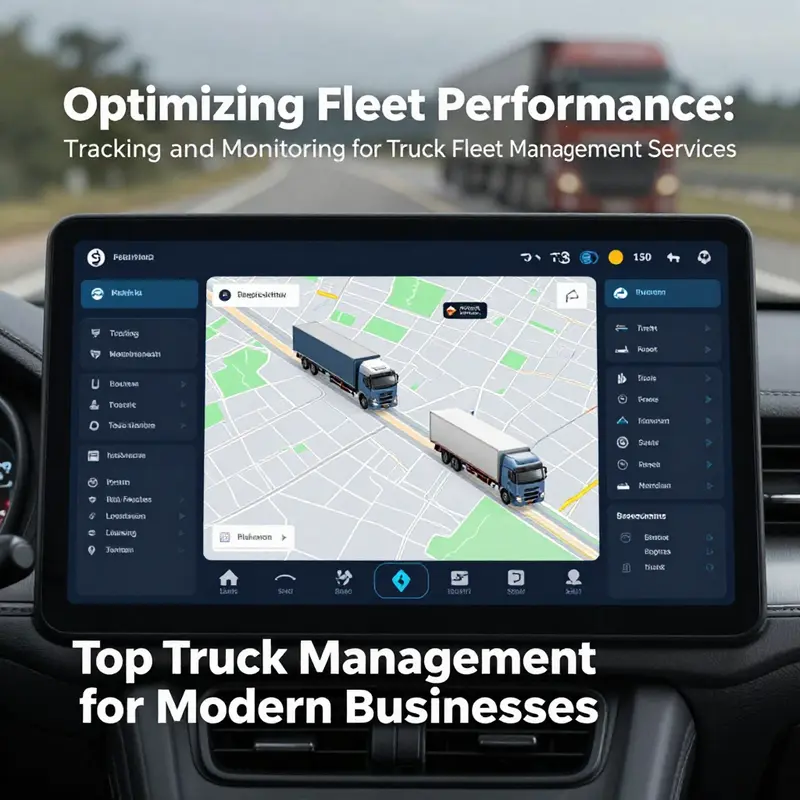
Visibility is not a luxury in modern trucking; it is the strategy that makes every mile more productive, every load more reliable, and every dollar earned more meaningful. At the heart of a robust truck fleet management program sits a cohesive suite of tracking and monitoring capabilities that work together to illuminate the entire operation. Real-time location data, engine and vehicle diagnostics, driver performance insights, and automated maintenance schedules form a connected web of signals. When these signals are gathered, analyzed, and presented in actionable form, operators gain not just a snapshot of today’s status but a forecast of tomorrow’s costs, risks, and opportunities. The best options in fleet management today are those that weave these features into a single, interoperable system that scales with fleet size, vehicle mix, and business model. They must also respect the realities of the road—the variability of traffic, weather, regulatory environments, and the daily decisions dispatchers make in response to these forces. In this sense, tracking and monitoring are more than tools; they are a framework for disciplined operating discipline and continuous improvement.
The foundation of any strong fleet management approach is precise, trusted telemetry. Modern telematics devices collect data from multiple sources: the vehicle’s CAN bus, GPS satellites, engine controllers, and an array of aftermarket sensors that monitor tire pressure, load weight, brake status, and ambient conditions. The data streams feed into dashboards that provide at-a-glance visibility of where every asset is, how it is performing, and what it needs next. Yet the real value emerges when these streams are harmonized into a unified narrative—one that tells you not only where a truck is, but why its current state matters for today’s plan. A fleet manager who can see a truck idling in a remote yard and immediately understand its impact on fuel burn, maintenance cycles, and customer ETA is in a position to enact a corrective action before a delay becomes a penalty. This is the crux of comprehensive tracking: turning raw coordinates and sensor readouts into decisions that optimize utilization, safety, and service levels.
One of the most compelling benefits of integrated tracking is maintenance orchestration. Predictive maintenance converts calendar-driven or mileage-driven schedules into a living program that adapts to actual usage patterns and component wear. Vehicles are not identical in every mile; a route with frequent stops, heavy loads, or extreme temperatures imposes different stresses and accelerates wear in particular subsystems. When telematics data is paired with maintenance records and vehicle history, operators can anticipate part failures, schedule timely service, and minimize unplanned downtime. The result is a smoother operation and a lower total cost of ownership. A well-tuned maintenance workflow also interacts with vehicle utilization in a virtuous loop. By aligning service windows with idle periods or planned payloads, fleets avoid unnecessary downtime and keep drivers productive. The maintenance module becomes less a bureaucratic obligation than a strategic lever for reliability and customer satisfaction.
Fuel management sits at the intersection of efficiency, timing, and driver behavior. Fuel monitoring tools track consumption across the fleet, revealing trends that are invisible on a per-vehicle basis. When combined with route optimization data and real-time traffic feeds, this insight translates into actionable tactics: rerouting to avoid congestion, selecting heavier loads for routes with favorable gradients, or timing departures to exploit fuel-price differentials. The simplest win—reducing unnecessary idling—often yields immediate savings. But the true power of fuel analytics lies in understanding how utilization patterns shape long-term costs. Fleets that can quantify the fuel impact of idle time, rapid accelerations, and inefficient gear selections gain a clearer picture of where to invest in driver coaching, aerodynamics, or engine/aftertreatment maintenance. Such capabilities also enable greener operations by providing clear baselines for fuel reduction programs and performance-based incentives that resonate with drivers and management alike.
Route optimization extends tracking beyond the vehicle to the entire supply chain footprint. By analyzing traffic patterns, weather, delivery windows, road restrictions, and customer priorities, fleets can design routes that minimize miles traveled, reduce dwell times, and improve on-time performance. The optimization engine becomes a daily co-pilot for dispatchers, suggesting alternative sequences and timing that preserve service quality while trimming travel costs. It also intersects with driver scheduling and login/logout rules, ensuring that hours-of-service compliance is inherently respected as the route plan evolves. The result is a resilient schedule that can absorb disruptions without cascading delays. In practice, this means more reliable ETAs for customers, better asset utilization, and a reduction in penalty costs tied to late deliveries. It also enhances the driver experience by reducing unnecessary detours and facilitating clearer, more predictable workdays.
Compliance management and safety tooling are inseparable from tracking because what gets measured gets managed. Regulatory requirements around hours of service, vehicle inspections, and maintenance are not abstract obligations; they are live data points that shape daily operations. A comprehensive system records every legal event, every inspection result, and every performance flag in an auditable trail. When a fleet encounters a roadside inspection or internal audit, the entire history is readily accessible with timestamps, device IDs, and context. Safety tools amplify this capability through near-miss reporting, fatigue detection, lane-keeping analytics, and collision avoidance data. While these features may seem like add-ons, they are integral to reducing risk and preserving driver well-being. A proactive safety posture protects both people and cargo and often yields lower insurance costs, fewer downtime episodes, and higher service reliability.
Driver behavior and coaching are the human dimension of tracking and monitoring. Data without context can be overwhelming; actionable coaching turns raw metrics into improved decision-making on the road. Monitoring solutions quantify aggressive driving events, harsh braking, rapid acceleration, speeding, and excessive idling, and translate these indicators into personalized coaching plans. When drivers receive timely feedback that is specific, fair, and focused on practical improvements, the likelihood of sustained behavior change increases. The best programs couple these insights with transparent performance dashboards, goal-setting, and recognition that aligns driver incentives with fleet goals. The human element remains central because technology amplifies judgment, not replaces it. A well-designed coaching framework respects drivers as partners, offering clear expectations, accessible training resources, and a path to measurable improvement.
All of these capabilities—tracking, maintenance, fuel, compliance, safety, and coaching—must be woven into a single platform that supports decision-making across the enterprise. Interoperability is not a luxury; it is a requirement for credibility and scalability. A truly integrated system provides open APIs, robust data normalization, and a governance model that ensures data from disparate sources speaks the same language. The value of such integration is visible in the speed with which dispatch and maintenance teams respond to a disruption. A sudden weather event, a traffic incident, or a mechanical alert can ripple through the operation, but with a unified data model, the response is coordinated rather than reactive. Dispatch can re-route, maintenance can adjust service windows, and customer communication can reflect realistic ETA updates in real time. The ability to orchestrate these responses quickly is what differentiates a good fleet from a great one.
In pursuit of a best-fit solution, fleets must adopt a practical framework for evaluation that begins with clarity about goals and ends with measurable outcomes. Start by mapping the most critical pain points: excessive downtime, high fuel costs, missed repair windows, or inconsistent service levels. Translate these into concrete KPIs such as mean time to repair, idle-hours per day, fuel economy per mile, on-time delivery rate, and safety incident frequency. Then design a phased implementation plan that includes a pilot, clear success criteria, and a path to full deployment. The pilot should test core capabilities—real-time tracking, maintenance automation, and route optimization—across a representative subset of vehicles and routes. If the pilot demonstrates tangible improvements, scale gradually while preserving data quality, security, and user adoption. Scalability is essential because fleets evolve: the mix of vehicle types, the geography of operations, and the complexity of regulatory environments all change over time. A platform that can adapt to new vehicle technologies, additional data streams, and evolving business rules will protect the investment and deliver consistent value.
Security and governance underpin the reliability of any tracking and monitoring initiative. Data integrity, access controls, and encryption must be built into every layer of the solution. The road to compliance is as important as the road to customers; both require rigorous audit trails, incident response plans, and clear ownership of data. When vendors or internal teams design interfaces, they should adhere to standardized security practices and documented data schemas. The capacity to perform role-based access, restrict sensitive information, and monitor anomalous activity helps prevent misuse and data breaches. Governance also means defining who owns the data, how it is stored, and how long it is retained. These considerations matter not only for regulatory compliance but also for the trust that customers place in the fleet’s operations. In practice, governance translates into clear policies, training programs, and ongoing assessments that keep the system resilient in the face of evolving cyber threats and operational pressures.
A final, often overlooked dimension is the way tracking and monitoring integrate with the broader business ecosystem. Fleet data feeds sales, planning, and customer service with evidence-based insights about reliability and capability. Shared dashboards across departments reduce friction and align incentives. For example, when customer service can see real-time ETAs and current fleet capacity, they can commit to more accurate promises, improving customer satisfaction and reducing costly exceptions. Financial planning benefits from more precise cost forecasting, as maintenance aging, fuel burn, and utilization rates become predictable line items rather than wild cards. Even strategists exploring network optimization or capital investment can lean on a richer data foundation to test scenarios and justify expenditures. The most effective fleet programs treat tracking and monitoring not as a standalone tool but as a core component of the organization’s operational intelligence.
External perspectives further illuminate why comprehensive tracking and monitoring matter. For those seeking a broader view of how analytics and telematics are reshaping logistics, an overview of Telematics’ impact on the industry offers useful context about trends, driver engagement models, and the evolution of data-driven decision making. A deeper dive into the external landscape can be found in this resource: https://www.fleetmanagement.com/telematics-revolution-logistics. This connection between operational visibility and market awareness is where tracking and monitoring become strategic differentiators rather than mere operational tools.
As you consider internal capabilities and external benchmarks, remember to anchor your choices in the realities of your operation. A one-size-fits-all approach rarely yields lasting value. Instead, seek a solution that can grow with your fleet: a platform with scalable data storage, adaptable analytics, and a partner ecosystem that supports integration with maintenance providers, supply chain systems, and labor-management tools. The most successful fleets implement tracking and monitoring as a strategic asset, not a compliance checkbox. They design governance that guards data quality, invest in user training so operators trust the system, and cultivate a culture that treats data as a shared resource rather than a siloed tool. When these elements align, the fleet becomes more than a collection of trucks; it becomes a coordinated, intelligent network capable of delivering reliable service, controlled costs, and sustainable growth.
External to the internal system, the landscape of trucking continues to evolve in ways that amplify the value of good tracking and monitoring. Economic conditions, regulatory shifts, and technology adoption rates interact to shape demand for services, margins, and capacity. For instance, fluctuations in freight volumes, changes in capital expenditure cycles, and evolving tolls or port-access policies can all alter the calculus of fleet performance. Keeping a pulse on these macro trends helps fleet leaders tailor their telematics strategy to the moment. A concise synthesis of ongoing economic and industry shifts can be found in discussions of key trends impacting trucking, which offers a useful lens for aligning technology choices with market realities. Key Economic Trends Impacting the Trucking Industry. This connection between operational visibility and market awareness is where tracking and monitoring become strategic differentiators rather than mere operational tools.
In closing, the simplest way to understand the value of comprehensive tracking and monitoring is to imagine a dispatcher’s day transformed by reliable, integrated data. Instead of chasing symptoms—late arrivals, missed maintenance, or fuel spikes—the operation anticipates and prevents problems. Instead of reacting to each exception, it orchestrates a proactive rhythm that keeps trucks moving, drivers safe, and customers satisfied. The chapters of this article have shown that the best fleet management options are defined not by the number of features they claim to offer, but by the coherence of the system they deliver. When tracking, maintenance, fuel, compliance, safety, and coaching operate within a single, well-governed platform, a fleet can achieve a level of predictability and efficiency that simply was not possible before. The road ahead is paved with data, and the most effective fleets learn to read it well enough to navigate with confidence, resilience, and sustained profitability.
External resource for deeper understanding: https://www.fleetmanagement.com/telematics-revolution-logistics
Maintenance as Strategy: Unifying Reliability and Compliance in Modern Truck Fleet Management
Maintenance and compliance are not merely administrative requirements; they are strategic pillars that shape uptime, safety, and the bottom line across a truck fleet. In a data-rich, connected environment, the ability to translate sensor streams, maintenance history, and regulatory deadlines into actionable decisions is core to competitive fleet operations.
The most effective approaches weave together real-time condition insights with disciplined scheduling, keeping every vehicle compliant with applicable rules and standards. This integrated view helps managers shift from chasing breakdowns to preventing them, and from siloed tasks to a unified program that supports asset use and predictable service quality.
Central to this shift is a robust telematics ecosystem that reads the machine’s pulse across critical subsystems such as the engine, fuel system, tires, and brakes. The value lies in how data is interpreted and acted upon, not in raw streams alone. Real-time monitoring of engine performance and fuel use, along with tire pressure and brake wear indicators, creates a living picture of health. When anomalies appear, the system can flag a potential issue before it escalates into a costly failure, moving maintenance from a calendar ritual to a condition-based discipline. The payoff includes fewer unscheduled outages and stronger compliance with manufacturer guidelines and safety regulations, which often tie service intervals to mileage, load, and environment.
A second vital strand is comprehensive weight and maintenance management. Time and motion data reveal how vehicles are used within a daily cycle, exposing inefficiencies that might escape notice in routine operations. Excessive idling, improper loading, and uneven weight distribution inflate fuel costs and shorten component life. By examining how a vehicle is used—driven by actual paths, loads, and durations—managers can recalibrate scheduling, routing, and loading practices for every assignment. The weight management aspect also helps ensure compliance with axle load, gross vehicle weight, and distribution rules, translating into safer handling and more predictable inspections.
Within this framework, Remaining Useful Performance (RUP) offers a forward-looking lens on asset health and productivity. By evaluating equipment health in relation to job demands, fleets can calibrate maintenance timing with actual workload, avoiding over- or under-maintenance and improving asset utilization. The RUP mindset aligns service windows with expected workloads and supports a transparent audit trail for regulators, insurers, and internal stakeholders. The same disciplined approach strengthens safety and reliability while preserving capital efficiency.
To scale these capabilities, fleets increasingly rely on a unified maintenance and compliance platform. Such systems stitch sensor data, load and route information, inspection checklists, service histories, and regulatory deadlines into a single, auditable fabric. Automated reporting tracks inspection histories, service records, and regulatory timelines with confidence, ensuring vehicles remain in good standing with agencies such as FMCSA. Digital records and audit trails simplify inspections and reduce friction with regulators. The integration is more than data aggregation; it is a governance framework that turns compliance from a risk obligation into a continuous improvement loop. When deployed thoughtfully, it creates a shared language for maintenance, safety, and compliance across drivers, technicians, dispatchers, and compliance staff.
The human and organizational dimensions are essential for success. Technology must be paired with disciplined processes, clear ownership, and robust change management. Operators should define responsibilities for interpreting alerts, prioritizing work, and validating records. Training helps teams translate data into action, recognizing when a predictive signal warrants preventive service or when a weight or tire issue requires a reroute or load adjustment. Drivers, too, play an active role, providing observations that often indicate emerging problems early. Integrating driver input into the data conversation improves sensitivity and speed across the maintenance cycle, and drivers’ logs and pre-trip inspections feed into the same system, creating end-to-end discipline from origin to destination.
Fuel Intelligence and Driver Safety: Building Safer, More Efficient Truck Fleets
Fuel intelligence and driver safety tools sit at the core of modern truck fleet management. They are not peripheral add-ons but central capabilities that reshape how fleets operate, respond to demand, and meet evolving regulatory and environmental expectations. When a fleet management service envelopes real-time tracking, maintenance scheduling, fuel monitoring, compliance management, and driver safety tools into a single, coherent platform, the result is a more accurate picture of performance. The picture reveals opportunities to reduce costs, lower risk, and extend asset life mile after mile. In this landscape, fuel management and driver safety tools are the two gears that turn the rest of the machine toward greater efficiency. They translate the vast streams of data generated by telematics and GPS into actionable insights that fleet managers can trust and drivers can act on without disrupting daily operations. The best services do more than collect data. They normalize it into clear benchmarks, alerts, and coaching pathways that align with the fleet’s operating model and customer expectations. In a field where every mile costs money and every incident can ripple into service failures, fuel efficiency and safe driving are not optional.
Fuel management systems begin with precise fuel usage data captured by onboard sensors, fuel level monitoring, and fuel card integration. They track patterns across thousands of miles and dozens of trucks, pulling in variables that might otherwise remain hidden. Real-time data highlights when a truck is consuming fuel at higher-than-expected rates. It reveals idle time that stretches into minutes, or speeds that breach the threshold where fuel burn climbs disproportionately. These observations are not abstract. They are translated into concrete, actionable steps. They can trigger maintenance alerts the moment a pattern emerges—an indicator that a fuel injector is behaving unexpectedly, or that a fuel filter requires replacement, or that the engine is operating outside its optimal thermal window. The value of this approach lies in the speed and precision with which problems are flagged. When a fleet manager knows exactly where fuel waste is occurring, interventions can be targeted rather than applied indiscriminately across the fleet. This is what turns data into cost savings rather than just data accumulation.
A central benefit of integrated fuel management is the ability to detect fuel theft or unauthorized use. In many fleets, small leaks in the system extend beyond obvious theft to include misallocation of fuel through misfueling, improper maintenance practices, or the use of underperforming auxiliary equipment. Telematics and fuel monitoring tools can identify anomalies in fuel consumption that suggest theft or misuse. The system can alert managers to out-of-hours activity or to vehicles that show unusually rapid fuel depletion given the route and load. These capabilities do more than preserve costs; they preserve the integrity of planning and budgeting. When fuel costs are predictable and controllable, managers can set more accurate bids for customer work, plan maintenance windows with higher confidence, and reduce the risk of cash-flow shocks caused by unexpected fuel spikes.
Beyond tracking consumption, fuel management systems often dovetail with preventive maintenance alerts. Poor fuel economy can indicate underlying mechanical issues that, if left unchecked, escalate into costly downtime. Regular maintenance can keep engines at peak efficiency, minimize fuel burn, and extend engine life. The alert system can flag issues such as clogged air filters, deteriorating fuel injectors, or turbocharger inefficiencies before they become an emergency. This proactive stance is essential in fleets where miles accumulate quickly and downtime is costly. The maintenance alerts are not isolated notes; they form part of a broader, data-driven maintenance strategy that couples with route planning, vehicle assignment, and driver schedules. The integration ensures that maintenance decisions are informed by actual wear and performance data rather than by a calendar-based plan that may not reflect real-world usage.
Driver safety tools are equally consequential, and they function as a counterbalance to the pressure of meeting tight delivery windows. Driver scorecards, in-cab alerts, and geofencing create a layered safety ecosystem that engages drivers directly in risk reduction. Driver scorecards quantify performance over time, aggregating a spectrum of behaviors—from speed management and throttle modulation to harsh braking and rapid acceleration. These scores are not punitive; they are a diagnostic tool. They highlight recurring patterns and point to targeted coaching opportunities. Paired with in-cab alerts, the system communicates in real time when a driver engages in risky behavior. A whisper-quiet warning about speeding, or a louder, context-aware alert about tailgating or abrupt lane changes, helps drivers adjust behavior before it becomes a costly incident. The goal is not to humiliate but to educate and empower. Real-time feedback supports a culture of safety where drivers understand the impact of their choices on fuel economy, on their own safety, and on the bottom line.
Geofencing adds a practical safeguard for route adherence and regulatory compliance. By defining specific corridors, entry, and exit points, fleets can ensure that drivers stay within authorized routes, reducing the chance of detours or unauthorized use. In some environments, deviations can introduce safety risks or lead to fuel waste due to less efficient routing. Geofencing helps reinforce standard operating procedures and creates a data-backed audit trail that proves adherence to customer and regulatory requirements. When a truck strays from its assigned route, alerts can prompt immediate corrective action, enabling fleet managers to reassign assets or adapt loading plans in near real time. These tools, when deployed thoughtfully, do more than protect drivers. They support continuity of service by reducing the likelihood of incidents that disrupt schedules and erode customer trust.
The synergy between fuel management and driver safety tools becomes even more powerful when integrated with maintenance scheduling and compliance management. A unified platform that links fuel metrics with maintenance data and driver behavior creates a holistic view of fleet performance. For example, if fuel efficiency deteriorates on a particular route or for a particular vehicle class, the system can examine maintenance histories, maintenance due dates, and driver habits on those runs to identify root causes. This cross-pollination of data supports faster problem diagnosis and more precise interventions. It also aligns with regulatory requirements that increasingly demand robust fatigue management, driver training, and vehicle maintenance to ensure safe and compliant operations. By weaving together fuel insights with safety coaching and regulatory controls, fleets can reduce risk while improving efficiency in ways that are not possible when these domains operate in silos.
The practical implications of these tools extend beyond cost savings. They shape planning, dispatch, and customer service in meaningful ways. Consider the typical life cycle of a shipment: dispatch assigns a truck to a load, a route is chosen, fuel stops are planned, and a driver begins the journey. A well-tuned fuel management system analyzes the route for optimal fuel usage, factoring in grade, traffic patterns, and weather. It flags opportunities to adjust idle time, optimize speed, and ensure that the vehicle is operating in its most economical window. If the system detects a deviation, it can automatically re-route or re-allocate resources to keep the delivery on track while preserving efficiency. Driver safety tools complement this by ensuring that the route remains within the safety envelope. Real-time alerts about aggressive driving can trigger coaching sessions or temporary restrictions on certain routes until drivers demonstrate consistent safe behavior. In this way, safety becomes a driver of efficiency rather than a constraint on productivity.
One of the clearer advantages of embracing these tools is the support they provide for cost forecasting and budgeting. Fuel remains a principal expenditure, and small improvements compound across hundreds of trips. When a fleet manager can demonstrate, with data-backed certainty, how much fuel is saved per mile through reduced idling or improved shifting practices, the financial planning model becomes more reliable. Similarly, by reducing the number of incidents and near-misses through continuous driver coaching and in-cab advisories, insurance costs, downtime, and maintenance expenditures can be mitigated. The result is a more resilient operation that can weather fluctuations in fuel price, driver turnover, and demand cycles. The human benefits should not be overlooked either. Drivers who receive timely feedback and clear coaching often report higher job satisfaction and greater engagement in safety programs. A culture that supports continuous improvement tends to attract and retain talent more effectively, which, in turn, stabilizes performance over the long run.
When evaluating truck fleet management services, the depth and coherence of fuel management and driver safety capabilities matter as much as the breadth of features. It is essential to consider how these tools integrate with your existing hardware and software ecosystem, how data is normalized across vehicles and regions, and how easily the platform scales as your operation grows. A service that promises powerful analytics but delivers fragmented, incompatible tools will require costly workarounds and manual processes. The most effective options provide a harmonized experience: a single view of fuel usage, a unified safety coaching workflow, and a straightforward path from data to action. This is particularly important for fleets that operate across multiple geographies, as the ability to apply consistent safety standards and fuel efficiency practices across all locations reduces variation and improves overall performance.
Within this broader context, the chapter’s focus on fuel management and driver safety tools emphasizes their role as strategic enablers rather than mere compliance features. They enable proactive rather than reactive management. They make it possible to anticipate fuel-related risks before they become costly problems and to address safety concerns through timely, data-driven interventions. They also provide the transparency that customers increasingly expect. As freight markets mature, customers want proof that carriers manage their equipment responsibly, optimize fuel use, and maintain high safety standards. A provider that offers robust fuel analytics and driver safety modules can deliver these assurances through dashboards, automated reports, and auditable records that align with customer requirements and regulatory expectations alike. In practice, this means more than meeting a baseline; it means elevating operational performance to a level where fuel efficiency and safe driving become core competencies of the fleet, not ancillary perks.
For readers seeking a deeper dive into how maintenance trends interplay with fuel efficiency and how fleets are framing their safety culture, there is value in consulting industry analyses that explore these dynamics over time. See, for example, resources that discuss private fleets trends in trucking maintenance to understand how maintenance practices align with fuel efficiency strategies. Private fleets trends in trucking maintenance offers a contextual lens into how maintenance attention shapes overall fleet performance.
External research on fuel management and driver safety tools provides additional perspectives on benchmarks, implementation tactics, and the practical outcomes of these technologies. For readers who want a broader, cross-market view, an external resource can illuminate best practices, adoption challenges, and successful case studies in the field. A respected overview of these topics is available here: Fuel Management and Driver Safety Tools. This resource complements the narrative by highlighting how operators translate data into policy, training, and everyday driving behavior, while illustrating how robust telematics architectures support scalable, compliant, and safe operations across fleets of varying sizes and ages.
Final thoughts
Choosing the right truck fleet management service is essential for boosting efficiency and maintaining compliance in logistics operations. By integrating comprehensive tracking, proactive maintenance management, and smart fuel management alongside driver safety tools, companies can enhance their service delivery and optimize costs. The solutions outlined in this article cater to diverse business needs, ensuring that fleet operators can respond flexibly to the demands of their industry. Investing in these management systems not only ensures compliance and reduces downtime but also fosters a culture of safety and accountability within the workforce. Make informed decisions to elevate your fleet’s performance.