
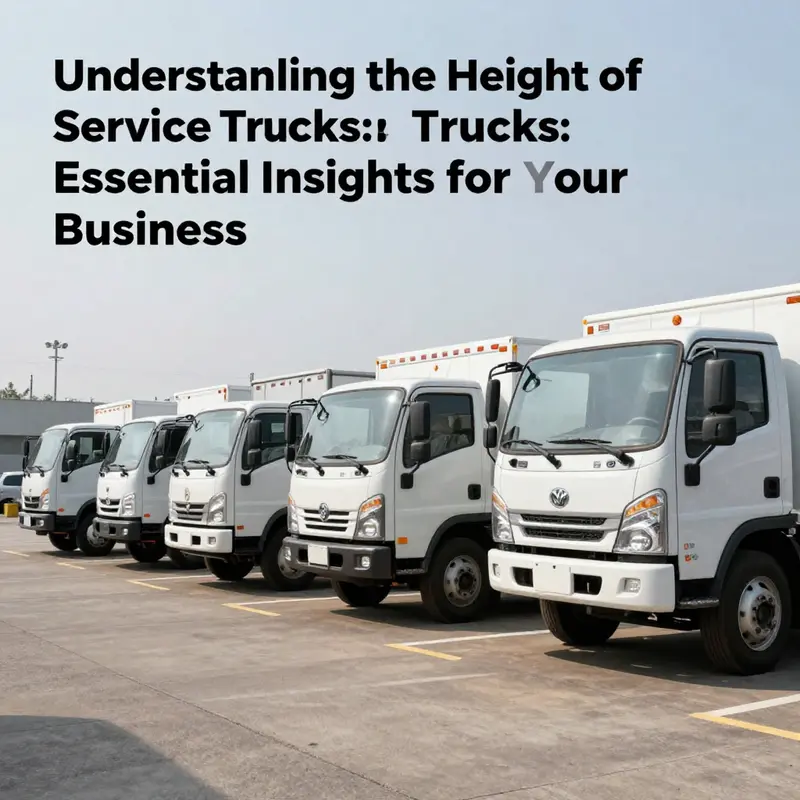
In the realm of manufacturing, distribution, retail, and construction, knowing the specifications of service trucks is vital for efficient logistics and operations. Service trucks, which can vary significantly in height and design based on their intended uses, play a critical role in these industries. From standard flatbeds that accommodate heavy machinery to specialized vehicles outfitted with mobile workshops or cranes, understanding the typical height range of these vehicles is essential for compliance and operational efficiency. This article delves into the standard height of service trucks, examines specialized models that exceed typical dimensions, and compares the various types of service trucks to guide businesses in choosing the right vehicle for their specific needs.
Raising the Bar: Understanding the 10–12 Foot Standard and Its Real-World Impact on Service Truck Operations
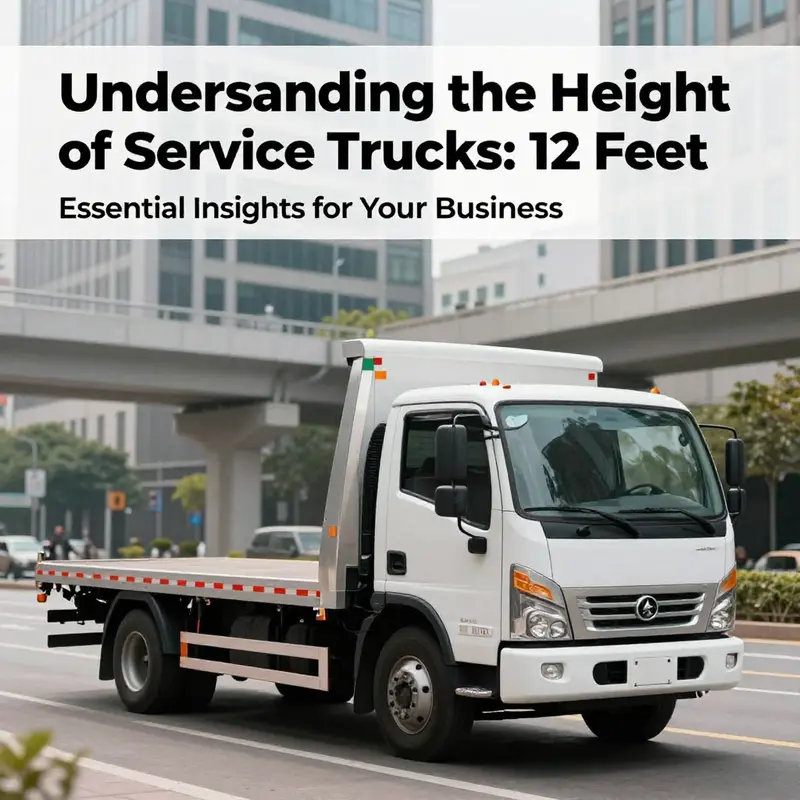
Height is not a single number in the world of service trucks. It is a range that emerges from a wheelbase of decisions about purpose, terrain, and the kinds of duties a vehicle must perform. When people ask how tall a service truck is, they are really asking how much room there is for maneuvering through the built environment while still delivering the promised tools, technicians, and capabilities to the work site. In the most common configurations, a service truck sits within a practical corridor of about 10 to 12 feet in overall height, a measure that balances highway clearances, urban street furniture, and interior cargo volume. This band is not arbitrary; it is rooted in the realities of infrastructure and logistics, where every inch of height can become a constraint or an advantage depending on where the vehicle is expected to travel and work. The flatbed, the backbone of many field operations, embodies this compromise. The flatbed service truck is designed to haul heavy equipment like tool kits, transformers, valves, or pipe assemblies, while also providing a cab that seats the crew and protects them from the weather. In this typical setup, the height of the entire vehicle, cab included, tends to align with the 10–12 foot range. That range is large enough to accommodate substantial cargo inside a body that sits above the wheels, yet compact enough to slip beneath many bridges and to fit into loading docks that are designed around standard commercial truck heights. The objective behind this standard is straightforward: enable reliable access to urban and rural worksites alike without demanding specialized routing or excessive scheduling buffers. When a crew arrives at a site, a truck within this height band is more likely to clear overhead structures, drive-through facilities, and the like, reducing the likelihood of costly delays or dangerous collisions with overhanging signs or utilities. From a safety perspective, the interior height of the cargo area—while not the same thing as overall vehicle height—also matters. A 10–12 foot exterior envelope typically corresponds with an interior cargo space that remains practical for staging long sections of conduit, heavy tools, or bulky machinery. It allows technicians to stand upright within the load compartment in many cases, if needed, while confining the upper measures to a predictable ceiling that workers can safely clear and operate beneath. The down-to-earth reality of these dimensions becomes apparent when one traces the route of a standard day: urban streets, construction corridors, and the span of rural roads each bring a distinct set of clearance challenges. Bridges, overpasses, toll gantries, and even canopies at loading docks have height restrictions that are built around a broad, industry-accepted range. This compatibility is not merely a matter of convenience; it is a fundamental requirement for daily operations. If a vehicle is too tall, it risks getting stranded or requiring detours that cost time, fuel, and labor. If it is too short, it might underutilize available space, leaving capacity unused or causing awkward stacking of equipment inside the cargo area. The middle ground—the 10 to 12 feet range—emerges as a practical default for many fleets, especially those that emphasize efficiency, reliability, and predictability in routine deliveries and field support. Beyond the flatbed archetype, specialized mobile workshops and service trucks demonstrate how height is intertwined with mission. A mobile workshop, particularly one built as a container mounted on a sturdy chassis and equipped with cranes or other lifting devices, often sits higher on its frame. The crane, the stabilizing outriggers, and the elevated container or body all contribute to a total height that can easily exceed the 12-foot benchmark. In rugged, field-oriented environments where crews operate in uneven terrain or remote sites, higher vehicles deliver the advantage of a self-contained workspace. They house workbenches, diagnostic tools, spare parts, and even power sources, enabling skilled technicians to perform repairs without returning to a shop. This elevated configuration, while indispensable for its purpose, carries a trade-off: greater exposure to overhead obstructions and tighter clearance corridors. Operators must plan routes with more care, and fleets often rely on accurate height data as part of their pre-trip and en-route risk assessments. Side-opening service trucks present another subtle variation that reinforces the same underlying truth: height affects access as much as it affects travel. Side-opening doors facilitate rapid retrieval of tools and equipment without requiring the entire cargo to be unloaded or rearranged. Yet the addition of side doors and their framing can subtly influence the exterior silhouette. The practical outcome is that these vehicles, while often still hovering in the 10–12 foot zone, may exhibit small incremental differences in height depending on door placement, the mechanics of the cargo restraint system, and the organization of the interior compartments. The general takeaway is simple: for most delivery and transportation-oriented service trucks, the practical height is 10–12 feet, a window that supports efficient ingress and egress, predictable loading, and compatibility with standard infrastructure. For specialized mission profiles—mobile workshops with cranes, elevated workstations, or other attachments—the total height increases. The height you observe in such configurations can push beyond 13 feet and approach or exceed four meters. This is not a contradiction but a reminder that the height of a service truck is a function of its job description and the tools it carries. The wavy edge of the spectrum—from the steady 3.0 to 3.7 meters in common flatbed or side-opening configurations to the higher reaches of mobile workshops—reflects a broader design philosophy. It is a philosophy that prioritizes accessibility, safety, and efficiency. Designing around a mid-range height reduces risk when vehicles traverse dense urban landscapes and height-restricted corridors. It also simplifies the manufacturing, maintenance, and fleet management processes by aligning with readily available infrastructure and standard loading facilities. Fleet managers, engineers, and logisticians recognize this in their daily decision making. When planning routes, they account for bridges, tunnels, and overpasses along the anticipated path. They also consider the dimensions of loading docks and yard spaces at facilities where the vehicles will be parked, loaded, or serviced. The goal is a harmonious balance: a vehicle tall enough to carry the necessary payload and provide a functional workspace, but not so tall that it becomes a recurring obstacle to movement or an incident risk. As a result, the 10 to 12-foot standard serves as a baseline. It offers predictability and minimizes the surprises that engineers and operators encounter during maintenance windows, customer visits, or emergency responses. Yet the industry remains pragmatic about outliers. In cases where equipment, crane arms, or elevated containers are essential, height considerations shift from a universal standard to a project-specific specification. The decision to push beyond the common range is driven by the work’s requirements. In those moments, operators and fleet planners co-compose a careful analysis of routes, road restrictions, and the feasibility of alternate work strategies. They might schedule specialized escorts or select routes designed for oversized loads. They may also deploy machinery trailers or adapt the vehicle configuration with removable components to reduce height temporarily when entering constrained sites. The end result is not merely a taller vehicle, but a safer and more efficient one, optimized for the job at hand. The dialogue around height is also a conversation about policy and guidance. National and regional guidelines shape what is permissible on public roads, and these guidelines are reflected in the way fleets are designed and operated. The literature on vehicle size and weight limits emphasizes consistency with the physical realities of a transportation network. The specific references in the guidance align with the 10–12 foot standard for many ordinary service truck configurations, while acknowledging that specialized units with cranes or elevated bodies can exceed typical heights. This is where the integration of standards and practical requirements becomes essential. Companies that oversee fleets of service vehicles must equip themselves with precise height data for every unit. They create digital catalogs of the exterior envelope for each configuration and maintain up-to-date clearance maps for the regions they serve. They train drivers and operators to interpret height data in a way that reduces risk and improves job site readiness. The work does not end at vehicle design. The human element—the crew that operates these trucks—must understand how height interacts with worksite access. A taller vehicle demands careful site scouting, especially in older urban districts where overhead fixtures may have less obvious clearance. The crew must be trained to anticipate obstacles and to choose alternate approaches when necessary. The same logic applies to maintenance operations inside the vehicle’s cargo area. Taller configurations might restrict the space available for repetitive tasks or specialized welding and assembly work inside the cab or the workshop compartment. In such cases, planners optimize workflows to keep essential activities within reach while leveraging portable tool setups. The height dimension also informs the evolution of the industry’s workforce broadly. As fleets grow, so does the need for engineers, estimators, and route planners who can interpret height data in the context of regulatory limits and infrastructure realities. The industry’s knowledge base increasingly emphasizes not only what a truck can carry, but also how it can carry it most reliably. In this sense, height becomes a shared language across manufacturers, fleet operators, and logistics coordinators. The same principles that guide a truck’s interior layout—ergonomics, safety, and efficiency—also shape its exterior envelope. The goal is not to maximize height for its own sake but to optimize the vehicle’s total performance—the speed and ease with which a crew can reach, use, and transport the equipment they need to complete a job and return to base ready for the next call. The conversation about height inevitably touches infrastructure policy and boundary conditions that influence fleet design. While the 10–12 foot band remains a practical baseline for many service operations, the industry recognizes that the road network is not static. Bridge reconstructions, new overpass projects, and evolving navigational technologies can alter the feasible height of vehicles on certain corridors. In some regions, local authorities publish height permits or restrictions for certain types of work vehicles during specific hours or seasons to accommodate construction activities. A fleet that operates in multiple jurisdictions must remain adaptable, updating their height data, and adjusting their routing logic in real time to comply with evolving restrictions. For readers who want to explore the regulatory and practical crosswinds shaping these decisions, the topic of cross-border regulatory issues is especially relevant. It links into how fleets plan, optimize, and manage heights when crossing from one jurisdiction to another. Cross-Border Regulatory Issues serves as a gateway to broader considerations about approvals, permits, and compliance that directly affect how a truck’s height is managed on international routes. The takeaway is not a rigid, one-size-fits-all number but a robust framework: a standard range for everyday operations, with clear processes to address exceptions when special equipment is required. This framework rests on a combination of empirical practice, engineering judgment, and compliance with the public road system. It enables fleets to deliver reliable service while maintaining safety and efficiency. In the end, height is a practical constraint that helps fleets optimize performance. It guides vehicle design, informs route planning, and shapes the logistics strategies that underpin service work. When height is understood as a tool rather than a hurdle, it becomes part of a disciplined approach to field operations. The standard 10–12 feet emerges not as a limit but as a reliable baseline that supports predictable service, swift access to work sites, and safer, more efficient performance across a wide variety of terrains and duties. For specialized operations, fleets carry the knowledge that height can be extended with purpose-built configurations, cranes, or elevated workspaces, but only with careful planning and risk assessment. The result is a fleet that balances capacity with accessibility, and a workforce that can respond to needs with agility rather than being obstructed by a simple dimension. In the broader arc of trucking and field service, height embodies the intersection of design, infrastructure, and daily practice. It is a reminder that the most effective service vehicles are those that move smoothly through the landscapes they serve, carrying the tools and talent needed to keep critical systems running. As cities grow and utilities expand, the 10–12 foot standard will continue to anchor conversations about how service trucks are built, how they navigate, and how they enable technicians to perform their essential work with confidence. The practical, real-world implication is clear: height is not a peripheral concern but a central element of reliability, safety, and efficiency in service truck operations. External resources that codify these dimensions—along with ongoing industry guidance—help fleets translate the abstract numbers into concrete planning and day-to-day execution. For those seeking official dimensions and the broader regulatory framework, the Federal Highway Administration’s guidance on vehicle size and weight limits provides authoritative context and detail that complements the practical knowledge described here. External resource: https://www.fhwa.dot.gov/operations/vehiclesizeweight/.
Raising the Bar on Service Missions: Tall Specialized Trucks, Taller Challenges, and the Rules They Navigate
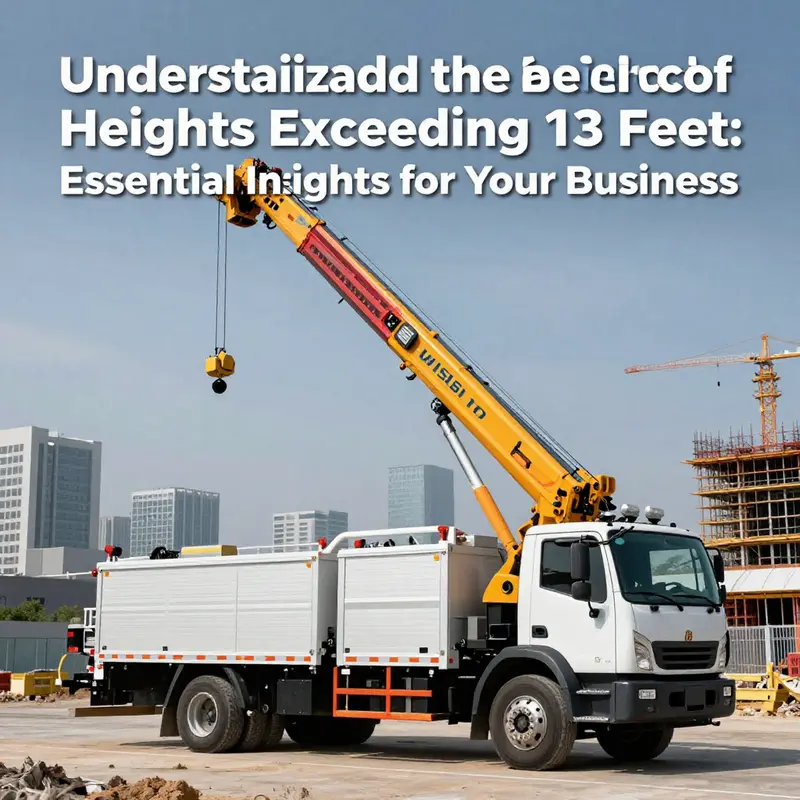
Height is not just a number for service fleets; it is a hinge on which performance, safety, and logistics swing. In the broad spectrum of service trucks, the height of the vehicle is a practical expression of its mission. For most standard flatbed service trucks, the cab plus cargo area keep the total height within a familiar band—roughly 10 to 12 feet—designed to clear urban bridges, parking garages, and city streets without dramatic detours. Yet there exists a class of specialized service trucks whose very purpose demands more vertical real estate. When a truck is configured as a mobile workshop, a crane is mounted on a raised container, or a long-reach boom is jacked into position, the vehicle’s height climbs beyond the ordinary. In many markets, those taller profiles exceed 13 feet and push the envelope of what is permissible on public roadways. The difference in height is not arbitrary but tethered to function, capability, and the demands of field operations that take teams to remote sites, construction zones, and emergency installations where access is constrained and the work scope is long and complex.
The distinction between a conventional service truck and a tall, specialized one is not solely about an extra few feet of height. It is a reflection of the engineering choices that enable these vehicles to perform high-value tasks in challenging environments. A standard flatbed, even when robust, is optimized for cargo space and travel efficiency. Its height is a compromise between payload capacity and the blunt reality of low-clearance obstacles. When a truck is built to carry or assemble tall equipment—such as large HVAC units, telecommunications components, or long-reach booms—the body structure must be strengthened and augmented with features that can only exist when extra height is accepted as part of the overall design. The consequence is a vehicle that stands taller, with a profile that whispers of the work it was built to do, and with a set of regulatory and operational considerations that require careful planning and disciplined execution.
Design choices for these high-profile vehicles hinge on three core factors: structural integrity, load-path optimization, and dynamic stability. First, reinforcing the frame is essential. Taller trucks carry loads with unusual geometry and cantilevered components. A reinforced frame helps distribute the added stresses that come from lifting, swinging, or extending heavy equipment. The second factor is specialized lifting mechanisms. Hydraulic lifts, telescoping outriggers, and hydraulic cranes are common, each designed to handle oversized items with precision. These systems interact with the vehicle’s chassis in ways that demand careful integration. They must be capable of deploying without compromising the truck’s base handling or roadworthiness. Third, stability and control are paramount. A high center of gravity combined with a tall equipment mast can introduce sway, wind loading, and unpredictable dynamics on uneven pavement or when maneuvering through tight urban corridors. Outriggers and counterweights are not optional extras; they are essential for keeping the machine grounded during loading, unloading, and operations in the field.
The operational realities of tall specialized service trucks begin long before they roll out of the yard. Height restrictions form a practical framework for planning. Bridges, overpasses, and overhead trolley lines vary by region and even by street within a city. When a unit exceeds the common 13-foot threshold, it frequently enters a regime that requires height-specific routing. That routing considers available clearance along the intended route, the weight of the cargo or equipment, and the timing of the operation. In some cases, operators must choose routes that, while longer, avoid low clearance or sharp turns that could jeopardize the load or the vehicle’s stability. These route decisions are not made casually. They involve pre-trip planning, consultations with permitting authorities, and input from traffic management centers when applicable. The aim is not merely to reach a site but to do so without creating unnecessary risk for the crew, the vehicle, or the surrounding infrastructure.
Permit requirements are the formal backbone of operating tall service trucks. Vehicles that rise above a certain height are often categorized as oversize or overweight loads, and they may require permits, pilot vehicles, and designated travel times. The regulatory framework, in many jurisdictions, is designed to balance the needs of critical service work with the safety of other road users and the integrity of transportation networks. Operators must be familiar with the permit process, including the kinds of documents needed, the conditions attached to the permit, and the routes that are sanctioned for oversized vehicles. The process is not simply a bureaucratic hurdle; it is a risk-management discipline that codifies safe operation in the context of real-world constraints. The emphasis is on preparation, notification, and compliance so that field operations can proceed with a clear understanding of what is allowed and what is prohibited.
Safety and training form the human and procedural backbone of tall truck operations. A taller vehicle introduces new risk vectors: a higher profile to wind gusts, more pronounced sway when hoisting, and greater consequences if a load moves unexpectedly. Operators must be trained not only in driving but in the subtleties of lifting and stabilizing tall equipment. That training covers load securement, crane operation, maneuvering with outriggers deployed, communication with spotters, and emergency procedures if a load begins to shift or a stabilization system fails. Maintenance programs for tall trucks are equally rigorous. Hydraulic lines, structural joints, bolster points, and crane mechanisms require frequent inspection. A single overlooked fault can cascade into a dangerous situation when the equipment is extended or lifting heavy payloads.
In practice, the tall service truck is typically deployed to projects where standard equipment would be impractical or impossible to move with efficiency. For instance, transporting tall equipment like communication towers, HVAC units large enough to require crane-assisted installation, or those long-reach booms used in remote construction or maintenance work, a tall mobile platform becomes indispensable. The advantage is not limited to the ability to carry oversized payloads; it also includes the flexibility to perform lift-and-install tasks on site without requiring multiple separate vehicles. The crane arm and the elevated container or body enable a small team to complete a sequence of tasks that would otherwise necessitate a larger, multi-vehicle operation. The result is a more nimble, responsive asset that can work in environments where space is constrained and where efficiency translates directly into time and cost savings.
Yet height is a double-edged sword. The same features that enable greater capability can complicate operations in urban areas where space is tight and visibility is limited. A tall truck’s silhouette can pose clearance challenges during street-level navigation in older districts or in areas congested with overhead electrical lines and signage. Traffic control becomes a central part of the planning, with crew members coordinating with local authorities when a lift or hoist is conducted near public spaces. In many cases, the operator’s ability to anticipate and mitigate potential conflicts hinges on a combination of driver experience, support from a well-trained ground crew, and the strategic use of route maps and real-time traffic data. The goal is to minimize disruption while preserving the safety and integrity of the operation.
A practical dimension of these operations is the integration of tall service trucks into broader fleet strategies. Companies that invest in taller units typically do so with a clear understanding of the lifecycle costs involved—higher initial acquisition costs, specialized maintenance, and the need for trained personnel. But they also recognize the return on investment that comes from the ability to perform critical work on-site, reduce project downtime, and improve the reliability of service missions. The trade-offs are weighed against the potential downtime that could arise if the team had to stage equipment from distant locations or hire third-party services to bring in cranes or heavy lifting gear. In this balancing act, the tall truck becomes a strategic asset that can accelerate project timelines and improve service quality in sectors where uptime is essential.
From a regulatory perspective, the oversize and overweight category to which many tall service trucks belong is well documented, even if the specifics vary by jurisdiction. The Federal Motor Carrier Safety Administration (FMCSA) and related agencies provide guidance on permit requirements and safety standards for oversized loads, outlining the processes through which operators obtain authorization for specific routes, times, and load configurations. This framework is not a barrier to operation; rather, it is a structured approach that helps ensure that large and tall vehicles can move through the transportation network with predictable risk levels. By adhering to these guidelines, operators align their field capabilities with public safety and infrastructure protection, turning height from a potential liability into a managed dimension of performance.
The chapter’s findings emphasize a central point: the height of a service truck is not an abstract figure but a design choice, a managerial decision, and a regulatory matter that influences how teams plan, move, and work. The decision to use a taller vehicle reflects a strategic purpose—one that prioritizes on-site efficiency and the ability to handle oversized payloads with speed and control. It also requires a disciplined approach to route selection, permit management, operator training, and ongoing maintenance. This is why the height conversation matters to anyone seeking to understand how tall a service truck can be and what that means for the broader question of how tall is a service truck.
To connect these practical considerations back to the wider arc of the trucking industry, one can see how trends in fleet optimization, capital expenditure, and regulatory adaptation shape the adoption of height-enhanced service trucks. The same forces that drive investment in better engines, more efficient telematics, and safer, smarter maintenance programs also influence decisions about higher profiles and more capable field units. This alignment of capability with regulatory compliance and operational risk management forms the backbone of modern service operations. It is not enough to know the maximum height; it is essential to understand how height interacts with design, operations, and law to produce an asset that can reliably perform in the field while safeguarding the public and the crew.
From a storytelling perspective, the tall service truck embodies the convergence of engineering ambition and practical necessity. Its presence on a job site signals readiness to tackle complex tasks that would be impractical with conventional equipment. It also signals the need for meticulous planning and disciplined execution—the kind of careful orchestration that keeps a project on track when every inch of clearance, every ounce of weight, and every second of time counts. The tall configuration becomes a narrative thread within the broader story of service reliability, infrastructure maintenance, and the ongoing evolution of how we maintain and upgrade critical systems in a world that increasingly depends on complex, integrated networks. As cities expand and industrial sites push taller, the tall service truck stands as a concrete reminder that progress often takes shape in the space where engineering meets operation—and that the road, in its humbler lanes and its highest clearances, remains a shared stage for that progress to unfold.
For readers seeking a fuller view of how these tall assets fit into the broader ecosystem of trucking and logistics, the conversation about height dovetails with economic shifts and strategic investments in the sector. In particular, the way firms think about tall specialized trucks intersects with macro-level trends in capital budgeting, labor markets, and regulatory modernization. These trends influence not only what equipment is purchased but also how it is deployed, how maintenance is funded, and how operators are trained. The result is a dynamic where height becomes a tool for competitive advantage, provided it is managed with rigor and aligned with a clear operating doctrine. In this sense, height is not just a measurement; it is a strategic parameter that shapes planning horizons, risk tolerance, and the pace at which field capabilities can be expanded.
The narrative is not one of unbounded ascent. It is a careful story of balancing capability with compliance, speed with safety, and the demands of real-world sites with the realities of road networks. The tall specialized service truck, then, is a sophisticated instrument, one built to meet specialized needs while remaining integrated within the broader logistics system. Its height is a visible sign of purpose, a reminder that in the world of service operations, reaching higher often means charting a longer, more carefully plotted course through the terrain of regulation, infrastructure, and human expertise. When this balance is maintained, height becomes an asset—one that enables crews to perform critical maintenance and construction work more efficiently, with fewer delays, and with a clear commitment to safety and reliability.
In closing, the conversation about height is inseparable from the conversation about capability. The 10-to-12-foot norm remains a stable baseline for many routine tasks, but the world of specialized service work demands a willingness to embrace heights that demand new approaches to design, operation, and governance. These tall units—equipped with reinforced frames, lifting mechanisms, and stabilization systems—tell a story of progress that respects the limits of road infrastructure while expanding the horizons of field service. They illustrate how height, when managed properly, can translate into speed, scope, and quality of service, ensuring that critical work proceeds with precision from the moment a crew arrives on site until the last bolt is tightened and the final check is completed. As the industry continues to evolve, the height question will persist, but so too will the habitual discipline that turns a tall vehicle into a dependable, safe, and highly capable instrument of service.
For those following the broader implications of tall service trucks within the pattern of trucking and infrastructure development, a linked exploration of industry trends can provide further context: key economic trends impacting the trucking industry. This connection helps illustrate how height choices ripple through procurement cycles, workforce development, and the regulatory posture that guides oversized operations. And for readers who want direct regulatory guidance on how these oversized configurations are governed, further details are available through established regulatory resources, including the Federal Motor Carrier Safety Administration’s oversize/overweight permit framework at the end of the detailed results for this chapter: https://www.fmcsa.dot.gov/regulations/oversize-overweight-permits.
Rising Heights on the Job: A Cohesive View of How Service Trucks Stand Tall Across Roles
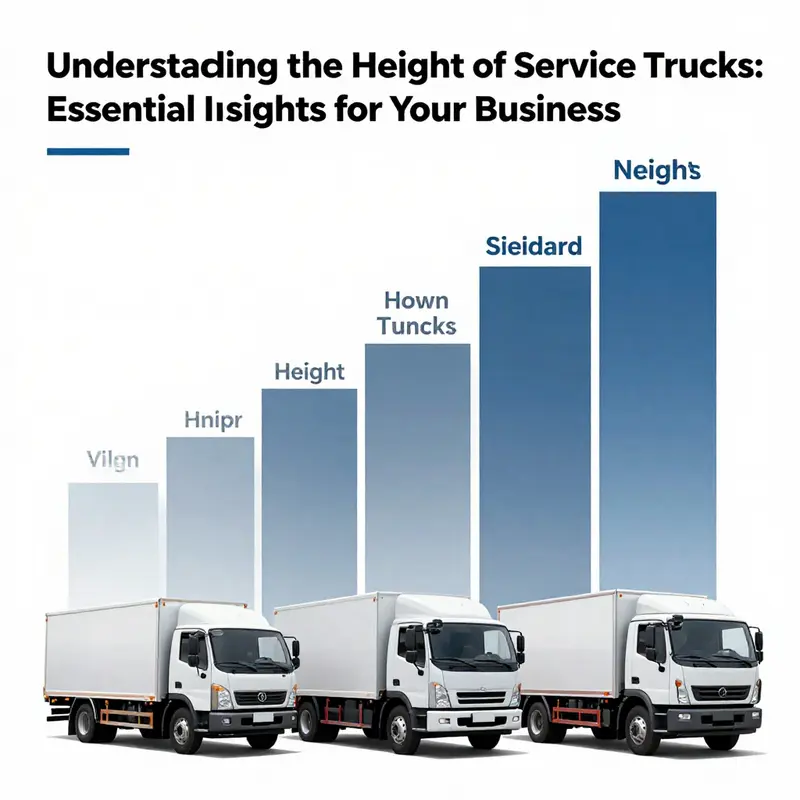
The question of how tall a service truck is might seem simple at first glance, yet it unfolds into a much more nuanced inquiry once you consider the diverse purposes these vehicles serve. Height matters not only for clearance under bridges and entries to underground sites, but also for the practical realities of loading, maneuvering, and operating in varied environments. In a field where time on site is money, the height of a service truck can influence everything from route planning and equipment selection to safety protocols and fuel efficiency. Much of what follows rests on the tension between a vehicle’s overall stature and the specific heights of its carrying bodies, attachments, and working platforms. Understanding these dynamics helps fleet operators choose configurations that balance access with capability, and it helps technicians anticipate real-world constraints that shape a workday, sometimes long before a job begins.
To appreciate the full picture, it is important to distinguish the two common ways height is discussed in this sector. On one hand, there is the overall vehicle height—the distance from the ground to the highest point of the truck, which matters for clearance along roadways, tunnels, and under overhead hazards. On the other hand, there is the height of the cargo area or the most prominent lifting or storage structure on the chassis, which can be substantially lower or different in its geometry from the truck’s peak. The literature you’ll encounter in practice reflects both measures. In certain flatbed configurations—where the bed sits close to the ground for easier loading and better weight distribution—the cargo deck itself can be as low as four to six feet above the ground, even as the parked vehicle’s total height remains higher due to the cab, aerodynamic fairings, and any crane or auger mounts. Conversely, standard service trucks typically described in broad summaries put the total height in a range that often lands around ten to twelve feet, a familiar target that aligns with many urban clearance standards and general urban-road realities. This duality is not a contradiction so much as a clarification: height is a property that depends on what you are measuring and why.
Across the spectrum of typical service trucks, the most common configurations illustrate a consistent pattern. Flatbed trucks, used to haul heavy or irregularly shaped loads, present an interesting case because their deck height can be deceptively modest while the vehicle’s overall height climbs with cab design, lighting packages, and any mounted equipment. The bed itself often measures four to six feet in height, reflecting the structural choice to keep the deck low for easier loading and unloading with cranes or forklifts. Yet when you factor in the cab structure and any protective rails or equipment above the cab, the total height can move toward the higher end of the spectrum. This is why many operators who rely on flatbeds treat the deck and the overall height as two related but distinct metrics—one governing what can be placed on the bed, the other governing what can pass beneath the cap and across roadways. In practical terms, crews planning routes frequently verify both numbers before committing to a path that includes bridge clearances or urban overpasses.
Step vans and box vans, vehicles designed for a balance of interior space and maneuverability, tend to land in a different portion of the height spectrum. Step vans, which are widely used by utility companies, HVAC teams, and service crews for tool transport, usually sit in the seven to eight-foot range for overall height. This makes them well suited for city streets, where parking ramps and low overhangs can constrain maneuverability, yet require enough interior space to store a comprehensive toolkit and spare parts. Box vans share a similar footprint; their fully enclosed bodies protect cargo from weather and theft while delivering a predictable height that supports stacking and organizing equipment within a climate-controlled or weather-protected environment. The practical upshot is that for these mid-sized, all-purpose service vehicles, height is a deliberate compromise: high enough to accommodate substantial interiors and secure storage, but not so tall that urban corridors, parking structures, or loading docks become constant headaches.
Utility trucks, equipped with dumps, winches, or specialized storage, illustrate how height is linked to the mission. Their design deliberately accommodates rugged on-site work and material handling, so their height generally ranges from six to eight feet. The extra girth comes from reinforced frames, higher ground clearance, and the fitment of attachments that can alter the silhouette—hydraulic dumps, toolreaders, or crane mounts, all of which can push a given model toward the higher end of the band while still preserving ground clearance for rough terrain. This category often serves as a hinge between urban service and field maintenance, and its height profile is a practical reflection of the need to bridge both worlds: the ability to traverse uneven ground and the ability to reach tools and equipment stored within the body without sacrificing on-road stability.
Low-profile service trucks, engineered specifically for constrained spaces, present a stark contrast to their more robust siblings. With heights as low as five to six feet, these vehicles are designed to squeeze into tight urban alleys, underground utilities, tunnels, and maintenance corridors where every inch of clearance matters. The compact chassis and reduced body height let technicians work in environments that would stall taller trucks. The trade-off is clear: less interior volume and limited capacity for bulky equipment. But this is often exactly what the job demands, and the emphasis on low height can be the decisive advantage that keeps crews productive when space is scarce and time is tight.
In the broader narrative, additional specialized models push the envelope beyond the standard light- to mid-duty spectrum. Mobile workshops mounted on off-road chassis with cranes and elevated containers epitomize the upper bound of practical height. The combination of a raised container, a working crane, and extra stabilization hardware can easily push total vehicle height beyond thirteen feet. Depths of operation in rugged terrain demand this, as crews must bring a complete workshop to the field while maintaining enough ground clearance to navigate rough terrain. These units illustrate a fundamental principle of service-vehicle design: height is not merely a matter of visibility or a range on a spec sheet; it is a functional attribute that directly affects reach, leverage, stability, and safety when the vehicle is deployed in the most demanding environments.
The variation in height by type is not simply an accident of design. It reflects the different demands of tasks and the way work sites shape the geometry of a vehicle. A flatbed prioritizes raw loading capacity and deck versatility, and so it tends to emphasize a low deck for ease of material handling alongside a taller silhouette to accommodate the cab and any over-cab equipment. Step and box vans optimize interior space and weather protection, leading to a more uniform mid-range height. Utility trucks lean into attachments that require height flexibility but still adhere to ground clearance needed for on-site performance. Low-profile models respond to the urban condition, where height restrictions govern not only routes but also the very architecture of a day’s work. Across all these configurations, height becomes a narrative about how a team intends to move, store, and access the tools of trade in relation to the places they must reach.
The practical implication for fleet managers and field crews is clear: knowing the height profile of each truck type is essential for planning routes, staging sites, and aligning safety practices with site realities. When a crew heads toward an urban job, choosing a vehicle near the lower end of the height spectrum can prevent last-minute detours and gate checks. In contrast, a project that involves installing large equipment or constructing a temporary facility may justify a taller configuration that can accommodate cranes, elevated containers, and other heavy attachments. The decision is never about a single dimension; it is about a coordinated set of dimensions—deck height, total height, door openings, and the reach of any mounted equipment—that together determine a vehicle’s true operating envelope.
As operations expand and fleets adapt to evolving conditions, industry participants increasingly weigh height alongside other critical factors, such as payload, fuel efficiency, and vehicle lifecycle costs. Height interacts with maneuverability and payload in meaningful ways. A taller vehicle may offer more space for parts and tools, but it may also demand more careful route planning, taller ramps, and longer stopping distances. Conversely, a lower vehicle may improve access to tight corridors and reduce the risk of overhead strikes, but it could constrain the installation of bulky equipment or the expansion of tool storage. This trade-off is at the heart of the decision-making process for managers who must balance immediate job needs with the long-term efficiency and safety of their fleets.
The interplay between height and use-case becomes especially pronounced when considering specialized mobile workshops and crane-equipped units. These machines are deployed to bring the entire working environment to remote or rugged sites, which means height is often a feature of necessity rather than preference. Elevating the container or adding a crane arm expands the functional reach of the vehicle, enabling it to perform tasks that would otherwise require multiple pieces of equipment or a second trip. Yet the added height introduces a distinct set of risks and constraints, from bridge and tunnel clearances to the need for precise load path planning and operator training. In those scenarios, height is a capability, but it also represents a responsibility—an invitation to carefully structure logistics, safety checks, and contingency planning so that a tall tool carrier becomes a reliable, efficient solution rather than a hazard on wheels.
To ground this discussion in practical terms, consider the typical range across several common truck types. Flatbed trucks often present a deck height that sits roughly four to six feet above ground, while the full vehicle, including cab and any over-cab equipment, can push total height toward the ten- to twelve-foot mark. Step vans and box vans generally sit in a slightly taller band, with overall heights around seven to eight feet, balancing interior space with urban compatibility. Utility trucks usually fall between six and eight feet in height, reflecting their hybrid role as both transporters and on-site workstations. Low-profile trucks intentionally target the lower end of the spectrum, at five to six feet in height, to preserve clearance in tight spaces. And when fleets equip specialized mobile workshops with cranes on rugged terrain, heights can rise beyond thirteen feet, a threshold that foregrounds route planning and site access as central considerations. These figures are not rigid laws but benchmarks that help crews compare options, anticipate constraints, and configure workdays with a clearer sense of spatial limits.
In practice, this mosaic of heights informs how crews approach route planning and site preparation. A driver or supervisor who understands the height envelope of each vehicle can pre-survey routes for potential chokepoints, such as low-clearance bridges, tunnel entries, or narrow access roads that can derail a well-planned schedule. It also guides the selection of attachments and compartments. A low-profile truck may excel at parking and quick access to tools, but it might require modular storage solutions to compensate for limited interior space. A taller unit with a crane or elevated container offers greater on-site reach and workshop capability but may demand specialized routing to circumvent overhead obstacles or to align with crane operation angles. The day-to-day implications are tangible: the right height configuration helps avoid delays, reduces the risk of damages to vehicle or infrastructure, and improves the safety profile of every operation by ensuring the vehicle can navigate a site without forcing crews to improvise risky workarounds.
Beyond height alone, the broader field emphasizes how height interacts with the vehicle’s footprint, weight distribution, and overall design philosophy. The same model can serve very different roles depending on how the body is engineered and what attachments are installed. A flatbed with a crane mounted above the deck creates a different height dynamic than a flatbed without a crane, and both will have distinct implications for load stability and center of gravity. In urban settings, even modest increases in height can affect braking distance, acceleration, and steering effort, necessitating driver training and fleet-wide safety protocols. In rural or industrial environments, rugged suspension and higher ground clearance may dominate the calculus, making height a secondary feature that is part of a larger system designed to survive challenging terrain. The takeaway is that height cannot be considered in isolation; it must be read in concert with loading strategy, operational environment, and the specific tasks the vehicle is designed to perform.
The practical takeaway for readers who manage or operate service fleets is to approach height as a spectrum rather than a single number. Start by mapping out the core tasks each vehicle will undertake and then align the height profile to those requirements. When the job demands frequent access to underground utilities, low-profile configurations or compact chassis may offer the most efficient workflow. For heavy construction or field maintenance that requires on-site fabrication or mounting tasks, crane-equipped or elevated-container layouts can deliver the necessary capabilities—albeit with careful planning for route feasibility and site safety. In every case, coordinated decisions about height should be part of a holistic fleet strategy that also considers payload, maneuverability, maintenance, and lifecycle costs. Keeping a consistent framework for comparing heights across types helps teams predict where bottlenecks might arise and design operations that minimize downtime.
For readers who want to connect this discussion to broader industry conversations, consider how height decisions intersect with economic and policy trends shaping the trucking sector. As the industry evolves, vehicle height becomes part of a larger conversation about efficiency, safety, and adaptability in the face of changing infrastructure, urban growth, and regulatory expectations. See the discussion on Key economic trends impacting the trucking industry for context on how fleet design choices, including height considerations, fit into a shifting landscape. Key economic trends impacting the trucking industry. In addition, the regulatory environment surrounding vehicle dimensions and safe operation continues to evolve, guiding what configurations manufacturers and fleets can implement and how routes are planned.
From a practical standpoint, operators should also maintain awareness of official guidance and standards. The Federal Motor Carrier Safety Administration provides authoritative, up-to-date standards relevant to commercial vehicle operation and safety. Those standards help anchor the conversation about height within a framework of regulatory compliance, driver training, and safe roadway practice. For more detail, consult the FMCSA guidance and resources at https://www.fmcsa.dot.gov/.
In sum, height is not a single attribute but a composite feature shaped by purpose, environment, and equipment. The tall, crane-equipped workshop on rugged terrain is a different tool than the compact, low-profile truck designed to navigate tight city streets. Each has a distinct height profile that serves its mission and influences how crews move, load, and operate on the job. The challenge—and the opportunity—lies in selecting a set of configurations that collectively maximize uptime, safety, and efficiency while accommodating the real-world constraints that come with every job site. As fleets evolve, the question shifts from “how tall is a service truck” to “how well do our height profiles align with our work.” When height is chosen with purpose, it becomes a quiet enabler of productivity rather than a boundary to be navigated around. The story of height is, at heart, a story of alignment between vehicle form and mission, a balance that keeps service teams capable, resilient, and ready for the next site.
External reference and further reading can deepen this understanding. For regulatory standards and guidance on vehicle dimensions and safe operation, see the FMCSA resources at the link above.
Final thoughts
Understanding the height of service trucks is invaluable for businesses engaged in manufacturing, distribution, construction, and e-commerce. Recognizing standard heights allows for efficient navigation through urban environments, while knowledge of specialized truck measurements aids in choosing the right vehicle for specific outdoor operations. By evaluating the height and type of service truck your business requires, you can optimize logistics, enhance operational efficiency, and ensure compliance with transportation regulations. Emphasizing these factors will facilitate smoother project execution and contribute to your company’s overall success.