

As sustainability and electric vehicles pave the way for the future of transportation, Rivian trucks stand out for their innovative features and capabilities. For businesses in manufacturing, retail, construction, and logistics, maintaining a Rivian truck is crucial for operational efficiency. Whether you need on-the-go service or specialized fleet management, understanding the range of service options is essential. This guide delves into three main chapters covering Rivian’s Mobile Service, how to locate Service Centers, and specialized services for fleet operations, ensuring you have all the information necessary to keep your Rivian truck in optimal condition.
On-Demand Care at Your Doorstep: Navigating Rivian’s Mobile Service for Electric Truck Maintenance
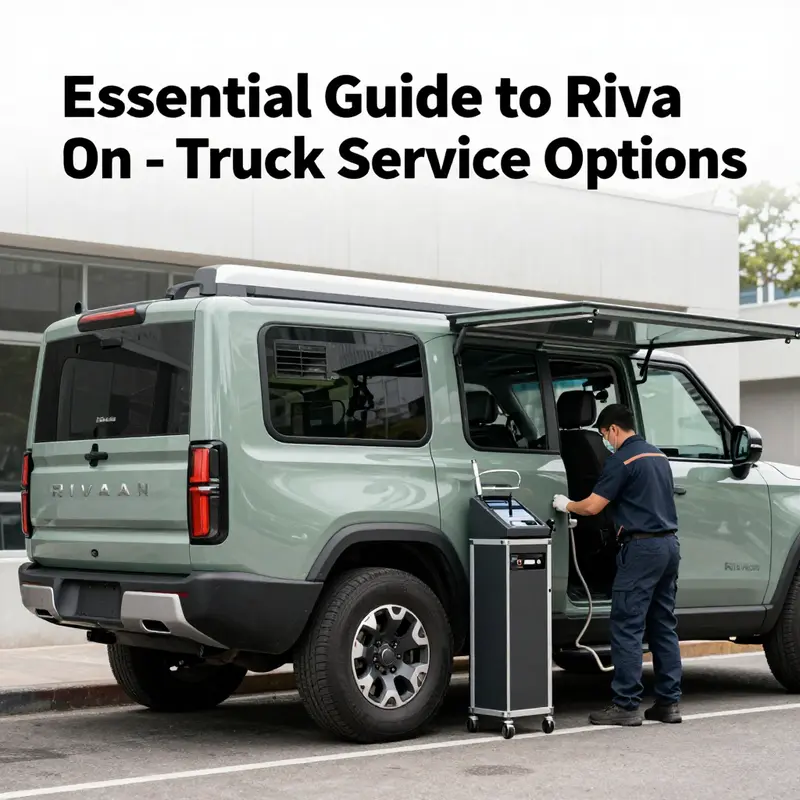
Rivian’s on-demand mobile service redefines how electric trucks stay healthy, shifting the emphasis from inconvenient trips to a maintenance routine that happens where you are. For drivers and fleets alike, the ability to schedule a technician to come to your location reduces the friction that can derail a day’s work. The core idea is simple but powerful: routine maintenance, diagnostic checks, and even some repairs can be completed without the time and cost of a depot visit. When you consider the demanding realities of operating an electric truck—whether you’re a solo operator running regional routes or part of a growing private fleet—the appeal of having a qualified technician come to your site becomes clear. The on-demand model fits the realities of real-world logistics, where every hour matters and downtime compounds costs. In practice, Rivian’s mobile service teams arrive with a carefully equipped van or truck that carries the tools, digital diagnostic gear, and a selection of common parts needed to tackle the tasks most often required in between full service visits. The emphasis is on routine care that keeps performance steady and predictable, rather than emergencies that pull a vehicle off the road for days. The scope of what can be done on-site includes routine maintenance items like tire rotation and replacement in some cases, a battery health check to keep an eye on the high-voltage system’s health, software updates to ensure the latest control software is running, and basic mechanical issue triage to identify potential problems before they become costly breakages. This last point is particularly important for electric trucks, where a misfiring sensor or a software glitch can masquerade as a mechanical fault and trigger unnecessary downtime if not diagnosed accurately. The mobile service team’s capability to perform these tasks near your operation helps keep fleets on schedule, reducing the risk of late deliveries or missed windows caused by maintenance bottlenecks. The service’s accessibility extends beyond the geographic footprint of a few fixed centers. Rivian positions mobile service as a flexible option for customers who live in rural or sparsely serviced areas, where driving distances to a center could be a significant disruption. In those contexts, the benefit is twofold: less travel time and less vehicle downtime, because the truck can be serviced in its usual work setting, which is often closer than a distant service hub. Scheduling is integrated into the broader Rivian ecosystem, with an app or website interface that lets owners pick a time window that aligns with their workday or route plan. The real-time arrival tracking feature provides visibility into when the technician will be at the location, which is not just a convenience but a practical planning tool for dispatch and operations managers who need to coordinate loading, unloading, and handoffs. The experience is designed to be transparent from start to finish. Once the work begins, every action taken during the on-site service is recorded and uploaded to the vehicle’s owner account. This creates a traceable maintenance history, a record that can be audited for warranty purposes, regulatory compliance, or simply to monitor the long-term health of a vehicle. In many ways, this digital traceability mirrors what fleets and managers increasingly require for insurance, risk management, and performance analytics. If a technical challenge is beyond the on-site scope, the Rivian team coordinates a seamless transition to more extensive service routes. In such cases, the system can arrange for a complimentary tow to the nearest authorized service center, ensuring that the vehicle continues to move along its schedule without bearing additional driver burden or transport costs. This combination of on-site capability and a reliable fallback plan helps mitigate the risk of delays and demonstrates how on-demand maintenance can complement the broader service network rather than replace it. Behind the scenes, Rivian’s commitment to quality shows in the rigorous training and certification requirements for mobile technicians. Every technician who represents the mobile service program undergoes comprehensive training to master the full spectrum of Rivian models, with special emphasis on electric vehicle safety and the high-voltage systems that power these trucks. The training extends beyond theoretical knowledge to practical, hands-on competency with the vehicles’ software, battery management, and diagnostics. The mobile service vehicles themselves are purpose-built, outfitted with the necessary diagnostic tools and a robust parts inventory to handle the most common maintenance tasks without delay. The preparation matters: a technician arriving at your site may be equipped to perform a tire rotation, check wheel alignment indicators if the vehicle’s suspension settings permit, replace worn components, or perform a software update that can otherwise require a bench session at a center. The availability of this on-site option is particularly compelling for operators managing tight schedules, multi-stop routes, or remote sites where a drive to a center would require significant planning, cost, and downtime. It is also an appealing option for owners who value the immediacy of a hands-on assessment. The on-site diagnosis can reveal subtleties that might be missed during a standard diagnostic test performed at a service center, because the technician can observe how the vehicle behaves under real-world conditions—yet another layer of practical insight for keeping a truck productive. Of course, not every repair can be completed on the curb or in a customer’s yard. Complex issues, such as substantial battery pack servicing, serious drivetrain repairs, or intricate electrical troubleshooting that demands specialized equipment, may require a move to a full service facility. In these instances, Rivian’s mobile service approach is designed to be part of a larger, cohesive service strategy. The on-site visit acts as the first line of defense, offering a rapid triage that can confirm whether a problem is resolved with a simple fix or whether it requires the in-depth resources of a service center. If a tow becomes necessary, the process is arranged with minimal friction, and the customer still benefits from the continuity of service since the vehicle’s case history travels with it to the center. This approach aligns with how modern fleets think about maintenance: preventive care and rapid triage today to minimize downtime tomorrow. The human element remains central. Mobile service technicians come with a blend of mechanical acumen and software fluency, reflecting the evolving nature of electric trucks where software and hardware are deeply intertwined. The high voltage safety aspect is non-negotiable. Technicians are trained to handle high-voltage systems with the appropriate safeguards, which reassures operators who must keep drivers and maintenance teams safe while maintaining uptime. The goal is not merely to fix the issue but to ensure that the vehicle returns to service with a reliable rollback of any software or calibration changes that may have occurred during the diagnostic process. In practice, this means a technician can perform a software update to address a known bug, recalibrate a sensor, or adjust a parameter to optimize performance in a particular operating environment. It can also mean documenting a corrective action in the vehicle’s service history so that the fleet manager has complete visibility into what was done and why. The experience for the owner or operator is therefore a blend of convenience, accountability, and professional assurance. The real value emerges when you can align the on-demand option with the realities of your operations. A driver who starts a shift knowing that a routine service window will be conducted near their first stop can reduce the risk of a mid-route breakdown. A fleet manager can schedule preventive maintenance during a low-traffic period and coordinate with dispatch to ensure no disruption to service commitments. The scheduling system, with its time-slot flexibility, adds a level of adaptability that traditional preventive maintenance programs sometimes lack. For those who manage multiple units—whether a single long-haul tractor that doubles as a mobile workshop or a small fleet with several electric trucks—the on-demand mobile service becomes an extension of the maintenance program. It can function as a critical component of a broader maintenance strategy that balances preventive care, predictive diagnostics, and timely repair. Within that broader strategy, there is a perception of transparency that resonates with mature fleet operations. Access to a complete service history, the ability to track technician notes in real time, and the knowledge that the last service was performed by a credentialed professional all contribute to a confidence level that is essential when schedules are tight and margins are thin. For owners who value this level of clarity, the mobile service experience can be a differentiator, signaling that the vehicle is part of a managed, professional operation rather than a hobbyist setup. In the context of industry trends, the maintenance landscape is evolving toward more flexible, service-as-a-resource models, especially for fleets adopting electric powertrains. The shift toward on-demand, on-site maintenance reflects a broader move toward reducing the inertia of maintenance cycles while preserving reliability. Some operators see this as part of a continuum that includes fleet services, remote diagnostics, and centralized maintenance planning, all designed to keep vehicles in motion and reduce the total cost of ownership. For fleets exploring these shifts, there are practical considerations that extend beyond the single visit. The ability to consolidate service events—performing multiple checks, software updates, and minor repairs during an efficient on-site window—can translate into lower per-vehicle downtime. It also opens opportunities for continuous improvement, because data gathered during mobile maintenance visits can feed into predictive maintenance models and inform decisions about parts stocking and route planning. To illustrate the practical path forward, consider a typical maintenance window scheduled via the Rivian app. A technician appears with a checklist of routine tasks tailored to the vehicle’s model and mileage. The owner can observe the process in real time through the app, receiving updates on what was checked, what was replaced, and what remains outstanding. If a fault code surfaces that requires deeper investigation, the technician can document it, link it to the vehicle’s digital history, and arrange for the next steps—whether that means scheduling a more extensive on-site diagnostic session or organizing a tow to a center. This way, the on-demand option is not a one-off service but a continuous layer of care that complements the existing service network. The broader ecosystem surrounding on-demand maintenance also invites reflection on how private fleets, dealers, and service providers collaborate around a shared objective: keeping electric trucks on the road with minimal disruption and at predictable costs. For readers who are curious about broader industry patterns, trends in private fleets’ maintenance practices highlight a shift toward more flexible, tech-enabled support models. The ongoing conversation about how fleets manage maintenance in an electrified era intersects with the mobile service experience. To explore these themes further, you can review contemporary discussions on private fleets’ trends in trucking maintenance and how operators adapt to hybrid models of service delivery. private-fleets-trends-in-trucking-maintenance While the mobile service option is not a panacea for every scenario, it represents a thoughtful response to the daily realities of operating an electric truck. It blends hands-on technical skill with digital transparency, delivering care that is both practical and accountable. The model acknowledges that some maintenance tasks require the controlled environment of a service center, while others benefit from the immediacy and familiarity of the vehicle’s operating context. By embracing this hybrid of on-site care and centralized expertise, Rivian is shaping a maintenance paradigm that aims to minimize unplanned downtime, reduce logistical friction, and keep drivers focused on their routes rather than their wrenching schedules. For readers seeking the most current coverage, booking options, and the exact list of services offered in mobile visits, the official resources remain the best source of truth. The platform continues to evolve as more technicians are trained, more parts are stocked in mobile units, and the feedback from daily operations informs further improvements. External resource for official details: https://www.rivian.com/support/mobile-service
Where Service Meets Convenience: Navigating Rivian Service Centers and Mobile Care for Your R1T
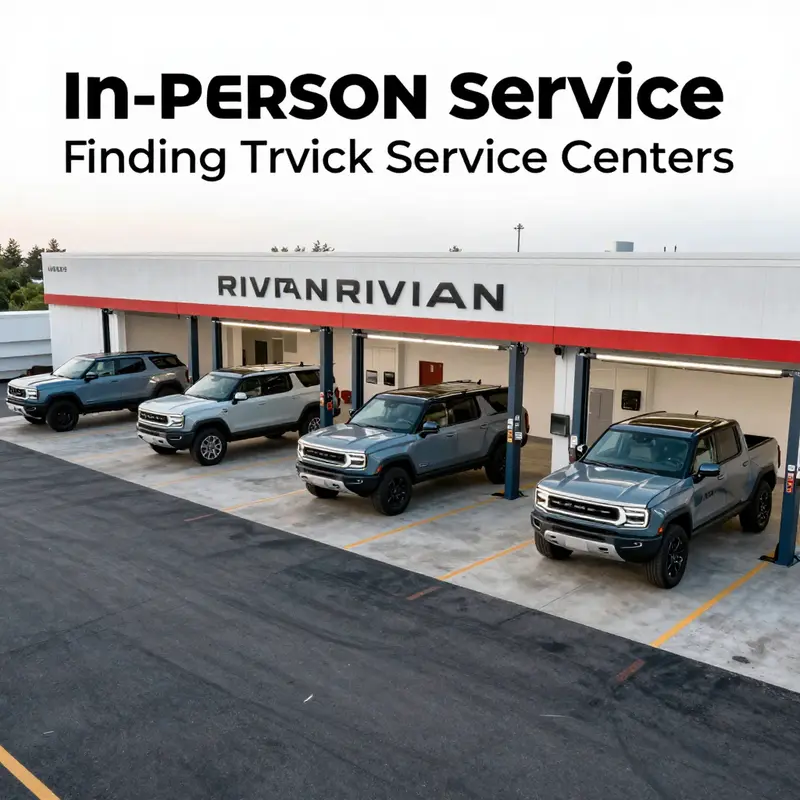
When you buy a Rivian truck, the question of where to service it moves from a vague concern to a concrete part of daily ownership. The network Rivian has built around maintenance and aftercare is designed to reduce downtime, protect your vehicle’s performance, and keep you on the road with minimal friction. For many owners, service is not a distant event but a series of options that adapt to location, vehicle use, and the kind of work your truck needs. The most visible choice is hands-on, in-person service at a Rivian Service Center. But the brand also offers on-demand mobile service that can bring skilled technicians and some common repairs to your home or office. And for fleets, there are dedicated programs that streamline upkeep across many units. Understanding how these paths fit together helps you plan ahead, schedule with clarity, and avoid last-minute scrambles when a fault or a routine check-up crops up.
Mobile service, or on-demand care, is pitched as a quick and convenient way to handle routine maintenance and minor repairs without the trouble of driving to a shop. The mobile technicians operate with the same training and diagnostic tools as the shop teams, but their approach is tailored to the realities of a busy owner’s schedule. If your Rivian is due for a software update, tire rotation, brake inspection, or a wiper blade replacement, a Rivian mobile unit can often take care of it on site. The aim is to minimize downtime—getting you back on the road with minimal interruption—while preserving the vehicle’s systems and software integrity. Scheduling is straightforward through the mobilized channels: the Rivian app or the official website invites you to book a visit window that aligns with your day. This capability is especially valuable for owners who cannot spare time to bring the truck into a shop, or for those who prefer the least disruption to their work routine.
In contrast, when the work is more complex, or when diagnostics reveal deeper issues, the in-person Rivian Service Center becomes the recommended route. These centers are not just repair bays; they function as the hub for a broad spectrum of vehicle care. You can expect comprehensive diagnostics, hands-on mechanical and electrical repairs, software re-flashes, and calibration services that sometimes require specialized equipment. The centers also handle new vehicle deliveries, which can streamline the transition from showroom to road for new Rivian owners, and they provide accessory installation services that let you tailor the truck to your exact needs—whether for towing, off-road enhancements, or overland expeditions. The service centers are positioned in key metropolitan corridors, a deliberate choice to keep access practical for urban commuters, rural travelers who pass through larger hubs, and commercial operators who need reliable turnaround times.
From a user’s perspective, the real value of these centers lies in predictability and transparency. To locate a center, you can rely on Rivian’s locator tools embedded in the official website and the mobile app. A few taps or clicks will reveal the nearest centers, their hours, and the services they offer. For some owners, distance and convenience dictate whether mobile service or an in-shop visit makes more sense. A short drive to a center may be preferable when a vehicle requires a diagnostic that demands heavy equipment or when you need an extensive parts replacement. For others, the mobile option is a perfect fit for the routine checks that keep the truck performing at its best between major service visits. The balance between mobile care and in-person service is dynamic, evolving with how the brand expands its footprint and how owners adapt to changing driving patterns and workloads.
Rivian’s service footprint, as described by the company and its city deployments, demonstrates a deliberate strategy to place centers in or near large urban regions. Locations in Brooklyn, New York; Bellevue, Washington; Normal, Illinois; San Francisco, California; and El Segundo, California reflect a blend of high population density and access to a wide network of suppliers and technicians. These centers do more than fix problems; they anchor the service ecosystem by providing direct access for customers who want hands-on help, timely replacement parts, and a consistent standard of care across the line. The proximity of these centers to owners who operate Rivian trucks in dense metropolitan areas is not accidental. It also supports fleet operations where reliable service access is a critical element of uptime and reliability.
When you are evaluating your options, the first question often is about the immediacy of service needs. If the issue is something you can monitor and schedule around, the app-based booking for mobile service is a strong first choice. Routine tasks—like wheel alignment checks, software updates, and certain battery management routines—can be handled on-site without requiring a triage trip to a shop. You do not have to be mobile yourself to make use of this: the service vans come to your home, your workplace, or another convenient location, cutting down on the time you spend in a waiting room. The important caveat here is that more involved issues, particularly those that require advanced diagnostics or replacement of parts that are not stocked in the van, will still necessitate a trip to a service center. In those cases, you benefit from the larger, more fully equipped bays, the more expansive diagnostic suites, and the broader inventory that a center can offer.
Rivian’s fleet service program, while primarily targeted at commercial customers, also informs the experience for large-scale operators who manage multiple vehicles. It introduces the idea that service networks can be scaled and standardized, offering prioritized appointments, consistent maintenance intervals, and predictable scheduling windows for fleets that depend on a reliable uptime cycle. Fleet customers can access dedicated management channels that coordinate service needs across the fleet—an approach that helps reduce downtime and ensures that service activity aligns with the company’s operational tempo. While personal ownership centers on convenience and personal time, the fleet-oriented approach underscores a broader truth: the health of a modern electric truck ecosystem depends on a service fabric that can scale as demand grows and missions change.
For individual owners who want to stay ahead of potential issues, it is useful to consider how to use both channels in a complementary way. A common pattern is to use mobile service for routine maintenance and minor tasks, then schedule a visit to a service center for more comprehensive diagnostics or when a device or system requires a specific tool or calibration that is more reliably performed in a controlled shop environment. This approach aligns with the broader reality of modern vehicle care: EVs, with their integrated software and specialized powertrains, demand both the nimbleness of on-site care and the depth of in-shop expertise. The practical upshot is clear. Your Rivian ownership experience is not a one-size-fits-all path; it is a choice matrix that lets you optimize for time, cost, and the severity of the work required.
To locate centers, owners can rely on official channels: the Rivian website, particularly the service centers page, and the Rivian app, which includes a built-in locator. The locator returns distances, directions, and, crucially, the current status of the center—whether it is open, what services are available, and any notes about appointment availability. In cases where you need direct confirmation, centers publish contact numbers. For example, one center in El Segundo lists a contact line that you can call for details about the address, hours, and whether you should book ahead. This direct line is a reminder that while digital tools provide the map, a quick phone check can save time if your schedule is tight or your appointment needs are unusual. It also reinforces the human dimension of service: behind every appointment is a team prepared to help you navigate the specifics of your truck and its unique software profile.
In addition to the practical steps of booking and visiting a center, Rivian has developed a broader ecosystem to support brand engagement and education. The company’s Experience Centers, located in various regions, offer potential buyers and curious owners the chance to explore the brand more deeply, experience the vehicle in person, and understand the capabilities and benefits of ownership. While these centers are not primarily service hubs, they can be a resource for owners who want to learn about maintenance best practices, upcoming software updates, or new accessory options. The synergy between experience and service matters because informed owners tend to engage more proactively with the service network, recognizing when the time is right for a check-in, a calibration, or a small upgrade.
As the R1T and the R1S continue to roll off the line, Rivian’s service footprint is described as expanding. The company has signaled that more service centers would come online in the coming years, with location announcements conveyed through official channels. For owners, this trajectory promises improved access, shorter wait times, and greater flexibility in choosing how and where to care for their vehicle. It also implies a maturation of the service ecosystem that can better support growing adoption, especially in regions where early deployments have highlighted demand for reliable, scalable maintenance. The net effect is a service map that becomes more robust over time, allowing you to plan ahead for routine maintenance, major services, and any upgrades you want to pursue as your Rivian journey evolves.
To make this practical, here is how you can approach your next service decision with confidence. If you are near a Rivian Service Center, and your needs are more involved than routine checks, booking an in-shop appointment can be the most efficient route. You gain access to the full diagnostic suite, parts inventory, and the technical experts who can perform deeper calibrations or complex repairs. If your schedule is tight, or if the issue is something you can address with a straightforward procedure, the mobile service option offers a compelling alternative that can save you time and keep you moving. When you drive a Rivian, you are part of a growing ecosystem that values both on-site convenience and the reassurance that comes from trained technicians with access to a factory-backed network. This dual-path approach is not about choosing one path over another; it is about choosing the right path for the right situation, a flexible model that respects your time, your vehicle, and the realities of your daily life.
For readers who want a broader view of how maintenance practices are evolving within the trucking world—and how service networks adapt to fleets and private ownership alike—this broader context is worth exploring. You can read more about private fleets trends in trucking maintenance here: private fleets trends in trucking maintenance. This linked perspective helps illuminate the forces shaping service networks, from the demand for uptime to the growing emphasis on preventative care and software-driven diagnostics. It reinforces the idea that Rivian’s service strategy is part of a larger movement toward smarter, more responsive maintenance ecosystems in modern transportation.
In closing, the path to service for your Rivian truck is not a single destination but a coordinated system designed to minimize downtime and maximize reliability. The in-person Service Centers anchor the network with deep diagnostics, extensive repairs, and hands-on support. The on-demand mobile service adds convenience for routine maintenance and minor repairs, bringing skilled technicians to where you are. Fleet programs extend this logic to commercial operations, offering predictable maintenance rhythms and centralized management that keep fleets productive. And the Experience Centers remind us that education and engagement are integral to ownership, helping owners understand the capabilities of their vehicle and how best to preserve its performance over time. The exact map of centers and the hours of operation are subject to change as Rivian expands, so the practical step remains the same: check the official service locator through the Rivian app or website, confirm details by phone where needed, and choose the path that keeps you on the road with the least interruption. For the latest locations and services, visit Rivian’s service center locator at https://www.rivian.com/servicecenters.
null
null
Final thoughts
Maintaining a Rivian truck requires tailored solutions that cater to the specific needs of businesses involved in diverse fields such as manufacturing, retail, and construction. By leveraging the Rivian Mobile Service for quick, on-demand repairs and locating nearby Rivian Service Centers for more intricate issues, companies can minimize downtime and keep their operations running smoothly. Moreover, specialized service programs for fleet trucks ensure that commercial enterprises can maximize the performance of their electric vehicles. Understanding the full spectrum of service options empowers businesses to make informed decisions for their fleet maintenance strategies.