

Setting up a service truck involves strategic planning that can significantly enhance operational efficiency for various industries. Whether you’re in manufacturing, distribution, construction, or e-commerce, the way you design and equip your service truck can make all the difference in service delivery. From defining its purpose and functionality to optimizing the interior layout, equipping essential infrastructure, and ensuring compliance, each chapter of this guide delves into critical components required for your mobile service solution. This structured approach will empower your business to maximize performance, increase customer satisfaction, and streamline processes.
Purpose on Wheels: Defining Functionality to Build a Truly Mobile Service Truck

Every service truck begins not with its chassis but with a clear answer to a single question: what will it do on the road? It sounds simple, but this question determines space, power, plumbing, and even how you talk to clients. The best mobile units do not try to be all things to all people; they excel at one or two core capabilities and adapt the rest around them. This concept—defining purpose—should precede layout sketches, material choices, or even color schemes. When you know the job you intend to perform, you can map a path from doorstep to end of shift that minimizes wasted steps, reduces fatigue, and raises the quality of service. Consider the spectrum of possibilities. A vehicle that provides on-site auto repairs needs a strong central work zone. It must accommodate a portable workbench, tool storage, diagnostic equipment, and a way to retrieve or swap parts without crawling over a heap of spare tires. A mobile beauty van has a different rhythm: a client-focused area that respects privacy, a wash zone, and compact, efficient storage for cosmetics, towels, and consumables. A mobile medical unit must support patient flow, sterilization, and temperature-controlled medicine storage. Each variant implies a different interior geometry, different utilities, and different safety considerations. The core thing to do at this stage is crystallize the primary service and the most frequent service sequence. This clarity will dictate where people sit, where staff stand, and how much room is needed for the routine tasks that keep the service moving.
With purpose defined, the functional requirements begin to emerge as a logical continuation rather than a shopping list. First comes the client service area, the space that sets the tone for trust and comfort. In a mobile maintenance or repair scenario, this might be a clean, quiet counter where a technician greets the client, reviews the work order, and explains what will happen next. If the truck will host a visiting beauty or barber service, the client zone becomes a small salon, with privacy curtains or screens, comfortable seating, and a controlled ambiance. The design should invite conversation yet protect client privacy. In all cases, the client area should be thoughtfully separated from the operational heart of the vehicle, so the service flow feels natural rather than cramped. The ergonomic challenge lies in creating a barrier that is both physical and visual, preserving dignity and focus for clients while ensuring the technician can reach tools without stepping away from the work.
Next comes the work or operation area—the real engine of the unit. This is where task efficiency translates into uptime. The space should be organized around the sequence of steps the service follows, with a properly sized work surface at its core. A robust, easy-to-clean workbench or station—spaced for comfortable posture and extended reach—becomes the anchor. Storage can be integrated into the bench itself or configured as modular cabinets and drawers that slide or hinge open with minimal effort. A well-planned work zone minimizes bending and reaching, reduces downtime spent hunting for tools, and keeps spare parts within arm’s reach. Lighting is not mere illumination; it is a critical instrument. Adjustable LED lighting that highlights the task area reduces errors and fatigue, especially during detail-oriented tasks like diagnosing a plumbing fault, applying makeup, or inspecting a component under a hood.
The third pillar is storage—the quiet backbone that makes the workflow reliable. Storage should be modular, scalable, and accessible from the main service corridor. It is here that you’ll organize consumables, spare parts, cleaning supplies, and personal protective equipment. Vertical space is your ally; tall cabinets with adjustable shelves, combined with overhead bins, can dramatically increase capacity without expanding the footprint. A well-designed storage system uses dedicated zones for different item families, preventing cross-contamination or tool misplacement. In practice, this means that a wrench never lands where a bottle of coolant lives, and a bag of zip ties does not drift into the electrical components drawer. The storage plan is also a safety plan: properly labeled bins, clear pathways, and sealed containers for hazardous materials reduce risk in transit and on site.
The infrastructure that underpins all of this is not glamorous but essential. Power is the lifeblood of a mobile unit. A high-capacity battery bank paired with renewable options such as solar panels creates a resilient backbone that supports lighting, climate control, refrigeration (if needed), and all the hand-held tools that demand charging. Electrical planning must consider peak loads, circuit distribution, and safe isolation of high-current devices. A heavy emphasis on robust wiring, waterproof enclosures for connectors, and thoughtful routing prevents nuisance trips of fuses at critical moments. Water and waste systems form another critical thread. Even in dry environments, access to clean drinking water is a professional courtesy that can save time when technicians are on site for long shifts. A compact water tank and a simple distribution line can ensure hydration and sanitation needs are met. If a washing or rinsing function is involved, then a compact greywater management plan becomes non-negotiable, just as a grease trap becomes a legal requirement for mobile food-related operations. The environment within the truck must stay clean and safe; this means sealed surfaces, easy-to-clean floors, and a routine for sanitization that fits the service profile.
Connectivity rounds out the infrastructure as a practical necessity. A dependable communications backbone allows real-time scheduling, remote diagnostics, and faster procurement of parts. This could be a combination of Wi-Fi, cellular data, and satellite options that ensure a stable link on city streets and in rural or remote areas. The design should also contemplate cyber security, as service data—customer information and service histories—must be protected against unauthorized access. In a world where the truck may function as a mobile office, a compact workstation for administrative tasks, a small printer, and secure filing systems can be integrated into the layout with care to preserve space and maintain a clean, professional appearance.
Specialized equipment and customization remain the final layer, and this is where the vision becomes tangible. A service truck for on-site repairs may require a sturdy crane or hoist, a portable generator, and integrated tool cabinets. If the vehicle is configured for mobile food service, the interior must accommodate a compact kitchen, proper ventilation, and waste management. A mobile medical unit needs refrigeration for medicines, sterilization equipment, and examination surfaces that are easy to clean. The trick is to align these specialized features with the defined purpose so that every added element contributes to the service sequence rather than crowding the vehicle. Even here, flexibility matters. A modular approach—where partitions can be reconfigured, or a small inner module can slide out to expand space at an event—allows you to adapt to evolving needs without replacing the entire build.
Adaptability is not a gimmick but an operational philosophy. A multi-use or stacked design can broaden what the same truck can deliver across days, weeks, or seasons. For example, a larger outer body with a smaller inner module that slides out when the side door opens creates an instant expansion of usable space. Temporary walls or limit blocks can secure this arrangement, letting teams open a larger service area for events, clinics, or demonstrations while still traveling compactly between sites. This kind of design supports the reality that mobile services often travel through a rotating schedule of locations, and the ability to reconfigure on the fly can be a decisive competitive advantage. In this sense, the truck becomes a mobile workshop that fits a calendar rather than a static shop on a lot.
Of course, none of this works without attention to safety, compliance, and ongoing management. Licensing and permits ensure the service is legitimate and trusted. Vehicle inspections, emission standards, waste disposal rules, and sanitary codes differ by region, so a careful review of local regulations before purchase or retrofit pays dividends later. Routine maintenance checks on the vehicle and the onboard systems keep the unit reliable and safe during operations that may occur in unpredictable environments. A well-documented maintenance plan reduces unexpected downtime and extends the life of both vehicle chassis and interior components.
Digital management tools tie the concept together. A robust scheduling and inventory system helps you track appointments, locate tools, and reorder consumables when needed. Even without naming brands, envision a platform that offers appointment booking, service-order tracking, inventory visibility, and performance analytics, all accessible from a mobile device. This integration supports a smoother service flow from the moment a client book is confirmed to the moment the service is completed and the invoice is prepared. In addition, the capability to share real-time updates with customers or supervisors enhances accountability and transparency. As you refine your concept, it is worth considering the broader context in which mobile services operate. For insights into how industry trends influence these decisions, see Key economic trends impacting the trucking industry.
Beyond the on-board features, the design should anticipate practical realities of life on the road. Daylight, weather, and travel distance influence material choices, insulation, and cooling strategies. Sound management helps keep conversations private when a client is in the service chair, while acoustic treatment around the work zone reduces fatigue for the technician during long shifts. The vehicle layout should be such that the doorways align with the typical work pattern; for instance, side doors that create a natural flow from the client area to the work zone, or rear access that minimizes the distance between supply storage and primary tasks. These decisions are not about aesthetics alone but about reducing friction in the daily routine, which translates into higher service quality and better job satisfaction for operators. The magic of a well-conceived service truck is that it repurposes a compact space into a purposeful, efficient, and professional moving workshop.
To close the loop, the chapter on internal layout and infrastructure should not feel abstract. It should offer a practical lens through which a reader can move from concept to reality, bridging the gap between thought and proven practice. The interdependencies—purpose, layout, infrastructure, and management—must be orchestrated as a single narrative rather than stitched together as separate modules. A truck designed with a clear function in mind will not only perform better but will endure as the service evolves. The operator can begin with a shippable, scalable plan, then tailor features as the customer profile or service scope changes. The aim is a mobile unit that respects the constraints of a road-worthy vehicle while delivering the reliability and comfort that clients expect.
Before closing, consider prototyping and testing as part of the process. Build a rough layout model or use space-planning software to simulate movement through the truck. A practical procurement checklist aligned with the defined purpose helps prevent scope creep and budget overruns. Plan for phased upgrades so that the unit remains relevant as services expand or shift. Weight distribution, accessibility, and safety ratings must guide every purchase and retrofit. An iterative approach minimizes risk and accelerates time-to-value, letting you validate the core layout before committing to a full build. A well-conceived, purpose-driven service truck is not a static tool; it is a dynamic platform that travels with you and grows with your business.
External resource: How to design an efficient mobile service vehicle interior
Inside the Mobile Workshop: Mastering the Interior Space for a Service Truck
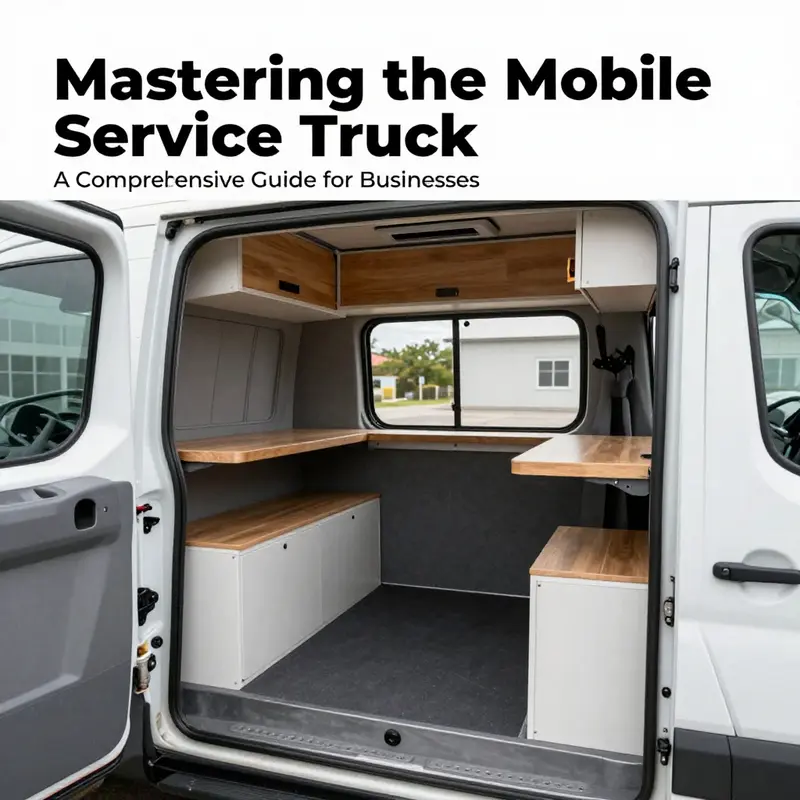
Designing a service truck begins with a clear mental map of how the work will unfold inside a confined space. The interior becomes a mobile workshop, a logistics hub, and a safety corridor all at once. The goal is to transform a cargo area into a navigable workflow that reduces motion, protects tools, and preserves space for the customer or the job site. The first step is to define the primary function. Whether the truck is configured for HVAC repairs, electrical work, plumbing, parts delivery, or a hybrid service role, the core tasks determine every choice from cabinet depth to the location of a fold-down table. The most frequently used tools should never require an unnecessary reach or a detour around a bulky cabinet. Once the function is defined, you can begin a methodical inventory of equipment, categorize it, and map it to the space using a simple left-to-right or top-to-bottom flow that mirrors a traditional onsite workflow. This approach sets the tempo for every subsequent decision about storage, power, and ergonomics. When you picture the truck as a moving workshop rather than a static storage box, the interior becomes a performance space where every inch serves a purpose, from access to a diagnostic tool to the comfort of a technician on a long day of field work. The result is more than organization; it is a disciplined system that keeps expenses down, speeds response times, and reduces fatigue, which translates into higher quality work and happier customers. A practical starting point is to segment the floor plan into three zones: client interaction and service area at the rear or a side bay, the work zone with a sturdy, ergonomic station for tools and devices, and a storage zone that can expand vertically without intruding on the flow of movement. The three zones should align with the technician’s routine. For a repair technician who pivots between diagnosing issues and applying repairs, you want the diagnostic equipment within waist height and close at hand, while spare parts and consumables live in clearly labeled cabinets at the foot of the workbench. In this configuration, the left-to-right workflow might begin with pulling the necessary parts from the storage cabinets, then moving to the workbench for hands-on tasks, and finally returning to the service area to verify function or upgrade components. The design must account for reach, clearance, and accessibility. A minimum three-foot corridor width is a sensible baseline to prevent bottlenecks, while door openings, drawers, and fold-out sections should not obstruct the central path. This is where a modular storage system truly earns its keep. Deploy drawers with dividers, labeled bins for small parts, and magnetic or pegboard panels to keep frequently used items visible and reachable. The goal is to minimize the number of steps a technician takes between tasks. Overhead shelves, shallow bays, and vertical racks dramatically increase capacity without crowding the floor. Compact but sturdy tool holders mounted along the walls—such as vertical track systems for screwdrivers, pliers, and wrenches—free up table space while keeping tools visible. In practice, this means a careful balance between reach and visibility. Lighting should be plentiful and well-directed. A combination of bright task lighting at the workbench and softer illumination for the client area provides a calm, professional atmosphere. Adjustable LED fixtures offer the flexibility to brighten a focused diagnostic task or calm a client during a quick check-in. A well-lit interior also enhances safety, helping technicians see cables, cords, and spills before they become hazards. The work surface itself deserves particular attention. A fold-down or retractable workbench that tucks away when not in use reduces clutter and protects other equipment during transit. When open, the bench should be at a comfortable height, with a vise or secure clamping area for holding components steady during work. The bench can be anchored to a durable frame and fitted with a power strip and USB charging ports nearby to support diagnostic tools, a laptop, or a tablet used to run software on site. Power and data management then emerge as a critical backbone of the interior design. A high-capacity battery bank, oversized circuits, and careful wire routing ensure the system can handle a compressor, a heater, diagnostic devices, and a laptop all at once without tripping breakers. Solar panels offer sustainable energy in sunlit conditions, but you must plan your electrical layout to prevent overloads and ensure redundancy. In the storage area, consider weatherproof cabinets for components vulnerable to moisture or dust. Use modular drawers and compartmentalized bins so that a technician can quickly locate a specific fastener or spare part. Clear labeling is essential; even a short-term absence of a staff member should not derail a workflow because someone must hunt for a part. Vertical space should be leveraged with overhead shelving and wall-mounted storage for rarely used items, spare parts, or bulky equipment that does not need to be accessed daily. A robust concern is securing everything during travel. Use latches, bungee ties, and dedicated cargo net systems to prevent movement that could injure personnel or damage tools. Heavy items should reside at waist height so the technician can lift with proper form, reducing strain and the risk of back injuries. If the service truck will be used for multiple types of work, the interior layout should accommodate adaptability. A modular, stackable approach that allows a smaller inner module to slide out when the side door opens can create temporary workspaces at events, pop-up clinics, or remote job sites. In practice, this means designing a frame that supports safe extension and retraction, with limit blocks to secure the inner space when it’s deployed and a locking mechanism once it’s stowed. The capacity to reconfigure the interior for a night shift, a daytime service call, or a weekend market requires a thoughtful balance between rigidity and flexibility. The interior, therefore, is not merely a static arrangement but a dynamic ecosystem that supports different service lines while preserving safety and ease of use. For professionals contemplating electrification or mixed-use fleets, the future of service trucks points toward integrated energy solutions and smarter load management. The conversation in industry circles is increasingly about how to balance power needs, tool availability, and emissions considerations in a single compact footprint. In this context, it is worth following evolving benchmarks, such as the potential shift toward electrified service platforms that combine a substantial power reserve with sophisticated energy management. For readers exploring this trend, further insights can be found in the broader discussion of Harbinger electric trucks in Canada market entry, which highlights how fleets are adapting to new powertrains and charging paradigms while maintaining on-site effectiveness. Harbinger electric trucks in Canada market entry. As you finalize your interior layout, remember that your goal is to create a compact, coherent, and capable workshop that travels with the job. The interior should invite durability, ease of use, and safety without sacrificing the ability to scale or adapt as tools evolve and service demands shift. In addition to practical design, consider regulatory and safety requirements that may govern tool storage, waste handling, and electrical standards, and keep a close eye on the operational realities of daily service work. For a broader view of how regulations shape mobile service operations, it can be informative to review related international standards and best practices, such as the compliance resources compiled by regional authorities, which emphasize infrastructure, public accessibility, and safe operation when mobile service vehicles are on the road. External references can help you align your interior layout with best practices and evolving standards while you refine your design. For example, regulatory frameworks and safety considerations that influence mobile service deployment are discussed in global governance documents, such as the Sichuan Provincial Public Security Department’s Regulations on Motor Vehicle Registration Service Stations, which provide general principles on infrastructure, accessibility, and compliance that are broadly relevant to mobile service units. You can review these guidelines at https://www.scga.gov.cn/xxgk/gzdt/tzgg/202512/t20251231_308941.html. In the end, a well-planned interior layout is the backbone of a service truck that performs reliably, looks professional, and remains adaptable as work demands change. It transforms a vehicle into a true mobile workshop, where efficient space use, careful organization, and sound safety practices yield a calmer, more productive day on the road. For fleets exploring electrified possibilities, the integration of power management with modular storage becomes a strategic advantage, enabling technicians to deliver high-quality service while embracing a more sustainable future.
Power, Plumbing, and Portals: Installing Essential Infrastructure for a Service Truck
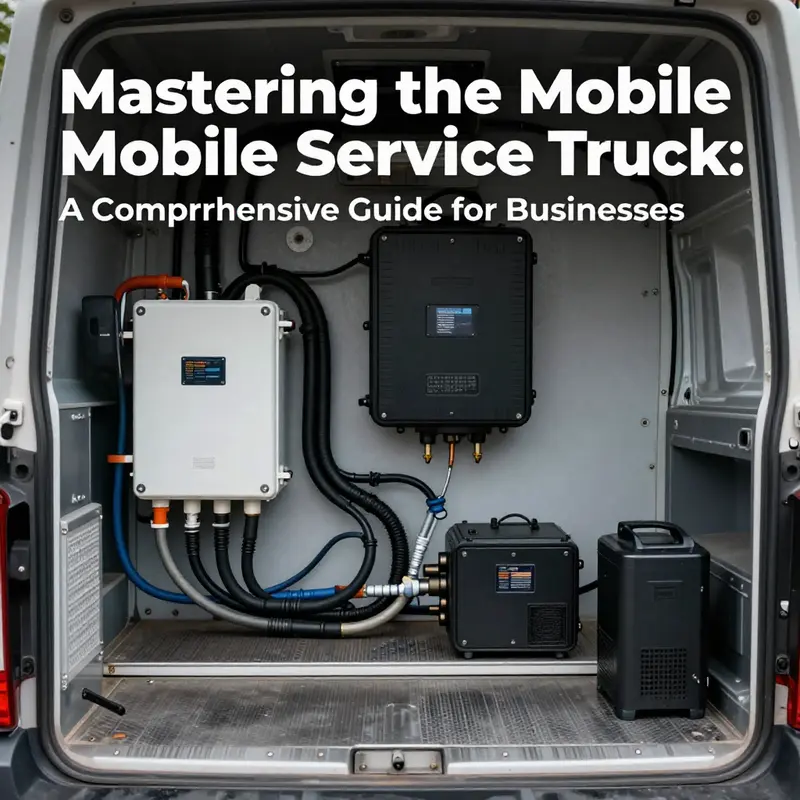
A service truck is a moving workshop, a compact base of operations that travels to the point of need. Its reliability hinges on a carefully designed backbone of infrastructure that keeps power steady, water clean, data flowing, and specialized work areas functional.\n\nRather than treating these systems as add-ons, you embed them into a cohesive whole that supports the service you perform and the environment you operate in. The goal is not merely to install equipment, but to create a living, breathing workspace that preserves safety, efficiency, and comfort even as the vehicle rattles along rural lanes or logs back-to-back shifts in a city. The planning should begin with a clear sense of load, flow, and resilience. What devices must run continuously? How will the system handle peak demand, such as a diagnostic laptop, printer, and refrigeration unit simultaneously? How can you prevent a single fault from cascading into a full stop? These questions shape every decision you make about power, water, and connectivity, and they guide the physical layout toward efficiency without compromising safety or comfort for the operator and any client who might be present.\n\nPower is the most visible and sometimes the most complex thread in the fabric of a service truck. A robust power system starts with a large-capacity energy storage core—typically a bank of deep-cycle or lithium-based batteries—that can sustain long sessions away from shore power. The battery bank must be sized to handle the expected load of computers, diagnostic tools, lighting, climate control, and any refrigeration or specialized equipment required by the service. To maximize uptime and reduce fuel or generator run time, integrate solar charging in sunny locations. Solar panels can replenish the bank between jobs or during the day, providing a sustainable buffer that keeps critical systems online at all hours. But solar alone does not guarantee reliability. Wiring must be carefully planned to balance loads, minimize voltage drop, and prevent overloads. Thoughtful distribution panels, fusing, and clear separation between high-draw devices and low-energy accessories matter as much as any high-tech gadget. Thermal management is another consideration; batteries and power electronics generate heat, and heat reduces efficiency and lifespan. Good ventilation and, where appropriate, passive cooling strategies help keep the heart of the truck cool and safe.\n\nWater and waste systems become crucial when the service requires hygiene, sanitation, or a steady supply of fresh water. Mobile clinics, food-service modules, and even some repair operations benefit from a reliable water cycle, so you may choose between an onboard freshwater tank and a municipal connection. Either way, a dedicated, well-sealed plumbing network protects against leaks and contamination. Waste management is equally important, typically involving greywater drainage for sinks and a separate blackwater line for sanitary waste when the operation generates effluent. Insulation around plumbing lines helps prevent freezing in cold weather and reduces heat gain in hot weather, preserving both water quality and comfort. Even small inserts like a dedicated water filtration point can improve the reliability of the supply and minimize service interruptions, particularly when you’re parked in locations where municipal water is inconsistent. The wastewater system should be designed to meet local disposal requirements, with accessible cleanouts, proper traps, and interfaces that prevent backflow. These water and waste decisions echo the same discipline you’d apply in a fixed facility, translating it into the mobile context so that hygiene, safety, and regulatory compliance stay intact wherever you roam.\n\nA stable communications backbone binds the power and water systems together with the flow of information. The vehicle should offer a reliable local network and external connectivity that keeps you in touch with clients, suppliers, and remote monitoring when needed. A solid WLAN setup provides fast, on-site data transfer for project notes, imaging, and real-time scheduling, while cellular connectivity ensures that you remain reachable in transit, even in areas with spotty Wi-Fi. In more remote or critical environments, satellite connectivity can be a prudent backup. Network security cannot be an afterthought; robust encryption, secure access controls, and routine software updates protect sensitive data from unauthorized access. A well-designed communications plan extends to GPS tracking for fleet management, remote diagnostics for onboard equipment, and the ability to push software updates or service orders without hauling a laptop to every job site. The aim is seamless digital integration where data moves fluidly from the field to the workshop and back, without creating bottlenecks or vulnerabilities that could compromise the service or client trust.\n\nThe backbone infrastructure also requires thoughtful integration of the specialized needs that distinguish one service from another. A mobile repair truck, for example, will benefit from a horizontal partition that separates a sturdy work area from an organized storage zone. This allows technicians to keep heavy tools—generators, air compressors, tire racks, and a compact crane—out of the main workflow while keeping a clean, accessible bench and a vise within reach. Lighting becomes part of the work envelope, with adjustable illumination that minimizes shadows on small components and tight tolerances. Conversely, a mobile medical or dental unit demands high-efficiency climate control, LED lighting that simulates daylight, and secure, easily accessible storage for sterile supplies and diagnostic devices. Food-service configurations require a fully functional kitchen built to health standards, complete with ventilation, a grease trap, and a reliable exhaust system that handles cooking byproducts while keeping odors and fumes under control. When you design for these needs, you’re not merely slapping in equipment; you’re creating a disciplined ecosystem where every component earns its place and contributes to a smoother, safer, and more professional operation.\n\nEqually important is the adaptability of the truck to multi-use demands. A growing trend in mobile services is modular design—vehicles with larger exteriors and inner modules that can slide or slide out when doors or bays open. Such configurations enable temporary open spaces for events, pop-up clinics, or mobile offices, expanding what the truck can do without sacrificing day-to-day functionality. The logic here is not to chase every possible use but to preserve a core set of capabilities that can be flexibly deployed with minimal reconfiguration. This approach supports seasonal demands, special events, or rapidly changing client needs, while maintaining the reliability of essential services.\n\nFinally, safety and compliance weave through every layer of infrastructure. Licenses and permits are not optional extras; they are the floor on which your operation stands. Emissions, noise, waste disposal, and roadworthiness all require ongoing attention and verification. Regular maintenance checks on both the vehicle and onboard systems—electrical integrity, plumbing seals, battery health, and HVAC performance—are not burdensome tasks but preventive disciplines that prevent downtime and extend service life. In parallel, digital management systems can coordinate appointments, track inventory, and monitor service orders, turning a mobile unit into a professional, data-driven operation. For instance, many operators reference broader maintenance trends in private fleets to inform scheduling, routine checks, and driver or technician briefings. See how this is shaping practices in the field at the linked resource: Private fleets trends in trucking maintenance.\n\nAs these core systems converge, the service truck becomes more than a vehicle. It evolves into a controlled environment designed for efficiency, safety, and reliability, with power, water, and connectivity working in harmony to support the technician’s craft. The resulting workspace supports not just the immediate task at hand but the continuity of service across days, jobs, and clients. The infrastructure choices you make—how you size the battery bank, how you route plumbing to avoid leaks, how you lay out data wires to stay organized—shape every job you can take on and every standard you set for quality on the road. The underlying principle is simple: design for uninterrupted capability, then tailor the layout and equipment to the service type you deliver. In that way, a service truck becomes a trusted extension of your workshop, ready to bring professional capability wherever your route takes you. For a broader regulatory perspective on mobile service stations, consider consulting official guidelines that address infrastructure standards and public accessibility: https://www.scga.gov.cn/xxgk/gzdt/tzgg/202512/t20251231_308941.html.
Engineering the Mobile Workshop: Mastering Customization and Gear for a Service Truck

Engineering the Mobile Workshop: Mastering Customization and Gear for a Service Truck
A service truck is more than a transport vehicle; it is a mobile workshop that must seamlessly blend efficiency, hygiene, and comfort. The heart of a successful mobile service lies in deliberate customization. The aim is not to cram every possible tool into a single space but to design a fluid environment where each zone supports the task at hand without hindering the next. When you start from purpose and workflow rather than from cabinets and wires, the truck becomes a capable, reliable extension of your service room on wheels.
The journey toward a fully functional mobile unit begins with layout. Think of three interconnected zones that mirror a small shop: a client-facing service area, a work zone for technicians, and a practical storage zone. The client area should feel approachable yet private. A fixed counter or reception station provides a stable point for transactions, while curtains or partitions offer a sense of confidentiality during consultations or demonstrations. In a hairdressing or beauty scenario, for example, this zone would include a dedicated shampoo or cleansing station, a waiting area, and privacy screens that can be drawn if needed. The work area, by contrast, is where ergonomics decisively shape outcomes. A technician’s bench or counter should allow comfortable reach to tools, devices, and a computer or tablet used for service orders. Lighting is non-negotiable here—adjustable, glare-free LED illumination that reaches every critical angle reduces fatigue and speeds up tasks. The storage zone, organized with modular shelving and lockable cabinets, becomes the quiet backbone of the operation. Flexible bins and clear labeling help staff locate tools, spare parts, and consumables in moments, which preserves momentum during busy visits.
A hallmark of effective mobile design is the integration of modular, multi-use elements. The best layouts anticipate the need to reconfigure space quickly for different jobs or client demands. For example, a two-generation mobile concept might offer a workspace that folds or slides, with an overhead bed for on-site rest or observation and a foldable table that doubles as a workstation. In a second-generation schema, the cabin may connect directly to the workspace, enhancing flow and reducing the time spent moving between zones. A long sofa on one side can accommodate several clients, while a rear area houses a dedicated service bed or basin and a compact climate system to maintain comfort in varying climates. When space needs to expand during events or pop-up clinics, a stacked or modular design can be deployed. An outer body can enclose a smaller inner module that slides out through a side door, with limit blocks to secure the extension. This arrangement enables a temporary expansion of workspace, making it possible to operate as a mobile office or pop-up service hub without sacrificing roadworthiness or stability.
Infrastructure underpins all of this with reliability. A high-capacity power system forms the backbone of any service truck. A robust battery bank provides stability for peak loads, while solar panels can supplement energy in brighter locations, reducing fuel or generator reliance. Careful planning of electrical wiring is essential to avoid overloads and electrical hazards. Water and waste systems are dictated by service type but generally include a clean water supply—whether from a municipal line or onboard tanks—and a wastewater management system capable of handling greywater and other byproducts in compliance with local rules. Connectivity completes the package: Wi-Fi, cellular data, and, where appropriate, satellite options ensure that real-time updates, remote diagnostics, and client communications remain uninterrupted. In a truly modern mobile shop, the network is protected by security measures that respect both client privacy and operational integrity.
Customization then becomes a dialogue between function and service requirements. A mobile repair truck, for instance, benefits from interior partitions that clearly separate the storage area from the work zone. Tool cabinets and lockable drawers keep precision instruments organized, while a compact generator or integrated power source supports redundant or on-demand energy. An air compressor, an electric grinder, and a small crane or hoist can greatly expand what technicians can tackle on site. A bench with a vise and a robust mounting system for welding or cutting equipment further extends on-site capability. Tire racks help manage spare tires and components, reducing downtime when wheels or tires must be swapped on the road. Diagnostics and repair tools are kept within easy reach, with secure storage to protect sensitive items from theft or damage. The key is to avoid clutter; every tool and device should have a designated home, and the workflow should direct movement in a logical, repeatable pattern.
In a mobile beauty or wellness truck, the emphasis shifts toward client comfort and pristine hygiene. The customer service area becomes an intimate space; two working stations with adjustable LED lighting and full-length mirrors can provide efficient service while preserving privacy. A wash or rinse station, ideally integrated into the cabinetry with water filtration, ensures clients experience consistent comfort. The storage system for beauty supplies must be compact yet comprehensive, with temperatures controlled cabinetry for color products, tools, and consumables. A quiet air system, a sound-reinforced environment, and a microclimate setup help maintain a welcoming atmosphere even in outdoor settings. Such adaptations demonstrate how the same chassis can morph to meet varied demands, all while preserving mobility and compliance with health and safety standards.
Beyond purpose-built configurations, the industry is moving toward adaptability that makes a single vehicle serve multiple roles. Stacked or modular designs, with a larger outer bodied frame and a smaller inner module that slides out when opened, are particularly compelling for event-based work or multi-service deployments. The temporary open space created by a secure, limited extension enables quick shifts from a private consultation room to a full-service area for demonstrations or additional service capacity. This modularity also aligns with the growing demand for flexible, on-site operations at trade shows, clinics, or remote locations where an on-demand workspace is a strategic advantage. The ability to reallocate space rapidly expands the truck’s utility without requiring a second vehicle or major renovations.
Every functional choice carries safety and regulatory implications. Licensing, certifications, and professional credentials may be required for certain services, and emissions, noise, and waste disposal must meet local standards. Fire safety systems, emergency exits, and proper ventilation are essential, especially in enclosed spaces or when hot work or chemical handling occurs. Regular maintenance checks of the vehicle and onboard systems help prevent downtime and protect client and staff alike. A disciplined approach to maintenance also supports longer vehicle life and more consistent performance as demand shifts over time.
Digital integration has become a natural companion to robust physical design. A modern service truck leverages scheduling platforms, inventory management, and service-order tracking to keep operations smooth. When designed thoughtfully, the digital layer complements the physical workflow, reducing wait times for clients and ensuring technicians have the correct parts and tools for each job. For readers exploring broader industry trends and shifts in mobility, a useful perspective can be gained through discussions about the market entry of electric truck platforms, as illustrated here: Harbinger Electric Trucks Canada.
The essence of a well-set mobile service unit is clear: design around workflow, empower the staff with ergonomic spaces and reliable power, and maintain the flexibility to reconfigure for new tasks without sacrificing safety. The combination of carefully planned zones, modular architecture, and robust infrastructure creates a mobile workshop that can deliver professional, consistent service wherever the client needs it. As you translate these principles into your own build, you’ll find that the most effective configuration grows from the way you work, not just from the inventory you carry. When executed with attention to detail and a willingness to adapt, a service truck becomes a confident, capable ambassador for your business wherever the road takes you.
For a broader context on regulatory considerations and cross-border or regional variability in service-truck operations, see the regulatory guidance linked in the broader research set: https://www.scga.gov.cn/xxgk/gzdt/tzgg/202512/t20251231_308941.html
From Layout to Laws: Mastering Compliance and Safety in a Mobile Service Truck

Designing a service truck is more than mounting shelves and plugging in a toaster oven. It is a careful orchestration of space, power, water, connectivity, and safety that aligns with the precise service you intend to deliver. When you begin, you are not merely building a moving toolkit; you are shaping a small, controlled environment that must perform reliably under motion, protect staff and clients, and comply with a web of regulations that vary by city, province, and country. The central idea is to fuse function and safety into a single, coherent system, so every square inch serves a purpose and every decision supports a lawful, safe operation.
At the heart of this effort is a thoughtful internal layout that supports both service delivery and crew welfare. Functional zoning is not an afterthought but the backbone of the vehicle. In a mobile beauty setup, for example, the rear cabin can host a compact, accessible washing and styling zone with a ceramic basin and secure, easy-to-clean surfaces, while the front area becomes a client lounge with privacy curtains and comfortable seating. In a fleet oriented toward field repairs or mobile clinics, the same principle applies, but the zones shift toward a robust workbench, tool storage, and a sterilizable or easy-to-clean service area. The goal is to keep tools and consumables within reach yet firmly secured for transit, so nothing rattles loose or shifts under braking. Ergonomics matter as much as capacity. Adjustable work surfaces, LED task lighting, and lockable storage drawers reduce strain and minimize the time technicians spend hunting for the right tool in a moving vehicle.
Another foundational consideration is how the vehicle configuration supports multiple tasks without compromising safety. A stacked or modular design can offer the flexibility to expand a service area on site. When a side door opens, a smaller inner cabin can slide out to create a larger, temporary workspace or a pop-up service area. This flexibility is not a luxury; it is a practical response to the rhythm of mobile work. Yet modularity must be balanced with stability. Limit blocks or locking mechanisms should secure movable sections during transit, preventing unwanted movement that could injure personnel or damage delicate equipment. Such design decisions ripple into maintenance planning, because modular components require access points, service panels, and clear labeling so technicians can inspect and service them without disassembly.
Infrastructure is the second pillar, and it demands forethought rather than improvisation. Power systems must be capable of supporting the full repertoire of devices a service truck carries: lighting, climate control, diagnostic tools, computers, payment terminals, and refrigeration or water treatment units where applicable. A high-capacity battery bank paired with renewable options like solar panels is increasingly common, especially for off-grid work. The electrical architecture should anticipate peak loads, with properly rated conductors and protection devices to prevent overheating and circuit overloading. Balance is essential; you do not want a system so oversized that it drains the vehicle’s alternator or battery bank during normal driving. Careful wiring layouts, fuse sizing, and clear routing help technicians solder the system in the field without creating hot spots or failure points.
Water and waste management raise another layer of complexity. For mobile kitchens or hygiene-focused services, clean water supply and reliable wastewater disposal are nonnegotiable. Even in beauty or medical mobile units, having a dedicated drainage path for greywater and a plan for waste segregation keeps operations sanitary and compliant. Such systems require regular maintenance checks, catchment containers, and procedures for disposal that align with local health and environmental rules. Connectivity rounds out the infrastructure picture. A robust, secure network—whether through Wi‑Fi, cellular data, or satellite options—ensures on-site scheduling, remote support, GPS tracking, and digital payments function without interruption. In today’s service model, downtime is not just a nuisance; it’s a loss of revenue and a risk to customer trust. Therefore, network security, encryption, and access controls should be baked into the design from day one.
The third pillar is compliance, the framework that turns a clever mobile layout into a legitimate business vehicle. Compliance spans mechanical safety, emissions and noise, electrical and plumbing standards, and occupant safety. Addressing these areas early helps you avoid costly retrofits or costly inspections later. Vehicle modifications, for example, may require certification or inspection to ensure structural integrity and roadworthiness after changes. Regulations about emissions, fuel systems, exhaust, and even tire load ratings must be understood and observed. If the truck will carry passengers or operate in areas with strict occupational safety rules, seat belts, emergency exits, and accessible ventilation become mandatory considerations. A prudent approach treats compliance as a design constraint rather than a bureaucratic hurdle. It guides the selection of materials, fasteners, and mounting methods to ensure durability, ease of cleaning, and long-term reliability while maintaining a safe working environment for staff and clients alike.
Permits and licenses are the visible face of this compliance. Before rolling the first mile, you should map out which registrations, inspections, or certifications apply to your service. A mobile repair van may require hazardous materials handling credentials if it stores flammable liquids or solvents. A mobile kitchen must meet health department guidelines for food safety, sanitation, and waste disposal. If the truck moves people or goods for commercial purposes, it must be registered with the appropriate transportation authority and may require a specialized permit. In some jurisdictions, authorities also set standards for accessibility and emergency procedures, especially for units that operate in public or semi-public spaces. The best preparation turns these regulatory requirements into a stepwise, checkable plan rather than a last-minute list of to-dos.
Staff training anchors safety in daily practice. You can design the most advanced system, but it will fail to protect people if drivers and operators lack instruction in safe operation, emergency procedures, and customer service protocols. Regular maintenance is the other side of the safety coin. An aggressive schedule of inspections for mechanical components, electrical systems, and safety features reduces the risk of on-road failures and protects workers in unpredictable field conditions. Insurance coverage should reflect the unique risks of mobile work, including vehicle damage, third-party liability, and worker compensation. A well-rounded risk management program aligns coverage with the realities of the service you provide, the regions you serve, and the typical durations of job cycles.
Digital integration ties the whole concept together. An integrated management approach enables appointment scheduling, service order tracking, and inventory management to flow from field to back office with minimal friction. Even without naming specific software, you can design a system that supports real-time updates, secure payments, and data analytics. This is not merely convenience; it is a strategic capability that helps you optimize routes, predict supply needs, and measure performance. A mobile fleet benefits from standardized procedures for data collection, remote diagnostics, and consistent reporting so you can refine operations as demand shifts.
For those seeking broader regulatory context, exploring established guidelines on mobile service fleet operations can illuminate how different jurisdictions balance accessibility, safety, and service delivery. A practical thread that runs through many regulatory frameworks is the idea that infrastructure, public accessibility, and compliant operation go hand in hand. This thread is echoed in discussions around mobile service operations in more regulated environments, where the same principles of safety, reliability, and lawful operation apply across varying media and services. For a broader discussion on market entry and regulatory considerations in Canada, you can explore a case study on Harbinger electric trucks market entry in Canada. This example underscores how modular design, robust safety features, and thoughtful regulatory navigation enable mobile fleets to enter and adapt to new markets with confidence. Harbinger electric trucks market entry in Canada.
As you integrate these threads—layout, infrastructure, compliance, and digital management—you create a service truck that is not only functional and efficient but also resilient and trustworthy. The vehicle becomes a platform for consistent service delivery, a controlled environment where staff can operate comfortably, and clients can trust the experience. You are building more than a mobile workspace; you are constructing a mobile system with safety and compliance as non-negotiable foundations. The result is a fleet capable of delivering specialized services anywhere, while meeting the high standards customers expect and the legal obligations you must uphold. And when you step back to review the complete package, you recognize that each deliberate choice—how you partition space, how you power and water the unit, how you secure the equipment, and how you train and protect people—contributes to a single, cohesive objective: a service truck that performs impeccably today and remains compliant and safe tomorrow.
External reference: https://www.scga.gov.cn/xxgk/gzdt/tzgg/202512/t20251231_308941.html
Final thoughts
Successfully setting up a service truck is crucial for enhancing the service capabilities of your business, regardless of the industry. By thoroughly defining its purpose, optimizing the layout, installing vital infrastructure, customizing equipment to meet your needs, and ensuring compliance and safety, you can transform your service truck into a powerful asset. This comprehensive approach not only improves efficiency but also elevates customer satisfaction, making your business more competitive in today’s market. Embrace strategic planning and design to realize the full potential of your service truck deployment.