
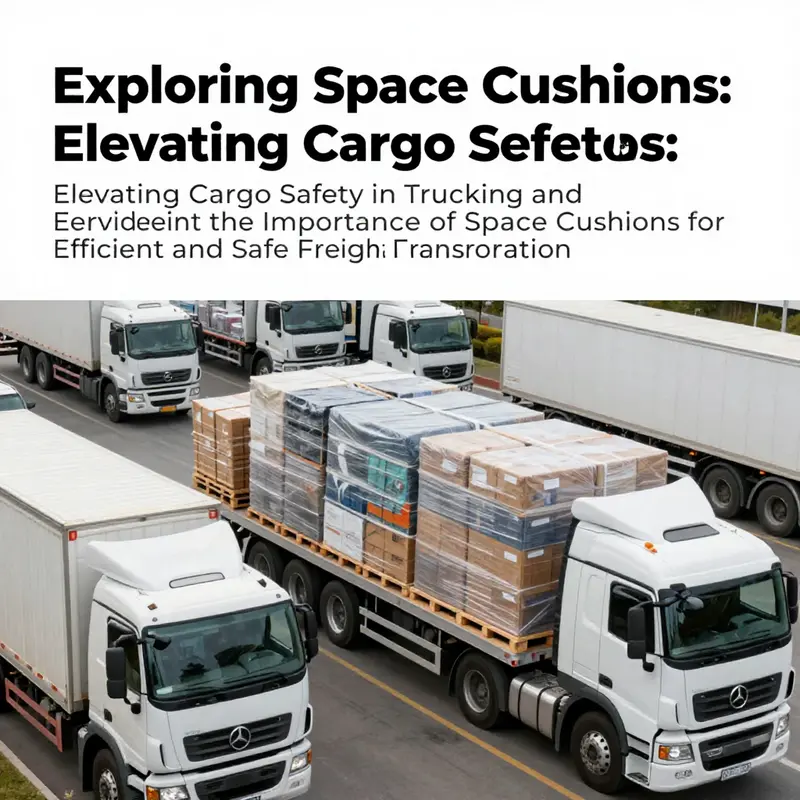
Proper cargo management is essential for manufacturing, distribution, and retail companies. ‘Space cushions’—often misinterpreted in the trucking and field services industries—refer to protective measures like pallets, dunnage, and securement techniques that not only safeguard your cargo during transit but also ensure efficiency in delivery operations. This article delves into the concept of space cushions, illustrating their vital role across multiple sectors, from manufacturing to e-commerce, construction, and small businesses shipping goods. We will explore the function of pallets and dunnage, effective cargo securement techniques, associated safety considerations, and the economic implications tied to these crucial aspects of transportation.
Between Floor and Force: The Real Power of Space Cushions in Trucking and Field Services
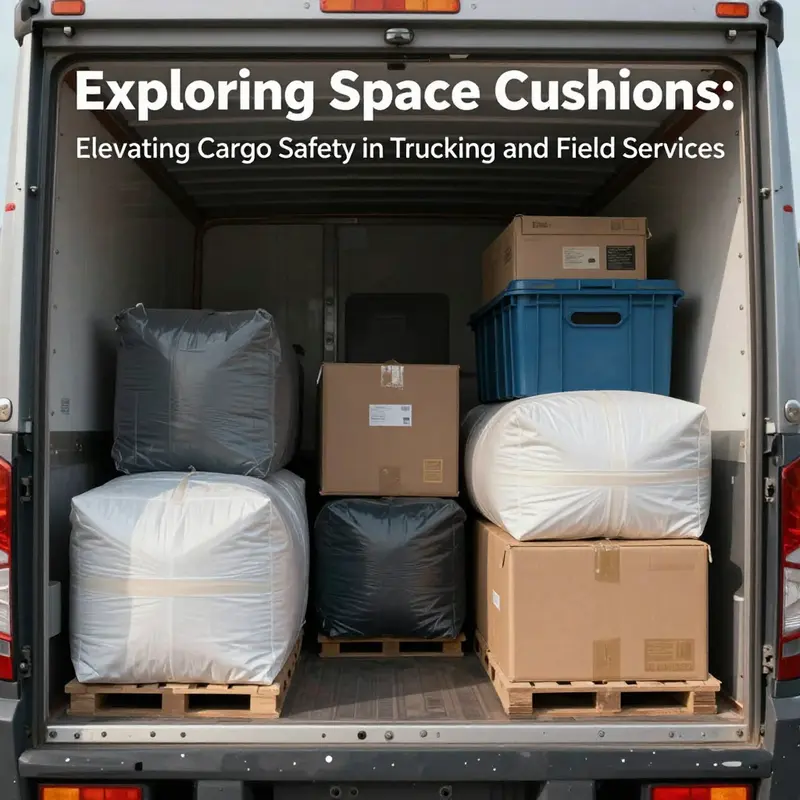
The term space cushion may not be a standard badge in every trucking or field service manual, yet the concept sits at the core of how modern operations move heavy, delicate, or precision loaded equipment with remarkable control. What many crews call a space cushion is, in practice, a collection of practices and tools — air pads, air bearing dollies, and the protective dunnage that keeps loads from grinding, sliding, or bouncing in transit. In essence, space cushions are not a single device but a mobility philosophy that treats friction as something to be minimized rather than resisted. When you combine the right air supported platforms with careful load preparation and smart integration with other handling equipment, the movement of heavy goods becomes almost performative: precise, gentle, and predictable, even in environments that demand floor protection and exact positioning.
The core science behind space cushions is straightforward, yet powerful. A thin, even layer of pressurized air creates an invisible barrier between the load and the floor. This air layer sustains a minute but meaningful separation that eliminates surface to surface contact. The result is ultra low friction: a 5,000 pound generator, a medical imaging unit, or a factory modular piece can glide with minimal effort. Operators discover that what once required multiple forklifts, heavy rigging, or elaborate crane setups can occasionally be accomplished with a single person guiding a load across a smooth, prepared surface. The perception of effort shifts from brute strength to strategic balancing, alignment, and gentle micro adjustments. It is a shift from force to finesse, from forceful pushes to controlled nudges, and it translates into tangible gains in time, safety, and floor integrity.
In field services, where installations often occur in constrained spaces like data centers, hospital wings, or bustling campuses, precision is currency. The space cushion approach allows technicians to reach exact alignment with millimeter accuracy, unseen by the final observer but crucial to a successful installation. A server rack, a medical imaging console, or a precision air handling unit might arrive on an air pad system and be positioned without the jolts and vibrations that would otherwise mar finishes, misalign mounting points, or necessitate awkward adjustments. The ability to reposition small increments without lifting heavy equipment also reduces the risk of strains and injuries, which, in turn, lowers downtime and insurance exposure. It is not merely about moving equipment; it is about preserving the integrity of the floor, the equipment, and the people guiding the operation.
Floor protection remains one of the most compelling benefits of space cushion technology. Modern flooring materials, from epoxy coated concrete to polished stone and tile, can be sensitive to high point loads, scratching, or gouging. When a heavy unit is dragged directly on its own, even a momentary contact can leave marks that are costly to repair and can disrupt cleanroom or clinical environments where surface integrity is non negotiable. By maintaining an air interface, the load’s every movement becomes a glide rather than a grind. This is especially important in industries where repeated installations occur in cleanrooms, pharmaceutical labs, or sterile facilities, where maintenance downtime and self contamination risks must be minimized. The impact extends beyond aesthetics; it reduces maintenance budgets and preserves resale or repurposing value by keeping surfaces pristine.
The versatility of space cushions is what makes them a natural fit across trucking and field services. In trucking and logistics settings, air pads are used during loading and unloading at distribution centers to move pallets or containers without floor damage inside trailers or on dock floors. In field services, technicians rely on air pads when transporting HVAC units, large servers, or other large electronics through corridors and doorways that standard dollies struggle to clear. They also enhance mobility in retrofit projects where old spaces present uneven floors or thresholds that would otherwise stump a conventional conveyance approach. The ability to integrate space cushions with overhead cranes, forklifts, or hydraulic lifts broadens their application and makes them part of a cohesive material handling ecosystem rather than a standalone gadget.
Ergonomics and worker safety receive a clear boost from this technology. Pushing and pulling heavy loads has always been a source of strain. The air cushion approach reduces the need for manpower to bear the brunt of movement, allowing workers to concentrate on steering and positioning rather than wrestling with the equipment. Fewer heavy lift requirements translate to fewer back injuries, fewer repetitive stress incidents, and a reduction in the long tail costs associated with workforce health. In practice, teams that adopt space cushion methods report smoother onboarding for new workers and a more consistent pace of work, especially in high variance environments where the load and the route change often.
The practical side of this approach is a balance between capability and environment. Air pads perform best on flat, clean, and smooth surfaces. Rough floors, debris, or gaps can compromise the air layer and hamper control. For this reason, planning and preparation are essential. Operators inspect the route, clear obstacles, and sometimes employ a light, portable leveling system to maintain stability as the load traverses irregularities. The load weight, surface temperature, and humidity also influence the performance of air supported systems, so calibration and operator training are vital to realize the full potential. When integrated with finite controls for air pressure and automated leveling, the system can handle a broad range of weights and dimensions while preserving alignment. This makes space cushions a scalable solution for fleets that handle everything from palletized goods to oversized machinery.
A real world deployment helps crystallize the value of space cushions. In a recent logistics deployment, air pads were used to relocate over two hundred modular office units across a construction site, each unit weighing more than eight tons. Without the air cushion system, the operation would have required multiple cranes and days of setup. With the cushion approach, the entire relocation occurred in a matter of hours, with zero floor damage and no injuries. The lesson is not merely that a job can be completed faster; it is that risk is reduced and the work becomes predictably manageable. For a fleet manager weighing the costs of alternative methods, these outcomes demonstrate the return on investment in safety gear, training, and the air cushion platform itself.
Despite these advantages, space cushions are not a universal fix. The term may be unfamiliar in some manuals, and the concept benefits from clear integration with other handling strategies. They do not eliminate the need for good loading practices, proper securing of loads, or pre existing floor maintenance. They augment, not replace, everything from dunnage to straps, nets, and bracing. In practice, a thoughtful combination of protective padding, dunnage bags, and air supported transport becomes a robust solution for securing and moving a wide range of cargo. The most successful deployments arise where planners map out path, surface, weight, and timing, treating space cushions as a reliable partner in the choreography of loading, moving, and installation.
For readers seeking a broader view of how this efficiency fits into larger supply chain dynamics, consider the way shore to truck transitions are evolving in major hubs. The efficiency gains described here echo the improvements observed in port and intermodal operations, where the ability to move goods from ship to trailer with minimal handling and maximum protection reduces dwell time and damage. To explore a related dimension of these trends, you can read about the Montreal port expansion and its impact on supply chains. This kind of efficiency mindset—the focus on reducing friction, protecting surfaces, and aligning precision with workflow—helps explain why space cushions matter beyond a single job site. They embody a philosophy of handling where safety, precision, and speed are not competing objectives but a single, harmonized result. External research underpins this trend, highlighting air pads as a pivotal enabler of modern industrial handling: https://www.mhi.org/insights/reports/air-pads-industrial-handling.
null
null
Space Cushions in Motion: Mastering Cargo Securement for Safer Trucking and Field Service Operations
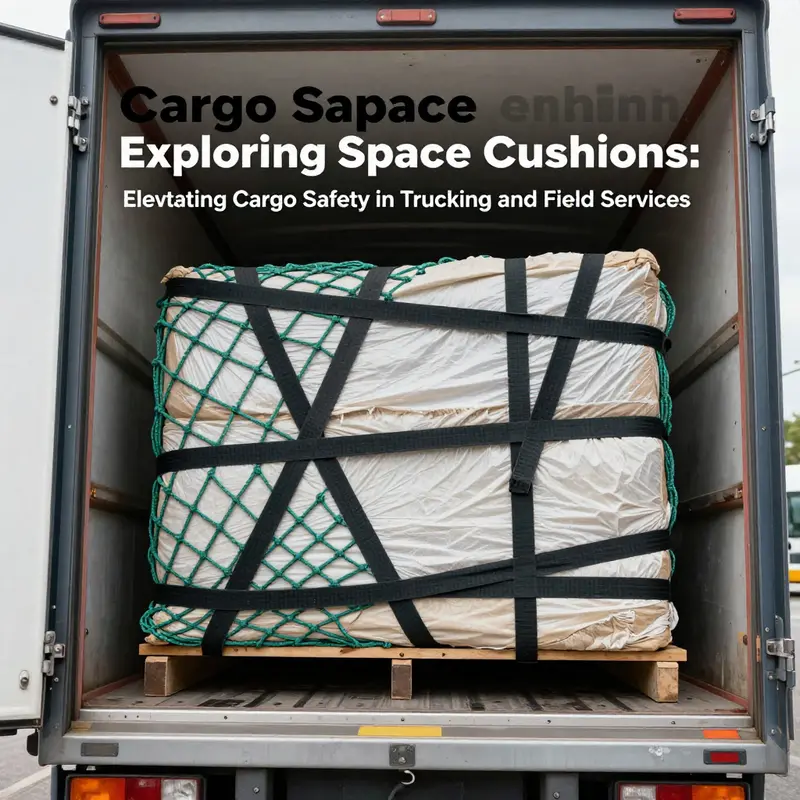
The term space cushion may sound like a luxury of design, but in trucking and field services it points to a practical, repeatable discipline: the deliberate creation of gaps, padding, and restraint that absorb shocks and prevent cargo from turning a bumpy ride into a damaged load. Unlike a purely decorative bumper, a space cushion is a functional buffer between freight and the vehicle’s structure, packaging, or securing devices. It is not a single component but a layered concept that spans protection, restraint, and the physics of motion.
When a rig hits a joint in the road, or a loader at a field site makes a sudden stop, the cargo’s inertia wants to carry it forward. The space cushion slows that transfer of energy, redistributes it, and reduces the chances of items rubbing, shifting, or colliding with metal walls. In practice, that means pallets placed with care, dunnage bags inflated to the right pressure, foam inserts tuned to a product’s geometry, and straps that hold fast without crushing delicate parts. The overarching aim is not merely to keep freight in place but to keep it intact against a spectrum of real-world stresses—from long highway straights to off-road progress across uneven surfaces. In the end, a well-considered space cushion is a small investment that yields outsized returns in reduced damage, safer handling, and smoother operations across the supply chain.
The field does not rely on a single, universally labeled term for this idea, and that is part of why the concept deserves careful, explicit treatment. A space cushion in a broad sense aligns with what practitioners refer to when they discuss cargo securement, load distribution, and vibration management. The practical takeaway is that the cushion is not just padding; it is a system-level approach that harmonizes materials, geometry, and securing methods to control how a load responds to movement. Frustratingly, the term may be misheard or misunderstood, especially when glad-handing a new customer or briefing a field crew about a familiar but differently named practice. Yet the essence remains consistent: create enough, and the right kind of space between the freight and the vehicle to absorb energy, deter shifting, and preserve the integrity of the goods. In a world where mishaps at the securement stage can ripple into delays, returns, and damaged reputations, the cushion becomes a frontline defense of reliability. It is a reminder that securement is not passive restraint alone but a dynamic, tactile practice that adapts to cargo type, route conditions, and handling realities.
At its core, the space cushion exists in two broad incarnations: flexible systems and rigid systems. Flexible systems embrace motion while dampening it. Airbags, foam inserts, and stretchable wraps can deform and dissipate energy as loads interact with bumps or potholes. They are particularly valuable for fragile electronics, glassware, or mixed shipments where no single rigid geometry can secure every piece without risk of damage. Flexible cushions accommodate irregular shapes and allow a controlled degree of micromotion to prevent brittle failures that occur when a load is restrained too tightly. Rigid systems, by contrast, aim for a tighter, more controlled restraint. Steel bars, rigid frames, or tightly tensioned straps form a fixed geometry that minimizes load acceleration by eliminating play. They excel with heavy, stable items—machinery parts, long components, or bulk materials where a precise, unyielding alignment reduces the risk of shifting under heavy dynamics. The reality for most fleets is a hybrid approach: some sections of a load secured with rigid rails to prevent movement in one axis, and supportive cushions in another axis to absorb shocks or accommodate odd shapes. The art lies in knowing when to deploy which approach, and how to balance energy absorption with restraint to avoid transmitting excessive forces that could damage the freight or the trailer itself.
Selecting the right cushion system is a multidimensional judgment. Cargo type is the most obvious axis. Electronics and medical supplies, with their sensitivity to vibration and impact, benefit from soft, compliant cushions that can absorb small but frequent shocks. Large machinery parts, heavy equipment accessories, or bulk materials may perform better with rigid elements that prevent kinetic energy from translating into load movement. Weight is another critical variable; heavier loads require robust restraint frameworks that can sustain higher forces without yielding, while maintaining sufficient clearance for the cushioning materials to function. The shape, fragility, and packing configuration of items in a pallet or container dictate whether dunnage bags, foam void fillers, or inflatable cushions are appropriate. Environmental and transport conditions—road quality, weather, and route characteristics—are not afterthoughts but active determinants. A road with rough pavement or a route with significant elevation changes makes energy dissipation more valuable, and that shifts the balance toward cushions that can modulate the peak forces rather than simply restrain against them. In field service contexts, where stops are frequent and loads are often unlike one another on the same truck, the cushion strategy must be flexible, modular, and easy to adjust with the day’s lineup.
Regulatory standards anchor these practices in a framework of safety and accountability. The Federal Motor Carrier Safety Administration provides explicit requirements for load securement that cut across cargo class and vehicle type. While the vocabulary may vary in industry chatter, the underlying objective is consistent: ensure loads remain intact and do not pose a hazard to drivers, other road users, or the freight itself. The regulations emphasize proper use of straps, nets, dunnage bags, and other restraint devices, along with attention to the compatibility of securing methods with the cargo’s characteristics. Practitioners who stay current with FMCSA guidelines can avoid common pitfalls, such as over-tightening, which can crush delicate goods, or under-securement, which permits dangerous movement. The best practice is to view the standard not as a checklist to be ticked but as a baseline that informs a tailored, cargo-specific strategy. Knowledge of the standards helps teams communicate clearly about expectations, ensures consistent training across crews, and supports audits and inspections that verify the integrity of securement before departure. The FMCSA resources offer technical specifications, examples, and compliance guidance that illuminate how the space cushion concept translates into compliant, repeatable actions.
In the day-to-day rhythm of trucking and field services, a space cushion becomes a discipline of materials, procedures, and continuous learning. The physical toolkit—pallets, dunnage bags, foam blocks, inflatable cushions, and a well-chosen set of straps—must be matched to the commodity and the route. It is equally important to cultivate a mindset that treats securement as an ongoing process rather than a one-off task. Vehicle preparation, product packing, and early communication with customers create a feedback loop that strengthens how cushions are designed for each shipment. A well-designed cushion system can tolerate minor shifts without letting them escalate into damage, which translates into fewer claims, shorter dwell times, and smoother handoffs at destination points. This is where the logistics ecosystem—drivers who recognize when to adjust cushions, loaders who verify gaps, and dispatchers who track securement quality—proves invaluable. When teams talk about space cushions, they are really discussing a culture of care: meticulous attention to how every item sits, how it is braced, and how the entire package will behave when the rig meets the road or the terrain of a field site.
The broader network context also matters. Shifts in port infrastructure, regional supply chains, and cross-border movements influence how securement practices evolve. For instance, port expansions and the evolving handling dynamics can alter container configurations and the way goods are palletized and strapped for multi-modal transport. Such developments underscore the value of tying securement decisions to current logistics realities. For readers exploring how these changes unfold in practice, the discussion of a regional port expansion and its ripple effects on supply chains offers a concrete backdrop for why robust space cushion strategies matter on every leg of a route. See the discussion on Montreal Port Expansion Impact on Supply Chains for a sense of how growing facilities alter cargo handling and securement needs. Montreal Port Expansion Impact on Supply Chains
As this chapter threads together cushioning concepts, securement systems, and regulatory guardrails, it becomes clear that space cushions are not exotic add-ons but essential components of a resilient transport operation. They demand thoughtful selection, disciplined application, and a readiness to adapt as cargo mixes, routes, and infrastructure evolve. The result is less risk of damage, smoother loading and unloading, and a capacity to meet tight schedules with confidence. In the next phase of exploration, readers will see how these principles translate into practical workflows on the shop floor, how crews can calibrate cushions under varying load profiles, and how emerging materials and sensing technologies might refine cushion performance even further. For those who want to deepen their understanding of the governing rules and best practices, the federal standards offer a solid anchor to guide daily decisions and long-term improvements. External resources provide the broader regulatory lens through which day-to-day securement decisions gain formal legitimacy, including key guidelines on vehicle cargo securement. FMCSA Vehicle Cargo Securement
Safe Margins: Unpacking Space Cushions, Stability, and Cargo Security in Trucking and Field Services
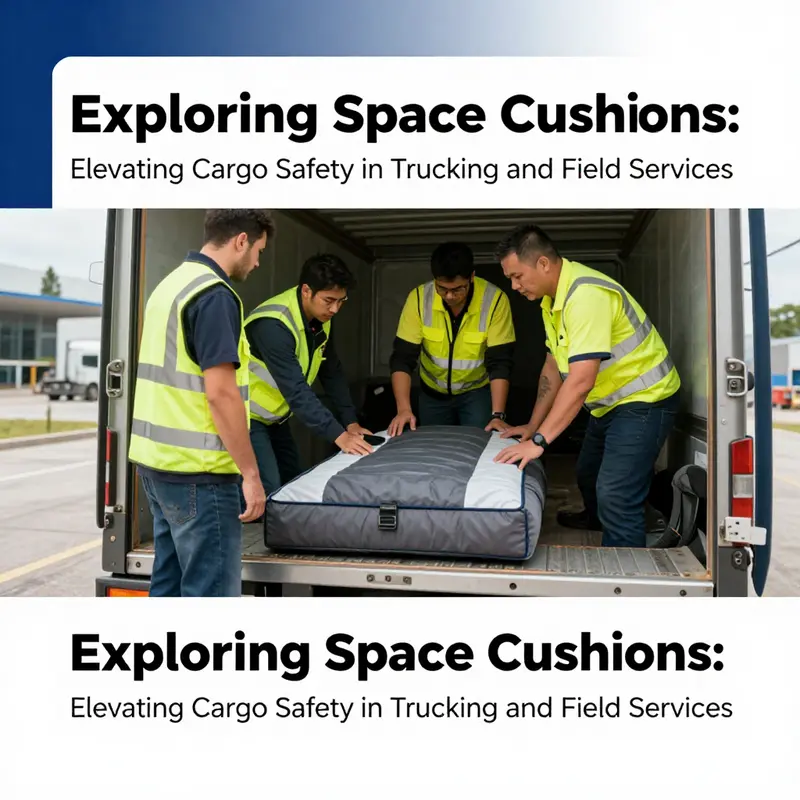
The term space cushion is not a formal industry label in trucking or field services, yet the idea it suggests is a deliberate buffer of air and space that shields equipment and cargo from the jolts of motion. In practice fleets rely on the air ride suspension system, a network of air bags, valves, and dampers that absorb road irregularities and distribute weight with a gentler touch than traditional leaf springs. To talk about safety in this context is to discuss how a vehicle negotiates the dynamic forces of road travel while protecting fragile payloads, preserving tire life, and maintaining predictable handling. The cushion is both a physical buffer and a procedural safeguard: a design that translates into steadier turns, smoother starts and stops, and reduced risk for operators who travel mixed terrain and changing road conditions.
A quiet but essential truth is that safety hinges on correct installation and ongoing maintenance as much as on the components themselves. An air ride suspension is only as reliable as the technician who connects, calibrates, and tunes it. Improper installation can set off a cascade of issues—from unequal load distribution to compromised braking performance. In the field, where equipment is subjected to heat, cold, vibration, and the occasional rough loading dock, the integrity of hoses, fittings, and control lines becomes a daily check item. Maintenance is not cosmetic; it is a safety practice that keeps the cushion responsive and the vehicle predictable. When technicians inspect the system, they are not just testing for leaks or sag; they are validating how the ride height is maintained, how quickly the system responds to pressure changes, and how well those changes translate into stable contact between tire and road. In that light, the cushion is a living part of the vehicle, demanding regular attention much like tires and brakes do.
Inflation levels matter for more than ride comfort. The air bags in an air ride suspension must be matched to the vehicle weight distribution, axle configuration, and tire ratings. Overinflation can harden the ride, causing the tires to lose grip prematurely, increasing vibration transmitted to the cargo, and potentially accelerating wear on suspension components or brakes. It can also mount an unexpected shock to the vehicle chassis during a sudden throttle release or deceleration. Underinflation, conversely, softens the ride in a way that sounds comforting but invites stability problems: the suspension becomes sluggish, steering response can lag, and stopping distances may lengthen as the system fights to maintain even load transfer. In both cases, the stability envelope shifts as the suspension breathes, and the operator’s ability to predict how the truck will react at a given speed grows more uncertain. The result is a higher likelihood of cargo shift, tire scrubbing, or brake fade—outcomes every fleet strives to minimize.
System failures pose an acute safety risk precisely because they can appear as abrupt, high speed events when the driver least expects them. A ruptured bag or a significant leak does not always announce itself with drama; sometimes the loss of pressure manifests as a sudden drop in ride height on one side, a tilt that unsettles steering, or an unexpected change in the vehicle torque distribution. In adverse weather, when traction is already marginal, even a minor bag failure can translate into a lost grip on wet pavement or a compromised lane position. The industry recognizes that redundancies exist for a reason, but they cannot replace vigilant inspection and prompt maintenance. Operators should be trained to notice subtle cues: changes in ride quality, unusual noises, or vibrations that travel through the chassis. One critical risk point is the interface between the air ride system and the vehicle braking architecture. If the suspension design places uneven load on a braking axle, or if brake balance shifts as pressure in the air bags changes, stopping characteristics can deteriorate in ways that are not immediately obvious until an emergency occurs. In that sense, the cushion must be integrated into a holistic view of vehicle dynamics, not treated as a separate, isolated feature.
Mechanical stress and compatibility issues further complicate the safety landscape. Air ride systems must harmonize with a vehicle’s steering geometry, wheel alignment, and braking system. Incompatibilities can create stress concentrations at critical joints and mounts, accelerating wear or precipitating failures during routine operation. A system that is not properly matched to the chassis can flutter or exhibit untimely responses to inputs, undermining confidence and increasing the cognitive load on drivers. For field service fleets that routinely navigate uneven terrain, offloading at unpaved sites, or maneuvering within tight spaces, the margin for error shrinks further. The cushion can aid stability, but only if the underlying architecture is coherent and sound. That coherence depends on a design approach that anticipates real world abuse: vibration spectra generated by varying pavement, thermal cycles that change bag elasticity, and an ongoing maintenance cadence that addresses wear before it becomes a safety liability.
Beyond the mechanical and procedural facets, the human element remains central. Training for personnel who operate and service these systems must go beyond basic start and stop procedures. Operators should develop a tactile sense for how the vehicle should feel at various speeds and loads, a sensitivity to vibrations that signal a developing issue, and an understanding of how load distribution interacts with road grade. Technicians require a disciplined approach to handling pressurized components. A misstep in servicing an air line or a bag during inflation change can cause injury or release energy in dangerous ways. The training imperative, therefore, is twofold: cultivate situational awareness among drivers and equip maintenance staff with the technical literacy to diagnose, isolate, and correct faults without escalating risk. In practice, the best fleets cultivate a culture of proactive inspection, documented procedures, and transparent reporting. This mindset not only reduces the probability of a failure but also empowers teams to respond swiftly when anomalies arise.
Industry guidelines provide a compass for these safeguards. Recognizing the complexity of air ride suspension, many fleets turn to the guidance published by professional bodies that codify design, testing, and safety considerations. While space cushion is not a standard term, the underlying principles are well defined: reliability of components, compatibility with vehicle systems, and validated procedures for assembly and maintenance. A widely cited resource is the SAE International body of work on air ride suspension systems, which covers design expectations, testing protocols, and safety recommendations. Access to such documentation, typically through a professional library or a subscription service, helps practitioners align fleet practices with current engineering standards and best practices. Utilizing these guidelines supports safer operating envelopes, longer equipment life, and more predictable performance under a range of operating conditions. Fleet managers who anchor their maintenance programs to established standards are better positioned to balance ride quality with cargo protection and road safety.
In this light, the space cushion concept becomes less about a single gadget and more about an integrated safety discipline. The cushion is a tangible mechanism that translates into steadier handling and gentler cargo treatment, but it only fulfills that promise when every link in the chain works as intended—from design and installation to inflation management, from leak prevention to informed, ongoing training. The safety payoff is not merely theoretical; it manifests in fewer instances of damaged goods, less roadside disruption caused by unstable loads, and reduced exposure to liability for fleets and drivers. It also aligns with broader trends in fleet maintenance, where a growing emphasis on predictive inspection, data driven adjustments, and continuous learning helps ensure that equipment performs as intended under real world pressures. For readers exploring the practical implications of this approach, the conversation about space cushions touches a wider narrative about how modern trucking and field services pursue safer, more reliable operations without sacrificing efficiency or cargo integrity. See the following resource for additional context.
As the journey through this topic advances, fleets will increasingly rely on a disciplined, safety first framework. The cushion remains a metaphor for the broader aim to harmonize human skill, mechanical reliability, and process discipline so that every mile is traveled with confidence. When drivers feel the vehicle respond predictably, when cargo arrives intact, and when maintenance teams act with foresight, the virtue of a well calibrated space cushion becomes evident in everyday operations. The external benchmark remains rigorous and evolving, with organizations of all sizes incorporating the latest engineering insights into their routines. For practitioners, the takeaway is clear: safety is not a single action but a continuous, collaborative practice that treats the cushion as a core element of safe, efficient trucking and field service operations. As technology evolves the cushion will adapt, providing greater resilience, smarter diagnostics, and more precise control, while remaining rooted in the same fundamentals: correct installation, appropriate pressure management, proactive inspection, and disciplined training. The result is not simply a smoother ride; it is a safer, more reliable channel for goods and services that rely on dependable, collision-free movement across the supply chain.
External resources offer further context for those who want to explore the engineering backbone behind these practices. See the SAE International guidelines on air ride suspension systems for a detailed treatment of design, testing, and safety considerations. This document provides a technical foundation that complements the practical emphasis described here, helping teams translate theory into action when installing, operating, and maintaining suspension systems in challenging conditions. Access to this material is typically obtained through professional libraries or member organizations and is a valuable supplement to day-to-day fleet safety programs.
Between Load and Lane: The Economics and Operational Realities of Space Cushions in Trucking and Field Services
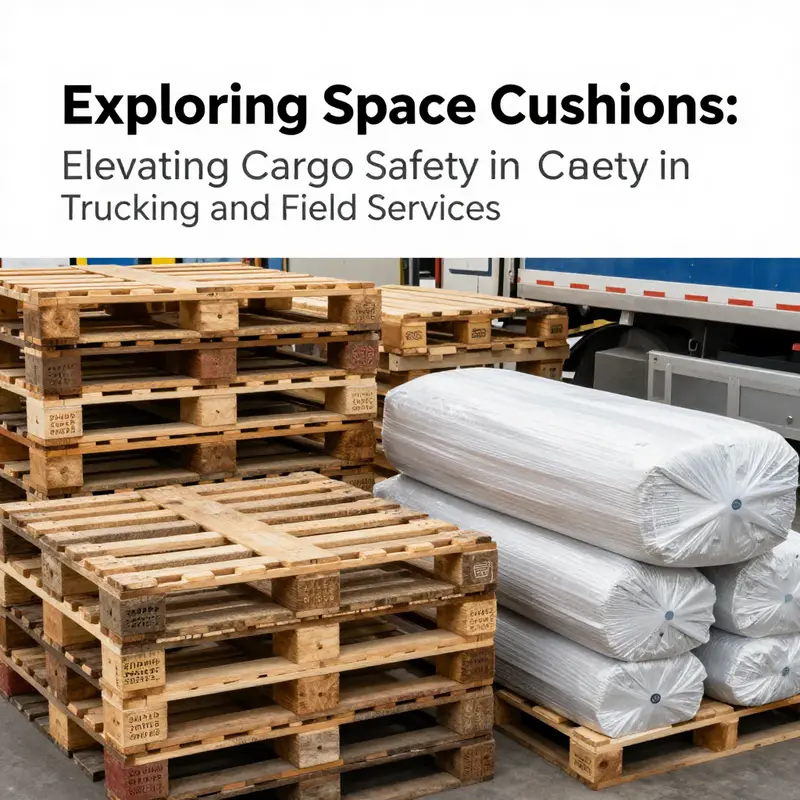
In trucking and field services, the phrase space cushion rarely appears in official manuals or standard operating procedures. Yet the concept behind it—creating a deliberate buffer between the cargo, the vehicle structure, and the surrounding environment—exists wherever freight moves. What some may call a space cushion, others recognize as the careful use of padding, dunnage, and smart cargo securement. The distinction matters because the cushion is not a single device but a system. It blends physics, material choice, labor practices, and economic calculus into a practical approach that protects payloads, preserves vehicle integrity, and influences the bottom line. When we unpack what constitutes a space cushion, a picture emerges of pallets, cushions, and bracing working in concert to keep goods stable, undamaged, and compliant with safety standards, even under the stress of road vibration, sudden maneuvers, or rough terrain in field operations. The protective logic is straightforward: if a load can shift, shift it will. If it shifts, it can break open or crush adjacent items, damage the trailer floor, or create hazardous conditions for drivers. The cushion, then, is a deliberately engineered buffer that distributes forces and creates space where small misalignments would otherwise become costly failures. Within this framework, the most common components of a space cushion are familiar to anyone who has handled freight. Pallets and dunnage serve as the backbone. Wooden or plastic pallets provide a stable base and a platform for strapping loads in place. Dunnage—whether foam blocks, inflatable bags, or flexible cushions—fills gaps and absorbs shocks. When these elements are arranged thoughtfully, they turn a potentially dangerous squeeze of shifting cargo into a controlled, predictable set of forces that can be managed and measured. The relationship between cushioning and securing is not a zero-sum choice. You do not choose cushions in lieu of securement; you integrate both to achieve stability in three dimensions. In the field, the challenge multiplies: loads may be irregular, trailers may be uneven, and road conditions can vary from smooth highways to unpaved accesses. The same principle applies to air cargo, where there is a long-standing tradition of using pads to prevent damage to floors and containers by spreading load—an idea conceptually adjacent to what one might call a space cushion in road operations. The terminology might differ, but the physics are the same. Pad a fragile item, spread the load, and your risk of damage diminishes. The practical upshot is clear: a disciplined cushioning strategy reduces the likelihood of costly claims, rejects, and downtime. In a mature trucking operation, the cushion becomes a measurable element of performance. Freight managers track the cost of cushioning materials, the time required to arrange and secure loads, and the weight penalty that extra padding adds to a payload. The weight of dunnage, if not managed, can eat into payload efficiency and fuel economy. Yet the opposite is true when cushioning is optimized. A well-balanced cushion lowers damage incidence, speeds loading and unloading, and protects asset value over years of service. The economics of cushioning, then, hinge on a careful balance of material costs, labor input, and the lifetime value of protected cargo. A single damaged pallet or a compromised edge protection strip can cascade into multiple failures: the need to rework a shipment, schedule delays, and a potential insurance claim. These consequences ripple through pricing, service level commitments, and customer satisfaction. To minimize such ripples, many operators invest in standardized dunnage libraries and reusability programs. Reusable foam blocks and inflatable dunnage bags, when properly inspected and tracked, provide a better return over time than disposable alternatives. The upfront capital costs are higher, but lifecycle savings accumulate as wear is monitored, cushions are retired at appropriate intervals, and replacement schedules align with maintenance cycles. The environmental dimension also enters the calculus. Reusability reduces waste and the environmental footprint of cushioning materials. At the same time, the weight added by padding must be justified by the protection it provides. Shippers who handle high-value or high-risk cargo, including electronics, precision instruments, or heavy machinery components, often justify more robust cushioning through lower loss costs, improved customer confidence, and favorable insurance terms. In practice, the cushion is not a passive layer but an active part of the loading plan. It guides decisions about how to arrange items: which items sit atop pallets, where to place edge protectors, and how to stack to prevent crushing or leaning. The cushioning strategy is also intertwined with the broader cargo securement process. If straps, nets, and bracing are not properly applied, even the best cushion will fail to perform. A cushion can distribute stress, but it cannot compensate for a weak tie-down or a loosened strap. This interplay matters in field service settings where crews must secure specialized equipment, tools, or spare parts at remote sites. The variety of cargo in field operations—sensitive instrumentation, rigid cases, or cylindrical components—demands tailored cushioning solutions that reflect the load’s geometry and the terrain. In this sense, the cushion’s design must be pragmatic and iterative. It benefits from data drawn from past shipments: where a load tended to shift, which packing configurations minimized vibration, and which materials retained integrity after exposure to temperature changes or moisture. Some fleets employ digital checklists that guide the crew through a cushion-focused loading routine. Such routines ensure that padding is used consistently and that the cushion’s role is not overlooked when time pressures arise. The economics of space cushions also interact with regulatory expectations and safety objectives. Regulatory bodies emphasize securement standards and safe handling practices. A well-executed cushion-based approach aligns with these standards, reducing the likelihood of citations or compliance-related delays. The cushion’s protective value translates into insurance and risk management benefits, even as it surfaces tradeoffs in payload efficiency. To illustrate, consider a shipment of delicate components in a multi-stop route. A robust cushion arrangement might require additional straps or intermediate bracing, increasing loading time. The extra minutes spent securing a load are a cost on the clock, but they are offset by the more reliable arrival of intact goods at each stop and the avoidance of damage at transfer points. In a broader sense, space cushions embody a philosophy of risk management that recognizes the cost of loss and the value of control. They are about turning variability—terrain, handling, and vibration—into predictable, manageable forces. This is consistent with a wider trend in trucking: the shift toward more sophisticated load management practices, especially as fleets grow larger and routes become more complex. For readers drawn to the strategic dimension, the idea of a space cushion extends beyond the physical realm. It invites operators to consider buffers in scheduling, maintenance, and service delivery. Having a cushion of time in the loading sequence can prevent bottlenecks; a cushion of spare parts in the trailer can reduce the risk of downtime on the road. In that sense, the cushion is both a physical and a managerial tool—a buffer that protects what matters most: the integrity of the cargo, the drivers’ safety, and the provider’s reliability. The topic also intersects with ongoing economic currents shaping the industry. Market volatility, shifts in demand for goods, and evolving trade patterns all influence how much cushion is prudent, what materials are cost-effective, and how much time a crew should dedicate to securement versus other tasks. As these dynamics unfold, there is value in revisiting the cushion’s role, not as a static fixture but as a flexible component of a resilient logistics system. The discussion resonates with broader industry conversations about efficiency, sustainability, and risk. It invites operators to weigh material choices, reuse strategies, and training that emphasizes the correct use of dunnage and edge protection. It also highlights how a seemingly small practice—the correct placement of a cushion under a load—can yield outsized gains in safety, service quality, and fiscal performance. For readers who want to connect this topic to wider economic insights, the conversation about space cushions complements analyses of trucking trends and market forces. It is a reminder that efficiency in trucking is not only about speed or fuel but about the careful choreography of space, support, and restraint that keeps goods moving with confidence. The practical takeaway is simple: if you can design and implement a thoughtful cushioning strategy, you build a stronger operation. The cushion becomes a quiet workhorse, protecting assets and enabling punctual delivery in a landscape where margins depend on precision as much as on price. For further reading on how broader economic forces shape trucking strategies, see the discussion of key economic trends impacting the trucking industry. Key economic trends impacting the trucking industry. External references offer a regulatory backbone for what remains a largely practical discipline, including guidelines and standards that govern cargo securement and safe handling in transport. External resource: https://www.fmcsa.dot.gov/regulations
Final thoughts
Space cushions play an indispensable role in the trucking and field services landscape, firmly establishing their importance in cargo management. Understanding how pallets, dunnage, and securement techniques contribute to a safer logistics environment is key for businesses across manufacturing, retail, e-commerce, construction, and small shipping enterprises. By investing in proper space cushioning strategies, companies not only enhance safety but also realize significant economic benefits from minimized damage and increased customer satisfaction. As we navigate the complexities of freight transportation, prioritizing the principles surrounding space cushions is paramount for operational success.