
In an era where compliance and regulations are pivotal for operational success, knowing whether your service truck needs a DOT number is critical. This need varies based on several factors, including truck weight, usage, and engagement in interstate commerce or hazardous material transport. This article comprehensively outlines the essential considerations for manufacturing, distribution, retail, and industrial sectors regarding DOT number requirements. Each chapter delves into specific facets, such as weight regulations, interstate commerce implications, and hazardous materials transport, providing a clear navigation path to understanding DOT compliance, ensuring your business’s operational integrity.
DOT Numbers on Service Trucks: Weighing Rules, Hazards, and Interstate Reach
Does a service truck need a USDOT number? The question invites the same careful reading that motor carriers bring to every operation: weigh the vehicle, map its routes, and check what it carries. For many service trucks—think mechanics, operators, or installers who move tools, parts, and sometimes equipment between sites—the DOT number is not automatic. But it is not optional either when certain thresholds are met. The FMCSA uses a mix of criteria to decide who must have a USDOT number, and those criteria are not always obvious at first glance, especially for businesses that operate in multiple states or across borders. In practice, the decision rests on three pillars: weight, what you’re hauling, and where you’re going. When these pillars line up in a way that activates federal oversight, a service truck operator steps into a regulatory space that demands careful recordkeeping, clear labeling, and timely registration. The result is not merely a bureaucratic hurdle; it is a framework designed to ensure safety on the road, accountability for the movement of goods, and a standardized set of expectations for everyone sharing the highway, from the driver to the dispatcher to the maintenance crew that services a fleet.
First, the weight pillar. The general yardstick is the Gross Vehicle Weight Rating, or GVWR. If a service truck has a GVWR of more than 10,000 pounds—generally 10,001 pounds or more—it falls under the umbrella that often requires a DOT number. The critical nuance here is that this threshold is not about the weight you are moving on a given day but the vehicle’s rating itself. If you own a truck whose GVWR is published by the manufacturer as 12,000 pounds, that truck is a candidate for USDOT registration, regardless of whether you routinely haul a full load every day. Conversely, a smaller pickup with a GVWR under 10,001 pounds typically does not trigger the registration requirement, unless your operating practices push it into a category FMCSA actively monitors. This distinction matters when a service truck functions mostly as a mobile workshop, carrying heavy equipment or bulky parts that push the vehicle toward its GVWR ceiling even on a light-service day. The practical implication is that a fleet decision—involving maintenance, refinement, or replacement of trucks—should consider not only current payloads but also the published GVWR and how it aligns with the kinds of jobs you routinely perform across the road.
Second, hazardous materials. A DOT number becomes a must-have when a service truck transports hazardous materials in quantities that require placarding or other hazard communication. This is one of the clearest lines FMCSA draws between standard service activities and activities that trigger additional regulatory attention. If your crew occasionally hauls materials that could pose a risk—flammable solvents, corrosive cleaners, or oxidizers—your operation may cross into a regime that requires DOT registration, even if the vehicle itself does not otherwise exceed the weight threshold. The logic is straightforward: when the content you transport increases risk, the regulatory overlay tightens. The prospect of placards, shipping papers, and emergency response information changes the operational calculus, including how you train drivers, how you store hazardous materials in the vehicle, and how you document every shipment. For some businesses, a smaller service truck that rarely carries hazardous content may avoid DOT obligations entirely; for others, even occasional hazmat transport triggers a legal duty to register and maintain compliance. The key is to understand the hazard profile of every load and to align operations with FMCSA’s hazmat rules.
Third, passenger capacity. A vehicle used to transport more than eight passengers (including the driver) for compensation, or more than 15 passengers not for compensation, falls under DOT oversight. While this criterion might seem remote for many service trucks, it matters for fleets that repurpose vans or small buses for remote-site staffing, on-site crews, or temporary field teams. In such cases, the same DOT number that covers freight operations may also cover passenger service, with corresponding hours-of-service, recordkeeping, and driver qualification requirements. The boundary here is not the vehicle’s payload alone but how the vehicle is used in practice—whether it’s traveling to a client site with a crew in tow, or simply moving a toolbox and parts between locations. The distinction influences not only whether a DOT number is needed but also which FMCSA rules apply to the driver’s hours, the vehicle maintenance logs, the inspection routines, and the way compliance data is stored and reported.
Fourth, interstate commerce. Even if the vehicle’s size or cargo does not trigger other rules, operating in interstate commerce while hauling regulated goods typically mandates a DOT number. Interstate commerce is a broad term in practice. It includes shipments that cross state lines, shipments that affect more than one state, or activities that influence economic activity across state borders. A service truck delivering equipment or parts to multiple states, or one that provides on-site maintenance across a regional footprint, can fall into this category even if the truck weighs modestly or does not carry hazmat on every trip. The presence of a regular cross-state routine, a continuous chain of deliveries or services across borders, or a pattern of shipments involving regulated commodities can trigger the registration requirement irrespective of a single trip’s weight. In these cases, registration is not merely a once-and-done formality; it becomes part of ongoing compliance that informs routing practices, dispatch scheduling, and insurance considerations.
Important notes accompany these criteria. It is essential to understand that trucks used strictly for personal or recreational purposes do not require a USDOT number. The line between personal use and commercial operation can sometimes blur, particularly for small fleets or owner-operators who manage a mix of work and personal trips. The determination hinges on how the vehicle is used in commerce and whether that use constitutes an ongoing business activity with purpose beyond personal transport. For business owners, the practical takeaway is clear: map your typical routes, catalog the kinds of loads, and assess how often you cross state lines or transport regulated materials. If any of the criteria align with your operation, you should pursue registration. If none apply, you may still wish to maintain awareness of state-level or local registration requirements, but the USDOT number would not be mandatory under FMCSA rules.
In practice, many service-truck operators find themselves weighing a combination of these factors. A maintenance contractor servicing facilities in two or three states, for example, may have a GVWR above the threshold and a pattern of interstate travel that qualifies the operation for USDOT registration. A field service team that occasionally moves hazardous materials or uses a van for crew transport must consider both hazmat classifications and passenger-carrying thresholds in tandem. FMCSA’s framework is designed to capture these real-world complexities, not to enforce a one-size-fits-all rule. The right approach is to examine each service vehicle against the criteria, review the vehicle’s GVWR label, examine the types of loads most frequently carried, and reflect on how the route structure affects interstate commerce status. It is the integration of weight, content, passengers, and geography that paints the complete compliance picture.
As you navigate this terrain, a practical step is to confirm how your fleet is currently categorized by FMCSA and whether any vehicle you operate would require registration given its typical duties. This involves more than looking at the truck’s plate and its current load. It requires a thoughtful audit of the operation’s typical workflows, the nature of goods shipped, and the geographic reach of services. If you decide that a USDOT number is required, the process is straightforward but not instantaneous. You apply through FMCSA’s registration portal, obtain a number, and then display it clearly on each vehicle in your fleet according to FMCSA guidelines. Compliance thereafter involves regular updates to the registration, evidence of insurance, and ongoing adherence to hours-of-service, safety audits, and vehicle maintenance standards. The goal is not simply to satisfy a regulatory checkbox but to embed a safety-first mindset into every trip, every delivery, and every field service call.
To maintain perspective, consider the broader regulatory context that shapes how service trucks operate in today’s logistics environment. A comprehensive understanding of cross-border regulatory issues can illuminate how interstate rules interact with regional or national requirements. For a broader regulatory context and how it can influence decision-making across states and even national borders, see cross-border regulatory issues.
Ultimately, the question of whether a service truck needs a DOT number hinges on practical operation, not a single numeric threshold alone. It requires aligning GVWR, hazmat considerations, passenger-carrying capacity, and interstate commerce patterns with FMCSA rules. When any one of these axes points to registration, obtaining and displaying a USDOT number becomes a fundamental step in safe, compliant operation. The cost of noncompliance—ranging from penalties to insurance complications and supply-chain disruptions—far outweighs the administrative effort of registration. If the situation remains uncertain, the prudent move is to consult FMCSA’s official guidance and confirm with your company’s compliance or safety officer. For official guidance, refer to FMCSA’s DOT Number Requirements page. FMCSA DOT Number Requirements
When Weight and Work Collide: Determining If Your Service Truck Needs a DOT Number
Understanding whether a service truck needs a Department of Transportation (DOT) number comes down to how the truck is used and how much it weighs. Operators, fleet managers, and independent technicians often assume that small work trucks are exempt from federal registration. That assumption can lead to costly mistakes when a vehicle crosses state lines, carries regulated materials, or simply exceeds weight thresholds. This chapter walks through the rules that matter, clarifies common misconceptions, and gives practical guidance for keeping operations compliant without unnecessary red tape.
A DOT number is an identifier issued by the Federal Motor Carrier Safety Administration (FMCSA). It appears simple on paper: vehicles involved in interstate commerce that meet certain criteria must register and display a DOT number. The simplicity ends when you apply the rule to real work trucks used for maintenance, repair, installation, or service calls. A single truck can shift in and out of regulatory scope depending on cargo, travel, and weight. That fluidity is why a clear checklist helps more than a broad rule of thumb.
First, weight matters. The FMCSA’s primary threshold for requiring a DOT number is a gross vehicle weight rating (GVWR) of 10,001 pounds or more when the vehicle is used in interstate commerce. The GVWR is a manufacturer-rated figure that represents the maximum safe operating weight of the vehicle, including cargo and passengers. If a service truck’s GVWR is 10,001 pounds or above and the truck crosses state lines during normal operations, the truck must be registered with FMCSA and display a DOT number. This applies whether the truck carries tools, spare parts, or technicians. It does not matter if the truck operates mostly within one state but occasionally travels across state lines for jobs. Occasional interstate trips can trigger the requirement.
Second, hazardous materials change the game regardless of weight. If a service truck carries hazardous materials as defined by federal regulations, it may need a DOT number even if the GVWR is below the 10,001-pound threshold. Hazardous materials can include fuels, compressed gases, certain batteries, or chemicals used in maintenance work. The classification and quantity thresholds for hazardous materials are specific; a small amount of certain hazardous goods might be exempt, while other materials trigger full regulation. Operators should inventory what they carry and compare it against FMCSA and Hazardous Materials Regulations to determine whether their loads require registration and special handling.
Third, the phrase ‘‘interstate commerce’’ is key. Trucks that operate solely within a single state and meet federal exemptions may not need a DOT number. However, many service operations straddle that line. A local utility contractor whose trucks occasionally cross into a neighboring state, or a telecom crew that travels to regional worksites, often falls into interstate commerce. The distinction is not whether the truck owner is interstate by registration, but whether the vehicle’s movements qualify. When in doubt, treat occasional interstate trips as a compliance trigger.
Beyond these primary conditions, additional federal rules and state variations can apply. For example, certain passenger-carrying commercial vehicles, or those carrying placarded quantities of hazardous materials, have specific registration and safety responsibilities. Some states impose their own registration or numbering requirements that go beyond federal thresholds. That means a truck under the federal weight limit could nonetheless require state-level identification or permits when operating within particular jurisdictions. Checking both federal and state rules prevents surprises during enforcement checks.
Practically, fleet managers should adopt a simple process to determine DOT number needs. Start by documenting the GVWR of each vehicle from manufacturer labels. Second, list the materials and equipment routinely carried, and flag anything that could be hazardous. Third, map typical routes and destinations to see if interstate trips occur as part of normal operations. Finally, review state-specific rules for high-use states on your routes. This process reveals whether a DOT number is mandatory or whether operational changes could avoid federal registration while maintaining safety.
Opting to obtain a DOT number before a strict legal need can be a deliberate choice for growing operations. Registration brings administrative responsibilities: maintaining updated records, meeting inspection and safety standards, and displaying the number on vehicles. For companies planning expansion beyond local service areas, early registration avoids delays and demonstrates a commitment to compliance. Conversely, for purely local operators intent on staying in-state and under the weight threshold, staying unregistered reduces paperwork but requires vigilance to avoid accidental interstate trips or changes to vehicle configurations that push GVWR over the limit.
Modifying a vehicle can also change its status. Adding heavier equipment, service bodies, or additional fuel tanks may increase the vehicle’s GVWR or its loaded weight. Owners must check the manufacturer’s GVWR rating; exceeding it not only creates regulatory exposure but also inherent safety risks. If a modification raises GVWR above 10,000 pounds, registration with FMCSA becomes necessary for interstate operations. Reassessing vehicle classification after major equipment changes should be part of any vehicle maintenance and procurement policy.
Enforcement and compliance are practical realities. Motor carriers and service truck operators without required DOT numbers can face fines, operational delays, and insurance complications. A roadside inspection that reveals noncompliance may result in citations and the need to remedy registration issues before continuing interstate travel. Insurance carriers may also scrutinize coverage if a vehicle operates outside its declared regulatory status. For businesses, the cost of noncompliance often exceeds the administrative cost of proper registration, making adherence the safer financial choice.
Documentation streamlines compliance. Keep copies of GVWR labels, maintenance records, inventory lists of carried materials, and trip logs that demonstrate routes and destinations. These records support a transparent compliance posture in the event of inspections. Additionally, training drivers and technicians about what triggers DOT registration—weight thresholds, hazardous materials, interstate travel—reduces accidental violations. Clear policies on loading limits and route approvals help maintain compliance without disrupting operations.
For companies operating near the threshold between local and interstate work, consider strategies that manage compliance risk. Use lighter equipment or limit on-board supplies for interstate assignments to remain below GVWR triggers where possible. Alternatively, register as a motor carrier and integrate FMCSA compliance into operations if interstate work is frequent. Both options require a business decision based on growth plans, typical job requirements, and risk tolerance.
If you need authoritative information on registration steps, filing requirements, and formal definitions of interstate commerce and hazardous materials, consult the FMCSA directly. Their guidance explains the registration process, the forms required, and the ongoing obligations that a DOT number entails. For a deeper look at regulatory interactions that affect cross-border and multi-jurisdiction operations, see this discussion of cross-border regulatory issues.
For federal guidance and official registration details, refer to the Federal Motor Carrier Safety Administration: https://www.fmcsa.dot.gov
Weight Thresholds, Interstate Routes, and the USDOT Number: When a Service Truck Becomes a Regulated Vehicle
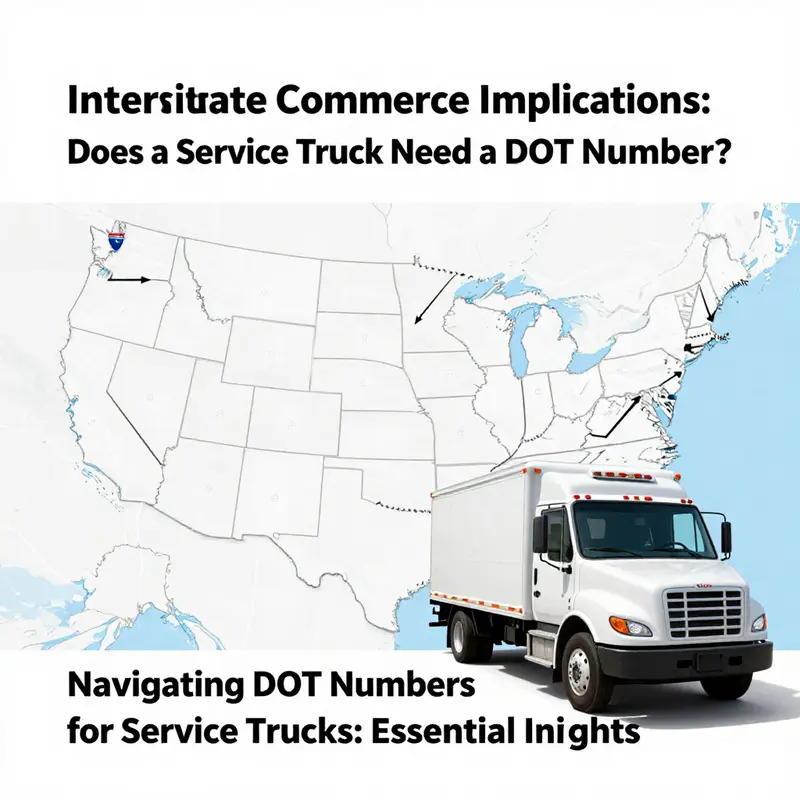
For many service trucks, the daily routine is straightforward: haul tools, bring parts, and perform maintenance or installation tasks for customers or facilities. But there is a regulatory line in the sand that can shift a vehicle from a routine work truck to a federally regulated carrier. The question, does a service truck need a USDOT number, hinges on weight, how the vehicle is used, and where it travels. The rules are not about the technician’s skill or the service being provided; they are about regulation that aims to protect safety on the highways and ensure accountability for commercial movements across state borders. In practical terms, the key determinants are the vehicle’s weight rating and whether the operation involves interstate commerce or the transport of hazardous materials. When those conditions are met, the Federal Motor Carrier Safety Administration (FMCSA) requires the vehicle to be registered with a USDOT number and to participate in safety compliance programs. This may seem abstract at first glance, but it becomes concrete as soon as a fleet crosses from a local service call into the realm of interstate movement or heavy payloads.
Two principal triggers drive the USDOT requirement: weight and cross-state activity. The foundational standard is that a vehicle with a gross vehicle weight rating (GVWR) or gross combination weight rating (GCWR) of more than 10,001 pounds falls under FMCSA regulation when it is used in interstate commerce. This means that even a service truck that is not carrying a commercial freight payload by typical definitions can become subject to the USDOT framework if its weight exceeds the threshold and it operates across state lines. If the vehicle is part of a company’s fleet that routinely moves equipment, parts, or personnel between states to perform maintenance or repair work, the potential for USDOT registration increases markedly. The weight-based rule is separate from the job the truck performs; it is a regulatory threshold that can apply regardless of whether the vehicle is delivering material, carrying passengers, or providing field services. For many operators, this single criterion is the fulcrum of compliance decisions.
A second, equally important trigger concerns hazardous materials. If a service truck is used to transport hazardous materials, even if it weighs less than the 10,001-pound threshold, the USDOT number becomes necessary. The logic is straightforward: hazardous materials, by their nature, present elevated safety risks on the highway, and federal authorities impose broader oversight to mitigate those risks. This is not a theoretical caveat; it is a practical safeguard that affects a wide range of utility, construction, and service missions, where containers, fuels, solvents, or other regulated substances might be part of the job. Taken together, the weight threshold and the hazardous materials provision create a two-track matrix that service-truck operators must navigate.
To translate these rules into everyday practice, it is essential to know how to determine whether a given truck falls into the regulated category. The GVWR and GCWR figures reside on the vehicle’s weight rating plate, which is typically located on the door frame or inside the driver’s door. The GVWR represents the maximum total weight the vehicle is designed to carry, including its own weight and payload. The GCWR, when applicable, captures the maximum combined weight of the vehicle and any trailers it hauls. If either rating is 10,001 pounds or more, and the vehicle operates in interstate commerce, that vehicle must be registered with USDOT. The determination can be nuanced for mixed fleets or vehicles with multiple configurations, but the principle remains: weight matters, as does the route. Even a noncommercial freight vehicle can fall under the rule if the weight threshold is met and interstate movement occurs. When a truck’s use spans several states, the practical implications extend beyond registration. USDOT numbers serve as identifiers the FMCSA uses to track safety compliance, inspection history, and incident data. For operators, that translates into regular maintenance of records, pre-trip and post-trip inspection procedures, driver qualification files where required, and other safety-management measures that align with federal expectations.
The definition of interstate commerce, while conceptually clear, can be contextually nuanced in the field. A service truck that travels from one town to another across state lines to perform a repair job is, by definition, engaging in interstate commerce, which invokes USDOT requirements when the weight threshold is met. Conversely, if a truck remains within a single state and does not transport hazardous materials, some state regulations may still apply, but FMCSA oversight would typically not apply unless the intrastate rules align with federal thresholds. For managers, this distinction informs decisions about fleet composition, routing, and whether to pursue USDOT registration proactively or in response to an inspection. When a service operation crosses state lines regularly, preemptive USDOT registration is often a prudent risk-management step, helping to ensure that the fleet can operate without interruption or regulatory friction.
A practical picture emerges when you combine these elements with real-world service scenarios. Imagine a utility company’s maintenance vehicle that travels between districts to repair power lines, carry spare parts, and install temporary equipment at different job sites. If the truck’s GVWR is above 10,001 pounds and the vehicle routinely moves across state borders, USDOT registration would be required. The same applies to a fleet vehicle used to deliver heavy equipment or replacement components for multi-state installations. Even if the truck’s cargo is not conventional freight, the route pattern and weight can trigger FMCSA oversight. The emphasis is not on how high the cargo is stacked but on the combined weight rating and the journey across state boundaries. In this framework, the objective is clarity: operators know which vehicles must carry USDOT numbers and what safety programs to implement, and regulators have a consistent method to monitor compliance across the interstate system.
Another layer of nuance concerns the types of materials and methods used to transport cargo. If hazardous materials are part of a service mission, the USDOT requirement applies irrespective of the weight. This means a service truck engaged in environmental remediation, fuel delivery for equipment, or chemical application must be evaluated carefully. The presence of hazardous materials triggers compliance obligations that include proper labeling, vehicle placards, driver training, and thorough recordkeeping. The cumulative effect of these rules is a regulatory framework that prioritizes safety and accountability, particularly in contexts where service fleets operate across state boundaries or in sectors where the hazards associated with materials used on-site are nontrivial.
For operators seeking a clear path to compliance, the FMCSA website serves as the official compass. It provides guidance on how USDOT numbers are assigned, how to register, and how ongoing compliance is managed. Given the complexity of fleet configurations and the variation in state-level enforcement, a direct review of the FMCSA resources offers the most reliable, up-to-date interpretation. In planning and budgeting for this shift, many organizations consult their broader regulations and cross-reference them with the interstate-transport expectations to ensure alignment across the entire operation. If you want to explore how these issues play out in cross-border contexts and regulatory environments, you can review resources on cross-border regulatory issues, which discuss how state and national rules intersect for fleets that shuttle personnel, tools, and equipment across jurisdictions.
Within a fleet-management mindset, compliance is not a one-time event but an ongoing process. Once a USDOT number is obtained, it becomes a foundational credential that supports lawful operation across states. It also carries with it a framework of safety audits, driver qualification standards, hours-of-service rules, vehicle maintenance requirements, and insurance considerations that together create a safety net for the general public and the workforce. The dividend for well-managed compliance is not only legal operation but also a streamlined risk profile; there is less likelihood that a routine service call will be interrupted by a regulatory check or a surprise inspection. For managers, this translates into predictable routing, clearer budgeting for compliance costs, and a more transparent public image for the fleet. In practice, the decision to seek USDOT registration hinges on a simple, persuasive question: Will the vehicle be operated in interstate commerce, with a weight above the regulatory threshold, or transport hazardous materials? If the answer is yes, USDOT registration is not optional; it is the baseline requirement that supports lawful operation and systematic safety oversight.
As service operations evolve—whether through expanding cross-border work, increasing multi-state maintenance contracts, or adding heavy equipment to the service fleet—the regulatory landscape can shift. The threshold rules are designed to be robust yet straightforward: the weight rating and the route determine the registration obligation. For fleets that operate primarily in-state, the decision may appear less urgent, but the risk of a misstep remains. If, at any point, the operation crosses into interstate activity or a hazardous-material scenario arises, the USDOT requirement can become active quickly. The practical takeaway is that fleet leaders should conduct a careful review of each vehicle’s GVWR/GCWR and map its typical routes over a representative period. That mapping helps identify which trucks require USDOT numbers and what ancillary compliance measures—like driver training, recordkeeping, and vehicle maintenance protocols—must accompany those trucks.
In sum, a service truck’s need for a USDOT number is not about the job it performs in isolation but about how much weight it is capable of carrying and whether its typical operations cross state boundaries. It is a weight- and route-driven criterion that can elevate a routine service vehicle into a federally regulated carrier. The most reliable way to resolve a specific case is to consult the FMCSA’s official guidance and, when in doubt, pursue registration to avoid the risk of noncompliance during inspections or audits. Official guidance is available on the FMCSA website, and operators should reference it as they evaluate each vehicle’s status. For ongoing developments in regulatory practices and broader industry trends affecting how fleets navigate this space, consider reviewing related discussions on economic trends in trucking and cross-border regulatory issues. And when the question arises in day-to-day planning—whether a truck will be restricted to intra-state work or may be required to carry a USDOT number—the answer should align with both the vehicle’s rating and the planned routing that characterizes the business’s multi-state footprint.
External reference for authoritative validation: https://www.fmcsa.dot.gov
USDOT Numbers for Service Trucks: When Hazardous Loads or Interstate Hauls Trigger FMCSA Rules
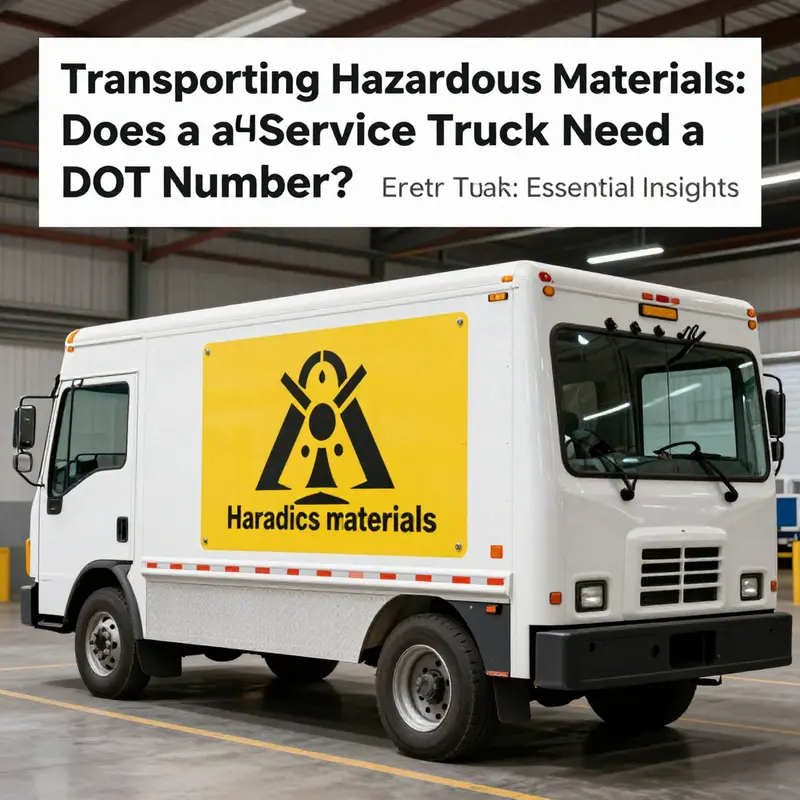
A service truck is built for field work, carrying tools, parts, and sometimes a crew. The question of whether it needs a USDOT number depends on how the truck is used, not simply on its size. Two core conditions govern FMCSA registration: interstate movement of goods and the transport of regulated hazardous materials.
First, crossing state lines. If your trips routinely leave your home state and transport goods or materials, your operation falls under interstate commerce. When this is true, a USDOT number is typically required. The USDOT number is a single identifier that ties together driver qualifications, vehicle inspections, hours of service data, and safety records. If your work involves moving between states, you should plan for registration and ongoing compliance.
Second, weight thresholds. FMCSA rules look at the combined vehicle and cargo weight, not just the weight of the truck itself. A common threshold used in discussions is 10,000 pounds gross vehicle weight rating or gross vehicle weight on a trip. If your service truck, along with its load, weighs more than 10,000 pounds when operating in interstate commerce, you are likely within the scope of FMCSA registration and related obligations.
Hazardous materials nuance. If you transport regulated hazardous materials in interstate movement, the USDOT number is required regardless of other factors. The HMR defines hazardous materials and sets special handling, placarding, driver qualification, and emergency response rules. Even when the primary mission is maintenance or installation and the volumes are modest, crossing state lines with hazardous goods triggers federal oversight.
Intrastate exemptions. Some intrastate operations do not require FMCSA registration, especially when hazardous materials stay within a single state and do not cross borders. However, exemptions have limits. If there is any possibility of moving hazardous materials across state lines, or if your loads could be classified as hazardous under certain conditions, the safe approach is to register and maintain compliant records.
Practical guidance. To decide in practice, map typical routes and loads. If most trips stay within a single state and you only transport non regulated materials, a USDOT number may not be required. If trips cross state lines or involve hazardous materials, plan to obtain and maintain a USDOT number and related documentation. The process also integrates with driver qualification files, vehicle inspections, insurance requirements, and compliance auditing. As your operation grows geographically, your obligations can expand, so adopting a proactive compliance posture helps avoid penalties and downtime.
What registration implies. The USDOT number is not just a tag. It anchors a broader set of obligations: regular vehicle inspections, employee safety training, hours of service tracking, and proper placarding for hazardous shipments when applicable. The exact requirements depend on cargo, weight, and routes. In many cases, businesses find that registering early makes it easier to grow and scale with confidence, while late registration can invite penalties, higher insurance costs, and disrupted operations.
Bottom line. If a service truck regularly transports goods into another state or carries hazardous materials, you should assume a USDOT number is required and plan accordingly. If you operate exclusively within one state and do not move hazardous materials, you may not need it, but verify the specifics with FMCSA or a qualified advisor since exemptions and state rules vary. When in doubt, treat uncertain trips as potential interstate moves and hazardous movements and begin registration and recordkeeping before they become problems. For authoritative guidance, consult FMCSA resources and, if needed, seek professional regulatory counsel.
Final thoughts
From corporate fleets to small businesses, understanding whether a service truck requires a DOT number can significantly impact operational efficiency and regulatory compliance. Navigating the various aspects—weight limits, interstate commerce, and hazardous material transportation—enables companies to make informed decisions. Ultimately, ensuring that your service truck meets DOT requirements not only protects your business but also enhances its credibility and operational scope.